Ask ChatGPT
 Extraordinary Life Stories
1 Nov 2026 · 40m · 16 chapters
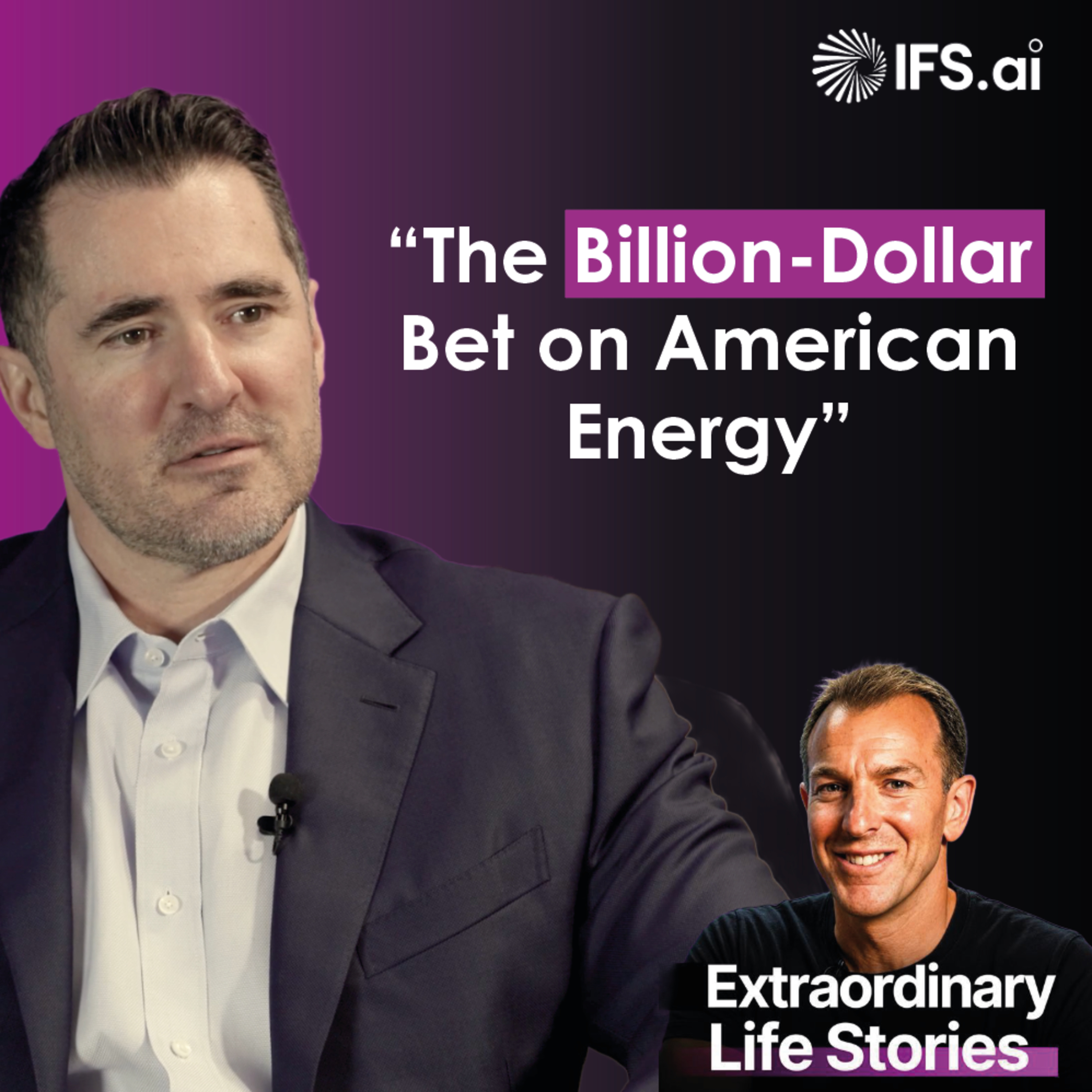
Adam Ferrari (CEO of Phoenix Energy) discusses building a high-growth American oil company from $2M seed capital into a “David vs Goliath” competitor in North Dakota’s Bakken, using fast decision-making, conviction, and AI-enabled efficiency; he also argues oil and gas are necessary for modern life and emphasizes environmental stewardship and narrative change. He describes Phoenix’s capital-formation model for retail investors, investor outreach, and his personal leadership/legacy philosophy, including the Adam Ferrari Foundation.
Adam Ferrari, CEO of Phoenix Energy (chemical engineer; previously worked at BP; grew up in the Midwest; father and husband; outdoorsman; runs Phoenix with a young leadership team). No other guest is identified in the transcript.
Phoenix grew with limited family capital and no venture funding; “what got us here won’t get us there” so the company must evolve; big-company bureaucracy slows decisions, while Phoenix can decide in about an hour; AI tools like Claude/Chat speed geosteering; Phoenix has nearly 10,000 investors with ~97% satisfaction; they’ve formed over $1B from retail channels; they aim for 100,000 barrels/day.
five-day “fishing” job on a North Dakota rig; Bakken producing over a million barrels/day; Phoenix targeting 52,000 barrels/day now and ~65,000 by year-end; using AI for geosteering (hours to minutes) and for marketing funnels/live shows seven days/week; foundation scholarships for health-sciences students after his father’s vaccine-related injury left him quadriplegic.
Written by AI. May contain mistakes.
Adam discusses the origins of Phoenix Energy and the risks taken to start the company.
“You know, the company started with approximately$2 million of seed capital, which was everything I had made in my career, everything my parents had, their 401k, they mortgaged their house.”
Adam reflects on the challenges of balancing family life with the demands of entrepreneurship.
“Well, first and foremost, I'm a father and husband, a son, and CEO of Phoenix Energy.”
Adam shares his motivations for legacy building and the values that guide his leadership style.
“industries to start something and be successful.”
Adam explains the competitive nature of the oil and gas industry and the strategies his company employs.
“like a proper passion in how you articulated that.”
Adam discusses how technology, especially AI, is transforming operations at Phoenix Energy.
“And so we're competing intensely for that right now.”
Adam elaborates on the innovative marketing strategies used to engage investors and expand outreach.
“They were doing a fishing job, not the kind of fishing we were just talking about.”
Learn how a company adapted its marketing strategies during COVID-19.
“But we started really expanding during COVID and it was really difficult to get people to show up to a place.”
Explore the competitive landscape of the energy sector and how smaller companies can thrive.
“You can't just kind of sort of try, because they're years ahead, right?”
Understand the strategies used to succeed in a competitive shale formation.
“And I tell that, ironically, I've had people come into my office and what does it take to be a leader at Phoenix?”
Discover the motivations behind leaving a stable corporate job for entrepreneurship.
“I put all my capital into starting business and forming alliances and figuring out what direction I was going to go.”
Follow the journey of building Phoenix Energy and the challenges faced along the way.
“Literally, there was times when I had to ask my parents for help and my parents didn't have much money.”
Learn about setting ambitious goals and the importance of vision in leadership.
“And if this was a conversation in some way where you were trying to convince me to join you or do something with you, I'm in.”
Discuss the balance between energy production and environmental conservation.
“I feel like you're really enjoying the journey.”
Learn about the balance between energy production and environmental preservation.
“And how do you implement that into the kind of the business?”
Discover how personal health impacts leadership effectiveness and team dynamics.
“But I got on the scale like five months ago, and I was mortified at what I saw.”
Explore the motivations behind the Adam Ferrari Foundation and its mission.
“But it goes back to what is my priority in life is family Phoenix.”

Get the gist, explore an idea or ask about something said.
 Claude
On Extraordinary Life Stories, what are the key points of this episode?
Searching your listeningAutomatic transcript. May contain errors.
0:00When we get in those situations, everyone does look at me and what is the vision, Adam? Where are we going from here? What got us here won't get us there. If you're not evolving and growing, you're slowly dying. Maybe that's a little bit hyperbolic, but I believe that. Tell me, who is Adam Ferrari? CEO of Phoenix Energy. You know, the company started with approximately$2 million of seed capital, which was everything I had made in my career, everything my parents had, their 401k, they mortgaged their house. And so$2 million of seed capital, if you look at what we're going to do in revenue in 2026, we should do about 1.6.
0:26You know, we were committed, we were all in, we were obsessed. It's the David Goliath scenario. Yeah. One little state with 500 ,000 people produces 1 % of the world's energy, which is kind of cool. And when we showed up, you know, the big boys were already there. I'll reference the Goliaths. And how did we succeed? Well, we were just faster than that. If you were to ask any of the AI tools, what are the odds that that would happen? It's almost zero. And in our industry, it's been very politicized. And I say this all the time. Whether you vote Democrat or Republican America, we all consume energy.
0:54It's necessary for our daily lives. But I do think we need to change the dynamic and change the narrative. because our industry does steward the environment for the most part. It's not to say we're perfect, but no industry is perfect, but we're necessary. There's no world where we just say we're not going to consume oil tomorrow and live a normal life. It's not possible.
1:23Good to see you, man. Tell me, who is Adam Ferrari? Oh, man.
1:28Adam Ferrari: Hardest question. Well, first and foremost, I'm a father and husband, a son, and CEO of Phoenix Energy. Those two sort of things encapsulate my life. I tell everyone my life's actually pretty simple. We're family. There's really not much room for anything else at this point. Is there a bit of a myth about the balance that goes within the busy entrepreneur, CEO, and making time for family? A long time ago, before I fully embarked on this journey of sort of the entrepreneurial path and starting Phoenix Energy, there's a guy that I grew up with that's in the private equity world and a large, I'm not going to name the name of the firm, but they're a large tech PE firm in Chicago and they back a lot of really successful tech companies.
2:10Adam Ferrari: And the one thing that he told me that was a common attribute of all the executives that have had success in his arena was obsession. And in hindsight, I've always been obsessed with what I've done and I couldn't imagine myself doing anything else. So that comes back to the balance question. The notion of balance as a successful leader in American business is probably kind of a myth. Now I do the best I can. My balance is there's just not a lot of hobbies. It's Phoenix and family. And so that's my balance. There's really not much outside of that. And I think that's what's required. You know, I frame it that way with a lot of the younger leaders in my company.
2:43Adam Ferrari: Sure. There's a price of admission to be on this journey and to sort of pursue this path and build something from scratch. And not many people are willing to pay that price. And that price to me is like, you got to be intensely committed, borderline obsessed. And maybe at times that's not healthy, but I think it's required, especially in competitive industries to start something and be successful. And we're obviously real estate is a very competitive space, oil and gas is. And so given what we've done at Phoenix, I think obsession was required. So there's not really a ton of balance. I'll work on that in the future.
3:16I'm interested to know because the whole burnout is real, right? You've got a twinkle in your eye. You are stimulated from what you do. Sure. And then ultimately the hobby side of things, it takes a back seat. Yeah. But in context of just getting away from it all, what works for you? Do you have something that works for you where you can just remove yourself from both being the dad, the husband, and the busy business person?
3:37Adam Ferrari: Well, I like to fish. And I don't do it nearly as much anymore. I grew up in the Midwest as we were talking before we went on camera and bass fishing was kind of a part of my youth So my wife planned a surprise trip recently to Idaho and we don't get to do many family vacations with two little kids But she planned it all and I got to get on the river and do a little fly fish and that was pretty nice So that was a nice escape and my escapes are in nature when I get a chance to unplug from Phoenix and being a dad I like to just get out on the river and just not think about anything to be quite blunt Yeah, I can relate to that.
4:08Adam Ferrari: I just don't get to do it enough. Yeah, yeah But I think where we're aligned is I really enjoy what I do. So in a previous life, I would probably be doing stuff more to make money, more to scale, to try and build the platform. And then I needed the outlet of fishing or the bike rides or whatever it was. But there's something about the obsession and the purpose that sits behind what you do that actually fills that void. What would you say is your purpose? My purpose, and I've always felt this, was to build something lasting. And I tell my leaders all the time, this has never been about money for me.
4:41Adam Ferrari: And I don't say that to be glib. Clearly, like I have desires and I want to do things and I want to provide for my family. But this has always been about legacy. You know, my grandma raised me because my mom had to work full time. And that was something that has always kind of stuck with me. My mom wanted to be a stay at home mom. But just my family circumstances growing up, she wasn't able to do that. And I feel like I owe a great debt to the people that got me here. And I carry a pretty strong name. You know, it was both good and bad at times growing up. And even as an adult, it's been good and bad.
5:12But I feel just I owe the people that got me here to establish a legacy. And I always say this to my leaders.
5:18Adam Ferrari: When we're done here, I want to be remembered. And I actually talked to, I had a little summit in California. And I don't do this that often. I brought in the leaders from my company. And we all kind of got together for a couple of days. And I just told them, you know, the big American oil company, Amoco, they had like the coolest name. BP bought them. And we were talking about BP and I was a little bit sad. The British bought the big American oil company and I just kind of used it as a reference. Who's going to remember Amoco in 50 years? And I want to build a brand that lasts long after we're gone.
5:48Adam Ferrari: And so that's sort of my purpose is to build something significant on this earth while I'm here that lasts beyond my life. And hopefully my kids can do something with it or the next generation of leaders in my company. So legacy is sort of my purpose. You can feel that. like a proper passion in how you articulated that. You come from a small town to build a career that ultimately has taken you global. You worked at BP and started your own company that, again, takes you global. So you've had a really interesting kind of perspective of leadership, both probably being led and now being a leader. And just tapping into that legacy piece as well, what are the values that are super important to you being a leader?
6:30You can't lead from the golf course.
6:31Adam Ferrari: And one of the things I let my leadership team know, because I ask a lot of them and I push people pretty hard, sometimes too hard and I got to back off. But I like to find people's breaking point. I feel like that's pretty important. You got to understand how much you can push your team, because what we do in this industry, I always compare it to battle. You know, we compete against giants and we are a pretty large company at this point. But we started with pretty much nothing seven and a half years ago. And we compete against global giants in the American oil field, ExxonMobil, ConocoPhillips, Devon Energy, EOG.
7:02What I told the team is, you know, my purpose is to build this legacy. But what I expect out of my leaders is to push to the max in everything you do.
7:11Adam Ferrari: Let's pursue greatness with haste. And that's sort of a mantra that I sort of champion at the company. You know, I want to test people. And it's my job to push people beyond what they push themselves. because at the end of the day, I'm preparing my team for battle. And if I don't do my job correctly, my team will get massacred because the companies I just mentioned, they're ferocious. You know, it's a very competitive landscape. And in America, you know, we're competing for the last viable drilling locations. And I frame it that way often as well, not to get too far in the weeds with our specific industry.
7:44But we're in a global industry. We produce oil. That's very important. The world needs it to function. And the American landscape is highly competitive because ownership is private. Whereas you go everywhere else around the world, the governments own the rights and you're negotiating with a government to have access to their resource. Whereas in America, it's a little more diverse and scattered, which is both good and bad. And right now, the landscape in America is highly competitive.
8:06Adam Ferrari: And everyone sort of sees that maybe there is only five to ten more years of viable drilling inventory in the onshore U.S. marketplace, which is what I would call the lower risk marketplace. And so we're competing intensely for that right now. So I always try to rally the troops around that common mission of, you know, we want to be greatness. We want to pursue greatness and we want to be excellent at what we do. And there's a sacrifice to that. And so I always challenge a team. And to go back to one of the other things you said, for me, this has never felt like work. And I challenge my team. Every day is not going to be fun.
8:37There's still days when I show up and I have to do things I don't want to do. But for the most part, I try to build an environment at my company where people enjoy, I always say, four out of five days.
8:45Adam Ferrari: I want you to enjoy four out of five days in the fifth day you're gonna have to do some stuff you don't want to do Yeah, and that's what's required because not every day is gonna be fun in the Sun. So no, it's brilliant I mean, you're formidable to listen to there, right? Yeah, I imagine you've got that sort of accountability to yourself Sure, which you then expect of others and in the nicest way that's seen a step up or step out I don't ask people to do anything. I wouldn't do and I think that's where I was trying to go with one of my statements When I tell them what you can expect from me as a leader I will never ask you to do something that I won't do as well No.
9:13And actually, when we first sat down here to film, you showed me the image of the rig and something that had gone well for you this morning. You literally, it was a pretty, well, what's the word, hostile environment that you showed me. But I've been there. I've worked there. And that carries huge weight, doesn't it? It does. The empathy that you've got for people is like, just so you're clear, I know what you're going through. And so there's a hard element, but there's a nurturing, maybe mentoring element there as well. Sure. I try to make the guys in the field. So, you know, we have sort of two pieces of our business.
9:40We have the executive team that's managing the finances, the accounting, business strategy, planning, the vision.
9:47Adam Ferrari: And then you have a team that has to carry out that vision and execute in the field. And I've, you know, my dad was a pipe fitter and a welder. My grandpa was a laborer. And so that's kind of the world I came from. I was born into a family where the men around me were actually executing the vision of somebody else. And now I sort of have the pleasure of being the visionary and I get to set it, set the direction of the company. But I still appreciate the guys that are out there, the men and the women doing the actual work. because nothing happens without them. And so the image you were referencing was from one of our drilling rigs in North Dakota.
10:15Adam Ferrari: They were doing a fishing job, not the kind of fishing we were just talking about. This is the bad kind. And basically what you're doing is you have something stuck in a well, and you've got to go get it. And you don't exactly know what's looking up at you. So there's kind of a complicated process. You could run cameras in there, but they usually don't see very well. So you run what's called an impression block, and you drop it down there, and then you see an imprint of what's looking up. Because remember, you're doing all this in a hole like that big. And so the team spent five days fishing on something, and they got it out.
10:42Adam Ferrari: And so that was a success. But I do appreciate it because I've been out there, and the guys that are managing that job probably haven't slept in a couple of days. And it's a high-pressure situation because they know every day is burning money. And so it's like decision time every moment. Are we going to keep going, or are we going to cut bait and run and just re-drill as well? And so those are the high-stakes moments for us as a business. And I always tell people to be successful as an oil company, you've just got to win more than you lose when it comes to these situations. You're not going to win them all.
11:08But you can't lose them all either. No. You've got to get some Ws. And that was a big W this morning. So it pumped me up. Set you up nicely for this. Yeah, yeah. But it's also a real-life example. I love the fact you brought your grandfather, your father up. There's that hands-on work ethic, the mindset that's passed on to you, that role model piece which you embrace and you take forward to being a dad. But one thing that has changed is the massive evolution of tech, especially AI. One, just listening to you there, whether there's almost like this competition you're in with the Giants. So you're able to implement and use tech in a way at the moment that's giving, because you're having massive growth right now.
11:43So congratulations. I wonder whether there's a tech element that you're harnessing. Yeah, we're harnessing technology in a couple of different areas. We do use Claude. We use chat. We use all the big ones. And I would say what I've learned so far, and I'm a novice user, but I'm probably better than the average person. And I have some people under me that are really good. What I've found is the tools in the hand of really capable engineers, they're really powerful. And it's just allowing them to be incredibly efficient. so in scenarios where you might need a team of four engineers if you have one really good one that knows how to prompt Claude really well he can get a lot done so we're using it in geosteering applications so to do geologic interpretations much faster and I can give like one very specific example if you go back in time five or six years what would have taken hours can now be done in you know minutes literally and so efficiencies are incredible 100 and so that's that's sort of on the engineering and the technical side and I know a lot of other people are doing it too and it's just but it is it's not going to be for the most part I would I would argue it's not going to be in the hands of a recent grad just coming out of school.
12:39But if you put these tools in the hands of somebody that's a seasoned industry veteran with five to 10 years of real world experience, they can be incredibly useful. And I'm seeing applications of it daily. And then on the finance side, one of the areas that Phoenix Energy has pioneered is capital formation. And I hope we get a chance to talk about it because that's what I'm most proud of. Because when you talk about our brand to the outside world, we're just an oil company if you're not in this industry. Now, I can tell you all these cool things we do about long laterals and how we frack and all these exciting things.
13:08But that's sort of industry jargon that most people aren't going to appreciate. Of course. But if I tell you the way we've formed capital has never been done before and it's provided much more opportunities to invest for the retail public in America, that's really the story I like to tell. And we've used a lot of technology to do that part in our marketing. You know, I mentioned to your team here, you know, this is a really cool setup. And this is like not the world I grew up in, but I've had to get accustomed to it because of what we do. We do a ton of investor outreach.
13:33Adam Ferrari: We do a ton of creative. And we're using tech to sort of make that process much more efficient. And our marketing team is they're like AI professionals. And they're just doing it to be able to scale to manage the process because we're putting out a ton of content. We have these massive funnels with our leads. We do live shows seven days a week. You do their online? Yeah, they're online. So we call it, you know, we used to do some of the in-person stuff at like hotels sort of, you know, we're at a convention now. This is a little bit different, but we used to try to get, you know, 100 people in a room in a physical location.
14:04But we started really expanding during COVID and it was really difficult to get people to show up to a place. So now we're doing it all online. It's, you know, web based, you know, sort of seminars and we do seven a week and we've been doing it for years. And so our marketing team that's setting up all that and managing the funnel, the leads and how we reach out to prospects and our existing investors, which we have almost 10 ,000.
14:26Adam Ferrari: They're using AI daily and just making it much more efficient. So we have a marketing team of about 20. And if you go back in time, it would have probably taken 100 to do what they do now, which is pretty powerful. But it's the prioritizing of marketing and the communication element. So the investors, the shareholders, the clients, there's good visibility there. You're using that really well. And actually, I was wondering, almost the David Goliath scenario in this growth you're having. I use that example all the time. Do you? Yeah, I'm not surprised. Yeah, we're David. Yeah, yeah. But the names you mentioned are Goliath, right?
14:55Yeah, yeah. And so that's where I was wondering how you're competing. because there's also an element of needing to do things differently. Sure. You can't just kind of sort of try, because they're years ahead, right? Yeah, yeah. So you're the disruptor. You're coming in and you're doing some cool stuff. Yeah, yeah. So when we entered the Bakken, so the Bakken is one of the prolific shale formations in America. It produces over a million barrels a day. The world produces, let's call it 100. I'm going to use round numbers. So it's pretty significant. One little state with 500 ,000 people produces 1 % of the world's energy, which is kind of cool.
15:22And when we showed up, you know, the big boys were already there. I'll reference the Goliaths. Exxon was already there. Hess was already there. Well, now it's Chevron. They sold. And so we showed up and how did we succeed? Well, we were just faster than them. I think they were kind of asleep at the wheel, the age old phrase, the fat cat gets slow. I mean, that applies to business in America as well. And so we showed up with a hunger and a tenacity that was unique at the time during COVID and we put a position together. And now the landscape is much more competitive. If Phoenix Energy would have started today, I'm certain we wouldn't be where we are today in the same time period.
16:00So we entered the market at the right time. We had the right team in place. And we were aggressive. And we went fast. And I think, you know, one of the things that's really benefited us, and I worked at BP. And so as a young engineer, it was a great place to be. I learned a lot. But they move slow. And it's a little bit bureaucratic, a lot of red tape. Decision making is very, it's very time consuming. And the one thing that we do really well, and the team that works for me now really appreciates this, if somebody brings a really good idea, we'll make a decision in like an hour. We don't have to go through committees.
16:29We don't have to have a pretty PowerPoint. Now, all that's fine and dandy. And I do appreciate some of that, but we're fast. We make decisions. And I think one of the key things of being a successful business leader in any competitive industry is you got to have conviction and move. And I tell that, ironically, I've had people come into my office and what does it take to be a leader at Phoenix? And I always tell them, you got to be decisive. You can come up with the wrong answer. That's okay. But you can't be in deliberation for weeks on end. But when you do make a wrong decision,
16:56Adam Ferrari: you need to acknowledge it publicly, course correct, and move in a different direction. But you've got to make decisions and you've got to move. And I feel like at big companies, they don't empower a lot of their talent to make decisions and go. Can be living in fear of making a wrong decision, afraid of losing their job. For sure, for sure. And that's a different dynamic. And I think that I've instilled the culture of, it's okay to be wrong. It's not okay to never do anything. It's really entrepreneurial to hear you say that. And that's a really interesting dynamic for me because you worked at BP.
17:22You did the corporate thing, which means you were one of a number of people. So you've seen how to do things and how not to do things. So it's really inspiring, actually, to listen to you. But you made a decision at some point to walk away from the comfortable check at the end of the month, if you like, the pension. Yeah, yeah. And to be able to talk me through that. When I was young, I was telling this story when I was at the University of Illinois last week. I had a couple of job, a few job options coming out of college. It was a good year in 2005. I could have went into personal products, like a Kimberly-Clark type company.
17:52I could have went to pharmaceuticals or oil and gas. And I was, the decision was actually pretty easy because the oil and gas job allowed me to commute to work by helicopter. And I was a kid that I didn't travel a lot as a kid. I grew up in a, you know, middle class home in the Midwest. And so that was just a cool experience. So that's where I started. But then leaving was a really difficult decision because there was some stability. I was younger, I didn't have children at the time. But the way that I would explain it for me personally, working in that corporate environment at BP, while very helpful and I learned a lot, I felt like a bird in a cage and I just needed to spread my wings and fly.
18:27That was never going to be the long-term home for me. And so, you know, I kind of bounced around for the first 10 years of my career with other oil companies. And what happened in my career was I kept going to progressively smaller companies that sort of allowed me to do more and expand more and sort of pursue my more entrepreneurial side. Creative side. Yeah. And then about 10 years in, that's when I said, you know what, I'm going to, I'm going to give this a go in like 2014 and I'm going to go off on my own from 2014 to 2019. There was a lot of highs, a lot of lows as I was sort of finding my way on my own.
18:56But it was, you know, very, I would say the story went sort of like this. I cashed out whatever 401k I had, my parents, whatever capital they had, they were all into my idea. And I left the W-2 paycheck and I had no paycheck for a while. I put all my capital into starting business and forming alliances and figuring out what direction I was going to go. I was starting to buy my own assets. But by 2019, I had sort of figured out exactly where I wanted to take this. So about five years with some success, some failures. And then Phoenix Energy was born out of that. And it was kind of born out of a low.
19:28But if you look at the trajectory of Phoenix from 2019 to today, the company started with approximately$2 million of seed capital, which was everything I had made in my career, everything my parents had, their 401k, they mortgaged their house. And so$2 million of seed capital, if you look at what we're going to do in revenue in 2026, we should do about 1.6. And so the story I tell people, and this isn't to brag, but I think it's important. We were committed. We were all in. We were obsessed. But if you were to ask any of the AI tools, what are the odds that that would happen? Limited family capital.
20:00The company started with five people in an apartment in Denver. No venture capital. To get to where we are, it's almost zero. And so I think we've defied the odds to get here. And given that, That's another sort of theme that I preach to my managers, because I have some young people that are in really high roles that if they worked at BP, probably wouldn't be in those roles.
20:21Adam Ferrari: And I said, this is your once in a career opportunity right now. You will never get this chance again. And so you've got to take advantage of it, harness it, and let's do something spectacular. And so we've either doubled or tripled our revenue every year. Now, you can't do that every year because you get bigger. You can't just keep doubling. But we're still in aggressive growth mode. and we're one of the few oil companies in the world that's grown like this. And while we're not competing globally, we just produce domestically, our product does compete globally. And so it is a global market, but we're just a domestic producer.
20:52But yeah, we're a high growth company. But when I left BP, it was, I always had this, you know, there was always a feeling inside that I knew that wasn't home for me. And I was never truly comfortable professionally until I was on my own. And which is kind of a weird thing to say because it was chaotic. You know, you don't have stable income.
21:10Adam Ferrari: Literally, there was times when I had to ask my parents for help and my parents didn't have much money. So I think I just found comfort in the chaos. And I think that's also another attribute of other leaders that I've met in my career. They're able to find comfort in those really uncomfortable situations in life. And that's, you know, some people just can't do that. This episode is brought to you by Google Chrome. You think you know a browser, but Gemini and Chrome, that's new. It can help you with practically anything on the web, like restoring a vintage motorcycle from a 50-page restoration block, or finally break down that long article you've had open for weeks.
21:46Gemini and Chrome is here for it. Ready to make anything online make sense? There's no place like Chrome. Check responses set up required. Compatibility and availability varies 18+. We just moved into our new house, and I didn't realize just how close we were to the neighbors. That's when my friend told me about Blinds.com. Blinds.com isn't a medication. but it can improve how you feel about your home. Customers who shop at Blinds.com experience excellent customer service, from consultation to installation. Side effects include increased privacy and better sleep. Talk to your partner today and see if Blinds.com is right for you.
22:21Shop Black Friday all month long at Blinds.com. Don't miss huge deals dropping every week. No, what I'm picking up from you is that all in, you back yourself. And if this was a conversation in some way where you were trying to convince me to join you or do something with you, I'm in. I genuinely mean that. You have got such a way about your presence. And so, like, potentially you bring up the AI, and the odds, if you put it into some algorithm, is like, this isn't going to work. And you'd be like, watch me. I don't know how I'm going to make it work, but I'm going to make it work. Well, it's kind of funny, because the AI algorithm will tell you there's really no example of where this happens.
22:54So it's like, it's struggling. There's no precedent.
22:56Adam Ferrari: It's like, well, there's no precedent, so I can't really go, because AI has to go find something that happened and sort of try to calculate odds. And if it can't find something like this, it's like, well, I don't know what to do here, which I thought was kind of cool. I like, this is such an enjoyable conversation. There's an element of gut instinct and belief that just cannot in any way be put into the algorithm and the whole spitting it out on Claude. He's just going to say, that won't work. And you're like, no, I'm going to make it work. And even when me and my CFO, so Curtis Allen's my CFO, and he's like a brother to me at this point, and we've been through fire together.
23:24And when we first started going to other investment professionals and said, hey, we got this really awesome idea. We're going to offer these yield products in a marketplace where yield's been suppressed, and we're going to solicit investors on Facebook and Google and YouTube. And we got laughed out of rooms. Not exactly literally, but pretty much. People said this is never going to work. You're never going to be able to form capital at scale this way. And, you know, fast forward. When we started that, that was probably five years ago. And now we've formed well over a billion of capital from retail channels direct to investor.
23:53Our whole business model actually isn't that complicated. Oil and gas assets produce really high yield. You know, real estate's another comparable asset class. Their yields are a little bit lower. So I think we have a yield advantage just because the nature of the asset. And then there's the investing public that wants to have exposure to yield products. They want cash flow products. Not everyone wants to be in long-term equities that have no dividends. So we just wanted to connect those two groups under one roof without a bunch of middlemen. And that's exactly what we did. And that was really difficult to do that because U.S.
24:20securities laws are complex. And, you know, it takes armies of lawyers to figure it out. But we did the hard work because the vision was always the same. It was just a question of, I know this will work. It's just a matter of time before we can figure it all out. And we've been able to get several files through the SEC. You know, our sales guys are thin row registered. So we've had to sort of do all this heavy lifting on the compliance side to just make it a reality. Because in the U.S., it's actually really difficult to borrow money from the retail public. They make it very difficult. But we figured all that out.
24:50And the vision from day one was sort of the same. And that's what really has propelled us to where we're at. It's just having conviction to a vision, believing it would work. And then once you start to get some of that feedback that it's working, we just kept foot on the gas and just kept hammering it. Knocking all the obstacles over. I feel like you're really enjoying the journey. But is there a destination? Is there a vision? You mentioned that word vision. Is there a goal that you want to achieve? Is there something that Adam kind of set out? Whether that was at the beginning or you get through certain obstacles and now you're sitting here now and you're like, this is what I want.
25:19Well, my mentality is like when I set the bar high and when we cleared, I set it even higher.
25:24Adam Ferrari: So I'll go back to the management summit or leadership summit we had in California last week. with team. I had folks from North Dakota, Denver. We had somebody from Dallas in too. So we have several field offices. So I had everyone in one room and they all, everyone, when we get in those situations, everyone does look at me and what is the vision, Adam? Where are we going from here? And there was a tagline that somebody had said to me a few weeks prior that was really meaningful. What got us here won't get us there. And I reflect on that often because I think as a business leader, if you're not evolving and growing, you're slowly dying.
25:54And maybe that's a little bit hyperbolic, but I believe that. And so I've always set our barometer in barrels per day. That's how you're measured in our industry. There's a lot of other things that matter, but it all sort of contributes to how many barrels can you deliver to the marketplace daily? Because that's your revenue. That's your lifeblood. And right now we're at about 52 ,000, which I went back. The world produces about 100. ExxonMobil produces over three. So we're not Goliath, but we're not small at this point. And at the end of this year, we should exit at about 65 ,000. So the benchmark I've set for my team in terms of where we're going is 100 ,000.
26:26And once we clear that, I'll set it even higher. But to go back to the odds of being able to get to that level, the way that we did, it's almost zero. So we're sort of an unchartered territory. But my vision is still, you know, the management team at Phoenix is pretty young. We got a lot of tread on the tire. And so as long as we have that and we have the right team in place, we're going to keep pushing. Because as I go back to, I will never be able to do this again. And as I've, I also tell that to my leaders at Phoenix. You know, as you get older, things just get a little more challenging. And I'm certainly not one foot in the grave.
26:59I'm only 43. But to run as hard as you do requires endurance and stamina physically, mentally. And as you get older, it's just more difficult to do.
27:09Adam Ferrari: And so I always tell the team, this is our moment. It will never come again. And we're going to continue to sprint. And, you know, oil and gas is a race. It's a race for the asset. And because once the asset changes hands from like a retail owner to a professional company, they never go back the other way. And so we're racing against the big guys. And it is a race. And so the barometer for us is barrels per day. So we're going to keep climbing as long as we can and keep setting the bar high. Formidable. Sustainability. You're a good guy. You've got that amazing self-awareness. You love the outdoors and so on.
27:45So you've got a world vision on the fact that there's a desire to be in this race and get as far ahead as you can. But also there's the association with the oil and gas industry where there can be negative effects on the environment. So I imagine, without knowing, I genuinely have no idea, but that's important to you. And how do you implement that into the kind of the business? It is. I'm going to answer that a couple of different ways. So the men and women that work in the field are some of the most avid outdoorsmen you'll ever meet. They hunt. They fish. They spend more time, I would argue, than some of the activists outdoors.
28:16So 100 % we want to protect the environment. If you ever go to an American oil field location, and I have not been to a lot of international locations, but I've seen plenty of pictures. What we do in America and how clean it is and how focused it is on environmental preservation, it's amazing, to be quite candid. And so I think we've done a great job in the industry of being a great steward of the environment and making the least amount of impact possible. And if you come to one of our locations, it would make sense to you. But unfortunately, we're fighting a narrative. And in our industry, it's been very politicized.
28:48When I first came into the business in 05, I don't feel like it was as political as it is today. I feel like we're reverting back to a better place now. And I say this all the time, whether you vote Democrat or Republican America, we all consume energy. It's necessary for our daily lives. And I think one of the reasons, one of the folks in the industry that I admire most is Chris Wright. Chris Wright's now the Department, Secretary of the Department of Energy. He was a CEO in our industries from Denver. And Chris always would talk about bettering human lives and how oil and gas has led to more human prosperity, to lower poverty rates.
29:19And so I think he has carried the torch well, and I'm trying to do that now from my position of power, if you will. But I do think we need to change the dynamic and change the narrative because our industry does steward the environment for the most part. It's not to say we're perfect, but no industry is perfect. But we're necessary. and in order to live modern lives of convenience and have the things we all want you need oil and gas yeah there's no substitute i was thinking that that's how you open the conversation it's like you're in a business where literally you're providing what we need this will be well um having it's not what we want it's what we need and i think that's like that people need to really understand that this isn't optional there's no world where we just say we're not going to consume oil tomorrow and live a normal life it's not possible and so i just you know that's i try to advocate for that as much as we can, but we got to lead by example.
30:08And I think having no spills is sort of a mantra of us. We don't spill oil. We manage our water appropriately. We try to minimize our surface impact. So when you go to some of our locations, some people might not think North Dakota is that pretty, but the people that live there really do. I do too. And so drilling longer laterals allows us to have less surface impact because you want to be able to go observe the landscape in its natural form. And I will tell you this, if there was a bunch of wind farms out it would not look nearly as pretty as it does right now. Exactly. I told you I'd get the train into London from where I live in the UK.
30:41And every now and again you should be going past what is effectively kind of no man's land. It's just been filled with solar. And I'm not anti-solar wind. I've always been an all-the-above guy, but let the market drive what makes the most sense. But I hear what you're saying. What you're saying is if you looked out on a landscape, it's minimal impact. Minimal impact. Yeah. And so environmental stewardship is important. And I think we just need to do a better job in our industry of communicating that to the public and leading by example. But back to your marketing and your sort of awareness piece, it sounds like you're doing that.
31:10You're putting out a narrative that is constantly saying we're doing the best we can and protecting the environment as much as we can. We are, 100%. Yeah, and I think, you know, for us personally, you know, our license to operate in the states we operate, like kind of hinge upon that, too. If we weren't a prudent operator and we were doing a lot of things that were questionable, the state of North Dakota, the state of Montana. So we're regulated at the state level. Yeah. So it shouldn't shock you. There's a lot of regulation in every industry, but especially in America. You know, we have the feds that do their thing, and then we have the states that do their thing.
31:38So we've got a lot of people that are looking over our shoulder. I don't necessarily agree with that at all times, but, you know, it's an extra layer, I think, for the general public to understand. We're not out here running rogue. There's a lot of people that are looking at what we do. And if we don't act accordingly and we do a bunch of things that are reckless on the environmental standpoint, we won't be able to operate anymore. Huge amount of the business, particularly right now, revolves around you. You are the engine. You are the epicenter. You mentioned you've got that self-awareness to know that you're putting in a stint right now.
32:08You are grafting. What are you doing to look after yourself? I'm talking about is there a morning routine? Is there some exercise you prioritize? What's working for you to get that?
32:18Adam Ferrari: Well, I'm going to be very candid right now. And I'm usually not this candid. But I got on the scale like five months ago, and I was mortified at what I saw. I told my wife, all right, something's got to change. And I've always prided myself on being in reasonable shape because my philosophy is if I can't take care of myself, how can I lead a team of men and women? Because they're going to look at me like, you can't even take care of yourself. I made a commitment to do some exercise every day. And I grew up in the gym. My dad was a big weightlifting guy. He introduced me to the movie Pumping Iron as a kid.
32:46So that was sort of, he wanted to be a bodybuilder like Arnold and Lou Ferrigno. Made a commitment when I saw that number on the scale that's not how this is going down and so I hit the gym every day we have a gym in
32:56Adam Ferrari: the office I actually built a little gym in our California office and so I just made a commitment every day I'm doing something and that's smart by the way you brought that you brought that to your environment because then you haven't got to go and I've got to go to the gym oh phone call today you can actually you can be on the treadmill while doing stuff yeah one of my team members jokes with me he's like we should shoot some of our promo content while I'm lifting weights and I was like no I'm not going to do that I'm not going to do a globo gym promo but I saw the number I was mortified and I'm happy to say that I've lowered that number by about 35 pounds.
33:21I just feel so much better. But now that it's getting me back to how I operated as a younger man, I got to take care of myself first because if this isn't right, I'm not going to be able to lead my troops appropriately.
33:33Adam Ferrari: That's part of my daily routine. I really appreciate it. And is there an early start? There's countless books, podcasts that talk about that early morning routine, get up and own the morning and run a marathon, read a book, meditate. Do you do that? You know what? I'm more of a night guy. So my morning routine, I do get up and I look at my phone, trying to get a little bit better about not looking at it from bed. I'm going to get out of bed and go to another room and look at the phone because I need to have a little bit of separation. But in the morning, I check everything to make sure nothing's burning down.
33:59And then I spend time with my kids because that's the time that I get where my kids are playful, talkative. And then I tell my wife, you have a job to do here today. You're going to be the home CEO, and I'm going to go do my job at Phoenix. Teamwork. And so then at night is when I get a lot of my best work done. And my team kind of jokes that I'm the one that's, you know, blowing people up at 10 o 'clock at night. And so I get all my good work done and then they're up really early.
34:23Adam Ferrari: And then they kind of respond to all my stuff at night. But we found a rhythm that works. I was going to say, it's a system that works. Yeah, yeah. I used that word successful then. What's your definition of success? You know, in the U.S., there's certainly, is it earnings? Is it growth? You know, I want the maximum number of people to feel like they've won when they've engaged with Phoenix, whether that's our investor base. So I'm really proud of the fact that we have nearly 10 ,000. It's a little bit less than that, but we have a 97 % satisfaction rate amongst our investors. There's very few products on the planet that you could field a poll from your consumers and get that kind of satisfaction rate.
35:00So that's success to me. We have a lot of people that have achieved levels of success professionally at Phoenix that they would have never achieved anywhere else. That's success. because if the people around you aren't performing well or you're not elevating the people around you, I don't think that can ever be perceived as successful because this is not life and business is not a single person sport. It's a team sport. And so I pride myself on I want the maximum number of people that touch our brand to have, you know, maybe not life altering outcomes, but close to it. I always tell my team, I want you to do better here than you've ever done before in your life.
35:32And I want you to do better than you ever thought possible, whether that's financially. and usually it does start there. I mean, candidly, people go to work to earn and to provide. And so for me, success is our investors are well taken care of. They're protected. They've got a good return on their capital. The professionals that work for Phoenix Energy have been able to, you know, able to develop skill sets that they would have never been able to achieve anywhere else. And then for me, like my family, my family needs to flourish. You know, I want more kids. I'll be very candid. I've talked about it pretty openly.
36:06Having kids was the best decision in my life. And it's a part of the legacy. And, you know, I, I want more. And so for me, you know, success is investors are taken care of. Employees are doing very well. My family's doing very well. And it needs to be like all of that needs to happen. I won't settle for just one. And now that's difficult to manage. But it goes back to what is my priority in life is family Phoenix. Yeah. I keep it, I keep it simple. This episode is brought to you by Google Chrome. You think you know a browser, but Gemini and Chrome? That's new. It can help you with practically anything on the web, like restoring a vintage motorcycle from a 50-page restoration block, or finally break down that long article you've had open for weeks.
36:45Gemini and Chrome is here for it. Ready to make anything online make sense? There's no place like Chrome. Check responses set up required. Compatibility and availability varies 18+.
36:57Brussels clean up nicely at Sweetgreen Maple glazed, roasted And edges perfectly caramelized Sweetgreen's fall harvest is back on the menu And the season's most overlooked Little green vegetable is dressed to be devoured You know what to do Order on the Sweetgreen app This is exactly how we started I've got to say this to you This is one of my favourite conversations I've had And it's amazing how you Because we're nearly out of time and you just brought it back kind of almost full circle, but you've done it, the articulation and the passion, and all of that was very little about you. I really want to compliment you on that because you've got to have the ego and you've got to have the drive to set the business up, to be the guy that's beating the drum and making sure everyone's accountable, but actually all that was legacy.
37:41It was all other people benefiting. But you're the, again, that engine. I want to finish on legacy, the Adam Ferrari Foundation, which links to your dad. So again, this is all you doing things and creating things for other people. But just if we could finish on that, why that was set up and what that does. I'm a chemical engineer by degree. I didn't go the biological path. And so I'm going to touch on a sensitive subject, but I'm just going to go into it because it affected my family very personally. So I never had an opinion on, I never had a strong opinion on vaccines. You know, and I still, I'm going to have an open mind on the conversation, but my dad had a flu vaccine that went wrong and now he's a quadriplegic.
38:19And so that was a life-changing moment for my family. My dad was my hero growing up. But also there's been some really positives that have come from it. My parents, now my mother and father, are closer than I've ever seen them in my life. My mom has unfortunately had to become a caretaker, but I've seen a love and a bond established with my parents that is powerful. And it's hard to describe in words, and this isn't my arena to describe that. I'm an engineer. I solve problems. So the personal and soft and emotional side is difficult for me. But watching that, living through that experience has been very profoundly impactful in my life.
38:53And so what we decided to do with the Ferrari Foundation was, you know, give scholarship money to students that are pursuing careers in health sciences. And just seeing all the people that have had to support my father to live a normal life has really been moving to me. And, you know, those are jobs that oftentimes like go unrecognized, I would say. And, you know, we're not, you know, Tom Brady was speaking here today. You know, nobody's and not to say that somebody shouldn't appreciate what Tom Brady's done. But, you know, when I think about the caretakers that have helped people like my father, whether it's in the hospital when he had his injury or in home care, you know, those are the heroes to me because they make life possible for people that have suffered life altering injuries.
39:32So what we wanted to do with the scholarship and the Ferrari Foundation was, you know, give some give some back. You know, life has been very good to my family. You know, we've done better than I ever thought possible, to be quite candid. As I was kind of explaining my journey, I never thought I'd be sitting here running three rigs in the Bakken on pace to do one and a half billion of revenue. And so my family and I decided this is important to us. We're going to allocate some of our success and give back to students in America that are pursuing a career in health sciences. And so that was what the foundation was set up to do.
40:04And, you know, I was talking to a couple of my folks last night or yesterday on the flight over, you know, kind of formalizing it, redoing the website, buttoning it up a little bit and expanding it. I want to do more. And, you know, I've had a chance to talk to a lot of the recipients of the award. And it's really cool to talk to young kids that are still like, you know, a little bit naive. They haven't sort of been tainted by some of the things in the world that are pursuing these passions of theirs in the medical field. And it's essential. And so that was really kind of what it all boiled down to was my life was profoundly impacted.
40:33and somebody that I love dearly. You know, I would call my dad my best friend. You know, there was a point in my life where I would talk to him every day, even as a 30-year-old man, which I think is probably not all that common. And so, you know, I wanted his legacy to be honored and I wanted to, you know, provide a pathway to students that are really working hard, that need support to get, to be able to achieve their dreams. And so that's really what it was all about. And we'll see where it kind of goes from here. We're doing an engineering scholarship now too. And, you know, I thought about doing something at my university where I went to school.
41:04And, you know, it was that played a big part of my life too. I think in everyone's journey, you can look back and what were the pivotal moments that sort of pushed you in certain directions. And for me, you know, getting a chemical engineering degree, that was a big one. You know, my father's injury was a big one. And even the name Phoenix, like it comes from, you know, it's symbolic of my family's journey, you know, rising from the ashes. I was wondering that. Yeah, it was very, very pointed, maybe two pointed, but that's what it was really about. It puts the purpose into what you're doing. It's symbolic.
41:32Yeah, very much so. So, you know, to go back to what you asked me a minute ago, what is success? So success is going to be doing big things on multiple fronts, whether it's the foundation, our investors, my family, but it's all sort of one. It's one thing for me. You know, it's one and the same.
41:47Adam Ferrari: There can't be a great outcome here if there's not a lot of parties that are benefiting from what we're doing at Phoenix. And so that's the goal. And we'll just keep pushing, see where we get. I wish you every success with all the different tributes that are all in front of you. And thank you so much for making time. It was super busy. It was a pleasure.
42:10We just moved into our new house and I didn't realize just how close we were to the neighbors. That's when my friend told me about Blinds.com. Blinds.com isn't a medication, but it can improve how you feel about your home. Customers who shop at Blinds.com experience excellent customer service, from consultation to installation. Side effects include increased privacy and better sleep. Talk to your partner today and see if Blinds.com is right for you. Shop Black Friday all month long at Blinds.com. Don't miss huge deals dropping every week. Fall has never looked or tasted this good. Sweet Greens Fall Harvest Menu is back, with seasonal favorites dressed to impress and made to be devoured.
42:51Warm roasted sweet potatoes, crisp apples, maple glazed Brussels, and crave-worthy flavors in the autumn harvest bowl, maple glazed salmon plate, and roasted bacon Brussels side. The season's most desirable menu has returned to Sweetgreen, featuring fall's best dressed. Make your move. Order on the Sweetgreen app.
What does it take to walk away from a secure corporate career, bet everything on yourself, and build a billion-dollar-revenue business?
In this episode of Extraordinary Life Stories, Adam Ferrari, CEO of Phoenix Energy, shares the remarkable story behind his entrepreneurial journey, from working at BP to building one of America's fastest-growing independent oil and gas companies.
Adam opens up about the obsession, conviction and willingness to take risks that helped him build Phoenix Energy from just $2 million in seed capital. He explains why speed and decisive leadership can give smaller businesses an advantage over industry giants, and how technology and AI are transforming everything from engineering to investor relations.
But this conversation goes far beyond business growth.
Adam discusses his philosophy on leadership, the sacrifices involved in pursuing an ambitious vision, and why he believes success should be measured by how much you help others succeed. He also shares the deeply personal story behind the Ferrari Foundation, established in honour of his father, and his commitment to supporting students pursuing careers in health sciences.
Extraordinary Life Stories is proudly sponsored by IFS.ai