Ask ChatGPT

 Extraordinary Life Stories
10 Nov 2026 · 37m · 16 chapters
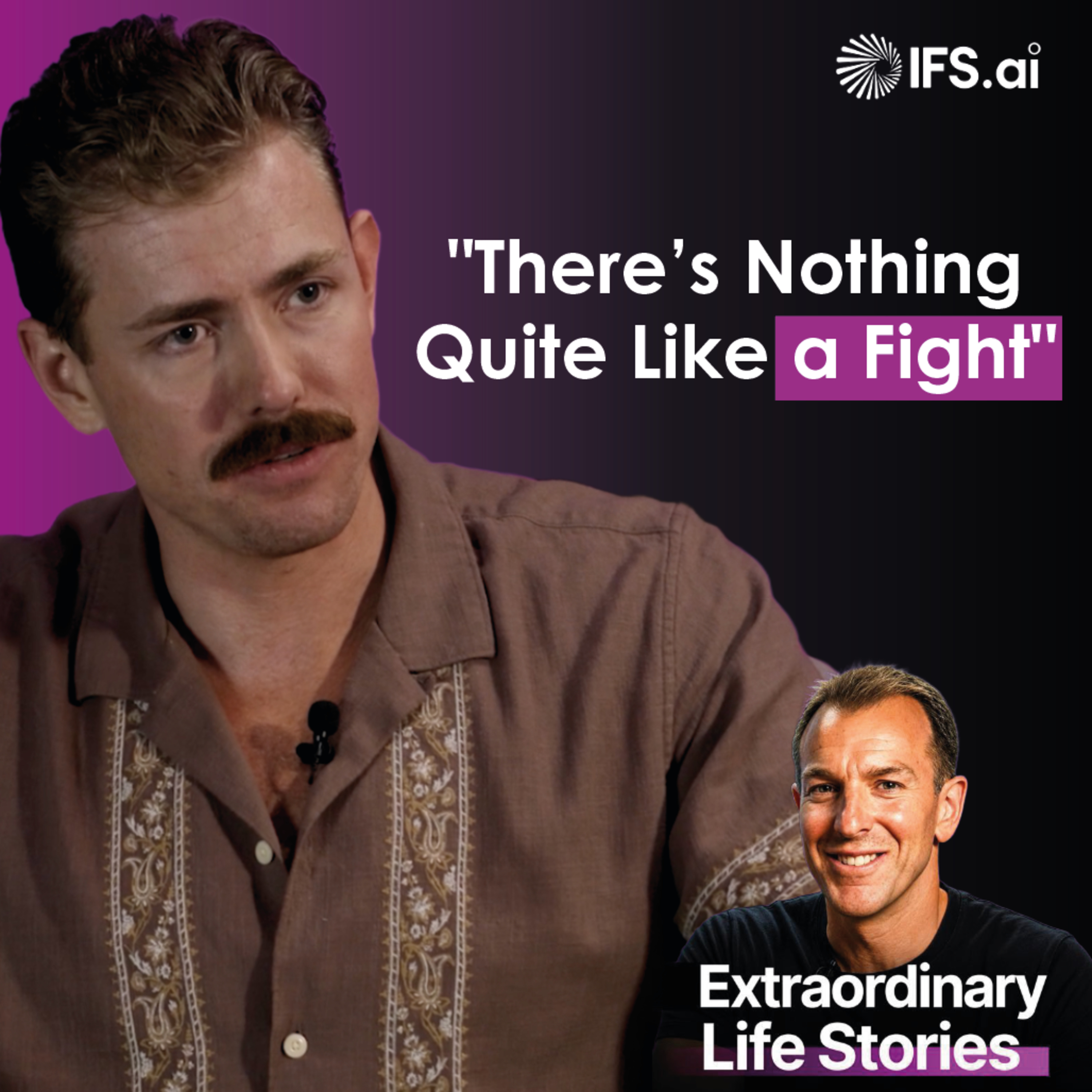
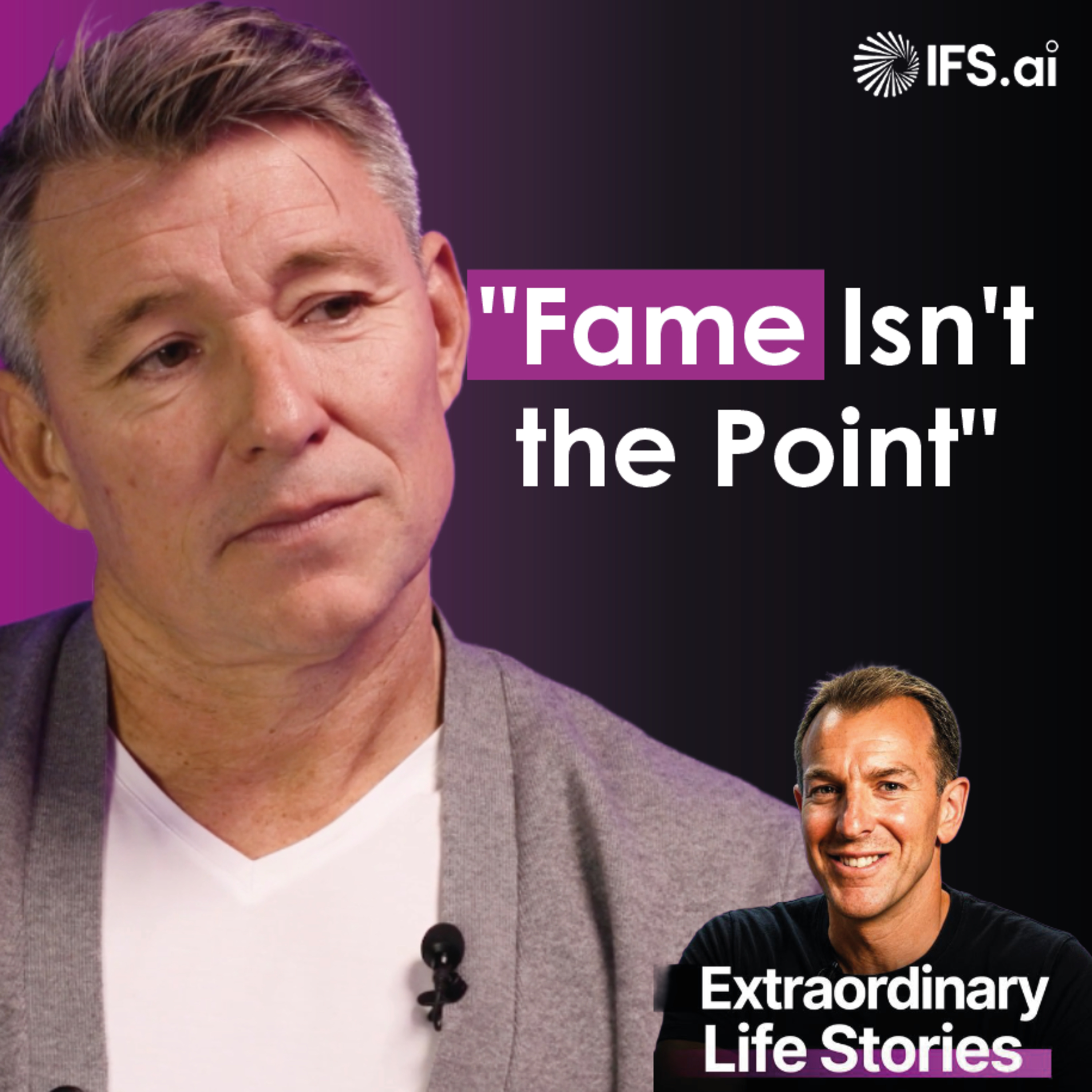
Cody “Big Mo” Mommaerts explains how he became a top combat-sports ring announcer/host and what makes great public speaking, emphasizing branding, persistence, and nonverbal authority.
Big Mo is a former athlete and academic (raised in an academic family; father was a trial attorney). He studied business (master’s mentioned), worked in advertising/branding, and cold-called promoters and front-office staff before landing opportunities with Sky Sports at about age 26. He later worked with major broadcasters including ESPN, Sky, and Netflix.
Get your foot in the door and keep knocking until someone answers; be “undeniable” and prepared for live TV. Great public speakers balance verbal delivery with nonverbal authority (posture, eye contact, dress). Notes should be a reference, not something you read.
He brands as “Big Mo” (two syllables; also tied to a former 320-pound football nickname). He cites Tyson–Jake Paul (75,000 people; Netflix sports debut) and his Sky Sports UK debut in Bournemouth as career-defining.
Written by AI. May contain mistakes.
Big Mo shares the story behind his name and branding strategy.
“Tyson, Anthony Joshua, Katie Taylor, Amanda Serrano, Jake Paul, like the whole nine yards, There's the whole litany, every broadcaster, ESPN, Sky, Netflix, etc.”
Discussing how Big Mo reinvented himself and the significance of his persona.
“So it's actually totally business-centered.”
Cody shares his background and the development of his public speaking skills.
“from the big voice and introducing big names in a big stadium in a big environment with, you know, that's, and I don't know if you thought of that, because you got that, but it's translated rather nicely.”
Exploration of the fears around public speaking and how to conquer them.
“But the same thing that I'm trying to achieve remains, which is I'm trying to entertain people.”
Big Mo discusses the components that make a great public speaker.
“I could never be in front of people and now I'm only in front of people.”
The significance of being unique and genuine in public speaking.
“And so that aided me in what I was doing.”
Learn about the unique speech patterns of public figures like Obama and Trump.
“So for example, the example I always use is when you look at recent presidents, okay, Barack Obama and Donald Trump have very different speech patterns.”
Explore how body language affects audience engagement and authority.
“There's a role model piece there, which is how I see you now.”
Hear about the challenges and strategies for engaging large audiences.
“I don't need to stop talking great honestly nice So cool.”
Understand how note reliance can impact the effectiveness of speakers.
“I was in grad school and I used to have certain classes that would allow for a note card on tests and quizzes.”
Understand how note reliance can impact the effectiveness of speakers.
“Okay, well if a lot of it is the same, then my notes don't need to include the things that are repetitive.”
Discuss the balance between preparation and spontaneity in interviews.
“I also think there's a growth element to this for me.”
Examine how father figures influence personal development and responsibility.
“as just a role model, as a ring announcer or a public speaker, then I've done my job.”
Learn how to create a personal brand that reflects integrity and business savvy.
“The first reason I like to look at myself as a business is it removes any personal predispositions, judgments, whatever.”
Explore the unique energy and experience of being a combat sports announcer.
“I didn't want to go the route of move to LA and sleep on couches waiting for a casting call or a casting opportunity.”
Discuss standout fights and aspirations for future boxing events.
“$90 for six months, or$180 for 12-month plan required.”

Get the gist, explore an idea or ask about something said.
 Claude
On Extraordinary Life Stories, what are the key points of this episode?
Searching your listeningAutomatic transcript. May contain errors.
0:00Kody Mommaerts: You have to get your foot in the door. You have to be undeniable. You might not have given me this opportunity, but someone else will. You keep knocking on doors. Everyone that ignored your other knocks on their door start to peek around going, why did they answer the door for that person? Tell me, who is Kody Mommaerts? Wow, I could unpack that in a few different directions. Former athlete, academic, student, entrepreneur, now entertainer. Let's just talk about Big Mo. Yes. Where'd the name come from? So I was like, all right, well, what's a way that I can make myself very quickly recognizable and very quickly sticky?
0:32I want to go to the ring. It's almost like the conductor. The fighter here, the fighter there, you call them out and you're the atmosphere, you're the...
0:39Kody Mommaerts: Yes. What does that feel like? My job is ridiculous. It's ridiculous. I climb into a ring wearing a tuxedo. No one else is wearing a tuxedo. Why am I wearing a tuxedo? Tyson, Anthony Joshua, Katie Taylor, Amanda Serrano, Jake Paul, like the whole nine yards, There's the whole litany, every broadcaster, ESPN, Sky, Netflix, etc. You have to understand that when you're a public speaker, whether you're a ring announcer in front of 20 ,000 people or whether you are a business professional in front of a boardroom, the goal is to get people to pay attention to what you have to say. So at this point, I'm just trying to see where I can scale this to.
1:24Kody Mommaerts: Welcome. Thank you. Looking forward to this. It's good to be here. Thank you for inviting me. My pleasure. I thought I got the drive opposed to have to fly, which was nice. Yeah. It's worked out well in Orlando. Yes, definitely. Tell me, who is Cody Momarts? Wow, I could unpack that in a few different directions. I've always been someone that likes to reinvent myself, and so I like doing a lot of different things. I was raised in that capacity, so I think Cody Momartz is an amalgamation, a combination of different interests. I'm a former athlete, academic, student, entrepreneur, now entertainer.
1:59Kody Mommaerts: And so I've gotten to do a lot of different things in a rather quick time period, I think. I'm just 30, almost 31. My birthday's next week. You packed a lot in. I have. But I've been fortunate enough to live an interesting life, which was my whole goal. So I look at Cody Momarts as almost being the umbrella of it all. And then maybe Big Mo or the other things I work on or individual pieces, if that makes sense. Let's just talk about Big Mo. Yes. Where the name comes from. Okay. So it's actually totally business-centered. When I got started in this career and I saw that the ring announcer and the host and the MC was an active part of TV shows and broadcasts, I figured out that I had to brand myself in a unique way to help myself with distribution.
2:44Kody Mommaerts: When I started I was 25, I was fresh out of college, 24, 25, fresh out of college, trying to find work and entertainment. No one wanted to hire me because I had no experience, no education, nothing related to broadcasting, which are totally fair arguments. So I was like, all right, well, what's a way that I can make myself very quickly recognizable and very quickly sticky? My background is in advertising and branding and marketing, so I understand the concept of making an impact very quickly and hoping that you can be remembered from that. So I went by Big Mo purely because it was two syllables.
3:17Kody Mommaerts: You'll never misspell it. You'll never mispronounce it. It's easier to remember, and it's easier to remember than my last name, which can be a little bit of a crossword puzzle in a way. So it just, honestly, it was a totally just branding business decision that I made when I was younger. And then it kind of just stuck when I got hired by Sky Sports. I thought maybe they would make me get rid of it. They didn't. And then I thought Netflix would maybe make me get rid of it. They didn't. And so I'm like, all right, I guess I'm Big Mo. And you were big, as in you were bigger. Hence where it came from.
3:48Kody Mommaerts: Yeah, so it was a football nickname. I've lost about 100 pounds. I used to be about 320 pounds when I played football. hence where Big Mo came from. So I guess now I'm more slim fit Mo but it's still bigger than most. But keep Big Mo. Yeah, it flows better than slim fit. But I'll share this with you because I like to find out real time on stuff. So when I'm meeting you and without knowing that you were once big in terms of physical size I assumed it was the big personality. Because if you think about how I know you from the big voice and introducing big names in a big stadium in a big environment with, you know, that's, and I don't know if you thought of that, because you got that, but it's translated rather nicely.
4:28Kody Mommaerts: I never actually pieced that together, but that does make sense. The big is also an authoritative piece, which I think is a component of my public speaking. So yeah, it all ties together. It works. It all ties together. So this multifaceted version of you, when you, I want to go back to the early, because what you've gone into in terms of almost like a niche with the announcements and, you know, people watching, particularly listening, were like, I know that voice. Now I know where. But the early kind of career decision-making, if you like, and why you studied what you did, what did you want to be?
5:00Kody Mommaerts: I was always very good with school. I was very academic. I was raised in a very academic family. My grandparents, who predated me, were scientists and researchers. My father was a trial attorney for a long time, so I was raised very much in an academic environment, which I loved. Sports were also an important facet of what I did. obviously I was a lot bigger, but I always loved entertainment and I wasn't sure why. I just was always enthralled with movies and TV and performances and I always kind of was enamored by those people that could be larger than life personalities. And I think I grew up, I'd say a little socially awkward.
5:41Kody Mommaerts: I was kind of a taller, awkwarder kid, so I wasn't always the most social person, which I think is kind of funny given the job that I do now. But I was always just interested in it. And so I took a lot of pride in entertainment and watching things. And that was always my escape. And I think that entertainment actually serves a very important part of society because I feel like that's the way that people can escape from things. That's where they can sit down and they can watch something for a few hours. Now, did I anticipate it going the route of professional boxing and ring announcing? Absolutely not.
6:14Kody Mommaerts: But the same thing that I'm trying to achieve remains, which is I'm trying to entertain people. So when I meet people that spend money on tickets and they bring their kids and they have a night out like that gives me a sense of euphoria because I got to help be a part of basically creating that atmosphere and that energy. And that extends to when I'm on television. I try to break the fourth wall. I try to talk directly to people because I understand that there's people that took time out of their life. They're sitting on the couch at home. They're watching something when they could be doing a litany of other things.
6:46Kody Mommaerts: And to me, I appreciate that. So that's my capacity. This episode is brought to you by Google Chrome. You think you know a browser, but Gemini and Chrome? That's new. It can help you with practically anything on the web, like restoring a vintage motorcycle from a 50-page restoration block, or finally break down that long article you've had open for weeks. Gemini and Chrome is here for it. Ready to make anything online make sense? There's no place like Chrome. Check responses set up required compatibility and availability varies 18+. It's a whole fulfillment and purpose piece there, which actually is interesting because you didn't set out to do it because I wonder if there was a young version of Cody where it's like you know you watch the boxing matches you don't to then want to do that but actually and I'd love to piece this bit together actually where but that maybe slightly shy socially not kind of forthcoming kid so then being literally the guy that comes on stage is like bring it you know like I mean all eyes on you.
7:42Kody Mommaerts: I could never be in front of people and now I'm only in front of people. It's the most amazing thing. No, it is amazing. And a huge compliment to you. But I guess there was an element of drive and purpose that took you into that. Purpose being the kind of, this is a passion. That's the word. But you've got to get past. And some people don't. You know, I want to do this, but there's an embarrassment hurdle to get past. Judgment. Yes. Fear. Yes. And I want to know what that journey was for you. Absolutely. And I think that that's a, when you dial back my career, when you remove all of the pageantry and the tuxedos and all of that stuff, I am a public speaker.
8:22Kody Mommaerts: That is the capacity of what I do. And oddly enough, despite me being socially awkward with kids and people my own age, I was very good with adults. My father is 81 now, and he just raised me by himself, so I was always with him. So I was always around adults more than I was actually kids in a lot of capacities. So I got very comfortable with public speaking. My dad taught me how to present at a young age. I was always the presenter for projects. I was always the speaker for that type of thing because I didn't view it as a social interaction. I viewed it as a business or a presentation or an academic thing, so it almost registered differently in my brain.
8:59Kody Mommaerts: But what it taught me to be was a good public speaker. I gained a lot of skills, and I think that public speaking is a neglected skill for a lot of young people these days. They say that public speaking is the number one fear amongst people. It ranks above heights and fire and all that type of stuff. People are afraid of public speaking. There's a stat. I don't want to interrupt you. There's a stat, but some people would prefer to die than do public speaking. When in actuality, you look at it, I just had skills that I had learned over time, and it made sense, and I knew how to speak formally. I always had a good vocabulary.
9:34Kody Mommaerts: I knew how to say things in a certain way and build that, you know, I guess the suspense when speaking and understand the technicalities of public speaking. And so that aided me in what I was doing. But the difficult part was overcoming the fact that I was significantly younger than everyone that did it. You know, when I was, I was cold calling promoters. I was making friends with secretaries and front office people just trying to get a phone call in. and then when I got the chance it was hey I'm 24 years old you want to give me a live microphone on a TV broadcast and they're like no hang up and then it wasn't until Sky Sports that I got that opportunity to do it and I started announcing for them when I was 26 crazy there's an entrepreneurial piece there I'm really glad you brought that up as well because someone that looks at you now and goes on your Instagram and sees Tyson and huge names they don't know how you got there there's that there's the cold calling there's the relentlessness absolutely keep trying until sky sports yeah you have to you have look if you don't believe in yourself and no one will and I think that whether it's business whether it's a personal hobby or an interest that you have like you have to get your foot in the door you have to be undeniable almost to where it's like okay you might not have given me this opportunity but someone else will you keep knocking on doors because then what you find is as soon as someone answers your knock, everyone that ignored your other knocks on their door start to peek around going, why did they answer the door for that person?
11:03Kody Mommaerts: And then you start to meander in, and that's what happened to me. You know, to where I started, as I worked in boxing and did all the big fights, I started meeting all the people that politely turned me down for work. But it's okay. Did you politely remind them of that? Of course, of course. I mean, they remembered. It's okay. But I understand why that hesitation was there, and I also understood that that was the challenge to me. The challenge to me was prove why a 26 year old kid should be given a live microphone in front of tens of thousands of people if not millions of people on TV. So I had to show them no I do know how to speak maturely.
11:39Kody Mommaerts: I do know how to carry this. You can give me that burden and that responsibility of being tied to a live broadcast. And so it's just the same as anything else. You eventually just start showing them that you can do it and you have to be good when your number is called. It's not just, you know what they say, it's luck is timing, when timing meets preparation type of thing. Well, if you stay prepared the whole time, then you're not waiting for a specific moment. Powerful message is that, yeah. You were ready when you carved open your break, but you were ready to take it. You have to be. It's live TV.
12:10You can't not.
12:11Kody Mommaerts: I can't go up there and freeze. I can't pause. So I love the fact that you've mentioned public speaking being ultimately what you do if you like. What makes a great public speaker? That is a fantastic question that could be answered in my new 10-part book series. No, I'm kidding. I think it's a handful of things. I think when you break down public speaking, what I've always said is you have to break down nonverbal versus verbal. I think that when people examine public speaking and they try to give advice, they try to give input, a lot of it is just on the verbal piece, which is great. You can always work on that for sure, but so much of it is nonverbal as well.
12:48Kody Mommaerts: That's tone. That's the delivery. Yeah, so verbal would be, when I classify verbal, it's everything from tone to the pattern of your speech, when you pause on certain things, the words that you use, etc. But I actually think there's a whole other component to that, which is nonverbal. It's how you establish authority. It's how you utilize or don't utilize notes. It's the difference between memorization and comprehension. I think that a lot of people try to almost teach themselves the crash course in public speaking. Learn my topic, memorize my notes, I have my note card, here's my slides and I'm going to present on those things.
13:25Kody Mommaerts: Depending on how deep you want to go with public speaking it can be significantly more technical and I think that when you watch excellent public speakers, what also makes them excellent public speakers is they're unique. I think a lot of people when they learn public speaking they try to follow a formula and they always kind of sound the same. Like when you go to a lot of business schools or when you talk to young people that are learning how to public speak, they almost kind of follow similar structures to their tone. But as they mature in public speaking and when they figure out exactly how they want to sound and what makes them uniquely different, that's when you start to differentiate good public speakers from not.
14:00Kody Mommaerts: So for example, the example I always use is when you look at recent presidents, okay, Barack Obama and Donald Trump have very different speech patterns. And even if you looked at it from a technical standpoint, depending on what you look at, neither of them you would say is, oh, that's an amazing public speaker, because they both have abnormalities to their speech. Obama would pause, and he would hold long pauses with his speech. Trump, on the other hand, can talk very quick, quickly go into a muttering kind of episode, et cetera. So those are different ways to do it. but what you're left with is two very uniquely unique speakers that leave an impression on you, if that makes sense.
14:41Kody Mommaerts: Oh, absolutely. That's so interesting to listen to. Yeah.
14:47The unspoken part as well is body language as well. Yes, huge. Talk to me about that. Huge. Because you're doing it professionally. You're so good at it. But also, I love the fact that you, and I want to go back to this, your father taught you. Yes. You know what I mean? There's a role model piece there, which is how I see you now. to anyone watching listening where they're like, oh, this is just so good to learn from.
15:05Kody Mommaerts: Yeah, look, I think the key with nonverbal more than anything else is it's establishing authority. You have to understand that when you're a public speaker, whether you're a ring announcer in front of 20 ,000 people or whether you are a business professional in front of a boardroom, the goal is to get people to pay attention to what you have to say. That's the point. Yes, do you want people to look at a slide? Sure. Yes, do you want people to maybe look at the notes? Of course. But The reason why you are there, the reason why you are presenting is to get people to listen to you. So you have to do certain things to get them to do it.
15:37Kody Mommaerts: Low-hanging fruit would be dress, right? My job is a perfect example of that. Why do ring announcers wear tuxedos? Why do you dress super high formal? Well, if I'm trying to get someone's attention, historically in society, in modern civilization, you wear formal wear. You dress up for an important occasion. That helps you establish authority. My size is one that works for me. my body language? Do I have good posture? Do I make eye contact with people? Am I just reading off of my notes as I'm talking to John here or am I able to actually engage with you while not just staring at my notes? All of that is completely nonverbal that changes how an audience connects to you.
16:15Kody Mommaerts: The whole goal is to get the audience to connect. If they don't connect, then you're just another person that's talking to them on the screen. But if you can get them to lock into what you're saying, their retention of what you say is going to be significantly higher. I repeat myself all the time in fighting. I remember once I had a producer that said, you know, you already said that line I'm aware my whole job is repetition. My whole job is to drill a little bit of marketing into your brain Who's fighting? When are they fighting? What's the fight for? They're fine tonight. It's Friday night, right?
16:43Kody Mommaerts: The fights in Vegas When's the fight? It's Friday night in Vegas But that what that leads to is an audience that ultimately understands the exact narrative that you're trying to get them to understand I don't need to stop talking great honestly nice So cool. And I'm going to just quite unusually flip this back to me, where I feel quite pleased that I've come into this part of my life and my career, which is my favourite thing to do. Imagine how much I'm enjoying talking to you now and learning from you. No notes. Didn't feel right. Because I want to have eye contact. I want to be fully present to you so that I'm not kind of going, thanks for that.
17:16So my next question is, but if I'd gone that sort of full media training side of things and I'd leaned into it, it was like, and I had, I'll share this with you, I had a talk on the main stage this morning, which actually I totally get that fear of public speaking. And I've got to walk out to nearly 4 ,000 people. And I've got to then do this in front of those people. And I wrote loads of cards out for it.
17:37Kody Mommaerts: And yours is hard because the reality is that my job, at least in my capacity, the fans are there to be energetic and to be excited and they're drinking and all that type of stuff. They're engaged, right? A business presentation or a conference presentation is a little bit different because maybe not everyone wants to be there. Maybe their job made them go. Maybe their company got them the wristband. Maybe they want to go. Who knows? But the point is, is you have to now be super engaging and energetic about a topic that maybe they want to listen to. Maybe they don't. Who knows? Good shout. But I wrote those cards out.
18:10And then minutes before I went on the stage, I handed them to Michael, who's sitting over there, and said, I don't do this in this environment. Yes. And I think that would have completely changed how I'd have gone about it and I would have stopped this and I would have been like and then I would have been doing something that didn't come naturally so I just I just I love the fact that you're the pro you're the you're the guy that's been um doing this longer had that mentoring if you like you know I feel like I'm on the right track with that because it works for me yeah this I can I cannot be distracted by um notes and I can stay fully present notes is so I took this from when I
18:46Kody Mommaerts: I was in grad school and I used to have certain classes that would allow for a note card on tests and quizzes. They're like, look, there's a lot of material. You're allowed a five by seven note card. It's common in the academic school system to have that. And what you learn when you do notes in class and when you take notes in college and whatever, if it's school, whatever. If you learn to take notes, what everyone tells you is the action of taking the notes is what helps keep it up here. So yeah, you can spend all this time doing this note card, and that's why you felt comfortable giving your note cards back, because you actually made the note cards.
19:21Kody Mommaerts: You sat there and you said, okay, here, I hear the things I want to ask. And then after the 10th time of reading through them, you're like, wait, why do I even have these? I know the entire material, and that's why you're going to put them back. And I think that's the key, especially in my job. One thing that I've noticed with a lot of announcers, and I don't pick apart how other people do their job, they do it how they do it, but a lot of announcers are very note reliant and very note heavy. When you do that, because of the amount of information that you have to get through, if you rely on your notes, now you're reading.
19:52Kody Mommaerts: You're just reading to people versus you're speaking to people, right? What I've always basically said is that my notes always want to be a reference. What I learned in my job is that a lot of what I say from show to show, from fight to fight, a lot of it is the same. Okay, well if a lot of it is the same, then my notes don't need to include the things that are repetitive. I already know those things. So my notes only feature variables because those are the only things that change. I know how I'm going to say a certain thing for a certain line. 90 % of that is the same way I would say it for this fight over here.
20:26Kody Mommaerts: The only variable is the thing at the very end. So that's kind of what I've always noticed with my experience in public speaking is that, Yes, there's a lot of flow to it, but it is, at times, it can also be a little bit mathematic as well. It can be a lot of logic-based reasoning when you develop your notes or your script or whatever you want to work off of. This episode is brought to you by Google Chrome. You think you know a browser, but Gemini and Chrome, that's new. It can help you with practically anything on the web, like restoring a vintage motorcycle from a 50-page restoration block, or finally break down that long article you've had open for weeks.
21:01Kody Mommaerts: Gemini and Chrome is here for it. Ready to make anything online make sense? There's no place like Chrome. Check responses set up required. Compatibility and availability varies 18+. You know that friend you only call when you need something? HomeServe's here for you. Got a burst pipe, HVAC outage, or electrical issue? HomeServe has your back for regular use where basic homeowner's insurance typically won't help. With a protection plan from HomeServe in place before disaster strikes, just call us. will send a qualified contractor and help you avoid unexpected expenses. Maybe we're the last ones you want to call, but we're happy to hear from you.
21:35Kody Mommaerts: Go to homeserve.com slash audio for 50 % less your first year. Savings compared to renewal price point in Florida. It's fascinating. I also think there's a growth element to this for me. So we can use AI for so much now. We can use tech to, I don't want to say cheap, but you know what I mean? I could give me 10 questions to ask Big Mo and there's my interview. yeah right and then my next question is and so on whereas I'm feeding off where you finish I've got things in my head I want to ask you from my prep right that's they're my notes yes but when you go off a tangent and it's a conversation like this I'm like I'm gonna go with that because that's super interesting you have to if you try to get back on your track then you lose the flow of the conversation so I want to go to your dad yes I want to please parallel that as a role model side of things because we've got this thing called the manosphere now where these particular lads that have not got a father figure, that they can learn from, that they can have as the role model.
22:30And then there are dads that are not present. They're not even sure how they're coping with their own life and so on. And I just wanted to sort of, slightly tricky question for you, but there's the importance of your dad and how he shaped you, and then there's whether you can see yourself as a role model and that responsibility you have as a public figure.
22:48Kody Mommaerts: Yeah, so my dad is the most important person in my life. He raised me by himself. He now suffers from Alzheimer's and dementia. So now the shoe's basically on the other foot. I get to basically take care of him, which has kind of been a fun, not a fun experience, but an experience in my life. But he taught me most things that I know. And how much he stressed academia and education on me was very important. I am someone that very much believes in schooling and educational system, trying to do as much as you can. Do I necessarily think college is for everybody? No, but I definitely think you should pursue some form of higher education or training or whatever.
23:30Kody Mommaerts: So my dad was a smart guy. He actually, I found his old, I've gone through like family records as I'm trying to piece things together and he was a full on like registered genius, verbal IQ of high 130s, like he was brilliant, which makes what he's going through now much more hard, much more difficult. but regardless he was able to pass on a lot of that stuff to me in terms of knowing how to be observational knowing how to be detailed knowing how to not put your name on bad work and things like that like he really drilled perfectionism into me people I do business with sometimes don't like always talking about business because I have a tendency to analyze and to poke holes and things play devil's advocate well that's because when he taught me how to conceptualize ideas and understand things, he goes, take the concept, start poking holes in it.
24:20Kody Mommaerts: That helps you understand it in its totality. So I think when it comes to being a parent, I think my dad's role for me was that of a teacher more than anything else, which I think I'm very appreciative of. So now, if I can be a role model to people, then amazing. You know, what I've always thought is, and what my dad pressed on me is you always want to be better than your parents. If you can start to trigger that snowball effect to where every generation of a family is progressively better than the ones that came before them, well then that's how you start to actually build a family legacy and that's how you start to improve from generation to generation.
24:59Kody Mommaerts: So I think that extends past family. It's not just family that has to follow that suit. And so if I can be that for somebody as just a role model, as a ring announcer or a public speaker, then I've done my job. I think if I could give anyone a piece of advice, and me being the proof of it, if I was able to go and build a career as a professional boxing and combat sports ring announcer, and I think there's maybe 50 of them in the whole world, and if I was able to go do that and apply myself to that and create the life that I have, then there is nothing stopping anybody. Because that's about as niche of an industry as I could get into.
25:39Kody Mommaerts: So if I could be a proof of concept to anybody, go after it. The worst thing that could happen is you try again. That's really about it. That's brilliant. Business. Yes. You mentioned the word business. And ultimately, Cody is a business. Yes. There's a personal brand. There's a personality. Absolutely. It's coming through now. And anyone that's clearly been watching, listening to this point can see there's a whole intellect there. There's a science to it. But I think it's really important to open that up because there's a fun element to it. And maybe even, and I've got to choose the right word here, but when someone's watching you in your moment and so on, it's like, well, that could be quite easy.
26:19And it's like there's the actual what you do, the skill of how you do it, and the impact that you have. There's all the planning. And there's getting paid to do it. And there's making a living out of it. I'd love to know more about that.
26:32Kody Mommaerts: Well, I mean, you can unpack it in a few different ways. I like to look at myself as a business for two reasons. The first reason I like to look at myself as a business is it removes any personal predispositions, judgments, whatever. Yes, it's a personal brand, but I do think it's important to have a degree of separation because it helps you make correct decisions even if they're uncomfortable in the moment. So when you look at yourself as a business and when you look at yourself as, okay, is this business producing money? Does this business have too high of costs? Does this business come with any risks, et cetera?
27:09Kody Mommaerts: You should look at that purely objectively and not it's me. In my opinion, that's how I did it. And in fact, in a way, Big Mo almost helped me do that. Big Mo almost created that degree of separation where I could evaluate it as a business rather than just me. So I think there's a handful of ways that you can build your personal brand. I don't think necessarily personal branding is for everybody. It's not something that everybody can do necessarily, but you should still find a way to take whatever it is that you are personally, your passions, your interests, and try to turn it into something. I'm never going to be that someone to say drop everything that you're doing and only follow your passion.
27:51Kody Mommaerts: Careful doing that. You want to have a safety net. When I was starting, that's what I was doing. The reason why I got into what I do now is I wanted to get into entertainment, but I I didn't want to go the route of move to LA and sleep on couches waiting for a casting call or a casting opportunity. I had a master's degree in business. Utilize that. Leverage that. Even if that's not something I want to do long term, you have to create that safety net for yourself while you then can pursue your interests on the side. So whether or not you want to have a personal brand or turn yourself into an entertainer like I have or the whole nine yards, still understand, okay, what in my life is monetizable?
28:31Kody Mommaerts: What in my life is scalable? What in my life can provide utility to other people? All those questions should be asked because I think most people will find there is something. These people say, I don't really have any interest. I don't do anything. I'm not saying I don't believe you. I'm just wondering if you're digging deep enough. That's good advice, that. I want to go to the ring. Okay. I can imagine anyone watching this and they're like, do not finish this conversation without he gets to be in the epicenter yes and you effectively it's almost like the conductor you know it's like you know fighter here fighter there you call them out and you you're the atmosphere you're the yes what does that feel like it is yeah man it's an addictive feeling it is a fulfilling feeling um the energy from it is different than anything else.
29:24Kody Mommaerts: So I've been a combat sportsman for a long time. And I remember I was like one of the few people in my friend group that was really into fighting combat sports growing up. And I remember in college, you know, when we'd have people over, we'd have like a, you know, pregame for a party or go to a party or whatever, I would put the fight on and I would mute it or I would just turn it down. And I remember no one at the party besides me or a couple of the people could score the fight or tell you what was happening or maybe even tell you who the fighters were. But everybody could relate to the lights go down, music hits, pyro goes out, the fighters are walking out.
30:05Kody Mommaerts: It's one of the coolest things, if not the coolest thing in sport. When you talk, when you ask people what their favorite moment of the night was when they leave a boxing match, depending on who the fighter was, they may say the ring walk. The ring walks are the things that everybody wants to watch. Who's going to walk them out? What's the pageantry? What's the story, etc.? It's a show. It's a show. And in my opinion, combat sports, in my lane, boxing, whatever you want to look at, it's the greatest sport in the world. And it's the oldest sport in the world. It's the sport where you take an entire crowd of people and focus them on two people.
30:38Kody Mommaerts: It's the only sport where it's not a game. It's not, you're not trying to score points. depending on the fight, you're trying to incapacitate your opponent. And that leads to a level of rawness and realness that's kind of hard to mimic elsewhere. I played sports my whole life. Played football, played basketball, felt that feeling, felt that energy. It's great. It's not like a fight. It's not like a fight. There's nothing quite like it, especially when you get national pride or whether you get a family legacy involved in all these different narratives and all these different storylines. There's nothing else like it.
31:15Kody Mommaerts: There's no barrier to entry. You don't have to go buy a ball. You don't need the specific pads or need the specific helmet. You got a pair of gloves? Cool, get in the ring. And I've seen people change their entire lives. Stories of people that shouldn't have made it as far as they did. But you know what? When the bell rang, they figured out how to throw their hands pretty well, and now they've changed their family's life. Now they're worth$100 million when they should have, on paper, been worth nothing. And I think that that sport can give that to people a lot differently than other sports can.
31:46Kody Mommaerts: So the fact I get to be in there, and the fact I get to look at them, and be five feet from them, and introduce them, and tell the world who they are, I take immense pride in that. I get to, what I am is I'm an orator, I'm a messenger. I'm not a narrator, I'm an orator. There's a slight difference. And what I get to do is I basically get to tell the world who these people are. What I've always said is, and I stand by this, my job is ridiculous. It's ridiculous. I climb into a ring wearing a tuxedo. No one else is wearing a tuxedo. Why am I wearing a tuxedo? I grab a microphone and I start telling a crowd of people information that they already know.
32:21Kody Mommaerts: They already know who they're there to see, but I'm the one that has to tell them. But as ridiculous as it is, it works. It just works. It's why the role has been there for decades. It's why everyone has their favorite announcer. It's why Bruce Buffer is great over here, but Michael Buffer is great over here. And so as ridiculous as my job is where I tell everybody is just go, just go to a fight. Just feel what that is like. It's there's nothing else like it in the world. This episode is brought to you by Google Chrome. You think, you know, a browser, but Gemini and Chrome that's new. It can help you with practically anything on the web, like restoring a vintage motorcycle from a 50 page restoration block, or finally break down that long article you've had open for weeks.
33:05Kody Mommaerts: Gemini and Chrome is here for it. Ready to make anything online make sense? There's no place like Chrome. Check responses set up required, compatibility and availability varies 18+. This holiday, all plans, even unlimited, are just$15 a month. A holiday deal this good obviously deserves an enormously expensive holiday song, like All I Want. Right. Okay, we can't afford that. You know what? Forget the music budget. We're going to stick with whatever's in the public domain. Give it a try. at mintmobile.com slash switch. Upfront payment of$45 for three months, $90 for six months, or$180 for 12-month plan required.
33:39$15 per month equivalent. Taxes and fees extra. New customer offer for initial plan term only. Greater than 50 gigabytes may slow when network is busy. See terms. Passion coming off of you for that is tingly. Yeah. And there's a relatability piece. There's a relatability to you, the love you've got for what you do, but also I love the way you describe the boxing and the low barriers of injury, which is I think why everyone loves the sport, right? Because it's so primal. Yes. It's so tribal. Yes. And even if you're a neutral, you just want to see a good fight. But if you're supporting one of them, then it's like you're in that corner and it's like it's...
34:12You're on the edge of your seat. Yeah, and you must feel that. Oh, my God. And then you get to stimulate it. Is there a fight that stands out? Because you've done so many. Is there a fight that just comes to you now where you're like that atmosphere? And probably, dare I say, without any arrogance, you're so pleased with how you did and what you did that just stands out for you.
34:29Kody Mommaerts: Wow, that's a great question. I mean, the most critically acclaimed and seen one was the Tyson-Jake Paul fight, just because of the scale of it. 75 ,000 people, 100 million people on TV, first time Netflix did sports. It was a massive. It was a big event, wasn't it? It was crazy. And what was crazy is that was my first professional boxing event in the United States. Because I started working in the UK first when I was working for Sky. And then I got a call randomly saying, hey, I think Jake Paul's going to fly my Tice on Netflix. You want to do it? I'm like, what's the next plane? Let's go. Give me that.
35:06Kody Mommaerts: This is why I do it. So that one was great. But I'll never forget the first time I ever announced in the UK, the first time I ever announced on Sky Sports. No one knew who I was. I used to wear sunglasses in the ring. I went by Big Mo. It was this kind of cheesy, hokey thing. I was on social media trying to get my name out there, and I get hired to do fights in, you know, in my opinion, one of the best broadcasters in the world, as you probably know, right? And our first show was in Bournemouth, and it was for a Bournemouth fighter named Chris Billum-Smith, and if you've ever gone to fights in Bournemouth, Bournemouth has fantastic fight fans.
35:47Kody Mommaerts: The whole UK does, but Bournemouth holds a special place in my heart. And I remember I went out there, and I was like, oh, wow, I'm on Sky Sports right now. This is crazy. and it was the first time I ever announced for British fans. I didn't know how they were going to receive me. As you know, British fans are particular. They like what they like, and they received it great. They liked my energy. They liked me. They got along with me, and that was the start of what was basically my entryway into the sport of boxing. And so I'm thankful every single day. The fact that my entryway to boxing was doing it on Sky Sports in the United Kingdom, that's what shaped me for everything else because that's one of the hardest markets to survive in.
36:34Kody Mommaerts: The UK boxing fans know their boxing. They're remarkably passionate. They'll go to every show. They watch every bit of content, and they will pick you apart if you're not good at it. So the fact that I got to cut my teeth there, I can do good. I can go anywhere. That's awesome. Boosted your confidence. gave you that and then look away is there a I want to finish on this yeah is there a fight that either yeah it may never happen but the two boxes that you'd love to see come together and you'd be part of or is there a scenario a goal if you like that you'd like to find yourself in you know where I've been very fortunate in my career and I've used this term before and I don't mean this in in a negative or a gloating way or anything like that.
37:16Kody Mommaerts: But I used to play video games as a kid. And in video games, there's this term called speed running a game, where you try to beat it as quick as you can, beat the whole game as fast as you can. I got to experience boxing at a very, very fast pace. In two years, three years, I went from announcing in front of 100 people to announcing in front of the O2 arena sold out on Sky Sports pay-per-view. So I got that entire path through boxing very, very rapidly. I speed ran boxing. So I've been very lucky to do great fights. Tyson, Anthony Joshua, Katie Taylor, Amanda Serrano, Jake Paul, the whole nine yards, the whole litany, every broadcaster, ESPN, Sky, Netflix, etc.
38:02Kody Mommaerts: So at this point, I'm just trying to see where I can scale this to. I've done this all. It's been pretty quick. It's been in the blink of an eye. and so now I want to see where I can scale this. What other things can I do? In terms of fights, I want to do the biggest fights in the world. I want to do AJ versus Tyson Fury. I absolutely want to be there. Whether it's that fight, whether it's one down the road, I'm not necessarily in a hurry, but I like entertaining people. I think it's fun. I think creating that atmosphere is fun. Watching people leave the arena and go, wow, that was a great time.
38:34Kody Mommaerts: Wow, that was so much fun. They bring their kids. That gives me a sense of pride. So whatever fight allows me to entertain the most people, I'm good. I said that years ago. I just want to, I want to announce in front of the biggest audience I can entertain the most people. Did I think that was going to be Mike Tyson on Netflix? No, but you never really know how life is going to shake out. You've done so much already. I'm excited for your future and you've entertained and educated me and countless other people watching and listening. You are an absolute pleasure to talk with and learn. It means a lot for you to have me.
39:07Kody Mommaerts: Thank you so much. It's been a lot of fun. Thank you guys. I've loved it.
39:21Wayfair.
39:42Holiday decor you can count on year after year. Wayfair delivers.
39:47Kody Mommaerts: When you're building a company, you learn that trust is what closes deals. You may have the best product, but buyers won't sign without proof that your product is secure, especially if it has AI. Vanta gets you compliant fast with SOC 2, ISO 27001 and more, and keeps you secure with continuous monitoring. Hyperbound, a YC-backed startup, used Vanta to unlock the Fortune 100 in under a year. Snowfire got audit ready in a month and closed a multi-million dollar deal. Trust matters. Get started at Vanta.com.
What does it take to go from being an unknown young hopeful to announcing some of the biggest boxing events in the world?In this episode of Extraordinary Life Stories, John Reynolds sits down with Kody Mommaerts, better known as Big Mo, one of the most recognisable voices in boxing and combat sports. Having worked with Sky Sports, Netflix and some of the biggest names in the sport, including Mike Tyson, Jake Paul and Anthony Joshua, Big Mo shares the story behind his remarkable journey into the world of professional boxing.Kody explains how he overcame early rejection, built a distinctive personal brand and relentlessly pursued opportunities in an industry where few people ever make it. He also reveals the thinking and preparation behind his performances, discussing the art of public speaking, the importance of body language, building confidence and what really makes someone an engaging speaker.The conversation goes beyond the ring, exploring the influence of his father, the importance of education and mentorship, and how to turn your passions into a sustainable business. Cody also shares his perspective on personal branding, entrepreneurship and why being prepared to take your opportunity when it comes is so important.From his first appearances on Sky Sports to announcing the record-breaking Mike Tyson versus Jake Paul fight on Netflix, this is a fascinating insight into the determination, personality and preparation behind one of boxing's most exciting voices.Extraordinary Life Stories is proudly sponsored by IFS.ai