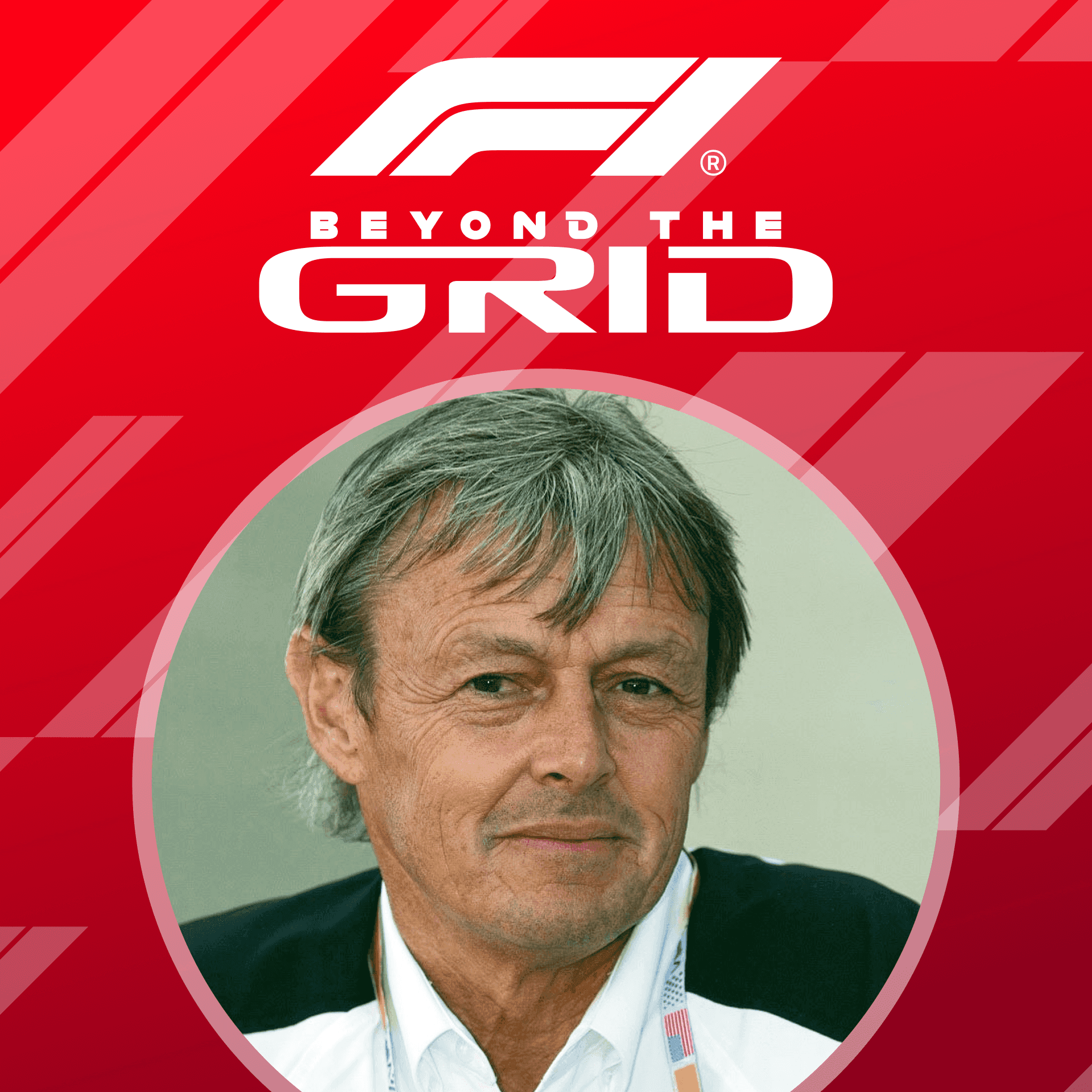
In short
Adrian Reynard recounts his engineering and business path from building championship junior single-seaters to founding British American Racing (BAR), later feeding into Braun GP and Mercedes. He also discusses his 1990 self-funded attempt at an F1 team, his technical approach (aerodynamics and wind tunnels), and why F1 success didn’t match his dominance in other series.
Guests
Tom Clarkson (host). Adrian Reynard (guest; motorsport constructor/technical figure; founded Raynard Racing Cars; technical director involved with BAR; later linked to Mercedes/Alpine factory design; also a land-speed-record motorcycle builder).
Key claims
Reynard’s F1 impact was “mechanisms” and people—designing factories, hiring engineers, and building systems that spawned later champions. BAR’s early expectations were fueled by its “disruptor” brand, but reliability and PR/politics hurt. His 1990 F1 bid failed mainly due to lack of sponsorship/engine funding; he sold a wind tunnel model to Ligier. Aerodynamics drove performance; he built a pioneering open-jet wind tunnel in America.
Notable examples
BAR’s 2004 second place to Ferrari (15 podiums); BAR’s V10/Honda-era engine deal; Benetton B192 link via staff and technology; Schumacher’s first win in the B192; Reynard’s Elvington 250cc turbo motorcycle aiming for ~200 mph.
Written by AI. May contain mistakes. Listen to the episode to check what was said.
Chapters
Tap a time to open that second in VOFoundations of a Racing Legacy
2:30 to 3:43
Discover Adrian's journey in founding successful racing teams and his impact on Formula One.
“designing championship winning cars and trying to crack Formula One.”
Adrian's Passion for Racing
3:43 to 6:33
Hear about Adrian's ongoing involvement in motorsport and his personal racing experiences.
“Summer's here in England, which is enjoyable.”
Inspiration from Heroes
6:33 to 11:09
Adrian shares his early inspirations in motorsport and how they shaped his career.
“Well that's what I talk to young people about.”
Inside Formula One
11:09 to 14:00
Adrian discusses his experiences in Formula One and the evolution of the sport.
“But when you had a pen in your hand, I know it wasn't a pen, and you were designing a car, if Sterling Moss was your hero as a driver, who was that equivalent?”
Jacques Villeneuve's IndyCar Success
14:00 to 15:23
Learn about Jacques Villeneuve's rise in IndyCar and the team's subsequent plans for Formula One.
“Jacques had come up through former Atlantic in the States, they chose to run our IndyCar in 1995 and win the Indy 500.”
Jacques Villeneuve's IndyCar Success
15:26 to 16:44
Learn about Jacques Villeneuve's rise in IndyCar and the team's subsequent plans for Formula One.
“BAT was interested and we tried to put together a Formula One team.”
Building a Formula One Team
17:50 to 20:44
Explore the challenges and strategies involved in establishing a new Formula One team.
“and our race-tested V-Series lineup at cadillac.com.”
Challenges of the First Race
20:44 to 22:46
Discuss the technical and PR challenges faced during the team's first race in Formula One.
“I remember the interviewer said, look, I'm going to train you for smoking.”
Transition to Honda Engines
22:46 to 24:28
Understand the decision-making process behind switching to Honda engines and its impact on performance.
“Asaka, who was head of IndyCar Racing, we'd blown away teams in the States.”
Navigating Team Dynamics and Overspending
24:28 to 27:22
Learn about the internal conflicts regarding budget management and team dynamics during the early years.
“But of course, we didn't live up to the reputation of the expectations which were created.”
Show all 22 chapters
Recruiting Talent: Malcolm Osler
27:22 to 28:00
Discover the recruitment process for Malcolm Osler and his contributions to the team’s success.
“He was the guy and he proved absolutely that person.”
Building Brawn GP's Foundation
28:00 to 29:19
Explore the early days of Brawn GP and the pivotal roles of key figures.
The Journey of Reynard F1
29:20 to 33:08
Learn about Adrian Reynard's attempts to create his own F1 team and the challenges faced.
“So if I have to look back on my achievements, I don't look at all the races we won and the championships we won.”
Lessons from Failure
33:09 to 37:08
Discover how failures can shape future successes and inspire new ventures.
“You know, you said if you'd been a little more EJ, did you talk to EJ about it?”
Innovations in Aerodynamics
39:51 to 42:01
Discuss the importance of aerodynamics in racing car design and performance.
“There's more to come from Adrian in a moment, but I just wanted to let you know about the other official F1 podcasts you can listen to this week.”
Adrian Reynard's Business Strategies in F1
42:01 to 45:36
Learn about Adrian Reynard's innovative business approaches that led to success in Formula 1.
“It was the most profitable car we ever made.”
Early Experiences in Formula 1
45:37 to 49:48
Discover Adrian Reynard's formative experiences and lessons from his early career in Formula 1.
“What did you learn age 29 that you were able to carry for the rest of your career?”
The Influence of Drivers and Engineering Talent
49:49 to 55:10
Explore the impact of drivers on car performance and engineering techniques in motorsport.
“John Pratt was great because he was overweight.”
Future of Engineering in Formula 1
55:11 to 56:00
Examine the evolving role of engineering in Formula 1 and the potential for hydrogen technology.
The Role of Internal Combustion Engines in Motorsport
56:00 to 58:14
Adrian shares his views on the future of internal combustion engines in motorsport and the challenges of sustainable fuels.
“But my own personal view, I'd love the internal combustion engine to continue.”
Memories from Early F1 Experiences
58:14 to 59:38
Adrian recounts his cherished memories from early Formula One events and influential figures in the sport.
“your time can i end it what i call the traditional way because of course this is the 75th anniversary of Formula One.”
Reflections on Diversity in Formula One
59:38 to 1:01:40
The discussion turns to diversity initiatives within Formula One and the importance of inclusion in engineering.
“Who can forget the start line crash at Silverstone in 1973?”
Transcript
Automatic transcript. May contain errors.0:00Cadillac has entered Formula One, deepening the racing pedigree behind every V-Series on the road. Discover a line-up that delivers pure adrenaline in the form of modern luxury. Experience the quickest Cadillac ever, the all-electric Lyric V, the peak performance of the CT5V Blackwing, the nimble agility of the Optic V and the legendary roar of the Escalade V, All engineered to thrill. Find out more about Cadillac's performance story in Formula 1 and our race-tested V-Series line-up at Cadillac.com. Having founded one of the most successful motorsport constructors in the world, Adrian Raynard knew Formula 1 would be the ultimate test.
0:51His company, Raynard Racing Cars, won the first race of every major single-seater category it contested before going on to win multiple titles in Formula 3, Formula 3000 and IndyCar. So when Adrian helped form British American Racing in the late 90s, the team arrived in Formula 1 with huge expectations. We were the disruptors. That was our brand. So we automatically were expected to do really well. and I wasn't trained for interviews too much. So of course, you know, yes, well, our aim is to go in and we'll win the first race. Why not? I was a bit naive for Formula One. I didn't really know how to tackle all the PR.
1:34It was astounding how much publicity it got. BAR never won a race, let alone their first one, but they did finish second to a very dominant Ferrari in 2004. They took 15 podiums and Adrian helped lay the foundations for the team that would go on to become world champions, first as Braun GP and then as Mercedes. Seeing all the world championships come out of that mechanism, I mean, that's what I do. I design mechanisms, I employ people, I choose great engineers. If I have to look back on my achievements, I don't look at all the races we won and the championships we won. What I look at is all the people that went on to do great things, either with us or when we went bust with other teams.
2:24Here on F1 Beyond the Grid with me, Tom Clarkson, Adrian shares some of his memories from a thrilling life designing championship winning cars and trying to crack Formula One. He talks about selling his house to create his own Formula One team in 1990 and how he helped to inspire legendary engineers like Rory Byrne and Pat Simmons. Then, after getting to Formula One with BAR, he recounts how he and team principal Craig Pollock had such a disagreement about the future of the team that he resigned. And there's more. Adrian also tells us how he designed the factories that would go on to become the headquarters of Mercedes and Alpine today.
3:07The part he played in the Benetton B192, the car in which Michael Schumacher won his first F1 race, and his up-and-down relationship with the late Eddie Jordan. Adrian's also happy to explain why the success he enjoyed with Raynard racing cars in every major championship outside of Formula One didn't quite translate to the top echelon. It's clear he loved the challenge, and I'm sure you'll enjoy his stories.
3:42Adrian, it is great to have you on the show. You're looking very well. How are things? Things are good. Summer's here in England, which is enjoyable. So I'm relaxed. I've been racing at Cabo Park and I finished four races. Not as quick as I used to be, but I still enjoy doing it. Hang on, elaborate. What were you driving or were you riding? Because you also ride bikes, don't you? Yeah, this was driving. In 1975, I designed and developed my first Formula 4 2000 car. And guess what? I've got a collection of them now, some totally original ones there, which I won my first race, championship race at Silverstone in.
4:22But this particular one, I've recreated. So it's all made of new parts apart from old engine, obviously, because they don't make Pinto engine anymore. And yeah, I've raced it for the last three or four years uh i was fifth in the championship uh in 2023 i think last year i slipped a bit because i didn't do all the races if i can come in the top six i'm delighted i'm not as quick as i used to be you know i'm scoring points but i'm not manic about doing every single race and also you're passionate about two wheels aren't you um just looking around uh your kitchen here there are certificates saying you're a land speed record holder on two wheels as well well that was when I was 19 and then 20 I went to Elvington again when I sort of retired from motorsport I decided it would be really cool to have another go at the same record so I built myself a 250cc motorcycle this time I've got a Honda engine in it not a Royal Enfield this time it's four stroke it's got four cylinders it revs to 19 ,000 rpm and I've turbocharged it and it's running on rocket fuel we've got about 110 horsepower out of it at the moment which is three times the amount I had and the the idea is to try and get as close to 200 miles an hour as possible at Elvington same venue I was at in 1971 72 who's going to be riding well there's no real choice on that I have to do it myself what does your family say to that I think my two sons are keen to have a go as well once I prove that I can get to close to 200 I'm not saying 200 is really difficult with a 250 the aerodynamic forces go up a lot the the engine power goes up of the cube of the speed so it's it's a big challenge and I don't want to keep developing this engine it's already developing per liter the same amount as Formula One engines do so we're doing very well I don't want to burst the engine the transmission is a limiting factor as well I don't want to put too much power through that power or torque.
6:26I'll do my bit and then if my two sons Sam and Max want to have a go they're welcome to it. Adrian your passion for motorsport and all things with an engine is still so infectious. Well that's what I talk to young people about. I teach a bit as a visiting professor at both Cranfield University and Oxford Brookes University and passion is the one thing I say is an essential ingredient for them to have to follow a career in motorsport because it's difficult. You need determination. You need a vision of where you want to be. And the passion, I guess I've still got it in a minor way. It's not a professional way.
7:09It's a very selfish way at the moment. But I enjoy still doing things and I'm not quite sure what I'd do life if I didn't have something to focus on. It begs the question, what interested you first about motorsport? Was it because you wanted to be a rider or a driver or was it the design side? I wanted to be a Formula One driver. There's no doubt about that. My father bought himself a go kart when I was about nine and he let me have a go in it at Stevenage Go Kart Club, which was a field. So that's the only thing I've got in common with Lewis Hamilton. We both started go karting in Stevenage about the same age because I was about nine and I do believe that starting young I mean it's no chance that there's so many good young drivers in Formula One today that started karting in their six to eight year olds and I think that's the the body and the brain is so supple it's just absorbs all those automatic reflexes um so I'm sure that's why these guys are so fast when you were younger and you had a steering wheel in your hand who was your hero who did you want to be like well I went my dad was he was an aircraft engineer but he did see I was interested in motorsport and he took me to the British Grand Prix in 1958 I was seven I've got a picture standing next to Ivor Buhebs Connell which was in the paddock grass paddock and you were able to go and touch cars in those days as a seven-year-old and I'm standing there with my lollipop looking at this car funnily enough owned by one Bernie Ecclestone, who I was later to do business with later in my career.
8:47I remember coming home because Sterling Moss was in that race and he obviously had an oil leak and his face was covered in black and his goggles are made of white imprint. And I remember going home and putting boot polish all over my face, apart from where goggles would be. And my mum was horrified because it took ages to get it off. I guess that's as much an inspiration as you can get and i loved the feel the noise the vibrations the people the competitiveness and i guess the cars as well i had dinky toys i've still got some cooper 500s here which i i had at that age right so the initial attraction was driving when did the design side the engineering side start to appeal well i couldn't afford to drive racing cars so motorcycles were my start so i did the world land speed record thing when I was 18 19 and 20.
9:42I then bought a Ginetta Formula Ford 1600 for 600 pounds with a trailer and spare wheels and tires and ratios and I raced that and found all the deficiencies in flexible chassis and rubber mounted suspension so I spun that crashed it quite a lot but I guess I was still thinking well I think I could be a good driver so after that I was at Oxford Brookes University it was Oxford Polytechnic in those days and I combined my final year project is for designing a Formula Ford car which I designed and built either there or a bit at British Leyland as well as a joint project finished that in 1973 took me a whole year and all my budget I'd sold the Janetta to finance it cost me about a thousand pounds to build the whole thing I took it to Silverstone and fortunately all the top drivers were away at Brands Hatch in a championship race so I had an easy time winning the first race in that car at Silverstone.
10:45I didn't realize at the time that that would set a precedent for the rest of my life. It really did, didn't it? Because I'd gone to Elvington and aimed to get all the Worldland Speed Records as a teenager and I managed to get them. Then I designed and built my first racing car and I won the first race. I had no idea that that was going to be the manual for the future of the company. You won your first race in F3, in F3000, in IndyCar. We'll come on to all that later. But when you had a pen in your hand, I know it wasn't a pen, and you were designing a car, if Sterling Moss was your hero as a driver, who was that equivalent?
11:27Colin Chapman. Absolutely Colin Chapman. What was it about Colin? I just think he was a brilliant engineer. He started his own company. I'd gone up in my teens. As soon as I could drive, I went up to Hethel and I saw the second car he ever made, LK102 or something registration it was. and I just that just inspired me to think well if he can do that as a 20 something year old then I should be the same so he was definitely my hero and of course there was Bruce McLaren as well who was great because he drove the cars which was my still my aspiration and he also had his own car construction company so another one of my heroes so both of them figured really highly and both of them had incredible reach it wasn't just one championship was it there was a whole load of different cars no they had a spectrum of talent and um fortunate later in life i was actually recruited to be a technical director at lotus which i had to turn down because colin wanted me to stop my own company but that's about as close as i got to lotus they were i i love what he did i love the innovations he produced and i thought he was great at collecting some really good people around him as well by making a great team can we talk about formula one now it's been a while since you last worked in f1 are you still across it let's start with that i watch every race yes of course i think i got burned out a bit on the travel uh japan did me no favors when i had to go to japan 18 times a year and it was you know economy travel and poor hotels lack of sleep and a challenge to win the Formula 3000 championship.
13:13So I didn't get the opportunity to go to any Formula One races when I had a Formula One team. But I still think the industry is great. I am so pleased that it's grown into what it has. It's beyond all expectations, the commercial side, and I'm sure Netflix has done it a power of good. So it's become a much more interesting spectacle than it used to be when good old Murray Walker would turn on for and you'd get an hour's racing. You know everyone in Formula One, but I think we can say you had three main cracks of it. And can we start with the most recent British American racing? How did you get involved with that?
13:58It was through Jacques Villeneuve and Craig Pollock. Jacques had come up through former Atlantic in the States, they chose to run our IndyCar in 1995 and win the Indy 500. And Jack was a championship driver. So that core belief in each other was founded because Jack loved our car. He loved our team, the backup. He loved working with Barry Green in the States. our successes were incredible and because he was a he was a rookie really for the Indy car but winning that was incredible we've just celebrated 30 years since he won that so a lot of belief was created and Craig Pollock was doing a great job at that time promoting him and he got a Williams drive out of it and as you know one way or the other he became world champion in Formula One with Williams.
15:00He was obviously so talented and Craig had done a great job in managing him. Funnily enough, I think that Jacques didn't enjoy his time at Williams as much as he had working with us. He said it wasn't a fun place to work. So the idea came about and it was Craig's idea. I've got to give him credit. Let's build a Formula One team. He was already sponsored by players. So Craig had a good inlet with BAT. BAT was interested and we tried to put together a Formula One team. It took longer than expected. So we actually missed a year. But in the meantime, I got motivated. I found a site in Brackley. I bought the site myself.
15:46I designed the Formula One headquarters and our own future for Renard at the same site. So all that was going on Automatically but we missed the year and in the end we had to buy a team because BAT said we don't want to go in like Jackie Stewart We want points. We want to earn the points So we have to buy an established team and I think it was in this insurance policy for them as well So we were pressed to buy tyrrel, which we did BAT put money up craig put money up Jack put money up and I put money up. So we bought tyrrel. I think it was 25 million pounds And of course, not many people remember, but the same team won the Braun World Championship and the Mercedes World Championship.
16:31It's the same company, the same team. So that's the Tyrell heritage which has gone on. Cadillac has entered Formula One, deepening the racing pedigree behind every V-Series on the road. Discover a line-up that delivers pure adrenaline in the form of modern luxury. Experience the quickest Cadillac ever, the all-electric Lyric V, the peak performance of the CT5V Blackwing, the nimble agility of the Optic V and the legendary roar of the Escalade V. All engineered to thrill. Find out more about Cadillac's performance story in Formula One and our race-tested V-Series line-up at Cadillac.com. Cadillac has entered Formula One, deepening the racing pedigree behind every V-Series on the road.
17:23Discover a line-up that delivers pure adrenaline in the form of modern luxury. Experience the quickest Cadillac ever, the all-electric Lyric V, the peak performance of the CT5V Blackwing, the nimble agility of the Optic V, and the legendary roar of the Escalade V. all engineered to thrill. Find out more about Cadillac's performance story in Formula One and our race-tested V-Series lineup at cadillac.com.
18:04Can I just take you back to when were the seeds of Formula One first sown? Is it during 95 when you were all still in IndyCar or did it only happen once Jacques was in Formula One with Williams? I think it was when he was in Formula One with Williams. Obviously I'd had a couple of failed attempts at getting into Formula One and although I was very confident to doing the technical bit, designing the car, doing the R &D, getting the efficiency right, getting the manufacturing flow charts and the procurement and suppliers all lined up building the factory I failed in my previous attempts at getting sponsorship and engine this seemed to be a much better opportunity because with BAT we had I think they put in 65 million of sponsorship in the first year Craig was in charge of getting the balance because I think our budget was over 100 million so with them underwriting most of the costs.
19:05I knew I could design and build the factory and supply and recruit and supply the technical staff and equip the factory with all the right equipment, the machinery, the R &D, do the aerodynamics, etc, etc. So I was confident about that. And that's really what kicked it off. You say you were delayed a year. Why was that? And which year? So you wanted to come in in 98? Yeah. I think it was just a big deal for BAT to underwrite. It took time. And, you know, credit to Craig. He tried really hard to get this thing through. And if it wasn't for Craig, this wouldn't have happened. So although we did fall out later on, he owns a lot of credit for getting this set up.
19:50I remember you guys being the disruptors. Yeah. The build-up was sort of marred by sort of political controversy. First of all, the liveries. Do you remember you wanted to put each car in its own livery? The FIA didn't want that. I remember Article 151C bringing the sport into disrepute was being bandied around. How much of a distraction was all of that when you were just trying to get a racing team up and running? It didn't distract me at all, but it probably distracted the team. And I thought that livery was really clever. And I think it's probably one of the best liveries ever on a Formula One car, that split livery.
20:32It will go down in history, I believe. But there was a lot of politics. Yes, we were the disruptors. There's no doubt that the win every race first time, whether I said it or whether Craig said it, I don't know. but we were bandied we we that was our brand so we automatically were expected to do really well and you know i wasn't trained for interviews too much so of course you know yes well our aim is to go in and we'll win the first race i remember you saying why not why not why not well yes that's probably a good answer that put a lot of pressure on your back of course but you know i was a bit naive for Formula One and the publicity it generated.
21:18I was trained with BAT about smoking. I remember the interviewer said, look, I'm going to train you for smoking. So one of your first questions is, do you smoke, Mr. Renard? And I said, no, but I'm trying to take it up. And that was the end of the interview. She didn't want to ask me any more questions because I was trying to support BAT, but I didn't really know how to tackle all the PR. and it was astounding how much publicity it got. And did you have the support of F1 ringmaster Bernie Ecclestone? I never spoke to Bernie at this time. This was purely a Craig Pollack thing. I just did the technical stuff.
22:00I was the backroom boy, designing the site, machinery, hiring the people, getting the facilities right. That was my role. And as I said, I never went to any of the races when it was Tyrrell and I never, I think I might have been to one test event at Jerez the following year. But Craig, unfortunately, rationed the passes and I wasn't on the list. How can the technical director not be going to races? Well, that's a good question. Jacques qualified 11th in Melbourne, race number one, and then he retired, I think, with a rear wing issue from the race. Just tell us about that car and what you learned from it.
22:42we learned that the engine that we were using vibrated very differently than the the test mule that we'd been running so we hadn't anticipated all the vibrations and things vibrated off it wasn't just the rear wing it was all sorts of brackets and things so we hadn't done enough durability testing and that plagued us all year once you get behind the curve in formula one it is relentless you it's so difficult to catch up because testing is limited so we were plagued with unreliability in our first year and that was the reno v10 or badged a super tech at the time correct yes you then change engines is i think we worked out why why did you think we changed well because of the vibrations and the lack of reliability was that the motivating force you mean when we went to honda we'd done a good job with honda and this is definitely my input i'll take the credit for it.
23:41Mr. Asaka, who was head of IndyCar Racing, we'd blown away teams in the States. Honda, when they went into IndyCar, didn't have a reliable engine. They didn't have good success with Bobby Raho. When we came in, they were different. They had the best engine. We won championships. We won races. So Mr. Asaka thought, this is a good guy. When I mentioned to him, we wanted to do Formula One. I think we were in pole position. So I went over to Japan. I was hosted. I went around their factories, talked to them. And hey, presto, we got our Formula One deal. And also Eddie Jordan was trying to get the same works deal, but we convinced them to give us the works deal.
24:22The engine wasn't quite as good as we hoped. It was a bit overweight, or quite a lot overweight, actually. We didn't have the best power, but it was an interesting technical challenge and a massive step forward in terms of results there were fourth places in in 2000 and you know when you think about it in year two of a brand new formula one team to be to be finishing just off the podium is actually a huge achievement i do think about that these days i have to say when you look at haas that came in i know they're doing better now but when you look at a new team or even older teams like Sauber, we didn't do too badly really in perspective.
25:04But of course, we didn't live up to the reputation of the expectations which were created. So the press didn't do us any good. And then of course, my relationship with Craig was falling apart, which didn't help either. When did that start to happen? When did you start to perhaps reduce your involvement in the team? I basically felt that Craig was blaming me for being over budget, overspending when he would spend lots of money on buses, which they were great buses. I have to say, I got the blame for overspending the budget on technical side. It was a rivalry between us and it was not a good situation.
25:42So I decided to resign as technical director, put Malcolm in there, who had more experience of the actual design engineering he was going to the track and he was doing a great job so i basically resigned i went on to keeping the site going running the back i was the backstream technical boy um i remember trying to suggest we should put isdn lines in between our factory and the track so that we don't need to send so many we were lacking on passes which was maybe justified that i wasn't going to get a pass but we could not send so many technical people if we had a real-time data acquisition between the track and the factory and that was probably pioneering what is now um you know you got 25 30 40 people at home making decisions these mission control yeah exactly every factory yeah malcolm osler was the guy you just mentioned yes he came in as technical director tell us about his history with you and why you thought Malcolm was the right guy?
26:44I love recruiting young people. It was one of the most pleasurable things I did. We never used to advertise. So I would take 10 or 15 young people from college and hire them basically. But Malcolm wrote to me from Australia. He came over. I wasn't at the factory at the time for his interview. And I said to Ian Ashdown, who's in charge of recruitment at that stage, I said, this is what I want you to do. I want you to hire him and then interview him, which was exactly the opposite for most people. So I was that sure that I wanted to hire Malcolm Osler. How could you be that sure? I was sure. He was the guy and he proved absolutely that person.
27:28His CV was a brochure, a folder rather than just the two pages. He was just perfect he he'd designed his own formula ford car he'd driven it he'd raced it his engineering degree was much higher qualified than mine he his drawings were great he was very modest he was a great team player totally empathetic with all the young engineers that I'd brought in so he embraced that I remember one Andrew Green who went on to become obviously famous technical director at Jordan and then Aston Martin and Andrew came in uh he was meant to go around the factory to do three or four weeks in every department but he ended up next to Malcolm and Malcolm obviously recognized him as someone with talent I went I said look Andrew's meant to be going around every department and Malcolm says just just leave him with me and that was that I think you could see a lot of yourself in Malcolm Osler yeah well he's just better than me I had to multitask.
28:29I had to drive my cars. I had to design my cars. I had to procure the parts. I was the buyer. I was assembler. I had to sell them as kits. I had to deal with the team. I had to sell them. I had to race against my customers. I didn't do everything really really well because there was a whole spectrum of of challenges I had Malcolm he was the designer and he could concentrate and focus on design development telling me where my stupid ideas were and maybe embracing some which weren't so bad well and the podiums then came and as you said a little bit earlier the foundations were laid for what then became braun grand prix and that huge success that mercedes had in the last decade or so do you still take a little bit of pride out of the success that mercedes are having do you feel that you were a cog in that wheel that's all i've got left that's all i've got left is the memories of course i mean uh buying the site and developing it was great uh seeing all the world championships come out of that mechanism i mean that's what i i do i design mechanisms i employ people i I choose great engineers, empower them for what they do.
29:41So if I have to look back on my achievements, I don't look at all the races we won and the championships we won. I'm not the one on the podium. What I look at is all the people that we cultured and embraced that went on to do great things either with us or when we went bust with other teams and have gone on to do excellent things. I mean, I think it's seven Formula One technical directors we spawned during our time there. Recently, I went to, I met Andy Cowell at an MIA event and I didn't recognize him. And he said, do you remember you gave me my first job? And I said, well, actually, I didn't, Andy.
30:21But he said, yeah, well, I went to you. And then because of you, because my time with you, I got a job at Cosworth afterwards. So I don't think he stayed along with us, but it's nice to know. Andy told me that story on this very podcast earlier in the year. Yeah, yeah, no, he's big thanks to you. Look, you mentioned a little bit earlier about your first attempt to have your own F1 team. That came in 1990. Just with the benefit of hindsight and knowing how difficult Formula One was when you had the might of BAT behind you, How do you view what you were trying to do back in 1990 with your own team, with your own money, self-finance?
31:03I look at that as a brave attempt, which failed because I wasn't Eddie Jordan. Eddie Jordan could probably have made that work if I'd have partnered up with him then, because he was such a successful person at getting funding behind him. I was just a technical guy. So I had the dream. I looked at the mechanisms and the mechanical parts. I bought a site a farm site farm building I demolished the buildings. I designed formula one headquarters, which is now alpine I bought that I put together a team of 22 young People that I thought were really great at doing their jobs One was rory byrne one was pat simmons dave was there was a everyone talent Everyone was there, talented and inspired.
31:53And I gave them a year to design and build. Well, we did a model. We did a wind tunnel model, tested at Imperial College. It was one of the very early high nose Formula One cars. We did active ride on it, which of course was banned later. Pat Simmons did that. it was excellent aerodynamically and we got everything except the engine so i couldn't get an engine for it and that really killed it but the lack of sponsorship was there as well even if i'd had an engine i'd have had to rely on an engine manufacturer to do the finance so after spending a lot of money and i had to sell my house and i had to sell a lot of very nice things i had acquired at the time it all came to nothing and i let them go the only satisfaction i gave that again from the people because all those 20 people were recruited by benetton because john barnard had just left and i was pleased for them to take whatever technology and whatever they'd learned and drawings to benetton and that became the essence i believe of the benetton b192 which became very successful formula one so you know satisfaction i in some bizarre way i got some satisfaction out of that that bennett on you talk about was schumacher's first win yes bar in 1992 but how close did reynard f1 get to becoming a reality you say you had the wind tunnel model up and going you've talked about the engine and the money was there a moment where you thought yes i've got this i don't know i've never thought about it i sort of blank these things out of my mind i don't think too much about failures i think failures are very important to have in your life because you learn so much more from them but why it failed um lack of sponsorship was one thing and certainly i'd spoken to bernie i went to see him in his office and he was very encouraging but encouraging from bernie is still okay where's the money adrian you know that was the factor I didn't have covered.
34:00You know, you said if you'd been a little more EJ, did you talk to EJ about it? Because at the time you were dominating F3000 with Eddie Jordan, you knew him well. Yeah, I sort of fell out with Eddie because he stole, recruited three of the best guys, my entire Formula 3000 staff, Gary Anderson, Mark Smith, and Andrew Green, all of whom went on to be technical directors of Formula One teams in their own sight. So they weren't a bad recruit for me. And he just took them one month after another after another. And then the following year, we had a pretty poor Formula 3000 season as a result of it.
34:42And I didn't speak to Eddie for years. We subsequently became best mates again. And we laugh a lot about it. We laughed a lot. But it was tough. But he was relentless about sponsorship and money. And he had those talents that I didn't have. Just imagine if you two had worked together. Well, we did think about it. But it never happened. I had Rick, of course, who was my... Rick Gorn. Yeah, Rick Gorn was my fantastic entrepreneurial salesperson. He was more than that. He was business development. he was great with customers and he just caused the company to take off in sales and we had an amazing few years together or many years together and we were part of a a great team but of course rick didn't have the experience getting sponsorship either but he was great at selling cars i can tell you you talked about rory byrne pat simmons all those people going to benetton and sort of forming the technical cluster that took that team on to great things.
35:50What happened to the wind tunnel model that you made? Because I read somewhere that you sold it to Ligier. Is that true? It is true. It's funny, really. You turned a quick buck, maybe. Yes. I think you've got a lot of EJ in you, actually. I was really underwater. I mean, we lived in a beautiful house at the time, which I had to sell. And we ended up living in a three-bedroom semi in Oxford, which my boys will remember, had no carpets it went to Ligier I sold it for 400 ,000 pounds on the basis that it was a trial they'd pay more if it increased the efficiency in their wind tunnel so we flew down there I witnessed the test then I came back in the end they said well it doesn't it doesn't come up to scratch so we're not paying you the final amount funnily enough they'd sent the check for the final amount so I did get my 400 ,000 pounds for it but how did that whole experience in 1990-91 change your attitude to Formula One I guess I knew then of my weaknesses were the commercial side and I basically put it to bed and thought well I'm I had to focus on my production car company I had to focus on Formula 3000, Japan.
Read the full transcript
37:11And out of that came with discussions with Rick. We said, look, we've got to go into IndyCar. That failure for Formula One just fueled the desire to do IndyCar as a production racing car manufacturer. And it was the correct decision. So I put aside Formula One and went into something I thought we would be more successful with. Indeed, you were. winning your first race in 1994 you were the dominant person weren't you and you even persuaded roger penske to close his own design facility in dorset in the uk to take your cars that's how good you were yeah we were good we were very good and it was it's sort of the most satisfying uh commercial i mean we were making a lot of money as well out of it so the company was very successful um rick and I were working really well.
38:03And it was just, we went over to live in America. I took the family over there in Indianapolis to build relationships. We built relationships with Ford and Chrysler. We got work from them. So it was a great decision and we were back on track. I paid off all my debts and we just went on to try and win every single race and every championship. Cadillac has entered Formula One, deepening the racing pedigree behind every V-Series on the road. Discover a line-up that delivers pure adrenaline in the form of modern luxury. Experience the quickest Cadillac ever, the all-electric Lyric V, the peak performance of the CT5V Blackwing, the nimble agility of the Optic V, and the legendary roar of the Escalade V, all engineered to thrill.
38:59Find out more about Cadillac's performance story in Formula One and our race-tested V-Series line-up at cadillac.com. Cadillac has entered Formula One, deepening the racing pedigree behind every V-Series on the road. Discover a line-up that delivers pure adrenaline in the form of modern luxury. Experience the quickest Cadillac ever, the all-electric Lyric V The peak performance of the CT5V Blackwing The nimble agility of the Optic V And the legendary roar of the Escalade V All engineered to thrill Find out more about Cadillac's performance story in Formula 1 And our race-tested V-Series line-up at cadillac.com
39:51There's more to come from Adrian in a moment, but I just wanted to let you know about the other official F1 podcasts you can listen to this week. On F1 Nation's review of the Belgian Grand Prix, I'm joined by ESPN presenters Albert Fabrega and Juan Fossaroli to discuss how Oscar Piastri got the better of Lando Norris at Spa and what new Red Bull team principal Laurent Mechies will take away from his first race weekend in charge. And F1 president and CEO Stefano Dominicali answers your questions on the latest episode of F1 Explains. Both of those shows are out now. Just search for F1 Nation and F1 Explains on your podcast app.
40:35How difficult is it to design a car that one week is going to be doing 240 miles an hour on an oval, the next week it'll be on a street course, the week after that it'll be on a permanent road course. They have to be so versatile, don't they? Well, my view was it's all about aerodynamics. You could change the springs and the roll bars and the ride heights and the cross weights and things like that. But my view was focus on aerodynamics. And I think people like Red Bull and McLaren and Mercedes in the past have proven that aerodynamics are the overriding performance gainer in modern racing cars.
41:15so i built my i designed and built myself a wind tunnel in america the first one of its type it was an open jet type which was pioneering that sort of technology which is now used all the time in formula one so it wasn't constrained so i i had a smaller a more compact wind tunnel but it allowed a very large model in it because the airflow wasn't constrained by the walls so i designed and built that, took it to America. And we then had something which I will call perpetual motion of performance enhancement, because we not only designed and built our own wind tunnel models and developed our cars, but then our customers wanted their own models.
42:00So we sold them models of our car. It was the most profitable car we ever made. We sold them for£100 ,000. and I think they cost about£12 ,000 to make. And then they came to us and paid us to test the models in our own wind tunnel. So it was a virtuous circle of profitability and development. And of course, at the end of the year, that it wasn't just our own aerodynamic team which came up with ideas. We had six or seven customer teams, all with their own development engineers, thinking about ways of making our car quicker by paying our wind tunnel. And then at the end of the year, we could observe all the advantages, incorporate them into our next model.
42:45It was just domination. Clearly, you were a brilliant engineer. But were you an even better businessman? Well, on the basis that I lost my business at the end, maybe not. There's no doubt that at some stage when I got Malcolm I had total confidence in delegating more like empowering the design and development aspects to Malcolm so I became more of a businessman and focused on building the business and making money so the way I structured the business was important in that all the assets were in my pension fund. I focused on supply chain efficiencies, because when you have 25 cars racing around and 10 of them go off on a high speed oval, there's not a lot left of those cars, but they want to be racing again two weeks later.
43:42So you have to have a supply chain, which is able to supply all the parts for 10 or 12 cars that have been written off in two weeks time and i didn't want to have all those parts in my stores also every year i wanted to develop new better cars so i didn't want to have redundant parts by overstocking at the end of the year so it was looking at all those parameters and figuring out how we could make things just in time at very efficient levels to provide the customers satisfaction and make a lot of money out of it just in time it sounds very toyota actually yes of course it was and i did study that the toyota method and we had to craft that to our own uh regimes and i did it really by again employing great people like peter morgan who unfortunately died last year but we trained our suppliers so that they'd either hold the stock or they'd hold part manufactured parts and whether it was a honda gearbox or a mercedes gearbox they would hold the castings and then when the accident came and the gearbox got cracked we could say make a mercedes gearbox casing they machined it within a day we assembled it within a day we shipped it within a day and that was probably our most difficult task it was a very special supply chain management thing which eliminated all the redundant parts the end of the year it allowed us to progress because i didn't want to uh modify the cars if we had a hundred wishbones in stock i didn't want to make a different type of wishbones particularly economically you're juggling a lot yes that's where i was focusing in those latter years right can we now take you back to you the engineer and your first foray into formula one 1980 march your your chief engineer i think rupert keegan was your driver at the time he was for some using an old williams actually went yes rupert had a lot of faith in me he was a fantastic guy and um we'd been together at hawk he drove for john mcdonald in his ram team and he wasn't getting he had no confidence in john or whoever talking to him when he came into the pits he said look i want adrian so I remember going to Brands Hatch with him and reviewing you know this is Formula One I've never done Formula One before didn't know anything about it and I remember saying to Rupert look Rupert when you go into paddock the faster you go around paddock the more downforce you get and the more grip you get and he said yeah okay fine so it was those sorts of naive suggestions but it gave Rupert confidence and he knocked massive amounts of time off by just having the confidence of course the car had to be set up well but that was my first foray into Formula One and then John McDonald who I love him and he was great with me and again he gave me a chance as a young 29 year old to go in as technical director on his March Formula One team which I thought was a real privilege and showed great faith.
46:54What did you learn age 29 that you were able to carry for the rest of your career? huge amount i mean absolute huge amount it wasn't just the technology but obviously we had a pseudo williams to deal with i mean march had actually copied the williams and used some probably thinner skins they should have done on the monocoque so and then they'd remade it before i got there using thick skins and ended up having a car which was about 45 kilos overweight so knowing newton's laws i said what the first thing we need to do is the easiest way to get performance is get weight off these things so recognizing these things early i mean these days it's a disgrace if you're five kilos overweight in formula one so i went through the car without weakening it i had to re-engineer and take weight out so i did that by redesigning gearbox parts and simplifying and lacking big all oil cooler runs eliminating those and making them better reducing certain weights using carbon fiber which so it's my first experience with carbon fiber that taught me a huge amount using carbon fiber we got a lot of weight out with that and then aerodynamics i was able to go with john's permission i went to myra not great these days probably but it taught me a lot about overcar aerodynamics cooling i knew that over cooling wasn't good because it created drag we played around with skirts got those working much better than they had so i learned a lot about tires as well and i still believe tires are such an important factor we had no choice with or we did have choice eventually with tires it was either pirelli or avon's but these days of course the tires you get what you're given you then took all that experience into Raynard and and dominating the junior formulas for the next decade I left March was just over the road I mean I could walk to my own factory so I kept my own factory going but I did design um a really aerodynamic Formula Ford car out of that um in late 81 in 82 we yeah we went to the Formula Ford Festival I think we came third with James Weaver but that set new standards because boy it was difficult to win the Formula Ford Festival but we came really close and then I persuaded Rick to join me and Rick said well I'll join you but don't ever do Formula One again which of course we did together in the end but that was a really successful beginning of a successful production racing car company we made hundreds of those Formula Fords and they're still quite well respected today i've got one in my garage over there which i've kept um and went on to basically start to re-dominate in formula for 2000 built a new car won the first race with with that as well formula three came after that with um carbon fiber it's been an extraordinary career you've won so much i did just want to talk about drivers now who is the fastest driver that you've ever worked with well let me change the question a bit the most complete which is what i respect gil de ferran was the complete perfect person because he not only had an engineering degree he could also drive the cars quickly he was great with the team and he would virtually do the engineering for me he'd come into the pits and tell me the adjustments he'd want on the car I didn't need to ask him what's it doing he would come in so he was an absolute joy and he raced with me in well I'm rebuilding a replica tribute car of his Formula Ford 1600 now his 89 car which will be ready in next month he then came to me in Formula 3 Formula 3000 he won the Formula 3 championship in 92 in Formula 3000 and then went on into IndyCar we got him into IndyCar with um jim hall and then of course uh i helped him into roger penske personally rick did most of the driver training but jill and roger was one of my moves um and he he just was fantastic in every way and a lovely lovely person definitely a lovely person he's the most complete but who is who could turn a lap in quali that no one else could even if it was just that one lap okay john pratt in formula ford i have to say going back that far if you really want someone because that's when i was noticing i stepped back from my race engineering in formula 3000 so you know christian fittipaldi i had great admiration for the way he won his championship i remember and of course johnny herbert was great as well he had a curtailed season in my car because of his leg damage, but he was great as well.
51:55John Pratt was great because he was overweight. He was too big for the car. He was too tall. So I knew he was carrying that penalty with him. So he was just an outstanding person. What did he go on to do? I think he stopped at Formula 3 and he now runs a very good driver training session company at Silverstone. So he's still very much into driver training and I'm sure he's still a very quick driver. Talking of training, I did want to ask you, and you say that you have an involvement still with Oxford Brookes and Cranfield. Formula One wants to be more diverse, particularly in the fields of engineering.
52:34How does the sport and how does the world persuade more girls to get involved in engineering as teenagers? I'm a fellow of the Royal Academy of Engineering and one of my tasks has been to sit on a panel to judge the worthy recipients of the Mission 44 charity that Lewis has set up. I've interviewed hundreds, hundreds of young engineers and I have a traditional view on what aspirations they need to have and what qualities they should show. I expect if someone's interviewed they've at least been to a race they maybe participated in go-karting they've certainly worked on racing they've got dirty hands but a lot of these they haven't had that privilege that was one aspect i had to change my um filters to accommodate people that got their first degree they got their qualifications they qualify for mission 44 but they needed to further preparation which was whether they go to oxford brooks or loughborough or southampton or cramfield the diversity i think the women i mean you you've got to look at rosie weight for example the strategist for mercedes she's incredibly good she won my institution of mechanical engineers prize a couple of years ago because of her amazing brain power and strategies that she was able to bring to mercedes formula one but certainly you need different thinking the more different thinking you can get into a formula one team i think the better it is because it's an amalgamation you've got a thousand people all having a contribution these days and certainly there are a lot of women in strategies that do extremely well and women engineers great absolutely fantastic when i talk to these young people i say do you know where the word engineer comes from?
54:33And of course, nobody does. They think engine. No, no. It's actually from the French. It's from engineer. And the French word for engineer doesn't mean a technical person. It means an ingenious person. So the engineer is an ingenious person. That's the title. So when I talk to young engineers, I say, your duty is to be ingenious. That's what you signed up to be. And women have a different ingenuity, no doubt. Their upbringing is probably different and they've got a different perspective we need everything in formula one and motorsport and throwing it forward from a technology point of view where do you stand on hydrogen and the new technologies do you think formula one should be investigating them i love hydrogen i recently went to jcb to look at their engine plants and it's very impressive it's still naive you know tomorrow the future is hydrogen tomorrow but it's not there today so there's still some contaminants coming out of burning hydrogen the nitrogen doesn't come out very well so you still get some emissions but the main challenge is the production of it using green electricity and the storage of it and then putting it in cars i mean it's impractical i mean pat simmons did his thesis at cranfield on hydrogen engines 25 years ago and i was with him last week and he says it's still impractical you you'd have to do i don't know what he said 24 fuel stops to do a grand prix or something like that because it's it's so difficult its energy density is is not so good so it's a future i'd love to have it more so i'd love to have the internal combustion engine continuing in motorsport i've never watched a formula e race either been there or on television i would have no interest in that having said that i've got three electric cars outside and i love electric cars and all of them are powered by my solar farm just over there but do you think formula one needs to move with the times if car manufacturers are interested in electric does formula one need to reflect that i think there is a change you could say in the past disc brakes were born out of formula one and motor racing i'm not sure what is born out of formula one now which is of any use to a production car i think it's just different it is it has gone its own path but the the only thing which I think could be transferable is the people.
57:08I think you take a Formula One engineer and put him into a production car environment, then I think they'd very much improve it and maybe do an Elon Musk type thing with Tesla where they've rewritten the book on production cars. But my own personal view, I'd love the internal combustion engine to continue. It's got to carry on with sustainable fuel. the sustainable fuel has to be made economically sustainably um which there's you know i know just over the road here in bistro motion paddy is doing some great stuff on sustainable fuels but it's not yeah paddy low but it's not economic yet but it's a challenge and this is what the young engineers have to face please get hydrogen into a more usable form better storage better density better everything maybe it can then be used but it's not going to be in the next few years there needs to be an interim solution and i think the internal combustion engine obviously is what the f1 want the internal combustion engine to continue they just have to use a sustainable fuel adrian this has been such an enjoyable chat thank you very much for your time can i end it what i call the traditional way because of course this is the 75th anniversary of Formula One.
58:27And this final question I ask all of my guests on the pod. Do you have a best memory or a best moment in the history of F1? It doesn't have to be about your career. It could be anyone or anything. Best moment. I suppose it is going to Silverstone in the 70s and watching jackie stewart race i think he went through a plowed field in this particular event when i was there he was racing york and rin was he right that to me was the most enjoyable i wasn't in the business then i just starting um not knowing anything i probably just started my company but i really enjoyed the event jackie stewart is my hero he's become a really great friend so that that to me was great formula one great competition i also witnessed that a multi-car pile up there which i think was schecter 73 73 um which of course was good because nobody got hurt but that was really enjoyable for me there was no strings attached i wasn't under any pressure i was just there to enjoy the event adrian thank you very much thank you very much to.
59:45You're not alone, Adrian. Who can forget the start line crash at Silverstone in 1973? The carnage went on and on and thankfully no one was seriously hurt. I thought this was a remarkable conversation. I hope you enjoyed it. Adrian still has so much energy and so much enthusiasm for the sport and I've learnt a lot. His experiences with March in 1980, aged just 29. The commercial reasons behind why his own F1 team didn't work out. And the extraordinary tale of BAR. I remember the launch of the team on the eve of the 1999 season very well. We were gathered in a tent listening to BAT boss Martin Broughton, team principal Craig Pollock, Adrian and the drivers Jacques Villeneuve and Riccardo Zonta.
1:00:34There was such a buzz. As Adrian says, they were the disruptors and they were fascinating. It was also really interesting to hear Adrian's thoughts on how to persuade more women to get into engineering. At the end of 2024, Formula One announced that a new formal diversity and inclusion charter had been agreed by all 10 F1 teams, F1 and the FIA. The charter was created with the support of the Royal Academy of Engineering, which Adrian is a fellow of, and its implementation is supported by F1 partner Mission 44, the charity set up by Lewis Hamilton that Adrian mentioned. Formula One has introduced fully funded engineering scholarships for unrepresented groups, apprentice and intern schemes, and the trailblazing F1 Academy.
1:01:22And the charter is all about keeping that momentum and continuing to maximize diversity across the sport, which as Adrian says, is crucial because we need people with different ways of thinking and different perspectives to keep growing. If you want to find out more about the charter, click on the link in the episode description. Well, that's almost it for now. Thank you, Adrian, for your time and thank you for listening. As always, I'll be back next week with another great guest from the world of Formula One. I hope you'll join me then. F1 Beyond On The Grid is produced by Formula One and Audioboom Studios.
1:01:57Until next time, keep it flat out.
1:02:04Cadillac has entered Formula One, deepening the racing pedigree behind every V-series on the road. Discover a line-up that delivers pure adrenaline in the form of modern luxury. Experience the quickest Cadillac ever, the all-electric Lyric V, The peak performance of the CT5V Blackwing, the nimble agility of the Optic V, and the legendary roar of the Escalade V. All engineered to thrill. Find out more about Cadillac's performance story in Formula 1 and our race-tested V-Series line-up at cadillac.com.
From the publisher
Reynard Racing Cars also held an impressive record of winning the first race of every major single-seater competition they entered.
But when Adrian helped create the British American Racing F1 team in 1999, expectations were high and that previous success didn’t quite translate in the pinnacle of motorsport.
Speaking to Tom Clarkson, Adrian tells the fascinating story of BAR - how the team was formed with 1997 World Champion Jacques Villeneuve, why a big falling out with Team Principal Craig Pollock led to Adrian resigning, and how he helped lay the foundations for that team to later become World Champions as Brawn GP and then Mercedes.
Adrian reflects on his F1 ventures before BAR as well - including a failed attempt to create his own team in 1990, despite selling his house to fund it, and his experiences with March F1 as a 29-year-old Technical Director in the 1980s.
And Adrian also talks about inspiring legendary engineers like Rory Byrne and Pat Symonds, why he had an up-and-down relationship with the late Eddie Jordan, and the small part he played in the car that Michael Schumacher won his first F1 race in.
DIVERSITY AND INCLUSION CHARTER
To find out more about the Diversity and Inclusion charter agreed by all 10 F1 teams, Formula 1 and the FIA, with support from the Royal Academy of Engineering and Sir Lewis Hamilton’s foundation, Mission 44, click here
It's All To Drive For in 2025. Be there!
Book your seat for a Grand Prix this season at tickets.formula1.com
Listen to more official F1 podcasts
Every race analysed on F1 Nation
Expert answers to your questions on F1 Explains
THIS EPISODE IS SPONSORED BY:
Babbel: F1 Beyond The Grid listeners get 55% off subscriptions at babbel.com/grid
Vanta: visit vanta.com/grid to sign up for a free demo today