Ask ChatGPT


 F1 Beyond The Grid
4 Nov 2026 · 1h 7m · 31 chapters

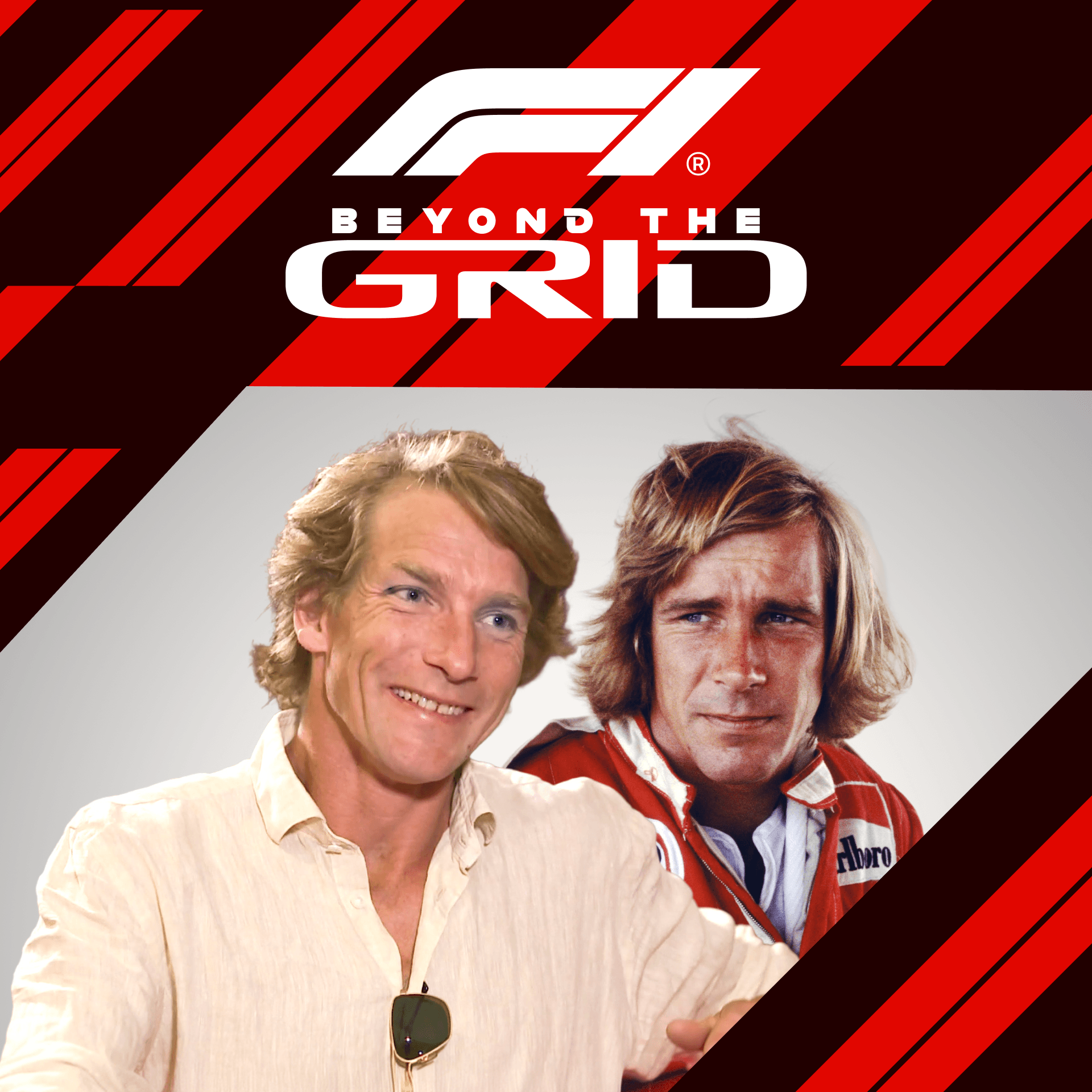
Nico Rosberg reflects on winning the 2016 F1 world championship and retiring 10 years ago, focusing on the “terrifying” pressure of beating Max Verstappen, his decision to leave at peak form, and the preparation methods that enabled his title run.
Nico Rosberg is the 2016 Formula One world champion. He discusses his post-F1 career as a venture capitalist and his mental/physical training approach. The episode is hosted by F1 Beyond the Grid (no other guest named besides Rosberg).
Rosberg says his superpower in 2016 was preparation—extracting “110%” via marginal gains in diet/weight, sleep, fitness, engineering collaboration, media strategy, and intensive mental training. He argues media repetition can shape belief, so he avoided saying “championship” and focused on “next race only.” He claims he eliminated jet lag for the whole 2016 season using sleep scheduling, light exposure, and blackout glasses.
2016 title-clinching preparation details (helmet paint removed for weight; Singapore sweat weight loss; mental training every two days). Team internal conflict and mechanic swaps. Monaco 2016 team orders after fogged visor. Spain 2016 clutch/warm-up mistake leading to a crash and no eye contact afterward. Spa 2014 and Austria 2016 crash/relationship deterioration.
Written by AI. May contain mistakes.
Nico describes the intense pressure of racing for the championship.
Nico shares his thoughts on retiring from Formula 1 after winning the title.
“My guest, the 2016 Formula One world champion, Nico Rosberg.”
Nico discusses the challenges and emotions around his retirement announcement.
“Can we deal with that latter point first, right?”
Nico recounts how his family reacted to his retirement decision.
“thought it was just the best possible, the highest moment for me in my career, I thought it probably was that one.”
Nico explains how he has transitioned to venture capital after racing.
“So I wanted to tell them immediately as quickly as possible so that they could have time to replace and rebuild.”
Nico reflects on the adrenaline rush of racing compared to new challenges.
“And you'll never get that again in the way that the sport can give it because it's so instant and so huge.”
Nico shares how meticulous preparation contributed to his success in 2016.
“You know, I think of your pole lap, Singapore 2016.”
Learn about the rigorous physical requirements for racing and how small weight differences impact performance.
“So one kilogram will make the difference between winning and coming second.”
Understand the impact of team dynamics and competition on performance in F1.
“There were changes inside the garage over the winter.”
Learn how Nico Rosberg adapted his sleep schedule for racing in Monaco.
“People looking at me like, is this guy completely nuts now or what?”
Explore how Nico's family supported him during his racing career.
“You know, you're doing your doughnuts in Abu Dhabi at the end of the year.”
Discover the strategies Nico used to handle championship pressure.
“You came back at me with what you're talking about Lewis Hamilton here and you definitely deflected it back onto Lewis.”
Nico compares his intense racing battles with Lewis Hamilton and Michael Schumacher.
“And then you get this arguing between the drivers.”
Nico discusses the impact of media pressure and rivalry on his performance.
“Unfortunately, that resulted in a few crashes, but it had to be done because otherwise it's just going to walk all over me.”
Learn about Nico's experience negotiating contracts and the role of his manager.
“And he just says perfect what he needs to say.”
Discusses key incidents that affected Nico's relationship with Lewis Hamilton.
“And the great irony of that is that he never had a manager when he was racing either.”
Nico details the expenses and impact of crashes during his racing career.
“We're going to Spain 16, coming out of turn three.”
Nico shares a thrilling yet dangerous jet ski experience with his friend and reflects on the aftermath of the Spain 2016 incident.
“best friends and the challenge was let's go take the big waves from the ferries that came past who can get the most air Yeah, the most air.”
Nico discusses the intense pressure and confrontations following crashes during races, including team dynamics and interactions with Toto Wolff.
“No, but did they say, right, guys, talk me through it?”
An ad segment promoting Edward Jones and its commitment to helping clients achieve their financial goals.
“And you guys stick a microphone in my face and I have to talk.”
Nico discusses the mental challenges faced during the championship, focusing on fear of failure and pressure of competition.
“Lewis has muscled his way back into this championship, right?”
Nico's candid reflections on the psychological toll of leading the championship and his strategies for coping with stress.
“How do I keep myself under control a percentage more than without preparing?”
Nico shares the mental struggles of consistently finishing second in races.
“So it's not easy to be second, especially when you've got the demon in your head.”
Nico reveals how he coped with stress by eating Frosties during race weekends.
“And the only thing, and I couldn't even eat properly anymore.”
He discusses the effects of extreme sleep deprivation on his racing performance.
“And even with the sleep, doctor, were you sleeping?”
Nico details his race day rituals and the physical symptoms of his anxiety.
“trying my best with meditation with everything you can't take sleeping tablets you'll fail the doping test so you can't take any of that stuff and i wouldn't anyways i've never taken that i I mean, probably.”
Nico recounts the intense moment he had to overtake Max Verstappen to secure the championship.
“He put me into behind Max Verstappen with that strategy.”
He reflects on the overwhelming emotions of winning the championship.
“because he played it fairly, left the space forever grateful.”
Nico shares his thoughts on the impact of his championship win on his life and career.
“It's relief that it's over and it's done.”
Nico discusses his transition into venture capital and how F1 influences his new career.
“And it enables so much in my life also, which is crazy.”
The hosts reflect on their conversation with Nico and the lessons learned from his championship year.
“There are hundreds of interviews with big names from every era of Formula One.”

Get the gist, explore an idea or ask about something said.
 Claude
On F1 Beyond The Grid, what are the key points of this episode?
Searching your listeningAutomatic transcript. May contain errors.
0:00This episode was sponsored by Edward Jones. In the timeless words of Bruce McLaren, life is measured in achievement, not in years alone. At Edward Jones, we know that achievement looks different for everyone. And achieving a life you love starts with a personalized plan to help keep your goals on track. Our time-tested approach is backed by over 100 years of experience, more certified financial planner professionals than nearly any other firm, and over 20 ,000 financial advisors across North America. Whether you're accelerating towards your goals or switching gears in a new chapter of life, Edward Jones Financial Advisors offer trusted guidance to help you achieve what's next.
0:44See how we're invested in what drives you at edwardjones.com slash racing. Edward Jones, official private wealth management partner of McLaren Racing. Member SIPC. McLaren Racing Limited is not a current client of Edward Jones. McLaren was compensated for this endorsement. For more information, visit edwardjones.com slash racing. Fall and comfort foods go hand in hand. Grandma's mac and cheese. Soup and grilled cheese. But how do you create those cozy moments while still maintaining your health goals? Hero Bread can help. Hero Bread's soft, fluffy, flavorful sliced breads, bagels, tortillas, and Hero Noodles have only 0 to 5 grams net carbs and up to 19 grams of protein per serving.
1:33So go ahead, enjoy some cheesy mac and cheese. Enjoy that stacked sandwich with Hero Bread for lunch. Or start your day with a fully loaded bagel. Because with Hero Bread, there's none of the stiff baked goods you expect from Better For You brands. And right now, Hero Bread is offering 10 % off your order. Go to Hero.co and use code IHEART at checkout. That's H-E-R-O dot C-O, code IHEART. All figures per serving of Hero Bread. See nutrition facts on Hero.co for sodium and sugar content. It's 6.47 p.m. on a Friday, and a phone is ringing. It's a customer, and they're ready to book. Nobody picks up, so they call the next company.
2:16That missed call is missed revenue. With Quo, your team shares calls, texts, and customer conversations in one place. And when no one's available, Quo's AI agent answers, handles questions, and even books the appointment for you. See why over 90 ,000 companies trust Quo and try it for free at Quo.com slash pod. Money is on the line. Always say hello with Quo.
2:40Nico Rosberg: Nothing in the world is anywhere close to what you're doing when you're fighting for a world championship. so it's critical now that we start passing Verstappen probably the most extreme moment in my whole career you are going to lose the championship so I have two laps past Max Verstappen he's going for it now from a long way back Verstappen on the outside Rothbard on the inside my foot starts shaking so much from fear and adrenaline I'm uncontrollable on the throttle pedal am I ever going to get another opportunity I don't know I've got the greatest of all time in the car next to me this is the moment don't mess it up And it's scary.
3:16Nico Rosberg: It's terrifying.
3:22Welcome, everybody, to this week's F1 Beyond the Grid. My guest, the 2016 Formula One world champion, Nico Rosberg. Great to see you again. How are you? Lovely to be here. I'm very well, thank you. In Mexico, we're filming. In Mexico. In Mexico. How do you feel now when you turn up in a Formula One paddock? Are you still thinking like a racing driver? Do you look at the cars on boards and go, oh, this is what I do?
3:48Nico Rosberg: No, no, no, no. I'm really out. I'm really out. I appreciate their levels because I know the level that they're at. So for me, I'm a huge fan. I just love watching it. I'm so excited today here in Mexico. Lewis Hamilton is on pole. We don't know yet how the race is going to go because it's right after this podcast. But I'm excited. I'm thrilled, you know, to watch the first corner, to watch the pace in the race, everything. Amazing. and the only moment where I start to like if Kimi will win the championship this afternoon I see him celebrating that's the one moment where I'm gonna be like yeah I wish I could experience that one more time because that is just such an extraordinary incredibly nice emotional feeling obviously but that's the only moment well can we talk about this very special anniversary because it is 10 years this month since you experienced exactly that you won the title and it's also 10 years since you retired from Formula One.
4:44Can we deal with that latter point first, right? Have you regretted walking away from the sport, even for a moment over the last decade?
4:54Nico Rosberg: Again, I apologize to all the fans at the time, you for example, who wanted to see that fight go on because it was a great battle between Lewis and I. But for me personally, that was the right decision, unfortunately. I'd given it my all and achieved my dream and to go out on a high is something really valuable for the rest of my life also so um you know I had a baby at home second one on the way then and um going into this different life you know completely flexible really and for me in hindsight it was the right decision thankfully I didn't know at the time it was scary it was very scary but it was right for me but have you pondered just on holiday or something just how much better you could have got.
5:36Nico Rosberg: No, I could not have got better. I was at the peak. I know that. There was no better than that. I couldn't keep up that intensity. It was for me not possible to keep up that kind of intensity. It was 110%. But Nico, you'd just beaten one of the goats. Sure, sure. So you just had your best season in Formula One. It seems to me every driver that wins the world championship kicks on to another level. I think you could say that about every single world champion. I think you probably had that in you. I don't know. For me, it was going to be tough. Because, as I said, I threw everything at it. Everything.
6:17Nico Rosberg: Like, more than everything. And it was crazy intense. So, it was not really realistic to keep up that level year in, year out. So, I thought it was just the best possible, the highest moment for me in my career, I thought it probably was that one. So it was a good moment to move on. Can we go back to the moment where you announced your retirement? I remember we were together at the FIA prize giving in Vienna, and we were backstage at the press conference. And it was really nice to see you. I think you'd just been in Malaysia. You'd had a manic five days. And you whispered to me, I'm about to announce my retirement.
6:58No way. Yeah. And then you came on stage and did it. And I remember being, well, a sense of disbelief at the time. How was it to deliver that message? Because we'd never really experienced that before in the sport. Big sense of disbelief. Did I really say that?
7:14Nico Rosberg: Because it's crazy. It's completely crazy, you know, completely extreme and super scary. Because my life is to be that race car driver. And there's nothing else apart from family and friends. So it's super scary to go into this unknown. What am I going to do with my life? And it was, of course, there's tough moments afterwards also, you know, to figure things out. But yeah, unfortunately for me, that was the good thing to do. What did Toto say to you when you broke the news to him? Toto said in German, which means you're pulling off my shoes or something like you're pulling. No, it means you're pulling the ground away from under my feet.
7:51Nico Rosberg: There you go. In German, that's it. So you're pulling the ground away from under my feet. Did he try and persuade you to reconsider? No, no, no. He got it. And it was very clear, definitive. I was flying with him and I couldn't tell him in person because I was so scared that I was, I mean, 100 % I was going to break out in tears. So I was too scared. I didn't want to like end up super crying, not being able to speak in front of him because we're having dinner in the plane. So I couldn't say it. So we got off the plane and I called him right after. Having just spent 13 hours with him? Yes, 13 hours, having dinner, everything.
8:22What did you talk about? Because I was going to collapse. So I couldn't say it. what about Nicky Lauda right because Nicky was a guy who walked away from yeah he was a bit he was a bit more of the on the angry side because because of course I was compromising their team
8:34Nico Rosberg: unfortunately you know obviously because they now have to find a replacement and there was nobody there initially and that's why I decided on telling them also so quickly and announcing my retirement so quickly it was only for the team because I would have preferred to do one month celebrating and then after one month say oh by the way I'm going to end it here as well that would have been much nicer because the retirement almost became a bigger thing afterwards than my winning actually. So for me, that was not optimal, but it didn't matter for me. The most important was to not, I mean, as much as possible to reduce how much I'm compromising the team, you know, and not make it even worse unnecessarily.
9:12Nico Rosberg: So I wanted to tell them immediately as quickly as possible so that they could have time to replace and rebuild. It's funny, I would have thought Nicky would have been the most, the more sympathetic. Yeah, he's the one who did it. He's the one who did it. He even walked away halfway through a season. Exactly. Halfway through a weekend, wasn't he? Almost halfway through a weekend. In Montreal, yeah. But he was the one who came with, yeah. Because he was a team owner, you know, it's his baby also, the team. He owned a big share, like a significant share in the team. And they were going from strength to strength, you know, winning championships and drivers and everything.
9:43Nico Rosberg: And this was a blow, of course, in the first moment, most likely, and to the level of the team. But thankfully then with Valtteri, they found an amazing replacement and the team went from strength to strength after that. So that was nice. Look, you mentioned a moment ago that it wasn't easy immediately afterwards, right? Trying to find a replacement because it's so intense. No, but not only that, it's normal for everybody listening. If suddenly your job disappears from one day to another without any plan, that's going to be tough because you need to refine a new purpose, a new everything. so it's just human and perhaps for us it's even a little bit more extreme because you're just so in the public eye as well so everybody is then like looking at you, questioning you what's going on, what is he doing so maybe it's a little bit even more extreme What about family and friends?
10:34Nico Rosberg: I know wife Vivian obviously Vivian was super, she was very supportive my mom was ecstatic I told her mom you never have to be scared again in your life it's over that was my text message to her because I also didn't dare to call my dad before the announcement I wrote him before the announcement but I didn't dare to call him because obviously he was going to try to stop me to do it I was going to say what did dad say and he did after the announcement he was very energetic let's say it that way telling me that I'm doing the wrong thing because he was number one fan so he was disappointed of course which is normal did you I don't know when the Formula 1 circus went to Melbourne in 2017 how did you feel no no for me it was the right thing you know I knew it was the right thing so not question the decision but did you feel this feels odd every time Lewis would win or Valtteri in my car of course I would feel you still thought of it as your car yeah of course because I should be in that car I was like oh that's a bit I want to be there but that's the only moment for the rest it was all fine so I never had the thought like I should come back never from an I don't know an adrenaline point of view how did you replace that um I don't need adrenaline I need challenges and I've found challenge now in the business world I'm a venture capitalist now so I invest in the startup world um and it's it's exciting it's thrilling so I can I can win there as well I can take the challenge win so I uh I'm very motivated and I enjoy it I understand the challenge but what about the rush No, I don't need that.
12:11A pole lap at Monaco?
12:14Nico Rosberg: No, that's okay. I mean, yeah, of course. No, I want to win, yes. And you'll never get that again in the way that the sport can give it because it's so instant and so huge. So yes, I missed that. And I can't replace that. You know, I think of your pole lap, Singapore 2016. You were seven tenths faster than Lewis Hamilton. I'm getting a rush just thinking about that. I remember, you know. That requires like a calendar rather than a stopwatch. my dad would say the gap was so big Lewis is really good in Singapore that must have been one of your best that was a decisive weekend for the championship yeah of course there's many of those well can we break it down right let's celebrate that championship season now because I think there's a lot that even the current drivers can learn from how you went about that season what was your superpower in 2016 my superpower was preparation that's a superpower because natural talent Lewis is the goat the greatest so I'm not going to beat him with natural talent so the superpower was preparation well tell us more about that how did you prepare differently for 16?
13:23Nico Rosberg: it's just extracting 110 % of my possibilities of my potential that's what it's about and that means every single area that there is and there's many areas there's food there's sleep There's working with the engineers, car development. There's media. There's fitness. There's body weight. There's so much. Right. So food, did you change your diet? So food, first of all, there's body weight. Three hundredths of a second per lap was one kilogram of my body weight. Three hundredths. That's two seconds of race time. So one kilogram will make the difference between winning and coming second. That's crazy.
14:05Nico Rosberg: That was the case in our time because we were overweight, all of us, with our cars. So huge. So we had to be as thin as possible. There's a limit because you still need to drive these incredibly difficult high G-force cars and sustain physically this effort. Because it's extremely people on TV. It's hard to see sometimes how incredibly tough driving these cars are. It's so, so difficult. Singapore, I lost seven and a half pounds of body weight from sweating in two hours. That's how extremely hot and tough it is in this car. I don't know if there's many other sports that you'd lose seven and a half pounds in two hours.
14:44Nico Rosberg: So it's extreme. So you need to be super fit, but at the same time as thin as possible to lose that weight and to be at a minimum. So what did I do? You can see the images. My helmet is black because I took the paint off. And I'm the only one with a black bare carbon helmet. Because the paint, I figured, I went to my helmet manufacturer, paint, and how much is the paint? And they say, well, the difference between raw helmet paint is 80 grams. I was like, well, we're taking it off then. No more paint. And it's all these details. I stopped cycling, even though that was my favorite endurance sport.
15:17Nico Rosberg: And I lost 600 grams from the leg muscles. That's huge. That's more than one and a half hundredths per lap. It's enormous. And then I get to Suzuka qualifying in my championship year. and I'm on pole by 200s. That's the helmet, the leg muscles. And one other thing that I did, that was pole position. And that is then world championship also because Lewis finishes third. I get the gap in the points and then world championship. It's like everything is just in the finite details that I managed to add up those marginal gains to make significant improvement and eventually managed to beat the unbeatable Lewis.
15:55Nico Rosberg: So what is your fighting weight and how much below it were you in 16? No, I was at my fighting weight because I cannot go below because below I'm not fighting anymore. That's true. And that was 67 kilograms without helmet. I mean, just without anything else, 67. Mentally, did you do anything differently to prepare? Yeah, of course, a psychologist. So in preparation for 2016, two hours of mental training every two days, two hours. It was harder than the physical training, harder than going to the gym to stay focused and attention and work through all of that. And it's loads of things. It's meditation, repetition, visualization, techniques to remain present when you feel emotions of fear coming, when you're terrified to mess up and have the world laughing at you because you're leading the race and you mess up the starts.
16:50Nico Rosberg: You have, as a driver, you have those fears. You know, we're only human. I maybe had a little bit more than average of those fears even. So little techniques to be aware of those emotions. You cannot switch off emotions, that you cannot switch them off. But you can be present to them and calm the mind and move on kind of. So that's techniques that you learn. So two hours every two days, which was very, very intense. And you'd never done that before? No, no. I had worked on mentally, but I just took it to the highest possible preparation level for the last season. You also mentioned media. How do you maximize that?
17:30Nico Rosberg: Media, it's a game you have to play. Speaking to you, it's a game I have to play. Not today. Today I don't care anymore. Today I don't care anymore, which is nice. I can be much more authentic. I can just be me today. And at the time, it had to be Hollywood. But are you talking about saying things to get under his skin? Everything counts. it's saying things to cause some I mean you don't want to build up the confidence of your rival so you shouldn't be saying things that are just going to make him more confident you need to be saying things that are going to be relayed to him by you when you next speak to him that are going to unsettle in a way maybe but definitely not like make him more confident so it's a whole game you have to play because the media is so powerful it's so powerful And it's such a key part of sporting performance.
18:21Nico Rosberg: Because you guys get to us. Because we have to stand in front of you every single race weekend, throughout the whole weekend. And we cannot say no comment. I have to engage. When you tell me, are you the new Rubens Barrichello? The always number two. I never said that. Boom, that hurts. And I cannot just switch off and I don't comment. I have to engage. And you guys repeat things. and you start to believe them at some point. So it's a game you really need to master. And so with my psychologist, very important for me in my championship year was also never, ever, ever use the word championship in any media conversation.
19:02Nico Rosberg: Never engage in, because you would always say, no, you're the favorite for the championship, right, Nico? And just deviate. The best way for me to perform, which is what this is about this year, is to think about next race only. I want to be preparing for next race to win next race I even said that at the last race when it was only about the championship because it also, it comes back at you and whatever you say is a repetition inward as well and this is something that Lando Norris for example is someone who has made progress with this now I think he's also, he said that he's been working with a mental coach because he's been repeating always this glass half empty stuff and it just doesn't help you It makes you, it keeps your sensitivity and your insecurities going and even loads them up.
19:47Nico Rosberg: Like even when Lando's on pole, he will talk about the one corner that he messed up rather than all the 95 % of the track where he just did the most incredible lap ever. He'll focus on the one corner where he messed up. So Lando is someone who, for example, also had to learn this and it's authentic and it's honest because that's how he's thinking about it. But there's two ways of portraying it then in the media. You can talk about the one corner you messed up, or you can talk about the 95 % where you did the greatest lap of everybody all day long. Talk about that then. That's going to have a much more positive impact on yourself and on your whole positive confidence, you know?
20:21You've got to be more strategic, haven't you? It's a choice.
20:25Nico Rosberg: Yeah. And I remember, Nico, you won those, what is it, opening four races. Yeah. And I actually probably did say to you. And three races before that. Seven. Seven in a row. Seven in a row. Well, but because I suffered so much in Austin when Lewis stole the championship. Well, okay. And I threw the cap back at him. Back at him. Back at him. In my version. Who couldn't forget that? How important were those three wins at the end of 15 to sort of set everything up? Every race matters. Every race matters. And it was my chance because, of course, he was now, I don't know how many times world champion.
20:57Nico Rosberg: And you just lose an inkling of motivation then. It's normal because the races don't count for anything anymore. and he was up against me who was as motivated as ever in my life because it was just I don't want to lose anymore it sucks and so I won the last three and it just it naturally just puts a dent in the confidence it's just it's the way it is in sport and you carry that into the long winter now he knows yes he's champion but I won the last three really driving amazingly and going into two months of winter, everything matters and it just helps. Helps to hit the ground running in the next year.
21:33Nico Rosberg: So that was the start of my championship already. This episode is sponsored by Vanta. Businesses are finding more and more ways to use AI. And while that can make all sorts of things quicker and easier, it also brings new security and compliance requirements. And the tricky part is that your business might be moving faster, but that doesn't necessarily mean you've got more people to manage everything behind the scenes. Vanta's Agentic Trust platform helps make managing all of those security and compliance requirements much easier. Rather than leaving your team to do everything manually, it automates much of the work involved.
22:09With over 1 ,400 automated tests across more than 400 integrations, Vanta collects evidence and monitors your controls year-round, cutting audit prep by 82%. And the Vanta agent can work in the tools your team already uses, whether that's Vanta itself, Claude or Cursor. It's an approach already used by more than 16 ,000 fast-growing companies, including Ramp Writer and Harvey, helping them save time and resources as they scale. Learn more at vanta.com slash grid. That's V-A-N-T-A dot com slash grid. This episode was sponsored by Edward Jones. In the timeless words of Bruce McLaren, Life is measured in achievement, not in years alone.
22:52At Edward Jones, we know that achievement looks different for everyone. And achieving a life you love starts with a personalized plan to help keep your goals on track. Our time-tested approach is backed by over 100 years of experience, more certified financial planner professionals than nearly any other firm, and over 20 ,000 financial advisors across North America. Whether you're accelerating towards your goals or switching gears in a new chapter of life, Edward Jones Financial Advisors offer trusted guidance to help you achieve what's next. See how we're invested in what drives you at edwardjones.com slash racing.
23:33Edward Jones, official private wealth management partner of McLaren Racing. Member SIPC. McLaren Racing Limited is not a current client of Edward Jones. McLaren was compensated for this endorsement. For more information, visit edwardjones.com slash racing.
24:13Yep, everything's in stock. I can't wait. That's all from here, folks. Shop GrandAppliance.com.
24:29There were changes inside the garage over the winter. Do you remember the team swapped some mechanics between the cars? Oh, yeah, that was tough.
24:37Nico Rosberg: Beginning of 2016. Tell us your thought process. It was just because things were deteriorating internally. It was really starting to build a proper wall in between the two cars because the mechanics started to also compete and the engineers start to compete. And when you start to see that and maybe some pieces of information are not shared in the most open way anymore as they used to be, because the mechanics also want their car to win and the engineers want their car. They're super competitive. They want their driver to be champion. And Toto was aware of this. and it's not healthy for a team when you start to not share information properly and you're not a real team anymore then things can go bad very quickly because it is F1 is, I mean the level of performance is just incredibly high and you have to work as a team, as a foundation to stay ahead that's the only way so Toto was aware of this and so he did such a such an extreme chop, like came in so hard without any warning to anybody and then switched mechanics our mechanics over and my mechanics are my family so i come into the garage melbourne friday free practice and my family is on lewis's car so i'm thinking they switched like they must put my car on the other side for some reason look at the car number it's lewis's car so i'm like what on earth is going on here and then i get informed yeah um there's been a there's been a change and you weren't consulting and They're my enemies, Lewis is kind of like, I'm saying it more extremely, but they want Lewis to win, not me.
26:11Nico Rosberg: So not my enemies, but they're my rivals. Now my rivals are on my car fixing the last bolts and putting me out on the racetrack. That was weird. Like that was really weird. Fortunately, though, for me, I really adapted really quickly. It became my new family or my extended family. So that worked really well. Lewis struggled more. he every time like something would not go his way he would think straight away a little bit conspiracy or things like that so he struggled a little bit more with that initially and kind of shot himself a little bit in the foot with that in the first part of the season because obviously everybody was always treated equally to the extent possible so he was a bit shooting himself in the foot by engaging in that you know and complaining and things like that so that was one part one more thing because I was saying I get 110 % out of my performance for the 2016 season.
27:05Nico Rosberg: I also had Dr. Lockley from Harvard. He was a Harvard sleep professor and he was indirectly doing my whole seasonal plan for travels, sleep and everything. And that was one of the game changers for me. So I eliminated jet lag for the whole season for the first time in my life. I had 0.0 jet lag for the whole season. You have a bit of jet lag, right? Right. During the season? It's a killer. It's a killer. It's a killer. And we have to perform in a race car at 100%, which is the highest level of human performance, I would like to say, in a race car where you're on the thousands of a second reaction times of all you're doing.
27:42Nico Rosberg: So eliminating jet lag was again, it was just that one step. How do you eliminate jet lag going to Melbourne, for example? Melbourne, one and a half hours per day maximum. So start at home four days before leaving, one and a half hours earlier. So the last day at home, I'd wake up two o 'clock in the morning, I'd be running, I'd be running 2.30 in the morning on the street in Monaco. People looking at me like, is this guy completely nuts now or what? And then the flight schedule. So there's no transit during the time that you have to be sleeping. So every flight is perfectly positioned for this continuation of the sleep adaptation timing.
28:20Nico Rosberg: So everything. Then light 10 ,000 lux like this light here in the morning, first thing, bam, few minutes. because it tells your body it's morning time or looking in the sun, you know, but most of the time with the light, it's morning time, ready to go and then run. So you teach the body this new rhythm. In the evening, two hours before sleeping, the blackout glasses where I put even, I put like scotch tape around. So it really like locked everything out. So I'm like walking around with super blackout glasses for two hours before going to sleep, which was a bit annoying because it's not very easy to see very well.
28:58Nico Rosberg: And that just allowed the melatonin to come, you know, and not stop the melatonin. And there's like 20 more examples of these kind of things. And it's just every single extreme detail to perfection. That was the try. Now I understand. You know, you're doing your doughnuts in Abu Dhabi at the end of the year. And you say, Nopi, we did it. Moki, amazing job. I'm so proud of you. You did amazing. Woo-hoo!
29:35I mean, she really was on this journey with you. If you were getting up at 2 a.m.
29:40Nico Rosberg: No, the family plays such a role. And especially Vivian, my wife, because that's the foundation at home also. To then come home, have a lovely, amazing time at home with friends, stability, just joy and happiness and be able to train properly at home, be able to recharge at times. so my whole team and Vivian as well has of course a big role in this it's a team effort you were talking about the media earlier and how you use it and you'd won those four races at the start of the season and I remember I think I even asked you you had almost double the points of Lewis at that point Nico do you feel you're in the pound seat now the championship you're controlling it see that's how it starts and you're the one piling the pressure on trying to get to me like Nico you're the big favorite now aren't you?
30:28Well because you were.
30:29Nico Rosberg: It's all yours to lose isn't it? No but interestingly. Don't mess us up. You came back at me with what you're talking about Lewis Hamilton here and you definitely deflected it back onto Lewis. I remember that. That was part of the learning yeah of course. Yeah he's deflected back to him he's the favorite not me he's the yeah the big champion. Yeah What about Monaco? Because you led him through there. Yeah. Early on in the race. How tough was that? And I was expecting more from you after the race. No, no, that's very easy. It was very easy because Toto and team did a very good job clarifying the team racing guidelines.
31:12Nico Rosberg: And it's very clear. If the team is looking to lose the race, win, then the moment comes where you need to drive as a team and not anymore as championship rivals so it was very clear in Monaco I was not going well because my visor was so fogged up I couldn't see where I was going because it was broken it was actually a technical problem with the glue so I was very slow Ricciardo was disappearing in the distance so very clear there was a threat that we're losing the win here so it's very clear then you need to drive as a team and Lewis needs to have a shot at it. So wave and pass. So that was super painful, but it's not so bad when the instructions are clear beforehand.
31:58Nico Rosberg: And that's so important, that the instructions are clear beforehand, which is something that Ferrari, for example, is not doing well enough at the moment in F1. Because the instructions are not clear enough. And then you get this arguing between the drivers. It just needs to be clear. And also, we didn't do it perfectly at the time either. We did in this case, but what we didn't do perfectly was wheel-to-wheel battles. You can never be enough in the details as to wheel-to-wheel battles to make it very clear who's at fault when. And we didn't go in the details enough. We tried. We're quite well advanced in creating our own rulebook for wheel-to-wheel battles, but it was not detailed enough, and there was always ambiguity every single time.
32:36Nico Rosberg: Also because Lewis is so damn smart in wheel-to-wheel racing, so it was never 100 % his fault. And sometimes it would be 100 % my fault. so were these rules of engagement written down or was it that was a document yeah but even with pictures that was a document yeah but you can never make it detailed enough and it wasn't detailed enough we'll come back to Lewis in a minute but how different was your battle with Lewis to the one you'd had with Michael Schumacher nothing in the world is anywhere close to what you're doing when you're fighting for a world championship it's a different world fighting for P3 P2 P8 it's a different planet it's just a different world so it's not comparable it's just a piece of cake comparable to that but your teammate is your first rival in Formula 1 of course yeah it was still an important battle but if you then compare to the intensity of fighting for a world championship it's just off the charts compared to anything you're doing before that so yeah it was it was still a battle with Michael Schumacher because he's also a real warrior internally as well just naturally he's like what do you mean internally?
33:46Nico Rosberg: he loves to get in the head of his teammate that's his favorite game to break down his teammate's confidence so you're constantly up against that and he did that very but not in a really mean way like in a grey area, playful way but he really gets to you all the time and it's his game which comes naturally to him and that's where I learned I learned a little bit of that craft to kind of fight back a little bit because it's not natural to me I'm just, yeah, I'm kind of nice guy in that sense Do you think you became more of a street fighter? Yeah, of course, the further you got into your career Yeah, definitely, yeah But I have to push myself, it never comes natural I have to remind myself, push myself visualize that a lot of my mental training was not yielding to Lewis was in my mental training, you know, when he comes in with his amazing race craft hold your ground, because before naturally I would always move out the way move off the track so I had to visualize, repeat, I am holding my ground and see it in images.
34:44Nico Rosberg: I'm there, I'm not moving away. Unfortunately, that resulted in a few crashes, but it had to be done because otherwise it's just going to walk all over me. Let's talk about the crashes. I want to start with the one at Spa in 2014. Is Lewis Hamilton far enough ahead of his teammate to stay out of danger once more into the chicane? Lewis was a little bit wide on the way into Eau Rouge and it cost him. He had to get out of it at the top of the hill and that's why he needs to go defensive. DRS not in play yet, but Hamilton hasn't got the grip that Rosberg has got. Oh, and to be fair, Hamilton has actually got more of a front wing now.
35:20He's got a puncher Lewis Hamilton. Nico Rosberg's lost a bit of front wing and for the first time this season, we've seen the two Mercedes drivers coming together.
35:31Nico Rosberg: What did that change internally? internally? It's not a single event. It's a continuation of a negative spiral of becoming enemies internally. Yeah. It's really a step-by-step process. Of course, there's spikes on the way, but it's just linearly get worse and worse and worse with these big spikes in between. And that's just a process. So that crashing spar was just another reason for the relationship to detail. Yeah, it was an example of where I just hold my ground. And the problem was, though, it doesn't come natural to me, all that. So more often than not, I would not do it super smartly. And then also what I would say afterwards would not be super appropriate.
36:17Nico Rosberg: And Louis is so smart. When you come out of the car, you put a microphone in his face, he will say, like, perfect, you know, what he says. Because it's all, it's Hollywood. And he just says perfect what he needs to say. He was very good at that. And that was also something that I was up against and super hard for me. You have no one to help you because no one can help you. You're just on your own in the car. You're the only one who experienced it. People can't help you. I tried. Tried to get help. Like Gerhard Berger, for example, who was my manager for a short stint in 2016 to negotiate my new contract.
36:52Nico Rosberg: And I was trying to get him to help me. But it's just, even if he's very smart, it's just hard. you're on your own. That's an interesting detail. I didn't know about Gerhard in 16. Yeah, I negotiated my 2017 and onwards contract. Why did you get Gerhard involved? Because I was always my own manager, but which isn't, it's great for negotiating contracts, but it takes away, you see, it's the 110%. If I'm at my own manager, I'm taking percentages away from that. I take mental capacity and away from myself because it's an extra burden, extra mental load, especially when Toto is on the other side of the negotiation because that's horrible.
37:31Nico Rosberg: Negotiating with him is horrible because you'll get to an important point and his strategy is disappear off planet Earth. So he's just unreachable for weeks and you're just sitting there looking at your phone like, is he going to answer? Horrible. So it was really good for me to get Gerhard involved. And the great irony of that is that he never had a manager when he was racing either. He did his own contracts. Probably, yeah, true, yeah, you're right. But just out of interest, did he do you a better deal for 17 than 18? It was a continuation. A super continuation. And did you know, even when you signed that contract in July 2016, that if you won the title, you were going to rip it up effectively?
38:11Nico Rosberg: No. When I signed it, no. It came later because I signed it towards the summer. It came somewhat later. Right. We've done the crash at Spa in 14. you say it's just another reason for the relationship to deteriorate. What about Spain? And that was expensive, by the way, because I had to pay for the damages in Spa. That was very expensive. What was it? A little bit of front wing in a punch? No, no, the whole floor. Because we had to split overall damages between the two cars. So it cost me$360 ,000 at the time. Spa 14 cost you that much money? Yeah. Spa 14 cost me$360 ,000. Or was it Spa that caused this addendum to be signed?
38:55Nico Rosberg: And then it was the subsequent crash. So maybe the Spain 60. Probably Barcelona that cost me that much. But Nico, just back to Spa. It seems such an inconsequential crash. You just glanced Lewis's rear wheel. Yeah, but it ended his race. And so it's very consequential. And all eyes on us. It's just the two of us fighting for those race wins and the championship. So it's very consequential and the whole world then debates it and it all comes crashing in and all the Lewis fans start booing. That's also very difficult to experience, you know, when you get a lot of the fans booing you, which started there after Spa and in Spa actually.
39:36Nico Rosberg: That's really, really difficult mentally to manage. To have so much hate against you. It's tough. So what about 16 then? We're going to Spain 16, coming out of turn three.
40:11I remember you saying you had that you're on the wrong setting or something.
40:14Nico Rosberg: Yeah, so just before the race, the team changed my clutch warming sequence, which is the last thing you do before the start. And because they saw my clutch was getting too hot, so they completely reversed my sequence, which had never really happened before. It was like a last-minute change. And as a result of that, I messed up my sequence. And I missed it. It was a long sequence. I had a whole checklist. I just missed one thing, and it's changing the mode of the engine. So you had full power until turn three, and then it turned off. so I didn't have the full I didn't have the battery deployment coming out of turn 3 so my speed came down and I gave him a run and it's an unusual situation with someone coming so fast at you so it's like a last minute blocking of the inside completely borderline it ended up really it's a 50-50 thing, you can't blame him you can't blame me probably considering everything your natural thing to do is to defend the inside Of course, yeah.
41:13Nico Rosberg: Were you surprised he didn't try and go around the axe? I was surprised because he disappeared. So I went to the inside. I'm looking in my mirrors. He's gone. And he's gone for a long time. So I'm like, where did he go? Because there's no space on the inside anymore. Where on earth is he? And turns out he kept it lit. So you see it on the data. Even when he's on the grass. He's on the grass. He keeps it lit. He's like, I don't care what you're doing to me. You pushed me on the grass. Take that. I'm just keeping it he kept his foot planted what who does that like you're bouncing over the grass and you keep your foot that's pretty that's but he's like you know he's super fearless Lewis is I mean when we were kids we were jet skiing because we're best friends we're jet skiing we're 13 years old we're out on the sea on the jet skis on holiday in Greece best friends and the challenge was let's go take the big waves from the ferries that came past who can get the most air Yeah, the most air.
42:12Nico Rosberg: I'm a bit careful. I'm not crazy. I'm careful. So I take nice air and I pass the jet ski over to him. And it's a standing jet ski. The guy goes, he does not lift. I have never, he might have broken the world record, never seen someone go so high into the air on a jet ski. Of course, he came crashing down and he hit his chin on the steering wheel, split his chin open. So he had a split in the chin. He knocked him like he was half conscious, you know, for a while. He was literally dazed. So he's hanging there dazed. And by the time I got to him, he was okay. But this is him, you know, he's like super fearless.
42:53Nico Rosberg: So kept it lit on the grass and spun over and we crashed out. And crazy moment, yeah. And describe the moment that you got back to the garage after Spain 16. It's horrible because it's horrible because the whole world crashes into you and crashes onto you. And again, you don't know, is it your fault? Is it the other guy? Is it Louis' fault? You don't know how to manage what to say. Because it's really close call whose fault it is. And that's the worst. If you then get the blame, that's really bad. Because then the whole team, you're letting down the whole team if you take the blame. It's horrible.
43:28Nico Rosberg: Because your team is your family and you lose your family in that moment, you know, because they're blaming you. You're completely on your own alone. That's really, really bad. so you don't want it ever to be your fault that hurts a lot and it was borderline which way is this going to play out are they going to say it's his fault, my fault and it's usually always going to have to be one person's fault it's unusual that it will be like 50-50 Did you talk to him about it? No, no, we never spoke and then Toto comes in shouting at us like you're making us look like idiots because of course Red Bull wins which is the most horrible outcome when Red Bull takes an obvious win away from us and he so he comes in shouting at us like we've never seen him before and you don't want to have total shouting at you that's a scary thing Ross why why wouldn't you discuss it with Lewis
44:23because you just don't to what benefit like just to talk it through to try and avoid maybe just to say that's your that was your fault maybe right don't ever do that again but if that If that gives you the psychological edge, why not? But I mean, you were just beyond talking about it.
44:41Nico Rosberg: There would just be no eye contact all day long. And you still sit opposite each other. All day long. Opposite each other all day long. No eye contact. Looking at each other all day long. Looking past each other. No, no, all day long. Is that crazy? Every day, all day long. Right. Fast forward then to Austria. Let's talk about another crash. There was a couple. Yes.
45:26you know after everything that had happened at spain I imagine Toto was raging even more
45:33Nico Rosberg: yeah of course yeah because Austria home race Red Bull and then once again I think Red Bull again yeah again won that race probably I'm not sure who probably Daniel or was it a Ferrari or not sure that must have been a Red Bull no Lewis won the race he kept the win Lewis won the race he won the race and you were dragging your front wing on your wing so that was fine as long as someone from the team wins it's not that bad It would have been really bad if the team would have lost the win, but Lewis won, so it was fine. It was half bad. So there was no shouting, Toto. No, but did they say, right, guys, talk me through it?
46:09Nico Rosberg: What happened? No, no, sure. Many times, I mean, there wasn't that much sitting together then afterwards. And sometimes we did it, sometimes we didn't. Maybe a bit strange that we wouldn't sit together every time. And sometimes it would be just Paddy managing that with Ron. and Paddy is a risk-averse person. He doesn't like to go into... He tries to avoid confrontation as a human. So not ideal to have him managing such a post-incident discussion because he would take very often the easiest path and not go into it properly confronting us. He would choose the path of least resistance, which was not ideal.
46:53Nico Rosberg: So it was better when Toto or Nicky got involved. Nicky got involved quite a few times. He was a great mediator. Because we all appreciated him. And he was very good in getting each of us to accept a little bit, like to own a little bit of it at least. And that brought us closer. When it wasn't like just 100 % the other guy's fault, Nicky would get both of us to, yeah, okay, that part, I agree. Maybe that was a bit too late that I closed the door. And then Louis would say, yeah, I agree. I should have, like, I went too crazy aggressive on the grass or whatever. So that kind of started to then move us together and to a way that we could then sit us together and say, okay, let's try and move on from this.
47:30Nico Rosberg: Occasionally that happened. And Nicky was also good at that. But sometimes we had the Mercedes board member in the room and Toto in the room. And oh my goodness, horrible. Dieter Zetscher would get involved. He would get involved, not directly with us. Another board member, Thomas Weber, would be there in the room, not get involved, but passively. So Dieter Zetscher would be on the phone with Toto getting involved. And I almost made one big mistake that I almost went, I went direct to Dida once, trying to get his support, and that would have been a big mistake. Fortunately, then I pulled out of it, because I think I spoke to my dad also, and he said, be careful with that, because you cannot go behind Toto.
48:06Nico Rosberg: You know, Toto is the boss, so stick with that. And so that almost went wrong, but I managed to avoid that. Did Gerhard Berger get involved? Did you seek his counsel? Yeah, but Gerhard... Yeah, it was not by that time... No, he tried to help me with Austria. But again, you cannot help. In Austria, for example, I just said the wrong thing. The truth was my brakes had failed in the last lap of the race. When the brakes failed in the race car, the brake pedal goes completely soft all the way. You push it to the floor. There's no more resistance. You still get the brakes then mechanically. So you get the same braking, but the pedal is completely a different world.
48:46Nico Rosberg: so you cannot perform anymore because you don't know where you're going with the brake pedal so that's what happened to me and that's why Lewis suddenly had a run on me and I should have focused on that as the reason for everything that happened but I didn't why not? because that was not that's not my strength to be in the moment and say the right things Nico you're a very intelligent man yeah but here we are this is intuitive stuff it's not like you don't have three hours to reflect with three hours to reflect I can get it right but I have no one to speak to. I'm on my own. I have, most of the time, I haven't even seen the video of it.
49:21Nico Rosberg: And you guys stick a microphone in my face and I have to talk. And I just sometimes was not so good at saying what I needed to say. What drives you? Accelerating into early retirement? Shifting gears into a new business? Edward Jones has spent over 100 years helping people build a life they love. And with more certified financial planner professionals than nearly any other firm. They're invested in your goals. Learn more at edwardjones.com slash racing. Edward Jones, official private wealth management partner of McLaren Racing, member SIPC. McLaren Racing Limited is not a current client of Edward Jones.
50:03McLaren was compensated for this endorsement. This podcast is sponsored by Grand Appliance. I'm here at Grand Appliance with Gina, who just saved thousands on a new cafe kitchen. Gina, tell us about your experience. Oh, it was great. My salesperson was an appliance genius and helped me customize colors, handles, and accents for a premium cafe package that matches my kitchen perfectly. They're installing this weekend. A whole kitchen that fast? Yep, everything's in stock. I can't wait. That's all from here, folks. Shop GrandAppliance.com.
50:45Right, let's bring it on to the summer break. Lewis has muscled his way back into this championship, right? Yeah, horrible, as always. He's now got the points lead. He took the lead from me? Yeah. Wow, I didn't know that. What were you thinking in the summer break?
51:02Nico Rosberg: Not again. This is going to get away from me again. So that's where I stopped my cycling, because I'm digging and digging. What else can I find? So I stopped the cycling and lost the 600 grams over the summer break. Right, so there was no break No, there's never, I mean there is a break But the break is there to prepare perfectly for after the break That's what the break is for The break is not there to lie on the beach and have a party in Ibiza The break is there every single living day To be the best I can be when the break ends Which you were Every moment, yeah, which, no no, 100%, I was 110 % And how important was it that you came back victorious?
51:42Nico Rosberg: every race matters every race matters to stop his momentum Lewis was a momentum is a momentum guy you need to cut his momentum that's super important as soon as possible because if he gets going with his momentum he's like unstoppable for a while you know I need to chop it down with whatever it takes and even in free practices every moment out there matters to chop his momentum because you can get at him even if you dominate him in a free practice it will get to him and it will slightly unsettle him and put him into his little bit negative spiral where he becomes where he tiny bit like little bit of this giving up thing or whatever it is losing motivation thing if you get him there that's where you need to try and put him so you win Japan and from that point on you don't have to win yeah yeah so Japan already I don't even know how I still manage to drive so well because if I think about my qualifying lap I am terrified I'm like shaking my hands are shaking in the race car and I'm still able to put it on pole which I don't even know how that's possible why are you shaking?
52:44Nico Rosberg: Because I'm the big favorite now my dream is within reach like it's mine I just need to bring it home every time that's enough so it's mine I'm just like don't mess it up you know like it's scary scary because am I ever going to get another opportunity? I don't know I've got the greatest of all time in the car next to me am I ever going to get another chance? I don't know you never know so this is this is the moment and don't mess it up and it's scary. It's terrifying. It's really terrifying. So I managed to get Japan done, which I don't even know how. And after that, this is why you see the big comeback stories in sports also.
53:19Nico Rosberg: Because in tennis, you're two sets up. You get the shakes because this is yours to lose now. Like you're the favorite, just bring it home. And it's just terrifying to lose it from there where you're there nearly, you know? It just gets so bad. And so from there on, it's not even really fair to, like when you compare race wins, I got nine, he's got 10. It's not even a fair comparison because at that point I had nine, he had six. I cannot win races anymore at that point. I'm mentally like done. Um, like so much of my capacity goes into fear of losing, of messing up, of, uh, of losing my dream, even though it's like within reach the one chance I have in my life, maybe that's, that's left or whatever.
54:00Nico Rosberg: I cannot drive my a hundred percent anymore with that like mental mess going on or even on a qualifying lap you know you need to be 100 % in the moment and you got this monkey telling you all the demon telling you don't mess this up you bet you better not mess this up you finish third first happen's gonna be second you can you might crash trying to pass him like you know the demon just goes unlimited he's like unstoppable so it's like no chance for me to do a pole position or to win a race from then on no way it was like survival mode you're a brilliant actor because oh full-on hollywood unfortunately i apologize but it had to be done so the wobbles if we can call it that yeah were not that evident from the outside yeah you did a brilliant job of masking that yeah sure do you think you were able to mask it from lois or do you think he was aware was he aware what you were going through i can mask it well yeah yeah it's part of the training and preparation also i also i mean it's a whole like how do i how do I mask it?
55:03Nico Rosberg: How do I mask it for myself also? How do I keep myself under control a percentage more than without preparing? And so all the mental prep, everything, I mean, going extreme with all of that to try and manage the whole situation as best as best possible. Yeah, that was a big, big deal. What am I saying in the media to show confidence all the time? Never, never show an inkling of weakness also in the media. Just keep going, you know, keep going. And And that was all part of it. It has to be part of it. Sport is a mental game. So you have to fight the mental game. So you go to Abu Dhabi with a 12-point lead.
55:38We're all thinking, he's got this. Yeah, maybe you could have told me that, no?
55:45Nico Rosberg: What were you thinking? Just terrified. Just absolutely terrified. Because this is my chance. This is my chance. And all the last races before, it's not that easy to be second. because you have Max with the Red Bull, Ricciardo, you have the Ferraris. They're close. So it's not easy to be second, especially when you've got the demon in your head. Then it really is not easy to be second. And every race before that, Max had been having a run at me or Ricciardo had won. Every race. So there was Austin. I was running third. And I had to do the second, second, second all the time. So I had one third place, which was kind of my mulligan, my mulligan in golf, which is your...
56:24Nico Rosberg: So second, second, second had to be important. And I wanted to keep that third place mulligan to the last race as well. So I had Daniel was second in Austin. I managed to get him in the safety car. Then Max was all over me all the time in Mexico, bumping into me in turn one, knocking me off the track, lunging me later in the middle of the race. This guy was the highest risk driver at the time because he's the young, crazy Max, you know. He's all over me. Brazil, he's all over me again in the wet, which was like treacherous conditions. It was massive survival mode out there to not spin and crash like most others were.
57:02Nico Rosberg: And then Max is hammering it around the outside of me, turn three, without me even seeing him that he's there. So I like jump in my car when I suddenly see him. He was all over me. So it's not a walk in the park. You know, it's hard to finish second. You're making me nervous now, just listening to that. In that condition. So last race weekend, I was just terrified, just completely terrified. it from the beginning to the end. It's just so bad. And the whole world looking at you, you know, you walk in, you see the eyes, like everybody's trying to see how nervous is he? It's just unbelievable. And the only thing, and I couldn't even eat properly anymore.
57:39Nico Rosberg: I was so scared. So the only thing that would go down was my childhood memory food from when I was a child, which was Frosties. I hadn't eaten Frosties in 20 years. I hadn't eaten Frosties because it's not really healthy. It was not very good. That is the only thing that my brain would tell me, yes, this would go down. I tried pasta, wouldn't go down. Like it literally would not go in. So I tried pasta, tried everything, Frosties. My brain somehow found its way to Frosties. So that's what I was, that's what I was living on was Frosties, which is not really good either. Cause that's not a very solid food to let you perform for a whole weekend, which is an endurance.
58:16Nico Rosberg: You know, No, weekend is a long time. And even with the sleep, doctor, were you sleeping? Were you sleeping? Two hours a night maximum. Terrible. The heart racing all night long. Adrenaline pumping. Just couldn't switch it off? No. And two hours. And when you do two hours, it's a spiral because you think, I can't drive with two hours of sleep. So it just gets worse and worse. The demon just goes nuts. And it just gets worse. You sleep even less. like of course there's this not sleep but you're what is it called uh semi dozing what do you call it yeah that so there's of course a bit of that but the solid sleep is just two hours which is nuts like and your sleep doctor could not help you no there's nothing you can do it's uh i'm trying my best with meditation with everything you can't take sleeping tablets you'll fail the doping test so you can't take any of that stuff and i wouldn't anyways i've never taken that i I mean, probably.
59:13Nico Rosberg: Well, no, you can't because then if you're knocked out the next day, you don't want to try that. So, no. So, race morning. Yeah. Same old rituals. Yeah. Yeah, I did that. I had invited my family, my friends to that weekend. I canceled. They had bought tickets, hotels. I canceled them all. A week before, I canceled everybody, even my parents. And it's a bit weird to tell my parents, I don't want you at the racetrack. But they were really understanding and that was fine. so that was cool because I came to the realization it's so important for me to do business as usual. It's just another race weekend.
59:47Nico Rosberg: That was important mentally. Just one race weekend like every other of the 210 that you've done before. Just a normal race weekend. Same as always. And when you go... Go take approach it, take that approach. When you got strapped in the car, did you feel a sense of calm? Nauseous in the car. Going out on the car because I'm living on Frosties. Nauseous. Can you believe that? I've never had nausea in a race car in my life. And here comes, I'm going out and I feel nauseous. That's just, that's just. And then the demon tells you, okay, you're nauseous. You cannot drive like a race car if you're nauseous.
1:00:24Nico Rosberg: So the demon starts going and you get more nauseous. It's a complete mess. So yeah, nauseous in the race car. Wow. It went away, Fortune. I don't know how, but it went away. But I can say when the lights went out. I'm going out there. No, no. Like it was on the outlapse in free practice. then I would hit the ground running and it would be okay and it's just my my preparation and my natural talent that carried me through the weekend somehow that I was even even mentally not being there at all I was still able to do decent and really well this is incredible I don't know to this day I don't know how it's possible and when Lewis was backing you up ah horrible horrible yeah he was unfolding his strategy and it was working.
1:01:04Nico Rosberg: It was working perfectly. He put me into behind Max Verstappen with that strategy. I should never have been behind Max Verstappen and suddenly I'm behind Max Verstappen. The worst guy to be behind. It was Mad Max at the time. It was 50-50 chance of crash. If you ever tried to try and pass him or whatever, 50-50. The odds were that, 50-50. So Lewis, it was working. His strategy was working. Yeah, so, and understandably, you know, he has to do something. So he tries something and it was working. And then probably the most extreme moment in my whole career is then Tony Ross, who I'm so grateful for because I have my whole career to kind of thank him.
1:01:46Nico Rosberg: I did every year except for one with him as my engineer. Many people to thank, but Tony Ross would be one. And he comes on the radio and he says, Nico, your championship is at risk. You need to now pass Max Verstappen in the next two laps. What? You don't pass Max Verstappen. It's not something you do. Your championship is at risk. What is that? Where does that come from? Your championship is at risk. This is nuts. Why did he phrase it like that? He had to make it clear. It's rather important. So there was no other way to make it clear. It's rather important. You are going to lose the championship.
1:02:25Nico Rosberg: And I didn't see it coming. I didn't know that at the time. So here we go. So I have two laps. Pass Max Verstappen. 50-50. It's like, you go play roulette, your chances will be identical. He's going for it now from a long way back. Verstappen on the outside. Rosberg on the inside. They come close, but they don't quite touch. Verstappen now under pressure again. That's a brilliant exit from Nico Rosberg. And as they swoop around that left-hand kink, Rosberg puts himself up into second place. Man, it was a great move. Amazing move. And forever thankful to Max because he played it fairly, left the space forever grateful.
1:03:04Nico Rosberg: Like, amazing. Thank you so much. Forever. And then I come out of that and my next mental... I think you can start to realize that there was quite an intensity mentally going on here. So then come out of that and my foot starts shaking so much from fear and adrenaline that I'm uncontrollable on the throttle pedal. Again, I'll never have that in my life again. I'll never experience that. I'll never had it before. Or the foot goes uncontrollable, jumping. The whole foot is jumping because of Max. So now I cannot push the throttle properly anymore. And as you know, you need to be precise with the throttle in a race car.
1:03:42Nico Rosberg: It's part of our skill. So foot is uncontrollable. So my demon starts off again. He's like, okay, it's done. You cannot drive anymore because you cannot control the throttle pedal anymore. I get lucky because the next is a long straight. I pushed my whole leg down as you never do that but I just pushed my whole leg down into the cockpit from my buttocks onwards whole thing so that allowed me at least to get to full throttle and then for some reason I had that straight which was a few seconds and somehow the foot again found a little bit of control so then my brain said okay yes it's coming this should be okay so then I was able to drive again so it's nuts it's complete nuts so it's complete nuts I never have something like that again.
1:04:28Nico Rosberg: And all the mental training I did helped zero in that moment. I mean, zero. All my techniques, 0.0. It was just red mist, like there's zero. But okay. But I'm sure the preparation did because I probably would have been that 1 % more out of control if I hadn't prepared myself in the way that I had. I would have been less, 1 % more extremely out of control. So it made the big difference. Lewis Hamilton wins the Abu Dhabi Grand Prix. Nico Rosberg is second. He takes the championship 34 years after his father. It's like father. It's like son for the Rosbergs.
1:05:13And what was the overriding emotion as you crossed the line?
1:05:17Nico Rosberg: Just relief. Right. The first is relief. It's relief that it's over and it's done. and you did it. So it's first relief, takes a while and then it just goes ecstatic. It just goes nuts, the feeling. It's the most extreme feeling apart from the birth of your child and maybe one moment in getting married maybe. Or they're a little bit comparable but different. But anyway, it's the most extreme, ridiculous feeling. And then other post-race. Which Kimmy is going to experience hopefully in a few hours from now here in Mexico. And I'll have the honor of interviewing him right after the race, which is going to be amazing.
1:05:58Nico Rosberg: Because I know him since he's 12 years old because he raced in my go-karting team at the time. And he was one of the greatest drivers the go-karting world has ever seen on the same level as Max Verstappen, Lewis Hamilton, Ayrton Senna. You know, those are like four names that come to mind in the history of go-karting. And he was there. He was top. So now looking back, I mean, everything is a surprise with this level that he showed this year, but he's a generational talent. Always been. And the post-race celebrations for you, were they all a bit of a blur? No, no, no. That's pretty clear. It's amazing.
1:06:36Nico Rosberg: No, no. There's clarity there, yeah. I'm so lucky to be able to experience that. Very few people are able to experience that kind of emotional outburst from sporting success. The Olympians experienced that. They built up to it for four years. every day training for that one day, for that one 10 second race in the case of 100 meters. So they experience it. And in sports, I'm very lucky to be able to experience that. And did Luis say anything? No, of course. He's always gracious in those moments. Just like I also congratulated him when he won the championship and told him that it was deserved. And then he congratulated me as well.
1:07:17Nico Rosberg: And he was gracious. It was a hard one, though, because he didn't obey the team orders that I let him pass in Monaco. We had the same situation in this last race because he was bunching us up. So it triggered the risk that the team would lose the race win because there's Vettel and Verstappen coming up from behind. And it's very clear that he's driving slowly on purpose, very slowly. So it triggered the moment where the team felt that he's risking our team's race win. And so it triggered the you're driving for the team now and not for yourself anymore. moment. The one that happened to me in Monaco where I waved and passed.
1:07:52Nico Rosberg: And he got the win, the race win at the time, because I waved and passed. He wouldn't have won the race otherwise. So I gave him points as a result. And it triggered that in Abu Dhabi and he didn't obey. Again, understandable in the situation that you're not just going to hand it to me in that moment and you're trying to keep it in the gray area and keep playing the game. So it's understandable. And for me now in hindsight, amazing that he did that because it just became all the nicer in hindsight, horrible in the moment, but he didn't obey. So it made it a little bit more difficult team internally because the team obviously were strong vocally on the radio to the world.
1:08:24Nico Rosberg: I remember Paddy. To the world. This is an order. You need to speed up now. And that was tough for him because I won the championship and he's on the receiving end of that, which pulls a lot of, not hate, but animosity towards him also in the media afterwards and things like that because it kind of questioned his graciousness in that moment a little bit. And so that was tough for him, but understandable. And did your relationship with him thaw a little bit when you announced your retirement? Of course, yes, it does, yes. Anything will thaw after that. I just cannot, I can't say that extreme level.
1:09:00Nico Rosberg: So it's fine now. I mean, in the same way that when Prost didn't race in 92. Yeah, maybe not to that extent, I think, because they really became friends, I think, in a weird way. We're just neutral and it's okay. It's nice. It's fine. We will just not be best friends ever. Do you think when he stops racing, that might change? Maybe. We're very different. We have very different lives, very different. So who knows? Nico, what a joy to relive it. I hope you've enjoyed reliving it 10 years on. A quarter of your life ago, this took place. Yeah, that's crazy. That's so far away. That's crazy. But it will carry me forever, this moment.
1:09:42Nico Rosberg: And that's what I'm very grateful for. And that's also one of the reasons why I say that the decision was also the right one for me. Because I can feel it just carries me for the rest of my life. Because my last moment was the most spectacular moment. It would have been hard to top that. So I'm grateful. I'm super grateful. Every day it carries me. And it enables so much in my life also, which is crazy. And now I'm a venture capitalist. I'm building Rosberg Ventures, my VC firm. I'm living in San Francisco at the moment as a result to pursue my new challenge, you know, and try and win in venture capital now.
1:10:15Nico Rosberg: And F1 helps because F1, everybody's a fan of F1. So it helps me be top of mind there, be relevant in that ecosystem. Also, share great experiences with people from the tech scene. Welcome them to races, go racing with them, you know, and share my passion with them, you know, of racing, which is lovely. So it just carries me through life, which is awesome. well once a world champion always a world champion Nico thank you so much for your time thank you very much
1:10:49wasn't it fantastic to hear from Nico again he shed so much insight into what happened in 2016 and I think we can all take so much from what he said about his preparation for the season marginal gains attention to detail it all added up to give him that world title nico thanks for your time it was great to see you again and to relive that 2016 season as you say the title will carry you for the rest of your life keep pushing the limits and good luck with everything and thanks to you at home for listening and if you enjoyed this chat don't forget to check out the Beyond the Grid archive. There are hundreds of interviews with big names from every era of Formula One.
1:11:31And search your podcast app to find our other official podcasts, F1 Nation and F1 Explains. I'll speak to you again next week with another big name from the world of Formula One. F1 Beyond the Grid is produced by Formula One and Audioboom Studios. Until next time, keep it flat out.
1:11:55This episode was sponsored by Edward Jones. In the timeless words of Bruce McLaren, life is measured in achievement, not in years alone. At Edward Jones, we know that achievement looks different for everyone. And achieving a life you love starts with a personalized plan to help keep your goals on track. Our time-tested approach is backed by over 100 years of experience, more certified financial planner professionals than nearly any other firm, and over 20 ,000 financial advisors across North America. Whether you're accelerating towards your goals or switching gears in a new chapter of life, Edward Jones Financial Advisors offer trusted guidance to help you achieve what's next.
1:12:39See how we're invested in what drives you at edwardjones.com slash racing. Edward Jones, official private wealth management partner of McLaren Racing. Member SIPC. McLaren Racing Limited is not a current client of Edward Jones. McLaren was compensated for this endorsement. For more information, visit edwardjones.com slash racing. This is Martha Stewart. Have you ever started a new tradition? Here's a hint to it with Lenox. Lenox has always meant timeless holiday beauty, and the Lenox Space Village is the perfect holiday gift. Imagine ginger from a Georgian townhouse or pepper from your favorite Swiss chalet.
1:13:21Lennox has brought timeless beauty and quality to tables and homes for generations. Baking together, sharing recipes, decorating, suddenly simple pleasures become part of your holiday story forever. When you give a gift that lasts beyond the holidays, it's an amazing feeling. When you give Lennox, you just might start a new tradition. Discover the full collection at lennox.com slash spicevillage. This podcast is sponsored by Grand Appliance. I'm here at Grand Appliance with Gina, who just saved thousands on a new cafe kitchen. Gina, tell us about your experience. Oh, it was great. My salesperson was an appliance genius and helped me customize colors, handles, and accents for a premium cafe package that matches my kitchen perfectly.
1:14:09They're installing this weekend. A whole kitchen that fast? Yep, everything's in stock. I can't wait. That's all from here, folks. Shop GrandAppliance.com.
The 2016 season saw Rosberg clash with Mercedes teammate and title rival Lewis Hamilton. Nico remembers their crashes and the effect they had on their relationship. He relives the ‘critical’ overtaking move in the title-deciding race which left him shaking in the car, and the moment when he won the prize he’d worked so hard to achieve.
This episode is sponsored by:
Vanta: Learn more at vanta.com/GRID