In short
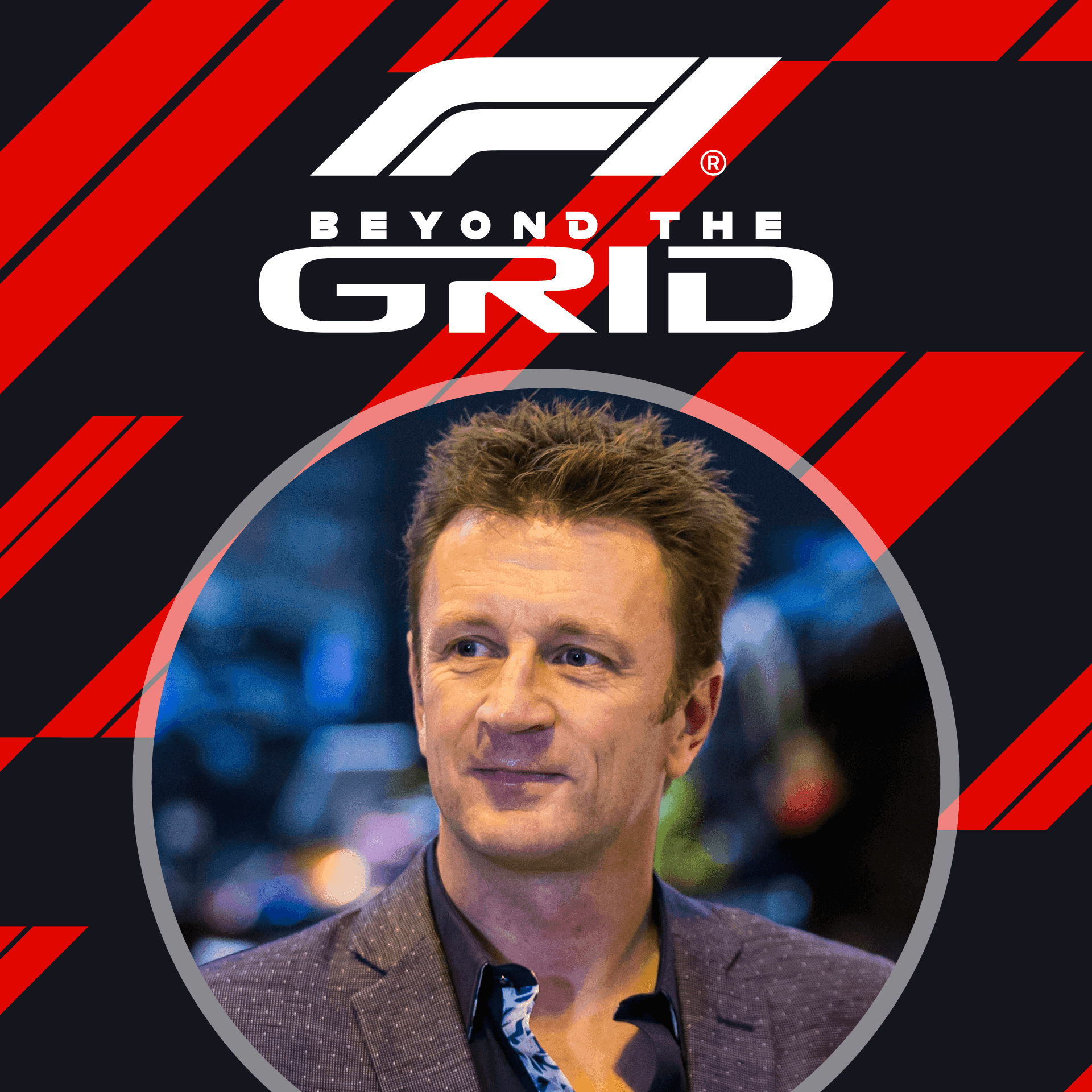
Alan McNish discusses Audi’s Formula 1 project for 2026 (“the Audi way”), his role in the program, Audi’s motorsport philosophy, and his own racing journey from McLaren testing with Ayrton Senna to a late Formula 1 breakthrough with Toyota.
Guest backgrounds
Alan McNish is a former top-level racing driver, successful in sports cars with Audi and later involved in Audi’s F1 project. Tom Clarkson is the host of F1 Beyond the Grid.
Key claims
- Audi’s “way” is technology-first (“Vorsprung durch Technik”), long-term relevance of racing programs, and leadership that builds teams with a “velvet glove” approach.
- Audi’s 2026 F1 effort is focused on Melbourne 2026; power unit and chassis timelines are extremely tight.
- Driver selection for Audi is about putting the best people together, including a young driver (Gabriel Bortoleto) plus experienced development (Nico Hülkenberg).
- McLaren’s 1989 test with Senna was a “baptism of fire,” and Senna’s feedback style showed how much off-track engineering effort elite drivers require.
Notable examples
- Le Mans prep: Sebring 12 Hours as a full-team endurance “warm-up,” plus repeated 24-hour/30-hour endurance testing cycles.
- Estoril 1989: McLaren V10 had huge torque; McNish initially mis-shifted (hairpin in 4th instead of 2nd) then “took off.”
- 21-year-old setback: a virus (linked to travel) left him unable to press the pedal in Hockenheim, slowing his F1 momentum.
- Toyota 2002: McNish’s F1 breakthrough came after a long wait; he says it was “too late” and lasted one season.
Written by AI. May contain mistakes. Listen to the episode to check what was said.
Chapters
Tap a time to open that second in VOAllan McNish's Early Experiences in F1
0:55 to 2:05
Allan shares his early experiences alongside Ayrton Senna and initial setbacks.
“There's a lot that goes on behind the scenes of this show, booking guests across time zones, tight turnaround edits, and constant time management.”
Allan McNish's Early Experiences in F1
2:22 to 3:16
Allan shares his early experiences alongside Ayrton Senna and initial setbacks.
“Game day at my house, it's chaos, but like in a fun way.”
Challenges and Breakthrough in Formula One
3:16 to 4:47
McNish discusses his health issues and eventual breakthrough with Toyota.
“His first taste of Formula One was alongside one of the greatest there's ever been.”
Audi's F1 Project Overview
4:47 to 5:00
Discussion about Audi's future in F1 and McNish's role in the project.
“Here on F1 Beyond the Grid, with me, Tom Clarkson, Alan talks about his role in Audi's F1 project and how they'll go racing with Nika Hülkenberg and Gabriel Bortoletto.”
The Audi Way in Motorsport
5:00 to 6:07
Exploration of Audi's successful approach to motorsport programs.
“You'll hear brilliant insight from that first McLaren test alongside Ayrton Senna and the invaluable advice Alan received from 1976 world champion James Hunt.”
Technical Relevance and Strategy
6:07 to 8:01
McNish explains the technical strategy behind Audi's racing programs.
“You know, 2026 is just around the corner.”
Le Mans Preparation and Philosophy
8:01 to 13:20
Insights into Audi's meticulous preparation for the Le Mans race.
“And so from that point of view, it's been a tremendous success.”
Differences Between F1 and Sports Car Racing
13:20 to 14:00
Comparison of testing and preparation between F1 and sports car programs.
“And so you come back with a very clear attitude.”
The Evolution of Power Units in F1
14:00 to 16:20
Explore the changes in power unit technology and regulations in Formula 1.
“And then you have got your physical on-track preparation, which is limited.”
The Evolution of Power Units in F1
16:29 to 17:02
Explore the changes in power unit technology and regulations in Formula 1.
“And it's lightweight, portable and packed with enough processing power to make multitasking a breeze.”
Show all 33 chapters
Selecting Drivers: A Blend of Youth and Experience
17:02 to 18:36
Learn about the rationale behind Audi's driver selection strategy.
“Well, you're going to be going testing with Nico Hülkenberg and Gabriel Bortoletto.”
Assessing Bortoletto's Progress
18:36 to 20:35
Understand how driver performance and car development are intertwined.
“coming in next year, Cadillac, have gone for experience and experience with Bottas and Perez.”
Reflections on Qualifying and Racing
20:35 to 22:48
Delve into the dynamics of qualifying performance versus race results.
“But, you know, he's had a good row of points there coming up.”
Allan McNish's First F1 Test Memories
22:48 to 24:48
Hear about Allan McNish's early experiences in Formula 1 during his first test.
“And actually talking about Senna, I feel, is a nice segue, Alan, into talking more about your racing career.”
Driving Techniques and Challenges in Early F1
24:48 to 28:01
Discover the driving challenges and techniques used during the era of V10 engines.
“One was a drinks button and one was to change.”
Driving Techniques: Heel and Toe
28:01 to 30:01
Learn about Allan McNish's experiences with driving techniques like heel and toe, and insights on Ayrton Senna's throttle blipping.
“But it was a skill set that, I have to be honest with you, wasn't my forte.”
The Importance of Feedback in Racing
30:02 to 34:18
Discover McNish's reflections on feedback from Ayrton Senna and the significance of driver-engineer collaboration in racing.
“was at Silverstone the following year at the pre-Grand Prix test.”
McLaren Test Driver Experience
34:19 to 37:50
Explore Allan McNish's journey as a test driver for McLaren, including the challenges and advantages it presented.
“Back then, it was a very different type of fuel, I've got to be honest with you.”
McLaren Test Driver Experience
38:40 to 39:50
Explore Allan McNish's journey as a test driver for McLaren, including the challenges and advantages it presented.
“booking guests across time zones, tight turnaround edits, and constant time management.”
Peak Performance and Career Reflections
40:04 to 42:01
McNish discusses his peak as a driver, the impact of travel on performance, and the challenges faced in his career.
“You know, I had a very, very wide overview of all areas.”
The Pressure of Spotlight in Racing
42:01 to 44:32
Explore the challenges and pressures drivers face in the spotlight of racing careers.
“And he actually inherited your McLaren test role.”
Influence of Legendary Drivers
44:33 to 46:58
Discuss the impact and legacy of notable drivers like Alain Prost and Gerhard Berger.
“Was he better than his reputation in the 10 Grand Prix wins?”
Lessons from James Hunt
46:59 to 50:11
Learn about the valuable insights Allan McNish gained from his conversations with James Hunt.
“Really was quick in that high-speed stuff, and that was one where I thought, ooh, you know, he's got something about him.”
Transition to Toyota and F1 Testing
50:12 to 56:00
Understand the transition to Toyota and the unique challenges of the F1 testing program.
“And so I was sitting there thinking, ooh, what am I going to do now?”
Toyota's Struggles in Formula One
56:00 to 58:20
Explore the challenges Toyota faced in Formula One and their eventual withdrawal.
“terms of the success that they had hoped for certainly the first year.”
Allan McNish's Frustrating 2002 Season
58:20 to 1:00:56
Listen to McNish reflect on his tough experiences during the 2002 season.
“Yeah, so in that respect, I think the biggest frustration for me was probably Monza, where we were running sixth or seventh at the time and the front suspension failed because of an engineering issue.”
Allan McNish's Frustrating 2002 Season
1:01:02 to 1:01:54
Listen to McNish reflect on his tough experiences during the 2002 season.
“And it's lightweight, portable and packed with enough processing power to make multitasking a breeze.”
Return to Formula One with Renault
1:01:54 to 1:06:30
McNish discusses his return to Formula One as a reserve driver with Renault.
“That was actually a very critical point in my career because the first test I did in the Renault was in Barcelona.”
Lessons from Sports Car Racing
1:06:30 to 1:10:00
Discover McNish's insights on sports car racing and his journey through the sport.
“Alan, why were you such a brilliant sports car driver?”
Allan McNish Reflects on His Career
1:10:00 to 1:13:26
Allan McNish discusses the key moments and decisions that shaped his racing career.
“But it was a big reminder that anything at Le Mans is quick.”
The Joys and Struggles of Racing
1:13:26 to 1:14:55
McNish shares what he enjoyed most about racing and the challenges he faced.
“I was pushed into third at the first corner.”
A New Perspective Outside the Car
1:14:55 to 1:17:57
McNish discusses his experience with the Audi Formula One team and insights gained from a non-driver's perspective.
“And so I needed a next challenge and you always do that.”
Favorite F1 Moments
1:17:57 to 1:18:31
Allan McNish reminisces about his favorite moments in Formula One history.
“Thanks for your time, Alan, and good luck with all things Audi in the coming years.”
Transcript
Automatic transcript. May contain errors.0:00Back to school starts now. Get long-lasting battery life on the Dell XPS laptop powered by Series 3 Intel Core so you can work from anywhere. Now starting at$699 with exclusive student pricing starting at$599. And it's lightweight, portable and packed with enough processing power to make multitasking a breeze. So say goodbye to distractions and hello to more free time because you've finished your work faster. Complete your setup with savings on select monitors and more must-have electronics and accessories. Limited time deals and free shipping on PCs and more await you at dell.com forward slash deals.
0:45That's dell.com slash deals.
0:51This episode is sponsored by Indeed. There's a lot that goes on behind the scenes of this show, booking guests across time zones, tight turnaround edits, and constant time management. And when things get chaotic, you realise pretty quickly how important it is to have the right person on your team. If I had to hire someone tomorrow, I wouldn't just want a good editor. I'd want someone who understands pace in long form interviews and can work fast under pressure. And in moments like that, you think, this is a job for sponsored jobs. Because indeed, sponsored jobs boost your listing in search results, helping you reach the candidates with the specific skills and experience you actually need.
1:31And it works. Sponsored jobs posted directly on Indeed are 95 % more likely to report a hire than non-sponsored jobs. That's a serious edge when the pressure's on. Spend less time searching and more time actually interviewing candidates who check all your boxes. Less stress, less time, more results. When you need the right person to cut through the chaos, This is a job for Indeed sponsored jobs. And listeners of this show will get a$75 sponsored job credit to help get your job the premium status it deserves at Indeed.com slash podcast. Just go to Indeed.com slash podcast right now and support our show by saying you heard about Indeed on this podcast.
2:13Indeed.com slash podcast. Terms and conditions apply. Need to hire? This is a job for Indeed sponsored jobs. This is Lele Pons from Suite 305 with Lele Pons. Game day at my house, it's chaos, but like in a fun way. The TV's ready, the remotes are ready, the kid stores are going off, and somehow everybody needs batteries at the exact same time. That's why I keep Duracell stocked. And Duracell just released limited edition Duracell and Messi battery packs. The design is inspired by Messi's iconic left leg tattoo. So every battery feels like it comes with an extra kick. From the TV remote to automatic corkscrew, Duracell keeps us game day ready.
2:54Duracell double and triple A batteries are the only ones built different with power boost ingredients for long lasting performance you can trust. Find the limited edition Duracell and messy batteries in stores at Lowe's and Walmart or on Amazon.
3:16His first taste of Formula One was alongside one of the greatest there's ever been. It was McLaren and the other side of the garage was Ayrton Senna. Looking back on it, you think, wow, what a baptism of fire in a way. But at the time, you just get in and do it. When he drove, his level of feedback, he was actually going into a lot more detail. And that was where I realised, actually, if you want to be in this sport, then you've got to put in so much more effort. But soon after witnessing Senna's genius, Alan McNish suffered a severe setback on his Formula One journey. Unfortunately, when I was 21, I was ill and I had a virus that knocked a lot of the momentum out of my career.
4:01I just had no energy. My joints were swollen up. I couldn't put pressure onto the pedal to be lifted out of the car in Hockenheim. I think the spotlight and the momentum went in that era. More than a decade later, in 2002, Alan finally made his Formula One breakthrough with Toyota. He was in his early 30s by then, and in reality, his chance had come too late, and it was over after just one season. Now he's back in the F1 paddock with Audi, a team he enjoyed huge success with in sports cars. When they take over Sauber in 2026, can Audi uphold their exceptional racing pedigree in the pinnacle of motorsport?
4:47Here on F1 Beyond the Grid, with me, Tom Clarkson, Alan talks about his role in Audi's F1 project and how they'll go racing with Nika Hülkenberg and Gabriel Bortoletto. Alan's input will be truly beneficial to Audi because he's very experienced and has spent a lot of time in the presence of true grace. You'll hear brilliant insight from that first McLaren test alongside Ayrton Senna and the invaluable advice Alan received from 1976 world champion James Hunt. His perspective on why Toyota didn't succeed in Formula One is also very enlightening. Given that there were 13 years between his first F1 test drive and his Grand Prix debut, Alan's dedication and perseverance to reach the top of his sport is a lesson to all young drivers.
5:38I hope you enjoy hearing his story.
5:44Alan, it's great to have you on the show. How are things? Very good, thank you very much. Great to be here. First time on the show, long-time listener as you say. Well look, let's start by talking about the Audi F1 project. Can you describe the atmosphere at the moment over in Hinville and Neuburg and what's the level of excitement there? Anticipation, isn't it? You know, 2026 is just around the corner. It's been a long time since it was announced. If you think back to Spa 22, when the cover was pulled off the leveraged show car. And then it was clear that Audi was entering Formula One for the first ever time.
6:22And since then, there's been a lot of work going on, predominantly in Neuburg, where all of the previous motorsport programs were running out of to build a power unit. And then laterally as well in Hinville and the developments there, which I think everybody's obviously very much focused on today because, you know, you've still got a racing season that continues at the moment. But the big eye is on Melbourne 2026. Now, you're an Audi legend from sports car racing, but describe what your role is now in an F1 context. I do multiple things, actually, at the moment, because when we started with the Formula One project, then I was involved from the beginning looking at how this could come around.
7:04What was the best way to do it? Because, you know, obviously there's different elements of experiences in there. and that sort of built up through the time in Neuber back from the beginning of this decade in reality when it was building towards it. And now more laterally on some of the areas I look at the key technical partnerships which is something that's obviously very fundamental to how Formula One teams run and also one of the areas that I personally love is also just the interaction with drivers as well and that's something that I think when you're a driver you're always a driver you never take that part of you out of it.
7:43Well come on to drivers can we talk about I don't know how we describe this the Audi way all right now you race for them for 11 years you had great success but also before you they were dominant in rallying how would you describe the Audi way when it comes to motorsport Why have they got such a phenomenal record? They have got a phenomenal record because every works programme they've ever got involved in, back from rallying through to touring car to Le Mans, as you mentioned, which was the area where I predominantly touched into, or Formula E or even Rallycross and Dakar, they've won. And so from that point of view, it's been a tremendous success.
8:24And the trophy cabinet is sensational, no question about it. I think probably one base point is that the whole Audi company, the DNA is technology. You know, Vorsprung durch Technik is just exactly the statement. And so from that perspective, it's looked at as a technological development. And every racing program has to have a relevance as well. It can't just be a marketing activity. It's got to have a technical relevance. And we saw that very much through the different programs. You mentioned Raleigh in their Quattro, for example, or TFSI direct injection. and now with the change to the regulations in 26, it's always got a relevance there.
9:01And I think that's one of the key points because they look at it with a long-term vision. And so historically, you know, when they've gone into a program, it's been with, I would say, a very clear view over why and where and with the ultimate goal to win because there's no point going into a program if you're not going in with a vision to win. And thankfully, myself and a lot of drivers have been on the positive end of that. I think there's one other factor, though, which is very difficult to describe, but we've always had very good people leading projects. So if I think back to my time when I joined, I shook hands with Dr Ulrich, who was then motorsport boss, and that was in November.
9:46I still was in a contract with another OEM at the time, and he was comfortable in waiting on a handshake, not in a written agreement, but on a handshake. And that principle is very old fashioned, but it's one that I think has stood them very well. And that human development of a team, a personal team that maybe from the outside has looked like a big German powerhouse, but actually from the inside has had a very strong leadership, but with a velvet glove mentality behind it. Alan, that handshake story says a lot about you actually as well, doesn't it? Yeah, or you could also say, didn't have many other options.
10:26No, the reality is that, you know, I think generational aspects to it there is that you make a commitment, it's a verbal commitment, you shake a hand and that's how it is and you follow it through for the good, the bad and the ugly of it all. And it's a principle, I would say, more than anything else. The Formula One project is still very new. I want you to describe a Le Mans campaign. I want to learn more about Audi's approach to racing right so you're going to Le Mans when when do the preparation start just give us an idea about the thoroughness of Audi and the extents they go to for the success that you were describing well for Le Mans it was a very clear point that it was one race per year and the other races that we did in sports cars were to some extent to fill the gap between Le Mans and Le Mans was your your one the big one and everything was centered around about Were the other races used as a warm-up to Le Mans?
11:22Well, Sebring 12 Hours. So if you take the Sebring 12 Hours, the biggest, most difficult sports car race in America, we would go to do that particular race. Even if we weren't doing the full American Championship, we'd go and do that race as a complete team, unit drivers, engineers, mechanics, a lot. And then once we finished the 12 Hours, on the Sunday, all of the fans used to leave the circuit. And then on the Monday morning at 9 o 'clock, we'd start another 12 Hours. And so then you would test for 12 hours to give 24. Now, the 24 hours as a test wasn't enough, but 24 hours roundabout Sebring was physically, for the car, for the dynamics, for the suspension geometry, for the drive shafts, for the drive boots, everything was the same as 30 hours in Le Mans.
12:06So for us, that was our first endurance test. Then we'd go to Paul Rickard, and we'd do two other endurance tests where you would run for 30 hours. Non-stop. Non-stop. and if the turbo failed, you came in and you changed the turbo as if it was a live race. You would do safety car periods as if it was a live race. If it rained, you just put the wet tires on and you went as if it was a live race. So the whole team was in this sort of process. By the time you came to Le Mans, you had done three or four, 24 hours of Le Mans by the time you got there. But I think when you said, when does it start? When we finished Le Mans, even if we won or lost, didn't matter.
12:42The next day was when the process started for the following one. In fact, I'm sure the design guys, Axel Luffler, who was the chief designer, he was already thinking two or three years ahead. There's no question about it there. And same on the engine department. But from the racing team side, then it was definitely the next day. When you said, what did it look like? The biggest single thing for me, and it's what I loved about Audi and love about Audi, was you won or you lost. If you won, you celebrated for the night. And then the next day you got back to it. If you lost, there was no pointing of fingers or anything else.
13:16It was black and white you lost. Just go home and fix it and get on with it. And so you come back with a very clear attitude. And there's times when there was frustration. There was no question about it. There's a few races where, you know, we came back and we pulled our hair out for a few days. But the reality was there's a very quick reset and got back to the job in hand. How do we improve? And so how different is the F1 program to the sports car program? I mean, you can't test in Formula One now. No, you can't. But since my era of driving, through our Formula E project, for example, we couldn't test there.
13:52There was very limited amount of testing. But you've got simulation and simulators that have came on scene. You've got different dyno systems. So you basically do a lot of preparation in the virtual world now. And then you have got your physical on-track preparation, which is limited. And that's for drivers and team engineers, There's the whole unit. And so in that respect, it's definitely a little bit of a different world. But the reality is that the technical world's moved on as well. And I think there you will see that from a power unit point of view, you're pretty much there by the time they actually get bolted into the back of the car.
14:31You know, you've got all your energy management done and things like that. It's just the way we are now. Can we talk about the PU? Because you've got a going concern in Sauber, right? The chassis side is rolling from one year to the next. Of course, there's the big regulation changes. But for me, when I look at Audi, the PU is a huge project. Yeah, yeah. For all power unit manufacturers. For everybody. But it's like you've had to create a business and get the new regs sorted as well. How far down the road are you now? Can you give us any idea as to what's running on the dyno? Look, at this stage, we're in October.
15:10You're going to be running in January. So from that point of view, you know where we are in terms of things moving. You've got to go back when the regulations were finalized. Already, you were tight on time to make 2026. That's the realities of all of the power unit manufacturers and the timelines that are required. It's a big change. you've got a completely different philosophy on the power unit, on the internal combustion engine, also on the electrical side of it as well. You've got the chassis regulations. I think it's the biggest change we'll have ever seen. It's exciting in so many ways, but the timelines for it are pretty long.
15:47There's no question about it. Now we're at the last moments before, you know, everything gets homologated and gets ready for 26. What's been the process though? Do you start with a one-cylinder engine on the dyno and then work from there? Yeah, everybody starts with a one-cylinder engine concepts and then build it up from there. And then it'll be, you know, I don't think anybody's different to full internal combustion engine and electrification. And then a full PU unit on the dyno gearbox. Then eventually a full car and then you see it going testing. Back to school starts now. Get long-lasting battery life on the Dell XPS laptop powered by Series 3 Intel Core so you can work from anywhere.
16:28Now starting at$699 with exclusive student pricing starting at$599. And it's lightweight, portable and packed with enough processing power to make multitasking a breeze. So say goodbye to distractions and hello to more free time because you've finished your work faster. Complete your setup with savings on select monitors and more must-have electronics and accessories. limited time deals and free shipping on PCs and more, await you at dell.com forward slash deals. That's dell.com slash deals.
17:20Well, you're going to be going testing with Nico Hülkenberg and Gabriel Bortoletto. You were saying earlier that once a driver, always a driver. Are these two guys a perfect blend of youth and experience? So Nico, I think you saw in Silverstone exactly why you put him in a car. You know, difficult conditions, the experience there, the skill, the balance, the mentality, everything else was just sensational. And he pulled a podium out of something that, you know, you never thought halfway through the race was going to be a podium. and then with Gabi it's quite clear, you know, Formula 3 champion first year, Formula 2 champion first year, not a bad result is it really, and he's got a very level, calm head about him, and I think it is exactly a perfect scenario, where you've got someone that has got that experience, someone that is fresh into the environment with so much potential, but also the two of them work together very well, they're not political, they're not fighting against each other, they realise that actually there is quite a long journey ahead, and they've got to work together and the whole team aspect at both sides of the garage working together as well.
18:29And I think the drivers lead that to a great extent. Well, I'm interested that you've gone for youth and experience, whereas the other newcomers coming in next year, Cadillac, have gone for experience and experience with Bottas and Perez. Why a difference for Audi? Why is it important for you guys to have a young guy in one of the cars? I don't think it's a strategy. You have to have a young guy. You've got to have the two best people that you think you can put into the car to build the team at the right time. And from my point of view, it was always clear that Bortoleto was going to have a long career in Formula One.
19:05You know, you don't have the results that he has had with the performance, with the level-headed way that he approached Qatar and Abu Dhabi last year as an example. You know, that was a perfect scenario where you could sit there and say, actually this is someone that has got brain capacity to spare and uh you know i think that was that was quite a straightforward decision to be honest with you personally and then on the other side of it nico fitted the build for developing a team you know he's got the experience of that he's got the experience of teams at different stages in the grid as well from you you know, higher up the grid to lower down than the grid.
19:48And I think that's a very, very important thing as well. So it wasn't necessarily we have to have one that's here and one that's there. It was a case of who's the best people that we think for going into this. So the Hulk has got, what, 240-odd races under his belt. I think it's more than that. But I'm fascinated as to how you assess Bortoletto's progress this year. I remember in Melbourne he came in and was good in qualifying. I think he put it over Hulkenberg in his first race, which was hugely impressive then it felt like it got harder work for a while and then it got better from austria onwards how do you explain his trajectory this i think the trajectory if you looked at it is probably a little bit the trajectory of the car and the team as well i don't think it's necessarily drive just driver related you know i think the car is now developed it's a little bit more stable his team of engineers working together and both sides of the garage in fact because you know both drivers were fresh to the team and you see that whole team building up understanding what's making the car click where it's needs to work on its weaker areas where its strengths are and it's quite clear that gabriel's i think understood how to get to the point by the time he goes into quali to deliver a strong and consistent lap is quali where you've seen him make the biggest gains i think it's easier to look in quali than it is in the race because the race is also masked by a few other things.
21:15But, you know, he's had a good row of points there coming up. And so in that respect, you've got to say that the quali has allowed the race deliveries. And so I think that, like I said, I think there's two parts to it. One is that he has developed without getting out, got the experience, but also the car has allowed him to do it a wee bit more than it maybe did at the beginning of the year. I'm fascinated by his qualifying pace because I've always looked at Hulkenberg actually as more of a Saturday man than a Sunday man. Yeah. Has it surprised you? Yes, yeah, I have to be honest with you, yes.
21:46But I don't believe Nico has gone to bed fast and woken up slow. Simple fact of life. No, I'm not implying that either. So I think, what's the say about Gabby? I think Gabby's done a fantastic job. I think Nico has done a fantastic job in other areas. And it's the way that it floats around. I think you've seen it with a couple of other teams as well, where one driver suddenly started to have, I would say, what you would call the upper hand. but in reality I'm pretty sure by the time we get to the end of the year it'll be pretty nip and tuck we had Gabby on on the show quite recently and what did you think I really enjoyed talking to him he's interesting and there's no such thing as you know a difficult question for him he will come up with an intelligent answer to most things and if he doesn't want to talk about it he'll find a way of sort of circumnavigating any any potential pitfalls I thought it was an enjoyable chat you You know, and one of the things that inspired me about the chat was Senna is clearly a huge inspiration to him.
22:45And isn't it great to have a full-time Brazilian back on the grid? And actually talking about Senna, I feel, is a nice segue, Alan, into talking more about your racing career. Because, what was it, 1989, I think, was the first time you tested the McLaren at Estoril? Yeah, 89, just before Macau, because I flew directly to Macau. From Estoril? Well, I didn't. I flew back to ETHRO on a private jet and then got an economy VA to go to Hong Kong. Very different sort of scenarios. You can see the difference between Formula One and Formula Three even then. Alan, you were the talk of the town. Can we talk about that first?
23:22Which town? Yes, exactly. What about that first test in Estrella? Can you just give us your memories? You know, it wasn't a small back of the grid team. You were bam, straight in with the front running team of the day. Yeah, it was McLaren and the other side of the garage was Iron Centre. So, you know, you were 100 % in there. And looking back on it, you think, wow, you know, what a baptism of fire in a way. But at the time, you just get in and do it. You don't think about it too much. What I remember was Estoril was the old Estoril circuit configuration. So just honking fast corners at the end of the day, long, very fast corners.
24:01And there was no data. So we're talking about the World Championship dominant team, Honda, power unit, McLaren chassis. First thing is I jumped in the car. Steering wheel was huge. The steering wheel was like it had come off a truck. It was so big. gear lever had the biggest handle on it that you could ever think of because you know you're coming back to an era where you were doing what 35 gear changes a lap and they were getting huge blisters on their hands so therefore there was a big gear lever on it and a steering wheel because there was no power steering it was literally physically lumping this thing around and so you know you just sit in the car and everything is perfect no question but it was just a very different environment for the driver.
24:49Two buttons on the steering wheel. One was a drinks button and one was to change. There was a page on a little display and it was to change the display from like one line item to another. And so, you know, very, very limited. And then when you came into the pits, they would print out two pieces of paper and hold them up to the light type of thing. It was, you know, you couldn't overlay graphs looking at computers or anything else it was literally a printout and then trying to check it from visuals between one driver and the other but what i remember was the first few laps thinking this thing's got no grunt got no grunt zero grunt i was coming out of the hairpins and esteril so you come through the first corner which is a fourth gear right hander down from six six years down into fourth fifth gear flat into the next one then down into second then up the hill down second for the next left hairpin and then onto the back straight, but I'm thinking this has got no grunt.
25:43And then on the second lap, I realized I'd gone around the hairpins in fourth gear, not second. And then I hit second, then it took off. It literally took off. I was like in a rocket ship going, Jesus. This was the V10. This was the V10, but it was the most tractable engine I think I've ever driven. So you, can you just describe what you mean by that? Well, I could drive through in second gear and it would scream its head off, or I could drive through in fourth and it would still have the torque to pull you out of the corner. So you could, and this was one of, again, thinking back, you've got a manual gear shift here.
26:15So you don't and cannot be changing gear in the middle of corners like you can now with paddle shift. Because you physically had one hand on the wheel holding on to this Bucking Bronco Winnow Power steering and your other hand. So it was just much more difficult. Also going across the gate. So it was quite easy then to snick third gear when you were meaning to go into fifth, for example. And so in that respect, people tended to shift more in a straight line than they would in corners as you do nowadays. And so with regard to that side of it, you were, I would say, more straight turn and go. And when you had the torque, then you could then maybe go in a higher gear and then just focus on keeping the balance of the car correct, as opposed to necessarily having to get into the right gear to get the power delivery.
27:03and that's where I think that V10 was super, super good. While we're talking gears, I read something and I want to know whether it's true. Did you not heel and toe back then? No. Is that true? So it is true. So what, you just ripped it through the gears without blipping the throttle? Yeah, I wasn't actually, yeah. I've got the dog ring, the second gear dog ring from that test because I said to you I went around the hairpin and forth and there was no one to tell me I was going around the hairpin and forth. There wasn't, you know, there was pit to car radio but they didn't know what the hell was going on because there was no data.
Read the full transcript
27:35But yeah, I've still got the dog ring from it as well because as a reminder, you need to heel and toe. So after that test, I then through that winter learned to heel and toe in a road car. So I'd done Formula Ford, Vauxhall Lotus and F3. With huge success, I might add. Yeah, yeah. Without heel and toeing. Without heel and toe. So I used to brake. And what, just lock the rears every time? And just crash it down through the box. I wondered why I'd always a lot of front brake balance. Maybe I know now. But it was a skill set that, I have to be honest with you, wasn't my forte. It was heeling and towing.
28:09And so I found another way around it. Now, it didn't hamper me too much. Only when I got into very high-powered cars, like Formula 3000 at the time, and also an F1 car, that actually it was a negative. And so then I had to sort of learn how to do it. And as I said, through the winter, on the roads of southern Scotland, I was learning to heel and toe. And while we're talking driving style, you've already said you had Ayrton Senna in the next door garage. What did you make of his blipping of the throttle? Did you try it? Yeah, it was a bit of a needy thing. You know, it's not needed now because you've got instant response.
28:44But at that time... Did you need it with the V10? I can see you need it with a turbo. You still needed it because it also kept the car alive. You know, cars had a lot less grip than today. And so you had to make them move around a little bit. and that was his way of doing it. There was a lot of corners as well where you probably, and a lot of drivers would do it without necessarily thinking. Estoril, for example, at the end of the back straight, there was a second gear accelerating faster exit, but you couldn't plant the throttle. So you needed to sort of stab into the throttle at different points to get the car to move and to also pull out of the corner.
29:21So I don't think it was just him. I know there's a lot made about it. I don't think it was just him, but he definitely accentuated it. And his style came from the turbo from basically 88, more than necessarily the normally aspirated in 89 or 90. But it was something that I think he had attuned to make work for him. And others were doing it, but not necessarily in the same sort of scope. And how interested was Ayrton in your testing? Like I said, you just jump in and you go and you do it. You don't think too much about it. But looking back, he was interested in what the feelings were. I remember, though, because then the first test of the V12 was at Silverstone the following year at the pre-Grand Prix test.
30:07And I drove and then Ayrton was very interested in what the V12 was going to be like. So it was clearly coming for the following season for 91. And so, you know, doing the test, super interested in what was going on there. but then when he got into the car and this was a bit of a mind shift for me when he drove he was talking about friction and various different things and I was thinking this is bloody quick but he was actually going into a lot more detail and that was where I realised actually if you want to be in this sport and at the level then you've got to put in so much more effort and work that's off the circuit, on the circuit engineering, everything else And it came from just his level of feedback and his ability to remember a race run and deliver it back on lap five, this, on lap seven, this happened, that corner here, everywhere else.
31:03Again, because there was such limited data. So the driver was downloading the data and repeating it back to the engineers. And what did he mean by friction? Engine friction. So like piston friction. Yeah, just basically the piston going up and down the cylinder. It didn't feel like it was running free. You know, it felt like... He could feel that. Well, I couldn't. He could. I could feel 650 horsepower and going down the straight like hell. But yeah, he could feel it because he was much more attuned to it than I was. And so, you know, that side of it was an area that you see experience. That was the point of experience.
31:38Clearly, the guy was super good, but it was a point of experience as well. Tell us about your journey with McLaren then from that first test at Estoril. When did Ron Dennis sign you up properly? Before the first test. So it was before the British Grand Prix F3 support race. So I think we signed on the Tuesday prior to the British Grand Prix in 1989. As a what? As test reserve. And so then I was doing the test at the end of the year. And it was subject to good test, which was the Formula 1 test in Estadil. and then really it kicked off in 1990. And how much mileage were you doing? I was in Suzuka for three days every month through predominantly 1991.
32:26Doing what? V12. Pounding round Suzuka. Pounding round Suzuka. So you do two days of testing and then race run on the third day. So, you know, the last thing you did was a blooming 52 lap race run. It's like brilliant. Suzuka, one of the hardest circuits at the time as well. But, you know, a lot of running there. there was running an esteril through the winter there's a lot in the winter of esteril which was a test circuit that pretty much everybody went to barcelona wasn't open at this point we've got to remember and then as well other ones dotted around about europe but predominantly the same sort of circuit so the trips to japan were for honda they were all for the v12 yeah tell us how different was the engine from one test to the next what was the rate of development there was two rates of development really at that time.
33:12One of them was on fuel and the other one was on the engine. So the engine was stepping forward. A lot of it was on revs because you were trying to, with a V12, you needed to have a higher rev basically to get the power out. And so there was a lot of development onto that. Pneumatic valves were coming in, that sort of thing. And the other one was on fuels because I don't know if you remember, Tom, because you're quite young, but there was quite exotic fuel brews going around at the time. I remember Avgas. I remember walking into one of the garage. You met five stars, don't you? And not the group.
33:44I'm not going to say which team, but I remember walking into a garage at that time and my eyes were watering. So there was a lot of development in that and trying to, you know, get the right power fuel that didn't melt the engines, basically. It's funny, isn't it, how history repeats itself? Because here we are next year. One of the big changes in 26 is the sustainable fuels. It is. at the end of the day, it's where technology allows you to go. And so you break down a barrier in one section and it suddenly opens up a new avenue to explore and to develop. Back then, it was a very different type of fuel, I've got to be honest with you.
34:23But I think we all remember those days. So you're doing a lot of mileage, but a lot of it is in Japan, out of the limelight. Yeah, so predominantly... So in a funny kind of way, did it stall your career? being McLaren's test driver? No, I would say not. It was not in the limelight, but there was no test drivers in the limelight because there was not really very many test drivers because race drivers did all the testing. And so in that respect, it wasn't as like it was laterally, where you've got development reserve drivers for each team, et cetera. And it's a profile point. It was gaining experience without question with one of the best teams, with some of the best engineering brains of the era around and about.
35:08But at the same time, I was racing in Formula 3000, which was from my point of view, the main point, what I was doing was racing, not testing. And so through 1991, 92, I was racing in Formula 3000. And that was the current Formula 2. And so, you know, my point was to deliver on that. And the Formula 1 side of things was maybe a distraction at times, if I'm honest with you, because you were jumping from one thing and they're very different beasts. One thing on one side of the world back into something over here, but it was something at the time you get the opportunity. You're not going to say no.
35:47You're not going to turn it down, are you? Well, Alan, except, except, except Dario Franchitti was on the show earlier this year and Ron Dennis, same person, offered him, I think, a very lucrative seven-year test contract in which he could still race an IndyCar and then he would get Concord back to Europe and do tests for three days and then go back to do an IndyCar race. And Dario turned that down because I think the word distraction is probably quite a good one. Well, Dario I've known since I was 13 years old, 14 and around there, very, very well. So he actually saw, I would say, up close and personal my whole career and very much so he was there not necessarily on the front line if you like but he was there through all of that era so he knew the pitfalls of it by then and he also remember saw michael andretti doing that concord back and forward and you know how difficult it was you know and on a piece of paper i think all these things work out but in practicality they are sometimes got a few difficulties so the trips to japan and the subsequent jet lag did that affect your performances in f3000 yes it did i have to be honest it did um so i remember coming back from a japanese test straight to le mans and over the date line going tokyo to alaska alaska paris paris to le mans straight into the car and there is no question i was not at my best still running second in the race but i could have been winning the race so what is the delta you could never really say but it wasn't the ideal preparation every time i'm not saying that anyone's fault now you know i've got to put my hand up at different points as well but um again i come back though when that's sitting there on the table yeah i don't think you turn them down very easily back to school starts now get long-lasting battery life on the dell XPS laptop powered by Series 3 Intel Core so you can work from anywhere.
37:56Now starting at$699 with exclusive student pricing starting at$599. And it's lightweight, portable and packed with enough processing power to make multitasking a breeze. So say goodbye to distractions and hello to more free time because you've finished your work faster. Complete your setup with savings on select monitors and more must-have electronics and accessories. Limited time deals and free shipping on PCs and more await you at dell.com forward slash deals. That's dell.com slash deals.
38:36This episode is sponsored by Indeed. There's a lot that goes on behind the scenes of this show, booking guests across time zones, tight turnaround edits, and constant time management. And when things get chaotic, you realise pretty quickly how important it is to have the right person on your team. If I had to hire someone tomorrow, I wouldn't just want a good editor. I'd want someone who understands pace in long-form interviews and can work fast under pressure. And in moments like that, you think, this is a job for sponsored jobs. Because Indeed Sponsored Jobs boost your listing in search results, helping you reach the candidates with the specific skills and experience you actually need.
39:16And it works. Sponsored jobs posted directly on Indeed are 95 % more likely to report a hire than non-sponsored jobs. That's a serious edge when the pressure's on. Spend less time searching and more time actually interviewing candidates who check all your boxes. Less stress, less time, more results. When you need the right person to cut through the chaos, this is a job for Indeed Sponsored Jobs. And listeners of this show will get a$75 sponsored job credit to help get your job the premium status it deserves at indeed.com slash podcast. Just go to indeed.com slash podcast right now and support our show by saying you heard about Indeed on this podcast.
39:57Indeed.com slash podcast. Terms and conditions apply. Need to hire? This is a job for Indeed sponsored jobs.
40:19when do you think you were at your peak as a racing driver in what category i don't think it's category specific but i think it is i feel because we're going to talk about toyota in due course when you got your break in formula one but i think that came too late for you yeah definitely 100 so when were you at your peak in the mid 90s i would say at my peak with pure experience of life and everything else was probably when I was maybe 33, 34, which was because I had seen so much and worked with so many people. You know, I had a very, very wide overview of all areas. But probably at my peak to jump into Formula One, when you're talking about that, without, you know, other things going on, I would say when I was maybe 21.
41:08As young as that. Yeah. and unfortunately when I was 21 I was ill and I had a virus which went to see Sid Watkins remember Prof I went to see Prof and he basically said look six months it'll go but that's what it is and I really had a difficult year and that knocked a lot of the momentum out of my career and there was a few sort of knocks on the road but that one really did I would say take the momentum out of it. So you're 21, what's that, 1990, 1991? End of 91, beginning of 92. And that was when you were doing this ridiculous amount of travelling. Do you think the virus was brought on by the travel?
41:48No, I think the virus was brought on by a mouthful of rice in Thailand, believe it or not. I was ill from that moment afterwards and I just didn't recover. I just had no energy. My joints were swollen up. I couldn't put pressure onto the pedal to be lifted out of the car in hockenheim uh after finishing second in 3000 because they're my right and left the ball of my foot was like a big balloon blister but so sensitive and sore that i couldn't put the pressure on the brake pedal so you know there was there's a whole load of things going on there and you just kind of get on and do them because what else are you going to do we're not talking about the medical treatment and support mechanisms that you have today we're talking about a very different era there and so you know you just get on and muscle on with it but i think looking back the spotlight because you said coming man everything else the spotlight and the momentum went in that era in that point because how long does a driver get in that spotlight where you're the coming guy and if you don't take advantage of that you're gone i think a year i think then naturally because you know we're goldfish we swim around and by the time we get back around to the end of the lap we're forgotten again well isn't it interesting because actually a guy you raced with a lot in the junior formulas you were both on the philip morris young driver program i suppose we could refer to it as mika haken and i'm talking about he kind of inherited your position yeah so as the coming guy right so in 89 we're both doing formula three and he had a really difficult year he struggled and the spotlight went from mika because mika was always has been brilliant you know super quick very very natural very quick to get up to speed and not always completely understanding why he was quick but it didn't matter because he was always quick and in f3 he had a really difficult year had to repeat the season i went on to formula 3000 and then he got an option to run in the lotus which was back of the grid team but did a stunning job in it And once he was in Formula One, then he accelerated on from there.
43:56And he actually inherited your McLaren test role. He did. So basically in 93, he then was testing at McLaren and jumped in and raced. And then in Estrell, did the stunning job by qualifying centre. In his first race? In his first race. How nuts is that? My God. But Mika would do that, come in and not think very much about it, you know, because he just did, as opposed to think he just did it. and so yes you're right but I think you've got a year roughly where the spotlight's on you and then after that then it you know you need to pretty work pretty hard at it can we just talk about two more drivers before we move on to you going to Toyota at McLaren Alain Prost you were his test driver as well as Ayrton Senna's test driver not 100 % I kind of was because the first overall i had was actually one of cross believe it or not and the seat so when you're the same yeah i did that test in esteril and the the it wasn't a time when you then got measured and laser scanned for overalls and things like that and so it's a case of well cross overalls there so i'd cross overall believe it or not well and then he then went to ferrari and then he went to ferrari yeah but did you were you ever alongside him at a test you weren't no i was never alongside him at a test but without doubt he he had such a i would say an influence of that era where i saw alan was before when you were saying about the marlborough world championship team the young driver project you know we went to various events and he was at mclaren it's i know also when he was at ferrari afterwards because they were still involved and so we got to sort of as a young driver see them understand them a little bit and got to know him but never actually in the same car did you ever have a technical conversation with him you know i'm sure it was technical for me i'm sure it wasn't technical for him well what about gerhard burger then because you really were working with yes yeah with gerhard yes i've always felt that gerhard hasn't always had the respect he deserves because he was a bloody good racing driver but because he was alongside senna he didn't always come out smelling of roses.
46:12Was he better than his reputation in the 10 Grand Prix wins? Yeah, Gerhard was very, very good. It's funny, a picture came up on Instagram from his win at Benetton in Hockenheim. 97. 97. And it just reminded me, actually, he had a long career where he was winning a lot of the way through it. And I remember the first time really seeing Gerhard and thinking about, Christ, he's quick, I'm going to have to work here, was Stowe, when they re-profiled Silverstone and we were testing there, and Stowe was different to what it is today. You would go in, and it was still a bit bumpy going in, but then it tightened and had a kind of fastest chicane on the exit.
46:56And coming through there, it was fourth gear, and he chucked it through there. Really was quick in that high-speed stuff, and that was one where I thought, ooh, you know, he's got something about him. Brave as a lion. Yeah, he definitely stuck it in. And Gerhard, I think, was in the right car, but unfortunately with a teammate that was pretty exceptional. But I remember a bit like Hacken and coming in and showing Senna the way at Esterel in 93. I remember Berger out-qualifying Senna in Phoenix that first year in 90. As he said to me once, he said, I never saw him again, but I did out-qualify him the first time.
47:34Yeah, but where Gerhard, you know, you look at Gerhard's career and it's not all about 10 Grand Prix wins. If you think about it, he was very clever in the way that he structured his career. He's very clever in the way that he's done his post-racing career as well, as in driving career. And I think there was a lot of things going on there. And he was quite strategic in the way that he planned things. Maybe not necessarily always with the sort of thought process at the time of X, Y, Z, these steps. But actually looking back, it was a very strategic career. He was a party boy, though. I think that doesn't help his reputation either.
48:12Yeah, I don't know. In the era, I think it probably, with some teams, probably did. Remember, we're talking, James Hunt was still commentating there. You talk about the ultimate party boy. Lord Hesketh was the chairman of the BRDC or the president of the BRDC. So there was a few party boys in the paddock. Actually, Alan, you mentioned James Hunt. He was part of the Marlborough World Championship team selection process, wasn't he? He was also advisor. James was there through the majority of mine. Did he advise you? Yeah, yeah. And a lot of times I had lovely conversations with James at his house or circuits and things.
48:47But the one that stands out was we were going to Nürburgring. And I phoned him up and said, James, going to Nürburgring. And it was when the new circuit had just been done. He went, yes, McHaggis. He always called me McHaggis. not sure if he remembered my real name, but he called me McHaggis, and he said, McHaggis, he says, yeah, yeah, rubbish, it's a rubbish circuit. The old track, and he gave me chapter and verse, I said, yeah, but James, I'm racing on the new one, and he went, yeah, but it's complete rubbish, and he just kept telling me about the old circuit. It was fantastic, but there was a few things, I used to, when I was younger, one thing, I would lead a race, and I would go off into the lead, and then I would make a little mistake, a stupid little mistake, because I would look at the pit board, and see plus three seconds, or whatever, 10 laps to go and outbrake myself and lose a second or whatever it was.
49:31And I said this to him, he said, well, why'd you look at the pit board? Just stop looking at the pit board, which was so obvious, but I hadn't ever thought of it because what do you do every lap when the pit board's there? You look at it. That then started making me think, how does my brain work? And how can I then make sure that I don't make stupid mistakes like that by just creating the atmosphere where I lose concentration. And so James, you know, was there for a lot of my junior career. And there was a few nuggets, absolute beautiful nuggets that he delivered that I used all the way through my career.
50:07I never looked at bitboards very often after that. Well, isn't it? And we've got 50 years of his world championship coming up next season. Let's bring it on to Toyota now you get your big break in 2002 but the formula one bit of your toyota relationship starts a year earlier a huge testing program how different was the testing work with toyota to what you'd been doing with mclaren the actual toyota started before that a year before so i was racing with porsche at le mans and we won le mans 98 and porsche then at the end of the year announced that they were pulling out of the project. And so I was sitting there thinking, ooh, what am I going to do now?
50:49And I had a meeting at Toyota with Ovi Anderson at the time. And Ovi said, yep, we want to put you in the car. You'll be with Thierry Butson and Ralph Kelliners. And Thierry will qualify. He will start the race. You'll be second. Ralph will be there. And that was it. It was like super clear from the December, the year before, how the race was going to progress. and the Toyota was quick that year because we were battling out in 98 between Porsche and Toyota for winning the 24 hours and so I thought yep pretty good place to go but at that time I didn't even know they were looking at Formula One and so at the end of it one week after the race my contract with Toyota finished I continued with Porsche developing a car for the 2000 season which ultimately was a stillborn car they tested it once and never raced and uh at the end of the year ov is fact it was in 2000 january 2000 ov phoned up and said are you interested in formula one and so i flew to cologne sat down with him and he explained about the formula one project and how they wanted to do some testing preliminary testing in 2000 at the end of the year with the GT1 which was a sports car hydraulics and things like that uh just a couple of tests and then a full testing program with a complete F1 mule car in 2001 and racing in 2002 and I sort of sat there and thought biggest car manufacturer in the world they're clearly going to attack it and you know they definitely had the money to do it and so that was where I would say the first conversation was was in his office.
52:35I think it was middle of January in 2000. And then when did you first test the F1 car? The first test of the F1 car was actually, of the mule car, was at Paul Ricard after the launch. You remember the launch where they took over Ricard Circuit and Ricard was re-profiled at that time. And then that was the first test. The great and the good of Formula One were there. I remember Bernie Eccleston being at the launch. it was his track we were borrowing but i remember max mosley being there as well all all the big guns from formula one at the time were there and then in 2001 just describe the scale of what was only a test program you were going all over the world weren't you yeah we did we didn't go to all the circuits but we went to the majority of circuits there's 16 grand prix at the time you know we traveled far and wide to did european races and at certain ones like we did a full simulation in austria from arriving on the thursday to where your meetings would be track walk uh friday fp1 fp2 qualifying exactly at the times as it would go through and then the race, simulated race as well with two cars, Mika and I Mika Salo that is, so we did that there but we also went to Malaysia, did two, three days of testing, Imola quite a few Grand Prix circuits with a complete team and it was to try and build a team up as much as anything else and also to get a bit of reliability onto some of the, you know, power units one part of it but also hydraulics gearboxes and that sort of thing and then we had the first test of the actual race car very very early and that was in november of 2001 at rickhard in a very very cold 15 day i think it was test at rickhard it was insane amount of testing testing was unlimited so you just could run as much as you wanted and we were very prepared by the time we got to the first race for reliability which was probably the one asset that they had was that actually that the car was reliable from the beginning of the season i was going to say how ready were you and i remember salo that first race of 2002 mika was dicing with mark webber in the minardi yeah um how ready were we as a team not very in reality as a wider team not very when i say that being able to race a car develop that car again because you could develop it through the season in any way whatsoever and also then prepare and design a new car for the following season that was where i think the team struggled quite a bit was taking that you know three parallel workloads on as a group as well there was a lot of inexperience in it on my side of the garage we had no one that really had experience on the engineering side or myself of racing in an f1 car and on mika's side there was mika and humphrey corbett you remember humphrey and humph and you know so therefore I would say across the board there was a lot of inexperience there and learning but actually a team that stuck together pretty well and learned and I think you know if I look back now they were a fantastic university for a lot of very good people that went on to other things in motorsport just unfortunately for Toyota it didn't work out for them you know in terms of the success that they had hoped for certainly the first year.
56:05Why didn't it work for Toyota. They had the money, they had the facilities. The wind tunnel that they built in Cologne is the one being used by the Cadillac Formula One team now. It felt like they had everything. There's a big difference between having everything and having a team. It's not an easy world, this is it. We've seen a lot of teams come and go that haven't quite had the success, but Toyota probably in terms of investment, it was the one thing that they missed off their trophy cabinet and a very tough one but they threw everything at it and probably pulled out due to the global financial crisis we have to remember when I think a lot of manufacturers had to stop their racing programs but probably stopped a little bit too early.
56:51Kamui Kobayashi came on the show a couple of years back and he said that that car at the end of 08 was actually a decent one and the car they had in the wind tunnel for 09 yeah of course was going to be mega but of course we never yeah you know was it going to beat the brawn you never know but coming back i think one thing was that you know you need to have a racing team mentality and uh that was part of the growing process i think of the team was that uh it was very structured and maybe ovi had that racing team mentality but when he um stepped aside slowed down retired then uh it became quite formal I think there which then lost a little bit of that sort of drive that it had I think it came back a little bit later on in the process but certainly in the first two or three years 2002 three four it didn't have that how do you reflect on your season 2002 frustrated yeah I can imagine frustrating frustrated you know in terms of that I look at it you know the First race, Ralph had the big flying incident at the first corner in Melbourne.
58:01So, you know, seven or eight cars out. I was in the middle of that running sixth and there was points only to sixth in Malaysia. Came in and there was a mess up at the pit stop. They took my old tires off and put them back on again. And so did the last stint with already 20 lap tires in Malaysia. But you still finished seventh, which with today's scoring system, you would have actually had four points finishes that year. with today's scoring system. Yeah, so in that respect, I think the biggest frustration for me was probably Monza, where we were running sixth or seventh at the time and the front suspension failed because of an engineering issue.
58:39And I was sitting right behind Eddie Irvine in the Jag, actually, and Eddie went on to finish third. I'm not saying I'd have finished fourth, but that one was probably the most frustrating because I knew by then that was our last real chance of points before the end of the season. And that one bit a little bit, if I'm very honest with you, because it was we're running really well around there. The car was a tricky car. It didn't really develop through the course of the season with as everybody else did, which was part of what I said to you, that one of the hurdles they found difficult was actually developing the current car whilst racing it, whilst developing the 2003 car as well.
59:23and you know that that triple line of work was an area that on the race team side of things you know was a bit frustrating as well but again i come back i learned a hell of a lot really did when i came out of it i was a much better driver much stronger in my mentally mentally because you know you get beaten around a little bit there honestly and also in terms of understanding what you needed to do what i needed to do how i needed to control my environment more and then and everything I did from there, I used all of the experience of that in and out of the car, without question. And so I think as much as it was a rough ride at times, it was actually a very important ride for my career in other ways.
1:00:08Do you think you and Mika were made scapegoats for what was a disappointing season? Because Toyota took the unusual step of replacing both of you at the end of the year. Yeah, they did. scapegoats it's their prerogative teams they hire who they want to hire that's the reality I don't you know think of it in that way I put it a different way I think with what we had we did a pretty reasonable job yeah I'm sure there's areas where we could have done better but the circumstances everything else I think we did a you know pretty reasonable job and at the end they wanted to have a change and they had a change they had a change of a lot of personnel through the course of it as well.
1:00:49Back to school starts now. Get long-lasting battery life on the Dell XPS laptop powered by Series 3 Intel Core so you can work from anywhere. Now starting at$699 with exclusive student pricing starting at$599. And it's lightweight, portable and packed with enough processing power to make multitasking a breeze. So say goodbye to distractions and hello to more free time because you've finished your work faster. Complete your setup with savings on select monitors and more must-have electronics and accessories. Limited time deals and free shipping on PCs and more await you at dell.com forward slash deals.
1:01:34That's dell.com slash deals.
1:01:53you came back to formula one the following year with renault oh yeah as their what do we call were you the third driver the reserve driver well it was a different time because that was the first time when you had a third car running on fridays so it was like a friday world championship i remember seeing you and anthony davidson alex burts all the it was it was brilliant it made Friday is more interesting. I definitely tell you that. It was. That was actually a very critical point in my career because the first test I did in the Renault was in Barcelona. And my first flying lap in a new car, new team was quicker than my qualifying lap in the Toyota the year before.
1:02:32So I had 60 kilos of fuel out the pits, first line lap quicker than zero fuel qualifying laps the year before, which showed me the difference between a team that was fighting at the front and a team that was fighting, if you like. And it just reminded me, why are you here? What is the principle that you are racing? Are you racing to be competitive, to be successful and win? Or are you just racing to be in the game? And for me, it was a very clear point that if you're going to be in it, you've got to be in it with the right people and the right group to actually be successful. Otherwise, you're going to be frustrated.
1:03:06And that was a very personal thing. So I ran every Friday. and also there was a limit of 20 test days as well so we'd go testing i did all the 20 test days fernando and jarno jarno truly and fernando alonso were the two race drivers and i was reserve driver and that was the job so it was quite interesting because i did all the tire development and then on the friday at lunchtime or friday afternoon sit down pat simmons and then decide which tire we would then use for the saturday and sunday because you then had options and it was a tyre or bridged the michelin so you had options of going for different specs even on the friday for use on the saturday and so all of this it was brilliant time i've got to be honest with you and you felt properly involved i was in the race weekend completely involved in the race weekend from start to finish in a way that um i think would be very difficult now because you were actively involved on the friday you were there live making strategic decisions on some changes and developments that, you know, had a direct impact on the Saturday morning.
1:04:12So you were working with a very young Fernando Alonso and it was 2003 that he won his first race. Budapest. In Budapest, exactly. Same breath as Senna. How good is Fernando? Fernando is pretty sensational. And the thing that impressed me about Fernando was he was sitting in the Formula One car, he was in the race seat, but he was as interested what I was talking about from the Friday morning than if it had been him driving it. So he was absorbing every bit of information from everybody. It didn't matter who they were. And it was without doubt he was going to win that race in Budapest. It was pretty clear.
1:04:48The fuel load he had on, everything else, I don't think there was any question of anyone coming close to him that particular day. And ultimately, he won his first race, and it wasn't to be his last. And if there's one quality that stood out and probably still stands out today about Fernando Alonso, what would that be? For me, it's his ability just to drive a result out of something. You know, he had a very different driving technique. We talked about Senna and pumping the throttle. Fernando as well, because it was groove tyres at that time. And you had to try to balance the slip angle of the front tyre on the edge of where the grip was.
1:05:22And he would just shoot straight over the top of it. he would turn in as if he was turning 20 % more locked than anyone else and go over the edge of the tire but he had a way of understanding what the tire was delivering back to him and to keep the grip and he could just metronomically keep pushing at such a high level for such a long period of time and that sort of that ability I think was one and still is one of his strengths didn't he just have endless understeer no I did when I tried but he didn't he was able to make that style work for him other people tried it didn't quite work out for them but he was able to do it just overslipped the front quite a lot it worked very much it was a maybe a michelin thing as well if he had put on a bridgestone maybe it didn't work with that but certainly with the michelins he could get that dynamic to work and for you the renault third driver was just that one season was there talk of doing more with them yeah there was but i you know i didn't race that year and uh i wanted to get back to racing i said to you there it reminded me why are you in the sport are you in it just to be in it or are you in it to do something and i wanted to get back to racing and there was an opportunity of maybe something in f1 but it was not really going to happen in all honesty and uh dr ulrich the handshake we always kept in touch and uh he said look we've got this project coming along which was going to originally start in 2005 it was pushed to 2006 we'd like you to be involved and then I went back to Ingolstadt and my term at Audi so this is actually we've gone full circle it's gone full circle but it's 25 years since I first agreed to drive for Audi I'm back in you know for the 2000 season we're now in 2025 and so it's full circle.
1:07:12Alan, why were you such a brilliant sports car driver? Don't be modest. I think I was very lucky in my junior career. I worked with a lot of very good people. When I talk about, you know, you mentioned Ayer Senna there or Gerhard Berg or Michael Schumacher at Benetton in 93 or Fernando and Jarno at Renault later on. But as well, you know, a Ross Brawner, a Pat Simmons and people like that you drain a lot of experience out of them so i understood you had to really push to deliver the second part was i was at an era of change in sports car racing where you weren't necessarily conserving gearboxes we talked about healing and towing thankfully those days were gone of sports car racing but i think i would have got to hour one of leman as opposed to hour 24 but there the cars were much more reliable and you could push them hard for a long period of time but the other thing was I think I was good at overtaking and that comes back to when I started karting you would have like a lottery of grids for your heats and so you'd have one heat at the front one in the middle one at the back and the accumulation result of the three would give you your grid for the final so it wasn't a timed qualifying it was actually a qualifying through race results and if you weren't very good at overtaking your race at the back you would just be nowhere so you learn to overtake and I was pretty good at that and in sports car racing you've got to do a lot more overtaking than any other category and so it was one that fitted for me at the right time of experience at the right time of I would say the technical development and it fitted for my skill set of being able to sort of see through traffic.
1:08:57Alan, this reminds me of 2011. It was the first time I went to Le Mans. Oh, yeah. And I was actually very nervous for a while because you were taken out by a backmark whilst overtaking. I wouldn't say taken out by a backmark on all transparency. It was quite early on in the race and coming through Dunlop chicane down through the S's. and I'd actually just taken the lead of the race. My teammate had ran wide at Dunlop and I'd slipped past him and I was giving him a gap on the left-hand side. As I then looped into the right-hander of the S's, there was a Ferrari came in and touched and I had never seen the Ferrari at all.
1:09:39The Ferrari was completely invisible to me until, to be honest with you, until I was in the hospital and I'd asked our team doctor what had happened because I knew I'd touched something but I didn't know and gone off backwards into the barrier, big barrels roll, all the other bits and pieces, bump my head. And so I can't necessarily attribute it to being taken out. I think two cars didn't see each other and two cars don't go into one very often. But it was a big reminder that anything at Le Mans is quick. And that year we had our other sister car, Mike Rockenfeller, had a huge monster shunt as well in the middle of the night with a Ferrari in a very similar circumstance at the back of the circuit.
1:10:17But thankfully, the third car won. now let's fast forward to 2013 yeah you do a nico rosberg you win the world championship and then cool time on your career why such an abrupt ending i realized i wasn't getting any younger i realized that age was always going to slow me down i never wanted to be the weak link in a chain and i was enjoying it less and less so all of the things sort of combined i remember We raced in Spa as a pre-Lemont race, and we were leading pole position, technical issue with the floor of the car. And just with the post-race briefing, I thought, wow, I'm pushing water uphill a little bit here.
1:11:03Yeah, but don't we all have days like that at work? We do, we do. But then one Le Mans, one in Austin, which then set us up to win the world championship. And on the drive back to Houston, I was actually with a journalist on a media drive, and I was sitting in this RS5 going to a little German town that's quite near Austin for a lunch and then driving down to Houston. And I suddenly thought, no, end of the year, that's it. It was just there and then. The whole thing accumulated in my head that that was going to be it. Didn't tell anybody. Won the championship in China. Flew home. Actually flew to Paris.
1:11:41We made the film for the FIA, which was for the Grand Gala. and then I flew home, told my wife, Kelly, that that was it. She sort of looked to me and said, are you sure? And I said, yep. She said, you're not going to be staying at home, are you? That was her first comment, which was a bit worrying. I then went to Ingolstadt, spoke to Dr. Ulrich and Dieter Gass, who were running the projects at the time, and Dr. Ulrich in his way, because I'd obviously known him for a long time, put his hand on my shoulder and said, are you sure? I said, I'm sure. He said, come back in two weeks and tell me if you're sure.
1:12:17Went home, came back in two weeks, said, no, sure, that's it. And so then we had the end of Gala Awards, announced it there, and that was it, done. Sat in a racing car once since then. Can I just break this decision down? Your results in 2013 would suggest that you hadn't slowed down. You said you didn't want to be the dead weight in the car and things. There was no evidence that that was the case. No, I put so much energy into that year that I think as well, you know, you've got to remember, I'd raced for 32 years. I'd been effectively my life 365 since I was 17. I was 43. You know, my tank had run down a little bit.
1:13:00I could see the reserve light coming on in my energy levels. You know, I was never going to get any quicker. I was only going to get slower I was only going to then have to work harder and harder to achieve the same and it was never going to achieve a new goal because that year we won the World Championship we won Le Mans and also the other thing is winning the World Championship was a very personal thing because I lost that in 1985 at Le Mans as it turned out in the Karting World Championship to Andrea Gilardi second was Michael Schumacher and I should have won that day And I was so bitterly disappointed with that, that I didn't make the jump into the first corner and lead into the first corner.
1:13:41I was pushed into third at the first corner. That when we won the championship, then that was the final tick in the box. And I think for me personally, then that just was the sort of full circle part of it as well. And you said that you weren't enjoying it as much. yeah what bit of being a racing driver did you enjoy the most i really enjoyed qualifying at the end because that was your ultimate just lifting the car up and getting maximum out of it and the other thing that i very much enjoyed was you hear that podium ceremony maybe in the background you hear the podium music they're practicing here was hearing that and it was all about winning so it wasn't about the competition it i lost the enjoyment for all of the testing i lost the enjoyment for all of the work behind the scenes you know the pushing to the absolute limits of all of those areas i lost the enjoyment of everything apart from that qualifying lap and standing on that podium and everything in between was a means to get to those points and that's where my energy level had just dropped out and it was i needed a refresh and I wasn't going to get it by doing the same thing again.
1:14:55And so I needed a next challenge and you always do that. So it was a change of the chapter of the book. And how do you enjoy being a member of the Audi Formula One team, but not as a driver? Loving it. Absolutely love it. Because as a driver, you see such a narrow view of the sport. You see such a narrow view of a team. You don't see the full structure behind it. You don't see the effort that everybody else puts into it. You don't understand the intricacies of it. Can I interrupt you there? Do you not think the good ones do see that? Not to the extent. I don't think to the extent. Michael Schumacher famously knew everyone's name.
1:15:37Yep. But I don't know if he understood what everybody did to ensure that everything was there, ready for him to deliver. And it's the depth of work behind it. And it's amazing to just see the different departments all coming together and how this machine to end up with two cars to race on a Sunday afternoon. Everything has to be perfect from start to finish. The lead times, the process, all of the people pulling together at the right time. And then to be successful at it is another step again. And that really fascinates me. I really enjoy that aspect of it. And I think as a driver as well, you do learn all of these skill sets, but in different areas.
1:16:19And then you can see how they're put into practice. And for me, it's fantastic. Well, Alan, it's brilliant to still have you around. Thank you for a wonderful, wonderful chat. I've really enjoyed it. Final one. And this is a question I'm asking everyone on the pod this year. Formula One is 75 years old this year. Can you just give us a favourite moment in the 75 year history of the sport? It doesn't have to be your career. It could be anything at all. I think there's a few. I remember standing at Strenraa Cart Circuit when Nicky Lauda won in Esterville, the world championship, and hearing it on the radio in the front of our van because it was the pre-generation of Five Live Sport.
1:17:04And hearing that, it was the first time I really picked onto it. I remember my dad winning a competition to go to the Monaco Grand Prix when Derek Daly did his flying incident at the first corner and I was actually sitting at the swimming pool complex and it was raining and drizzling in there and I just remember the excitement, noise and everything else never believing that I was ever coming back also British Grand Prix, 86, standing at Silverstone on the banking but probably personally there was first laps in the McLaren in Estoril in 1989 and the memory of it is held in the pictures my father took which was all of the grandstand because he never got the car in the shock because it was always going through and so I've got zero pictures of it but I've got beautiful memories of it you were too quick for the old man Alan thank you very much for your time thank you
1:18:09Too quick for the old man and too quick for many of his rivals in his heyday because Alan was a wonderfully fast racing driver and it seems unfair that he didn't have a long and illustrious career in Formula 1. Thanks for your time, Alan, and good luck with all things Audi in the coming years. There are exciting times ahead. Well, that's pretty much it for this episode. Thank you very much for listening. Don't forget to check out F1's other official podcast this week. F1 Nation's preview of the United States Grand Prix is out now. I'm joined by F1 TV commentator Jolian Palmer and former Ferrari race engineer Rob Smedley to discuss whether the rules of engagement between Oscar Piastri and Lando Norris will change now McLaren have secured the Constructors' Championship.
1:18:56And the latest episode of F1 Explains is all about marshals and how they keep the drivers safe. Just search for F1 Nation and F1 Explains on your podcast app. I'll be back next week with another great guest from the world of Formula One. F1 Beyond the Grid is produced by Formula One and Audioboom Studios. Until next time, keep it flat out.
1:19:21Cadillac has entered Formula One, deepening the racing pedigree behind every V-Series on the road. Discover a line-up that delivers pure adrenaline in the form of modern luxury. Experience the quickest Cadillac ever, the all-electric Lyric V, the peak performance of the CT5V Blackwing, the nimble agility of the Optic V, and the legendary roar of the Escalade V. All engineered to thrill. Find out more about Cadillac's performance story in Formula 1 and our race-tested V-Series lineup at Cadillac.com. Hey, it's Ryan Seacrest for Jewel Osco. Earn four times the points on your favorite brands now through July 28th on eligible items like Pantene Moisturizing Shampoo, Gillette Razors and Refills, Secret Clinical Strength Deodorant, Herbal Essences Hair Care, Old Spice Deodorant, Pampers Swaddlers Diapers, and Crest Clean Breath Toothpaste.
1:20:19Enjoy savings on top of savings when you shop in-store or online for easy pickup or delivery. Restrictions apply. See the website for full terms. Big transfer news today. Who's moving? Me. To the couch. With Domino's best deal ever since they just added stuffed crust. Any pizza, any toppings now with stuffed crust for$9.99. It's a long-term contract with no release clause. Only$9.99? Yeah, that sounds like the move. I'm heading straight to Domino's. Price is higher for some locations. Excludes XL and specialty pizzas. Select this offer from 615 through 726. Online over. Size availability varies by crust height.
1:20:54Max 7 toppings, 6 for pan and New York style crust. Minimum purchase required for delivery. Prices, participation, delivery area, and charges may vary.
From the publisher
Allan’s own journey to F1 began with a McLaren test alongside Ayrton Senna. 13 years later, he finally made his Grand Prix debut. Allan tells Tom Clarkson how his sportscar career eventually led him to F1 with Toyota, and seeing a young Fernando Alonso’s unique driving style up-close while at Renault.
Plus, Allan explains his work with the new Audi F1 team ahead of their 2026 debut, and why he thinks Nico Hulkenberg and Gabriel Bortoleto are the perfect drivers for the team.
This episode is sponsored by:
Babbel - right now, Babbel is offering our listeners up to 60% on their subscription. Go to babbel.com/GRID to claim your discount.
Liquid I.V - go to liquidiv.com and get 20% off your first order with code GRID at checkout
CarGurus - head to cargurus.co.uk for complete vehicle details without any surprises
Vanta - get started at Vanta.com/GRID