In short
Anthony Davidson reflects on reaching Formula 1’s “pinnacle” through talent and extensive testing rather than money, and on how modern sim work and tire testing shape driver performance.
Guest backgrounds
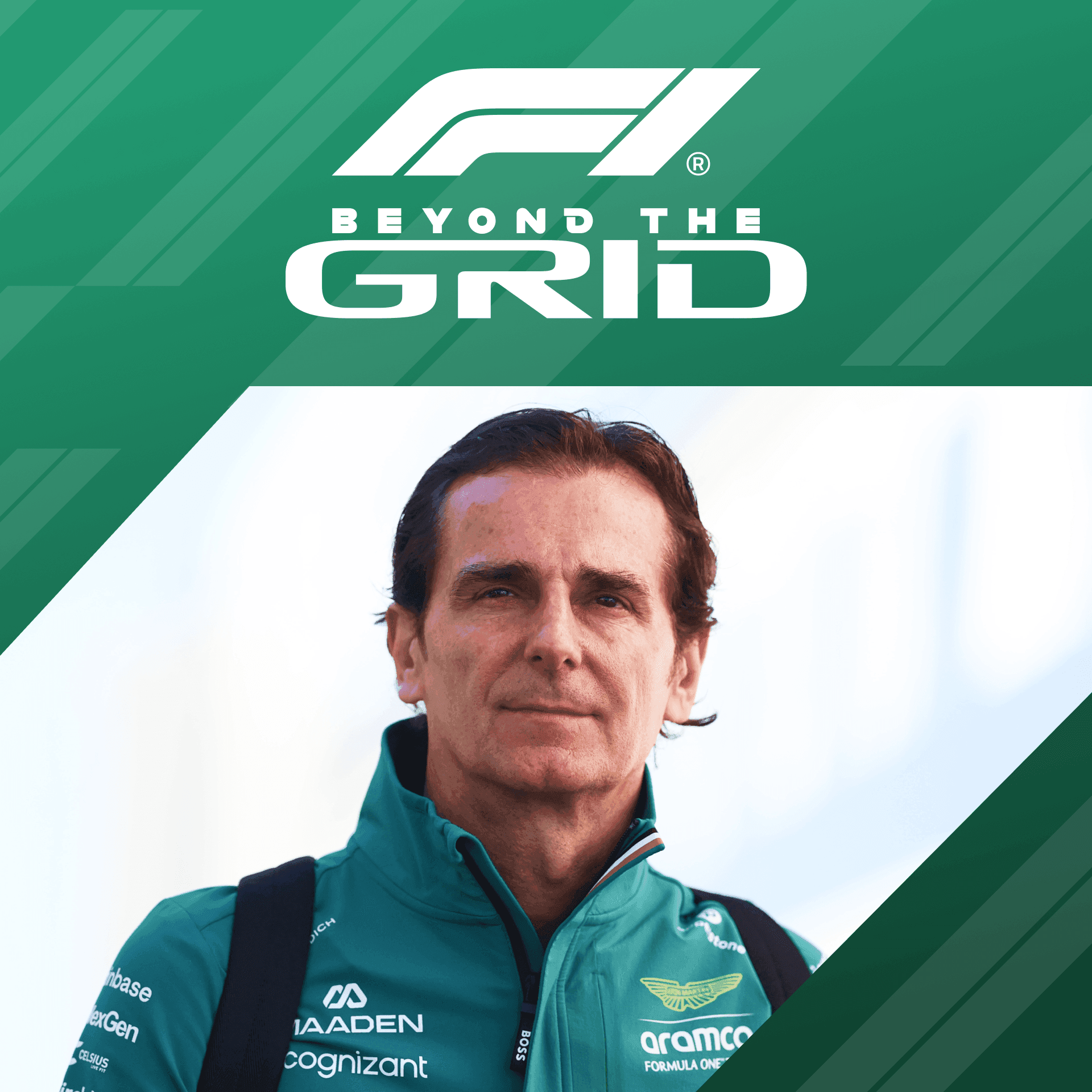
Anthony Davidson is a former Super Aguri, BAR Honda, and Minardi F1 driver, and a long-time test driver who now does simulator work for Mercedes. He discusses his early karting success, later junior single-seaters, and his transition into testing and then limited race opportunities.
Key claims
- He was “self-critical” and believes he was often a better test driver than racing driver.
- He thinks sim racing can improve drivers, but not enough to replace real driving; he argues Max Verstappen’s edge likely comes from home sim work (e.g., iRacing) plus overall athlete improvement, not sim alone.
- Sims help teams by validating engineering ideas and fine-tuning setups (especially ride height and tire behavior), while drivers mainly provide data.
- Motion cues missing in sims (notably g-force) can make some drivers feel sick; he cites Schumacher’s difficulty with sims.
Notable examples
- He learned he’d race in the 2005 Malaysian GP the day before.
- A “groundhog” in Canada cost him his best finish.
- In Mercedes sim testing, battery state-of-charge issues and extreme track temperatures affected lap performance.
- He describes “tyre war” early-2000s testing: multiple tire sets, debrief sheets, and tuning via tire choice rather than car setup.
Written by AI. May contain mistakes. Listen to the episode to check what was said.
Chapters
Tap a time to open that second in VOThe Journey to Formula One
0:03 to 1:09
Anthony shares his path to F1 and the challenges faced along the way.
“If you're a small business, hoping the right people see your job posting isn't the best growth strategy.”
The Journey to Formula One
1:29 to 2:40
Anthony shares his path to F1 and the challenges faced along the way.
“Honda has always taken what's learned on the track and used it to build better cars for everyone.”
The Journey to Formula One
4:03 to 4:58
Anthony shares his path to F1 and the challenges faced along the way.
“reflects candidly on the ups and downs of his career.”
Life After Racing
4:58 to 6:05
Discussing life after racing and the persistent competitive mindset.
“you worry that, well, I'm still in my 20s and what do I do now?”
Simulator Insights: Bridging Reality and Virtuality
6:05 to 8:52
Insights on the evolution of F1 simulators and their impact on drivers.
The Role of Simulators in Racing
8:52 to 14:00
Anthony discusses how simulators improve team strategies and driver performance.
“There's some anomaly going on with the software.”
The Role of Simulators in Driver Performance
14:00 to 18:06
Learn how simulators impact F1 drivers' skills and the evolution of racing talent.
“I think Mercedes probably got one of the best sims out there.”
Balancing Sensation and Skill in Racing
18:06 to 23:03
Explore how drivers sense feedback from cars and the importance of balance in racing.
“And again, I was then thinking, is that because of sim racing?”
Balancing Sensation and Skill in Racing
23:07 to 24:12
Explore how drivers sense feedback from cars and the importance of balance in racing.
“If you're a small business, hoping the right people see your job posting isn't the best growth strategy.”
Reflections on Anthony Davidson's F1 Career
24:26 to 28:00
Hear about Davidson's feelings on his racing career and the challenges he faced.
“Well, let's talk about your F1 career now, your time in F1.”
Show all 27 chapters
The Downfall of Race Preparedness
28:00 to 30:00
Anthony reflects on his early career and the impact of not racing regularly.
“and all the online racing stuff you're doing.”
Experiences in Testing and Development
30:00 to 32:20
Discussion about the extensive testing environment in F1 and its evolution.
Fridays in Formula One
32:20 to 35:00
Anthony shares insights on his experiences during Friday practice sessions.
The Tire Wars of Formula One
35:00 to 37:40
Exploration of the tire wars between Bridgestone and Michelin during his time.
“because it got really competitive between the Friday drivers.”
Tire Testing Procedures
37:40 to 42:03
Detailed explanation of the tire testing process and its significance in F1.
“So you'd go to the track and you'd have a tyre debrief sheet given to you after a couple of laps.”
Tire Development and Data in F1
42:03 to 44:59
Learn about the evolution of tire focus and data utilization in F1 testing.
“on the front end so i don't want it to fall over so much like yeah okay yeah we'll work on that They come back literally two weeks later and they had that and the car felt like what you wanted.”
Tire Development and Data in F1
45:02 to 46:08
Learn about the evolution of tire focus and data utilization in F1 testing.
“If you're a small business, hoping the right people see your job posting isn't the best growth strategy.”
Anthony's Transition to Race Driver
46:31 to 49:54
Explore Anthony Davidson's journey from test driver to race driver in F1.
“And the first opportunity came in 2002 with Minardi.”
Challenges of Racing with Minardi
49:55 to 56:00
Understand the challenges Anthony faced while racing in a back-of-the-grid team.
Anthony's Experience in FP3 and Qualifying
56:00 to 1:03:25
Learn about Anthony's challenges and experiences during FP3 and qualifying sessions.
“I've been thrown in for FP3 and I had to use Taku's tires as well for the first session.”
Honda's Apology and Future Opportunities
1:03:29 to 1:04:34
Discover how Honda's response to Anthony's engine failure impacted his career.
“If you're a small business, hoping the right people see your job posting isn't the best growth strategy.”
Honda's Apology and Future Opportunities
1:04:55 to 1:06:01
Discover how Honda's response to Anthony's engine failure impacted his career.
“If you're a small business, hoping the right people see your job posting isn't the best growth strategy.”
Super Aguri and Team Dynamics
1:06:14 to 1:10:01
Explore Anthony's role in Super Aguri and the dynamics between sister teams.
“This is a job for Indeed-sponsored jobs.”
Racing Strategies and Missed Opportunities
1:10:01 to 1:15:32
Anthony Davidson discusses racing strategies and a significant race event where he faced challenges.
“And it was only a top eight that scored points back then as well.”
Success in Sports Cars After F1
1:15:33 to 1:19:51
Davidson reflects on his transition from Formula One to a successful sports car career, culminating in a championship.
“to do after Formula One is you have a hugely successful career in sports cars.”
Memorable Moments in Formula One
1:19:52 to 1:21:44
Davidson shares a cherished childhood memory of witnessing a thrilling Formula One moment with his father.
“what you see as your, everything you'd ever pinned hopes on to get to Formula One.”
Memorable Moments in Formula One
1:22:56 to 1:24:33
Davidson shares a cherished childhood memory of witnessing a thrilling Formula One moment with his father.
“Since its first Formula One victory in the 1965 Mexico Grand Prix, Honda has always taken what's learned on the track and used it to build better cars for everyone.”
Transcript
Automatic transcript. May contain errors.0:00This episode is sponsored by Indeed. Building a great team is never easy. If you're a small business, hoping the right people see your job posting isn't the best growth strategy. When the pressure's on and you need the right hire, this is a job for sponsored jobs. Indeed Sponsored Jobs gets you quality candidates when you need them most. Because when you're hiring, you don't just want more applicants, you want the right applicants. Sponsored jobs posted directly on Indeed are 95 % more likely to report a hire than non-sponsored jobs. That's because it helps you reach candidates that meet your specific criteria, such as skills, certifications, or location from the word go, boosting your job post in search results so you can reach the people that help your business thrive.
0:45So spend less time searching and more time actually interviewing candidates who check all of your boxes. Less stress, less time, more results. When you need the right person to cut through the chaos, this is a job for Indeed-sponsored jobs. And listeners of this show will get a$75 sponsored job credit to help get your job the premium status it deserves at Indeed.com slash podcast. Just go to Indeed.com slash podcast right now and support our show by saying you heard about Indeed on this podcast. Indeed.com slash podcast. Terms and conditions apply. Need to hire? This is a job for Indeed Sponsored Jobs.
1:25This episode is sponsored by Honda. Since its first Formula One victory in the 1965 Mexico Grand Prix, Honda has always taken what's learned on the track and used it to build better cars for everyone. From pushing limits in F1 to engineering the next generation of hybrids like the Prelude Hybrid and Civic Sedan Hybrid, Honda proves that racing doesn't just inspire innovation, it drives it. And that idea of taking lessons from the racetrack and applying them to road cars has always been a part of Honda's DNA. Decades of engineering in the demanding world of Formula One have helped shape the performance and efficiency you see in Honda's road cars today.
2:10And now that same thinking is shaping the next generation of hybrids as well. Cars like the 2026 Prelude Hybrid and Civic Hybrid show that electrification can be both efficient and genuinely fun to drive. The 2026 Prelude Hybrid and Civic Sedan Hybrid are engineered for fun. From the racetrack to your driveway. Learn more about the Prelude and Civic and the latest innovations at Honda.com. Cha-ching! That's the sound of Lowe's Labor Day Savings. Get up to 45 % off select major appliances and save up to an additional$100 on select laundry pairs. Plus, get three bags of Miracle-Gro 0.75 cubic foot garden soil for just$10.
2:57Labor Day deals are on now at Lowe's, in-store and online. Valid through 9-9, while supplies last. Selection varies by location. See Lowe's.com for more details. Soil offer excludes Alaska and Hawaii.
3:11Only one driver can become world champion each year. Only one driver can win each race. And only 20 drivers can compete on the biggest stage at any one time. So whether you win races and championships or not, just to reach Formula One, you have to be one of the very best in the world. If I look back to my family, we didn't have much money. it's remarkable that I actually ended up on the grid. I lived through a boyhood dream. I was obsessed about it as a kid. It was the only thing I was good at. So to actually end up in the pinnacle of the sport on the grid through talent, not through money, that makes me proud.
3:53But being super self-critical, I was probably a better test driver than I was racing driver. Here on F1 Beyond the Grid with me, Tom Clarkson. former Super Aguri, BAR Honda and Minardi driver Anthony Davidson reflects candidly on the ups and downs of his career. He talks about only finding out he was racing in the 2005 Malaysian Grand Prix the day before, how a groundhog in Canada cost him his best ever finish, why he thinks he was better at testing than racing and what it was like competing during the so-called tyre war of the early 2000s And also shares incredible insight into the simulator work he does now with Mercedes, how that helps the team on race weekends, and whether sim racing really makes the likes of Max Verstappen even better drivers.
4:44And he tells me what it meant to win the 2014 World Endurance Championship after the heartbreak of losing his F1 seat. Everything you'd ever pinned hopes on to get to Formula 1 comes tumbling down and the door is shut in your face. you worry that, well, I'm still in my 20s and what do I do now? To find then a new lease of life, to then fall in love with it so much and to win a world championship just felt like everything you'd put your heart and soul into, it actually had meaning.
5:21It's great to see you. Thank you for your time. It's nice to be here. Thanks for inviting me. Now, and you retired from racing four years ago. Do you still think like a racing driver or are things a bit different now? No, I definitely still think like a racing driver. I think I'm still as annoying to be around from my wife's point of view anyway. You know, you've got that. You're so driven to doing everything as perfectly as you can. Self-analytical, always trying to get the best out of yourself. You're super competitive. you I don't think that element ever leaves your mind so although I'm not competing behind the wheel anymore you find other ways to find that drive that you that you had when you were driving the car just to get the best out of yourself in everything that you do and does the sim work that you now do for Mercedes does that scratch that competitive itch that's a good question because I believe it does the sims are getting more and more realistic all the time so I do feel like after a solid day's work behind the wheel in the Mercedes sim that it's it does scratch that itch a bit in terms of what it the skill sets you need to drive a car and put the car on the edge yes you don't have the g-forces and there's a lot of the physical side of things that's missing but the details of getting as close to a perfect lap as you can try to achieve lap after lap in a very static environment that's not shifting like the real world it means that it's even more down to the emphasis more down to what you do in your driving because there's less to hide behind like there is in the real car so every lap that fluctuates is purely down to you in lap time rather than real life you know you can have turbulence and tire wear and the wind picks up and the track gets hotter and more rubber goes down and lots of elements can shift your performance from lap to lap even in the real car so in the sim you find it's you really have to chip away at the lap times and then maintain that level throughout the day that element of it that doesn't change at all from the real car you say the sims are getting better and better how long would it take you to get up to speed in the w16 if toto said anthony we need you to go and do a few laps i drove the which w was it it was from it was the 2021 car well i think it was a w12 yeah around austin so it's a track i know but i only know austin kota from the world endurance championship the sports cars and so the fastest thing i'd ever driven around there was the lmp1 cars the toyota lmp1 so that was about 10 12 seconds slower than an f1 car at the time so that's the only reference i had so i'd obviously done thousands of laps around there in the f1 car including the w12 of course so when i got behind the wheel of course like the steering wheel is the steering wheel that's what you use in the sim i know the functionality of it i know pretty much what every button does i only had five laps in the car and it was on academy tires so my fastest lap actually came on the first lap and i was around two seconds slower than lewis who did 10 laps that day so that was after seven months of not driving anything by that point i'd already retired and uh i was quite pleased with that because that goes to show i don't think i could ever have got that close without knowing what the car could do in the virtual world.
8:43Just out of interest, what happened on laps two, three, four and five if you were quickest on the first lap? We had some problems with the state of charge of the battery. I think it deployed too much. There's some anomaly going on with the software. So it deployed too much. That's one element. So that was good to feel how much you really rely on the electrical element of these power units. But then on top of that, it just killed the academy tyres too much. It was in mid-summer. So the track temp was almost 50 degrees and I had never driven those before. So they basically just grained up in the first lap even.
9:16So as I was getting better, the car was getting slower. Tell us a little bit more about the Sims, because you've been driving F1 Sims for 25 years almost now, isn't it? In what areas have they improved? Oh, wow. I mean, it's everywhere, obviously, but... I see the one element that hasn't improved that much has been the graphics. surprisingly you would have thought that above everything else that would have improved the most would be graphics surely but it's the computational power behind the calculations of the car itself that has really accelerated also the mechanical side of the sim itself the the hardware has improved leaps and bounds from it starting as a just i mean the first sim i ever did it's laughable now but it's all we had the first sim we we ever had was just uh some kind of metal structure with a one like a racing shell of a seat inside it with a logitech steering wheel it was basically like what a lot of people have at home now a poor version of what you'd have at home now that's how it all began and that was sim 2 they called it at the time there was one even previous i think it It was just literally a computer on a desk with a steering wheel maybe, or even a control pad as the very first one.
10:35I didn't drive that, but I drove from Sim 2 upwards, and now they're on iteration 6. And these things obviously take a long time to engineer, come up with the ideas, and to then build. So yeah, iteration 6 of that first Sim that I ever ran in Brackley, and this was around the Braun time. So it just goes to show how long that progress has been. so yeah the mechanical side of it now is you know you got you got full motion sims in in all axes and in the early days like i say just it was just a static sim barely any feedback coming through the steering a lot of it was fudged calculations as well from the model itself like the tire model for example is probably the most important thing in the sim to master or to get anywhere close i don't know how how it's worked out imagine what a tire does on a racetrack as it pushes and scrubs itself along the tarmac turning that into ones and zeros is something my brain can't go to but some people out there see that in ones and zeros and can work it all out and then create a model around that's genius stuff really is so yeah so i've seen all that those sides of things improve leaps and bounds we're speaking at silverstone right friday night is going to be a busy night on the sim just six miles away in brackley isn't it how much does the work that's happening overnight on friday really help what's going on on the racetrack over friday night it just cements what the team are already thinking of trying or doing with the car so they're obviously pulling lots of information from the car real time and then that's analyzed studied in between sessions even in between each run and that's all being fed back to the factory of course as well teams of engineers are working on back at base remotely no matter where we are in the world could be in australia they're still up at the same times as we are at the track and they're constantly analyzing what fine tweaks they can do with these cars they're incredibly hard to set up these days with the ground effects and how fragile the tires are how to get best out of them and so they're already along a few pathways of where to improve things but they use the sim to just like say cement one idea one philosophy where you're going to take that setup sometimes and quite often the baseline as we call it that line in the sand of where you start where the pre-event sims have suggested you should run the car quite often that is the best way to be running things but as subtleties change throughout the event it could be the fact that the car bottoms out ever so slightly more they might have tinkered with the curbs on the track they might have resurfaced some area of the track that's causing a bit more bottoming maybe temperatures can even change the way that the car's suspension works and the way that the tires as well that how much squash they have and that can throw the these incredibly sensitive cars out of kilter with the ride heights as we know it's all about getting the ride heights as close to the ground as possible so if that shifts slightly then your initial calculations before you go to the event have to then be tweaked and that's when you rely more on the sim and the drivers feel in the sim than occasions where that doesn't need doesn't need touching right so that's improving the car with the sim how much does the sim improve the driver that's up for debate i'm of the opinion if you had never driven the car, like my example in Austin, I think it can give you quite a lot of a feel for what the car can do.
14:17And everyone's sim is different. I think Mercedes probably got one of the best sims out there. You should imagine, I'd like to hope, that we've got one of the best sims because I helped develop it. But some sims might be, they might give a driver less of a feel. I do think when you're at the level you are as an F1 driver, it's going to give you less than what you can give the team by driving their sim most of it is a selfless task from a driver's point of view because you are just validating what they think they're going to see in the data it's less about the driver it's one of the rarities in formula one where a big part of why we have so many fans turn up to f1 events is to see the drivers hear from the drivers it's all about the driver but in the world of the simulator it's all about the engineering and the driver is just a human element that can help give them more data.
15:10Can I put this to you then? Gerhard Berger said to me six months ago that he thinks Max Verstappen is a better racing driver than Ayrton Senna. And let's remember that Gerhard was Ayrton's teammate at McLaren. I said why? And he said it's because of all the sim driving that Max does, which wasn't available to Ayrton. So if the natural talent was the same, max is now at another level to center because of all the sim driving or if you do a thousand starts in a year that is all practice that is still using your peripheral vision and it's all about car placement do you agree with burger well i think i'd like to agree with the fact that every athlete over time should improve over previous generations otherwise what are we doing you know you're always striving to improve so you look at any athlete over time records are still being broken today and it's not because the human body's evolved it's because the science behind it has evolved and the athlete is is very much part of that drive to improve so i think that element is probably correct yes i think you know i'm lucky i'm a generation like you where we saw center drive and race and although i didn't understand all the nuances behind it back then because i was young and was barely racing myself.
16:31But I'd like to think that Max would be, and many of the drivers today, would be operating at a higher level than Senna would have been because just what goes into it, that strive to performance is at a higher level today from all around. So the demands on a driver today, the competition is stronger. It was Senna and Prost out there alone many times by a minute over the competition with almost 100 horsepower more than anyone in their Hondas as it was back then. And they only had each other to race most of the time, particularly in one of the seasons. So where's the other competition coming from?
17:10And that sharpens you as a driver. I do think that Max operates at such a high level. We know that. Does it come from the sim alone? I don't think it comes from the Red Bull simulator. I think it comes from more his home sim. I think that's what Berg is referring to, particularly the iRacing that he does. You think he's in competition constantly in that regard. I've played it. I know that sim well. And I think there are elements that you can take to the racetrack from that in terms of the racecraft and ideas that you might have on different circuits from playing the sims that you can try in real life.
17:50It might not work, but if it does, then great. yeah I think many drivers are out there doing this so a Bortoletto is one of the other drivers that's constantly on there and a couple of the F2 drivers as well and you see this young generation they're all at it they're all doing the same kind of thing so I think it probably does bring new ideas to the table that you might not have necessarily found without it I wouldn't pin it all on that I think if Max had never sat in a sim in his life he still would have been incredible you know I was thinking about the sims during the driver's press conference on the Thursday of Silverstone, because Lando Norris said that he feels a racing car more through his hands than any other part of his body.
18:33And again, I was then thinking, is that because of sim racing? Without sim racing, would it be the more traditional touch points like your bum or your feet, maybe your ears? But he said he gets it all from through his hands, which is why he's so sensitive to the front end. You know, different drivers have different uh obviously everyone's got different senses that you rely on inside the car but different drivers might rely more on one sensor than the other sensor than somebody else so like i mentioned like the inner ear if you ever drive a racing car and you've got some kind of ear infection or even just a cold and you've got blocked ears that you you do lose your balance and driving a car is much more about balance and it is hand-to-eye coordination many people made that mistake when they when they think about what makes a good racing driver it's actually more about balance so in that regard more in line with say skiing snowboarding surfing i think most drivers and vice versa would make good athletes in either discipline if given enough training so lando's saying yeah he feels it more through the steering wheel that's an interesting one maybe that's why with this latest development of suspension on the mclaren is he's trying to find something that he feels the front end more through the steering wheel he says he's he's missed that this year and then sitting in a static sim where you're robbed of all those other senses so you can forget the inner rear that's gone because you're not moving at all uh you can forget your inner gyro what you're feeling that's the seat of the pants driving that's gone as well so it's the only thing you have are your vision as a cue and what's coming through your hands yeah maybe that's just become heightened over time from doing just this one avenue of of driving i'd like to see how he'd get on if you robbed him of his uh other cues that he's got when he's in the real car because the one thing that wins over any other queuing force when you're in the car is the g-force so going back to the sims when you if you have your so it's the the rotation of the platform obviously when a car does a lap it does a 360 every lap it ends up back on the same part of the track facing the same way apart from suzuka of course which is a figure of eight so it does a 360 every lap you have to feel a lot of yaw in the car but if you only have yaw like you do in a simulator you can't really engage g-force in a sim it's the one q that's missing so everything else particularly the yaw becomes heightened because you transfix on it and if you were to inject the exact one-to-one yaw from what the car does on the real track it doesn't feel right because you feel it too much you feel like you're spinning whereas actually in real life the g-force dilutes the feeling of yaw so that that's one one element that is uh is critical to get right in the world of motion cueing that many people make the mistake.
21:32That's fascinating. And I guess everything you've just described is one of the reasons why some people feel sick on a sim. Is that right? So that's the relationship between what you're seeing and a learned knowledge of what that should feel like and being robbed of that G-force, that other cueing, that mechanism or your inner ear is supposed to be feeling. That's the bit that can make you feel sick. And you can, there's an element of how you can train your way out of that but particularly old drivers will struggle more because having never been in the simulator or even a home sim so Lewis Hamilton says he feels sick in a sim and Kimi Raikkonen well I think some drivers use might use it as an excuse well that why they don't want to do it Michael Schumacher though famously he if there's ever a person on the planet would want to find an edge to performance by anywhere possible it would be Michael Schumacher and he couldn't do more than a handful of laps in a sim because he would start feeling sick so uh I still think that a driver that didn't grow up racing on even just a control pad with the like I did control pad and a tv on a console even that taught your brain to try to feel something you were seeing and feeling through the control pad it helped to wire my brain up in the way that I was lucky.
22:54I never felt sick from any motion kit, unless it's very badly done. Then it will be, if it's a proper roller coaster ride, then it's going to make you feel sick. This episode is sponsored by Indeed. Building a great team is never easy. If you're a small business, hoping the right people see your job posting isn't the best growth strategy. When the pressure's on and you need the right hire, this is a job for sponsored jobs. Indeed, Indeed Sponsored Jobs gets you quality candidates when you need them most. Because when you're hiring, you don't just want more applicants, you want the right applicants.
23:29Sponsored jobs posted directly on Indeed are 95 % more likely to report a hire than non-sponsored jobs. That's because it helps you reach candidates that meet your specific criteria, such as skills, certifications, or location from the word go, boosting your job post in search results so you can reach the people that help your business thrive. So spend less time searching and more time actually interviewing candidates who check all of your boxes. Less stress, less time, more results. When you need the right person to cut through the chaos, this is a job for Indeed Sponsored Jobs. And listeners of this show will get a$75 sponsored job credit to help get your job the premium status it deserves at Indeed.com slash podcast.
24:12Just go to indeed.com slash podcast right now and support our show by saying you heard about Indeed on this podcast. Indeed.com slash podcast. Terms and conditions apply. Need to hire? This is a job for Indeed-sponsored jobs.
24:34Well, let's talk about your F1 career now, your time in F1. You did 24 races. You didn't get the opportunities that your talent deserved. So how do you look back on your time in F1? Is it a little bit of frustration or do you look back fondly and just go, it was an amazing ride? It really depends. You know, if I'm feeling more ambitious on that particular day or more jealous maybe of others that have achieved more, then I'll wish that I had achieved more. but if I look back to my my background my family we didn't have much money and you know we weren't poor but we we definitely didn't have the kind of money that would see you through karting today just put it that way so we could just it was a sport we could just about afford just about with some help from works drives here and there as well along the way and when I think back to that It's remarkable that I actually ended up on the grid.
25:34So that makes me proud. I look back now mostly and I think, wow, I was one of the lucky ones that made it onto the grid. I lived through a boyhood dream. I was obsessed about it as a kid. It's all I wanted to do. It's all I could do. It was the only thing I was good at. So to actually end up in the pinnacle of the sport on the grid through talent, not through money, that makes me proud and I'm also proud of all the testing miles I did and still proud of the job I do today in the simulator but I always felt like now I've retired and I can look back at the whole picture of my driving time probably deserved more everyone always wants a better car but it doesn't always materialize but I was probably being super self-critical I was probably always more of a because of the way my my brain works more analytical i was probably a better test driver than i was racing driver and uh and that was that was the thing i got stuck in that rut too much that's because you started as a test driver that was that was going to be my my next question you joined british american racing 2001 as a test driver was there that the promise the lure of a race drive there always was yeah and it eventually materialized into super guri but But so, you know, I'm a loyal person.
26:56I was keen to stay with the team and try to impress them as much as I could. And I thought impressing them by being as good a test driver as I possibly could be, that would see me through to land a race seat one day, which, yeah, ultimately it did with Super Aguri. But it was very much an afterthought, I think, than being put into one of the main race seats at BAR or Honda, as it was, as it turned into. So, yeah, there were definitely times where it's frustrating, where I felt like the speed was there. Surely you can see what I'm doing behind the wheel and give me a chance. But when that chance came, yeah, obviously it was with Super Guru.
27:35And I'd been out racing for so long by that point. If there was one mistake I made, and it would be my advice to my younger self and to anyone else that's watching this, that is competing at top level junior categories that are right on the brink of maybe a reserve driver yourself and you're watching this. You have to race anything, anywhere, race something. So it goes back to what we're saying with Max Verstappen and all the online racing stuff you're doing. It's no good if you're not racing something somewhere in reality as well. And that was my downfall. When I got my chance, I felt underprepared.
28:12my race sharpness had left me probably the first half of the season in super goo my first year in 07 and let's talk about that a little bit more then you race through karting you're hugely successful at karting you win the mclaren autosport young driver of the year award you are the next big thing you then do two seasons of car racing you win the formula ford festival you then go into formula three you outperform your teammate in the second half of the year it's all looking great you then commit to being a test driver now is that what you mean you wished you hadn't done the test driving bit at that stage and you'd carried on racing is that what you mean just done both i wish i'd done but i wish i'd tested obviously testing was was that was the main thing and i dabbled with i think i did le mans in in uh 2003 in the ferrari maybe it's 2002 with your with your uh no that was later on that was with the lola that was the lola lmp1 car with yos but yeah i did the ferrari first the ferrari 550 maranello and that was with pro drive and it was the pro drive david richards connection with bar honda that opened that door and i had fun but i just i just did a few races i didn't do a whole championship and then then i went many years after that time all the way up until i believe i didn't do any other racing up until my 07 debut with subroguri and maybe the the two laps i did in 2005 in the in the well we'll come on two laps of racing racing yeah uh so but and and i was i was just i was just race rusty i was completely race rusty so that would be my advice to my younger self just why didn't you carry on racing something somewhere and i think you're being overly harsh on yourself because you preceded all of the the driver academies the team academies like that we see now and you know like was there ever a discussion between you and bar about them funding a season of what would have been formula 3000 at the time no not at all not at all the money wasn't there to do well the money probably was there yeah more money than ever back then didn't we with a with a sponsorship uh and and the world in general was a healthier place uh in terms of economics but it was a very rough round the edges approach to a young driver program i was i was one of the first people at bar honda to be taken in and as a as a future prospect i think when you look at what the academies are how they're structured today is you can't compare it well let's talk about the testing that you did give us an idea of how many miles you would do a year and what kind of testing it was so basically it was all the testing that we can do or a lot of the testing we do in the simulator today was done on the real track so we had a crazy to say now a designated fully fledged test team so you had test team trucks multiple trucks just to go testing with it is unthinkable now in in today's world that we live in where it's everything's so streamlined so we had a full test team test team manager so you've got race team managers today people like ron meadows at mercedes for example uh jonathan wheatley and his red bull and so we had a test team manager and the whole field of test team mechanics we were notching up close to 2 000 members of staff in a form one team back then forgetting the engine side of things because the teams are massive and and so as one race team was out doing its thing their test team was leaving brackley to drive all the way down to jerez in spain to start a three or four day test and when the race drivers had finished on the sunday so jack vilnav and olivier panis who were the drivers at the time they would then have one or two days at home monday tuesday and then they'll join you on the wednesday and carry on maybe the last day or two final days of testing while you were testing on on the monday tuesday and then they're joining on the wednesday thursday and you had three cars you'd go to stay you'd have three chassis that and olivier would have his one jack would be in his i'll be in the other one or whichever test drive it was on that day so you had a complete reference all the time of where the benchmark was and yes of course you'd be testing different things and the normal stuff that you see today how many days a year were you doing in the car days a year uh i forget how many days a year it'd be but in terms of kilometers it was notching up over 15 000 kilometers so over yeah close to 10 000 miles of testing miles a year you were fully integrated into the team and then you had the fridays as well that came along i was going to ask you about that 2004 2006 all of the teams i think outside of the top four in the constructors championship could turn up with a third car for friday practice and a full third car as well it didn't have to be segmented in the garage and just a bit of a bitzer it was just sitting there a t car the third car in the middle of the garage and it was your car it even had my own liveries and stuff and and again you were out there on the same track as two other race drivers and they were brilliant days and i know we can't go back there because of the finances but for a young driver it was it was gold dust it really was to have that time um and many of my better days were actually on those fridays where you'd raise a few eyebrows even within your own team because a bit like testing today the limited testing we have it's hard to analyze to take an assessment of really how are they doing compared to the race drive how hard are the race drivers really pushing and they've just finished a race weekend are they really pushing that hard but on a race weekend you were there living and breathing it with them either side of you in the garage and and i think some of my better days were it stemmed from those moments on the front because you're under so much pressure as well in general testing there's less time pressure you had time to sort the car the cars were less reliable back then so even getting over 90 laps in a day was yeah wow you've done 90 laps that's it like it was like the magic threshold that wow you went over 100 laps you must be absolutely knackered now they do 140 40 laps easy in a one day of testing per driver.
34:54So yeah, it was all we could do to utilize what we had back then. I used to love those Fridays because it got really competitive between the Friday drivers. I'm thinking of you and Alex Furtz and Alomut Nish. Robert Kubica, Sebastian Vettel before he was quickly snapped up by BMW and then onto Red Bull. But everyone looking to see who was the quickest of the Friday driving. Did the team give you an opportunity? Did you take the fuel out and put some new tires on and see what you could do? Very rarely you'd go all out and pump all the fuel out of new tires. I think there was one, there's only one time that I can remember in China where it was a big event for that particular market for the sponsorship we had.
35:36And they wanted to end on top and they did drain most of the fuel out. But most of the time it was good sort of 30 to 50 kilos in the car. And the lap times were still there. The one thing you did have at your disposal compared to the race drivers who you had you didn't have to worry about your engine mileage so you could run a few more rpm about 400 rpm from memory what it was and that probably gave you two three tenths of a second or maybe sniff more the thing i remember from that was the pressure was on people were watching to see how like any any fp1 session we have today let's see how the rookies do look at dunn in austria alex dunn how he got on and suddenly you go well i don't really care how much fuel he was on or wasn't on compared to piastri you can you know when someone's doing a good job and using all the racetrack and not afraid to push the car and we see it we've got such a trained eye we see it that was part of the fun part of the magic back then as well and i really miss those days i wish we had more of that today because obviously when alex dunn jumps in the car well where's lando you've only got one point of reference like and i know piastri is obviously a really good point of reference but if you had both of them out there pushing each other on and developing the car and you were out there as well between them you know how does that pressure mount on your shoulders then and and you can read more into it so i i do i do miss those days but i i know we're never going back there i can see your face lighting up just at the memory of those friday tests can we talk about tire testing as well that looked like a lot of fun it was a tire war it was a bridgestine michelin tire war tell us a little bit about that side of things and how good the tires were back then the groove tires as well one of the most boring parts in any road car you never mentioned oh i like your tires on that car wow what tires have you got but in formula one or or any sport where it relies on tires is pretty much for everything it's it's the only point of contact from the car on on the ground most of the time so so much of your performance comes from them and in those days driving on well I was lucky I drove the Bridgelone and Michelins in Formula One and uh so got to see how two different top flight manufacturers in the sport how they operated was such an education and so many brains from that industry back then infiltrated their way into Formula One so Loic Serra for example used to be a michelin he was a michelin tire engineer pierre vasso yeah and uh pascal vaslon he was another michelin tire engineer so you know clever clever people and many others that still are in this paddock today and the teams they hang on their every word when it comes to the debriefs and how to get the best out of the tire so a lot of that learning was done in the real world real track testing back in those days and it was honestly again another time i'm not just i'm not just seeing this through rose tinted glasses you speak to any tire engineer in the paddock today and they'll go yeah those times were crazy yeah it was well mitchellin joined and by all accounts they had an open checkbook you win the world championship open checkbook they had private jets flying new sets of compounds out to a test where renault were or or that's an interesting point would they design compounds and tires for a specific racetrack specific racetrack they were designing compounds and tires for specific teams so i mean that's it was amazing you would go so most of your i've even speaking to young or younger f1 engineers today who are off the scale bright to speak to them about what I'm about to say, it blows their minds.
39:34So you'd go to the track and you'd have a tyre debrief sheet given to you after a couple of laps. You'd get a datum point. So this is your baseline tyre. You go out, you get in the groove, you set some lap times, you maybe throw another brand new set on you and you go and do the same thing again just to see if your references tie up. Then you take that point of reference in your head, where the grip was, how the car balance was and then we'll throw the first option at you so today we're going to focus on short runs that's how it usually works you have five time laps and 50 kilos runs or maybe 30 kilos you do a couple of laps and you'd feed it straight away as soon as you end up even sometimes the first corner you'd go oh wow this has got a different feel coming through the steering or this is it's giving me it's a bit more squash to the tire on the rear it's like there's more movement in the in the shoulder of the tyre somehow.
40:27It's a bit softer maybe. And you do the first lap and you'd look down at the lap time and you go, wow, half a second quicker on the first lap. Unbelievable. I wonder how it's going to translate over lap three or four into five. Oh, look, the deg's much higher. I'm now five tenths slower than I was on lap five of my baseline run. You'd come in and they'd give you another sheet and you'd have the baseline still and there were zeros on it. And you'd have to think like turning point braking is that a plus one or a minus one in terms of understeer or oversteer and you go yeah actually it did have a bit more turn a bit more bite and so it's less understeer i'll give that a plus one for that one and maybe a plus two it's really good there and you go through breaking the corner down like that and then you go through multiple sets probably 25 sets of tires would come your way in a day and you'd actually be pissed off if you ever got how dare you put an old set of tires on my car you're like take the tire blank you saw we go uh guys what's going on why are you giving this old set what's going on it's really annoying it's like we were so spoiled and you'd go away after all this and go yeah thanks for all the debriefs and thanks for all about this so this this sets that we found today tomorrow we're going to do the long runs and i'd whittle down a few like five or six of the good ones that you picked from that day and you'd basically by the end of it you'd tune your tires around your car so you barely touched your car design and setup of the car you do it all through the tires so if you said like i've got too much mid-corner understeer give me a tire which is going to give me just a bit more stability on the front end so i don't want it to fall over so much like yeah okay yeah we'll work on that They come back literally two weeks later and they had that and the car felt like what you wanted.
42:20It seems to me that the focus was on the tyres. You know, some designer coming up to you going, Anthony, we've got a new front wing end plate. Yeah, yeah, whatever, whatever. What's the tyres doing? Obviously, downforce was always your friend as well. But it was a lot more, it was, dare I say, and it probably upset some of the older school engineers, more of a scattergun approach to what you do today. obviously the cost cap has really laser focused your upgrades like where you need it and we've got so much more r &d today as well and so much more data being pulled from the car that it's hard not to bring more performance but you should be bringing with all the tools you have your disposal on an f1 team today you should be bringing more performance when you bring an upgrade it's a special occasion today but back then was just like yeah we've made a new front wingless see how it goes no it wasn't like that and quite often it would be worse you know this is awful take that off okay right back to the drawing board on that one then it was yeah it was a lot more raw back then there was just less data being pulled from the car and just final one on the tires so i loved your description that you gave us so that's what's going on at bar and at williams who are also using michelin's they'd be having tires specific to their car as well we would share compounds and construction uh from front to rear we we knew that every other team had these tires available to them but we didn't know which direction they were taking their tires i remember there was a there was a sticking point at one point where i was pushing to have one set of intermediate tires because we tested in the rain as well they'd water the circuits and we had they had water bowsers that would even in bright sunshine be in the middle of spain middle of summer and they'd be wetting the circuit lap after that with these water bowsers and you'd be doing wet weather tire testing money no object honestly money no object and i was pushing to have this one set of intermediate tires i can't remember now exactly what element it was of the mind that i preferred and we didn't get our way within our city we didn't get the tire we wanted for the next race coming up and i think renault might have had that tire and i remember being really annoyed about that because Ferrari had bought or Bridgestone had bought an upgrade for their wet weather or intermediate tyre and they kicked everyone's butts back then.
44:39So I remember thinking if only we had our tyre that I wanted from that test we would have had a much better day today for the race drivers but it has nothing to do with me. I wasn't the one racing but that's how integrated I was, how much I wanted to be a good test driver. I was feeling their pain by the work that I was doing behind the wheel and the testing. This episode is sponsored by Indeed. Building a great team is never easy. If you're a small business, hoping the right people see your job posting isn't the best growth strategy. When the pressure's on and you need the right hire, this is a job for sponsored jobs.
45:15Indeed, sponsored jobs gets you quality candidates when you need them most. Because when you're hiring, you don't just want more applicants, you want the right applicants. Sponsored jobs posted directly on Indeed are 95 % more likely to report a hire than non-sponsored jobs. That's because it helps you reach candidates that meet your specific criteria, such as skills, certifications, or location from the word go, boosting your job post in search results so you can reach the people that help your business thrive. So spend less time searching and more time actually interviewing candidates who check all of your boxes.
45:50Less stress, less time, more results. When you need the right person to cut through the chaos, this is a job for Indeed-sponsored jobs. And listeners of this show will get a$75 sponsored job credit to help get your job the premium status it deserves at Indeed.com slash podcast. Just go to Indeed.com slash podcast right now and support our show by saying you heard about Indeed on this podcast. Indeed.com slash podcast. Terms and conditions apply. Need to hire? This is a job for Indeed Sponsored Jobs.
46:31Well, that's Anthony, the test driver. Let's talk about the race driver now. And the first opportunity came in 2002 with Minardi. You replaced Alex Jung for a couple of races in the middle of the year in Hungary in Spa. How did that opportunity come about? this is a it's a bizarre set of circumstances and just got to show how fickle this industry is and how lucky you got to be so i was happily getting on my test in in that season of 2002 so still quite fresh out of formula 3 i did one test with bar in 2001 so my main testing started in 02 so yeah by the time you get to the hungarian grand prix mid-season i had the opportunity to race with Minardi they were a team that were at the back of the grid as we now know it's it's the racing balls this that's their journey of evolution but they were very much back end they were a team that it was very very hard to ever have a hope of scoring points in but it was a great place to learn out the spotlight I think for young drivers and Mark Webber was in his first season with the team and he was becoming more at home in the in the team in that car it was a tricky car to drive but we had i had the chance for my management to dive in and do this one race my manager paid for it and it was 250 000 pounds from memory for either each race or both races combined i think it might have been each race so we had this opportunity and you go well you grab it with both hands but the opportunity arose because it was due to be justin wilson who i'd raced with a long time is my generation with Dan Weldon and Jenson Button we grew up together on the kart track so I knew Justin really well I'd heard of him having this opportunity with the team beforehand but as it turned out being as tall as he was he couldn't fit the car he went to go and do the seat fit and couldn't he couldn't squeeze himself into the car legally as I always joke but then the team in a state of panic got the smallest driver they possibly could find to fit their car and gave me a phone call but uh and i did joke about it with justin at the time and uh yeah god rest his soul it's uh he's one of my friends from those days who we lost along the way but we had a good laugh that day uh because yeah we both decided that's how it must have came about what's the thought process you know you're going to be at the back of the grid so what are you expecting to learn i'm assuming the car is a lot worse than the bar you've been testing right again good question because i don't think i actually asked myself that at the time you just you just so blinkers get to formula one racy racy anywhere you can wow this is your moment this is that look at michael schumacher in in the jordan there's never maybe the right time never a good time but if you get that time you grab it with both hands and so ideally you wouldn't throw yourself in halfway through the season but i was probably still a bit too young and naive probably had underestimated just how brutal how competitive formula one is how much detail goes into it how at home you need to feel in the car and within the team and you just don't do that really especially back then without any simulation tools at your disposal you couldn't i couldn't imagine what it was going to feel like different tire as well as you've gone from the bridgestones testing with a with a bar and then and then the michellins on the uh the minardi platform and it's a car that philosophy it wasn't designed around even the power steering system wasn't designed around the michellins it was designed around the bridgestone is an old arrows f1 system all these things now i look back at it with my experience brain and I go hell what were you taking from it what were you learning from it what did you expect and given everything you actually stacked up very well against Mark Webber yeah I was yeah looking back at it so now you know I was I think four four and a half tenths away in qualifying in a car I'd never driven before a track I'd never driven for on tires I'd never driven before and an engine I'd never driven for you actually did a great job I was actually really pleased with that and another thing that with my experience i have today when they said to me oh we've got a fuel pickup problem in the car and we're going to have to put an extra 10 kilos of fuel in it for qualifying because we've got this fuel pickup problem it'll be okay it'll be okay they kind of fobbed me off and i remember thinking all right yeah uh okay extra yeah so we're not going to have a fuel problem no no no the fuel pickup won't be a problem if we put a bit more fuel in it whereas today i'd look around and go you've just taken four tenths away from me you know you've done that i might as well not go out there it's a case of you know beggars can't be choosers and you just get it you just get out there and you drive your heart out and that's what i did so i'm pleased with the qualifying lap i did but i knew from the first time i got to a loaded corner like turn four and five the steering basically is locked out it was saturating because again it wasn't designed around a michelin which had is a wider front tire it had more grip than the system was designed for so it was saturating what the system could deliver in terms of assistance and i could drive up to 100 plus laps in testing in the bar it was never a problem the steering was super light with its power steering it had back then and uh and this thing was just locking out and i couldn't turn the steering when it got to this phase where it just you carry too much speed on two newer tires and and you just get into a corner like turn five and you turn in and then at some point the load would go up too much and you just plateau the assistance would plateau so now you're forcing the hydraulic fluid through the system which is hard enough and on top of this super grippy wide front tires and and i just i ran out of arm strength i just couldn't i knew i i knew i was in trouble basically i i didn't have time to train for it i wasn't ready and physically found it way too hard in terms of percentage how much easier was the BAR in terms of steering input oh percent 50 really yeah it was 50 easier yeah and and still is today I would be scared of today to get back in and do a couple of laps because it it was awful it was just not the car it was it was fine to drive it didn't quite have the same grip and the same balance but I could tell it wasn't far away from where the BAR was and it it wasn't in performance you're probably talking six tenths five six tenths a lap it wasn't a massive difference in lap time but but it was it was just that one element of it which which completely ruined the experience for me let's fast forward almost 12 months to the malaysian grand prix in 2005 you touched on it a little bit earlier takuma sato is ill you are drafted in to be Jenson Button's teammate uh how much how much notice did you get so yeah the Malaysian 2005 Grand Prix I had flown out typically late because I'd been probably testing the week before as a reserve driver you you don't you kind of go into the weekend knowing it could be you but it probably won't be you it's so you you can wear the shirt you can swan around and have a few coffees and hang around with the management and try and convince them that you should be the one driving the car in the race but yeah most of the time you you know that you're destined just for a a week of or a couple of days of just just being there just in case so i would typically get out there on the wednesday night which is what i did and so you're there on the thursday the media day and you're jet lagged to hell that race eight hours time difference it's hot it's humid your body's not prepared for it at all so you're going through the motions of just trying to fight the jet lag and then yeah friday was more of the same but i had heard of taku not feeling too well on the thursday or this are we now friday morning was this friday morning no you know where it was it was saturday morning when i got the phone call he had done fp1 and fp2 so yet i got out there on the thursday landed on the thursday so friday i was feeling awful and i heard that he wasn't feeling very well but i thought i'd be it'd be okay saturday morning i get a phone call from ron meadows and you awake yeah mate yeah just i've listened mate i've just woken up i've literally just yeah you're driving this weekend tacky's not feeling very well he's out he's out it's done so we've had to sign him off you're stepping up you're in the car saturday morning so straight away your heart starts going but you know this time i was i was excited because it's a car new and by this point 2005 i'd done my friday running on the 2004 sessions and i really felt like yeah this is i know this car i've got my own seat i know where i need all the controls i i don't know the circuit but i i know the car it was it was a good moment because I thought, well, you know, I'm really up against it because I've missed out on an FP1, FP2.
56:01I've been thrown in for FP3 and I had to use Taku's tires as well for the first session. So I had to take his engine, you had to take their equipment, including their tires. So the last thing he'd done in the car, I think he'd had a spin and flat spotted all four tires. And I had Jock Clear as my engineer, who's now at Ferrari, looking after their young driver academy, amongst other things. and so super experienced engineer world championship winning engineer with jackville and of course back in the day at williams so he had uh engineered me in testing as well many times and had a good relationship with him and i remember yeah going through the all the the talks beforehand with with jock about the fact to be taking on taku's tires and fp3 and then we'll give you a new set one run on new tires before end of session and then after that you're into qualifying and back then it was a a one-lap shootout do you remember that system yeah one lap shootout on the saturday and another one on the sunday i can't imagine how hard that was for you so when i when i jumped in it it was it was honestly it was so cool because i've always been a driver that could adapt pretty quickly it was always it was one of the skill sets i had i could always get up to speed pretty quick so i knew the track a bit from my 2004 friday running i had done some laps in an f1 car so at least i had that so i could hit the ground running and yeah i was getting used to just everything really and just trying to get into the groove but everyone else you feel like you're so behind the curve because everybody else they're in fp3 they've done the first two sessions and they're fully in the groove and you see that you feel it and you've oh excuse me yeah sorry i'm oh after you and you're trying to work your way into their environment and i've never been that kind of pushy bolshy character that's cocky and was jensen helpful your old mucker from a little bit a little bit but he you know he's on the other side of the garage he was he was doing his own thing and focusing further up the grid and and he was the way it worked if you're a rookie driver coming in or a replacement driver like i was you had to go first in qualifying.
58:14So when the track was dirty. So after FP3, you then got the support races, whatever they had, Mazda Cup or whatever they had going around that track. And so they'd take all the tires that they had all over the track and the recovery vehicles had been out. And I think this would be interesting. I knew the format, but I wonder, is it going to be an advantage or be a disadvantage? It's probably a disadvantage. And sure enough, it was. The car on the first lap had, it's just, well, the only lap. he had no grip but I did my best I think I was yeah close to the back of the grid not quite at the back that day but they took the aggregate from the first two I can't honestly remember the lap times well you qualified 15th overall or on the first day yeah I think overall 15th yeah that's not too bad when you think I was probably lower on on the first run because every lap just starts getting quicker and quicker but the good one was Sunday morning where without any practice at all.
59:08You were straight into qualifying. Again, a one lap shootout. It was quite, that was demanding. I remember speaking to Fernando actually on the day, on the Sunday. And he said, yeah, these, this format, you'll see Sunday is very tough. It's very, and when he said that, I thought, okay, let's see. So yeah, threw myself in Sunday. And actually that was a much better lap. I think I think I was only four tenths away from Jensen on the Sunday. Again, going before him, but the track was already much more rubbered in. So I was pretty pleased with that lap because he was an ace around that circuit. So Jensen had a good style around for that one.
59:48So I remember thinking, that's actually not bad. And I was really looking forward to the race. And you've probably got another question. No, you haven't. No, it was just two laps. Two laps and it went bangs. Yeah, it was gutting. And so I started the race thinking, this would be great. and I was in the mix, I was Villeneuve in the Sauber and others around me and I was really in it thinking, I'm just going to work my way into this and I reckon I'm only going to be getting quicker as the race goes on. Didn't lose any positions at the start and so I kept my 15th but I was right with them. Then the car on the end of, around lap two, started to feel really slippery.
Read the full transcript
1:00:26Just like, whoa, the tyre deg is massive on this track, it feels terrible. and a few lockups and oversteer, but I could see others struggling around me as well. I was thinking, what is going on here? Maybe we've got dirt on our tyres. And then I saw him at the side of the track, Jensen, blown up, flames. And I thought, oh no. And I got the radio, Jensen's out, Jensen's out, engine failure. Oh, that explains the oil. That's why the car was slipping around. Yeah, yeah, yeah, I get it. So I do half a lap more thinking, oh, I can't believe he's out of the race. How unlucky, it's only just started.
1:00:58and the car's still sliding around just as much as it was before and i think when's this oil gonna clear up and then just suddenly bang the engine gone and mine and uh i can't believe it the engine's gone of course the oil was spewing out my car as well as the oil he was leaving on the track ridiculous absolutely ridiculous scenes and to the point where some members of the team i I think Jeff Willis, who was watching on, they kept showing a replay of Jensen's failure and the flames. And apparently he got annoyed at the team. He was like, all right, all right, stop showing the replay of the... We know he's blown up.
1:01:36Someone said, no, that's Ant. That's his engine. Awful. I mean, I can laugh about it now, but it was... Was it a low moment for you? Because this was the big opportunity, wasn't it? It was. I wanted to put right what had happened with Minardi with the two DNFs there. And this was my next chance to show after strong Friday running and I had more like a better reputation. I wanted to redeem myself. I wanted to show that I can finish a race. I'm not going to run out of arm strength this time. But actually looking at how the universe works out, some top people from Honda came up to me that day who were quite pleased to see me in the car.
1:02:16quite pleased to give me the chance and knowing the Japanese culture and how how they work and how loss of face is is a is a bad thing it's not to be taken lightly in Japanese culture and I think they they felt so sad about what had happened and and so they felt so sorry for me particularly I won't mention who it was but they looked at me and said very sorry about today we really we really apologize it was it was our our fault we feel bad blah blah blah and at the end of it he said and we will repay you and i was thinking money but i thought really and when he said that i thought wow they will repay me how they can put me in the race seat they're gonna kick out on the drives and put me in the race seat i i took it seriously super aguri you think that's where the first seeds of Super Aguri were sown?
1:03:14Not the first seeds, but for me, yes. Because Takuma, the team was created for him. But me getting a chance, I still believe to this day, it was because of that moment. This episode is sponsored by Indeed. Building a great team is never easy. If you're a small business, hoping the right people see your job posting isn't the best growth strategy. When the pressure's on and you need the right hire, This is a job for sponsored jobs. Indeed Sponsored Jobs gets you quality candidates when you need them most. Because when you're hiring, you don't just want more applicants, you want the right applicants.
1:03:51Sponsored jobs posted directly on Indeed are 95 % more likely to report a hire than non-sponsored jobs. That's because it helps you reach candidates that meet your specific criteria, such as skills, certifications, or location from the word go, boosting your job post in search results so you can reach the people that help your business thrive. So spend less time searching and more time actually interviewing candidates who check all of your boxes. Less stress, less time, more results. When you need the right person to cut through the chaos, this is a job for Indeed Sponsored Jobs. And listeners of this show will get a$75 sponsored job credit to help get your job the premium status it deserves at indeed.com slash podcast.
1:04:34Just go to indeed.com slash podcast right now and support our show by saying you heard about Indeed on this podcast. Indeed.com slash podcast. Terms and conditions apply. Need to hire? This is a job for Indeed-sponsored jobs. This episode is sponsored by Indeed. Building a great team is never easy. If you're a small business, hoping the right people see your job posting isn't the best growth strategy. When the pressure's on and you need the right hire, this is a job for sponsored jobs. Indeed Sponsored Jobs gets you quality candidates when you need them most. Because when you're hiring, you don't just want more applicants, you want the right applicants.
1:05:17Sponsored jobs posted directly on Indeed are 95 % more likely to report a hire than non-sponsored jobs. That's because it helps you reach candidates that meet your specific criteria such as skills, certifications, or location from the word go, boosting your job post in search results so you can reach the people that help your business thrive. So spend less time searching and more time actually interviewing candidates who check all of your boxes. Less stress, less time, more results. When you need the right person to cut through the chaos, this is a job for Indeed Sponsored Jobs. And listeners of this show will get a$75 sponsored job credit to help get your job the premium status it deserves at indeed.com slash podcast.
1:06:01Just go to indeed.com slash podcast right now and support our show by saying you heard about Indeed on this podcast. Indeed.com slash podcast. Terms and conditions apply. Need to hire? This is a job for Indeed-sponsored jobs.
1:06:22There's more to come from Anthony in a moment, but I wanted to let you know about F1's other official podcasts. F1 Nation's review of the British Grand Prix is out now. We reflect on Lando Norris's first win at Silverstone, and we're joined by Sauber's team principal, Jonathan Wheatley, and CEO, Mattia Bonotto, to get their reaction to Nico Hülkenberg's incredible first podium in Formula One. And this week's F1 Explains is a live show from Silverstone with Haas team principal, Ayo Komatsu. Just search for F1 Nation and F1 Explains on your podcast app.
1:07:02How would you describe Super Aguri? The opportunity comes in 2007. It's a regular race seat. You're using, I think, year-old BAR chassis, isn't it? So it's the car that Jenson Button won the Hungarian Grand Prix in the previous season. what is the modern day equivalent of super aguri is there even one i think the closest you can get today to super guru be racing balls the close connection with the a team obviously a lot more rules in place today things like you know you must be a true manufacturer in building your own equipment your own chassis certain elements of the car that you that you have to own and design from scratch so that wasn't the case back then so they honda and they utilized that that system and created this yeah effectively this b team which i guess it yeah toro rosso is the best example of when they were allowed to run pretty much last year's car and an engine's current engines so it was it was really that car nothing had changed on it so it'd gone through a whole season of are the team's evolution that had sent it from being a top-end midfield team to very much a midfield team from the offset.
1:08:21So you were mid-grid at the start of the season? Yeah, we were mid-grid. So I'd say when I jumped in and I wasn't at my best, because remember Race Rusty had only done those two and a tiny fraction laps at Malaysia, I was going through that phase. So as I was not at my best, I had the speed, but it not racecraft. I was able to qualify 11th in Melbourne, the first race with that car. Taku was 10th and we were super close in lap time. So yeah, he just scraped through to Q3. I remember I made an awful getaway, terrible start and another thing that I hadn't done much practice with and something today you definitely would have nailed it.
1:09:04You would have absolutely honed your skill in that regard. but back then it was forgotten about and it didn't work out well but as the car was performing at its best i wasn't at my best and as i improved and felt more at home in formula one and felt like i was getting better the car was just it stagnated and and zero development so it was a real lesson for me as well and something again i use today is that if you stay still in this industry you will get overtaken you'll be last and that's effectively what happened to us at the end uh we were we were fighting with spiker right at the back of the grid in the last couple of races of the year what was the goal of the team what was you know obviously you couldn't be faster than the main team or we could and we were quite no limitations put on you no there were no only that if they were behind us you wouldn't hold them up don't fight them too hard if they were on a different strategy to you be mindful of the a team and their and their goals they had briefed me that you're you're there to show us what you can do but also to when we need to play the team game if we're on alternate strategies but i could race them and i did and and i remember catching and passing jensen at the american grand prix at indy on a different tire strategy and we were racing definitely but it's only in the same way that you'd see sister cars not wanting to trip over each other take each other out cause any upset internally in the team by ruining someone's strategy alternate strategy it's just being respectful basically of seeing the bigger picture so that there was only that papaya rules in place if we should actually use that terminology to be more familiar with today there was only that in place but you know you could you could definitely race it feels like that june of that year was a bit of a purple patch for the team you've talked about overtaking jensen at indy a week earlier in montreal you almost had your day of days didn't you um yeah just tell us what your memories are of what was a slightly chaotic race with robert kubitz's huge accident and things like that but but you came through as i was going to say it was it would have been born out of somebody else's terrible misfortune what would have been really my best chance of scoring points in Formula One.
1:11:26And it was only a top eight that scored points back then as well. So it's harder to achieve than it is today. So I'd had three 11th places in total that season. So even on today's system, I wouldn't have scored any points from that year. But that would have been my best chance. I was on a one-stop strategy. It's commonplace today, but with fuel stops, it was a much more ambitious strategy back then. so i was i was pulling it off i was making it work and i had ralph schumacher in the toyota put in pressure i i was comfortable with that i had the pace to hold them at bay cut a long story short jad capuch's crash safety cars blah blah ralph who was on a one-stop strategy as well exactly same as us he finished i believe fifth that day why didn't it happen remind oh do i have to so i had i had come out i was yet to stop two drivers had done a stop and they'd come out the pits in front of me so we'd just gone under safety car conditions so i still had ralph behind me two drivers came out is hamilton and heidfeld and after safety car pulled in we got going in so i was running in third place but i was yet to pit and so they were doing multiple stops i was on the one stopper they started pulling away and we came up to turn eight nine under the bridge and i was following heidfeld is in the distance i was following heidfeld same line and it's you know it's bouncing around and his visibility is quite hard under the shade of the tunnel and blah blah and i remember just like on the racing line and i just saw something in the last minute go under my car and i locked up instantly and it just looked like i couldn't work out what it was but i saw something flash by in the darkness the shadow of the tunnel and i saw something but and it felt something on the front end and suddenly i locked up i went really wide in the chicane turn eight oh no onto the marbles and ralph's now right behind putting pressure down into the hairpin at turn 10 i thought okay right collect it collect it break early into 10 because that was weird what just happened there to make sure break a marbles in your tires that was odd what happened with the front just locking out nowhere tires getting old chill out brake early defend your position braked early and it locked up again more than you'd really expect I was like got around the corner and I was thinking what's going on why it's why it's locking up what's you're trying like your brain's going it's on fast forward and I was thinking right the next corner I'm going down to is really quick it's the chicane by the wall of champions so now I'm worried that there's something unsafe with the car so I just said in my head really take care it's going into the one of the fastest braking zones on the track and as I braked just even the lightest touch it locked both front wheels and I knew I'd be heading into the wall that separates the pit wall and racetrack that would have been a massive crash so I just the last thing i think is just just go into the pit lane so i sent it into the pit lane the team were completely unaware that that's what was going on i didn't even really have time to be on the radio to say something feels weird with the car it keeps locking up because the chicane and the hairpin are too close in proximity so but i probably in hindsight should have said something but i wouldn't have said i'm going to come into the pits because something's not wrong with the car you never want to come in not when you're running third so that was the deliberation in my head and yeah it was played out like that and that was that it absolutely destroyed the front end of the car barge board gone dead animals stuck in the front wing and broken a whole load of the front wing off and uh so that was that sent me back out there and um i can't remember where i finished now i was behind rossberg i knew i was quicker but i couldn't find a way by you so deserve those points thank you but it's not what defines me anyway and it wouldn't have done and it wouldn't have changed history.
1:15:28I wouldn't have gone on to land a race seat somewhere else. And what you do go on to do after Formula One is you have a hugely successful career in sports cars. You become the world champion, of course, in 2014. Just what did that all mean to you? What did that championship mean? Well, I found a new avenue in sports cars. I'll never forget the first time I stepped foot in a LMP1 car. It was the Peugeot and Paul Ricard. And I just I fell in love with it. From the moment i drove that car just felt this whole environment and the car itself just feels like this is this is what i want to do why why were you so at home in it i think sports cars you're out of the limelight basically it was a championship particularly back then before it became the world endurance championship that i always used to call it the secret category of motor racing because nobody in formula one really talked about it knew about it we will talk about weck today a lot the world endurance championship Le Mans it's on everyone's radar young drivers sign up to do it that wasn't the case back then you had more mature drivers should I say that would think about doing it as a as a as an after career almost from what they had done previously there wasn't a world championship there wasn't even a proper championship in place and lack the structure that it has today, that's for sure, and lack the competition.
1:16:52But the cars were amazing. Peugeot versus Audi. You only had the two brands when I joined. It was just like a Formula One car with a roof over your head. They were incredible bits of kit. Why were you so good at it? Was it your analytical brain? Did it lend itself more to that? I think it felt more like, well, I don't know. It was a heavier car, something that really felt like, where it's a ground effects car which the f1s weren't it was a more of a mechanical car so it relied more on the tires a bit more like a go-kart would honestly i don't know i don't know why i just stepped in the car quick straight away some people say well this must have been your weight but there were light people in there already teammates i had people like nick nick manassian for example we were well-established sports car driver back then we were pretty much the same weight and so yeah probably an element of that but it wasn't everything and it's just it just for whatever reason different drivers will suit a different time in a certain car a certain era will suit them who's to say nikki lauda for example would be brilliant in a modern day f1 car you don't know maybe he wouldn't have been but in that particular era he was exceptional and vice versa maybe you put Max Verstappen in one of those, one of those old F1 cars and send us Tolman, maybe he wouldn't be very good in that.
1:18:16You just don't know until you try it. And the sports cars back then was a very different, different way of driving, I guess. So probably more in line with the cars of today. F1 cars. Bigger, heavier car. Yeah, exactly. More ground effects. And you have to give the car a bit more time in the slower speed corners, but then it really, you feel the downforce in higher speed it comes alive there and it had a big torquey engine the big diesel v12 with 1250 newton meters of torque at two and a half thousand revs i don't even know what that means people it sounds a lot people know what i mean who all go wow yeah that sounds a jumbo jet in the thing yeah uh so it was a great it was a great car to i loved it and I just found this new avenue into my career and by 2014, I won the world championship with Sebastian Boemi but in the WEC, World Endurance Championship.
1:19:15And given the frustrations that there were in Formula 1 and the opportunities that didn't come their way, what did that 2014 championship mean to you? It meant that I could hang my hat on something. I've been driving my heart out since I was an eight-year-old kid and all of the blood, sweat and tears that goes into it to come away and I knew at that point I could have retired at the end of 2014 and just gone, I did something. I've raced in Formula One and I became a world champion in sports cars, a category I fell in love with after F1 when I thought everything was lost. You come to the end of your, what you see as your, everything you'd ever pinned hopes on to get to Formula One.
1:19:58And when that comes tumbling down and the door is shut in your face, you worry that, well, I'm still in my 20s. And what do I do now? How do I earn money? How do I want to drive something? But I wanted to do F1. To find then a new lease of life, to then fall in love with it so much and to win a world championship just felt like everything you'd put your heart and soul into, it actually had meaning. and it's been a wonderful chat. Thank you for your time. We're going to end this, what I call the traditional way now. It's the question that I've been asking everybody on the pod this year. Formula One is 75 years old.
1:20:40Do you have a favourite memory in history? Could be anything. Favourite memory in history? I think it would probably have to be standing on the banking at Stowe, 1987, with my dad watching a Formula One race. I begged him. I'd been harassing him to come and see a Formula One race live. Used to sit down and watch TV with him all the time, watching the F1 race. I wanted to see it live. So he brought me along here in 1987 at Stowe. You know what happened, don't you? I do. That's where he dummied Piquet, wasn't it? Mansell dummied Piquet. Watched it live as a young kid and who didn't need any more inspiration at all to see that happen.
1:21:22That was it. For me, that was the moment. Mansell selling the dummy down into Stowe. So that was, I'd only just started karting myself. So I could have a small appreciation of what went into it that day. And that was such a boyhood memory that it's just burnt into my mind. And I thank my dad to this day for taking me there and showing me what Formula 1 was really all about. And thanks for your time.
1:21:51What a memory. I wasn't at Silverstone in 1987, but I remember Mansell selling the dummy like it was yesterday. Lucky you, Ant, to have witnessed it firsthand. And lucky us to have had Ant on the podcast. He properly understands the intricacies of this sport and has a unique way of articulating them on the TV with Sky. I've learned so much over the last hour about every aspect of the sport, and I think we've all learned something about Honda. They said they'd repay Ant after his engine failure in Malaysia 2005. And they most certainly did that with Super Aguri. And many thanks for your time. That was a wonderful chat.
1:22:29And I'll see you at a racetrack again soon. Well, that's almost it for this episode. Thank you for listening. And I will, of course, be back next week with another great guest from the world of Formula One. F1 Beyond the Grid is produced by Formula One and Audioboom Studios. Until next time, keep it flat out.
1:22:52This episode is sponsored by Honda. Since its first Formula One victory in the 1965 Mexico Grand Prix, Honda has always taken what's learned on the track and used it to build better cars for everyone. From pushing limits in F1 to engineering the next generation of hybrids like the Prelude Hybrid and Civic Sedan Hybrid, Honda proves that racing doesn't just inspire innovation, it drives it. And that idea of taking lessons from the racetrack and applying them to road cars has always been a part of Honda's DNA. Decades of engineering in the demanding world of Formula One have helped shape the performance and efficiency you see in Honda's road cars today.
1:23:36And now that same thinking is shaping the next generation of hybrids as well. Cars like the 2026 Prelude Hybrid and Civic Hybrid show that electrification can be both efficient and genuinely fun to drive. The 2026 Prelude Hybrid and Civic Sedan Hybrid are engineered for fun. From the racetrack to your driveway. Learn more about the Prelude and Civic and the latest innovations at Honda.com. Hey, it's Ryan Seacrest for Jewel Osco. Now through September 29th, save on all your favorite personal care essentials and earn four times the points. Shop in-store or online for items from your favorite brands like Native, Pantene, Crest, Always, Gillette, Oral-B, and Tampax and earn four times the points.
1:24:23Points can be redeemed for discounts on future purchases on groceries and gas. Get these deals before they're gone. Offer ends September 29th. Restrictions apply. Offers may vary. Visit Jewelosco.com for more details. Hello, appliance fans. I'm here at Grand Appliance where Katie just bought a new Samsung laundry pair. Talk about your experience, Katie. My salesperson was amazing. He knew everything about appliances and was even able to get it on a delivery and install route for tomorrow. Wow. Next day delivery? Yes. My laundry is piling up, so this is a lifesaver. There you have it. Grand for the win.
1:25:03Check out grandappliance.com for full details. Thank you.
From the publisher
Although his F1 career ended just over a year later, Anthony is rightly proud to have reached the top of motorsport.
Speaking to Tom Clarkson, he discusses the ups and down of his time in F1 – telling us why he was a better test driver than racing driver, how his incredibly short-notice cameo at the 2005 Malaysian Grand Prix came about, why a groundhog cost him his best ever finish in F1, and what it was like to be involved in the so-called ‘Tyre War era’ of Formula 1.
Anthony also opens up about winning the World Endurance Championship with Sebastian Buemi in 2014 and why that meant so much to him having felt like ‘everything was lost’ after F1.
Now a simulator driver for Mercedes, Ant explains how much the sim technology has improved over time, what impact his work has on Mercedes’ performance during race weekends and whether sim racing makes Max Verstappen a better driver.
F1 The Movie – in cinemas June 25th internationally, June 27th in North America
Find a screening near you at f1themovie.com
It's All To Drive For in 2025. Be there!
Book your seat for a Grand Prix this season at tickets.formula1.com
Listen to more official F1 podcasts
Every race analysed on F1 Nation
Expert answers to your questions on F1 Explains
This episode is sponsored by:
F1 Experiences: want to get closer to Formula 1 than ever before? Visit f1experiences.com/beyondthegrid to book your official ticket package today.
Vanta: visit vanta.com/GRID to sign up for a free demo today!
Indeed: get a $75 sponsored job credit to
get your jobs more visibility at indeed.com/GRID