In short
Haas’s medium-term ambition, leadership and team culture, and a key 2025 turnaround after a disastrous Melbourne weekend; also discusses driver expectations and Haas’s new Toyota partnership.
Guest backgrounds
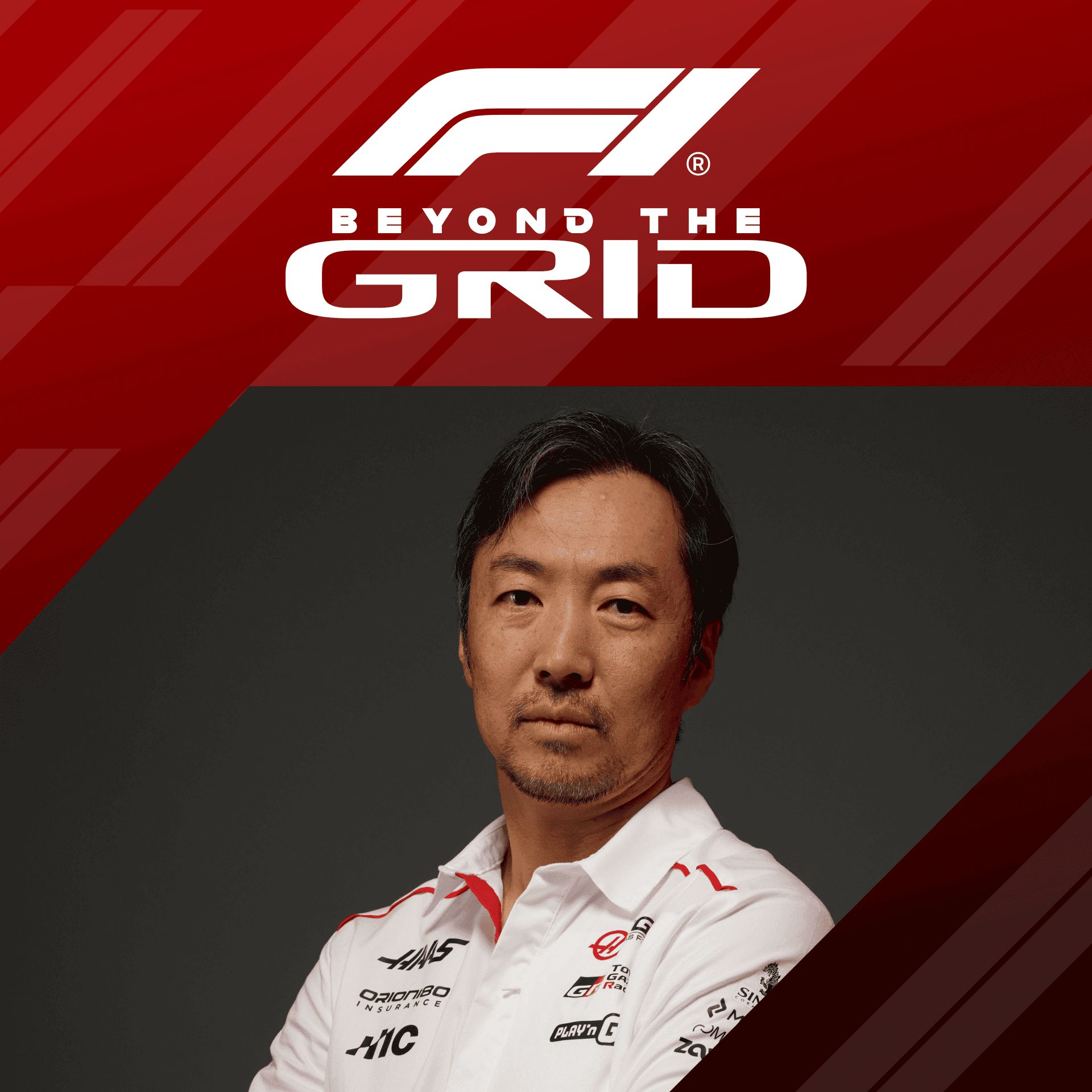
Ayo Komatsu is Haas Team Principal (in role since 2024). He has been with Haas since the team’s 2016 debut and is an engineer by trade. He also has a personal interest in Muay Thai, training with a world champion fighter during a Thailand/Singapore sponsor trip.
Key claims
Komatsu says his job is to “listen” and create alignment, not to execute engineering. He credits improved communication/structure for Haas’s ability to develop the car through a season. He describes Melbourne 2025 as a shock (about 6 tenths slower) caused by an unanticipated aerodynamic issue, then explains how Haas took a risky, fast-track approach to bring parts to Suzuka after only a week. He says Gene Haas trusts him due to transparency and due diligence, and that Haas’s culture is “no blame.”
Notable examples
Melbourne-to-China turnaround; Mexico P4 for Oli Behrman “on merit”; Goodwood Festival of Speed where Gene drove a Haas F1 car.
Guests
Tom Clarkson (host); Ayo Komatsu (guest). Drivers discussed: Esteban Ocon and rookie Oli Behrman.
Written by AI. May contain mistakes. Listen to the episode to check what was said.
Chapters
Tap a time to open that second in VOHaas F1 Team's Ambitions
2:28 to 3:39
Understand Haas's goals and aspirations for competitive performance.
“Haas have started the new era of Formula One in style.”
Ayo's Experience and Team Dynamics
4:34 to 5:54
Explore Ayo's insights on teamwork and personal growth in the F1 environment.
“Two years on since your last appearance.”
Learning and Communication in Leadership
5:54 to 10:24
Discover Ayo's biggest lessons in leadership and the importance of communication.
“If anyone annoys Ayo Komatsu, watch out.”
Adapting and Overcoming Challenges
10:24 to 13:06
Hear Ayo discuss how Haas dealt with performance issues and team restructuring.
“And this is why you reorganized the engineering teams at the racetrack at the start of last year as well?”
Understanding Performance Issues in Melbourne
14:02 to 18:00
Learn how the team identified and addressed unexpected performance issues in their car during the Melbourne GP.
“then come to Melbourne here in the high-speed chicane, car just wasn't performing.”
The Importance of Team Dynamics and Trust
18:00 to 20:20
Discover how building a culture of trust and teamwork helped the team overcome challenges after the Melbourne GP.
“through all this and we think this and this what do you think i said if you think that just go ahead than trying to make it.”
Empowering Teams and Taking Risks
20:20 to 23:10
Explore how empowering the technical team led to innovative solutions following a crisis.
“on the other side in a good way in the process is so important right you cannot control the result quite often, but you can definitely control the process.”
Reflecting on Leadership Lessons
25:39 to 28:00
Ayo shares valuable personal insights on leadership and team management learned over the past years.
“This is a job for Indeed Sponsored Jobs.”
Gene Haas's Passion and Involvement
28:00 to 34:00
Learn about Gene Haas's emotional investment in his F1 team and his interactions with the staff.
“And then he, to be fair to him, the ones he listened to that, it's not like he agreed.”
Impact of the Toyota Deal on Haas
34:00 to 40:00
Explore how the Toyota partnership is set to enhance Haas's performance and development capacity.
“his love of the team and of Formula One was helped by driving the car do you think he's as committed to Formula One now as he was when he started the team?”
Show all 16 chapters
Future Aspirations for Haas
40:00 to 42:00
Understand Haas's goals for the next few years and the challenges they face in competing at the front.
“Do you have any idea sitting here now what that might look like?”
Driving Dynamics and Personal Stories
42:00 to 44:10
Learn about the challenges of driving in low grip conditions and personal anecdotes from race drivers.
“If you go off, you can really damage the car.”
Driver Performance: Esteban and Oli Behrman
46:49 to 53:10
Explore the performance of Esteban and Oli Behrman throughout their Formula 1 season.
“And he's clearly very, very fast when he has the car he likes.”
Challenges and Growth in Racing
53:10 to 56:00
Understand the challenges faced by rookie drivers and their growth in Formula 1.
“How did he evolve as a driver during his first full season in Formula One?”
Olli Behrman's Journey and Development
56:00 to 1:02:44
Explore Olli Behrman's growth as a driver and the lessons learned from his experiences.
“pressure of course he had pressure but he he drove in that amazing banner that doesn't happen by chance it's accumulation of all the hard work that happened over the last months.”
Haas's Goals and Challenges for the Season
1:02:44 to 1:04:24
Understand Haas's objectives for the season and the challenges they face in the competitive landscape.
“We scored 79 points in that tight midfield where 1000 per second defines if you can go into Q3 or not.”
Transcript
Automatic transcript. May contain errors.0:00This episode is sponsored by Indeed. There's a lot that goes on behind the scenes of this show, booking guests across time zones, tight turnaround edits and constant time management. And when things get chaotic, you realise pretty quickly how important it is to have the right person on your team. If I had to hire someone tomorrow, I wouldn't just want a good editor. I'd want someone who understands pace in long form interviews and can work fast under pressure. And in moments like that, you think, this is a job for sponsored jobs. Because Indeed Sponsored Jobs boosts your listing in search results, helping you reach the candidates with the specific skills and experience you actually need.
0:39And it works. Sponsored jobs posted directly on Indeed are 95 % more likely to report a hire than non-sponsored jobs. That's a serious edge when the pressure's on. Spend less time searching and more time actually interviewing candidates who check all your boxes. Less stress, less time, more results. When you need the right person to cut through the chaos, this is a job for Indeed Sponsored Jobs. And listeners of this show will get a$75 sponsored job credit to help get your job the premium status it deserves at indeed.com slash podcast. Just go to indeed.com slash podcast right now and support our show by saying you heard about Indeed on this podcast.
1:20Indeed.com slash podcast. Terms and conditions apply. Need to hire? This is a job for Indeed Sponsored Jobs.
1:54for free at ZipRecruiter.com slash zip. With ZipRecruiter, you can forget your frustrations because we find the right people for your roles fast, which is our absolute favorite F word. In fact, four out of five employers who post on ZipRecruiter get a quality candidate within the first day. Fantastic. So whether you need to hire four, 40 or 400 people, get ready to meet first rate talent. Just go to ZipRecruiter.com slash zip to try ZipRecruiter for free. Don't forget, that's ZipRecruiter.com slash zip. Finally, that's ZipRecruiter.com slash zip.
2:33Haas have started the new era of Formula One in style. So is it too early to talk about loftier ambitions? For me to sit here and talk about wins is too far away. So our medium-term target in the next three to five years is basically trying to establish ourselves consistently at the front of the midfield pack. Only when you get there, then we can look at, OK, what are we still lacking to challenge for podiums on the merit, to challenge for the race wins on the merit? And if Oli Behrman continues to impress, can Haas keep hold of him? If we've done a great job with Oli, and then Oli performed so well that Ferrari really wants to take him the following year, we have to be happy that we've done our job.
3:26Hello and welcome to F1 Beyond the Grid. I'm Tom Clarkson and my guest this week is Haas Team Principal Ayo Komatsu. Ayo's only been in charge of the team since 2024, but what I think comes across in our chat is how much of a natural leader he is. He empowers people, he listens to them, and he makes the right calls when necessary. Just look at how the team recovered from a very difficult start to last season. We talk a lot about drivers. What does Io expect from Esteban Ocon this season? How much potential does Oli Behrman have? I also ask Io about his relationship with team owner Gene Haas, in whom he saw a different side at last year's Goodwood Festival of Speed, where both of them drove a Haas F1 car up the famed hill climb.
4:17Ayo's been with Haas since their debut season in 2016, and I think it's clear to see how much this team means to him. I hope you enjoy our conversation.
4:34Ayo, welcome to the show. Two years on since your last appearance. Yeah, thanks for having me back. It's great to be back. Well, should I be afraid, first of all, because I saw some very interesting pre-season preparation for you, I think, on Instagram. What were you up to? No, because we signed a new sponsor in Thailand, Singapore. And so we went to Bangkok straight after Bahrain to announce the partnership. And then they're a great company and they sponsor Muay Thai Fighters, world champions. And then I don't do Muay Thai properly, but I just like doing the training. So I said to them, is there any chance I can train with one of your fighters?
5:12And then they kindly put me with a super bomb, who is an absolute legend. So what a privilege to train with a raging world champion. So Muay Thai is kickboxing? It's Thai kickboxing, but I think kickboxing, kickboxing. I think if you say to Muay Thai guys, it's kickboxing, they get offended. Because Muay Thai has that clinching. I think kickboxing is just punches and kicks. But now it's great. Jim had a great vibe. I mean, he's been doing Muay Thai since the age of six. And he's 36 now, world champion. And he's got great gym, really humble guy. Amazing. It's always nice to get to know somebody who's at the top of their game.
5:52Quite good to have that in your back pocket in the Formula One paddock, right? If anyone annoys Ayo Komatsu, watch out. I'm not that good. Well, Ayo, as I said at the top, it's been a couple of years since you were last on the show. Tell us, how has it gone since then? No, no, of course it's been a roller coaster ride, but overall I really, really enjoy it. It's such a privilege. We got, as I said from day one, I knew we had a great bunch of people. We've got great people. So it was really a matter of putting it together, working as a team, support each other, having a clear objective and the strategy how we're going to move the team forward.
6:32So every day, honestly, I'm learning something new. and then every day is a challenge, but in a good way. It's brilliant. I really enjoy it. But honestly, only because of the people we got. I think we're building a really nice team here. You say you're learning something every day. What is the biggest lesson you have learnt in two years of being a team principal? Biggest lesson? It's difficult to say because honestly, there's so many things, but I guess listen, really. because I feel like my job is a facilitator. I'm not executing anything, right? So we have a group of individuals, group of people who's really, really capable, expert in each area.
7:15But sometimes they cannot do the job to their best of ability or because of certain constraints. But I need to listen to them, right? They need to be able to tell me what's stopping them to perform better to go to the next step. And I feel like my job is really to provide that environment so they can do an even better job. So for instance, I think last two years, we managed to develop the car very, very well throughout the season. That's one thing we really wanted to prove. We knew we could do it, but before pre-24, let's say, people are telling us that Haas cannot develop the car throughout the season.
7:49We proved that's completely wrong. And then that gives us lots of confidence to the people. But again, only where we managed to do it is really to empower people, those technical people, then listen to them. they need to tell me like you know why they couldn't develop it before then when they told me it was actually same as my understanding so it was pretty then clear to me what i needed to put in place to make sure that we can develop the car it really helps that you are an engineer by trade because you can understand the weaknesses it's not actually necessarily the engineering thing to be honest because the issue wasn't the technical ability that that wasn't the one actually stopping us developing a car pre-24.
8:31It was more about communication, organization, the structure, mentality, you know, rule of engagement, how we work together. So once I understand, let's say if this group of people tells me, oh, we saw this was the issue. This group of people tells me, no, no, no, no. We saw this was the issue. Why were they not aligned? You know, they're both technically capable people, but somehow it's just that they weren't working together on the same page so for me really just making sure you know put everybody on the same page we are aligned regardless of if everybody agrees or not we at least we go into certain direction knowing why we're going that way you know for me it's very very important that everybody understands why we're doing things that we are doing even if you don't agree you know worst thing would be like everybody's thinking i don't understand why we're doing this no idea this is waste of time why are doing this you know having that you know every day that's not very positive is it whereas if even if let's say if you don't agree the direction we're going if you know at least why yeah then that that's still positive how have you improved this communication i think it's really interesting are you now overseeing what weekly meetings with everybody that wasn't happening before or is andrea desordo doing that or yeah again like everybody's doing it because again angela is our technical director, great guy.
9:54Honestly, since almost the first day I met him in my previous position, in his previous position, I knew he was a great guy. He's technically highly capable, of course, but in terms of personality, he is very, very easy to work with. And then he takes, let's say, constructive criticism very, very well. He never takes things personally, which is very important. You know, we got to be able to have hard conversations, difficult conversations right but if people are taking it personally it's not easy but Andrea I know that you can discuss anything with him completely professionally and there's no let's say emotion in a bad sense you know sometimes people say I get really upset because only because I care but to me that's that's an excuse you know we're all professional so we got to be able to really have hard conversation without taking it personally and that Andrea can do that and he's a great communicator and he's again very humble guy really eager to learn every day so yeah he's a great technical director but in terms of communication it's not about doing meetings it's more about let's say setting a clarity everybody got to know the objectives right what are we here for what are we trying to target everybody got to understand okay in terms of global strategy how are we gonna try to achieve that target in order to achieve those target how are we gonna work together you know then in terms of putting people in the right place like Andrea being technical director for me that was absolutely no-brainer he was a clear choice for me then having certain people in certain positions and this slight reorganization in terms of structure so that this communication is almost forced it has to happen this close loop has to happen so it's just a you know putting people in the right place and slightly restructuring that really sort of like supports what we're trying to do.
11:45And this is why you reorganized the engineering teams at the racetrack at the start of last year as well? Yes and no, but so initially, obviously car comes from, let's say, factory, right? You know, so the truck side team is largely a user. So our, let's say, fundamental problem was that a car wasn't competitive. But now we reorganize those technical people in Italy that we can produce a decent car. Then it was pretty clear operationally at the truck side, we are not getting best out of the car. We are not providing a good feedback to designers, AI dynamists to improve the car. So then we really needed to refresh our truck side team.
12:26And the reason we did it last year was that, of course, we knew that 2026 would be brand new regulation. You know, you cannot, or you can, but I didn't want to change, make a wholesale change on the truck side when we have to deal with a brand new regulation. so for me the last year was the correct time to do it and then again it's just accepting and understanding that okay we are very young team here this trackside team is young we lack experience so again there's lots of support required from all sorts of directions but as long as we accept that this is why we're doing it we have to go through the pain together then we have to put ourselves in a better position for this year and next year and I do believe that even though we got a young team on the trackside I think we've got good people.
13:11So it will come. Now, this segues beautifully into something I wanted to ask you about next, which is that week between Melbourne and China last year. Now, I don't want to bring back bad memories, but I think it defines your leadership beautifully because you come to Melbourne in 2025 and the car is like half a second slower than anything else. Yeah. it was a really difficult weekend. Then you go to China just seven days later and Oli Behrman is only a couple of tenths off getting into Q3. How did you do that turnaround and how difficult were those conversations in that seven-day period? Yeah, that was a very, very difficult moment, you know, because Bahrain testing, as far as we are concerned, went pretty well.
14:04You know, we thought car was decent. We didn't see any huge issues. then come to Melbourne here in the high-speed chicane, car just wasn't performing. When I first saw the data, I thought, ah, okay, it's a first couple of lapsed drivers just taking it extremely easy. But then when I realized, oh, you know, that is the limit of this car, then when I realized the extent of this problem that we only saw here in Melbourne, FP1, honestly made me feel sick. Because like you said, it wasn't just a tenth or a few tenths, it was like six tenths. it was bad then it's not something we anticipated whatsoever so it was surprise to us but of course initially it was a shock right but then you had to quickly come to acceptance to say okay we got a huge issue here then first step is to really to understand what the issue is what the core problem is then agree amongst senior engineers at least what the problem is you know if we are arguing about what the problem is no no this is actually not the problem this is the issue that is the issue that's not good right so first step is to align everyone what is the problem then once we accepted straight away this is the fundamental aerodynamic issue that we didn't anticipate but this is the issue and then we didn't understand the mechanism so next step is like okay how are we gonna go about understanding the mechanism but we haven't got much time now i said to everyone like next weekend back to work in china we cannot change the car but circuit characteristic is very different so if we don't have this specific issue i believe from what we saw in berlin we can still perform however the race after in japan three weeks time it's got the sector one high speed sequence if we don't change anything we're gonna be absolutely nowhere basically but last by country merging so So we can accept that.
15:54I said to do nothing for Japanese Grand Prix in three weeks time is not an option. That was very, very clear. But then also I said to them, look, to bring something to Japan, we cannot go through the normal process because we just simply hasn't got time. Right? To do CFD, using the wind tunnel testing, evaluate, then produce the parts. We run out of time. So I said, I take the risk. I accept the risk. But please look back from the end of 24, where you guys produced a very, very competitive car to where we are now, VF25 launch. There must be some hint at some point that we are a bit complacent on certain matrix in terms of our air oscillation issues.
16:34So we got to be able to find some hint. And then I leave it to your engineering judgment because you're all capable people who managed to develop the head out of VF24. right finished essentially the fifth fastest car in 24 so we are the same people you're the same people we can do it so look through those sequences and then take your best engineering guesstimate and then have one or two items that we can bring to suzuka and if we got it right in suzuka brilliant you know we know that's the direction to solve we can keep going but even if we get it wrong at least we know that's not the direction to go whereas if we don't do anything we're not going to learn anything we're going to be in exactly the same position as here in Melbourne so I said that's not option but then of course being a former engineer right I really wanted to ask questions about how about looking at this how about looking at this area how about this but I really really forced myself not to do any of that after I said that clear let's say guideline okay this is the problem look through this option not to do anything in Suzuka is not option then i take a risk fine to cut corners so you guys just tell me one or two things we can do in suzuka i just left it at that and that was very very difficult very difficult but i'm so glad afterwards that i just shut up and didn't say anything after that and then our guys andrea desolta our technical director head of euro david jay came to me and said i know we look through all this and we think this and this what do you think i said if you think that just go ahead than trying to make it.
18:11Now we got one set made for FP1. The second set was coming for FP2, if I remember correctly. We did the back-to-back car cross the cars night and day. So, you know, full credit to them. But I'm really glad that I didn't micromanage. I just trusted them and then empowered them to say, look, this is the direction. Risk is on me. Go for it. And then full credit to them. They did it. It was brilliant. So I was really, really pleased about that in terms of teamwork. There was no blame. Everyone accepted the problem straight away, got on with it, found the solution. And then production guys, program management guys, they pushed like hell to get those parts to Suzuka from race one to race three.
18:54So that really is a testament to the teamwork, I think. And then I'm really glad that, you know, when the times are tough, we come together really strongly. And then I'm kind of glad that that happened in 25, not 24. So, i.e. the 12 months after we started this new structure. Imagine if that happens in 24 race one, I think we'd have disintegrated. But - Why? Because I think, so throughout 24, we were building foundations, new way of doing things, working together, teamwork, supporting each other, transparency, no blame culture. So we are building those foundations. So by the time we hit that huge issue in Melbourne, at least we had that foundation.
19:42We had the respect and trust to each other. So when we're having those meetings in Melbourne late at night when Europe wakes up with all the senior guys, we all been working together previous 12 months in this way. So there's no blame culture. Everybody understood that, okay, we just got to work together to solve this, no bullshit. but imagine if that happened in 24 March where we only started working in this way a couple of months I don't think we'd have had that level of togetherness and trust and respect to each other so in a blessing in disguise that we had the 12 months to build that foundation and then that huge challenge was there and then that made us you know the fact that we came out on the other side in a good way in the process is so important right you cannot control the result quite often, but you can definitely control the process.
20:32And I do believe that we did it in the right process, right way. So then the fact that that was positive gave us even more confidence like, wow, yes, initial bit was terrible that we missed it somewhere along the development of 25. But once we accepted, we missed it. It's no point crying about it, right? So that's happened. We just, how are we going to improve from here? Everybody focused on that. And you kicked on from there. And then fast forward six, seven months. and Oli Behrman finishes P4 in Mexico on merit in front of a McLaren and a Mercedes. And the seeds of that performance actually were sown in the three weeks between Melbourne and Suzuka earlier in the year.
21:14Is that what we're saying? Yeah, absolutely. I still remember that Melbourne last year, 12 months ago, very, very well because none of us left much, right? Of course, he had the truck until the carfew, We're looking at data and we're trying to understand what's going on, go back to the hotel. Now doing a video meeting with the guys back in Italy because Europe wakes up. So we're just working around the clock, you know, using the time differences because we just didn't have any time to waste. It was very, very tough. I don't wish that I want to experience that again. But looking back now, I can say now because we solved it, that probably the challenge we had to overcome as a team, as a group of people.
21:56So that really made the team even much, much stronger. It was brilliant. And also the confidence. Almost a defining moment, actually, is what it sounds like. And Ayo, it's fascinating on many levels. You empowered the technical team to come up with a solution after Melbourne. And I think that's very revealing about your relationship with Gene Haas, the team owner, because clearly he's empowering you to take those risks. Yeah, sure. I'm very, very grateful to be given this opportunity and also the trust that Gene had in me. Of course, it was a huge risk for him, right? I'm not some sort of a known quantity done a team principal job somewhere else before.
22:38But his judgment was that he only chose me because I was here from day one. I knew the people, I knew the strengths and the weakness of the team. And then I'm sure that was a gamble for him. okay, this guy, he's not a known quantity, but he's been here from day one. He knows the people. He seems to know what's the weakness and strength of an organization inside out. So let's give him a chance. So, you know, he took the risk, you know, and then he trusts me to run it with the guys. So, yeah, I'm very grateful about that. This episode is sponsored by Vanta. Now, if you run a business, one thing you might have noticed is how seriously companies now have to take security and compliance.
23:22Customers increasingly want proof that their data is protected before they'll even consider working with you. That's exactly the kind of challenge Vanta is built to solve. Vanta automates the compliance process and brings compliance, risk, and customer trust together on one AI-powered platform. So whether you're preparing for a SOC 2 or managing a larger enterprise GRC program, Vanta helps keep everything organized and running smoothly. And it can save a huge amount of time too. Companies like Ramp and Writer spend 82 % less time on audits with Vanta. That's not just faster compliance. It's more time to focus on growing the business.
24:05Get started at Vanta.com slash grid. That's Vanta.com slash grid. This episode is sponsored by Indeed. There's a lot that goes on behind the scenes of this show, booking guests across time zones, tight turnaround edits, and constant time management. And when things get chaotic, you realise pretty quickly how important it is to have the right person on your team. If I had to hire someone tomorrow, I wouldn't just want a good editor. I'd want someone who understands pace in long form interviews and can work fast under pressure. And in moments like that, you think, this is a job for sponsored jobs.
24:44Because indeed, sponsored jobs boost your listing in search results, helping you reach the candidates with the specific skills and experience you actually need. And it works. Sponsored jobs posted directly on Indeed are 95 % more likely to report a hire than non-sponsored jobs. That's a serious edge when the pressure's on. Spend less time searching and more time actually interviewing candidates who check all your boxes. Less stress, less time, more results. When you need the right person to cut through the chaos, this is a job for Indeed Sponsored Jobs. And listeners of this show will get a$75 sponsored job credit to help get your job the premium status it deserves at indeed.com slash podcast.
25:27Just go to indeed.com slash podcast right now and support our show by saying you heard about Indeed on this podcast. Indeed.com slash podcast. Terms and conditions apply. Need to hire? This is a job for Indeed Sponsored Jobs.
25:55Knowing what you know now, what would you tell the 2024 spec Ayo Komatsu in terms of everything you've learned about being a team principal, working with Gene Haas, getting the maximum out of the team? Is there one thing that you would advise that person of two years ago? I don't know. It's difficult because like I said, I'm learning every day. So I guess just believe in people, trust people, respect each other, be humble, just try to lead by example. You know, it's not always easy. I don't think I behave in the correct manner every day. You know, when I get really, let's say, annoyed about certain things, I'm not proud of certain behavior of mine but at least I need to try to do it in the right way and I need to keep improving my behavior if you like.
26:51But everything you've just said I think is exactly why Gene Haas chose you to be the team principal. Yeah honestly like I have a good relationship with him I think all we've done you know we proved to Gene in the last couple of years that we are actually doing our job with, let's say, due diligence, if you like. And so before that, he just didn't have a trust in us because he was asking for certain things. He was demanding certain things. And then it didn't happen. And he didn't understand why. So honestly, from day one, I've been completely transparent with him. And then when he demands certain things, I remember having a conversation with him reasonably early on in 24.
27:33He told me certain things. I just had to tell him, Gene, we cannot do that because then I told him why and then I remember Gene shouting at me saying but yeah that's not what I want to hear I said to Gene like Gene I cannot always tell you what you want to hear you know what you just told me I cannot realize it in the time frame that we are talking about maybe I can do it in a three or four years time there's a lot of things I need to put in place to be able to achieve that so I cannot promise that in the three or six months time whatever time frame we are talking about, I said it's impossible because we just haven't got process or people or capability to do that.
28:08And then he, to be fair to him, the ones he listened to that, it's not like he agreed. OK, I understood. It's fine. But of course, he wasn't happy. But I knew he listened to that because he never mentioned it again. And then in some other conversations I have subsequently that completely indicated to me that he listened. So for me, he's the owner, right? He started the team. He put all his money into him, invested, not just financially, but he's a very, very passionate guy. He's emotionally invested. So the least I can do is have that transparency and make sure that he understands what we're doing.
28:44So just involve him, inform him. He's the owner. How much contact do you have with Jain? Depending on the time of the year, but for instance, race weekend, it's every day. Every day? Every day. On the phone or is it a text? No, no, on the phone, yeah, because he likes to talk about, you know, hear what's going on. For me, it's easier to explain to him what's going on on the phone as well. So Friday night, Saturday night after the race, sometimes, you know, Sunday after the race, I cannot talk to him straight away, so I talk to him on Monday. But even in between the Barrentest and now, you know, with all the Middle East conflict and stuff, he's asking me, how is it going?
29:20Is anything affected? So I keep him informed. But all those ones can be a text. but what he's passionate about is the sporting side. So race weekend is a big thing for him. He wants to know what's going on. So yeah, I talk to him every day. And how important was it that you got him to drive a TPC car at Goodwood last year? Did that change his attitude towards you, towards the team, towards Formula One? Yeah, I think overall, I think it did. because what I've seen during 24 was that confirmation that how, you know, he's actually a very, very enthusiastic guy, very passionate guy. But when you see him at the racetrack, you don't necessarily see that.
30:05You know, he's a very private individual, very introvert. He doesn't talk to many people. And then, of course, you know, jet lag is quite hard on him as well. So he tends to be quite quiet and he only talks to people he's comfortable talking with. then that can be only me or maybe one more person so maximum three people in the team right so people don't actually know him don't see the exciting side of gene and then when we decided like so first you know last year is our 10 seasons i really wanted to celebrate properly wanted to tell our 10 year story to people right so then when i got okay to do that from gene the next step for me was to get him over there.
30:45I said, look, good to this amazing festival and you got to come and experience this. Then he said, yeah, okay, I'll come, I'll come. Then once I got him to agree to come, my next step was, okay, Gene, by the way, this is your team. You know, you put everything into it. You haven't driven it. Why don't you drive it? So that was my next step. And then he agreed to it, which is brilliant, right? Then because I know he's a passionate guy, right? I really wanted him to enjoy what he's created. So that's the first and foremost. So like, come on, drive it while you can, you know? So that's why I really wanted him to drive.
Read the full transcript
31:20And also then I thought, secondly, for people to see the enjoyment, smile on his face, you know, how much of a passionate guy he is, both internally and externally, I saw that be really, really positive. Lots of team members don't see that, like I said, let alone the fans. It's amazing. so we did a shakedown at Silverstone because he was worried that I said, look, Gene, don't worry, we'll make it as simple as possible. We do a shakedown at Silverstone and then make sure you're comfortable with seat, all the controls and everything else, then did it. And then when he got out of the car in this Silverstone shakedown and he was just beaming with a smile and he said thank you to every single mechanics and shook their hand.
32:01That never, ever happened. Even that alone was for me worthwhile doing because our guys the guys actually building the car realized oh wow this is gene the side of gene that they've never seen and then we actually went to goodwood and then exactly the same he was beaming with smile enjoying it you know he had a lot to say about driving the car and then again you know said thank you to everyone should come with everyone back like when the fans were there like a good dude as you know fans can get really close right which is brilliant about good dude. I said to Gene, there's fans out there. Do you want to take some pictures?
32:36He'd never ever do that here, like race weekend. But he took so many pictures together. So he signed so many autographs, interacted with fans. That's the side of Gene that you don't normally see. I was so glad we got that out of him. And then people from our team experienced it. And the fans actually saw it as well. So that was my, let's say, aim. But then, yeah, it's just everything helps, right? You know, I really wanted people to see, like, look, behind this really private guy, quiet guy, introvert guy, this is the, you know, exciting, let's say, enthusiastic side of him. Then for people to see that and experience is amazing.
33:17And also the fact that he spoke with so many mechanics there, right? When he comes to the racetrack next time, there's more familiar faces, more people that he's comfortable talking with. that's good for him to be integrated more into the team at the end of the day like this is his team this is what he's created but he's just such a private guy if you don't kind of like ask him or get that out of him he's never gonna come by himself to say i want to do this yeah you see i mean but um that was brilliant really good i don't rate my chances of getting him on f1 beyond the grid right you have to private for that look can we talk about Toyota now yes and in the context of Gene right he came he drove at Goodwood if it needed reinvigorating it I get the impression that his love of the team and of Formula One was helped by driving the car do you think he's as committed to Formula One now as he was when he started the team?
34:18Because a lot of people are saying that the Toyota deal is just a precursor to him maybe selling a share of the team. I'd love to get your thoughts. No, no, he's more committed than ever. Really? Absolutely, absolutely. I mean, he came into Formula One when the times were very, very different, right? You know, 2016, it was nothing like now. So he came in that more, let's say, I wouldn't say difficult time, but more challenging time. And then he went through that COVID period of 2020 and 2021, came through that, stuck with us. And then now he's enjoying it more. He's enjoying some success. It's just more fun element is there as well as being competitive.
34:58And he understands Formula 1 much more than before. And he's absolutely committed. Yes. So what about the Toyota deal? What does Toyota bring to Haas? Yes. So our foundation is Ferrari, right? the way we set up from day one we couldn't have done it with Ferrari we don't exist without Ferrari so we have our power supplied by Ferrari gearbox and suspension supplied by Ferrari so Ferrari is our foundation and we also have an amazing technical partner in a company called Dallara you know so we work together on the chassis side we now do lots of designs but Dallara still does brilliant job in manufacturing we work all very closely together so we those Those are, let's say, our foundation's technical partners.
35:42But if you look at the areas that Ferrari doesn't touch or cannot touch because of regulation, or the areas that is not Dallara's expertise, there are still plenty of areas that we are just doing it on our own. And I saw it would be really beneficial to have a strong technical partner to help us move forward in those areas that either Ferrari or Dallara is not working with us. So that's where Toyota comes in. So actually have an amazing partnership with these three greater technical companies. So what is Toyota bringing? You've now got a TPC program. See, again, that's one clear, clear advantage because we always wanted a double TPC team because not just running the TPC car, but actually educate people, grow people.
36:32and then giving opportunity to younger drivers. That, again, we couldn't do it by ourselves, but thanks to our collaboration with Toyota, we could do that. So that's huge. And also the simulator. We use a simulator in Maranero, but that's logistically, it's quite challenging. So we always wanted to have a simulator in the UK, where our main factory is. So we are doing that now. So again, that's thanks to Toyota. So then there's a few other areas that we are working with, but it's great. We're just looking at what Toyota can offer, what Toyota's good at, what our team needs. And then it's those areas where it's easily identifiable, we're working together.
37:11Are they going to help manufacture any parts? Yeah, some of the manufacturing, yes. In Cologne? Some of it in Cologne, yeah. But again, it's not the objective to say we need to use the Cologne facilities they need to manufacture. It's more, let's say, organic in the sense that, okay, so Akio-san's direction. Akio-san, by the way, is such a great guy, the chairman of Toyota. His direction to his guys is basically make HaseFan team competitive. So it's not objective in itself to say, okay, you have to use that Köln facility. You have to use that facility to manufacture something. No. What do we need to make the HaseFan team go faster?
37:49What areas are we weak? Have we got either people or capability or facility that is able to help in that area from Toyota side? if answer is yes, let's do it together. Like TPC, you know, we wanted to do it, but we just didn't have the financial means or anything to do it. Then Toyota helped us financially and put the structure in place, etc. And they're having that development program. I mean, Ayo, when you look at Formula One today, the level is extraordinary. And particularly when you look at the new regulations in 26, the reliability that everyone's had. Just wind the clock back 10 years, that wouldn't have happened.
38:26The level is so high. can Haas with its current setup challenge the likes of Ferrari, of Mercedes, of Red Bull? Or do you need a fundamental shift? Like, do you need a new factory? Could we ever see you move lock, stock and barrel into the Cologne factory in Germany, Toyota's facility there? Or I don't know when you look at the next five years what does Haas need to do and what needs to happen for you guys to be able to challenge for wins let's say yeah definitely we need to be constantly evolving and then for me to sit here and talk about the wins is too far away for sure so our medium-term target in the next three to five years is basically trying to establish ourselves consistently at the front of the midfield pack, right?
39:22That's where we need to be year in, year out on the merit, not because some team didn't do a very good job. You know, on the merit, everyone's doing amazing job. We need to be at the front of midfield consistently in three to four years' time. That's our aim. And then from that aim, of course, you work backwards what this organization needs to be, how it needs to evolve, how quickly it needs to evolve. So that's what we're doing. but then for me only when you get there in the three to five years time then we can look at okay what are we still lacking to challenge for podiums on the merit to challenge for the race wins on the merit there's of course a big gap you know big four teams are big four teams but it's not everything about the size but again it's not to say we just need to increase the numbers of people or not to say we need to manufacture everything internally that that's not the answer right but we got to look at where we are in let's say three to five years time once we establish ourselves front of the midfield consistently year in year out I'm sure it will become actually obvious what gap we need to bridge to be able to challenge for podiums.
40:26Do you have any idea sitting here now what that might look like? Yeah but I don't think it's very relevant in the sense I think you got to have a broad idea, but like, you know, I say like objectives, yes, definitely got to have long-term objectives, right? Let's say you have a 10-year plan, but for me, it's no point having such a concrete plan five years beyond, year six, seven, eight, nine, ten. Why? Because what you need to do on the year five, year six is heavily influenced by year three or year two. So every day you make some adjustment then but the year two year three year four you can still have a reasonably concrete plan then you can make adjustment but what we need to do in year seven for example because it's so far away depending on the direction we took the steps we take on the year two year three this will change a lot so you got to have a broad plan but it's just no point for me to have that concrete plan can we talk drivers sure you first of all How did you enjoy driving?
41:29I was very, very cautious. Again, to start off, what a privilege. You know, it's not every day. I should just add that you drove with Gene at Goodwood. That's what we're talking about. Yeah, sure, sure, sure. No, it's not every day that you get to drive a Formula One car. Was it the first time for you? Of course. Yeah, yeah. It was incredible. Incredible. But yeah, I just had to drive very, very cautiously. But the thing is, thanks to some of my driver stroke riders friends, they all scared hell out of me. Saying, ah, good, this is the most dangerous place. It's such a low grip. If you go off, you can really damage the car.
42:06And then again, even, who was it? Kazuki Nakajima, the ex-F1 driver. He was telling me how slow I need to drive to be absolutely safe. Because he showed me a video, but I think it was a Pierre Gasly driving Alpine or something. And it looks very slow. and said, yeah, but Ayao-san, even a professional driver has to drive this slow, so you've got to be really, really careful. So I was really worried about it. And then the first drive, and I said, actually, grip is fine, but then, because you never know, right, I just drove very slow and came back and then bumped into John in the toilet and said, how was it, John?
42:39And then John said, oh, the best grip ever made. It's such a great concert. Thanks, John. I just wasted one run because I listened to your Scare Manga history story. By the way, I love the fact that you and John McGinnis, the Isle of Man TT legend, are mates. How do you know John? I love motorbikes, right? And then the sad thing is I haven't been to Isle of Man, but my kid's been twice. But because I obviously got a minor thing called Canadian Grand Prix that used to coincide with Isle of Man TT, I never made it. But John's such a great guy, humble, down-to-earth guy, eats for English breakfast.
43:16It's so funny. But then he's got belly but he's an amazing rider right amazing yeah amazing guy are you a rider are you a biker i used to ride bikes when i was young i was terrible absolutely terrible i crashed so many times on track or we just no no i was nowhere near good enough to ride on the track i crashed so many times on the road so no no motorbike for me i i never felt in one with motorbikes but then somebody like john you know i said to him he's just incredible and i can't remember how old he is now, but I remember talking to him, was it last year? He was doing still PBs at his age. I don't mum, you know, places where you get scratches on your helmet.
43:58It's absolutely crazy, like the commitment. But he loves it. You know, he really, really enjoys it. He's just a genuine, genuine, genuine guy. Yeah. This episode is sponsored by Indeed. There's a lot that goes on behind the scenes of this show, booking guests across time zones, tight turnaround edits, and constant time management. And when things get chaotic, you realise pretty quickly how important it is to have the right person on your team. If I had to hire someone tomorrow, I wouldn't just want a good editor. I'd want someone who understands pace in long-form interviews and can work fast under pressure.
44:35And in moments like that, you think, this is a job for sponsored jobs. Because Indeed Sponsored Jobs boosts your listing in search results, helping you reach the candidates with the specific skills and experience you actually need. And it works. Sponsored jobs posted directly on Indeed are 95 % more likely to report a hire than non-sponsored jobs. That's a serious edge when the pressure's on. Spend less time searching and more time actually interviewing candidates who check all your boxes. Less stress, less time, more results. When you need the right person to cut through the chaos, this is a job for Indeed Sponsored Jobs.
45:13And listeners of this show will get a$75 sponsored job credit to help get your job the premium status it deserves at indeed.com slash podcast. Just go to indeed.com slash podcast right now and support our show by saying you heard about Indeed on this podcast. Indeed.com slash podcast. Terms and conditions apply. Need to hire? This is a job for Indeed Sponsored Jobs. finding great candidates to hire can be like well trying to find a needle in a haystack sure you can post your job to some job board but then all you can do is hope the right person comes along which is why you should try zip recruiter for free at zip recruiter.com zip zip recruiter doesn't depend on candidates finding you it finds them for you it's powerful technology identifies people with the right experience and actively invites them to apply to your job you get qualified candidates fast.
46:10So while other companies might deliver a lot of hay, ZipRecruiter finds you what you're looking for. The needle in the haystack. See why four out of five employers who post a job on ZipRecruiter get a quality candidate within the first day. ZipRecruiter, the smartest way to hire. And right now, you can try ZipRecruiter for free. That's right, free at ZipRecruiter.com slash zip. That's ZipRecruiter.com slash zip. ziprecruiter.com slash zip
46:49well look what about the race drivers right Oli Berm and Esteban let's throw it back to 25 first of all the job they did for you last year two drivers at very different stages of their Formula 1 careers aren't they let's start with Esteban yeah that is when we signed Esteban, I wanted Esteban was his work ethic, right? And he's clearly very, very fast when he has the car he likes. He's a proven quality race winner, podium finisher, scored so many points over the last 10 years. And I know that he doesn't leave any stones unturned. And as a team to grow, somebody like that is what I needed. And I knew that we are signing Oli Behrman, which is an exciting rookie.
47:31So I really needed somebody with experience, but still young enough and really hungry for success and then Esteban was the one so that's why signed him and then especially earlier in the season he was doing really really well but again you know from that moment in Melbourne he gave us the data he gave us the feedback we needed to make basically a decision how we're gonna let's say modify the car for Suzuka right so he played a pivotal role in that and also Shanghai he drove really really well and scored points for us so when he's got the car or even Melbourne of course he didn't have the car but he was very very good at giving us feedback and then when the car was much better in Shanghai it's the same car but just because the truck hasn't got the input to provoke these dynamics so car was behaving okay at that instance Esteban was brilliant right then scored our first points of the season again And Monaco was another highlight earlier in the season.
48:30But then at some point, we had too many issues with the brakes that we couldn't totally identify. So he was struggling with that. And then when he is not confident under braking, he just cannot push enough. You know, he cannot drive around. That's his driving style. That's his mentality. So certain, let's say, races, we just couldn't get the performance out of the car, performance out of him. Like Baku was the one bad example. he really wasn't confident with brakes and we couldn't solve it, then that meant he was so far off the pace. But it's amazing. Obviously, driving a Formula 1 driver is a very, very sensitive thing.
49:09Look at Abu Dhabi, great example. Friday, he wasn't happy with brakes again, completely off the pace, like half a second. And then we changed a few things overnight. But nothing that obviously indicates us to say, like, oh, Friday, this was the problem. certain setup changes, certain let's say component changes. Again, when we look at the data, nothing's night and day. But for Esteban, FP3 was totally clear. His feeling was great with the car. He had no issues that he felt on Friday. And then bang, he was on the pace straight away. Same pace as Oliverman, right? So that half a second, we're not talking about Tenso too.
49:45Half a second he was missing on Friday. He just got there. So he's got it. It's just about how to unlock it, how we can give him a car that gives him that confidence to push to that limit. On the brakes in particular? Lots of it was on brakes, yeah. Whenever he was really struggling qualifying, that was brakes. Because in a race, you don't brake as hard, so the problem becomes smaller. But in a qualifying way, you have to put everything on the line, late braking, peak pressure. That's where he had a problem. him. So can I, I'm going to take you back to a quote that I read. Unfortunately, I wasn't at the press conference that you gave in the Bahrain test.
50:25So forgive me if this has been taken out of context. I don't know. But you said you expected more from Esteban last year. What did you mean by that, given everything you've just said? Yeah, I don't think that was a press conference in Bahrain. That was, I think, after Barcelona when I did the shakedown. Yeah, after the shakedown when I did the online media session. I think that was completely taken out of context anyway, because I basically, if you listen to the whole sentence, it was much more in the context of the overall picture. But what I meant by we expected much more from Esteban, of course, you know, he's a race winner.
51:00He finished on the podium. He scored so many points before, 10 years of experience in Formula One. I expected him to score more points than Oli Behrman. I'm sure he expected the same you know that's what should have happened but it didn't why because part of it he just couldn't get on with the car at certain races part of it the team couldn't give him the car to give that confidence so I wasn't blaming him it's all a team effort but you know for whatever the reason which we still don't totally understand because that Abu Dhabi's in the prime example Friday to Saturday from what we can see it's not a night and day difference in the car performance.
51:40But whatever it is, gave Esteban that confidence that he needed to perform, right? So the result was night and day. So as a team, we need to be able to put Esteban in that situation at every race, every session, right? But we are not good enough to do that last year. So this year, we need to be. Do you think the 2026 cars being 30-odd kilos lighter will sort of lend themselves more to Esteban's driving style? I don't think so. Honestly, I think Esteban Esteban's a very good driver. So, you know, whether cars 30 kilo heavier, 30 kilo lighters, you know, if he's got the confidence, he's got good feel on the car, he can get best out of both cars.
52:20It's not a problem. So, but it's just about, again, we talked about process that we're still learning. We talked about the younger truck side team. So we are all learning together. You know, everybody needs different things. But the good thing is we are able to talk about these things in a completely open, transparent manner, constructive manner. And then, like I said before, you've got to be able to have hard conversations. And we've been having that throughout the last season, not to have a go at each other, but without having those hard conversations, you cannot get to the bottom of the root cause, bottom of the issue.
52:53And then if you don't get to the root cause, you cannot solve it, right? So you've got to put everything on the table in a manner such that you don't take it personally. Sometimes it's difficult, but you try your best. And then once you put everything on the table, then at least that's the start that you can have a chance to solve it. Okay, right. That's Esteban. Yeah. What about Oli Behrman? How did he evolve as a driver during his first full season in Formula One? No, it was great to see him evolve in that way, actually. You know, again, before when we signed Oli, right, lots of people asked me, like, but how's having a good history about rookie drivers?
53:30Is your team capable of developing a rookie driver? I said, come on, you cannot bundle rookie driver as one. You got to look at individuals. I had no doubt, Oli Biermann, he had an amazing, amazing talent and potential. And I had the confidence that if we do it right, I knew we could do it. We can develop him, we can nurture the talent, et cetera. So I had no doubt. But then beginning of the season, Again, unsurprisingly, he showed his brilliance in the speed, but he made some mistakes, rookie mistakes, silly mistakes. But then again, going back to having a hard conversation, you got to have those conversations, then set the expectation, right?
54:09Why do we make those mistakes? Why did you make that mistake or decision, wrong decision at those critical moments or non-critical moments? So you got to be able to discuss those things and understand how we can do better in terms of his preparation, mental preparation, or how can teams help. You know, we work with his management closely as well. How can we give him better mindset, framework, short-term objectives? How can we get him to focus more on the right things, take the noise out, environment, create the environment? So it's a huge team effort, like that Monaco, you know, overtaking under a red flag, get 10-place grip penalty.
54:48get 10-place grip penalty in Monaco when we had a decent car and he's quick. It's a disaster. But you got to learn from it. Then Silveston, the same thing. Car was good. And then a red flag, pit lane entry, crash, right? You had upgrades as well, I think, at that race, didn't you? Sorry? You had upgrades on the car at Silverstone as well. No, no, then upgrade was working, right? So the car was fast and Oli was fast. Oli got on with that upgrade really well straight away. So yeah, we had huge potential And then, of course, that went down the drain when he crashed in the pit lane. Those moments, you got to raise up from it as a team, group of people together, all he included, all his management team, everyone included.
55:29And we've done that. Then you started seeing the result of it towards the end of the season. And his consistency of delivery got much, much better. He was much more focused. He took the noise out from his environment. And then it's just amazing rate of improvement. then probably the Pinacrius or was that Mexico you know that doesn't happen by chance you know the way Ori drove on that day with huge pressure from people like George or even Max and then it didn't look like he had pressure of course he had pressure but he he drove in that amazing banner that doesn't happen by chance it's accumulation of all the hard work that happened over the last months.
56:12It was an incredible journey that he went on last year I mean, let's talk about Melbourne again. Yeah. I mean, the car was difficult. We've established that over the course of our chat now. But, you know, he crashed in two of the three practice sessions. And then look at the performance he did in Mexico. It's like a different driver almost. Yeah. Thanks for reminding me about that. Sorry. Melbourne, like, so you can see straight away, he had a huge problem in the car, with the car, right? Then he had a heavy crash. So he didn't run on Friday. And I remember having conversation with him on Friday night.
56:45Look, Oli, we need you tomorrow morning because we only got Esteban's feedback so far. But, you know, in high speed corners, I really need to have the team really needs to have both drivers feedback because Esteban, Oli, you know, those guys, how he feels on the high speed dynamics is slightly different. So, you know, for Esteban, this is a big problem. I really need your feedback. Then what does he do in FP3? He shunted straight away. I was mad, right? But again, I had to then count myself down, take that emotion out of the way, then have a strong, hard, but constructive conversation with himself, which we did.
57:24And how does he react to that? Good. But this is the amazing thing about that kid. Okay, he's 20, so maybe I cannot call him kid. He's less than half my age. But now he's those tough moments. Of course, you know, he's really disappointed. He's gutted. He's like destroyed. but when we have those conversations, he's very, very open. He listens, even if he doesn't agree, at least he listens. You know, so that is a quality that I noticed very, very early on. If you are able to listen, you know, digest the information coming from other parties, whether you agree or not, whether you like it or not, you know, that gives you a chance to improve, right?
58:02And then I remember talking to him in Shanghai start of the weekend. I said to him, look, I don't care about lap time here this weekend in Shanghai because I know you are quick. But this weekend, if you are, let's say, three tenths of Esteban all weekend, I said, I do not care because I don't doubt your speed. But you got to do every single lap that is on the run program. That's all I care. And he said, OK. He got on with it, did every single lap on the program. What was the result? Scored points. So for me, the focus was different. But of course, you know, he's incredibly talented and quick, right?
58:37Do you remember in 24 when he stood in for Kevin Magnussen in Brazil? So Brazil is a very, very technical truck, right? I love the truck because it's so challenging. But for a driver, it's very challenging. And he had no simulator session or anything. I told him, I think like at six o 'clock in the morning, Kevin's not well, can you jump in the car? No preparation. Then that was sprint weekend. so he had one hour to prepare for sprint qualifying and then i remember watching fp1 run one lap one yeah without any preparation that lap he did i never forget i was like how can you do that you just woke up being told you're driving got in the car spoke with engineers go out of the garage out up then one push up whoa so he's got that natural ability to be able to do that but that's such a knife edge that's not so different from having that crash in melbourne last year here in fp1 fp3 one was different but fp1 so again when do you take risk that brazil probably he had to take that risk but that was well judged but melbourne wasn't and even when he drove for ferrari in the jeddah you know that famous race that he stood in for carlos and then got p7 i qualifying i can't remember you know i remember watching on board he touched the wall a few times right so he's always there but it's just such a small difference between hero or complete leader failure but you got to manage that you got to understand when you take the risks right to take the risks is not fp1 or even q1 depending on the car right q3 if he crashed because he pushed you can't blame him that's when you have to take the risk but just judging that but that's experience isn't it?
1:00:26Exactly. I mean, look at Max Verstappen was exactly as you've just described in his early years and then look at him now. But this is why, you know, like I don't complain in the sense that, you know, I rather work with somebody who's got the unbelievable potential and he's got the personality, like I said, the openness and then genuineness, the humbleness to be able to have those conversations and listen. So now I thoroughly, thoroughly enjoy working with him. How good can Ollie Behrman get? I don't know. I haven't seen the limit yet. So I'm really looking forward to this year. He's, again, stepped up already with the brand new regulation complications.
1:01:06He needs to work with engineers, not on the chassis side, but on the power unit side. So I think, and then, you know, for somebody like him, you know, every year he's been doing different formula. And compared to last year to this year, yes, it's both Formula One, but changes are so big. it might as well be a different championship but it's not new to him it's another new year another new category, here we go so he's got huge potential. Do you worry that you might lose him to Ferrari one day? Yeah, it's no point worrying about it I'm a strong believer in controlling what you can control and then Ferrari's been investing in him for many, many years, so we got him for last year and of course this year so we got to focus on what we can control and then if we've done great job with Oli and then Oli performed so well that Ferrari really wants to take him the following year we have to be happy that we've done our job if you like so you got to focus on your job.
1:02:06Are there any deadlines in this year when you need to know from Ferrari what their plans are? Yeah but that's So that'd be just a discussion between us and Ferrari. But seriously, we all are just focused on getting best performance out of the car and out of body. If that meant we lost him for next year, hopefully not. But that's not something we can control. It's been so great having you on the podcast again, Ayo. Thank you. I love our chats. So what does success look like for Haas this year? I think you may have alluded to it already. front of the midfield or what do you hope for in 26? For me it's again continuous improvement you know just learning from mistakes improving from last year improving from last race you know in terms of championship position you cannot judge everything by championship position right because uh so 24 we finished p7 and then 25 we finished p8 you know our target was p6 but 25 overall I think there was a lot of positive.
1:03:08We scored 79 points in that tight midfield where 1000 per second defines if you can go into Q3 or not. To be able to be fighting there in that sense scoring 79 points is a huge improvement but this year again with brand new regulation who knows people will improve. Some people will make a big improvement some people may struggle to make more improvements so that landscape will be difference. So championship, I cannot say what the success looks like in terms of championship position, but in terms of as a team, I think we are growing in the right way. And then this is a huge challenge. And so far what I've seen, you know, through the, you know, Barcelona Shakedown 2 Bahrain Test and preparation before that, we've been doing reasonably well, you know, especially considering our organization.
1:03:57And then we pushed last year for 25 cars. So we are doing parallel development. And so I actually prepared myself my team for a lot worse right now so we are I would say we are in a better shape than I prepared myself for prepared our team for but again there's no complacency right you got to really focus on basics execute and then at least I'd like to see us getting more out of the car best out of the car more consistently in terms of track side that be that would be a clear sign of success at the base in terms of development again this year is going to be a huge huge development race and that's going to be tougher than last four years but if we can keep up with that development race that would be a success well best of luck thank you thank you very much for coming on the show thank you very much pleasure
1:04:59What a fascinating conversation with Ayo. He's so logical in his explanations and so reassuring in his analysis. What an inspiring leader he is. And I loved what he said about the drivers and Oli Behrman in particular. Ayo hasn't seen Oli's limit yet, which is a mouth-watering prospect for all of us neutrals and for Ferrari who have him on a bungee back to the team. And remember that Ayo has worked with a lot of drivers so this is praise indeed for Oli. Ayo-san, thank you for your time. It was great to chat. Well, that's almost it for this week's show. A few parish notices before I go. F1 Nation's preview of this weekend's Japanese Grand Prix is out now.
1:05:43I'm joined by Jolien Palmer and James Hinchcliffe Just search F1 Nation on your podcast app, or you can watch our chat on the F1 YouTube channel. And this week's episode of F1 Explains answers your questions on the new 2026 tyres. That'll be on the F1 Nation feed this week. Thanks very much for listening. F1 Beyond the Grid is produced by Formula One and Audioboom Studios. Until next time, keep it flat out.
1:06:18Finding great candidates to hire can be like, well, trying to find a needle in a haystack. Sure, you can post your job to some job board, but then all you can do is hope the right person comes along. Which is why you should try ZipRecruiter for free at ZipRecruiter.com. ZipRecruiter doesn't depend on candidates finding you. It finds them for you. Its powerful technology identifies people with the right experience and actively invites them to apply to your job. You get qualified candidates fast. So while other companies might deliver a lot of hay, ZipRecruiter finds you what you're looking for.
1:06:54The needle in the haystack. See why four out of five employers who post a job on ZipRecruiter get a quality candidate within the first day. ZipRecruiter, the smartest way to hire. And right now, you can try ZipRecruiter for free. That's right, free at ZipRecruiter.com slash zip. That's ZipRecruiter.com slash zip. ZipRecruiter.com slash zip. Warning, the following ZipRecruiter radio spot you are about to hear is going to be filled with F-words. When you're hiring, we at ZipRecruiter know you can feel frustrated, forlorn even, like your efforts are futile, and you can spend a fortune trying to find fabulous people only to get flooded with candidates who are just fine.
1:07:36F***! Fortunately, ZipRecruiter figured out how to fix all that. And right now, you can try ZipRecruiter for free at ZipRecruiter.com slash zip. With ZipRecruiter, you can forget your frustrations because we find the right people for your roles fast, which is our absolute favorite F word. In fact, four out of five employers who post on ZipRecruiter get a quality candidate within the first day. Fantastic. So whether you need to hire four, 40 or 400 people, get ready to meet first rate talent. Just go to ZipRecruiter.com slash zip to try ZipRecruiter for free. Don't forget, that's ZipRecruiter.com slash zip.
1:08:14Finally, that's ZipRecruiter.com slash zip. Finding great candidates to hire can be like, well, trying to find a needle in a haystack. Sure, you can post your job to some job board, but then all you can do is hope the right person comes along. Which is why you should try ZipRecruiter for free at ZipRecruiter.com slash zip. ZipRecruiter doesn't depend on candidates finding you. It finds them for you. Its powerful technology identifies people with the right experience and actively invites them to apply to your job. You get qualified candidates fast. So, while other companies might deliver a lot of hay, ZipRecruiter finds you what you're looking for.
1:08:53The needle in the haystack. See why 4 out of 5 employers who post a job on ZipRecruiter get a quality candidate within the first day. ZipRecruiter, the smartest way to hire. And right now, you can try ZipRecruiter for free. That's right, free at ZipRecruiter.com slash zip. That's ZipRecruiter.com slash zip. ZipRecruiter.com slash zip.
From the publisher
Ayao has been with Haas since their debut season 10 years ago, but he’s only been in charge since 2024. What has he learned about leadership in that time? How did he guide the team’s recovery from such a difficult start last season? And what are Haas’ targets in the new era of Formula 1?
As for the drivers, Ayao tells Tom what he wants to see from Esteban Ocon this year and how long they can hold on to Ollie Bearman if his eye-catching performances continue.
Ayao also reveals a lot about his relationship with owner Gene Haas and what Toyota bring to the table as the team’s technical partner.
F1 Nation + F1 Explains are together in 2026
Get race reviews + answers to your questions all in one place
This episode is sponsored by Vanta: get started at vanta.com/GRID