In short
Bernd Maylander’s 500th Formula 1 Grand Prix as the FIA safety car driver, and how the safety car role, procedures, and cars have evolved since he started in 2000.
Guest backgrounds
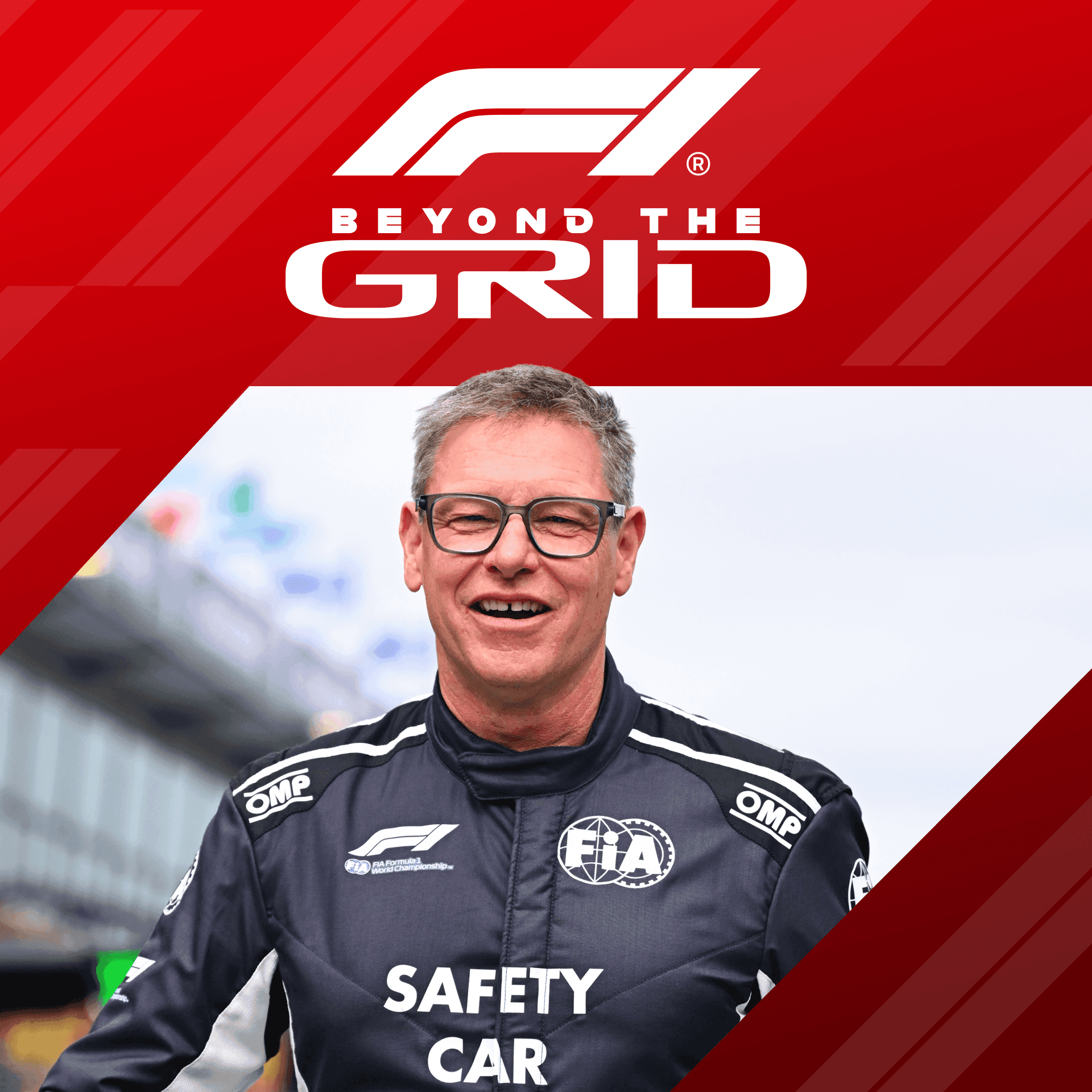
Bernd Maylander is the FIA safety car driver since 2000 (500 races completed in Melbourne). He previously raced in junior categories including Formula 3000 and later worked for Mercedes in DTM/ITC as a junior. His co-driver is Richard Darker, who handles standby communications and backup information to race control.
Key claims
The modern safety car is far faster and more technical than earlier eras; Mercedes’ AMG GT Black Series safety car has 730 hp and is the quickest safety car so far. Safety car speed is often limited by track conditions and restart requirements (drivers may want slower speeds to save battery/energy). Maylander has crashed only once in 500 races.
Notable examples
Melbourne 2026 milestone; Fuji 2007 wet race with 19 laps behind the safety car and fuel/spray management; Brazil 2016 referenced; Monza 2024 Parabolica crash due to a brake issue (co-driver Richard OK). He also discusses Nordschleife learning and Max Verstappen’s Nürburgring GT3 performance.
Written by AI. May contain mistakes. Listen to the episode to check what was said.
Chapters
Tap a time to open that second in VOReflections on 500 Races
0:03 to 1:13
Bernd shares his experiences and feelings about reaching 500 F1 races.
“There's a lot that goes on behind the scenes of this show, booking guests across time zones, tight turnaround edits and constant time management.”
Reflections on 500 Races
3:56 to 5:00
Bernd shares his experiences and feelings about reaching 500 F1 races.
“Hello and welcome to F1 Beyond the Grid with me, Tom Clarkson.”
Journey from 2000 to Today
5:00 to 7:12
Bernd discusses his journey in motorsport and the evolution of his role.
“Bernd, it's great to have you on the show again.”
Life as a Safety Car Driver
7:12 to 9:35
Insights into the unique responsibilities and challenges of being a safety car driver.
“can we throw it back to 2000 when you started out on this journey?”
The Performance of the Safety Car
9:35 to 12:00
Bernd compares the safety car's performance with racing cars and shares technical insights.
“I have done this four years ago with an old colleague with Bern Schneider.”
Max Verstappen and the Nürburgring
12:00 to 14:03
Discussion on Max Verstappen's performance and the complexities of the Nürburgring.
“And I'm always surprised by the engineers, what they are developing.”
The Challenge of the Nordschleife
14:03 to 15:23
Learn about the intricacies of mastering the Nordschleife track.
“I saw some of the in-car from his race the other day.”
The Challenge of the Nordschleife
15:27 to 16:37
Learn about the intricacies of mastering the Nordschleife track.
“booking guests across time zones, tight turnaround edits and constant time management.”
Evolution of Mercedes Safety Cars
16:57 to 18:08
Explore the history and evolution of Mercedes as safety car supplier.
“There's a lot that goes on behind the scenes of this show, booking guests across time zones, tight turnaround edits, and constant time management.”
Evolution of Mercedes Safety Cars
18:14 to 20:05
Explore the history and evolution of Mercedes as safety car supplier.
“This is a job for Indeed Sponsored Jobs.”
Show all 31 chapters
Aston Martin's Role in F1 Safety
20:06 to 22:21
Learn about Aston Martin's contribution to F1 safety cars.
“but in the end, that was the first contact to a proper safety car.”
Monza Incident Reflections
22:22 to 24:21
Hear about a scary incident at Monza and the importance of safety.
“With the GT Black Series, now you're even on a higher level.”
The Dynamics of Co-Driving
24:22 to 27:26
Understand the crucial teamwork between the safety car driver and co-driver.
“We get a lot of information into the safety car.”
A Grand Prix Weekend Overview
27:27 to 28:02
Get insights into the structure of a Grand Prix weekend for the safety car.
Track Testing Procedures on Thursdays
28:02 to 29:29
Learn about the importance of track testing and safety procedures before a race weekend.
“But we're also testing all the technical things, timing, TV.”
Driving the Safety and Medical Cars
29:30 to 31:09
Discover how the safety and medical cars operate during track tests and races.
Challenges of Driving a Safety Car
31:10 to 32:58
Understand the challenges faced by safety car drivers and their communication with race control.
“And that's exactly the moment when the people or when the drivers, when they're pressing the button, are the safety cars driving so slow.”
Adjustments in Safety Car Operations
32:59 to 34:56
Learn how modern F1 procedures have changed the role and speed of safety cars.
“Can you hear the radio messages from the drivers?”
The Evolution of the Safety Car
34:57 to 37:13
Explore the historical development of the safety car from its inception to present day.
“So the race drivers don't want to go that quick?”
The Impact of Imola 1994
37:14 to 38:46
Examine how the tragic events of Imola 1994 influenced the need for improved safety cars.
“Did you ever discuss with Sid Watkins, the FIA's medical delegate, if you like, about how the safety car came about in 1973?”
High-Performance Safety Cars
38:47 to 41:28
Discuss the significance of having a high-performance safety car in modern racing.
“Do you think the tragic events of Imola 1994 accelerated the need for a safety car?”
The Evolution of Safety Cars
42:00 to 42:18
Learn about the differences in safety car technology over the years.
“and behind the Opel Vector, maybe it was more difficult than in the modern world.”
The Evolution of Safety Cars
42:21 to 43:32
Learn about the differences in safety car technology over the years.
“There's a lot that goes on behind the scenes of this show, booking guests across time zones, tight turnaround edits, and constant time management.”
Improvements in Safety Protocols
43:52 to 45:02
Understand how advancements in technology have made safety procedures more effective.
“There's a lot that goes on behind the scenes of this show, booking guests across time zones, tight turnaround edits, and constant time management.”
Improvements in Safety Protocols
45:06 to 51:10
Understand how advancements in technology have made safety procedures more effective.
“This is a job for Indeed Sponsored Jobs.”
Memorable Races and Challenges
51:10 to 53:10
Hear about Bernd Maylander's experiences during memorable races in challenging conditions.
“We now know roughly how many laps you've led.”
Insights from the 2007 Japanese Grand Prix
53:10 to 56:00
Learn about the unforgettable moments from the 2007 Japanese Grand Prix and its unique challenges.
“We knew in that situation that we changed the cars.”
Race Conditions and Safety Decisions
56:00 to 58:20
Learn about the considerations for racing in wet conditions and how safety decisions are made.
“because they are on the same tires that was in the end helpful for the sport because everyone is on the same level.”
Memorable Races and Challenges
58:20 to 1:00:30
Explore some of the most challenging races and the unique conditions faced.
“The first is aquaplaning and then you're listening to the drivers because the driver behind me, maybe he can still see enough to race safe.”
Bernd's Future and Wine Production
1:00:30 to 1:02:12
Hear about Bernd's future plans in racing and his wine production journey.
“Ian Roberts at that time and the medical card drivers immediately there to help Crochard in the way what they could help.”
Bernd's Future and Wine Production
1:05:17 to 1:05:42
Hear about Bernd's future plans in racing and his wine production journey.
“Do or die Game 7, a full week of heavy hitting back and forth series.”
Transcript
Automatic transcript. May contain errors.0:00This episode is sponsored by Indeed. There's a lot that goes on behind the scenes of this show, booking guests across time zones, tight turnaround edits and constant time management. And when things get chaotic, you realise pretty quickly how important it is to have the right person on your team. If I had to hire someone tomorrow, I wouldn't just want a good editor. I'd want someone who understands pace in long-form interviews and can work fast under pressure. And in moments like that, you think, this is a job for sponsored jobs. Because Indeed Sponsored Jobs boosts your listing in search results, helping you reach the candidates with the specific skills and experience you actually need.
0:39And it works. Sponsored jobs posted directly on Indeed are 95 % more likely to report a hire than non-sponsored jobs. That's a serious edge when the pressure's on. Spend less time searching and more time actually interviewing candidates who check all your boxes. Less stress, less time, more results. When you need the right person to cut through the chaos, this is a job for Indeed Sponsored Jobs. And listeners of this show will get a$75 sponsored job credit to help get your job the premium status it deserves at indeed.com slash podcast. Just go to indeed.com slash podcast right now and support our show by saying you heard about Indeed on this podcast.
1:20Indeed.com slash podcast. Terms and conditions apply. Need to hire? This is a job for Indeed Sponsored Jobs. Cadillac has entered Formula One, deepening the racing pedigree behind every V-Series on the road. Discover a line-up that delivers pure adrenaline in the form of modern luxury. Experience the quickest Cadillac ever, the all-electric Lyric V, the peak performance of the CT5V Blackwing, the nimble agility of the Optic V, and the legendary roar of the Escalade V, all engineered to thrill. Find out more about Cadillac's performance story in Formula One and our race-tested V-Series lineup at cadillac.com.
2:09What's up, y 'all? Summer's got a different tempo. Everything's a little looser, brighter. One plan turns into another. You hear something, you stay a little longer. Next thing you know, you're somewhere you didn't plan to be. It's those in-between moments. That's where the ideas hit. Conversations stretch out. Little memories sneak up on you. Sometimes it's just about what's in your hand. That color. That chill. The new tropical butterfly refresher from Starbucks. Guava and passion fruit flavors with mango pineapple flavored pearls. Yeah, that feels like summer before you even taste it. Funny how one small stop becomes the best part of the day.
2:48Start your summer rhythm with Starbucks. Try the new Tropical Butterfly Refresher from Starbucks.
3:01Of the current Formula One grid, only Lewis Hamilton, Max Verstappen and Fernando Alonso have led more laps than safety car driver Bernd Maylander. So what's it like having the fastest drivers on the planet right behind you? Somehow, if you have these F1 drivers behind you, you can feel the power, you can feel the spirit. Everyone is looking forward for the restart. If you ask me if I'm still nervous, yes, I'm nervous. Without this adrenaline, I think it would be boring and I would be not a safety car driver anymore, but I need that. Bernd loves the thrill, but safety always comes first. So he's not fazed when drivers complain about his speed.
3:45I spoke to him a couple of times after the race. I said, oh, please don't say all these things. And he said, yeah, yeah, no, but in that moment I didn't understand why you drove so slow and I explained to him and he always agreed. That's completely normal.
4:05Hello and welcome to F1 Beyond the Grid with me, Tom Clarkson. Bernd Maylander reached a monumental milestone in Melbourne earlier this year when he completed 500 Grand Prix as the FIA safety car driver. A lot's changed since his first race back in 2000 and we discuss it all. Bernd tells me how the safety car and his role have evolved over the last 25 years. The car is much quicker now and his role is much busier and it's fascinating to hear about the similarities between his preparation for a race weekend and the F1 drivers themselves. We also reflect on some of Berndt's most memorable moments, from the heavy rain at Fuji in 2007, to the drama of Brazil 2016 and everything in between.
4:53And in all that time driving the safety car, it's astonishing that Berndt has only crashed once. So I had to ask him what happened.
5:06Bernd, it's great to have you on the show again. It's been six years since you were last on. The sport has changed a lot in that time, but one thing hasn't, you are still the safety car driver. That's right, yeah, but the sport's still great. We have good times, I have to say, on the track. So it's great to be back, by the way. Are you still loving it? Still loving being the safety car driver? That's why I'm here. Yeah, absolutely. What you said, yeah, six years ago, the time is running so quickly. I always say if the time is running quickly, many things are going on in a positive way. So that's why six years, it just could be yesterday.
5:48I remember exactly when we've been sitting together. That was in Portimao. Yeah, it was Portimao. We had the ocean behind us. Yeah, that was very fantastic. Well, we're speaking at Suzuka, one of the great racetracks. Can we wind it back? a couple of races because melbourne 2026 was a big one for you wasn't it 500 races as the fia safety car driver it's an amazing tally how proud are you of that achievement i have to say well i knew that these numbers coming up i was flying to australia on the difficult situations by air traffic like you know and for me it was just yeah okay well 500 sure something will going on i was quite relaxed but then during the weekend i realized okay it's nice the people recognized it the fi have done something really nice on the thursday afternoon we had an evening we had a nice barbecue with some surprises for me i have to do a speech but i'm not really good in it but i have to say i'm really proud for this number but i always say without a team you can't do that so you need a good positive team behind you and that's what i definitely had my co-drivers the race directors, the people around me were supporting the job.
7:02And that was great. And the whole group's been joining us for the barbecue. So it was really cool, I have to say. And yeah, it's great. But now I'm looking forward for the next number. Well, before we come on to what that next number might be, can we throw it back to 2000 when you started out on this journey? Did you imagine you'd still be doing it 500 races later? No, not in 2000. And so when I originally started in 1999 in Formula 3000, that was more or less a year to learn the whole procedure. And then you arrived in Melbourne 2000, standing on the grid. I recognize still a picture. I have still a picture in my mind.
7:42A young boy standing next to a big safety car. And I knew what I have to do, but I was really, really nervous to go on the grid on a Sunday. there was I think just covering Formula 1 at that time and it was great I thought okay well now you're a small part of Formula 1 for maybe one lap or two laps you never know and I never expect that long time to be in the safety car but that's exactly if you really like to do something and you have a great team and it's running in a positive way then that can happen that you're doing 500 Grand Prix or even more. I suppose back then you were still very much a racing driver weren't you?
8:27You were thinking like a racing driver and was this almost a sideshow for you? For sure the main reason was the focus during a race weekend it's a little bit different it's a little bit more focused on the competition in the job as a safety car driver and that what I recognized very quickly you've been focused on different things you're focused what can happen you try to improve the safety job what you have to cover where's a shortcut for example there's a shortcut on a track if that happens maybe we can use a shortcut as a race driver you never think about that because that's up to your engineers and to your people around you and so you work really close with the race director together to improve the job to looking more to the weather forecast for things like that as a race driver okay if it's raining it's raining but you're not really focused on the weather forecast so that was a different job than that what I realized and but a very great job and so one weekend I was the race driver and on the other weekend I was the FIA Formula One safety car driver and that's what I really enjoyed for five years and then I stopped officially racing championship racing I would say and been even more focused on the job as a safety car driver and great did you miss racing or does this still scratch that itch for you missing racing now with 54 i would say at the competition sometimes i wouldn't sign a contract for a whole championship now with 10 races for example but sometimes to drive a nice GT3 car, like Max is doing this, for some races.
10:11Yeah, that would be great. I have done this four years ago with an old colleague with Bern Schneider. We did a GT race in Germany with a GT3 car, and that was really good fun and competition. So if you put your helmet on and the gloves, and if you are on a proper race car, you're in that mode again. I think it's a normal DNA thing. for a race driver that you are fully focused on the job what you have to do. In the safety car, you have to realize it very quickly that you are not in a race car, that you're in the safety car to have a different kind of mode because you have to protect something else.
10:54You're still driving a very high performance car though, aren't you? For the last five years, the safety car has been the AMG GT Black Series, hasn't it? Can you put some stats on that in terms of how quick it is horsepower yeah the the gt black series well it's the quickest safety car ever so far uh this car is developed for a racetrack to be not a race car but to be a really performance car on a racetrack um so with 730 horsepower big v8 engine but the car is so nice drivable on the limit uh with full downforce so this car you really feel the downforce uh great balance so it's really driving like a little race car with slick tires and that helps for sure that keeps up your performance and that's very important i think to cover this check to have a great performance car and if you think about which car we had where we're coming from and which part the safety car had 25 years ago and now where we are now with which kind of cars it's it's Great to see.
12:01And I'm always surprised by the engineers, what they are developing. So I can say now, yes, I'm really looking forward for the next models. You mentioned Max, Max Verstappen a minute ago. He's in a Mercedes GT3 and he's racing it at the Nürburgring. Is his car quite similar to what you're driving at F1 races? Similar. I think the basics are somehow similar. So the basics, front, middle engine, transaxle, the balance. But the GT3, it's a proper racing car. This car is developed just to be a race car on a racetrack with much more downforce, less weight. But the basic, you can say, yeah, it's a kind of.
12:39The safety car, we have different rules. So it should be a road car. We have even nearly 200 horsepower more than the GT3 car. But we are much heavier in the car. We have to use road tires. So the balance in the end, it's something different. we have to cover the safety part as a safety car and we don't want to win the race that's a different job i'm gonna come on to that but just as an aside while we're mentioning max verstappen you've done a lot of racing at the nurburgring in fact one of your first races was at the nurburgring right how impressed have you been by what max has done absolutely and that's i think in general the whole motorsport uh gt world is uh keep an eye on it what he's doing at at that racetrack because the new working notch life that's where i started everything when i drove by my private car every weekend when after i get the driving license um that was my track to learn how to drive quick it was not always safe but uh i never crashed on the private car yeah but um He's doing a fantastic job up there, and I think everyone loves it.
13:51It's pure racing. It's a very difficult track. It's difficult to overtake. So you need a lot of passion sometimes to get the right moment to overtake someone, especially in the GT3 cars. I saw some of the in-car from his race the other day. It's fantastic. The way he was carving through the traffic. Yeah, and that's the great thing. So you have different classes up there, different categories, and you not only have to drive quick, you have to drive very clever to ride for the right moment and that's what Max is enjoying. So it's great to see him up there. I will be there this year for the 24-hour race.
14:28Not only about him, but I think that's some very topic that he's up there and a lot of people becoming extra for him. Does a driver ever properly know the Nordschleife or does it, can you always get better? Can you always know it better? I think, yeah, you always, you're looking for the perfect lap up there and then you think okay even if you're on pole position you know okay maybe there's still a half a 10 or something and this is the notch life you have so many corners and for sure you need a little bit of luck to get a proper lap without traffic but this is the competition up there and different weather conditions and because the track is more than 20 kilometers only the Nordschleife.
15:12And this is the challenge up there. And I think everyone loves it. Everyone who's infected by this virus motorsport is searching for the Nordschleife. This episode is sponsored by Indeed. There's a lot that goes on behind the scenes of this show, booking guests across time zones, tight turnaround edits and constant time management. And when things get chaotic, you realise pretty quickly how important it is to have the right person on your team. If I had to hire someone tomorrow, I wouldn't just want a good editor. I'd want someone who understands pace in long-form interviews and can work fast under pressure.
15:49And in moments like that, you think, this is a job for sponsored jobs. Because Indeed Sponsored Jobs boosts your listing in search results, helping you reach the candidates with the specific skills and experience you actually need. And it works. Sponsored jobs posted directly on Indeed are 95 % more likely to report a hire than non-sponsored jobs. That's a serious edge when the pressure's on. Spend less time searching and more time actually interviewing candidates who check all your boxes. Less stress, less time, more results. When you need the right person to cut through the chaos, this is a job for Indeed Sponsored Jobs.
16:27And listeners of this show will get a$75 sponsored job credit to help get your job the premium status it deserves. at indeed.com slash podcast. Just go to indeed.com slash podcast right now and support our show by saying you heard about Indeed on this podcast. Indeed.com slash podcast. Terms and conditions apply. Need to hire? This is a job for Indeed-sponsored jobs. This episode is sponsored by Indeed. There's a lot that goes on behind the scenes of this show, booking guests across time zones, tight turnaround edits, and constant time management. And when things get chaotic, you realise pretty quickly how important it is to have the right person on your team.
17:11If I had to hire someone tomorrow, I wouldn't just want a good editor. I'd want someone who understands pace in long-form interviews and can work fast under pressure. And in moments like that, you think, this is a job for sponsored jobs. Because Indeed Sponsored Jobs boost your listing in search results, helping you reach the candidates with the specific skills and experience you actually need. And it works. Sponsored jobs posted directly on Indeed are 95 % more likely to report a hire than non-sponsored jobs. That's a serious edge when the pressure's on. Spend less time searching and more time actually interviewing candidates who check all your boxes.
17:50Less stress, less time, more results. When you need the right person to cut through the chaos, this is a job for Indeed Sponsored Jobs. And listeners of this show will get a$75 sponsored job credit to help get your job the premium status it deserves at indeed.com slash podcast. Just go to indeed.com slash podcast right now and support our show by saying you heard about Indeed on this podcast. Indeed.com slash podcast. Terms and conditions apply. Need to hire? This is a job for Indeed Sponsored Jobs.
18:35now we've discussed the black series but since mercedes got involved as the safety car supplier they've had 13 different cars okay good good that you know the number i've been counting you alluded to it earlier but how have they evolved can you remember the first one even if i was not involved in driving that car but i had maybe the most kilometers on that car because it was my first company car for mercedes i was racing for mercedes at that time as a junior in DTM ITC. And I get a phone call on, I think it was a Monday or Tuesday morning after the Monaco Grand Prix. I was home. Norbert Tauk, assistant, he called me and said, Bernd, how many kilometers do you have on your car?
19:30And I said, why are you asking me this question? You know, I have this car since four weeks. I'm happy. I'm more than happy to have a C36 AMG. That was the sports model, I would say. And so I had to bring the car back on the same day because I was living very close to the headquarter at that time. And they took my car and told me, okay, this car will be the new safety car in Formula 1 from the French Grand Prix afterwards. And so I lost my car and this car was the first safety car from Mercedes-Benz in 1996. I get a new one a couple of weeks or more months later, but in the end, that was the first contact to a proper safety car.
20:12I didn't expect that I'm sitting in the safety car five years later. And just give us an idea of how much quicker the Black Series is compared to that. A lap of Manicor, you say the French Grand Prix, how much quicker would you be now than back then? I would say 20, 25 seconds. Yeah, yeah, yeah. Well, it was already a very quick car for that time. It was the quickest, most sporty car, the C36 with 280 horsepower, I guess, at that time. So that was very powerful V6 engine. But now we have a V8 engine, double turbo, 730 horsepower, flat grand shift. So it's completely different. And there are many cars in this list where you made a proper step forward by the drivability.
21:00But that's the engineers. That's the great thing. 40 years ago, you thought sometimes, OK, that must be now the most sportive car. and for sure there are still some very special cars i would say like like a ferrari f40 this is outstanding car in the 80s and there are sometimes in some decade are some special cars where still you have think that was a milestone yeah now look we've talked about mercedes but of course aston martin was supplying the safety car for five years as well tell us about that period Well, they joined in 21. The first contact for me was with Aston Martin in 2020. And I never had any contact to Aston Martin.
21:44I knew the things from James Bond and these kind of things. And the most popular color was the green ones, the green Aston Martins. And it was fantastic how they joined us. Quite open. They learned a lot in 2020. They were just at the racetrack to learn to understand the procedure. and then they developed a really great car and they've been supplying together with AMG, the safety medical car for five years. Great company, I just can say, great cars, nice spirits, they're building really lovely cars, nice design, very drivable. The Vantage safety car what I had over the whole period was the same basic car like the Black Series or the car before it was a front middle engine transaxle so really good balance for a basic car and that's very helpful for me as a safety car driver to have a good basic car with a nice handling well was it difficult to swap between the two cars because it would be mercedes one weekend and aston the next wouldn't yeah sometimes that happened but after a couple of laps you you know exactly what you have to do and that's what i said before um the basic of the car has been in the same level and then you have to adapt a little bit your driving skill.
23:00With the GT Black Series, now you're even on a higher level. But to cover my job, that's not really the most important thing. The basic must be really good. And that's what we had. So somehow I can say, yes, I miss Aston Martin in that job. Because what I said before, great people with a great brand. One of the scariest things I've seen recently on the TV came in 2024 at the Italian Grand Prix at Monza. I think you know where I'm going with this. But we saw you in the barriers at the Parabolica. What happened? How scary was it? Yes, for sure. If you think about it, you're in Monza on a high-speed track and you have this problem.
23:41For sure, you have to be a little bit lucky to not have another proper accident. Most important thing was for me that my co-driver, Richard, that he was okay, that I was okay. what happens in the end we had a brake issue we find out where immediately after the test that was during the track test on the thursday we find out immediately what happened and luckily it was not a system failure of the brake system so we could be sure that the brake will work in the future that's i think one of the most important things and yeah it was a crash that can happen in racing because you're working on sometimes on the limit especially on the track test you you try to find your driving level for the races and yeah it was a big impact if you think about with 270 no brakes it's not really nice was that the only time you've crashed the safety car yeah yeah luckily yes in 500 races in 500 well more or less yeah 500 race was the only time that I hit a barrier and it was a big one luckily I did the right thing in that moment I just tried to bring the car in a rotation to reduce the speed because if you have no brakes for sure you can turn in in a corner but nothing will happen by the way so you will go straight into the barrier and that's what I want to avoid to not going straight into the barrier just to bring the car in a rotation to slow down in any way and that's what we did that's the racing driver in you though isn't it it's kind of everything slows down i have the presence of mind to do that i never practiced that by the way so it was the first and hopefully the last time in the end everything went well and we could find the mistakes and done look you mentioned your co-driver richard richard darker other than being mad to sit alongside you at those high speeds tell us a little bit about richard and what does he do how does he support you it's quite important because uh it's teamwork um for I can cover the driving part.
25:49We get a lot of information into the safety car. Let's say from the moment onwards, if something happens on the track, it starts with the standby situation. So he's usually pressing the button, standby, reporting to race control. I'm listening to everything. From that moment onward, we know everything on the track. For example, turn three accident, two cars on the left side, a lot of debris on the track. okay that's the information what we what we have we have a screen we can see it and he's reporting back so when we're passing the that area he's reporting back i can report as well but four ices and four ears see and hear more if i'm not 100 sure if it was now left or the right side because i'm focused on driving it's a backup so he let me know okay no band it was on the left side so that's just for safety procedure and that is very very helpful luckily mostly we have nothing to do we're just sitting in the car doing the race watching the race on the screens watching the gps mapping and then we also can have a nice chat that's also very helpful but it's good to have kind of a safety backup for your information because we don't want to disrupt race control all the time they have to manage many other things in that situation if something happens and that's very helpful and it's like an airplane cockpit that's what I always say that's why you have a co-pilot you could fly the airplane alone but it's good to have someone next to you it's good that he has no steering wheel no but it's good to have a safe device to have someone with me you mentioned the track test on a Thursday earlier can you now talk us through what a Grand Prix weekend looks like for you when do you arrive tell us about that track test on a Thursday what happens on a Friday Saturday and Sunday I have to say since Covid more or less changed a lot from the beginning onwards from 2000 to now the procedures are kind of the same but with the modern technique what we have we have to test even more things and it's so high professional so I'm arriving Wednesday evening at the hotel sometimes we have Wednesday already the track walk where we analyze the track where we look if the track is fully in shape for the f1 weekend but usually do this on the thursday morning thursday afternoon we have our track test and this test is not only based to learn the track in my case for sure for me it's good to be back on the track to find out where's the limit how to drive every corner where's the breaking point and things like that That's basic.
28:27For sure, that's my job. But we're also testing all the technical things, timing, TV. So Formula One is really involved to set up the right places for the cameras. The timing, very important because Thursday is the day before Friday. And from Friday morning onwards, everything has to work in a perfect way because there are the cars, the race cars on the track. You cannot say, oh, the timing is not running in a perfect way. It has to run. It has to run good. And that's what we are testing on a Thursday afternoon. FIA-wise, we are practicing different procedures because now in the modern Formula 1, we have different procedures for a red flag, for a restart, for a standing start, for a rolling start.
29:12And that's what we are playing with, different procedures to teach ourselves if we are 100 % on the level what we want to be. that's why we're practicing this in the first half an hour of the track test that's our procedure we're always playing in different procedures aborted starts or so many different things and that's what we are practicing that's very important for race control for us for everyone who's involved in in every race and every race weekend during the track test on a thursday it's the safety car and the medical car you're both out there yeah yeah how hard are you pushing though if i see the medical car in my mirror i'm pushing like oh no um but we'll be playing together different rules so mostly i'm playing the safety car and he's playing the first f1 car and there's different scenarios what we are playing with uh i think the people on the grandstand they don't understand the procedure what we are doing but luckily we know what we are doing and that's a very important procedure for the whole weekend and for sure you're you're going on the limit let's say on that track test if I have a free lap you're bringing the car really on the on the limit and for sure there's a difference between the safety and medical car the medical car yes usually two doctors plus the driver inside the car is much heavier but he also has to be very quick if he has to go on the track if something happens so both drivers uh carl or bruno or myself we pushing us to the limit to have everything 100 under control so is thursday the fastest you drive the car all weekend depends to the track conditions because on thursday that's as a race driver you realize this very quickly usually you don't have that grip level than on a friday or saturday or even on a Sunday because the track conditions improve during a race weekend by the grip and we know this from all the racetracks and for sure on a Thursday you maybe you start in the beginning of the track test two seconds slower than to the end because the track improves during that but you always try to keep the car on the limit because I think one of the great misunderstandings about the safety car tell me if i'm wrong is that i think people assume you're flat out when you're leading the field in a race but that's rarely rarely the situation isn't it yeah absolutely so sometimes i'm really lucky when the race director or when rui tells me on the radio but now you can drive as fast as you want more or less and that's the best moment for me because then you really can you can push you know okay we have two more laps to go and then we're coming in so you know you can really push hard but mostly we are not on the limit because of the situation on the track let's say if there's a lot of debris in a in turn four uh there are marshals on the track i picked up the leading car i know okay we have to give them time that that the track is clear when clean when we pass in this area um so we're not driving flat out we should be driving slower instead of 200 we're just going for 120.
32:33And that's exactly the moment when the people or when the drivers, when they're pressing the button, are the safety cars driving so slow. They don't have this information. We have it and we guide the drivers through this area and safely, that's my job. And after that, if the track is clear and ready to go, for sure we're speeding up on a limit. That's the best moment for me, because then you really, you can drive. and the other situations are sometimes really tricky to make everyone happy and definitely the the leading car is the most affected car because he loses advantage he's the leader still from the pack but still they're looking for their own performance but it's completely normal i do my job to stay safe to guide everyone on a safe way around the drivers the people who involved in in in this situation.
33:28Can you hear the radio messages from the drivers? No. I remember Hamilton in particular when he was winning everything at Mercedes. He was quite outspoken. The safety car needs to speed up. This is too slow for us. I spoke to him a couple of times after the race. I said, oh, Lewis, please don't say all these things. And he said, yeah, yeah, no. But, you know, in that moment, I didn't understand why you drove so slow. and I explained to him and he always agreed. That's completely normal. It's kind of heat at the moment stuff. Yeah, that's absolutely understandable and fine from my side. I have no problem about that.
34:09Even when I was racing, the safety car turned up in front of me. Even I was saying, why is he driving that slow? I have to watch for my tire temperatures to be in the right performance. That's what a driver, what's the job of a race driver. And my job is a little bit different. I have no tire problems or tire pressure problems and we always say safety first and I think everyone understands this we're working together with the driver for example for this year we have a slightly different situation in a safety car deployment than in the years before because they don't want to go that quick anymore because of the power of the cars it's a different procedure and you have always to learn every year a little bit of different procedures.
34:57So the race drivers don't want to go that quick? No, because they don't want to use the battery, let's say on a long straight, I want to save energy. And that means you're driving a little bit slower. You're not going really in this high speed, let's say over 250. For example, in Vegas, we could go up to 300. That's the longest straight. That's the quickest track by high speed. and I'm pretty sure they're happy with 200 there or not you don't have to go up to 250 or more anymore. Is it difficult to pick up the lead car when you come out of the pits particularly late on in the race if there are lap cars and things like that?
35:32Yeah that's that's exactly the problem so sometimes if it's late in the race you know where's the leader and race control always try to send me on track in front of the leader that's the perfect situation but if they're going for a pit stop if they're on a different strategy than many other cars maybe it's not a leader anymore and i get guided i can see it where who is the leader but yeah it's a tricky moment to make the right the right move even for for race control um or if it starts immediately from one to the other side it starts to rain and they're changing tires um it's that's a quite tricky moment but that's the challenge and that's uh yeah why you really have to understand and to read a race and if you're really in that flow you you get the points and that's the that's the passion it was an inauspicious start for the safety car back in 1973 in Canada its first race I just us talking about this reminds me of didn't it pick up the wrong car and it all got very confused back in I haven't watched that race.
Read the full transcript
36:38I was still too young. I was two years old, but I saw some film materials about that. I remember exactly. I heard that he picked up the wrong car. They didn't really know what to do with the safety car at that time. and I think that was also the reason why it disappeared for 20 years on the racetracks and from 1993 onwards it was in the rules. So it was really written down what is the safety car, what is the procedure, what you have to do, in which situation. And if you think about 93, it's not so long ago. We had for sure massive steps forward, but we learned about a safety car and that's really good because you're learning every race, you're learning every year and you adapt the positive and important things for the next generation and for the next rules.
37:32Did you ever discuss with Sid Watkins, the FIA's medical delegate, if you like, about how the safety car came about in 1973? Not really in 1970. Sorry, 1993, forgive me. No, not in 1993. I think the medical car was always a part of it. let's say ambulances I think I really don't know before the 90s what happens exactly but Sid was already there I think since 1994 we all know who is Sid Watkins in racing what he has done and then these things getting more and more important from 93 onwards when we had big accidents yeah and and Sid's job and also the safety and medical stuff what they have implement in Formula One.
38:21I think that was really, really important. And we learned a lot. And that's why we created also a safety department, a medical department to have more power, to develop quicker, to develop better together with everyone who's involved in Formula One. It's not only the FIA. So we get support from the teams. We're working together. And I think that's the very important big step that you're working together. I think it was quite different 30 or 40 years ago. Do you think the tragic events of Imola 1994 accelerated the need for a safety car? Absolutely. At that time, the safety car was implemented in the rules, in the racks.
39:01But it was different cars, different drivers from racetrack to racetrack. And then from, I think it must be 96 onwards, it was a permanent driver. At that time, it was Oliver Gavin. Oliver Gavin is a former race driver, very good GT driver. And he did this from 96 to 99. I took his job over because he left, he went to America for the American Le Mans series. So that was my lucky moment. And I think that was the first step, that you have a permanent driver to be absolutely professional in his job. and then also to have a permanent brand and a permanent the same safety in medical cars at each track because then you have a standard equipment so you standard you lies something what is really really important and that makes a big difference maybe what i meant with that question was did imola 94 accelerate the need for a high performance safety car because i remember reading an article by Max Angelelli, who was the safety car driver at Imola in 94.
40:12And he said many years later that he was still haunted by the image of Senna pulling up alongside him. He was in an Opel Vectra pulling up alongside him and shaking his fist at him, wanting him to go faster. And of course, Max was going as fast as he could in an Opel Vectra. And Senna had even raised the topic of the speed of the safety car in the Sunday morning driver's briefing at Imola. So given everything that happened there, suddenly maybe it was a graphic illustration of how important it was to have a high-performance car in that role. Yeah, I would say in that technical things, it was in 1994, we all know how complicated the car has been at that time, or how different the cars at that time, because the rules being allowed to have a full automatic gearbox, suspension and whatever.
41:09And I think that was even more important than maybe in the modern time because we have now high-performance cars and Opel Vector was a great car, but maybe not for a racetrack at that time. I think, yes, definitely the development was going definitely to more sport cars, to permanent cars on a higher, quicker level. And even in the modern times, the drivers, let's say with the old cars from last year, with the ground effect, they drove still with 250. They drove still big zigzag behind you to get energy into the tires, to be prepared for the restart, to have the temperature in the right window, to be on the 100 % perfect level for the restart.
41:56and that's maybe what Senna tried to do in the same way and behind the Opel Vector, maybe it was more difficult than in the modern world. For sure, always a safe, a Formula One car is always quicker because it's Formula One. But I think the level where we're right now and where we've been the last 30 years, it's different than at that time. This episode is sponsored by Indeed. There's a lot that goes on behind the scenes of this show, booking guests across time zones, tight turnaround edits, and constant time management. And when things get chaotic, you realise pretty quickly how important it is to have the right person on your team.
42:35If I had to hire someone tomorrow, I wouldn't just want a good editor. I'd want someone who understands pace in long-form interviews and can work fast under pressure. And in moments like that, you think, this is a job for sponsored jobs. Because Indeed Sponsored Jobs boosts your listing in search results, helping you reach the candidates with the specific skills and experience you actually need. And it works. Sponsored jobs posted directly on Indeed are 95 % more likely to report a hire than non-sponsored jobs. That's a serious edge when the pressure's on. Spend less time searching and more time actually interviewing candidates who check all your boxes.
43:14Less stress, less time, more results. When you need the right person to cut through the chaos, this is a job for Indeed Sponsored Jobs. And listeners of this show will get a$75 sponsored job credit to help get your job the premium status it deserves at indeed.com slash podcast. Just go to indeed.com slash podcast right now and support our show by saying you heard about Indeed on this podcast. Indeed.com slash podcast. Terms and conditions apply. Need to hire? This is a job for Indeed Sponsored Jobs. This episode is sponsored by Indeed. There's a lot that goes on behind the scenes of this show, booking guests across time zones, tight turnaround edits, and constant time management.
44:00And when things get chaotic, you realise pretty quickly how important it is to have the right person on your team. If I had to hire someone tomorrow, I wouldn't just want a good editor. I'd want someone who understands pace in long form interviews and can work fast under pressure. And in moments like that, you think, this is a job for sponsored jobs. Because Indeed Sponsored Jobs boost your listing in search results, helping you reach the candidates with the specific skills and experience you actually need. And it works. Sponsored jobs posted directly on Indeed are 95 % more likely to report a hire than non-sponsored jobs.
44:36That's a serious edge when the pressure's on. Spend less time searching and more time actually interviewing candidates who check all your boxes. Less stress, less time, more results. When you need the right person to cut through the chaos, this is a job for Indeed Sponsored Jobs. And listeners of this show will get a$75 sponsored job credit to help get your job the premium status it deserves at indeed.com slash podcast. Just go to indeed.com slash podcast right now and support our show by saying you heard about Indeed on this podcast. Indeed.com slash podcast. Terms and conditions apply. Need to hire?
45:15This is a job for Indeed Sponsored Jobs.
45:29What other developments have there been since 2000 that have helped you do your job? Well, car-wise, I think we know the history of all the cars, that we also improved car-wise. but to implement the technical things inside the information. In my first safety car, we not even had a TV. Well, we had a TV standing five meters away from the car where we tried to watch it somehow. Luckily, we had radio for sure. But I think we had the backup radio, so it was more or less like a hand radio in your hand. A year later, I get some earplugs to get the radio contact into the helmet. Then we implement a TV inside the car.
46:14Still, everything is guided by radio. But the information what we had around by GPS mapping, they know where I am all the time by GPS. I know where all the cars, I nearly could manage without radio what I have to do on track if something happens. And that's very helpful. and that makes the whole procedure much safer, more information to limit the mistakes, what can happen. And that's quite important for the whole situation so you can react in a better, safer way. And that's quite impressive what we did. Even if you look to the cars with the big movements, what we did in safety since 2000, that I'm involved in Formula One, it's quite impressive.
47:08car wise we've been lucky in 2000 to have ABS or kind of anti-schlupfregelung in German it calls, I don't know the name in English let's say traction control and now it's standard in a proper sports car so that's very impressive to what the technique, which level we are right now and I'm pretty sure the next generation of safety cars will be even on a higher level. Tire performance, drivability, that's quite fantastic what the engineers are doing. Is it intimidating having a field of Formula One cars in your rear view mirror? It still is, yeah. I'm still impressed. Even now? Yeah, yeah, absolutely.
47:55Because if I have to deploy, I always say the best race are without any deployment of a safety car because nothing happens and hopefully we have a good race. sometimes if the safety car deploys it helps the racing a little bit because we have yeah we have new situations and safety cars often breed safety cars don't they because you bunch up the field we get a restart again and yeah the race starts from a new thing but it's somehow if you have this f1 drivers behind you you can feel the uh you can feel the power you can feel the the spirit everyone is looking forward for the restart for uh everything can happen and that's that's the fascination on the sport and even i feel this in front of if you ask me if i'm still nervous yes i i'm nervous without this i think this adrenaline i think it would be boring and i would be not a safety car driver anymore but i need that uh it's like on a on a start if you jump into your cockpit if I jump in when I jump into the safety car 10 minutes before the start of the race yeah I check everything I check everything like I'm jumping in my race car radio check and look all the systems if they are all set up like I want to and yes ready to go and then it's the moment there you have to deploy you have to catch the leader if not you have to do this and that you know the procedure you have your co-driver next to So everything is on place, everything is ready to go.
49:28And that's the spirit and the adrenaline. Everything comes together. Do you know how many laps you've led in Formula One? I've got a rough idea, but do you know the exact number? Not the exact number. We try to find it out. We have a list from 2007 to 2026. and it was 1 ,309 laps plus the first seven years. So we couldn't find out the first seven years in the moment. But deployments from 2000 to 2026 was, together with the sprint races, 319 deployments. That's what we found out. I'm really bad on numbers. I'm happy to remember 500 races, but that's what we found out. And now we have to count a little bit more.
50:20So I guess it will be... Must be near 1 ,500. Yeah, something like that. 1 ,500 laps, which would put only Verstappen, Hamilton and Alonso ahead of you. Schumacher, maybe? Sorry, the current grid. Ah, okay, okay. Only three drivers on the current grid have led more laps than you. that's something to tell your grandchildren i have to yeah and even if you top if you want to top that yeah um we have to talk about f2 f3 because if i cover this on top it's even more but uh yeah that's part of the job it's it's well these kind of numbers after 25 years it's more than 25 years and 500 races it's somehow very impressive but it took also 26 years driving the safety car.
51:07So that was a long time. So we've discussed cars. We've discussed developments. We now know roughly how many laps you've led. Can we talk about some of the most memorable races that you've been involved in? I've got some ideas, but if I said to you, Fuji, 2007, Japanese Grand Prix, first race back at Fuji since 1977, it was wet. it was very wet wasn't it tell us about that how many laps the race started behind you and i think you did the opening 19 laps yeah it was many laps we i think i already knew that it was raining on sunday and realized that already on thursday because of the whole it was relentless yeah we couldn't see the mount fuji the whole weekend um and we had an earthquake on the sunday to monday I remember exactly.
51:59But back to this weekend, yeah, we had a really nice car at that time. It was a big step for AMG as well. It was the CLK 63. So it was a new, normal, aspirated engine, very powerful. And the car was quite tricky to drive under wet conditions, believe me. So when I saw the rain, I said, oh, okay. Okay, stay safe. Don't push too much. But you're driving the safety car. You don't want to, you can't win the race. And then it came exactly to the situation that we did so, so many laps. And like in every road car, the fuel consumption on that car, if you push, it's not the regular fuel consumption. It's a little bit more.
52:46And we realized, OK, we're running out of fuel. And the driver's behind me, a big spray. I could see this in the mirror. So, okay, so I said this on the radio to race control. Okay, so we can do a few more laps, but then maybe we're running out of fuel. Luckily, at that moment, the rain disappeared a little bit, a little bit less rain, maybe five drops less. So we said, okay, let's race. Okay, perfect for me. We knew in that situation that we changed the cars. So we have always two similar cars, two similar safety cars, even at that time in the FIA garage. So we came in, jumped into the other car.
53:24The car was running, seatbelts been in position. So we just jumped in, drove down, end of the pit lane, in the procedure. At that time, Peter Tippett's my co-driver. At that time, he was, oh, that's new. We never have done this. Oh, it's cool, isn't it? So been in the parking position. And we had a screen as well, a little screen. It worked so-so. Been in the position. And the lap after was another crash on the track. I can't really remember. but I think it was... Was it Alonso? It was Alonso, yeah. He had a big one, yeah. Yeah, it was a bigger one. He really pushed hard, what I heard afterwards.
54:00And he crashed and, yeah, safety car standby, safety car deployed. Boom, again on the track. I said, oh, okay. I think one more time, the same procedure. That's really tough. And we did another six, seven laps. Luckily, in the end, we could race. We did 19 laps. That was, for me at that time, under these conditions, very tricky. But yeah, we made it. And I think everyone was quite happy that we could finish the race on the safe way. And we've also seen a very interesting race. It's invariably wet races, isn't it, where you're called? Because if we go in chronological order, I'm then reminded of career 2010.
54:38Important year. I think it was New Rex as well. Yeah, it was. Mark Webber. I saw when Mark Webber maybe lost his championship. That's the one. when he slided away. I said, oh, no. Even while I know, Sepp won the championship in the end, but I know Mark quite well from GT racing from the 90s. And I said, oh, no, he lost the car and disappeared. So that was the ticket for Sepp to win the championship. And it was on the same, it was really tricky conditions in South Korea. Great racetrack, but the weather conditions on the rain was very tough. for the drivers and uh and we did also many many laps there i i remember it was almost dark when it ended yeah correct yeah the tarmac was only laid 10 days before that race can you feel that the slipperiness of it all the oil even even in the safety car yes i could feel like also in turkey we had once this problem uh but yes i could uh i feel it in in the car that it was very slippery but many many times between a road car or the safety car and a race car with different tires it feels different but in that specific situation we had exactly the same problem so the grip level on wet conditions was not really perfect but in the end it was the same for everyone because they are on the same tires that was in the end helpful for the sport because everyone is on the same level.
56:13And the grip level was really, for sure, not the best one, but it is like it is. One more I wanted to suggest was Montreal 2011, the longest race in the history of Formula 1. Four hours, four minutes. We changed the racks afterwards. We did. We all had webbed feet by the end of it. But there was the two-hour delay, do you remember, in the middle of the race. We started the race. It was then too wet. and we had this two-hour delay. And one of my abiding memories of that race is you being sent out by Charlie Whiting to sort of go and check the conditions. Now, can you just tell us what you're looking for in a situation like that?
56:55Well, in a situation like that, if it's continue raining, and that was in Montreal the case, are you going on some, well, in that specific track, you're going to more or less to the chicanes? because on the apex, sometimes you have standing water. And for sure, that's dangerous because you get aquaplining. And that's what always Charlie said. Just for a check lab, look to the corners where you see standing water. And that was nearly everywhere around in every chicane. And under these conditions, you can't race in a safe way. Luckily, it was so windy that we could manage it in the end to have a race.
57:36but it took a while and in that big break, in this two hours break, I even went up to race control and had a break there, had a coffee and a piece of cake because nothing was going on, we had to wait but in race control I think that's the safest and best informed place where you can be. And is it very clear to you when the conditions are okay for Formula One cars? Yeah, it's quite clear. If you have standing water, it's for everyone the moment where you have to say that's not drivable anymore, not drivable in a safe way. From an aquaplaning point of view or from a visibility point of view? Exactly.
58:19That's even on top. The first is aquaplaning and then you're listening to the drivers because the driver behind me, maybe he can still see enough to race safe. but if you listen to the driver on the 10th position what we are doing and they say well we have no visibility that's the moment when you have to make safety decisions in race control and that's what they're always listening and if drivers complaining to the team I have no visibility I can't see anything that's the moment when when race control is reacting in that way if you have for sure that is a red flag and the spray just hangs between the spray it's a in the modern formula one world a big big point we're working on some ideas for the future but it's very tricky mudguards that kind of thing right yeah yeah any other races that stand out to you well for sure we have uh there's so many we've worked yeah there's so many we have sao paulo i think 2016 when we had four or five deployments.
59:21That's when Max went from 16th to third in the space of about 16 laps. Is Sao Paulo a really tricky racetrack? Because you get all those rivers because of all the hills. But a fantastic racetrack. I think we all love to go to Sao Paulo. It's a great racetrack, but on the wet conditions. They're always producing good races on dry and on wet conditions. the only problem is yeah if it's raining too much you have little rivers crossing the track or also parts of standing water but racing there it's very very great i have to say do you get on the plane going to sao paulo thinking yeah i'm probably going to be busy this weekend because yeah well sao paulo everything can happen because you're surrounded by by many lakes uh humidity at that time it's always high so the weather conditions are not so easy than another let's say if you are going to Bahrain.
1:00:18Well you mentioned Bahrain were you involved in any way with the Grosjean accident in 2020 or was that purely the medical car? That was purely the medical car and luckily the medical car is behind the start for one lab because the risk of that something happens in that specific lab. It's higher than in all other labs. And that's why Dr. Ian Roberts at that time and the medical card drivers immediately there to help Crochard in the way what they could help. But that wasn't me. I was not even involved in this procedure because they immediately show a red flag. What is that situation? A normal standard thing.
1:01:00So I disappeared. I was already waiting in the end of the pit lane. on the red flag. So the drivers came back to the pit lane all together lined up and everyone was looking for Romain and luckily he survived in a really good way after this big crash. Well, Bernd, it's been so great to have you on the show again. Thank you for your time. So many stories, so much experience in one man that I'm looking at right now. Thank you very much. Here's to the next 500? Yeah, 500. How old will you be in 25 years' time? Someone told me that I will be 77 or 78. I think another 500, maybe in different functions, but definitely with 78 in the safety car.
1:01:46I'm not sure if this is high professional, but I definitely will do another couple of years. Well, the great thing is, whatever happens, however long you do the safety car, you're now a wine producer as well, right? Oh, yeah. Yeah, right. That started with a big story. Maybe we have to do another Beyond the Grid. But you produced a special bottle celebrating 500 races, right? Correct. Yeah, that's what we have done. I have a little vineyard where we're doing wine since 2018. And yes, for this specific race for 500, we have done a special number of 500 bottles with a special really nice wine in Magnum and also in a normal bottle.
1:02:30and yeah, it's great. It's going to be a good vintage, right? It's a nice vintage. It's very close to me, so very familiar. Thanks for your time. Thank you very much. Great to see you. Thanks.
1:02:47Bernd's like a fine wine, just getting better and better. Here's to the next 500 races, Bernd. Now, there was so much I enjoyed about this chat. Bernd is still a very cool cat and clearly loves his job, and he's still extremely good at it. Those safety car periods in Formula One are in very safe hands for the foreseeable future. Thanks for your time, Bert, and I'll see you at the next race. Well, that's almost it for this week. Before I go, a few parish notices. On the latest episode of F1 Nation, Jolian Palmer, James Hinchcliffe, and I react to the news that Max Verstappen's race engineer, Giampiero Lambiassi, will be leaving Red Bull to join McLaren.
1:03:26And former F1 strategist Bernie Collins joins Christian Hugill on the latest F1 Explains podcast to discuss how strategy has changed in this new era of Formula One and to answer your questions. That's also on the F1 Nation feed now. I will, of course, be back next week with another great guest from the world of Formula One. But for now, thanks very much for listening. F1 Beyond the Grid is produced by Formula One and Audioboom Studios. Until next time, keep it flat out.
1:04:06Cadillac has entered Formula One, deepening the racing pedigree behind every V-Series on the road. Discover a line-up that delivers pure adrenaline in the form of modern luxury. Experience the quickest Cadillac ever, the all-electric Lyric V, The peak performance of the CT5V Blackwing, the nimble agility of the Optic V, and the legendary roar of the Escalade V. All engineered to thrill. Find out more about Cadillac's performance story in Formula 1 and our race-tested V-Series lineup at Cadillac.com. Hey, it's Ryan Seacrest for Jewel Osco. For you, save days are here now through June 23rd. Find hot deals throughout the store and earn four times a point.
1:04:54Look for in-store tags to earn on eligible items from Tostitos, Cascade, Tide, Red Bull, Sparkling Ice, and Ferrero. Then clip the offer in the app for automatic event-long savings. Stack up those rewards to save even more. Enjoy savings on top of savings when you shop in-store or online for easy pickup or delivery. Restrictions apply. See the website for full terms and conditions. This year, experience the NHL playoffs your way. Want to watch a single? Do or die Game 7, a full week of heavy hitting back and forth series. Then check out Sling's 1-3 and 7-day passes. Watch the chase for the cup on ESPN and TNT, starting as low as$4.99.
1:05:35No long-term contracts or overpaying. Just live hockey at home or when you want it. Sling lets you do that. Visit Sling.com to learn more.
From the publisher
Speaking to Tom Clarkson, Bernd reflects on how the Safety Car and his job have evolved since his first race back in 2000 and some of the most iconic races he’s been involved in over the last 25 years.
He talks through what a Grand Prix weekend looks like for him, the role his co-driver Richard Darker plays and some of the challenges they face – like picking up the leader when the Safety Car is deployed and judging wet conditions.
Bernd also reveals what it feels like to have the fastest drivers on the planet right behind him and how he handles them complaining about his speed.
This episode is sponsored by:
Liquid I.V. - go to liquidiv.com and get 20% off your first purchase with code GRID at checkout
Saily - get an exclusive 15% discount on your first Saily data plans! Use code grid at
checkout. Download Saily app or go to to https://saily.com/grid