In short
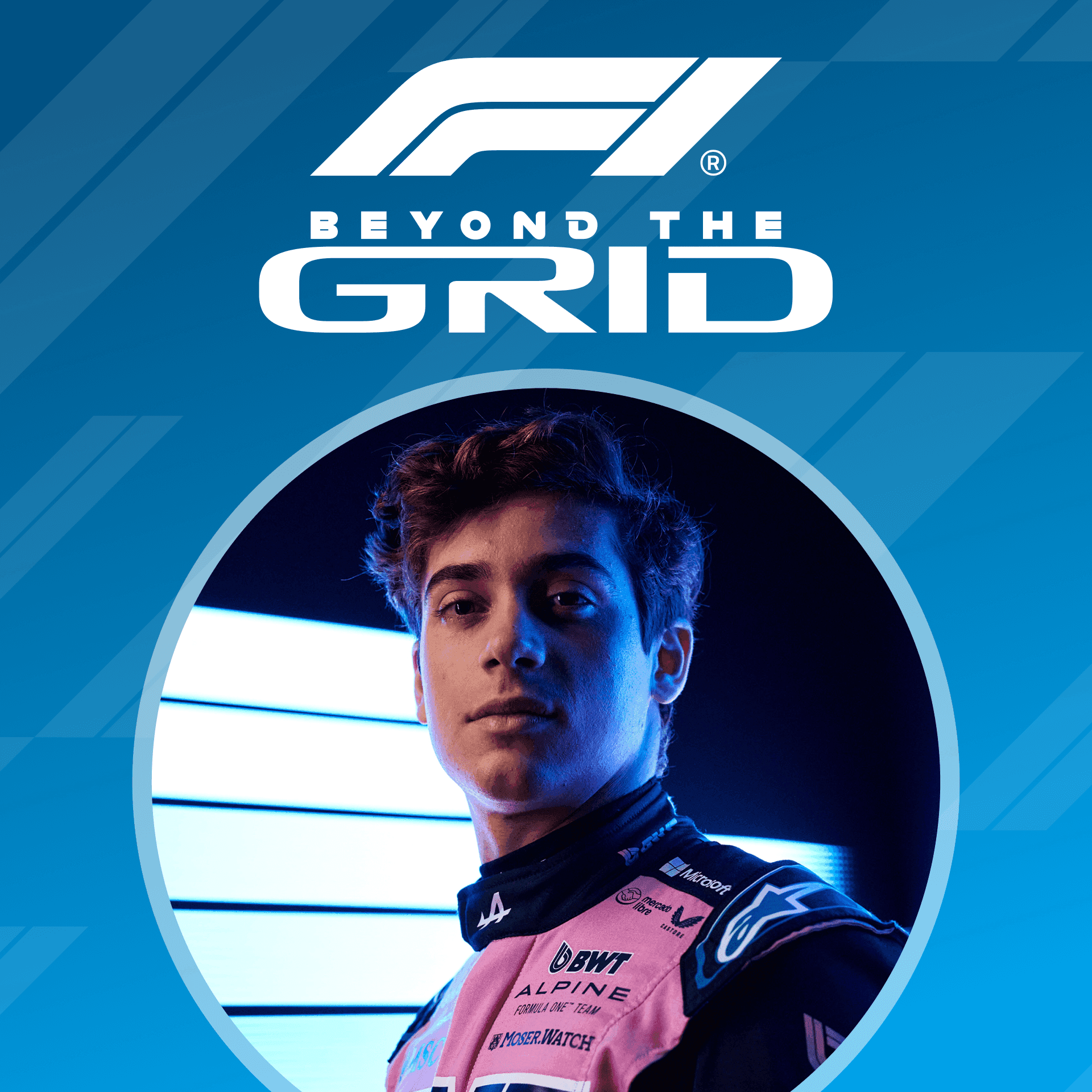
Franco Colapinto’s path from Buenos Aires to Formula One, highlighted by his breakthrough points finishes in 2024 and his resilience after setbacks, plus his current adaptation to Alpine in 2025 and relationships within the team.
Guest backgrounds
Franco Colapinto, Argentine driver from Pilar near Buenos Aires; grew up racing quads and go-karts, with family ties to Argentina touring cars (TC) via his father’s touring-car team. At 13–14 he moved to Italy, living above/inside a factory with mechanics, and later entered European racing. He’s now racing for Alpine, with Pierre Gasly as teammate.
Key claims
His toughest mental stretch came from pressure and a difficult end to 2024 (crashes, parts damage, missed momentum). Rubens Barrichello’s encouragement after a major penalty helped him believe he could make it. He says Flavio Briatore strengthens him mentally and will push Alpine back to the top.
Notable examples
First F1 points in only his second GP (P8) at a street race in 2024; Argentina’s first points since 1982. Early Italy move after a go-kart “Winter Cup” podium. Rubens’ message after a crash/35-place penalty in America.
Written by AI. May contain mistakes. Listen to the episode to check what was said.
Chapters
Tap a time to open that second in VOFranco's Early Racing Experiences
0:45 to 1:50
Franco discusses the pressure and challenges of his early F1 career.
“He came to the tent and he just said some really nice and kind words.”
Resilience and Inspiration
1:50 to 4:35
Franco reflects on moments that shaped his tough mentality and resilience.
“That journey now sees Franco racing for Alpine.”
Journey from Argentina to F1
5:20 to 9:50
Franco describes his journey from karting in Argentina to racing in F1.
“Can you tell us a little bit now about your journey to the top?”
Career Development and European Racing
9:50 to 14:00
Franco shares his experiences racing in Europe and the challenges faced.
“It didn't feel so unfamiliar, I would say, even though it was the first time and, you know, it was a very small car.”
Franco's Early Racing Success
14:00 to 15:00
Franco shares his surprising debut performance in racing and the initial interest it sparked.
“So it was a bit of a shock for me as well.”
Transition to Racing in Europe
15:00 to 16:40
Franco discusses the steps that led him to pursue racing opportunities in Europe.
“But on a human level, how difficult was that move?”
Challenges of Moving Abroad
16:40 to 18:50
Franco reflects on the difficulties of relocating to Europe at a young age and living alone.
“penalty and he came to the tent after the race.”
Life Lessons from Isolation
18:50 to 21:42
He talks about the personal growth and maturity that came from being on his own in a factory.
Navigating Relationships with Family
21:42 to 23:46
Franco explores how living away from his family has affected his relationships with them.
“And the year of COVID, I started like racing too much.”
Pursuing Dreams Despite Challenges
23:46 to 26:50
Franco discusses the sacrifices made for his racing career and the support from his parents.
“And of course, after that, I had this in a race in a four that is where the other stuff started.”
Show all 19 chapters
Gratitude for Parental Support
26:50 to 28:00
He expresses appreciation for his parents' decision to support his racing dream, reflecting on its significance.
“And, you know, everyone thought I was crazy for doing this.”
Franco's Parental Support and Journey
28:00 to 29:14
Franco reflects on the support from his parents and their sacrifices for his racing career.
“And they also supported me on that after a lot of effort to get in.”
Adjusting to the New Car
29:20 to 31:59
Franco discusses the challenges of adapting to his current F1 car compared to his previous experiences.
“I mean, I jumped into a car that has been already developed and has been driven by many other drivers, but not really by me.”
Team Dynamics and Learning from Peers
32:00 to 34:22
Franco shares insights on his relationship with teammate Pierre and the learning process within the team.
“Now I feel I need some things of the car to make me feel better.”
Overcoming Challenges in F1
34:23 to 40:56
Franco reflects on the pressures and challenges faced during his F1 career, including personal loss and performance struggles.
“We actually played a few times in Madrid with some pro-paddle players and yeah, they just made us humble again.”
Reflecting on F1 History
40:57 to 42:00
Franco shares his admiration for Ayrton Senna and his impact on his racing aspirations.
“and I think it's going to be really helpful.”
Franco's Inspiration: Ayrton Senna
42:00 to 43:32
Franco Colapinto shares how Ayrton Senna has motivated his racing career.
“It also brought me here with a lot more motivation and with also that feeling of I want to arrive to Formula 1 because of him, you know, and he was also a big motivation and a big influence of me arriving here today.”
Encouragement and Future Aspirations
43:32 to 43:53
Franco reflects on the sacrifices made to achieve his Formula 1 dream.
Takeaways from Franco's Journey
43:53 to 44:25
The extraordinary journey of Franco moving at a young age and achieving his dream.
“Senna has inspired so many drivers, hasn't he?”
Transcript
Automatic transcript. May contain errors.0:00Franco Colapinto, welcome to the points in Formula One. Argentina's first point scorer since 1982. That was the most pressure ever in my career when I started racing in Formula One. After that I felt that nothing could beat me. But that tricky end to the year in 24 and this year having a difficult start also made me a lot stronger and I feel that now I'm much tougher which is good for the future. Franco Colopinto has a resilience that is unusual in someone so young. Where does that tough mentality come from? Perhaps moving on his own as a teenager to a different continent is the reason. Or perhaps it's down to an unexpected encounter with a Formula One legend.
0:49He came to the tent and he just said some really nice and kind words. And it's like, I know how hard it is to be South American. I never give up. I've seen your race. you're very talented and like I was a bit in shock and keep that memory you know in my mind because it was I think the moment that made me realize I can maybe actually make it.
1:13Welcome everyone to F1 Beyond the Grid with me Tom Clarkson. It's just over a year since Franco Colopinto announced himself on the biggest stage of all taking his first points finish in only his second Grand Prix. So how did the boy from Buenos Aires become the first Argentine F1 driver in 23 years? Franco tells me how his passion for racing led to a life-changing move to Italy, where he lived on his own above a factory. You won't be surprised when you learn who the F1 legend was that gave him that motivational talk. It's a really heartwarming story that clearly inspired Franco on his journey to F1.
1:56That journey now sees Franco racing for Alpine. We discuss how this experience compares to his time at Williams last year, what he makes of teammate Pierre Gasly and his boss Flavio Briatore, and how he feels about his future in F1 after a challenging 2025 so far. I hope you enjoy our conversation.
2:20Franco, lovely to have you on the show. How are things? Yeah, good. Thank you. I'm very happy to be here. I was waiting for my opportunity and here it comes. Yeah, thank you, Tom. Good morning. It's too early, actually. It is a little bit early here in Baku, but I'm excited to be speaking to you in Baku because it's the anniversary of that wonderful race last year, your first points in Formula 1. Can you remember how it felt? Yeah, I can remember. It was a very special moment. And of course, I think so far the nicest weekend since I started in Formula One with Austin as well. That was a very good weekend.
2:57But definitely a street drag, my first street drag race in the calendar, my second ever race in Formula One and to win Q3 scoring points after a tricky start was just more than what I would have dreamed of. So, yeah. As you crossed the line in P8, what did you say? I said a lot of things, probably some Spanish words. Shouldn't say here. And then just, you know, a big thanks to the team. They were spending a long time since not having those two cars in the points or getting a good result or both cars in Q3. And, you know, my side of the garage also needed a bit of motivation, a bit of pump up, and that brought them that.
3:40And I was just very happy to see that, you know, with a nice attitude, with some good results, with that motivation and those kind of emotions, I could push and move the team forward on my side after only two races that I've done together. So, yeah, it was definitely a big experience for me, a part of the points and the emotions, the happy feelings of the points was also just a nice learning, I think, that weekend, the weekend before, with many new things, but with also that really important side of motorsport, of working as a team, of working with so many people that I never really worked before.
4:18In F2U, you're with one engineer, with two mechanics, and that's really it. Here, with so many people involved, it's really important to bring them all together, to keep them and stick to it. How did that result go down in Argentina? Well, I was here, so I don't really know. No, it went, of course, very nicely. It was a very long time since Argentina scored points in Formula 1. I think it was like 40 years since one was in Q3 and also since they scored points. So it was mostly also the shock of, of course, jumping into a Formula One car, not ever doing any testing, not doing any preparation, going straight into Monza, getting P12 close to points and then coming here, Q3, and then points in the race.
5:03It was that shock to the people as well, you know, that they could see that something good was happening and something really good was coming out of it. and it just brought them a lot of expectations and a lot of support that they were already in F2. But since they saw a list, they were like, oh, F1, F1. They started to get a bit more into it. Can you tell us a little bit now about your journey to the top? How does a guy from Pilar near Buenos Aires, Pilar, yes. Pilar near Buenos Aires set about a Formula One dream? yeah it's very very long way and just many ups and downs you know as motorsport always has but I think to arrive here today it's been just you know so many things and I went through millions of different moments that I was like oh I think I cannot do this and then it's like oh it's getting closer and then you know year after year you start doing it a little bit closer to the dream and you start to believe that it's actually possible but when I started in Argentina I was not really into F1 motors for so much when I was very, very young.
6:10I was actually into like Dakar, quads, and still something, you know, with four wheels or two wheels and an engine. But when I was two, three years old, I always used to watch these kind of motorbikes, which is Dakar, and I loved that. When I was four, I got my first quad. So I was very young, and in the countryside, riding the quad. I got until seven. I was like that and I was getting bigger and bigger and bigger. When I was seven, I got like a Yamaha that was like a 350. That is a very big quad, you know, with gears and everything. Still a quad or a motorbike now? No, motorbike never because my dad used to ride and he's broken every bone of the body.
6:53I was going to say, is there any racing heritage in your family? And your dad raced motorbikes? Yes, he raced motorbikes. He also had a touring car team in Argentina of TC that is like the most famous and most popular championship in Argentina. And I always used to go to races as well. And then I started to like get to know the drivers. I loved like the mechanic part, you know, the engineering. And I loved how the cars were working to understand all that part. And so I would go and I was like five, six years old. And I used to go alone around the paddock and everyone knew me in the paddock, the drivers.
7:31and everyone was like, oh, they're super small. And I used to go before the doors of the paddock would open and wait there and open the tent for the mechanics. And, you know, I started to, like, do that, and I really loved it. I don't come to the paddock before it opens anymore. It's a bit late after that. And it just started to happen, you know, that I moved into motorsport a little bit more. The drivers that I started to get to know, the drivers of my dad, They started to tell me how to try go-karts one day. They made me try a simulator as well. And then that's how it started happening. Until one day, one of them, Lucas, took me to a go-kart track with a karting.
8:14And then I started there. I did my first test when I was eight, I think, eight years old. You say Lucas. Lucas, yeah. Who is Lucas? He's like, he was a driver. He's a coach now, but he was like the guy that since that point until when I started racing in formulas, he was like with me all the time. He would not be with me all the time, but he would come like to test and he would bring me here and he would bring me there and he would bring me to my first ever formula test. So was he more involved in your career than your parents in a way? In the sporting side, yes, I would say. And he would also be like, you know, just the one that would say, we should try this.
8:57He wasn't a manager, of course. He was a friend of the family. And he was like, he saw like what I could do in the first few times that he was with me. And he was like, oh, he can actually be quite good. So he decided to help me. And because my dad helped him when he was younger and when he used to race. I don't know, he's a very good person and he felt that he could also maybe give something back to my dad by helping him achieve the dream of what the sun, you know, should. My dad always dreamt of also having me in TC, racing in TC. That's why he got the team and that's why he did all those things because he wanted me to race in that TC.
9:36Have you tested a touring car? No, no, never. I never actually drove in a racing track of Argentina. I was just racing go-karts I won Argentinean championships and all these things as many as you can imagine and then I moved to Europe but that transition to Europe was very tricky Can I just take you back to the moment you test a kart for the first time you said you were about 8 years old can you remember the sensation that it gave you I think the fact that I always used to have that adrenaline for other reasons, for the quad or whatever else. It didn't feel so unfamiliar, I would say, even though it was the first time and, you know, it was a very small car.
10:21I was only eight and I didn't start racing until I was like 10 or nine and a half because then like many things happened. I think it was that moment where Simoncelli and some IndyCar crashes happened and in Argentina as well. And my mom and my family were quite scared of it. And I didn't start until like a year and a half after. racing but the first moment was just of joy and I really loved the adrenaline since the first moment I remember the first test I had the driver that like also just knew a family and he was driving a KZ that is like the go-kart with shifts that the really powerful one I was of course in the in a very small one and he would come out of the last corner behind me he was my first test first ever time I drove the go-kart and he would push me on the straight with his card that was like 30 horsepower more 40 and he'll push me push me push me until the first corner and i was i didn't understand anything i was like going 30k quicker in this right um and in t1 i spun and made a huge spin and after that i just knew i loved it and i enjoyed it you know and i was not scared of it i was just enjoying the moment and since then i just decided i wanted to do that and I got full support of my parents in Argentina and yeah that's how.
11:52At what point did the desire for Formula One come on your radar? I think it was when I was winning and starting to do something in karting, you know, when I started to race the first year. The kids used to race since they were five. I wasn't really winning the first year. The second year I started to win when I went to the bigger karts. I started to win and to get really good results. And then I was a big fan of Formula One. I was watching on board, so I was watching all the previous races. And since then I became a big fan. I was actually a bit more into Argentinian racing as well. Racing there is amazing.
12:32And I really followed it. I used to go to races. And that's actually how I got really close to it because I was a big fan of some of the drivers. And it's like they were my... This is touring cars though, right? Yeah, they were my idols and my heroes. You know, I was loving to one day be there. But when I started to watch Formula One and karting in Europe and all this kind of stuff, that it's really far away. I was like I want to be there and I want to like I started to win Argentina I was like I want something else to do with my life not just this and so I was like this is tough but I want to achieve that and that's how it kind of how it kind of started um and Franco that was aged 14 no well when I started to like if one was much earlier sure but the move to Europe to pursue the dream yeah so when I was when I was 13 I did some race in Europe like my dad they gave me as a present to take me to some race in go-kart there in Italy that is called the winter cup it's like a race that you do in February I think it is so it's before everything starts but it's like a where all the teams goes because it's one of the main race of the year and of the early part of the year it's one of the main ones and I never really like tested before you know they are they just are constantly doing lapses kids non-stop i wasn't so i just went straight to a race i arrived the monday before the race then you start testing on wednesday thursday quality hits all these things and i had a really good weekend not really knowing the track or the team or anything and i was on the podium i was second and so like they were very impressed some people because they never heard of this Argentinian guy before who he was.
14:24Argentine hot shoe. They didn't really know. So it was a bit of a shock for me as well. It was a bit of a shock. And since then I think some teams started to look at me. There was a team called CRG that called us and took my team from Argentina to America. And these guys, these mechanics and the guys from the engine and all these things from Argentina said, we want Franco to race in our car. So they brought me, I did four races in the US. I had some good results and in Vegas that was their last race of the year was the boss of the team there and I just told him I wanted to race in Europe and that was my dream to race for the team.
15:05I was 13 so it was 2017 I think no 16 I think this was and after a while I got an email of him saying that of course they would take care of it and they would love that I come to race to Europe in all these European races so that's how it started but of course my family couldn't really support it and it was a lot of money so that's why I needed the help of someone like that and that's why I went to talk to him. And yeah, it turned out quite nicely. Here you are in F1. But on a human level, how difficult was that move? Yeah, it was very tricky. I think since I was going to race to America, it was already difficult.
15:54I was alone, but at least with some people from Argentina, with mechanics, people I knew. I remember one race in America. so we were having a tricky weekend starting on the back and then had really good pace in the race and I was going forward I was third I was making my move to second and we were doing some really good moves, I tried to take the guy that was in second, that was the guy fighting for the championship I didn't do the only championship but I was going to win it and I crashed into him and that was my mistake of course but it was a good race until then and Rubens Barichello was watching because the kids were there in the same race and I got like a 35 place penalty.
16:38I have the photo of the paper because I was like how someone can give me 35 places of penalty and he came to the tent after the race. Rubens. Yeah Rubens. It was the first time I met him and he just said some really nice and kind words and it's like I know how hard it is to be South America and I've been through the same steps but never give up I've seen your race and I've seen you're very talented and the balls that you were putting in the race it's clear you're Argentinian and and it was just a moment that it stayed in my mind and the things that he said you know in private were like I was a bit in shock because I used to watch his his old footage and his old races and like the team was like wait he probably comes to see the boss or something he knows him.
17:24I know he came to me. I was like, and he was like, hello, hola. And yeah, I was very nervous, but it's a nice moment. And I keep that memory, you know, in my mind because it was, I think the moment that made me realize like, okay, let's like, let's do this and I can maybe actually make it. Rubens was your inspiration. Can we say that? Yeah, yeah. I would say that. And it was also a very tricky moment because, you know, it was, was not after a win. It was after, being on the podium and getting like almost disqualified or plus 30 places I don't know what that is so you can say it was a bit of an inspiration and in a tricky moment and a moment that you know you're in the floor and in the bottom and you get something like this and it suddenly pumps you up and you're like okay let's let's go to the next one.
18:16So let's fast forward to Italy you're living there a mom and dad on the other side of the world or are they with you in Italy? No, no, in Argentina. Like I got the email from CRG that could go to race there that they had, I could stay in the factory living there because I couldn't afford an apartment or anything. So they let me a place in the factory. It's like they had some apartments above. So I was, I was living in the factory with some mechanics and, and I was just going every day to the workshop and it was nice. It was a very nice experience. I, I loved the mechanic part of the cars and of the go-karts and all that did you get homesick yeah i was only 14 or 13 at the start and it was tricky for me um especially again i think the tricky moments is when it doesn't go well when it goes well it's very easy to enjoy and to be like you know very happy and to be enjoying the moment but when it doesn't go well and you're alone and when everyone you know used to go for holidays or when they didn't used to work in the weekends um what did you do and the factory would be closed then what would you do at the weekend well i would go to the shopping mall that was closed there and i would do some who with alone so i would just go and get some shopping stuff i would cook it was the moment my my peak of cooking actually that year just cook yeah but did you have friends no i didn't really have any friends i was in a place that was like factory a factory place like an industrial there wasn't anything a part of a gym and but franco you're 14 who was looking out for you i'm being parental no no no one so i i was like by myself did you have a manager no i didn't have any manager so i was alone i had of course i was like with the mechanics daily i would go to a workshop and i was with them um no one was taking care of me uh i remember one one race was in england so we had to cross like the channel yeah you have to go through passport because we were going like in a van with the mechanics but you at one point you have to cross the thing with the past give the passport and because I was Argentinian and everyone was like Italian or Spanish they were like no you have to go through there and check so the van had to go through a thing he needs to come down and show the papers so I went down and show the papers because my parents signed for me to travel alone and do things and like a woman when I gave the passport she's like you can't be here you should be at school and so she was very upset and she was feeling like being my mom but I'm like yeah but I'm here like doing what I love I know for me the best school is living a life that you actually never thought or no one else is living and living in a place that you're learning a new language and living in a place that you're learning by the hard stuff you know and I think that year when I left I was like I felt like three, four years older than what I arrived you know just the mental side and how much mature I was in in a very short period of time but because I became very very hard and very strong inside because of all the things that I lived you know it was not an icy year and I was going through a tricky moment and living through that and going through that alone at that age was was very tricky and yeah this woman was just just very concerned yeah she was very concerned I think she didn't want to let me through she was like you should be at school with your parents and with your family can I pick up on that what do you think is Lando doing or you know these British guys racing cars they are still not going to school so I think there was remote learning going on when were you when were you last in a classroom what age were you last year actually yeah last year what were you studying I finished I finished school last year.
22:28So I had one year left. Used to study remotely. And the year of COVID, I started like racing too much. And I was like, I'm bored of school. So I stopped. And I had like half a year left of the last year. And I did in December last year when I arrived. So I went back to Argentina for summer after F1. And I did the last few subjects I had. And I got the title and everything. What title do you have? the school title I finished school last year I finished school congratulations at 21 years old I finished school yeah but I got the hat and everything you know what do you think you missed out on as a teenager what were the guys you grew up with what were they doing back in Buenos Aires normal things normal things which you a 14 year old would do you know I wasn't doing that anymore and and when I came back it felt very odd but it didn't feel as before and I think that's why later on in my life I started to get involved always with older people than me like 3-4 years older and my best friends now are older than me always, they are not my age if I'm 22 they are 25, 26, 7 and that's who I'm closer with but because since I was very young, when I was like 15 I would be with my friends that were also 15 and they felt just very young you know and I started to just not feel so good with them as before I started to feel that we were a bit different and that I was just older and more mature and like doing different things and living different different things very very different things did mom and dad come and watch you race in Europe um yeah so like the first time I went to Italy my dad came with me that was when he left me and then he left me there.
24:22And of course, after that, I had this in a race in a four that is where the other stuff started. I didn't see them again until the end of the year. So when I went back to Argentina to finish school and everything was like November, probably October, then was when I saw them again and was, of course, very nice. But it also felt felt strange. like after two weeks you know living with someone to me starts to be a little bit tricky can we just develop that theme further so you living in italy you matured quickly and you you hung out with people older than you how did being separated from your family change your relationship with your family um so i think the relationship it's still the same like it didn't really change the amount of love or how close we are with each other.
25:22It just changed a bit what I need from them because I've been alone a lot of time and it's not only with my family, but it's with anyone, you know. Nowadays, I love living alone and I really struggle to live with someone else. And I really struggle when I go to Argentina to be living with my sister or with my mom, dad, with anyone in the same place because I like the things how I have them. I like to cook my chicken and rice every day. And, you know, it's suddenly like a lot of things in the routine changes that I actually really enjoy when it's for a while. But, you know, more than a month that maybe I'm in Argentina, it might become a little bit too much.
26:05So it's suddenly, you know, from being a very, I really needed the family to be with me all the time when I was young. And I loved going to the asados and spending time in the weekends. I always loved coming back from school to be with my parents. And I've been always very, very extremely close and maybe too close. And that just made me a little bit more of an individual person. I don't know how to say it and a little bit more solitary I really enjoy being alone as well and have the sacrifices been worth it? Is Formula One has it lived up to your expectations? yeah there is many things that they don't tell you about F1 like this being here so early in the morning no I actually loved it and it's it's what I dream since I was very young to drive a Formula One car when I started racing in cars it was my dream and what I worked for, that's why I came to Europe.
27:08And, you know, everyone thought I was crazy for doing this. Everyone thought my family was crazy for letting me do this. Like, who would let their kid so young go to the other side of the world, somewhere that he knows the language, somewhere that he doesn't have an apartment for himself, or he's not, like, he's living in a factory. Who would let the kid do that? And I don't think many parents would, but they actually thought my parents were crazy for letting me do that. And now they are, you know, saying, well done. But at the moment, it was a very tricky decision for them as well. I'm very grateful for, I think, for being so supportive on letting me do what I wanted and not saying you have to stay at school, you have to stay studying this.
27:53I was in a technical school, engineering. I loved engineering. So when I was 12, I entered in the school. I studied a lot to enter and I was quite good there and I was having a good time and I was left with a very good title as well from that school. And I quit to that for going to Europe. Of course, I couldn't really have both. And they also supported me on that after a lot of effort to get in. So it's been a lot of things that I would never have been able to do it alone or with other parents. And I feel that support, that love that they gave me, it was also by letting me go. that is very tricky to do for parents and it's something that I always appreciate a lot and I'm always going to be very grateful because, yeah, I just don't really know many people that would do that and I know how much they both love me and how hard it was for them to let me go.
28:47It's every year that this is very hard, you know, but the first time was, yeah, I can't imagine what they went through. so yeah now that it paid off it's very easy to sit here and tell a story but I think at that time it was not I think it's an incredible journey that you've been on and speaking as a parent I think it would be incredibly hard to do what they've done but congratulations to them and to you
29:27Let's talk about this year's car. Is it as you want it? I mean, I jumped into a car that has been already developed and has been driven by many other drivers, but not really by me. So I didn't really have an input of what I wanted from the car this year. I didn't really have an input of how to fix things before the year started. Or, you know, how the car has been developed over the years. It's maybe not been so much by how I drive. Yes, by how some other drivers do. Like, Pierre has been here many years. Esteban, Fernand in the past. The team has had a structure and a way that they work that it's not really being me with it in it.
30:18So there is things that... Has it been harder to adapt to than the Williams last year? Yeah, I think yes. In Williams I've been, even though I didn't have any testing, in Williams I just went straight into a race, but I have been there for more than a year. Driving the simulator, understanding the engineers, going through what they were changing in the car, the issues that the car had, the issues on the balance. how they wanted to run the car and what reason was behind that for here was more like i went into a into a team and into a new car having this experience of a car that i've driven before and having that experience also brings me some things that i want to have but i can't have going into a new car new formula one car run like first time i'm driving that it's more tricky but you also don't have any comparison or any previous experience of what you want from the car so you You just sit on that and you drive it and you're living a dream.
31:15So this was the first time that I could also compare it to something else, which I feel it makes it a little bit more tricky on one side because there is things that the car can't give you. It did took me longer to adapt than the Williams. Of course, coming from F2, the amount of issues in the car that you have and the balance and And, you know, you can't really fix that because it's how the car is. Here you can fix almost everything. And that made it feel very good compared to the Formula 2. So I did have many complaints at the start. Like, the car is amazing. Now I look at the ombudsman and it's like, oh, it wasn't really amazing.
31:57And maybe I'm complaining too much now. But it happened to be easier in terms of just sitting there and getting to it and driving the car and how it was. Now I feel I need some things of the car to make me feel better. And I wasn't having them maybe at the start. And now I'm starting to find them with the team. What do you need more of? More grip, more power. No, but specifically to you. When you look at your data, let's say, compared to Pierre's. Yes. Where are you different in terms of your inputs? So I think this year's car, it's been just the way the car is set up. It's been, you know, very much to Pierre and how he liked it driving and driven.
32:42And the tools I have in the car and the tools I need are also different. So I've been doing some changes setup-wise. Sometimes it takes me a little bit longer to find what I want. But at the end, I always kind of arrive to that. Sometimes a little bit too late. but I think nowadays we are getting to it a bit earlier and on time. Is that because we're going back to tracks now where you've raced a Formula 1 car before? It helps. It definitely helps that I know the limitations of the track, how the car changes from one to another. It brings me a step up and also compared to all the other drivers that are very experienced or at least they have been racing the full year.
33:24they are on top of everything, on top of the tires, on top of every little detail. And I'm still getting on top of those sometimes. It really helps to get tracks that I actually raced last year. Is Pierre helpful? Yeah, he's a leader, you know, of the team. And he's been the teammate. Like, I had Alex last year. I was learning everything from Alex. And since the start, I've been learning everything from Pierre. He's the one driving the team forwards. and he's been signed for a lot more years now and he's the one that is developing the car from last year to this year and he knows every little detail and he knows where the car has to go from to make it quick and he knows what he can get from the car because it probably makes it slower to get that from the car.
34:12So there is many areas that I'm still learning but luckily I'm feeling that it's coming. and yeah let's see how this last part of the year goes there is some tough tracks for us we know that we are limiting some i think as far as we know our limitations and we know what we are working towards for uh it's it's gonna be good so do you and pierre rub along pretty well together yeah do you hang out away from the racetrack do you play paddle we don't play paddle because i'm too good. We actually played a few times in Madrid with some pro-paddle players and yeah, they just made us humble again. We did play and he's a very nice guy and we used to spend time as well last year when I was in Williams.
35:02We were still quite close and we got on very well even though we were not racing the same team. Now that we are together, he's been a very good teammate. and yeah, we enjoy working together. I think we are doing a nice structure in the team and moving the team forward even though we are sometimes in some tricky moments or having some tricky weekends that you look at the results and you will be like, that's going to be hard for Alpine to get out of that. But I definitely feel that we are not giving up a part of the results that we are having and we are actually pushing all of us for more in every moment, even if we are in the back.
35:45And I think that's very important, that effort and that view of the team. Even though we are not where we want to be and we are not scoring points, we are still giving it our all. And when the car starts to be good and when we are up there, hopefully soon, we are ready for it. Pierre clearly believes the potentials there because as you said a moment ago, he's signed long-term. He has a very good relationship with Flavio Briatore, doesn't he? Tell us about your relationship with Flavio. I have a very good relationship too, you know? Do you speak in Italian, English? Italian. Italian. You have to, yeah.
Read the full transcript
36:28Not allowed. I mean, that's why it was really, at the end was a really good choice to go to Italy when I was 14. Much better than any classroom back in Buenos Aires. Exactly. So, no, no. Is Flavio quite hard with you or is he? He is hard with everyone. And it's, you know, his way of making the team work and making the people motivate, it's sometimes a bit hard. And sometimes it can feel, you know, a little bit too much if you don't know him. But he is, you know, a person and someone I really believe in and someone that I believe that is going to move this team forward and is going to put Alpine back at the top.
37:11So I learned a lot from him this year and I learned, you know... Frank, can I ask you, what have you learned from Flavio? Well, he made me a lot stronger. What, mentally? Yeah, mentally. So he's not training you physically? No, not physically. No, he made me strong mentally, yeah. And I do believe that years like this, when it starts to become better and when we start to win, to have good results, to be fighting at the top, it's what makes a difference, you know. So, you know, I'm very grateful for the opportunity, of course, he gave me, but also for all this process, you know, that we are going through.
37:50You mentioned the mental side. Can I ask you about that? Because your journey in Formula One has been fascinating, I think. You get parachuted into Williams halfway through last year. The first four or five races were amazing, weren't they? to the extent that, you know, there was lots of talk of Red Bull and other things going on, particularly around Brazil time, I seem to remember. Did that turn your head? Did it affect you in any way?
38:20Do you look over your shoulder and think, gosh, what else is out there? No, I feel no. Of course, when I joined, I had a lot of pressure as well. I was jumping into Formula 1 with no knowledge, without knowing anything. And I feel that that was the most, time I had the most pressure ever in my career when I started racing in Formula One. So after that, I felt that nothing could, you know, beat me. But I think with, you know, some things that happened and a lot of different talks, and at one point it felt like I could still stay in Formula One for the year after. And there was many talks and there was many things involved.
39:01and then my grandfather passed out in Brazil just in Friday, so before doing qualifying in Brazil. And it was just some very tough moments that came all together and it was my first crush in Brazil as well. So after really good results, scoring points every weekend and being close to Q3, you know, being very close to signing for next year. It was that Red Bull? I don't know. It didn't really happen at the end. Okay, nice. Yeah, it was, of course, tricky for me. And then Vegas was again, I was coming for a very good result. I was coming for Q3 and then I had also a big crash. That was my second crash.
39:47And that put me on the left foot for the rest of the year. I was with all parts. We couldn't repair the parts of the cars. I was racing with all spec. And it kind of started very well. and then when I felt stronger to finish even better, I couldn't. And that's what left me with a weird feeling of not finishing how I wanted. I think that was the trickiest part of last year, of course. Again, when it goes well, it's very easy and it's also tricky to learn much. When it goes bad, when you're in the bottom, it's much easier to learn and to become stronger. And I also think that that's what happened.
40:29And, you know, after those tricky weekends and that tricky end to the year in 24, it also gave me a lot more strength and I learned a lot more things. And this year, by having a difficult start, also made me a lot stronger. And I feel that now I could, you know, capitalize on those things and become much tougher, which is good. Good for the future, good for when we actually can be at the top. and I think it's going to be really helpful. You mentioned the future. 2026, when do you think you'll hear from the team, one way or the other? No, I don't know. And I'm not really focused so much on that.
41:12I think I want to keep building on this year. There is more to learn and I have much more to find, but I'm feeling better in the car, in the team. And I'm feeling that we are doing a good job altogether. of course there is no it's no secret that the car is not where we want to be and it's not good enough at the moment to be in the points but it will come the time that it is and I want to be ready for that so that's to me the main focus at the moment go race by race and moment by moment and yeah let's see where we end up but just yeah happy to be here and let's see let's see how we continue this chapter It has been a wonderful chat I feel there's a lot more we could discuss but we've we've run out of time can I ask you one final question which is the same question I'm asking everybody on the pod this year Formula One is 75 years old this year can you give me one moment in the history of F1 that made a big impression on you it doesn't have to be your career it can be anything that's why I should have listened to the podcast before yeah I'm trying to remember what was the first race I ever watched but is it something with one of your racing heroes Hamilton Senna I think it wasn't really a race but it was more you know well the history behind it and you know Arden was my hero since I was very young and learning about him and going through his history going through his racing and watching his his his whole footage and his old races and his books.
42:52I read many of his books, movies. It also brought me here with a lot more motivation and with also that feeling of I want to arrive to Formula 1 because of him, you know, and he was also a big motivation and a big influence of me arriving here today. So I think he has been in Formula 1 the driver I follow the most or the one that had the most impact as a hero. So, yeah, I would say that Ayrton was the person in F1 that gave me the biggest motivation, you can say, to be here today. But the biggest will, you know, of becoming another South American, achieving his dream and going through all those sacrifices and things that he also went through, you know, to go to Formula One.
43:45Ayrton and Rubens. Yeah, definitely Rubens. It's definitely, yeah. Franco, great chat. Thanks for your time. Best of luck. Yeah, thank you so much.
43:59You are not alone, Franco. Senna has inspired so many drivers, hasn't he? I have so many takeaways from this chat with Franco. The way he moved to the other side of the world, alone, aged 14, to pursue his Formula One dream is nothing short of extraordinary. And the fact that he's made it to F1 is heartwarming. And as Rubens told Franco all those years ago, pursue your dreams and never give up. Franco, thanks for your time. And as I said at the end, there's definitely room for a part two. I hope you enjoyed that chat as much as I did. A few parish notices before I go. Please don't forget to check out F1's other official podcast this week.
44:39F1 Nation's review of the Azerbaijan Grand Prix is out now. I'm joined by James Hinchcliffe and Laura Winter to discuss whether Max Verstappen is back in the title fight. We talk about Oscar Piastri's worst weekend of the season so far and Carlos Sainz's first podium for Williams. And this week's episode of F1 Explains is with Carlos's teammate, Alex Albon. That's out on Friday. Just search for F1 Nation and F1 Explains on your podcast app. I will, of course, be back next week with another great guest from the world of Formula One. F1 Beyond the Grid is produced by Formula One and Audioboom Studios Until next time, keep it flat out
From the publisher
He became the first Argentine F1 driver in 23 years when he debuted with Williams in 2024. It only took him two races to then become the first Argentine points scorer in the sport since 1982.
More than a year since his incredible breakthrough, and now racing for Alpine, Franco tells Tom Clarkson the story of how a boy from the outskirts of Buenos Aires reached the pinnacle of motorsport.
Franco remembers the sacrifices he made by moving abroad as a young teenager to pursue his dream, the challenges of leaving his family and living on his own in a different continent, and how an unexpected visit from an F1 legend inspired him to keep going.
Franco also talks about how his experience at Alpine compares to his time at Williams, what his relationships with teammate Pierre Gasly and Alpine Executive Advisor Flavio Briatore are like, and his future in F1.
This episode is sponsored by:
CarGurus: go to cargurus.co.uk to make sure your big deal is the best deal
Vanta: visit vanta.com/GRID to sign up for a free demo today
Liquid I.V. : get 20% off your first order with code GRID at liquidiv.com