In short
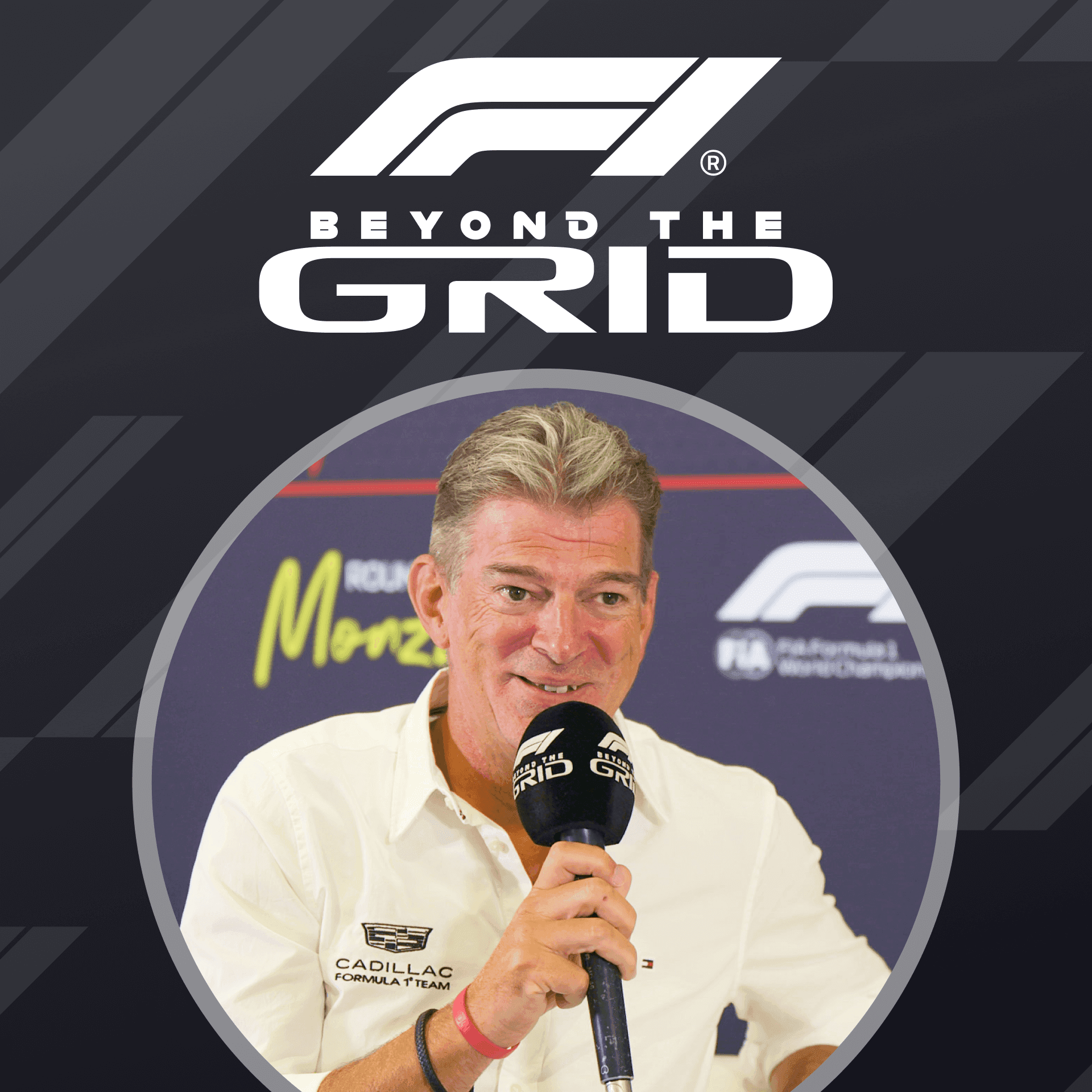
Graham Lowdon explains how Cadillac’s new F1 team (GM-backed) is being built for the 2026 grid, focusing on the entry process, cross-Atlantic operations, and “Race Ready” simulator preparation.
Guest backgrounds
Graham Lowdon is the team principal who previously launched Virgin Racing in 2010. He discusses working with GM and other backers (TWG and Dan Taurus) and coordinating facilities across the US and Europe. The episode also references drivers: Sergio Perez and Valtteri Bottas (race winners), and IndyCar driver Colton Hurter (test driver, moving from IndyCar to Formula 2).
Key claims
Cadillac’s entry was confirmed in March; Lowdon says there was no “plan B” and that building started before the entry to avoid losing time. The team is preparing as if racing now: 60–70 engineers simulate full race weekends in Charlotte, with mission-control style operations and a “Race Ready” program.
Notable examples
Lowdon describes submitting a dossier of hundreds of pages and detailing shipping containers for the entry. He compares the team’s structure to NASA’s Apollo mission organization. He says the team is taking Ferrari power unit and gearbox internals, while building the gearbox casing and full suspension. He also discusses Colton Hurter’s choice to learn F1 via F2 rather than using FP1 super-license points.
Written by AI. May contain mistakes. Listen to the episode to check what was said.
Chapters
Tap a time to open that second in VOIntroducing Graham Lowdon and Cadillac's F1 Ambitions
0:03 to 1:15
Discover why Cadillac chose Graham Lowdon to lead their F1 team.
“Since its first Formula One victory in the 1965 Mexico Grand Prix, Honda has always taken what's learned on the track and used it to build better cars for everyone.”
Introducing Graham Lowdon and Cadillac's F1 Ambitions
2:41 to 4:07
Discover why Cadillac chose Graham Lowdon to lead their F1 team.
“Why did one of the biggest car brands in the world choose Graham Loudon to launch its brand new Formula One team?”
Challenges of Building a New F1 Team
4:07 to 5:36
Explore the challenges Graham faces as he builds Cadillac's F1 team.
“Back in 2010, Graham Loudon launched Virgin Racing, a team with a small budget, which raced at the back of the grid and was graced by the huge talent of the late Jules Bianchi.”
Comparing Past and Present F1 Experiences
5:36 to 7:51
Graham discusses the differences between his past and current F1 projects.
“We're six months from the first race in Melbourne.”
The Chronology of the Cadillac F1 Project
7:51 to 14:00
Learn about the timeline and key decisions in launching Cadillac's F1 team.
“And so to some extent, it's a different challenge this time.”
The Journey Begins
14:00 to 14:19
Graeme discusses the unwavering commitment behind the Cadillac F1 project.
The Journey Begins
14:23 to 15:27
Graeme discusses the unwavering commitment behind the Cadillac F1 project.
“Since its first Formula One victory in the 1965 Mexico Grand Prix, Honda has always taken what's learned on the track and used it to build better cars for everyone.”
Upcoming Discussions
15:36 to 16:55
Preview of topics including key drivers and a tribute to Jules Bianchi.
“Since its first Formula One victory in the 1965 Mexico Grand Prix, Honda has always taken what's learned on the track and used it to build better cars for everyone.”
GM's Racing Philosophy
16:55 to 19:02
Exploration of General Motors' approach and history in motorsport.
“and he shares his memories of the late Jules Bianchi.”
Vision for the Team
19:02 to 20:38
Graeme shares insights on the ambitious vision for the Cadillac F1 team.
“And, you know, I'd like to think that it was a combination of a kind of cultural fit, but also, you know, really appealed to their understanding and respect for racing.”
Show all 25 chapters
Building the Facilities
20:38 to 22:44
Details about the locations and significance of Cadillac F1's facilities.
“But, you know, it's just exciting to be part of.”
Race Simulations Explained
22:44 to 24:59
Understanding the race simulation process and its importance for the team.
“And we also have a resource in the GM Technical Center in Charlotte as well.”
Partnership with Ferrari
24:59 to 26:51
Discussion on the components being sourced from Ferrari for the upcoming season.
“and it involves all sorts of simulations and we have massive respect for the teams that we're going to race against.”
Team Development and Structure
26:51 to 28:00
Insights into how Cadillac F1 is developing its team and ensuring cohesion.
“So, you know, we're taking that step from the start.”
Building the Cadillac F1 Team
28:00 to 33:02
Learn how Cadillac is onboarding and integrating a large team to compete in F1.
“And when we're looking at how you manage a big group of people and how you bring them together quickly, the management approach that we've taken, if we think of racing teams are often described in kind of military terms.”
Choosing the Right Drivers
33:02 to 36:40
Understand the criteria for selecting drivers that fit Cadillac's unique needs.
“You've announced three so far, not the sim drivers.”
Testing Strategies Before the Season
36:40 to 39:08
Explore Cadillac's testing strategies to prepare the team for the new season.
Testing Strategies Before the Season
41:52 to 43:01
Explore Cadillac's testing strategies to prepare the team for the new season.
“Honda has always taken what's learned on the track and used it to build better cars for everyone.”
Colton Herta's Bold Move to F2
43:05 to 46:03
Exploring Colton Herta's decision to transition from IndyCar to F2.
“Since its first Formula One victory in the 1965 Mexico Grand Prix, Honda has always taken what's learned on the track and used it to build better cars for everyone.”
Cadillac's Motorsport Strategy
46:03 to 49:58
Discussion on Cadillac's growing presence in motorsport and Formula One.
Reflecting on Jules Bianchi
49:58 to 54:45
Graham Lowdon shares insights on the impact of Jules Bianchi's legacy.
“No because this is business this is all about creating stuff and it's exciting and it has promise.”
Goals for the 2026 Season
54:45 to 56:00
Graham Lowdon discusses aspirations and goals for the upcoming racing season.
Ambitions and Personal Moments in Formula One
56:00 to 59:46
Graeme Lowdon reflects on Cadillac's goals in F1 and shares personal memories of experiencing F1 cars.
“Now I'm going to end this, what I call the traditional way, because I'm asking this question to everyone on the pod this year.”
Looking Forward to the Future
59:46 to 1:00:53
The host expresses excitement for Cadillac's future in F1 and encourages fans to experience the sport.
“Bold ambition, excellence in execution, innovation and togetherness.”
Looking Forward to the Future
1:00:56 to 1:01:43
The host expresses excitement for Cadillac's future in F1 and encourages fans to experience the sport.
“Since its first Formula 1 victory in the 1965 Mexico Grand Prix, Honda has always taken what's learned on the track and used it to build better cars for everyone.”
Transcript
Automatic transcript. May contain errors.0:00This episode is sponsored by Honda. Since its first Formula One victory in the 1965 Mexico Grand Prix, Honda has always taken what's learned on the track and used it to build better cars for everyone. From pushing limits in F1 to engineering the next generation of hybrids like the Prelude Hybrid and Civic Sedan Hybrid, Honda proves that racing doesn't just inspire innovation, it drives it. And that idea of taking lessons from the racetrack and applying them to road cars has always been a part of Honda's DNA. Decades of engineering in the demanding world of Formula One have helped shape the performance and efficiency you see in Honda's road cars today.
0:44And now that same thinking is shaping the next generation of hybrids as well. Cars like the 2026 Prelude Hybrid and Civic Hybrid show that electrification can be both efficient and genuinely fun to drive. The 2026 Prelude Hybrid and Civic Sedan Hybrid are engineered for fun. From the racetrack to your driveway. Learn more about the Prelude and Civic and the latest innovations at Honda.com. During Lowe's Pro Savings Days, save more on the brands you trust to deliver on the job. Right now, get a free DeWalt 20-volt max 8-amp-hour battery when you buy a DeWalt 10-inch 20-volt max dual-bevel compound miter saw.
1:28Plus, get up to 35 % off select major appliances. Save even more on what you need to keep the job moving. Our best lineup is here at Lowe's. Valid through 731, while supplies last. Selection varies by location. See Lowe's.com for more details. It's called soccer. It's called football. Uh, soccer. Football. Domino's best deal ever lets you get any pizza, including stuffed crust, with any toppings for$9.99. We can agree on that. Yeah, fully. So, pineapple? Don't ruin it. Get any pizza, including stuffed crust, with any toppings for$9.99. Finally something everyone can get behind. And if the refs disagree, that's between them and Domino's, which means the only thing left to fight over is who's ordering.
2:16Domino's. Price is higher for some locations. Excludes XL and specialty pizzas. Select this offer from 615 to 726. Online only. Size availability varies by crust type. Max seven toppings. Six for pan and New York style crust. Minimum purchase required for delivery. Prices participation delivery area and charges may vary. This episode is brought to you by Bitdefender, team partner of Ferrari. Visit Bitdefender.com to learn more about how Bitdefender supports Ferrari to stay ahead of cyber threats and how you can make your digital life safer.
2:51Why did one of the biggest car brands in the world choose Graham Loudon to launch its brand new Formula One team? Because he knows how to do it. If you're going to do this, you just have to start the team now without the entry, because if you wait for the entry, there won't be enough time to build a team. That decision without an entry is going to cost hundreds of millions at risk. You can't half start building an F1 team, you've just got to do it. After years of work, Cadillac's place on the grid was confirmed at the start of this year. Now the countdown is on. F1's newest team aren't racing yet but they're already moving fast we've got 60 70 engineers running this entire race weekend exactly as it would be as if we were competing except our car is in the simulator in charlotte we have massive respect for the teams that we're going to race against they're hugely skilled hugely competitive and partly the way of us showing our respect is the amount of effort we're trying to put in to make sure that you know we want to compete with them
4:01Welcome everyone, I'm Tom Clarkson and this is F1 Beyond the Grid. Back in 2010, Graham Loudon launched Virgin Racing, a team with a small budget, which raced at the back of the grid and was graced by the huge talent of the late Jules Bianchi. Cadillac is a different proposition. Backed by General Motors, they have more resources and they value experience. That's why they chose Graham to run the team and proven race winners Sergio Perez and Valtteri Bottas to drive their cars. Their test driver, IndyCar star Colton Hurta, is betting that experience in Formula 2 will lead to a chance in Formula 1, but nothing in this sport is guaranteed.
4:46Graham talks about all of that, plus the three years of work that has led the team to this point and the detailed preparations going on behind the scenes on both sides of the Atlantic right now to make sure Formula One's newest team are ready.
5:05Graham, it is lovely to have you on the show. It's very nice to be here. How is the busiest man in Formula One right now? Busy. To not put too fine a point on it. Yeah, it's, you know, it's busy. There's a lot of challenges. Bringing a new team in, there's bound to be a lot of challenges, but, and, you know, a lot of problems, but it's all a better class of problem than, you know, the period where we weren't, you know, we weren't sure whether we'd get an entry or not. So although it's busy, it's good busy, if you know what I mean. We're six months out. I don't want to... Yeah, thanks for that.
5:39We're six months from the first race in Melbourne. Is everything on schedule? How is progress? It is on schedule. and you know I know I smiled a bit when he said six months but we have a you know right from when we got the entry confirmation back in March on the walls of all of the offices that we have we have countdown clocks counting down to two things one is fire up of the car for the first time and the second is uh is the first race in in Melbourne so I'm acutely aware of how many days hours minutes and seconds are uh are available to us because that's you know that's the challenge now putting together you know a fully professional Formula One team that we can all be proud of and and our fans can be proud of as well in a very very very short space of time.
6:24Newer listeners may not be aware that you've been around in Formula One a long time. Yeah. How different is this project to the one that you were setting up in 2010 when you started Virgin Racing? Very different. The 2009 entry process was significantly quicker in terms of the actual entry process itself. But then what happened subsequent to that was a period of intense instability in terms of regulations. And so fans who recall back to that period, you know, there was going to be two different sets of technical regulations, and then there's going to be a cost cap, and then there's going to be a cost cap at 30 million or 40 million, you know, figures that you just couldn't even sort of comprehend now in terms of limitations.
7:15And then there was no cost cap and then there was a resource restriction agreement and then there was CURS and then there was options to have that or not. Every single week it was as if the goalposts changed and it was enormously difficult to try and navigate. This time the entry process has been significantly longer and it was incredibly thorough. And, you know, I'm very proud of everyone involved in achieving that entry because Formula One is difficult. It is the pinnacle of world motorsport. And so it should be difficult to get into. And it was. But now that we're in, there's a lot more stability in terms of, you know, regulations and the overall platform.
7:55And so to some extent, it's a different challenge this time. But also Formula One's moved on a lot. And I think, you know, in the last 10 or 15 years, we've seen this this big shift from what used to be primarily sporting events like a race you know you go to a race now we go to an occasion it really is an occasion now you know so any fans who haven't been to a grand prix live i thoroughly encourage it because it's an experience now there's more than just the on-track action and all of and and don't get me wrong the on-track action is still fantastic you know i'm a f1 fan at heart and so i love watching these cars and I just think you know I have a real appreciation for it the sport's grown so much now you know with the commercial rights holder and the regulator and the promoters and the teams working together to to achieve that and so just these events are so special now you know when when Formula One's in town everyone knows about it it has changed significantly in that time.
8:57Can you give us a chronology now of getting the Cadillac F1 project off the ground when When were you first approached about it? Well, it feels like about three and a half thousand years ago. This project's definitely aged me. But it was probably about three, three and a half years ago. I was driving up the A1 and I had a phone call. It was from somebody whose opinion I respect a lot. And they said, you know, would you take a call from the people at Andretti? They'd been looking to buy a team, Saovo, and that hadn't worked out. And so they were looking to bring a new team in. and the person who called me said, look, I've recommended that you talk to them because you've done it before and there are very, very few people who've done it and it's not a straightforward process and there are certain things that I think contribute to an applicant being successful and so I said, yeah, sure, take the call and then I had this really, it was a really cool call because there were a whole bunch of people on from the Andretti side, including Mario.
10:01I think I'd maybe met him a couple of times before but not, you know certainly never had a conversation with him and you know when you're talking to a world champion, they have a kind of way of talking and expressing things and just the enthusiasm in his voice about this project and so I explained how I thought they should go about it or whatever and at the end of the call I still remember it now he just said, right, well that's great Graham just one more thing, you know, just don't let me down and I'm thinking well this is you know Mario Andretti 1978 world champion there's a guy who raced everything and did it when it was not just difficult but very dangerous as well and you know thankfully due to FIA and and the commitment from the teams and the commercial rights holder sport is significantly safer now but when you have somebody like that saying you know I really want to do this don't let me down you listen and so I was motivated from that point and got on board then.
11:00And that was 2022. How quickly did you build up ahead of Steam from that moment? Well, I guess I gave two pieces of advice about bringing a new team in. One was there is an established entry process and you have to take it incredibly seriously. So if you get asked 10 questions, you give 20 answers. If they want one piece of information, you give 100 pieces of information. And so the first piece of advice was, When we submit the entry dossier, it was hundreds and hundreds of pages. We went right down. We detailed what was in every seafreight container that we're going to send, what day that seafreight container would go on a ship, every detail to demonstrate that you know what you're doing because they want people to join Formula One who, A, take it seriously, and B, know what they're doing.
11:50So that was one piece of advice. But the other piece was if you're going to do this, you just have to start the team now without the entry because if you wait for the entry, there won't be enough time to build a team. But secondly, if you are building a team, it shows commitment and it gives people confidence that you are the right people to give an entry to. That decision without an entry is going to cost hundreds of millions at risk. You can't half start building an F1 team. You've just got to do it. And the backers were great. They said, okay, let's do it. And that's when they said, we hired you to advise how we should do the entry, but now we'd like you to start building the team for us.
12:32And so that's what we did. So how much had you spent prior to getting the entry? I don't know, but it was a lot. I mean, tens of millions. Oh, yeah, yeah. Yeah, we'll be in hundreds. So you're being serious when you said hundreds of millions. Yeah, absolutely. Yeah. And was there a plan B if you hadn't got an entry? No, it's plan A. I was totally and utterly convinced that this entry would happen. The thing I was unsure of was how long it was going to take. In all honesty, that got tested along the way because it took a long time. I just kept looking at what are the fundamentals. We're trying to do a good thing here.
13:11We're bringing a racing team into the pinnacle of world motorsport and there are available slots on the grid. There's no downside to this. You have to be able to show you can do it. We're bringing more drivers, more action, more cars. The biggest asset Formula One has is the fan base. And we knew because we were asking fans, would you like to see this happen? And overwhelmingly, the answer was yes. And that is the added value that the other teams were quizzing, weren't they? When it was being discussed to the other teams, would they welcome an 11th team? What's the added value? right there you've just said it yeah it's it you know it's you know we're giving the fans what what they want and you know they're the most important thing that formula one has if we don't have them all of this falls away all of it so i was you know i was a believer um of of the project and you know yes it got tested along the way because of just how long it took but there was no plan b in my mind because i couldn't see a scenario where this where this wouldn't happen and it was all good as far as I was concerned.
14:19This episode is sponsored by Honda. Since its first Formula One victory in the 1965 Mexico Grand Prix, Honda has always taken what's learned on the track and used it to build better cars for everyone. From pushing limits in F1 to engineering the next generation of hybrids like the Prelude Hybrid and Civic Sedan Hybrid, Honda proves that racing doesn't just inspire innovation, It drives it. And that idea of taking lessons from the racetrack and applying them to road cars has always been a part of Honda's DNA. Decades of engineering in the demanding world of Formula One have helped shape the performance and efficiency you see in Honda's road cars today.
15:04And now that same thinking is shaping the next generation of hybrids as well. Cars like the 2026 Prelude Hybrid and Civic Hybrid show that electrification can be both efficient and genuinely fun to drive. The 2026 Prelude Hybrid and Civic Sedan Hybrid are engineered for fun. From the racetrack to your driveway. Learn more about the Prelude and Civic and the latest innovations at Honda.com. This episode is sponsored by Honda. Since its first Formula One victory in the 1965 Mexico Grand Prix, Honda has always taken what's learned on the track and used it to build better cars for everyone. From pushing limits in F1 to engineering the next generation of hybrids like the Prelude Hybrid and Civic Sedan Hybrid, Honda proves that racing doesn't just inspire innovation, it drives it.
16:00And that idea of taking lessons from the racetrack and applying them to road cars has always been a part of Honda's DNA. Decades of engineering in the demanding world of Formula One have helped shape the performance and efficiency you see in Honda's road cars today. And now that same thinking is shaping the next generation of hybrids as well. Cars like the 2026 Prelude Hybrid and Civic Hybrid show that electrification can be both efficient and genuinely fun to drive. The 2026 Prelude Hybrid and Civic Sedan Hybrid are engineered for fun. From the racetrack to your driveway. Learn more about the Prelude and Civic and the latest innovations at Honda.com.
16:49Still to come, Graham talks about drivers Valtteri Bottas, Sergio Perez and Colton Herter, and he shares his memories of the late Jules Bianchi. Elsewhere on F1's official podcast this week, you can listen to F1 Nation's preview of the Azerbaijan Grand Prix with me and Jolien Parma, And F1 Explains has former strategist Bernie Collins answering your questions. Press play on an episode of F1 Nation or F1 Explains right after you finish listening to Graham.
17:20Now, General Motors have a great history in American motorsport. NASCAR, IndyCar, drag racing. Why was Formula One so irresistible to them? You know, the reality is it's a question for them. but if you want my kind of observation on it, it's maybe two things. One is, one thing I really love about everyone at GM is that they think like racers. They go into these sporting endeavors with real appreciation and a real respect. So they're coming into Formula One with respect. For me, that's born out of people who've been, you know, they've been racing. And, you know, I like sports car. I like all racing in reality, but I like sports car.
18:03I love Le Mans. and I was trying to think back to when there wasn't a GM product at Le Mans and they've been there with Corvette for a long, long time. And so all of the conversations that we had with GM, I got what they were talking about because they understand racing and they know it. They don't just dabble in it to sell a few cars or anything like that. They see the bigger picture of it. And as well, Formula One, it is a fantastic showcase for innovation and the Cadillac history in particular if we're looking at that brand within GM, Cadillac's got this 120-year history of real innovation, some really innovative kind of things.
18:44So there was a real fit with that. And then not to be forgotten as well is the fit between the values. In our team, we have mission, vision, values and we operate to our values and there's a very, very close fit to how we wanted to go racing. And, you know, I'd like to think that it was a combination of a kind of cultural fit, but also, you know, really appealed to their understanding and respect for racing. That's GM. You've got two big backers, TWG being the other and Dan Taurus. Yeah. What do they bring to the party? They are just super, super interesting group. They understand sport very, very well.
19:26When I say sport, I mean in a really wide context. So their investments span basketball, baseball, Premier League, soccer. Are they Chelsea FC? Yeah, so there's Chelsea, they own the LA Dodgers, the majority owner of the Lakers. These are big sporting franchises and big household names as well. The vision that they have, largely fed, I think, from the learning that they have in these other sports, the vision that they have for the Formula One team is just incredible. It's really cool. We've often talked about ambitions for the Formula One team and one of the things that we've said is that our ambition is limitless and that's driven a lot by the TWG approach.
20:12They've demonstrated in these other sports that if you have the right approach and the right vision, they're incredibly well resourced so they're able to invest in the facilities that a top class Formula One team needs. But I think more importantly is to bring that vision of just where can we be as a team. And some of the stuff that we have planned, which I'm not sure I can talk about yet, I think is fantastic. And it'll be great for the fans. It involves a lot of investment. But, you know, it's just exciting to be part of. You mentioned facilities. The race team is based at Silverstone. Is that right?
20:47Well, our global headquarters is in Fishers. It's on the outskirts of Indianapolis. and that is a nearly half million square foot development, brand new build, which... For Formula One. For Formula One, just for Formula One, only for Formula One. And it's going to have a whole bunch of things surrounding it as well, which I've alluded to just before, which I think will be very interesting for the fans. That's headquarters and the bulk of the car will be manufactured there over time. But again, you can't build a factory, you know, we've got an entry in March of this year, You can't build a factory, hire all the people, put all the machines in, and then manufacture components to Formula One standard, which is like aerospace standard, and be on the grid in Melbourne with that car.
21:34It just won't work. So we have a facility at Silverstone, which is a logistics facility. It's also where we have the aero design and mechanical design. the 26 car will be coordinated from there while Fishers is being completed but over time the main HQ will be in the US. Silverson is not just an offshoot it's a significant part of the of the team we have a wind tunnel in Cologne and then so next year's car is being the aero is being done at the what is it it's the Toyota facility in Cologne is the wind tunnel that we use so we have exclusive use of that we've invested a lot of money in it in the facility there to give additional functionality and the aero team working on that are in Silverstone we make a lot of the wind tunnel model parts in Silverstone you know look the other day we'd we'd put 32 and a half thousand parts on that model and that figures already out of date so you can imagine there's a lot needs doing on on that side of things and then we're building a new power unit facility in Charlotte.
22:47Back in America, in North Carolina. In North Carolina. And we also have a resource in the GM Technical Center in Charlotte as well. So it sounds complicated, but trust me, it isn't. We organize the structure of the team specifically to kind of eradicate all of this cross-border thing. There's no silos. There's no sort of thinking of one place here or one place there. the whole team operates as a single entity and we did a lot of research into how the how nasa had structured the apollo missions and we learned a lot there about managing big groups technically orientated where peer-to-peer communication you know engineer to engineer aero specialist to aero specialist all that where that communication is maximized across different geographical boundaries and so we've we designed the structure of the team along those lines so it operates as all one team it just happens some teams have um rooms and corridors you know our corridors are just very very long and uh stretch across the atlantic but the team operates as a single entity i've always wondered why teams don't have bases in europe and the us i mean it has to as well but because because your day is that much longer if it's working properly isn't with the time different.
24:07It's true. And, you know, we're running a simulation. I'm sat here talking to you in Monza during the Monza Grand Prix. So we're simulating this entire race weekend as we speak. So what do you mean by that? So we have an ops room in Silverstone. We have an ops room. Like a mission control room. Mission control. Yeah, yeah. So we've got 60, 70 engineers running this entire race weekend exactly as it would be as if we were competing, except our car isn't on the tarmac here in Monza. It's in the simulator in Charlotte. But every single session, we even simulate the media sessions here so that the drivers are not available for that period of time.
24:46Basically, we want to be in a position that when we hit the tarmac in Melbourne, we don't have people introducing each other to each other and saying, oh, hello, nice to be in a new team. Everything's got to be up to speed. So we have this program called Race Ready and it involves all sorts of simulations and we have massive respect for the teams that we're going to race against. They're hugely skilled, hugely competitive and partly the way of us showing our respect is the amount of effort we're trying to put in to make sure that we want to compete with them and so that's part of what we're doing.
25:20Who's driving the simulator in Charlotte this weekend? Is it Valtteri or Checo or someone else? It's not. So the race drivers, we're doing more simulated races for the balance of this season, and the race drivers will be in, but it was too short notice, the driver announcements and everything, to coordinate everything. So we have a roster of sim drivers, and I won't say who's in, because we haven't announced all our sim drivers yet. So I know exactly who's in, but I can't say. Look, we'll come on to drivers. There's just a couple more things about the car and the factory I wanted to ask you about.
25:55It's going to be a Ferrari power unit next year, isn't it? Just how much are you getting from Ferrari? Is it just the PU or is it the rear end, the gearbox, the suspension as well? So unlike other customer teams that they work with, we're taking just the PU and the gearbox internals. So we're building the gearbox casing and everything. We're doing all the suspension, everything. We just take the power unit and the cassette, the internals of the gearbox. It's a very bold way of doing it. but we're building a manufacturer team here. So the last team that came in through an FIA process was Haas and the regulations were very different then.
26:36You could almost take an entire car from someone else. That's changed a lot now. You can take a lot less, but we could still, in theory, take suspension and everything. But at some stage, we've got to design this stuff to fulfill our ambitions. So, you know, we're taking that step from the start. So you're designing, who is manufacturing? While you're building everything up in Fishers and at Silverstone, are you getting help from a Dallara type manufacturer? It's just, you know, a network of suppliers who supply all the other teams, actually. You know, teams do manufacture certain things in-house and we're gearing up to do the same at Fishers.
27:16But there's a network, you know, across the world of people who manufacture. who manufacture, but, you know, pretty much every team on the grid, I guess, gets their radiators from the same company in, you know, who have a manufacturing plant in Australia and Indianapolis. You know, so we're working with partners in the supply chain as the other teams do, but we're just doing less of it ourselves to begin with because we haven't built that part up. You know, you have to design the car yourself from day one because you have to own the IP. That's what Formula One is. that's how the formula works but manufacturing can be you know that can be something that you build up to so we focused on building the design capability first and then the manufacturing capability will follow what is the global head count now of the cadillac f1 team it's a good question and i'm not avoiding the answer it's just changes every day so we're talking here now just after the 2025 shutdown i think in the two weeks after shutdown i think we we have over 100 and over 120 joining in the next 10 or 15 days that's the speed of onboarding how do you get them working as a team well the first reason i asked that zach brown is very quick to tell you that 98 of the people that finished ninth in the constructors championship seven years ago are still at mclaren yeah and it's about empowering the workforce and getting them to work together that has created the force that they are today so when you when you have so many people joining how how do you go about making them work as a team um it's a good question and you're you're quite right it's you know it's all it's all about treating people properly as well you know so everyone who joins our team gets welcomed you know we have a meeting every wednesday we physically welcome them so the team read their name out tell them what they're doing and we say, you know, welcome aboard.
29:13So we start how we want to continue. Teams are all about people. And when we're looking at how you manage a big group of people and how you bring them together quickly, the management approach that we've taken, if we think of racing teams are often described in kind of military terms. You know, people say it's like a military operation and this, that, and the other. And there are a few different ways that military go about organizing things. and one is command and control. You have a central organization that tells everyone what to do. That won't work in our situation. I don't think it works anyway, but that won't work in our situation.
29:51The alternative is what we call mission control, where everybody knows what the mission is, and you just hire the best people you can hire. You make them feel welcome. We want these people on our team. They're wanted by us. And you give them the freedom to do their job. I can't... Actually, I have got an engineering degree, but I can't go and do some Bernoulli's equation and work out some aero thing or whatever. We get the best people we can and we give them the resource and we let them know very clearly what the mission is and we make them feel part of the team. It's very easy when there's a small number of you and this team has grown from a sheet of paper, literally a blank sheet of paper.
30:34And so, you know, day one we have one person, two people, three, and it grows and grows and grows. It's very easy to have the tight team spirit when there's a handful of you. The challenge is maintaining that. But I think the approach that we have where we make people welcome, we have very clear values, very clear values set within the business, and we hire people based on those values as well to get the right mix of people. And then we tell them what the objective is. And these are clever people, really, really clever people. So we don't need to tell them what to do. We just need to say, this is where we're going.
31:09And that's my view on how you build a team. What are your values? How do you want to go racing? So we drill it down to four key values. We have bold ambition. We've said it before. And that doesn't mean being blasé or anything else like that. But there's nothing wrong with having bold ambition. It's a reflection from GM. They're very bold at the way they go about things. so that's really key. There's excellence in execution, just doing things right. We really focus on that. There's a focus on innovation so we welcome new ideas. You champion them. Building Formula One racing cars is a hugely creative business.
Read the full transcript
31:56I love that creative side of it and creativity is fed by innovation so we want to foster that innovation. Don't shoot down ideas straight away, you know, evaluate them and look at them and everything. And then finally, all one team, you know, we act as one team. No one gets left on the pitch. It's the greatest team game in the world. There's a thousand players on each side, all shapes, all sizes, all sorts of backgrounds, diversity, super key. You know, we want differences of thought and what have you, but we're all one team. We act as one team. We look out for each other. We care for each other.
32:34you know what we're going through at the minute is is very very challenging you know so we spend time trying to make sure people look out for their workmates and colleagues and you know really foster a really really strong um team approach because otherwise all they're doing is just going to work formula one's difficult people sacrifice a lot to be in this sport so it should feel special we want people to feel special um in our team so so we we lean on those four values um heavily Let's talk drivers. You've announced three so far, not the sim drivers. Yeah, or the reserve. Let's talk about Valtteri Bottas and Sergio Perez, first of all.
33:15Why then? We drew up a kind of list of all of the attributes that this team needs. And they're very different from some of the attributes Mercedes needs, for example, or Ferrari or whatever. and every team is slightly different in any case but the very fact that we're bringing everything so new into Formula 1 this year meant that our needs are a real outlier probably on what a lot of the other teams needed and that was lucky for us because here's two drivers who really fit the build perfectly and they're not in other teams so it's fortuitous for us but when we're looking at those characteristics they have to be fast And these guys have won between them 16 races and 106 podiums.
34:03Also, there's a lot of young people looking to get into Formula One as drivers who are fast as well. But these guys have also experienced a lot of time at other teams. They understand what works and what doesn't work. We don't have to explain what you guys do in the media. But probably fundamentally, they understand what's needed to gel a team together. and I think that can be quite a daunting challenge for a rookie coming in they might come from an F3 or F2 background where you're dealing with a dozen people in Formula 1 you have a thousand people, you are the focal point of that, you are the bit that is on TV visibly delivering and having people who have been through that before understand it and know it is super valuable but as I said before i don't want to get away from the fact that you know we're not hiring non-executive directors here these are racing drivers and they're fast is it a concern that neither of them is racing this year in 2025 yes and no um you're you know racing drivers race that's that's them that's their aim in life and uh and when they're racing they're learning a lot as it happens it because of the build-up that we have to next year, it's actually semi-helpful that they have a bit more time available to focus on the job in hand.
35:35And I don't mean, you know, Valtteri is still a Mercedes driver at the moment. How amenable is Toto being? Very, yeah. And I wanted to put that on record, you know, right from the first discussions. Mercedes, who I have a lot of respect for, the Mercedes F1 team, everyone there has been very helpful, but Toto personally has been very helpful in making this happen and that's a good thing I think everyone involved with Valtteri wants to see him racing that said, we have to respect boundaries Valtteri's not racing their car week in week out, so he's got capacity now to think about the future and we can't talk about technical things and this and the other but we can talk about, it helps, you know, I know Valtteri pretty well, I've been close to him for the last few years, so I've got a good idea of what he likes and what he doesn't like and that kind of thing, but, you know, even just having time for those conversations helps a lot, and these guys, they know what they're doing, they'll be back up to speed pretty quick.
36:42Checo hasn't had the benefit of being in the paddock the whole time like Valtteri, but again you know we've got a program that we're planning to just involve him in a lot more the technical side because we can because he's not contracted to another another team so i think you know there'll be a catch-up on on that side pretty quick the rumors going around the paddock that you're going to have a tpc program testing of previous cars program in the second half of this year partly to get the drivers up to speed but also you know to get the pit stops nailed and things like that yeah is that true yes yeah yeah so you don't have it no your own car exactly so what are you going to use tpc stands for testing of previous cars we don't have a previous car the car isn't actually important um you know we're not looking to do this test to engineer something which is what a lot of the other teams looking to do at the minute a little bit like the simulation events that i've mentioned to you we want the mechanics to get used to the you know regain that muscle memory of working with a live car doesn't have to be a formula one car uh it's good if it is doesn't really matter if a car reaches a certain age it's no longer a previous car it becomes a historic car and so we could be doing some thc testing or whatever the reality is i wouldn't get too hung up on whether it's tpc thc whatever or even whether it's an f1 car what we want is an environment where the mechanics are getting used to each other learning everyone's way of doing things and a bit like the simulated race weekends even just the first the first simulated race weekend we did was barcelona and so i took part in a virtual pit wall and it was just so interesting listening to the different voices getting used to them you know it's all different from the previous team i've been with and you could actually tell where some of these people had raced because they have different kind of radio protocols and this and the other and you know so now we're you know we've done a lot of work to get everybody on the same same language set and communicating in the same way and everything and and so these tests the test days that we will do are less to do with learning anything about a car and we can't anyway the regulations are so different next year it's just about getting the race team themselves up to speed and even just you know putting all the infrastructure in place and pit stop stuff and all the stuff in the garage and everything we we do not want to get to melbourne and for there to be anything a first time there for anything other than the race the race itself will you be doing that testing just across the road at Silverstone or will you actually have a program of visiting different race tracks?
39:28It'll depend on whether location of whichever cars we're using, you know, because again, the location doesn't matter, you know, it could be, it can be. Could it be Pembre in Wales kind of thing? Yeah, it could be anywhere, it could be place in Europe, could be in Spain, could be in Italy, you know, the location doesn't really matter um ideally we'd prefer stable weather but yeah it doesn't really matter the main thing is everyone together learning to work together and you know just yeah exactly that you've explained the valtteri and checo choice very well i don't want to pour cold water on it but valtteri is going to melbourne with a five place grid penalty for his misdemeanors with kevin magnuson in abu last year yeah just a quirk of the regulations and that you know just how it is that kind of thing i think it highlights in it i mean i'm not going to start trying to change regs or whatever but it does highlight a bit of a quirk in the regulations i don't think i don't think a team should be penalized for that especially when there's such a long gap after it but you know if that's the interpretation of rules so be it i'm going forward but there's no mechanism in regulations to change anything that's happened in the past yeah yeah i know you know we have to respect the regs otherwise it's not sport anymore it's pantomime you know whatever the regs are we'll raise to them is nationality important to gm no it's it's well again i can't specifically talk on their behalf if you like but if we're looking at it from a team point of view we've always said when it comes to drivers and indeed everyone in the team everyone in our team is hired on merit We try and get the best engineer, the best mechanic, whatever.
41:13Everyone's hired on merit, including the drivers. If they happen to be American, then that is fantastic both for the fans because it is something that we know because we talk to the fans. We know it's something that they want to see. American driver in an American car, ultimately with an American engine in the back. So it's a brilliant thing to have. It's a great thing for the team because it is an American team. but everyone is hired on merit because, you know, this is Formula One. You can't go for second best just because it ticks some other box because you're not going to win. And it's a competition.
41:48This episode is sponsored by Honda. Since its first Formula One victory in the 1965 Mexico Grand Prix, Honda has always taken what's learned on the track and used it to build better cars for everyone. From pushing limits in F1 to engineering the next generation of hybrids like the Prelude Hybrid and Civic Sedan Hybrid, Honda proves that racing doesn't just inspire innovation, it drives it. And that idea of taking lessons from the racetrack and applying them to road cars has always been a part of Honda's DNA. Decades of engineering in the demanding world of Formula 1 have helped shape the performance and efficiency you see in Honda's road cars today.
42:33And now that same thinking is shaping the next generation of hybrids as well. Cars like the 2026 Prelude Hybrid and Civic Hybrid show that electrification can be both efficient and genuinely fun to drive. The 2026 Prelude Hybrid and Civic Sedan Hybrid are engineered for fun. From the racetrack to your driveway. Learn more about the Prelude and Civic and the latest innovations at Honda.com. This episode is sponsored by Honda. Since its first Formula One victory in the 1965 Mexico Grand Prix, Honda has always taken what's learned on the track and used it to build better cars for everyone. From pushing limits in F1 to engineering the next generation of hybrids like the Prelude Hybrid and Civic Sedan Hybrid, Honda proves that racing doesn't just inspire innovation, it drives it.
43:29And that idea of taking lessons from the racetrack and applying them to road cars has always been a part of Honda's DNA. Decades of engineering in the demanding world of Formula One have helped shape the performance and efficiency you see in Honda's road cars today. And now that same thinking is shaping the next generation of hybrids as well. Cars like the 2026 Prelude Hybrid and Civic Hybrid show that electrification can be both efficient and genuinely fun to drive. The 2026 Prelude Hybrid and Civic Sedan Hybrid are engineered for fun. From the racetrack to your driveway. Learn more about the Prelude and Civic and the latest innovations at Honda.com.
44:27I'm fascinated by current IndyCar driver Colton Hurter. He's leaving the comfort, if you like, of a very successful IndyCar career at the age of 25 to come to Europe to do Formula 2. And we know the vagaries of Formula 2 and how competitive it is. It's a huge decision in his career. I just love your thoughts on it. I love it. I love it. Well, you love the bold ambition to go back to one of your four sayings. It fits our values, bold ambition. He's a racing driver. You know, I read very early, there was a kind of, when there was a bit of a rumor of this happening, I read this article and it said, well, you know, it's a big risk to his reputation or whatever.
45:08And you're like, the fans want to see this kind of thing, a driver back in his own ability. He wants to do F1. He has the respect for Formula One to say, I can't, you know, You could just stay in IndyCar, get some more super license points, and then just rock up and try and get a seat somewhere. He's not doing that. Instead, he's like, I'd really love to race in Formula 1, so I'm going to go and learn it. And the only way to do that is embed yourself in one of these teams with 1 ,000 people and find out how it works. Oh, and while he's doing that, let's do a bit of racing as well, because I'm a racing driver.
45:44I love it. I love it. It's a refreshing approach. you know so far away from this kind of corporate construct of of of some you know we you know we talk to young drivers a lot and sometimes you're talking to kids who are fresh out of karting and you would think it was some kind of business plan that they're putting together i love the just the raw kind of confidence in his ability but f2 is so difficult look at kimmy antonelli ollie bearman last year they finished mid-grid a lot of the time and here they are in formula one yeah and colton is obviously aware of that yes so one of the first conversations i had with him because i was thinking oh you know maybe i'm gonna have to say exactly what you've just said and it was the other way around you know he started off by saying well it'd be good to race something you know f2's you know it's really competitive these kids are really fast and he said everything everything right he's got to respect he knows exactly what he's doing and exactly you know what he'd be letting himself in for from that point of view and i i you know i applaud it i i just think it's so refreshing i mean he needs to get a super license to race in formula one you need 40 points to get that license he's on 35 uh 34 i think is it but but he could have just carried on an indy car done some fp1s for you next year you get one super license point for each fp1 session you do he could he could have done it he could have got the license that way yeah did you at any point try and steer him in that direction no because i don't think that's first of all i think if you want to go formula one race and that's not the way to do it and also there's no given here you know if he gets another six points that doesn't put him in our race car at all nobody races forever so at some stage we're going to change drivers and there'll be an opportunity but there's no given here this isn't an exercise to just get some points and then and then we put colton in you know we're constantly looking for you know what's best for the team and it could well be colton it's refreshing honesty by everyone involved and and a belief you know from the team's point of view but also you know very much from colton's point of view you know i think it reflects incredibly well and it's interesting to see that it's been really really well received by fellow drivers, the quick drivers.
48:05They're the ones who look at this and they go, yeah, this is cool. Lando Norris said this weekend that Colton is really quick and he has huge respect for what he's doing next year. And he also has huge respect because they were teammates in British Formula 4 back 10 years ago, back in 2015. And you ask Lando, is Colton the real deal? And he says, yeah, absolutely. Yeah, yeah. And that's very good through fast corners, apparently. when he's turning left. But we want him very good through all the corners. And that's what I love. Teams are built on honesty as well. You know, if you lose honesty in the garage, you're in trouble, big trouble.
48:44Cadillac is having an increasing presence on the global motorsport stage. There's obviously what you're creating here in Formula One. They already have a WEC team, World Endurance Championship team. They're winning races over there. How closely affiliated are you with what they're doing in sports cars? There's an awful lot for the future where we can look to integrate, not just on the GM side, but the TWG side. So under TWG ownership, they own an IndyCar team, an IndyNext team, a Formula E team, a NASCAR Cup team, a NASCAR truck team, an Australian V8 team. It goes on and on and on. And then on the GM side, as you say, there's huge involvement in sports cars as well.
49:28In fact, TWG have an IMSA team racing a Cadillac as well. So within the family, if you like, there's an awful lot that we can look at in the future. But building the Formula One team, we have to just be so focused on that one thing. You know, just make sure that we have the team as prepared as possible, that we're not, you know, we've got to kind of walk before we run in terms of looking at the bigger picture. but that's certainly all there for you know for the future. Graham you've had an incredibly successful career first as a businessman then of course there was the Virgin Marussia Formula One team you've raced in sports cars you've told us about your love of Le Mans is what you're doing now the hardest thing you've ever done?
50:16No because this is business this is all about creating stuff and it's exciting and it has promise. By far, the hardest thing you can do is when something goes wrong in a race car. And sadly, we've had that a couple of times in Formula One when I was running with John Booth, when we were running Marussia and Jules had his accident in Suzuka. That's the hardest thing, by a million miles. A million miles. it's it totally and utterly different experience to you know to what we're doing here this is a challenge don't you know don't get me wrong it's hard it's stressful but it's a you know i hope the other team principals that we're going to work with never have to be in that position that's the hardest thing you can do in racing how did jules's death in 2014 affect your attitude towards the sport and towards racing drivers there's a lot of things you could answer there on a personal level but there's probably not the forum for it the main thing that that gave me was that the value and the appreciation of a of a team for anybody watching who who wasn't aware of the situation back then teams were in really precarious situations the prize money structure is very different from how it is now as part of our team duals got this fantastic result in in monaco which effectively secured the financial future of the team.
51:50P9, it was a wonderful moment. It was like you'd won the race. Yeah, exactly. And it was so important. And we spoke about it a lot at the time, which was the importance of everybody there, Jules obviously included, effectively saving a team. You know, the team went on, the team continued. It had challenges, big challenges. But we eventually found a new buyer for it and all the rest of it. And at the end of that process, I was exhausted by it. But it taught me the value and the importance of a team. So if we roll the clock forward now, we went through a very arduous entry process to get this entry.
52:29But in my mind, a team is worth fighting for. And I saw how hard people fought to keep a team. And so my thinking was, that's the level that you need to apply to fight to get a new team in. you know okay you know we faced a few challenges along the way and it looked very uncertain at times easiest thing in the world is just give up you know there's loads more ways you can go and make money do something do whatever but this was a new team is something worth fighting for in my view and so i think that that experience changed my attitude to the value of a team it's more than just a workplace. It's so much more and we want it to be so much more as well.
53:12So I guess that was a big change in my thinking. When you think of Jules Bianchi now, puts a smile on your face, but can you just tell us how good he was? You talked about Monaco in the P9. He was part of the Ferrari Driver Academy. He always had a smile on his face. Yeah, he did. Yeah, infectious smile on his face, quite mischievous smile. You know, we were never in a position to give him a platform where he could show how good he was against the front running teams but when you're running a car you can see how good a driver is not relative to the others you know, in some instances it was almost like a different formula, the cars that other people had, but you know what the maximum that could be extracted is and therefore you can gauge whether a day was a good day for a driver or not and jules would often surprise us on on what he could do and you know look back at that 2014 monaco race you know not many people overtake uh in monaco and he did that did that move around rascas that was pretty impressive and then a few years later obviously charles leclerc does exactly the same move same place you know just it was just epic um yeah you know just a great racing driver we as i said we never had the ability to give him the platform for other people to see but we could see it and uh you know it was a tragic tragic loss for everyone you know the sport included well graham it's been a wonderful chat thank you for your time i suppose i mean this in a way this feels like such a a ridiculous question but i'm gonna ask it anyway just you know what are your goals for 26 uh valtteri can't start on pole for melbourne we've established that yeah but i mean but what would put a smile if you and i are sitting down in a year's time having another chat what would you like to have achieved when there's a reg change like this it's very difficult to to put a target in terms of you know positions or this that and the other because we have no idea and nobody does and if they say they do that they're just making it up so we have to look at it in a different way two things will make me really really happy next year one is to have the respect from competition because you earn that you earn that respect we have respect for the others that's for sure you know these are these are top teams so we would like to have reached a position where they respect us because that's a reflection of doing a good job and then secondly we want to execute everything that we do to the absolute maximum you know we don't want to make mistakes we don't want to leave any performance on the table we don't know where we're going to finish performance wise because nobody does but if we're in a situation where we know we've absolutely you know rung out the maximum that we possibly can and execute the race well or whatever then i'll be happy and then of course it starts you know melbourne's not the finish line for us it's it's a start line like everyone else in formula one we want to develop at a faster rate of everyone else and as i said before we there's a bold ambition you know the ambition is limitless and we and we want to aim for that we've got the resources to do it's not you know 95 of my career in formula one has been cost capped not by regulations but by the real world we're well resourced and so we want to earn our respect we want to execute well and then we want to grow and compete.
56:47Very good luck with it. Now I'm going to end this, what I call the traditional way, because I'm asking this question to everyone on the pod this year. We're celebrating 75 years of Formula One. Do you have a favorite moment in the history of the sport that you can share with us? Wow, that's a question. Oh, there are so many. And I guess like a lot of, I am fundamentally a fan of this sport as well. Like a lot of fans, A lot of the moments are ones that you read about or read about, you know, so you look at it's such a rich history over those 75 years. You know, one of my idols, if you like, in this sport is Jim Clark.
57:26You know, never met him. My dad used to talk about him. And yet, you know, never been to a race that involved. And then, you know, as you wind the clock forward, there are just so many special moments. but I guess from a personal level, it would be the first time I ever heard a Formula 1 car live. I can, hairs on the back of the neck now. Where were you? Silverstone. And I couldn't believe it. I heard it from miles away, like literally. I was walking to the circuit. You could hear this noise, and it just sounded like something from another world. I just couldn't believe it. And then when I saw a car on track, and they're still super impressive now, the way they changed direction and everything on track.
58:12That's Formula One to me. What year was that? You know what? I can't remember. Are we talking 80s, 70s? 80s. I'll have it written down somewhere. I've aged 4 ,500 years on this project, as I said. That's a long time to think back. But I remember it. I remember the first time I went to a European race. It was at Magny Cor. Exact same feeling. I remember walking across this field. for what seemed like ages and all you could hear you know were these well it was a sole car you could hear it going around the around the i remember it like it was yesterday for me that's the magic of this sport you know everything else is built on that and i'd i'd love it if you know if there's even just one more fan gets that feeling from this sport then you know the sports contributed to something so yeah it's not a memorable moment that you can point a video at or anything like that.
59:08You know, it's not, I don't know, the Senna Prost things or Michael's stuff. I remember seeing Louis, you know, Louis drove for Manor for a lot of years in the junior formula. I remember his first Grand Prix and stuff like that. All of those are brilliant memories and it creates the, you know, the whole collage of everything that's brilliant in Formula One. But on a personal level, I think it's that moment where you just think, wow, I don't know what this is, but I want to be part of it. for me that's the strongest thing graham thank you very much for your time you're very welcome
59:47you never forget the first time you see an f1 car in the flesh and it's wonderful that you graham feel the same way as well as being a huge fan of the sport graham is an expert he's been around a long time and knows how to deliver under pressure he's the perfect man to lead cadillac because he He embodies those four core values of the team that he spoke about. Bold ambition, excellence in execution, innovation and togetherness. Graham, good luck with everything. And I, like everyone else, can't wait to see you on the grid in Melbourne next year. If you've yet to see a Formula One car in the flesh, now's the time to rectify that.
1:00:26There's still time to book a grandstand seat at a race this season. Tickets.formula1.com is the place to go. I will, of course, be back next week with another big name from the world of Formula 1. But for now, thanks for listening. F1 Beyond the Grid is produced by Formula 1 and Audioboom Studios. Until next time, keep it flat out.
1:00:53This episode is sponsored by Honda. Since its first Formula 1 victory in the 1965 Mexico Grand Prix, Honda has always taken what's learned on the track and used it to build better cars for everyone. From pushing limits in F1 to engineering the next generation of hybrids like the Prelude Hybrid and Civic Sedan Hybrid, Honda proves that racing doesn't just inspire innovation, it drives it. And that idea of taking lessons from the racetrack and applying them to road cars has always been a part of Honda's DNA. Decades of engineering in the demanding world of Formula 1 have helped shape the performance and efficiency you see in Honda's road cars today.
1:01:37And now that same thinking is shaping the next generation of hybrids as well. Cars like the 2026 Prelude Hybrid and Civic Hybrid show that electrification can be both efficient and genuinely fun to drive. The 2026 Prelude Hybrid and Civic Sedan Hybrid are engineered for fun. from the racetrack to your driveway. Learn more about the Prelude and Civic and the latest innovations at Honda.com. The Sherwin-Williams Summer Sale is here. Get 30 % off select paints and stains or 35 % off our newest product, Emerald Symmetry, July 17th through the 27th. Whether you're refreshing your interior or exterior, we've got the colours to bring your vision to life.
1:02:22And with delivery, getting everything to your door is easier than ever. Shop online to have it delivered or busier neighborhood Sherwin-Williams store. Click the banner to learn more. Retail sales only. Some exclusions apply. See store for details. Delivery available on qualifying orders. Hi, my name is Madison Tevlin. And I'm Presley Hossbock. If you're enjoying this podcast, be sure to check us out on Serving Smiles. Serving Smiles is a podcast where we try to make health and wellness way less overwhelming. In partnership with Colgate Palmolive, we're breaking down topics like oral health, pet nutrition, skin health, and more with the help of expert guests.
1:02:56We'll be swapping stories, learning healthy habits, and asking the tough questions like, how often should I floss? What kind of sunscreen is right for me? And finding out what vets wish every owner knew about nutrition. Be sure to check out Serving Spinals wherever you get your podcasts.
From the publisher
Leading Cadillac to the Formula 1 grid is Team Principal Graeme Lowdon, who knows how to launch a brand-new team. He did it in 2010 with Virgin Racing, which raced at the back of the grid and was graced by the talent of the late Jules Bianchi.
Graeme tells Tom Clarkson how his experience led to a job with Cadillac, how the team won its place in F1, and the incredible preparation work happening as the clock ticks towards Cadillac’s debut at the 2026 Australian Grand Prix. He explains why Valtteri Bottas and Sergio Perez are the perfect drivers for the team, and why he admires Cadillac reserve driver Colton Herta for swapping IndyCar for a shot at racing in F1.
This episode is sponsored by:
Bitdefender: Team partner of Ferrari. Visit Bitdefender.com to learn more about how Bitdefender supports Ferrari to stay ahead of cyber threats and how YOU can make your digital life safer.
Shopify: sign up for your one-dollar-per-month trial and start selling today at shopify.com/beyondthegrid