In short
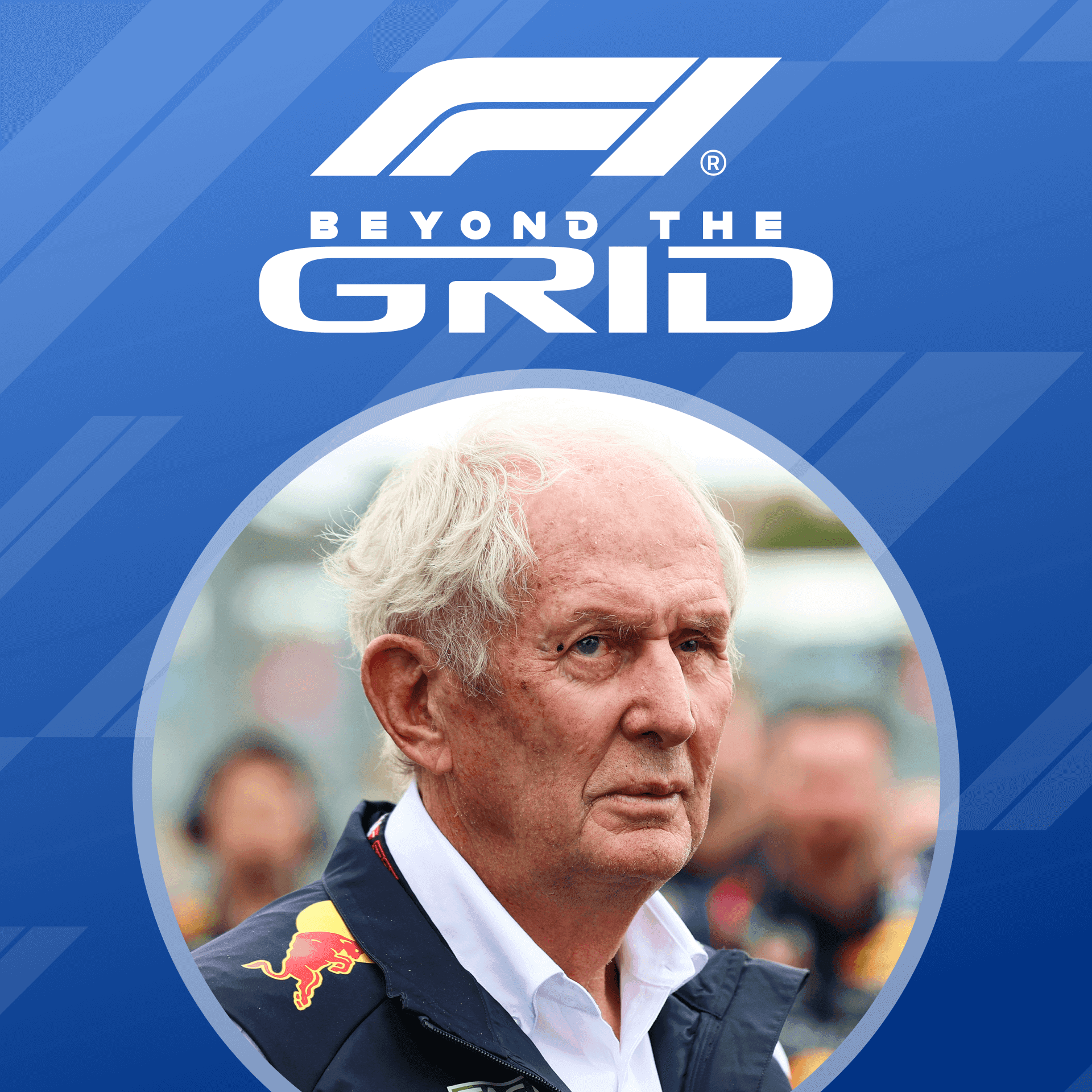
Helmut Marko, Red Bull Racing’s motorsport advisor, discusses how Red Bull selects and develops champions, why Max Verstappen and Sebastian Vettel stand out, and how pressure shapes driver success. He also recounts his own racing path, including a career-ending eye injury in 1972, and explains Red Bull’s approach to the Young Driver programme and the team’s 2026 engine ambitions.
Guest backgrounds
Helmut Marko is an Austrian former racer turned team owner and long-time Red Bull figure. He raced in Grand Prix-era motorsport, later led driver development, and has been central to Red Bull’s rise since the team’s 2005 debut.
Key claims
To win championships you need “ego” and full commitment, not “gentleman driver” mentality. Young drivers fail when they lack mental strength and don’t handle Formula One’s lap-by-lap pressure. Red Bull’s turnaround is attributed to Max Verstappen plus team principal Laurent Mekies. Red Bull’s 2026 success goal is having its new power unit as a frontrunner in year one.
Notable examples
Verstappen’s tire-management and qualifying delivery; Vettel’s detail-focused engineering feedback and mental resilience (e.g., 2013 comeback); Marko’s eye injury at Clermont-Ferrand (stone hit, multiple operations); Young Driver statistics: 95%+ of non-F1 graduates still become pro racers elsewhere; Isaac Hadjar’s early competitiveness after three laps; Lando Norris nearly signed but didn’t join.
Written by AI. May contain mistakes. Listen to the episode to check what was said.
Chapters
Tap a time to open that second in VOThe Impact of Technology on Education
0:03 to 1:13
Explore how technology is shaping education with Dell's offerings.
“booking guests across time zones, tight turnaround edits and constant time management.”
The Impact of Technology on Education
1:42 to 2:26
Explore how technology is shaping education with Dell's offerings.
“and it's lightweight, portable and packed with enough processing power to make multitasking a breeze.”
Helmut Marko's Journey in Formula One
2:26 to 14:00
Discover Helmut Marko's insights on what it takes to succeed in F1.
“So in this pressure, not many could stand.”
Vision Behind Red Bull's Success
14:00 to 14:35
Explore Helmut Marko's insights on investment and support in racing.
“If you explained him, I mean, the story when Newey came, that also meant we had to make big investments financially because our outfit wasn't ready to win a championship.”
Vision Behind Red Bull's Success
14:39 to 15:49
Explore Helmut Marko's insights on investment and support in racing.
“booking guests across time zones, tight turnaround edits and constant time management.”
Vision Behind Red Bull's Success
15:52 to 16:02
Explore Helmut Marko's insights on investment and support in racing.
Helmut Marko's Early Racing Aspirations
16:49 to 18:58
Delve into Helmut Marko's childhood influences and initial racing experiences.
“let's bring it on to your own racing career now helmet what age were you when you decided you wanted to be a racing driver I have to go a little bit back.”
Overcoming Family Expectations in Racing
18:58 to 21:40
Learn about Helmut Marko's challenges against his family's wishes to pursue racing.
“No, my father was a terrible driver you know on the road My mother was more sportive, but also Jochen, he didn't even know his father because he died when he was three months old or so.”
Jochen Rindt's Impact on Marko's Career
21:40 to 24:26
Understand the influence of Jochen Rindt on Helmut Marko's racing journey.
“And unfortunately, two, three people died every year.”
Memories of the Le Mans Victory
24:26 to 26:46
Reflect on Helmut Marko's memorable Le Mans victory and its significance.
“At that time I was pretty slim and in good physical shape and I still lost three or four kilos.”
Show all 20 chapters
Transitioning to Formula 1
26:46 to 28:00
Explore Helmut Marko's transition from sports cars to Formula 1 racing.
“Let's talk about your Formula 1 career now, only the 10 races.”
Helmut's Ferrari Offer
28:00 to 29:00
Helmut discusses his experience with Ferrari and the circumstances around his potential signing.
“I was on pole and finished second, and I got an offer for F1.”
Clermont-Ferrand Incident
29:00 to 31:20
Helmut recounts the painful experience of his accident at Clermont-Ferrand in 1972.
“what a great story Helmut, can you tell us about Clermont in 72, what happened?”
Aftermath of the Accident
31:20 to 36:52
Helmut details his recovery journey, the impact of the accident on his life, and his transition into team management.
“because at that time, racing was everything for me.”
The Birth of Red Bull Racing
36:52 to 39:48
Helmut shares how his relationship with Dietrich Mateschitz led to the founding of Red Bull Racing.
“It's difficult to say, but we had the same approach, the same enthusiasm for the motor racing and maybe he wouldn't have had a...”
Young Driver Program Insights
39:48 to 41:33
Helmut discusses the challenges and successes of the Red Bull Young Driver Program.
“And also, he couldn't find the necessary sponsorship, so he had to put his own money into the team, which is not really what Gerhard wanted.”
Reflections on Racing Strategy
41:33 to 42:04
Helmut reflects on his competitive mindset and the strategies he employs in driver selection.
Choosing Champions: Insights from Helmut Marko
42:04 to 46:08
Helmut Marko shares his thoughts on scouting and developing championship-winning drivers for Red Bull Racing.
“So one last driver to ask you about is Isaac, Isaac Hadjar.”
Reflections on 75 Years of Formula One
46:08 to 48:18
Marko reminisces about memorable moments in Formula One history, including his own experiences and notable races.
“First time I have a contract, I did work 19 years without a contract.”
Looking Ahead: Red Bull's Future in F1
48:18 to 49:13
Discussing the future of Red Bull Racing and expectations for their new power unit in 2026.
“It was great to get your take on both new and old.”
Transcript
Automatic transcript. May contain errors.0:00This episode is sponsored by Indeed. There's a lot that goes on behind the scenes of this show, booking guests across time zones, tight turnaround edits and constant time management. And when things get chaotic, you realise pretty quickly how important it is to have the right person on your team. If I had to hire someone tomorrow, I wouldn't just want a good editor. I'd want someone who understands pace in long form interviews and can work fast under pressure. And in moments like that, you think, this is a job for sponsored jobs. Because Indeed Sponsored Jobs boosts your listing in search results, helping you reach the candidates with the specific skills and experience you actually need.
0:39And it works. Sponsored jobs posted directly on Indeed are 95 % more likely to report a hire than non-sponsored jobs. That's a serious edge when the pressure's on. Spend less time searching and more time actually interviewing candidates who check all your boxes. Less stress, less time, more results. When you need the right person to cut through the chaos, this is a job for Indeed Sponsored Jobs. And listeners of this show will get a$75 sponsored job credit to help get your job the premium status it deserves at indeed.com slash podcast. Just go to indeed.com slash podcast right now and support our show by saying you heard about Indeed on this podcast.
1:20Indeed.com slash podcast. Terms and conditions apply. Need to hire? This is a job for Indeed Sponsored Jobs. Back to school starts now. Get long-lasting battery life on the Dell XPS laptop powered by Series 3 Intel Core so you can work from anywhere. Now starting at$699 with exclusive student pricing starting at$599. and it's lightweight, portable and packed with enough processing power to make multitasking a breeze. So say goodbye to distractions and hello to more free time because you've finished your work faster. Complete your setup with savings on select monitors and more must-have electronics and accessories.
2:08Limited time deals and free shipping on PCs and more await you at dell.com forward slash deals. That's dell.com slash deals.
2:25have you ever been wrong about a driver yes is there someone who you've axed from the program who in hindsight you think maybe i should have been more patient no a lot of drivers where i thought they could do great they didn't in the end going to formula one the pressure is double as much and you have to deliver every lap. So in this pressure, not many could stand. Helmut Marko, Red Bull Racing Motorsport advisor, knows what it takes to make it in Formula One and what it takes to win. If you want to be champion, you are not a gentleman driver. The ego is so big and you have to be like that to win a championship.
3:12He was a racer himself and he still has that mentality. I'm always the one who is more on the aggressive side. If it comes to decisions, should we go more carefully? I don't know. Go for it.
3:30Hello, everyone. I'm Tom Clarkson, and I've wanted to get Helmut Marko on F1 Beyond the Grid for years. Racing's been his life. As a boy at school in Austria, he skied and raced cars with Jochen Rindt, who'd go on to become Formula One world champion. In the early 1970s, Helmut raced in Grand Prix himself and was on the brink of joining Ferrari when a serious eye injury ended his racing career. He shifted gear and became a team owner, and that led him to meet Dietrich Mateschitz, the founder of an energy drink company which sponsored promising young drivers. Dietrich and Helmut saw a chance to start Red Bull Racing, and they took it.
4:13The team has achieved the extraordinary since its first Grand Prix in 2005. Six Constructors' Championships, eight Drivers' Crowns won by drivers they developed, Sebastian Vettel and Max Verstappen. Helmut credits Max and new team principal Laurent Mekiez for the team's return to form during 2025. I talked to Helmut about how Red Bull Racing was born, his role leading the team's Young Driver programme, how he got over the loss of his own racing career and what makes Vettel and Verstappen so good, and whether he's ever been wrong about a driver.
4:57Helmut, thank you for your time. Great to have you on the show. It's a pleasure for me to be here. There is so much to talk about your life in racing, but can we start with the here and now? you've seen so many great drivers in your life. Is Max Verstappen the best you've ever seen? It's difficult to say different periods, different cars, but he's definitely one of the greatest. What makes him so good? He's improving, improving. He's completely focused. And now he's 10 years with us. Nowadays, he doesn't make any difference. mistakes you know lap by lap he's within one dance if they tell him the tire let's say that left one is overheating okay within two laps he does the same lap time but the tire temperature goes down so he also learns his feeling for the tires which was i would say in 21 a handicap because in this area hamilton was a bit better than him compare now if you would the max verstappen of today to the Max Verstappen of 2015 when he first came in age 17?
6:13It's a very mature, still only 28, but very mature. He lost all his winning under all circumstances. It comes now more easy. It comes relaxed. He's far better in his technical feedback. And he develops to a real personality and team leader. Tell me about, I was going to ask, is he a team leader? Is he someone all the troops want to get behind? Definitely. And with the success, he got even more confidence. And also he makes comments and his interviews shows how, I would say, it's a 20 years old body, but the mental strength and the experience and the wisdom is like 40 years old. You say he's still getting better.
7:11Does that mean that 2025 has been his best season? Even better than 2023 when he won 19 out of 22 races? Definitely better. First of all, we didn't have a car which was always in a position of win, but he's more calm. And as I said, he delivers in qualifying. We had been on difficult circuits With the tyres, it's always difficult to get the right warm-up, to bring them in the right window. But with him, when it comes to Q3, he delivers. So Red Bull have had two teams in Formula 1 for 20 years now. Helmut, can you pick the two best drivers that you've had in that time? That's very easy. That's, of course, Max Verstappen and Sebastian Vettel.
8:02Do you think they rub along well together? No. Why do you say that? Because they are complete different characters. And you know that when Vettel left, we didn't look for a new Vettel. We looked for a new champion. So it's not part of our philosophy to have the driver put in a schedule or in a form. But what makes the difference is I think Max is absolutely committed. You know, what I don't understand, after Grand Prix winning, he jumps on his plane and goes in a simulator and makes the E-race, you know. Okay, that's maybe the modern times. And also, like Nürburgring with his Ferrari victory, that meant to him so much.
8:55And that shows that he's a race so poor. What made Vettel so good then? You've talked about Max's strengths. What were Vettels? Vettel was very in the beginning already, going in each detail, was sitting with his engineer and a little bit like saying, insisting on small details, you know, how much fuel and so on. where they are similar is the mental strengths i remember 2013 we were around i think 40 points behind alonso and we still won the championship was vettel difficult to control i'm thinking multi-21 in 2013 i'm thinking of the collision in turkey 2010 you know he was a racer and And if you want to be champion, you are not a gentleman driver.
9:54So, of course, the ego is so big and you have to be like that to win a championship. Do you genuinely believe what you've just said, that nice guys finish last, is kind of what you were implying? I mean, Max is a perfect son-in-law for, I think, every mother. But once he's in the car, he's a different person. and he doesn't have any compromise. He goes for it, look like he did Imola's manoeuvre and also he's overtaking. He's watching the guy and poof, and he overtakes some of the other drivers. They try left, they try right and so on. So his commitment is an absolute one. How instrumental has he been in the technical turnaround of this car?
10:46Quite massive, but that came together with Laurent. He is a very good engineer. Besides, also that he can work with the people in a very communicative way. And they both, I would say, installed a new way of going into the details. Or simply saying, the numbers in the simulator is not what matters anymore. It matters what the stopwatch shows. That means to get out the maximum of the car, the driver can rely on it. And it's not on such a small edge that only Max can drive it. So if he doesn't have the confidence, he can't go to the limit like he does at the moment. What is it about the setup that means Max can only drive it?
11:40Is it very on edge, this car? I love the analogy that Alex Albon used last year. He said, imagine having your mouse on your computer on super sensitive mode and the cursor is dancing across the screen. Max can handle that, whereas other people can't. Is that a good analogy? Is that, is his feel his greatest strength? His feel and car control is what makes a difference. You know, we had the car which was very loose in the rear. Checo was lifting. And if you ask Mark, maybe it's a little bit unstable. But he still wasn't forced for the throttle. You mentioned Laurent Mechies just a moment ago. New team principal.
12:26How different is the vibe inside the team now compared to how it was before? We are starting winning again. So the atmosphere, everything is positive. and it's like the old days. What does Laurent bring that Christian Horner didn't bring? It's like with a football coach. They all have a different way of leadership but the main thing is that we are successful again and both have their merits. Can we talk about Dietrich Mateschitz now? You knew him incredibly well, obviously. What was he like to work with? Unfortunately, on the 22nd of October, it was the third anniversary where he died. We all miss him and asking to work with him was fantastic because he had the vision and decisions were done within minutes.
13:25There was no big decision. For example, when I told him the new contract with Max, which is still going to 28, I mean, there had been quite big numbers in it. And yes, he's the best, he deserves, and we need him. So let's do it. And Dietrich said? He said, yes, let's do it. Straight away? Straight away. I didn't make the calculation how much the number would end up, but it's big numbers. Does the program, does the Red Bull racing program miss Dietrich? You say he made quick decisions, but what else does it miss about Dietrich? It was always the vision he had. If you explained him, I mean, the story when Newey came, that also meant we had to make big investments financially because our outfit wasn't ready to win a championship.
14:22And he explained to him, he asked questions, even though he was not at the races, but he still understood what was going on and he supported it. This episode is sponsored by Indeed. There's a lot that goes on behind the scenes of this show, booking guests across time zones, tight turnaround edits and constant time management. And when things get chaotic, you realise pretty quickly how important it is to have the right person on your team. If I had to hire someone tomorrow, I wouldn't just want a good editor. I'd want someone who understands pace in long-form interviews and can work fast under pressure.
15:01And in moments like that, you think, this is a job for sponsored jobs. Because Indeed Sponsored Jobs boosts your listing in search results, helping you reach the candidates with the specific skills and experience you actually need. And it works. Sponsored Jobs posted directly on Indeed are 95 % more likely to report a hire than non-sponsored jobs. That's a serious edge when the pressure's on. Spend less time searching and more time actually interviewing candidates who check all your boxes. Less stress, less time, more results. When you need the right person to cut through the chaos, this is a job for Indeed Sponsored Jobs.
15:39And listeners of this show will get a$75 sponsored job credit to help get your job the premium status it deserves at indeed.com slash podcast. Just go to indeed.com slash podcast right now and support our show by saying you heard about Indeed on this podcast. Indeed.com slash podcast. Terms and conditions apply. Need to hire? This is a job for Indeed-sponsored jobs. Back to school starts now. Get long-lasting battery life on the Dell XPS laptop powered by Series 3 Intel Core so you can work from anywhere. Now starting at$699 with exclusive student pricing starting at$599. And it's lightweight, portable and packed with enough processing power to make multitasking a breeze.
16:31So say goodbye to distractions and hello to more free time because you've finished your work faster. Complete your setup with savings on select monitors and more must-have electronics and accessories, limited time deals, and free shipping on PCs and more await you at dell.com forward slash deals. That's dell.com slash deals.
17:10let's bring it on to your own racing career now helmet what age were you when you decided you wanted to be a racing driver I have to go a little bit back. I was with Jochen Rind in a boarding school and he broke by skiing while we should have been at school but the weather and the snow was fine. But he broke his leg and our home to the school was about 40 minutes by walking. So he got a plaster and And he owned a factory in Germany. His parents died during the World War attack. So we got a car with a chauffeur, which we sent home after two days. Everybody has a license here. Nobody did have a driving license.
18:00So with these cars, it was always on competition. Everybody could drive, but as long as he was fast. When he made a mistake, Chuck was a change in the drivers. So there came this racing spirit first time up. And then after finishing the high school Jochen went after a year in racing in Austria to England, was dominant in Formula 2 and so I said I was nearly as fast as him in the VW, which of course is a big difference. but my father said first you must make you have to finish your studium and then you can do what you want so I got a little break in between but I was of course still good friends with Jochen was following him in his career and when I finished then I started myself.
18:55Was there any racing in your family? Was your father interested? No, my father was a terrible driver you know on the road My mother was more sportive, but also Jochen, he didn't even know his father because he died when he was three months old or so. So there's no racing history in the family, and there was no racing history in Austria. You know, we had hill climb races mainly, and some airfields, terrible airfields, which were prepared for a race. Well, Zeltweg was one, wasn't it? Yeah, but it was an airfield. and the first Grand Prix with Formula One cars, I think 50 % of the cars broke down because the surface, everything was so terrible.
19:40So you were a bit of a rebel, is it fair to say? Yes. Going against your parents' wishes, they wanted you to be a lawyer. I'm getting Nicky Lauda vibes from you in the way that Nicky was a banking family and he rebelled against the family to go racing. Is that a fair comparison, you and Nicky? I think Nicky was even braver. He got a credit at a bank where practically his grandfather was the one, if it wouldn't have paid off, would have to pay it, even so he didn't know that at that time. His grandfather was absolutely against racing. So there's similarities. So where was your first race? My first race was an airfield race in Vienna in a Formula V car.
20:3367. Can you remember how it went? I was a frontrunner. If I won or finished second or third, I don't know. But what I remember, I made already in the first year money because I sold the car after the season and I was earning some good prize money. It was supported this Formula V European Championship by VW. So it started quite well. And was the ambition for you always Formula 1? I mean, you were a brilliant sports car racer, but was the ambition always F1?
21:09Sports cars, it was easier. And also saloon cars. We had BMW, we had Porsche. So there were more possibilities. but the higher I went in sports cars then of course Formula 1 came into game and then it was clear the game And as you were climbing that ladder that terrible weekend at Monza in 1970 took place, Jochen lost his life Did you consider for a moment quitting? Yes, because at that stage Jochen was, I wouldn't say a careful driver but all these times in the Cooper Maserati where I was driving always over the edge and having quite a few accidents all that was over and then this accident in the end we found out it was some problem with the car the brake caliber broke or so it was a big shock but in the end Then I can tell you, at the funeral in Graz, I got a super offer from a manufacturer.
22:19So that's how the times were. And unfortunately, two, three people died every year. How vividly do you remember that weekend? Where were you? Were you at Monza? No, no, I was in Austria. There was no TV at that time. It was just on the radio. and Jochen Im, he was born in Germany, he was an Austrian hero and they stopped everything and said Jochen Rindt was killed in an accident in Monza. So all Austria was in shock. How much did you and Jochen talk about racing? Did he make you a better driver? Definitely and there was one project. He was very close with Bernie Eckerstein and he did racing car shows in Germany and Austria and they had been financially a big success and his goal was when he would stop to make it European-wide.
23:21And he knew you need an Austrian driver for that so he was setting up a Formula 2 team and the driver should have been Emerson, Fittipaldi and me. But all that didn't happen after he died. what a chance that would have been what made you such a good sports car driver in sports car driving you must find the right like it is nowadays with the tyres you can't go flat out because if it is a 6 hour or a 12 hour race if you go flat out normally the car wouldn't do it it's the same if Max would start full throttle or full speed with the tyres after five or six laps they will overheat and they would slow down and in sports car racing it was similar you had to make it is your base that you can be in front but not break the car well tell us about your Le Mans victory in 1971 in terms of distance covered you held the record until 2010 doesn't sound to me like you were holding back at all oh that was a different story Porsche put I think six cars on the entry and more or less all six had different specifications and our car had a Wolfram frame we didn't know about that that was stored after the race.
24:49Wolfram is a very dangerous material and I think we had been in the lead after six or seven hours and second was also a Porsche but our team was run by Porsche Stuttgart and the other team was run by John Weyer in England so and we were competitors we were going flat out from this let's say four or six hours till the end because Bieg who was in charge of the whole operation I told him listen we are just one lap or two laps in front of the Ferrari and we are going same lap times like qualifying couldn't we make range and he just said no the better one may win so this was the exception from the logical stuff how tough was lemar back then just two drivers you and gis van lennart it was tough because no power steering shifting a clutch like in a truck so was it a very heavy clutch very heavy clutch and you know we did nearly 400 on the straights the car were aerodynamically not very balanced so i was looking at the flags in what direction they were going so and you adapted in the opposite lock already on the straight things like that so hang on 400 kph opposite lock through the mulsanne king not opposite but you were steering against the wind, not opposite.
26:21So it was quite an adventure. At that time I was pretty slim and in good physical shape and I still lost three or four kilos. What an amazing win. What did that win do for you? That opened me the door for Formula 1. Yeah. With Bonnier? First Bonnier, then 30s and in the end I ended with BIM. Let's talk about your Formula 1 career now, only the 10 races. It feels, when I read about it, that you were getting quicker and quicker and quicker until we get to the French Grand Prix in 72. Did you feel that you were getting on top of the cars? At BIM we had 5 cars so different chassis, different engines and And the 153 was the old type.
27:19I was in this car till Clermont-Ferrand. First time I got the new chassis, I was immediately quickest of the drivers. I don't know. He qualified six, that race. Yeah, so that was good. But the problem was I was so hungry and crazy to drive this new chassis that the seat fitting didn't. I was 10 centimeters higher than normal, but I wanted to drive the chassis under all circumstances. In a normal chassis or with a proper seat position, the stone wouldn't have hit me. It would have gone above me. But, yeah, and that time was the week before I drove a Ferrari sports car. I was on pole and finished second, and I got an offer for F1.
28:10From? From Ferrari, yes. It was already. You'd signed for Ferrari? No, no, it was a, how you say? A letter of intent. A letter of intent. And I should have come to Maranello because in the end, the old man has to be always involved. And personally, you have to be there and show your audience. So did you deal with Enzo Ferrari himself or was it Piccinini? No, no, it was Peter Shetty, who was a team principal at that time. and I was supposed after Clermont to come to Varanello but I went lay down with Niki Lauda I was helping a little bit him in these negotiations and there I went down and I saw him first time personally I didn't know that, I didn't know that you'd signed for Ferrari what a great story Helmut, can you tell us about Clermont in 72, what happened?
29:05I think I had a pretty good start and it was a fight Emerson, Ronnie Peterson, and Clermont-Ferrand was a wild circuit, a little bit like Nürburgring. Yeah, and then I saw something coming towards me, and after that it was unbelievably painful, but I knew it was the first time I had a different version of the 12-cylinder engine, which was using more fuel, so I had more than 200 kilos of fuel on port and there was fifth or sixth or something like that and at that time 20 cars would have been or had been behind me so I knew I had something if I wanted to survive at the moment I couldn't see you know because automatically both eyes are shut when you hit or at that time the stone was hitting my eye and so I knew I had something to do and I was told afterwards I lifted my arm parked the car next to the circuit and then I got a little bit unconscious when Big Alfa was in the so-called safety car which was a small Porsche and which brought me then to a hospital.
30:18Did you know immediately the severity of the situation with your left eye? No, I wasn't really aware what's going on. I just knew that something drastically happened. So what happened after that? You go to hospital, what did the doctor say? We had been in France on a Sunday, on a beautiful Sunday afternoon. First we went to the normal hospital. They said, you have to go to the specialist. We went to the specialist. That took hours. The specialist was at a grill party. And around 8 o 'clock, the first time, a proper doctor showed up. But, you know, it was not organized like it was nowadays. Do you think the amount of time it took to be seen made a difference to the eye?
31:08It's difficult to say, but I had a lot of operations. Everything was very painful. If you have ditches in your eye, you can imagine. And at one night, after two or three weeks, I noticed it's over, which was difficult because at that time, racing was everything for me. but I said okay you have to look forward okay. And did you lose 100 % of your vision immediately or did it get worse? No I could see visions not exactly but they say if they repair the lint all that could happen but in the end the nerves are very sensible and if they're not feed by blood they die relatively quick so in the end if I would have been straight away at the right doctor and the right operation it could have been saved maybe.
32:03I hope this doesn't sound a very naive question but did you think you could race on with just your right eye or is that not possible? I mean during the night when I couldn't sleep I was thinking yes we'll try and this and that But in the end, it doesn't work.
32:48under pressure. And in moments like that, you think this is a job for sponsored jobs. Because Indeed Sponsored Jobs boosts your listing in search results, helping you reach the candidates with the specific skills and experience you actually need. And it works. Sponsored jobs posted directly on Indeed are 95 % more likely to report a hire than non-sponsored jobs. That's a serious edge when the pressure's on. Spend less time searching and more time actually interviewing candidates who check all your boxes. Less stress, less time, more results. When you need the right person to cut through the chaos, this is a job for Indeed sponsored jobs.
33:27And listeners of this show will get a$75 sponsored job credit to help get your job the premium status it deserves at indeed.com slash podcast. Just go to indeed.com slash podcast right now and support our show by saying you heard about Indeed on this podcast. Indeed.com slash podcast. Terms and conditions apply. Need to hire? This is a job for Indeed-sponsored jobs. Back to school starts now. Get long-lasting battery life on the Dell XPS laptop powered by Series 3 Intel Core so you can work from anywhere. Now starting at$699 with exclusive student pricing starting at$599. And it's lightweight, portable and packed with enough processing power to make multitasking a breeze.
Read the full transcript
34:19So say goodbye to distractions and hello to more free time because you've finished your work faster. Complete your setup with savings on select monitors and more must-have electronics and accessories, limited time deals and free shipping on PCs and more await you at dell.com forward slash deals. That's dell.com slash deals.
34:56so what happens next do you feel a lot of bitterness about what happened or did you accept it And first, yes, I feel bitterness, but then I'm a rational guy. So I said, okay, that's over. I was 28 or so, so that's not so old. And then I decided, okay, you have to do something different. And I made some investments to like a normal life. but then it came up I started with own teams in junior categories I helped Gerhard Berger made a Formula 3 team for him and several other stuff and a couple of years later I met first time Marty Schitz and at that time he said no my company is young I can't afford to sponsor motor racing but he was already sniffing into it and I could feel there is some big interest and you know he's born 50 kilometers away from where I was born so did you know him already Dietrich not when I was racing when I had my teams I knew him and yeah so we stayed in contact and then we decided uh to make the Red Bull Junior team.
36:23It was him. He was a fan. He knew how expensive racing is. So we just sponsored to help young drivers. And pretty soon we had two Formula One teams. So we changed our approach and said we don't sponsor anymore everybody. Now we only sponsor people who can win at least a Grand Prix. It changed very quickly. Helmut, don't be modest. If you hadn't met Dietrich, would Red Bull be in Formula One? It's difficult to say, but we had the same approach, the same enthusiasm for the motor racing and maybe he wouldn't have had a... or Red Bull wouldn't have owned teams themselves. I mean, Dietrich was 10 years, majority shareholders at Zauber, but without any voting rights.
37:25And it came through Klien. Klien was a young Austrian, and we bought him a seat at Jaguar. And during these negotiations, I got the feeling, hey, we could do more. And then in the end, after half a year of negotiations, we got the team more or less for one dollar. But we did invest a lot and his words were, let's try it. Maybe we win a Grand Prix once. So let's win a Grand Prix once with our own team. Why did you think you needed two teams? Getting greedy. There was so much enthusiasm. And it was also relatively cheap. and the team was very critical financially. We're talking about Minardi. Minardi.
38:21So it wasn't logical, let's put it like that. And the job was that Toro Rosso, as it was then, was to develop young talent and then Red Bull Racing was to win the races. No, that was... Is that the split? That came later. In the beginning, Gerhard Berger became 50 % shareholders in a very funny deal that happened once in the evening or so. And Dietrich got 50 % of his transport company. So at that time, I think we had Cosworth engines. And Doro also had Ferrari engines, which was the better and the stronger engine. and there was Vettel which was a big fight with BMW to get him in the end we succeeded and then Vettel won Monza that went against the script yeah so immediately Gerhard is a very competitive person he wanted to be didn't want to be number two so now the fight was between Toro Rosso and Red Bull Racing for Vettel, where Red Bull Racing succeeded.
39:42Is that why Gerhard left Toro Rosso? Because he didn't want to be the number two? That was one part. And also, he couldn't find the necessary sponsorship, so he had to put his own money into the team, which is not really what Gerhard wanted. You've talked a lot about the Young Driver programme. Can I ask you this? Have you ever been wrong about a driver? Yes. Is there someone who you've axed from the program who in hindsight you think, maybe I should have been more patient? No, that's not the case, but it was the opposite. A lot of drivers where I thought they could do great, they didn't in the end.
40:26And that was mainly, most of them, they all had the talent, but they were not seriously working or they hadn't the mental strength, which is necessary because they believe once they are from Formula 2 going to Formula 1, someone is carrying their helmet and their life is nice. But it's opposite. The pressure is heavier as much and you have to deliver every lap. So in this pressure, not many could stand. There's the perception that you're quite hard on the young guys, these teenagers who are still sort of developing, their brains are still developing. do you ever have a phone conversation with one of them where you think perhaps i was a bit hard it's always hard if you tell to them that the formula one program is stopped or they won't make it but we made a statistic more than 95 percent of the drivers which we had in the program and didn't make it to formula one are racing in formula e in sports cars or whatsoever they earn more money than they would be in a normal job and they do what they like so in the end everybody should be thankful that it was in our program that's a good point so that they are professional racing drivers professional racing is there anyone who slipped through your fingers who you wanted to have but didn't and and i remember bruno michel telling me that robert kubitzer slipped through his fingers and he still thinks about it today saying how did i let him go is there anyone that you could have got that you didn't?
41:56I mean we had at a very early stage in negotiation with Lando Norris and in the end we didn't get him but yes I think he would have fitted very well to us but on the other hand we can't have everybody so we focus and as I said we are looking for champions the first compree came through Vettel the first win yeah it's really interesting talking to you because 1972 is a long time ago that's the last time you race competitively but you still think like a racing driver don't you that's clear that's clear yes you've never lost that no and you know I'm always the one who is more on the aggressive side if it comes to decision should we go more careful than no go for it.
42:50So one last driver to ask you about is Isaac, Isaac Hadjar. He has made a huge impression in his first season of Formula One. I think of the podium in Zandvoort. Has he got what it takes to win championships? Are you convinced? Yes. Simple example. Most of the circuits are new for him. And after three laps, he's competitive. and that was I followed Michael Schumacher very closely and also Asena they all had it they didn't need 50 laps or how many tests they come both and they are there I feel it's all change in 2026 for the team isn't it you've got the the power unit coming in we've got the new technical regulations coming in what does success look like for Red Bull Racing in 2026 what would what would be enough for you?
43:46It's the first time we are doing an engine. It was a big investment, much more than we thought in the beginning, but fortunately the company still made it possible. Of course, we are newcomers, but I think if our engine would be a frontrunner, it's already a big success. on the chassis side everybody tells you that the numbers are and every team I don't hear we are behind or so so we really have to wait to see but if we could win with our engine in the first year that would be unbelievable You've been instrumental in most of Red Bull's decisions when it comes to motorsport, right? What makes Red Bull think it can take on the likes of Ferrari, Mercedes, all these huge companies that have been making cars for decades.
44:47Tell me about that decision-making process. I would say it's part that we're a bit crazy. And the other thing is that if we decide to do something, we do it proper and we put all the earth, effort, all the passion behind it. And I mean, motor racing is a team sport, so you need his passion through the whole team to get successful. Are we going to see some Red Bull road cars now on the back of what you're doing with the power unit? You know, we have the RB17. I wouldn't say it's a road car. First of all, the price is a little bit high and it's not really for the road. It's a track car. But that's also what we decided after the change in the management.
45:34we focus what we can and that's racing car no distraction and i don't think that will come we are having some other we are doing a submarine for example but that is on a low profile are you going to be in the maiden voyage of the submarine helmet it's been wonderful to chat you're 82 years old you're still going to every single Grand Prix do you still love it and how much longer are you going to keep doing it first of all I love it and if you have the passion for me traveling I don't say oh I have to fly here and I'm enjoying and I'm Mexico Mexico is a nice country nice food so I always see the positive I like it and as long as I physically and mentally in a position to do my job yes I have a contract.
46:31First time I have a contract, I did work 19 years without a contract. It was all handshake. But since the boss died, it's becoming a little bit more a normal company. So everybody has to have a contract and so on. So that goes till 2026. And then we see. Well, I hope you're around for many years to come. Helmut, thank you. Last thing, and this is a question I'm asking everybody on the pod this year. the sport's 75 years old in 2025. Can you give me one memory of Formula One over those 75 years that stands out? It doesn't have to involve you. It could be anything. There are so many moments. It was Jochen Rindy Monte Carlo who was fighting, I don't know from what position.
47:19And in the last lap, Brebham locked, went into the guardrail and Jochen won. station hairpin yeah yeah and then this multi-black crash from silverstone when jody schecter took half the field out you remember that from 1973 yes of course were you there yes i was there in what capacity because you weren't racing i had a formula three car i was in the supporting race all this fight with johan rindt and jackie stewart in silverstone i think they changed both were running in the front and the lead was changing two or three times a lap that was fantastic moments one Red Bull moment that stands out give us that
48:10of course the first win first and second with Vettel and Weber China and the even more impressive things the first win with max in the honda engine or the red bull ring because that came next after we had the teams we have to have a racetrack as well of course helmet thank you so much great to chat thank you
48:45so many memories from helmet i loved this chat and what an interesting life he's had in racing his friendship with Rint all those years ago, his own adversity with the loss of an eye in 1972, and then building towards world championships with Red Bull Racing. Helmut, thank you for your time. It was great to get your take on both new and old. And I look forward to seeing what Red Bull Racing can achieve in 2026 with its own power unit. Well, that's almost it for this episode. Sebastian Vettel was mentioned a few times. Big news, he's returning to F1 Beyond the Grid very soon. Make sure you're following the podcast so you get that episode as soon as it's released.
49:27While you're there, check out the latest episodes from F1 Nation and F1 Explains, F1's other official podcasts. And there's still time to get your ticket for a Grand Prix this season. Just go to tickets.formula1.com. Thank you for listening as ever. F1 Beyond the Grid is produced by Formula One and Audioboom Studios. Until next time, keep it flat out.
50:165V Blackwing, the nimble agility of the Optic V, and the legendary roar of the Escalade V. All engineered to thrill. Find out more about Cadillac's performance story in Formula One and our race-tested V-Series lineup at cadillac.com.
From the publisher
Helmut tells Tom Clarkson about his life in racing: childhood adventures in Austria with future world champion Jochen Rindt, and the serious eye injury which ended his driving career just as he was about to join Ferrari. He tells the story of how he met Red Bull founder Dietrich Mateschitz, and how they started the F1 team which would go on to win races and championships with Vettel and Verstappen.
Plus, Marko explains how Verstappen and Team Principal Laurent Mekies have changed the team’s approach in 2025 and picks the young driver with potential to be a future champion.
This episode is sponsored by:
CarGurus: go to cargurus.co.uk for complete vehicle details without any surprises
Vanta: get started at Vanta.com/GRID.
F1 Authentics: discover unique F1 items found nowhere else at the official home of F1 memorabilia. For a limited time, use the code BTGRID10 for an exclusive 10% off your next order. Exclusions apply.
Shopify: sign up for your $1 per month trial and start selling today at shopify.com/beyondthegrid