In short
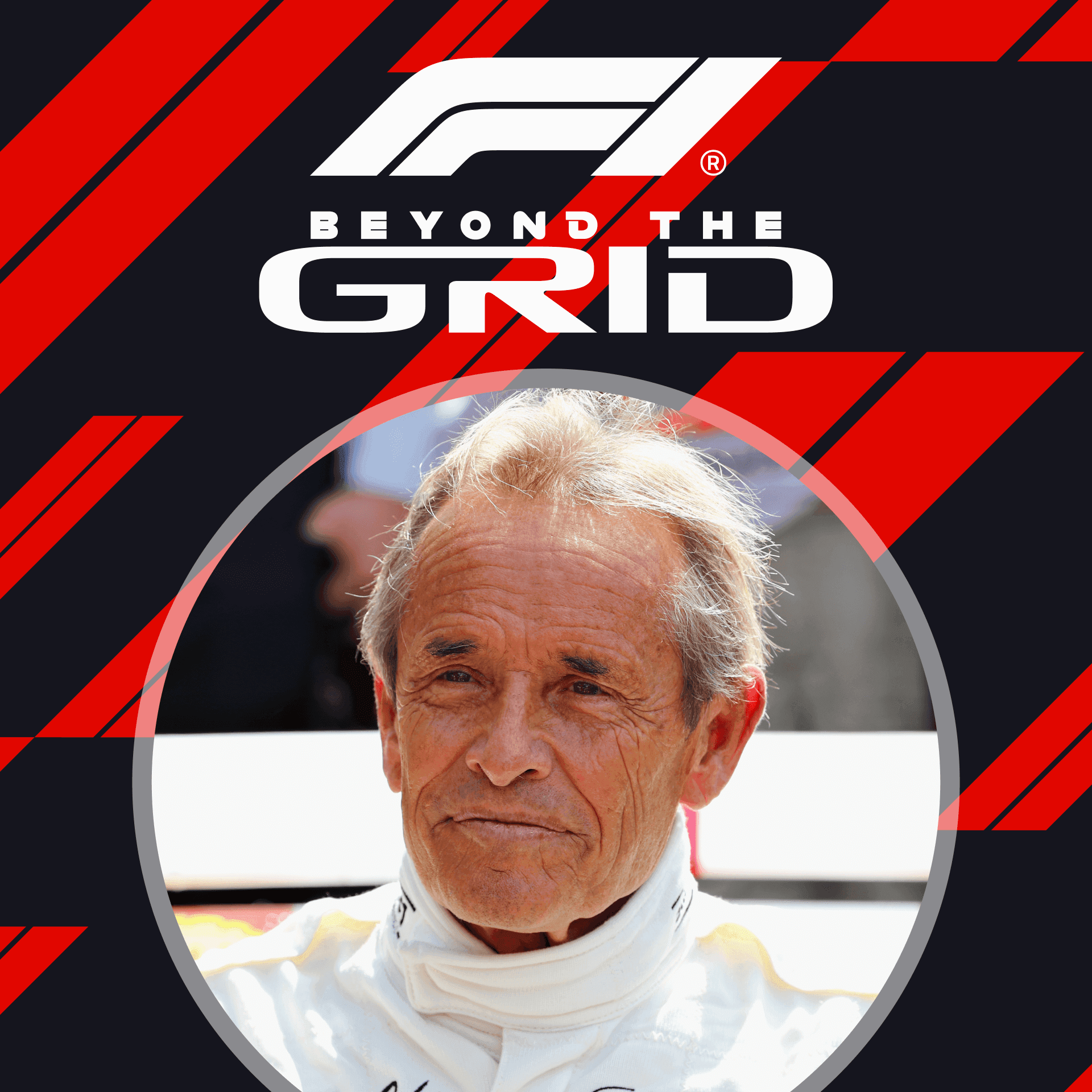
Episode topic: A conversation with Jackie Ickx about his life-changing motorsport career—Belgium’s F1 success, six Le Mans wins, two World Endurance titles, and even the Paris-Dakar—plus reflections on modern F1, Ferrari, driver safety, and what racing taught him personally.
Guest background
Jackie Ickx, Belgian racing driver; eight F1 race wins; Ferrari driver (1968 win; left after one season; returned in 1970); won Le Mans six times; won endurance twice; won Paris-Dakar; raced across F1 and sports cars; known for wet-track skill and Nürburgring prowess.
Key claims
Modern F1 is “milliseconds” and highly professional; young drivers’ level is higher; safety improved but rules/process should be planned earlier; he’s not nostalgic for his career—he values the people who helped him; he would not accept a posthumous 1970 title for Jochen Rindt.
Notable examples
1966 German GP F2 debut at Nürburgring; 1970 runner-up to Jochen Rindt; his one-man Le Mans start protest; beating Niki Lauda in the wet at Brands Hatch; Nürburgring pole in 1972 by 12 seconds.
Written by AI. May contain mistakes. Listen to the episode to check what was said.
Chapters
Tap a time to open that second in VOJacky Ickx's Unique Career
1:41 to 2:24
Learn about Jacky Ickx's unique journey in Formula One and his remarkable achievements.
“Not many drivers have made their Formula One debut in a Formula Two car.”
Transformation Through Racing
2:24 to 2:59
Understand how racing shaped Jacky Ickx's perspective on life and humanity.
“It's how racing changed him as a person.”
Debut at the 1966 German Grand Prix
2:59 to 3:35
Hear about Jacky Ickx's Formula One debut and its unusual circumstances.
“Jackie takes me back to the 1966 German Grand Prix, where his Formula One career began in a rather bizarre fashion by today's standards.”
Joining and Leaving Ferrari
3:35 to 4:26
Discover Jacky Ickx's experiences with Ferrari, including his departure and return.
“I also ask him how it felt finishing runner-up in 1970 to Jochen Rint, the only driver to have been crowned world champion posthumously after he died at Monza with four races of the season still to run.”
Evolution of Formula One
4:26 to 6:16
Jacky discusses the changes in Formula One and how current drivers compare.
“Jackie when you look at the current grid and and what they've achieved so far this season in 2025.”
The Modern Athlete
6:16 to 7:45
Explore how the demands on Formula One drivers have evolved over the years.
“into a profession, a total professionalism.”
Legacy of Ferrari
7:45 to 9:35
Jacky Ickx reflects on Ferrari's unique legacy in motorsport.
“My time, you can't qualify it as amateur time.”
Enzo Ferrari's Impact
9:35 to 14:00
Learn about Enzo Ferrari's influence on racing and his personal relationships.
“Yes, those who have driven for Ferrari are a specific community.”
Early Relationships and Racing Dynamics
14:00 to 16:35
Explore the complex relationships and dynamics in racing during the early years.
“where he had a close relation with, was very cruel.”
Early Relationships and Racing Dynamics
17:14 to 17:38
Explore the complex relationships and dynamics in racing during the early years.
“Kitchen and bathroom professionals know what goes behind the tile matters.”
Show all 21 chapters
Early Relationships and Racing Dynamics
17:42 to 17:53
Explore the complex relationships and dynamics in racing during the early years.
“I've talked about the lure of Ferrari being irresistible to Lewis Hamilton.”
The Allure of Ferrari and Key Mentorships
17:53 to 21:18
Delve into the irresistible draw of Ferrari and the mentorship of Jackie Stewart.
“Number two, I was the teammate of Jackie Stewart in Formula 2.”
Challenges and Decisions in Racing
21:18 to 22:36
Discuss the tough choices and challenges that shaped Jacky Ickx's career in racing.
“It was real test in winter at Vallelunga.”
Mastering the Nürburgring
22:36 to 24:32
Learn about Jacky Ickx's experiences and strategies at the Nürburgring.
“And Gordon Jackson, DeAndreau and the speed, I did for five seasons between the Lotus and the Mustang in saloon car racing help a lot because you need a lot of sensitivity.”
The Cruelty of Early Racing
24:32 to 28:03
Examine the harsh realities and dangers faced by drivers during early racing seasons.
“But just across the border in Germany is the Nordschleife.”
Reflections on Racing and Family
28:03 to 30:42
Jacky Ickx shares his feelings about racing and his family's concerns.
“and you know that it's the final one, it's really a mixed feeling.”
The Evolution of Safety in Motorsports
30:42 to 33:15
Discussion on the safety improvements in racing and the historical context.
“Strike a day before the Grand Prix, no, I was not on that.”
Jochen Rindt and Championship Controversy
34:15 to 36:52
Jacky discusses his relationship with Jochen Rindt and the championship implications.
“Jochen tragically died at the Italian Grand Prix.”
Lessons from Racing and Team Dynamics
36:52 to 42:00
Insights on teamwork and the human aspect of racing from Jacky Ickx.
“Because first, it's a miracle to be alive.”
Jackie Ickx's Favorite F1 Memories
42:00 to 44:32
Jackie Ickx shares his reflections on the sport's history and his memorable moments.
“He demonstrates the Duke of Richmond by treating his fans or motorsport fans.”
Reflections on F1's Past and Future
44:32 to 45:24
Discussion on the evolution of F1 and Jackie's lasting impact on the sport.
“Jackie was the king of the Nürburgring, be in no doubt.”
Transcript
Automatic transcript. May contain errors.0:00Cadillac has entered Formula One, deepening the racing pedigree behind every V-Series on the road. Discover a line-up that delivers pure adrenaline in the form of modern luxury. Experience the quickest Cadillac ever, the all-electric Lyric V, the peak performance of the CT5V Blackwing, the nimble agility of the Optic V and the legendary roar of the Escalade V, All engineered to thrill Find out more about Cadillac's performance story in Formula 1 And our race-tested V-Series lineup at Cadillac.com Unlock big savings now at Menards Add style and security to your home with high-quality Schlag door locks Whether you're looking for a traditional interior passage lock Or a Wi-Fi compatible electronic entry lock Menards has you covered with more than 200 options of Schlag door locks in stock Save big in our huge in-stock selection of Schlag door locks.
1:00Plus, check out our weekly flyer on Menards.com for all the great deals happening now. Save big money at Menards. Save big money when you shop at Menards. We have an excellent in-stock selection of Whirlpool appliances. We carry great brands at the best prices. Ready to take home today. Whether you want new laundry appliances or need upgrades for your kitchen, You'll find appliances that'll make your life easier. View our selection of Whirlpool appliance options today on Menards.com. Plus, check out our weekly flyer and find plenty of great deals happening this week.
1:41Not many drivers have made their Formula One debut in a Formula Two car. Then again, not many drivers have left Ferrari and then returned there. but Jackie X is unique. I'm not joking when I tell you I wanted to be a governor or a gamekeeper. I never did what I want. Remarkable then that Jackie became Belgium's most successful F1 driver and one of the most versatile races in motorsport history. As well as winning eight Formula One races, Jackie won Le Mans six times, the World Endurance championship twice and even the Paris-Dakar rally in the African desert. But it's not the success that Jackie remembers the most.
2:26It's how racing changed him as a person. It's a miracle to be alive when I think about all I've done. It's not a matter of talent. It's only a matter of luck. My vision on the world and the people change completely because instead of being focused on winning, winning, winning. I have a vision on other people living other type of life. You become a better person. Here on F1 Beyond the Grid, with me, Tom Clarkson, Jackie takes me back to the 1966 German Grand Prix, where his Formula One career began in a rather bizarre fashion by today's standards. Back then, F2 cars were allowed to race alongside F1 cars at the Nürburgring Nordschleife because it was such a long track, three times longer than Spa, the longest circuit on today's F1 calendar.
3:25Jackie tells me how his debut there led to him joining Ferrari in 1968 and why he left the team after just one season, only to return a year later. I also ask him how it felt finishing runner-up in 1970 to Jochen Rint, the only driver to have been crowned world champion posthumously after he died at Monza with four races of the season still to run. And on the subject of safety, Jackie remembers his one-man protest on track that changed Le Mans forever.
4:01Jackie, it's lovely to have you on the show again. How are you? Well, I'm very proud to have Tom interviewing me, I must admit. But we share the same passion, isn't it? We certainly do. Do you keep across Formula One these days? Time to time but I'm still close yes to it of course because when you have belonged to the group for quite a long time and being reasonable successful you understand that alone you're nobody and clearly in my philosophy 90 % of the job is done by people who have the same passion but they they work in the shade in the way in the shadow we pick up the glory they get the nice feeling of having done the job but they deserve much more as well as the spectators and the fans because without them you have nothing.
4:58Jackie when you look at the current grid and and what they've achieved so far this season in 2025. Who has impressed you? A group of people. The new generation, it's a major change in Formula One. Yes, you have, of course, Oscar, Lando, I can include still Max in a way, Adjar, Lawson. All the six rookies. Yes, I think, honestly, the level, it's younger than before and I trust strongly in young people today. Which of those people, which of those drivers reminds you of you? We are in a totally different world. Formula One is 75 years of age now, but clearly in the 60s, the time of Jackie Stewart, Fangio, because you have to mention Fangio, all these people.
5:58It's not the same world at all. I have no nostalgia for yesterday. I have the nostalgia of the people I met who made the story possible for all of us. Bernie Ecclestone, for example, who changed the world of the Formula One into a profession, a total professionalism. But modern drivers need so many talent and you have the best of the world because you don't fight for tens of seconds anymore. You fight for milliseconds. And you have to understand that you have a car or follow the rules of the FIA, but made by different people in different ways to get the same result. On the other side, you have drivers who genetically are different.
6:51And at the end, you mix the two and on the grid you have only milliseconds between them. I'm quite fascinated by this. So do you think Max Verstappen, let's use him as the example, would have been quick in your day? Equally, if you were racing now, do you think you would have been able to get the maximum out of these? Of course, Max. Nobody can tell he has a better car than the others, but he's still there. He's growing. In a way, he has more recognition today than he had yesterday because when you win non-stop, they say, okay, he has the best car. No, he doesn't have the best car, but he's still there.
7:34Of course, the McLaren have the cars to beat, but I have a lot of admiration for the talent of this because you have to be so good and so precise and so professional. My time, you can't qualify it as amateur time. We raced every weekend in different categories. In the early days, we had no sponsors, only technical sponsors. So it was just like Fangio, a pure sport in a way. Today, to reach the level where they all are, you have to follow the steps, Formula 3, as in the past, but you have to be winners all the time. You need to be in communication very good. And then you have to be able to drive 100 % in controlling on the steering between 12 and 18 little switch and you're able to talk to you to your team as well into it very impressive if we think of drivers as athletes and athletes have got better over the last 60 years look at the 100 meters the time has got faster do you think racing drivers have got better as well much better no it's done scientifically and you have you know where you go but in my time we were pure amateurs not exercising much not running much not cycling much going to bed late enjoying yourself yes life but today you have an athlete and it's very demanding I lived that in Goodwood last week to go out of a Brabham from 69 it's not easy and remember you have only a ref counter water temperature oil temperature and oil pressure that's all you have to check during the today it's not the case have you seen the panel in front of you with the plus the minus and well jackie we're sat in the ferrari motorhome we've got yes pictures from yesteryear all around us it's wonderful and given the success you had with this team in formula one and in sports cars does it feel like a second home even now it's interesting to see lewis for example that I have met once briefly a long time ago who wanted to join Ferrari.
10:04Yes, those who have driven for Ferrari are a specific community. And clearly, your heart stays red for all your life. And that's the reason why you are here, because I spent five years with Ferrari a long time ago. But yes, Ferrari remains very, very special. And I speak about Lewis because he's two-time good in my point of view. He's two-time good because he is the record holder of everything. He has nothing to prove. And everybody wants to have him, and him too, to have the hope to win one time. But he's two-time good at the same time. He's not only the great Lewis and unique Lewis Hamilton.
10:51as a person, as a human person with the foundation, 44th Foundation, he's the first one who involves himself into that direction. Black lives matter. He had no fear to do it. So to me, the second side of Lewis Hamilton is maybe because he's unbeatable. That one is the first because nobody did anything like he did. He's a trailblazer, isn't he? in and out of the car. The lure of Ferrari was irresistible for him, wasn't it? Yes, probably, because I never interviewed him, but you did, maybe. But clearly, winning or not winning is not the most important. He enjoys motor racing. He still has the desire to do well.
11:40He's still doing well in reality, because, yes, there's plenty of young kids in F1, but, yes, he performs well. The only difficulty he has, he has to face the erosion of the time and the year passing. That's probably the big challenge for him. But when you think he started at six and finished at 40 and still being on the grid and still being present on the first half, depending from the races, it's just fantastic. Now, you raced for British teams, German teams, French teams. Italian team. Italian team. What makes this Italian team different to all the others? Because the story of Ferrari is just an incredible story.
12:32Because passion yesterday exists too about motor racing. and Enzo Ferrari it's an open door to say that it's known everywhere in the world today with McDonald's or Coca-Cola or whatever he is there because the man has an incredible story, he raced himself he decided to make racing cars because he thought it was probably a better idea to let the other drive and to build things and he built Ferrari racing car and manufacturer behind it. And having lived with him, I'm probably the only one where I don't put any butt when I talk about him. The reality was, in my opinion, something very sensitive, amazingly, for a lot of people.
13:23He lived very cruel moments in motor racing in the 50s with a number of drivers, because I don't have to explain to you that in those days, to risk things in motor racing, it's a free choice. It's a human right in a way. You have to do what you like and everybody did what they liked, but it was a cruel sport as well. The reason he didn't show up on race course, I think, is because having lived the disappearance for people who were driving for him, where he had a close relation with, was very cruel. That's why he didn't show up, except at Monza, the week before the Grand Prix, because in those days, you could test at Monza the day before.
14:16But I understood later on that the reason he was keeping a certain distance between the driver he had at the time was simply because he lived the cruelty of losing friends before. Because I was going to say, was he a friend to you or would he not let you that close? I can tell you he liked me very much and he was very patient and really liked me very much. What was he like to deal with then? It was clear because the goal is to win. But I never suffered of feeling that I didn't have the best material or my teammate had a better car than me or having a worse engine than him. The goal for him was winning and very basic, but it's the same for a driver.
15:09It's not the speed you go through certain corners, even if you are able to do at Spa on top of the Radion, 300 kilometers per hour. It's just extraordinary. The goal is very simple. is to be one of the best and, if possible, to win. What were the negotiations like with him when you were discussing money? There were no money at the time. But, Jackie, you were being paid by Ferrari. Yes, but that was not a problem, a commercial deal. Can you imagine that in my time, I could drive for Ford Motor Company and drive for Ferrari? It's just to tell you life was different. this is not possible today can you imagine that I was doing saloon car racing and driving I drove all sort of cars all sort of motorcycles in the early days there were no sponsor the money was not a point for none of us yes there were a little money but can you imagine when I drove Formula 3 for Kent Irel for example my starting money was£50 sterling, or my starting money for F2 was£100 sterling, even if the pound at the time was probably three times higher than today, things were easy.
16:34Cadillac has entered Formula One, deepening the racing pedigree behind every V-Series on the road. Discover a line-up that delivers pure adrenaline in the form of modern luxury. Experience the quickest Cadillac ever, the all-electric Lyric V, the peak performance of the CT5V Blackwing, the nimble agility of the Optic V and the legendary roar of the Escalade V. All engineered to thrill. Find out more about Cadillac's performance story in Formula One and our race-tested V-Series lineup at Cadillac.com. Kitchen and bathroom professionals know what goes behind the tile matters. That's why trade pros trust fiber cement, party backer board to keep tile firmly in place, resist cracking and help block moisture chosen in over 40 million kitchens and bathrooms party backer board.
17:32What the best build on shop now at participating home Depot, Lowe's and floor and decor stores. For more information, visit jameshardy.com slash Hardy backer.
17:52I've talked about the lure of Ferrari being irresistible to Lewis Hamilton. Was it the same back then for you? The key in my life is Kent Herald. That's number one. Number two, I was the teammate of Jackie Stewart in Formula 2. So he was my mentor in a way. after he became the man to beat. At the Nürburgring in 1967 with an F2, I was on front on the grid. So that day, my life had changed because people believed that I could do something. After having won long distance, a thousand kilometers in the rain here a number of times, and they came to see me in 67 and offered me to drive the 68th season.
18:46Roy Salvadori has to be mentioned because I did with the Cooper Masoretty in 67, Watkins Glen and Monza, for example, because you can have some talent, but the timing counts also. The destiny, you can speak about it when it's behind you, But you know that your life is directed by circumstances. Jackie was Kent Tirell. He was in contact also with Ferrari. I didn't know it. He didn't mention it. And he learned later in August, because the deal with Ferrari didn't work with Jackie, he learned that I was in contact with Enna in Sicily. The sport director came, said, would you like? And of course, when you are 23, when you are 133, you don't speed to such an offer.
19:44I left Ferrari in 69 to drive Brabham and Ford. And then I returned afterwards. Just to tell you, during that time, I have learned more. I improved my driving. And then I came back to Ferrari. And then we were another four years with Ferrari. I can't think of many drivers who have left Ferrari and been invited back. He liked me very much. And he was patient because, don't forget that I was sometimes walking on different paths. Le Mans, for example, I start Le Mans once walking. In 69. I love to desobey, I must admit. Can we talk through some of those decisions? You win a race in 68 for Enzo Ferrari in Formula One.
20:40Why leave? because he want me exclusively in f1 and i wanted to do long distance and f1 at the same time because the calendar was giving you the chance to do so without any clash and he could not offer me any sport car at the time so when you came back in 70 he offered you both yes because he could do both at the time for budget reasons and for many other reasons so he liked you you won six grand prix together how did he run this racing team did he run it with a with a rod of iron was he a scary boss no not scary at all what annoyed him did anything annoy him well for sure things you will have annoying when I was not coming sometimes to the practice, because you have to know that the simulator didn't exist in those days.
21:49It was real test in winter at Vallelunga. Sometimes I didn't show up. I didn't appreciate that really. Why wouldn't you show up? Because I wasn't feeling well or we live sometimes period where you have to face the disappearance of people you were sharing your life with in motor racing because you have to keep in mind that in those days you could not crash because a crash one time on two it was the final one and you never knew if you were going to be there on monday how did you deal with that in your head luckily you're young and you when you jump in the car you have only one goal is try to win because fear or negative thoughts about the subject you're beaten from the start so you have to have the privilege to have a limited instinct of conservation let's say and jack you were very good in the wet and you were very good at the nurburgring which was one of the most dangerous racetracks in the world so maybe you i don't know what i'm in play yeah well well so maybe i have no instinct of conservation but um being good on the wet i'm convinced the five year i did a motorcycle trial with the time of sammy miller for example who was a great champion in in britain and the one who really launched the discipline all over the world.
23:31And Gordon Jackson, DeAndreau and the speed, I did for five seasons between the Lotus and the Mustang in saloon car racing help a lot because you need a lot of sensitivity. Do you have incredibly good balance? Probably, but the feeling clearly on wet, but maybe it's a legend, but I let the other convince that I was so good on the wet that they were already beaten at the start. Maybe. At Brandsach once, I overtook... I know what you're going to say. You know what I'm going to say? You're going to say Nicky Lauda around the outs. I was very proud to say that I have beaten the multi-Formule 1 world champion Nicky Lauda by the outside at Paddock Bend.
24:20In the wet. In the wet. Yeah, yeah. I've seen the move. Have a look on YouTube. Sorry, it's a lack of humility, but I must admit, still today, it's a great satisfaction. Can we talk a little bit more about the Nürburgring? I mean, we're sat here at Spa. It's a legendary racetrack. But just across the border in Germany is the Nordschleife. Jackie Stewart used to call it the green hell. It's a good definition, honestly, because there is no track as long as that one. and now I can't say it I did two times a race that you never heard maybe at the Nürburgring before Before Formula 1 Before Formula 1 and before Formula 2 and before Formula 3 it's you won't believe it the 86 horse of the Nürburgring I did that race once with a Cortina Lotus one with a Mustang with a rally driver a Sko drive two drivers non-stop i was doing 14 hours during the day and he was doing the rest during the night for three days and at the end if you have not learned the nurbeck ring you really have a problem 14 miles what is it 160 23 kilometer yeah 23 something under the 68 or 63 corner and something which is not made for single seater and cars, 17 jumps at the time.
25:5917 times either the front rear or the rear wheels were in the air and sometimes really in the air. It makes things a little bit more simple, but yes, it's a track who suits me, definitely who suits me well because they won two German Grand Prix, always reckoned as one of the most difficult track. And did you get to a point with that place where you knew every corner? Yes. Not closing my eyes, of course, but yes, I know every single part of it and I know how to take it. So when I start, when Ken take me to the Nürburgring, immediately I was fast. And yes, I was on the front road, But I didn't start from the first road because the Formula 2 were put behind, I have to start behind the F1.
26:56So in the Grand Prix, I was four until I break a suspension one lap before the end. But that's the big change because, yes, I was doing endurance, successful. But that day, yes, I had a lot of requests to join different teams. And of course, Enzo was it. and I won. The cruelty is, yes, I won the French Grand Prix in my first season with them, but also it was cruel because Joe Schleser, who was his first attempt in Formula One, he was looking for it, died that weekend. And you have to remember, in those days, big crash, deadly crash or whatever, the race starts and will finish without a safety car, without anything.
27:49Or raining, you start and you have finished. So the philosophy was totally different. But when you have to pass 50 laps next to someone with a car who is still burning, and you know that it's the final one, it's really a mixed feeling. it's really a mixed feeling did you have to take a chip out of your brain before getting in the car it's a to justify it that my parents are not here anymore because they would have explained you um or unsatisfied they were with my result at school because i I love to be at the back of the class next to the radiator in the winter. I love to look by the window and the exams at the end of the year was always poor and we really had a hard time.
28:52That gives me the occasion to tell you to become a race driver. The hardest part is to convince your parents that you want to do motor racing. 99 times on one under, the answer is you study first and we'll see afterward. But in my case, as I didn't know what they were going to do with me, it was a very, for both sides, it was a very difficult situation. I'm not joking when I tell you I wanted to be a gardener or a gamekeeper. It's a reality. I never did what I want. I don't complain of the result at the end. And also, them at the time were very happy to see that in doing motorcycles, for example, unless then being last, I was in the early days in the middle of it.
29:49And then I discovered the pleasure to see the podium closer than I used to have it at school. The only problem, they were happy of my success, clearly, but they suffer. all their life, every weekend, because in that time, it was really dangerous for a murder effort. So they paid my insuccess school a very high price because I did racing for 30 years or 32 years. They always had a hard time. And that has to be seen also. And what is fantastic about the sport today, there is no comparison it's so much safer the car the tracks and in in that sector yes Jackie Stewart ballast from the they did a super job because today you can race and frankly there is no comparison about the risk 100 % agree with you on the safety advances that have been made in Formula One but looking at your own career are you looking back with hindsight through rose-tinted spectacles because I do want to put this to you you're you walked across the start line at Le Mans in 69 in defiance of what was then meant to be a run and people not strapping themselves into their car properly but you did also leave the gpda at one point were you torn i mean were you in the sterling moss camp of danger being part of the allure for a driver or were you with jackie stewart on the need for more safety honestly not i was totally concerned by the safety evolution, but I disagree on the process and the way it was done.
31:53Strike a day before the Grand Prix, no, I was not on that. But if you have something six months before and you have it, that's the goal. Then you have a good reason for it. But clearly, I can say in total honesty, yes, Jackie did. Not only Jackie at the time, Also, Jochen Rind, for example, they were both linked to the idea we have to do huge progress in the future. But I didn't appreciate at the time. But the reality, you spoke about Le Mans. It's an inspiration. Today, it's considered an inspiration because you start last and you finish first. Great, right. It's almost a novel. It never happened normally like that.
32:42But the man who changed the Le Mans start is John Wolff driving a Porsche 917 who killed himself on lap one. That's the reality. The reality because he has demonstrated that it was a stupidity to race 300 kilometers down the strait, trying to put your seatbelt, who it's almost impossible, at 200 miles per hour. I think it was the combination of him dying on lap one and you being defiant at the start. No, keep in mind, only John Ward dying was the inspiration, yes, but he changed the rule because it demonstrated that it was a total stupidity. Cadillac has entered Formula One, deepening the racing pedigree behind every V-series on the road.
33:35Discover a line-up that delivers pure adrenaline in the form of modern luxury. Experience the quickest Cadillac ever, the all-electric Lyric V, the peak performance of the CT5V Blackwing, the nimble agility of the Optic V, and the legendary roar of the Escalade V. All engineered to thrill. Find out more about Cadillac's performance story in Formula 1 and our race-tested V-Series lineup at Cadillac.com.
34:14Jackie, you mentioned a moment ago Jochen Rint. Can we talk about 1970? Jochen tragically died at the Italian Grand Prix. You were the driver closest to him in the World Championship. You were the only guy who could beat him after his death. You won two of the last three races that year. But mathematically, at the end, he had more points. And of course, without him, definitely, you don't know, but you gain a position. But he had four points more. The discussion was, do you give the title at titre posthume in French? Posthumously. I tell you, I answer no to your question. I am happy to not have won the championship that year.
35:08Did you think that at the time? Yes. I would have suffered all my life to have you today coming and saying, yes, you have won it because you were. No. But Jackie, were you torn at the time about what to do in the car because you didn't want to beat him, yet you were a professional racing driver? Because the way I proceed in the championship, it was race by race and I never thought about the title. The idea is to win every race if possible. No, for me, I think he deserves to have it. He has it and he had mathematically more points. But I'm very happy not having been world champion. You came runner-up in the championship twice.
36:01Really? I did. Does it frustrate you that you never won it? I have no nostalgia of the past. Nothing. I have been granted to be with the right people most of my life. No nostalgia of my history in motor racing. I have the nostalgia of the humans who helped me to do what I have done. those who are not with us anymore or those I didn't have the chance to tell them how much I appreciate the effort they have done for me to succeed. I love the idea to live the present and what is remaining of the future. Because first, it's a miracle to be alive. When I think about all I've done, stupid things, that's a real privilege.
37:02It's not a matter of talent. It's only a matter of luck. My vision on the world and the people change completely because instead of being focused totally on winning, winning, winning, it opens my vision on the world. The most important part of that life is that I have a vision on other people living other type of life. that gave me the opportunity to land on the ground and to be able to see the people who live on this planet in different countries and so on. And from that on, I think that probably the most important part of my life, I'm sorry to say that, it's not having done F1 or long distance or an every one race.
38:02It changed my way of seeing life and the people. I came back on the planet. It's just a fantastic step. You become a better person, in my opinion. Do you think you were very selfish when you were racing? But you have to be selfish in racing. It's an individual sport. Your main opponent is the other pilot in the team. yes you need qualities you need qualities are not qualities in a society yeah you now have an incredible world view i can see that it's it's narcissistic it's selfish it's individualism you are the limited the morality you need these qualities you can be a nice person but in the car you're not definitely not the same person as you are outside either than jekyll yes you're different in a car when you look back on 60 odd years in racing right observing racing what do you think is the secret to success in this sport what have you learned if you create a team the most difficult part is the human aspect is to put experts in a group where the general objective prevails to your own selfishness and to create a team.
39:46We are creating a team today for Genesis to compete in the World Under-run Championship. The difficulty is to build a group of people who go for one goal. or prevail on your own interests, where you are the best. That's a big challenge. That's what John Todd said many times when he was at Ferrari. I spent 80 % of my time to solve or to prevent human difficulties. And he did that very well. Where does the driver fit in with all that? But the driver is, the driver finishes the job because my philosophy is to say 90 % of the job is done before the start. That's what I really think by the engineer, by all the people who are concerned.
Read the full transcript
40:44The people expect you to go on the podium and, as I said, the basic idea to be the winner. the winner. So you pick up, you steal the glory of everybody because you take the light. But also when you miss the point and you are guilty of missing the point, you get also the hundred percent on the other side. You get both. Yes, you get both. But there was a time where you knew everybody by his Christian name. the teams are so big now aren't they yes more than a thousand people yes because even in the industry at Porsche when it was small you know everyone by their Christian name you know who even if you go to VISAC in the development center you have no idea how it was at the time it was very very human yes the human for me the human aspect of things remain the main goal For example, I always say I go to Goodwood.
41:53Time to time I was here there. The Duke of Richmond, for example. I have nothing against the idea to do business and to gain some money. He demonstrates the Duke of Richmond by treating his fans or motorsport fans. They are treated like guests. it's an attitude and all the team in goodwood treat the people with courtesy like guests it demonstrates you can do some profit and being human at the same time jackie what a wonderful chat lovely to see you again final one from me is a question that i'm asking everybody on the show this year which yes it's the 75th anniversary of formula one and it's quite a simple question what is your favorite memory or moment in the entire history of this wonderful sport i will unsatisfy you but it's a it's a global philosophy that accepting the idea that it belongs to a group of people united by the same passion.
43:14They all did that job. And the 75th year, when you celebrate that, you honor the people who have done it. Where you have to include also the volunteers. Because in that passion, there are a lot of volunteers who made it possible. Without volunteers, it doesn't work. the marshals and yeah very well said but it remains an extraordinary extraordinary story and of course at the end you can say long life to uh to f1 here here to what you've just said i'm going to choose a moment in the career of jackie x now pole position nurburgring 1972 172. You were 12 seconds faster that year than pole position the previous year.
44:08That is my moment in your career. How did you do that? How did you go 12 seconds quicker? Because I had a good car. And you knew it really well. And now you know, I knew it, yes, but even with prototypes, I was fast. You were fast. Jackie, thank you very much for your time. Thank you. Thanks to you.
44:38Jackie was the king of the Nürburgring, be in no doubt. What a wonderful chat with a motorsport legend. Jackie's now in his 80s, yet his love and passion for the sport remains as infectious as ever. I come away from every conversation with him gripped by nostalgia and astounded at how different F1 was back in his day. The sport was brutal in the 60s and 70s. So many drivers lost their lives and to hear Jackie acknowledge the emotional turmoil he caused his parents during his 30-year driving career was very moving to hear. Jackie, many thanks for your time. It was lovely to speak and I hope to see you at a race again soon.
45:18Well, that's almost it for this week. And like Formula One, Beyond the Grid is taking a short summer break. We'll be back on Wednesday the 27th of August, the week leading up to the Dutch Grand Prix, with another great guest from the world of Formula One. And to whet your appetites in the meantime, why not scroll back through the feed to hear this year's chats with the likes of Lando Norris, Alex Albon, Isaac Hajar, Esteban Ocon and Pierre Gasly. I've also spoken to some of the sport's legends like world champions Emerson Fittipaldi and Mario Andretti. And we've even had Hollywood royalty on the show in the shape of F1 movie star Brad Pitt.
45:55You can also watch those conversations on the official F1 YouTube channel. Do also check out F1's other official podcasts. F1 Nation's review of the Hungarian Grand Prix is out now. And F1 Explains is the place to go to hear experts answer your questions about the sport. Just search for F1 Nation and F1 Explains on your podcast app. Thanks so much for listening in the first half of the season. Enjoy the break and we'll speak to you again in a couple of weeks. F1 Beyond the Grid is produced by Formula One and Audioboom Studios. Until next time, keep it flat out.
46:37Cadillac has entered Formula One, deepening the racing pedigree behind every V-Series on the road. Discover a line-up that delivers pure adrenaline in the form of modern luxury. Experience the quickest Cadillac ever, the all-electric Lyric V, The peak performance of the CT5V Blackwing, the nimble agility of the Optic V, and the legendary roar of the Escalade V. All engineered to thrill. Find out more about Cadillac's performance story in Formula 1 and our race-tested V-Series line-up at cadillac.com.
From the publisher
Competing in all types of cars and competitions, not only did Jacky win eight F1 races and finish runner-up in the Drivers’ Standings twice, he was also a serial winner in Le Mans, the World Endurance Championship and even the Paris-Dakar rally.
Speaking to Tom Clarkson, Jacky tells the remarkable story of how he made his Formula 1 debut in a Formula 2 car at the 1966 German Grand Prix. At that time, F2 cars were allowed to race alongside F1 machinery because of how long the iconic Nürburgring Nordschleiffe track was.
Jacky reveals how his impressive performances in the F2 car led to him joining Ferrari in 1968, why he left the team after just one season, only to return a year later, and what his relationship with Enzo Ferrari was like.
Jacky also remembers how he felt finishing runner-up in 1970 to Jochen Rindt, the only driver to be crowned World Champion posthumously, and you’ll hear the story of his inspirational one-man protest on track that changed the safety of Le Mans forever.
F1 Beyond The Grid will return on Wednesday 27th August.
It's All To Drive For in 2025. Be there!
Book your seat for a Grand Prix this season at tickets.formula1.com
Listen to more official F1 podcasts
Every race analysed on F1 Nation
Expert answers to your questions on F1 Explains
THIS EPISODE IS SPONSORED BY:
Indeed: Beyond The Grid listeners will get a $75 sponsored job credit to get your jobs more visibility at indeed.com/grid
Liquid I.V. : Go to liquidiv.com and get 20% off your first order with code GRID at checkout.
Vanta: Visit vanta.com/grid to sign up for a free demo today!
Shopify: Sign up for your one-dollar-per-month trial and start selling today at shopify.com/beyondthegrid