In short
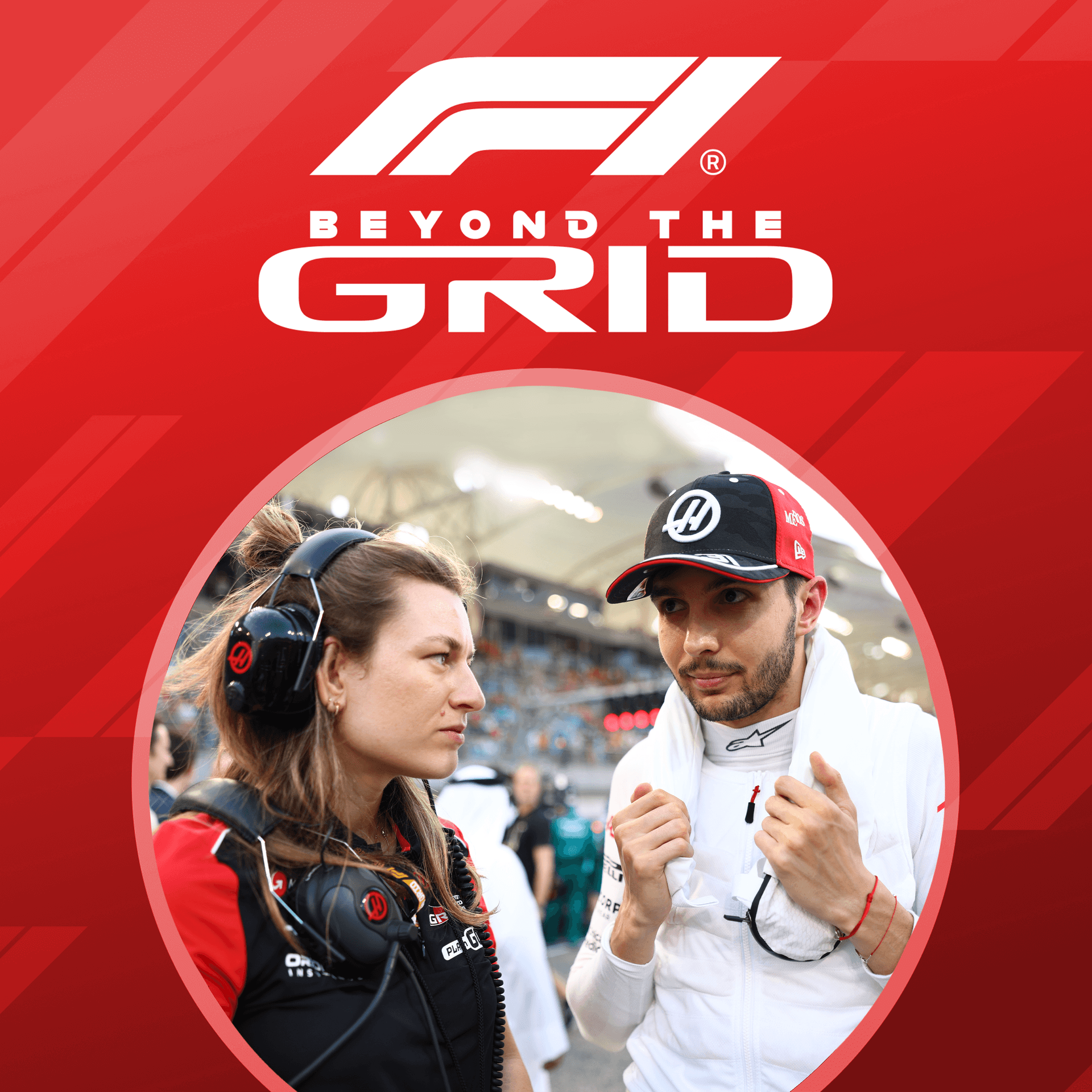
Laura Muller and Esteban Ocon discuss their Haas race engineer–driver relationship in 2025, focusing on communication on the radio, decision-making speed, trust in data vs driver feel, and how they reset after bad weekends. They also cover Laura’s transition from performance engineer to race engineer, Haas’ simulator workflow with Ferrari, and what changed after a tough Melbourne start.
Guests (backgrounds)
- Laura Muller: German engineer; previously performance engineer (including GT3 work at the Nürburgring). In 2025 she became Haas race engineer.
- Esteban Ocon: French F1 driver; joined Haas in 2025. Mentions Schumacher as a childhood hero and describes his endurance racing background.
Key claims
- The driver can’t drive “alone”; the engineer is the driver’s “eyes from the outside.”
- They aim to talk about once per lap, but escalate to ~25–30 seconds in critical moments (strategy, mechanical/engine issues).
- Race engineer work is heavily people-management and mood management, not just setup.
Notable examples
- Melbourne: P25 after first run; they “digged,” changed parts, and later achieved P7 in China.
- Wet conditions example: Laura spots off-track incidents and helps Ocon preempt braking/lines.
- Radio timing: in quali, they avoid speaking unless there’s a yellow flag or imminent danger.
Written by AI. May contain mistakes. Listen to the episode to check what was said.
Chapters
Tap a time to open that second in VOIntroduction to F1 Beyond The Grid
0:03 to 1:13
Learn about the unique dynamics of the F1 driver-engineer relationship.
“booking guests across time zones, tight turnaround edits and constant time management.”
Introduction to F1 Beyond The Grid
1:17 to 2:28
Learn about the unique dynamics of the F1 driver-engineer relationship.
“This is a job for Indeed Sponsored Jobs.”
Understanding the Role of Race Engineers
2:28 to 3:39
Explore the critical role of race engineers in F1 and their communication with drivers.
“You hear something, you stay a little longer.”
Esteban Ocon and Laura Muller: Team Dynamics
3:39 to 6:41
Hear insights from Esteban Ocon and Laura Muller on building a successful team dynamic.
“The voice in their ear is their race engineer, the main link between driver and team, both on track and off it.”
Communication During Races
6:41 to 10:20
Discover how Esteban and Laura communicate effectively during races.
“And when we are doing a strong weekend, we can feel it all together.”
Adapting to New Roles
10:20 to 14:00
Understand the challenges and smooth transitions in their new roles this season.
The Role of Race Engineers and Driver Dynamics
14:02 to 17:38
Explore the complexities of the race engineer and driver relationship and how they collaborate effectively.
“before we actually started the things for real.”
The Role of Race Engineers and Driver Dynamics
17:41 to 18:51
Explore the complexities of the race engineer and driver relationship and how they collaborate effectively.
“There's a lot that goes on behind the scenes of this show, booking guests across time zones, tight turnaround edits and constant time management.”
Motivation and Experience in Motorsport
19:04 to 22:42
Discuss the importance of motivation in race engineering and personal experiences in motorsport.
“This is a job for Indeed-sponsored jobs.”
Transitioning from Endurance to Formula One Racing
22:42 to 28:01
Delve into the differences between endurance racing and Formula One, including car setup and race strategy.
“Just tell us a little bit about your journey.”
Show all 24 chapters
Anticipating Upgrades and Realistic Expectations
28:01 to 29:19
Learn how drivers manage expectations around car upgrades and performance.
“So the anticipation, I think, for an upgrade is less because, you know, it's going to improve, but where we are right now is actually okay.”
Reflections on Melbourne Race Struggles
29:20 to 30:45
Hear insights on the challenges faced during the Melbourne race and lessons learned.
“Yeah, it was so long ago that we forgot it.”
Digging Deep: An Engineer's Approach
30:46 to 31:44
Understand the problem-solving process engineers use after a tough race.
“We didn't change fundamentally, you know, a lot of things in terms of setup, but we kept digging and we improved massively our performance.”
Diversity Among Racing Drivers
31:45 to 34:07
Explore the unique traits of racing drivers and their differences from one another.
“if you start the weekend with a car and you're terrible, you're obviously trying to salvage everything you can with setup.”
The Role of Feedback in Driver Performance
34:08 to 36:55
Discover the importance of driver feedback and its impact on race performance.
Simulator Use in Race Preparation
36:56 to 39:04
Learn how simulators are integrated into race preparation and their limitations.
“We're trying that, but obviously on Teams or whatever, I'm there.”
Simulator Use in Race Preparation
39:51 to 41:01
Learn how simulators are integrated into race preparation and their limitations.
“booking guests across time zones, tight turnaround edits and constant time management.”
Inspiration from History: The Short History Of Podcast
41:20 to 42:05
Get inspired by historical innovators through the Short History Of podcast.
“it's that progress comes from people who are willing to push the limits.”
Lessons Learned Together
42:05 to 44:37
Esteban and Laura discuss the biggest lessons they've learned as a team this year.
“Search for Short History Of wherever you get your podcasts.”
Adapting to New Roles
44:37 to 47:15
Esteban and Laura share their experiences adapting to new roles in the racing team and how it helped them bond.
“But I've never found, you know, an engineer that was, you know, so hard on two things to, you know, prove the point, find the point and get the best out of things.”
The Thrill of Race Day
47:15 to 49:51
Laura describes her feelings during races and the satisfaction that comes from a well-executed qualifying session.
“wall laura i wanted to ask you about miami you're cool i mean come on i'm pretty cool Oh, the famous Miami thing.”
Intensity of a Grand Prix Weekend
49:51 to 53:08
Laura explains the demanding schedule and intensity of a grand prix weekend, especially during sprint weekends.
“You know, like, because obviously I was a performance engineer for a long time, for me, like, the heart and soul of what I like doing is still, like, the car setup.”
Memorable Moments in F1
53:08 to 55:59
Laura shares a memorable moment from F1's history, highlighting her experience during Kevin Magnussen's pole position.
“because with the resurfacing, people didn't know that the interns were actually lasting the whole race and they boxed.”
Reflections on the Race and Collaboration
56:00 to 56:49
Learn about the significance of KMAG's pole position and the teamwork dynamics.
“He just drove a mega lap but this pole position made the whole year better because 2022 was hard.”
Transcript
Automatic transcript. May contain errors.0:00This episode is sponsored by Indeed. There's a lot that goes on behind the scenes of this show, booking guests across time zones, tight turnaround edits and constant time management. And when things get chaotic, you realise pretty quickly how important it is to have the right person on your team. If I had to hire someone tomorrow, I wouldn't just want a good editor. I'd want someone who understands pace in long form interviews and can work fast under pressure. And in moments like that, you think, this is a job for sponsored jobs. Because Indeed Sponsored Jobs boosts your listing in search results, helping you reach the candidates with the specific skills and experience you actually need.
0:39And it works. Sponsored jobs posted directly on Indeed are 95 % more likely to report a hire than non-sponsored jobs. That's a serious edge when the pressure's on. Spend less time searching and more time actually interviewing candidates who check all your boxes. Less stress, less time, more results. When you need the right person to cut through the chaos, this is a job for Indeed Sponsored Jobs. And listeners of this show will get a$75 sponsored job credit to help get your job the premium status it deserves at indeed.com slash podcast. Just go to indeed.com slash podcast right now and support our show by saying you heard about Indeed on this podcast.
1:20Indeed.com slash podcast. Terms and conditions apply. Need to hire? This is a job for Indeed Sponsored Jobs.
1:54all about. Each vividly immersive episode delves into one remarkable subject from world history, from revolutionary people and world-changing inventions, to defining events that still shape our lives today. So if you love innovation, ambition, and stories about what happens when people go all in, give Short History Of a listen. Search for Short History Of wherever you get your podcasts.
2:27What's up, y 'all? Summer's got a different tempo. Everything's a little looser, brighter. One plan turns into another. You hear something, you stay a little longer. Next thing you know, you're somewhere you didn't plan to be. It's those in-between moments. That's where the ideas hit. Conversations stretch out. Little memories sneak up on you. Sometimes, it's just about what's in your hand. That color. That chill. the new tropical butterfly refresher from Starbucks. Guava and passion fruit flavors with mango pineapple flavored pearls. Yeah, that feels like summer before you even taste it. Funny how one small stop becomes the best part of the day.
3:07Start your summer rhythm with Starbucks. Try the new tropical butterfly refresher from Starbucks.
3:18F1 is an extreme sport in which cars race at 200 miles an hour, inches from walls and from each other. Drivers are pushed to their limits, both physically and mentally, but they're not out there alone. Safety car, safety car. Lots of people are boxing for slicks. We are expecting more rain in 10 minutes. I don't think slicks now. Copy. The voice in their ear is their race engineer, the main link between driver and team, both on track and off it. What the engineer says and when they say it is crucial. Once a lap, you say, this is how many laps to go. I think if I start talking to you more than once a lap, you'd be like.
4:04If it's critical decision to take on strategy, there are times where we must have talked like 25, 30 seconds in a lap. But you lose time doing that. A driver's relationship with their race engineer is probably their most important in the sport. So when Laura Muller and Esteban Ocon were teaming up at Haas for the first time earlier this year, they were eager to get up to speed quickly. Were you scared? Yeah, because obviously we were both new, so I wasn't too sure at first. Laura, she's the most motivated that I know. She's the hardest working engineer I've ever met. Because we were all new to what we were doing, we all don't really have a preconceived idea of how it should be and just do things the way we need them to be done.
4:53So I think we moulded very well together.
5:00Hello and welcome to F1 Beyond the Grid with me, Tom Clarkson. A brand new role for Laura Muller and a brand new team for Esteban Ocon. 2025 has been a big learning curve for both of them. So how have they built such a strong relationship? What do they need from each other and how do they communicate both in and out of the car? Laura and Esteban share brilliant insights into their first season together. You'll hear fascinating details like when is the right time to talk on the radio and how often that changes in different situations. Laura also looks back on her journey to becoming a race engineer and the childhood hero who inspired both hers and Esteban's career.
5:47Guys, great to have you on the show. How are things? Good so far. So far, so good. So far, so good. Tell us first of all about the race driver, race engineer relationship. How would you describe it, Esteban? Well, it's the most important part of the work, really. Having to have Laura as my eyes from the outside is the most important thing. Together, if we don't work well, we are suffering in the weekends. That's the way it goes, unfortunately. You can't drive the car nowadays alone. We were chatting about that earlier. Yeah, there's so much going on that we need to be having many brains together.
6:29and if you put that in a good way, you can improve and you can build your weekends much stronger. So for me, that part of the work is the most critical one, the prep before, the prep on Thursdays, the chats in between the sessions. And when we are doing a strong weekend, we can feel it all together. It's becoming one piece and it's going to plan. It's a very satisfying piece of work in between and behind the scenes. Laura you're his eyes and another brain on the outside of the car how do you see what he does to help you you have a preconceived idea how the weekend's gonna go like you you start somewhere and you think you're gonna end up at a different place with setup and all these things but without his feedback like when he finishes a run you don't really know where to go because you can look at the data but in the end what he feels in the car is is very vital to our decision making so without his comments i would take much longer to make decisions but she would still be able to but she needs time the time is the constraint that's that's the thing so all the info is there in the data yes and by speaking to estepan you can just speed up the process yeah basically like you you see in the data what's happening but then you know i i usually say to estepan we see this and this do you agree if he says yes you can you can go ahead and move on but then if he would say no that's absolutely not what I feel then it gets like complicated but yeah you kind of need the agreement we're talking at race 21 this is the first year that you guys have worked together how long did it take you to understand each other to how long until the telepathy between you started working i don't know how much telepathy you need from me but i'd say like three four races until you like broadly know what this guy needs and what he means and stuff but i think i think we're still in the process of sometimes i think you want this but you want the exact opposite so it just you know i think it never really stops hang on laura can you just explain what you've just said so he says one thing and actually just explain that Laura please no but like so you know you have all these decisions to make and and things and like my boss asked me oh what do you think Esteban would want and sometimes I'm like I think he wants this and then I talk to him and he he says no I want the exact opposite but he has a good reason for it and I have a good reason for mine but then you know I just I just anticipated something completely different what do you always say the blanket's too short.
9:13That's your thing. There's always a compromise somewhere. La comperta e troppo corta. Yes. In Italian, it's the blanket's too short. So you can't have everything you want, which is where, you know, we have to take the decision together, which is quite important. Let's talk about your driving style, Esteban. What do you want from a race car in order to be quick? I think the most important is to have the confidence, you know, to attack the corners, you know, strong braking, no lockups, good front end, mid-corner you know if we have a car that's obviously you know good at that you can drive it around and be fast you know but if the car limits you especially on the front end side of things which is where we struggled a bit earlier this year that has improved massively towards the end of the year now but we've had that and we've you know struggled a bit to put the laps together at times um once you have a car that turns well you can perform but it's there's much more into that you know because Laura she has an eye also on what's overall happening in the session and for example you know when it's wet when it's starting to rain like Silverstone for example you know I'm gonna tell her if you see somebody going off let me know because I know I have to attack the corners and break at the point where it's dry and sometimes you have no warning you break you are the dry points but it's actually raining like 20 seconds ago you just go straight but if she tells me she sees what's happening around she gives me the right information and I can preempt that stay on track gain the positions and not have a drama so you know there's a lot that goes into it yeah so the conversation when he's out on track how many times a lap would you be talking to Esteban I kind of try to limit it to once it depends on the condition it depends you know is this a race where not much happens is this a race where he's fighting someone is it wet all these kind of things because normally you know once a lap you say okay this is how many laps to go but for example in a quali lap i would never dare to say anything if not you know somebody's literally spinning off in front of him or there's a yellow flag i think if i'd start talking to you more than once a lap you'd be like and always on a straight right yes that's that's the hard bit because sometimes gps is off sometimes you know you are trying to speak in the straight but it happens in the corners but there are times where normal situation wants a lap as Laura says but if it's you know something critical like brakes are you know over the roof there is an issue with the engine a critical thing or there is you know a critical decision to take on strategy you know we agree to talk as much as we we can because that's critical for our race so there are times where we must have talked like 25 30 seconds in a lap it has happened but you lose time doing that you know because you are not fully focused on what you are doing in front so you will lose two or three tenths by keeping on talking but if you gain 10 seconds or 15 on your overall race time or you finish a race well it's just a game let's wind the clock back i'm fascinated about this relationship between you two always new for both of you at the start of this year new job for you laura performance engineer in the past up to race engineer this year brand new team for you Esteban just how difficult were those opening weeks well you know what it was not easy for sure there was a lot to adapt but the transition has been incredibly smooth and that's also thanks to you know Laura's work um it didn't feel like you know Laura was new to the role it felt like she's done that for years you know already you know she knew exactly you know where to position me where to put me what what we needed to do what time of the work we needed to do and arriving in the first race on the melbourne track which is the hardest one on a wet weekend uh there i think you know even if the result was not exactly what we wanted i think for a first weekend like that both of us in the new role we've done pretty well um and yeah i mean we've done an enormous amount of work in the winter you know sasha and laura they came to my training camp as well we spent a couple of days there to discuss about things to just do like a team building you know type of event and we went caving you know managing stress and we put ourselves in ridiculous situations in purpose you know to just have some genuine reaction you know to things I'm not gonna tell you exactly all this is where she breaks yeah but it was hard for me too you know it was really really tough But, you know, in moments where we needed to perform on different exercises, well, we could see the real us, you know, at the time.
14:01And that was really good to be able to experience that before we actually started the things for real. Did he have you doing fitness stuff as well? Yeah, that wasn't the problem. The caving was much more interesting. I've never done it. It's scary. Is it? Yeah. If you're claustrophobic, don't do it, basically. Yeah. how different is race engineer from performance engineer um it's more different than i anticipated really because like from a performance engineer perspective you think oh the race engineer basically does kind of like supervises what i do and then you know deals with the driver but the the dealing with the driver part is is a huge part of of this whole job because you know you're not a car you're a person so i can't just say oh this is the setup you know i have to this is all the compromise you have to talk about everything you have different ideas like a lot of work goes into it and also the the managing of people aspect because like you know okay i i do a lot of work but like everybody in the factory or the aero engineers and you know now my performance engineer they do all the thinking and i just take the thoughts and put it you know into a funnel and then we decide what we do but all this is a lot of work because you have to listen to everybody you have to you know understand what they're thinking ask them questions it's just like you spend a lot of time not producing anything and i and really underestimate managing people yes i'm fascinated by you saying that you know esteban is not a machine he's a human being are we talking psychology here yeah of course like you know if if you come to a weekend and you're like you don't feel great you're in a bad mood and stuff of course i need to see this and i need to think about this you know like i can't just be like oh well he's in a bad mood whatever like some part of you also has to work on improving his mood and his outlook on the weekend how different are race engineers estepan i mean how different is laura to josh the guy you worked with last year at alpine that is interesting very different no they are very different in how they approach the job um yeah i think so but like anyone you know um at the end of the day you you learn with you know what experience you had before and then you build yourself with also the surrounding you have and it is very different here at Haas you know we have a lot more flexibility on things you know it's very different the environment and I think yeah Laura has a lot of say on a lot a lot of things basically that's that's happening and that's that's a very good thing because you know she's very modest and she says she just picks ideas from left to right but she has to put them together and sometimes there's not one idea there are 10 different ideas you know and you need to pick one, which is the best one.
17:01So, you know, we are very honest, you know, between us also, which is very good, you know, when I don't do the right job, you know, she's going to tell me together with Sasha. And that's also important. But when I don't think it's also right what we did, I will also say, but it's in the benefit of us all to improve for the next time. So it's difficult to compare, you know. but yes, like everybody, we are all very different in the way we work. But the important is to work on the leader areas that we can always do better. At least that's my thought. This episode is sponsored by Indeed. There's a lot that goes on behind the scenes of this show, booking guests across time zones, tight turnaround edits and constant time management.
17:49And when things get chaotic, you realise pretty quickly how important it is to have the right person on your team. If I had to hire someone tomorrow, I wouldn't just want a good editor. I'd want someone who understands pace in long-form interviews and can work fast under pressure. And in moments like that, you think, this is a job for sponsored jobs. Because Indeed Sponsored Jobs boosts your listing in search results, helping you reach the candidates with the specific skills and experience you actually need. And it works. Sponsored jobs posted directly on Indeed are 95 % more likely to report a hire than non-sponsored jobs.
18:25That's a serious edge when the pressure's on. Spend less time searching and more time actually interviewing candidates who check all your boxes. Less stress, less time, more results. When you need the right person to cut through the chaos, this is a job for Indeed Sponsored Jobs. And listeners of this show will get a$75 sponsored job credit to help get your job the premium status it deserves at indeed.com slash podcast. Just go to indeed.com slash podcast right now and support our show by saying you heard about Indeed on this podcast. Indeed.com slash podcast. Terms and conditions apply. Need to hire?
19:04This is a job for Indeed-sponsored jobs. If there's one thing Formula One proves, it's that progress comes from people who are willing to push the limits. And history is full of them. The inventors, engineers, leaders and outsiders who change the game through bold ideas, nerve and moments of brilliance. That's what the podcast Short History Of is all about. Each vividly immersive episode delves into one remarkable subject from world history, from revolutionary people and world changing inventions to defining events that still shape our lives today. So if you love innovation, ambition and stories about what happens when people go all in, give Short History Of a listen.
19:55Search for Short History Of wherever you get your podcasts.
20:17Does it help, Esteban, if a race engineer has raced themselves? Does that help them get into your mindset? Not necessarily, no. No, I think the most important thing is, you know, how motivated and how hungry, you know, the people around you are. And Laura, she's one of the people that are the most motivated that I know. you know she's the hardest working engineer i've ever met you know she doesn't count hours um she she will be flat out until she has the point until she proves the point until she knows that's correct um but in the meantime you know when we don't do something correct she will reset and and try and do it do it differently for the next time but if you had a race engineer that had raced sometimes he will try and do the racing driver job which is not you know everybody needs to be at his place you know which is quite important yeah i think you'd have competing thoughts yeah exactly yeah so no i don't think so so laura do you just want information from him or do you want him to come out or do you want him to suggest solutions as well or is that your job that is my job it's not like he doesn't like to sometimes suggest solutions but like in in a perfect world you know he he just has to provide the information and i find the solution but also it helps like if then i have a solution and i present it to him then he has an an idea if if this is what he wants or not we're not that independent from each other we this is we need to talk to each other all the time it's just a revolving conversation I suppose I should ask have you raced uh no what did you ever want to as a child yes but as a child your push behind an idea is not that great if your parents aren't into that but I don't regret not having raced sometimes I would like to just do a lap somewhere just to feel all these things he's always telling me but I need to take you around the lap that would be nice in the car i can feel a pirelli hot lap coming on yeah that would be awesome actually actually i would love that yeah yeah not just to learn but just to experience it's actually crazy we haven't done that yet like we have we are so like head down into the work and yeah we need to make that happen laura you used to work for a gt3 team based at the nurburgring there were no laps of the nordschleife after work um no because i have a very modest car or i used to and that's even more fun yes but if you destroy that car you don't have a car anymore and also i don't think if you know but if you destroy like the barrier at the nordschleife you have to pay per meter and it gets very expensive well just don't crash but i've done One laps in the passenger seat in the wet in a Porsche GT2.
23:19That's not fun. Oh, my God. I thought I'm going to die. Yes, that's not fun. Laura, why motorsport for you? Just tell us a little bit about your journey. Listeners and viewers of the show know about Esteban's. We have the same child of the euro, do we? Michael Schumacher. Really? Oh. Yes. It's wholesome. Was it Michael Schumacher that brought you in? Yeah, because, you know, I'm German. you watch F1 in Germany as a child and Schumacher won seven world titles so you see him all the time you see him dominate and you know on television I mean I've never actually met him but on television he seemed like this wholesome really great guy so as a child you're just like oh this guy is great so yeah and I don't know my mom used to watch a lot of motorsport so I watched F1 every every week so the attraction was motorsport first then engineering second second or did they come together?
24:15Definitely motorsport first, because like until you actually enter motorsport, I don't think a lot of people have a lot of ideas what people actually do here, because from the outside, if you don't like look into it so much, if you don't listen to podcasts and all these things, it's just the idea is interesting. But then like after school, I was like, how do I get into motorsport? And then I realized, okay, I should, you know, either become an engineer or a mechanic or all these things so that's you know how the detail formed of it Esteban told a great story last time he was on the show about being at the French Grand Prix at Manicor I think you said 2006 dressed I think head to toe yeah in Michael Schumacher yes exactly yeah getting booed by Fernando's fans back then did you ever go to Hockenheim and watch Michael or any other race?
25:09I think, I don't know which year it was. I think it was 2004 Nürburgring. I think it was, I think Michael actually won that race. And yes, I went to that, but I went because I knew somebody who drove Porsche Super Cup and I was too young to go into the pit lane, which was very sad. But yes, I went to, I think, two F1 races in my life before I entered it as a job. and then as a job it was sports cars wasn't it and gt3 and and what was it like going to lemar tell me about those long distance races and how how different it is from a work point of view to what you're doing now so i still very much love endurance racing like you're saying that's easy now no it's very it's a very different difficulty in in a way it's obviously you have very different focus but I still love watching them now obviously like a 24-hour race you have to stay up 24 hours that's difficulty number one and then you know you have to set up a car for three different compounds for wet dry dark light all these things for three different drivers so I didn't enjoy that very much but also because not so much anymore or in the top categories but if you make a mistake or if something bad happens at the beginning of a 24-hour race you can fix it you can come back from it whereas here you know at the start if you lose three positions your race can be over so I enjoy the the fact that you can come back from somewhere how different is a sports car to set up to a Formula One car is it is it more basic do you have more or less tools for you to use on a sports car I think from a suspension point of view they're actually very similar it's not as like complicated because the packaging doesn't need to be so small and all these things but like from you know which things you can adjust it's very similar but then obviously of course the aero because like all the cars are the same and all these things you have much less tools to work with and then also you can't change anything the good thing about Formula One is if you after one race you say oh I think we should change this part you can actually just talk to the designers and it will happen so that's the enjoyable part about f1 that it's not a one make serious and you have a huge impact on the car next year the car in three races and all these things describe the sense of anticipation when a new part is coming to the car and i'm thinking most recently most recently in austin right we had we had the upgrade there just describe what it was like during the build-up and and how how you guys got on top of it i like that you describe it as a birthday present basically um i wouldn't say i i get excited about it because i'm very like realistic and you know they they will make a presentation and they will tell you oh we think it gains two points here three points there and stuff so I usually you know think about the worst I can expect because then she only believes it when she sees the performance gain on track basically which isn't I don't it's not because I don't trust you know the designers and all this stuff it's just like I really hate being disappointed so I always like go in with a slightly underestimation just to be sure that I don't stand there and I'm like oh great this this sucks I think this year because the car was was good this year, the whole year, you know, we weren't nowhere with the car.
28:46So the anticipation, I think, for an upgrade is less because, you know, it's going to improve, but where we are right now is actually okay. Whereas in years, you know, where you've struggled and your P20 the whole year, if you get an upgrade, you're like clinging onto it thinking this is going to change your trajectory basically. Hang on guys. I know you say, I know you say the car's been good all year, but I want to take you back to Melbourne, all right? Oh, please don't. You forgot something there, Laura. You two have only been working together for a month or two at the time. You're still getting to know each other.
29:20You're still getting to know the car. How tough was it to go to Melbourne? And I'm going to use the word struggle. It was a struggle, wasn't it? Yeah, it was so long ago that we forgot it. That's the good thing about F1. There's a race every week. But guys, what happened in the immediate aftermath of Melbourne? It was a reality shock, I think, for us all. After the first run, I remember thinking, yeah, that lap wasn't too bad. Where are we? P25. Yeah, we are basically last. Okay, that's very strange. And the car was doing very weird things in a way that we were not expecting. And yeah, at the time, I mean, I didn't say it to anyone.
30:04I kept it for myself, but I thought, shit, that's going to be a very long year. Laura probably thought the same, but we didn't say that to each other because we need to be at it. We need to improve the situation. We need to do everything we can to make that car work. So when we traveled to China, we had very little hopes, but that's still my best result of the year. That's the checkered flag, mate. P7, P7. Good job, guys. Super happy for you guys. Yeah, man, what a turnaround. What did you change for China? Well, we changed quite a lot, actually, of actual parts on the car. That was one big thing.
30:49We didn't change fundamentally, you know, a lot of things in terms of setup, but we kept digging and we improved massively our performance. and the car felt actually very good in China in comparison to how I was in Melbourne. And Laura, from an engineer's point of view, when you've had a really tough moment like you did in Melbourne, Esteban talks about digging, you did some digging. Where do you look? Our job is to describe what the problem is, to point out where the problem arises, how it affects him and all these things. and we just give that feedback to the design office and to the aerodynamicist and all this stuff and then they dig on their side where it comes from.
31:34So we look on the surface where the areas is where we're struggling but they look at the parts where it actually comes from. But from a setup point, of course, if you start the weekend with a car and you're terrible, you're obviously trying to salvage everything you can with setup. so yeah in Melbourne we we spent all night just trying to to solve the the situation if you took the car back to Melbourne now how much better would it be well we will see we will see very different sadly it'll be interesting you can't go back to a track and say yeah everything will be fine but it will be much better it will be much better I'm not going to say we will you know finish fifth and and fight with mclarens and red bulls but yeah we've come a long way since then a lot of understanding the cars dramatically change i think the aero consistency across parts and and how you know we've seen things this year and the amount of learning we've had yeah it would it would be a very different race weekend for sure how different are racing drivers Laura, you've worked with a few over the years.
32:48At Haas, I think Kevin Magnussen was the guy you worked with most as a performance engineer. And then I think at Le Mans, tell me if I'm wrong, Juan Pablo Montoya? He was on my team, but he wasn't on my car. He wasn't? Okay. But how different are drivers? And are Formula One drivers just a cut above? I had that question before, so your turn. So as Estevan said about race engineers, people are very different. So also, I don't think I've ever met two racing drivers who reminded me of another one. They're all very different. And I think because, you know, the bringing up the pressure and all this stuff, you become a very distinctive personality, which is, I think, the same for engineers and F1, really.
33:34I wouldn't really say that F1 drivers are a cut above. Sorry. What does that mean? like I don't think F1 drivers are so much better than drivers in in endurance racing and stuff like this it's just they were at the right place at the right time oh thank you no but like I think I think if you would have had one different turn in your life you would have ended up somewhere else and I think it's the same for a lot of drivers who drive endurance racing now and also there was drivers who were in F1 who then you know had a few bad races and then they're gone forever so I think you know like any racing driver who competes in a factory competitive world championship is an extremely good driver so I wouldn't make a difference there to be honest Laura's definitely a realist
34:30Laura where are the good ones better is it all about feel is it about feedback be nice I've never managed that I think there's two different best or good so either you have a driver who's very talented and has a very good feel and can just very well explain to you what's happening in the car to to help you make a decision or you have a driver who is talented enough but also works very hard also knows the car and how you know what you can change on the car and that driver will describe to you what's happening but also then have some suggestions in which direction you can go but for me the the best driver is obviously fast but also has very good feedback because without feedback like we we can't get anywhere how much sim work do you guys do as part of your preparation how key is that um so we i don't know if people know this but we don't have our own simulator in the factory so we we have a cooperation with ferrari on this so first of all we have to go to italy to go to the simulator and um as you know the the trackside engineering team we do all the races so basically i don't go to the simulator we we have like um you've been actually this year yes but i don't i don't go to all the sessions just because it's just too much i wouldn't be able to do the actual race event preparation then so what engineering team do you have around you when you're in marinella so i have the engineering team you know one one person works at us he's called marizio bocci um he's working there um you know for our team and we have the engineers of ferrari that are basically managing the sim but laura works with marizio at the team in Italy to basically send all the test items that she needs before we get to the track in FP1.
36:34So basically she will have a detailed report on every run that I will send her after the simulator day because she's prepped all the run plan and then she will know what's the best setup item that we should try or that we should use for the race weekend. Is it one sim day per race? pretty much yeah except the triples or the doubles like we we basically can't come back in between I've done that in the past but it's it's just too much because you need to recover after a race weekend or when you are you know in this part of the world you can't really come back to Italy in between um so yeah it's usually yeah one one same day before every race and after every race Can you join them virtually?
37:20We're trying that, but obviously on Teams or whatever, I'm there. But we have a very specific setup. So at the moment, it's not really possible. But as Esteban kind of described, I run a very tight ship of what's been done. So I don't need to put a lot of input into it during the day. Can you give me some examples? So we're going to Interlagos. we're going to try what i want to try this rear suspension i want to try this front suspension this ride height and then you put those into the sim and report back what works best basically yeah what's quicker yeah what's quicker what feels the best the simulator is always difficult to tell you know some stuff you need to be aware that the simulator will have some limitations compared to the track but the more you go the more you find out this basically but it's very good practice for us all it's also something that you know we've tested so we gave it our best there's no regrets you know once you get to the track and yeah i mean i will have a first feel of what this change could do basically and what's the correlation like between the sim and what you're feeling out on track but the more we go the better it is normally so the more both drivers have inputs post races is the better the problem recently with you know how it is in f1 is that you can't correlate a triple header plus prepare a double or triple unfortunately you don't have enough time so you will privilege your prep for the next weekend instead of developing your previous weekend to help next year you know so you do some correlation but not the whole thing and laura for you having io as as team principal but massive engineering brain in there has has he been a support to you like in my life in my job no no all of the above i don't know yeah of course like um at the beginning of the year um when when i had like a race engineering question he would be the the person to go to because my boss was also new to the team.
39:34So, you know, he was learning how we work, how modern F1 works, all these things. So, you know, I could ask him for a broad advice, but like if I needed something specific, yeah, I was the person I went to. This episode is sponsored by Indeed. There's a lot that goes on behind the scenes of this show, booking guests across time zones, tight turnaround edits and constant time management. And when things get chaotic, you realise pretty quickly how important it is to have the right person on your team. If I had to hire someone tomorrow, I wouldn't just want a good editor. I'd want someone who understands pace in long-form interviews and can work fast under pressure.
40:13And in moments like that, you think, this is a job for sponsored jobs. Because Indeed Sponsored Jobs boosts your listing in search results, helping you reach the candidates with the specific skills and experience you actually need. And it works. Sponsored jobs posted directly on Indeed are 95 % more likely to report a hire than non-sponsored jobs. That's a serious edge when the pressure's on. Spend less time searching and more time actually interviewing candidates who check all your boxes. Less stress, less time, more results. When you need the right person to cut through the chaos, this is a job for Indeed Sponsored Jobs.
40:51And listeners of this show will get a$75 sponsored job credit to help get your job the premium status it deserves. at indeed.com slash podcast. Just go to indeed.com slash podcast right now and support our show by saying you heard about Indeed on this podcast. Indeed.com slash podcast. Terms and conditions apply. Need to hire? This is a job for Indeed-sponsored jobs. If there's one thing Formula One proves, it's that progress comes from people who are willing to push the limits. And history is full of them. The inventors, engineers, leaders and outsiders who change the game through bold ideas, nerve and moments of brilliance.
41:39That's what the podcast Short History Of is all about. Each vividly immersive episode delves into one remarkable subject from world history, from revolutionary people and world changing inventions to defining events that still shape our lives today. So if you love innovation, ambition and stories about what happens when people go all in, give Short History Of a listen. Search for Short History Of wherever you get your podcasts.
42:27And so guys, in conclusion, what's the biggest thing you've learned together this year? It's a very weighted question. I think for me, it's like, first of all, to never give up, which sounds very like boring, but it's like, it has like different aspects for me. It's like to basically not lose faith. you know if it's going badly for one weekend you know you always have to reset yourself and just say okay I'm learning this and next weekend you know it's going to be different and we're going to improve this and also during during a weekend if some you know if qualifying went badly often you still have a lot to play for in the race and I think that's also something you're good at like you'll be pissed off for a minute but like as soon as the next day comes you just sit there and you're Like, okay, now I worry about today and I don't worry so much anymore about yesterday.
43:24I've heard other people say that about Esteban, resetting. You're quite good at that. Thank you. Thank you. I'm good at resetting. Forget, I have bad memories, so I forget. For you, what's the biggest thing? You know what? That's something I found actually, you know, awesome is that we are very similar in the way we work and the way we think about things is that I was going to say exactly the same. So it sounds boring, but, you know, never giving up, you know, keeping on digging, keeping on being motivated for what's coming ahead because there can be an opportunity even if things don't go to plan.
44:01And we've shown that this year. We didn't have, you know, the best Saturdays at the time, but on Sundays we've came back and we've rise the whole weekend and we, you know, made ourselves forget, you know, the beginning of the weekend. We didn't forget it because we've put it on the side to try and see what we could have done better there. But by resetting and focusing on the actual moment, we've saved the weekend, the score points. And Ayao told me, you know, you will work with Laura next year because you guys are very similar in the way you're working and how hard, you know, you are working. And I was like, yeah, okay, we'll see.
Read the full transcript
44:40That's cool. But I've never found, you know, an engineer that was, you know, so hard on two things to, you know, prove the point, find the point and get the best out of things. Esteban, how did you feel when Io said you were going to be working with Laura from the point of view of she was new to race engineering? Yeah. Were you scared? Yeah. Yeah, because obviously we were both new. So I wasn't, you know, too sure. at first. Yeah, it was quite a lot of unknowns because obviously, if you have an engineer that has been settled, that's worked, you know, the whole year in the race engineering job, it's just one side that needs to adapt to it.
45:25Now, you know, everything is new on our side of the garage. But I really think, like, we've adapted so well to the situation and so quickly. Roy has said three, four races. And to be honest, I wasn't even going to say less. I think we got little details further into the year that we always improve, but I think every engineer does that. But yeah, I think from race one, with the amount of work that we've done before, we were set and ready to race and to fight. Maybe both being new helped. Yeah, actually, I'm pretty sure in hindsight, definitely. I think it's always, so because our performance engineer was also new.
46:06Yes. So it was just like full new. but I always think if somebody is new the less experienced they are the more you can mold them to to what you need and I think because we were all new to what we were doing we kind of molded very well together and and just do things the way we need them to be done because like we all don't really have a preconceived idea of how it should be so I think you know we've taken the positive from that and how important was this year ahead of the rule changes next year you wouldn't have wanted to be in the situation you were in in January this year next January right?
46:43That would have been extremely difficult so I mean it's not a practice year it's not going like that because it's extremely important for us to to build but yeah I think it would have been much tougher to start with everything new and people learning around us as well and not knowing what we would face i think it has been very good to actually start now you know into the last year of that regulation it's been it's been strong and i'm happy with what we've done yeah because what wasn't you was the car exactly yeah yeah how cool are you on the pit wall laura i wanted to ask you about miami you're cool i mean come on i'm pretty cool Oh, the famous Miami thing.
47:32He's busy going around the outside of Lewis Hamilton, right? He wants that inside line. Ocon's not going to give it to him. So can he get around the outside and keep a wheel on the racetrack? We go side by side. Is there enough room? Through 12 and 11. What an overtaking spectacle we've had. And that door was always going to close. That's a peak reaction as well there. the wins we've all done it Laura Muller looking on what are you thinking at that moment well to be honest like in that moment I was just like a fan watching a battle like that's you know everybody's seen that video of me making faces and stuff but like in that moment I can't help him he needs to do his thing so you know there's not something I can look for or whatever so I was just watching you know your on boards and being like come on come on and that's like for me if I you know a race start for example is the same like in in the first three corners I can't do anything so all I'm looking at is is just you know the on board and hoping he's gonna make enough positions but it must be so satisfying when like it goes well like because the amount of work we've put in during the weekend and we see that it's actually it's worth it you know yeah like definitely like i have that feeling more in qualifying usually okay like when when we qualify well i'm just like yes is it really no because like you know like for me all i do like you know kind of the the peak of everything is qualifying because the race i can't change the car anymore so the strategy kind of takes over so yeah for me if i've done my job well we we qualify well so yeah the relief is is in quality that does that not apply for the driver as well though in that you know speed it's all about one lap on a saturday whereas sunday there is tire wear and traffic and all the other things affecting there's no points on saturday though yes but yeah it is extremely important it makes your life much easier for sunday but i would disagree a bit with you on sunday because it's also the the work that we've done on saturday that's going to transfer to Sunday.
49:46Because there's a lot of thoughts that goes into Sunday as well. But it's very different thoughts. Yes. You know, like, because obviously I was a performance engineer for a long time, for me, like, the heart and soul of what I like doing is still, like, the car setup. Yeah, yeah. She's frustrated basically on Saturday night when we can't change anything anymore. Like, oh, that's boring now. Yes, exactly. Can I go home now? You've talked about the sort of hard work that's gone in. for people at home just can you give us some ideas on a grand prix weekend how long are the days and also how does a sprint weekend change the intensity well you've been here for 11 hours now basically yeah i left the hotel at 5 30 this morning well it's 4 4 40 she still has two hours of work later.
50:37Thank you, Tom. Laura, jet lag? Why are you leaving? We're doing this on a Thursday. Why 5.30 on a Thursday? Okay, there's curfews. So to basically mostly protect the mechanics, really, there's curfews in place. So on Wednesday night, they start. So on Wednesday night, at a certain time, the mechanics and everybody else has to leave the track. Obviously, like, you know, the mechanics can't take the car home, but we can take our thoughts home. So for us, that doesn't fully apply. But then on Thursday morning, this morning at six o 'clock, we were allowed in the track. So if you want to maximize your working time, you're here at six o 'clock.
51:15But yeah, I can tell you exactly how many hours it is. So on a Thursday and Friday, it's usually 13 and a half hours. On Saturday, it's 13. And on a Sunday, it's 12. Because I do my time sheet every month. And how much does the intensity increase on a sprint weekend? It's very different, of course, because you have this from Friday to Saturday, you can't change anything. But then because between the sprint race and qualifying the time, it feels like it's 20 minutes. You have to prepare everything still before Saturday morning, but you don't know how the car is going to be in the sprint race. So sometimes you spend all this time on Friday night thinking, oh, yeah, this is what we're going to do tomorrow.
51:59And then in the sprint race, everything just gets turned upside down. So you do the exact same amount of work again after the sprint race. But in a very short period of time. Obviously, because you don't have three practice sessions, you do less changes, of course. But you have to think more because you have less chances of making it right. Just from a sporting point of view, do you guys like the way Park Fairmay opens up after the sprint? I think it's extremely difficult for all of us because there's a lot of uncertainty into a sprint weekend. For example, if there is an issue in FP1, you go into the qualifying blind, you haven't tested anything, you are not sure.
52:38Basically, every run counts because also your tire choice in FP1 can dictate if you are going to have a good strategy later in the sprint race or later in the race as well. And if you don't make every session count, well, you are going to have a problem somewhere. And that's going to be detrimental to your weekend. So unfortunately, we work with a lot less information and confirmation. So there's a lot of guessing and pre-event work and work from the years before. But that's also, you know, how I got the podium last year, for example, because with the resurfacing, people didn't know that the interns were actually lasting the whole race and they boxed.
53:19And, you know, it also brings opportunity and uncertainty. Yeah, and it's an opportunity for some and sadness for others. but I enjoy sprint weekends just because, you know, you have to, if you get it right to begin with, you have a really good chance. And because they open Park Fermi now, at least if you didn't get it right for the sprint race, at least you have another chance on it. But I kind of, I like that there's two qualifiers because it's just a bit more interesting. Well, we know how much you like qualifying. I actually like qualifying a lot. It was made for you, Laura, the sprint format.
53:54Oh, guys, it's been a wonderful chat. I can see that you two have a very special working relationship, actually. It's been great to witness it a bit. If I can just end this what I call the traditional way. Formula One is 75 years old this year. I've actually asked Esteban this question already this year earlier on. So, Laura, if there's one memory in F1's 75-year history that stands out to you, what would that be? I think you overestimate how much I know about F1 It can be one of yours also Okay, Kevin's Pole 2022 Okay, Kevin What position are we? You're P1, mate You're kidding You're kidding me I've never, ever felt like this in my life And Kevin Magnussen will be on pole position for the sprint race here at Interlagos.
54:53It was my second race as a performance engineer. And we were joking in the morning in the car because back then it was like the sprint weekend where you had FP1 and then it was done. And we were joking about how much I worked on the setup and I was like, I did my best. And then my race engineer was like, yeah, but is it good enough for pole? And I said, I mean, I said I did my best, you know, it's still a hass. And then he joked and he said, If we get on pole today, you're all invited to Fogo de Chao. And of course, nobody expected it to happen. So then when it actually happened, my first thing was like, excuse me, you know what's going to happen now.
55:33Did you go? Yes, the next year we went. But yeah, that was amazing. Just like, yeah, because it's a very emotional sport. And even though, you know, it was not because the setup was good. It was just right place, right time. but it's just like in that moment you're just like so ecstatic about such a good result. It couldn't have been terrible but you know like there was a lot of reasons why he got he got off. Of course yes. Take some credit Laura. He just drove a mega lap but this pole position made the whole year better because 2022 was hard. Guys thank you very much I know you've got two hours work still to do so I feel you better get back to it thank you both very very much for your time thank you who can forget KMAG's poll at Interlagos in 2022 a brilliant moment for the team and for Laura in only her second race as a performance engineer well I loved this chat with Laura and Esteban I hope you did too I learned a lot about how they work together how they rely on each other and how well they get on.
56:45Guys, thank you very much for your time and I hope you get that Pirelli hot lap sorted. Well, that's almost it for this episode. Before I go, don't forget to check out F1 Nation's review of last weekend's Qatar Grand Prix. Jolian Palmer and Paul Aron join me to discuss how Max Verstappen capitalised on McLaren's strategy error to ensure the championship fight goes down to the final race. That's out now and on Thursday we'll preview that unmissable three-way title showdown at the season finale in Abu Dhabi this weekend. Make sure you follow F1 Nation on your podcast app so you can hear that as soon as it's available.
57:21Thank you very much for listening. I will, of course, be back next week with another big name from the world of Formula One. F1 Beyond the Grid is produced by Formula One and Audioboom Studios. Until next time, keep it flat out.
57:40If there's one thing Formula One proves, it's that progress comes from people who are willing to push the limits. And history is full of them. The inventors, engineers, leaders and outsiders who change the game through bold ideas, nerve and moments of brilliance. That's what the podcast Short History Of is all about. Each vividly immersive episode delves into one remarkable subject from world history, from revolutionary people and world-changing inventions, to defining events that still shape our lives today. So if you love innovation, ambition and stories about what happens when people go all in, give Short History Of a listen.
58:26Search for Short History Of wherever you get your podcasts.
58:35Hey, it's Ryan Seacrest for Jewel Osco. For you, save days are here now through June 23rd. Find hot deals throughout the store and earn four times a point. Look for in-store tags to earn on eligible items from Triscuit, Quaker, Reese's, and Dots Pretzels. Then clip the offer in the app for automatic event-long savings. Stack up those rewards to save even more. Enjoy savings on top of savings when you shop in-store or online for easy pickup or delivery. Restrictions apply. See the website for full terms and conditions. It's called soccer. It's called football. Uh, soccer. Foot-ball. Domino's best deal ever lets you get any pizza, including stuffed crust, with any toppings for$9.99.
59:20Okay, we can agree on that. Yeah, fully. So, pineapple? Don't ruin it. Get any pizza, including stuffed crust, with any toppings for$9.99. Finally something everyone can get behind. And if the refs disagree, that's between them and Domino's, which means the only thing left to fight over is who's ordering. Domino's. Price is higher for some locations. Excludes XL and specialty pizzas. Select this offer from$615 to$726. Online only. Size availability varies by crust type. Max seven toppings. Six for pan and New York style crust. Minimum purchase required for delivery. Prices participation delivery area and charges may vary.
From the publisher
For Laura, it’s her first season as a race engineer. For Esteban, it’s his first season with Haas. And it’s their first time working with each other.
So how are they finding it? What do they need from one another to get the best out of each other? And how do they communicate in and out of the car?
Speaking to Tom Clarkson, Laura and Esteban take us inside their first year working together and how the relationship between a race engineer and an F1 driver works.
They provide fascinating insight into how they talk to each other on team radio – explaining when the right time to speak during a lap is, how often they should speak and why that can change in different scenarios.
Laura and Esteban also reflect on the highs and lows of this year – including how they bounced back from a challenging season-opener in Melbourne to score points in China the week after.
And you’ll hear all about Laura’s path to becoming F1’s first female race engineer and the childhood hero who inspired this journey.
This episode is sponsored by:
F1 Store: treat the F1 fan in your life this festive season with exclusive gear from the Official F1 Store. Shop now at F1Store.formula1.com
Shopify: sign up for your $1 per month trial and start selling today at shopify.com/beyondthegrid
Aura Frames: For a limited time, save on the perfect gift by visiting AuraFrames.com to get $35 off Aura’s best-selling
Carver Mat frames by using promo code GRID at checkout
Vanta: get started at vanta.com/GRID
Honda Vintage Culture: right now, listeners can get 20% off the full Honda Vintage Culture range. Just head to hondavintageculture.com and use the code BTG20 at checkout