In short
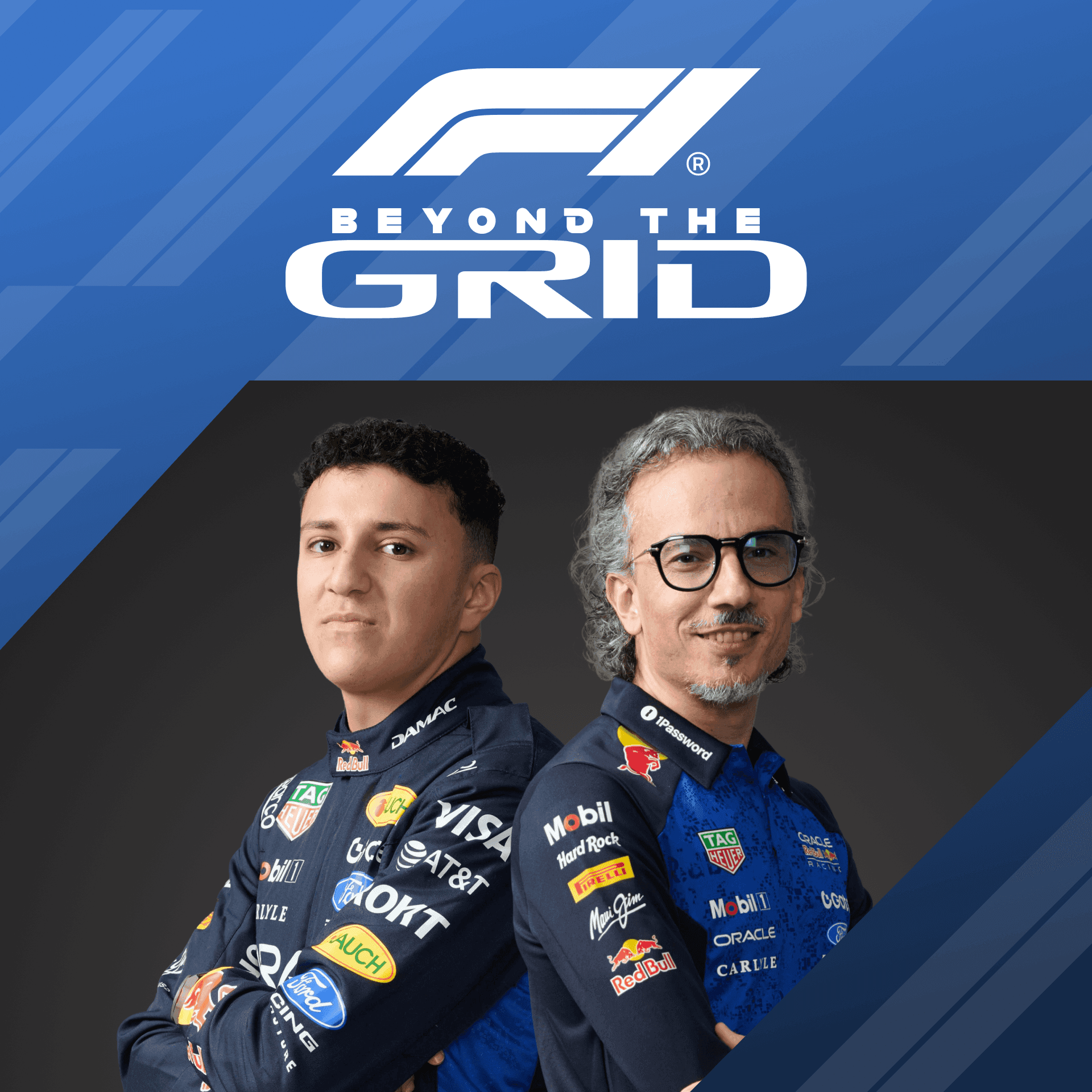
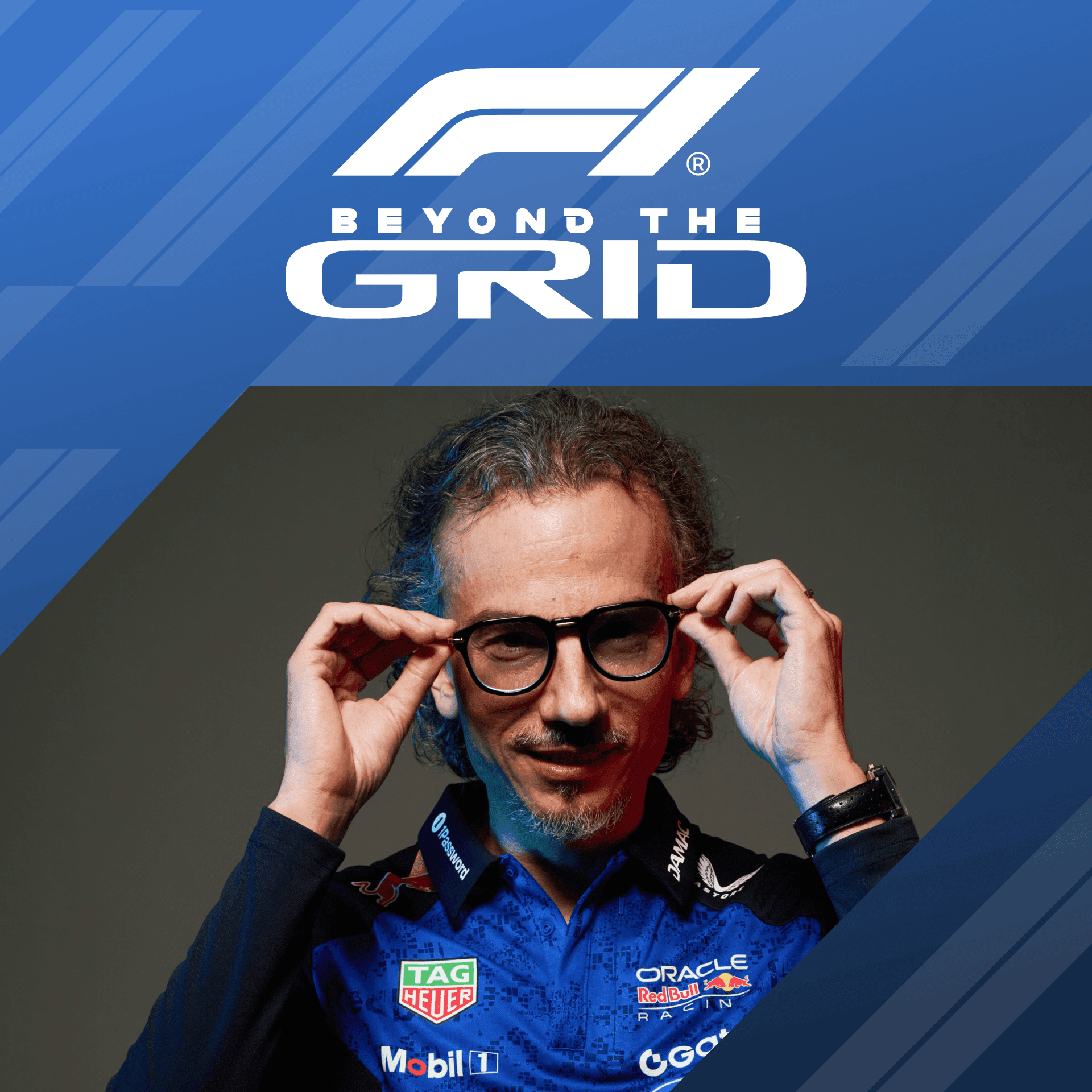
Laurent Mekies, Red Bull Racing team principal/CEO, discusses Red Bull’s 2026 regulation transition, power-unit start-up, early-season performance (currently fourth), and how the team is staying in “full attack mode” rather than treating 2026 as a transition year. He also covers Max Verstappen’s driving/debrief discipline, Isaac (likely Isaac Smith) integration, and Yuki Tsunoda’s prospects.
Guest backgrounds
Laurent Mekies is a former Ferrari executive who joined Racing Bulls as team principal, then was promoted to Red Bull Racing in 2025. He leads Red Bull’s first in-house power-unit era with Ford, now employing 700+ people in the PU division.
Key claims
Red Bull’s 2025 “turnaround” came from massive risk-taking on the 25 car; switching focus to 26 was resisted because “nobody wanted to turn the page.” The PU isn’t the single weakness; the gap to Mercedes is across areas. Max’s discipline and simulator-driven passion accelerate development.
Notable examples
Barcelona pre-season test without shakedown (100 laps); painful races cited include Zandvoort, Budapest, and Brazil; Isaac’s P3 qualifying in Melbourne; Yuki as reserve/simulator driver.
Written by AI. May contain mistakes. Listen to the episode to check what was said.
Chapters
Tap a time to open that second in VOLaurent Mekies' Journey
2:28 to 3:30
Mekies shares his transition to Red Bull Racing and the team's recent challenges.
“Laurent Macchiez has had a whirlwind couple of years.”
Leadership and Team Dynamics
3:30 to 7:01
Mekies discusses his leadership style and the importance of team dynamics in racing.
“and Laurent was more candid than I've ever previously heard him.”
Overcoming Challenges in Racing
7:01 to 11:05
Mekies reflects on the struggles and triumphs of the team during the 2025 season.
“What is the most important aspect of being team principal for you?”
Decisions and Future Strategy
11:05 to 12:20
Mekies discusses the strategic decisions impacting Red Bull's future in Formula One.
“I'm sure you recall Zandvoort or Budapest or maybe Saturday in Brazil.”
Addressing Transition Concerns
12:20 to 14:01
Mekies addresses whether Red Bull is in a transition year and the team's drive to succeed.
“does it have an impact on where you start?”
Red Bull's Competitive Drive
14:01 to 17:40
Explore the intense motivation at Red Bull to improve their car performance.
“But if you walk in Milton Keynes right now, there is fire in every single department.”
Building a Powertrain from Scratch
19:09 to 22:38
Understand the challenges and strategies behind creating Red Bull's power unit.
“Are you one of those people who sometimes uses words?”
Max Verstappen: A Natural Leader
22:39 to 28:00
Delve into Max Verstappen's unique qualities and leadership style as a driver.
“Does that imply that Red Bull's commitment to Formula One is greater today than it's ever been?”
Max Verstappen's Discipline and Performance
28:00 to 29:00
Explore how Max's mental discipline contributes to his performance and team dynamics.
“Can you just tell us a little more about what you mean by that?”
Concerns About Max's Enjoyment in F1
29:00 to 31:20
Discussion on the potential challenges Max faces regarding F1 regulations and his engagement with the sport.
“And, you know, and sometimes we have a bad quality, we have a bad race.”
Show all 16 chapters
Isaac's Integration and Performance
31:20 to 34:00
Insights into Isaac's adaptation to the team and early performance indicators.
“You know, we are not having the retirement talk with Max right now.”
Pressure and Expectations in F1
34:00 to 36:30
Exploring the intense pressure young drivers face and their quest for perfection.
“we believe Bravers make steps and we expect steps from Isaac this year and we think he has all the right talents and all the right approach to be able to make these steps.”
Driver Debriefing and Comparison
37:50 to 41:20
Comparing the debriefing styles of experienced and rookie drivers in F1.
“I mean, you've got the two drivers sitting there.”
The Quality of F1 Drivers Today
41:20 to 42:07
Examining the overall quality and competitiveness of current F1 drivers and teams.
“And as I said, he's behind the corners if we need him.”
The Evolution of F1 Teams and Regulations
42:07 to 46:05
Explore how Formula 1 teams have evolved and the challenges of new regulations.
“I think it's equally true for the teams.”
Assessing Red Bull's Challenges and Strategies
46:05 to 49:35
Laurent Mekies discusses Red Bull's current performance and strategies moving forward.
“And I think it's a good reminder of the size of the challenge.”
Transcript
Automatic transcript. May contain errors.0:00Save big money on your next painting project at Menards. Pristine interior paint and primer in one is Dutch Boy's best hiding and most durable paint. It delivers a smooth, elegant finish while providing maximum scuff, stain, and mark resistance. Save big money on Dutch Boy paints and get your painting project started today. Plus, check out our weekly flyer on Menards.com for more great deals happening this week. Save big money at Menards. Hi, this is Alex Kantrowicz. I'm the host of Big Technology Podcast, a longtime reporter and an on-air contributor to CNBC. And if you're like me, you're trying to figure out how artificial intelligence is changing the business world and our lives.
0:42So each week on Big Technology, I bring on key actors from companies building AI tech and outsiders trying to influence it, asking where this is all going. They come from places like NVIDIA, Microsoft, Amazon, and plenty more. So if you want to be smart with your wallet, your career choices, in meetings with your colleagues and at dinner parties. Listen to Big Technology Podcast wherever you get your podcasts.
1:09When Laurel Mechies became Red Bull Racing Team Principal and CEO in 2025, he had a big decision to make. With the new regulations coming for 2026, with the new Power Unit projects, there were all the reasons in the world to say, well, you know what? Let's turn the page. 25 did not work. Let's concentrate on 26. You would have been mad to do anything differently. The truth is, Tom, nobody wanted to turn the page. That's how deep is the fighting spirit in the team. Max Verstappen nearly completed one of the greatest comebacks of all time, missing out on the title by just two points. But after a difficult start to the new era of Formula One, are Red Bull now paying the price for that incredible turnaround last year?
1:58We still think it was the right thing to do. Does it have an impact on where you start? 26, of course it does. But we are in full attack mode. If you walk in Milton Keynes right now, there is fire in every single department. The burning fire of wanting to go back as fast as possible to a more competitive car.
2:22Hello and welcome to F1 Beyond the Grid with me, Tom Clarkson. Laurent Macchiez has had a whirlwind couple of years. When we last spoke at the start of 2024, he'd just become a team principal for the first time with racing bulls. But just a year and a half into that role, he was promoted to Red Bull Racing, who were having problems both on and off the track. Laurent led their recovery at the end of 2025, but in a new era of regulations, when Red Bull are making their own power units for the first time, they've slipped down the pecking order. Laurent tells me in this conversation how big the move to Red Bull was for him personally, the reasons they didn't switch focus entirely to 2026 when he joined, and why he doesn't see this as a transitional period for the team, despite a lot of change.
3:14Laurent also shares great insight into what Max Verstappen is like outside the car, in debriefs and at marketing events. And with the Max to Mercedes rumours still lingering in the paddock, I had to ask him if he's worried about Max leaving at the end of the year. We caught up just before the Japanese Grand Prix and Laurent was more candid than I've ever previously heard him.
3:40How are you? Lovely to see you again. Very good to see you, Tom. It's been a while. Well, it's been two years, actually, since you were last on the pod. And a lot has changed since then. You were just starting out as team principal of Racing Bulls back then. Amazing career trajectory since then. You're now running Red Bull Racing. Just sum up what's gone on in the last two years and how different your life is now. You know what to say. It's been a bit of a crazy two years. but you know today as in every other opportunities before you know you you feel honored you feel privileged you feel lucky in that case to join such an incredible team and to have a chance to you know to shoot for the wins again and fight for the for the titles again and that's what we are loving and that's what we dream of doing year after year and and to have this opportunity is incredible.
4:38Can we talk about the job, right? Team principal at both places, but how different is the job at Red Bull Racing compared to where you were? You know, the circumstances were very, very different. When I left Ferrari to join Racing Bulls, I had an imposed, you know, seven or eight months gardening leave. And obviously you are home. you only think about how you are going to tackle the next challenge. So you pretty much have these permanent iterations about how you will go about it, about what people you want to take with you in the adventures. Not to mention that I knew the team from 10 years before, you know, when I used to work there.
5:24So when the adventure starts, which is pretty much when we did the interview two years ago, when the adventure started, you are already in execution mode. You know, you are there, you have this plan, you reconnect with the people and you try to execute the plan. Starting with the record racing was the exact opposite of all that. There was obviously no warning. There was nothing like having the time to think about it or pick up your team or referring to what you knew of the team from prior experience. So everything you knew about the team principal job, pretty much you have to throw it in the bin.
5:58and the only priority was let's try to meet as many people as I can. Let's try to understand how this team is working. Let's try to see how we can support. And that's what happened the first few weeks and months really trying to meet all the incredible people opening all the doors of the campus in Milton Keynes and try to see all the magic, all the secrets that his team is known for in inventing these fast cars and meeting the people behind it. So a complete different approach compared to what had been the debut in racing bulls. But, you know, it's an incredible feeling because we are in a people business.
6:41You meet incredible people. Getting this opportunity makes you meet unbelievable people. And you don't win as much as Oracle Railroad Racing has won in the last two decades by luck. you win because you have geniuses behind every door. That's the privilege you have when you get that type of job is to get to know these people and try to support them. What is your job description? What is the most important aspect of being team principal for you? The only thing we do, you are going to be very disappointed. The only thing we do is to make sure our people have what they need to work. That's the only thing we do.
7:22But what does that mean? It's like you're empowering people, right? It means create the best working environment for your people to express their talents. So yes, it means empowering them as much as you can. And it means make sure that you have the right people and you keep the right people. Politics, how much of it is politics? Because not only are you trying to make the fastest car, you're also trying to slow down the opposition, right? Or not? You know what? This team is striking me and I'm sure quite a few others in how close to pure racing it is. Every single person on the campus is trying to make the car 1 ,000 of a second faster and is obsessed about that.
8:10And all we try to do as a team principle on top of the people aspect is to make sure that our group is not disturbed or slowed down or distracted by what you call the politics, but can actually focus on what they love to do and what they are so good at. So really, is there a lot of politics in the job? Of course there is. But the way we look at it is let's try to keep that to the minimum. Let's concentrate on getting a fast car. If you get a fast car, everything else gets sorted. Christian Horner did the job before you for 20 years. How different is your way? You know, at first, you need to give a huge credit to Christian's results.
8:55Speak for themselves. They have been historical. And, you know, Christian was leading that team, making it grow. And therefore, you know, hats off to what has been done. I don't think leadership style matters. You can find up and down the pit lane and in any business, very, very different style of leadership. I think what matters is that as a leader, that you take care of your people, that you put them in the heart of the project and that you get them the environment for them to express this talent. And that's what matters. How you do that, in which style do you do that, really doesn't. Only the results will tell.
9:34Talking of results, just how sweet were those wins in the back end of last season? How did that make you feel? It made me feel so happy for the girls and the guys in the team because they had such a difficult start of the season last year. The car was not performing at the level they were hoping. Pressure was high. You come to the middle of the season and you get a new boss. There were all the reasons in the world, with the new regulations coming for 2026, with the new power unit projects, there were all the reasons in the world to say, well, you know what, let's turn the page. 25 did not work.
10:14Let's concentrate on 26. You had really, you would have been mad to do anything differently, to want to do things differently. And the truth is, Tom, nobody wanted to do that in Milton Keynes. Nobody wanted to turn the page. They all wanted to get to the bottom of that 25 car, get to the bottom of what didn't work to the level expected, and turn things around. and yes they knew there would be a price to pay for later but that's how deep is the fighting spirit in the team and so when they all put the extra effort to try to understand what was limiting us try to bring upgrades and solutions to cure the issues we had taking huge amount of risk in doing so it has not been a smooth second part of the year we had the many wins but we also had extremely painful races I'm sure you recall Zandvoort or Budapest or maybe Saturday in Brazil.
11:11So all these successes came with that incredible spirit of the team there that didn't want to give up. All the successes came from the massive risk-taking that the team had to take in that short amount of time to turn things around. So to your point, when you eventually win, the thoughts are for the incredible spirit of the people and the hard work they've put into it. That's a pretty big shout for you, though. You've just come in the job and you're having to say, OK, we're going to stick with the 25 car and not put everything on 26. I assume that came down. You ultimately had to make that call within days of getting the job.
11:50But that was easy because nobody wanted to give up. And do you think you're paying the price this year for that? We thought and we still think it was the right thing to do because we felt that turning the page to 26 would have been a little bit of an easy escape and a wishful thinking that next year will be better, even though we didn't fully understand what was the limitation of 25. We didn't think it was the right way. Now, of course, the time and energy we invested for the late push last year, does it have an impact on where you start? 26, of course it does. So, of course, we pay a bit of the price today.
12:29Do we use it as an excuse? No, we are not happy with the starting point, but we think we will get through these difficulties. We will, as we did last year, we will get the full understanding of the limitations. And this team has been very, very good in turning things around and we have another chance to do it this year. Do you think then that this is a period of transition for Red Bull Racing? The reason I ask that is obviously you've gone from the ultra successful partnership with Honda. You've now got powertrains. We'll come on to more of that later. But also a lot of the senior personnel have changed.
13:11Gone. I mean, you've replaced Christian. Helmut's gone. Adrian Newey's gone. Craig Skinner's gone. Will Courtney's gone. We sort of go on, right? Does it feel that you're in transition or is there enough depth to carry on as you were, if you like? We try to do everything we can to make sure this is not a transition year. Despite the size of the challenge, despite the new power unit challenge, despite the changes you have mentioned, we want to make sure that we are not in a transition year, Tom. So we want to make sure that we don't say, well, you know what, 2026 was the transition between Chapter A and Chapter B, and therefore, no, no, no, no, we are not at all in that mode.
13:56We are in full attack mode, as we said, not happy about the starting point. But if you walk in Milton Keynes right now, there is fire in every single department. There is a burning fire of wanting to go back as fast as possible to a more competitive car, to a better position. And, you know, we finished the preseason testing thinking we were forced teams, even though you guys didn't believe us. it hurts we don't want to stay there and that's what you feel in in in me tonkins today is that burning drive to get enough understanding and development to the car in a way that we can outperform the development of the competition and get back up so it doesn't look like a transition year when you say you're the the fourth fastest team i do believe you is it the power unit holding you back?
14:53Is it a chassis holding you back? When you compare yourselves to Mercedes, for example? Look, we think it's 360. So we don't think there is one area or another that is to be focused on. This, as such, is already an incredible achievement. The fact that the power unit is not identified as being a specific weakness, but more simply an area like every other area to be improved in order to be at the level of the benchmark which is Mercedes today is already has such an incredible achievement the fact that you know this point it was not existing three or four years ago the factory was not existing we had no people and now we are 700 people there we have this incredible partnership with Ford and we turned up at the first race and and it felt very normal and the only thing we are looking at is gap to first place which is substantial now but we are all pointing towards looking at what we need to do to close that gap.
15:56So it's not one area. As you said, we have pushed very late on the chassis development last year. So yes, we pay a price in the initial phase of the seasons. The engine project is super new. The guys and the girls have done an unbelievable job. But of course, we accept that competition is at a better level right now and it's going to be a learning race, 2026, and it's going to be a development race. And it's two races that we embrace and we are diving into. Has the performance of the PU surprised you in a pleasant way? Let me put it this way. Seeing the car exiting the garage in Barcelona, first pre-season test day, without any shakedown, we are one of the few teams, if not the only one, not to have shakedown before Barcelona.
16:49Seeing that car getting out at 9.00 in the morning and doing 100 laps on that first day, I think was an incredible reward for the work that everyone has been doing in Milton Keynes, days and nights, weekends. It's been a very, very intense last few months. It's been very intense last three or four years. Certainly the last few months, I can guarantee you that they were very far from comfort zone and a lot of extra efforts from everyone, from the family to support also their partner in long hours at work and to see that cars going out and to see that suddenly we only talk about performance and we only talk about chasing the three teams that are faster than us right now is an incredible achievement.
17:41This episode is sponsored by CarGurus. If you've ever tried to find the right car online, you'll know it can quickly turn into a bit of a rabbit hole. You start with a rough idea of what you want, and before you know it, you're comparing models, features, and prices, and end up more confused than when you started. That was certainly my experience when I was last looking to buy one. CarGurus helps you cut through all that uncertainty by giving you the information you need to shop with confidence. CarGurus is the only site in the UK that shows you a deal rating on every car, from great to overpriced.
18:17So instead of guessing, you can quickly see how the price stacks up based on things like the car's condition, mileage and features. It gives you full car specs, vehicle history, price change information and dealer reviews so you can feel confident you're getting a great deal. And with hundreds of thousands of cars from top-rated dealers, it makes it much easier to find the right one. You can even get real-time alerts for price drops and new listings. So join the millions who have already found their best deal with CarGurus. Go to cargurus.co.uk for complete vehicle details without any surprises.
18:56That's cargurus.co.uk. cargurus.co.uk. CarGurus. Search. Buy. Sell. Sorted. This is Mike Bolo of Lexicon Valley. And I'm Bob Garfield. Are you one of those people who sometimes uses words? Do you communicate or acquire information with, you know, language? Hey, us too. So join us on Lexicon Valley to chew over the history, culture, and many mysteries of English. Plus some wisecracks. Find us on one of those apps where people listen to podcasts.
19:51I'm talking to the engineer in you now. Can you tell us a little more about the scale of the project for powertrains? How big a job was it to get that up and running? So much praise, and rightly so, has been put on Cadillac, starting a Formula One team from scratch. how big a job is it to start your own powertrains company look i think it's a it's a crazy challenge i think it's a crazy decisions to be made to to decide to do your own power in it it's probably the sort of decision that only red bull can take it's a sort of decision that is very close to red bull dna you know you try to do something that looks impossible and you eventually make it make it happen so it's it's a challenge we are proud of again hats off to everyone who was there three or four years ago and kickstarted the project.
20:41And with the Red Bull ambition, with the Red Bull visions, made it happen. Now we are more than 700 people in that power unit entity. The best way to describe it is that we already forget that we are a new power unit manufacturer and we are looking at the last few kilowatts that we are missing compared to competition. and we are looking at the next optimizations in order to be able to close that gap. And when you look at how the PU division is integrated with the rest of the team, is it very different to Ferrari? Because of course you spent five years at the Scuderia. Is it a very different setup that you have?
21:21You know, actually, I still remember being at Ferrari when the decision of Red Bull doing their own power unit with Ford at the time was made public. And we looked at each other and we said, wow, you know, how difficult that must be to start from zero because we were saying, look, we are having our own meeting to talk about the next generation of power unit that we will all have to design and produce. And then when we leave the meeting room, we go back to the departments and the department starts working on this project. We said, these guys, they have to be from scratch. there is no, you know, they may have the meetings together to decide what they want to do next, but certainly when they go back to their departments, there is nothing there yet.
22:07I would say, how crazy that must be. So, you know, to your questions about how different it is, you know, it's even though it's only us and Ferrari now having both power unit and chassis on the same site, the projects are completely different because one has been doing it for 90 years and we have been doing it for 90 days, not 90 days, but for three years now and for not even 90 days in racing. That's how different and difficult it is. You say that it's something only Red Bull would do. Does that imply that Red Bull's commitment to Formula One is greater today than it's ever been? I think it does imply that, absolutely, Tom.
22:52That's what it means. You know, when Mr. Matesh took the decisions to do the Red Bull for Powertrain, of course, it's a decision that automatically link Red Bull with a sport for a huge number of years to come. And hence, it creates another layer of bond between Red Bull and Formula One. We had one team, we had two teams, we had the circuit, etc., etc., in Austria. and now there's a power unit operation. So, of course, it's been an incredible journey for Red Bull with Formula One in the last 22 years. And it's one that is meant to continue. You told me once, I think, that Red Bull have, is it 60 different sporting entities?
23:41Am I right? Is that the right figure? 62 maybe? Is Formula One the biggest of those? I guess it is with powertrains. But in terms of the sort of marketing objectives, is Formula One still the biggest? Yes, it is. That's a short answer. So, you know, Red Bull footprint in the sport, in global sport in general, is unique. And it goes from, you know, football to rugby to Formula One, of course, to hockey and to, you know, so many sports, so many images that come to your mind when you think about Red Bull in the sports, depending on how much risk you want to put in the sport that you are doing. But yes, it's the biggest single project.
24:26Oracle Railway Racing is the biggest single project, yes. All right. And you have, if not the single biggest driver on your books, one of the sport's biggest stars in Max Verstappen. Let's talk about the drivers. Let's talk about Max, first of all. You've been getting to know him over the last six months, nine months. What impresses you the most about the full-time champ? You know, the biggest surprise is how deep the connections between Max and Motorsport, Motorsport and Max is. He's not just a Formula One driver. He lives night and day for the sport. He completely understands the complex dynamics of a Formula One car and of a Formula One team.
25:12you leave him a few hours of freedom he will go and race on this simulator you you give him a few days of freedom he will go and race whatever he can find on the planet and having somebody like that that can support you driving the car development especially through new regulations like the one we have today is is is a huge advantage sounds like you'd be a good team principle one day right i'm sure it could be an excellent principle one day and that probably applies to to many other different job in in motorsport he said on many occasions that one of the aspects is he loves working with the team can you see that is he a natural leader you know max has this i still didn't uh didn't decide if it is a conscious or unconscious uh skills that have, but he has this natural way to get people around him to understand what is important for him in the car and what is, according to him, the biggest lap time reservoir that are untapped around him.
26:25And he knows that when he speaks into a debriefing, he not only have, you know, the 30 engineers around him in the room, but also all the ones that are connected back in the factory in Milton Keynes. And he has this natural way to drag everyone behind him and to get people to give the 101%. It's something to be fast in the car. It's something else to be outside of the car and to manage to get your team, your people, to give their very best in trying to understand and to solve the limitations that you have. And it's very nice to stay now in a quiet room, but for him to be able to do that a few minutes after he's driving the car, and it can be a qualifying session, it can be a race that could have had a bad or a good outcome.
27:17And to be able to do that with the level of discipline he has, with the level of cold feedback he's able to give is outstanding. And, you know, if you come to one of the debriefing we have after our sessions, after qualifying or after the race, you will not be able to understand from his tone of voice if it was a win or if it was a DNF that you won't forget about. Because he's already moved on to the next race. Because he will describe it with the same intensity, because he will analyze the issue and the limitations with the same discipline, whether he has won the race or whether he has been outperformed by competition.
27:59You keep using the word discipline when you talk about Max. Can you just tell us a little more about what you mean by that? His discipline in terms of how he, the thoroughness in which he talks about the car or the discipline with which he lives his life to dedicate it to the team and to Formula One? What do you mean by it? You know, it's both really. Max is unbeatable at everything he does. Try to... Paddle. No, I'm not talking about paddle. I don't know about paddle. But, you know, if you ask him to come to a marketing event or a sponsor event, he will do it with the same discipline and the same dedication that he does.
28:39He's everything. He knows it's important. He knows it's part of the jobs. He knows there is a bigger picture behind the emotion he has at that moment. And he's going to give the best version of himself in all these circumstances. And I can only imagine that he's able to do that because he has that mental structure, mental discipline that allows him to perform. And, you know, and sometimes we have a bad quality, we have a bad race. And I don't feel like talking because that's how the emotions flows in some of the bad moments. And you need a few seconds to digest and to, you know, go back to supporting your team.
29:19And he's obviously going through the same emotional sequence as any of the team members. But he's able to do that at an extraordinary level. And when he gets out of the car, comes to the office, he's going to go back to the cold analysis of what needs to be improved. What about inside the car? When you look at his data, what's he doing where you just go, that's amazing. Is there one aspect of the way he drives on the limit that leaves you open-mouthed? The consistency with which he is showing extraordinary speed without making any mistakes, session after session, qualifying session after qualifying sessions, race after race, is probably the most outstanding part.
Read the full transcript
30:07You know, he's not going to get it wrong. Is he the best driver you've ever worked with? you know comparisons are always going to be to be difficult but you know you you don't have you don't have many max around and are you worried that if he isn't enjoying formula one he's been quite outspoken about the regulations are you genuinely worried he'll walk you know i have full confidence that you know as a sport we have the tools to tweak the regulations so that they are coming back closer to flat out qualifying while skipping all the positive aspects that we see from the racing we have seen in the first couple of races.
30:51And I think if we do that, I have every confidence that Max will keep seeing what we all see is that you still have the best 22 drivers in the world there. You'll have the fastest car on the planet and it's the most competitive environment and is ultimately a competitor. And does he understand too that he'll be a long time retired? The GT3 racing, the Nürburgring is fantastic and I can see he's having a lot of fun, but he will be a long time retired if he walks away early. You know, we are not having the retirement talk with Max right now. We are having the hardcore analysis of how to go faster with our car.
31:34And he's passionate about the sport and he wants to contribute to the sport and to make sure the sport lands in the right place. And hence, he's vocal about the tweak he thinks we need to do. again as a driver to make sure that he can be flat out in qualifying and to make sure he can have the good racing and we're not having a retirement discussions a lot of drivers contracts are up for renewal at the end of 26 do you think you're going to have a battle on your hands to keep max you need to come to Milton Keynes to see as we say the fire behind every door and you will soon realize why I'm smiling right now because we don't think about a driver market in in 27 we think about getting a fast car and if we get a fast car there is no discussion about what Max is doing next year and hence we are focused on that can we talk about Isaac you work with him at racing bulls how different a driver is he 12 months on Isaac is he's in a great place right now.
32:44He has done, I think, everything he could have done to maximize its integration with the team. He moved to London in the early days of January. He's at the factory every other day. He spends as much time as he can in the simulator, tried to understand all the engineering parts around the car. He has been as keen as you can be. I think he even flew back between the two Bahrain tests just to try more stuff on the simulators and flew back to Bahrain. So, you know, credit to him for the level of commitment. But the truth is, he's not making an effort. That's what he loves to do. He has been living, dreaming about that moment for a long time.
33:31And for him, it's his dream. It's our dream to be able to spend time and energy in the simulator or with the engineers. So he has been doing that very intensely. I think the first two races showed that it's already showing the right results. He has been able to show the right speed straight away. I'm sure he will remember about his first qualifying with us with a P3 in Melbourne. And, you know, it's a long season. They will be up and down. we believe Bravers make steps and we expect steps from Isaac this year and we think he has all the right talents and all the right approach to be able to make these steps.
34:16You mentioned his P3 in qualifying in Melbourne. He came into the post-Quali press conference and he wasn't happy which I found quite extraordinary really. I thought it would be a big moment for him He presented himself very well. He'd been very reliable for the team after Max had gone out early. Do you think he puts himself under too much pressure? He's very intense, isn't he? You know, the amount of pressure you put on yourself doesn't depend on the environment. It depends on how competitive you want to be. And he's a very competitive person. And that's what you need. All the fast guys are like that.
34:58you can also apply that to the team and there is no happy faces until you win the race and I think it's a little bit what you saw at first it's fair to say that it was the first qualifying of the year these cars are not exactly easy to drive or easy to manage and we are all learning a lot, teams drivers on how to deal with the first qualifying or the first lap to the grid or the first race start of the first battle. And so it's quite a different situation, Tom, compared to last year qualifying sessions where the drivers optimize run after run. You know, you get five or six runs in qualifying and you get to optimize and to get closer to the absolute perfect lap and you eventually get that perfect lap and it puts you to whatever position it puts you.
35:54Nobody felt that in Melbourne. Maybe the Mercedes drivers, but nobody else felt that in Melbourne. It was a battle of learning, laps after laps during quali, because we were all learning, teams drivers. And I'm sure it didn't feel perfect for any of the guys out there. And hence, what you saw from him after qualifying, apart because as a competitive person, you are only going to be happy with ultimate positions and apart because it was very different situation to last year and very far from ideal for everyone having to deal with the new regs. This is Mike Bolo of Lexicon Valley. And I'm Bob Garfield.
36:39Are you one of those people who sometimes uses words? Do you communicate or acquire information with, you know, language? Hey, us too. So join us on Lexicon Valley to chew over the history, culture and many mysteries of English. Plus some wisecracks. Find us on one of those apps where people listen to podcasts. Hi, this is Alex Kantrowicz. I'm the host of Big Technology Podcast, a longtime reporter and an on-air contributor to CNBC. And if you're like me, you're trying to figure out how artificial intelligence is changing the business world and our lives. So each week on Big Technology, I bring on key actors from companies building AI tech and outsiders trying to influence it, asking where this is all going.
37:25They come from places like NVIDIA, Microsoft, Amazon, and plenty more. So if you want to be smart with your wallet, your career choices, in meetings with your colleagues and at dinner parties, listen to Big Technology Podcast wherever you get your podcasts.
37:50Can you take us now into a debrief? I mean, you've got the two drivers sitting there. You talked about Max and how he debriefs after a session with the engineers, very disciplined. Is Isaac the same? You know, you cannot think that it is the same after 10 years in Formula One, four world titles and your second year in Formula One, first year in the top, you know, it cannot be the same. You know, I would lie to you if I was telling you it's the same. They, of course, describe the car with their own words and describe the balance with the same discipline, if it is what you're referring to. But rightly so, Isaac is trying to stick to his feeling of the car right now because that's what he should be doing with a relatively limited experience he has.
38:47Whilst Max, after all these years and all this success, is very often trying to go to the next step in helping us, linking what he feels with what he thinks may be the reason for it in the car. Do they both want the same thing from the car? Can they drive with the same setup? I remember Checo Perez saying that he just couldn't drive Max's car. Is that a similar situation now or can Isaac and Max, do they want the same thing? It's probably early days. Again, back to the qualifying chat. It's early days because the cars, certainly our car, is so far. And when I say car, I say, you know, chassis plus power unit.
39:32it's so far from the ideas we have had in the past years of the perfect car ideal lap it's so we are so far right now that it's too early to say i want that from the car that from the car because we are very very far from ideal so ask me the questions again fair point fair point when we're talking young drivers and i and i include the racing ball guys at liam and arvid as well how different is their world this year without Helmut Marko around do you think there's not less pressure but well certainly fewer phone calls at 7 a.m maybe but but how different is the young driver program now without Helmut I'm pretty sure they are still talking maybe maybe not at 7 a.m but maybe maybe a bit a bit later in the day um um you know Helmut has remained very open and available to us.
40:30I am, they are. I'm sure we are all having chats with him and getting guidance for him, even though you don't see him turning up at the racetrack. I think back to your earlier point, you know, the level of pressure you put on yourself is the one dictating how you feel about things. It's very rarely coming from outside circumstances or persons. So I don't think they are putting less pressure on themselves now because as racing drivers, you will never be happy until you are at the right level. But, you know, you can't turn the page of Helmut that has been building this young driver program for two decades with incredible success.
41:15You don't turn that page quickly. So we are living on his legacy right now. And as I said, he's behind the corners if we need him. The four Red Bull drivers are incredibly talented. There's no doubt about that. Can I ask you just, when you look bigger picture at Formula One as a whole, for someone who's been in the sport a long time, Laurent, what do you think of the strength in depth in terms of the driving quality in Formula One at the minute? Do you think this is perhaps the best it's ever been? Personally, yes. I think it's the best grid it's ever been in terms of overall quality of the drivers.
41:55I don't think it's something that is happening this year, but I think in general, the level of the grid has been increasing, increasing, increasing years after years. That's how I perceive it. I think it's equally true for the teams. So the teams have been becoming bigger and stronger machines year after year. There is no weak teams anymore. You have 11 giants. You don't have small teams anymore. it's enough to look at the size of the teams but also at the names and the brands we are representing for each of these teams so I think the sports have had incredible expansions that reflects on one side in the global audience and in the incredible fan base we now have on the other side in the level of competitions with these 11 giants and yes probably the 22 best drivers And do you think the best drivers are still able to shine with the 26 regs?
42:55You know, that's what we need to safeguard. I think you will always have different tastes about whether you like the new format of racing that these regs are giving us or whether you don't like it. I think what is key is that we ensure that the best drivers will be at the top. and there is probably one area where we need to focus our attention more is to make sure that in qualifying, flat out driving, going as fast as you can in the corner, breaking as late as you can, is still rewarded. And that's what we are working with all the stakeholders right now. That's track specific as well. I mean, with the regs, exactly as they are now, if we go to Monaco, if we go to Singapore, you know, the extra torque we're getting out of the corners now.
43:45I think Q3 in Monaco is going to be mouth-watering, right? You know, the Max's, the Charles Leclerc's, I can't wait to see them. You're right. You know, the truth is that we are still learning so much about how to go fast with these cars that each track is a challenge on its own. And, you know, we are in Japan today. There is a lot of question mark about how to go fast around here. We will get to the city tracks of Monaco. We will get to the first wet race. And you will see large differences between those who get it straight away and those who don't. And I want to say that I'm referring both to teams for unit manufacturers and drivers.
44:29So at the moment, it's a huge challenge every time the car gets out. And there is a great aspect that comes with it and a great amount of unknown that comes with it. As a sport for the big pictures, we again need to make sure that in that unbelievable challenge that produce incredible racing that we are sure that the fastest drivers will come on top. And when you look at the intra-team battles between drivers in teams, the ones that were the quicker last year are invariably still the quicker. So even now we're seeing, I think, the best drivers are still able to shine. So there isn't so much to improve.
45:10Yeah, you know, I think the regs have produced quite incredible two races to watch, certainly very surprising two races to watch, probably to an extent that it would have been difficult to predict that we would have seen so many actions and so many overtaking the first two races. We know we have elements that we want to improve because we want flat-out racing, certainly in qualifying, and we want to make sure that the fast drivers always come on top. But I think as a sport, we have all the tools between Formula 1, the FI, the teams. We have all the tools to make sure we hit the right balance. Let's not forget that we are dealing with the biggest regulation change in the history of the sport.
46:03And it's a big enough regulation change to pose serious challenges to these giants that we are as a team. And I think it's a good reminder of the size of the challenge. We can concentrate on the excitement that comes from that and make sure we fix what we have to fix. Now, you mentioned a minute ago, we're speaking at Suzuka. I remember this race last year, Yuki's first race with Red Bull Racing. There was such fanfare around him and there still is this year. Is there a way back for Yuki in Formula One? How do you see his short and medium term future? You know, Yuki is doing a great job with us, not only as a reserve driver, but also as a simulator driver.
46:49It's great to have somebody that has such deep, recent experience of the car that can help us behind the scene. Of course, we wish for him that there is an opportunity that comes soon because racing drivers are meant to race. and that's what we wish for Yuki. And, you know, we are conscious that we haven't been as strong as we would have liked in the past in terms of the second car performance at Oracle Red Bull Racing. And it's something we are taking the learnings. We are trying to improve day after day. And it's fair to say that Yuki has shown significant speed in the past and we wish for him that another opportunity comes along the way.
47:34Well, Laurent, thanks for your time. It's been great to chat. Just before we go, we're coming into the spring break with neither the Bahrain nor Saudi Arabian Grand Prix taking place in April. How is Red Bull Racing approaching the break? Like, in a way, do you welcome a chance to just regroup back at base, do some analysis, get those upgrades ready for Miami? How are you approaching the next five weeks or so? Only looking at the sporting aspect of it, without judging the gravity of the events, of course. But it's clear that it's been such a short winter for the team with the new power in it again, with the new regs, that the chance to regroup is certainly welcome at that stage of the season.
48:24If you add to that, well, the fact that, you know, competition is ahead right now, so we are the fourth team right now, and therefore it's that time to go deeper into the data, to go deeper into the root cause of where we think the gaps are coming from, and to have a chance to slightly alter the development route to catch up quicker. You know, we think it's an opportunity, I think it will be a bit like a second season launch when we are back to the track in Miami because, of course, every team is engaged into this massive development race. So you will see every car on the grid changing significantly with upgrades in Miami.
49:10So we will only be as good as we are relative to the others and it's going to be a new starting point and one that will certainly start to give indications about where the season is going. Well, that was my last question. We're going to know more in Miami, obviously. Are you still thinking the championship's on? You know, two races ago, we were questioning whether or not the engine would allow us to get out of the pit lane and compete decently. Now we are in the fight. We are last of that top teams group being fourth. but it's too early to think about the championship. We think, yes, the gaps to Mercedes are very substantial.
49:55It's probably around one second a lap which is huge in Formula One terms but we equally think that you will see the car changing a lot throughout the season, not just in Miami but in the races after and success or failure will be dictated by how quickly you bring your development and how successful those developments are. It's not a given that all the steps that you are bringing to the track will improve your car performance. And therefore, it's going to be the result of that development race that will dictate which position we are shooting for. Well, for you, I hope it's like the second half of 2025.
50:34Laurel, thank you as ever for your time. Great to chat. Thanks, Tom.
50:47It is indeed an important five weeks for Red Bull Racing ahead of Miami. Can they turn around their fortunes? Well, wasn't this a good listen? Laurent is incredibly confident in the direction in which he's taking the team, and it'll be fascinating to monitor their progress over the next 12 months or so. And what he said about Max's discipline and the manner in which he debriefs after a race was truly enlightening. Laurent, many thanks for your time. I really enjoyed this chat. And before I go, why not check out F1's other official podcast this week? F1 Nation's review of the Japanese Grand Prix is out now.
51:24I'm joined by Laurence Barreto and Jack Crawford to reflect on Kimi Antonelli's win at Suzuka. And the latest F1 Explains is all about the new tyres in this new era of Formula One, with Pirelli head of motorsport Mario Isola. that's also on the F1 Nation feed just below the Japan Review thanks very much for listening I'll be back next week with another great guest from the world of Formula 1 F1 Beyond the Grid is produced by Formula 1 and Audioboom Studios until next time keep it flat out
From the publisher
Their decision to stay focussed on the ‘25 car paid off, with Max Verstappen going from more than 100 points behind to missing out on the title by just two points. But in this new era of Formula 1, Red Bull have fallen down the pecking order after a difficult start to the season.
Speaking to Tom Clarkson, Laurent explains why they didn’t switch full focus to 2026 earlier and whether they’re now paying the price for last year’s turnaround.
Laurent also talks about how different his experience as a Team Principal is at Red Bull compared to Racing Bulls. He shares insight into what Max Verstappen is like outside of the car, the Dutchman’s future with the team and how Isack Hadjar is settling into his new surroundings.
Plus, with Red Bull making their own power units for the first time this year, Laurent tells Tom why he describes their Powertrains project as a ‘crazy challenge’ that only a team like Red Bull could take on.
Race reviews + your questions answered
Listen to the latest episodes of F1 Nation and F1 Explains
This episode is sponsored by CarGurus
Go to cargurus.co.uk for complete vehicle details without any surprises.