In short
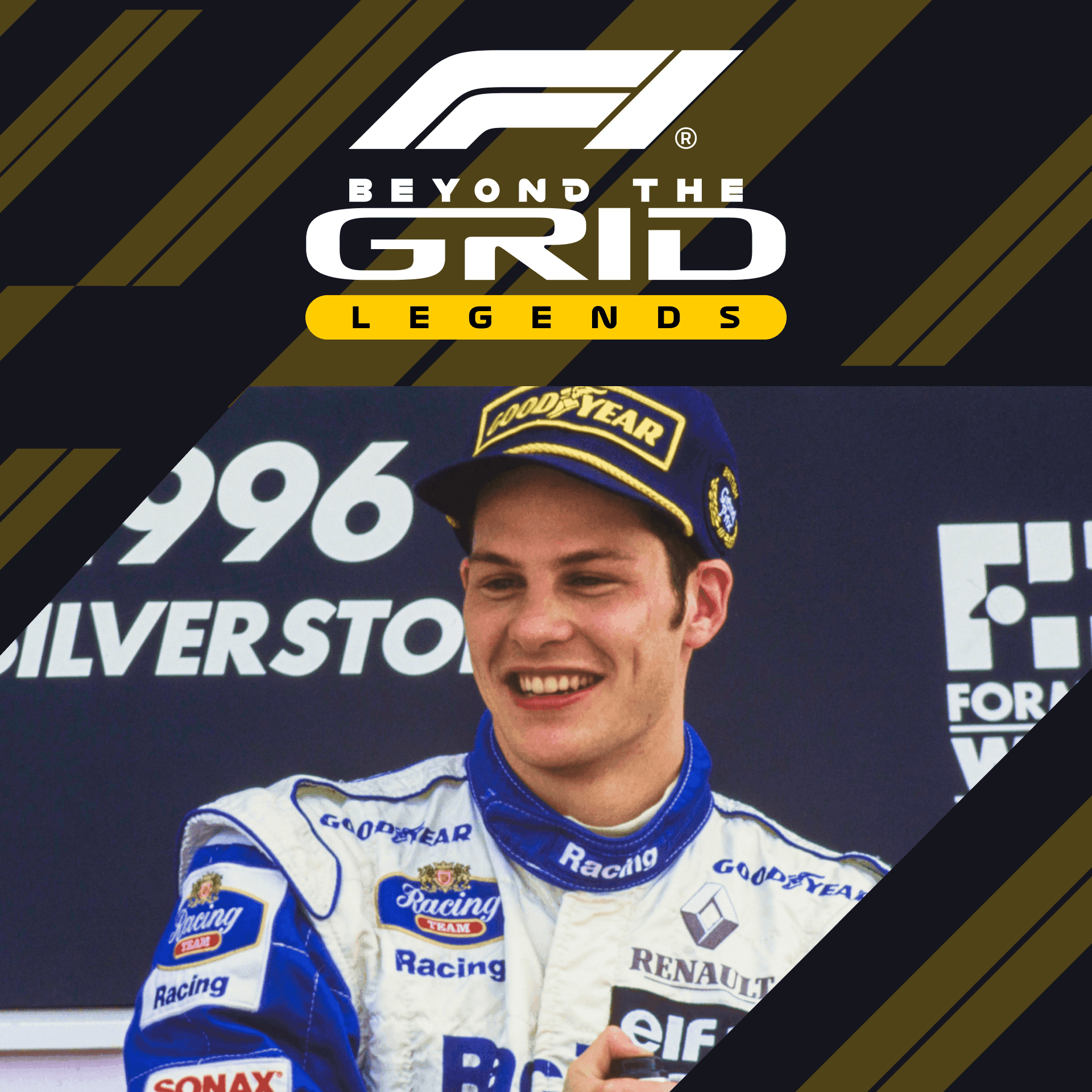
Jacques Villeneuve’s 1996 rookie F1 season with Williams, how he transitioned from IndyCar, and the key moments that led to his 1997 world title—plus his battles with Damon Hill and Michael Schumacher.
Guest backgrounds
Jacques Villeneuve, son of Gilles Villeneuve; IndyCar dominant in 1995 (Indy 500 winner and series champion) before joining Williams in 1996. Tom Clarkson hosts.
Key claims
Villeneuve says the move to F1 was “logical,” with confidence formed since childhood. He argues IndyCar’s car development and high-risk Indy 500 intensity prepared him for F1 pressure. He credits engineer Jock Clear’s open-mindedness and their long debrief time for performance gains. He claims his “short throttle travel” and one-paddle-shift setup improved precision and control.
Notable examples
Melbourne 1996 pole by 0.13s; beating Hill at starts; engine failure via oil leak leading to second place. Portugal 1996: outside pass on Schumacher at the 180-degree final corner. Hockenheim 1998: first Williams podium. He also recalls a “chicken stealing” prank by Hill.
Written by AI. May contain mistakes. Listen to the episode to check what was said.
Chapters
Tap a time to open that second in VOJacques Villeneuve's Racing Destiny
2:43 to 4:25
Explore Jacques Villeneuve's early racing career and his determination to succeed in F1.
“A racer since childhood, Formula One was Jacques Villeneuve's destiny.”
Villeneuve's Transition to F1
4:25 to 6:00
Delve into Jacques Villeneuve's decision to leave IndyCar for Formula One and his journey.
“So it was a pleasure to sit down with Jacques and look back on that year.”
The Weight of a Famous Name
6:00 to 7:48
Understand the pressure Jacques Villeneuve felt coming into F1 with his family name.
“So why would you even question, mostly when it's with Williams, a winning team, a team that you can work with, you can build on.”
Negotiating with Williams
7:48 to 10:41
Learn about Jacques Villeneuve's negotiations with Williams and the impact of his Indy 500 win.
“Did you feel the weight of the Villeneuve name coming into F1?”
Preparation for Formula One
10:41 to 12:37
Explore how Jacques Villeneuve's experience in IndyCar prepared him for the challenges of F1.
“Which was getting out of F1, was getting away from F1 a little bit, that way of working.”
Calculating Risk in Racing
12:37 to 13:51
Understand Jacques Villeneuve's approach to risk and pressure while racing.
“You always struck me as someone who thrived on the danger.”
Jacques Villeneuve's First Test Experience
15:35 to 17:58
Hear Jacques Villeneuve recount his first F1 test and the excitement it brought.
“because we've got this guy called Villeneuve testing the Williams for the first time, the FW17.”
Building Rapport with Race Engineers
17:58 to 22:42
Explore the dynamics between Villeneuve and his engineer, Jock.
“Everyone seems to talk about the braking.”
Innovative Driving Techniques
22:42 to 24:58
Villeneuve discusses unique driving methods and car configurations.
“And it was the same paddle to upshift and downshift.”
Jacques Villeneuve's Debut at Melbourne 1996
29:13 to 33:19
Explore Villeneuve's remarkable introduction to Formula One and his early challenges.
“The new season began at a new venue for Formula One, Albert Park in Melbourne, and a new star.”
Show all 17 chapters
Adapting to F1 Racing Dynamics
33:20 to 34:57
Understand how Villeneuve adjusted his racing mindset from IndyCar to F1.
“And when Damon is given his marching orders and is told by Frank mid-season that he's not going to be retained, how did that change the dynamic between you?”
First Win at Nürburgring and Beyond
34:58 to 37:01
Discover the significance of Villeneuve's first win and his approach to competition.
“That buffer he can then play with, that points buffer for the rest of the season.”
Iconic Overtake at Portugal 1996
37:02 to 39:46
Relive Villeneuve's legendary overtake on Schumacher and the mindset behind it.
“me would have given him the lead and then i wouldn't have overtaken him afterwards uh so and it's always hard when you're the the prey it's uh because you can only falter how did you and Michael rub along generally?”
Driving Style: Thriving on Low Grip
39:47 to 42:00
Learn about Villeneuve's driving preferences and how they affected his performance.
“And the amazing thing is it happened not on a backmarker, but on Michael, whom I was fighting for a position.”
Jacques Villeneuve's Strategy at the 96 Japanese GP
42:00 to 44:12
Learn about Jacques Villeneuve's mindset and strategies during the 1996 Japanese Grand Prix.
“and very responsive, that you could just drive around.”
Reflections on the 1996 Season
44:12 to 45:13
Jacques Villeneuve shares his reflections on the 1996 season and his relationship with Damon Hill.
“you're 1.7 seconds faster than friends on the drive that was yes that felt it was an insane Oh, that felt good.”
Behind the Scenes: Chicken Stealing Anecdote
45:13 to 46:10
Listen to a humorous anecdote about a lighthearted rivalry over food between Jacques and Damon.
“We didn't have time to go into it in the interview, but here's Damon's side of the story from an old episode of F1 Nation.”
Transcript
Automatic transcript. May contain errors.0:00This episode is sponsored by Indeed. There's a lot that goes on behind the scenes of this show, booking guests across time zones, tight turnaround edits and constant time management. And when things get chaotic, you realise pretty quickly how important it is to have the right person on your team. If I had to hire someone tomorrow, I wouldn't just want a good editor. I'd want someone who understands pace in long form interviews and can work fast under pressure. And in moments like that, you think, this is a job for sponsored jobs. Because Indeed Sponsored Jobs boosts your listing in search results, helping you reach the candidates with the specific skills and experience you actually need.
0:39And it works. Sponsored jobs posted directly on Indeed are 95 % more likely to report a hire than non-sponsored jobs. That's a serious edge when the pressure's on. Spend less time searching and more time actually interviewing candidates who check all your boxes. Less stress, less time, more results. When you need the right person to cut through the chaos, this is a job for Indeed Sponsored Jobs. And listeners of this show will get a$75 sponsored job credit to help get your job the premium status it deserves at indeed.com slash podcast. Just go to indeed.com slash podcast right now and support our show by saying you heard about Indeed on this podcast.
1:20Indeed.com slash podcast. Terms and conditions apply. Need to hire? This is a job for Indeed Sponsored Jobs. Cadillac has entered Formula One, deepening the racing pedigree behind every V-Series on the road. Discover a line-up that delivers pure adrenaline in the form of modern luxury. Experience the quickest Cadillac ever, the all-electric Lyric V, the peak performance of the CT5V Blackwing, the nimble agility of the Optic V, and the legendary roar of the Escalade V. All engineered to thrill. Find out more about Cadillac's performance story in Formula One and our race-tested V-Series lineup at Cadillac.com.
2:10Spring into deals at Lowe's. Shop select 1.5-gallon annuals hanging baskets, two for$15, for the perfect addition to Mom's Garden. Plus, get three free bags of Miracle-Gro.75 cubic foot garden soil when you buy three. Our best lineup is here at Lowe's. Lowe's, we help, you save. Valid through 5-6 excludes Alaska and Hawaii. Visit your nearby Lowe's on South Holland Road in Chicago.
2:43The son of a motorsport legend. A racer since childhood, Formula One was Jacques Villeneuve's destiny. Since I was five or six years old, I knew I would race cars and I never questioned it. Deep down, I knew that the ultimate point or goal where I would arrive would be F1 and one day be world champion. It was so fixed and clear in my mind. It's a situation of you better become good and quickly because the pressure is there from the first moment and it could destroy you. 30 years ago, Jacques arrived at his first Grand Prix with bold confidence. He had a lot to prove, and he proved it immediately.
3:22Pole position and second place for Jacques Villeneuve Formula One as a new star. Villeneuve is taking Michael Schumacher. Villeneuve cuts ahead of the Ferrari. I wasn't impressed or afraid of him, and he wasn't used to that. And that's why in the battles I had with him, it didn't always go good for him. As a rookie, he raced without fear, overtaking Michael Schumacher, pushing his Williams teammate Damon Hill all the way to a final race title decider. It was him or me. There were hardly ever someone in the middle because we were the car to beat. On a good weekend, I would finish first and Damon probably second.
4:04Hello, everyone. This is F1 Beyond the Grid with me, Tom Clarkson. I was there at Silverstone on the day that Jacques Villeneuve first drove a Formula One car. I watched his debut season in 1996 in awe of this young Canadian, the reigning IndyCar champion, who'd switched to race Grand Prix for Williams. So it was a pleasure to sit down with Jacques and look back on that year. We talked about joining the team run by Sir Frank Williams and Patrick Head, getting used to F1 cars, driving alongside Damon, and how he and race engineer Jock Clear would come up with peculiar ideas in the pursuit of performance.
4:481997 was the year Jacques became world champion, but it all started in 1996.
4:59JV, how are you? It's been eight years since you were last on the show. Oh, that long. Oh, wow. I'm doing great. It's fantastic. Life is great. You don't look a day older. that is very kind to the hair now i want to take you back to 1996 this is one of our legends episodes and you'd come over from indycar it was your first season in formula one how clearly do you remember year one in formula one most of it quite clearly and it's always linked to moments specific specific moments that somehow remain because they were strong or they were meaningful or they brought something or took something away.
5:39So memory is timeless and there's no passing of time there. It could have been yesterday, but it's what you remember. And I think you remember everything. It's what makes you, brings it out of the little closet that it's in. Well, I'm going to jog your memory throughout this, but can we start by talking about the decision? Okay. 1995, you were dominating IndyCar. You won the Indy 500. You won the championship. that year so why f1 for you were you not tempted just to stay that side of the pond and dominate indycar for a decade no it's funny because you say the decision there was never a decision it was just logical um it was a natural next step uh that when you're a racer or passionate racer and you want to perform and you want to be the best then you want to be at the top of the ladder and f1 has always been the top of the ladder and that's it.
6:37So why would you even question, mostly when it's with Williams, a winning team, a team that you can work with, you can build on. Since I was five or six years old, I knew I would race cars and I never questioned it. I never spent any time trying to get there either because I knew it would come. So I was just keeping ready for when the opportunity would happen. Then I went to race in Japan instead of going to 3 ,000, for example. So you have to jump at what opportunity is there without questioning it too much then went to the states that was in the road to f1 but deep down i knew that the ultimate point or goal where i would arrive would be f1 and one day be world champion it was so fixed and clear in my mind that there was never a moment of decision making that confidence is extraordinary yeah yes and it can be off-putting because if If I had one of my kids or I see a youngster acting that way growing up, I think, who does he think he is?
7:37I mean, what's going on in his mind as if it was going to happen? But when you're in the middle of it, you have to believe in yourself that much if you want it to happen. If you don't believe, it won't happen. Did you feel the weight of the Villeneuve name coming into F1?
7:57obviously obviously because it brought a lot of pressure from the first few laps i did in racing if in every walk of life in in every career there's always the newcomer and he's judged as if he didn't have any experience but the truth is he spent the last four or five years maybe in the shadows but working his trade getting better until the day that he's the new youngster but when you come in with a name or with image even before having done anything you're judged as if you had had those five years of preparation which you haven't so it's it's a situation of you better become good and quickly because the pressure is there from the first moment and it could destroy you and in a way that helped me to become stronger so when did the conversations with Williams begin?
8:45I guess there was always some talks in the background, which I wasn't privy to. But what made the big difference is winning the Indy 500. Of 1995? Yes, because that showed Frank, Patrick, I guess Bernie, for a different reason, that I could perform under pressure. It's a big race, the biggest race in the world. And F1 was needing that. If you want to be a driver in F1, you need to be able to perform under pressure. You mentioned Bernie's name. Just how involved did Bernie get in the negotiation? Quite. Bernie has always been about what is good for F1, image, and so on. So winning the Indy 500, being my father's son as well, who was a big name in F1, I guess that was something that was important for Bernie at the time.
9:37and he was very actively positive as well, which was nice. Did you speak to Bernie about it? Did you get a sort of, hello, son, come on over? No, no, no, no, no. That was happening with management and… To Craig Pollack and… Yeah, yes, exactly. So I wasn't… It's more stuff I've discovered years later of everything that happened in the background. and also it's the first time that I got into a contract that I didn't know everything about it because I went from a 10 page contract which was IndyCar even less I could read every word and figure out what was hidden and so on to a 70 page contract and I thought okay no that's just way too much so from what I understand it was important to perform in the first two or three races okay well you certainly did that but i wasn't told so good that was some fresh idea we'll come to that but can i ask you now what sort of preparation was indycar for formula one because okay you know the indy 500 you're circulating at 220 miles an hour but the cars are all back then were much bigger was that good prep for a driver it was good prep because indycar in those days was like an f1 in the sense that you could develop whatever you wanted on the car obviously you would buy a car of reynard or lola or or uh or you were with penske which had their their own car but you could actually develop put new bits on the on the car it wasn't a one make series so you could you could work a lot you could be clever uh and but the work the work we were doing was more old-fashioned still pen and paper and and really getting it out of your system what could you do to become faster?
11:32What could you change on the car? What would you need? Which was getting out of F1, was getting away from F1 a little bit, that way of working. So for me, that was the best preparation ever. Because when I got to F1, everything was fresh and new. I hadn't done a season of 3000 on the same tracks, the same kind of people, the same mindset. I'd gone to Japan, which is colorful, it's very different. So you learn you learn tricks that you wouldn't have learned in Europe, a way of working, mostly because, well, my engineer in Japan did not speak English, for example. So it really makes you figure out how do you work, how do you explain what you need, and we manage.
12:10Then you get to the States, and once again, it was a very different way of working, of approaching the racing, maybe a little bit more rough and tough, like sports in America can be. And obviously with the Indy 500, which is the biggest race in the world, and the level of danger and risk that there was really put you on the edge. You knew that you were risking something when you were racing on the limit there and you were going to go for a pole or a win. And I think that was this level of intensity was very good preparation for F1. You always struck me as someone who thrived on the danger. Have I read that correctly?
12:49I don't know if it's danger or pressure, but whenever there's a moment where you have to calculate how far you can go pushing the risk because a lot of people say, oh, but you're fearless. No, it's not being fearless because if you're fearless, you'll do a lot of stupid things. I think it's more calculating how big is the danger and how on the edge you can be, how you can survive on that edge, how can you control that edge where there's a risk of making a mistake but there's also a big chance that you'll recover from that mistake. that's the fine line that you have to get to without going beyond.
13:50And in moments like that, you think this is a job for sponsored jobs because Indeed sponsored jobs boost your listing in search results, helping you reach the candidates with the specific skills and experience you actually need. And it works. Sponsored jobs posted directly on Indeed are 95 % more likely to report a hire than non-sponsored jobs. That's a serious edge when the pressure's on. Spend less time searching and more time actually interviewing candidates who check all your boxes. Less stress, less time, more results. When you need the right person to cut through the chaos, this is a job for Indeed Sponsored Jobs.
14:28And listeners of this show will get a$75 sponsored job credit to help get your job the premium status it deserves at Indeed.com slash podcast. Just go to indeed.com slash podcast right now and support our show by saying you heard about Indeed on this podcast. Indeed.com slash podcast. Terms and conditions apply. Need to hire? This is a job for Indeed-sponsored jobs. Cadillac has entered Formula One, deepening the racing pedigree behind every V-series on the road. Discover a line-up that delivers pure adrenaline in the form of modern luxury. Experience the quickest Cadillac ever, the all-electric Lyric V, the peak performance of the CT5V Blackwing, the nimble agility of the Optic V, and the legendary roar of the Escalade V, all engineered to thrill.
15:25Find out more about Cadillac's performance story in Formula 1 and our race-tested V-Series lineup at Cadillac.com. One of my first jobs at Autosport was to go up to Silverstone in August 1995 because we've got this guy called Villeneuve testing the Williams for the first time, the FW17. My goodness, there was a circus. You know, it was the traditional sort of Silverstone test, but everybody was gathered outside the front of the Williams pit garage. your car in particular um tell us about your first memories of getting in an f1 car how different was the experience to indycar well i was so tired because i'd just flown in overnight uh the day before the test uh we had been racing in michigan and had a suspension failure so luckily we felt it pitted during the race because a big crash there would have meant no test were you nervous about the test?
16:24Nope, not at all. Did a lot rest on it? I was excited. Did a lot rest on it? Of course, it meant getting into F1 or not. Everything was happening on those two or three days of testing. But it was exciting, not nervous. It's not the same thing. I knew that was my road. That was the goal. That's what I had to get. And I would find a way to get it. And that was it. There was no doubt whatsoever. I was taking it. I was coming with a smile and fun. Obviously, you're a little bit tense because the stakes are high but that makes it even more fun and normally that's always allowed me to perform better when there was something big at stakes that it was all or nothing and that's what that test was so landed made a seat fit and then just tried to rest for the next day because it was it was brutal and what i remember is being in in you know a tiny hotel It was not the F1 standard of today.
17:18And even the catering was sandwiches. And it's not what you get now. And it was physical because the cornering speed was a little bit higher than IndyCar. But the steering was lighter because of the power steering. So there were other aspects that were actually easier. What shocked me compared to the IndyCar is how, because the F1 car was a lot lighter. It wasn't more powerful. You didn't have a bigger acceleration. So that wasn't a surprise as how light the car was and how quick it was to reacting. So if you got in a slide, it would snap really quickly instead of having momentum. So that's where the big difference was.
17:58What about the braking? Everyone seems to talk about the braking. Did you find that a big step? Not really, because everybody thinks, oh, it's carbon brakes, it's difficult. No, it's not the carbon brakes. It's the fact that the car is light and you have a lot of downforce. You can brake very late. That's all. That was because we did try some steel brakes at some point. I don't remember if it was in that test or later on in the season. And it didn't really make a difference. It's just that the car is light and you can stop instantaneously. So you just have to get used to that. Your brain has to recalibrate.
18:28That's all. Damon Hill was at the test as well. Was he any help? Did he give you any advice? That I don't remember. I don't remember talking much with him, but also DC was there on the last day, I think. And from what I understand, it was kind of a shootout. And so he was under pressure, but he probably already had signed for McLaren. So it was fake. But what I remember is I was ahead of him all day until the last run he did on new tires, end of the day. and in 95 we still had to switch on the the fuel pump on manually which was something we didn't have in indycar and on that last run i forgot to switch it on so i never got to do that last run uh and maybe that's what helped me because he had done a quick lap time that i might not have beaten and that might never know yeah we'll never know so it was yeah so it was a good mistake to make so let's talk about that winter 95 96 now uh you did 9 000 kilometers of testing can you just talk us through the journey you went on with the team with the car how your relationship with jock clear your your race engineer started to gel well jock was quite junior as an engineer which means he wasn't set in his ways and and what i found out through the years he was very open-minded and and socially very good to work with because he he came from rugby was a rugby player so he understood also the psychology of the sportsman and sometimes it's not the numbers that make you go quick but being in the right bubble uh when the right mindset so that's why we had a very good rapport but we built it because i was very peculiar with my way of driving and what i was wanting from a car um and and quite hard-headed uh and and and i was pushing the team in some directions that they weren't used to uh because they had been working with damon for a long time and our driving styles were a little bit different.
20:28And there's a test we did in Imola where he did the opposite of what I was wanting, just to see. Jocked it. Yeah, and I think he asked Craig at the time, you know, is it okay if I did this? And Craig was convinced that it would work out. So he did it. I did two laps or three and came back and said, no, what you did, you didn't do what I asked you there. So from that moment on, then it was okay. Then he understood that the feedback I was giving him was real. That doesn't mean it was right. but at least there was always room for imagining okay why why does Jacques want this well why why why is he trying to go in this direction and maybe my reasoning was wrong for the reasons were wrong but there was there was a pathway that helped them develop and figure out other things so that was really good because that made him also very good at getting inside my head you know right now they have meetings of 30 minutes okay do your debrief say what you think that doesn't work That's now, you know, all the information is there, but you cannot always just get it out.
21:23And what I would love was spend hours just sitting there with the engineer. It was jock and data. And sometimes ideas just come up. You're sitting there not thinking about it, and that's when the idea comes up. And you can imagine how the car is working, why it's doing this, and why you will be able to drive it better this way. And the engineer's job is to be able to ask the right questions, to get the information inside your head that he knows is there, but maybe you're not figuring it out. and that takes time and we had built this very strong rapport with Jock where we're both able to communicate and often times I would come up with ideas and he looked and he said is that one of your toilet ideas that you had in your weird moment of thinking and he said ok let's try it and sometimes it would be crazy but it would work out that made it a lot of fun but also you create a lot of trust in each other so if jock said yeah don't worry this time that corner will be flouted okay fine then then you know it's true you know you're convinced uh and you believe you don't feel like you're alone in the car anymore and that's that's a big help for the same reason if in 97 i didn't want to test at the end of the year i wanted to focus on championship and there was a last test to do in silverstone and that's before the cars went narrow and grooved tires and he said listen you've never done turn one flat this is the last time you get a chance to do it and that's the only reason i went testing oh jack i always thought of you as a bit of a rebel but just while we're talking about um just car setup is it true that you used to have a really short throttle travel yes very tell us like how how long was your uh i think 20 or 18 mil depending on on on the season uh at the toes so it's kind of on or off with the power no no it's you're much i always give the comparison to to a mouse a computer mouse if you have to move it a lot to get to where you want you'll you'll you'll overshoot you'll have to move too fast you want you'll have more preciseness when you just move a tiny little bit maybe but you'll always overshoot but when it's a small movement you get there very quickly and precisely and it's the same thing with the pedal so you were feeding in what was it back then 800 horsepower through two centimeters of yes but instead of movement it was pressure when it's short it's down to how much pressure you apply more than how much you move and you don't have to move your whole leg you just move your foot a little bit so you have more control but jv in the wet no that was okay was it okay yeah it was the same concept then you just needed a good throttle trace that that's all but it was it was never an issue um and also when you aqua planed you were much quicker off the gas so it made you react a lot quicker the other thing we had differently is i only had one paddle shift instead of two-paddle shift.
24:11And it was the same paddle to upshift and downshift. So I would just push it to upshift and then pull it down to downshift. And that allowed me to not remove my hand from the wheel to go grab it. So you could actually shift while you were cornering at high G-force or to rack quickly if you got wheel spin. Were you the only driver who had the same side going up and down? Nobody went to that. But we had a lot of little tricks like that that we kept thinking of, like flags on the pedals. We were the first ones to put that to all the legs so they don't move because like I told Jock, listen, I'm spending half my energy holding my leg instead of driving.
24:43So we put this in. Oh yeah, it helped. And it also saved you from breaking your foot if you crash. So there was a lot of little things or grips on the steering, adjustable front wings. This is stuff I had brought from IndyCar and also radio communication. Jock would often at the start be like a spotter in two turn one, watching the TV and telling me where the traffic was. In real time? Yeah, real time. So this is all the baggage I had brought from the States. So how much of this was in place before your first race in Melbourne in 1996? No, the shifting, the pedal, that happened later. But it was gradual.
25:18But anything in the comfort and pedal flags and all that, with 9 ,000 kilometers, you have time to figure it out. And Williams was very quick at reacting, which was fantastic. And that giving in to all these ideas, I thought, OK, what is he on again? Why is he annoying us with that thing? but it turned out that it was a good reason for it. I'd love to know what Patrick, Patrick Head, made. Oh, it was fun. Those debriefs must have been fun. Patrick was always pushing to have very soft anti-roll bar in the rear. But back then, I don't know if something was twisting, it needed to stiffen the rear end so the car was more precise.
25:53So for 97, they changed the numbers on the bar so that Patrick wouldn't realize how stiff they were. Oh boy. Patrick, if you're watching. He knows. Yeah. This episode is sponsored by Indeed. There's a lot that goes on behind the scenes of this show, booking guests across time zones, tight turnaround edits, and constant time management. And when things get chaotic, you realise pretty quickly how important it is to have the right person on your team. If I had to hire someone tomorrow, I wouldn't just want a good editor. I'd want someone who understands pace in long-form interviews and can work fast under pressure.
26:31And in moments like that, you think, this is a job for sponsored jobs. Because Indeed Sponsored Jobs boosts your listing in search results, helping you reach the candidates with the specific skills and experience you actually need. And it works. Sponsored jobs posted directly on Indeed are 95 % more likely to report a hire than non-sponsored jobs. That's a serious edge when the pressure's on. Spend less time searching and more time actually interviewing candidates who check all your boxes. Less stress, less time, more results. When you need the right person to cut through the chaos, this is a job for Indeed Sponsored Jobs.
27:09And listeners of this show will get a$75 sponsored job credit to help get your job the premium status it deserves at indeed.com slash podcast. Just go to indeed.com slash podcast right now and support our show by saying you heard about Indeed on this podcast. Indeed.com slash podcast. Terms and conditions apply. Need to hire? This is a job for Indeed Sponsored Jobs.
28:00form interviews and can work fast under pressure. And in moments like that, you think this is a job for sponsored jobs because Indeed Sponsored Jobs boost your listing in search results, helping you reach the candidates with the specific skills and experience you actually need. And it works. Sponsored jobs posted directly on Indeed are 95 % more likely to report a hire than non-sponsored jobs. That's a serious edge when the pressure's on. Spend less time searching and more time actually interviewing candidates who check all your boxes. Less stress, less time, more results. When you need the right person to cut through the chaos, this is a job for Indeed Sponsored Jobs.
28:40And listeners of this show will get a$75 sponsored job credit to help get your job the premium status it deserves at Indeed.com slash podcast. Just go to indeed.com slash podcast right now and support our show by saying you heard about Indeed on this podcast. Indeed.com slash podcast. Terms and conditions apply. Need to hire? This is a job for Indeed-sponsored jobs.
29:13Melbourne 96, your first Grand Prix. The new season began at a new venue for Formula One, Albert Park in Melbourne, and a new star. 24-year-old Jacques Villeneuve, the reigning IndyCar champion, arrived in Formula One and in his first qualifying session took pole position by 0.13 of a second from his Williams Renault teammate Damon Hill. Villeneuve the first man to do that since Andretti in 1968 and Reutemann in 1972. An old Ferrari, row two. You become only the third driver in history to take pole position on your Formula One debut. How much of a surprise was that? Or had you had enough clues during testing that you were right on the pace?
29:56Damon was quicker, mostly on one-lappers, even during testing. I still had a lot to learn from him. But testing and a race weekend are two different things. I've hardly ever, ever been quicker than a teammate during winter testing. Because you're not there to get the ultimate tenth, the ultimate lap. You're there to set the car up, to understand what's going on. When you're on the edge, you're too close to that edge. You go a little bit over over time. You have to also adapt your driving, and you don't test the car. Your brain is not focused on feeling what the car is happening. It's more focused on surviving, making sure you don't go off when you're on that last 10th of a second.
30:31So it's bad. When a driver does that in testing, it's normally not very efficient in developing a car. What helped me in Melbourne was a new track for everyone. It's not a track that Damon knew. Because then once we got to Brazil and Argentina, I think it was a second ahead of me or close, or quite a big gap on me, which was a big shock. So Melbourne was helpful because it was a new track. What about the starts then? There were two starts. Remember, Martin Brundle had his spectacular crash going into turn three. So we had two starts. And you beat Damon away both times. and you'd come from IndyCar, which was rolling starts.
31:14Again, was that a surprise? Yes, that was mostly the first start. I had a big gap on him as well, which was surprising. But at the same time, I think having a short throttle helped because back then you would have to ride the clutch a little bit, figure out where it was and feed the throttle. So I didn't need to move my foot a lot, just barely. And that made it easy to then feed the power. and get going but yeah it was surprising because i i that's where the big question mark we didn't do that much practice starts and then in the race you start losing oil damon takes the win just how do you remember post-race how you felt was there you know i was you were the talk of the town new boys come in and there's and there's been really quick but equally were you very disappointed yes because it was my race you know it was controlled uh and and i raced also in the indycar way which is you don't build a gap because there'll be a safety car and there weren't any safety cars in f1 back then but i still hadn't adapted to that so in my mind once you're in the lead you just stay there you don't build a five ten second gap it's pointless uh so i was still in that kind of mindset uh but then yeah a little an oil tube was just put in the wrong spot and getting squished under the floor and at some point started leaking so i was told slow down i could see the red light in every right hand corner i think but i later found out that slowing down was not making a difference the engine was either going to blow or not so it apparently i didn't actually need to slow down but i was still massaging the car and it was at that point what i thought is it's better finishing second than blowing the engine because the championship is a long championship and you need every point okay now you may and anyway the other thing is it was Damon so it was okay because what do you mean by that I got into his team it was his team he had been working in that team developing that car working sweating it off for so many years and I'd seen him lose his championships to Michael and in the way it was the championships the two championships were taken away from him so I was I was feeling for that as well and he did deserve to win he did deserve to win the championship as well with all the effort he had put in and I was the new boy learning from him so i wasn't as disappointed as i probably should or could have been so the relationship with damon was good all the way through yeah yeah we had our moments i think you'll remember one when i tried to steal his chicken and he got really upset but but i was never i was never playing a game with him um he knew i was quick but i knew that he was very quick and he was a hard worker so i had so much to learn from him and that was great So I was viewing him more as a fast mentor.
34:05And when Damon is given his marching orders and is told by Frank mid-season that he's not going to be retained, how did that change the dynamic between you? Did it? I don't think so. Damon was really focused on winning his championship and I was focused on delaying it for him. Yeah. Because there was still a small chance. I still was wanting to try and win it. I wasn't going to just give it to him. But the points he got early in the season, I just really had a hard time to come back. And there's so many tracks where I just couldn't beat him. Like Esterel, we had tested there all winter. And it was the end of the season.
Read the full transcript
34:44And that's when I was actually very quick in qualifying. There was still some sparks that I just couldn't get. But there's a few tracks I was better. So it just depended. It was a hit and miss on who would be the quickest. Damon wins four of the opening five races. And as you say, that sort of sets him up, doesn't it? That buffer he can then play with, that points buffer for the rest of the season.
35:09Your first win comes at race four at the Nürburgring, the European Grand Prix. For sure, it feels great. But you have to know that the championship is the work of the whole season. So, you know, this is one race. It feels great. But, you know, as of tomorrow, it will be far away because we'll have to think about the next race. But for sure, it's a great feeling. after the start of the season we had, it's great to get one in. You have won Michael Schumacher on your gearbox for pretty much the whole race. Obviously, Jack has done a fantastic race without mistakes, and there was just no way for me to pass him, plus just the edge on the top speed, and there was no way for me to pass him anywhere.
35:46But we had a great race together, very close fighting, and I'm very pleased to come second to finish the race. You've already told us about how much you thrive on pressure. that was a first win, yes, but to do it in the manner you did, beating Schumacher, did that give you extra satisfaction? It was great, and it was in my mirrors the whole race. Partly because I was still racing the IndyCar way, which is don't build a gap. Man, I'm getting frustrated. I'll be on the... Jock, what were you saying to Jake? No, no, no. I always enjoyed having communication with the engineer. Like, the more, the better.
36:22You need to know what's happening. I need to know what's happening with the others in the race. That's how you can adapt. that's how you can you can feel it uh and i always i was controlling michael there i was just keeping him in my mirror because that's what i was used to um that's changed over the years once i realized how you had to approach f1 but that that took a while to to change did michael say anything to you on the podium at that point i don't have a memory uh because it was a cracking race between the two of you it was a sort of typical formula one race of high pressure chess game really yes you didn't need you didn't always need overtaking for it for a race to keep you on the edge of your seat uh and and he was always ever that close that a tiny mistake from me would have given him the lead and then i wouldn't have overtaken him afterwards uh so and it's always hard when you're the the prey it's uh because you can only falter how did you and Michael rub along generally?
37:19We never rubbed along, although it's an odd one because we never actually really socialized. In all the years I was an F1 and he was my main competitor, so that's really a strange one. Because what, the competition between you was too intense? I'm not sure, maybe because the Villeneuve name was still linked to Ferrari as well. Maybe that had an effect, because in Italy you had fans that were for him in Ferrari and fans that were also for me. And that unbalanced things a little bit. Also because he knew that I didn't care. I wasn't impressed or afraid of him. And he wasn't used to that, I think.
38:03And that's why in the battles I had with him, it didn't always go good for him because I just held strong against him. And the same thing I noticed when I was at BAR afterwards. in a BAR, he would really take his time. There was some kind of, I don't know if it's respect or not sure what's going to happen, but he knew that I would just fight him, and that was it. Maybe coming from the States also helped. Well, let's talk about Portugal again. Portugal 96, you've got the long 180-degree final corner. It's Villeneuve going past. Jacques Villeneuve is taking Michael Schumacher. he's been trying to do it all through the race it looks as though he's succeeding Bielner cuts ahead of the Ferrari fantastic bit of driving by both of them Jack it still is one of the great overtakes in the history of the sport round the outside of Michael yes and I was very sad for many years because the only camera angle was the on board which you didn't really see all that happened and then not many years ago the footage from the out board appeared and like, oh, wow, okay, now it looks good.
39:15All the winter testing, that corner was reminding me of a one-mile oval, like Nazareth, for example, which is low banking, but still a little bit of banking. That kind of corner. And in IndyCar, you would overtake cars on the outside, going around the outside because of the tiny little banking that you get. So I spent the whole winter telling Jock and the team that I would overtake someone on the outside during the race. You know, that was a goal. I know, it sounds arrogant or like pompous, but it was part of the fun and that's why I've always loved racing is when you could have those moments as well where you could actually be different, make a difference do something that you knew others wouldn't do I took that from when I was skiing I could jump that cliff and you couldn't that's it and I brought that into racing and before the race, Jock said tell us on which lap so we come with a spoon to pick up the pieces he shouldn't have said that because that was the little extra thing to push me doing it.
40:11I think he knew. And the amazing thing is it happened not on a backmarker, but on Michael, whom I was fighting for a position. And we were coming onto a backmarker. So he backed off just a little bit to give himself some breathing space. And that's when I saw my moment. I thought, okay, he's backed off a bit. I won't lift. I'll just go around the outside and surprise him. And that was the only way you could overtake Michael is by surprising him. And you were on the marbles. Do you remember having to fight? Yeah, the second half of the corner. I remember the first half I was going, oh, wow, I've got him.
40:41And then suddenly I get on the marble and the car starts sliding. Oh, that's going to be painful. But no, I stayed on the track. He had a little bit more momentum coming out of the car. Normally on an oval, you come out of the corners faster because you come from a higher height, a little bit downhill with less steering angle. So that's why the outside normally works. But at the toe of the slow car in front of me, and that just gave me enough speed to get ahead of Michael and then get in front. It was very close. And yeah, the car was moving on the marble. it probably should have ended up in the wall were you always good on low grip tracks because fast forward to 1998 and you gave Williams in what was a difficult year for the team their first podium at Hockenheim the old Hockenheim with the long straight so did you always thrive when the car was sort of moving around a lot underneath I always thrived when the car was a little bit light because that made the car neutral or a little bit on the nose you know we often say oh yeah, I like oversteer.
41:38And Max is like this. He likes a car that's on the nose. But that doesn't mean you want to be sideways. Sideways is slow. What you want is a rear that's just a little bit light, so it's free. And a little bit of steering input will react right away. You don't have to fight with the front end. And you can feel the rear moving. When the rear is moving, you can do something about it. When the front is not turning, you're kind of stuck. So I've always liked a car that was a little bit light and very responsive, that you could just drive around. But the other thing is it allowed me to often drive with less downforce than my teammates or the opposition.
42:14Just a couple of clicks less. So it would give you a little bit of straight line speed. And somehow, if you got the balance right, you could still be as quick in the corners. You didn't have to muscle your car through the corners as much. And that was always a big advantage back then when you didn't have DRS or movable wings because you had to make compromises. Right. So Japanese Grand Prix 96. it's a straight fight between you and Damon but you did enter the race nine points behind what was your approach to that Grand Prix did you go in thinking that come on I'm not really gonna win this or did you actually genuinely believe it was still possible oh I thought it was possible um anything can go wrong like it happened to me losing the wheel could have happened to to Damon uh if we had inverted our pit stops and and then they would it would be a very different story so no you have to go in I knew I had to take a win but like you said earlier in the first few races Damon uh build quite a margin and what was difficult in recovering is it was him or me there were hardly ever someone in the middle because we were the the car to beat like the Mercedes has been had been for many years so on a good weekend I would finish first and Damon probably second and and then you were stuck so I knew that I had to do that so I got a great pole so that also to set the path for the following year because the team had brought friends and say he's the next world champion on me so i had to i had to put the you know the balls in the in the right place uh the roll the dice so to make sure that you know i will be the guy for next year and there's nothing more i could do pole and then try and win the race um losing the wheel had no effect in the end because at worst i would have finished second and damon would still have been champion and and we had a good time that night we had we had a good party and i was very happy for him it didn't feel like oh you know i lost the championship of course i was not happy to not have won but also he was deserving it so much that i was cool with it and it was great prep if we look at 96 as a whole it was a great prep for 97 and let's go back to melbourne you're 1.7 seconds faster than friends on the drive that was yes that felt it was an insane Oh, that felt good.
44:20But you see, in Suzuka, I was a second ahead, I think, or close to a second. So it was a continuation of that. And Melbourne is the track that I've always been at my quickest for some reason. Every season, even in the car that was tough, that's where I would be at my best. And it worked out that year, but it all ended up in turn one when Irvine decided to take us out. Well, JV, it's been great to catch up again and great to relive that 96 season. Oh, it's great memories. Thank you. All right. See you soon. Thank you.
44:54Jacques is so matter-of-fact about everything. I hope you enjoyed this chat as much as I did. And even though I remember 1996 like it was yesterday, I still learned a lot. Not least that Jacques was pleased for Damon to win the title. Not that there wasn't a bit of needle between them. Jacques mentioned he once annoyed Damon by trying to steal his chicken. We didn't have time to go into it in the interview, but here's Damon's side of the story from an old episode of F1 Nation. Dave used to bring our lunches into the engineer's room, which is a tiny little room, but anyway, used to sit there and Jack leant over with his fork and tried to nick my chicken.
45:35I thought, well, listen, I don't mind you, you know, trying to beat me out on the track and whatever you get up to behind my back, but you're not having my chicken, OK? and that was a point where we came to a good understanding between us you know you can race me on the track but you're not taking the food out of my mouth okay that's enough Damon took the chicken and the championship in 96 but by 97 Jacques was cock of the walk JV thanks for your time it was great to catch up and why not check out previous Beyond the Grid Legends episodes Sebastian Vettel was great at the end of last season so why not start with him?
46:14And there's lots to listen to over on the F1 Nation podcast feed. Our review of the Chinese Grand Prix is out now and F1 Explains is taking a tour of the F1 paddock, answering your questions about what happens there during a race weekend. I will of course be back next week with another great guest from the world of Formula One. For now, thank you very much for listening. F1 Beyond the Grid is produced by Formula One and Audioboom Studios. Until next time, keep it flat out.
47:01We have the tech to get food delivered in 15 minutes, but we all have horror stories about buying tickets. The GameTime app gives fans the advantage. Get amazing tickets in just a few taps. Fees are included, so what you see is what you pay. And the Game Time Guarantee means authentic tickets at the best price every time. Take the guesswork out of buying tickets to concerts, sports, comedy, and more with Game Time. Download the Game Time app and create an account for$20 off your first purchase. Terms apply. This year, experience the NHL playoffs your way. Want to watch a single? Do or die Game 7.
47:39A full week of heavy-hitting back-and-forth series. Then check out Sling's 1-3 and 7-day passes. Watch the chase for the cup on ESPN and TNT, starting as low as$4.99. No long-term contracts or overpaying. Just live hockey at home or when you want it. Sling lets you do that. Visit Sling.com to learn more. We have the tech to get food delivered in 15 minutes, but we all have horror stories about buying tickets. The GameTime app gives fans the advantage. Get amazing tickets in just a few taps. Fees are included, so what you see is what you pay. And the GameTime guarantee means authentic tickets at the best price every time.
48:21Take the guesswork out of buying tickets to concerts, sports, comedy, and more with GameTime. Download the GameTime app and create an account for$20 off your first purchase. Terms apply.
From the publisher
The son of a motorsport legend, a racer since childhood, Formula 1 was Jacques Villeneuve's destiny. In 1996, the young Canadian arrived at his first Grand Prix and immediately proved he belonged there by taking pole position.
In his rookie season Villeneuve won races, went wheel-to-wheel with Michael Schumacher and took Williams teammate Damon Hill to a final race title-decider. 30 years on, he sits down with Tom Clarkson to remember how he shook up the sport.
Jacques explains why he left IndyCar as reigning champion to join Williams in Formula 1, and how racing on ovals influenced how he drove Grands Prix. He talks about working with race engineer Jock Clear, and experimenting with his throttle pedal and steering wheel paddles to find extra performance.
Tom asks Jacques about the highlights of his first year in F1: his first pole position, his first race win and the spectacular pass he made on Michael Schumacher - an overtaking move still regarded as one of the best in F1 history.
F1 Nation + F1 Explains are together in 2026
Get race reviews + answers to your questions all in one place
This episode is sponsored by:
CarGurus: buy or sell your next car today at cargurus.com
Shopify: sign up for your one-dollar-per-month trial today at shopify.com/beyondthegrid
Saily: get an exclusive 15% discount on your first Saily data plans! Use code grid at
checkout. Download Saily app or go to to https://saily.com/grid