In short
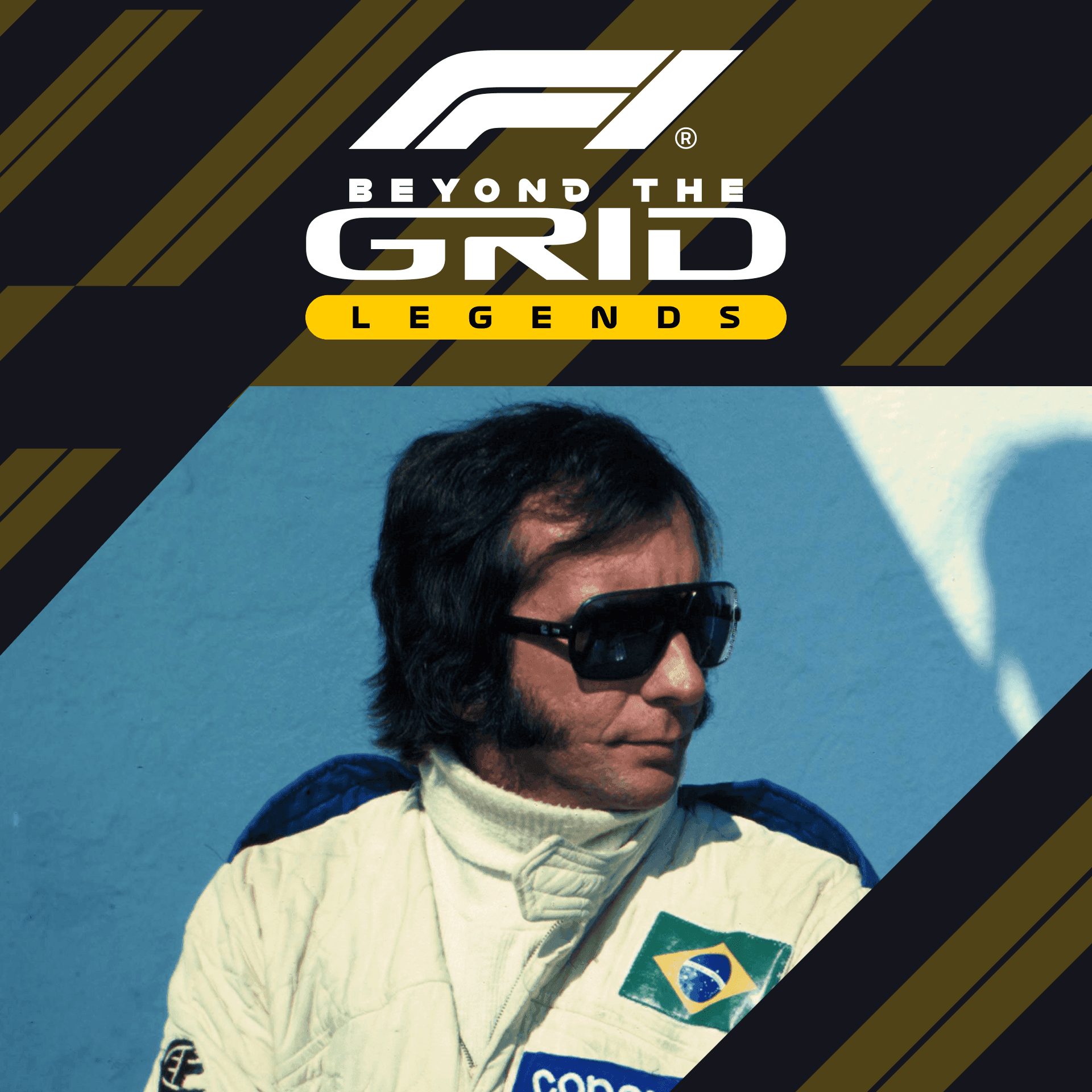
Emerson Fittipaldi’s defining F1 moments—leaving Lotus for McLaren, winning the 1974 title by three points over Clay Regazzoni, and then shocking the sport by founding the Copersucar team (Fittipaldi Copasuca) with his brother Wilson.
Guest backgrounds
Emerson Fittipaldi, two-time World Champion (Lotus, then McLaren), later co-founder/driver of Copersucar; Tom Clarkson hosts “F1 Beyond the Grid.”
Key claims
He says his father persuaded him not to retire after his first title; he left Lotus after a Monza 1973 incident involving Ronnie Peterson and an unshown signal. For Copersucar, he claims the team was hurt by Brazilian mainstream press criticism, causing sponsor withdrawal despite improved competitiveness in 1978.
Notable examples
Driving McLaren M23 in Miami’s 1,000 Grand Prix celebration; 1974 Watkins Glen title decider where he ran less rear wing to surprise Ferrari; Copersucar’s 1976 engine failure early in the Brazilian GP and 1978’s best season (10th, 17 points).
Written by AI. May contain mistakes. Listen to the episode to check what was said.
Chapters
Tap a time to open that second in VOEmerson Fittipaldi's Bold Move
2:19 to 4:40
Explore Emerson Fittipaldi's unexpected decision to create his own F1 team.
“by leaving McLaren just a year after becoming a two-time world champion.”
Reunion with McLaren M23
4:55 to 6:01
Emerson shares his nostalgic feelings about reuniting with his McLaren M23.
“I'll be back in Miami because it's my home.”
Transitioning to McLaren
6:05 to 6:57
Learn why Emerson transitioned from Lotus to McLaren and his experiences there.
“That means it was nearly one kilo per horsepower.”
The Competitive Edge of McLaren
6:57 to 10:39
Emerson discusses the competitive environment and structure of McLaren during his time.
“because Philip Morris gave me the mission.”
Emotions of Winning at Home
15:26 to 18:40
Emerson Fittipaldi shares his experiences of winning at Interlagos.
“you know, the year you win the championship with McLaren?”
Comparing Cars: Lotus vs. McLaren
18:40 to 22:55
Emerson discusses the differences between the Lotus 72 and McLaren M23.
“But we had three wheelbases, a long wheelbase, we had the mid-wheelbase, and the short wheelbase for Monaco for the short circuits.”
The Pressure of the 1974 Season
22:55 to 26:28
Fittipaldi reflects on the pressure and challenges of the 1974 season.
“It started, I was on the outside, Clay's on the inside line.”
Transitioning to Team Owner
26:28 to 28:03
Emerson describes his decision to start his own Formula One team.
“that anybody could buy and make a nice chassis, a nice car, and build a Formula One car.”
Emerson's Transition from McLaren
28:03 to 28:28
Learn about Emerson Fittipaldi's decision to leave McLaren and start his own team.
“they got James because at that time James was available.”
The Challenge of Building a New Team
28:28 to 29:41
Explore the challenges Fittipaldi faced in establishing his racing team.
“were walking away from a potential world championship?”
Show all 19 chapters
Performance Insights in Emerson's Early Races
32:38 to 35:59
Understand the performance dynamics of Fittipaldi's early racing experiences.
“Because I was so moved by how carefully he buried my electrical wires.”
The 1978 Season and Team Dynamics
36:00 to 37:59
Discuss the dynamics of the 1978 season and the improvements made.
“most of the race was good car the F5A was a very good car it was the best year at the end of the year finish ahead of McLaren points, ahead of Renault, Williams.”
Challenges with Sponsorship and Team Stability
38:00 to 40:16
Learn about the struggles with sponsorship and media perception faced by Fittipaldi's team.
“half-poss weight, was a very good engineer.”
Emerson's Doctor and Safety Innovations
40:17 to 42:00
Discover the safety measures Emerson took, including hiring a personal doctor for races.
“When you were racing for your own team, did any teams, other teams, try and lure you away and to go and race for them?”
Emerson's Shocking Call
42:00 to 43:27
Learn about Emerson's unexpected call to race for Ferrari during a crisis.
“And he comes out and says, Emerson, his 55th chance to survive because you don't have oxygen on the blood.”
The Dream of Driving for Ferrari
43:27 to 46:17
Emerson shares his lifelong dream to drive for Ferrari and his early connections.
“I always had the dream to drive a Ferrari because people don't realize 1948, first Ferrari win, he built like a Monoposto, like a Formula 2 car.”
Youth and Pressure in Racing
46:17 to 49:41
Discussing the challenges of being a young driver in modern F1 like Kimi Antonelli.
“and I'm immediately reminded of what Kimi Antonelli is doing this year.”
Opportunities and Media Pressure
49:41 to 51:16
Exploring the media's role in the pressure of F1 and the importance of team support.
“And I think that's a mental perseverance that when you have experience, you can do what you can do and you're ready to do it.”
Reflections on Racing Passion
51:16 to 52:32
Emerson reflects on his love for racing and the support from the Italian media.
“ferrari well kimmy antonelli is the first italian to to win a grand prix since giancola fizichella 20 years ago do you think they will be sympathetic towards him what's your experience of of the media in Italy?”
Transcript
Automatic transcript. May contain errors.0:00This episode is sponsored by Honda. Since its first Formula One victory in the 1965 Mexico Grand Prix, Honda has always taken what's learned on the track and used it to build better cars for everyone. From pushing limits in F1 to engineering the next generation of hybrids like the Prelude Hybrid and Civic Sedan Hybrid, Honda proves that racing doesn't just inspire innovation, it drives it. And that idea of taking lessons from the racetrack and applying them to road cars has always been a part of Honda's DNA. Decades of engineering in the demanding world of Formula One have helped shape the performance and efficiency you see in Honda's road cars today.
0:44And now that same thinking is shaping the next generation of hybrids as well. Cars like the 2026 Prelude Hybrid and Civic Hybrid show that electrification can be both efficient and genuinely fun to drive. The 2026 Prelude Hybrid and Civic Sedan Hybrid are engineered for fun. From the racetrack to your driveway. Learn more about the Prelude and Civic and the latest innovations at Honda.com. Spring into deals at Lowe's. Shop select 1.5-gallon annuals hanging baskets, two for$15, for the perfect addition to mom's garden. Plus, get three free bags of Miracle-Gro.75-cubic-foot garden soil when you buy three.
1:29Our best lineup is here at Lowe's. Lowe's. We help. You save. Valid through 5-6. Excludes Alaska and Hawaii. Visit your nearby Lowe's on South Holland Road in Chicago. Hey, it's Ryan Seacrest for Jewel Osco. This spring, sweeten your day one sweet treat at a time. Now through May 26, whether you're shopping for gifts for friends and family or just want to pick me up for yourself, get great deals on your favorite sweet treats. Shop in-store or online and save on items like Reese's Peanut Butter Cups, Trident Sugar-Free Gum, Albanese Gummy Bears, Kinder Wafer Eggs, or Snickers Bars. Get these deals before they're gone.
2:07Offer ends May 26. Restrictions apply. Offers may vary. Visit Jewelosco.com for more details.
2:1850 years ago, Emerson Fittipaldi shocked the Formula One world by leaving McLaren just a year after becoming a two-time world champion. He didn't move to a rival or go and race in another series or retire. He created his own Formula One team. I knew that it would be a struggle because when you start a new Formula One team, normally you need four to five years to be competitive. normally. But as an athlete, you always have to have a new challenge. And that was a big challenge myself and my brother to go to our own team. I got everybody by surprise. It was an incredibly brave move and one that might never have happened given the crossroads he was at after winning his first title.
3:05When I won my first world championship, I had lunch with my father, myself and my brother. Nobody knows this. I look to my father, Samuel, retire from Formula One. And my father said, you retire from Formula One? I said, yes. I left Brazil. I had the dream to be a Grand Prix driver. I want the world championship. What else I want? And then my father gave me very good advice.
3:31Hello, everyone. Welcome to F1 Beyond the Grid with me, Tom Clarkson. I always enjoy chatting to Emerson Filippaldi because he's such a brilliant storyteller and his passion for Formula One still burns brightly. Half a century after he and his brother Wilson created the Kopersuka Formula One team, I wanted to take Emerson back to the defining moments of his career that led to that sensational chapter. The thoughts about retirement after his first title with Lotus and how his dad persuaded him to continue racing. His decision to leave Lotus for McLaren and the nail-biting final race title decider in 1974, which he and Clay Regazzoni went into level on points.
4:15And Emerson was crowned champion for a second time. All of those moments led him to set up Copasuca. Emo tells me why he took on such a big challenge, the various hurdles the team faced, and the intense criticism they received from the Brazilian press. It's a real joy to hear Emerson relive such a special career. The way he describes the tension of his final race showdown with Regazzoni is so gripping. And how much he relished the pressure and challenge of taking such big risks is really inspiring.
4:54Emo, it's wonderful to have you on the show again. How are you, first of all? Thank you, Tom. Always great. I'll be back in Miami because it's my home. and I live here since 1984 to have this Miami Grand Prix is fantastic. Certainly is. And we're going to talk about something that happened in Miami yesterday because you were reunited with your McLaren M23 as part of the team's 1 ,000 race celebrations. Was it like being reunited with an old friend? It was exactly the same. The cockpit, the steering wheel position, the pedals and then go back to that cockpit. I never believed that one day I would drive the M23 on the streets of Miami.
5:42And it was a fantastic feeling in all the great champions from the history of McLaren, the world champions, and it was an incredible event. Very good for commemoration of 1 ,000 Grand Prix. What does the car feel like? Is it still very tight? Does it feel as good as it did 50 years ago? It feels extremely good. another impressive thing, Tom, because it was only 550 kilos and we had over 400 horsepower. That means it was nearly one kilo per horsepower. I was spinning wheels and it accelerated so much that, you know, it was the relationship similar to Formula One car now. The weight power is very similar, very impressive acceleration, but there was no grip and a lot of spectators, Dictators public was an incredible event McLaren organized, Zac Brown, typical from Zac Brown.
6:36I asked the team, I said, did Emerson give it full beans? And they went, oh yeah. You were enjoying yourself, right? For sure. As part of the 1000 celebrations, can we talk a little bit about McLaren in the two years that you raced for them? What was the team like back then in 1974, 1975? I was very impressive when I went to choose McLaren because Philip Morris gave me the mission. Go to England and you talk to Kentiro and Bernie Eccleston, the Brabant, who was extremely competitive, teams and cars and McLaren. But when I walk in McLaren, I feel a lot of motivation. You know, the very young people, it was only like 30 people, the whole team, and Teddy Mayer, Alistair Cadwell, who was the team manager who was very much into, tried to win the world championship.
7:33McLaren was on the edge to come as one of the best teams and then I chose McLaren. Why did you leave Lotus and go to McLaren? Because you'd been so successful at Lotus. I had already five years with Colin. Colin was my mentor. I have a lot of gratitude for everything that Colin taught me. And the last year, 1973, I was teammate with Ronnie. And in Monza, I still had mathematical chance to win the world championship. And before the race, I had a meeting, myself, Ronnie, and Colin. And we say, if we are leading the race and the third guy is well behind, if I finish first, I still can go for the championship in Canada and the States.
8:21and Colin said, okay, 15 laps to go. I give a signed board and you guys change the position. And the signed board never come. And then I was chasing Ronnie on the limit to pass. Ronnie was defending himself because he didn't see the sign. I didn't see the sign. Then finish Ronnie first or second. I lost my chance to win the championship that year. Did you confront Colin about what had happened? Immediately after the race. What did he say? I'd say, ah, Colin. Colin said, ah, Emerson. Like, he didn't realize. And I say, Colin, I think I'm going to leave. And then he called me and he didn't want me to leave.
9:02He talked to my wife, tell Emerson to continue. But at that time was the time to move because it was since 1969, driving Lotus, 69, 70, 71, 72, five years. But it was a great relationship. Why do you think Colin didn't show the sign? Was Ronnie Peterson his guy? No. Did he see Ronnie as the future? I think Colin didn't want to change anything on the race. He let it finish like it was. I was very, very surprised. I had a very good relationship with Colin since I started. I have a lot of gratitude. I'm still a very good friend with Clive. And Hazel was, you know, after many years I went to Norwich to visit them.
9:49and they, you know, the Chapman family was very good to me, but it happened. Okay. It happened. So Monza 73 was the trigger point. Yes. What happened next? You have a meeting with Teddy Mayer, the guy running McLaren at the time. At that time, Philip Morris, I used to live in Lausanne. Philip Morris headquarters was Lausanne and they asked me to drive. I said, listen, we have to change team BRM. He's not doing well. Louis Stanley he's a great guy but the team was not doing well we must found a new team and they asked me to go to England and it was a very difficult decision when I went back to Lausanne I said McLaren they said but McLaren never won the world championship I said but should be and I was very happy that I chose McLaren Why did you have that belief in McLaren?
10:42What was it about the team that convinced you they could do it? Tom, they were very young people, very motivated, most of them from New Zealand. When you move from one continent to another continent to challenge your life, your commitment, is much stronger than the guy who lives in Italy, go to England. And I could feel the energy, the motivation, very young people. Alistair Cardo was a fantastic team manager. Teddy Mayer, very American, very logistically organized for the team. I feel McLean was very well organized, different from Lotus. Lotus had a great team manager, Peter War, at that time, but Teddy Mayer was more American way to organize a team and I feel more like everything should be better.
11:32He was a lawyer. He was a lawyer. He was a detail man. And he lost his brother, Tim Mayer, in Tasman series. And that's why he was very good friend of Bruce. And when Bruce went away, he took over the whole team. Ted was a very understanding about racing. People don't know, but 93, when I won my second Indy, he was my engineer. After so many years of pain. It's such a small world, this racing world. And then Roger say, Emerson, you're engineer, 93 beat Ted. I say, that's great. and we won Indianapolis. But that's, you know, the motor race community is so small, so close to each other. Now, the factory for McLaren back then was not in Woking.
12:19It was nothing like the MTC that we know today. You were in Colnbrook. What are your memories of the factory? Very small, very clean, very organized. I think it was about only 30 people. And it's amazing because they have the Indy program. they won 74 John Rutherford they have Canon and Formula One I mean we've only around 30 people it was amazing to see you know of these results they had in 1974 was amazing and I really enjoy every minute I was with McLaren it was really great this episode is sponsored by Vanta one thing a lot of growing companies discover pretty quickly is that winning new business isn't just about having a great product anymore.
13:08At some point, someone asks about your security and compliance and suddenly the deal slows down. That's exactly the kind of challenge Vanta is built to help with. Vanta automates your compliance process and brings compliance, risk and customer trust together on one AI-powered platform. So whether you're preparing for a SOC 2 or managing a larger enterprise GRC program, Vanta helps keep everything organized and keeps your deals moving. And it can save a huge amount of time too. Companies like Ramp and Writer spend 82 % less time on audits with Vanta. That's not just faster compliance, it's more time to focus on growing the business.
13:46No wonder over 10 ,000 companies from startups to large enterprises trust Vanta to help them prove security and build customer confidence. Get started at vanta.com slash grid. That's vanta.com slash grid. This episode is sponsored by Honda. Since its first Formula One victory in the 1965 Mexico Grand Prix, Honda has always taken what's learned on the track and used it to build better cars for everyone. From pushing limits in F1 to engineering the next generation of hybrids like the Prelude hybrid and Civic sedan hybrid, Honda proves that racing doesn't just inspire innovation, it drives it. And that idea of taking lessons from the racetrack and applying them to road cars has always been a part of Honda's DNA.
14:38Decades of engineering in the demanding world of Formula One have helped shape the performance and efficiency you see in Honda's road cars today. And now that same thinking is shaping the next generation of hybrids as well. Cars like the 2026 Prelude Hybrid and Civic Hybrid show that electrification can be both efficient and genuinely fun to drive. The 2026 Prelude Hybrid and Civic Sedan Hybrid are engineered for fun, from the racetrack to your driveway. Learn more about the Prelude and Civic and the latest innovations at Honda.com.
15:25Can we talk about 74 then, you know, the year you win the championship with McLaren? I mean, you win your home race at Interlagos for the second year in a row, actually. But describe the emotions of winning at home. You know, it's so special, Tom, because when you go race home, on your backyard, I started racing in Interlagos, in motorcycle when I was 14 years old and then going back there with the family, with the friends, being back in Terlago's home, Sao Paulo, tremendous pressure. And with McLaren, I had double pressure because many people say, why Emerson left Lotus? Now how good he's going to be with McLaren?
16:09People was questioned. Was it a good move? Was it not a good move? And McLaren was very good in Terlago. We got a good setup. we test during the winter with good year and we develop the car for Interlagos very bumpy track and McLaren always very fast on fast corners and if you remember the old Interlagos there was turn one two similar to Indianapolis and then you had up here on the lake and then turn of sun because it's very long term. And McLaren was always very impressive on fast corners. I remember when I was dicing with Jody Schechter the year before, he was always very fast in fast corners.
16:55Jody was, yeah. Jody, Jody Schechter was a very fast. You say the M23 was quick through fast corners. What were the other differences with the Lotus 72 in which you'd won the championship a couple of years earlier? Lotus 72 to me was the best car I ever drove in my career, all the cars I drove. The Lotus 72, all this year with Colin, we developed the car changing suspension, geometry, downforce, wings, but always incredible car to drive. I would come to the paddock, look to him, he looked to me, and we got together, it was the extension of my body. It was a fantastic car. And that was, you know, Colin was a genius.
17:40And he has intuition to set up a car. And I remember Colin would put the two fingers here. When I talk about the car, it comes as the right solution. It was amazing. Because there's no telemetry. It was just what I was feeling. Telling Colin and then Colin going to the point and improving the car. It was a fantastic car. Did you establish a bond like that with the people at McLaren? Yes, yes. After the first year, we had a very good relationship. Gordon Coppock was the chief engineer. He was extremely good, very dedicated. He did a fantastic car. I mean, the M23 was an incredible car. It was a more simple car, more conventional car than the Lotus.
18:28Lotus had like the torsion bars. It was difficult to work with the proper angle. We were all the time working, and McLaren was more a conventional car. But we had three wheelbases, a long wheelbase, we had the mid-wheelbase, and the short wheelbase for Monaco for the short circuits. And that was another good work for McLaren for logistic, and we changed the weight distribution, more percentage weight on the front for the short circuits. I mean, we had a lot of pre-race study from each track, more than Lotus would do, to adapt the M23 to different tracks, different characteristics for the whole year.
19:16And that was Alistair Caddo and Gordon, Gordon Copp. Which of those three wheelbase lengths did you enjoy driving the most? Well, the long wheelbase on fast corner was incredible. Like Woodcote, Silverstone was amazing, the car, the balance. In Monaco, I had the short wheelbase. Actually, I was very fast in 75 when Nicky won and I was second. I was catching Nicky, the Ferrari. I was much faster than Nicky, but I couldn't pass. but we always adapt the car to different track characteristics. That was an incredible job McLaren was doing. Okay, so in 74 you win the title by just three points from Clay Regazzoni.
20:04Tell us about the pressure of the whole season and what it felt like to get it over the line and to get that second title. You know, Tony, you work the whole year. You dedicate yourself, the whole team, up and down, break the engine, finish, get the points, we go to Watkins Glen, last race, equal points to creator Gazzoni with the Ferrari. And by coincidence, it was one of the first races that year that we couldn't make the car work properly. And then there was a tremendous tension on the team, myself. Only time, I only slept three hours before the race. Even Brazilian Grand Prix, the Indianapolis 500, I never had the problem sleeping well before the race.
20:47What was the issue? Just the pressure? That night, the pressure. The magnitude of the occasion. Yes. After the whole year of work, I go to the last race, Eco Points, and Clay started next to me. And then on the grid, you know, the McLaren boys, myself, we didn't want to look at the Ferrari. The Ferrari boys didn't want to look to us next to each other. And again, you know, Alistair Cade was brilliant because Ferrari was very fast in straight line. Typical Ferrari engine, always very powerful. And then in the morning, Alistair said, Emerson, if we run less rear wing on the beginning of the race with full load of fuel, the car can take less rear wing at that time.
21:30And we surprised Ferrari with the speed on the straight. And then in the morning, we tried much less rear wing. I was very fast in straight line. I said, that's perfect configuration. And I remember, you know, before the start, I'm sitting in the cockpit. I looked to Clay. I could see Clay looking to me, but we didn't face each other because I'm thinking in an hour and a half, he or me is going to be World Champ after the whole year. It was tremendous pressure. Did you like Clay? Did you have a good relationship with Clay? I had an extremely good relationship with Clay outside of the track. inside the track clay many times would take the physical space of your car that he didn't belong he was very aggressive very aggressive clay had many was not like to drive against jackie nicky lauda but clay i knew he was going to be tough before the race i knew he was going to be tough I was ready.
22:34So you ran less rear wing and it was fine when you were full of fuel at the start of the race. What was the car like later on? Well we knew after half of the race or half fuel was going to be more tricky to drive, more nervous but we were hoping that we could take advantage at the beginning of the race and surprise Ferrari, surprise Clay and was you know after I did a quite good It started, I was on the outside, Clay's on the inside line. He took turn one ahead of me. And then you go uphill, Watkins Glen, very fast asses into the straights. And as I'm finished, the fast ass into the straights, I was catching the Ferrari.
23:17And then I could see Clay, look in the mirror, both sides, you know. You never expect McLaren catching in a straight line. And then I slip streaming him. I went on the right side. He was in the middle of the straight, and he pushed me on the grass. And as he pushed me on the grass, I said, now he's doing and dying. I turned the Mach line against the Ferrari. Very aggressive. We nearly hit each other. He took the Ferrari because now they're going to crash in straight line. But I keep flat out. I didn't back off, and then I had the momentum on the Ferrari. And by the end of the straight, I was ahead of him.
23:55and then I'm thinking I'm not going to look in the mirror, I'm going to focus to see if I can open a gap to Klay. And I think he was caught by surprise and by the end of lap one I was already more than 100 metres ahead. I said now focus, focus and gone. And I was very upset because we could crash each other in a straight line. And it was fantastic to win the championship, a big commemoration of McLaren of everybody going crazy and I was going to talk to Clay and then I say well I'm going to talk to Clay thanks God I'm the new world champion he lost it and I won I cannot complain thank you God and did Clay ever wish you congratulations even if you didn't talk about that incident no he never that weekend no he's gone he's gone but it was amazing the very tough world the second world championship was difficult than the first one.
24:56Then we go into 75 of course the next year the car's not quite as competitive is it but can I talk to you now about what happened next in your career because you'd finished first second first second over the space of four seasons and you shock the Formula One world by joining the family business effectively wasn't it? The Fittipaldi Copasucca team Talk us through that decision for 1976, 50 years ago. Tom, if I, on a brief way, I talk to you what we've done in Brazil for you to understand people, understand our history. When I started racing karts, I built my own kart with my brother. We won the championship.
25:41Then we built our own Formula V to race and sell to other drivers to keep us racing. It was like a business. And then we built a prototype called 50 Porsche with a two-liter Porsche engine. It was the fastest car in Talagos. We broke the lap record by nine seconds as an on-build car. And then with Ricardo Divilla, we built a twin-engine Volkswagen, who was extremely fast. It was Dyson, Ford GT40, the Alfa Romeo P33 with a Beetle. And we always loved to build cars. We loved the mechanical part of develop. And at that time, you had what I call the racing package, the Corsair engine, Huland gearbox, that anybody could buy and make a nice chassis, a nice car, and build a Formula One car.
26:34And then myself and my brother, my brother was driving for Bernie in 1973. Then one day we were talking, say, why you don't make a Brazilian Formula One team? I say, well, it's a big challenge. It's for Brazil to be fantastic to have a Brazilian team. And then my brother started, Ricardo Divila, who was a very good Brazilian engineer, very young, very talented. He speaks perfect English, very intelligent. And we started the team. And then after one year, Embraer, the airplane company, helped us to develop on the wind tunnel at the factory for Embraer. we developed the new car that was laying down too much my brother couldn't drive try to make very aerodynamic and we start the team and after one year i was going to go again with mclaren i say i won red twice the world championship what else i want in life that does make a new challenge and there was a big challenge myself and my brother to go to our own team I got everybody by surprise.
27:41Did you catch McLaren by surprise? Did you catch Philip Morris by surprise? Was, because I was about to sign the contract at the end of the year. And then I went to Teddy and said, Teddy, thank you for the opportunity, but I'm going to go to my own team with my brother to build our own car. And Teddy, ah, Emerson, you know, we were counting on you. And that's why it happened. they got James because at that time James was available. James Hunt, yes, who was a very good friend, incredible guy. Emo, did you know at the end of 75 when you signed for your own team and left McLaren, did you know that they were going to have a good car for 76?
28:27Did you know that you were walking away from a potential world championship? I knew it would be very difficult. I knew it would be a challenge. I knew that it would be a struggle because when you start a new Formula One team, normally you need four to five years to be competitive normally. And I knew it was going to be a struggle, but it was a challenge to me. You know, sometimes in life, like when I won my first world championship, I went back home to Switzerland and I had lunch with my father, myself, and my brother. Nobody knows this. and I look to my father, he said, I'm going to retire from Formula 1 after Monza.
29:07The next day, and my father said, you're retiring from Formula 1? I said, yes. What else do I want? I left Brazil. I had the dream to be a Grand Prix driver. I want the world championship. What else do I want? And then my father gave me very good advice. He said, the way you like racing, I know in one or two years or three years you'll be back in Formula 1, it'll be much difficult if you continue because there was a lot of crash. But as an athlete, you always have to have a new challenge. And then it was a challenge to continue with McLaren. The next challenge was to build our own team. Did you quite fancy the player-manager role, if you like, being the driver and the boss?
29:49Not really. I was given the idea mainly for the performance of the car. My brother's running, and they had a very good team manager, Joe Ramirez. the great jordan yeah who worked with center and prost at mclaren yes and joe was running the team we had a very difficult logistic problem because every time by example engine come from england we had to clear customs in brazil it's so complicated we waste so much time so much energy on on working between europe and brazil to build the car the whole car was built next to The Gate 7, Interlagos, still Gate 7 there. So the factory was at Interlagos? It's 100 meters from the gate, yes, yes.
Read the full transcript
30:36But you were having to bring a lot of stuff over from England, the gearbox, the engine? Yes, all the brakes that come from England, always very difficult, the logistic to import. Did you have a base in England as well? Not that time, in the beginning, no. The first two, three years, no. And then we had the base, yes, ready. So the cars would return to Brazil after every race?
31:25and that's because you've spotted that purple ShopPay button. Instead of digging around for your wallet or trying to remember yet another password, your details are already saved, so checkout takes seconds. And that's all powered by Shopify. From household names like Heinz and Gymshark to new businesses launching every day, Shopify helps millions of brands run their online stores. If you've got an idea for a business of your own, Shopify gives you everything you need in one place. From ready-made templates to build your online store, to built-in AI tools that write product descriptions, create page headlines, and even enhance product photography.
32:03And can even help you find your customers with email and social media tools designed to get the word out about your brand. And if you ever need help along the way, Shopify's award-winning 24-7 support is there to guide you. So see less carts go abandoned and more sales go with Shopify and their ShopPay button. Sign up for your$1 per month trial today at shopify.com slash beyond the grid. Go to shopify.com slash beyond the grid. That's shopify.com slash beyond the grid. Why have I asked my electrician I found on Angie.com to bury my pet hamster Nibbles in our yard for me? Because I was so moved by how carefully he buried my electrical wires.
32:46I knew I could trust him to bury my sweet Nibbles after his untimely end. Nibbles gone too soon may he scurry in peace hey sorry about your pet but I just wire stuff Nibbles would have loved you like a brother connecting homeowners with skilled pros for over 30 years Angie the one you trust to find the ones you trust find pros for all your home projects at Angie.com
33:15you scored three sixth place finishes in that first season in 76. Was that enough for you to think, yes, we're on the right path, we can succeed? You know, going first Grand Prix, the Brazilian Grand Prix, I call Dick Cosser and Dick Costin because our engines were used engines from 75. They were used engines. And I said, for the Brazilian Grand Prix, I want a brand new Cosser because it's so important for us to do on the Brazilian Grand Prix. And they made this, I mean, a perfect engine. They sent to Brazil. I qualified, I think, fifth or sixth on my first race with Copa Succa. And then we were hoping we'd never have an engine problem.
34:03After four or five laps, went in seven-cylinder, the engine. I think I broke a spring valve. And then I was very disappointed, the first Brazilian, because I could run strong. And then every track with low grip, we were quite fast. Tracks with high grip, we couldn't get the car working. It was a very difficult year. I mean, in terms of performance, how much worse was it than the M23 you just left at McLaren? It was a different level. You know, the M23 was a much better car, much easier to drive. Our car was learning. learning new tracks, new configuration didn't have the set up McLaren had all this the years of going from Grand Prix to Grand Prix what set up and we started a new team and was Ricardo Divilla the engineer we didn't have the past set up to use in the present and always struggling to keep up with you know the other cars In terms of points scored your best season with Copazucca was 78 i think it was 17 points he finished 10th in the driver's championship what came good that year what was it about that year that the car was just simply more competitive or was there more to it than that was really the was a modified car that we had the ground effect car was developed by engineer caliri ex-ferrari engineer designed the aerodynamic of the car it helps a lot and again in Brazil it was fantastic at the Brazilian Grand Prix beginning of the season to finish second behind Carlos but ahead of Gilles Villeneuve, ahead of Mario on the loads that he won the championship we had a very competitive car most of the race was good car the F5A was a very good car it was the best year at the end of the year finish ahead of McLaren points, ahead of Renault, Williams.
36:16Did you struggle with motivation just in the cockpit? Not really, no. Driving, no. I always wanted to take the maximum out of the car, the track of myself, because I still always enjoy racing. I start losing motivation in 1980. That's the reason I retired, because the full ground effect car, to me, it's difficult to explain but if you arrive the end of the straight in Silverstone and you have five kilometers more going to the corner multiply so much the downforce then it was difficult to feel the limit of the car and then was taking away the art of driving to me was just you have to have big boss big boss emma it was such a brave project the coppersuka one wasn't it i mean when you reflect on it now and there was so much that was good by the way you gave adrian newey his first job in formula one you know kake rosberg was your teammate and he got his first podium in formula there was so much that was good when you look back now all these years later are you pleased you did it and what would you do differently i i was very pleased the 98 because to have a good formula one team you need good people and we had peter war to me was a dream team peter war keck rosberg his teammate harvard posuit adrian newitz and ricardo divila still there and then we we had that the new car, the F8, that we developed was a very good car.
37:55It was the first car that Adrian, he was a junior engineer, half-poss weight, was a very good engineer. And then July, the marketing people from Skoll, Brazil, who was a group owned by Canadian-Brazilian group, called me and said, Emerson, the Brazilian press, not the racing press, but the regular press, who don't understand about racing is destroying the team. Say it was five years, you don't have any result. It doesn't justify for us to continue sponsorship. I had this shock news in July when they just announced the F8. And then Monday I went to, I called everybody and said, listen guys, by the end of the year, I released Kek, Pito, or everybody, we cannot continue.
38:48and then we went to the first race in Hockenheim. I think first out of the box, you qualify fourth and that was FIFA six. But that was very bad news, but it's part of the sport, part of the race. But given that performance, were you not tempted to try and find another title sponsor or is that too simplistic an analysis? I tried, but it was very difficult because the Brazilian press, not the racing press, the regular press destroyed the team. After so many years, they say, why? They didn't understand it takes four, five, six years to get the Formula One team going well. And then every potential sponsor went to Brazil.
39:33They said, but look what the press is saying. But you don't know, I have good people. It was fantastic, it was a shame. Things happened. It feels you were just turning the corner. At that point, I'm reminded of Honda at the end of 2008 when they withdrew from Formula One. Of course, Ross Braun bought the team and Jenson Button wins the World Championship and they win the Constructors. It kind of has that feel about it, doesn't it? And my brother Wilson, who dedicated five years of his life to the team, and he was very frustrated after that. Actually, he got sick because of that, my brother, because of so much feeling.
40:14was that's his life. You know, to have at that point, to have a good team, we could not continue. And Wilson got sick because of that. When you were racing for your own team, did any teams, other teams, try and lure you away and to go and race for them? Did Enzo Ferrari try and get hold of you? Was there any of that? No, but Ingeniero Kitty from Alfa Romeo talked to me, but I was so focused. And what happened when Nick had the crash, 76 in Nürburgring, I had my own doctor going to all the races because the rescue team at that time was very not well organized. And then I hired a doctor that speaks.
41:01He graduates from Heidelberg University in German. He was from Panama, speaks Spanish, Portuguese, French, English, and German. and I authorized him to go to other Grand Prix if I had a bad crash. For example, if I had burn, take to German. If I had a neuro problem, England. Well, I had a letter. Anyway, he was all the Grand Prix with me. Were you the only driver to take? At that time, I was the only one. The only driver to take a doctor with you? The doctor, he had like a survive kit with him all the time because the tracks didn't have that survive kit. It was just before Dr. Watkins. It was two, three years before Watkins.
41:46Anyway, after the crash, I'm at the hospital with my wife and Nick's wife. And my doctor was inside with the German doctor. He was a German doctor. And he comes out and says, Emerson, his 55th chance to survive because you don't have oxygen on the blood. we are doing every hour transfusion blood transfusion to keep up the oxygen for Nicky because he burned all the pleural inside the lungs he don't have enough oxygen to keep up life and then it was like midnight I was very concerned and Daniel Audetto was the team manager for Ferrari said Emerson come here come here I have a call for you I pick up the phone it was engineer Ferrari say emerson i want you to drive to replace nicky i was shocked i says commendatory sorry i cannot talk now put the phone down but that's part of formula i was shocked so nicky was fighting for his life next door and enzo was Gaines was trying to hire me to replace and then Nick was 47 days after he was in Monza.
43:08It was a miracle. It was a miracle. Nick was so strong, you know, mentally he was a fantastic driver. Look, I understand the lure of your own team. I understand why you went to Lotus and McLaren. You've explained that one. Were you ever seriously tempted by Ferrari in more normal circumstances? Not after Nicky's accident, but do you wish you'd ticked that box? I always had the dream to drive a Ferrari because people don't realize 1948, first Ferrari win, he built like a Monoposto, like a Formula 2 car. They had the grumpy cars and Enzo Ferrari built a smaller car and went to race in Bari. And my father brought cars the race life to Brazil.
43:56Of course, your father was a Formula One journalist, wasn't he? Radio journalist. Yes. And then when I met Comendatore, Ferrari invited me to have lunch 1971 in Maranello, first time I talked to him. When I arrived there, he just gave me the hand and said, Fittipaldi, como está Chico Landi? Because Chico Landi, we say in Brazil, Chico Landi, was the first win for Ferrari was a Brazilian driver. Not many people know this. It's on the book of a Ferrari. And then I call. I call him Mr. I never call him Chico because he's older than my father. I call him in Brazil. I say, Mr. Chico Landi, first word Ferrari wanted me to drive.
44:43He say, how? Chico Landi is doing. He nearly cried on the phone. It was very emotional to him. And not many people know this. First Ferrari win was a Brazilian driver. You taught me something. And a week ago, I was in Bari, driving Testa Rossa, commemorating the 1948 Brazilian win with Ferrari. And it's interesting, my father was there, and after the race was the first Ferrari win, Ferrari had the emblem on his pocket, and then after one, he put it on the nose of the car. After the first win. After the first Ferrari win. But when you were with Enzo in 71, You were obviously very loyal to Colin Chapman and Lotus, but did he try again to hire you at another time?
45:29Yes. Well, in 71, he said, Emerson, I paid double than Colin is paying for you, but you have to drive the 312 sports cars. The sports car championship was very important for Ferrari. And then I said, thank you for the offer, but I'm focusing Formula 1 and I will continue the Lotus. It was difficult to refuse an offer from Ferrari. Particularly when you were so young. Yes, but I was focused, I was happy with calling. And at that time I was focused on Formula One. I didn't want to drive, you know, Le Mans, all the sports car races. I love Formula, always focus on Formula. Can we talk about age quickly?
46:15Because you were incredibly young at a time when drivers tended to be a bit older than they are today. and I'm immediately reminded of what Kimi Antonelli is doing this year. He's leading the world championship aged 19. There must be some parallels with what you went through at a sort of similar, you're a tiny bit older, but not much older. How difficult is it to be in the position that Antonelli's in now when you're so young and raw? I think one most important thing is to have the support from the team. and I remember when there was the tragedy of Jochen and Colin called me two weeks later and said, you'll be number one driver.
46:58I said, Colin, I don't have experience. I was going to be my fourth Grand Prix and he said, don't worry, he'll support you. The whole team supports you. And I think Kim Antonelli, if he really has the support, full support for Mercedes, from Toto Wolff, he can succeed. He has to feel these people behind him, supporting on the World Championship. Tell me more about... That was important for me. When colleagues say, we'll give full support to you. But what does full support from the team mean? In that you have to be the number one and get all the best equipment? Or is it actually taking pressure off you and saying, don't worry, whatever happens, we have your back?
47:44Because I feel Mercedes were very much like that with Antonelli last year. Is that what Colin was like with you in 1970? I think both. You feel to have everybody motivated to work with you and that takes away the tremendous pressure because they know you are young, you don't have so much experience. I think both situations, yes, help you for sure. It helped me a lot. Colin was always very good. What didn't you know in 1970 when you became Lotus's number one after Jochen Rint's death that you did know two years later when you won the world championship. What was the biggest thing you learned in those two years?
48:24I think to have more confidence on driving in extreme situations, like, for example, when Watkins Glen was my first race as number one driver, I qualified well, but then it was raining on race day and I made a big mistake in Monza. I cannot do another mistake. And all this lack of experience and lack of self-confidence on extreme situations. I was too conservative at the beginning of the race, the US Grand Prix Watkins Glen. After one year, two years, I never had that again. And then you have a self-confidence in extreme situations. You can give 100 % and take a risk. That was the biggest difference in two, three years of my career.
49:12And do you think that still applies today? So do you think Antonelli, if we talk about him again, will he be going on that same journey of self-confidence that you experience? For sure. For sure that's going to develop more self-confidence, less scared to do a mistake, because when you are thinking to do a mistake, you're more proper to do a mistake. And you are focused to drive fast, and you don't do mistakes so much. And I think that's a mental perseverance that when you have experience, you can do what you can do and you're ready to do it. You never know in Formula One when you're going to get another opportunity to fight for the world championship, right?
49:58We've seen that many times over the last 76 years. For Antonelli, you know, Mercedes, as we sit here in Miami, still have the best car. he may not get another opportunity like this. How do you square that away in your mind? How do you stop that pressure creating problems for yourself and mistakes? I think it's a very difficult answer because when you start building the world championship, you start looking, I have a potential to be world champion, and then you know everything has to be perfect for you. The car preparation, the setup, the strategy for the race. Now they have all the tire changes, all the strategic.
50:45There must be tremendous pressure going on through the year. But it has to be a perfect year. And Tony, you're 100 % right. You never know if that comes back ever again. We saw the history of Formula One. I mean, drivers like Stelling Moss, Ronnie Peterson, Carlos Reutemann, they could be world champion and they never achieve because never come the opportunity again and the question of to be on the right here the right place with the right team what about the italian media because we hear the whole time about how much pressure they put on ferrari well kimmy antonelli is the first italian to to win a grand prix since giancola fizichella 20 years ago do you think they will be sympathetic towards him what's your experience of of the media in Italy?
51:36I think you have 100 % support from the media. It would be fantastic. I mean, I spent the last four or five years in Italy and Monday morning you go to a bar in Italy, they are talking about the Grand Prix, like football, like football in Brazil. And they love motor racing. It's amazing. Everywhere I go in Italy, they are asking now, Emerson, how is Kimi? What do you think? I was in Bari at this fantastic event about Chicolandi who's my idol who's first Brazilian and everywhere I went everybody asked and how Kimi? Kimi they are so enthusiastic and they love racing in Italy and that's fantastic to have Kimi.
52:17Well Emerson it's not just the Italians who love racing I can't believe we're talking about events that happened 50 years ago but your passion for Formula 1 still shines bright It's inspirational and thank you very much for your time. Great to catch up again. Thank you, Tom. It was a great interview.
52:45Just wow. So much enthusiasm for Formula One in one man who turns 80 later this year. Emerson, thank you for your time. There is so much to reflect on in this chat, but let me take one final opportunity to emphasize what an incredible move it was for Emo to start his own Formula One team when he was right at the top of his game. The modern day equivalent would be someone like Max Verstappen starting his own team. A huge story. And I'm just sorry it didn't result in more wins and more titles for Emo. Well, that's almost it for this week. But before I go, a few parish notices for you. F1 Nation's review of the Miami Grand Prix is out now.
53:27I'm joined by Lawrence Barreto and James Hinchcliffe to reflect on Kimi Antonelli's third win in a row and what that means for George Russell's title challenge. And on this week's F1 Explains, Laura Muller answers your questions. That's out on the F1 Nation feed on Friday. Thank you very much for listening. I will, of course, be back next week with another big name from the world of Formula 1. F1 Beyond the Grid is produced by Formula One and Audioboom Studios. Until next time, keep it flat out.
54:24We'll see you next time. friends may 26 restrictions apply offers may vary visit jewelosco.com for more details 102 miles ago the oil light came on 100 miles ago you'd noticed now it's time to head to take five this oil change fall in love with your car all over again in just 10 minutes your dream technician will check your tire pressure top off fluids change your oil and verify with carfax exactly what your car really needs, all while keeping you in the driver's seat. Take 5, the stay-in-your-car 10-minute oil change. Find your nearest shop at take5.com. May is Maytag month, and Menards is passing the savings on to you.
55:07You need reliable and energy-efficient appliances to conquer the day. Menards is your one-stop shop with appliances in stock and ready to take home today. Check out our top appliance brands, including KitchenAid, Maytag, Whirlpool, Amana, and Criterion. Save big money on Maytag appliances at Menards. And check out our weekly flyer on Menards.com for all the great deals happening now. Save big money at Menards.
From the publisher
50 years later, Emerson tells Tom Clarkson why he and his brother Wilson launched Copersucar, a team based in their home country of Brazil. He also remembers the dramatic events that led him to start his own team – winning the World Championship with Lotus and considering retirement before winning a second title with McLaren, and the conversations with Ferrari which could have changed the course of his career.
Emerson’s passion for F1 still burns bright. He drove his championship-winning M23 in Miami at a McLaren showrun. He also keeps a close eye on every Grand Prix, and gives his views on Kimi Antonelli’s impressive start to the 2026 season.
This episode is sponsored by:
Vanta: get started at vanta.com/GRID.
Shopify: sign up for your $1 per month trial today at shopify.com/beyondthegrid