In short
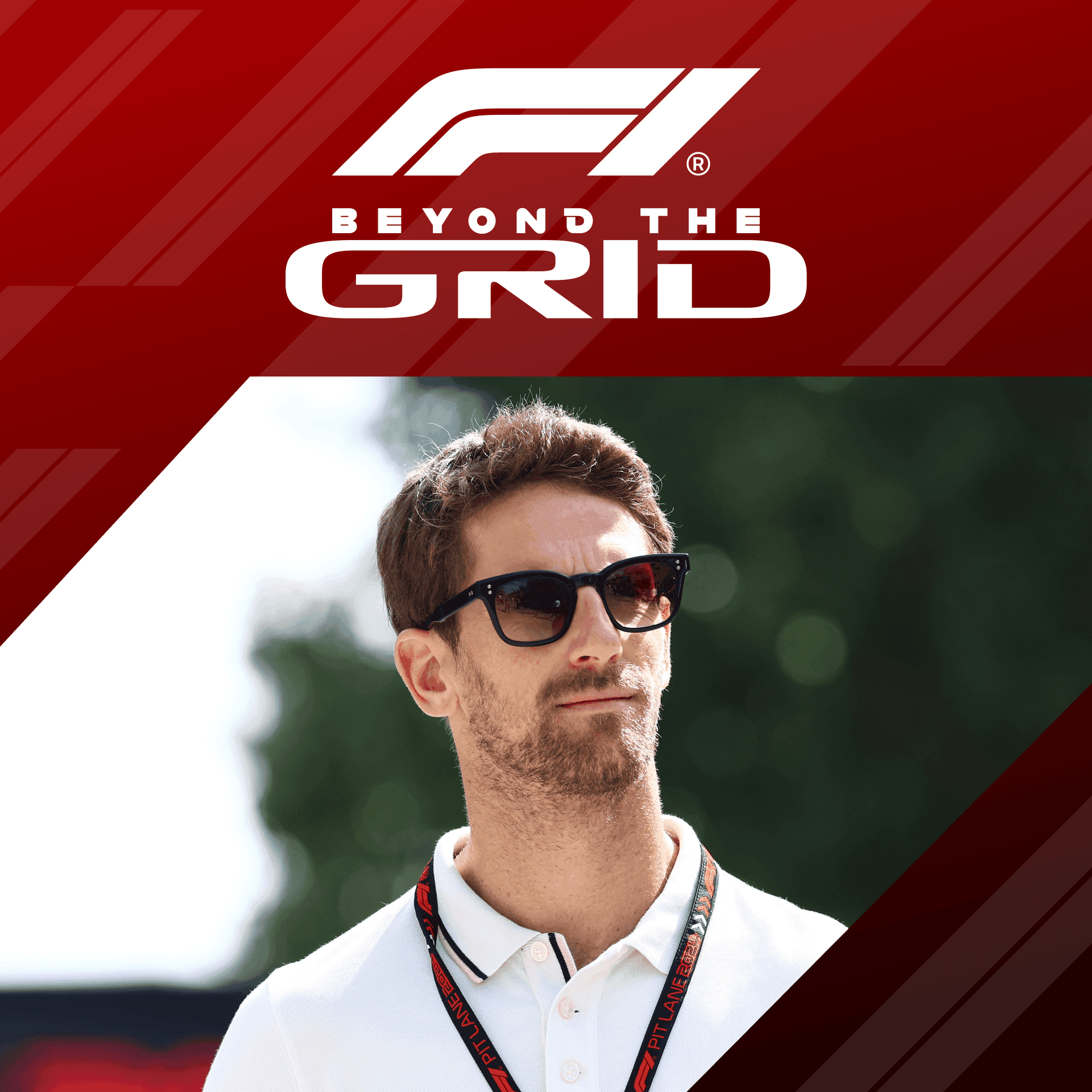
Romain Grosjean discusses his career of comebacks across F1 and IndyCar, focusing on 2009’s lack of support, his GP2 rebound, his 2012 return to Lotus, and lessons about F1 beyond driving. He also comments on Kimi Antonelli’s rise, oval racing stress in IndyCar, and Haas’ first years.
Guests
Romain Grosjean (former Renault/Lotus/Haas F1 driver; IndyCar season included a sensational second place at Markham; also mentions a 2020 Bahrain crash and recovery). Interviewer: Sarah (podcast host).
Key claims
F1 success requires politics/marketing/media and team confidence, not just driving. In 2009 he received “zero percent support” and was treated as a disposable “fuse.” Lotus’ 2012 car suited his style; Canada was a major credibility moment. Kimi Antonelli’s progress is driven by Mercedes’ management support and confidence. After Bahrain, he had no desire loss, but the hardest part was worrying his family thought he was dead.
Notable examples
Valencia 2009 debut; Canada 2012 second place; Japan 2013 strategy loss (hard tire choice); Lando Norris’s Madrid qualifying improvement; Haas 2016 Melbourne qualifying error (no lap) then first-race points (P6) after red flags and a reset dash.
Written by AI. May contain mistakes. Listen to the episode to check what was said.
Chapters
Tap a time to open that second in VORomain's Early Perceptions
0:00 to 1:06
Romain discusses the misconceptions about his personality and early challenges in F1.
“A lot of people thought I was very arrogant.”
Romain Grosjean Joins the Show
1:06 to 2:16
The hosts introduce Romain Grosjean and discuss his recent IndyCar season.
“Welcome everyone to this week's F1 Beyond the Grids.”
Reflecting on IndyCar Season
2:16 to 5:48
Romain reflects on his experiences and highlights from the IndyCar season.
“I'd like to start with Kimi Antonelli, if I could, because I think there is a relevance to your career as well.”
Kimi Antonelli and Career Comparisons
5:48 to 9:25
Romain compares his early career with Kimi Antonelli's rise in motorsport.
“So how tough was it to step back to GP2, which is obviously Formula 2 of today?”
2009 F1 Debut Challenges
9:25 to 11:58
Romain discusses the challenges he faced during his F1 debut year in 2009.
“And were you ready to have a car that good, if you know what I mean?”
2009 F1 Debut Challenges
12:02 to 12:28
Romain discusses the challenges he faced during his F1 debut year in 2009.
“and one of them was a new bed for one of our kids.”
Lessons Learned and Comeback
12:28 to 13:34
Romain shares valuable lessons from his career and discusses his comeback to F1.
“which meant we could also treat ourselves to a Chesterfield storage ottoman.”
Lessons Learned and Comeback
13:50 to 15:24
Romain shares valuable lessons from his career and discusses his comeback to F1.
“You're definitely going to want to hear this.”
Reflecting on Career Peaks
15:49 to 17:48
Grosjean discusses the highs and lows of his F1 career and performance.
“In all transparency, I don't know if you ever reach a peak or if you keep learning.”
Impact of the Bahrain Crash
17:50 to 19:53
Grosjean shares his experiences and feelings after his near-fatal crash.
“Did you lose anything after the Bahrain crash in 2020?”
Show all 22 chapters
Oval Racing Insights
19:58 to 22:48
An in-depth look at the pressures and experiences of racing on ovals.
“But once we kind of cleared that and the fact that we cleared it, I was trying to do everything I could to survive.”
The Importance of Flow State
22:49 to 24:15
Discussion of the flow state in racing and what separates top drivers.
“think of the pole lap that Lando Norris did in Madrid, right?”
Grosjean's Move to Haas
24:16 to 28:00
Grosjean reflects on his decision to join the Haas F1 team and its implications.
“and you can do it for a few corners but doing it for 22 corners is a different story.”
The Role of Ayo and Team Dynamics
28:00 to 30:30
Romain reflects on his relationship with key team members and the dynamics within the team.
“that I always been in charge and I'm not very impartial to that one but I would have loved to have Ayo as a boss.”
The Role of Ayo and Team Dynamics
30:34 to 31:37
Romain reflects on his relationship with key team members and the dynamics within the team.
“passing an order is obviously important, but there's an awful lot of work that has to happen in between them as well, especially as businesses bring in more AI tools, vendors, and new security requirements.”
The Role of Ayo and Team Dynamics
31:41 to 31:55
Romain reflects on his relationship with key team members and the dynamics within the team.
“That's Vanta, V-A-N-T-A dot com slash grid.”
The 2016 Season Start and Team Reception
31:56 to 33:58
Romain discusses the challenges and excitement of starting the season with the new VF16 car.
“And the last chicken in Barcelona and then going into the main street with the Lodges was so challenging.”
First Race and Its Aftermath
33:59 to 37:08
A detailed account of the challenges faced during the first race and the significance of scoring points.
“I appreciate everything Gene has done for me and he's a great character, he's a great person.”
Mid-Season Challenges and Development Issues
37:09 to 40:33
Romain reflects on the team's development struggles and personal challenges during the 2018 season.
“But I think it's important to share other moments rather than just the good ones.”
Future Aspirations in Formula 1
40:34 to 42:00
Romain discusses his love for Formula 1 and potential future involvement in the sport.
“and the team's been doing a great job recently, right?”
Romain Grosjean's Career and Aspirations
42:00 to 43:19
Explore Romain's journey from aspiring aerodynamic engineer to F1 ambassador.
“You know I want it to be an aerodynamic.”
Reflections on Grosjean's Journey
43:20 to 44:01
Insights on Romain's passion for racing and impactful moments in his career.
“There's always more to learn about Romain Grosjean.”
Transcript
Automatic transcript. May contain errors.0:03A lot of people thought I was very arrogant. I was just shy to be in the paddock. Coming back in 2012 was tricky because imagine all the engineers, all the guys that I told the new ownership that I wasn't good enough, you know, that the car wasn't that bad. It was the driver in 2009. So those guys that throw you under the bus, then you come back. It's second place for Romain Grosjean Equalling his best finish in Formula 1 What made you sign Fahas? It was a 45 minutes fun call with Gunther Where I did ask all the hard questions And I liked the answer That is one of the scariest accidents I have seen for some time Thank goodness that Romain Grosjean is out of that car My wife, my dad and my kids and they fought for almost three minutes I was dead.
0:57And that was the hardest part for me to overcome.
1:06Welcome everyone to this week's F1 Beyond the Grids. I am very delighted to say we're joined by Romain Grosjean. Romain, how are you? I'm doing great, thank you. What about you? I'm good. Look, we're here to talk about Formula One, but you have just finished your IndyCar season. a sensational second place in Markham. How would you sum it up? Has it been a decent season? How do you reflect? It's not the season I was hoping for, but there were a few highlights. I think St. Pete race one, qualified in a fast six, and then I led the 500, which is pretty cool, and finished top 10 at the 500. And then Markham, we came close to a win.
1:46Five laps too long was the race. And that's a murder good races, but generally also some difficult weekends and we couldn't really understand why. So bittersweet, you know, some really good moments, some other one like you wish you were better. But still don't love driving. I was going to say 40 years old and still loving it. Don't say that too loud. Shh. Life begins. Trust me, I've been there a long time ago. Life begins at 40. Oh, good news. Now, let's talk F1. I'd like to start with Kimi Antonelli, if I could, because I think there is a relevance to your career as well. Kimi's 20 years old now.
2:26What do you think of the step he's taken since last year? I think it's what Kimi's doing. Of course, he's incredibly talented and an amazing race car driver. But I think what I see from the outside is how good the management and Mercedes was around him. Good start last year, rough second part of the season. came back and instead of digging a hole and putting him into that they actually helped him elevate and gave him so much support that he knew the team was always going to be behind him Australia didn't really start the way it wanted this year right but it wasn't any finger pointing they pre-built a car they supported him and I think as a driver when you get that level of confidence from the people you work for because that's your employee it's a young you know it's your boss that means a lot and that helps you to become who you are the reason i think it's relevant to your career where it's interesting to get your view is you know i think back to 2009 when 23 year old roman with the big hair came into formula one with renault as fernando alonso's teammate amazing debut in Valencia but those nine races weren't always what you'd hoped and of course you then have to step back to to GP2 the following season so I think you know I'd like to sort of compare and contrast if you like you know Kimi's first year wasn't what he'd hoped yours wasn't what he'd hoped Kimi's kicked on and and is now leading the world championship and you had to step back how difficult was that for you did you not get the support from the team that Kimi's had this this time around no zero percent support um up to the last race in Abu Dhabi 2009 I was told you're in the car next year don't worry you're no driver we are proud of you we support you and imagine those nine races the first time I came to Valencia is the first time I sat in R29 there was no simulator there was no test there was no straight line there's nothing it's literally the first time I sat in the car so that's even more crazy because you were 0.3 off Alonso in your first qualifying yeah most of the qualifying i was within alonso's time and and uh there were reasons behind it why i should not beat alonso why i was not allowed to beat alonso why you know um and then sadly a wrong place wrong time i would say but um there was no support for me i was just the fuse that they needed in the middle uh to get rid of and but you know what it was a great experience to step back down come back and come back in the same team so what didn't you know in 2009 that you know now what advice would you give that guy now i guess yeah i think the advice that i didn't get is that formula one is not all about driving and there's a lot more that you need to be good at do you mean politics politics and marketing and media and i am a shy person.
5:25So, you know, a lot of people thought I was very arrogant. I was just shy to be in the Formula One paddock. A little guy from GP2, you know, and think of all the management that I've been with me for since 2006. Four seasons was suddenly gone and I was there alone. No one really to help me understand and help me steer in the right direction. So how tough was it to step back to GP2, which is obviously Formula 2 of today? Well, the GP2 is the good part. It was before that. That was tough, you know? Okay. 31st of January, 2010, Eric Boulier calls me and says, we are taking Petrov. Until that point, that was in the car.
6:06So we're taking Petrov. So I'm out and I'm like, okay, what I'm going to do now? You know, end of January. And then luckily, I wanted to stop and I found a GT gig, GT1 World Championship, won the race one, kind of got the light back on, like, oh, I still know how to drive. I still love driving. And then I don't know how I got the opportunity to go back in auto GP with Dams and then work really well. And then Dams, okay, you do one race in GP too, because I want Jean-Paul Drillot, that was very important in my career, says, I want to see if my car disaster or if it's my drivers, I don't know how to drive them.
6:50So I went to Hockenheim in one race in GP2, went pretty well. And then after the race on Sunday, Jean-Paul took me in his office and said, in 2011, if you don't have a ride, you have one here. And he kept his word and came back to GP2 in 2011, won the Asia for the second time and won the series finally. I mean, it's an amazing story. It kind of reminds me of what Alex Albon went through in 21. He got spat out of Red Bull. had to go to the DTM for 2021 and then gets a second chance with Williams in 2022. So when you come back to Formula One with the same team, Lotus, how much better prepared were you than in 2009?
7:34I think quite a bit, quite a bit. I think end of 2011, I got to some races as a reserve driver, how you want to call it. I think I learned the loss from the first time. The lesson being? That, good question, that. That it's more than just driving. Yeah, you have to be more open. Who told you that that's what, was Drio, you know, Jean-Paul Drio? I think Jean-Paul, yeah, Jean-Paul was very important and like trying to help me understand and telling me that it was more than just driving. And in all fairness, coming back in 2012 was tricky because imagine all the engineers, all the guys that are told the new ownership that I wasn't good enough, that the car wasn't that bad.
8:22It was the driver in 2009. And then for 2010, they needed new drivers. It wasn't the car. It wasn't the engineers. It was just the drivers. So those guys that throw you under the bus, then you come back. But it's crazy to think that in 2012, you finished second at the Canadian Grand Prix. That was only your 14th Grand Prix. Yes, yes. How important was that result just in terms of your position within the team, the credibility with the engineers, all that kind of thing? I think, you know, we 2012 started Australia, P3 on the grid, and then podium in Bahrain, and then Canada. Yeah, it was a great weekend, really good.
9:05The car was really good on tire, really good tire management. And that helped a lot settle things in a good spot. I think after that, again, wasn't an easy time. But up to that point, Canada was probably the highlight of that season and one of my best memory in Formula One. How good was the Lotus of those two years, 2012, 2013? And were you ready to have a car that good, if you know what I mean? Yeah. Because you were so young still. I know. I think having a car fast from the beginning helps you, actually. the team was probably not still not ready to have young drivers and help them they've had a lot of experienced drivers back in the past and I don't think they were ready yet to support a young driver that's coming and coming faster I mean as you say 14th Grand Prix and the first night don't really even count P2 and if he wasn't for a little bit glitch in the middle of a race, could have been a win.
10:11With the experience you have now, could you have won a race, do you think, in those two years? Japan 2013. I know you were out front for a long time there. That's on the team. That one, we lost it. Red Bull didn't win it. We lost it. Okay, because I sort of look back and think of Vettel and Weber strategically getting the upper hand on you. Yeah, but the team panicked. We had a plan, medium, medium, hard. And Red Bull went medium, hard, hard. and the team panicked and put hard on the second stint. But the problem is that in Q1, there was a red flag. And in Q1, we put a set of hard tire new and actually went fastest of Q1 on hard rather than being on medium or soft.
10:52And we used those hard for that middle stint. And they were not new tires anymore. And if we had done medium, medium, hard, I think we would have won the race. I get that. But you scored, what, nine of your 10 podiums in those two seasons? if it wasn't Japan where was your best opportunity elsewhere? Valencia 2012 could have been one Fernando claims that's still his best ever Grand Prix his best ever race good for him I'm happy I helped him having a good one that one could have been one when Kimi won in Australia in 2013 I don't think I could have done that I was struggling much more than him on front graining Korea maybe 2013 we could have done a touch better.
11:39Austin, there was nothing left on the car. Again, great race though. Yeah, right? Great race. Especially a starter on Mark Webber who's always a bit stressful for me. Yes. Oh my God. What did he call you? I can't remember. First lap note case. Yes, that was the one. That was the one. Not a lot. Respect for that, to be honest. Not a lot. This episode is sponsored by Wayfair. We've had a few things on our shopping list for a while and one of them was a new bed for one of our kids. Now, with something like that, you obviously want it to look good, but it needs to be practical too and ideally not cost a fortune.
12:13So we've been using Wayfair. We chose the Lisbon storage bed in a gorgeous oak shade, which arrived in record time. We'd looked at loads of different options, but I'm so glad we went with this one because the quality was exceptional and it still sat well within our budget, which meant we could also treat ourselves to a Chesterfield storage ottoman. We'd been looking for one for our bedroom for ages, but we're really struggling to find the right style and size. And this was exactly what we'd been looking for. It almost looks bespoke for the room. And that's something I found really helpful about Wayfair.
12:48There's so much choice across different styles and budgets, and you can use the filters to narrow everything down. And it makes such a difference being able to look through customer photos and reviews, because you can't always tell from a product photo what something is actually going to look like in a real home, can you? And when you choose a Wayfair verified product, you know it's been hand-vetted by product specialists using a 10-point quality inspection. So it's no surprise to me that 20 million verified five-star reviews help shoppers buy with confidence. Plus, Wayfair Rewards members get 5 % back on every purchase.
13:25So transform your space with pieces that hold up to real life. Join Wayfair Awards today and get 5 % back on every purchase. Head to Wayfair.com or shop the Wayfair app for all things home. That's Wayfair, W-A-Y-F-A-I-R dot com. Wayfair, every style, every home. This episode is sponsored by Hexclad. And if you're finding yourself spending a lot more time cooking indoors now that autumn's arrived, You're definitely going to want to hear this. We love cooking as a family at home when we get the chance. And I've loved testing these out with some of our favourite recipes. Take my Sunday morning speciality, pancakes.
14:07I made a load for the family last weekend and no joke, it was much easier with the hex clad frying pan. Then in what proved to be a very active day, I ran the Cheltenham half marathon and got home feeling famished. The steak that we ate that evening was delicious. Again, so much easier with Hexclad. And what's great is that there's no compromise with these pans. Hexclad combines the searing power of stainless steel with the convenience of non-stick, so you get great heat control and a proper sear without creating another job for yourself when dinner's finished. I love that you can just put them straight in the dishwasher afterwards without worrying about ruining them.
14:45And even if you're washing them by hand, they're really easy to wipe clean. They're oven safe up to 480 degrees Celsius as well, with stainless steel handles that stay cool while you're cooking. Plus, every Hexclad product comes with a lifetime warranty. More than 1 million customers already use Hexclad. They've got over 50 ,000 five-star reviews, and Gordon Ramsay uses them both at home and in his restaurants, so they must be doing something right. Start the new season with cookware that actually works as hard as you do. upgrade to Hexclad and make everyday cooking easier. For a limited time, our listeners get 10 % off with our exclusive link.
15:24Just head to hexclad.co.uk forward slash grid. That's Hexclad, H-E-X-C-L-A-D.co.uk forward slash grid. Offer excludes bundles and other items already on sale. Support our show and let them know we sent you.
15:49look when were you at your best roman tell when you look at your formula one career as a whole was it in those lotus years or actually did you put in some performances at has that that every bit as good i mean it was easier because the car worked really well with my driving style and the car was very competitive um so it looks on the paper like it was your best time I think I kept learning. In all transparency, I don't know if you ever reach a peak or if you keep learning. It doesn't feel like getting older, you lose that much. You take it a little bit slower and through practice. You don't need to be fastest of every single lap you do.
16:34But I think you have so much more experience, so much more different situation you have been in that you can actually, to a certain point, I think, and I've not felt yet a decrease in performance. Use all of that to your advantage. So when you look at Alonso, age 45, Hamilton, age 41, do you see any drop-off? Luis, not at all. Fernando is too difficult to say. I mean, his car is not giving him what he needs to be good. Was it two, three years ago he was fighting for podiums and so you could argue that 41, 42, you're still very, very good. I think once you pass 45 yeah things may be getting a little bit more complicated but we what do you think the desire drops off like when you had kids did it make any difference to you?
17:24no I've not seen my kids in six weekends in a row and here I am right and they know it and they love the dad they have because when I'm home I'm home and they know I'm happy with what I do and I have not felt any kind of moment where I don't want to be in a race car and it will happen. I know it. And the day I question myself, I'll put my helmet on the shelf and do plenty of other things. Okay. Did you lose anything after the Bahrain crash in 2020? A bit of skin, but nothing else. But no desire to get back, you know, didn't affect your desire to get back in the car or push the limits? No, zero.
18:03If there's an accident with fire, it touches me a lot more than before. and I'm really worried about the driver and just making sure he's okay and everything is fine. So that has definitely had an impact on me. But once the green goes back and the pace car is in, it's racing as it was before and as it would be until I decide to stop. Did Bahrain give you any... Were there any side effects other than losing skin? Were there sleepless nights? Nope, nothing. Has that surprised you? Yes. Yes, because you would expect to have some kind of, you know, moment where it comes back to you and the clothes you wear from dying.
18:49But no, it worked really hard as a psychologist. I think the accident was on Sunday. Our first session was on Tuesday night, I believe, in Bahrain. And then another one on Thursday. Do you mind sharing? How did those sessions work? Did you just talk through what you remembered? It wasn't so much what I remember. is what you felt and how you feel and what was creating problems for you maybe. And for me, it was more the fact that my wife, my dad, and my kids, and I hurt them. It wasn't on purpose, but they thought for almost three minutes I was dead. And that was the hardest part for me to overcome.
19:29It wasn't the fact that I was fighting for my life because I was in control of that. But it was the fact that for my friends, for my wife, kids, dad, they didn't know what I was doing. They didn't know where I was. And for them, for three minutes, I was gone. So... And that doesn't keep you awake at night? We worked around it. And no. And I think that was the hardest part. But once we kind of cleared that and the fact that we cleared it, I was trying to do everything I could to survive. to be alive. So it wasn't like, you know, I didn't let them down, not myself. What about getting on an oval then?
20:14I remember back in showing my age now, but back in 1996, I went to the first ever IRL oval race at the Walt Disney oval. And it was a, it was a very, doesn't exist anymore, but it was a very quick oval. And, um, I remember seeing the drivers, there was people like Ari Leindyke there, really nervous before the start of the race. Much more nervous, really, than you see in Formula One today. Do you feel that? I suppose it's not a hangover from the Bahrain accident, but do you feel there's more at stake somehow on an oval than a road course? Yes, especially in the 500, and I think the whole pre-race ceremony lasting, I don't know, two hours or so, doesn't make it any easier.
21:00You just want to get on with it? Yes. You want to get in a car, you want to start the engine and go. The Indy 500 is a very, very, very stressful moment, but also an incredible moment on the grid. Short ovals, less so. The more you do it, the more you kind of understand better. It's so different from racing on, you know, street or road course. But you know when you're on a road course and you're, they talk about the flow state, don't they? you know, Brad Pitt felt it in the F1 movie as well, didn't he? But the flow state where everything's happening automatically, do you get that same level of, is it concentration?
21:41I don't know if that's the right word, but on an oval, is the feeling the same or is it very, very different feeling that you get from the car and from yourself? I mean, it's even probably more novels. It's either everything goes really well or everything goes really wrong. But when you have a good car on ovals, you do whatever you want. You place it, you position it as you want and because the speed is so high, everything matters a lot more and every single detail and input is a lot more than you think. So when you're into that perfect combination with your car, it's amazing. When you're not, it's a very long afternoon.
22:25How often are you in that perfect combination? and sadly not as many as you would like, not as often as you would like. But ovals are so long. Indy is, what, seven pit stops. Most of them are four, five pit stops. So there are times that you're going to be really good. There are times you're not going to feel that great and then you're going to feel again. And the important part is to feel really good on the last pit stop. But to bring it back to Formula One, think of the pole lap that Lando Norris did in Madrid, right? he was six tenths seven tenths faster than his first lap in q3 i've not seen that kind of improvement within one segment of qualifying ever maybe i can't not for ages anyway is that because he was reaching a flow state and a connection with the car that you don't often feel do you think I mean, it was an incredible lap.
23:21I didn't see it coming at all, as you say, six stands improvement. I think the track itself requires so much commitment and risk that you can take that Lando, just probably on the last lap, put everything perfectly on the line. And I think it reminded me a little bit of Max Verstappen lap in Jeddah, but that lap was never completed. The 21 one. Yeah. last corner yeah I think the level of confidence engagement and input that land and he almost crashed in the last corner right he had a wiggle in the last corner I think that's that type of lap that you can decide to kind of switch off your brain and just absolutely go with everything you have and is that what separates the great drivers from the good drivers that ability to find whatever it is that what we're talking about now that I think so because at that point everything has to be 100 % and you can do it for a few corners but doing it for 22 corners is a different story.
24:26Have we seen enough from Kimi Antonelli to think that he's a generational talent in the mold of a Max Verstappen or a Hamilton? Yes, I think Kimi is up there. I think he has a way of driving the car that is very different from quite a lot of people out there. it works amazingly well and on top of that it seems like no pressure can get to him which is very impressive when you're 20 years old what you don't know you don't know though right I suppose by now he would have found out the pressure of being leading a world championship and racing for Mercedes it's extraordinary isn't it it seems to come so easily to him and that must be even more infuriating for George Russell it must be it must be very difficult I think Kimi loved living chaos but the good chaos right He doesn't mind the noise and the agitation and the fans and like all of that around him.
25:19And some people are like that and they can just take energy of that. And some other people that takes energy from them. And I think Kimi for that is fantastic. He seems to have time for everybody. Time in the car when he's driving, obviously, but also off track. He stops way more than any other driver now, I'd say. Exactly what I say. it's amazing because someone just needs some time alone and often. I'm one of those, right? I like to be alone for a bit and turn off my brain. But I think Kimi does manage to do that in public, like talking with friends. It doesn't take him any energy. It just actually gives him energy.
25:56It's just like a nap could do to someone else. Yeah. Now, that is contemporary Formula One. There is one other thing I wanted to ask you about in this pod. Everyone loves an anniversary. it is 10 years since Haas' first season in Formula One. And I just wanted to ask you about that. First question, I suppose, is what made you sign for Haas? Because I remember being surprised. You went over to the States and there was the press conference and you looked really excited. But I remember thinking, interesting move from Grosjean to go to a brand new team. Yeah, it was a 45 minutes fun call with Gunther.
26:35I did ask all the hard questions. and I like the answer. And at that point, maybe 10 years in Enstone or so between Renault Drive Development and then Formula One. And there was no clear direction either from Renault on where they were going to do and what they were going to do. You'd scored a podium in 2015. We did. Yeah, we did. So did you know that you were sacrificing all of that, at least in the short term? Yes, absolutely. But I felt like there was, if the plan had been as initial, looked like there was a really good path forward. So, you know, you said you asked Gunter all the hard questions and you liked what he said.
27:18As a driver in that position, what are the questions? Like, what's the budget of the team? What's the development that we're anticipating? What's the partnership with Ferrari like? How much support we're going to get? What are the ambitions? what's the three to five years target all of those questions that you want to know like see it as a startup if you're an investor in a startup and in that case you invest in your career but I still think it was the right move I still think that it was a great experience that we could have done a lot more and I think the team is developing very well now that I always been in charge and I'm not very impartial to that one but I would have loved to have Ayo as a boss.
28:09I would have really loved that. Because he was your engineer at Renault. Every single Grand Prix I competed in Ayo was part of my car somehow. It was my performance engineer in 2009. It was my race engineer 2012, 2013, 2014. And then it was my chief engineer 2015 to 2020. He's incredibly impressive. He's got a massive brain, hasn't he? He's really bright. For a little man, yes. but he's really bright isn't he he's amazing he can fit yeah i love io and and uh you know we became friends through the years uh and where he surprised me the most is when he took the role uh because you know it wasn't easy to feel the boots of someone like gunter that had a big mouth and a big character and i was done well above every expectations and and exactly what the team needed how was your relationship with gunter behind closed doors great really yeah he's a great character um he's a good man and and we had a good relationship uh on the racing side i don't think we agreed on everything uh i suppose that's why i was asking probably but yes yes uh but but i like him personally as i say i would have loved to have a for a bit as a team principal you know you say the team needed someone like IO.
29:31What they needed an engineering brain at the top. Is that what you mean? No, not necessarily an engineering brain. That would not hurt, but someone probably calmer, someone very transparent and very honest, someone that won't hide when they make a mistake. That's very rare. You know, people coming to you say, I made a mistake. Sorry. It's a quality that in a very high level environment, you don't find very often. right and i always got all of that yes sir i look at the transformation do you remember the start of last year when bearman and ocon were nowhere in melbourne and then the very next race i think ocon was p5 and then in suzuka they were that the turnaround the fact no one panicked it was it was incredibly impressive and i think io would look back and say that was a huge achievement for the team to stay calm, not panic, because they were six tenths slower than the next slowest car.
30:27But the team is only as good as the captain wants to steer it. This episode is sponsored by Vanta. When it comes to security and compliance, passing an order is obviously important, but there's an awful lot of work that has to happen in between them as well, especially as businesses bring in more AI tools, vendors, and new security requirements. And if that's something you're dealing with, you'll know how quickly the workload can start to build. A lot of compliance tools promise automation, but your team can still end up chasing screenshots, validating controls, and doing far too much of the work by hand.
31:02Vanta works differently. Their Egentic Trust platform is built to scale with you, not slow you down. With over 1 ,400 automated tests across more than 400 integrations, Vanta collects evidence and monitors your controls year-round, cutting your audit prep by 82%. And I like that the Vanta agent can be there in the tools your team is already using too, whether that's Vanta itself, Claude or Cursor. More than 16 ,000 fast-growing companies, including Ramp, Writer and Harvey, already use Vanta to save time and resources as they scale. Learn more at vanta.com forward slash grid. That's Vanta, V-A-N-T-A dot com slash grid.
Read the full transcript
31:55but look back to 2016 right um it was an unbelievable start for you guys wasn't it i mean take us through the first moments that you drove the what was it the vf16 did you know immediately that it was a decent racing car it was so different from the lotus so different um i I remember we tested in Barcelona, right? And the last chicken in Barcelona and then going into the main street with the Lodges was so challenging. There was very little rear end, but really good rotation of the car, which I liked. But you like a bit of oversteer, right? I do. And then I jumped in the VF16 and I could go full throttle on just like a dragster sort of, right?
32:36And I was like, oh my God, such a different philosophy and such a different car. How much of that was power unit? None. It's just like pure chassis difference of like philosophy how you run a car. Okay, so we then go to Melbourne. First up, what kind of reception did you guys get? The new team, I always said many times that no one got much sleep from the mechanics point of view. Just everyone was building frantically, pulling everything together. But do you remember the Aussies giving you guys a warm reception, welcoming a new team? They always do. I love Aussies. That's true. They're the best.
33:13The Melbourne walk. Oh, yeah, yeah. I could live in Australia. That's a place I would definitely love living. Anyway, back to it. Yes, it was great, but we were the small guys, you know. They're excited about the Ferrari guys, and they were just welcoming us, yes, but not knowing what it was going to be. I think prior to Haas, the history of teams coming to Formula One was a bit rock and roll, so they just wanted, everyone wanted to see if that was a serious project or if that was just going to be a billionaire from America, I just wanted to be on the grid for a bit and then go somewhere else.
33:50Well, no, he's committed, isn't he? I saw Gene right now, you know. Very early on a Sunday morning, Gene was walking the paddock and he's here. Was he pleased to see you? Were you pleased to see each other? Always, yeah, always. I appreciate everything Gene has done for me and he's a great character, he's a great person. you know he's shown a way in Formula 1 that that not a lot of people would have committed to and validate back to Melbourne 2016 Qualy didn't go disaster yeah P19 right was it that good I thought that was worse than that luckily there was only 20 cars in the grade remind us what happened in Qualy well it was the new kind of rule that there was time was in the segment and we miscalculated it and we never got a lap and then we sat at the end of pit lane I mean it was it was it was bad And was that sort of new team errors or was it just...
34:45Everyone was so tired and lacking sleep that I don't even think they looked at the clock. That's so bad. We need a minute and a half to do a lap. Let's go a minute to go. Sort of that thing, right? Yeah. Just too tired to think straight. Okay. Let's fast forward to Sunday, though, because, I mean, that was immense, right? 10 podiums to your name. Did that P6 feel like a win almost? Yeah, it does. It does. I mean, we got lucky. Let's not lie to each other. We stayed out on the hard tires and then there was a red flags and then we fitted the new tires on red flag. And then... You've got to be in it to win it.
35:24You have to be in it to win it. Funny enough, we had a red flag. They resetted my dash. So I'm going back after the red flag and the fuel number doesn't work because they reset it. So the fuel number think it's a whatever, 60-lap race, but it's only a 30-lap race or whatever. So I'm like, I don't have any information on the fuel and we have to save fuel back then. So what do you do? How do you drive? Well, the team had to ask the FIA for the approval to give me some input because I was blind. And then we went on to the end and finished sixth and luckily it's not an easy track to pass. And Nico Hülkenberg, I think behind me, he was, you know, overeating his brakes.
36:08He couldn't really attack too much and made no mistakes and stay out there. And it was the first race, first points. And I mean, that's his story. You know, how many teams have come to Formula 1 and score points in the first race? And there's nothing you can, there's never a way you can remove that from Haas. How did you celebrate? I kind of fly to Europe. Really? I'm not a party man, you know. You'll always see me in bed by 10, 11 later. Do you know what though? I remember Alonso saying that he wished he'd celebrated his good moments more because it's such a Formula One thing to just move on to the next race, the next race.
36:45Do you wish he perhaps had a bit more of it? Or was everyone too tired anyway? No, I don't. The celebration, I don't care too much about it. I would rather have a dinner with my mechanics out of the blue than just celebrating the good moments because I think we're more than that. We're defined by who we are and not by what we do. And you spend so much time together, you become kind of a family with these pros and cons, you know. But I think it's important to share other moments rather than just the good ones. and I don't mind having flown back and having been home and also get to share with the wife and the kids.
37:27They're not necessarily all the time there. So no regrets on that. And the kids were young back then. Well, they were, yes. Yeah, what a rush home. Well, let's fast forward two weeks, right? Okay. You qualify inside the top 10 ahead of Max Verstappen in a Toro Rosso and you bring it home P5. Yes. what are you thinking as a team at this point yes that bahrain was insane um in in many ways and and the car just worked so well so i think it was it was almost a bad thing for us because two races like one we finished six a bit lucky but we're dead in the next race we are you know top five and you think that you're gonna be here for the rest of the championship that's what you think I think I was fifth in the driver's championship at that point.
38:18I mean, brand new team. Well, then in Russia, a couple of races later, you're back in the points again. Yes. I mean, it was a phenomenon. And then the development that was promised never showed up. And that's when, I mean, why? Just because the budget wasn't there or just? I don't have the food inside information, but definitely development has been one of the weaknesses. until the sixth stands behind in Melbourne with Ayo and then back in the points later. Well, if we fast forward to 2018, which was the P5 in the Constructors' Championship with you and Kevin Magnussen, what was different that year?
38:59Because you must have had some decent development to maintain that level. You know what? The first few months of that year, I think that's probably one of my regrets in Formula 1. I was just not in a good place and I struggled on those few races until things turned around and got way better. I think it was Canada. For me, it was turnaround that year. But what was happening? You were unhappy with the car? Yeah, Kevin was a lot happier with the car than me. There was quite a bit of honesty in the car. We couldn't get rid of it. We maxed out on front wing everywhere we would go and couldn't really.
39:36And then Kevin was very happy and maybe I needed more support there from the team side. If we make the car more to your liking, we're going to take it away from Kevin's liking. So they're sort of juggling that. Yeah, and instead of working as a team, I think we worked as individuals. Yeah, and then, well, Canada, we had an update and I really liked it and Kevin didn't like it so much, but there was more performance in it. And then I had a better second part of the season. We did have a good car. I mean, there's no lying that we had a great car. Sadly, the top team was too far ahead, so we never got a podium, and that was the best chance up to date.
40:19But we had a good car and just had some great races. I feel sorry for you that the budget cap didn't come in earlier. It would have been a good thing. In Formula 1, because I think it has been a great thing. It has helped the teams like Haas massively, I think, in terms of development. and the team's been doing a great job recently, right? Just, you know, last time out, the upgrade came in. Look at, okay, Oli Behrman had his problems in FP3 in Madrid, but, you know, Ocon has proved that what they put on the car is working. Yep. No, the philosophy, I think, has very much changed. Tim is doing great.
40:58And you're right, 2018, if we had had a Cars Cup, would have been very interesting. I think from winter testing, we looked super strong. again the development was slower than other teams just because budget and so on and so forth but that was a great season you still seem very attached to Haas you know how pleased you are to see Gene and your relationship with Io I know you live in Miami now but could we ever see you getting involved with a Formula 1 team on a more serious basis that's an interesting question you're not you're not saying no I'm not saying no and I would love to but also I love my life down in Miami.
41:37So there's a bit of a conflict here that it would not be easy to do the two together. But I love Formula One. I love racing in IndyCar and it's great fun. But I think Formula One is what I wanted to do since I was a kid. It's what I was able to do for many years. And I love being back on the paddock of Formula One. I love seeing the technology. You know I want it to be an aerodynamic. aerodynamic engineer when I was a kid. Hang on, I thought it was banking and economics. No, no, no, no. I wanted to be an aerodynamic engineer. When in school in Switzerland, you have to do like a project when you're in high school, whatever it is.
42:18And I did about Dan Gurney and the engineering and the aerodynamic. And that was my thing. I wanted to go to Supero in Toulouse to aerodynamics. And then I was good at driving. So I kind of gave up on that. But Formula One, you know, that's what I love, is technology and pushing the limits and such a great, perfect organization. Well, it's great to have you back in the paddock as an F1 ambassador. And I think any team would benefit from Romain Grosjean being on board. There you go. Thank you, Sarah. Look, thank you so much for your time. It's been brilliant to catch up because we never get to see you during the IndyCar season because that's so intense, right?
42:58It's race, race, race, race, race. It is 18 races in like five or six months. It's busy, but now I'm here. Are we going to see lots more of you between now and the end of the season? Yes. Great. Baku, Austin, Sao Paulo, Vegas. That's the last race. That's a fair amount. Romain, thank you so much for your time. Brilliant to see.
43:29There's always more to learn about Romain Grosjean. Even after all these years, I didn't know about his passion for aerodynamics or that he'd be keen to get involved in an F1 team if the right opportunity presented itself. I also enjoyed hearing about his years with Haas and to listen to him talking about the aftermath of his crash in Bahrain in 2020 is still incredibly moving. Roman, many thanks for your time. It was great to catch up and I look forward to seeing you in Baku and all of the other races you're attending between now and the end of the year. And before I go, a few parish notices for you.
44:05F1 Nation's preview of this weekend's Azerbaijan Grand Prix with myself, Julian Palmer and James Hinchcliffe is out now. And the latest episode of F1 Explains is all about the podium ceremony. That's also on the F1 Nation feed. Thank you very much for listening. I will, of course, be back next week with another big name from the world of Formula One. F1 Beyond the Grid is produced by Formula One and Audioboom Studios. Until next time, keep it flat out.
From the publisher
As Romain tells Tom Clarkson, the crash in Bahrain was not the first time he had to rebuild his career. After a seven-race spell in Formula 1 in 2008, he was dropped for the following season. Determined to find a way back, he took a step down the motorsport ladder to the junior category, GP2, became champion, and earned a Formula 1 comeback with the same team that had previously let him go.
Romain, who has 10 F1 podiums to his name, reflects on Grands Prix he could have won, how his former team Haas have changed since he scored points for them on their debut 10 years ago, and considers his future in the Formula 1 paddock.
This episode is sponsored by:
Wayfair: join Wayfair Rewards today and get 5% back on every purchase. Head to wayfair.com or shop the Wayfair app for all things home.
Hexclad: find your forever cookware @hexclad and get 10% off at hexclad.co.uk/GRID! Offer excludes
bundles and other items already on sale. #hexcladpartner
Vanta: learn more at vanta.com/GRID