In short
Podcast Episode Summary: Bill Cunningham Blues
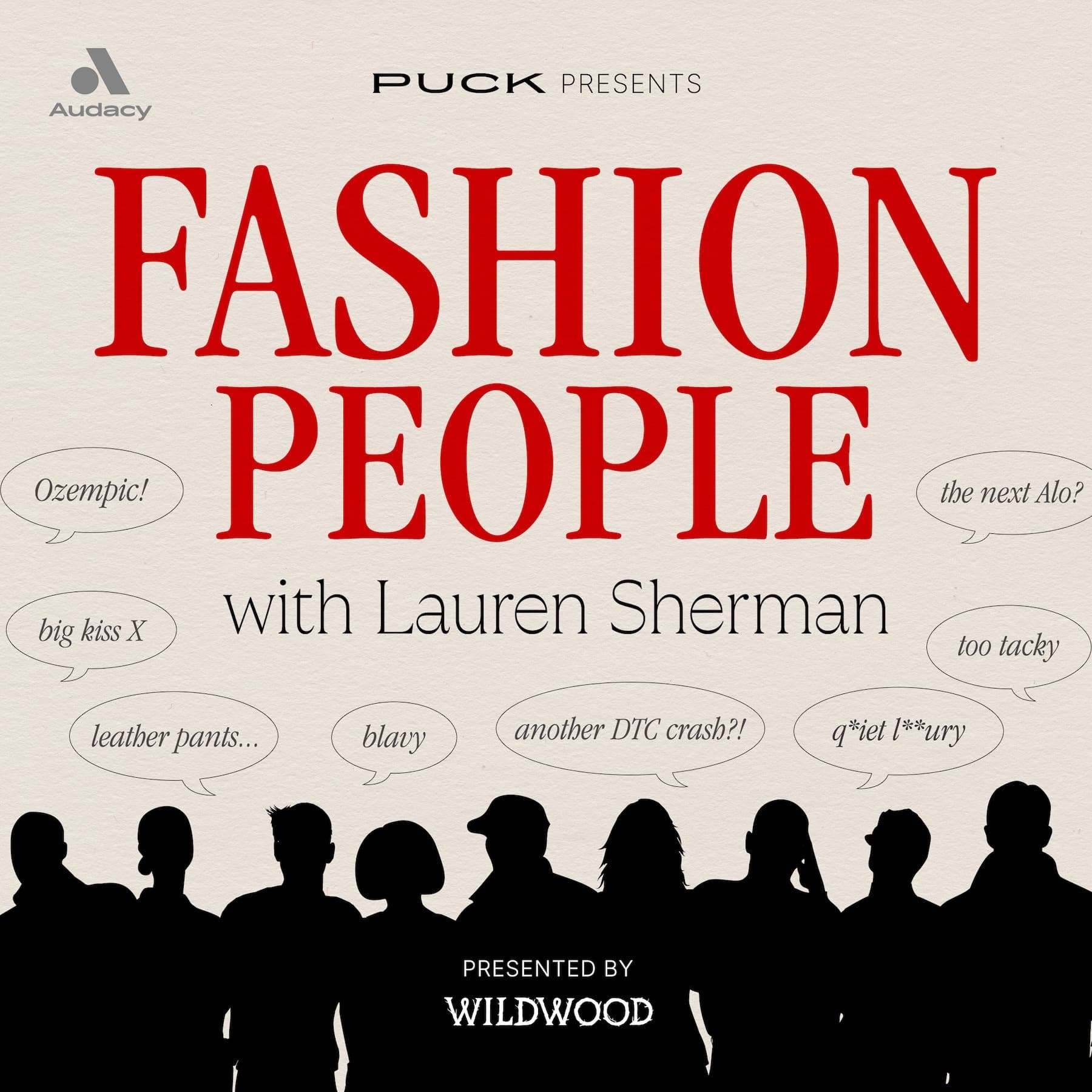
Podcast Title: Fashion People Episode Title: Bill Cunningham Blues Host: Lauren Sherman Guest: Mark Bozek Release Date: [Insert Date] Description: In this episode, Lauren Sherman welcomes Mark Bozek, director of *The Times of Bill Cunningham* and author of a new Rizzoli book on the Battle of Versailles. Bozek discusses his extensive career in fashion, touching on influential figures such as Bill Cunningham and Willi Smith, while Lauren provides insights into current fashion industry concerns, including tariffs and market dynamics.
---
Key Themes and Discussions
- Introduction to Mark Bozek
- Background:
- Mark Bozek is a multifaceted figure in fashion, having worked with renowned designer Willi Smith, directed a documentary on Bill Cunningham, and served as CEO of various networks, including HSN.
- He has recently authored a book regarding the Battle of Versailles.
- Current Fashion Industry Landscape
- Market Conditions:
- Lauren discusses the panic in the fashion industry amid economic uncertainties, particularly concerning potential tariffs proposed by Donald Trump.
- European executives appear more optimistic than their U.S. counterparts, anticipating economic stability in 2025.
- Localized Manufacturing:
- The conversation touches on the challenges of bringing high-end fashion manufacturing back to the U.S., citing the lack of available machinery and costs involved.
- Bozek expresses optimism about localized, automated manufacturing in lower-end fashion.
- Insights on Willi Smith and Bill Cunningham
- Willi Smith:
- An impactful but often overlooked designer credited with "street couture."
- Bozek recounts creative projects with Smith, including collaborations with Christo and a film shot in Senegal.
- Smith’s tragic passing due to substance abuse is discussed, highlighting both his successes and struggles.
- Bill Cunningham:
- Bozek shares anecdotes about Cunningham’s unique approach to fashion photography and his legacy.
- The documentary Bozek directed showcases Cunningham’s life, emphasizing his character and impact on fashion.
- The Battle of Versailles
- Cultural Significance:
- The Battle of Versailles was a significant fashion event that showcased American designers against French counterparts.
- Bozek highlights the importance of this event and its lasting implications in the fashion industry.
- The Future of Fashion and Media
- Emerging Designers:
- Bozek expresses enthusiasm for young designers making their mark, such as Presley Oldham and Honey Dijon.
- He emphasizes the importance of creativity and mentorship in the industry.
- Content and Commerce:
- Discussion on live shopping and how it contrasts with traditional media and retail strategies.
- Bozek notes the challenges of melding entertainment with commerce effectively.
- Conclusion and Reflections
- Legacy and Impact:
- Reflecting on the importance of kindness and talent in the industry, Bozek emphasizes the necessity of substance over superficiality.
- The episode concludes with a sense of optimism for the future of fashion and the ongoing evolution of its narratives.
---
Key Takeaways
- Fashion's Economic Climate: Current anxieties due to potential tariffs and the need for localized manufacturing.
- Willi Smith and Bill Cunningham: Importance of celebrating unsung heroes in fashion and their cultural contributions.
- Future Trends: Emerging designers and innovative retail strategies may redefine the industry’s landscape.
- Creativity vs. Commerciality: The need for authentic storytelling in fashion media and the challenges of integrating commerce with creative content.
---
Additional Notes
- Next Steps for Bozek: Plans for further projects related to the Battle of Versailles and a documentary series focusing on lesser-known yet vital figures in fashion.
- Lauren's Upcoming Topics: Insights into Goop's financial status and LVMH's recent executive changes will be discussed.
---
This summary encapsulates the podcast episode's content, providing insights into the discussions while highlighting key figures and industry trends within the fashion world.
Written by AI. May contain mistakes. Listen to the episode to check what was said.
Transcript
Automatic transcript. May contain errors.0:04Hello and welcome to Fashion People. I'm Lauren Sherman, writer of Pucks Fashion and Beauty Memo memo, line sheet. And today with me on the show is director, writer, and CEO, Mark Bozek. We're talking Bill Cunningham, Willie Smith, the Battle of Versailles, QVC, and what these things all have in common. Guess what? It's Mark. Let's get started. Hi, everyone. Hope you are having a great week. It is Friday. If you're listening to this the day it is published, the news never stops. The sun goes on rising and setting. The fashion industry is in a state of panic. At the same time, it's totally fine.
0:46I've done my due diligence and made the requisite calls regarding the results of the U.S. presidential election. And it seems that generally, I'd say that execs in Europe are treating this the way execs in the U.S. would treat an election in Europe. And that's to say the economy is pretty good right now. As long as Trump doesn't institute this handbag tariff, it will be fine and spending will pick up in 2025 as planned or as as projected by analysts like Luke Soka. In the U.S., I think people are a little more concerned about the cost of consumer goods increasing further and the threat of those tariffs that keep coming up, not just on champagne and other fun things, but also on handbags potentially.
1:35So and now you you can understand why the R. Nose are closing up to Trump. They don't want him to put in this handbag tariff. So and the one thing is that the tariff that that was potentially going to be instituted the last time around was on French handbags. So like there are ways to get around this stuff. But anyway, it would be a pain in the butt. My understanding is that Trump's goal is to sort of force manufacturing back to the U.S., which is why he's so into all these tariffs. Many people who voted for him think that's a great idea because they want like real jobs, et cetera, et cetera. I am like a little bit reluctant to recommend reading that you read a David Brooks piece, but I did think his recent opinion column in the New York Times sort of explained the manufacturing element and the sort of working class element of why people voted for Trump.
2:33I thought he did a good job. I hope that I don't get fired for saying that. The problem with this idea of like forcing manufacturing back to the U S is that like, especially in high fashion, like the machines required to get the stuff done or just, they're actually not available in the U S like they're giant and no one's buying them. Cause they cost like hundreds of thousands of dollars. In some case it's just, it's just not happening. So in that way, like finishes and stuff that happens in Italy, I just, most of it just can never happen here. That being said, I do believe in localized manufacturing becoming a bigger deal.
3:11And I have for years. It's a reason why Louis Vuitton has opened factories here. It's the reason why Hermes has manufacturing capabilities here. They don't have their own factory, but you can do some work with Hermes here in the US and in California in particular, where I live, there's a lot of the stuff is done. But I think that real localization is going to be automated manufacturing. So it's like on the lower end of fashion, it does make sense for it to be local speed to market. And a lot of that's going to become automated. So it's not going to really create more, that many more jobs. And also it's going to take forever because of the way these industries work.
3:50Anyway, this week on Line Sheet, we have Goop news out the wazoo, layoffs, revenue numbers, valuations, just everything you need to know about Goop. It's one of Rachel's obsessions. It's also one of mine, and we love chatting about it together. I also have a ton of intel out of Europe. On Thursday, news broke in Europe that LVMH fired its longtime head of HR, Chantel. And I have a little bit more background on why that happened, and I'll have more on that next week, I'm sure. It's a huge deal, and I think there are people within the halls of LVMH that are rejoicing, but also it's not a great look for it to happen the way it did.
4:31Once again, they didn't get ahead of the news. They didn't communicate it publicly. They should have gotten ahead of it. And then people wouldn't be digging so much, but you know, they don't pay me to tell them what to do. I just, I just write about it. So I'll have more on that. I also have info on the Chanel creative director job, how much they're paying people, but you got I'd go to line sheet to check that out. And I hope you enjoyed this interview with Mark. I met him, I think like about a year ago, and he's just sort of a Jack of all trades. He's done pretty much everything. He was the CEO of HSN, but he worked at QBC for Barry Diller.
5:10He directed documentary about Bill Cunningham. He used to work with Willie Smith, one of my all time favorite designers and like one of the unsung designers of American fashion. He worked for him in the 80s. He just wrote a book about the Battle of Versailles. He's just everywhere. And it was a really fun conversation. The goal with these Friday talks is, yes, it's fun to talk to like super famous people, but also just people who have really been in the industry forever. And I really enjoyed this one. So I hope you do too. Mark Bozek, welcome to Fashion People. Thank you very much, Lauren. Great to be here.
5:48I'm so happy to chat with you. We have so much to discuss. So first up, what did you have for breakfast? I had Pop-Tarts this morning at about four o 'clock. Wow. Four in the morning. Four in the morning, which is kind of my usual time of getting up these days. And the Pop-Tart, I have a French, one of my best friends is a French guy who always makes fun of American food. So he's always bringing Pop-Tarts over. And so I figure I got to eat them before my son does. So you don't, this isn't like a regular thing that you would be eating Pop-Tarts. Do you eat first thing in the morning or do you wait a little bit?
6:23I eat pretty much, you know, an hour or so into the day, depending on what's going on. But, you know, breakfast is an important meal. And what flavor pop tarts were they? Sounds good. You put like a gob of butter on them. If you're going to really go in, you got to go in all the way. That's a good idea. Is it so it like makes them feel a little richer and less pure sugar? Correct. That's a great idea. that's a great idea i need to i need to get back on the pop tart train there lots of good memories indeed indeed so let's just start who are you depends on what time of the day that you sort of ask but it's um it's interesting that it's a it's a relevant question apropos to three weeks ago when i was in paris and i have a really good friend named Susan Rockefeller, who's married to David Rockefeller.
7:17And she's been a friend and a fan for the last four years, or six years, when I made the Bill Cunningham documentary. She kept saying, Mark, you got to get rid of this CEO business and stop telling everybody that Bradley Cooper played you in the movie Joy and blah, blah, blah, blah, blah. And I was like, yeah, but she goes, you're an artist. And that's where you have to lay claim to that, to being an artist. I said, yeah, but I have to also lay claim to eating, paying the rent and taking care of my my family. But given what's happened over the last 60 days on launching the book, and so many other things that have come from that launching of the book, I was in a cab in Paris launching my book.
7:55And an Uber driver or the cab driver asked me, you know, what do you do? And I said, I'm an artist. It's the first time I've ever said it out loud. And boy, it feels really good. It just feels really good. And so that's kind of it is, you know, when I, I often say my previous life or in my previous lives, this is what I used to do. And I guess if you go going back, you know, reasonably far enough, I got to New York when I was out of high school. Actually, I went to LA. I got to, I went to Rennie's of Beverly Hills thinking I'd be like a butler to the stars out of high school in St. Louis. And I lied.
8:31And I said I was 23 and I had been to Webster College in St. Louis, this little community college. And I majored in business. Of course, I'd never even been to the school, but they couldn't Google or, you know, whatever they would do, you know, whatever they do now, which you can find out about everything. And I got a call from Lee Strasberg, from his wife. And Lee was 75. His kids were seven and nine. And she was in her late thirties. And they wanted a housekeeper and also an assistant to Lee. And I said, well, I don't think I can do the housekeeping thing, although I could. But the personal assistant thing sounded great.
9:06So I met him in LA and, um, I gave a good actor performance. I put on glasses that, um, had no prescriptions in them so I could look older and, uh, and he hired me. So I spent the next three years, six months in LA, six months in New York. What was that like? It was amazing. I mean, I worked my ass off and 24 hours, seven days a week, but I lived with him and his family on central park West next to the Dakota and in this amazing house in, uh, in Brentwood. And I come from meat and potatoes, you know, Polish family in Detroit. And suddenly I'm with this insane family that has these arguments and screaming and fighting.
9:44And then they're talking and loving each other the next minute, which is not how I grew up. You had a fight. It was a couple of weeks before anybody talked again, particularly my parents. But, you know, Lee was, you know, remains the grand master of all masters of other great teachers. And so every morning, Sunday morning, he would dictate to me his book on the method called A Dream of Passion. He hated doing it. I was petrified because he was so, you know, white hair and glasses. But I did. I created my own shorthand of about 80 different things he would say most often, like into an actor and Stanislavski.
10:19And then he'd have these salons in the afternoon every Sunday. And at these salons were Al Pacino, Shelley Winters, Robert De Niro. when Robert De Niro was getting fat for Raging Bull. He'd come over every Sunday and, you know, all this. You know, I had to go get white sable for Al Pacino because he loved white sable, that white fish from Borny Greengrass. And that, you know, I did that. Now, Al was like his son, a surrogate. And I saw him, you know, every Sunday for almost three years. And so for me, I knew enough. I was certainly naive at that age, but I knew enough to say this is pretty cool.
10:53And to be able to meet all of these people and in L.A. to drive with him to Barbara Streisand's house, houses in Malibu, was amazing. You know, and I have these weird memories of recall of being in one of her houses, which was designed this modern house that was designed based on now cigarettes, the colors of now cigarettes, which was a maroon, a silver and something, some other color. and you know, Robin Williams and, and Sidney Pollack. And so I, you know, I got exposed and, and got the bug clearly at a really early age. And so it was great. So how did you transition out of that? Cause that seems like the kind of thing that would be, you could have done for 25 years until, you know, I could have, but when you're, when you're that intensely involved in a family, as well as his business of, of, of teaching, it starts to get tired right and it starts and you and I you also start to get ambitious about wanting to do something else instead of just being an assistant and and so I just said you know it's time for me to go and I really had no idea what I was going to do but I just had to go because the pressure was getting you know intense and you're part of the family and then you're not part of the family and that clashes a bit over uh over time so what did you do from then so I quit I completely moved into an apartment at 73rd and Broadway that I couldn't afford.
12:20I had met this woman who ran a company called I Am International. It was another company called Here and There. They forecasted fashion trends. She was studying at Lee Strasburg. I started taking acting classes just because. We happened to do a scene from The Graduate. We did this scene from The Graduate and lived the part and all that jazz. She said, And I called her up one day and said, look, can I work at your company? And so I literally walked from 73rd to 39th and Broadway because I had no money for a subway. I started at the company as an assistant to everybody. She gave me like$100. And I got started.
12:59And then I figured out how to make it work. I became their marketing director at a pretty young age. And they were selling like it was a$2 ,000 a year subscription for color trends and slideshows from Europe. And things like that. That was kind of the foreseer of a bunch of other companies that do that really well. $2 ,000. That feels like a lot of money for them. But now that kind of thing, I don't know how much those businesses, I guess WGSN still is around very much. But they probably charge like$25 ,000 up to$100 ,000 a year for that stuff at this point. Yeah. And now you have TagWalk, which is just probably as good as anything out there that does it in five seconds.
13:42And so those are kind of finished. Wow. So that's when you really became a fashion person. Yes. I suppose that's when I became a fashion person. And then I was trying to sell Willie Smith, Willie Ware's partner, Willie Smith's partner at Willie Ware, which had been around for a couple of years. I was trying to sell her a subscription. And she was totally not interested at all. She kept looking at me. And, you know, she's great, great, still a great friend, French lady. And she called me up a couple days later and said, you know, we don't want your service, but do you want to work for us? Do you know Grace Mirabella and Polly Mellon and all those people?
14:22I had no idea. So I went to a newsstand, which you could do in those days, and got all these magazine mastheads. And I memorized, you know, my God, the legions of names, Andre Leontali. And I told her I knew all of them. And I got in. And it was, you know, another sort of great stepping stone to work for Willie, whose company was on fire at the time and and have just an absolute blast for the next six years. So tell me about Willie, because you and I have discussed this. There was an incredible, incredible, and I think I've talked about it on the podcast or written about it, exhibit at the Cooper Hewitt, I think 2021 or 2022 on his work that was marvelous.
15:07one of the best fashion exhibits I ever, I've ever seen. And then afterwards I was like, Oh, I really want to get something. And I looked online on like eBay and Etsy and things. You really can't find any of their original fashion. You can find the stuff that eventually became a license that you could get really a TJ Maxx and Marshall's quite a bit. But tell me about who he was and what his impact was on American fashion. Cause I think it was so much bigger than anyone really realizes. Much, much more so. And I started five years ago an Instagram page called Remember Willie Smith. And it just began small and still relatively small.
15:48But gosh, you look back 35 years ago to those times, which many, many people are looking back these days to be informed to go forward. I mean, Willie was known as Willie from Philly, Willie from Philadelphia. And he was really after Stephen Burroughs, who was one of the first real black designers, ironically, who went to Versailles. Willie was the man. And the only difference was that his clothes, all of which were made in India, and Bernardine Morris, famous long time ago fashion editor of the New York Times, was the first one when he won the Cody, which is now the CFDA award, called it street couture.
16:24He was the first designer, likely because he was black, but also likely because his clothes were so accessible. Like, is he always, will he always just say, I don't make clothes for the queen and royalty. I make people who wave at the queen as she's, as she's going by. Yeah. And, and I just, we dove in and we did incredibly great things. We had, and Lori especially was, was so supportive of doing twisted kind of things that weren't normal. She was the business partner. Yeah. And creative partner as well. I mean, when Christo repped the Ponton of Bridge in Paris, we made all the smocks for Christo.
16:59Oh, my God. $1 ,500 that they wore during that whole two-week process. And we gave a big party for him the night it was finished on the Seine. And everybody in Paris was there. We did a movie in Africa, which we're going to see pretty soon. We went to Senegal, West Africa. Instead of doing a fashion show, I convinced them to fund a$150 ,000 movie called The Expedition. And we went to Dakar, Senegal, because of the Jackie Robinson Foundation that we were friends with. And Max Fadugel, who was a young 22-year-old budding photographer from England, Kenya, and India, depending on what day you asked him.
17:36And we just, we kind of went. And we went with this guy named Lou Salvatore, who was also a photographer who played this character named Chicky. And we went to Africa. And that was in between doing Christo. So I was, you know, on these recce trips and getting a lot of mileage. and we just went there and had this the senegalese ballet company there and everywhere chicky went with his big suitcase the suitcase would open up and out came the senegalese ballet dancers all over senegal and all over dakar so it was a 19 minute movie we finished like all these things at the 11th hour we rented the zigfield theater in new york willie's show was always the first day of fashion week in those days at 10 in the morning on a monday we rented it and um it was a huge it was like no one had ever seen first on this ginormous screen and all the you know fashion people and and a lot of other people because you have to fill the zigfield theater and and whatever it's 2000 seats then we had models coming out and iman and naomi and all these people were wearing the actual clothes but in the movie so that was a real i mean it's those kinds of creative things where you where it really helped me say that anything's possible and doing things that no one's ever done before is, you know, part of what I love to do.
18:49What happened to Willie? So Willie, like a lot of people in those days, a lot of people now, but certainly was more heightened in those days, had a drug and alcohol problem, right? And a pretty intense one. And it wasn't until we did an intervention, Laurie and I and his family, and got him to go to Betty Ford, which was the place to go in those days. He went to Betty Ford for six weeks and he came back sober. And the last two years of his life before he died at 38, 39, were amazing. That's when we did Christo and that's when we did the movie. And he had this amazing sort of life and then came back from India one time, like we've all done, I did, and got sick.
19:36I once spent 10 days on my back at the Paris Hilton because I was hallucinating from whatever bug I had gotten in India. So Willie had been there way more than I had. He got sick, and then it didn't get better. And this is what I know. And there's likely other stories, but I was pretty involved in all this. And so I went away for the weekend to a friend's house on Long Island, and Lori called me on the phone, hard line, said, Mark, you've got to get back to New York. Willie's at Mount Sinai Hospital. um and i was like what so i went back to the hospital i rushed back um went to the hospital and um he was in a coma and he died the next day my god and it was i didn't know that yeah it was it was intense and lauren i mean there's a there's a great guy company a couple that are working on a documentary i'm working on a feature about willie smith but a lot of people in those days because age was so heightened.
20:33And there was also Perry had just died. Perry Ellis died six months before. And, you know, a lot of people were dying, but I had never known anyone to that point. And I still haven't to this day that has died so quickly. Right. You usually see this horrible progression like Freddie Mercury and all these, you know, people and he died. And it was, it was, you know, it was horrible it was a horrible horrible experience it was so sudden and he got he really had this amazing renewed life of being sober and and and all of those things but he always said ironically that he never he would never make it to 40.
21:13And how old was he when he died? 38 39. Yeah wow um so what did you all do with the business when he passed? You know we tried to keep it going. The air was gone from the sales, no matter what. And this wasn't unique to WillyWare, but it was just hard to keep it going. And Lori is as smart and as talented as she was and is. It was just hard to do. And so I decided to leave. I met some people at CAA who Fox Television was a startup at the time. And I met a guy named Stephen Chow, this insane man who created Cops on TV when Fox was new. And so he said, oh, we're doing this thing on Fox Television where we're going to create all these pods of package stories, Fox Sporting News, Fox Entertainment News, Fox Style News.
22:10We want you to do Fox Style News. And here's$10 ,000. Can you do a pilot? I was like, sure. And so that happened about six months after Willie died. And so I took the$10 ,000. Stephen Mizell was doing his sex book. I think it was called Sex. The Madonna one? Madonna. Yeah, yeah. And so I interviewed, not Stephen, but I interviewed Liza Minnelli, ironically, who wrote the forward for my new book, Marina Sciano, and some others. Tell everyone who Marina Sciano is. Marina Sciano worked for Vanity Fair. She was of the manner born all over the world, I guess, and wildly famous and had the thickest accent you could possibly imagine.
22:52And so much so that when we did the story, she wasn't particularly happy about it, but I was making fun. She kept saying, oh, it's an homage to Marilyn Monroe. And I'd put a question mark on the screen and say, a what? And then I had to do subtitles, an homage to Marilyn Monroe is what she said. And so in the middle of that piece, during the Kuwait War, Barry Diller comes into WNYW on 67th Street at Fox. And he says, oh, where's Bozak? Where's this Mark Bozak guy? And so I went into the news director's office to meet him. And literally behind me, the Kuwait War is happening. All the bombs and the news guys are trying to cover it in CNN.
23:32And it wasn't a Fox News then. All this stuff. And Barry's going, OK, I want to see the piece. I said, well, it's not finished. I want to see it. I said, can I finish? No, I want to see it. So one does that when it's very killer. So I showed it to him and it was, you know, half done. And, but it was okay. He goes, okay, this is amazing. Now go and do it. I said, no, but I want to finish this because it should air. He goes, in so many words, he said, you know, shut up. And I did, but I finished the piece. And that's kind of how I started this 17 year relationship of working with Barry at Fox. I produce all these stories three times a week with incredible editorial freedom like you have lauren earned it um i probably hadn't earned it at that time but fox in those days you could tell from the commercials that you were watching fox television right and and and so i did all these stories ironically one of the first stories i want to do is about bill cunningham and bill of course refused to do it like five times and i was i'm pretty persistent and i would say oh mr cunningham and i knew him a little from WillyWare, but no more than any other fashion marketing PR person do, is just pray that he would come and shoot your show and post a picture.
24:41No, young fellow, I don't do those kind of things. Go away. And then by the fourth time, he just ripped me. And he said, get out of my face. I am not doing this, right? I said, OK, thank you, Mr. Cunningham. But meanwhile, the next year, my crew, this great guy, Mario Bertoli from Brooklyn, my video guy, we'd take the camera out anytime we were all over the city doing stories. and inevitably you see Bill on his bike or at Lincoln Center shooting something. So after a year, we had enough footage. And then I interviewed James Galanos, Bill Blass, and Liz Smith to have the soundbites for the piece.
25:16The piece ran in the summer of 1993. Right a week later is when Barry Diller announced he's leaving Fox Television as the CEO and the creator of Fox Television for Rupert Murdoch, and he was going to QVC. And so much of that kind of happened, And I was like, oh, my God, I have this chance. I'm working with Barry Diller now. And we're going to do TVs. We're going to do movies. I had so many ideas in my head. And then I read this, and I called him up, and I said, what the fuck? What do you mean you're going to QVC? What are you on there for? And he said, well, it's going to be great. Just never mind.
25:53And I said, well, you piece of shit. I said, you piece of shit. And then he hung up. And so New Year's Day, and one saves these kinds of things. New Year's Day, I have the voice message on my voice answering machine of Barry saying, help. And he hung up. So I went to QVC in Westchester, Pennsylvania, took the train out there, and started this crazy 17-year journey with Barry and Diane von Furstenberg, who I know just did your podcast. Yes, and we talked about QVC. Yes, indeed. My God. But that's, first of all, that's another one of the slate of things that's going to be announced here in the next couple of weeks about doing a documentary about that.
26:34It's something much bigger. And so you can imagine Barry Diller in Westchester, Pennsylvania, and the dynamics. And I was the first guy that he brought in from the outside. Okay. So what was it at that point? Because it definitely was on in my household. It was on fire when it was. And it's not like he did anything to help sales. He certainly helped the public perception of it. But it was on fire, much like when I started at WillieWare, but on a billion-dollar scale. And Joan Rivers, who blamed Barry for her husband's suicide because of the show she had done on Fox. So, all of a sudden, this dynamic was sort of there.
27:15But she was killing it. I mean, she was making money, and so was Richard Simmons, making money hand over fist. And so you could sort of see the little this. And Barry, in his usual sort of way, particularly in those days, he's calmed down a bit since then. But he would come, you know, come bouncing down the hallway to my cubicle, which is surrounded by all my people that work with me, for me, and I work for them. And start complaining loudly about them. I was like, holy fuck. I was like, hello. There's like, they're right there. I would be whispering. They're right there. and so but you know it sort of got into that dynamic and then diane's was the first show that i was kind of responsible for and so when they had this this pie-shaped set that was like a lazy susan one was a kitchen set one was a living room louis couture's fake set but one of them and turned it into this um blank monochromatic set that all the images were the furniture was coming in and out of the thing and her clothes look really sort of good on that And she did really, really, really well.
28:21And everybody in Hollywood, everybody in media in Hollywood, Lauren, came to QVC in Westchester, Pennsylvania, because they had to see what the hell was Barry doing. And I'm talking Louis Wasserman, Sid Sheinkoff, Norman Lear, Ronald Perman, Calvin Klein, David Geffen, all of them. And I was on the tour for most of them. Yeah. Me and another great guy named Michael Rourke, who worked with Barry for a long time. And it was the dynamic of that, but you knew you were into something. And the business model for that was, which everybody was learning, was dollars per minute. We didn't make advertising money.
28:58We didn't sell sponsorships. It was how many dollars per minute did Joan Rivers do the last hour? And that's how you would sort of grow these$100 million businesses based on that, because they were exclusive to those. In most cases, you couldn't buy the product anywhere else. Did you live in Westchester? I did. I moved there with my wife, Susan, before we were parents. We moved first to one sort of townhouse. And that's near Philly? Yeah, it's about 40 minutes west of Philadelphia. Not Westchester, but Westchester, Pennsylvania. It's where, what is that artist who's from, who's right near that town, in Chadsford, the famous artist.
Read the full transcript
29:44But it was very much like that. My wife was not particularly loving it, but we rescued a greyhound and we had this great dog that we kind of saved. And we embraced the life because we didn't feel like doing it from afar. Barry, on the other hand, would come in on a helicopter three or four times a week from New York and sort of arrive that way. I just thought, no, this is not the way to do it. But I knew I was not in Kansas anymore, so to speak, when I ordered an orchid for my wife for her birthday. and the woman that worked with me sent her an orchid like you wear to on your corsage. You kind of were in Kansas.
30:23I was. It wasn't that you weren't in Kansas, you were in Kansas. I was. And you can visualize the helicopter landing, Barry, and I was on it many times with him and other people and Diane coming over Amish country. And the Amish was right next door to Westchester. And you can almost see the Amish people holding their hats down as the helicopter goes. Wow. And, you know, everybody knew way ahead of time that Barry was coming to town.
31:27Hi, this is Jill Schlesinger, CBS News Business Analyst, certified financial planner and the host of the Jill on Money Podcast. With the new year upon us, there's no better time to take control of your financial life. and the Jill on Money podcast is here to help. It's your questions that make it possible for me to provide unconventional and I hope entertaining insights on your money and more importantly, on your life. Follow and listen to Jill on Money wherever you get your podcasts.
31:59So you learned the TV business. So you somehow got into the TV business and when you left there, what did you do? So we usually don't go through people's careers, but you're just so fascinating. Okay. I want to know everything. Thank you. So we did that for a couple of years and I ran the broadcasting group. I had nothing to do with sales. I didn't know what a P &L was. I knew what I had to deliver a good looking show, great graphics and all that stuff. That was important, super important in those days. And then in the midst of that, he had tried to buy Paramount and then he tried to buy CBS. And he also launched Q2.
32:34And Q2 at the time was going to be this upscale shopping channel from Silver Cup Studios, who was on the verge of bankruptcy. And we kind of saved them before Sex and the City and 30 Rock and The Sopranos made them much better and successful. And Q2 was going to be Ralph and Calvin, Donna Karan, and all these designers were going to sell their frocks on Q2. But in the middle of all of that, Ralph Lauren came over. There was this negotiation with CBS. CBS was going to buy QVC with Comcast. And David Letterman did his top 10 things of why it's a good idea between QVC and CBS. And then Comcast said no.
33:15At the end of the day, very famous story. They met him at Titovore Airport and Ralph and Brian Robertson said, no, we're not doing this. We're not going to be a small fish in a big pond. and so he left and q2 was a bomb nobody at that time was ever nor were they ever on tv although there's something else that might be happening there was going to sell you know 1200 frocks the only thing that sold were you know hot waxers that we used everybody in the company to do demos on to like rip the hair off different parts so he left and then he got a much bigger chunk and a much bigger say at home shopping network in tampa and you went there with him too I did.
33:54I went there initially almost within months, and then QVC sued me for non-compete purposes. I've never heard that actually happening. Wow. And they sued me because QVC is in the back, Comcast is in Philadelphia, and Comcast is the company of Philadelphia. So they sued me for non-compete purposes in a really ugly battle. And I knew I was in the middle of Barry Diller and Brian and Ralph Roberts. And it had as much or it had something to do with me. But boy, they check your phone records. They check your this and who's this. And I was like, what the hell? And a million and a half dollars later, funded by Mr.
34:36Diller, I lost. So I had to stay out of the company for a year. And the day I could go down there, he was very nice and sent me his G, whatever the number was at that time, plane. And by myself, I flew down to Tampa and arrived there at midnight the day I could officially start working. And I started working. I became head of broadcasting. And then one day, two years later, he called me from his yacht in Cuba on Thanksgiving morning and said, can you meet me at the studio? Not can you meet me at the studio tomorrow? They called it the campus because it was all these buildings in Tampa. And so I did.
35:14And we're walking. much like John Gotti and Sam the Bull Gravano are walking outside so nobody hears you. And he said, OK, now you're going to be the CEO. And I know you've never had P &L responsibility for anything. But you know, this is how I do stuff. I think you're going to do a great job. I'll surround you with much smarter people in areas where you're not. And I know who those areas are. And don't fuck it up. And so I did it. And I didn't fuck it up. I did it for four years. We were wildly successful. We did$5 billion in sales and about$2 billion in EBITDA when I was running the company.
35:52We launched Siri Skincare, which I did for Salone, Wolfgang Puck, Adrian Arpel, Diane Gilman. Suzanne Somers went from$20 million to$150 million. By the time she was done, she was selling air. It was insane. It was insane. But they were killing it. And Joy Magano, who sold more huggable hangers than McDonald's was selling at the time. hamburgers. Oh man. How did you like the movie Joy? This is going to be. What did you think? I've never seen it. I'll be honest. You're not going to believe this. Nobody lives. I've never seen it. And you know why? First of all, that's a little nuts that I haven't seen a movie that I've told thousands upon millions of people that Bradley Cooper played me in the movie Joy because he did because David Russell, we met a bunch of times when he was doing the research on the, on the, on the movie.
36:43So I haven't, but I've never seen it. I don't, I sort of don't want to burst the bubble that if he's playing me, if there's something negative about it, I just don't want that negative in it. But one day soon I'll watch the movie. Yeah, that's interesting. But wouldn't you say if, you know, if, I don't know, who would your favorite contemporary actress, the most, you know, coolest, smartest, beautiful actress played you in a movie? Wouldn't you tell everybody that you knew? For sure. I always have an answer when someone says who would play you in a movie. Who, who, who? I always say Catherine Hahn.
37:15Oh, yes. Fabulous. I think it's easy. You look like a little bit alike. Yes. Well, obviously, the Bradley Cooper, you can see the resemblance that we're - For sure. For sure. So how did you end up leaving there? Well, after, you know, four years, a little over four years of CEO and two years as the broadcasting guy, and we launched in Japan, we launched in China, we launched in - I was having a blast. But at some point, when you work for somebody like Barry for so long, you live under this shadow of if it's really successful, it's because of him. And if it's not so successful, it's because of you.
37:49There's nothing wrong with that. I support the whole notion of what that was. But after doing it for that long, I just burned out. And I said to him, my contract was up and I said, you know, I'm done. And I want to go back to New York and move there with Susan. And so I did. And however many years ago, that was in 2002, 22 years ago. And we're still great pals. He's super supportive, as is Diane. And I respect those very, very, very much, those kinds of important relationships that a lot of people left Barry Diller that didn't live particularly well. Yeah. But I feel really good about that. And my God, they are icons is not even the word to describe what they do and their effect and their compassion that they have for all that they focus on.
38:41So you leave that business and that was 22 years ago. And I know you because of this Bill Cunningham documentary and these books you've done. But what did you do from there and how did you end up doing this doc and getting into that world? so um i got when i got back to new york i'm we bought a house and i always say it's the house that tv shopping built and it's a nice house um and i bought a sleigh from the movie elf which is a whole nother podcast it was the sleigh that weighs one ton with the jet engine and the closet meter i bought it so it was really from the movie elf amazing like from the set like a set no and i thought it was a warner brothers did the auction that was early auction so i know Awesome.
39:28We ought to do it. So I bid$500. I was the winning bidder at the last hour of the second week that they did it of$12 ,000. And then it was at the Grove in Los Angeles. So I didn't know I was responsible for the shipping of the sleigh. So it cost me another$12 ,000 to ship it across the country to my front lawn, Long Island. And then I donated it to the local Hailside Fire Department at the end of our street. And they brought it out every year for 22 years. It had an amazing return to New York City last December in front of Bergdorf Goodman for eight hours and got$25 million worth of free publicity from every network on the planet that covered it.
40:05So I did that. And then I said, OK, now I had a little runway to really get back into the entertainment business. I bought the rights to a book called Cellavision, which Augustine Burroughs wrote. It was his first book before he wrote Running With Scissors. He wrote it in four weeks while it's getting sober. and chewing on nicotine gum. And he watched QVC primarily, and he wrote television. And somebody sent me the galleys before I left HSN. And I read the first line in the book was, you exposed your penis on national television. What do you expect me to do? And I thought, oh, I'm buying the rights to that.
40:40I met Augustine. I got the rights, started developing this movie. Bradley Cooper, believe it or not, auditioned to play the lead in the movie after Wedding Crashers. And I still have the tape of that. And so I started doing that. I had the money and the producer thought Bradley Cooper was not going to be a big star. Classic Hollywood story. Nothing unique about that. Then I developed it at NBC, et cetera. And then money was running out. And I had this opportunity to do what I hope to never do, an activist shareholder takeover of the third shopping channel called Shop NBC. It was a messy, messy company that used to be called Value Vision.
41:15And Shop NBC made an investment in it. It's like a$400 million company. He took it over, rebranded it as Evine Live, and it lasted like a year and a half. In public, messy, any company is messy. You write about them all the time, Lauren. But public ones are messier, and messier ones that have been that way for a long time are even harder. So you have to have a board that really supports you, and I didn't. But I did launch Beekman 1802. Josh and Brent, the guys from Sharon Springs, New York. If you ever watch Schitt's Creek and the Apothecary, it's based on Josh and Brent. They launched from zero on Evine, and now they're a$250 million business, and they're in a great brand.
41:56I left that, came back to Long Island. A week later, Bill Cunningham died. And Kim Hostreiter, my dear friend forever from Paper Magazine, posted on Facebook, I think, in those days that he died. And I think I, like everybody else, was sad. Anybody that had anything to do from near or far with Bill Cunningham felt very sad that they lost a friend. I said to my son Jude at the time he was 8, I said let's go in the basement and find the beta tapes of the interview that I did with Bill Cunningham 1994 that was supposed to be a 10 minute interview for him to play or turn into a one minute video to play at the CFDA Awards for him to accept an award he did not want to accept but the Times made him on the stage of Lincoln Center so ironically he called me to do this interview while I was at QVC and Richard Simmons was on the air and I thought it was a scam call.
42:50Bill Cunningham, first of all, how did he get my number or even know who I was? But somebody knew had seen my piece. He doesn't have a TV, didn't see it. And he called me and so I went to his place at Carnegie Hall and 10 minutes turned into about 4 hours. And for whatever reason, he told me his entire life story. Like stuff that nobody had seen. So I did the one minute video, I put it in my basement, went back to my eating job, and then he died And six months later, I rented the screening room at Soho House, invited a bunch of people that I hadn't seen in 30 years, and a bunch of the viper pit of people at the New York Times, ruthlessly protective of Bill, some too much so, that sort of were vicariously living through him.
43:35And I played the raw tape because if I didn't do that, I would have, they were all like, who the fuck is this? The CEO of Home Shopping Network is going to make a movie about our Bill Cunningham? Is he kidding? But I played it. And three hours later, literally half the people were weeping. Because they, as much as some of them, like Ruben Toledo, who did this poster, and Isabel Toledo, who's passed, who I dedicate the movie to, they had never even heard Bill talk like this. And I learned half an hour into the interview with him to just shut up. I had gotten the sound bites I needed, but at some point he was just going off.
44:15And I didn't know what Shaney Noan was. And that's my next book about Jackie Kennedy and Shaney Noan and Bill Cunningham. But I didn't know. But Ruben and Isabel, of all the people there, just stayed in my corner. And when some people, you know, typical in these stories, some people aren't. They just pushed and pushed. And so I made this documentary. I taught myself how to edit on this computer on Final Cut Pro. I dumped all the footage to a digital file. I didn't want to go and interview a bunch of other famous people that liked Bill because the other documentary that had come out called Bill Cunningham, New York, did that already.
44:50So I thought, well, who's Tom Ford B and Anna Wintour C? So I said, you know what? This is pretty good this way. As long as I could get access to his archive, which will become, mark my words, the most important archive in the history of New York City. It's three million images and documents that he saved on purpose, even though he said he didn't. He would just like to document things. It was very, very well curated. I got into the archive. Just me and the Times have been in there. And I picked all these images. I made the movie. It came out February of 2020 with Andrea Liantali as my sort of opening night guest.
45:27It was a big hit at the Angelica, a big hit in Uptown in L.A., which every filmmaker wants their first opening weekend to be. And it was going to open in 150 theaters on March the 13th of 2020, which is the same week the Willie Smith exhibit, 85 % of which came from my basement, by the way, because I saved stuff. Clothed, didn't open. and my film didn't open around the world way worse things happen to people more than my movie not opening but um it was it was hard it was hard i was on this world tour and and getting all this sort of adulation and re-relevancy and all these things that everybody craves most of the time and so it went away um i launched a thing called live rocket which was going to be like a tv shopping for millennials live rocket studio that I had down at the seaport a block from where you did your McNally book signing when you launched your amazing book by the way it is amazing and I haven't read a lot in the last six months because of everything I'm doing but I did read that for but it's really great I hope it's doing it seems like it's doing amazing it's good yeah yeah yeah yeah it's good that's really it's great it's a lot of work to promote this stuff Oh, and how much support do you get from your publishing group?
46:43Just out of curiosity. Okay. So a lot of support. No, I mean, look like what, what I will say is, um, I'm really lucky. I also have a, where I work, my day job has been incredibly supportive and done a lot. They, they threw me a book party. They have their, our internal PR team has helped out with stuff. So I'm really lucky. Also, I get to promote the book in every single thing I write. And also the company at large has, my boss has written stuff about the book. So like, I'm really lucky. I have a lot of promotion. And also internally, I mean, the publishers, it's a very, I was at hold and it's a very commercially driven imprint.
47:26So they did support and helped us. Like they booked us Good Morning America. We got a ton of, we've had a ton of coverage in the New York Times. We had an amazing review. We've been recommended best book of the year so far, all that stuff. So very good. I would say that like the thing that, and you know, this a lot of what is important with, with book promotion now is like book, book, Twitter, book, um, book talk and book talk, really like TikTok stuff. And that I think we would have had to hire someone else to do that part of it. And I don't, we, you know, I don't know if I'm going to come out of this profitable.
48:08So, um, so it's, so that's a good company, Lauren, in terms of coming out of any of these books profitably, unless you're speaking, it's just the way it is, but you know, this for sure. And I see it obviously, we know everything that you've just described. And I have a similar, although different experience that knowing ahead of time that publishers do amazing jobs and they dive in creatively with you and they create all this process but by the time your book comes out, it's not the only book that they're publishing at that particular time. And so, you work it.
48:48Refresh your good vibes mit Tic Tac. Mit den richtigen Vibes wird Oh man!
49:08to
49:20So what did you do? So this was supposed to you're supposed to be on this grand tour you're supposed to have all this stuff and also the the willie smith thing got stalled so it did end up going but that's interesting i didn't realize it was supposed to to launch it yeah that very same week it was it was supposed to happen so you know look covet has caused lots of drama for for the world in personal life and business and self mental health and all of these different kinds of things. And I certainly wasn't immune to it. I lost a member of my family. My father died. And, you know, it's really, really tough to tough and really tough this past summer.
50:04Okay. You know, specifics aren't really necessary, but all of a sudden some angels flew into my life, some that you know that I can't tell you, but there's some that you know of and saved me. And so instead of being where I was supposed to be on Wednesday of the first week of December in a place that wasn't fun. I was at Bergdorf Goodman. And thanks to Linda Fargo and connecting me with Shatose Abe, where I think I first met you in person. Paris. Yes. Oh, yes. At the Sakai show. The incredible show where everything, was it that everything looked like a dress, but nothing was a dress or something like that.
50:42Yeah, that goes one more layer deeper into your world that I never quite understand what that even means, but I sort of get it. And all of a sudden, I'm at this opening of Bergdorf Goodman and I'm in the freaking window where Bill Cunningham used to hang out, you know, on 57th and 5th and David Hoey did the window and we invited 150 people, 300 people showed up and I worked it, right? You work it, Vogue. Vanity Fair, a lot of people just did endless, endless, endless. Because you did a collaboration with Chitosi on a work jacket. It started out as her just wanting to use a quote of Bill's, fashion is the armor is to survive everyday life.
51:24And then when I started talking to them before Paris that time, I said, look, by the way, do you know I did this documentary about Bill Cunningham? And by the way, I'm doing this book. Is there something we could consider doing deeper? And I went to Paris. She wore the shirt. We had a meeting there. And the deeper became that she created an inspirational blue jacket, 50 of them for Bergdorf's that sold out within like three days for$1 ,200. and a bunch of shirts and sayings and hoodies that all went like hotcakes. But what those things do, and this is where you take the book and knowing that the financial gain is not necessarily great, but boy, when you do it and CAA comes with you to the book opening at Bergdorf, which they did, and then they sign you to a pretty amazing kind of representation.
52:11And I'm doing five more books now. and amazing people circling the notion of making my book, The Battle of Versailles, into a movie, my documentary into a series. And we talked about this before, Lauren, about with so many documentaries or so many series and streaming things about all the famous designers, you have to really pick and choose totally subjectively about what you like and what you don't like. and so many of them end up being these stories about drugs and sex and all the things that quote-unquote sell, and you sort of lose the perspective about what was this designer all about. And you know which ones they are.
52:54We don't need to name them necessarily, but here's a guy like Bill who had an amazing life and never, it doesn't matter, they never smoked, he never drank, and there's so much more to him as a character and me as a filmmaker his, you know, persickety-ness and his edginess came through in the book. He had a five-page diary that's in my book that no one's ever seen and pictures that no one's ever seen. Yeah. That make it really, you know, exciting. So as someone who understands the entertainment industry better than most people in the fashion industry, and you understand the fashion industry better than pretty much every person in the entertainment industry.
53:35Why do you think it has been so hard to get the fashion industry right on screen? You know, there are amazing sports movies. There's amazing, like no one's like, oh, they just can't really nail sports. They didn't really nail baseball and Field of Dreams. Like people it's you and maybe I mean, fashion is just as universal. And yet, like, I can think of very few films or television shows about the industry that feel like connected to the way it actually is. It's not even about like being realistic. It's about it, like having the right feeling of what the industry makes you feel. Why do you think it's been so hard to nail it?
54:18Well, I've lately been using this analogy that even Hannibal Lecter, you felt something for him. Yeah. You had something in his portrayal, writing and the directing of that. You felt something for them. What happens is these characters become so unlikable and the fashion industry becomes such a place of unlikableness. yeah um it's not the only industry but sure is right up there near the top in terms of people's perception of it and and the challenges that one has working within that thing when you put yourself in the line of fire for better or worse and i think that hollywood comes in and the most successful i guess of the last 15 years you could say is devil wears prada which was fun really successful etc but when you get into like some of the others yeah and i want just be careful with them because I'm talking to a bunch of them right now.
55:08Totally. Yeah. And there's no reason to miss the essence of, of the character. And in some cases, the designers had no essence that was aimable. They were nasty and they were, you know, they were ruthless and, and, and ways that were personal business in all kinds of ways that I think doesn't enable you to. And then I look at Bill Cunningham and boy, do I look at Willie Smith and there wasn't an ounce of that in either of those two guys. And it's not that they were saints, but boy, are they characters to delve into and tell amazing stories about. Yeah. It's interesting. So, so you ended up signing this deal with Rizzoli, right?
55:49So you're going to do five books and your first book was the bill book. And then you did the Versailles book and then the bill book. So tell me a bit about the Versailles book and what, because obviously Robin Gavon had done that like big, big book reported book on that but that is a story that so many people still don't know i was at the cfda's last night and donna karen and todd oldham who obsessed it was such a dream to see him in person um he they presented to stephen burroughs speaking of you know the first like major black fashion designer in in america and they and donna was talking about when she went to versailles for and Klein and he was, Stephen was there for his own brand and how they beat the French and all that stuff.
56:38But, um, what do you think is so important about that time? And like, it has been, if you, I mean, if you work in fashion, you know about it, but it's, it has been mined quite a bit, but like, what did you feel like was new? Sure. So, and being mindful of that, you dive into a project, you do as much research as, as you can. You certainly do it, you know, as well as anybody does. And you just, you know, and you, you, so I watched the first documentary. Then there was another one on that M2M did that was kind of like a reenactment that wasn't so particularly great. Of course, I read Robin's book with very little pictures to be noted on purpose.
57:20And then during a year and a half ago, sort of, you know, post trying to recover from COVID, I read all the stories about the 50th anniversary of Versailles that had happened a year and a half ago. And different people were doing different things. Anne Klein was doing something. I think the Met did something. And then I thought, I got up on Sunday morning, I was looking at my scanned files from Bill's archiver, which I had 25 ,000 scanned images of the 3 million that I chose. And in my documentary, he talks about Versailles as being the most incredible show he's ever seen. And he's seen them all.
57:53And then I started looking at all these pictures and I said, you know what? I've never seen these before. No one has ever seen these before. And then I found his eight page diary and I definitely know no one's ever read this before. So I reached out to Ivan Shaw, my great friend at Condé Nast. I said, Ivan, I want to try to do a book. What do I do? Oh, you got to write a PDF. And he gave me, sent me some samples. And I just, I don't work well in two dimensional sort of writing of, on, first of all, I hate PDFs, period. So I said, you know, I'm going to make a a seven minute sizzle reel, a bill from the book, images that I had that no one's ever seen before.
58:28And I sent it to Rizzoli and they said, yes, two days later. And that kind of began that relationship. And now I have these other projects that are exciting as hell, but I'm doing them as launching pads for everything else because coffee table books, I have much more appreciation for them now, now that I have a book that's on the coffee table, but they often indicate passion projects, Lauren. And we know what those mean. That's like documentary or passion projects, but they don't, you know, help you eat. Yeah. So what are you doing to help you eat? Well, um, consulting. Well, no, no, to piss on consulting because it's a great thing, but no, I, this relationship that I now have with CA has exploded in a really good way, even as of like the last month.
59:17And so while in LA for LA Fashion Week, where I'm showing the movie, the documentary and selling my book with Pat Cleveland and some other people that I'll tell you about offline because I can't say their names yet are going to do it. But there's one in particular that wants to make this movie like really badly as a scripted feature movie with a really, really big named actress that starts with Z and it ain't Liza. So that's, that's what's exciting. That's where the real potential, if you're going to put all this work into something, that the real potential reward, if it's good, works. Yeah. What a life.
59:58Yeah. Okay. Two questions for you. This, usually we only do an hour. So we're, we're going to have a little extra. Diane was also longer because you've done more cool stuff than, than most people. but um one one question like quick fire round what do you think of the transformation of like um video shopping i don't that's not the right word but i i've written a lot about that company network that is backed by jimmy iovine um ivine iovine yeah and i've written a bit about And Aaron, who runs that eStory at Complex. And that's like drops a lot of like merch-y type stuff. I don't, I think it's doing well.
1:00:47I don't know. And then also just like YouTube itself is like a shopping platform. Where do you see that? Because the thing that never really happened was it never did become high fashion. The way that Q2 inspired. And I remember, I know M2M. I don't think they had any commerce to start, but I, I knew all the folks. I did a bunch of stories about M2M when, when they, WME tried to do that or whatever Endeavor or IMG, whoever was actually the, the part of that company running it. But, um, and Susan and, and all those people. But, um, what do you think like the future of that type of shopping is? Is it just the like shoppers selling to Chinese consumers via TikTok or what do you, what do you think?
1:01:36Yeah, you know, that will always exist, whether it's fast fashion, just ordering from them, or where they're going to do live selling and all that. You know, I've followed this live selling business because I got thrust into it at a young age for a long time. And every first two things I'll answer. Hollywood has tried forever to incorporate selling into live, into scripted content, reality shows, et cetera. And there is not one that you can name that has ever done any scalable thing that you'd want to write about in a positive kind of way. You can't mix entertainment with selling. I will watch something, but you can't do both.
1:02:15I'm not going to point and click and Jennifer Aniston's sweater is going to come flying off the screen from Friends. Then you take all these new guys, new people, companies, brands like the ones that you mentioned and a bunch of others, including my live rocket two years ago. And they forget a bunch of basic things that Greg Renker, who you happen to know, who created Guthy Renker, understands still to this day because he still has Cindy Crawford's brand and Jailo's brand. And they understand what exclusivity is. They understand all of those things. Instagram is not the place to scale your business to someone.
1:02:51It's just not. And if you don't have distribution, when I ran HSN, we had 100 million homes. Right? And we did 3 billion a year. QVC did$8 billion a year. So find another scenario where you have 100 million homes, and I kind of have, and then you can get upscaleness and scale upscaleness and create an environment and a platform where everybody's going to want to go. And I'm as excited about that, if I can say, with my CEO hat back on, as I am about anything, because so many people are circling it. And I know, not all of them, but I know a lot of them. And I just think that You have to understand the basics.
1:03:30Is it exclusive? Is there an impulsive reason to be live? There has to be an impulsive reason to be live. That's why Amazon Live doesn't work. Yeah. It's not impulsive and they never sell out. There's no reason to buy during that period. yeah that's a great answer and that I agree with you with the content to commerce I think people just don't understand that that's the case in a bunch of different mediums of the content to commerce conversion and they don't understand how that actually works and the second question is what designers are you excited about that are around now we've talked about Sakai is is there anyone who you just think is doing a really interesting job i just came from the cfda's where like a lot of really young cool designers loire willie chavaria diotima like all these people are really like coming up and and take you know brand marquee names that didn't exist five years ago in in at retail yeah so my opinion would be different than yours because you are you are a, you know, a historian, incredibly smart about that perspective of it.
1:04:45And, you know, you're right, you're wrong, but you have a point of view on it. Mine is never a point of view about who's the next up and coming this person, but the ones that get me excited or interesting, having just to Paris for the first time in my life, covering fashion week, where I covered a bunch of shows and all the Japanese companies that showed in that day, Comte de Garçon and joked on wantanabe and blah blah blah japanese day yeah it was definitely japanese i had such a an incredible time really but i think if you look at just people that get me excited is is um todd's nephew presley oldham i agree i'm a huge fan that to me i i just want to like go and have a meeting with people like that and make sure they don't fuck it up in terms of being so creative because those days are gone.
1:05:32And people like that that I get really, really excited about. And some of the collaborations I think that exist right now, and one in particular is a certain DJ that has a mustard in his name that wants to do something related to Willie. And I didn't even know this person is Honey Dijon. I didn't know. Oh, yeah, who works with the Comb people. Yeah, I had no idea who Honey Dijon was, But this guy, a friend of mine texted me and said, oh, you know, Honey Diesel wants to connect with you. And I said, what the fuck is Honey Diesel? I thought it was pastrami. Isn't there like a swear word in the name?
1:06:09Oh, I don't know that one. Yeah, I think that like the middle name is in quotes. And it's like, because I wrote about when they first started working with the Comb group and Comb started funding. well now it doesn't have one but it used to have a she used to have like a name something some curse word in her name oh i have no idea coming up it seems to have been i met her in paris she came to paris and we had a whole great discussion in paris about the book and and all kind of exciting things but i i like those kinds of things and you know the the revolving door that you write about all the time that happens you like you can't help but write about it because that's what your job is.
1:06:52But that's where I think it gets lost in translation so much. But it's generational. It's up and down trends. It's all the things that are never, ever, ever going to go away. But I think the young people, that if you can embrace them, and I really do, I have this sort of fatherly desire, not necessarily the time, but desire to say, hey, don't do this. Don't do that. Because I did it and I screwed it up. And I think that that's where I get excited about it. I can't really speak to Philo, whatever you call it. I don't, I don't really follow them like that, but I get, I get excited about cool things like that.
1:07:25Yeah. I agree about Presley. I saw his stuff at, um, there's a vintage store that has a James Valoria that's in a China, I'm sure you've been to the China, it's like in a Chinatown mall. And I started going there very early, like before they had the New York times shopping story, which I'm usually not that early to stuff but and then they I think they're open permanently and I love I love the two who started that but they were carrying Presley's jewelry really early and um yeah I'm a big fan and you know what it was honey so honey Dijon the line of merch is called honey fucking Dijon oh there you go okay I knew it I knew that there was a swear in there yeah exactly um yeah it's very cute but yeah i get it and i think you're right i think like the way you judge that's what i wanted to know what you're excited about not about like i have to evaluate these people and these like as businesses and as creative pursuits in like this very clinical way almost and it's not it all often you know i'm a big fan of phoebe philo's but like I try not to let that influence how I write about her, even though I would just love to be like, she's the best ever.
1:08:49I, I try to be interrogate what she's doing because she deserves it. But yeah, I get what you mean. Like, and I think that's why it's fun because you are drawn to people with like a lot of energy and magic. And so I was curious, like who, who interests you? That really is at the end of the day. And I'll leave you with this. I think that one of the things that I say all the time to younger people, if they're in the room and want to hear or if I happen to be doing something or speaking about it, I love it in a big kind of way. It's that if you're going to work with and you can guess where I came up with this phrase or this feeling that if you're going to be an asshole, then you better be really, really, really good.
1:09:33Otherwise, you're just an asshole. That's how I felt then. today I feel like even if you're an asshole even if you're really talented and you're an asshole I don't know I hope I don't have to work with you it's true it's it's true because I've been thinking about that a lot because I've been writing a lot about Abercrombie and Fitch and Mike Jeffries and mostly trying to write about his leadership skills and like how he built that business because that business was remarkable it was incredible and the reality of it is like you can't act like the way he acted and it's not even like yes all the like really bad stuff that he's been charged allegedly did yeah of course but like even just the way there I had an anecdote in a story the other day about how he yelled at these people for an hour and a half because a shirt's thread was too thick and he wanted it was supposed to be sheer the earlier version was sheer and he was mad how it looked on the mannequin you can't behave that way anymore And it's an interesting thing because what do you lose?
1:10:39Like, do you lose something by not giving someone permission to do anything? I don't think so. Look, they've recovered quite well. True. But is it as exciting? Is it as cool and fun and interesting of a brand as it was in 1997? I don't think so. It's great. And I'm happy for them. What matters at the end? I can guarantee it's a public company that they're much that those kinds of things don't matter to them. It's the, it's, you know, how many, uh, whatever the share price is, but it has resurrected. And like, just like Victoria's secret is desperately trying to. So final question on that. Do you think that the way the world works now where you can't be a jerk, do you think the world is better now than it was 20 years ago in that way for creative people?
1:11:33Like, do you think that there's more freedom or less freedom? And so I think there is as much free, as much creativity as there was then, as there was in the sixties and all those sort of generational periods of, of super creativity. The world is insane right now and it's upside down. And I think today, and Bill says it in the movie, today's is just as exciting as it was, you know, in the fifties, in the forties. that's what gets me all excited and i it's in my blood in in terms of that but i don't think that you have to be that and at the end of the day finally for sure don't ever be referred to lauren as the first thing you can never be referred to is nice and here's my story if someone says what do you think that lauren sherman person and if they say oh she's nice there's always a but right after that.
1:12:25You can be nice second. Oh my God. She's so talented. She knows everybody. And she's a nice person. Second is great. If you're first, I guarantee for the rest of your life, you're going to hear these stories from people talk about somebody else and they'll say, and if nice is first, you're fucked. If it's second or third, it's really good. So that's how I look at life in that sort of way and personally in business. Well, Mark, you're very nice, but also a lot of other things. Not nice first, I would say. Okay. I would say you have ingenuity. Listen, I've been doing this for a while. I'm grateful.
1:12:58I'm honored, Lauren, that you wanted to do this. And I am not making up or blowing smoke that exists in Los Angeles in a big way. But I'll be out there in a couple of weeks. I'm sure I'll get a lot of smoke blown. I look forward to seeing you and the feeling is mutual. Thank you for taking the time. Cheers. Thank you all very much. fashion people is a presentation of odyssey in partnership with puck hosted by lauren sherman that's me our executive producers are john kelly co-founder of puck ben landy executive editor of puck gabi grossman director of editorial operations at puck and bob tabador executive producer at odyssey edited mixed and mastered by molly nugent special thanks to the team at odyssey including J.D.
1:13:43Crowley, Jenna Weiss-Berman, Maddie Sprung-Kaiser, Josephina Francis, Hilary Schupf, and Kurt Courtney.
From the publisher
Lauren welcomes jack of all trades Mark Bozek to the pod. Mark is the the director of The Times of Bill Cunningham, yes, but he’s also the author of a new Rizzoli book on the Battle of Versailles and got his start in fashion working for the legendary, and oft-forgotten, designer Willi Smith. Oh, and Mark also worked for Barry Diller and QVC before Diller made him the C.E.O. of HSN. What a career. Lauren also talks tariffs and Trump.
To learn more about listener data and our privacy practices visit: https://www.audacyinc.com/privacy-policy
Learn more about your ad choices. Visit https://podcastchoices.com/adchoices