In short
Podcast Episode Summary: Luxury, Democratized
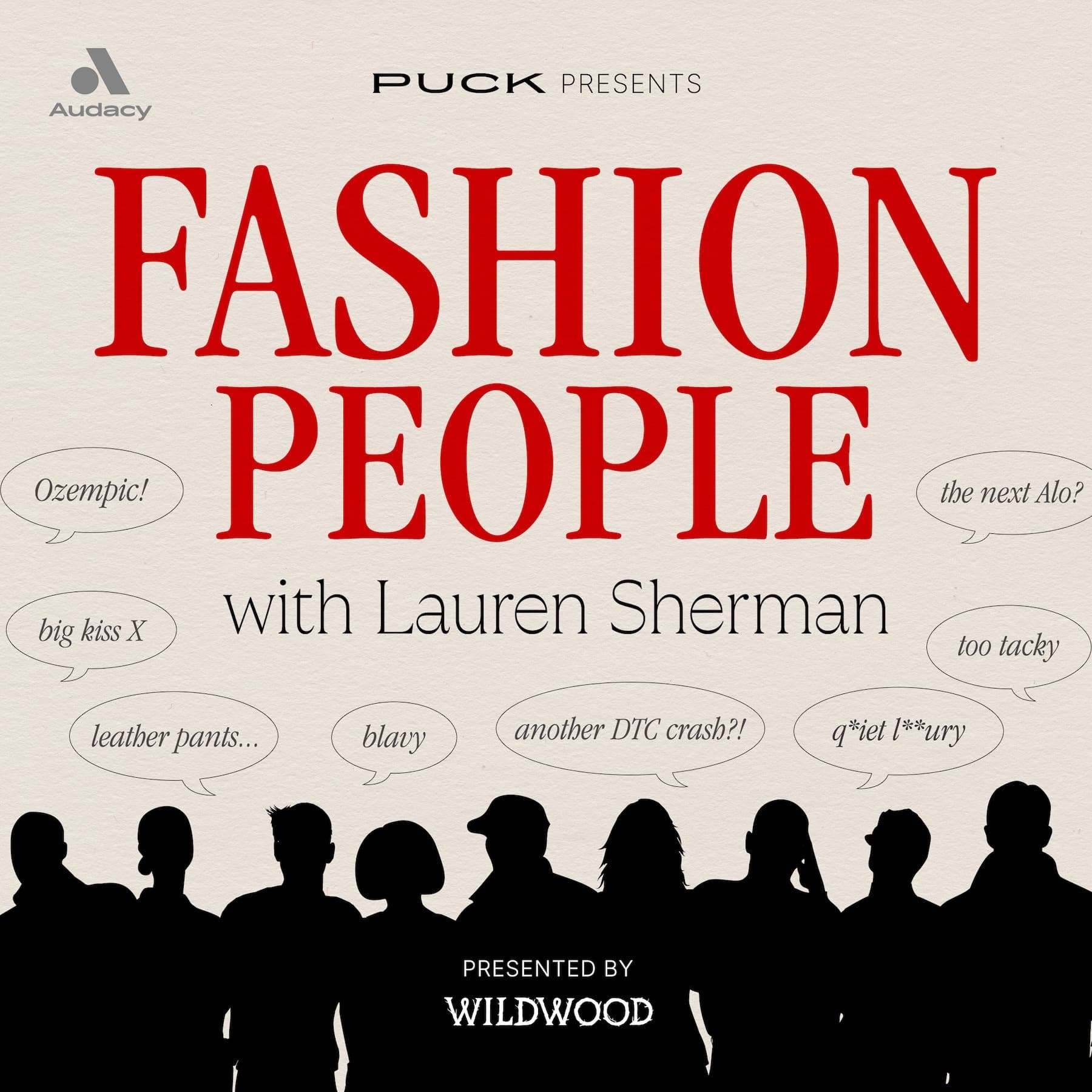
Podcast Overview Title: Fashion People Description: Puck correspondent Lauren Sherman and various industry insiders discuss behind-the-scenes topics in fashion, beauty, and media. Episodes are released twice a week. Episode: Luxury, Democratized
Episode Highlights In this episode, Lauren Sherman interviews Reed Krakoff, a prominent designer known for his influential roles at brands such as Coach, Ralph Lauren, Tommy Hilfiger, and Tiffany & Co. The discussion primarily revolves around Krakoff's unique approach to design and his impact on the accessible luxury movement.
Key Points
- Krakoff's Background:
- Grew up in Connecticut, influenced by modernism and Americana.
- Early career experiences at Ralph Lauren and Tommy Hilfiger shaped his aesthetic and approach to fashion.
- Career Development:
- Initially worked as an unpaid intern at Narciso Rodriguez, realizing he was not cut out to be a pure designer.
- Transitioned to roles where he blended creativity and business, notably becoming a Creative Director at various brands.
- Accessible Luxury Movement:
- Krakoff is credited with redefining luxury at Coach, moving it from a niche brand to a global powerhouse.
- Introduced the concept of accessible luxury, allowing a wider demographic to afford luxury items.
- Key Collections Developed:
- Coach's Signature C pattern.
- Coach Ergo, Hamptons, and Soho bags.
Industry Insights
- Current State of Fashion:
- The fashion industry is facing unprecedented challenges, with market conditions being tougher than ever.
- Despite struggles, there are still opportunities for growth and investment in the U.S. market.
- Business Challenges:
- The inverse relationship between brand growth and designer success, emphasizing the need for designers to remain aligned with the brand's core identity.
- Sustainability and Authenticity:
- Discussion on the increasing importance of sustainability in branding while acknowledging that many use it as a buzzword without a clear understanding.
Krakoff’s Philosophy
- Belief in Craftsmanship:
- Emphasizes the importance of quality and craftsmanship over decoration in American design.
- Advice for Brand Builders:
- Authenticity and standing for a unique point of view are essential for long-term success in fashion.
Future Directions
- Current Role:
- Krakoff is now advising L Catterton and working with brands such as John Hardy, focusing on enhancing their design and market presence.
- The Importance of Evolution:
- Recognizes the constant need for brands to reinvent themselves in the competitive landscape.
Key Takeaways
- Reed Krakoff's journey illustrates the intersection of creativity, business acumen, and the evolution of the fashion industry.
- The accessible luxury movement has reshaped consumer spending, making luxury more attainable.
- Designers today must navigate complexities and trends while maintaining authenticity and transparency to succeed.
Closing Remarks The episode provides a comprehensive look into the challenges and triumphs within the luxury fashion industry, revealing insights that are both timely and relevant for current and aspiring fashion professionals. Reed Krakoff's experiences and thoughts serve as valuable lessons for navigating this dynamic field.
Written by AI. May contain mistakes. Listen to the episode to check what was said.
Transcript
Automatic transcript. May contain errors.0:04Hello and welcome to Fashion People. I'm Lauren Sherman, writer of Puck's fashion and beauty memo line sheet. And today with me on the show is designer Reid Krakow. We are discussing his truly remarkable career from Ralph Lauren to coach to Tiffany, as well as the rise of accessible luxury and the state of the industry today. Before we get going, I wanted to remind you that if you like this podcast, you'll definitely love Puck, where I send an email called Line Sheet. If you're a fashion person, you get that reference. it's an original look at what's really going on inside the fashion and beauty industries line sheet is scoopy analytical and above all fun along with me a subscription to puck gains you access to an unmatched roster of experts reporting on powerful people and companies in entertainment media sports politics finance the art world and much more if you're interested listeners of fashion people get a discount.
1:06Just go to puck.news slash fashion people to join puck or start a free trial. Happy Friday, everyone. I am back. I am so happy to be back. My family and I had a great time in Japan. DM me for details or whatever. I don't know. I don't want to talk about it. It was a great vacation. I'm in Los Angeles for a few days before we hit the road again to see some extended family on the East Coast. I will be in New York late next week, so I hope to run into you out and about. This week on Line Sheet, we talk tariffs, we talk sacks, we talk Levi's. There's so much going on right now, and I implore you to subscribe to Puck to stay up to date.
1:51Sarah Shapiro, our retail reporter, and Rachel Stregas, our beauty reporter, are really on it and doing great work. And if you want the scoop, you got to sign up for Puck. What I will say about everything that's going on in the fashion and luxury industry right now is that it's the worst it's ever been. The market really didn't exist in its current state pre-2008. So I can't compare this to anything because it is different. It's definitely different. I mean, everybody always thinks they live in the worst time ever. So take that for what it is. But it's tough right now. People are not sleeping and that's not good.
2:32But what I will say also is that there's always another bend in the road. And, you know, there are still people with money to spend and they are still spending it, especially here in the U.S. And people are still investing in this market. In LA this week, the bridal designer Danielle Frankel just opened a store of an item on her business in Thursday's line sheet. Jacquemus also opened a store. I checked it out on Thursday night. They had tons of people come in for the opening. It was a big deal. So it's not, you know, it's not over. That's for sure. Things are going to be okay. But the fashion industry is really interesting right now.
3:16I hope you enjoy this conversation with Reed, who had a lot to say about that. And I just love talking to him. I hope that comes through in the convo. It was one of my favorite interviews I've done for Fashion People. So I hope you enjoy it.
3:33Reed Krajkoff, welcome to Fashion People. Thank you for having me. It's been a long time I've been anticipating talking to you. I'm so looking forward to it. What did you have for breakfast this morning? So I'm very boring when it comes to breakfast. I have the same thing every morning. Rye toast, homemade peanut butter, and just plain black coffee. That sounds good. I'd say you're in the top five of breakfast. I appreciate that. Thank you. So the peanut butter, what would you say that breakfast says about you as a person? I'm definitely a person of habit. I have the same thing almost every day.
4:13Um, simple, authentic, straightforward. Um, uh, I think those, those are pretty good adjectives, I think, to describe that. Yeah. And, and also sort of describe the American fashion industry, which is a huge reason I wanted to speak to you because, or, or the American, I mean, you were, you're in beauty, you're in hard luxury too. American design, you have been integral in the last 30, 40 years of that world and you've helped shape what the American aesthetic is. I'm so excited to get into your whole career. We don't do the journey a lot, but I wanted to do it with you. But to start, where did you grow up?
5:04What, what's your background? So I grew up in Fairfield County, um, sort of think of the preppy handbook era. Um, and, uh, I actually think, um, the author, Lisa Burbach was from, from somewhere around where I grew up. Um, and so I grew up in sort of a quiet, um, you know, uh, aesthetic that was very much, it was kind of a combination of two things my my mother was a decorator she had a very kind of modernist take on design we had like a barcelona table in the living room and all sofas and like this cobalt um blue leather and but then there was then there was a mix of sort of american antiques i say antiques that's a fancy way of putting it american looking antiques i should say um And I guess it was really informative of my aesthetic from really early days of modernism mixed with antiques, but also this kind of love of artisanal design as well.
6:17We had some shaker-type furniture and I would say more utilitarian pieces in the house. I'm painting a very romantic picture. It was a nice house. It was nothing. It wasn't extraordinary furniture. It was just more the references that you think of, the sort of white brush painted Queen Anne mirror, kind of things like that, that were simple, straightforward. But definitely that mix of those two poles, modernism and Americana and American design. Did you have a connection? I feel like I read this probably on Wikipedia or some bio of yours to Pittsburgh because my third grade teacher, my favorite teacher ever was this guy named Joel Krakow.
7:04And I grew up in Pittsburgh. I don't know if I was hoping that we would talk and you would say he was my uncle or something like that. So almost. He might be my uncle. I actually don't know this person, but my father and mother both were born in Pittsburgh. Oh, interesting. My father and mother met at Penn State and got married and then moved to Cambridge. My dad went to Harvard Business School. So they were in Pittsburgh their whole lives, actually. So I'm sure there's a relationship. Oh, I'm sure if you looked up on Ancestry.com, he was truly my favorite teacher ever. Really special to me. And then passed away only a few years after he taught me, but was amazing.
7:51So I have a fondness for your surname. Oh, that's nice. That's nice. So how did you get into design? Did you go to college for... Did you study design in college? Did you go to college at all? What was your path into working in New York in fashion? So I did a lot of things from high school through college, a lot of them not successfully. I went to Berklee School of Music in Boston first semester studying jazz until I found out I was, I think, the worst in the entire school. Berklee is like the place to go if you're studying jazz. I was definitely not meant to be there. I studied at School Museum of Fine Arts in Boston, a great fine arts school.
8:43They had a joint degree program with Tufts University. And my parents basically said, if you don't go to a liberal arts school and get a degree, we're not going to pay for art school or let's say fashion school like Parsons. So I ended up getting a degree from Tufts in economics and art history, strangely. And then finished my fine art degree at Parsons in New York City. So it's funny when I think back, it was not on purpose, of course, and it was all very much a bit freeform. It kind of suggested where I would end up in my career with this cross-section of business, fashion, creativity. and I could have never predicted that.
9:34But in fact, it pretty well describes where I ended up 30 years later. And what did you want to do? Did you have any idea? Or were you like, I just want to be in these worlds? You know, I don't think I was pulled together enough to know what I wanted to do. I know that, you know what it was? I think I wanted to find something that I thought I could have, I was good at, of course. I had a lot of things I was not and found out. And I think it was a positive thing failing really early in my career, trying a bunch of things and just not succeeding as opposed to spending 10 years and finding out maybe this isn't the thing for me.
10:13I loved, always liked fashion. I love the idea of the sort of cultural map that fashion and art and movies and travel and even politics and sort of a social mood all informed each other. That was always, just intuitively, it was interesting to me. I was never a purist in any of those things. And in a strange way, it kind of cobbled together a job that was all of those things and none of those things, in a way. I wasn't good enough, I think, at any one thing, But I was pretty good at piecing those things together to understand what ultimately became a job, which didn't exist when I was at Parsons.
11:01I mean, it was really the whole idea of a creative director that was across the front end of the business, was on the board, at least the internal board of the company, dealt with public company issues, Wall Street, things like that. Really started only with Tom Ford, a Gucci. It did not exist before that. I mean, you know that very well. You're obviously super informed on the history of all this. So in my early days, I was just sort of naturally trying these things. And it was funny, my first job out of Parsons was working for Narciso Rodriguez. Oh, interesting. And I learned literally in a couple months what I could never be.
11:43And it was probably the best thing that happened to me in my career, which was just being in the shadow of someone who's so, he's such a designer's designer. You know, he sketches like a fine artist. I happen to have a real love for illustration, and over the years collected illustrations from the turn of the century up through people like Matz and Philip Bloch, and I don't name any of these people that were great illustrators, Boucher, René Boucher, people like that. he sketched like they did he draped like the best pattern makers and he cut and sewed and he did everything better than i could ever hope to do and i kind of realized this is not i am not a pure designer i'm i'm just not going to be this person i could never hope to be and after that pretty soon after that the world started shifting towards this idea of creative director and i really i i'm I'm not saying it to be self-deprecating or sort of underplay it, but it was really an accident that I ended up at the right place at the right time for what I was good at.
12:57And, you know, that was really the beginning of my career when I went to Ralph Lauren, was my first real job. Narcissot, I worked for him when he was at Anne Klein. Oh, wow. Just around the time when he was about to do the famous dress for Karim Vassat. when he was at Calvin. And I just, I realized that's just not going to be my destiny. I'm not going to be successful. And then ended up from that job, which was an unpaid internship. Do they do those anymore? I don't think they do. I think that they are not allowed to. I came home very excitedly and told my dad, I called him on the phone. I was like, I got a job.
13:41and he was like, that's fantastic. How much do they pay you? And I said, nothing. He said, that must've been hard to get. That was his take on it. But anyway, so I'll stop there. Well, it's fascinating. So how did you, that's really interesting that you worked for Narciso at Anne Klein. Yeah, yeah. What was it like in New York in the 90s at that time? Like, what was it like? Because you were in the middle, I've interviewed a few people who were like really in the middle of this particular scene. What was it like being in fashion then, being around the people on the scene in that moment? I mean, it was super interesting because there was really a New York fashion scene.
14:30You know, you would go to 7th Avenue and there were like three buildings. There was one around the corner where Calvin is still, 205 West 39. and then if you go around the corner, there were two buildings. I think it's 550 and 570. And everyone, you would go into the elevator and every designer was there. It was Bill Blass, Carolina Herrera, Donna Karan, Ralph Lauren. Everyone was in those buildings. So there was an amazing community and amazing excitement around New York fashion. It was a place where you could really think of spending your career even and working for other people, working for different companies.
15:12There was a real sense of camaraderie, I think, around New York fashion. It was really, you know, the American shows, the Italian, British, French. It was really a major hub. And it had its own style and its own feel. You know, Isaac was there. Mark, of course, was there. And it was pretty amazing to be there. And I was, you know, I was an assistant at Ralph Lauren at my first job. And at the time, what was interesting is a lot of my co-workers were people that you might know or you would know today. Tory Burch was there when I was at Ralph. Vera Wang was there when I was there. John Barvatos was there towards the tail end.
15:57And quite a few people were there that ended up, it was really like the place to be if you wanted to sort of learn from the best, learn how to develop. I really learned how brand developed. I was a lowly assistant, but I got to at least see and be part of how they approached all these categories. I mean, it's hard for people to imagine now, but it just didn't exist, the whole concept of lifestyle. home and shoes and sunglasses and handbags, and of course, ready-to-wear was the hub. So it was very different. It was very much the antithesis of today, I would say, in terms of brands. I mean, then it was a world of, today I feel like, and this is my opinion, I feel like it's very singular today, either by product category, where people do one thing really well, or it's a point of view that is, it's pegged on something that's the core business and then there are accents around it.
17:02In the old days, it was very much about licensing. A lot of licensees. I mean, I think I launched 20 licensees at Tommy. I mean, between shoes and bags and belts and fragrance. You know, we launched Tommy Girl and Tommy and there was just so much expansion in that way. so it was it was like the beginning of that it was the beginning of global brands you know there was not such a thing as multinational fashion houses really i mean people were in in the united states and maybe a bit in europe and um so relatively um small in terms of what you see today compared to what you see today yeah and i was actually talking to someone last night about about the way that the European houses would have stores on Rodeo or whatever.
17:49It would be like a store owner's name, Valentino by some store owner's name or Alaya by some store owner's name. So even that was a partnership. There was no globalization. As you were launching, so did you move from Ralph to Tommy? So I was at Ralph for four or five years and I loved being there. It was just an amazing place to be. I got an amazing education. It was at a time when Ralph was at 40 West, 55th Street, which was, it sounds crazy, but it was an apartment building. And Ralph started in, I don't know how many apartments, but they combined a few apartments at the beginning. And then more and more and more, they took over more space in the building, but you would still see like, you know, the woman or man in 4C walking their dog during the day in the elevator.
18:46And so it was a really like family environment. And we had lunch every day together. And it was, I loved it. I mean, I was really fortunate to be there. I loved the time I was there. I loved what I learned. And I think I found, I never thought about, again, what do I want to do when I grow up? I mean, that was the greatest gift I was given by them that I just was, I never thought about it again. I just, I loved it. And I went to Tommy because Tommy was quite small then. It was about an$80 million business. And a bunch of people, probably not people that people would know today, had gone to Tommy, executives, the CEO.
19:28I think the head of visual, manufacturing people, to work for Tommy. And I got a call and they offered me the job of design director, which was a big promotion for me. And that was the beginning of my time with Tommy Hilfiger, which was incredible. It was during the moment where sort of popular culture, music, hip-hop, urban style, more personal style, was really projected into the fashion world. And Tommy was the first to embrace that. He was the first to really be different and to be eclectic and to be surprising. I mean, think of, you know, we had Tupac in one of the fashion shows. We had, you know, all kinds of amazing musicians and artists and entertainers.
20:25And, you know, Tommy worked with people like Lenny Kravitz and David Bowie. And it's just, it was an incredible time to be there. And go ahead, sorry. When I was just going to say, when you went there, was it like you going to the enemy? Because he was sort of the disruptor, right? He was, but not yet. Okay. I was there when he was just, why would you go there? Okay, interesting. I would say two years later, he started to really develop a lot of momentum. That famous moment on SNL when Snoop was wearing a Tommy hockey jersey and performing, and that image is still an image that people associate with that period.
21:08It became a phenomena, I would say, two, three years later. and it was kind of incredible that, you know, he offered sort of an alternative to his sort of uptight, segmented kind of point of view of the world. Tommy was, you know, playful and a bit irreverent and, you know, it started with just the way people wore clothing. He responded to kind of how people were wearing his clothing and integrated into the design process. And it was like this reciprocal thing. It was quite amazing. I don't think it had, I mean, you're more well-versed in that world than I am, but I don't think it had happened before.
21:51This sort of popular culture and fashion intersected in such a complimentary way. No, and not with that intent. So there were a lot of people in the 70s, Sarah Shapiro, my colleague, just did a piece on urban And I was thinking about the start of a lot of those smaller stores and they had them all over the country and the gap in urban are the ones urban outfitters are the ones that sort of survived. But Tommy had what was it called? People's Place. And I believe it was in upstate New York and it was a similar thing. Like they all sold. It's funny because I think that the shops that they all started are probably similar to things that exist now.
22:37It was like a mix of vintage and Levi's and the Richard Hayne and Judy Wicks in Philly. They sold plants. but I think what Tommy did that is he really saw this, the rise of the star designer in a way that, and it's interesting that Carl Lagerfeld, he ended up investing in Carl Lagerfeld's business since he was like the real first star, but it is, I think he saw that that was where it was moving and he saw like culture, like all these people now, the last 15 years that really tap into the, the pot Demna and Virgil and all those people, he was sort of the first person to identify that it was all in the street coming onto the runway and all of that is, is so feels like table stakes now.
23:28And yeah, that must have, must have been interesting to be the person sort of directing that and making that come to life. It was in a funny way. I mean, the way it kind of happened um in terms of my role there was i mentioned um tom ford and gucci um i think i don't know the exact dates but it was very there was a moment when every brand wanted a creative director because of the success of gucci everyone thought this is the magic formula we need a ceo and a creative person they're going to be partners they're going to work together on everything. One will run the front, one will run the back, and let's say the entirety of it, the CEO.
24:16And that must be the way to run a business. And what's interesting is it was that way for a moment, and that's the only reason, honestly, that I was made the creative director was because I was kind of the person who was closest to that in skill set. You know, I was styling the photo shoots and I was setting up the showrooms and I was a designer. and that's how I got from being design director to creative director. And that was really the beginning of that role and that was sort of the next 20, last 20 years of my career, 25 years. I've sort of started with Tommy and that kind of expansion of what a designer could be or creative could be.
24:57It's funny, today it doesn't really exist anymore. It went through a huge rise and I don't think it really exists. I mean, now it's kind of going back to more the ready-to-wear, maybe the accessories, probably not, if it's a big brand. And then maybe advertising, but probably not. If you're lucky. If you're lucky, exactly. But they fear it now. Yeah. Well, what did I learn over all those years is that to be at the level of the true what I call fashion designers, designers, designers, it's rare that they're able to have the time, the space, the mental space to deal with stores the way, think of the number of stores, the scale of stores, the cost these days.
25:51Deal with that, deal with the marketing piece, deal with the intricacies of talking to a consumer through all these different touch points. It was so easy. In those days, there were magazines. There was any catalog. There was no internet. There was very little subtlety to, I would say, the marketing mix of paid media, organic media, social media. I mean, it's just, it's incredibly, for me at least, incredibly intricate today. So I think it was a different time. And the world moved a lot slower, obviously, when there was no internet. I think today it'd be really hard to run a big brand and run all those aspects in a convincing way and be on the board of the company.
26:33It'd be tough. Yeah, it feels like Eddie Slimane might be the last one. Yeah, I think you're right. And maybe look like whatever happens with Jonathan Anderson at Dior, like he clearly is going to have more. And at Loewe, he clearly had a lot of influence and was very collaborative. but that is i mean dior's a 10 billion the number of employees that they and you probably had how many at coach when you probably had it's 10 000 maybe i don't know it's wild so but it does feel like it got to be too much and now it's dialing back but how did you end up at coach did and and what did you think was did the family still own it when they when you when you went there i was at Tommy for about five years.
27:22And by the end of my time there, I think what I really was interested in and what the company needed were two different things. And actually, Tommy fired. We're good friends today. I talked to him all the time. But it was the best thing that had ever happened. It kind of was. You couldn't have convinced me at the time it was, but it in fact was. so I actually left Tommy or he asked me to leave and I ended up why did you why did it happen well um I think I just was that I made it pretty clear that I was more interested in probably the more esoteric parts of the business we had really pretty I think pretty exciting um presentations shows we had this all music integration entertainment it was amazing i just i guess i just wasn't i wasn't contributing enough to the core of the business got it you know it was entirely my on me i just got distracted and just wasn't spending enough time on what the brand needed i mean that's something that i'm sure talking to so many people in this world you see There's this inverse relationship between brand growth and designer success.
28:41And often, I found, and I found a lot of designers I've seen go through this, what the brand needs is what you don't want to do anymore because of your lifestyle, because of your success, because of your ego, whatever it might be. You really have to remind yourself of what got you there. And I always say to designers, at some point, you've got to pay the bill. you can't just make pretty clothing, put on the runway. It just, you won't be there in six months or nine months. It's just the fact. So I think at that time, I hadn't learned that well enough. And I was just spending too much time on things that weren't important.
29:21And he was absolutely right to say, you know, I think you're done. So I spent some time, I actually moved to Milan for a hot second and worked. I was the creative director of Trussardi. Oh, interesting. Which was amazing. I mean, I had in my mind that it was going to be, you know, the Italian Hermes. And I loved the brand and I'd grown up really admiring it. While I was back in New York, I got a call from a headhunter that said, I just want you to meet the CEO of Coach. I know it's not on your list. I know you're moving, but just do it as a favor to me that he can meet someone who's a creative person who also understands business.
30:05So I met Lou Frankfurt, and that was it. We spent the whole day together. It was supposed to be an hour meeting. We ended up visiting stores and had dinner. And it was just one of those moments where someone saw something in me that I didn't see in myself. and he was sure I was the right person to partner with him and lead Coach to the next chapter. Coach was about 500 million at the time. It was public, sorry, it was owned by Sarah Lee. It had been sold by the family, the Kahn family, to Sarah Lee in like the late 80s. And he just had this idea that Coach had hit a wall. He knew that. But Coche hit a wall.
30:54This idea of designer brands and logo handbags were rising. Gucci, LV, Fendi, of course, Chanel in popularity. And there needed to be something else. The brand needed to reinvent itself. Otherwise, it was just not going to exist pretty soon after. So I ended up at Coche. What year did you land there? 96. Oh, wow. So that was also the time of the rise of Kate Spade, all the European brands. Exactly. That's amazing. It's hard. Again, it's hard. I hate to say it so many times. It makes me feel old. But it's hard to imagine that if you were to go on a multi-brand site, pick one. Today, 95 % of the handbag companies wouldn't have existed.
31:47Literally 95%. I mean, there were the big five or six. And it's actually, we'll get to it maybe later. It's similar to the jewelry business today. But there were, and you mentioned shops that sold all the brands. There were handbag shops. That's what they sold. And some was generic and some was private label and some was an Italian brand that was made up. It was pretty different. So anyway, they were getting killed. And Kate Spade, if I heard the name Kate Spade one more time my first few years. Why can't we be like Kate Spade? Why can't we be like... But it was before Tory, before Michael, before all these brands.
Read the full transcript
32:24So the journey began of taking the company from a vertical brand, a vertical manufacturing group. They owned all their factories, Puerto Rico, Mexico, New Jersey, and Florida, and outskirts. and it was entirely Lou's idea and Coach was the first to make bags offshore. There were no such thing as designer bags in Asia. And when I say designer, I mean any designer bags, Kate, Coach, any of those bags, they were all made in the U.S. or some related area, but there was no such thing as what there is today without getting into it. It's obviously vast what's made in that part of the world at every price point.
33:15So he took a big chance. Everyone told him, you're crazy. Coach is about Made in America. It's a really great moment, I think, about one of those times where everyone says, don't do it. And he had a vision that this was, his whole idea was people have a lot of reasons to buy things. The top five things. Country of origin isn't one. of the top five. It's, I love it. The cost is reasonable. It works for me. And I like the brand. Those are the kind of attributes. And he recognized that and really changed entirely the accessories business. I mean, now, as you know, without getting into names, everybody makes product there.
33:59Everybody. And this has been the case, what, for 20 years almost now. they'll make certain items there and then assemble in Europe. So it says made in Italy. You're right. That's where the center of the manufacturing world is. It can say designed in France, designed in Italy. Consumers think that means made. The laws have changed so many times, and they're so different around the world. But that was the unlock to accessible luxury. It really was. I mean, we then launched the signature pattern, Signature C, which is obviously still a big piece of the business today. A bunch of new collections, Ergo, Hampton, Soho, also collections they still have today on site.
34:48They've done an amazing job evolving the brand long after I left, but those things still exist. But it was a redefining moment, certainly in Habax. one I think about coach a lot because I'm I'm I was in high school I 1996 to 2000 and I remember my mom really revered coach bags as the bag that you would buy like a graduation gift bag or the the kind of chiker a little bit more wealthy women at her office she worked in a medical office or whatever would have a coach bag. How did you take what was already there and make it a fashion item as well? The logo is one part of it, but that isn't the only thing.
35:40Yeah. It's funny because it's something I've gone through a couple of times now. And it always seems to be the same process of understanding why is this brand popular? Why was it so popular? And making sure to embrace that and to kind of get rid of the static around it. And a lot of it is what sells really well. A lot of it is what was popular in the market at the time. And shedding those things that don't seem to be core to the identity. And then thinking like, you know, I always think of brands like people. There are things you will do, things you won't do, things that are not believable, feel phony, don't feel real.
36:26what is the next chapter of the brand that's believable? And it could be pretty far away from where it was, but it has to be somehow connected to, let's say, the essence of what the brand is. And with Coach, it was quality and craftsmanship. And Bonnie Casson, who was the only designer in the 70s, who did the duffel, she invented, she brought the turn lock to fashion. She had a convertible, and the cover was latched down with these turn locks. And she was super innovative and super modern. And so Bonnie was a big inspiration. You know, the innovation of taking leather that was made for baseball gloves, it's kind of a funny place to start for a handbag, but it was very form follows function.
37:16That was a rhythm that kind of informed my whole time there. you know that it wasn't and i always say you know about american design to me is not about decorations about the decoration comes from the details of the construction the decoration comes from you know the the handling of materials and craft it's not a applied thing and i think for coach that was very much the aesthetic everything had a reason for being you know everything that was decorative had a functional at least a history to it when you think of like american the bags you think of as american like a sail bag and a laundry bag and a garden toad and a ml bean bag i mean they're all functional bags yeah um and that was kind of the touchstone it was like rooted in functionality and rooted in material and construction not decoration when did it really like click and start working?
38:14That's a great question because it's been consistent my whole career. It's been about, it was about two years in and people are getting tired of hearing it's going to be more modern, more relevant, you know, to consumers, all those things, because it doesn't mean anything to the point where literally myself and the CEO just had to say, please stop asking when business is going to get better. You have to believe it's going to get better because business was awful when I started. Really, really terrible. It was about two years in, and it was Ergo and Hamptons, and there were two collections that I could, and I still do this today.
38:50If I walk into a meeting and I put something on a table and nobody says anything, it's probably not great. It's not a good sign. If I walk into a room and put something on a table, a handbag or shoe or piece of jewelry, and everyone wants to know when they can get it, when is it going to be launched, can we fast track and get into stores early, then you kind of know that you don't have to describe why it's good. They just know it intuitively. So that intuitive moment came about two years in with those two collections. And then after that, I honestly don't think, I don't think people had to ask themselves.
39:27I don't think the design team understood, the marketing team understood, the business team understood. And then with those collections, with Ergo in particular, we couldn't make enough fast enough. I just Googled them. Google the Ergo, I'm getting one. It's perfect. It's a perfect back. So that was the very first moment that everyone, because it's leather, it's bound construction, it's simple, it's very American, it's very utilitarian, but it has a style to it. So that was the first moment. where everyone kind of said, okay, I get it. Let's see where we're going.
40:13So this concept of accessible luxury that really like blew up in the late or mid 2010 to mid 2000s. And, and by that time, Michael Kors had a robust handbag business. Tory Burch was in the, in there, all these sort of brands that sat right below or well below the luxury brands in terms of pricing, but offered something special. Coach was sort of the center of that. Did you all come up with that name or did it get foisted upon you? That's a good question. I definitely could not take credit for that um i do think honestly was more i i would 100 give credit to lou the ceo yeah um he was a master is is i'm sure was a master at understanding wall street expectations and and how to grow a business in a way that you had to talk about every quarter it's really tough really tough when you have quarterly expectations to grow a business.
41:24I mean, most big brands today aren't public or they're part of a conglomerate that's public and it's buried in 70 other companies. So you really have no idea. But this idea of accessible luxury, what it was was this democratization of luxury which fit the American narrative really well. And when you look at the pricing, saying it was 50 % of the European brands, let's say, for a similar bag. There was this accessibility that allowed a whole, a huge section of consumers to be able to afford a bag and to aspire to afford a bag. And then after a while, it was people that could afford much higher-priced bags were buying coach bags or buying coach accessories or something else.
42:14But it was really, I would say it was really invented as an outgrowth of understanding how to grow a business. And, you know, Lou was really the author of that. And the business grew to 5 billion, close to 5 billion in about 10 years. We had about 10 or 12 years of positive growth. So it was an amazing time to be there. Wow. 500 million to 5 billion. Something like that. Yeah, roughly. And so during that period, when did you decide, because when you were still running coach, you, and here's a question for you, someone who's very smart, who works in the luxury industry, referred to Eddie Slaman as like sort of a co-CEO.
43:03Did you feel that way when you were working with Lou? Or, I mean, it sounds like you were real partners, no matter how you would put it, but But did you feel that sort of, because it was a public company, because it was so big and you had all these employees, did you feel that sort of like responsibility that a business executive would feel? No, for sure. I wouldn't call it co-CEOs. I would just say that we were business partners. I mean, our relationship was entirely organic. We never, I don't think we ever had a, I don't think I had a review in 15 years. And I don't think we ever talked about, you need to do this, I need to do that.
43:41The deal was, we trust each other entirely. Anything he needed, I did. Anything I needed, he helped me with. You know, budgets, space, staffing, strategy, any of those things. But at the end of the day, we both had our worlds that we were, let's say, the expert, but the most qualified to make a decision. And we respected that. He would never ultimately get in the way of something, even if he didn't believe in it. Maybe he was right. But he knew that ultimately, like I knew ultimately, that I had to respect his opinion. He had to respect my opinion. But we could talk about anything. He could question anything I was working on and I would listen because he had a credible point of view.
44:29He was super thoughtful. He's a really brilliant guy. And it was a reciprocal relationship. I wouldn't say co-CEOs because I think that narrows the scope of his work even more than my work because he was on both sides and I was on both sides. Yeah. Yeah. It's really magical when you think of those sorts of designer executive relationships, because at the end of the day, there actually aren't that many partnerships. Most of those duos don't connect well and their relationship doesn't improve the business. But when it works, it's truly magical. It is. It's, it is exponential. And it's, I would say it's a necessity.
45:15It's a necessity to grow a business meaningfully to have that. It's just, it's too hard when you're not working on the same, you know, pretense that this is where we're going and this is how, because there's so many decisions that, that can derail a business. Many, many, many, many, as I learned. Yeah. So when you're at Coach for 10 years, you have this blockbuster success. You totally change the industry. You transform the industry of how things are priced, not only how things look, but how things are priced, how consumers shop. The fact that people would buy Coach bags is a huge reason to me why they buy Louis Vuitton bags so easily now.
45:59It was that first step into being okay spending money on something like that. Because I think people forget that no one spent money on stuff like that, not even really rich people. No, no. It just wasn't. You're absolutely right. It's 100 % right. So then you launched your namesake line, and the company funded that project, right? So what made you want to do it? What was the idea with it? I got to go to a couple of the shows, which were very hard to get into. and I remember begging to get in, and I did get to go, which is, they were great shows. And it was in the office space, right? I love those when brands do that.
46:42But what was sort of the abitus for that? So the strategy behind it was pretty straightforward. It was basically, at the time, there were a lot of designers attached to brands, almost every brand. every brand. Most major brands had a designer for that brand. If you think of Galliano for Dior, Narciso for Louie. There was a lot of excitement around attaching a personality to a brand. Tori had and continues to have great success. Michael, incredibly well-known designer through all the work he did. So all of a sudden, Coach was looking like this kind of monolithic, faceless brand. And we're losing ground now.
47:33Were we losing ground because we had 12 years of growth? Maybe. You know, things can only go up for so long, as hard as it is to believe that for some times when you're in it. So we together, the board, we decided, you know what, we need to attach some kind of design credibility, some differentiation to Coach. And the outgrowth of that was, okay, I'm the creative director. I'm attached to Coach. How do we create sort of more of a fashion cred for that, for the big brand being Coach? And that was to launch that brand. Now, the idea was to have it as sort of a halo. The whole thing made perfect sense on paper, but in reality, there were some serious flaws to the concept.
48:21you know we launched the brand unfortunately there wasn't nearly the overlap we hoped for in terms of customers going to RK and customers going to Coats the spread was a bit too far the brand did really well you know we were the windows you know Barneys and Colette and Sacks and Bergdorf and we sold at all the best retailers we had I think nine or ten concessions and Saks sitting next to Fendi and Gucci and Prada. And we did really well. The problem was, and you know this very well, I know she talked to a lot of people in the business, to sustain a business to be competitive in a short amount of time, this is a key, is nearly impossible.
49:06It's sort of a bottomless pit of investment. I had been in business two or three years when I bought the business from Coach. But imagine having to project$30,$40 million in volume in year one in the luxury space. It's not possible. But no one, to be fair, no one knew that because no one had ever tried it. So we were doing, you know,$30,$40 million in the third year, which was still enormous. Still a lot, yeah. But to stay there and to grow there, the investment is just, it's monumental. mental. And there was a point where honestly, I was doing two jobs at one time. I was still running coach and working on my brand.
49:51And it was just too much. I like never went home in three years. I remember just thinking like, I can't continue this way. It's just too much. I'm not. And I didn't feel good about the work I was doing at coach, to be totally blunt. I kind of ran out if I'm being, and I am totally honest, I ran out of room. I just didn't know what to do anymore. I'd been there 15 years. And it was just time for someone else. And, you know, the new group, as I said earlier, I think has done an amazing job of just taking the brand somewhere else. And, you know, I just didn't, I think all designers, there is a bit of a shelf life at brands.
50:31Some are longer than others, but how many times can you reinvent yourself and the world around you is shifting. And like I said, 15 years is a long time. So I was kind of done. Well, it also feels like to me that you seem, and I'm totally projecting, but a person who really just really does like the work. And I think when people stay too long, it's not about the work at that point. It's about something. I've been writing about a situation that I'll be brand safe for you. but where the person is just struggling to leave. And it's like, you did an amazing job, go do something different or don't do what you want.
51:18But it's actually time. And it's not fair to you that it's ending up like this because you deserve to be celebrated. And I think you seem to have a pragmatism about how the business operates that some people, you know and on the executive side that exists too it's not just about create sensitive creatives like there are just people who like don't understand that it's a job and their identity gets too mixed up with it and all that stuff i mean i think that's my most pronounced quality is i'm pragmatic um i just know i think i'm too insecure to be to fail and be embarrassed if i'm You know, that's kind of a blunt way of saying it.
52:00I don't feel good about being somewhere where I know I can't really do what I need to do anymore. And, yeah, it's nothing so altruistic other than, honestly, it's difficult emotionally for me to do something I know that I can't do. So, anyway, you know, it was an incredible time. Again, as I said, I had someone who saw something in me that I never imagined. And it was transformational in my life and in my career. And I owe that to Lou, you know, forever. And I bought my brand with a group from Coach because I really thought, you know what, if I'm going to do this, I need to give it a serious shot.
52:45And I just am not doing anyone any favors being a coach any longer. So I left, took the company. And it was just not sustainable. it built it was sort of like i described it as i had a ferrari with no tires and i need a bicycle and that was kind of and to unwind this big brand you know in a hundred people working for the company 120 people i yeah i couldn't do it fast enough i couldn't unwind it fast enough to get to a point where i was comfortable and i think maybe i'm the only designer ever i actually went to my partners who are incredibly supportive. I couldn't ask for better partners than they were, but I went to them and I said, I don't want to do this anymore.
53:29I'm not going to take any more of your money. I'm done. And they looked at me like I was insane. And I said, well, it's not going to end well. And I can't do this anymore. I'm not happy. I know you're not happy. And I have a life that I'm so fortunate. I love what I do. I have a really loving wife and family. And I felt like it was being not just jeopardized, but it was something that was really getting in the way of simple happiness. And so I walked away. You know, you describe yourself as insecure, but I think it's probably the opposite, that you know who you are as a person and you want to not, you want, you're like in pursuit of a good life.
54:18And that is more important than this. It's, do you know, Scott Sternberg, he designed band about Scott is very similar in that. He's like, if it's not working in the money and he knows it's not going to work, I mean, he's done it twice. He's like, I'm out. And that's hard when, and we see this many of your peers who are still like in business. And you're like, I remember I, one designer was going to call me about, had something to tell me. And I was like, oh maybe finally they're gonna just close it because i think that they're incredibly talented and in the end they just wanted to ask me or tell me something else and i was like you know what whatever i support because i support you but it's really yeah it is a thing that you see and in the end like you've you've since coach since your namesake you've done tons of other stuff that wouldn't have been possible if you had tried to hang on no it's it's really i will barely know each other, but you have a good beat on me.
55:19It's funny, I was part of the Vocation Fund group for about, I don't know, 10 or 12 years, which I loved. And I got to meet and spend time with pretty much everyone who came to American fashion, which I loved. And one of the things towards the end that I remember thinking was, my thing was to talk people out of being in business, because I would say something, and I won't say who it is, but there's someone who was in business, who now is doing amazing working for someone else. And I just said, are you having fun? Are you making any money? If the answer is no to both, please. And then everyone's worried about, what will the editors think?
56:02What will the community think? The fact is nobody cares. No one thinks anything other than the end of the day, if you're miserable, you've got to walk away. And it's scary because of course, when I closed my business, someone I know, I was talking to, was like, you're radioactive now. Nobody wants to talk to you. And I was like, well, okay. So I had to wait a little while. So it wasn't exactly an easy decision to do it, but I don't know. It's funny. There's this fascinating thing to me about all of us designers. There's so many brilliant designers that are in the wrong place and don't succeed.
56:40And people don't immediately, what they did previously kind of disappears. And there's so much to be said for the right designer at the right place, in the right environment, with the right partner. And if you don't have that, you know, it doesn't usually, it never works really. You don't ever become financially successful unless you love it, unless you're in it. It's impossible to make it happen. It's just not possible to make it happen. But it's hard to walk away. I get it. It's hard to walk away and be no man's land. Yeah. But you walked away and then you were at Tiffany fast, right? Yeah. I always wanted to work at Tiffany forever.
57:25I remember going there when I was a little, little, little kid. I don't know how old, but less than, let's say six or seven years old with my mother and I went to the fourth floor and I saw the home design space where they used to have, in the old days, they had amazing collaborators, Vladimir Kagan, John Dickinson, who else? I'm trying to think of some of the others. Mario Boada, all the best design talent of the day would do these installations. And it's so weird, but I remember it like it was yesterday and felt like this place is magic. And I just had this real affinity for it. It never was the right time, and they weren't organized in a way that they would want someone like me there, frankly.
58:16They finally, when I started talking to them, I met through a dear friend who you mentioned earlier. I met one of the board members. I knew Rosemary Bravo from the past who was on the board. And we started talking about it, and it took some convincing to create a role that was actually a true creative director. Because they had never had one in the history of the company. It was always like there was a design director, a marketing director, a store director, and pretty typical for jewelry. And when you think about it, can you name the designer of any jeweler? No. Probably not. No, only you? Yeah.
58:55And did Francesca come before or after you? Yeah, excuse me, before. And Francesca, but like, that's, you are really the only one who's a brand name. Yeah. And, and yeah, she was amazing. She's a great designer. She's great. I'm not going to try to pronounce her last name right now. I know it's not as hard as it looks, but it looks hard, but she's, she's, she's really talented, but she is the only, and then someone messaged me from caring to tell me that the person who designs um balgary is or bocheron is also pretty well known but i was like i don't you know but anyway you're the only actual famous person who had ever done it wasn't a structure that they felt they just didn't that it's not a structure that they really embraced so i started actually it was a collaboration and it was through something i've always loved but actually never did one of the is it's kind of it's not a secret but the reality is I never did anything before I had a job doing it if that I can explain that yeah like I never did a handbag before coach I never did men's wear before Tommy I never did serious jewelry before Tiffany I did a lot of jewelry but I never did those things in a serious way I kind of did them in an ancillary way in a personal way which I kind of thought was a good thing to come in understanding it but not being beholden to it.
1:00:20So anyway, it started as a collaboration on the home concept, which I loved, which was so, I loved working on that. The craft people were just brilliant. I mean, the things we made, these birds' nests made out of hammered sterling silver wire with Nymphenburg, porcelain Tiffany blue eggs. And we worked with Seguzo in Murano. We worked with Nymphenburg. We worked with the best, best, best people in the world, which for me as a person who likes to make things, it was a dream. And it turned into this concept called everyday objects, which initially I thought was going to get me fired because initially there was a big backlash against selling$1 ,000 sterling silver tin cups.
1:01:12But then it became like a lot of things, people hated it and then loved it. and it became like it became a proxy for Tiffany for me there was like a pencil adjacent item right or what there was a sharpie marker yes early yes and I remember it just felt very it was clever but in a in a way that felt I I try not to use accessible anymore but it felt like understandable yeah and open to people not closed off very open and fun too it's funny I got a super nice note for someone I admire so much Johnny Ive bought a few of them for Christmas presents I mean that's the only audience if he endorses it then it was good that's the well he liked it so the everyday objects piece was fascinating because it led me to a place in Tiffany that was always there, but I didn't realize it yet.
1:02:20Like if you look back at like Vendee Truex, who was the creative director before John Lewis, he created these, I don't know if you've seen them, these berry baskets that look like the kind of thing you'd see at a fruit stand in the countryside and these sort of splintered wooden baskets, he created them in sterling silver with its staples done in gold. He also created, he was the originator of the bamboo flatware, sterling silver bamboo flatware, amongst other things. So this idea of taking utilitarian things, sort of naive, simple things, and recreating them with the most amazing quality and craftsmanship and materials is something super related to Tiffany, but I really wasn't aware of it.
1:03:09It just kind of happened. I saw a picture in a book, a Tiffany book, that had an installation that Andy Warhol had done where he took a tin can and put cigarettes in it as a part of a tablescape that he did for the home collection. So there were all these pieces that led to that everyday object concept. And when you think about it, think of Audrey Hepburn, in works of Tiffany. She's standing in front of a window with a paper bag and a tiara. It's exactly the same rhythm of something utilitarian and kind of functional and something extraordinary. So I started finding all these pieces and that's what became Everyday Objects.
1:03:50And by the time I finished, we got to know each other well enough and they made me the chief artistic officer of the company, which was really what I always wanted. But I had to really prove myself to them in every way, because it was a huge change for the business. And how long were you there for? And were you there as right up until the LVMH acquisition? And what was it like working there knowing that this was probably going to happen? And did you feel like you were definitely going to leave when it happened? Or what was like big picture what were you thinking during the time and what was your experience like there so it must have been a weird time to be there um part of it well i was there about six years all in in terms of the home concepts through the end i was there until the end of the acquisition um you know what it was i loved being a tiffany i mean it was a dream job i loved it i i loved the people that we worked with.
1:04:58I thought the work we did was really thoughtful and meaningful and really created a believable chapter in Tiffany's history. We did an enormous amount of work in that time. I think that that was credible and still lives on. But I would love to have worked for the LVMH group, but that was not their plan. So that was that. I had to accept that, that they had other plans. And obviously no one is better at building luxury brands than they are. They're obviously brilliant in every way. And what can I say other than it was time for me to go. That was it. But I loved, I mean, Tiffany, I couldn't say how much I enjoyed working on something that I just intuitively, it was more me than anything I've ever done, including my brand.
1:05:52It's interesting. It really was. Well, I would have liked to see five more years.
1:06:04So you exit amid all the other exits, and they really did just completely overhaul and focus in a way that is not, I would say like law on the outside. You think, well, it's not very creative what they're doing, but the reality is it's very pragmatic. And now they're reaping the rewards of the work that they put in. But you have this opportunity to transform again. What do you decide to do next? And it's also like during COVID. So that's the other reason. I couldn't remember if you stayed. Because it's like all that stuff is all blurred together for me now. You know, the transition happened during COVID, you're absolutely right.
1:06:55I had always wanted to work with this group, L. Catterton, one of the founders I've known socially forever. I've admired him for a long time and always wanted to work for him. It just never was the right time. We had talked about it many times over the years. and we it happened again i think none of the jobs i had for 20 years at least um existed before it was a conversation you know i don't this certainly didn't um but the idea of working with a vc group on fixing brands and understanding what's really inside of a brand before an investment's made was super interesting to me you know because i've been on the wall street side for many, many years.
1:07:43I've been on the VC side, my own brand. So I understood it well enough. It's not what I do, but I understand it well enough to sort of get into what things really mean. And I think it must be difficult to be on the investment side and not having been in the business in a meaningful way. It's all a bunch of numbers on a page, usually. What does it mean? And, you know, and it's basically trust. You know, you're in a trust that you can figure out what you think they might be doing and you can figure out how to make something grow. So it felt like a good relationship myself with an investment group.
1:08:25And it's been really, it's been exciting. I've done a lot of looking at brands and evaluating, like, what would I do? What do I think the opportunity is? How would it grow? who's doing what they're doing and why do you think it's possible. So sort of a pragmatic approach, but the opposite of a financial approach. It's really the doing, like what would you do literally with this brand and what are the growth areas specifically and why do you think that? And that's been really interesting. And then one of the brands, and I'm working on a few others that I will talk about another time is John Hardy, which I had known the brand forever, was a great quality craftsmanship.
1:09:11I called it more of a craft-based brand, not really much about design, but really about beautiful quality craftsmanship. You know, all the first samples or first models are done in wax. They're all carved by hand. No 3D printing, no CAD. Everything is made, within an artisan group about four or five people, four or 500 people. So beautiful quality, beautiful craftsmanship, but not enough design. So I kind of took it from craft as an endpoint to craft as a starting point. You know, craft was sort of the beginning and then adding much more in terms of design aesthetic, much more in terms of choices.
1:09:53It was a very kind of monolithic assortment, a lot of skews that looked a lot the same, A lot of similar looks. And that's been really exciting. And the brand is notwithstanding all the crazy macro stuff. It's doing really well. We essentially turned the entire assortment in about 18 months. It's about 85 % new. And collections like Spear, Surf, Love Knot. What's the other one that was brand new? I'm forgetting. Naga, the relaunch of Naga are almost entirely the top 20, 30 styles, best-selling styles. So it's been great. I mean, the nice thing about a smaller, and it's not small, but smaller company is that things can happen pretty quickly.
1:10:40And, you know, you don't have these billion-dollar businesses at risk that you have to sort of nurse as you're doing. Like a Tiffany took like five years to turn the assortment. and I'm not even sure it was at the point you would say it was at a finish point but it's been nice to work on some smaller brands in some other categories again. I mean, over the years I've worked on so many different categories that I love being able to work across different categories and concepts and brands even in different industries. It's been really fun. Yeah. And it must be interesting with John Hardy is what, 50 years old?
1:11:20Aren't they doing theirs? So it's like 50 years, but still not. So in jewelry, and we didn't end up kind of talking about the branded jewelry market, there isn't a lot of branded jewelry. So it must be interesting to have something that has a history, but that still has room for growth because that's probably, that kind of like coach, the two that you have a history, but there's like a lot of transformation. No, there's a lot of, 100%, there's a lot of similarities between them. Obviously, the scale's a bit different, but, you know, the handbag business was very, very limited in terms of choices.
1:12:00The jewelry world is still very limited. I mean, the barrier to entering jewelry is massive. You know, people, raw materials are crazy expensive. Craft people are really hard to find. And people don't, you know, there's sort of like a scale of, I always think of what people will buy from who. And, you know, I always feel like ready to wear, assuming it's not ultra, you know, super high price, most people will buy from almost anyone. You know, a brand, they just think it's cute, I like it. When it gets very expensive, obviously it gets different. But then handbags and shoes are another thing. Like people don't buy shoes from just anyone.
1:12:38They want it to come from someone who knows how to make shoes and everyone knows what a shoe looks like, even if they don't know how to tell you what's wrong with it, but they know. Handbag's the same. And then jewelry is like the ultimate in terms of difficulty getting into that business. People, even big brands without naming them, don't buy diamonds from certain brands, billion dollar brands. They just don't feel like they're a credible source for them. You know, gold is another thing. And it depends. It's so expensive. So it's protected the industry largely to people coming in and gaining a lot of share.
1:13:16So Hardy is sort of the biggest smaller player, is the biggest smaller player. Somewhere between 100 and a billion. There's nobody. Almost nobody. I mean, no one of note. So there's a ton of opportunity for growth. And that's what makes it exciting. One final question is you're working across all these different brands. You have been entrenched in the global fashion industry and driven much of the growth in that industry for the past, I can't believe, 1996. I guess that's 30 years, but really past 40 years. When you look at these brands now, what do you think they do better now than they used to not do?
1:14:02And what do you think is missing from a lot of the sort of plans or the visions for what they're doing? That's a tough question. What I think people are doing really well, I'll start with that. I think this idea of a singular point of view and a narrow focus on product is what's working really well. I think in terms of from a business standpoint I think these brands that are bringing luxury marketing and design to commodity products is doing really well think of Casper, think of Warby obviously the first one you know they're doing one thing and they're I mean maybe the best one is Dyson oh yeah I mean wow amazing you know I guess Dyson would be you know Apple was the first yes let's say yeah uh so to me that's a lane that people are doing really well people doing narrow a narrow focus on things is definitely what's working i think what's tricky is it's so tough right now it feels like everything is a bit upside down right now i would say that i don't i can't identify any clear trend the only thing i think you know that everyone will sort of the talking point is always like well sustainability is going to be more and more important as the consumer ages i'm not sure about any of that but i think authenticity is more important than ever because transparency is everywhere everyone knows everything that being said i was talking to the team uh at john hardy the other day and we're talking about sustainability and i was like can anyone on the at the table is about 10 people tell me what that means?
1:15:47What does that mean? So it's a buzzword. It's definitely, I mean, John Hardy, just to speak about Hardy for a minute, it's been part of their brand DNA forever. John Hardy, the founder, is an incredible champion of the environment. So it's easy for us to talk about it. But if I see one more time sustainably sourced or reclaimed, I mean, I don't know what that means. so I think transparency authenticity and more than anything because of the vastness of the choices I think people want something they can only get from that particular brand it has to be a unique point of view unless it's about price if you're talking about Uniqlo how could you go wrong I mean it's incredible what they make for the price that they make down jackets and cashmere sweaters and um but assuming it's not about price i think it's about you know i always we talked about vogue fashion vando i would always talk to designers about people know the right thing to do with their brand usually either they don't want to do it or someone told them not to do it or it's too risky but you know i always think like you know it in your stomach in your gut what the right thing is and i think those brands that embrace that in the face of people telling them why would do do that are the ones that are going to succeed.
1:17:14There's no roadmap. Certainly not today. It's too complicated. You just have to believe in what you do and stand for something. And those are the brands I think that have done. Look at The Row. I mean, they're a great example of that. Totally. They did their own thing for 20 years and it's incredible what they've done. Incredible. So true. It always leads back to The Row on this podcast. Yes. Reed, I love this conversation. I feel like everyone needs to listen to this who's in the business and who wants to do something interesting. And congratulations on the career you've had and the career you're having.
1:17:51And it was such a pleasure to chat with you and hear from you because I feel like I learned a lot. Oh, thank you. I enjoyed it as I knew I would and look forward to seeing you. Yes, for sure. Thank you. Thanks. Fashion People is a presentation of Odyssey in partnership with Puck. This show was produced and edited by Molly Nugent. Special thanks to our executive producers, Puck Co-Founder John Kelly, Executive Editor Ben Landy and Director of Editorial Operations, Gabi Grossman. An additional thanks to the team at Odyssey, J.D. Crowley, Jenna Weiss-Berman and Bob Tabador. For all the Wolves on Wall Street and Tauben Geckos out there.
1:18:34For all the the Bars in blood, this is for you. Until the 28th of February, the depot will open and we take your first order provision to 500€. FlatEx. Better right hand. Investing has a loss risk. The conditions are valid. Excerne costs fall at.
From the publisher
Reed Krakoff's approach to design is anything but ordinary. And yet, he's one of the chief architects of the accessible luxury movement. Before his nearly 20-year run at Coach, where he fully changed the game, he worked at Ralph Lauren and Tommy Hilfiger. And more recently, he did a much-talked-about stint at Tiffany. Now, he's advising the LVMH-linked investment firm L Catterton on multiple brands, including the 50-year-old jeweler John Hardy. He and Lauren discuss all that and more—from growing up to in Connecticut to getting fired in New York City, and what it felt like to experience truly next-level success. Reed also has advice for today's brand builders.
Coach Ergo Bag
Coach Hamptons Bag
Coach Soho Bag
Tiffany’s Sterling Silver Bamboo Flatware set
Tiffany’s Sterling Silver Tin Can
Tiffany’s Blackberry Basket
Tiffany’s Sterling Silver Pencil Sharpener
Uniqlo Down Jackets
Uniqlo Cashmere Sweaters
To learn more about listener data and our privacy practices visit: https://www.audacyinc.com/privacy-policy
Learn more about your ad choices. Visit https://podcastchoices.com/adchoices