In short
Fashion People Podcast - Episode Summary
Podcast Title
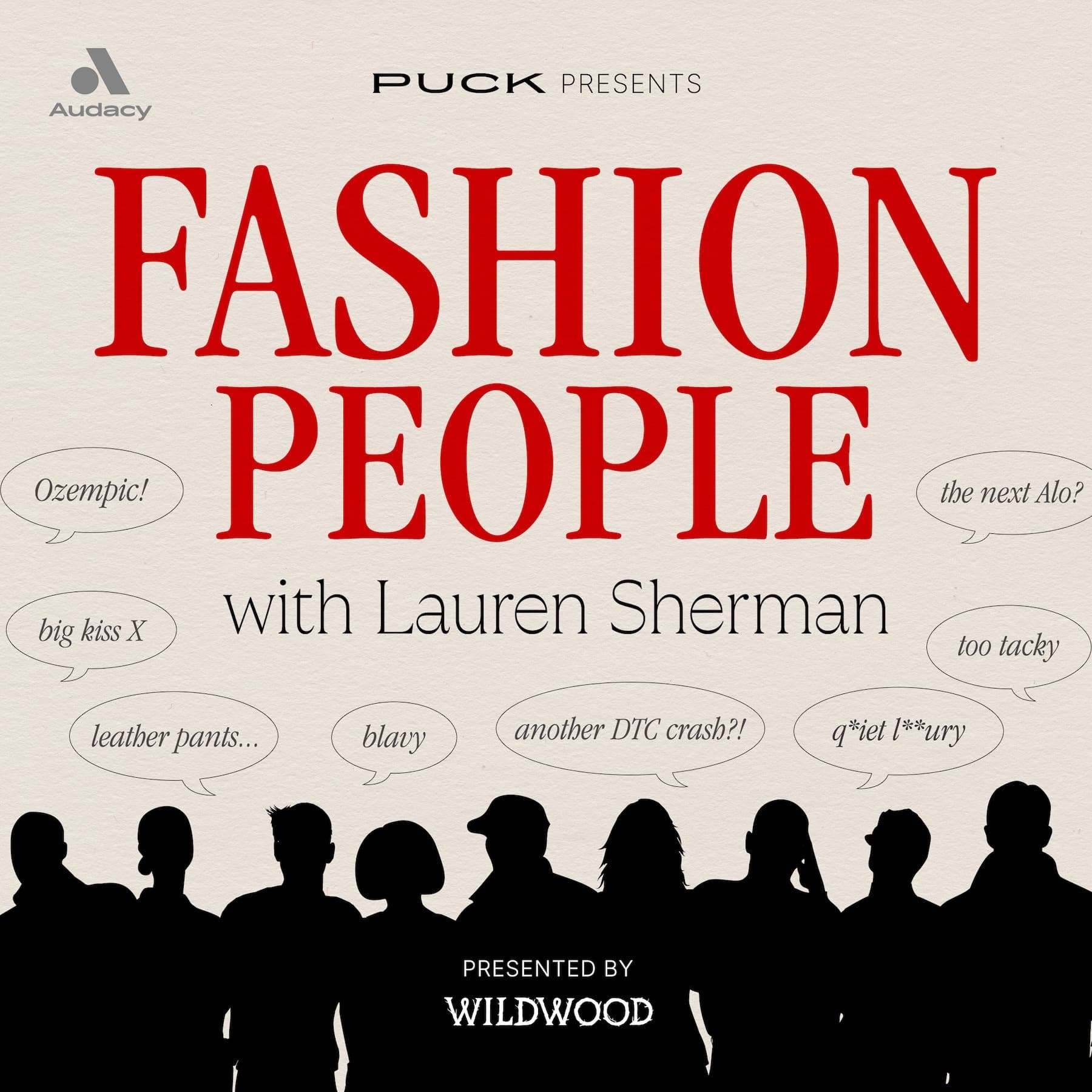
Fashion People Description: A deep dive into the fashion industry with insights from Puck correspondent Lauren Sherman and industry insiders on topics like designer changes, market dynamics, and more.
Episode Title
The Christopher Kane Diaries Description: Christopher Kane discusses his career, design philosophy, and recent collaborations while reflecting on the current state of fashion.
---
Key Highlights
Introduction
- Lauren Sherman introduces Christopher Kane, a celebrated designer known for his originality in the fashion industry.
- Lauren shares her personal updates related to the recent wildfires in Los Angeles and emphasizes the importance of connecting over shared experiences in fashion.
Early Influences
- Christopher discusses his early fascination with fashion, influenced by his sister and the vibrant fashion scene in Glasgow.
- Notable figures from his childhood include Jeanne Becker and Polly Mellon, who shaped his understanding of the fashion world.
Education and Mentorship
- Kane attended Central Saint Martins, where he was taught by Louise Wilson, a pivotal figure in his career.
- He reflects on Wilson's approach to teaching, mixing high standards with encouragement, which helped him understand the industry's competitive nature.
Design Philosophy
- Kane emphasizes the importance of authenticity in design, noting that being polarizing can be a powerful identifier.
- He recalls his early design experiments, focusing on bodycon dresses and how they contrasted with contemporary norms in fashion.
Rise in the Fashion World
- Christopher shares his experience of starting his brand amidst a competitive landscape dominated by larger fashion houses.
- He reflects on the creative energy of young designers in London during his rise and how he found success through distinct identity and voice.
Challenges and Changes
- The discussion shifts to the pressures faced by young designers today, including the overwhelming influence of social media.
- Kane expresses concern over the current state of creativity in fashion, noting a trend towards sameness in designs.
Collaboration and Future Endeavors
- Kane talks about his recent collaboration with Self-Portrait, blending past inspirations with contemporary design.
- He expresses a desire to continue creating and possibly re-launching his brand in the future while also considering opportunities with established brands.
Final Thoughts
- Christopher reflects on the future of the fashion industry, advocating for a return to creativity and originality.
- He expresses hope for a resurgence of radicality in fashion, emphasizing the need for diverse voices and stories.
---
Key Takeaways
- Influence of Mentors: Strong mentorship can significantly shape a designer's career.
- Authenticity Matters: Being true to one's design philosophy creates a unique identity that resonates with audiences.
- Creative Energy: The thrill of competition can drive innovation and creativity within the industry.
- Social Media's Impact: The digital age presents both opportunities and challenges, flooding designers with visual information that can stifle originality.
- Collaboration: Partnerships can revitalize a designer's creativity and presence in the market.
Quotes
- "You have to be 100 steps ahead in fashion." - Christopher Kane
- "The best part is always finding that unknown territory or reference." - Christopher Kane
---
Conclusion In this episode, Christopher Kane offers a candid look into his journey as a designer, the complexities of the fashion industry, and his hopes for its future. Through his reflections, listeners gain insights into the importance of authenticity, creativity, and the ever-evolving nature of fashion.
Written by AI. May contain mistakes. Listen to the episode to check what was said.
Transcript
Automatic transcript. May contain errors.0:03Hello and welcome to Fashion People. I'm Lauren Sherman, Red Airpuffel, fashion and beauty memo line sheet. And today with me on the show is the one and only Christopher Kane, one of the most celebrated designers of his generation. We're going to discuss everything from the state of London fashion to the state of the industry at large. Before we get going, I wanted to remind you that if you like this podcast, you'll definitely love where I send an email called line sheet. If you're a fashion person, you get that reference. it's an original look at what's really going on inside the fashion and beauty industries line she is scoopy analytical and above all fun along with me a subscription to puck gains you access to an unmatched roster of experts reporting on powerful people and companies in entertainment media sports politics finance the art world and much more if you're interested listeners of fashion people get a discount.
1:03Just go to puck.news slash fashion people to join puck or start a free trial. Hi, everyone. I am going to be quick today. As many of you know, I live in Los Angeles, which as many of you also know, has been ravaged this week by fire. Just want to thank everyone who has reached out. If I didn't respond to you, please know that I am really grateful and that my family and I are okay. And I hope you are okay too. And I hope you find this revealing interview with Christopher to be something of an escape from the real world. Although he does get very real about what's happening in the fashion industry right now and his feelings about it.
1:46It was a good conversation and I thought it would be a nice one to run this week. I'm online. So if you need something or you think there's something I should be writing about around these fires or anything else, message me. I will respond if I see it. And I'm just sending love to everyone. Christopher Kane, welcome to Fashion People. Hi, Lauren. How are you? I'm so well. Thank you for being here. Yes. How many podcasts? Maybe my second podcast. So yeah, I'm pretty podcast virgin at this point. I'm so honored. And, you know, I think you and I are around the same age. And so I sort of grew up in journalism as you grew up in fashion.
2:33And a lot of my fashion writer friends who were with me in those early days and we were going to your shows in London in 2010 or what have you are going to be so excited about this. It's like you're I think you're only the second designer I've had on the show. oh no gosh yeah so it's no no no no uh so on our friday morning the first question we ask is what did you have for breakfast um i don't actually eat breakfast i'm not a big breakfast person um it really slows me down i've always been just like a good strong coffee gets me going and yes no i'm not a breakfast person what time of day do you normally start when when is your first meal or snack or something?
3:21I'll probably have something around half two, three o 'clock. Okay. So late lunch. Yeah. Wow. Okay. Yeah. In this frame of mind, it works for me. I'm not a big lunch person either. I like to really be quite on it. And when I do eat, I tend to become quite sluggish. So I'd rather just have a full day work and it keeps me going. Yeah. That's interesting. I feel that way. Sometimes I'm just so hungry. And it's also about what you eat. Yeah, there's so many different things. But it feels like also the European way is very much like big lunch, or a big dinner. And then you're kind of, I mean, I changed a whole like a long time ago, like maybe six years ago, I started functional medicine.
4:08So I tend to fast a lot. And it really works for me. I suffer with like, I mean, some like little autoimmune diseases, like psoriasis. So getting rid of the psoriasis was something to do with the gut. There's nothing fashion related, but for me, it was obviously stress and the industry we work in fashion is a very stressful job. So I had to do made little changes to get rid of the psoriasis and it's went away. So yeah. So when did your, that's interesting. We should talk offline because the, yeah, those dry skin, my husband suffers. His hands are like terribly dry. And we've, yes. And we thought he had psoriasis forever and he would go and they would give him steroid cream.
4:54And obviously that really doesn't do anything. And then he went to a, like a good dermatologist here in LA and she was like, you don't have psoriasis you just wash your hands too much more that could be a cause because it's detergent source like acidic and astringent yeah and it was funny i asked him how many times he washed his hand and it was crazy i was like that's a good thing he's a clean boy we need hygiene yeah i guess so but it's making his hands all dry and cracked anyway more than ever it's autoimmune especially psoriasis when it comes to stressful jobs and stress stressful lifestyles but yeah man stress stress stress but so how did you get into the stressful industry were you obsessed with fashion growing up or did you so i know you went to saint martin's and you're a louise wilson person and yeah and that history but but how early did you start like wanting to design and designing um lauren ever since i can remember i was always watching fashion or um my sister tammy who's five years senior she was always wearing fashionable clothes i come from a very working class background in Scotland so people strangely tended to look really good and dressed up really well they worked really hard and made good money and they would spend on great fashion like there was obviously the Italian centre in Glasgow so people were really wearing fashionable Versace, Armani, there was the first Vivian Westwood consignment in Glasgow so there's all these amazing things happening in Glasgow in my community.
6:24But besides that, I had a fascination with TV. I always watched TV and I was very influenced by TV from, I suppose, the world of biology, nature, to discovering Sky Television, which brought into the world of Jeanne Becker fashion TV. And I became addicted and started recording it and I learned probably so much from that and basically my obsession began. Was Tim, was Fashionphile, Tim Blanks on Sky as well? No, he was more, I never really got to see Tim, but I saw Jeannie and I saw Elsa Clench. So these are the people that were on the news channels and you would have a Saturday morning where I'd get the VHS machine and record.
7:11So it's like, obviously, as I'm doing this call, I heard of Polly Mellon just passed away. And so I learned about Polly Mellon when I was probably nine years old, watching these this year so i learned a lot of great things from fashion tv oh my god this is such a big morning so polly melon passed away she was 101 i think she was yeah yeah wow incredible incredible woman and then we were talking about this will run in a few weeks probably but we are recording the morning of all the changes at Bottega and, and potentially the Chanel news announcement. So it may come in as we are, we are speaking, um, this morning, Louise Trotter left car car van and then Bottega Veneta announced that Matt two, is it blazy or a Blasi?
8:03Do you know? I say blazy, but Matt two, Matt two blazy, um, is leaving and Louise Trotter's joining. And I reported on this a couple of weeks ago, but, um, or actually last week, but, um, so it's interesting. It's such a crazy news morning for, for this, but I grew up, I watched Jeannie as well. I never really watched Elsa clench, which is weird because I'm American and that would have been easy for me to access. But, you know, in America, we, more people had cable. I feel like when you, when like in the UK, a lot of people just still only have the five channels, but, um, Which was kind of interesting as well, because there was great shows in Channel 4.
8:44Channel 4 was doing amazing things when it came to LGBTQ. Oh, God, that's terrible. I don't know what to say there, how to say it. But there's always these amazing gay films and gay programs. And also Jean-Paul Gaultier was on Eurotrash. So TV in the UK was quite at the forefront. Wait, what's Eurotrash? I don't know about that. Oh my gosh, Eurotrash, you need to YouTube it. But Jean-Paul Gaultier had a show which was very like, I mean, it was so progressive for the time. It was him co-hosting and it was all around sexual activities of the Europeans and all this crazy stuff. When you Google it, you're going to be like, wow, this is kind of amazing.
9:26So I grew up watching that. So education was at the forefront, but TV was definitely number two. yeah yeah I so my grandparents had cable we would intermittently have cable and I would watch Tim on the weekends so like yeah it's crazy to me still that I know him and have like been I mean it's insane isn't it and I've never met Jeannie but I've DM'd her so it's like one of those things where you're like oh my god full circle but it was strange because I grew up in a very normal town it was a steel industry village very small my mum was never fashionable but I mean for me she looked very fashionable in the sense that she was very simple whereas my sisters were always very fashionable they were going out to discos and stuff so they were always dressing up but I suppose when you first saw your helmet Langshaw at the age of nine or ten you were literally like what the hell is going on here why is she wearing a bin bag and like white tights and looks phenomenal so that was the sense that I was getting that these goosebumps mean something more than just like what is this feeling I'm having so yeah it was pretty insane how did you end up at St Martin's did you it was it was like a long-term plan or was it did you lie on a whim I always knew again from watching these tv shows or I'm sure it was a Jeannie Becker special where she interviewed Hussain Shalian.
10:52Oh, wow. Obviously, there was people talking about the McQueen and the Galliano, but I was much more of a Hussain boy because, I mean, a dress that turned into an airplane or a table, like that really got me, and it was almost like a Transformer-esque moment where I was like, wow, this is fashion. So that for me was like, St. Martin's was always in the background ringing, ding, ding, ding, and it was, I applied. when I was 17, 16 and a half, 17. And I went to St. Martins when I was 18 and did a foundation there. Then I did the BA, then I did the master's. So in total, it was six years at St. Martins.
11:33Wow. Yeah. And did you, how do you, because one of the things we met a couple of months ago at a party. Yeah. And one of the things that I said to you is you are one of the last designers who I think of as having like an original. You're not, you don't seem, there are designers who are really good at taking inspiration from a lot of other people and making it their own. And that is a talent and incredible, but you, your, what you do feels completely germane to who you are. And, and that is, you're just so original. When did you start developing your idea of of what you were as a designer and and what kinds of references and things like do you are you drawn to um well I'll take you right back and to the MA where I was working with Louise Wilson and obviously she's very well known for being this notorious leader and tyrant but for me Louise was the ultimate in taste maker and she knew everything about fashion in art so to impress Louise was I mean that was a pedigree so I would literally be in the studio where students were mimicking or copying the looks of Margiela or Comme des Garçons whereas I was back home with literally 50 quid which is like 40 or something and I was buying lingerie and stockings and cutting them up it sounds really perverted it was it sounds really quite strange but um it was what i could afford and i was buying them from the market and i was making these bodycon dresses sort of inspired by american pageants those really bonker dresses that are literally covered in frails and rhinestones and for me they just felt so right and so like the opposite to what everyone else was doing because they were so they were just complete vulgarity and for me that's something i've always done i've always looked at places where people don't think is beauty whereas I love that investigation and for me showing Louise that first dress was the most terrifying but the most electric feeling I've ever had where I put it on the model she's smoking a cigarette and she says make another fucking six of these this is fucking fabulous and it was like fucking it was she just kept saying the word fucking sorry guys so for me to like be hidden away in a bedroom to then come and show her this it was like oh so I wasn't all my instincts telling me something different was she as harsh as people yeah and and so either way like if she was complimenting or if she was she was just going to say it super straight she was saying it's super straight but also it's the thing where she would always pay a compliment but then she'd stab you in the back and she was basically saying this is what happens in the real world and this is honestly what working in fashion is like you have to be there's always someone prettier or skinnier, taller, better than you.
14:33So you always have to be 100 steps ahead. And it's true. Like, it's just, it's a very competitive industry and you just need to be in top form. And from that moment, I've been very agile, almost like a private detective. I always watch what's happening in the room. I'm always very conscious of what's happening. I'm very open and on all the time. And that's something I learned from Louise because she was like, you need to see what's going on. You need to literally dig deep to find something new and never be derivative but also you don't want to be seen as being in the middle either because when you're in the middle you're forgotten about you'd rather be hated or loved in the middle is literally just like forget about it so strive for both with other ones the opposite yeah i feel like i don't i don't i'm not a creative person but i see what you do and for someone like you i wonder is it possible for you to feel fulfilled if you're not like totally living your truth which will be polarizing like when you when people live their truth when people don't live their truth it tends to maybe you get a little attention you don't get enough but you in order to get people to to like make an impact you have to like totally put yourself out there and that's i mean that that takes a lot of emotional that's a lot of emotional labor yeah and I think it's like owning this authentic power and I think being authentic it always rings true and people always they understand or they come to understand and I've had editors who have been like I didn't get it then but I get it now and I'm like well you should have got it then but that's okay but like you're saying like I do see my influence on a lot of runways still and that's okay I take it as a form of flattery but I am always working I'm always working in my head and I'm always drawing because I'm always keeping the muscle going and I think it's really important in this industry to always keep looking and searching and for me that's the best part your career is sort of like so it's the example especially of the British designers of like that era of fashion and your trajectory which we can go through a little bit but when you first started out and started showing and and you were in you were in this london scene you were definitely at the top of the of the group but um this scene of young designers coming up in london that was sort of paralleling what was happening in new york although that was always as usual more commercially driven but you know there was just a real energy like i i lived in london from 04 to 06 and i think i went to like two fashion shows but the fashion week wasn't a thing and then like a year later it was huge what was it like being in that world where you were being like you were doing projects with collections with donatella versace you were the the name coming up it was this time when like lvmh in the late 90s had hired uh mark jacobs and narciso rodriguez and michael porzen now there's gonna be another generation and you were always like a name to do one of the big houses caring invested in your company like what was it like being there at that time when there was so much energy and enthusiasm and pressure to make it into a business i mean when i first started my business it was very um the unknown there was no such thing as like a huge setup of support um there was definitely no social media back then so literally you were really depending on reviews critics and the buyers coming through the door so you really had to have a voice and an like an identity that stood apart from everyone else so creativity was really valued and I don't mean that like having something new it was like having something new to say but it was like it I don't know it was just you had to have this real identity that really stood stood apart from all the other brands and especially the bigger brands because you were literally I was showing up against bigger brands like a Prada and I was being compared to these brands and reviews and it was really quite it was flattering but I don't have millions of pounds for a budget I was doing it from the back of a lorry in the market or buying fabric from here or upcycling things or it was just but that's how I flourished and that's where I got the kicks from but obviously I mean when caring invested it was great it was a great opportunity but a lot of things happened there too and I learned so much and I've never really seen anything as a failure and that's how I am here today still working in the industry because you learn a lot and that's a good thing but fashion back then was different Lauren as you know you were in London London was known for this creative hub but there wasn't really much happening when I started it was maybe the Barbary or the Paul Smith but young people were like definitely coming up from the outskirts like myself Murray Schwab so we were kind of like doing something that people didn't want to talk about which was like sexy dressing or bodycon I mean it was really bizarre it's that we still people still like cringe when you see sexy.
19:59I'm like, yeah, that's okay. It's bizarre that whole concept around sexy dressing, but yeah. So we were doing something that really made people set up and take notes. Yeah. It's interesting. You mentioned the idea of sexy and you also said the word perverted. And I do think there's some like perversity in the work that you do. And I mean that in a positive way because no one addresses that and it it got it got extreme in the late 2010s where the the conservative like the conservative ism that's the word in fashion and like the monk style and there's just like lack of sex in everything and i'd say in the last couple of years and you just had you just launched this collection with self-portrait But do you see a change?
20:53And because I see more and a lot of my friends wearing more, I'm wearing more fitted clothes than I've ever worn before. Do you think that it's a there is an acceptance of like recognizing that the body is a thing or do you think it's still separate and that people aren't willing to acknowledge that humans are sexual? um do you know i think that the industry you work in is very small and it can be can be a lot of snobbery there and especially when you think about sex or clothing relating to sexy clothing people can be quite snobby but there's lots of opportunities in that and me and tammy my sister i work very closely with my sister we've always done sex really different to everyone else and that's why we stood out but it's bizarre because when i did the self-portrait But it was literally looking back to that very first collection, which was literally tiny little short dresses with frills and that very American pageant world.
21:52And when people saw those dresses, they were repulsed. And also they were like in bright neons. And I was like, well, someone's got to do it. Like everything else has been sort of done. So I want to do something completely different. And that's what being a fashion designer for me is all about. that's the people I watched growing up like a Helmut Lang or a Gianni Versace was literally make people set up and walk away with a reaction so I don't know like the industry's always changing but I think sex will always be relevant elegance will always be relevant femininity masculinity I think today there's room for everything and I think that's great how did you and Tammy end up working so closely together?
22:36I mean we're like best friends like we've done everything together she was at college when I was at high school so I literally saw her growing up and her inventing herself and we then moved to London together I got into St Martin's she moved down with me so we always knew it was going to be the duo and me and Tammy were like after I graduated it was fast track and we're like okay we're starting the business and we better get our heads together and yeah it was as fast as that literally graduating in a hotel room ran a winter then backstage with donatella and then working with donatella and then in a sales room in paris with buyers knocking the door and we're like who the hell's that oh my god don't open the door so it was really amazing but it was like full-on like we were really thrown in deep yeah do you think that as the years went on, obviously you matured and you gained more experience, but do you think that the, the puppeteers of the fashion industry, the ones that still exist, do you think they're more careful with young designers than they were now than they were when you were coming up?
23:44Cause it was a sort of like, all of you got investments really quickly. You were pushed to become global brands really quickly. Like you said, you were being critiqued next to Prada and reviews, things like that. Do you think that the industry maybe has pulled back a little bit in the amount of pressure that they put on those new entrants? Do you know what? It's a hard one because I think, I don't know. It's like, I think today when there's all this change in fashion, I mean, change is always good. But for me, when we were starting out, I was very, always just concerned about me and Tammy and what we were doing and having integrity and making sure we could be the most creative and obviously we had to sell clothes we never put razor blades in anything it was like very wearable and brilliant and when we first did the crocs everyone was also repulsed but we had to do it we did pull slides as well in 2012 which everyone was like what the hell's going on here and i'm like yeah pull slides with a cocktail dress like i want to wear that but young designers now i think it's really tough But I do think young designers have a great opportunity to learn more than ever because they have these amazing tech skills with their phone.
25:01But for me, fundamentally, research and knowing your art history and fashion history is really quite important because being derivative is one of the downfalls of a young designer. And I think for me, I always shied away from that and would almost rip everything up to start from scratch. much but it's a hard one because I think these huge conglomerates I mean I think they're really in their own world now I don't think they really care much well it's not it's two different businesses yeah it's different business but we'll always love the the underground and we strive for the underground we strive for the the rebel the punk and we hope we need more of that more of that punk attitude in fashion two questions for you one is what what did you say pill what oh pill slides we we pill you know like a pill slide p-o-o-o-o pill slide no pill p-o-o-o oh pull slides yeah I thought you meant like a pill box or something and because I do feel like you have done some yeah there was like some pill stuff but um oh yes I remember those oh my god I remember those yeah that you really did do that stuff first yeah we we really wanted I don't know like we always look back to our landscape growing up in Scotland and that's what people were wearing and the working class people looked really good back then it was just how people dressed they always wanted to be wearing the best everything and they worked really hard for it and they kept it really good and I'm very very happy to have been brought up that way because my childhood always influences me and everything.
27:22So one thing that I wonder about designers coming into this business now is the flood of visual information that they're receiving. So Instagram, TikTok, whatever. And I bring this up way too much, but on my Instagram feed, I get tons of I follow no account fan accounts of Carolyn Bissett Kennedy, but I get every single day like 45 pictures of her because I do. I do think she's interesting and we'll look at them. But the point being that all of imagery has been flattened. And so they're just constantly, it used to be like Stella Bugbee, who edits the style section of the New York Times in an interview once, she said when she made a magazine in the late 90s, you would go to the library to research.
28:20And so you'd really have to work to pull your references. Whereas now it's just like, how can you do anything original when your brain is just being inundated with other people's imagery? And A, what do you think? And B, how do you manage that? Because you're online. You're not like living in a cave. You experience this now too. Like, do you think it's possible to be as original as you have been? I think it is. I think owning that authentic power and looking back what's already in your brain or people you've met or something that's happened in your childhood or where you've been brought up culturally.
29:05I think, like you say, there's all this images, but it all starts to look the same. And that's really sad. so when you when you dig deep when you do go to a library or you do watch all these old films you see things that oh my gosh this is brilliant because and you're kind of like oh i never saw that before and that's proper research and that's what we all had to do back at college yeah we didn't have ai or jack gbt whatever it's called or mobile phones it was literally we had to see what was happening in the street we had to go thrifting we had to dissect clothes we have to and I think we should still be doing that today.
29:40And I think students need to learn from the bottom up. But of course they have this luxury of technology, but with technology comes a lot of responsibility. I forget who says that, but yeah. I think, you know, you know who says with great power comes great responsibility. Someone in Spider-Man, I think. That's true. As a Star Wars, it's something weird. It's true. Or Yoda. Yeah, it's very true. But yeah, I think fashion is seen as something that's, oh, it's just fashion. It's just clothing. But for me, it was always very cultural and emotional and personal. And that's what I always put out there.
30:19And I think Steve Jobs said it himself. He said, cultural product. Culture has been the product for it to last a long time. And it's true. It can't just be the same as everyone else. And I think that's what's happening now. There's a lot of the sameness. Yeah. And I don't think people are that stupid that they can keep going with the sameness. I think people do want aspiration. They do want fantasy. They do want something that's going to take them somewhere or make them think differently or dress differently. But, yeah, fashion's going through a very strange time at the moment, for sure. Do you think the tides are changing at all?
30:57Like, there are green shoots of... I think I'm... Today in line, again, again, this is going to run a long time, a ways out from now, but I'm going to talk a bit about Galeano leaving Margiela. And I'm not passing judgment on that collection. I think that collection, to be honest, was given a little too much weight because of the fact that there is so little creativity. But I do also really admire the conversation it started. And since then, Like when you look at some of the appointments at the big houses, Peter Copping at La Vann, Sarah Burton at Givenchy, I'm not, again, not passing judgment that these are right, but these are quote unquote real designers.
31:45And they're not people who, for a while, it was really about creative product designers getting those jobs. And it feels like it's moving a little bit by, if you look at Peter at Alaya or whatever, or Mathieu at Chanel. Like, what do you do you do you think that the executives have woken up a little or do you think that they are just riding another trend? Because as you and I both know, the executives are definitely not creative and they literally just do what they think is going to make the money and what everyone else is doing. They never think outside the box. And I think it's actually a huge issue for the industry.
32:25But do you think do you think the tides have changed at all? I really hope so and I think obviously the recent engage like people getting these jobs is great and I think it's going to really inject a lot of energy into the industry but I'm I don't know I don't have a job I know well I've had interviews and I've been told lots of things coming from these people and that's okay like I take it all on board but for me being a fashion designer is being fashion design it's creating something and from the top up you have to give these amazing ideas like any other industry it's all about these magical ideas that then filter down into other products or the storytelling and all these things but it's it's really interesting but i do think i mean i think people doing a great job like you mentioned peter at ally he's doing great things with the codes sarah barton that'll be really interesting which she's going to do there because I really like Sarah and obviously Matus, Patega, Chanel.
33:26So he's done a great job. So it's really interesting. They're really strong designers, I think. And I think they have a voice. But yeah, sometimes someone described me as a Formula One driver driving a Ford Fiesta. And it's true. I should be driving a Formula One car, but I'm not. But that's just how it is. It's just I bide my time and just gone with it. why do you think you haven't ended up doing one of those big jobs do you think it's just timing and then it wasn't the right either they didn't the executive didn't get it or it just wasn't like the my guess is that someday it will happen but like do you think the stars didn't align for you in that in that way maybe something like that like I really I try not to think about it too much because obviously I've just closed my brand a year ago and obviously I'm very on the fence whether to start up again or to maybe go with an established brand.
34:28So that's still up in there. But I mean, never say never. And obviously if the opportunity came up, I would obviously think about it and think about how I could move forward and what I could do for the brand. But fundamentally, I trained for six years at Best Art School. I wanted to be a fashion designer. I don't want to be creating merch. yeah and i do think merch is really important but it has to come from a really good place to begin from and a really good integrity and take a place of integrity to then get good merch i hate calling it merch but you know i mean stuff like your more joy line was awesome and it was like i see joy i mean joy is obviously a seasonal thing with christmas but even before that i see in advertising the word more and joy in so many advertising it's literally everywhere so that's okay how did you and was peter savile did he design it no it was it was from the joy of sex books oh yeah yes yes it feels like there is a peter savile yeah i think the same genre the same the same time and it was amazing because i've always loved those books and obviously they were very forbidden growing up and you would go to the library and like adult sections sneak read you'd be like oh my god someone's gonna catch me but it's the same when I did I looked at the Gianni Versace books I used to be like hide in the library and look at them so but those um those amazing joy of sex books are great and the illustrations were just so beautiful that I had to use them and got permission from the artist and from that we then went on to do more joy which was sort of like a branching out from that and yeah well you mentioned the word authenticity earlier and I think the word I like to use is genuine and there was something really genuine about it it looked cool but b it felt really good it made people feel good and there is something about your work and it's funny the two designers you mentioned is our helmet laying and Versace which you wouldn't think, but now I see it like thinking of you, which is so interesting because those aren't, most designers are not pliable or flexible enough in their brain to be able to look at those two things and process them together.
36:55When you look back at those early Versace or the Helmut Lang shows, they're life-giving. They really are. And they really make you have the goosebumps and you literally stay and you want to be that person, that woman, that man. Like, Helmut Langman's shows, like, I mean, he was putting down, like, harnesses. They were very, like, Gianni Versace, they were both doing very similar things and techniques, but obviously put in a different setting landscape. Gianni was doing harnesses, so was Helmut. But it was completely different spectrums of sex and sexuality. But that's why I loved it. So it was really, it was very smart.
37:30And they were very smart.
37:37you mentioned that you think about starting up your your line again yeah what would you do differently if you did it again and also you don't have to share like did you have investors when at different times i know caring obviously but like we closed because the investor we had did pull out that's everyone knows that it's fine so we had to just obviously pull the shutters and obviously recovering from covid it was really tough times for everyone but um it's something i had to do but um starting up i mean i think the exercise working with self-portrait and this whole concept of contemporary price points yeah and what hannah's done at self-portrait is really quick like he's built an amazing business um great quality clothes at affordable prices and that's something that 40 of our business back in the day was those affordable price points so it's not something i'm shy of it's just yeah i'm always very in the back of my head that storytelling needs to be there that real like to get me going to then get to that point where i can get the 40 because for me it's all about I've said it before this strong identity that sets you apart this I'm just looking through this collection right now and I I mean it's it's so incredible it looks totally like you and like nothing else and is sexy and feels contemporary and also everything is under a thousand bucks which is amazing I mean you can't fault it it's amazing and it's very referential for that first season because that's when I felt so free back in 2006 and it was literally just like oh my god we're sending down a neon dress and honestly Lauren people were mortified but I loved that because I was like oh my god you work in fashion like really but it was one of those things where I loved that really like that little disrupting the industry back then it was like wow so yeah I always look at that collection for that point of view if you did it again would you spend like you would your working process be different do you think or no no because I love I've always loved drawing and sketching and researching and for me it's like the key to my success is always finding that unknown territory or that unknown reference um so for me i work i dream it live it breathe it and i mean i've maybe changed my technique where i'm always on my ipad i'm always like drawing and sketching my ipad because it's faster um so i'm always i'm into my photoshop now i really love my photoshop but yeah i'm very old in the sense that i'm just catching on to that but i do love that the fast and the speed of that tech do you do any other type of like do you work in any other mediums other than clothing i mean i i did i did my first art show in vienna in 2023 which was like primarily paintings and collage so i do do that on the side but um i mean most of the textiles that we've created and shows have been done by myself and tammy so we're very we do like our textiles and creating and being very hands-on so but yeah like I think we've learned that from the beginning having nothing at the beginning of our business you have to do everything from making the tea to taking the bins out to doing showrooms and that's I wouldn't change that for the world if you could decide tomorrow either some dream investor which we know there there's basically 0.5 of those people, um, dream investor came in or you got a big job at one of the houses that is run responsibly.
41:37What would you prefer to do at this point in your life? Like, would you rather be the designer of what I'm not going to say the name, but I, there's a brand that I really want you to be the creative director of, or would you rather do your own thing again? Um, do you know what I'd love to do both but obviously at this point in time I'd really like to focus maybe on another brand or I'd love to just learn new things but also I mean just working in fashion in general like starting my own brand is also very exciting because I do think there's they're missing me and Tammy's influence let's be honest um and that's something that we've always brought to the table but I could do that in other platforms like in other brands so I would always authentically be me with the other brand in mind because um yeah I know too much Lauren and that's what one of my I know too much about fashion and art and that's one of my strongest points I can really historically it's just what I love it gives me again gives me oxygen like research and to work in a brand and to go in the archives i mean who wouldn't want to do that did this self portrait partnership did it light a fire in you somehow yeah i think it was that sense when we did the launch it was like everyone was like oh we've really missed you and it just shows you how much people have missed you and i was like this is great but it was also that thing being back in the studio with people around you and the hustle and it's just so much fun being in the studio of like-minded people and being around the community that just it's just great it's like an adrenaline buzz and obviously when we did that launch it was great with karen wartfeld through the campaign which was karen has always been a huge supporter of nine and she wore that collection and i think carol agarfield photographed her in one of the dresses so kareen was the one person i wanted to wear it because i was like there's no one better than kareen like she's constantly copied and women should always be more carrying because she's just phenomenal so but yeah it was amazing no one better no one better but an amazing project and an amazing product and people love it love it loved loved yeah when you look in the next 10 if you look ahead the next 10 years what do you think how do you think the fashion industry is going to evolve you've been in it for 20 at this point longer what do you think the next 10 are going to look like i really hope it goes back full circle and we're actually talking about creative fashion is a creative industry and it's not just stuff and it's not just the same stuff I want designers to look different I want this competitive like it was always very when we started it was like this competitiveness which was kind of very natural it was very like healthy for me to be competing against other people I know that sounds really weird but it was that thing it gave me the the push to push forward and do other things and be better but nowadays i mean it's not hard to do good stuff because i don't think there's that much good stuff out there when i did mention those designers like peter and matthew and these people are doing something really good or shemina chloe's doing something really great or there's the guy at bali i think he's oh my god i'm obsessed with him simone he's done a great job great clothes yeah i love it too and so yeah there's in i think jw's doing a great job at the webby and so these people have got a real voice and i think we need to have more voices and more like radica like rad they've been really radical because fashion for me is the best time was when it was most radical yeah and not seen as like ab fab i think especially in london we're always dumbing it down in London like people don't really know where to fashion week and I think that's really sad but you have other cultures at other cities like Paris or Italy where it's real culture it's been brought you've been taught it at school whereas the best talent in the world comes from London but we're not really seeing so hopefully that spotlight in London again but yeah I think to really value creativity and it's the straight, even the question, I think one of your questions said about creativity and fashion.
46:15I'm like, I'm perplexed by the question because I thought that was the whole point. And any industry ideas to inspire. I think you're getting to something when you said about Europe and I think of with the UK as being so much more respectful and fashion being a part of life compared to America, where it really is seen as something like a frivolous pursuit. Whereas in France and Italy, it is a part of your life in the same way watching movies or eating or whatever are a part of your life. And that gives it so much more weight. And I also think like I mostly interview executives And for years, like they have their talking points and executives in France, especially use the word creativity so much and they understand.
47:10And look, they are becoming more corporate as the world becomes more global and more standardized. And they are basically having AI generated product that we hate and it's disgusting. but um they understand that like if you put in the work creatively the upside is much you'll you'll make way more money on the end you have to invest a lot up front but you'll make more on the end and so i think you're you are like nailing a point that my hope is other people are starting to understand too yeah and it's really sad to say that we're having to catch up to that again because people like that i respect like a mrs prada she's never faulted and she's stuck true to the creative force and that's why she's here today and who she is or reika kubo these women are really quite at the forefront of creativity and they never have shied away from it and they're not scared of it and we shouldn't be because it was the first thing i learned to do was to draw so what does that say about the human race we're always very tactile being creative is the biggest the biggest human outlet when it comes to music, art, like fashion should be seen as the same.
48:24It's for me, I get so much joy from you. I get so much joy from you, Christopher. Thank you for being here. Thank you, Lauren. Fashion People is a presentation of Odyssey in partnership with Puck. This show was produced and edited by Molly Nugent. Special thanks to our executive producers, Puck co-founder John Kelly, Executive Editor Ben Landy and Director of Editorial Operations Gobby Grossman An additional thanks to the team at Odyssey J.D. Crowley, Jenna Weiss-Berman and Bob Tabador
From the publisher
Lauren is joined by Christopher Kane, one of the most celebrated designers of his generation, to discuss everything from his relationship with late Central Saint Martins instructor Louise Wilson, to his rise on the international fashion scene, to the dissolution of his brand. They also get into his recent collaboration with the London-based Self-Portrait, and what that experience may portend about his next act.
To learn more about listener data and our privacy practices visit: https://www.audacyinc.com/privacy-policy
Learn more about your ad choices. Visit https://podcastchoices.com/adchoices