In short
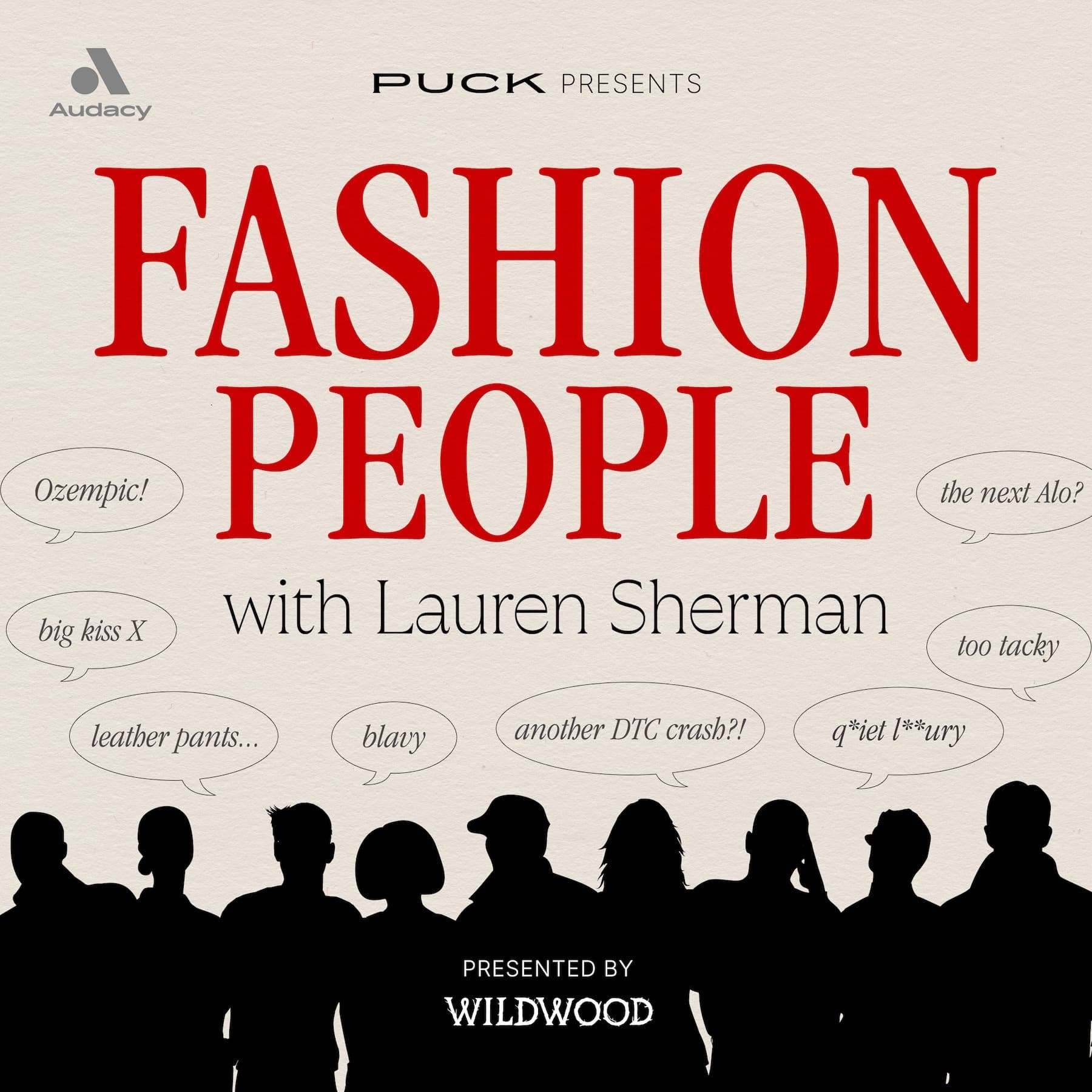
Podcast Episode Notes: Fashion People - The PR Guy
Episode Overview
- Title: The PR Guy
- Host: Lauren Sherman
- Guest: Lucien Pagès, Paris-based communications expert
- Release Date: [Insert Release Date]
- Description: Lucien shares insights about his career journey, experiences in the fashion industry, and observations on the cultural differences between American and European fashion. The episode also features updates from Milan Fashion Week.
Key Themes and Insights
- Lucien Pagès' Career Journey
- Internship Experience:
- Interned at Yves Saint Laurent (YSL) in the 1990s.
- Describes a hierarchical structure in the studio with little direct interaction with YSL.
- Witnessed the end of an era in haute couture.
- Agency Development:
- Opened his PR agency in the 2000s, with Adam Kimmel as his first client.
- Expanded globally in the 2010s and sold his agency to The Independents.
- Fashion Insights
- Cultural Comparison:
- Discusses the differing approaches to fashion and style between Americans and Europeans.
- Highlights the "French lifestyle" which integrates fashion into everyday life.
- Milan Fashion Week:
- Shares experiences from various fashion shows including Prada and Max Mara.
- Comments on the conceptual nature of Prada’s collections and the ongoing relevance of YSL's legacy.
- The Evolving Fashion Industry
- Impact of Digital Media:
- Observes the shift from traditional press to digital and social media.
- Discusses how PR strategies have adapted to include new forms of media and rapid information sharing.
- Pressure in the Industry:
- Increasing economic pressures on fashion brands and PR agencies.
- Emphasizes the importance of storytelling in maintaining brand integrity.
- Collaboration and Networking
- Building Relationships:
- Stresses the significance of trust and transparency in PR.
- Talks about creating partnerships with media to enhance brand visibility.
- Strategic Growth:
- Describes the synergy created by being part of a larger group, which allows for more significant collaboration across diverse projects.
- The Role of Ethics in PR
- Maintaining Integrity:
- Lucien emphasizes the importance of honesty in communication and the narratives shared with the media.
- Discusses the balance between commercial needs and maintaining the brand's artistic vision.
Notable Quotes
- "Fashion is an open door to the world." - Lucien Pagès
- "You can grow direct to people." - Lucien Pagès on new opportunities for small designers.
- "Trust between me and the media is crucial." - Lucien Pagès
Conclusion The episode provides a deep dive into the life of a prominent PR figure in the fashion industry, highlighting the significance of personal experiences, evolving industry standards, and the essential role of storytelling in communication. Lucien's insights offer a unique perspective on the current state of fashion and the challenges and opportunities that lie ahead.
Listening Details
- Next Episodes: New episodes of Fashion People are released every Tuesday and Friday.
- For More Information: [Fashion People on Puck](https://puck.news/fashion-people)
---
This markdown file serves as a detailed summary and analysis of the episode, highlighting essential discussions, themes, and insights shared during the podcast.
Written by AI. May contain mistakes. Listen to the episode to check what was said.
Transcript
Automatic transcript. May contain errors.0:03Hello and welcome to Fashion People. I'm Lauren Sherman, writer of Cux Fashion and Beauty Memo. memo line sheet. And today with me on the show is public relations extraordinaire, Lucien Pages. We're getting into everything from his experience interning in the Yves Saint Laurent studio in the 1990s to his experience building a PR agency and plenty more. Before we get going, I wanted to remind you that if you like this podcast, you'll definitely love puck where I send an email called line sheet. If you're a fashion person, you get that reference. It's an original look at what's really going on inside the fashion and beauty industries.
0:46Line sheet is scoopy analytical and above all fun. Along with me, a subscription to puck gains you access to an unmatched roster of experts reporting on powerful people and companies in entertainment, media, sports, politics, finance, the art world, and much more. If you're interested, listeners of Fashion People get a discount. Just go to puck.news slash fashion people to join Puck or start a free trial. Happy Friday, everyone. A rare time when I am recording this also on Friday, very, very early in the morning. It's been a busy week here in Milan where I've done Wednesday night from London and I hit the ground running on Thursday morning.
1:26Did Max Mara, Prada, Porio Armani MM6 very interesting all the MM6 models were sort of looking you in the eye but they had glasses on so not too much eye contact I went to a Kate dinner at the Portrait Milano with the store Antonia I met with friends I'd say that Prada is always the defining moment and today was no different backstage, Mica Prada Graf Simmons talked about making real clothes for real life they didn't want it to feel too conceptual and and I would say that it did feel the collection felt very much like what people wear during the day just you know their version of that so as always the clothes did make you think they might not have been as conceptual or too conceptual but they did make you think I'd say that watching the show at first it left me a little cold.
2:24But that's the thing about a Prada show. You just can't stop thinking about it. And the more you think about it, usually the more you like it. And even if you don't like it, you still can't stop thinking about it. I actually did end up really, really liking it. And sure, I'll buy one or two things because that's the point of this. That's what fashion is. Wanting things. The big topics this week, though, were Luke and Lucy Meyer, a lot of musical chair stuff. Luke and Lucy Meyer leaving Jill Sander was their last show. It also sounds like the new Gucci designer is going to be announced sooner than later.
2:58Also, everyone loved Sylvia Venturini Fendi's women's wear at the 100th anniversary show on Wednesday. There's a Sylvia rally. They need a women's wear designer. She only designs men's. Everyone thought she was going to retire after the 100th anniversary. Now everybody wants her to have both. We'll see. I mean, she's like in her mid-60s. A lot of designers work till they're in their 90s, so it's possible. This week on Line Sheet, you'll find more Milan intel, more Saks Global intel, more LVMH intel, plus a really fab story from Rachel Sturgatz about how Carolina Rare's fragrance, Good Girl, became the number one fragrance franchise in the world, beating Chanel.
3:44Yes. It's crazy, but it's possible. Rachel has the details. I am here in Milan for a couple more days for some more shows. There's Versace. There's Bali. We're so excited about Bali. Then there's a Bottega party with Patti Smith. Then there's more Armani on Sunday and Dolce and it'll be fun. And then I'm off to Paris on Monday. So more to come. Let's get started with lucien lucien pages welcome to fashion people thank you lauren i'm super happy to do this with you and very honored i'm very honored that you said yes you know that i think many pr people are going to be jealous that you were the first major pr person on fashion people but i just want to tell them there was a news peg so they can all be on someday as well of course of course and i'm And I feel super privileged to be the first one.
4:43And thank you for this opportunity. I'm very excited to chat with you about what you had for breakfast this morning. What I had for breakfast this morning? Yes, tell me. A latte from Starbucks. What? Just a big latte, a venti latte from Starbucks. I don't take breakfast. Doesn't sound very French to me. Yes, no. it just because I had a meeting very early on. So I just ordered a latte and I left my, my house with it, you know, like it was convenient. So there's a Starbucks near you not to reveal your location, but there is actually, there is a Starbucks in front of my house and there is Starbucks downstairs, the office.
5:28So I have two possibilities. Wow. Yeah. There is more and more in Paris. What do you think about that? I, I mean, you obviously are a patron, but does it bother you that they're around? No, because I'm not a very European person when it comes to coffee. I have very American taste. I love long, filtered coffee. I'm not someone that loves ristretto or double espresso. I have a very American taste for coffee. Okay. I'm glad that you're well hydrated. I guess it's later in the afternoon, your time. So how did you, you say you don't have very European taste for coffee. Where did you grow up and what was your European childhood like?
6:22I grew up in the south of France, in the mountain, in a very remote space. it's in the place of an area called Les Sevennes where there is a national park so it's very like green and there is mountain there is rivers it's very like wild it looked like Corsica but there is not the sea it's really like in the mountain and it's nearby Montpellier or Nîmes so not next when you say to foreigners oh I grew up in south of France they always think that it's like Saint-Tropez or Nice or Biarritz or Marseille maybe. But me, it's really like not very known, except that recently Timothée Chalamet spoke about Les Sevens in an interview, so I was really proud.
7:14I don't know how he knows, because he's half French, I think, so that's why maybe he knows this place. But normally nobody caught Les Sevens. What was it like? What kind of, is it mountains? is it it's not beach no no it's really mountain it's like yeah there is a it's very remote like there is nothing like it's small village where there is one i was raised in a village where there was 400 citizen you know and most of them live uh around the village even not in the village they have like it's a it's um it's a place for all former like people from the 60s that decided to live remotely, you know, a bit EP style.
7:59And they came to this place to do goat cheese or honey or raised donkey. It's really like the mood. I get it. So it's like upstate New York. Yeah, a bit. So how did you develop an interest in fashion living there? Is it just so deeply embedded in French culture? No, I don't think. I think I was like, I always wanted to work in fashion and I don't know why, because my parents were not connected to the fashion at all. My mom was not interested in fashion. Like, it's not that, you know, like sometimes you have people who tell you, oh, my mom loved fashion. And that was not the case. My parents were really hard workers.
8:47They were working, you know, they were having their own restaurant and hotel that belonged to my grandparents before. So we were more into the hospitality and gastronomy field. And it's funny because one day I took a plane with someone that I didn't know. And she was sitting next to me and we were discussing about our life. And I told her about my childhood into a restaurant and then working into fashion. And she said, oh, that's the two most exciting or biggest thing for France. It's funny that you had those both things in your life. And I never noticed that, in fact. But it's so it's make my story very French in that way that I was born and raised in a restaurant in an hotel.
9:35My father was a chef, was a sommelier. And then I wanted to work in fashion. So I had this kind of a duality of like French lifestyle and taste about what French has to offer for the best. But there was no really like, it came to my mind like really like organically. Like I was obsessed with fashion. I was like buying magazines in my village because they were selling magazines like Madame Figaro, Elle or Vogue. And I was buying them and I was seeing like the fashion show on TV because, you know, it's France. Were you seeing Tim Blanks at all or did he not get over to France?
10:27Not yet. Not yet. But I was also, you know, as it's France, the fashion show were on TV, on the news, you know, but not full, but like five minutes at the end of the show, of the news every day during Fashion Week, they were showing you the collection from Paris. So there was like Chanel and Saint Laurent and Dior, only the big name, of course, because he has to speak to the broader audience. And I was dreaming about living in Paris and touching that world. And voila. Also, we have to consider that I was born in 1975. So when I started to love fashion, it was more the end of the 80s. And there was no internet.
11:19There was no application. There was no Instagram. There was no social media. So our two sources of information were TV and magazine. Very old school. Do you feel like you're very, not smack dab, you're kind of at the end of Gen X actually, but growing up and being interested in those brands and seeing what was coming in culture-wise from the U.S. at that time. and the UK was, I feel like in the 90s, like Anglophilia was really big and even in the fashion industry as well. Did you have a sense of this idea of selling out and like as a part of that generation and having to be on the edge in some way or did you not think about it like that?
12:10But in fact, everything changed because I came to Paris in 1993. to study at the Champs-Saint-Denis-Calle de la Haute Couture. And so I discovered the world a bit, you know, and I discovered also MTV. I don't know if it was already MTV, but, you know, or later on, like there was a lot of information. You know, the fashion is an open door to the world, you know, because when you study fashion, of course, you go in nightclub or you go to see the movie or, you know. So the culture of the 90s is very present in my life because it's where I discovered the world. So all those 90s movies from Gus Vincent or this music from MTV, they are really, really present in my culture, of course, because it was what's going on, and we were young.
13:14So I arrived in Paris, I was 18. So the world was really opening, and we were having access to many more information. I remember when I was a teenager in the 90s, hearing about people in Europe being obsessed with Levi's. was this a thing because you couldn't get them as easily back then or something or was this like a weird thing that I was hearing in the suburbs of America that was total bullshit no we were obsessed with Levi's but we have access to Levi's I just remember thinking people were like smuggling maybe it was only to Russia but like I also remember specifically thinking of like cool young French people wearing Levi's I went to Paris for the first time I think in 1996 and just thinking that they were like really into Levi's and Converse and things like that no but we were obsessed with America you know we were totally obsessed with the American style, American way of life.
14:32I remember the first things I bought when I done my internship at Saint Laurent. I worked with Monsieur Saint Laurent at the internship and they were really like a social company, you know, they were doing for the intern, they were doing you like a real salary, low, of course, but my first fish, I don't know, like file of salary, like it was from Saint Laurent and I went to Ralf-Lorraine to buy the American flag sweater in dark green. That was the first things I bought with my own money. So it says a lot about like it was 1994, something like that. Oh, wow. And there was, you know, we were kind of obsessed.
15:20also everything, the pop culture, everything was coming from US or London. The pop culture is not French. So of course when you are young, you are into pop culture. Well now it is with Le Bureau des Légions. Yeah. That's good. You know, I interviewed Virginie Montel. Do you know her? No, not personally. she and she was telling me because she did Emilia Perez and she was telling me about like she worked with the guy who's the the um the star of Le Bureau de Légion and has been is Matthew Kasovitz yes Matthew Kasovitz and is also a filmmaker and she was telling me how they all she like is the costume designer for all these young or or used to be young and now like in their prime filmmakers.
16:18But I kept calling it Le Bureau. And every time I went, she would say, des légendes, at the end, to correct me. It was very funny. But anyway. So that's really interesting that it was cool to like America at that time. Absolutely. No, but also it was like Michael Jackson, Madonna, Prince. Yeah, yes. People were dressing like Madonna. or, you know, like, you know, I still have on me like a bracelet, like, you know, this bracelet that are in caoutchouc. And it's Marie Paul that we are doing them for Madonna. Yes. You know, and Madonna has like hundreds of them, of this caoutchouc bracelet. And I wear it because it reminds me that time where we were, we were we were so into Madonna that we wanted the same thing of her even the boys you know we had those bracelets my friend had those bracelets it was super cool to have the bracelet but we did a new Marie Paul I discovered Marie Paul much later after because it was for me the bracelet of Madonna you know and we were wearing that you know yeah so what was Yves Saint Laurent like what was it's amazing that you worked with him.
17:43Was it a very mom and pop operation? Like very close? Everyone was very close? No, no. It was really like the haute couture with all its rule and hierarchy. And I was lucky to be allowed to be in the studio but I was not talking to Monsieur Saint Laurent. You know, there was an invisible barrier. Like, and we were not so many. We were less than 10 in that studio. But I was an intern, the only intern. And, And I only spoke with Monsieur Saint Laurent about the dogs. Like that was the only point of entrance for a discussion with him from my place. But I didn't really care, you know, because I had nothing to do.
18:25Monsieur Saint Laurent was Monsieur Saint Laurent, you know, like why he would care about an intern, you know, like, I mean, everything was as its place. It was the culture, really like the old school culture where everyone has a place and has to stay in this place. And of course, when you say that today, it looks like a bit scary, but that was the way it was built, a culture house, with a lot of hierarchy. And it was kind of difficult because Michelin was not feeling so well at that time in the 90s. He was going back and forth into hospital, and that was not his best moment. but it was amazing to see him draping or design.
19:09He was drawing every single model of the collection. Like it was not like there was a studio, but the studio was just there to execute. It wasn't, nobody was drawing the haute couture. He was with his pencil and doing, he has his favorite pencil on the desk. So it was really amazing. And I was lucky because I was a huge fan of Saint Laurent and I really like tried to get there and I succeeded to get there to do those internships. And I was lucky. But also I knew that I was looking, I was watching the end of an era and that nothing will be the same anymore. Because even the fashion show, even the way everything was done was very particular.
19:54The model in the cabin, like there was model that were living almost at Saint Laurent, available from when Monsieur Saint Laurent was arriving. was La Cabine. And they were going upstairs to do the fitting. But there was a life. Like there was life in La Cabine, life in the salon of vodka for the client, the life. There was a canteen. Everybody's nostalgic about the canteen. Now it's in the same building, Avenue Marceau, where they keep all the clothes like into those amazing, like what you call safe, like with the exact, the archive, exact temperature and stuff like that. But that was that used to be La Canteen where we were all going.
20:35Everybody was mixed. There was Lulu La Fale, sometimes La Canteen, you know, with the little tray. And that was kind of funny. It was really the house of the life of a culture house. Do you think he was the greatest fashion designer to ever live in the same way that Michael Jordan is the greatest basketball player, even though I guess LeBron James or whoever, I don't follow it as closely as I used to, is probably technically better. But do you think Saint Laurent, when you look at the history of fashion that you know, do you think he was the best ever? In my taste, yes. But after fashion is a question of taste.
21:14But I think if we go out of my taste or your taste or the taste, you can think that he gave the grandeur to this name of Grand Couturier. When you think Grand Couturier, you think probably Balenciaga, Saint Laurent, Mademoiselle Chanel, Christian Dior. It's very limited. But Saint Laurent was the one that really, I think, penetrated the culture. Because Catherine Deneuve, because so many movies where he done the costume, because the fact that he was the first one to have his exhibition alive, you know, like he did the Met exhibition when he was still quite young. And that was the genius of Pierre Berger because Pierre Berger saw Monsieur Saint Laurent and he saw that, he knew, of course, they were together or no more together, but they were like very close.
22:08He saw that he was declining and also he was like, so he decided to create the meat and create a living legend. That was a very strategic movement from Monsieur Berger to create the legend while Yves Saint Laurent was still alive. And that protected the house. Yeah, it's interesting. We always talk about Chanel as a sort of playbook or a map of how companies work today. But in so many ways, the thing that I think is remarkable about Saint Laurent is the contribution over so many decades. There was, they did it, I'm sure it was a traveling exhibit, but I saw an exhibit probably 10 years ago at the DeYoung Museum in San Francisco.
22:53And I was just sort of amazed by how much he had done. And yes, there are dresses that we know and specific silhouettes that we attribute to him. But it was just so many contributions over, what, four or five decades. And so many of those designers of that generation only worked for 10 years or 20 years or shorter stints and it's more concentrated. But I feel like in some ways what he did has been diffused because it was so everywhere. But it's an interesting point about Pierre Berger. There's a great little story that Kathy Horn wrote when Pierre Berger died that it's probably only 400 words, maybe less, just about her relationship with him and also how he operated and how that changed the fashion industry so much.
23:51It's amazing that that was your first job. Yeah, yeah. No, no. And it's great what you are saying about the decades. And it brings so much to fashion from like the craziness of the haute couture, the inspiration of the art, the inspiration from the continent, from the love for the woman, the menswear, womenswear, like of course the smoking, the cap, the picot, blah, blah, blah. Like it's like it was real and totally surreal. There was both sides at Saint Laurent. There is an image, there is something that you can wear today totally like Saint Laurent Rive Gauche and many women collect those pieces and wear them and there was the haute couture that was totally inaccessible but not only about the price, about like this idea of the woman, and the Saint Laurent woman that is inaccessible somehow.
24:51She's too beautiful, too chic, too elegant. And I think it's something that Anthony has really well made into his work at Saint Laurent. It's the grandeur of the Saint Laurent woman. She's always so, I don't know, elegant, but in a way that like nothing can touch her. I don't know. Like she's. Yeah. I also think the thing about French fashion and the way the French approach fashion and dressing is that it is, even if you're not super interested in fashion or you're not an enthusiast, it's a part of your life and, and you're supposed to care about the way you look like it. so it's not shameful to care about the way you look or in that way or, and, and I think what he has is proposing is like the things I've bought from him are like a black blouse slingbacks because they're, it's exactly right.
26:00And it's things that like are really elegant. And he sort of is giving women permission to care about those things, which in this time, especially living in America where prioritizing those types of things is sometimes not okay because everybody's wearing Viore or whatever. But it's an interesting thing of how he has like, no, we're never going to go back to dressing up. But I think what he has done is make it feel good to want to dress up and take care of yourself and all of that. Yeah. And also to assume this grand femininity, like to be, you know, a Saint Laurent woman. I always think about that, like when she entered into a restaurant or somewhere else, you notice her.
26:56She's special. And that was very Monsieur Saint Laurent as well.
27:22We'll see you next time.
27:35So your insights into this, I think, explain how you ended up going into publicity and communications and storytelling. And so you wanted to be a fashion designer. And at some point you moved in to comms. How did that transition happen? And when did you realize that you were more interested in that side of the business? so I done all my studies to become a fashion designer I know how to draw, I know how to sew but of course I forget a bit it was my dream to become a fashion designer and then when I done those internships and everything I think it showed me a way that maybe I was too impressed maybe I done too big internship I don't know but I had the feeling that I will never become the new Saint Laurent and so I was less interested into design because I didn't want to be like a normal designer sitting in a studio like you know because I came all the way up from the south of France from my mountain and I wanted to be in fashion I wanted to live in Paris but I wanted to succeed as well like the kind of ambition in me and so when I realized that I could be not the best designer in the world I switched.
28:57And so after I just done different experience, I worked for magazine. I worked for Marcus Colley, an artistic director during five years and a half, more into, in the communication, but more into the image making. And then I opened my office 18 years ago, but I never dreamed to be a fashion PR, you know, it was, and it was like, I never think it was a job. I never, because I didn't know, You know, I was seeing PR at Saint Laurent, at Dior, at a different house.
29:33But I didn't care so much about that job, you know. Like it was, for me, it was a parallel job that was just serving the machine. You know, I was not like impressed. Yeah. Who was your first client and why did you, did you sort of fall into representing someone Or did you, at that point, when you started your business, did you think, I want to do this and why? No. In fact, it's really like, and it's what I always say about, like, to young people, you have to follow the opportunity. You have to leave the door open. I really was like that. Like, so the first time, like, I was, like, the first person that spoke to me about that job for me was Vincent Daré.
30:19He said, oh, you should be a PR. You could be a great PR. and I was okay you know like I never think about it. Who was he? Vincent Daré is he was he now he's a designer he's an interior designer he created furniture he decorated apartment but at that time he was fashion designer he done Moschino during years and he then he was named Emmanuel Ungaro after Giambattista Valley, and after he opened his interior design company. And he was one of my first clients, by the way. But the first client was Adam Kimmel, the menswear. Love Adam Kimmel. He's so great. Everybody has a good memory. Yeah. I saw him yesterday night.
31:05Oh, wow. Yeah, he was in Paris, and we had dinner together. It's always good to see him. I thought he was so talented and cool, and I just really liked him a lot. Yeah, and he was really in advance with the mix of art and fashion. His lookbook is also, in fact, if you look at his collection, they are so relevant because this low-key luxury is not so far from what the role is doing right now. If you go into the collection of Adam, you can feel that vibe of like this super cool low-key luxury, the connection to art, to culture. There was something very in advance. And so he was my first client and he wanted to be in Paris.
31:59He was very smart. So he knew that as an American designer, he needed to be in Paris and not in New York because he needed to be not too tagged as New Yorker and not too, I don't know, in a box of New York fashion. and so he was showing with the support of Colette for example that was one of the first person that bought Adam Kimmel he was showing in Paris we were renting space only for his market and then I was inviting a few friends to come and then in a nice way friendly way and then we decided that we could open an office together where he can have his showroom I was representing him in Europe and the rest of the time when he was not there, I was doing my own things, like representing Vincent Daré, Olympia Le Tade, and I started like that, with Adam and friends around me that were creatives.
33:02So there was no really an agenda. It was like that. It happened to me. Vincent Daré launched the idea and then Adam Kimmel came with the project and then it was launched, you know. It was always like that. I associate you with APC. I think that's the first place I saw you at an APC presentation and then I remember seeing you. Is it possible that you were at Pearl with your friends like all having drinks or something? This would probably be like 15 years ago. At where? Pearl. is the P-E-R-L-E that one would you have been hanging out there? No I don't think What's the in the marae on the corner La Perle Would you have been hanging out there?
Read the full transcript
34:00I just remember you were very intimidating I was like I mean before I knew you you were the PR running around and And I was like, this is the cool PR person Thank you I never saw myself as intimidating I don't know No, you're not But you know I was young at an APC presentation My husband is there asking Jean-Tuitu Why his iPhone doesn't fit in his jeans And Jean-Tuitu said to my husband I'm not a nerd that's why that's very john and no no it's but apc is very me in a way like so it's normal you associate me uh to because there is a kind of a like a very french things in apc but also very open to the world or you know like um and this kind of mean minimal style like navy blue sweater and jeans is the way I dress myself so there is a natural connection between APC and me and I always love what Jean and Judith done there and how they elevate everything Jean was the first one to put olive oil in the store and the music, the disc you can buy disc there and magazine and like it was always a cultural platform with good clothes.
35:36And this is very what I deeply love, you know, like for myself. As you were building out your PR practice, how did you approach it? Especially given that it wasn't, it's sort of, you didn't come up in that world. How did you build it out in terms of who you hired and your approach to comms and storytelling and strategy? And what was sort of your intention? I know. When I started, I even didn't have any list of press. I had my friend in press because I was living in Paris and I had friends in press as I had friends in, I don't know, other field. But I didn't have any list. I didn't have any trick.
36:29I didn't have any. So I think it's what really helped me. It's that I was totally novice, new in that business. And I just done it with my natural instinct and my brain. So when I was like, because I didn't have the connection, I was thinking I can convince people with my brain. Like when something is good, you tell to people it's good. I explain why. I remember when I introduced Sakai for the first time to people, I was not that big PR when I got Sakai. I started to work with her in 2009. And nobody knew Sakai outside of Japan at that time. Even though she had a good, strong business, she was selling in Bergdorf, in Barneys and everything.
37:14But she was not known. The awareness of the name was not raised. So I remember when I introduced Sakai to the people, I remember that I used my brain. I was thinking, what if I was a journalist? what should I say about Sakai to give me the desire to come to see this presentation? Because at the beginning, I was really in the need of just making people come to discover the work. I knew when they discovered Sakai, they would love it. I was convinced. But my narrative was really like based on if I was this journalist, what I would want to hear, to be excited to come. And I always use that thing. Like I wanted to compensate my lack of connection with a convincing part of saying interesting thing about the brand.
38:09So it's kind of basic what I'm saying, but it was really useful because I never lied to people. I never. That's why I'm very, I was always, and I'm still very picky with the brand I represent because I want to be proud. when I call you and I tell you, Lauren, you have to come to see that. You will trust me because I never lied to you. And that was very my vision about this PR job. I want, and sometimes you need to do things that are maybe a bit more for money or what, you know, because we all, it's a machine, you know, I have a lot of stuff. And even when I didn't have a lot of stuff, it was even more difficult because each client was important.
38:47And really, my vision was to build a company with and making money as well, but with things we are proud of. All my brands are very different. You know, it's not that I only have like intellectual brand or crazy eccentric brand. I have that, but I also have like more approachable, more affordable brand. But if I have a storytelling, if I have a soul behind, if I can feel that I can tell something about the soul of this brand, then I do it. And that's quite basic, but the way I built it, it's this trust between me and the media. And I think my team is doing the same. And I think it's important.
39:42and when we need media, maybe sometimes it's more difficult. We have like a collaboration to push that is not so good or maybe it's not making so much sense for many reasons, internal reasons. You know, sometimes the CMO decide that this collaboration is good or maybe put his friend, you don't know, like everything that can happen in our industry, you know. And if you need help, you can ask. But I asked, I said, you know, I need help there. But I don't do that every day. But I think it's based really on trust and we are partners. All of us, media, brand, PR, communication, everyone is partners.
40:25And we have to exchange and to be quite transparent. Yes, yes. Yes. And I think because you do have taste and you are so transparent that if you send an email saying, well, you are really hoping to spread the word about this, it makes people pay attention and want to do it for you. And also open all of your emails because your team is so responsive. And so you send a lot of emails, but like Jonathan, so Sophia responded before Jonathan yesterday. I was like, Oh, someone is, someone is racing, but you know, as, as a, as I appreciated so much as someone who I love, I try to respond if I don't to the world, if I don't respond immediately, it's not, I try to, or that I'll kind of forget.
41:20So, but, but I've all, I remember that when I went to an Olympia Litan show that you did in a theater. Yes. With the, with, um, the rockets. Yeah. And I remember that like thinking, and I didn't know you all and thinking these people are so responsive and so fast. It's incredible. It's just such a, and it, and it, it has helped you build your reputation. A question I have is how has, so when, when I started, I, I became a reporter in like 2006, but really started going to fashion shows in 2009, 2010 and going to show rooms. It was much more of a, like a PR agency had a big showroom and, and trafficked a lot of samples because there were way more shoots at least in America of products on pages.
42:19And they were now all those magazines will just pull a still from the brand, but they used to individually shoot every, I worked at lucky magazine for a while and they would individually shoot every single product. Um, so it was much more about sample trafficking. And also the story ideation was different because there wasn't as much imagery on the internet. So like style.com, I think really only became a huge thing in 2008, 2009. It was around for five years before that, but there was still journal fashion journalists. A lot of what they were doing was like describing the clothes and things. And now it can't just be that.
43:02How has your job changed in terms of like story placement and what media people want? It's, I don't know. For me, it was what happened during the COVID. Like when people start to say, oh, we won't need showroom anymore, blah, blah, blah. Like I was totally thinking the contrary. Like the showroom for me, the base, like sample trafficking. I always believe in it because we have clothes. we need to put them on an editorial or we need to put them on a celebrity or we need to put them on an influencer. Whoever it is, they have to pass by the showroom, pick up the clothes, try them. And I'm actually doing this from our VIP room where the people are trying the clothes because it's the best sound I found in the building.
43:51So it's funny. I have a selection of clothes ready for an influencer, I think. And so I always believe in the base of my job. The base of my job is sample trafficking, connection. And then there is new layering and there is new tool. So it's not about like exchanging the old tool or exchanging like what is new by what was there. It's more additionally. So that's why our job is kind of crazy now, because we are still working on the old world with the old tool, but we have the new tool. It's not that we switch. There is an evolution, a strong evolution. Of course, people read less the papers. But when the papers are published on an application or are republished on Facebook or republished on Instagram or whatever, then people read those papers indirectly.
44:53They were printed, but an article of the New Yorker, an article of, you talk about Katie Orin or whatever. Like you see now the cut, they're putting the quote of Katie on Instagram. they created Square with the coat of Katie like of course the most juicy and so now the media are also like evolving in a way that they know that probably their article will be much more read on the web or on social media but still they are existing in print and me when I work with big brand they need to see the print the CEO love to see four page article you know it matters to him maybe us we will read it on our phone but he will have him on his desk so it's a kind of you know different as I said layering of of information and you have to play with all of them and the success is always like the connection between all of them for when you have a show you need a good review you need a good front row you need amplification of your front row and you need that the celebrity request you write after the show to be the first one to wear it.
46:10And then you do another amplification with what the celebrity wore. And then you can also republish on your, if you like your review, you can publish your review and say, thank you so much for my beautiful review. You know, it's so... Yes. And when it's bad, it's the other one that we posted. Yes. but I mean it's like a 360 thing you know like it's what and it's based on the creativity and on the collection if the collection is not good the collection is good but sometimes people fight they think the collection was good other things the collection was not good and then creating buzz even more you know what I mean when people start to argue that's why it's interesting sometimes or people think, oh my God, there was a bad review or there was a bad verse.
47:01But at the end, it's making so much noise that you win, the noise win right now. Yeah, I agree with that. And I also think I'm talking to people about controversial collections. It rarely happens anymore where there is a controversy. So when someone cares enough about something to write negatively about it and or just disgusted in the front row, that to me means that the brand has power. Yeah, exactly. Exactly. I totally agree. And it's not, but we can say bad publicity is good publicity or is publicity. Yes, it's true that also we are talking most of the time when there is not big drama, we are talking about clothes.
47:49You know what I mean? So who cares? You know, at the end, it's a it's a it's a discussion based on clothes so it's fine you know nobody will die it's it's all good the worst case scenario you don't buy it yeah you know and nobody can oblige you to buy a collection you didn't like yeah but um but it's it's interesting how people take fashion's too smooth.
48:20The industry itself has changed so much in the 18 years since you started your business. What is, just like media, what is the same and what is different now in the way that these companies operate? Because you work with everyone from Saint Laurent to Uniqlo and also a lot of tiny designers and and so you are doing and now you have a business in the u.s as well which is a whole different market how to you has the industry transformed um i think there is much more uh i'd say pressure because of the the industry is became an industry that is like when you see the success of lvmh or carrying richmond this company became so big so well worldwide so proeminent.
49:11So there is a bit of more pressure because there is an economic pressure, technically. Before it was like, okay, they were big, but they were not huge. And now they are monumental. In all the country, you know the name of those big brands. You can go in an island, And it happened to me. I went to an island in the Philippines for Christmas. And the girl, one girl was wearing a Jacquemus bag. And I told her, oh, I work for this brand. And she almost cried.
49:51So it's crazy, the power of the brand. So I would say that there is much more pressure. There is much more to do because of all this different tool. so now you know my team they have to work on get get the people to the show uh seated them then do a report then do a report of uh social media then do you know it's never like it's not only there is the before the preparation the stress before the preparation the stress bit during the the the event and and after the stress to deliver quickly the result yeah and uh so i would say that much pressure, a lot of more work for sure for the team, for me, for everyone involved, for the people in the house and because fashion is big and we have we are not the only one, we are not the only one in fashion to have social media, everyone like if you work for, I don't know, a car company or whatever even healthcare or whatever, everyone is using social media, you know, it's not something proper to fashion.
51:02But in fashion, it fits us so well. It fits our model so well. Yes. The social media. And also with the fact that the newspaper, the newspaper are big, but maybe the glossy magazine are a bit less important. And the social media took the power. And that's why now those magazines, their platform on social media are big. you know and and it's so everything is a bit more hysterical a bit more fast and and but also very exciting because now if you want if you are a young designer before you needed to pass through different level of validation you needed like oh Anna Wintour need to like my collection then Barneys need to buy my collection but maybe Anna will call Barneys to buy my collection.
52:00And then like this one will like my collection, can introduce me to this one. There was a lot of validation level. Now you can go straight to the people. Of course you would love to have Anna and Bergdorf and whatever. That's not the problem. But you can grow direct to people and then maybe Anna will show her. You know, it's a different way of doing. And there will be people that maybe I will find before the other one. You know, it's all the, en France, on the day, when you play the card, you know, and you mix them, you know. It's a bit that, like now you don't know the recipe. The recipe is no recipe, but there is still button to push that are important.
52:52so it's a bit but it's an amazing moment for a kind of direct democracy in the fashion because if your your instagram is amazing it's descriptive it's funny then you can be noticed by the good people of fashion and they will support you and look look what happened to becca like like Becca from Georgia. When I met him the first time, it's Clara Corny from Instagram that introduced me. I remember. He was a fan. He was doing square about me, but I was scared. I was like, who is this guy? Why is he talking about me? Now you know. No, and then I met him, and I found this guy so genuine, and his love for fashion was so strong.
53:45And so I really helped him. Like, I remember when I put him the first time on the front row and Loic Prejean came and told me, oh, you put Steinert Kahn on the front row, that's audacious. And I said, why not? Like, it was, but because he was great, you know, and I will not do for everyone. No. But I think he became a media as well. And that's the beauty of fashion because he was interested. He attracted the attention of the good people. And then he made it. There is a magic in fashion. And also what I love with Beka that he stays very positive, which for me, sometimes people complain, say, oh, he's always loving everything.
54:33For me, great, because I have anxiety with the fashion industry. I have anxiety with eight. So I'm really happy that Becca exists and bring a good vibe. I agree. As someone who is constantly bringing anxiety to people like you, I love him. I think what he has done for me is he is my main source of news in some ways. Like he is so fast. Of course, I subscribe to all the trades and I read them. but he gets the information and he does much more than anyone else. So he reports on every little thing that happens. And in on Instagram, where I spend way too much time and it makes it easier when he does a week in review, it's helpful to me.
55:24I don't need him to critique a show or give me the behind the scenes of why this thing was a mess. I don't care. I just want the information and he's very good. and smart and sharp about delivering it. And I don't think he can be a little too favorable, but generally I think he has a little bit of an edge of that he brings a cleverness to the writing. And I'm a huge fan. And I think the like, whenever there's backlash on stuff like that, The person just needs to, to, uh, kind of live through it. And then soon enough, he will be, I think of Brian boy, a lot who started as a live journal blogger, who's now a huge authority in the industry.
56:15And every time he posts on Instagram, I read it because I I'm interested in what he said, but it, it takes people like you to recognize that. and Eva Chen at Instagram or Clara at Instagram to recognize someone like Becca and say, okay, this is someone we need to engage with because it's going to make the industry more fun and better known outside of so many people I know follow Becca who don't work in fashion. And that's so valuable. It's one of the people that now make you win followers. Like when he posts about you, you win followers. and there is not so many and the winning followers is the only currency that matter now but it's what I wanted to say about Beka is also really fact check and that's amazing there is very few mistakes in his post, if I check it works a lot so it's interesting because digital is supposed to be fast and furious and to say like things as they come and it's doing the is fast and furious but they're also fact check and that's the key of a good journalism somehow that's very very true and it's also i've never thought about it because it's but it is a key is incredibly rigorous and you can see that i'm not shocked that for you to say that he he checks everything very closely because it I've never once gone on there and thought oh that's not true yeah no no you really do we exchange a lot he exchange with my team he asked of course the press release but after he asked again things sometimes I learned things about my brand through him because I have to dig into things like which he had started which here they change this, which is like really like is amazing for that.
58:20He's really taking that seriously. And people should pay tribute to that because it's time. Yes. It's not a due. You know what I mean? Because the level of exigences on digital is low. Yeah. So, yeah. I wanted to just say something about Brian Boy because I was always amazed. as he always embraced new things and become relevant in the new, like as you said he started with a blog, then he became influencer when he was good to become influencer then he did TikTok and he was big on TikTok then he became editor-in-chief of Perfect and mixing the regular press to the digital world and then, and now he's a star and you know he's always like so um uh right on time with things that it's kind of a of really amazing it's people like him and becca would have been i mean he is brian is an editor-in-chief but they would have been sort of at suzy lao is similar she's a really good thinker they would have been fashion director of the times of London or a magazine editor in a different era, but because of the way Leandra Medin is like this too, like she could have been the editor in chief of Glamour magazine in 1994, um, or Harper's Bazaar or what have you, but because the world has changed, they have this way to be more direct.
59:59And it is a credit to people like you and Kate, like a Katie grand who embraced the new and allow those people to become establishment in a different way than existed when you were working at Saint Laurent in the couture offices. Like it's, it's the establishment still exists, but it's shifted and it required people who were part of the old guard to not to say you're old, but you know what I mean? To embrace that new guard. I love the old guard. You know, you have to accept that you're, it's, it, you cannot stay cool all your life. At one point, you need to become a reference. It's true. It's true.
1:00:42Yes. So this idea of being established this past year, you sold your company to a bigger group called The Independence, which is this sort of very well-backed consortium of businesses that work in events and marketing and PR and strategy. and it's almost like a, for people outside of the industry, like a WPP, but for fashion and it's private right now, who knows in the future, but I'm sure they're going to buy more businesses. And I'm always very interested in, you know, everybody has an exit strategy now. I think 20 years ago, that wasn't the way people thought, like you just did your business and you did it forever and then maybe you closed it when you were done or or or you but it wasn't like everybody now everybody wants to sell their business eventually but you did it and it would and what made you decide to do it and what was like what do you see the future of pr looking like is for your you and your team inside this bigger group but then also just generally yes um so it's what you said is totally right like because for me it was the case i never think i would sell my business because i was thinking my business would never interested people you know because it was my name on the door like very like um personal way of doing things of course with my team that and but we were really like uh i mean and and then i think the independence before they buy me they changed the deal you know when they decided to give to our job strains because for me it's what they done they were the first one to regroup our job of services in luxury and fashion and they give this idea that finally those company could be profitable could be powerful could be nobody was treating us like that before you know they give us just really the strains for me and now there is more and more people that do like them and it's great because there is many opportunities and of course the independents cannot buy everything so it's great that they will be like i think they really create when they left asia isabel and olivier they are the founder of the independence and they bought carlao too and then they bought uh betac and it started like that they really like show that those company could be interesting for business and not only like people who serve the others.
1:03:32And so I was really happy. First of all, that's why I joined them because I love this philosophy that they respect our job of services and that they protect us somehow in giving us strength. For me, it was a long journey because I know them and I speak to them since maybe five years. And so I went through a process, you know, and there was some discussion in the past where I was too small. It was not interesting for me at that time. So I wait, you know, I was not desperate to sell. You know, I wanted to do it. It's something that you do once in your life for me, in my case. So because I'm not an entrepreneur that has having several businesses and stuff like that, you know, I had my company and that's all.
1:04:17And I sold it. So it's done for life, you know. so it was really important for me that I do it well and of course there was a personal aspect that I knew the founder and I respect them and we share the same value and as well I need it because the world is changing so fast and I need it I need it personally I need it for my mental health to be with people next to me after 18 years of operation of lonely entrepreneuria you know and I'm so happy that we can share with people who knows our job issues, hope, problems, problem solving, best practice. Like this is what is the independent and then after there is the synergy with the other people of the group.
1:05:05But that was for me, in fact, quite natural because I was already working with their production company. And I even can work with Carlao too because, you know, now we are working on bigger, bigger scale event And sometimes one agency is not enough. And I was already working with Carla O'Toole on several projects. Like, for example, we do shows where I do France and UK and they do the rest of the world. Or when it's in Paris, sometimes I do front of the house and they do a specific country. Or it can be the same in New York, it can be the same in Italy. As it is with KCD or other offices, you know, we always collaborate with other press offices.
1:05:44Like the client creates his own way of operating that can include different agencies. So for me, the synergy was already existing. And I think there will be more interesting in the future because I think we can pitch globally on some project. And after, I mean, it's very selfish, my decision. I don't need to protect my company and to look at the future with less pressure. But I think the way our jobs are evolving is truly in that direction. But maybe it will create space for even more niche agency, because in general, it's what is happening when there is things that are becoming big. and of course it's creating a space for something.
1:06:39It's what happened to me. I arrived and I was very boutique and I was niche and that was the key of my success. So maybe the fact that us were becoming bigger, maybe create space for someone smaller and it's great. Everyone has this own agenda in life, is a different age. I'm turning 50 this year. You know, my life is not the life of a young guy that starts in fashion. You know, I have a different agenda. And also, after COVID, I think a lot of things changed because our jobs were particularly affected. In France, we had a very, like, really great help from the government. We have to be clear.
1:07:25and we didn't suffer that much because they were paying the salary at our place. But a lot of clients ask for discount, most of them. Some cancel the contract. So always things like, I would have been very happy to have the independence with me at that time. Yeah, yeah. I mean, it's a pragmatic choice and it also just shows your outlook on life and the way you view the industry and the way you view the business is that it changes and you have to change with it. Yeah, and also, to be honest, nothing really changed for me. As their name said, they really respect the founders. They want the founders to...
1:08:10You know, they are not stupid. If they buy you, they want you to be there and to do what you do as the best. And for me, it's PR. So they want to leave me, do my job at its best. And it looks a bit normal, what I'm saying, but I'm seeing that in other fields, and it's not the same. People buy company and it destroys them. So I'm very lucky that I'm with people who understand what is entrepreneurial, what is being a founder, and what is the industry of luxury. Well, they're very lucky to have you. Lucien, thank you so much for taking the time. This was such a pleasure. It's so great to work with you.
1:08:52I love our conversation. It was like being with a friend at the coffee, you know? It was fabulous. It was really, really fun. You're the best. Thank you for everything. Thank you, Lauren. Fashion People is a presentation of Odyssey in partnership with Puck. This show was produced and edited by Molly Nugent. Special thanks to our executive producers, Puck co-founder John Kelly, executive editor Ben Landy, and director of editorial operations, An additional thanks to the team at Odyssey, J.D. Crowley, Jenna Weiss-Berman and Bob Tabador.
1:09:49Thank you.
From the publisher
Lauren welcomes Paris-based communications guru Lucien Pagès to the pod. Lucien shares stories of precious time spent interning in Yves Saint Laurent’s studio in the 1990s, opening his agency (with Adam Kimmel as his first client!) in the 2000s, going global in the 2010s, and selling to supergroup The Independents last year. They also chat about how Americans and Europeans approach fashion and style. Plus, Lauren checks in from Milan Fashion Week with reports from Prada and more.
To learn more about listener data and our privacy practices visit: https://www.audacyinc.com/privacy-policy
Learn more about your ad choices. Visit https://podcastchoices.com/adchoices