
In short
Female Founder World: Episode Summary
Episode Title
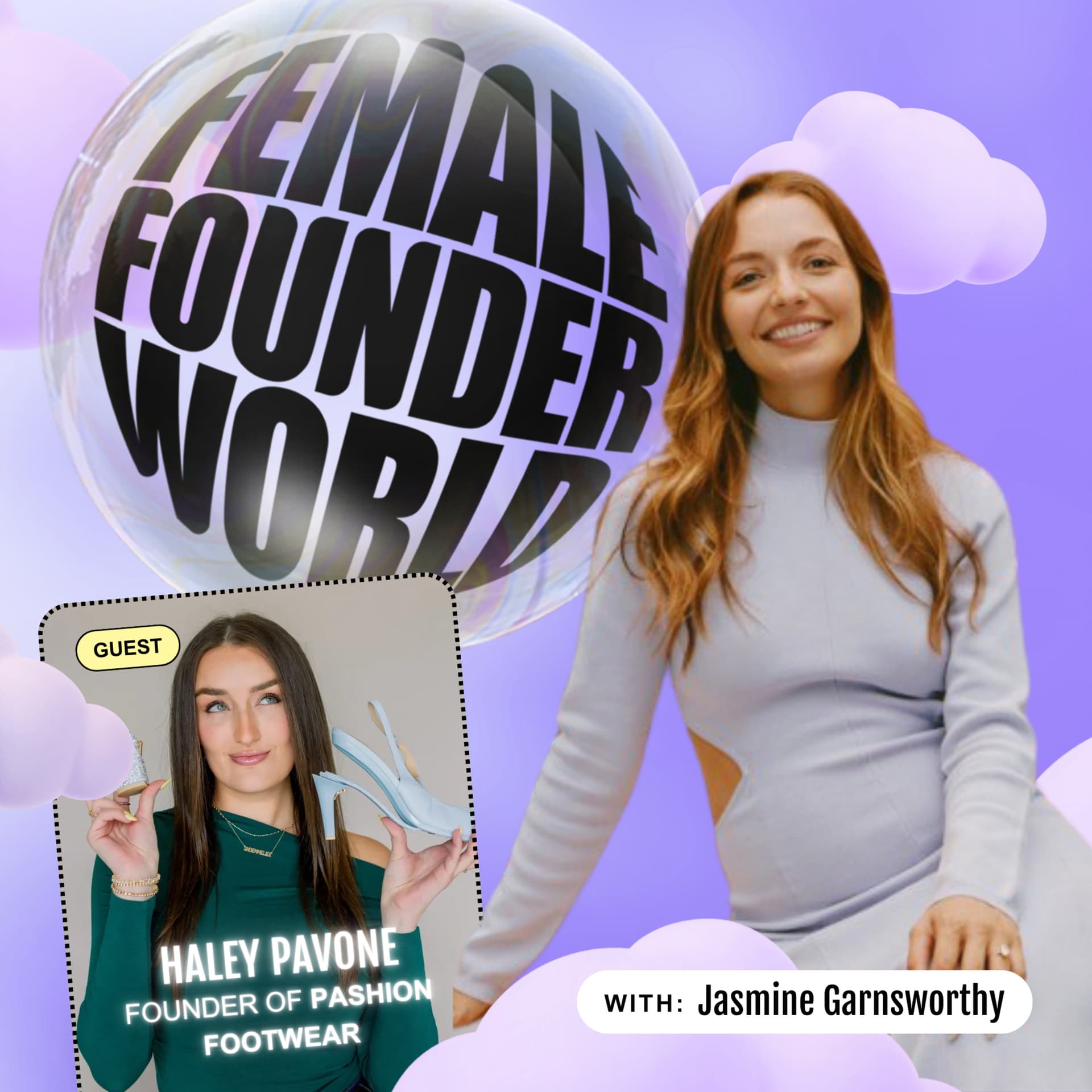
Her Brand Gained 250k Followers Literally Overnight: Pashion Footwear's Haley Pavone
Podcast Overview Host: Jasmine Garnsworthy Guest: Haley Pavone, Founder and CEO of Pashion Footwear Description: This episode explores the innovative journey of Haley Pavone, who founded Pashion Footwear, the first convertible heel brand. The discussion covers her rapid follower growth on social media, insights into building a community, navigating funding challenges, and strategic marketing initiatives.
---
Key Themes and Discussions
- Introduction to Pashion Footwear
- Product Concept: Pashion Footwear specializes in high heels that convert into flats and allows users to swap out the heels for customizable looks.
- Market Entry: Although the idea was conceived in 2016, the product launched in 2019 after years of research and development.
- Viral Growth on Social Media
- Overnight Success: Haley gained 250,000 followers overnight after creating a TikTok video demonstrating the versatility of her convertible heels. This video garnered over a million views almost immediately.
- Content Creation: Initial content was focused on testing various formats to understand customer engagement, eventually leading to a successful strategy that highlights relatable scenarios.
- Understanding the Viral Formula
- Key Elements:
- Addressing relatable problems that the product solves.
- Utilizing humor and creative storytelling to engage viewers.
- Grabbing attention in the first three seconds of videos, e.g., showing the heel being removed.
- Content Funnel Strategy: Responding to audience comments with tailored video content to maintain engagement and build a community.
- Challenges in Funding
- Funding Journey:
- Initially raised $450,000 during college through angel investors.
- Faced significant challenges while attempting to raise a million-dollar series A, leading to a pivot towards profitability instead.
- Learning to Pivot: After multiple rejections, Haley adopted a self-reliant approach to sustain the business, focusing on profitability via organic growth strategies.
- Community Building
- Ambassador Program: The program offers benefits to brides and their bridal parties, allowing them to earn commissions while promoting the product. This initiative led to a significant increase in customer acquisition.
- Fan Engagement: The community, referred to as "Passionistas," even organized a group trip to Nashville, demonstrating the strong bond formed around the brand.
- Marketing Transition
- Shift to Organic Strategies: After experiencing challenges with traditional advertising, the marketing strategy shifted to prioritize organic community-building and influencer collaborations.
- Content-Driven Approach: Emphasized authentic storytelling and community engagement through consistent content related to the brand's mission.
- Recent Growth and Achievements
- Recent Milestones: The company experienced a significant sales spike with a million-dollar month, attributed to a well-executed fall line launch and a successful collaboration with influencer Emmy Combs.
- Team Dynamics: The team is currently small yet effective, showcasing an all-female workforce with a strong focus on flexibility and remote work culture.
---
Key Takeaways
- Authenticity is Crucial: In today's market, genuine content and storytelling resonate more with audiences than traditional advertising.
- Community Engagement: Building a dedicated community around the brand can lead to organic growth and customer loyalty.
- Flexibility in Strategy: Adapting to market conditions and shifting business strategies can be essential for long-term success.
- Iterative Learning: Continuous learning and adaptability in response to customer feedback and market changes are vital for entrepreneurial success.
---
Recommended Resources
- Ambassador Program Tool: [Loud Crowd](https://loudcrowd.com/brand-ambassador-program-marketing/)
- Pashion Footwear Website: [Pashion Footwear](https://pashionfootwear.com/)
- Female Founder World Resource Roundup: [Resource Roundup](https://femalefounderworld.beehiiv.com)
---
This episode offers valuable insights for aspiring entrepreneurs and marketers, particularly those looking to leverage social media for brand growth and community engagement.
Written by AI. May contain mistakes. Listen to the episode to check what was said.
Transcript
Automatic transcript. May contain errors.0:00Hey, business besties. Welcome back to Female Founder World. is Jasmine. I'm the host of the show and the person behind all things Female Founder World. Today I'm chatting with Hayley Pavone. She's the founder and CEO of Passion Footwear. Welcome. Thank you so much for having me, Jasmine. For people that don't know Passion, what are you guys doing? So we have invented fully convertible high heel technology. So for those that are listening, that means high heels that turn into flats and also let you swap out the heels to create custom looks. This is such a clever idea. I found you on TikTok where I think a lot of people yeah we find the brand because you have like a million followers now almost yeah I've got 970 ,000 I think as of today so we're in the final we're counting it down and you built that following while building the business you weren't an influencer before you were yes I always joke you know we're a talent-led brand now but we really built it backwards I really started this just as an entrepreneur wanting to solve a pain point that I was experiencing was building the company without any kind of significant following myself for the first gosh I guess six seven years up until 2022 and then really started creating content on TikTok mostly to try to understand the viral formula we could use to then relate to other influencers.
1:09It's like, okay, I want to, you know, test content myself. We're scrappy. We don't have big budgets. So let me try to get all the bad ideas out of the way on my, like on my own time and my own dimes that when we're paying people to create, we have a really clear direction on what the content should look like. And then in a big plot twist from from where I was sitting the content I made did so well that I amassed pretty much 250 ,000 followers overnight when I started this testing and then just really tripled down on it and now I have 970 so we never ended up really like hiring out influencer I just started doing it myself okay I like I was gonna go through your timeline but we'll get back to that let's talk about this viral formula 250 ,000 followers overnight what happened yeah it was really crazy.
1:54Honestly, I had just, again, I was testing different content formats, trying to figure out, you know, how do we tell this story in a way that really resonates with our customer? And how do we communicate our product? Really, the problem I was trying to solve was we'd realized during our first couple of years on market that we're up against a lot more challenges than a typical footwear brand of usually you're just communicating to the customer from a place of being a brand, educating them on your brand feel. Look, what makes your designs unique? We actually are bringing not just a new technology or brand, but really a whole new category of shoes to the market of fully convertible heels.
2:29And the running joke we make is no one's used to shoes that come with instructions. No one's used to having to learn how to use a shoe, right? And so we caught on pretty quick that, you know, this was a great idea, but it really needs some hands-on customer education. And without, you know, huge budgets, again, we're a startup and no big budget to go, you know, open in-store retail right from the jump so to speak as like okay how do we educate the customer in an engaging way and and really give them that step-by-step instruction but in a virtual format and so short form video content was what had come to mind so I was trying to figure out what that most effective piece of content was and it turned out to be just a day in the life behind the scenes video of I filmed myself at one of our photo shoots just going from heels to flats and swapping the different heels between different parts of the shoot.
3:18And it just blew up. It was literally one of those experiences where I went to bed, woke up the next morning, and had 250 ,000 followers out of nowhere. Like, when I went to sleep, the video alone only had, like, 1 ,000 views. And by the time I woke up, it was over a million. Oh, my God, made this find me. It was crazy. It was wild. But, you know, everyone says overnight success isn't real, and that's very true. And this happened. And obviously that was an overnight success, but it happened after many grueling, painstaking years of building the business and putting on a lot of content that did not work, you know.
3:52So a lot of trial and error to get lucky. I always get excited when I hear from founders who have like, first of all, invented something because you have invented something, but invented something that you can show on video so clearly. because the world that we live in right now is like we are in this era of viral video content live commerce and live shopping and if you can be someone or you can hire someone who is charismatic on camera and you have a product where you can really show the utility and a very clear like this is how you use it this is the before and after like you just are making things a little bit easier for yourself in the current landscape I feel absolutely there's this amazing brand in the community the founder's name is elena and she just launched she's got this business called cozy clip and she invented the first um flexible soft hair claw clip oh and the idea is like when you're driving you put your head back it's not like gonna hit you it's not uncomfortable it doesn't like pull uh and it's really strong and i had a call with her um went before she launched when she was like building this and i was like just get on tiktok and do videos and videos and videos and show how flexible and strong and whatever over and over and over again.
4:59And she has gone totally viral with this product. Like if you can create something like that as a business, it's so much easier to show than if you have a skincare product that you like can't see when it's on your skin. For sure. Absolutely. No, I mean the power of content, I think especially TikTok content just cannot be understated in this climate. And to your point, it also, something I always loved about our product was how visual it is because to your point obviously it plays well in media but I also think it inherently creates such a grassroots effect in person of to your point if I made a really fantastic lotion that's amazing but when you put that lotion on if you've done your job right hopefully as a founder no one can see the lotion on your skin right like it'll it'll absorb every time someone uses one of my products in public women stop them and go did you just rip the heel off your shoe.
5:50So it's like online, it's in person. The only thing I ever feel bad about is people, you know, ask a lot for marketing tips and things. And of course we've, we've got a lot and lots of strategy goes into it. But really I think 80 % of the battle is, do you have a good product? Yes. It's like the core of businesses doing well right now. A hundred percent. Yeah. You mentioned that you started creating content because you wanted to test what the viral formula is before you went and like briefed influencers and paid them to do it. and now you are the influencer. What is the viral formula now? Like you started back in, you were building the business for a couple of years, which we'll talk about in a minute, but you probably launched like right around when TikTok was kind of blowing up.
6:28But I feel like those platforms have changed over the last five years. What is working now versus what was working when you first started? Sure. Yeah. To your point, the algorithm is always changing. So it's always a little different. I'd say at its core, what has always done the best for us is one of two things. one either really communicating the problem that we're solving with the product in a really relatable way so we've had a lot of good luck with different spoof content like oh you know I'm I had to park eight blocks away from my friend's baby shower am I gonna run there in stilettos or am I gonna turn to flats like you know so like funny stuff like that where we're really just trying to show women how this integrates into their daily lives and makes them a little bit easier that's always done well no matter what's going on with the algorithm um and then the second piece really has been leaning into the visual customization factor of our products like when people see a heel ripped off a shoe they they stop they want to know more and so we've learned okay first three seconds of every video a heel needs to come off a shoe like that's really our hook that's the thing it's little things like that where you you know kind of gather these these habits that stack i like that you say in the first three seconds of every video because i think people can also get really stuck in like oh it needs to be different every time and like the video itself can be a bit different but like you know that that's what makes people stop scrolling yeah and so every single video that's what you're doing it's like elena from crazy clip every video she should probably show the core clip bending you know what i mean it's like always have the thing every video first three seconds once you figure out what's working that's like such a good piece of advice absolutely well and it's actually a running joke on the company uh in the company there's this one piece of content format in particular where it's basically a list.
8:07So people that have followed me for a while have probably caught on. I try not to do it too often because I don't want it to get tired. But every six months or so, I make some version of a video that says, you know, eight reasons why convertible heels are the future. And while I'm saying that the heels coming off like right from the jump and then I run through, you know, reason one, it's got sneaker midsoles. Reason two, you can change the heel height, like kind of run through everything. We found that that list style format keeps people engaged. They know there's eight reasons and they're only on number six.
8:35So they really want to hear what the last two. So we grab them with the visual hook, tee up the story really beautifully. And then we're kicking out all of our best marketing points in a way that's really digestible and authentic and doesn't feel like an ad. It feels like I'm just a founder walking you through a product demo, which at the end of the day, it's exactly what I'm doing, but it happens to be a great ad because the product is speaking for itself. what do you decide um you post on a personal account versus brand account or do you just have the personal account I really only run our personal account at this point obviously back in the early days I ran the brand account too but I am a big believer in in-house marketing in-house creative especially for a fashion brand so I do have a team that runs like the passion social medias on Instagram and TikTok um but I really take charge of my my own account and kind of use my account again as that influencer perspective, but really the founder first marketing.
9:31So I'm the, we're kind of developing my brand separately from the passion brand, but with a lot of overlap and synergy. But I'm really focused on the behind the scenes, you know, what it's like being a female founder, how you actually make a shoe, what goes into it, the realities of day-to-day life of building a business and the community I've built around that then, you know, feel resonates so strongly not just with the product, but also with me as the founder and my journey, which brings, I think, more of a human element into it, which feeds into the brand in other ways. But yeah, I just focus on my own TikTok.
10:03I set aside an hour every day, try to make, you know, one to six pieces of content, depending on how inspired I feel that day. I'll work collaboratively with the brand accounts. You know, they'll send me an email and go, hey, we're launching, you know, this product Friday, XYZ promotion, would love if you can make a video. And then they'll repurpose that content onto the brand accounts. But we're at the point now where, I mean, there's, I never really know what's going to be on our Instagram story every day. It's a fun surprise for me. I leave that up to Miranda and Nicole and the marketing girlies.
10:32They, they crush it. The other thing that I'd say has worked really well for me as a strategy, I like to call content funneling of really treat treating content as a conversation with the viewer. So something you'll notice if you look at my account is all, you know, make a video with some facts about passion. I will always then, you know, let's say it's the next day I'm in my content hour trying to figure out what I'm going to talk about, I'll always look at the comments from the videos the day before and try to notice, okay, you know, 30 people asked the same question. So clearly it hasn't been communicated well, or we've just got a new batch of followers in that don't know this.
11:05And so I'll pick one of the comments to respond to as, as the video answering that question, kind of a fun TikTok hack. When you respond to a comment with a video, it tends to pin that comment at the top of the previous video. And so this strategy has really allowed me to create these kind of educational journeys for my customers of they'll find you know one initial video they're thinking the same thing that eight other people were thinking they open the comments boom the answer is right there pinned at the top they go into that one next question that comes up boom funneled to the next answer so you can really create these kind of educational journeys and I think that's been a big part of what's built the following so quickly as well amazing hey besties it's Jasmine I'm jumping in with a message from one of my favorite brands and our sponsor on the show today.
11:53Fair is the one-stop shop for wholesale. They connect over 100 ,000 unique brands with retailers and give small businesses a platform to thrive and to scale. And if you listen to the show, you already know I'm a huge advocate for fair and you know that I love indie retail strategies, especially for female founders who are scaling their brands. Building relationships with retailers just takes time that most of us don't have, Fair expands your reach to over 700 ,000 retailers globally, all in one platform. And these are retailers that are already actively looking for brands like yours. Plus, Fair reduces risk with net 60 terms for buyers and on-time payments for use.
12:34That means you never have to chase an invoice from a retailer ever again. It's your all-in-one platform for wholesale. Plus, over half of Fair's brands are women-owned, so you're joining a thriving community. Start growing today at fair.com forward slash FFW. That's F-A-I-R-E dot com forward slash FFW or click the link in the show notes. I want to talk about the journey and the early days of the business because you started this in 2016 and then actually like launched the product in 2019. Talk me through the experience that you had that made you think, okay, we need a convertible shoe on the market immediately.
13:11Absolutely. This is a great story. So I started it in 2016. Kind of the fun fact about me is I was actually a 20 year old junior in college at that time, which is nuts to think about in retrospect. I had no intention of starting a company in college, but you can't help when inspiration strikes. And for me, that happened actually in a very literal sense during my sophomore year of college. I went to my sorority spring formal and I wore six inch platform stilettos, which was what you did at a sorority spring formal in 2016. Luckily, that's not like as much of the rage now because these things are death traps.
13:47But anyway, I, you know, I wanted to dance. It was a formal. I wanted to bust a move on the dance floor. And as most women know, you can't really dance well in six inch platform stilettos. You can do the wince and wobble side to side, but I like to break it down. And so that was not cutting it for me. And so I solved this problem of my heels hurting and being inconvenient the way most young women do. I ditched them, put them in the growing pile of discarded shoes on the side of the dance floor and went out there barefoot. And unfortunately, or I guess fortunately, depending on the spin you want to put on it, one of my sorority sisters who still had her stilettos on accidentally stomped the ballpoint of her stiletto through my barefoot.
14:28It impaled me all the way through. I know. It was crazy. it got like it came off her foot because it was stuck in my foot I know oh my god you poor thing pretty grotesque um but I can really only describe it as this light bulb moment of after that happened I was looking around the room and it just struck me that almost every woman there were 200 women in my sorority almost all of them were barefoot except for this well and actually the gal that had impaled me was also now barefoot because her shoe was in my foot um but I just I mean it's not funny. I do not mean to laugh. No, it's hilarious, actually.
15:04It's so funny in retrospect. But, you know, I just couldn't stop thinking about how weird that was. I was like, look, we all wanted to wear heels tonight, obviously. We all knew we couldn't dance in them and we knew they were going to hurt, but we wore them anyway. And what is the acceptable solution? Go barefoot. I was like, how strange. I was studying entrepreneurship in college. I, you know, wanted to be an entrepreneur eventually. I thought I'd graduate and go be a VC probably, but always had that entrepreneurial mindset. And it just struck me how strange that is that we have a whole industry of products that are made for women, marketed to women.
15:41They actively hurt and inconvenience women. We all know this. And yet the market hadn't done anything to improve the product. Really, the burden of this subpar product was falling onto the end consumer of, oh, well, we'll just go barefoot or I'll bring backup shoes or I'll pay to Uber six blocks or I'll spray liquid lidocaine on my feet. I was like, how strange that there's a whole market of product that just expects the female consumer to troubleshoot the product for them. And to me, that just felt like lazy product design. And so I felt really, really inspired to try to figure out a way that we could just create a high heel shoe that really blended comfort and style and practicality without compromise.
16:25in a way that hadn't been done before. I thought it was a huge white space in the market. I thought beauty as pain needed to die. And so dove into it headfirst with no background at all. And then it took you a couple of years to get a product to market. What was happening in those years? Yes. So about two and a half years of R &D, partially because I was still finishing school. So that was a crazy time in my life. I was basically moonlighting as an entrepreneur while trying to still get decent grades in school. But I'm really glad I did it when I did. I remember thinking, you know, I'm very blessed that my family made sure I got through college debt free.
17:01And so when I had this idea, part of the timing to me was so fortuitous of, you know, I basically have the next two years with my rent paid, bills are paid, I can eat. I have nothing to lose. And I think one of the hardest things about starting a business is the risk of losing your income. I was 20. I was like, I have no income. I have nothing to lose. I basically had two years to try to start a business, get out of jail free card. If it didn't work out, I would just graduate and go get the VC job that I thought I was going to get. Or it would work out great and I would come on full time. So for those two years, I learned everything I could about footwear development as quickly as possible.
17:37I was cutting open shoes with steak knives in my dorm room. It's like early product development, which was crazy in retrospect. Went through a lot of entrepreneurship programs through my college. I went to California Polytechnic University in San Luis Obispo. They have a top 10 entrepreneurship program. And so I went up for multiple pitch competitions, won$26 ,500 in equity-free funding, used that to hire on a product development team that was ex-Nike and Adidas, got my first couple employees. We 3D printed using the school's 3D printers. We really just tried to very quickly understand the industry and how to make a shoe and bring it to life, all the while drafting our own utility patents provisionally and trying to get the trademarks and incorporate.
18:26And so anyway, just spent the entire two years behind the scenes engineering the technology, getting it professionally tested, went overseas to visit manufacturers on my senior year spring break to sign our first production contract. It was an absolutely insane time in my life. but got all the way up to our first like final production sample of an actual shoe from a factory the night before my college graduation so I got to debut them on the graduation stage which was neat launched on Kickstarter like two weeks later to get our initial production going and then launched the website with inventory June of 2019.
19:10wow it was wild raised our first angel round I mean it was nuts it's like a blur honestly how much was going on during that time I want to talk about um let's talk about the funding journey first and I look at like a product like this and uh you have patents and it just to me I'm like oh that's an expensive thing to launch especially when you're you know young it's not like you've been working in VC for 10 years before you right before you launched it um you mentioned like a kickstarter a seed round what were some of those things you were doing to fund the business and like what did it cost to get going sure so to your point product is very expensive to get into especially footwear and especially what we specifically were doing so footwear part of why it's so pricey is you know let's say you want to make a sweater company you have to get your prototypes do all these things and you've got to do size small medium large excel you know whatever with shoes um right away you need 12 sizes so every shoe in every color multiplied by 12 and for us with a custom technology that meant we also had to develop custom molds and tooling for production in all 12 sizes so it was pretty clear you know again I started it knew nothing about footwear called a lot of people learned a lot very quickly it was told to me from the jump that I could not possibly bring this product to market for less than a million dollars.
20:30It just could not happen. I, however, was still in that scrappy college mindset. And I was like, I think we could do it for less. So anyway, I did not come from family money. I was like, I'm, I have to, I, you know, was a college kid. I worked at Starbucks part-time. Like I did not have that kind of money anywhere near me. And so I really like buckled down again. I was in the entrepreneurship program at my university. And so I was able to network with some alumni and basically put together a$450 ,000 seed round in my junior and senior year of college. I was raising it the whole time while I was in school.
21:07And again, you have to keep in mind, I was 20, had no background in the space. And at this time also didn't have a prototype that worked. It was just a concept and some really bad 3D prints. So I pretty much raised 450K in 25K increments, to be honest, like just one angel investor at a time. Anyone that invested, I said, you know, you're a wealthy person. I assume you probably run around with other wealthy people who are 10 people you can introduce me to that might also cut me a check. And so it was this very slow, like rolling close process of 25K here and there to end up with 450K, which is what it ultimately took to really bring the product to life.
21:47So I still got it done at less than half the projected budget. But it, yeah, it was, it was a slow process for a while. And then did you continue fundraising or did you decide to, you know, reinvest your revenue in the business? We didn't fundraise a little bit more, although I joke with people now, I was horrible at fundraising and I have fundraising PTSD to this today. Um, cause it went so badly for me. So, you know, we raised this 460 K seed round from angel investors, uh, which frankly, you know, in retrospect, I think a lot of them would even agree. They weren't sure the company was going to go anywhere.
22:24They just thought the idea was cool and they wanted to basically give back to the entrepreneurship program at the school. They liked you as well. They liked me. They did. They thought, you know, if anyone's going to figure it out, it's going to be her, but I don't know if any of them really were like that convinced we were going to figure it out. So anyway, you know, the angel round had been one thing, but once we launched the business in, or we were about to launch the business, so it was late 2018. At that point, we're starting to build a website. We need to order production inventory. Our Kickstarter had raised just enough to cover the pairs that people bought and then the molds and tooling to basically help invest.
23:01So it's like, all right, if we're going to actually launch a website. We need thousands of pairs to stock that website. You have minimum order quantities. You can't just buy five shoes. You have to buy several thousand, which is a significant investment from the jump. And so gearing up to launch the site, I wanted to raise a million dollars, um, went out to do so, ran about a six or eight month playbook and pretty much completely failed the entire time. Like so much rejection, could not get this thing across the finish line, um, and really got to a point at the start of 2019 where we had 30 days before we were going to go bankrupt.
23:39I'd gotten like 80K in personal credit card debt, like everything, because we were still pre-launch. So it was like, all right, we've burned through all the money we initially raised, just getting the molds and tooling and the product moving and the supply chain. Now we want to actually launch, but I don't really have any sales metrics because we've had to spend all this money just on the R &D. And so we just didn't really have what investors were looking for. And so I'm fresh out of school, trying to make this thing a full-time career at this point. And I basically looked at myself in the mirror and said, okay, we have 30 days to raise the million dollars or we're going to have to close debt.
24:13Like I can't, there's no way to make money. We can't even get inventory in the door. And so I just pitched like crazy every day, meetings every single day, and was able to close the million dollar deal from a large angel investor on literally day 29. Wow. And pull the business together. So it was very stressful. got to market with that money, that million, got the website launched, first inventory and first marketing campaigns, all that jazz, went out to raise a scale round. And as you can imagine, at this point, having launched June of 2019, we're now going into the pandemic. So a big part of my story has been I have a laughable case of timing, like really bad timing across the board.
24:56Because now here I am trying to raise more money for a shoe company in a pandemic. Right. So could not get VCs to even take my meeting, was able to scrounge up another million after I aired on Shark Tank, again, from angel investors, just got momentum from the show's exposure. But after that, in 2022, I went out to raise a 10 to 15 million series A, took about 250 rejections and never raised. It just didn't happen. And so after that, I like to say we're seed strapped. Obviously, we raised that initial money to get going. But pretty much from the minute we were in the market, just because of a lot of macro factors, it was more or less impossible for us to raise funding.
25:39And so very quickly changed gears from I'm going to be a venture backed founder to we need to be a profitable business. And so, I mean, that's a much larger conversation, but got to profitability in 2022 and have been just funding off of profits since then. Wow. Congratulations. Thank you. That is quite a story. I think a lot of brands in the community are bootstrapping. They're having very similar experiences around fundraising, particularly in this consumer space right now. I think it is tricky. The tide has turned a little bit. And so I think a lot of people are going to resonate with that story of like, I'm pitching, no one's biting, we're going to have to change course here.
26:17Yeah. And it really was kind of this epiphany. I don't know if I've actually talked about this publicly, but as I said, in 2022, went out for this series A raise, which really was, it was a mix of, we'd grown 450 % in 2021 coming off of Shark Tank. So I was like, we have the momentum, we have the metrics, but the tricky thing was behind the scenes, we were totally bleeding. Anyone in product knows growing 450 % while very exciting is really hard when you're making physical goods, like the cash flow, the cash constraints. You can be doing$10 million a year and never have more than like a couple thousand in your bank account, depending on how the cash flow is hitting.
26:56And so that was kind of the scenario we were in was, look, we have these incredible metrics. We're growing really fast. But because we tried to build the business for the venture capital playbook, we were just burning money faster than we could make it. And so it was like, we have to raise this money. Like we have to raise a 10 to 15 million Series A in order to keep growing. And honestly, I had a bit of a mental breakdown. I spent like 10 months trying to get this money thinking, OK, we're going to have this money come in. It's going to fix all our problems. We'll be able to grow all this jazz and really got to me.
27:31You know, 250 some odd rejections in a row will do that to a person no matter how confident you are. But coming out of, you know, kind of had this breakdown, took a step back and really looked at the situation. And I just had this breakthrough of I have spent the last year waiting for a white knight. I'm waiting for this VC or bank or investor to swoop in and hand me money to fix the business, save the business. And the more I thought about that, the more that really didn't sit right with me. I was like, I cannot put the fate of my baby in someone else's hands. Like, I really need to figure out what I, as the founder, can do right here, right now to fix this myself.
28:11Like, I don't want to rely on my fate is not in someone else's hands. And that moment is what led to creating TikTok content, which then obviously blew up in a way I wasn't even expecting, made us profitable and totally right sized the business and changed everything. I was going to ask you like what changes you made when you realized, okay, this white knight is not coming. It's on me. I need to figure out how to make this business profitable. Was it purely just being able to get that sales volume in that then the unit economics and the business just like made more sense and you were able to have that, you know, more cash flow?
Read the full transcript
28:45Or were there other things that you kind of shifted on the back end of the business? It was a mix of different things. I'd say the first one was really taking stock of our assets at the time. So part of the financial challenges we were dealing with in 2022 was the supply chain crisis. So as I'd said, we had this 450 % growth year in 21. Obviously, going into 22, we want to keep that momentum going. So we go by, I think it was about$1.5 million in inventory in total, which was what we needed to keep up with that growth rate. And unfortunately, that inventory got stuck on a boat because of the supply chain crisis.
29:19So usually when a boat leaves, it should get to you in about 30 days. That boat got to me in 11 months. Yes. So a big part of our financial issues that year and part of why we struggled raising was our sales figures were terrible because I had no shoes to sell. They were like, yeah, you grew 450 percent last year, but you're down this year. Why? And I'm like, all my shoes are on a boat. Like there's nothing. They literally are sitting in the middle of the ocean. Like I have nothing to sell. This is a huge issue. So one of the first breakthroughs was when those shoes finally came in towards the end of 2022.
29:48to, there was a pro and a con. The con was it was now all wildly out of season inventory. Like I'm taking in, this was supposed to come in spring, so I'm taking in lavender, hot pink slides in December. So I'm like, this is great. But when I'm looking at our balance sheet, I go, okay, I don't have a lot of assets, but I have one and a half million dollars of out of season inventory. What can I figure out to try to make this relevant again, which was another factor in making content. Luckily, one of the first video that blew up where I gained the 250 ,000 followers, I was wearing my lavender slides that weren't in season, but everyone saw that video.
30:27And so they finally started selling. Thank goodness. So I really sat down and took stock of, okay, what are my assets? And my assets are, I have a lot of shoes and those shoes could be money if I can figure out a way to sell them. So let's figure out sales. I knew I had a really great team. And so I was like, let's figure out how to keep everybody happy. So did a lot of culture work to make sure everyone felt good at work and was willing to give it their all because I knew we had to all be 100 % in if we were going to dig our way out of this. And then the third thing I'd say was really just reading the P &L and trying to figure out where the weak spots were.
30:56So cut a lot of things that were duplicative. The biggest insight I'd say really was the marketing piece of at that time in 2022, we were coming off of the old kind of VC endorsed marketing playbook of just pay-to-play advertising on Meta. And so, you know, the first couple years in the business, we'd grown by dumping$80 ,000 a month into ads and running those ads. And in the 2019 to 2022 period, that was really all you could do because of the COVID shutdown. All you could really do is try to hit people digitally, A. And B, the platforms were really effective at that time. They were returning 6x, 7x ROAS.
31:40You could grow a business that way. The double whammy in 22, not only was the inventory just simply not there, but iOS 14 happened, which fundamentally changed the way digital ads worked. And so I sat down, looked at that strategy and said, guys, we're now spending 80K a month to maybe make 82K. Like, this does not make sense. We need to put that money to work somewhere else and we need to find a better way to market. And so I'd say the biggest breakthrough really was overhauling the entire marketing strategy to be organic brand building at community first initiatives. My content obviously ended up playing a much bigger role in that than we thought.
32:15But we started focusing on ambassadors, influencer arrangements, content, community building activities on social media, like really just taking a complete 180 different approach from what we've been doing before. and so then we over the next two years spent no money on ads at all we actually just started running our first retargeting ads last month I was going to ask if you're spending on ads now or like what the what that very strategically just on retargeting because we've learned a lot more about how many touch points it takes in that educational journey again for our product to really sell the customer and we can do it all organically but obviously I only have so much control over the TikTok algorithm I can't make sure I hit someone's feed 16 times but now we've realized, okay, it's actually very effective if instead of the old strategy of just, you know, put out ads to everyone and see who converts, what we do now is we pull lookalike audiences from who has viewed my content or the brand's content or been to the website in the last 180 days.
33:15So we know they have a loose idea of what we do. And then we're able to target them really specifically with, hey, this is how the product actually works. These are the reviews. Here's some, you know, women wearing them on the streets. And so now, again, it's only been a month, but our current return on ad spend is 42x. Wow. So it's a much more effective targeting strategy than we were working with before. You mentioned 16 touch points. Is that the number? No, it's, that's like the brand marketing, like, that's just like a phrase people say. For us, we've been able to shorten it down because our content is so thorough.
33:51We've been able to get it to about eight touch spots. Yeah. And are you working with an agency? Are you doing it in-house? All in-house. I'm a big fan of in-house, truly. We tried agencies in the past, again, obviously tried big ad strategies. Like we have thrown a lot of stuff at the wall and just seen what stuck. But what I really learned from the ads bit that we tried to outsource with agencies is with a product like ours, I think you really just need authenticity in marketing today. I think the Gen Z and younger millennial consumer, again, grew up in that pre-iOS 14 era when everything was a digital ad, everything was a sponsored influencer post.
34:33And I think the new generation is really savvy to when they're seeing an ad and when they're not. And so the way we've worked around that, again, really is my own content of, yes, it's an ad, but I don't think it feels like that because it's me, the actual founder talking about my actual invention and my actual product. Or if you see pieces of content on our social media, it's the gals on my team that wear the shoe every single day that are making that content. There's just a degree of authenticity when your marketing is founder led. And then also like an internal marketing team that just lives and breathes this every day.
35:10There's a level of authenticity there that I I have yet to see an agency effectively capture. Because of course, you're not their only priority, right? They've got 10 other brands they're thinking about. And I think the content just hits more genuine when it is your entire focus. And I've genuinely heard so many horror stories about spending on agencies and just like getting burned in serious ways. And I've done that personally myself and other businesses. I want to understand, though, how your team like up level to learn about paid out. Did you have someone already on the team who could do it?
35:41Did you hire someone? did you learn like how did you do that no I hired a new gal so we had a new gal Liz join us the beginning of this year because last year was really kind of another breakout year for us you know as I said we had the post shark tank year where we did really well and then got absolutely screwed by supply chain and so that was kind of like a slow down re-evaluate I do think all things happen for a reason as horrible as that year was it was the push I needed to take more authority in the business and get profitable and find this TikTok hack. So I think it all worked out the way it was supposed to.
36:16Getting profitable is very freeing after years of fundraising, I have to say. But anyway, last year was kind of our next big breakthrough because I think 24 was kind of the first year where we were really back in a normal market post-pandemic for the fashion industry in particular. And I joke, like we launched at the worst time. Six months into our launch, shoes became pretty much irrelevant for two and a half years. So 24 was the first year. It was like people have weddings again. They're out and about. They're willing to invest in fashion pieces. And actually more so in a weird way, I think the pandemic helped us because after a two and a half year break from the daily nine to five dressing and daily heels and all those things, I think a lot of women have become more comfort first.
37:00And our product, really our mission is to bridge that gap. So anyway, last year we grew top line 85%, got our EBITDA to 19%, which is double the industry standard, got to 800 ,000 followers on Instagram. I mean, last year the brand momentum was really there. We've built this great community. When I looked at all our metrics from the close of last year, really our weakest metrics actually were around acquisition. Once we have a customer, we retain them like crazy. They buy on average every 50 days. Their lifetime value on average is$815 across the whole customer base. But our top 5 % of customers spend over two grand, which is crazy.
37:42So we're retaining them really well. But I was like, we need to get better at controlling when we acquire them, which again was the whole organic strategy. Organic's amazing for community and retention. And you can get discovered organically, of course, but you can't control it. I was like, we're not acquiring people fast enough because we're just like hoping the algorithm gods bless fresh eyes every day. And so anyway, after all that, I was like, all right, strategically, the next move is we do need to get a little more planned out with our marketing. We can't just put out videos and hope they go viral.
38:15We've got to have a bit more of a planned acquisition strategy. And so brought in a team member that has that background. I want to talk about community a little bit more. I was scrolling your TikTok this morning or yesterday and I saw a video where you said there were like a bunch of, you call them passionistas? Passionistas. Passionistas, your community. And they went on like a girls trip to Nashville together. They did, yeah. This is not a thing that's normal for Brad. No, it was so cute. How have you created this? Honestly, that floored me. One of the gals that was organizing the trip reached out to me back in June and was like, hey, there's, I think there was eight of them.
38:51There ended up being six going. How did they find each other? Just online. Like in your comments? Through our community. Yeah, in the comments section. Wild. Also making content. A big part of our organic strategy is Ambassador UGC. So we have a whole program where customers can get, you know, rewards points for the site or even earn commissions from making content about their shoes. And so quite a few of them have built little micro followings themselves just as passion ambassadors, which is awesome to see. but yeah they really just met through our Instagram or TikTok talking about the shoes and this shared love for our mission and what we're doing and so they put this trip together and they all spent a weekend in Nashville and it was so cute I they invited me to get on a zoom with them and only the gal that organized it knew I was coming it was a surprise to everyone else oh you went I went I just on zoom I zoomed in yeah but I I hopped on and uh it was so sweet something that stuck out to me was one of the gals said you know we are all strangers that met and love each other because of your shoes and I have to say like I was blown away I did not think when I started making shoes that that was going to be something that like created a sense of community for women I'm obviously thrilled that it did but I I cannot say 20 year old Haley cutting off shoes in her dorm room thought this was going to be something that women like get together about, you know?
40:12Can we dive into your ambassador program a little bit more and what that involves? Yes. So we have kind of two different sides to our ambassador program. And this again, kind of came about from that 2022, we need to overhaul everything strategy that I had of, again, really wanting to focus on authentic content. It was a mix of wanting to get organic and save money, but also strategically, I was, you know, talking to influencers at this time, trying to figure out what an influencer strategy could look like. And something I found really frustrating, honestly, was a the cost. There is no standardization in influencer marketing, and there needs to be.
40:50You can have someone with 50 ,000 followers quote you$50 ,000 for a story post. And then someone with a million followers will just do it for free. Like it's the wild west. It's so confusing. And so I was like, first of all, these budgets don't make sense. I don't understand what you're getting. And again, I was very concerned about the authenticity piece. To me, I was like, look, if I pay someone 50K to talk about the shoes and say how great they are, that's a waste of money if they legally have to put hashtag ad or hashtag sponsored. Because I don't know about you, the minute I see hashtag ad, maybe it's just because I'm a marketer, I immediately go, OK, I have no idea this influencer actually liked this product.
41:30Or if she just got paid$50 ,000 to talk about it for 15 seconds. Like once you understand the amount of money people are making to just say they like something. I'm like, now I don't trust anything. For 50K, I'd say a lot of things. Like, I don't know how I feel about that. You can easily go from it's fine to it's my favorite. It's my favorite thing. For 80 grand, a lot of things would be my favorite thing. And that's so fair. But at least for me as a marketer, and I think, again, the younger consumer is really privy to this. You see hashtag ad or hashtag sponsored and all credibility just goes out the window.
42:00You scroll past. I always think a lot about my own behavior as a consumer. And like, I'm scrolling TikTok, I see sponsored. I'm like, no, thanks. Like, I don't, it's an ad. I don't want to watch it. And so I was trying to figure out how do we create that same influencer effect, but in an authentic way that does not require hashtag ad, hashtag sponsored, because then I think it's pointless. And we had this insight to who are the influential personas already in our customer base that we could incentivize in other ways. And actually the first one we landed on was brides. Our shoes are really, really popular with brides because they can have heel for the ceremony, flats for the reception, kind of like what I went through at my sorority formal, but like to the nth degree, obviously.
42:43And also they can change the heels so they can make one white shoe work for all their events instead of buying 25 different versions of a white shoe. And so we knew we had all these brides buying. I'd been to eight weddings in 2022 because I was just at that age. And something I'd noticed was everyone was getting their, sending out their RSVP websites, like the not minted, whatever. All of them had an FAQ section. And every wedding I went to, there was an FAQ about what shoes should the women wear. And the bride was taking the time to write, oh, well, you know, the ceremony is outside up a hill, so don't wear stilettos.
43:17Or, oh, the whole day is going to be indoors, so wear whatever shoes you want. And I thought, God, that is some prime free real estate for an advertising placement. And so we developed this program where we said to brides, Hey, we will give you half off your wedding shoes, 30 % off to your bridal party, like get everybody in passions. And we'll also give you a 25 % off code for any of your guests that want to wear the shoes. And you'll actually earn a cash commission as well on anything that your guests purchase. Pretty sweet deal. And like not a lot of people are giving discounts to brides. The whole thing in the wedding industry right now is you're getting like 8x marked up.
43:56So we stood out a lot just for offering a discount to begin with. But we put this program out there. And the thought really was, this is a influencer in her captive audience of, let's say, 100 to 200 wedding guests. Half of them are women. They're all there because they trust her. And they're all going to be staring at her all night. Odds are, if she rips the heel off her shoe on her way to her first dance, her friends are going to notice and be like, what the heck is that I want to have some of that and so we launched this program uh it was crazy successful we had over a thousand brides sign up in the first 48 hours how did they find I want to say just our social media just talking about luckily we had a good media presence at this point so we were talking about that um but over a thousand brides signed up they represented we surveyed them all when they signed up for you know how many guests are coming how many bridesmaids do you have They represented a thousand brides was like in total 50 ,000 bridesmaids and then over like 200 ,000 female guests that were going to get impressions from this program.
44:58And so we put it out. It started growing like crazy. It became 10 percent of our new customer acquisition really, really quickly. And the coolest thing to me about that program is it actually grows itself for every bride in the program. The odds are at least one, maybe two of her bridesmaids are engaged. They see the shoes. They get them as a bridesmaid. They hear, oh, my God, I can get half off if I join this program. So like it's really just grown itself without much effort from us. And so that program is really what started it. After seeing that success, the obvious next question was how do we extrapolate this broader to the larger community?
45:35And so that then led to a general ambassador program with loyalty points, perks and, you know, all these various things for making content and referring friends. So we put that out and that now I think has about 4 ,000 members in it. Wow. And they have, they generate a lot of content. I think last month, I want to make sure I'm remembering my metrics correctly, but I'm pretty sure last month the UGC posts from our ambassador community got over 30 million impressions. Wow. Are you using a certain platform to run this? Yes, Loud Crowd. Okay. Loud Crowd's fantastic. We'll put a link in the show notes for anyone who wants to try it.
46:13Yes, highly recommend. They're great. in 2025 or this year you had your first million dollar month pretty recently last month last month okay what happened like did anything in particular happen or was it just this you've been growing and that's just when the milestone hit no it was a mix of things we we kind of knew september might be the time we finally the million dollar month has been my white whale for like two years and then you can hit the million followers like tomorrow then i'm gonna do that we're gonna be like oh it's all that the passion instagram will be the last it's at 8 50 now i'm like we can get that to a million before the end of the year.
46:45This is the millie year. We love that. But no, we had a feeling September could be it just because of the tee up of marketing things that we had going on. The first was we released our fall line, which was our very different launch strategy for us. It was the first time we shot on location. I think it was our best collection we've put together. It's been really fun. Like followers of the brand have noticed. Again, I did not come from footwear design. Like our first three shoes were just black strappy sandals. Like there was no thought going into it. It's been so fun to see how our designs have iterated as we've grown.
47:19So each new collection is my, whatever's come out latest is my favorite because we just keep getting better. But this fall line was really well done. Best styling we've done, best trend forecasting. We flew the team out and shot it in New York. The whole collection was built around the New York girl. It was just a really comprehensive campaign. And so we rolled that out with a different drop model than usual. We did like an exclusive presale for our top customers, which we hadn't done before. And overall, the mix of better products than before, because it's always getting better. The community first marketing on presale and then also just really phenomenal content in general.
47:58We did four hundred sixty thousand dollars in 24 hours. So biggest sales day ever, which was crazy. So obviously that did like half the month in and of itself. But then later on in the month, we launched our first ever influencer collaboration. Emmy Combs, who's a brilliant makeup creator. She has over 20 million followers across platforms, came in as a guest designer for us, which was really fun. She just genuinely loves the brand. She has arthritis in her feet. And so our shoes are actually the only heels she can wear because of our sneaker midsoles. So she came in, did that. That kind of closed the gap.
48:32And then, yeah, a couple other things. We did a lot. September was a crazy month. Thank you. Yeah, we did like four or five big things. Oh, my goodness. What does your team look like now? How many people? So we're very scrappy. There's 12 of us, nine full-time, three part-time, if I can do my math correctly. We're a fully remote team, so we're kind of spread out all over the place. How do you find that? I love it, personally. We've done both. Like, we had an office pre-pandemic, and then I gave up our office in the 2022 era when we were almost, we almost went bankrupt like 10 times that year. I was like, why am I paying 3K on an office no one can even go into with the regulations?
49:09So we let it go, started working from home. And then honestly, I have found it so empowering as a female-led and female-focused organization. Of my 12 employees, 11 of them are women. Several of them are working moms. And just being able to work from home, I think, really gives the flexibility that is missing for a lot of working women in the corporate workplace. I've always told them I'm like I never want you to feel like if your partner has to move for work or if you can't find daycare one day that like you can't do your job I don't want you to feel that way I think I think work from home culture is is better for for female-led organizations just in my opinion do you have someone who comes and helps you with content or you're just filming everything yourself I do it mostly myself yeah I edit it myself film it myself okay that's actually really inspiring because if you have time to do it so do the rest of us thank you I just set aside like an hour every day really what I have I don't even batch content like I do it every day again what what my whole thesis on content has really been is authenticity is what matters I think the modern consumer can tell when you're being inauthentic for instance small things like let's say I batched two weeks worth of content then for two weeks they're gonna see me in the same outfit every day and they're gonna go this was pre-done yeah there's some days where they can only get one video for me because it was a crazy day and I'm in sweatpants with no makeup and a top bun just like sitting on the floor in my room complaining about something but I think that helps people realize it's real and it also probably keeps that muscle strong like if you're creating it every day it like keeps you like engaged and in it so that you're kind of like always getting that feedback and always like I don't know improving well in a much faster response time to my earlier point it's a conversation yeah like if they ask me a question one day I'm answering it the next day.
50:57They really feel involved in the brand and in my building of the brand in a way that I just don't think could be achieved if I wasn't doing all the content myself every day. Yeah. You're someone as well. Like, I don't know, I look at your story. You started like in college and you're still so young and you're leading this team and this like business that's growing so quickly. And I just like, I'm always curious about how founders are able to grow and up level to meet the needs of their business and what you've been doing. Do you have a coach? Do you like, what are you doing? Teach me. What am I doing?
51:27Um, it's just learning on the job and like building that trust in yourself. It is. It's, it's really a lot of learn by doing. Like I get asked a lot about, you know, if I have a mentor or something and actually I've had three really bad mentor experience. I've had a lot of mentors give up on me, which is, which is interesting. Um, but what I've come to find is I really get mentored by everything and everyone all at once. If that makes sense. I think I'm just a very curious and observant person and I'm a sponge. I'm soaking up everything around me. Like I have learned so much about operations from just talking to my COO and trying to understand the decisions that she makes.
52:02I've learned so much about marketing from Miranda, my head of marketing. I, every meeting that I go into, you know, I record a podcast and I learn more about how to do podcast. Like I just try to soak up everything with every new experience that I have. And I also think so much of, at least for me overcoming imposter syndrome is just the perspective of the longer you do this, the less is brand new, if that makes sense. Like things that would have scared me to my core six years ago, I don't even blink an eye out anymore because I've seen it nine times. You just get better at identifying what's really a problem and what isn't.
52:41So I think part of it is time. I was not this composed and high level when I started that's to say the least part of it's just just time um and then just being eager to learn from everyone and everything all the time the last thing I want to ask you Hayley is for a quick resource recommendation something that people can go and check out who want to follow a journey like yours oh my goodness that want to follow a journey like it could be like it could be a book it could be a tool you use in the business something you use to edit content just something that people can go and absorb now oh my gosh okay something they can absorb now it could literally be something like you recommended that really great tool for the ambassador platform is there something else that you use in the business i'm trying to think i know there is the problem is there's like so many things that we use you know or like an editing tool or something that you use for capturing content lighting or yeah i film everything in the TikTok app.
53:39So it's so grassroots. It's so scrappy. I think let's see a tool. Do you use a platform? Oh, this is actually another question that I had around your content. Are you planning your ideas in advance or are you like on the day being like, this is what I feel like filming? It's a mix of both. So part of it is, is, um, in line with whatever we're doing on the brand marketing side. So for instance, I know if we have a drop coming up on a given Friday, there's a certain rollout of content that I'll do that week. So Monday it's introducing the drop Tuesday. It's a breakdown of what heel kits match with the shoe.
54:13Uh, Wednesday, I'll be styling outfits with it. Thursday, it's a drop reminders. Like some of it is very much just tied to milestones in the company and it's planned out that way. If I know we have a sale coming up, I'll talk about that. So a lot of it is, is that piece, but then the other kind of three things I leave open to fate so to speak are number one anything going on in pop culture another perk of doing content daily is i can be very quick to respond so like a great example is uh during the heiress tour taylor swift's heel broke when she was in rio and so i started making a ton of videos really quickly obviously same day like could not have planned that who would have known but i was like okay a heel came off it kind of looks like what people do in my shoes but we mean to do it so made a bunch of content about like taylor wouldn't it have been great if your heel could just turned to a flat when that happened.
54:59And all that went really viral. So I try to stay nimble for moments like that. Anytime someone's barefoot on a red carpet, you're going to see my face pop up on your feed. Like that's that. Second is those comment replies. So paying attention to the community of are there themes coming up that they clearly want me to talk about? And you know, what was relevant yesterday? Can I talk to any of that? And then the third is just anything going on in the entrepreneurial journey. I really do like bringing them behind the scenes. I've shared stuff with my community. I think a lot of people wouldn't. A big one actually this year was I talked at nauseam about the trade war and how tariffs were impacting our industry.
55:35That content actually not only went viral, but ended up getting me to testify to Congress on Capitol Hill. Another thing I was like, I did not think when I started making shoes, I'd have political relevancy in any sense whatsoever. But yeah, those three things I can't really plan. It just kind of depends on what's happening in my life or in culture or what the community is talking about. So those are a little more just out of whim, what I'm feeling when I wake up that day. Haley, thank you so much for coming on Female Founder World. This has been such a good conversation. And genuinely, I think so many people are going to be really inspired by your story and take away so many tactical things.
56:11Where can people find you and where can they find passion? So you can find me at Haley, H-A-L-E-Y underscore Pavone, P-A-V-O-N-E on TikTok and Instagram. And then you can find Passion Footwear, P-A-S-H-I-O-N, at Passion Footwear on TikTok and Instagram as well. Amazing. You're the best. I just wanted to end the show with a quick shout out to all of our paid business besties subscribers. For$12.99 a month, you get access to a weekly live call with mentors who we handpick from this podcast community. These are founders who have been on the show, experts and operators that are helping to build their businesses.
56:47and we want to give you access in a small group setting on live calls every single week so that you can get the mentorship and advice that you need to take your business to the next level. In addition to the live calls and the community, you also get access to a big database of workshop recordings, group coaching call recordings, templates, contact lists, and just all of the tools and resources that you need to make this business a success. Head to bestie.femalfounderworld.com or the link in the show notes to sign up now.
From the publisher
Pashion Footwear founder Haley Pavone is on the Female Founder World show with Jasmine Garnsworthy. Haley’s business, Pashion Footwear, is the first convertible heel brand - meaning you can go from heels to flats with the same shoe. They’ve scaled to nearly a million followers - with a majority of them coming literally overnight.
In this episode Haley talks about the secrets to building a viral, engaged audience, the pros of unsuccessful fundraises, and how she’s scaling her business with a genius ambassador program.
LINKS
Get the Female Founder World resource roundup https://femalefounderworld.beehiiv.com
Become a Business Bestie member: bestie.femalefounderworld.com
Check out Haley’s business: https://pashionfootwear.com/
Haley’s ambassador program tool recommendation: https://loudcrowd.com/brand-ambassador-program-marketing/


