
In short
Podcast Notes: Female Founder World - Episode: How Seoul Tonic Grew From Zero to 2,000 Retailers In 2 Years
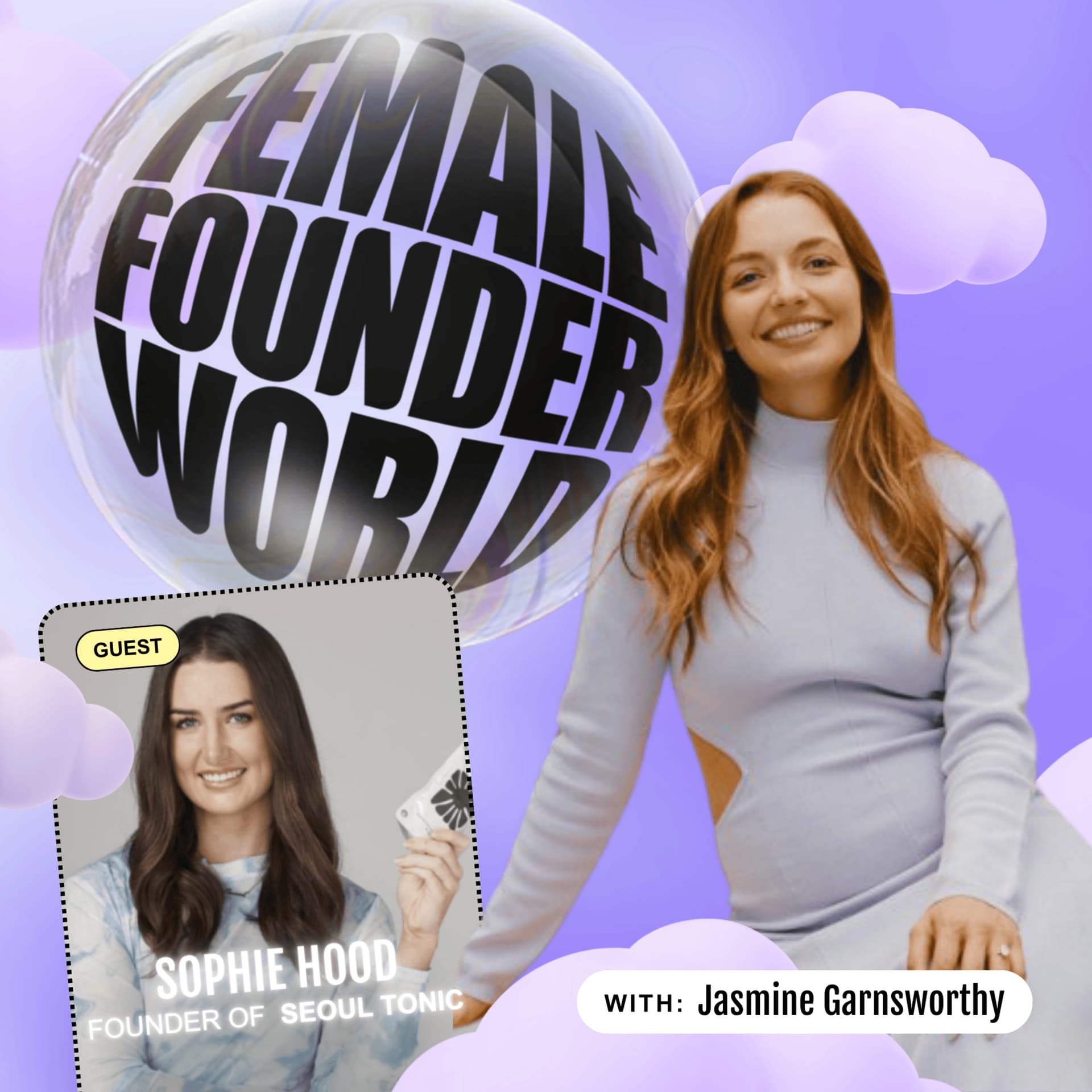
Episode Overview In this episode, host Jasmine Garnsworthy interviews Sophie Hood, founder of Seoul Tonic, a wellness beverage company that rapidly expanded from zero to 2,000 retailers in just two years. The conversation covers Sophie's entrepreneurial journey, challenges, marketing strategies, and insights on bootstrapping a business.
---
Key Themes and Discussions
- Background and Launch of Seoul Tonic
- Origin: Seoul Tonic launched in December 2022, originating from Hood's garage in Bondi Beach, Australia.
- Products:
- Functional beverages rooted in East Asian wellness methodology.
- Initially focused on liver detoxification and digestion support.
- Early Achievements
- Within three months, Seoul Tonic entered a premium grocery chain in New South Wales.
- Expanded to national liquor stores (Dan Murphy's and BWS) within the first year.
- Achieved distribution in diverse channels: health, beauty, fitness, liquor, grocery, and even fashion retail.
- Television Opportunity
- Gordon Ramsay’s Food Stars: Sophie participated in this competition, leading to significant exposure and a cash prize of $250,000.
- Used prize money for business growth, gaining mentorship from industry leaders.
- Faced challenges like legal fees due to the nature of public exposure.
- Bootstrapping and Growth Strategy
- Financial Strategy: Sophie emphasized not paying herself to reinvest in business growth.
- Managed to leverage community engagement and word-of-mouth marketing to drive brand awareness.
- Focused on localized sales efforts in Bondi Beach to create a sense of ubiquity among consumers.
- Marketing and Social Media Strategies
- Shifted marketing strategies, including leveraging social media without paid ads until recently.
- Documented the journey on TikTok, which has been instrumental in connecting with potential buyers and generating interest.
- In-house content creator, Chessie, has been vital for engagement and brand representation.
- Retail Strategy and Pitching Process
- Stressed the importance of networking and persistence in reaching out to buyers.
- Shared insights on understanding retail range reviews and effective pitching strategies.
- Highlighted the unique approach of trading value instead of paying shelf fees.
- Global Expansion Insights
- Discussed the challenges and strategies involved in launching in the U.S. and U.K.
- Focused on establishing a strong retail strategy while managing logistical challenges with overseas manufacturing.
- Plans for setting up distribution warehouses in various countries to facilitate growth.
---
Key Takeaways
- Bootstrapping: It is possible to grow a business significantly without external funding, but it requires strategic financial management and a commitment to reinvest profits.
- Community Engagement: Building brand awareness through localized marketing and community involvement can create a strong foundation for growth.
- Adaptation to Market: Understanding consumer needs and preferences in different markets is critical for successful expansion.
- Utilizing Social Media: Documenting the entrepreneurial journey on platforms like TikTok can effectively engage audiences and attract business opportunities.
- Networking: Leveraging personal connections and seeking out professionals in relevant fields (like legal or finance) can accelerate business growth and mitigate risks.
---
Resources Mentioned
- [Seoul Tonic Website](https://seoultonic.com/)
- [Female Founder World Resource Roundup](https://femalefounderworld.beehiiv.com/)
- [Vistaprint](https://www.vistaprint.com/) - Promotional offer: 25% off first order with code FFW25.
---
Conclusion Sophie Hood's journey with Seoul Tonic exemplifies the power of determination, strategic marketing, and the importance of community engagement in building a successful business. Her experiences offer valuable insights for aspiring entrepreneurs looking to navigate the complexities of starting and scaling a business.
Written by AI. May contain mistakes. Listen to the episode to check what was said.
Transcript
Automatic transcript. May contain errors.0:00Hey, business besties. Welcome back to Female Founder World. I'm Jasmine. I'm the host of the show and the person behind all things female found world. Today I'm chatting with Sophie Hood. She is the founder of Soul Tonic. Sophie, welcome to the show. Thanks so much for having me. Tell me what Soul Tonic is for people who don't know you. Soul Tonic is a functional beverage brand rooted in East Asian methodology. And what does it do? So we have tonics that the original one was to drink before drinking, which essentially helps your liver. As in like drinking alcohol. Drinking alcohol helps your liver naturally detoxify alcohol.
0:31And then the second one is all around digestion and rehydration, but essentially leveraging my manufacturer's patented extraction methods. So it's all natural, really effective. And really it's, it's both a health beverage, but also to, I guess, help you when you drink. And the business is only a few years old. You launched in 2022, but you've done so much. End of 2022. Yeah, I know. It feels, it's crazy. Yeah. Crazy. It's like less than three years old. Can you kind of rattle off some milestones about stuff that you've done that you're proud of or that just stands out to help people understand where you're at and where the business is at?
1:05Yes. So launching in 2022 in December, just essentially through from my Bondo Beach garage, localized little approach by March. Oh, and I was working full-time at Red Bull this entire time until just last year. My first like kind of major-ish retail launch was just three months later into one of the most, like a premium grocery chain around New South Wales. Which is a state in Australia. Which is a state in Australia. And then we continued to roll out and got into national liquor. So Dan Murphy's and BWS, which is all around the country, still within that first year of launch. And then within two years of launch, we were in 2000 retailers.
1:43We'd launched into Woolworths Metro, which is kind of like the Whole Foods, I guess. Launched into New Zealand and then launched into National Pharmacy as well, Chemist Warehouse. And now we're just, I guess we're kind of cemented in a lot of different channels. So we're in health, beauty, fitness, liquor, grocery, specialty, even fashion retail. And now just recently I've moved to New York and launching in the US and the UK at the same time. Okay. So we are, we're chatting in New York today where you've like moved and where you're focused on. And you were just telling me before the show about what's been happening in the UK and you just got some updates today.
2:18How is that launch going? Yeah. So the UK kind of came out of nowhere. It was through a distributor that I was working with in Melbourne and they saw the opportunity in the UK. They also have a 3PL in London and we had this opportunity to showcase the products in a store in Notting Hill amongst 300 other brands. What's the store? It was called, it's called Ray the store. If anyone in the US knows Pop-Up Grocer, it's the equivalent. similar it's the london's equivalent it's like honestly the same kind of brand such a good launch pad so good and it's just like the coolest cpg brands and we just found out that not only was saltonic like the best performing brand but each product was number one and number two wow and we had people lining up like asking to buy bulk and calling up and saying when will it be back in and they sold us out three times over okay i need to know like what is driving all of that demand, first of all, like where are people finding out about you and what's working?
3:14We're going to talk about some of the stuff you've learned about global expansion because you're boots on the ground in all of these places, like doing these launches. But first I want to talk about that first kind of year in the business. You were working full-time at Red Bull while you were building the business. What were some of those things that you did in the early days to get traction while you're working like literally nights and weekends to do this? So I, because I didn't really have any money to pay anyone. Like I didn't even really, I didn't really invest in paid ads even till last year.
3:43So I used, uh, I guess a local community approach and I just tried to sell into as many stores in my neighborhood, which was Bondi Beach and kind of, I guess, suburbs around it. And so that meant that if someone saw it in one store and then they would go into literally like their health food store, three doors down, and then their smoothie joint, three stores down and then their local liquor shop, they would just keep seeing it over and over again. And then it just drove this kind of like weird brand awareness where everyone was like, what is this new product? Because bearing in mind, this category doesn't really exist.
4:15This is something that's been in South Korea for generations where people will always drink something for their liver. Like think about preventative East Asian wellness over Western wellness. It's very different. You know, we're usually leaning towards like Panadol, like a band-aid solution. And in East Asia, they are using like preventative measures that are quite natural. So like your acupuncturist, like little tonic. So no one knew what it was, but it looked really chic and it was just packaged up in a way that it was enticing to try. And then as soon as it worked for one person, it just, it just grew.
4:45It was really a word of mouth approach, but yeah, I would sell into honestly as many stores as possible. And that was my billboard. I think it's so smart when brands do this like niched down approach and that could mean a physical location niche or it could mean a consumer niche where you are literally just, you are taking over a particular area. And for people who live there or who are in that space, it feels like all of a sudden you're everywhere. I hear about people doing this where they, through the influencer marketing strategy, where they're like gifting friend groups. And so they give the friend group and then all of a sudden everyone who follows those like five or 10 women think that your brand is so much bigger than it is.
5:29And I feel like it's the same thing where you did really like, I'm going to focus on this hyper targeted physical area. That's also quite influential, Bondi. And all of a sudden for the girls that live in Bondi, it feels like you're so much bigger and all of a sudden everywhere. But for you, you're just being really selective. So rather than launching in one cute store in Bondi, one cute store in like Melbourne, somewhere on the Gold Coast, for people that live there, all of a sudden you're this big deal. Exactly right. And then when I started going into more like recognizable names, like Woolworths and BWS, they are also in Bondi.
5:59So it was even crazier. So I was in all the independents and then I was in the nationals. And then everyone was, everyone always said, oh my God, you're killing it. Even though I was absolutely not killing it at the time. And I did leverage my network a lot. So I do have a lot of friends who are say models or in the creative scene and they were just drinking it and they were just like shooting it because they just like were helping me out. And that really goes a long way. And that's super underrated. let's kind of fast forward a little bit March 2023 you got on a national tv show that you filmed you're still working full-time at your job and you took some you took like leave holiday leave or vacation yeah this what was it so it's a show called food stars with Gordon Ramsay and the business had launched for eight weeks just on social media you were eight weeks old yeah we only had 1 ,000 followers on the Saltonic page and I get this like request from a producer from Endelmore Shine who does like The Bachelor Married at First Side and they were like we're doing this new like business show.
6:52It's kind of like Shark Tank meets The Apprentice. Do they live in Bondi by any chance? How did they find you? I have to this day, no one's told how they found me. I'm dying. I really want to know. And I got it and I was like, I'm not doing this. I've got a full-time job in finance. I've launched this side business as a side hustle under my sister's name. Like I haven't told my company that this is mine really. How can I do this? And then I went back. So I used to work at LVMH, my old LVMH director, who was a kind of supporter of mine, he, I like messaged him and he was like, no, no, no, you have to do it.
7:23It's the most amazing brand awareness you'll ever get. You're probably not even going to get onto the show. Why don't you just go through the rounds? So long story short, went through the rounds and they wanted me on the first episode of the show. So I went to Red Bull and I said, okay, so I've been like invited onto this show. You know, Red Bull gives you wings. Like, why don't you let me like, this will be great for my public speaking, like development and, you know, confidence. And I don't know how, but I manipulated them into thinking this was a great idea. And I said that I will either be gone for one day if I get eliminated on the first episode, which most people do, or I'll be gone for five weeks if I win the entire show.
7:57And then I was, went to Melbourne for five weeks and ended up winning, but I didn't know I'd won for a year later because we filmed two endings. So we filmed an ending where I won and one where I came second. And the final episode was this big TED talk in Fair Square Theatre in Melbourne to like a lot of industry heavyweights. Obviously Gordon Ramsey was front and centre. And then Janine Ellis, who's like this, I guess of Australia, one of Australia's most prominent female. She's like the Sarah Blakely of Australia. Yeah. So yeah. So then it aired a year later, but I had signed an NDA. So I still had to work full time for that whole year because no one could know that I'd gone far in the show.
8:35They didn't want me to make any like life changes that would insinuate that something's happened. Wow. Okay, so what did you win? So I won$250 ,000 as a cash prize. So no equity stake, which is incredible. And mentorship. Incredible. Mentorship with Janine. Mentorship with Janine. However, Gordon and I actually do have a line, which is awesome, through his head of content, Justin. Wow. And that$250 ,000, what's that gone towards? Okay, business besties, let's switch gears for a second. Real quick, I want to talk to you about this season's presenting sponsor, Vistaprint. They are sponsoring this entire season of the Female Founder World podcast, and we love a supportive sponsor.
9:16So much so that we're actually working with Vistaprint ourselves to create the merch and all of those beautiful event perks that you know and love from our in real life Female Founder World events. If you haven't heard of Vistaprint, here's what you need to know. Vistaprint helps all kinds of business owners print all kinds of marketing products like super professional business cards, fun merch, eye-catching flyers and brochures, and a whole bunch more. And it's all completely custom. So you can do whatever you want. Whatever you're imagining right now, Vistaprint can print it. And if you're wondering if you're ready to be a designer girly, their easy to use website makes it super simple.
9:58Plus they have designers on hand to help you if you really need it. Right now, Vistaprint is giving all female Founder World podcast listeners a little something, 25 % off your first order at vistaprint.com. Use the code FFW25 at checkout and step up your branding game. We put a link in the show notes if you want to learn more. so that allowed so actually that was eaten up by a lot of legal fees because you know crazy things happen when you're on a national tv show so i had to use like defamation lawyers food lawyers oh just like people coming out of the woodwork like blackmailing me crazy i'm sorry no i know but like i didn't think this would happen but now i really empathize with you know people who are on like maths and the bachelor and they say that they've gone through like trauma i'm like people are really strange and yeah people I my product sits as in between like a medicine and a beverage because we use medicinal ingredients so people were just just Karen's essentially we're just trying to like go to the regulation and say was there any issues but there was no issues it's an all-natural product there's absolutely none but it just ate up legal fees it also allowed me to quit my full-time job of which the managing director of Red Bull was obviously like, we've been watching you on this national TV show for five weeks on channel nine.
11:21Not surprised. This is the time to go. And it's allowed me to actually basically go full-time into the business and be able to keep bootstrapping it. So when did you quit your job? So literally when the finale aired, so last May, and then I contracted back for a month and a half to Red Bull. So it's basically been a year today I've been full-time. Oh my goodness. I am actually blown away by how much you've done in that time. We were talking before the show and I was like, okay, are you able to pay yourself from the business yet? And tell me what your answer was. So, well, the answer is no, essentially.
11:58I could, but it would hamstrung. It would like, it would jeopardize the growth of the business. So I think I want to make it known that optics are a big thing. And I get messages all the time being Like you were killing it. You must be making so much money personally. And no, I haven't been able to pay myself a salary, but I did win prize money that I can live off. So that's really important to know. And I also had a high paying finance job of which I invested my entire salary back into the business. Wow. And that's just so important to call out. I think we don't talk about that enough. And I think a lot of people start businesses or get a year or two in and they're kind of struggling to afford to live and pay themselves, even if the business is successful, particularly if you've got a consumer product and you don't have investors and people are surprised by that and I think it's really important to have this conversation so we can talk about what kind of financial buffer you need to get into this or what it takes where you need to be to actually be able to quit your full-time job or you need to find other streams of income like I was doing consulting work in Female Founder World for a really long time and it's really only in the last year maybe less that I have been able to pay myself from the business which is incredible.
13:06And on that other stream of income, I do the same. So I do some brand deals. I've worked with LinkedIn and TikTok and Adobe and they pay me a sum of money to do content. Obviously, I don't do anything that's not super aligned because I'm a business owner first, not influencer. But having the personal brand on the side, although it's not massive, it's actually gotten me so many business deals and then it's given me another stream of income. Let's talk about having the personal brand on the side that was built while you were building the business, right? You weren't like an influencer before you started.
13:35Never was. I was always very corporate. So, you know, I started at Ernst & Young when I was 20 in a strategy role and then LVMH, commercial finance, strategy, same as Red Bull. It was almost impossible to be able to have that on the side. Totally. It doesn't scream influence that. They don't want you doing that. No, no, no. Especially back then. Like that would have been so frowned upon. Even I had to be really careful. I had to screen my Instagram and Facebook when I was going for job interviews and they would screen me because I would be working in major banks and working in their like wealth division and doing divestments and doing larger strategy projects.
14:05However, when the show, when I filmed the show, that was, I still didn't have a personal brand. I still didn't have a TikTok. And then channel nine, which is the major network that the show aired on, they said, you're going to have to have something that when people watch the show, they can go to, to connect with you. And so then that's when I started TikTok. So I've only been doing TikTok for about a year and I've just been documenting things that are real to me. Like, I guess there's this whole concept of document don't create. And I feel like that's really my strategy. I'm just documenting or doing really lo-fi things, not really edited.
14:37But how that's transpired is that it's obviously connected with a lot of people. And I've had buy, the reason I launched in New Zealand was a buyer found me on TikTok and had been watching me. And she said, I run this major health food specialty grocery chain in New Zealand. I'm going to pitch you in. And she did it. And I still haven't gone to New Zealand. And it's a really significant market for us now. Incredible. I'd love to know some of the content, just specific content ideas or things that you do or document that are resonating really well? So a lot of it is around, so I am doing a lot of the business myself.
15:10And so a lot of it is. You don't have any employees yet? So no full-time employees. I have my amazing creative director, Benny, who's been there doing the packaging design and the creative stuff from day one. And he works for equity, not for a salary. Yeah, he's got equity and he is still a freelancer full-time for other clients. and then more recently I've got a fractional CMO who's on an ESOP earning in on targets and he also works for other clients. So I don't have any full-time resource on a salary and these both of these guys are more senior than me which has been helpful. They're not more senior than you, your boss.
15:43They're older than me. I love that. They're older than me and then I have my amazing TikTok girl. She's fantastic and she does some TikTok content but otherwise no. But what resonates on TikTok is that so when I'm doing these larger retail deals like with Woolworths or Chemist Warehouse or whoever it is, I document how I got them and kind of what levers I pulled to get it across the line. So how I would pitch to them, what my pitch deck would look like, how I would not pay marketing fees and how I would trade value. So instead of paying a shelf fee, it's like, okay, well, why don't I create all of these pieces of content of me going into Chemist Warehouse?
16:17And instead I will flood Instagram with organic content instead of having to pay you like$5 ,000 to be on shelf. Yep. That makes sense. So be a bit more resourceful. Clever. What else is working? Aside from the fact that your product works and you're getting all of this word of mouth because people are saying it made me feel better. It's like a product that I love and they're recommending it to their friends. What are you doing that is driving this demand that's helping you sell out in stores, online? What's working? I think everything changed when we brought a content creator in-house and that's my TikTok girl, Chessie.
16:50Where's she based? She's in Melbourne, But when she started, she only had 7 ,000 followers on her own personal TikTok. And now she's grown her own personal TikTok to over 30 ,000, has a YouTube channel. And people are kind of falling in love with her. But then she's showing up on the brand all the time. And she was a customer beforehand. She ordered organically, always using it with her friends, was showing up in her content. And then bringing her in-house was one of the best decisions we've ever done because people are connecting to her and me. and I've been able to segregate myself away from the brand a little bit.
17:22So I'm not the Soul Tonic girl anymore. I'm Sophie. And then I kind of am becoming this other avenue for people to be part of the brand that's not a direct sell, if that makes sense. How did you find this creator? I'm also looking for someone to help me in Australia when I'm there and I'm having such a hard time. All the good creators are influences in the room right now. So I was really lucky that Chessie, she's dating a guy called Sam Sam and Sam is, her sister is called Tabby and Tabby's married to Ben, my designer. Oh, okay. So it's like kind of in the family. Yeah. So I knew, I was watching her from afar.
17:59I'd never had a relationship with her, so I didn't know her, but I knew of her. And what kind of stuff is working in terms of content? It's interestingly entertainment. So skit stuff, nothing that's like really selling. Yeah. But it still leads to sales? It does lead to, it leads to mass awareness and we're seeing that translate in retail. So yes, we have e-com and we go pretty well on Amazon, but 95 % of the business is retail. So we have a lot of physical presence. And so people obviously see, you know, the brand on TikTok and then they go to your Woolworths or they go to their like health food store and then they just try it.
18:35And we're seeing that convert. And with the London stuff, why we were the best selling, I honestly, the only thing I can think of is TikTok because it's the only thing that's global. We haven't done any marketing. We've done no paid. We've done nothing. You've done no paid? Not in, not outside of Australia. No. So not in New Zealand or UK or US. Talk to me about your retail strategy, your wholesale strategy, how you're getting these big retailers on board, the pitch process, just advice for somebody else who wants to get into some of these big stockers. So you need to reach out to the buyer and you need to be incessant.
19:07Like you need to keep reaching out and you need to find the right contact for your category and you need to understand when your categories range review is. And that's the most important thing. So for example, Whole Foods in the US, my category's range review isn't until April of 2026. So I now need to start planning for that and planting all the seeds to be able to A, be invited to that range review and B, be successful. So these massive retail deals, they take a long time, a lot longer than people think. In Australia, you can be a little bit more strategic in the sense that if someone really believes in you, they will go outside of range review and they can put you in.
19:43So for example, Woolworths Metro, I was put in within three weeks just before Christmas and that was unheard of, but that was because I had the opportunity to pitch to the general manager. So it's a lot of saying yes to things, networking, figuring out the buyer, just like getting rid of your ego and reaching out. That sounds exactly the same as us trying to find paid partners. Like it's a lot of just messaging people on LinkedIn, trying to find the right contact. It's really humbling. I've realized in America, wow, everyone's doing it. The amount I get hit up in America from other people. Totally.
20:13The attitude is different. And the UK. It's like light and day. Let's talk about global expansion. What's been working for you as you've been launching into different markets? Because you're in four different international markets now. Yes. So what's been working is still a retail strategy. D2C has been really good in America actually because people buy beverages. Do you have a warehouse here? So I'm just finalising the warehouse set up. The problem has been getting my container in with the tariffs. So I've been selling in beauty stores in Manhattan and Williamsburg for over a year, just a bit air freighting in.
20:47And then I've got interest from a lot of other stores, but I can barely honestly service them. Like even the recovery facilities here, like the ice bath places in New York, they're selling out of the product and I can't, I just can't restock them because it's really hard to get it into the country right now. Where are you manufacturing? All in South Korea. So it has to be there because that's where our farm is. That's where like our extraction happens. And so, yeah, that's where the magic happens. Okay. So then the plan is to have a warehouse in the US, another warehouse and distribution in the UK.
21:18So I've already got the warehouse set up in the UK. That's operational. And you'll ship everything. So it'll take three months or something like that for product to get here. Is that how long? So it takes about five weeks on sea and every container is around 50 ,000 units. Okay. So interesting. The last thing I want to ask you, Sophie, is for a resource recommendation, something that's been helping you as you've been building Soul Tonic that you recommend to other people who want to be founders as well. So my, it's not like a physical resource, but it's finding a friend who is a lawyer and using them and bouncing off them constantly.
21:50So my sister's a lawyer and both my parents are. And I think it's really underrated just using your friends who are in fields that can be helpful to you and just relying just on one person and not getting too much advice when you're just being quite specific on advice. That has been a game changer for me. And just trusting that, it's just made me move a lot faster with deals. And I'm always like looking at contract negotiation and I always just need a once over. So yeah, it's leveraging your friends. I love that. Thank you so much for coming on the show and congratulations on everything you've felt.
22:23Thanks so much for having me. I just wanted to jump in and end the show with a quick thank Thank you and shout out to all of our paid Business Besties subscribers. Business Besties bypass literally years of networking by getting access to all of the people that you need to build your dream business. You also get invited to exclusive monthly group business coaching call sessions where you can speak to experts and founders and ask them all of those questions that you just can't Google. You can cancel anytime. Head to bestie.femalefounderworld.com or click the link in the show notes for more.
From the publisher
Seoul Tonic founder Sophie Hood is on the Female Founder World podcast with Jasmine Garnsworthy. Sophie was working full time, and on her business on evenings and weekends, when she got the opportunity to join Gordon Ramsay’s Food Stars TV show. She left her job, won the show, and used the cash prize to bootstrap her business.
Now, Seoul Tonic, her wellness beverage company, is distributed globally and Sophie is just getting started.
In this interview Sophie dives into the economics of bootstrapping a rapidly growing business (she’s still not paying herself), how she’s getting noticed by massive retailers, and the social media shifts Seoul Tonic has made to grow massively.
LINKS
- Get 25% OFF your first VistaPrint order using the code FFW25 at checkout: https://www.vistaprint.com
- Get the Female Founder World resource roundup https://femalefounderworld.beehiiv.com
- Become a Business Bestie subscriber: bestie.femalefounderworld.com
- Check out Sophie’s business: https://seoultonic.com/


