
In short
Female Founder World Podcast - Episode Summary
Episode Title
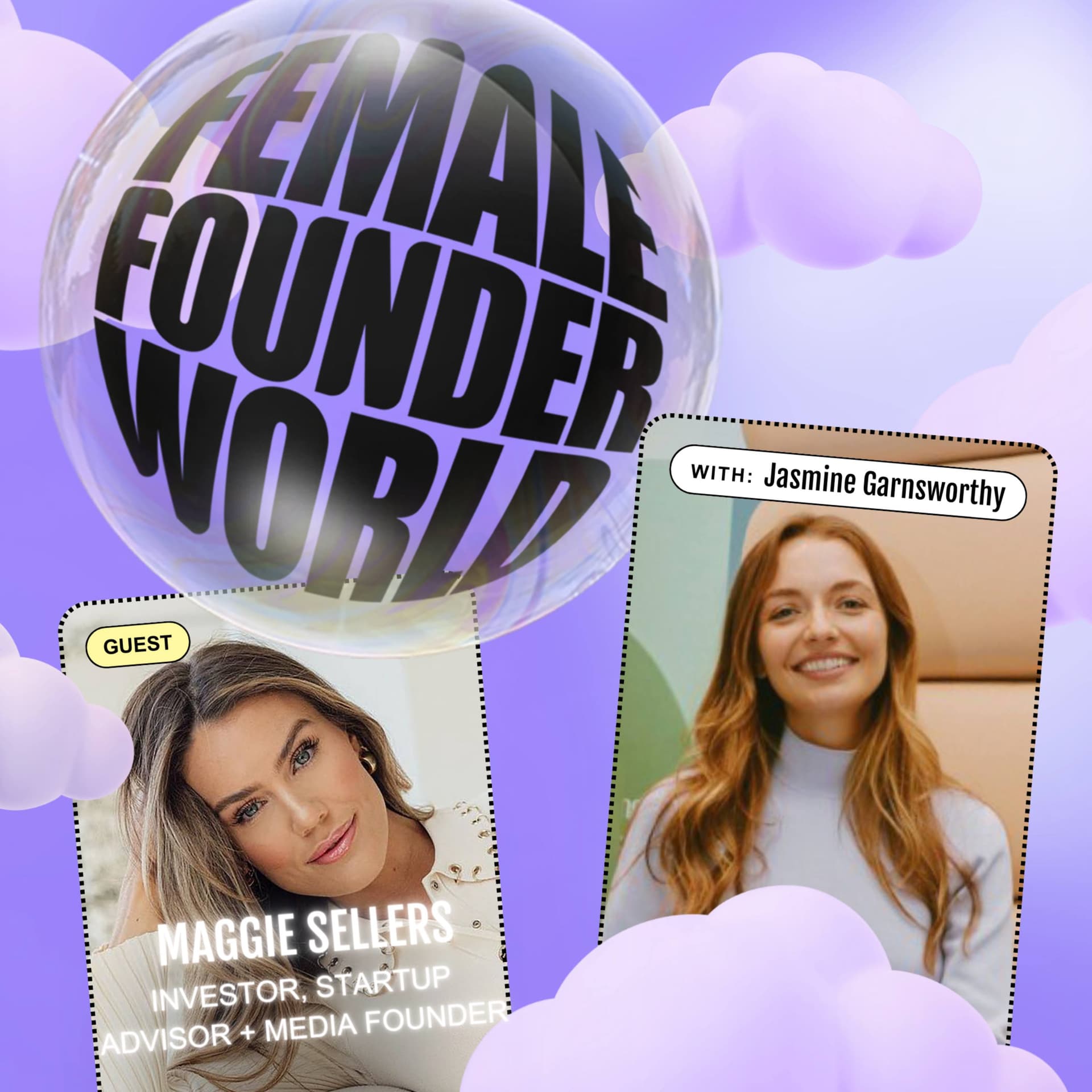
Maggie Sellers Is Simplifying Startups and Investing on TikTok
Host
Jasmine Garnsworthy
Guest
Maggie Sellers
---
Episode Overview In this episode, Jasmine Garnsworthy interviews Maggie Sellers, a consumer-focused investor and creator of the media platform Hot Smart Rich. Maggie discusses her journey from corporate startup environments to becoming an investor and the challenges of fundraising in the current economic climate. The conversation covers building personal brands, the intricacies of venture capital, and innovative marketing strategies.
---
Key Points Discussed
- Maggie Sellers' Background
- Creative Multi-hyphenate: Maggie identifies as a creative entrepreneur straddling startups, content creation, and investing.
- Early Career: Started her career at Salesforce, gained experience in high-growth startups, and became involved in significant fundraising activities.
- Transition to Investing: Moved into venture capital after recognizing the importance of celebrity partnerships in brand strategy.
- Hot Smart Rich
- Mission: The platform aims to empower women to bring their authentic selves into the workplace while providing education and community support.
- Content Strategy: Initially began on TikTok, evolving into a media platform that includes newsletters and potentially long-form content.
- Challenges in Fundraising
- Current Environment: The episode emphasizes the difficulty of raising capital in the present economic climate, with fewer VCs investing in consumer brands.
- The Importance of Community: Maggie stresses the need for founders to prioritize building community over attempting to appeal to everyone.
- Misconceptions Around Venture Capital
- Investment Strategies: Discussion on how many startups mistakenly believe they need VC funding, while successful companies often emerge from smaller, humble beginnings.
- Exit Strategies: Emphasizes the importance of having a clear exit strategy and understanding potential acquirers.
- Marketing Insights
- Customer-Centric Approach: Successful brands understand their customer base and tailor marketing efforts to address specific pain points.
- Examples of Effective Brands: Brands like Summer Fridays are highlighted for their innovative marketing strategies and community engagement.
- The Role of Celebrity Partnerships
- Influencer Dynamics: Maggie shares insights on effectively incorporating celebrities into brand strategies, emphasizing the importance of genuine involvement.
- Case Studies: Discusses the successful collaboration between Sofia Richie and Nudestix and how her involvement elevated the brand.
- Personal Growth and Overcoming Fear
- Building Confidence: Maggie discusses her experiences with fear of judgment as a creator and the importance of moving past that to focus on community and purpose.
- Advice for Entrepreneurs: Encourages founders to embrace their journeys, noting that fear of failure is common and should not hold them back.
---
Key Takeaways
- Empowerment Through Authenticity: Building a brand that resonates with personal values and authenticity fosters deeper connections with the audience.
- Understanding Funding Dynamics: Founders should critically assess their need for VC funding and recognize the differences between funding sources.
- Community as a Growth Strategy: Engaging and building a loyal customer community is essential for sustainable brand success.
- Navigating Rejection: Emphasizes resilience in the face of rejection, a common experience for founders seeking funding.
---
Additional Resources
- Retail Bootcamp: [Sign up here](https://bestie.femalefounderworld.com/retail-bootcamp)
- Female Founder World Resource Roundup: [Get resources](https://femalefounderworld.beehiiv.com)
- Hot Smart Rich Business: [Explore here](https://hotsmartrich.shop/)
This episode provides valuable insights for aspiring entrepreneurs, particularly women looking to navigate the complexities of starting and scaling a business in today's environment. Maggie Sellers' experiences and advice serve as an encouraging reminder of the power of community and authenticity in entrepreneurship.
Written by AI. May contain mistakes. Listen to the episode to check what was said.
Transcript
Automatic transcript. May contain errors.0:00Hey, business besties. Welcome back to the Female Founder World Podcast. I'm Jasmine, the host of the show and the creator of the Female Founder World universe. Today, I'm chatting with Maggie Sellers. She's the creator of Hot Smart Rich. She is a VC and startup expert, and we're chatting in real life in LA. Maggie, welcome to the show. You are now entering Female Founder World with your host, Jasmine Garnsworthy. Thank you so much for having me. For people who don't know you or your background, they're not following you on TikTok yet, how do you introduce yourself to people? That's actually a really funny question that people always start with.
0:33I used to hate this question because I'm such a generalist. And so I was never like the founder of X. And so for me now, I always describe myself high level. I'm a creative multi-hyphenate entrepreneur. I've been that way since I was little. I've always been starting businesses. It just so happens now, it really kind of straddles the line between early stage startups, creative, so content, media, and then obviously investing. But I really like to not put such a big label as like, I'm just the founder of Hot Smart Rich because I do so much more than that. But I think going in with creative multi-haven entrepreneur always just encapsulates everything I'm doing.
1:09Okay. Love that. So you had what, like a 10 year career in startups before you started Hot Smart Rich, which we're going to get into in a little bit. Talk me through how you made that transition from like corporate startup girl to investor and what you're doing now? Yeah. So I always worked at super high growth startups and I'm very happy that I started my career at Salesforce, which was kind of like the best case scenario from a corporate structure perspective. I always say this, I felt like Mark Benioff knew who I was, even though he didn't, but that's how well the company was run, at least when I was there.
1:43And then I made a transition over to my first earlier stage startup. But when I was there, we actually went public and I reported to our CEO. So that's where I always say I kind of got addicted to this idea of liquidity events, because when you go public with your first startup, you're like, oh, my gosh, this is what this is like. This is amazing. So I kind of knew the path of where I was going. I kept going earlier and earlier and earlier. And so the next startup that I joined, you know, we raised one hundred and twenty million dollars. I was very attuned to when there was a board meeting coming up when I could feel like, you know, we had a big marketing budget, which I know we'll get into later.
2:15at one point I was managing$18 million underneath our CMO. Then there would be times where, you know, we're pulling back on spend because budgets are tightening. And I knew that was when we were kind of going into, we're going into a fundraise. We also happen to have a lot of really cool celebrity investors. So some, you know, celebrities, some really cool funds. That's where I just got really curious. And then when I made the jump over, I was living in LA and I saw this pattern of like, wow, celebrities is six, seven years ago. Celebrities are the future, like having an audience built in distribution.
2:46I need to understand the dynamics of a celebrity, even just team and how they're building. I ended up meeting a celebrity talent manager who at the time managed Post Malone, the Black Eyed Peas, and a lot of brands that were coming inbound as the head of brand strategy. I was fielding a lot of opportunities for equity investments instead of traditional brand sponsorship deals. So it was really up to me to figure out like, how am I even going to evaluate this? And it was just this really natural progression of being super curious, understanding what it was peripherally. And then when it was, you know, Richard, Sir Richard Branson, I just listened to his podcast the other day.
3:27He's like, always say yes, and then figure out what to do. And that's truly what I was doing. I was like getting these opportunities and being like, I have no clue what I'm doing, but I'm going to call people that were in my network that could help me diligence something, figure out, was this a good opportunity? What am I looking for? And I think that's really what's led me even to Hot Smart Rich is trying to bestow some of that for the people that don't have the network, don't have the connections that I was lucky enough to have. Really just kind of figuring it out on my own dime in my own time and hopefully be able to empower somebody with knowledge that I didn't have when I was first looking at it.
4:02Okay. People who don't know what Hot Smart Rich is, what is it? So it's actually a media. It's happened so organically. I was obviously just posting on TikTok. And I think a lot of people, I always say this to influencers and to startups, like you have to have a why. And I think for me, the why is really being able to empower women to bring their authentic selves into work. So when I was, you know, thinking about building a personal brand, that really wasn't my driving force. I really wanted to create a mission and a movement that had a bigger purpose beyond myself that could live on without my face one day.
4:35So Hot Smart Rich came in because I started realizing like I had grinded, like you said, for 10 years in the startup world, really taking away all of the feminine and authentic selves about myself and really focused on being masculine and grinding it out and, you know, being able to manage this budget and do this. And I was like, wait, I'm so torn. Like I am 20. Oh, at the time, I was like in these startup roles, 25, 26, seeing success, but I wasn't enjoying my personal feminine life. And so HotSmart Rich was really a problem I faced my whole life, which was I want to empower women to more than just learn the education and the knowledge.
5:12It's like be free to be who they are. And so now it's really an investment holding company is what we call it. It's really like a media platform where, yes, we focused on short form content. We have a weekly newsletter. We're going to be evolving that into long form content. I don't know if I'll ever do live events, but I just want to create a safe space for women to feel educated, be themselves and just grow as a community. Something that I heard you talk about on another podcast was like this pushback that you get about the name, I think, Hot Smart Rich and like even just I think generally just the vibe and what you're doing, which just resonated so much with me because, you know, female founder world, we use the word business bestie for everything.
5:56Like our vibe is very feminine. And, um, we get this pushback of like, well, why do you have to make it like that? And I, what I say back to that is like, well, why is anything that's wrapped in any kind of feminine packaging considered less valuable, less important, or less serious? Like why can't we speak to people the way that they want to be spoken to without while you're not. And like, then you don't take the content itself seriously. Um, and so I like to put that back on people. I would love to know like what your response is to people who say that to you. I think I've learned so much more from failure than I have from success in my career.
6:34And one of the biggest failures that we had at one of the startups that I worked at was we were trying to be for everybody. And when you do that, you lose your entire cult community base. And so I think for me, it's like, I don't need to be for everybody. And I've been dragged on VC Twitter and, and yeah, there's Reddit threads about me and it's, it's, it's hard, but it also is like, you're doing the right thing. And I think for me, my answer is it doesn't have to be for you. Like if you don't relate, keep scrolling, you're good. And honestly, I think I'm a little bit of a psychopath. I think every founder has to be in a way.
7:10I kind of like it in this weird way because I know what we made all of the mistakes doing when I was at a startup was we were for everybody. And so if I feel like I'm not pushing boundaries, being contrarian, those are two qualities that I look for when I'm even investing in a founder is like, do you think differently? Do you think critically? Are you afraid to go against the grain? And, you know, a story that I feel so vindicated by is I two years ago during B-Reels, Series B, when it was everything, so much VC hype, every single tech bro, finance bro was like, this is the next thing. I looked at it from the feminine consumer lens of like us controlling 85 % of consumer spend.
7:50And I'm like, this is a feature, not a company. And I just personally don't think that the valuation warrants where all this money is going. Again, learning from failure, having been at a startup that raised$120 million in four years and burnt$120 million dollars in four years and not a great success story. And I remember I posted the video. I got so much hate from that archetype of that finance bro, tech bro. Like you don't know what you're talking about. You didn't come from an A16. You don't know what you're talking about is just the go-to response when they don't like. You probably have a lot more experience than them.
8:24For sure. And different experience too. And I think that's something that's really worked for me in this way where it's like, I don't think I didn't go to a tier B or tier A school. Like I'm from Canada. I didn't have the background that a lot of these, you know, investment bankers, VC bros have. And it was so rewarding last week to build a returns illustration analysis to be like, actually, if you invested in the series B only, you lost money on your investment. You made 80 cents for every dollar that you put in. And the seed investors, they had a great investment, 48X return. Incredible. But nobody talks about that.
9:02The headline is, you know, they sell for $530 million or 500 million euros. And so for me, it's like, I didn't have to be for everybody back then. And I'm glad I wasn't. And now two years later, there's this delayed gratification to be able to be like, if you think differently, it doesn't matter if you're right or wrong. Just don't be afraid to like, do something different. I love that. I think that's actually what you do so well is like, you just make this whole world feel more doable and more digestible for I think a lot of people who normally would just have just been told and this is something that again like we hear at Female Founder what a lot of people who just kind of like think oh it's not for me because Business Insider and Forbes like don't sound like I don't feel like they're targeting me and I don't see my point of view like reflected and so you don't think that it's what it's valuable and so I think what you do is like break this down so well and like bring a lot of people who haven't been included in the conversation along with you I'd love to just keep talking about some of these myths or misconceptions that you think maybe early stage founders or the entrepreneurial community have about fundraising and VC?
10:11Because like you just said, like you just see that headline of that big exit. And so you just assume everyone got really rich and that's probably not what happened. No, not at all. I think venture capital is such a beautiful thing and where it started from was really to fuel innovation. And I think that's the first thing you have to ask yourself if you're a founder is like, are you truly innovating in a space where you need capital, where if this sells, this is not going to look like a small exit, like this is going to truly be defensible IP, something that needs the backing to grow quickly and grow fast and keep off competitors.
10:47And I think that venture capital has really been diluted down where there's so many different even types of venture capital, like the difference between a syndicate investor and a venture capitalist is so different. And an angel investor is so different. And so for anybody that is kind of trying to figure out even the landscape, it's like angel investors are typically investing their own money. There's less of like a returns analysis that they're doing to figure out, will this return my fund if this exits at these return scenarios? If you're investing other people's money, you're immediately categorized as a venture capitalist.
11:19But like I said, there's growth equity, there's private equity, there is early stage consumer VC, there's early stage biotech VC investors. Like there's just so much unknown in it. But I think the big difference, and this is something I talk about a lot with people is, and maybe this is actually super contrarian because in the past, if you wanted to raise money, you could never talk about an exit. You had to build a forever brand and you wanted to do this for the rest of your life. I would never invest in a consumer founder that doesn't have an exit plan or a strategy. Like I always think about this P and G don't quote me on the exact number, but I see, let's say if we see a thousand deals a year, if I look at a pitch deck, let's say 800 of them say they're going to sell to P and G one day.
12:09Do you know how many brands P and G owns? They own less than a hundred brands. So 800 people a year are saying they're going to sell to P &G, well, that's one of your potential acquirers. There aren't that many of them. So right now, a huge question in beauty is who's buying all of these beauty brands? Like, I think that is where you have to be very clear from the get go on like where you're going. And if you want to build a brand that you are going to run forever, I don't think you need venture capital money. And I know it's so hard to get venture capital money right now. But I think you really have to figure out like, what is it that you need money for?
12:47Because I will tell you whether it's Airbnb, whether it's my friend Byrony who started Pilates by Byrony, like the best, most successful beginning or the most successful companies come from humble beginnings and they come from things that don't scale. And I think, especially if you're talking, I would assume like female founder world is there's a lot of consumer tech, but there's also a lot of CPG. Like it can come from one product, one success, one hit, and then you can grow and develop from there. I don't know if you necessarily want to sign yourself up to being held accountable to the growth that venture capitalists are going to expect of you.
13:22I think that's such an interesting like switch in your brain to think about, okay, if you want to build a business and what are your chances actually of being acquired and selling this thing, then okay, well, what does the pace of growth look like? What does your life look like while you're building this company? Because I think a lot of people like, okay, I'm on this like five year all or nothing fast track. And it's like, well, maybe you've read about these tech founders doing that in certain spaces, but that's actually not the path that your product and your vision should deserve and entail.
13:53And maybe it's something really different and your approach should be really different. I don't think a lot of people are talking about that. Yeah. And I also don't think it's like, you know, there's this huge misconception in the market that if you're not right for venture capital, you don't deserve a place. That's also not true. Like I look at, and I am reading in the HSR book club right now, Tash Oakley's book on Monday swimwear, like Aussie founder. Yeah, exactly. Like love. And you know, it's empowering that they didn't take venture capital money. And I think especially like my, if I could just, and there's never good advice for every single founder that's listening to this because every business is so different.
14:25Like you look at Naturium, they, I think they only had three or four years and they sold for like$300 million. Um, that also is a super rare case, but I think it's like if there's a blanket statement I can make, it's just like focus on the community first and foremost. That is the growth hack, I think, for consumer brands that will be the wildfire that you need to have something that's successful. When you try to manufacture too much and you're trying to manufacture, like, am I the right fit for venture capital? I keep getting turned down. It's like, you know, they say be delusional and self-fulfilling prophecies.
14:59Every single founder that I know is turned down by hundreds and hundreds and hundreds of funds. If you feel like you're the type of founder that's going to be affected by that and it's negatively going to impact what you can bring to the actual job every single day, then try everything in your power to not go the VC route because that's just the reality. And I say that as somebody that has raised money for a syndicate, that's raising money for a fund, like it's, I get no's all the time, all the time. I'm lucky I started my career at Salesforce where I made a hundred cold calls a day and I was hung up on and told to F off every single day.
15:32that's good practice, such good practice of like, it doesn't matter. That's a you problem, not a me problem. Um, but if you're new to getting rejected, my biggest piece of advice is go to a retail store. I do this all the time. I actually told my assistant to do this and ask for 15 % off, just ask for a discount. And when they look at you and say, why would we give you a discount? You say, I don't know. I would just want to, I just want a discount. Most times they will say, no, ma 'am, we're not going to give you a discount. You get a little rejected. You learn how to deal with that. And then maybe best case scenario, you get 15 % off and you pay less money that you can save for something else.
16:06Like it's little things like that in your daily life. That's just opening you up to how can I take one step today to get better at rejection? Because that's just naturally what you're going to face when you're raising VC. So hot smart rich ventures is a syndicate. Yeah. What is that? So a syndicate is essentially similar. Like I'm investing other people's money. The difference is that I'm also a venture partner and advisor for Vanterra Ventures. So we have committed capital in a fund at Vanterra. So when we look at a deal, we internally with an investment committee make a decision whether this is a good investment or not.
16:42And the capital has already been called by LPs, limited partners in the fund. When you're doing a syndicate investment, same exact process of doing diligence, well, deal sourcing, doing diligence. But then when you actually want to make an investment, it's a little bit of like the chicken before the egg. I think that's the saying. I'm really bad at those things. You may want to invest. You've done all this work. You want to get an allocation in the round, but you actually have to go out to your LPs. These are mostly high net worth individuals. These are mostly people that are an accredited investor.
17:14And then you have to pitch them on why it's a good investment or not. So the tricky part is that you may want$100 ,000 of an allocation in a round, but you don't have$100 ,000 that you can 100 % with certainty say, I want in. So on super fast moving deals, it's actually happened to me. I had $100 ,000 allocation. I couldn't move as quickly as the deal was moving. Good deals move fast. Bad deals most often take a long time or you just don't have the right connections, whatever. So the problem, it's a beautiful way to get into investing. The problem with it is that you don't have that committed capital.
17:51So you can get burned and you can also burn founders really easily. Because if you say, I'm going to take a hundred thousand, it's not up to you. You have to be a really good salesperson to go and get a hundred thousand dollars. If you can't, then you've told the founder, you're going to give them a hundred thousand. You don't have a hundred thousand dollars to give them. Interesting. Okay. I have a couple of questions from the community. And the first one breaks my heart, but speaks to, I think, what so many people are feeling right now. Why does it feel like it's impossible to get investors in the moment?
18:20You know what's something about me that I'll just admit? I am not the smartest person in the room. But overall, the macro environment is really concerning for a lot of investors. And the big people that are giving venture, this is something that you have to realize, like LPs, when I say LPs, limited partners, people usually don't know what that is. Those are like, especially if you're over a$30 million fund, you can start to get interest from like institutions, endowment funds, you know, not like the high net worth family offices that usually are the people you target for LPs if you're under$30 million.
18:53Those people are investing in their own portfolio of things. They haven't seen the returns that they've wanted to from venture capital. So there isn't as much capital that's being dumped into venture capital funds. So either they've blown through their fund and they are having trouble raising, which a lot of founders don't know. So a good question to ask VCs is, are you currently investing? What fund are you investing out of and how much of your fund have you deployed? How much do you actually save for follow-on? Those are really good questions to understand. Is this a fund that even has the capital?
19:25And what's follow-on? Follow-on is when if you take a position, like I was saying around Be Real, that's a great example. You invest in the seed. Let's say maybe you put half a million dollars into it. Most good investors will secure something called pro rata rights, which means that you can just make sure you have your exact ownership amount in the next round of funding so that you don't get diluted. But some investors will take on bigger positions. So it's a really good question to understand how a VC is thinking about portfolio construction and there's no right way. Some funds, especially if they're super early stage, knowing how hard it is to be a venture capitalist, they will do like 30 initial checks in.
20:02And then anything that's a follow on, they'll do via a syndicate with their same LP network. This probably sounds really complicated. It's trying to break it down as easy as I can. We appreciate that. But is it making sense? It's making sense. I'm following. Okay. So I think it's just good to understand, is this fund even able to make an investment right now? Because there's a lot of funds that don't even have the capital and they're actually running syndicates to their LP base as a way to drum up more interest to see deal flow into even investing into their next fund. So you could think it's a you problem and it's actually a them problem.
20:38So that's really important to know. So those are definitely questions I would go back, save this episode and literally write down to ask funds. So that's one reason. I think another thing is there's just so much uncertainty in the market with really big macro trends like inflation, obviously the political environment that we're coming into in this year. There's a lot going on that is causing uncertainty for investors. And I think there's just been a proliferation of so many businesses are being started. So many funds are out there and it is a numbers game, like everything. A true sales funnel is like you might be getting rejected, but how many funds are you actually talking to?
21:20Because it is a matter of time before you get a yes. Like that is the reality. And so it's just kind of figuring out, like I said before, do you need to go the venture capital route? Because maybe it will take you 200, 300 calls to find that yes. You will find that yes, but it might take you a really long time. But you're right. Like VCs are not investing in consumer brands like they once were. There are some really strong VC funds that are. But like I said, at Vantara, we see a thousand deals a year. I think that they're, and don't quote me on this number, but it's like, they're saying yes to, and I'm not on the investment committee, but they're saying yes to eight deals a year, maybe not even.
22:00So think about the math, right? And consumer is just a hard space. Like we've seen, like I was saying before, when you track back the exit, like they've gotten completely demolished in the public market. So it's really trying to find those success stories of the acquisitions in the spaces that you're in. And then looking at that and making sure your valuation is reflective of what success would look like for almost this hybrid between a private equity and a venture capital fund. I want to kind of like switch tracks a little bit and talk about marketing because you obviously you're embedded in the space, you're advising different startups, but you've also yourself managed, like you said, 18 and$18 million marketing budget.
22:45What do you think a, first of all, like from that really high level, like how should brands be allocating their spend, um, at the big budget, at the small budget? And what are you seeing that's just like working driving traction now today? Yeah. So, um, at a super high level, I was very lucky to start up that I worked that we raised$120 million for, it was actually illegal to do paid digital ads. So I'm trained as a brand marketer through truly like community oriented approaches, which is I think why I've been able to like really advise so well, because I actually don't know anything about digital marketing.
23:21Like if you were to ask me, like, how do I target? I'd be like, I have no idea. I know there's really great tools out there, but I think it's really around, like I said, community driven initiatives and letting the community be your biggest spokespeople. So that's like identifying who is like the key hero customer that you have, figuring out where they are, where they spend time and how can you get in front of them. And I think it's also around identifying like, where are the problems that they are facing that you can be a painkiller for, not a vitamin pill for. So it's like if you're a water company, the summer is the best time to have most of your marketing budget be spent versus the winter, especially if you're on the East Coast because people aren't as like wanting to quench their thirst in the winter.
24:08They're doing that in the summer. So it's like you want to allocate most of your spend to field marketing, sampling, you know, even point of sale marketing when you're in the East Coast in the summer. Like think in general, allocating a budget is a really tricky thing because it's specific to the company and the category that you play in. Beauty as an example, it's like, I don't think POS marketing works as well as some other initiatives, but that's totally different for food and beverage. So I think it's just about understanding your customer. That's if like there's one big takeaway, it's like, who is the customer?
Read the full transcript
24:45When is the pain point? Because every business that's successful is solving a real problem. They're not making up problems. It's not a nice to have. That's why be real. Like I never thought was a good investment. Like what problem are you solving? Um, so it's like really understanding your customer and then being able to serve them marketing when they're going to feel that exact pain point that you are offering the solution for. Does that make sense? That makes sense. Who do you think does that really well? Hmm. Who does that really well? Okay. I have a great answer. Okay. Great. Summer Fridays.
25:17Like I just saw this brand come out of nowhere and they did so many things, right? They did starting with one product. People forget that they think it's this like huge brand. It is now, but like they started with a jet lag mask. They just did this amazing campaign in the airport where they were doing out of home when you're doing your bucket. So there's like so much viral marketing. You're letting your customer market for you. Like that is the key. They also do something that I love to do, which is super unexpected partnerships and where you don't expect to see them because there's so much going on in the cultural zeitgeist right now.
25:53Attention is it's we're in the attention economy. It's like, how do you create attention? And I think summer Friday is like doing a collab where you're popping up at a cafe. It's like what makeup brand, I mean, glossy actually that back in the day, but I think they do things that is, they know exactly who they're speaking to. They know exactly what they're doing and they do things that yes, you expect, but you also don't expect. So they're keeping the customer excited about what's happening next. Whereas when you've trained your customer to expect, this is our rollout, this is our map. Like people get bored easily.
26:25It's human nature. Think about the vices that we have in the world. It's because humans like a little bit of drama. And so it's like, you have to kind of create that drama for them to feel like they're excited to find a little scavenger hunt of what you're going to do next. Yeah. I really liked the idea of just, okay well understanding everything you're where your customer hanging out what they're doing what other brands they're using and then not being afraid to go out of your category totally you're a beauty brand you don't have to just show up on the shelves of a beauty retailer you don't have to just partner with other beauty brands like totally yeah that's really clever yeah okay so I want to also talk about celebrities we've like kind of covered this this is something that I think you um have a lot of expertise in I know that you've uh you brokered a deal between Sophia Richie and Nudestix like back in 2021 for her to be was it the chief beauty officer I don't think it was even 2021 it was uh it was like 20 when did she get married oh recently okay so it was right before then okay yeah okay so super recently how do you get a celebrity involved in your brand like what does the structure of those kind of partnerships and like what are your options to do that because I don't know we're seeing so many like celebrity founded brands and I love it when I see a celeb just like throw their weight behind an independent woman-led company that already exists in the world I think that's really powerful how do we get more celebrities to do that for existing brands I think Hayley Bieber is truly the roadmap like what she did with Barbara Sturm was develop serious, and I call it leaving Easter egg credibility, where she as a celebrity was training her customer and her audience to trust her in that space.
28:11And Barbara Sturm, there is nobody, I will say the difference between beauty and skincare, little tip is like skincare people trust like the credentials more than they care about like the branding and kind of like the non-technical founder in a way. They really want a derm, an esthetician, somebody that has that credential. So Barbara Sturm, nobody better. Right. So Haley did this amazing work with them for, I think it was like four or five years. She was doing, you know, webinars, she was doing events. She was the face of the brand. So she really like, to your point, got behind us, a female founded brand and really helped bring it to the mainstream.
28:48Not to say it was all Haley. It definitely wasn't, but there was elements that she was able to leverage to take them to the next level. Once she had built that credibility and studied the market and been in it and was able to probably hold her own, you can tell how genuinely integrated and across the business that Haley is. And I think that is why I have so much respect for what Road has done. And truly, it's her number one priority. It's what she's talking about 24-7. Another really big thing I've learned, and I think what makes it my experience so unique and different is on the brand side, running a startup, I was in charge of, you know, our celebrity talent partnerships.
29:27I worked for arguably some of the biggest celebrities in the world, not only launching and incubating their brands, but helping them be the face of other brands. And then I have, like you said, like this background in venture capital and equity. So it's like I kind of bring all of that to these experiences. And I think what I, I don't invest in 99 % of celebrity brands that come to me. And I ask very specific questions like, is the founder on a texting basis with the celebrity? If they're not, never would I touch that deal because that is somebody slapping their face onto a company and they are not integrated.
30:02They actually don't have as much involvement as you think they would. And long-term it will just never be successful. And if it like, similarly, if a founder, and there's a few that can do it well, Ryan Reynolds, The Rock are a few that come to mind where they're involved in multiple businesses and they do an incredible job at multiple businesses. But when I start to see a celebrity, like I just saw Kerry Washington, maybe this is a little bit contrarian, like she's the face of a jewelry brand. You know, I've seen her name pop around a few times. Like now she's the new face of Styx, which just rebranded to Wings Health.
30:34It's like, how many brands can you be a part of? And I think I also study where is the celebrity at in terms of the longevity of their career. So if there is an artist, this is also pretty contrarian, but most people would want to work with celebrities that are at the height of their career. They're on tour, they're filming movies, they're super busy. That's actually something I probably would steer away from. You look at a Ryan Reynolds, how much more time does he have to actually commit to his brands a lot more? Cause he's not the heartthrob that we know we knew of him 10 years ago. So I actually go after either not early stage celebrities, but celebrities that have relevancy, but their focus isn't music or isn't film.
31:16And that's why I tend to prefer creator founded brands versus celebrity founded brands because of just the dedication and the focus that they'll have. Like I would evaluate any other founder, how much time are you spending on this? If I get a deal where the founder is doing five businesses, really concerning, unless you're Catherine Power and you've been able to do them all really well like it's those are the unicorns yeah um what you're saying about road before I was just on slack with the team and someone sent through that you know she just she's got a pop-up in New York at the moment five hours people were lined up like to go in and experience that pop-up Haley's not in there they're just going in to look at like the stuff that they can buy online and building that hype is so incredible and so powerful so like yeah hats off to Haley As they should.
32:02Like, honestly, I would, I mean, I don't, I don't like to wait in line so I like have an aversion to them. But if I was in New York, just to even see the experience. And I think that's what people forget. They're so focused on the outcome. It's like, focus on the experience, both for you and for your customer. Yeah. Okay. I want to talk about Hot, Smart, Rich and how you've been growing that, because I think, you know, I'm in this world, so I feel like I've watched you kind of like growing on TikTok and then adding the newsletter and then kind of like building this business that is now a fully fledged media business.
32:35For people who are kind of like, oh my God, where did Maggie Sellers come from? Like, I just like looked up one day and she's everywhere. What do you think has been driving the growth or what have you actively been doing to kind of like build that community, build that audience and build your media company? Yeah. I'll, I'll give you something thing that I've never really admitted. Like I, for a long time had a huge stigma around being known as like a creator and influencer, because that's really where my hot, smart, rich mission comes from my whole life. I was put in this box of like, you talk a certain way, you look a certain way.
33:08You can't be smart. Are you kidding? Like, and I've worked so hard to overcome that. And so even to this day, like I have a huge issue even with posting on Instagram. Like, honestly, I have so much fear over being taken the wrong way. That does not come across. I know. And it's so funny because if you were to ask my team, like they know how insecure I am around that, which is so funny. Recently it's gotten a lot better, but that's definitely how it started. And so I think for me, whenever I get into those head spaces, like I'm a huge journaler. I write every single morning. I don't create for my critics.
33:43My haters don't pay my bills. I'm not one dimensional. I am a multifunctional creative entrepreneur, I have a value in my voice. My opinion matters. Those are things I say every single day to myself. I'm going to write that down and put it on my mirror. Yeah. It honestly makes a huge difference because whenever I feel fearful over like, what are people going to think about this or that? I just remember the why. And I think that's where Hot Smart Rich has come out of every, and it's come out of nowhere and it's now everywhere because it's not for me. It's not to serve a purpose to feel like, oh, you know, I'm an influencer now.
34:20It really came from the girl that lost herself to build startups thinking that people would do right by me, mostly men leaders. And that was never my case. There was actually a story where there was a period when I was living in the U.S. and you'll relate to this as an immigrant as well, where your visa is tied to your employer. Yeah. And, you know, we were going back and forth over equity and compensation and I was taking on more responsibility. And I always like, because I killed myself, like, you know, to do the right thing and work really hard. And I thought it was going to go one way. And ultimately when there was an ultimatum over like, I deserve this, this is what I'm worth.
35:00He said, you're not, so leave. And I never thought that would happen to me. I had 60 days to get deported during COVID with the border closed or figure it out and get another visa. And I think it was through those experiences and losing myself for what, like that, that's where every single day, hot, smart, rich is so much bigger than me. It's like for this community. And I think that's where if you're building something, it has to be bigger than you. Otherwise, you know, yes, we're all egotistical, but that wears off at a certain point. And it's like, what's the difference between what you want and what you yearn for, you have to lean more towards like what do you really yearn for?
35:40And those are typically things like love and community and passion and not what car you drive or what house you live in. Yeah, absolutely. What you were saying just like resonates so much with me. I mean, I, my background, I was a fashion and beauty editor for years. I built digital properties and audiences for literally some of the biggest media companies in the world. I launched companies and verticals in Australia for the first time, like did all of these things that now with hindsight and experience and having seen more about how the world works, I value that so much more. Yeah. But I remember wanting to start Female Founder World multiple times through my career and having like so many false starts.
36:18Like I would publish a little bit and then stop and take it down and wait another year and da-da-da because I was just so mortified at the idea of having this thing out in the world that didn't have this stamp of like pop sugar or, you know, like another publisher or a title, just having it fully out in the world as my brand, my business, my content, my voice. And that honestly, I think it took me like six years to get over that. And don't you think now if like, you know, if a 25 year old came to you and was like, what's a piece of advice that you have for a 25 year old? My piece of advice is always the fear of like, it's like that TikTok voice, the fear of looking stupid is holding you back.
36:57Yeah. Truly that is like, I don't regret anything. And I actually am very happy. I have 10 years, like you were saying, the experience that you value is like in that corporate environment, in that startup world, because how can you be, and we see this time and time again of these TikTok influencers that get super famous right out of college. That's what their job is. And then they're now, a lot of them are like going and getting a corporate job. Like I'm actually like really not sure if I want to be creating content around myself all the time. And I think for me, it's like, there's a way to do both, but my biggest, not regret, but just push for people that are that 25 year old or that 35 year old or that 55 year old, wherever you are in your kind of like self-reflective journey of being authentically yourself.
37:40It's truly that it's like you feeling fearful of looking stupid is only because it's new. When you get traction, when you are everywhere, the amount of people that reach out to me to promote something that once made fun of me and sent my videos around. It's like, wow, it's shocking. Yeah. And you just have to keep going. And anybody that tells you, like even Sir Richard Branson, back to the podcast he was on yesterday, they had a massive failure going up against Coca-Cola and Pepsi trying to create virgin soda. Do you think that that is what he's focusing on? No, he's focusing on getting to fucking space.
38:17Like he is not even thinking about the point, like Roger Federer, he says that he's like, once the point's over, it's over. It's in the past. We're focused on the future. Failure is a natural part of business. So you just have to kind of get over it and keep going. Amazing. Maggie, this has been incredible. Thank you so much. I'm going to end the show on that point. And we're going to have a follow-up episode where we talk all about your resource recommendations later this week. Thank you so much for coming on Female Founder. Thank you for having me. One of my favorite conversations. I just wanted to jump in and end the show with a quick thank you and shout out to all of our paid business besties subscribers.
38:52For$9 a month, business besties bypass literally years of networking by getting access to all of the people that you need to build your dream business. Besties get access to exclusive in-person meetups in cities all across the US, Australia, and the UK. You get access to our group chat and you get to bypass the waitlist. You also get invited to exclusive monthly group business coaching call sessions where you can speak to experts and founders and ask them all of those questions that you just can't google it's nine dollars a month you can cancel anytime head to bestie.femalefounderworld.com or click the link in the show notes for more
From the publisher
Maggie Sellers is on the Female Founder World podcast with Jasmine Garnsworthy.
Maggie is the consumer-obsessed, former startup employee turned investor who is blowing up on TikTok.
She's raised her own syndicate to invest in brands she believes in, and has brought to life some of the buzziest celeb and brand partnerships—including a move by beauty brand Nudestix to bring on Sofia Richie as Beauty Director.
Maggie shares her thoughts on how to building your personal brand, why it's so hard to raise money right now, and how to make your business stand out really crowded categories.
Links
Sign up for Retail Bootcamp: https://bestie.femalefounderworld.com/retail-bootcamp
Get the Female Founder World resource roundup https://femalefounderworld.beehiiv.com
Become a Business Bestie subscriber: bestie.femalefounderworld.com


