Ask ChatGPT


 Figuring Out with Raj Shamani
17 Nov 2026 · 1h 35m · 32 chapters
How AI/agentic traffic is changing SMB websites and what to do now: make sites “AI-ready,” shift from search-engine visits to agent-to-agent commerce, and build conversational, secure, identity-verified experiences. Also covers best/worst SMB business opportunities as analytics and “mechanical” content work get automated.
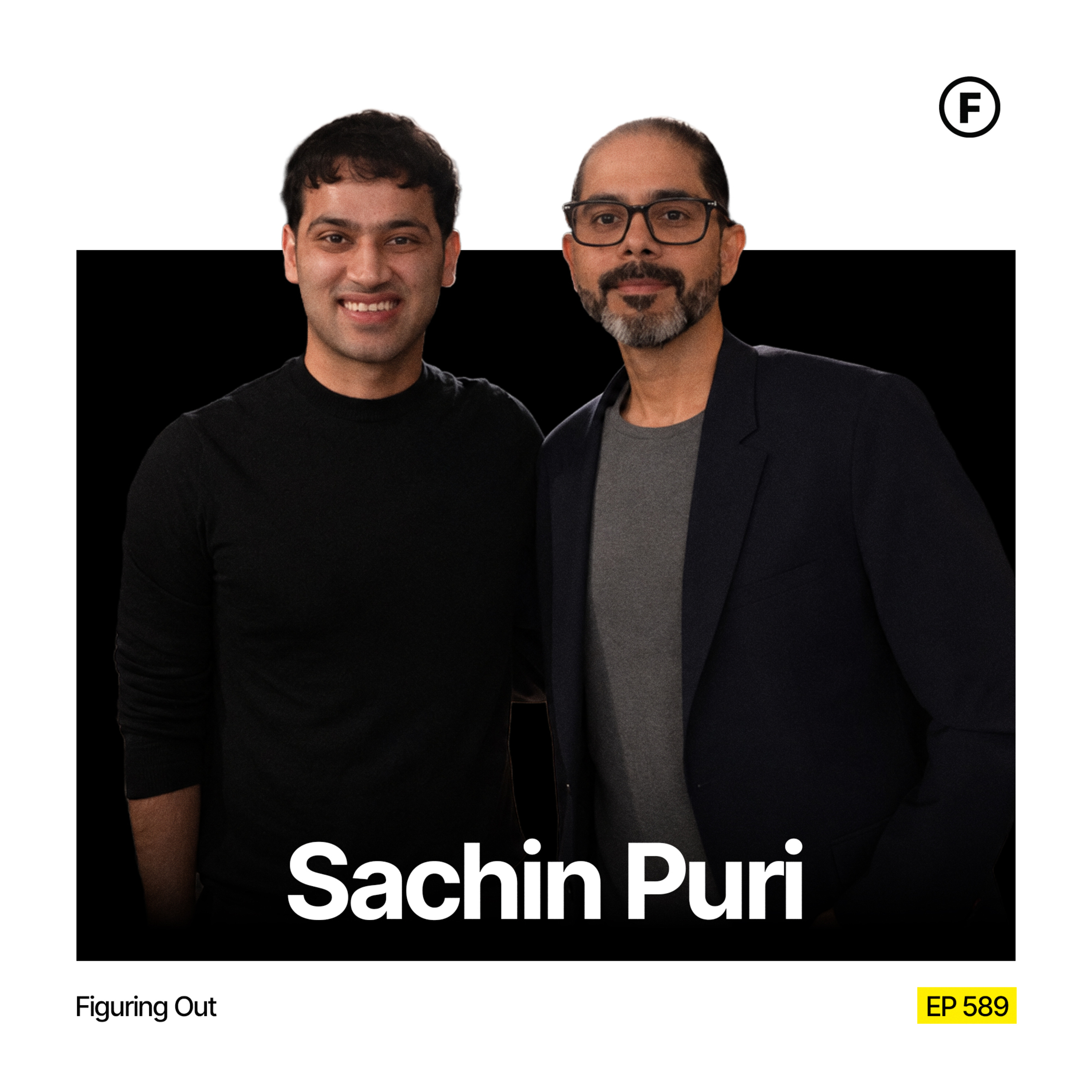
Sachin Puri is CEO of Newfold Digital, which operates SMB web brands including Bluehost, HostGator, Network Solutions Group, and Yoast. Newfold supports millions of small businesses’ online presence; the episode notes Network Solutions as an early .com registrar and Bluehost as an early WordPress partner. Puri frames his career as moving from HTML-era website building to AI-driven website experiences.
Written by AI. May contain mistakes.
Discussing how automation is impacting jobs in analytics and opportunities in elder care.
“If your entire job builds around analytics, that skill is still important, but it's going to get automated.”
Key elements that make a website effective for small businesses, including bot integration.
“I think the third thing I would do is What are you saying?”
Sachin Puri shares his background and the mission of Newfold Digital.
“You tell who you are, what do you do and why should they care about this conversation for the couple of hours?”
Discussion on how online business dynamics are shifting with AI and automation.
“I think you don't want to miss this episode.”
Exploring the concept of agentic commerce and predictions for future online interactions.
“It is the as what we call it as OG of what you see is what you get or low-code platform.”
Emphasizing the continued need for human engagement on websites despite automation.
“I think we were having the conversation earlier, like the things that at least in the Bay Area we get exposed to in coffee shop of other technologies that are going to come about the rest of the world, five to 10 years.”
Discussing Newfold Digital's focus on website technology to enhance user experience.
“it to be communicative, impressive, telling your story.”
Learn how AI technologies are transforming content creation and business operations.
“the cost of developing content has come down like nobody's business.”
Explore how shifts in consumer behavior affect business strategies, particularly regarding LLMs.
“So things that we watch out for is the, how's the customer behavior shifting?”
Discover the emerging business opportunities in elder care amid aging populations.
“rank worst small medium business today to the best, which is worst to best in today's world that people should be building or thinking about.”
Understand the challenges of businesses relying on outdated practices like PowerPoint creation.
“And I think that is one of the biggest opportunity that is just looming in front of us.”
Examine the future of data analytics and how automation is changing the role of analysts.
“Are they doing like millions of dollars in revenue?”
Learn how AI is reshaping decision-making processes and enhancing data insights.
“So those businesses, that skill is still important, but it's going to get automated.”
Learn how AI is transforming the role of data analysts and decision-making.
“If you have the right data flowing in, you can get that data.”
Discover how AI can streamline website creation for small businesses.
“And then if in real time, I want some another data, it would take my guys to probably take a day, even if they're very efficient, to come back to me.”
Explore essential strategies and tools for small businesses to succeed.
“What are these 10 things that a small business of today should build so that in couple of years they have multi-million dollar business and they're AI proof?”
Understand the key elements that make a website effective for small businesses.
“I think first and foremost, your website and your homepage should tell your story of why you and your products better than anybody else.”
Learn how to establish credibility and relevance on your website to attract customers.
“none of the team members, including me, we are website native.”
Learn how to design a website that effectively engages customers through relevant content and meaningful interactions.
“See, customers have limited time and they're researching at any given point of time and all different places.”
Discover how AI can enhance customer interaction and streamline processes on your website.
“So that you can accomplish seeds for it in the first time when somebody is visiting.”
Explore the importance of CRM and personalized communication in building customer relationships.
“Here is a person who actually started from nothing and they became so successful by figuring how to rise against all odds, never taking a no for an answer.”
Gain insights on effective strategies for driving both organic and paid traffic to your website.
“conversation that customers had and the information that they have provided to start the journey.”
Learn how to leverage organic traffic and SEO strategies to attract customers.
“Well, they have human agents who come and do certain things, but who employees?”
Discover effective ways to understand your customers' motivations and feedback.
“second what about it that led you to this decision of buying and choosing us how has been your experience with us so far have you used our product and what do you like about it and what you dislike about it.”
Explore the importance of partnerships and brand identity in business scalability.
“in making people use AI for personal purposes and individual purposes.”
Explore how to define and deliver brand value that resonates with customers.
“Emerging, large enterprise, small enterprise, consumer, and has the deal.”
Learn why consistent delivery of brand promises is crucial for success.
“Because brand building, we can go with a rabbit hole.”
Discover the significance of operations in delivering customer promises effectively.
“what's the sixth thing i think the sixth thing is embedded in my brand itself is work on your operations.”
Learn why managing cash flow is crucial for business sustainability and growth.
“What is the money that is floating around in the business?”
Explore the complexities of pursuing passion versus practicality in business.
“Now, here's one of the questions that I ask almost everyone.”
Hear a heartfelt story about the sacrifices made in the pursuit of success.
“I chose the vector of my following my curiosity and my strengths and where I can do it and building what to build.”
Understand the impact of loss on personal and professional growth.
“But they have to do the ceremonies and everything else, rituals.”

Get the gist, explore an idea or ask about something said.
 Claude
On Figuring Out with Raj Shamani, what are the key points of this episode?
Searching your listeningAutomatic transcript. May contain errors.
0:00If your entire job builds around analytics, that skill is still important, but it's going to get automated. Rank worst small-medium business today to the best that people should be building or thinking about. The world's population is aging. More than 11-12 % of India's population is already above 60. It's one of the highly unorganized sectors. How do you provide care for elders? And I think that is one of the biggest opportunities. If a small business is building a website today, what should be the first highlight? Like the moment I open XYZ.com, what should pop up? Relevance. Choose your hero image and choose your hero tagline very, very clear.
0:40When customers come to your website, they should know they have come to the right place. Your website and your homepage should tell your story of why you and your products better than anybody else. Tell me one thing in website which is a new insight for the audience. Put a bot or agent on your website that engages with a customer that comes in and is like, welcome to our website. Bring them into the conversational floor. So now your website is talking to the customer. You can't even begin to imagine what all things customers will put in there on your website. Don't you want to know who came to my side and what they were looking for?
1:13Did they find or not? 10 things that small businesses should know or 10 tools they should know. So that in a couple of years, they have multi-million dollar business and they're AI proof. I think first and foremost What's the second thing? And then I think the third thing I would do is What are you saying? I have a small favor to ask you I need you to subscribe to our channel The more subscribers we have the better and bigger guests we can bring and provide you more value through these conversations And the full audio experience of this show is also available on Spotify where you can follow us and listen to the new episodes as well.
1:57Today, customers don't go to Google to search for something. Instead, they ask AI. And that one change is transforming the way online businesses operate. From your local store to your e-commerce brand, our today's guest is Sachin Puri, CEO of Newfold Digital, which is the company behind some of the biggest website platforms on the internet like Bluehost, HostGator and Network Solutions. the tools that power nearly 7 million small businesses around the world. In this episode, we'll discuss why are customers going to stop visiting your website and how do you prepare for it? Which jobs and businesses is AI going to kill first and which will survive?
2:41What are the exact steps to make your website AI ready today? And what is the one biggest business opportunity that most people are completely ignoring? Watch this episode till the end and to know more about Bluehost, check the link in the description video.
3:02If someone's watching you for the first time, how would you explain yourself? You tell who you are, what do you do and why should they care about this conversation for the couple of hours? See, I'm a guy from a small town in India who grew up with infinite dreams, with almost minimal to no means. And grew up in a small family which was trying to make its ends meet. but this kid was always curious, always trying to achieve things and was never taking no for an answer. Stubborn enough to figure things out but humble enough to know that you can't do it by yourself. So if you're tuning in to all the listeners, if this resonates with you, which I believe is a very large majority of world, I think you don't want to miss this episode.
4:03Nice pitch. Nice. But what do you do? What do you do today? Because the highlight I was reading, I was going through, you run a pretty large company where there are billions of dollars in revenue. But what does it do? We make SMBs run their business easily online. Okay. I lead Newfold Digital. As a part of Newfold Digital, we have different go-to-market brands like Network Solutions Group, Bluehost Groups, HostGator, Yoast Yet. And Network Solution was the first register that started.com.
4:50In the past, for SMBs or any business, doing a business online was having a website. so that's where network solutions started if you want to have a website you have to have a name you have to have.com,.net, whatever you want to call that business as so that people can type in as URL now from that domain you need to build a website building those websites were generally you had to go code HTML and others that's where it started. Like when I was doing the website development back in the day, we started with HTML. You're literally typing in HTML code. From there, things progressed. And in 2003, WordPress, which is Word's largest CMS content management system that came about, Matt Mellonweg started that business.
5:49He's the founder. And in 2005, Bluehost Group, Bluehost became its first partner and it has never left its core partnership with WordPress since. Today WordPress represents about 43 % plus minus share of all world's website. So you can roughly say 50 % of world's websites run on WordPress. Pretty easy tool. It is the as what we call it as OG of what you see is what you get or low-code platform. So that's what Newfold does, is helping SMBs build their web presence. Fast forward, the definition of that web presence is shifting. I'm sure we'll get into it, but that's what we do. We just help small and micro businesses be successful online.
6:45Give me two or three directions where you see this world going. Where is the future now? Because this is the conversation you just described, probably is going to be conversation of past. See, the beauty of technology, which is the most exciting part of technology, is that it is going to change as soon as I speak about it. Exactly. It's just the way it works. Yeah, that's a good way to put it, yeah. So, the way world has moved and very rapidly moving towards is more of the world's traffic is going to be agentic and bots. Let me unpack that for you. See, back in the day, people would build websites which was built for humans.
7:28You expect a human being to come to your site, click around, and then do something. today more than 50 percent of page views of global are bought and agentic in nature and this is going to grow so if i were to make my prediction i would say more than 80 percent of the world's traffic is going to become agentic if not more so you're telling me that at some point 80 % of people going on website, it will be machines, not humans. Yes. They'll be just my agent using your website, your agent replying to my agent and then using my website. Yes. Yes. And agentic commerce is already here. I think we were having the conversation earlier, like the things that at least in the Bay Area we get exposed to in coffee shop of other technologies that are going to come about the rest of the world, five to 10 years.
8:27And this is not just a barrier. Enough technology hubs like Bangalore. LA is a great technology hub. Australia is a fantastic technology hub. Boston. But yes, that is exactly what I'm talking about. Today, we don't even realize this is happening. So if you have to go and find a business, you would go search on a search engine, and that search engine will give you a link, a blue link, whichever color link, if you have visited, a purple link. And you click on that link, you land on a website, you open a bunch of the websites, and you do your own research, and then you come back to the search engine, and you do your own research.
9:11Today, AI assistant, irrespective of what you choose, whether you go the search engine out, Gemini, iChat, GPT, Cloud, whichever you're using, it's not only you ask a question, this is what I want to perform. It will do all the research, put all of that information together, put it in a nice format and tell you what decisions should you make based on all the other things. You didn't visit any website. You're already in the agentic world. So then what do you build then what what will your group be building because you are helping smbs build a better ecosystem so that humans can humans can come on their website and you know buy from them or learn from them yeah what do you build where where do you see your company moving forward what are your next core focus area see we do not um it's a very easy way to stretch the argument towards this bigger size of the percentage.
10:18As I said, 80 % is agentic, which we have to address, and I'll come to that. But let's not forget about the 20%, which is the human. End of the day, agents work for human. So you still have to build your website for humans to come engage, interact, build that confidence and feel for you. At the very least, your existing customers would like to visit your site. engage with it and things that they want to do because they have to come, log in, etc. Now, that portion will also become agentic in nature, but hubs will evolve. So you still need your website. You still need it to be communicative, impressive, telling your story.
11:00So let's not lose that fact because total internet traffic is also growing. So that means the human traffic will also evolve. Then comes the remaining 80%. The way our companies are making investment on is your website is still important. Earlier people would come to your website, now your website has to reach them. So, it's a very important paradigm that it was built as a centralized model, now websites are becoming decentralized because your content is going to get decentralized. So, some of the internet plumbing that are needed are still important. Your website should have a proper structure, schema markup.
11:44It loads fast. It has the proper URL. It has the relevant content. It has the FAQ, frequently asked questions, because bots also need to get content, and they have to get information. And you have to make it easier for agents visiting your websites to be able to parse through that content. so first thing and search engine also told us this is your site has to be legit secured, safe you are who you are so identity becomes important now there are different standards that are evolving that how would an agent know that your site is exactly what it is saying it to be so we help with that aspect as well in terms of the naming and identification of your agent and your website.
12:40Your website should have information about your credentials. So if you're a service provider and you have a license you want to talk about to the world, like this is your license, so you're legit. You have the information that you have. So we are investing in technology to make that identity available. Second, your information is accurate and you have an agent to talk to an agent. if you don't have an agent nobody ain't talking to anybody so having an agent so we are making agents available on people's website where agent to agent communication can happen now what goes in that agent how do you plan for that agent requires research and insight what is it that your customers are actually looking for end of the day agents are acting on behalf of a user on the other side so we provide insights tools and we are making quite a bit of investment in terms of insights tools that tell you what your end customers are looking for so we launched AI brand insight that tells you how do LLMs view your website from that perspective what are customers searching what are they looking for what are the questions that they're looking for so making that content available to you so that you can build content development is huge and the cost of developing content has come down like nobody's business.
14:05You're in the content business, you appreciate that very, very well. So we have invested quite a bit of dollars in terms of building technology that helps people build the content easy and fast and and iterate and relevant. Extremely important because end of the day, you have to make that content available to the bots as well. So that is the other big area is like, how do you build communication with the bots and different LLMs through technologies like MCP, Model Context Protocol, becomes equally important. So now if your website provides a service, your website needs to be connected to other LLMs platform, Cloud, Anthropic, OpenAI, ChatGPT, so the actions can be performed.
14:54So enabling those MCPs is becoming important. And I think the last piece that we're investing quite heavily on is how do you help run your business? End of the day, the outcome that anybody wants from their website is to perform a task. To give you an example, this is a real life example. When a plumber comes to your house working under the sink, that person ain't taking calls for the next job. Your entire economy, your entire livelihood depends on jobs. And if you can't take the jobs, the next job, you're only doing one job or two jobs. So we have launched agents like personal assistants. Basically, they take calls, book appointments, make your availability known, have the pricing information.
15:45And while you're working under the sink, somebody has already scheduled you for next hour. You're a musician. Imagine you're listening to this amazingly beautiful piano and person says, hey, wait a minute, I need to take this call in the middle of the performance. So those are the technologies that we are investing in is how do you make your website more powerful, safe, secure, have an identity, fast iteration and connected to the other ecosystem so that agent to agent commerce can enable. What is going to be the biggest risk? What can kill your business today? what technology, what specific thing?
16:22If you don't build somebody else, we'll build and kill you. See, we have more than 6 million customers worldwide and a huge distribution and technology that we have built in. It's not the technology that worries us as much. We're a very strong, deep technology company in the world. The most important piece is customer relationship and being part of the workflow of the customer. So things that we watch out for is the, how's the customer behavior shifting? Where are they making decisions? Are you part of that workflow? So I think - Give me an example. What do you think that could kill your business?
17:06So we were talking about earlier, people would go online and search and click and come. They are also doing that for our business to get services from us. so that front door of people coming to our site and performing tasks is also shifting to LLMs so we invested very early on in making sure that we are available on those LLMs in their choices because the entry point has shifted the decision criteria has probably similar like I'm asking my chat JBD more than I'm going on Google and finding you guys and more and more that behavior AEO becomes very important. AEO is one part of recommendation, but AEO gives you answers.
17:55The technology where it is evolving on the workflow is you actually never visiting our site. You're actually buying all your domains and building your website right from there. That's a workflow shift. It's hard to change habits. So it works for you on your favor. But if habits change, then it can work against you too. Interesting. So that's where you're trying to be? How can you become the most preferred choice for every agent in the world? Every agent in the world ourselves, but we also win through our customers because when we make that accessible for our customers, they would choose us because not only we are successful being in the agentic world, but we are also helping them available.
18:41So, we as a large enterprise can invest in technologies to be connected to MCPs and everything else. Our differentiation comes to doing that at scale, at the price which is massively affordable and simple for an SMB. That's our opportunity because an SMB doesn't wake up every single day thinking about technology. We sell nouns, right? You think of any technology, We sell now AI, chatbots, CRM, website, CMS. SMBs buy verbs. Get me customer. Make me money. Do this job for me. True. You talk about SMBs a lot. They'll rank for every SMB watching or anyone watching right now, wanting to build a business.
19:42rank worst small medium business today to the best, which is worst to best in today's world that people should be building or thinking about.
19:59I think there is one business that is probably not getting as much attention as it should.
20:12the world's population is aging. We don't see it. And let me give you an example for India itself. And this is a global phenomenon. India is considered as a young population and a young country and everything is just... Everything is young, which is great, which is today, more than 10%, about 11%, 12 % of India's population is already above 60. And it is going to be more than 20 % by 2050. So give or take about 350 million people above 60 in India, which is about the population of entire US. So, and India doesn't today, to my knowledge, has the ecosystem established for social security, care, facilities, there is also social stigma around in terms of even being in nursing homes.
21:21And the family construct is shifting from joint to nuclear. It is a very common phenomenon in the Western world, but there are ecosystems that are built around. That sector and serving that sector is highly unorganized today. It's a purely SMB sector. And I think that is one of the biggest opportunity that is just looming in front of us. It's a societal pressure that we're all going to experience as well. So when I think of one of the best and worst, they're at the same time. It's one of the highly unorganized sector. How do you provide care for elders? And in a way that it's safe, secure, predictable, etc.
22:08Okay, that's the best opportunity of business. That's what you feel. What's the worst? like what's the worst business to be in today's world i think if your if your entire job builds around building powerpoints and spreadsheets and business i'm talking about not the job these are jobs these are businesses there are there are companies which are only building powerpoints yes large companies what are you saying yes you can give me a name right on we I can search it online right now. There are services with which you could basically draw a PowerPoint. Okay. Take a picture, send it to someone. Somebody will build you a PowerPoint and send it back to you.
22:49This service exists. And there's large company error. There are, I mean, large is a relative word, but yes. A lot of people. It's not a single person doing this. Are they doing like millions of dollars in revenue? You could say that. Now, how difficult is that for me to just take a picture, put it on chat GPT or cloud, and make an amazingly beautiful website? You don't even need a picture. You don't even need a picture. You can just explain it. Exactly. Just say it on voice note and it'll be done. I'm a visual person. I like to draw things. But yes. So, if that's what your job is, to automate mechanical things, I think that job, those jobs are going to disappear.
23:34But I also don't want to be an alarmist in this because that's how technology evolves and the value keeps shifting in different places. So if earlier your perception was the power of a PowerPoint is the slide, it probably was one of the jobs that to be done. But the job of a PowerPoint was always to tell a story. And now it forces you more in terms of how do you tell a connective story, which is way more important than ever. And I think that those businesses are going to have challenges. Interesting. Give me one more business, which is probably you see as a hype today. And everybody looks like, hey, this is a great opportunity everybody should be building.
24:24And you feel that's going to go away in a while. Analytics. Okay. Explain more. So taking a wide set of web data or any data that is flowing in. And today or until about a year ago, you have any of this data, whether coming in as structured data, which is usually through SQL, or unstructured data, which is no SQL, coming into you and you have who visited your site, how many people visited your site how many clicked around how many went and purchased something where the bottleneck is web funnel and then from there onwards what do you do with those customers who they are etc and there were a ton of more tech that was developed around this and there are folks who actually do this for a living and I remember in my own career some of the best smartest people who work in analytics because they are data driven.
25:30They know how to use the data, put it in a structure, build dashboards that answer your questions. Today, I'm the CEO of a very large company. I just asked my team, give me connectors to every single databases that we have. They've created an MCP for me, build skills around it and connect it to my LLM. I just go there and build my own dashboards. Today I'm moving towards almost
26:09handful. And I'm talking about, I will have a tough time using my full fingers of one hand or using dashboards that are built by others. And I'm getting better insights. and you're talking to somebody who's known to, if you have a dashboard, I want to see it. You're talking, like, I was a huge dashboard freak. Love dashboard. You have a dashboard I want to see. And it became my daily habit. But now I don't need to go and do that at all. So those businesses, that skill is still important, but it's going to get automated. It's going to move towards the questions that you answer. Actually, more useful insights are coming.
27:01So if you, and this is true for anybody dialing in, and if you have a web presence, heatmaps. Every page, the way heatmaps are basically, if you have a web page or you have any digital asset, as somebody opens, where are they clicking? Where are they clicking next? If you take all of that in a page, an image, and you just map, more clicks are more red, less clicks are not current. And then basically that's the heat map. Building that was like a big deal. It's incredibly insightful. You want to know where people are clicking because you want to enhance that, something about it, you want to optimize it, that's the money flow.
27:48I always say, if you have a website, you have a page, you should know your money. How do you make money?
27:58All that is automated now. I can just ask that question, I can get the heat map of click around. If you have the right data flowing in, you can get that data. Now, again, we started our whole conversation, I'm sitting in Silicon Valley, access to all this technology, but these technologies are becoming more and more ubiquitous. So back to your question, which technologies are going to go away? I think these skills over the next three to four years of just taking the data, massaging it, putting it all together, and being an analyst performing this task is slowly going to reduce. And you will though move towards a little bit more higher order of understanding of the questions that you want to ask.
28:44That is so true. So this happened with me recently with AI agents getting more and more, like with AI agents becoming my day-to-day life and they're becoming better with having their own computer and trying to actually go and understanding all the data. i in my all my companies across i was this highly dependent person on data guys like data was the thing because you can get one percent click-through rate if you can increase it then your whole just channel changes right just one small drop you can identify why so i'm like big data person and that's why i'd like a pretty robust data team and now my data team is done zero like literally probably one person there's no one and i feel so sad like that it doesn't exist because everything is happening through my ai agents in fact now i've built on one agent i've built another agent who's asking questions and actually giving me some questions to think as well sometime earlier it was only me asking questions based on the data now i have data i have somebody who can give me and better thinking of questions plus my own thinking.
29:58And then if in real time, I want some another data, it would take my guys to probably take a day, even if they're very efficient, to come back to me. I was like, hey, here's another set of data that you asked for. Now it takes me one second. Yeah. So what you said is true. It's gone. It's gone. I'll give you another example. Very fascinating. And I would like, very practical. So we launched a wipe coding platform for our customers. For listeners, what that means is basically, if you have to build a website, instead of you going and clicking around and using a CMS build something, you basically come and tell, hey, I'm an Indian restaurant in Fremont.
30:48I make some of the best chicken tikka masala my naan is second to none in the entire world it's a Lahori style build me a website that allows me to take orders online we are no dining and and only orders you give that prompt and it builds the entire website and if you have assets you can upload your website etc you can upload your images and everything else and build your website or you can just give the link here is my current website just modernize it. Simply put, you talk versus you do in Vibe. So we built this platform, we launched it, and we have a lot of customers using it, and a lot of customers putting prompts, et cetera.
31:33And I'm thinking in my mind, man, that's a goldmine. It's a goldmine. It's a goldmine waiting for every business in the world when your customers or agents start talking to your website you use a lot of tools and you see a lot of data and you know most of smbs who end up building website but that but then they go bust you see people who start using one of your product one of your services end up using 500 others you've seen this right and we're talking about more small businesses will become multi-million dollars yes let's let's help them let if someone who has a small business right now or is probably thinking about starting a small business right now let's give them a whole flow the whole stack yeah and we go one by one let's give them let's say 10 things that small businesses should know or 10 tools they should know or 10 10 things they should build it could be as simple as maybe a research thing maybe or maybe an agent maybe maybe a dashboard i don't know like let's say speak and we assume that someone who's watching that they don't even know what CRM is.
32:49Okay. Let's start from absolute scratch. What are these 10 things that a small business of today should build so that in couple of years they have multi-million dollar business and they're AI proof? That's awesome. That's a great question, Raj. Let's do that. So let's break that down. One by one. I think first and foremost, your website and your homepage should tell your story of why you and your products better than anybody else. So if you're a photographer, showcase your product. Put your best photography up there. Okay, so let's say you said website and you have data of largely the biggest data of websites in the world.
33:33What works, right? So if a small business is building a website today, i'm dividing the whole website in let's say four parts yes the first thing what should be the first eyeline like moment i open xyz.com boom what should pop up irrelevance relevance what do you mean by that what i mean by that is when customer comes to your website they should know them they have come to the right place so if you're at a photography website that focuses on landscape and that's what you sell, your homepage should open up, wow, I want that. So pick your best picture that represents your work. Okay. So relevant.
34:15Give me more examples. The other example, if you're providing home care service for elders, I think we gave that example earlier. Right off the bat, choose the picture of elders and the services that you have provided at the top and choose the hero line that says, we care for you who you can't. So choose your hero image and choose your hero tagline very, very clear so that people know they have come to the right place. Okay. Because the bounce rate can kill your website. If your bounce rate is more than 50, you should go and check right away. If your bounce rate is the people who come into your page and bounce without going to any other page.
35:10They just bounce. They just open it, they see it, and they close it. That's it. That's the bounce rate. If you're losing 50 % of your customers in the bounce rate of they open the site and they do nothing and they leave, you have a problem. So the question you should be asking is, what's the most relevant thing, which is why customers coming on my website and just show that as the first thing? You have to. Okay, let's extend this. Let me give you one more example of the physical goods in this one. I think we all grew in India. Everybody knows it's a hot country. So in the middle of summer, you walk into a restaurant, you walk into any place, they're air conditioning and it's really hot out.
35:52side, you go in and say, I've come to the right place. I want to be rather here versus somewhere else. It's that moment. I call it as, as soon as they get it, as soon as they come in, you want customers to feel that they're at the right place. So you will see that a format that I will form, this is my framework, feel, do, believe. Okay. So we'll go through that. So we talked about the feel, but I think you had a question. Yeah, so on relevance, let's say my business I want to make a website. I don't have a website, by the way. You know this. You're a social media person. I'm not surprised you should have one, though.
36:30I don't have. I've been thinking about making a website and my team's been thinking about making a website since the last four years. We have not ended up making I think none of the team members, including me, we are website native. We don't open anyone's website. I don't remember last time I visited a website. It's just weird for me. I think I'm on a set of a customer in my generation and newer generation. My websites are irrelevant for me, at least for the majority of the things that I use or discover. Let's take your example. See, many times businesses project themselves into their customers.
37:09I'm not assuming that you are. as I was you know you and I had to sit down and have this conversation I really had to search you yeah and read about Raj from all the places put it all together I had to build an agent called Raj to get all your information at a place so that I know what Raj is doing and what Raj is tweeting and posting about and you get the good the bad the ugly the irrelevant opinions that the world as written, not just me. Yes. So, you didn't tell your story. Raj, you're in the business of storytelling and helping others. Well, you're telling other people's story, but what is Raj's story?
37:51Fair. No, I get it. It's important and I get it. I know, but the reason I was indulging with that conversation a little bit more, because it's true for every customer, every SMB you have to tell your story in your world because if you want nobody else will fair so let's say we build our website what do you think should be relevant for me what should be the first thing that should pop up for me and this is I'm talking about podcast as a business not my institution that we're building with multiple businesses so you you came in I think the first and foremost you have to establish instant credibility.
38:33So put in your views, reach, people who have come in, people you have interviewed. So you put an image of rotating banner, what is a carousel where you have had your recent interviews, your past interviews, your best interviews. I'm not naming any. So you say the first thing should be the people I've spoken to or the numbers? Numbers. Credibility is very, very important. Why, why you're a podcaster? Okay, great. But what drive people to go to podcaster or any influencer is your reach and your ability to influence your audience. Okay. So that's relevance for me. Relevance and credibility. You have to establish right there.
39:20And small businesses is even more important at that particular time. What would you put it? Pictures of me with credible podcast guests. that first or numbers first? Picture first. And then the numbers. Then the numbers. Because you're like, hey, these are the people who have come on this podcast and then second, oh, this is why the people have come. And this is the impact that they have delivered. Yes, this is the impact that they have. Okay. So let's say feel. The other thing on the website you said first was relevance. Second was what? We divided the website in four. Do. And I think this is, this is, I talked about money trail.
39:57You should be very clear what do you want your customers to do.
40:03In the typical digital marketing world, it's the CTA, call to action. You should be very clear where you want your customer's journey to go from there. Give me an example of some business. Our business itself. You come to our pages and basically you come to our website. We are very clear. One of the key things people come to network solutions.com is they want to look for domains. is one of the biggest use case. And we make sure that when they come to network solutions.com, it is crystal clear that they can search for domains. Okay. So network solutions.com, the first thing I see is... Domain search.
40:45The top bar says chat GPT plus cloud plus Gemini plus Grok all for$20 a month. Yes. That's a pencil banner that we are going towards people who see, who can relate to ChatGPT, Grok and others, and they can buy that product. Okay, so that's, you're combining all of them? That's a digital marketing selling motion. Essentially what that product is, today if you have to use ChatGPT, Grok, Gemini, you have to buy individual licenses. What we have done is we have put together as one subscription, so the cost of one, you actually get four. Pretty interesting. That's an interesting one. I would need that.
41:24I spent insane amount of money on all four. And that's why this product was selling. And we kept SMBs in our mind to build this. That's, in fact, that's one of my biggest costs today for company. Okay. So it drew your attention without even I telling you anything about my website. Yeah. So the first thing which I could see if I don't see the pencil bar is find the right domain. Yes. So that is relevant. That is relevance and do. Both at the first place. Both at the first place because we know why your customer is there. See, customers have limited time and they're researching at any given point of time and all different places.
42:06You have to reduce the friction. And you, so we, I'll give you another example. Look for domain that is relevant. We didn't get into it. See, Network Solution has a very established brand. We also own another brand called domain.com. Any guesses what it does? It sells domain. Of course it does. Nobody visited your website. Nobody. But you know what that brand is and what it does. It's a linear brand. It's a product-focused brand, but it is very clear. There are hundreds of millions of domains in the world, transact every single year. So that's what the relevance that I was talking about. Okay.
42:54And it starts with the name even before customer visitors. So if you have a website and you'll be surprised how many small businesses, I mean, you talked about you have no website. Yeah. How many small businesses actually have a website that is not relevant to their business? Is their daughter's name, brother's name, their name? And if that's what their business is, it's fine. another example on that is people and we didn't get into crm we'll get to it because i want to make sure that we go through the all steps yeah we were we were all deep so i'll hold on to that example yeah okay so let's say i want to go deeper and do yes what do you want them to do so you want people to buy a domain so that's what i can for us that is clear but if you go back to your example you clearly don't want people to just come and book appointment.
43:43I mean, that's your end goal. You are first looking for them to explore if there's a right fit with you or not. And what you have done, what you are looking for, does that resonate with them? Who's your audience and why they watch your show? So you want to tell the story a little bit more now that you have gotten their attention. I suspect your next do would be to explore more, know more about my audience. Don't go beyond two. Why Rajshamani and who are my audience? Probably those are the two CTS I'll start with. Fair. Fair. Okay. So, those are the two. So, that's the do part. And then there are, again, once somebody lands on those pages, you have to think about those from the same perspective, which is feel, do, believe.
44:35That's just the same cycle. Because on that page, you want to then take them down the funnel, which is more closer towards selection, scheduling an appointment, interview, et cetera, whatever your funnel is. And that's true for any SMB business as well. We didn't get into belief. I'm asking. It's the hardest part. And you don't establish belief with one interaction generally, but you have to be at it.
45:11So I don't want to do a reverse interview, but what do you want people to believe about you?
45:23that we figure out how the most exceptional minds in the world think yes it's a very hard problem to make somebody believe that yeah like we want them to believe the moment they come on one podcast we want okay this is the place or this is the host or this is the podcast where we figure out how the most extraordinary people in the world think. Yes. So that you can accomplish seeds for it in the first time when somebody is visiting. By, you've already said accomplished people, so the pictures are going to tell. People know the names that you're going to put there. They are accomplished people. Quotes that they are.
46:10nuggets that they have said in the interviews that people can read. It's like, yeah, interesting. I never thought about this person in this aspect. I'm deliberately not getting specific.
46:24And then they leave.
46:28That's where. Now, somehow in that process, you were able to collect that email address.
46:36or in the world of online a cookie now your belief journey begins is how do you make sure that reinforcement that belief is reinforced Rajshamani who wants to bring in amazing people and tell the world how they figured things out so that the others can figure things out target them on social media with ads that are very specific or content even better. You have a blog. Again, you're lucky you show up quite well on social media on SEO as well but somebody who's starting as a small business build a content around that. This is what this interviewer said. This is what they were trying to figure out.
47:27Here is a person who actually started from nothing and they became so successful by figuring how to rise against all odds, never taking a no for an answer. Here is somebody who was so entrenched into an amazingly established technology and they figured out how to become a billionaire and take that company to the next level. How do you, people figured out to go from their first dollar to a million. So content like that, And now AI can actually build that content using AI. Tell me one thing in website which is a new insight for the audience. So this, we establish the first visit. Now the customer comes and you need the second visit.
48:08Or you want to keep engaging with the customer. So put a bot or agent on your website that engages with the customer. It's an agent chat that comes in and is like, Welcome to our website. I'm Raj Shamanis' assistant, AI agent. We are engaging with you. Tell us what brings you to our website. Bring them into the conversational flow. And you start with, okay, what's your email address? So make sure that we send you this information as well. Now you've started an engagement right there. So now your website is talking to the customer. You're not going through the, what you call it as typical navigational and transactional flow.
48:50You're having a conversational flow. Put that on your website. Websites are evolving towards having a conversation with your customers. I talked about that example where I took the Vibe Coding Platform and I looked into it. You can't even begin to imagine what all things customers will put in there on your website. Don't you want to know who came to my side and what they were looking for? Did they find or not? What brings you to our website? Well, I'm just exploring if Raj is the right podcaster for us or somebody we should partner or not. Okay, that's great. What are you looking for? Well, we have a global audience, mostly focusing on US.
49:29He has a US presence that he's developing. Is he the right for us? Yes, Raj has an amazing presence. Here are all the stats of all the great leaders that he has had and all the people he has reached in the US. Tell me more. what kind of content are you trying to build? Well, I'm trying to build a thought leadership content around, let's say, AI. That's great. This is one of the fastest growing technologies in the world. People would love to know more about. And by the way, here are the three things that Raj has said about AI. And Raj himself is a huge AI geek. He loves consuming AI. And he, okay, great.
50:12that seems like a right fit. Can you tell me a little bit more about the specific podcast that Raj has done with respect to you as an AI? Oh yeah, here are the links. And by the way, we just created a 15 second snippets for you. We'd be more than happy to send this to you as an email so that you can watch it in your free time. Interesting. Yeah, I would love to do that. Oh, by the way, one of our personal agent would reach out to you and talk to you a little bit more about your needs. And in that process, this is an intelligent process. Your agent has already figured out this is the right audience because you don't want to do it for everybody.
50:52Otherwise, your team will be calling people. Would you like that? Yeah, I would love that. All right. How are their availabilities? All the times that they're available, it's a quick 15-minute conversation. We can extend it to 30 minutes if you prefer. So I'm giving you both the slots. Does this availability work? They click. Meeting scheduled. Invite has been sent to you. If there's anything else, please let us know. Otherwise, we're looking forward to having a conversation. Or Gaden is looking to have a conversation with you on Tuesday at 2 p.m. Fair. It's not happening today across the board.
51:32This is one of the biggest opportunities. Now, let's take it forward. Now, you want to know what are the top things that my customers are looking for. Now you have all this information available to you, all those chats and everything, and that can help you make your product and your services better. I'm going to pause here because I can keep building. This is fun. No, go ahead, build it. I love it. Yeah. So now we already collected the email, we collected all the content. We have the person, Gagan is talking to this person on Tuesday or Thursday, two o 'clock. In the meantime, CRM, which is customer relationship management, another way of typically saying email marketing or lifecycle marketing where you're having dialogue with the customer.
52:17Another agent has already assessed based on the prompts the customer has given, or chats the conversation that customers had and the information that they have provided to start the journey. Typically in the past, it was email. Now, if you connect it to another agent, before Gagan meets, it automatically sends an LinkedIn invite to this person and say, Mr. XYZ this is Gagan from Rajshamani's team I'm looking forward to speaking with you, would love to connect with you so LinkedIn establishment is already done okay, great connection, it's like okay, this is cool, I like this and then another agent which is connected to your CRM, say, here are the things you would expect when you will talk to Gagan?
53:11Here are the details of Gagan that you would find useful in your conversation and has the question of the which is already. At this point of time, neither Raj or Gagan has done anything. This is all agents doing that work for you. But they're doing it in a tone and empathy that you want because that cannot be replicated. It has to be Raj. It has to flow through the whole thing. So that's how you start building your business. This is not happening today. Most websites, first, I think we jumped through that step, Raj, and I really want to emphasize this fact. You will find so many customers who don't have a website today or if they have a website that's not been updated for 5, 6, 10 years, update your website, keep it current, make it relevant.
54:06Yeah, we just started talking about that. Make it relevant. Second step, make it secure. We don't realize how much security and authenticity of your website is important. That's how agents know that it is safe for me to go somewhere. It is a legitimate site. it has a business verification. It has a domain verification that is actually the site represent. I don't know if you have rajshamani.com available or not or domain, but if you don't, I suspect somebody does. Is that a legitimate? You have it? Congratulations. All.coms I have. Fantastic. My related.com I have. You are smarter than I am. I am struggling.
54:49This is my lifelong saga. I cannot get my personal email, so I have my reverse available, purisearching.com. but I have bought all of them. So for my daughter and my wife, I've secured them all. So that's step one. And step two, move it more towards conversational. And I think you can build a very massive business because now you have engaged the customer that nobody else has. One more thing that I have learned from our own testing, always have a human in-loop. There is no faster way of losing your customer's confidence when you put them behind an agent and you find no way for them to connect to a human being.
55:32If that's the business you have built around. Our business is built around human. SMBs are inherently human driven. I'll give you another data point. 82 % or thereabouts of small businesses in the US have no paid employees.
55:5682, what do they have then? They do it by themselves or they have like people - Agents. Well, they have human agents who come and do certain things, but who employees? No paid employees. Now I think, wow, it must be small businesses. So what is the second thing I should build or a tool or something that I should know as a small business owner? I think search technologies have been fairly well established. So you can probably use Google ads or Bing ads based on where your customers are and you start your bidding over there. That's the second thing we should build. I'm going to cover the full gamut of how do you drive traffic to your website.
56:43The first thing you should do is definitely organic traffic because you don't have money. Yeah. So, how do you build an organic? You have to build an organic through building unique content that your customer is searching for. But you have to start with where are you creating a new category or you're capturing demand? Let's say you're capturing a demand category exists, customers want to buy. So, you want to start building content around, which is, we touched that a little bit. is you start building content around the needs and things that customers are searching and make that available to SEO and AEOs to Craw.
57:21That's the first thing because the free traffic you have, the best way you can grow. And then you spend money to retargeting and optimize that. So first thing you do is go and search what are customers searching in the target geography for your business and businesses of your similar kinds. who is showing up, who's not showing up, why are you not showing up, and when somebody is showing up, what are they showing up for? That requires a little bit of research, and I think today's LLM can also do that research for you. We have a tool and technology with which you can use as well, which basically tells you how do you show up, what content you should build, what should you to optimize on the pages so that you start showing up.
58:07Typically, SEO comes down to three things. One is just the technical architecture of your site. Your site is launching fast, it's safe, secured. It is easily understandable. Second thing about SEO is content. So content is all about you have relevant content, authentic content, authoritative content. So we talk quite a bit of that. And the third thing a lot of people forget about is backlinks. Essentially, how do you get links back that others are saying the good things about you as well and have a link back? So these are just internet plumbing, basic internet plumbing missing in many, many, many websites that you should do.
58:53Just pure digital hygiene of your website. That will help you with SEO. And you should start with SEO. Back to paid search, when you're showing up and your first thing you have to think about is, when I show up, who am I showing up first and foremost? Who do I want to target? Because you can actually blow through your paid search ads incredibly fast. Social media, you can control a lot better. So you should know who you're targeting. Let's say you're targeting people in San Francisco Bay Area, people who are with Indian origin, et cetera. So you can go and you can put some of those, and then you can look into what are they searching for?
59:40Indian podcasts, and you start bidding on those. So you know who you're targeting and not randomly, and then you select the second piece, which is the copy that shows up or the ad that shows up. First one was the audience. second is what you show your ad and the third is the landing page that you want them to land upon which we went through the whole process and the fourth one is how much you're ready to pay the CAC bidding algorithms that you use all of that is now automated when I started page search you had to manage all of these things by yourself now you basically go define something in any of these technologies and they basically start running and you manage and run through it.
1:00:24I would run some ads at least to get your engine going. And the moment you get your first customer, ask them to write a review. And we did not talk about one channel, which is email. It's a little too early when you're starting new to use email because you'll likely end up being in spam. But what you could do is as you build some customers, you can build a referral journey from there is, here's the$10 for every customer's email or others that you refer to. And we'll make that as 50 bucks, depending on the product, if they can vote. So what you just did, you just created an army of influencers and affiliates for you.
1:01:09And which will be a massively better CAC than you will give anybody else but most importantly you just build in LTV lifetime value sticky customers are going to stick around and there's no better way of selling your product than a word of mouth true so so that's the traffic driving part that I would start doing this and then I think the third thing I would do is which I interlaced earlier is understand your audience why they bought their product what led them to buy the product how do i do that what are the tools available which helped me i think we touched on many of them uh give me one the most important one that an smb should explore today right now lms connect to data to lms what exactly should i learn so so that's a thing first who is this customer why did they buy their product where do i find that out how do i like somebody just bought something from my website how do i find that survey put a survey put a survey and if you have only handful of the customers just give them a call there's no error lamp that can replace giving somebody a call and learning about that okay so you call your customers and what do you ask the first thing thank you for choosing our services listen we are really starting out we are very excited that you bought a product got it had a few things that we would love to learn about what are those things first and foremost how did you find us okay second what about it that led you to this decision of buying and choosing us how has been your experience with us so far have you used our product and what do you like about it and what you dislike about it.
1:02:57Okay. Keep a balance between open-ended and closed-ended questions. But if you're starting up early, start open-ended. Because you don't know what closed-ended answer you're looking for. You don't have enough data to build upon. But as you start building 100 to 100 of these and then you automate it, then you can move towards more what is called quantitative. Of these three things, what led to you? or is there anything else other that you want to add? And you will slowly see that you have actually found a pattern. That's it. Is there some very important question that you see or a non-obvious question that you found out to be useful?
1:03:38I think related to that question is like, what is one or two things that will take you somewhere else? Hmm. Interesting. So what you're trying to see is, is there something that I'm missing or is there something that I could... Is there something I can, something can go wrong or the need that customer has can be, I'm not satisfying that need or something else can satisfy that need. Interesting. It's a very important sticky point that that's why subscription companies have voice of customer analysis, customer advisory board, to always know need. Okay. So we did website, traffic, understanding the audience.
1:04:25What's the fourth thing?
1:04:28Partnerships. Let me unpack that a little bit more. What we build today, so far, is a direct-to-customer model. Everything on this was DTC. You have a need, I have a solution, I can provide you that solution. Very, very linear. You and I have a direct relationship. Now, your product could be part of somebody else's product as a bigger solution. so this is where you look for partnerships or white labeling or b2b2c indirect model channel what have you because remember there is often we miss how important hand loyalty is it's very important channel is a very very important channel is nothing but to some extent hand loyalty decision-making by hand.
1:05:30It's like loyalty-driven, habit-driven, convenience-driven. So look for who else can you have partnership with. If you can't be in a market, can you have a reseller over there? Can you have a value-added reseller in that particular market? You don't speak the language. Can you go and step, for example, you want to get into another very affluent market, fantastic market, Japan. Can you have somebody who can be your reseller over there, your partner who can actually, who's giving broader content services and can bundle this as a part of that? You can achieve scale very fast because we are talking about multi-million dollar businesses, right?
1:06:13DTC is a very linear model. That's how you build brand And through indirect channels, you can actually build scale fairly fast. So try look for who are the different partners and why would they partner with you and what you have to offer to them. Give me two, three questions that I should ask my LLM to find out the right partner. So first thing I would ask is, what are the top markets in which this product has been used? Who are the customers who are using this? Okay. what are the different channels through which they are getting access to this services give me the names of build me a full profile of 10-20 people companies in each of those markets that I can partner with and with their information so now you start what I've done is like I've started with the market the core market that is important the audience that you can go after, the key partners in that market, and I build a list.
1:07:17And now I build further on that and ask what are the key things that they are looking in their partners and who are they currently partnering for the services that we are offering. That's why I was coming back to LLM because it is one of the most powerful tools and today being used but less being confident. So we did our own research as well for SMBs and this is important why I went back to LLMs because our conversation, I could tell you're a highly AI native leader. I'm exposed to it as well. But when you go to Main Street, it's not the case. So our research says that the SMBs that we spoke with, 80 plus percent of them are using LLMs in AI in one way or the other.
1:08:04Mostly for research purposes, asking questions and others. But do you know how many of them feel confident, less than 20%. About 15%, 16 % actually feel confident about using AI. Interesting. I also feel all these large LLM models or like just AI companies have done exceptional job in making people use AI for personal purposes and individual purposes. We are yet to see that translated into business. I'm talking about extreme ground level. Like when I talk to someone who's not technology native, forget AI native. The core hardcore dhanda businesses, small businesses in India, in Philippines, in UAE, right?
1:08:56In fact, UK, which is very advanced, West economy, very rich, right? Parts of Europe. People who don't even have softwares today. I'm just asking, I'm talking about those people. Yes. They are using AI for their personal purposes. Yes. Someone like my dad, who's using AI for like 100 things and planning a trip and has an AI agent, but is not using it for their businesses. Like he's not using it for his business at all. And there are so many incredible people I know. They have like multi-million dollar business that they're not using AI at all. And on personal basis, they're using like a lot. So that also is a distinction between the adoption of AI.
1:09:41The second part, which is different than the past, is this is for the first time in probably in our history, my history, that there is a technology that everybody is trying to learn together and has access to it. Yeah. East, West, North, South, riches. True. Emerging, large enterprise, small enterprise, consumer, and has the deal. everybody's learning from ground zero that is so true so this is a community learning that is developing and now imagine when this adoption grows because adoption will grow value is there when value is there and awareness is created and security postures are put around adoption happens okay so we discovered we covered partnerships as well tell me the next thing i want to do seven okay so we do seven okay so we're on fourth we did four not the fifth thing
1:10:39um establish your brand what do you mean by that that's a very good question because many marketers get that wrong as well and there is not a universal answer that and i'll give you the answer that i believe in okay so the way i define brand is it is the promise to a value that your customers perceive and experience. I'll say it one more time. It is promised to a value that your customers perceive and receive. Too many layers in this though. Too many layers. We're going to unpack there. So first you have to make a promise of what value you deliver.
1:11:23Let's say your value is customer service. You have a problem, we'll talk to you. We'll take care of that. Or your value is quality. Right? We'll just, let's work on these two, these two attributes. That's your value. You're making a promise to that particular value. Each one of them. Our product is amazing. It just always works. It goes through a rigorous quality test every single time. We make capital allocation choice to make sure that our product quality is phenomenal. not. And if you ever have an issue, you can return the product. We will talk to you. No questions asked. That's it. Okay. So I just established a promise to you for the value, which is your risk of using my product is very low.
1:12:14And you're making the most importantly, trust me, you're making the right choice. Have you ever bought a product where it's like you want to feel after buying that product, I made a wrong choice. We may have a buyer's remorse, but you don't consciously want that. I skipped a step before I gave that example, but I covered it earlier, is the segment that you're going after, you have to understand the need. If you offer a value that the customer doesn't care, then it doesn't mean anything. So assuming the customer cares about quality and services and they're willing to pay. Because if it is important, but everybody offers it, it's not a differentiator and they're not willing to pay, then that's just cost of entry.
1:13:07But assuming they're willing to pay, it's an important need and you have offered that promise for the value that we have established. Now, the last part I said that the customer experience and perceive. How do you deliver, how would a customer experience quality? This is where your product, your company has to live through this value. A lot of time, it becomes a marketing slogan. Quality we believe in, flawless quality, quality second to none, premium quality. What does premium mean? There is no way of defining premium. So define the parameters and educate your customer what actually quality means, because quality is a very fluid concept.
1:14:00You don't know what quality is. So say, okay, let's say it is uptime, which is 99.99 % your service will be available, whereas 4.959s and explain what that means. If your service is available in four nines, you're going to have only so much downtime, which is almost 10 times better than if it is three nines. Explain that. Security, that means you have very little chances of having any security glitches, you're protected by DDoS attack or malware attacks or any vulnerabilities attacks, your time to improvement. So you have educated the customer, Our product always work out of the box. The failure rate has to be returned is extremely low.
1:14:48So you educate the customer. This is how you define quality. And this is how I'm defining quality. And you educate that. You're doing one more thing. Not only you're establishing your quality, you're actually defining how industry defines quality. You establish that baseline. Just content around that content. Why uptime matter? Why is this important? What are the issues? having customers write case studies around that and talk about the people who have had quality issues, why you build. So if you go to a great example, apple.com, it educates you why this beautiful piece of technology that you use, whether it is iWatch or your phone, and they tell you about the processor inside, all the coolings and all the way technology is working, they're educating you.
1:15:39in a way, that's technology. And that's the quality that we deliver. And we just educated you. How many people really understand that technology? Like a normal consumer, my mom doesn't understand, I know. But they're like, yeah, it seems this is the way I have to think about it. So, and other companies do as well. There's an amazing example. Samsung is a great example of that too. So that's one, you're educating the customer around work. And your company has to live through that. Customer is the second thing I said that was, the second thing I said was experience. Now, you have to make sure that your entire organization, now we have thousands of employees, like calling all sorts, all the different countries.
1:16:31You have to make sure that everybody in the company understands what the value and the way in which we deliver this value to the customer is. So your policies, everything has to flow through. I'm talking about if you have a flaw and if something is not working, you fix it for customer or take it back, no questions asked. So a lot of people go to amazon.com. Convenience, right? I can just go click and buy. There are so many e-commerce, e-retailers out there. But one of the fundamental values that Amazon, at least I perceive and receive, and they talk about is the customer orientation.
1:17:14Sometimes I don't even get the products. I'm like, where's my product? I'll deliver the next one to you. No worries. No questions asked. My product doesn't work. Take it away. Or sometimes I don't even have to return it. It's like, no, keep it. I don't know what to do with it. We'll send you another one. It's a phenomenal work of culture that is built within Amazon that this flows through. So many people who come and deliver Amazon product, I mean, you know, I like to talk to people and I offer them water or coffee or whatever, like just talk to them because they're working hard. And you always find, At least my experience with them, they're very helpful, most of them.
1:18:02So somewhere that culture is brushing on them as well. It's a very hard thing to do, but you have to work at it because your customer will only experience what you enable from your organization to enable to deliver that experience. Which brings me back to my very first thing I said, belief takes time. Perception is directly tied to the belief system. And that is built over the period of time by experiences. So that's the unpack of your brand. Big statement I make, it's a promise to a value that your customer experience and perceive about you as a brand. Interesting. What's the next thing? Because brand building, we can go with a rabbit hole.
1:18:46We can keep going deeper and deeper and deeper. I'm very passionate about it. You're very passionate about it. And it's something that people need to take very seriously and then keep doing it for a very, very long time. But I love that statement because if you just stick that statement in your head, you break it down into three different parts. There's the value that you deliver, the promise that you make, and what kind of experience are you providing that your customer keeps perceiving that whatever you're promising, it's been delivered, right? you take these three parts and you always just consistently keep delivering day in day out for 365 days a year yes year on year if you do that you'll probably build a brand at some point yes so that's that's the brand part without going deeper in it what's the next thing what's the sixth thing i think the sixth thing is embedded in my brand itself is work on your operations.
1:19:48Deliver what you promise to deliver as your product. Last thing you want, you suddenly got a huge spike. You have all these orders you can't deliver. You have to think about the operations of the company. And sometimes it is easy to just focus more on how do I draw a top line, but you have to also service the top line. So we talked about product, we talked about GTM, the go-to market, marketing, sales, distribution channel, direct channel. You need to work on your operations, speed of delivery, accuracy of delivery, quality of delivery, customer support, tracking, communication to your customer, your product has left, your product, this is how you'll arrive, content around that, information around that, everything that goes in terms of you running your operations.
1:20:40Data that you're collecting, so you're not confused about whether the customer's order has been shipped or not, and whether it has been delivered or not, or it is lost somewhere else. I've had an opportunity as a strategy consultant to work in one of the largest operations you can think of, and operations as a field is very deep. And I won't make this as a podcast on operations, but just work on your operations to make sure that you can deliver the service that you are delivering and try to understand the nuts and bolts of where service can fall flat. True. Okay. Last piece, you said seven. So you're making six as operations?
1:21:21I would. I would. Just the entire operations of the company because it's easy to sell. Easier. but selling at a scale is very hard. What breaks when you go from hundreds of thousands, let's say, let me read, what breaks when you go from hundreds to thousands or thousands to millions? Scalability. I think it's built on that operations as well and I'm deliberately making this point because it's the scale point. Yeah, like what do you, what breaks when you scale? your quality breaks, your ability to deliver products breaks, your ability to service customer break, your ability to collect payment from them breaks, your ability to make sure that they're informed about what you have delivered has breaks.
1:22:11Everything breaks. It will break because if you are selling 100 products, if you and I started a business, you and I can physically deliver 100 products. Raj now thinks about we have to deliver, our business are doing amazing, You and I put together a great business. Now we are selling 1 ,000. You and I, if we are delivering 1 ,000 products, you and I are not doing what we have to do to drive the business. Now imagine that's 10 ,000. That's clearly you and I cannot know. Easy, go hire a person. But goes back, who do you hire? How do we make sure that that person has the same level of thinking, at least culturally aligned, you can afford it, etc.?
1:22:52Which is the last part. seventh, you should write that down and I'll come to it is the financials. Tell me more. See, unless you are any business, end of the job, your job is to make sure that you are a running concern, you're a going concern, that you have a business that sustain and longevity. Remember that 50 % of the SMBs don't survive the five-year curve. how do you make sure that yes it is good you're selling but are you making money do you understand your unit economics your entry cost your payback period your LTV to CAC I'm refraining from it right now because we are starting new and LTV is a somewhat sometimes get a very flawed metric because you're looking backwards unless you have a lot of data and you've been in the business long time LTV is hard to establish especially nowadays if your product completely changed the journey completely changed LTV changes but let's let's just talk about you making money and you have a view of sustainably making that money profit because eventually for anybody to have a going concern you should have profits and cash so make sure your financials are working and do not forget cash flow now let me tell you why that is important because on a spreadsheet or any LLM it can tell you you sold this product for$10 this was your cost everything was working out and now you're going to make let's say you have a 30 % margin you're going to make$3 of every 10 products when you and I are selling 100 products 10 times 100 we're making$1000 right?
1:24:44and my cost is remaining 70 we're spending$700 generally I have to spend that$700 to get my$1000 and I make$30 and my$30 I can use for other purposes now let's make that$1000 now I have$10 ,000 that I'll be making, that's great, I love it so that means I have to float$7 ,000 make it$100 ,000 you see suddenly the money that you have to float is bigger and bigger that you have the cash for working capital That's what that is, like money in and out. What is the money that is floating around in the business? Work on that cash flow. It has you scale. You got this amazing order of 100 ,000. You cracked this distribution partner in Japan who's now going to sell your product and they're going to sell it really, really well.
1:25:37First thing they want is some pre-committed order and they just give you an order for 100 ,000 customers. Now you have to deliver. You have to produce those products. You have to deliver those products. You have to make sure you're shipping those products because when their customer receive it, then they receive the money from their receiving. You may have net 30 days, like 30 days for you to receive your cash of 45. How are you going to manage the cash flow in between? You have to get that. You go to a VCE or you go to a fund. You have to constantly think about how do I make sure that I remain a going concern?
1:26:10I have a business that is sustainable and I have enough cash flow to keep running. This is the, for lack of a better word, is the boring part of the business, but this is where the money gets made. This is where the differentiation comes. True. We covered like seven different things, which most business owners already know, but they still miss. So they need to audit today what all they're doing, if they're doing something at all. If they're not doing the neither of the seven things they need to fix today in order to build a business which can sustain more than five years in today's world. Okay.
1:26:58Now, here's one of the questions that I ask almost everyone. Tell me one advice that nobody should follow. The advice that everybody gives and it's easy to give from, because it is coming from a place where it is coming from haves and not have nots. usually, is follow your passion. You need to qualify, is this truly your passion? And is this the passion that you will live with after five years and 10 years as well? And if things go bad, would this still be your passion? Because there's a difference between infatuation and passion. And human brains sometimes, especially as in your initial years, has not developed enough to understand the difference between the two.
1:27:46You have to also be practical in terms of would you be similarly passionate and is this the passion worth pursuing and now what chances and lucks that you have to be able to pursue this. And if I bring it to the business as well, see right now my position is that I have to build leaders who build a culture of experimentation. Experimentation is like following your hypothesis, not your passion. Got it. And here's the last question that I ask everybody. What's the cost that you've paid to become who you are today, to become CEO of multi-billion dollar company away from home?
1:28:38see I'm thinking how to answer this question not what to answer because I think this is true for most leaders as I've spoken with at some point some vectors of your life family, health career, wealth
1:29:04passion, has to, somewhere you would have to balance it and you have to choose which vector. I chose the vector of my following my curiosity and my strengths and where I can do it and building what to build. But along the way I've lost a lot.
1:29:27One person that I probably I can't love anybody more than him is my dad. And as they say, right, your kids are just better replica of yours. Yeah. I try to be one. And, but as I was pursuing, I came to the US, I was pursuing my career and trying to do things. And along the way, he was the person I would call and talk and grew up and spend so much time. He was a small business owner. And that's what brought me into like serving SMBs as well. And somewhere I, you know, you get busy and you forget to make that call. And as men, we also don't say, I love you, dad, enough. I think you should say that.
1:30:09And somewhere along the way, I just completely, like I got busy and like he will understand and he was getting old. And, you know, I got this dotted phone call that everybody who living away from your parents gets. And I got like from a brother calling in the morning and saying, that is no more. You have to come.
1:30:36I have briefly been in touch with him, but not as much, like as much as when we were together, I was always been in touch with my mom. So I took the first flight, the very first flight, and I reached India every fastest way.
1:31:01But they have to do the ceremonies and everything else, rituals. So when I reached India. There was no dad. It was just after the funeral, whatever is left off him and we did all the rituals. And I had not met my dad for three years before that. Four years. So suddenly the person you love the most has disappeared from your life. Disappeared because these rituals make you go through the realization that you lost the person. I had my dad four years ago and suddenly he's not.
1:31:39and you have to reconcile that fact. It took me two years to reconcile that fact that he's gone.
1:31:49But, I learned from it, and I make sure that I am living through things he has taught, his father has taught him, and I am spending time with my daughter, I make choices around my life that take me close to my daughter. I'm there as a father. I'm there as a friend. And I see him through her. But there is no... The void is always there and it will always remain.
1:32:26Where?
1:32:32It's very difficult. when you hear such stories it's very difficult to to choose what what decision was worthwhile because somebody out there would be dying to be at your place and probably at least thinks that he or she is ready to just pay any cost but then somebody at your position realizes that maybe in this race of becoming who you wanted to be you ended up losing time with someone you love deeply and that probably until someone pays that cost until someone pays that cost they're not going to realize it yes they're not going to realize that that's the that's the cost they might end up paying that's the cost of ambition that they might end up paying and even after paying that cost it'll always be difficult to decide which choice was better thank you so much thank you for spending time with us and teaching us about certain fundamentals of business Raj do you know why I did this interview with you no there are three reasons okay one you're an entrepreneur yourself a small business owner and And a lot of our insights came through that as well.
1:34:03Second, I think you are some of the few gifted ones. It is somebody who understands the sensitivity and has a very, very open global view. You're gifted that way. It's your strength. And I think the third is Raj. What do you mean by that? You know that little shop that I talked about my dad? You know the name of that shop? Raj Batteries. Raj was my grandfather's name. Interesting. So I thought, there is always a Raj in every story.
Checkout Bluehost Here: https://www.bluehost.com/?utm_source=IRinfluencer&utm_medium=influencer&utm_campaign=Raj_Shamani&channelid=P99C46097236S639N0B1A151D0E0000V101
Get your hand-picked playbook here: https://www.figuringout.co/pdf/fo-589
Guest Suggestion Form:
Disclaimer: This video is intended solely for educational purposes and opinions shared by the guest are his personal views. We do not intent to defame or harm any person/ brand/ product/ country/ profession mentioned in the video.
Our goal is to provide information to help audience make informed choices. The media used in this video are solely for informational purposes and belongs to their respective owners.
(00:00) — Intro
(03:02) — From Small-Town Dreamer to Global Tech Leader
(06:45) — The Agentic Internet: Why AI Agents Could Drive 80% of Web Traffic
(14:58) — How Small Businesses Can Survive Agentic Commerce
(19:30) — The Best Businesses to Build and Jobs AI Could Replace
(31:48) — The Small Business Website Playbook: Relevance, Action & Trust
(47:59) — How AI Agents, Websites & CRM Can Win Customers
(56:35) — SEO, Ads & Reviews: How to Drive Website Traffic
(1:04:20) — Partnerships: The Overlooked Growth Channel
(1:08:20) — Why Traditional Small Businesses Struggle with AI Adoption
(1:13:25) — Building Customer Trust Through Positioning & Quality
(1:18:41) — Scaling Business Operations Without Losing Quality or Profit
(1:27:00) — One Advice No One Should Follow
(1:28:10) — The Personal Cost of Ambition
(1:33:51) — Behind the Scenes
(1:34:35) — Outro
In today’s episode, we sit down with Sachin Puri, CEO of Newfold Digital, the company behind Bluehost Network Solutions and Domain.com, which helps more than 6 million small businesses around the world succeed online.
Follow Sachin Puri Here:Linkedin: https://www.linkedin.com/in/sachinpuri/Follow Bluehost Here: Instagram: https://www.instagram.com/bluehostWebsite: https://www.bluehost.com/
About Raj Shamani
Raj Shamani is an Entrepreneur at heart that explains his expertise in Business Content Creation & Public Speaking. He has delivered 200+ speeches in 26+ countries. Besides that, Raj is also an Angel Investor interested in crazy minds who are creating a sensation in the Fintech, FMCG, & passion economy space.
To Know More,Follow Raj Shamani On ⤵︎
Instagram @RajShamani https://www.instagram.com/rajshamani/
Twitter @RajShamani https://twitter.com/rajshamani
Facebook @ShamaniRaj https://www.facebook.com/shamaniraj
LinkedIn - Raj Shamani https://www.linkedin.com/in/rajshamani/
About Figuring Out
Figuring Out Podcast is a Candid Conversations University where Raj Shamani brings raw conversations with the Top 1% in India.