
 Figuring Out with Raj Shamani
12 Nov 2026 · 2h 21m

 Add vo to ChatGPT or Claude to ask about everything you hear
vo listened to this episode to put together the overview and transcript, so there may be the odd mistake.
NeuroGum’s growth playbook for building a D2C brand to $100M+ using TikTok-driven psychological “buy” triggers, affiliate/creator marketing at scale, and incentive-based creator communities; plus how they handle hiring, brand values, and a near-fatal trademark lawsuit.
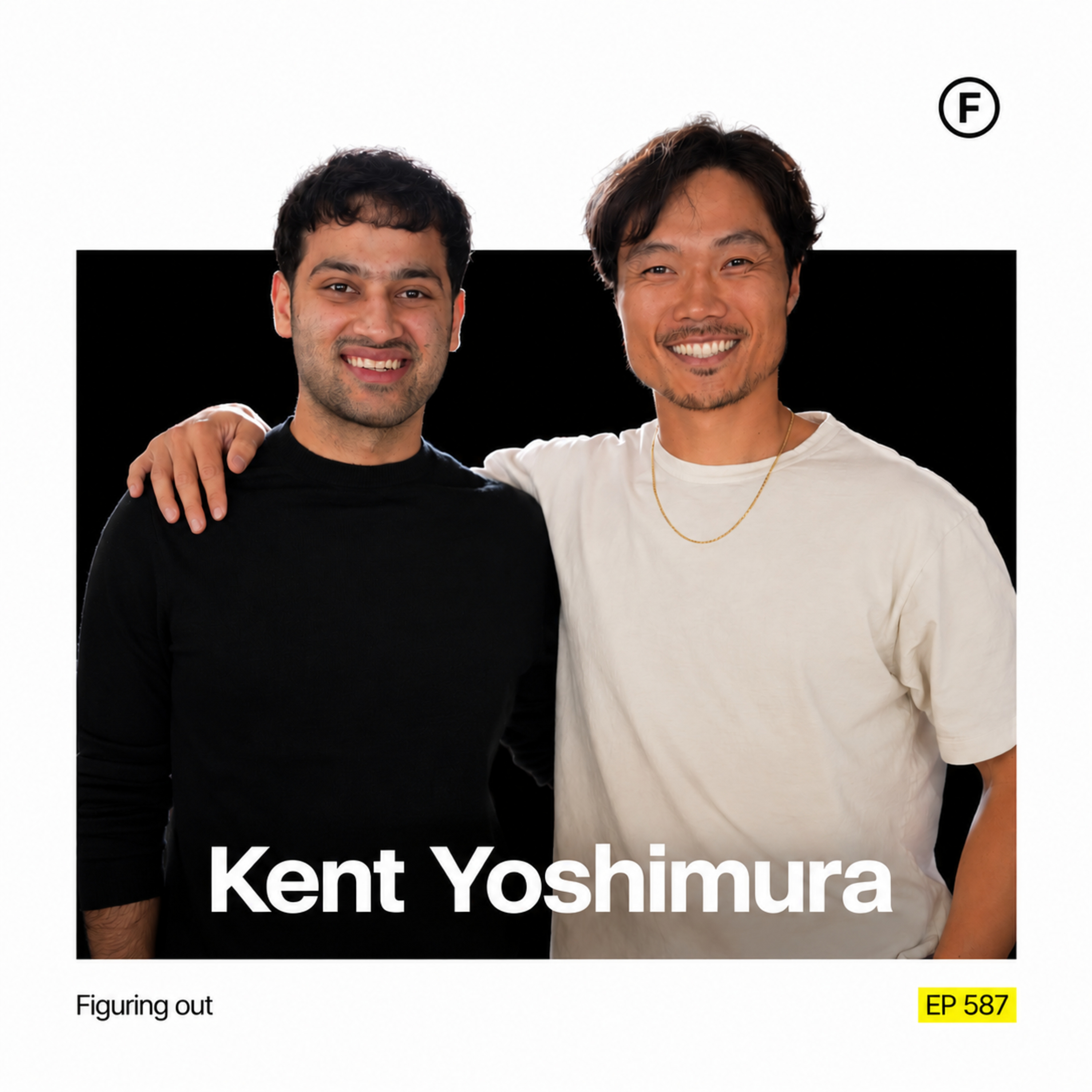
Kent Yoshimura is co-founder and CEO of Neuro (NeuroGum). The episode references their Shark Tank appearances and rapid retail expansion (20,000+ stores; $135M sales cited).
0:00You're one of the fastest growing D2C brands in the world. Tell me what's the smartest thing you did in Eurogum, which a new founder can copy and the world doesn't know about it.
0:08Kent Yoshimura: We got creators and we used affiliate marketing to a degree. Incentivized those influencers to be able to make money on every single sale you're doing. Like our top creators made like$150 ,000 in a month. No way. That's a CEO salary. There has to be something which would be of like blow up moment. It's easy to break down a company into five different sections. There's ops, sales, finance, marketing, and then leadership. Everything you're doing to grow the business should be within all those frameworks and how those frameworks communicate with each other. And we hired those people into the team and we thought of an organizational framework like the business took off.
0:44So how do you hire? What do you look for?
0:45Kent Yoshimura: Trust. Is it a person that you have trust in for an experiential level, but also a personal level? Two, is there humility involved? Is this person willing to admit their mistakes so that they can learn from it? Which leads into the third thing. I think a problem solver. Tell me three values that you as a brand stand for. When we build out our brand book, we talk about do we have calm leadership? We should always be able to solve any problem with a smile on our face. Humility. Do all of us, no matter what position we're in, understand that every level serves others? It is. And the last one funny enough is Kaizen.
1:19Kent Yoshimura: It is progress over perfection. To improve every single day versus chasing perfection is a better mantra for life because there is no such thing as perfection. Someone who wants to become an entrepreneur, wants to build a brand. What do you think? What is the next category where somebody could build a billion dollar brand next? I do think in the future, stress is going to be a very, very big thing. So any product that satisfies, I think will be very, very big. And usually throughout the history, sex, stress, sleep, these are like three biggest markets, no matter what you do. That's never going to change, by the way.
1:54Kent Yoshimura: Yeah. What's the most expensive mistake you made? During your neurocadio. With our trademark, a company owned by someone worth$100 million came in and sued us. I mean, it would have bankrupted our company.
2:13I have a small favor to ask you. I need you to subscribe to our channel. The more subscribers we have, the better and bigger guests we can bring and provide you more value through these conversations. And the full audio experience of this show is also available on Spotify, where you can follow us and listen to the new episodes as well. In 2020, two founders walked onto Shark Tank and rejected a$1 million offer. Today, their functional gum company has done$135 million in sales and sits in more than 20 ,000 stores across the US. Today's guest is Kent Yoshimura, co-founder and CEO of Neuro. In this episode, we'll discuss what are the three psychological triggers they use to make people buy.
3:01How did one of their creators make$150 ,000 in a single month selling gums? How did they build an army of 2 ,500 creators to market and make their products viral or around the internet? how do you get other brands to distribute your product for free and how did one lawsuit almost shut down neuro their entire business watch this episode till the end and to know more about neuro check the link in the description below let's break it down for every entrepreneur who's watching this because you guys are obviously killing it everyone at this point whether you're available in their country and no people have heard about you.
3:47If they're online, they've seen some version of this either through ads, through creator armies or like some shit, right? Like people have figured out you're one of the fastest growing D2C brands in the world and you're profitable. That's unheard of. And you're creating a new category, which is even more difficult. Like you're not in a category where like, oh, this is energy drink. It's always been there. So here's another one. Like this is some new shit. So you guys are killing it. Tell me what's the smartest thing you did in NeuroGum, which a new founder can copy and the world doesn't know about it.
4:24Kent Yoshimura: That the world doesn't know about? I think the biggest thing with entrepreneurs sometimes is they go in with so much confidence that they think they know what's right. And I think understanding your weakness is one of the most important things. Because when you lay out, and same with martial arts, right? When you're in a fight, the first round is usually trying to figure out, okay, these are the type of strikes, type of movements that the opponent is doing, and then you adjust effectively to it. For us, if you understand your weakness as an entrepreneur, then you know the right people to hire to make up for it.
5:02Kent Yoshimura: And so you can't have egos that are involved. And sometimes for a lot of people, like most brands, it's how do I get that initial impact of a brand? So they partner with a celebrity because it's very easy to get that impression base. For some people, it's operational. So they hire in like a president or a COO that could effectively run the business. And, you know, for us, the impact piece wasn't the most important, but getting that word out from the impact piece at an operational level was the key thing. So as we start hiring people, whether it's finance or ops, you know, it's easy to break down a company if you're a new budding entrepreneur into like five different sections yeah there's ops sales finance um marketing and then leadership to tie all those pieces together everything you're doing to grow the business should be within all those frameworks and how those frameworks communicate with each other so that's it that's it and it can be one person it could be i mean so that's what you did you found out people in the beginning yeah we were um you know i think well this is a lesson three four years and you know i think fighting is a solo sport so i think i grew up like thinking i could do this all by myself with my co-founder you know and the reality was when we raised a little bit more money five years in and we hired those people into the team and we thought of an organizational framework of like, these are the people that are best at their pillars and their departments and they're all communicating with each other.
6:40Kent Yoshimura: Like the business took off. But then when you talk about business taking off, there has to be something which was, which would be of like blow up moment. What smart thing did you do there, which helped you blew up? Like what worked in your favor? So the biggest thing for us, well, there are a few big things. So like, you know, obviously shark tank and joe rogan i would say is uh timing meets like right the right decisions and luck and all that stuff i was talking about um tiktok when it first came out there's always an opportunity with new platforms and the same with ai and any like literally any business in history there are people who think a little bit differently there's no laws written like there's laws with AI right now.
7:29Kent Yoshimura: There are, but there's not, right? So they'll break all the rules as they're building their business, building the business until things catch up to them. I'm not saying we're breaking rules or laws, but with TikTok... Are you sure? It was on camera. With TikTok, there was a new platform. There was an entire creator ecosystem And we used affiliate marketing to a degree in the past, but not at the scale TikTok was building it. And it became obvious to us that if we figure out the psychological triggers that get people to buy on a social media platform where they stick on even just for like two, three seconds that we could capture their attention and then get them to like hear us out, we know we could sell our product.
8:20Kent Yoshimura: So every single day, my head of growth, who runs our TikTok, who was an Amazon guy before, and I, New Year's resolution, like a few years ago, we're like, let's post every single day on TikTok and figure out what hooks work with our products so that we could build the psychological trigger base that we could apply to everything else in the business as marketing. and so we did that immediate like a month later we go viral viral viral viral like it's like back to back to back videos and we're like okay we figure something out then we got creators this is your own platform our own platform oh well this is on tiktok but yeah like your own channel on the on tiktok and you just okay and now tiktok's massive yeah tiktok's massive but you know in many ways we built the brand like we built a guide for a lot of that stuff you know there's every day how many posts how many tiktoks were you promoting or producing so at our peak we had 2500 creators i think we have 2500 creators before creators just you when you were doing oh like three four five like posts nothing crazy okay so four posts a day every day for 30 days and you were just trying different, different kind of hooks, different kind of things.
9:43What worked in your favor? Give me top three lessons that anybody can steal right now.
9:47Kent Yoshimura: So there's different cycle. So there's, I keep using the word psychological triggers, but it is true. Like when you go to someone and it's like the art of selling comes from, do you feel left out? Oh my God, everyone else is taking Euro gum, but I'm not taking it. Right. There is like, um, that component of it. there is insecurities. So, oh my God, I feel so tired and I don't have the, I stumble over my words. Is there a product out there that could help me have the confidence to be able to get rid of my brain fog so that I could speak better? And then there's other psychological triggers like, this is, if I don't have this, my, I am missing out on something.
10:30Kent Yoshimura: It's similar to FOMO, but at a self-improvement level, which is all the biohackers. Okay. Tell me more about this. I got the left out and the insecurity and what's this one? Left out, the insecurities, it's similar to being left out, but being left out is a social construct. Another one is tapping into, and this is a combination of probably left out and insecurity, but another psychological trigger that we tapped into the biohackers with is I am trying to maximize my day, but I am having the inability to do so because something is missing in my life. So how do you fit into that? It's a self-improvement construct.
11:14Interesting. Do you remember any hook from each one of them so that I can get an example?
11:19Kent Yoshimura: Absolutely. Yeah. So tell me one example for Left Out. How do you create a TikTok or a reel or a video where you are able to communicate or give people FOMO that, hey, everyone else is taking and I'm the only one who's loser who's not taking it the easiest way to do it if you have good media is get the pr that you need so it's like time magazine's talking about it kim kardashian is posting about it joe rogan is talking about it you've seen it on shark tank right there's all this earned media all of a sudden and like and then you show all these people like chewing it like these famous people especially chewing the product and then all of a sudden you're like if famous people are chewing it why am i not you know and that almost plays into the other one on the self-improvement piece an example of the self-improvement have you seen limitless no the movie no um with bradley cooper it was a pill that makes you a genius so you take so yeah i know about it yeah so the the hook was just like the limitless pill is here now oh the real life limitless pillars here.
12:26Kent Yoshimura: So now that's not feeling left out or an insecurity. It's, oh my God, I could be limitless. Right. So that's another hook. That's like, that's something is missing out kind of thing. Yeah. Like, but for yourself, not within a social construct. Okay. Yes. And then that last one, the insecurity is like, I mean, you're still 29. So you probably don't get these ads. I'm 38. I get ads on my Instagram for hair loss, my dick not working, uh, like all those things, right? Like marriage counseling. Those are all like small, like those are insecurities that people, once they get into their older age field.
13:10So like I'm the perfect audience.
13:12Kent Yoshimura: I mean, I have hair and everything's fine, but, um, I'm getting targeted and I'm sure the second you turn 35, you're going to get those ads too. Yes. Because those are insecurities that people have deep down in them that they're like, okay, I need to be able to fix. Right. So, so that audience you tapped on with gum and the way you tap into it for us is what were you saying? Like what, give me a, like an example. Yeah. Give me an example. Give me a sample. I'll give you two examples. One that's, you know, reasonable and one that's more on the extreme side. Okay. Give me both. So on the reasonable side of for us, it's like, if you're going on a date and you don't have the confidence because you're stumbling over your words, you're tired after a full day, anything, this is a product that you could chew right beforehand.
14:02Kent Yoshimura: And your words will come out like free-flowing. Like you'll, you'll have the confidence, the energy, and the focus to be able to crush it in that moment before you're going. And you see what the India marketing too. Before going into a meeting or a podcast like this, I pop a piece and I'm locked in. I'm ready to go. So you're going to crush your job interview. You're going to crush your promotion. You're going to crush your... So that's having that confidence. It's less so insecurity. It's building that confidence. But that's also expanding to... you know there's been evidence around caffeine and l-theanine like we have science backing on everything that we do the clinical trials have showed that this helps people with their focus problems so what's a focus problem that people have add adhd and when you have add adhd and you have dopamine because you're doom scrolling all the time and you can't focus and because you can't focus other things in your life are suffering and you're struggling to be able to do things we're a product that could come in and help you fix that so you could anchor that insecurity into anything right the the fix to your content yeah into everything interest okay so this is i i love this by the way this psychological trigger so this is what you would do every day four or five content pieces, you would try out these different things, either the left out insecurities or something is missing.
15:33These three things you would tap on and you would find out the winning ones. So you would go viral again and again, again, and then the creators came in, right? Exactly. So what happened with the creator? So when you have this and you create these hooks
15:46Kent Yoshimura: that are actually working and make sense, how do you deploy that into an army of people that could now do it times 2 ,500. Yeah. You know? So now all of a sudden, like the reason you've probably seen the content is because as one brand, you could only have so much budget and so much creative content to create yourself. If you expand that out into a network of salespeople and marketing people that are using these triggers to communicate that out for you, now all of a sudden you're amplifying and multiplying your message by tens of thousands fold to what you're doing. So how are you effectively doing that?
16:28Kent Yoshimura: You know, in anything that you do, there's different ways to do it. It doesn't have to be creators. Give me step by step. What did you do? Exactly. I understand that the moment you multiply it by 2 ,500, it's going to go bonkers. Yeah. Because you already have the winning formula that what is working, what's going viral. Yeah. You're just going to give those as a sample things to your creators and be like, hey, use one of these. We know it works. Just go crazy. And when it goes viral, you spend ads behind it, right? Yeah. And then it keeps going up. So that part, like just tell me everything. Okay.
16:57So you get, you get 2 ,500 creators at once. How did you design this? Who runs this? Who, what was the first step? Like, I want to know everything.
17:05Kent Yoshimura: So our head of growth, Jonathan, there's different creator networks. They were all pretty small, but there were different creator networks and affiliate networks that turned into creator networks. Like it's not necessarily a new idea, right? You have influencer programs and things like that. But if you incentivize those influencers to be able to make money on every single sale you're doing, but we give you the playbook on how to do it because we know it's going to go viral, then it's easy to replicate it across the board. So through that process, we were already going viral. So it was easy to get creators in.
17:40And you have a Discord and all the creators are talking.
17:43Kent Yoshimura: So what did you do? How did you get those creators in? And did you pay them up front? did you ask them to join your program like what was it so if you could create the most effective referral program in the world how would you do that and that's our next step yeah that we're thinking of in the company okay but let me take a step back let's start a check out yeah uh and the u.s market and any social media platform by the way right at the end of the day that where you could track sales you could tap into any influencer network or creator network that exists now for us those things didn't really exist so we had to grab people from influencer networks there were already small creator programs so we grabbed from like 10 different creator programs to create our initial army start a channel where they're all talking to each other that you could feed them content from and this is something funny enough that i learned from the nft days did you ever do nft yeah yeah i lost shit tons of money in that yeah me too me too you and me brother but remember you remember you were in a discord yeah and you're like just waiting for the drop they're waiting for the drop gm gm and then the second a drop happens everyone's talking about it same psychology how are you creating a community of people that are waiting for the next viral hook or something to drop or the next product or you know you're constantly feeding them content but they're all talking to each other so now the creator is like hey this worked for me this you're creating a flywheel within its own community of creators that is figuring out it's almost like machine learning they're figuring out on their own what hooks are working and what's not you just have to feed them the right content to be able to do so for us we had joe rogan talking about us already shark tank kim kardashian posting now we have all these things from before the first five years that we fed into this platform and if you're a new budding entrepreneur you don't need those things, but you have the psychological triggers.
19:40Kent Yoshimura: If you have the initial seed of virality that you can feed into people and you know it works because you test it yourself, have them try it and have them blast it out. And if it works, you put ads behind it because you know that that hook that whatever creator did is working. Now that creator goes and is like, hey guys, I just made$100 ,000 off this one video. You guys should try a variation of this video. all these people are creating variations sometimes they're a little bit different and then that little bit different starts working also so now they take that little bit different thing and the next creator starts building off that and next build it do you see how it starts all linking together right and then the biggest but you know the biggest thing you have to do now as a person that runs that affiliate channel is how do you consistently keep them motivated so now we have incentive rhymes you have a chance to win an ipad if you hit this gm MV, Gross Merchandise Valley.
20:37Kent Yoshimura: You could win a trip to Miami with all the other creators. Like we would set up parties. We would rent a house and set up parties where like a hundred of the top creators all get to hang out with each other and everything is paid for. You know, now it turns into this community of people that are talking, they love your product, they're angry to your product and they're selling, selling, selling, and they're making money off you. It's like a self-replicating platform. You don't need to do that at 2 ,500 creators, but you could do it in your own backyard with your own community and your own village, your own city, your own town, whatever it is.
21:12Kent Yoshimura: How can you get 10 people to love your product? And those 10 people are at least creating enough content and telling enough people that they're referring that product more and more and more. Virality comes from the word viral. In the same way, how do you allow a message to spread effectively? nice nice what did you do exactly so you were in tiktok yep and then how did you get these created did you dm them did you like build a community what was what exactly did you do you and your head of growth so what was the playbook tiktok or tiktok shop already had a creator sampling program that a lot of people weren't using so the first bit was it's a little bit different now.
21:56Kent Yoshimura: So I'll, I'll frame it in two ways. When we first started, we were sampling out to the creators that existed into our platform. And then once they got the samples and we were communicating with them, we brought them into our own communication platform, our own discord, so we could control the narrative on things. And then those creators, if they were, it goes from like L1 to L7, like different levels, right? How many were them? How many did you get them on your discord? I mean, at the beginning it was only like 100 or like 200 it's not that many and how many levels were there in 200 creators so level one to level seven and level seven you get the highest commission but everything in life i would say is about incentives how are you incentivizing people effectively right so give me seven levels of your commission so really like level one to level three i would say well i'll just give you three layers of commissions because it gets a little bit more nuanced yeah level one, you create videos for us and you'll get 10 % commission, you know, on sales you make.
22:55But how do you know that the sales coming directly from that link?
22:59Kent Yoshimura: Because it's associated, on TikTok at least, it's associated with their product card. Okay. And their creator profile. Meta has the same thing. Meta has like creator performance channels now. If you're doing referrals, you have like referral links, you know. So there's a product card that people could click into. and if they make a sale, they make 10 % off that sale. If they hit a certain GMV, let's say they do$500 in sale, we'll give them a bonus. And then they can move up to level two. At level two, now you're operating on a retainer. We'll pay you$500 a month and then we'll give you 12 % commission.
23:35Kent Yoshimura: So now you're motivated as a level one creator to be like, all I need to do is hit$500 in GMV. I'm gonna make as much videos as possible that work until I hit that GMV value. level two now you have to hit 25 000 in gmv or you're getting paid at least 500 so you're motivated but if you don't hit that gmv within a certain time frame you drop back down to level one so now it's a game and then level three we're paying you and in in 500 how many videos do they have to put out so typically in the past it wasn't like we we didn't have any goals like because people are so incentivized. But now we have like, you have to at least create four videos per week minimum.
24:17Kent Yoshimura: They have to be different hooks. And you have to make at least this GMV. Okay. Yeah. That's how it is now. And what's the GMV now? So - In level two and level one as well. So level one, let's say$500. This could be different for different products, by the way. But for us, it was pretty low. It was like$500 to get to level two. Okay,$500 per month. Per month. Okay. not even not even for a month it was like hitting the 500 mark threshold like when you're selling our problem okay from from beginning to the time like exactly oh interesting and then and then now it's time-based once you start getting to higher levels by the way okay okay so then in level two you have to continue to keep making how much for you to get like five hundred dollars between level one level two level three there's basically a breakout that's similar to like five hundred or like$2 ,000, like whatever that GMV is, right?
25:09Kent Yoshimura: But it's similar commission levels. Got it. But you get a little bit more perks as you go up. And what's in level three? So in level two, you get$500 and 12 % commission? Yeah, so 12, 15. I say these numbers for myself, but it could be anything depending on what your margins are. So level, the psychology is what matters, right? With the creators. Level four to level five, like level three, level four, level five, like whatever that second tier is, now they get a retainer. So they're motivated because they get paid no matter what. But then on top of the payment, they have a higher commission rate.
25:47Kent Yoshimura: So from whatever, 5%, 10%, 10%, now you're going to 15%. You're making more money and you're getting paid. So now you're motivated to be like, dude, this is like a real job. And I get paid even more? Level three, we're paying you$3 ,000 a month. That's a real job. That's crazy. You have to make these number of videos, but if you don't hit your goals within a month, that's when time comes into play. Because we're paying you, but if you don't hit these goals within a month or a quarter, like in the first three months, you drop back down. And then if you're not hitting those goals, you drop back down again.
26:21Kent Yoshimura: So there's two layers that are tugging at you. It's like, I have a fear of losing my position in the rankings. Also, you start becoming like a celebrity, by the way, like in the creator community, you can imagine if you're a level seven. Yeah. Right. Yeah. I'm making all this, like our top creator has made like$150 ,000 in a month. No way. That's been easy. Yeah. He was making six figures. That's like a tech guy's job. but in one month that's a ceo salary so he's a celebrity obviously right and in the creator community it's like oh that's been easy like that's the guy that made that's making all this money on neuro gum which is very helpful to us now it's like i can make that much money selling neuro gum like we're gonna join neuro gum even as like a level one person because i can work my way up so to reframe it again how are you creating enough incentive structures with your margin structure, your finances, everything.
27:15Kent Yoshimura: And again, the commission, if you're selling a$300 product, you're not giving 10 % commission. You're giving 5 % commission, right? We're selling a$30 product. So whatever it is, right? But you can sell way more of our product than a$300 product. Same way, how are you building the right incentive structure from level one, who sees the level seven people making all this money? And it's like, oh, I just need to keep making videos keep making videos until i hit 500 gmv now i move up a level now i'm getting paid i keep making more level seven and then the level seven people want to stay on top yeah so that's cutthroat competition once you get level seven what's the drop-off i don't i don't think there'll be like a big drop-off uh you know they need to keep making the videos and you keep making the hooks but you keep the creators on because there needs to there's still a gmv amount that they need to make.
28:09Kent Yoshimura: It's just much, much higher. So if you're not making, you know, I think for us now it's like$10 ,000 champion. It's still not that crazy, but if you're not making a certain GMV amount, you drop down a level. So you're constantly fighting for positions. But in that same vein, if you're a level five to level seven creator, we're inviting you to that house in Miami. You know, we're giving you like cool gifts. You're giving you bonuses on top of like GMV goals you hit in specific time periods like there's different ways that okay like we have like a christmas launcher for example so from uh this time period to this time period for black friday if you hit this gmv goal we give you an extra thousand dollars so how are you creating the right incentives as you scale to make sure people are creating product creating videos for you so how do you incentivize energy drinks because that's, I would assume it's not like a D2C product.
29:05It's more like a retail product. Those are all the retainer creators because it's going into retail,
29:11Kent Yoshimura: but they have incentive structures in the back. So similar to us, because we're now more and more in retail, what are the incentive structures and pushes to push people into Walmart or Costco or CVS or Whole Foods, wherever it is, right? It's still the same psychology and still the same foundation but you're still paying these creators an l7 creator whatever it is to talk about your product and one new thing we're doing right now if you find a top product try to see if you could just get your product alongside that top product if someone's talking about bloom sample neuro gum to them also so that neuro gum just shows up in their video as well you know Well, it's because it's probably similar audiences.
29:56Kent Yoshimura: Yeah. But they're getting the attention already. We have this great partnership with a company called Carpe. They do deodorants. They do$100 million just at Target. They realized having NeuroGum in their ads as like a free offer brought their return on ad spend. Well, increased their return on ad spend significantly. significantly so they've spent over two million dollars on this ad that has neuro gum in it so we just get all the benefits for them advertising our product because it benefited them so tiktok is becoming interesting like all these channels are becoming so interesting where you could tap into other people you just have to find the right places where you get the right number of impressions to the right audience this is super interesting this i've never heard the partnership model explain tell me more about if somebody wants to tap on this what do you do like you go to the to the brand which already is super successful or like killing it or crushing it and how do you partner synergize and what's in it for them to put you on the shelf because you're successful brand i'm talking about let's say i'm starting this new brand and then there is no incentive for me or there is no incentive for you to come partner with me right Right.
31:09So how do I convince you to put my products in your videos? How do I explore partnerships?
31:14Kent Yoshimura: I mean, you have to start somewhere. So a lot of, you know, when we're talking about how do you kick off a company, you get the awareness. So K2O, the chief revenue officer at Mary Ruth, which was a top product. Great guy. left and start K2O with Kylie Jenner. Jay Hunter started with Kylie Jenner. That was his initial catalyst to get a really hard launch to be able to get other creators involved with him, right? So what is that catalyst moment? Like if you're launching a product, everything like a rocket needs fuel to launch off, you know, like a rocket that's sitting on the ground is useless.
32:00Kent Yoshimura: you still need to find that effective thing to get it going and then in that moment where you're like launch is the most exciting part you're taking off you go find other brands if that's your model you go find other brands to partner with and start sampling too you start looking at creators and you start creating like a really appetizing incentive program to get them involved you have to find like the right moment so like uh for us for example like three examples of big moments as a brand our size and then i'll go and talk about a new brand we went back on shark tank twice right so we were the only brand in shark tank history to not get a deal the first time and go back on shark tank again we knew that that was a really big moment so we got all of our creators being like we're going back on shark tank not all of our creators are like what oh this is a big moment Everyone's going to be hearing about us.
32:56Kent Yoshimura: They tapped in. We built a campaign and pushed the product out then. So that's a big moment. We knew we were launching this new product, Sours. Yeah. So, you know, a few weeks ago, I went in and spoke to like 500 creators or something being like, we're launching Sours. This is what the launch plan is. We're doing all these activations and we're giving incentives for the first week to push where you get an extra X amount of dollars if you push the Sour product and you make sales. Now, everyone's excited. That's part of like a launch strategy. So people get involved and jump right in and they go really, really hard.
33:31Kent Yoshimura: And then again, how do you take that leverage? And then I guess for like a third thing, if you're entering into a retail store, we were entering into Costco. That was a really big thing. Costco is like the biggest, one of the biggest retailers in the world. How are we building incentive structures? We're paying people now, not even just retailers. Like if you talk about Costco in your video and you get a certain amount of views, we'll give you an extra hundred dollars so now everyone's like they're going to costco an extra hundred dollars yeah well of course because that is retainer plus the extra cost because that you can't track through affiliate links right yeah exactly yeah so they're not going to get commission but they're gonna they're on your retainer so they're a community so they'll do it exactly and for us it's like we're going to pay that amount for marketing anyways we'll talk about it and depending on the level of creator you are you know we'll or like a But influencer you are, you obviously get more money or not based on your reach.
34:25Kent Yoshimura: So for a new brand, what is that? You can't expect to make the greatest product in the world and think everyone's going to love it and know about it and learn about it right off the bat. You have to create some catalyst for people to know about your product. So some of the more creative things I've seen with launch plans, obviously there's the celebrity relaunch plan. K2O did a great job by getting Kylie Jenner obviously involved. I've seen other brands that would do a big launch at something like a CES, like David Protein. Do you know David? Yeah. Peter Rahal. Yeah. So his co-founder is an investor in us, Jared at RX Bar.
35:10Kent Yoshimura: And they crushed it in the bar space, right? They killed it. So Expo West, genius, right? They didn't exhibit at Expo West because they were too small, but they rented a truck, like a massive, like semi, whatever, you know, one of those big trucks that had like a jacked cow on the side of it. And all it did was just drive around the biggest CPG convention. It just drove around over and everyone was talking about it because they were just like, what the hell? Genius. What is that? and that is your community you're not even there so people are looking for you too because it's like oh whoa what is that david project they realize you're not even there so they go out and find you somewhere else genius genius genius this isn't wow i didn't know this it's a freaking billboard that they're driving around to their community is all all the retailers are there talking about their new protein bar and then like they didn't even have to pay fifty thousand dollars for a booth they took that fifty thousand dollars and they're like we're gonna put advertising on a side of a truck instead that's just driving around for three days straight nice and this would be as like note price yeah it's like it would have been the same price to get less impact yeah and now they're doing this and then now obviously everyone's like oh shit that's genius i'm gonna write about it now all these news articles are being written about it people are talking about it so what is that like whatever you're creating you have to just be creative and think what is that thing that's different you think differently yeah yeah think differently how are you standing out outside the crowd do you want to do this with me think on the fly that's it like okay like let's do it let's do an experiment so let's say if there's a new brand who's starting out what can be this this genius random give me a brand okay give me a product um let's say everybody's starting supplement brands let's pick up supplement brand because that's like the tough category to get A coffee brand.
37:06Sure. You pick up which one?
37:07Kent Yoshimura: Okay, let's do supplement brand because everyone's doing supplements. Yeah. And what is it? What format is it? Is it a pill? Is it a liposomal? Like what's the... Let's say it's a magnesium supplement for better sleep. Magnesium supplement for better sleep. Yeah. So one thing I actually saw, and this is not a new idea, but maybe we could come up with some creative idea. Do you know what the bed rot challenge is? Bed rot? Yeah. No. So it's how long you could just sleep in bed for. So it's like a Mr. Beast style challenge that this company did. I forgot what the company was, but it was a challenge that they brought in like a hundred creators.
37:44Kent Yoshimura: And the person that sleeps in bed the longest wins like$100 ,000, which is the most Mr. Beast thing, by the way. It's like sleep for as long as possible and win$100 ,000. But it's on TikTok live 24-7 the entire time. And then on Twitch and all these other live streaming channels and YouTube and stuff too. So people would tune in to see if people are sleeping or not. It's crazy. But it's for this product. That's all about how long can you sleep, get sleep. I was like, that is genius. because all they did was just set up a room with like a bunch of beds and it's just people sleeping and people are and whoever gets up just gets eliminated yeah if they need to go to the bathroom and get up they're done and even if they get up like can are they allowed to be just be awake and be on the bed yeah yeah that is allowed that's allowed okay but there but then you can't be on your phone you can't like so you start going crazy right so now there's a leaderboard of people right and it's like this person got eliminated and then maybe there's like alarms and stuff going off, I forgot what it was.
38:54Kent Yoshimura: Like every time someone got eliminated, there was like a big thing. So people are now tuning in to this thing about your product to see who's getting eliminated. That's a good idea. That's a good idea. That can be like a... It's hilarious. Yeah, it is fun. It's like the new, the grocery shop video, you know, and I went to visit the grocery store when I was with Jimmy in North Carolina. Dude, he set up this entire grocery store and it was like... It was something like you eat the entire grocery store and then you get to leave. Yeah. And you win this money. I mean, like those people weren't getting paid to be there every single day.
39:33They got paid after they won the challenge and they left.
39:37Kent Yoshimura: And of course, it's Jimmy. So he made it interesting the whole way through and they gave them incentives and things like that for the video. But anyone can do that. Nice. They could even be yourself, you know. Do you think that if somebody does something like this, they would automatically be considered as not serious brand?
39:58Because there's someone who wants to associate themselves with sleep and wants to be serious, wants to be seen as this guy or this brand, which is like, optimize your sleep, get better sleep, declutter your mind, whatever, whatever, whatever. and then I do this funny Mr. Beast style video, will it dilute my brand preposition and will I not be able to target the right kind of audience who I want to reach?
40:21Kent Yoshimura: I mean, obviously it depends on your audience, but is Feastables not a real brand because Mr. Beast is advertising it? You know, like obviously he has other videos that are talking about the child labor and everything. Everything is a funnel, right? People have heard about the funnel in business. the first layer has to be the awareness the hook how are you getting people in and of course with something like this yeah it might be gimmicky but you're getting an awareness there could be something a little bit more serious like other ways people do it it's like andrew huberman who you've had on your podcast people respect him he's a doctor that of ophthalmology you know whatever it is at Stanford.
41:02Kent Yoshimura: It has all these different people. LMNT, the drink, the stick pack brand, got their start because they tapped into Andrew Huberman's audience and then it built like a series. So that was the awareness. They got a doctor that they latched onto. But that's expensive. But it's expensive now. Right. Did you know what's not expensive that we do? Dentists. So we work with a company called PDS. They're the largest dental clinic in the United States. And we're like you know what's really good for your teeth gum with xylitol no sugar but are they allowed to promote yeah we're in every single one of you know how you get a little gift bag after you with a toothbrush and all that like boring stuff they're like we want to make this more fun we did a partnership with pds and now every single person that leaves their dental clinic if they drink coffee gets neuro gum instead it's like oh coffee stains your teeth you want energy you should chew this so is there that's all that cost was the cost of our product you give it you give them to for free and then they just distribute it and that's awareness also yeah right so there you could obviously pay someone like a hooverman and obviously you could pay with equity and stuff too if you're a startup but um you could pay an influencer that is very expensive or you could tap into networks that are traditional like dentists aren't getting paid influencer but you could tap into networks like that also there's always an opportunity so let's go back to your magnesium sleep thing you know what if like i mean there's a bunch of mattress companies out there what if you like partner with a mattress company and be like hey we're giving you this product for free and we actually did this with pillow company with our sleep product where it was every single person that buys a pillow gets a free neuro sleep and so they're going to go to sleep anyways they see this product that helps them with sleep it's obvious there's so many ways you can skin it and you got to be creative and if you're not uh do delivery service is huge in india right imagine i don't know if they talk to each other but that is a job where you have to constantly be on the go and you know the wages on that are not like these kinds are getting paid$150 ,000 a month.
43:28Kent Yoshimura: But those are people that are interacting with other people every single day. Yeah. I was, you know, I had this idea like that I was hinting at earlier, but what if there is a referral program built into this driver community where you give them somehow, like there's probably hubs where like all of them are hanging out, waiting for their next order to come in. Like I see it here, like, you know, you see these lines of cars waiting to pick up food. What if you go and sample NeuroGum to every single one of those people and you're like, hey, go sample like 25 of these. I'll give you a hundred bucks.
44:02Kent Yoshimura: For the next 25 orders, next 25 coffee orders, give them NeuroGum instead. Now that community gets an alternative. It's not allowed. The brands that they work with, they don't allow them to do it. They don't? Yeah, they don't. that's why it was an idea that's a good idea i didn't look into it that's a good idea because i was just like damn like you could tap into that they're interacting with you know exactly what they're ordering if they're ordering a coffee or if it's nighttime and they can't sleep it's like oh sleep yeah oh my god perfect what if you give them your products like hey by the way this is free with your delivery yeah damn that you can't do you can do that with delivery platforms as an advertising tool but that's expensive yeah but you know you can break the rules a little bit.
44:49I mean, yeah.
44:52Kent Yoshimura: Everyone's allowed to break the rules. Until you get caught. Until you get caught. But usually the first time you get caught is just a slap on the wrist. Yeah. So, some different ideas. I was like, oh man, like how do you just tap into these spaces? Yeah. Have you heard, I don't know who, who was this entrepreneur in US? I saw this clip like years ago. I think this is 2020 or something, the Shark Tank person. And that guy said like, If in the beginning you're breaking some rules, which is not, which is not harming people, but harming other big giant businesses, it's okay. Yeah. I was like, I think everyone agrees with that.
45:29Kent Yoshimura: I don't say this publicly, but it's okay. Everyone agrees with that. It's true. Like legally, it's the wrong thing to do, but you have to break rules. You have to break rules. Like that's not, not again, don't hurt people. Exactly. As long as you're not harming people, but harming a large giant to take out like just a percentage of their business. I think that should be. Even what David did, that was like, he broke the rule. What did he do? Well, the rule he broke by driving a truck around this convention is he didn't pay for the convention. Yeah. But he still advertised at it. It's so funny. True, true.
46:08Okay. You know, two things you said on the whole creator, influencer kind of thing. do you get these influencers who are already established and big or do you find these new
46:18Kent Yoshimura: creators to do it what do you do so what's really interesting is micro influencers i think are more and more popular now yeah because so if you asked me this question five years ago it would have been a different answer five years ago you had a really big influencer like a kim kardashian and everyone wants to be like kim kardashian so they like tap this yeah the queen b factor yeah the queen b influencers have diminished significantly because of brand deals, but, and also the rise of TikTok and creators. If you get a creator that has not even a creative, you get someone that has like, let's say a thousand followers, that person with a thousand followers, all thousand followers probably knows this person really, really well and vice versa.
47:05Kent Yoshimura: So if they're talking about a product in a genuine way, the chances of you getting a higher conversion rate on a thousand followers versus a very low conversion rate, even if they have 10 ,000 followers for the price is much more effective. Yeah. You pay someone that has, let's say a hundred thousand followers and has a 0.1 % conversion rate, but you pay them a hundred thousand dollars, right? You can just pay that person with a thousand followers, probably like 250 bucks. And now you have half their 500 followers following your product. At economy of scale, that's so much more impactful. And one of the quotes we use in our company is, make your backyard look pretty before you make the world look pretty.
47:50Kent Yoshimura: How do you make that backyard for that audience look pretty in these different areas before making the world? Trying to take over the world in one big fellow swoop. Interesting. So you would say like only do the small ones? I think it's becoming much more cost efficient and more effective. And when you say small ones, do you say under 5 ,000, under 1 ,000, under 10 ,000, or just complete new people who maybe potentially can become the whole creator from scratch for your brand? Because I've seen few brands do that. It could be, I think it could be anything. I mean, yeah, it's worth sometimes investing into people, you know, and, you know, I think LMNT got pretty lucky with Andrew Huberman, frankly, because pre-COVID, Andrew was making these podcasts, but he wasn't like big.
48:41Kent Yoshimura: Like he became big in the last five years, right? And so for LMNT to be tapped into an early creator that fit their vision and their values, which is, as a company, that's the most important thing. What is your vision and your values that you lay out then you know even if they're small who to reach out to and be like this person shares my visions and values the people that listen to him probably do too so there's a direct connection down the line and then you can invest into a creator whatever whoever it is a podcast creator what that will grow with you and then obviously find success together.
49:18Kent Yoshimura: On the flip side, if there are smaller creators that you're tapping into, let's go with your sleep example. And let's break it down a little bit more. What's an age group that has bad sleep? 30 and above. 30 and above. Why do they have bad sleep? Insane amount of stress, not being able to cope up with work. What kind of work do they do? Relationships. Just average every day they go to office and then come back and they're tired and then so let's know it let's say it's a i'm making this up right i don't know anything about a sass company because the sass apocalypse is happening yeah you're afraid about your job so you can't sleep like it jobs as it jobs and it's very stressful because your job might be on the line going back to the psychological triggers that's an insecurity about your job is that an insecurity about productivity at your job because you feel like you can't do or is it I want to be productive outside of work so that I can start my own thing because I think I have a better opportunity as a backup plan.
50:27Kent Yoshimura: And to be able to do that, I need to have good sleep or whatever it is. What is that through line that you're creating and the audience you're tapping into and those values that you're sharing initially? And again, you know, I'm going to repeat the book's name, Crossing the Chasm, But who is that first tiny audience that is so tied onto your pain points before you go on, cross the chasm into the next audience, next audience, next audience? If you're looking at a product and if you're looking at creators or if you're looking at an audience that you can link into, exact same thing. What are the pain points that you're sharing with this person that your values and everything align with?
51:08Kent Yoshimura: And how do you tap into that? And then if that guy works in SaaS, I bet you 20 % of the people that follow him on his Instagram probably also work in SaaS. They probably work with him. But if he loves the product and he's an influencer at his office, you just got 20 % of his company hooked on your product also. True. Now do that again at the next place. Next place. And then company after company after company. Yeah. Or community after community, whatever it is. Interesting. You know, you said something I sort of disagree with. You said the large influencer doesn't work as much as the micro ones.
51:46I slightly disagree based on all the data and all the entrepreneurs that I talk to, what I've seen. I think the super large one works and the super small ones. The big and the mid ones are not working. I agree.
51:58Kent Yoshimura: You're right. The super big ones have enough of a presence that it's an impact. Yes. Because they're so big. Yeah. Right. but kim kardash so i'll use kim kardashian as an example yeah and also like i was the super yeah go ahead actually completed then i'll tell you the thought okay yeah kim kardashian yeah go ahead there's a certain type of influencer and how they talk about your product though also right kim kardashian posted about a product on her stories and we're just like love this you know like we did some sales but it wasn't crazy yeah but if kim kardashian is wearing skims to a female yeah it just so i was coming to exactly that so the super large ones they realize and i'm talking super large ones mean in any and every category if you are talking to the top five people so let's say if it's podcast and top five podcasters in the world or if it's models and top five models or athletes and top five athletes so just like top five people or if it's like it's a comedian only the top five comedians when you talk to these people if they post once probably it won't work But if you get them for an advocacy, this works much better than anything else.
53:08One large person, like let's say Kim Kardashian with Skims, and if she's advocating that for next six months, it's way more powerful than your 500 creators. I 100 % agree with that.
53:21Kent Yoshimura: I mean, in no world is a small creator going to be a Kim Kardashian. Exactly. So like small 100 creators are not going to be competing with that. So the super large ones work, but they work only when you work in an advocacy level. Yes. Where they are like, you, because it's difficult for me to believe that Kim Kardashian today just like just posted about New York. So she consumes it. But if I see this on an everyday basis, randomly, and even she was not promoting. And I see her and then she's giving it to Kendall and then Kylie and then probably Lewis Hamilton is also. And I was like, holy shit.
53:52Kent Yoshimura: Like this is a family thing. They really like it. They really like it. And then like there'll be like millions like me who would go and just go eat it. So that's a really good point though. because if you are a starting entrepreneur, you can't get a Kim Kardashian. Yeah. But you could probably get someone adjacent to a Kim Kardashian, which is what we did. We got David Grutman, who's one of the biggest, he is the biggest promoter in nightlife in Miami, right? A massive guy and really good friends with Kim and shared NeuroGum with Kim. So now David's talking about it. Kim's talking about it. If you're following David, you probably follow Kim, right?
54:30Kent Yoshimura: If you're following Kim, you probably follow Kylie and you probably follow Lewis Hamilton. And so we work with F1. So we work with Yuki Tsunoda from F1. There's an adjacency between now F1, Kim Kardashian, David Grotman. How are you creating the web of people? Because now you're seeing it over and over again to your point and being like, oh, something's up. But if you're a small startup just starting out, I guess where do you start? Like, I do agree that it's a complete waste of time to go in this like middle section of kind of big influencers, maybe like whatever, like two million followers. Right.
55:12Kent Yoshimura: But he could either make a really big splash with like a Mr. Beast. Yes. If there's an adjacency. Like Andrew Huberman type. Andrew Huberman. but the only caveat i would say to that is to your point who else is connected to that andrew hooverman so it does feel like oh i'm hearing this over and over again within my network yeah yeah there has to be some level of trickle down effect so that you it's more believable what's crazy is like i mean i see these people out there you know they hail mary into one big activation they'll pay like five million dollars like the last five million dollars they have to be like kim kardashian make one post about us you know it's like of course that's not going to work yeah you know like what so you business takes a little bit more thought in that regard where yeah how what are all the connecting factors from your product your values the people you work with the people they work with for it to all come together you know i was speaking to one of the tech giant uh ceo um i was asking that person like why do you in today's world still get like these large hollywood or bollywood stars to promote your stuff because it just makes no sense because i would think that there are no just there are no conversions like like i don't think last time you you saw like a Tom Cruise selling something and then you bought it.
56:45I was like, why do you still need them then? Because every airport you go to, every driveway you'd get, there is some big star with like some big perfume or like some big -
56:54Kent Yoshimura: Yeah, who is buying Johnny Depp's perfume? It's called Cologne. Exactly. So I asked that person, I was like, why do you still do it? Because they're very big on influencer. They're very big in micro communities and they're big on these large, in every country they have this large star, right? and he said something very interesting to me and since then i don't know if it really works or no but i think it makes sense it's like if you get a big star and let's say you spend like five million dollars to get them and if you only have five million dollars and you get them it's never going to work out so you need to get them for five million dollars and then you need another five million dollars to make a noise that you got them and then you get the results and also this is what celsius did this is probably secret information but whatever you like secrets i love it um celsius would spend 4x the amount that the influencer cost to activate that influencer so exactly to that point you get a lewis hamilton for let's say like whatever two million dollars they would spend eight million dollars on f1 sponsorship lewis hamilton marketing like advertising whatever it is so yeah makes that you have you you just partnering with lewis hamilton is not gonna make the noise yeah people aren't gonna be like oh like unless you're a super fan which is probably still very smart yeah like you need to make sure everyone knows about the fact okay there was another thing you said you build this community of all these people all all the creators they come on the discord and then they stay in your community and all of that.
58:38How do you build a community? How do you keep them incentivized enough? Because money for sure is not the only thing. Do you have to create a feeling that this is their brand and they love you? So how do you create that? What are the things that you do in a community? What are the essential things that you create with your people?
58:56Kent Yoshimura: That is the power of brand. And a lot of people forego brand just for transactional things. So like, you know, I, I'm trying to think of like companies that, um, existed in like the last 10 years that were big, but they didn't build the brand component to it. Like you could think about, uh, you walk down a supplement aisle at CVS, you see all those, uh, supplements that sell B6 and B12 and it has some value, but there's nothing like a feeling wise associated behind it. Yeah. For us, here's an example of something we did two weeks ago for our Sours launch. we rented out an entire back area of a go-kart space and we invited 50 influencers to come go-kart racing with us because it's something that's on the go you know you have to be focused while you're driving and then all those people by the way we didn't pay them to come you know it's just a fun little event but they sure as hell told everyone else about how cool this event was and if you are and we target college campuses and things like that as well, because there's a perfect product for college students.
1:00:04Kent Yoshimura: If you are tapping in and providing value outside of the product in terms of a social factor, a cool factor, obviously a benefit factor for school and performance, then you have to make sure that your brand is conveying that from an approachability level. Like, I feel like I'm a part of this brand because whatever, the way they present themselves. And, you know, one of the things I say to the team a lot and to other people, and I'll say to my son once he's old enough, is there's, this goes for, I think, human beings in general. Like, what are the factors that make you trust someone that makes you want to follow them?
1:00:52Kent Yoshimura: they have values that are crystal clear like you know exactly what their values are and then uh uh damn how do i say this in a way um and then they have i'm just i'm just gonna say the way yeah okay yeah like and as a as a man okay like if i think about like if i want my boy to be a man what are his values and does he have the balls to stand behind his values that's what being a man is Yeah. And that's what being a leader is, or that's what being whatever the acronym for a woman is, you know, like a female leader is like, what are your values? And you stand behind those values. But how do you create that feeling in other people?
1:01:35Because when you do that as a brand, you have value system and you're standing behind it and you want to create this feeling and you stand by every word that you do. Yeah. Right. How do you create that feeling for the creator who's promoting you?
1:01:47Kent Yoshimura: So similar to this, those values, the way we construct our experiences, whether it's this K1 speed event that I'm going to use because it's the most recent one. Go-karting. If you look at the pictures that we wrapped the go-karts, we had the type of influencers that came are all very similar fitness style influencers. Nice. The way we talk about our product, the way we made it fun, but also competitive. You know, even the creators in the Miami house, like, it wasn't just about money. It was about our top creators that are motivated as hell. They're all very similar, like fitness influencers. Once they start talking to each other and once they start identifying subconsciously, actually, even when you go from L1 to L7, we kind of have an understanding of who's going to be an L7 creator.
1:02:41Kent Yoshimura: Because those are the people that represent our brand the best. Like, of course. because the values the events those things that we talk about the way we talk about the product on a daily basis and how it's being used and the other bigger influencers that talk about it like whoever like mitchell hooper is an example world's strongest man like or andrew schultz comedian who's very sharp joe rogan it all like subconsciously almost stacks up to represent someone that's confident but yet has humility and is allowed to have fun and then that trickles down into how the brand is which trickles down and how the creators are that's how all of our events are the type of people they meet are exactly like that also like everything you're constructing is interconnected is interconnected one thing yeah like we're never going to do something that's so bizarre, like whatever, maybe a bizarre thing, but it'll still be fun, competitive, has humility behind it.
1:03:48Kent Yoshimura: You know, it's like, it's still the same values, no matter what it is. Interesting. So I was going to ask you the three elements of building a brand, but I'm going to ask you first value system because you use that too much. And I think that's going to be important for a brand. Tell me three values that you as a brand stand for and how did you find that and why only those three values so there's there's two there's our external facing and our internal internal facing so when we build out our brand book we talk about tone of voice um and the type of if i were to think of like a type of person that represents our brand very well i wouldn't say it's really an andrew huberman right who's science-backed obviously very very intelligent but more on the dry side obviously like he doesn't like joke around too much yeah but on the flip side you look at someone like a bill nye the science guy or like adam savage from mythbusters they have the and we actually have a really sick collaboration happening next year with uh this company called colossal um and might get some of those people involved, but there is a trust factor because of the science and everything that, and the intelligence that they promote, but they obviously make it approachable and fun.
1:05:10Kent Yoshimura: So for us, are we science backed yet in building a sense of approachability in our product? Science yet fun. Science yet fun. And then again, the humility component is really big, which goes - What do you mean by humiliating? Are you not over-promising? It's like, we don't over-promise that this is going to fix your, whatever, Alzheimer's or whatever, you know, there's like a lot of - So you're not like the doctor. Yeah. Like we're not, we're more Bill Nye than the doctor in a sense, you know, we're not promising these crazy things. And in the products that we create down the line with innovation, we are never going to be creating something that promises to be a pharmaceutical level product.
1:06:03Kent Yoshimura: That's why we're not getting into GLP wands and this and that, right? But we will always be a product. And I think actually a lot of brands go down that path and end up ruining their brand because they deteriorate what built them in the first place. Are we science backed? Are we approachable? And do we have the humility to understand that we live in that space? Interesting. And then we tie that back to internal values of leadership. Do we have calm leadership? Because if we're a brand that has fun, we should always be able to solve any problem with a smile on our face. Yeah. Sorry. Oh, humility.
1:06:43Kent Yoshimura: Yeah. Calm leadership. Humility. do all of us, no matter what position we're in, understand that we call it servant leadership, but like we serve others. Everyone at every level serves others, right? That comes from a Japanese root. It is. The last one, funny enough, is we have multiple values, but like these are the three important. Kaizen, which is a, have you heard that word? Constant improvement, yeah. Constant progress over perfection. It's like, which to me is this product as well. Okay, I ruined it for you. For audience, for somebody who doesn't know about Kaizen, just go ahead and tell.
1:07:20Kent Yoshimura: So Kaizen, funny enough, Trader Joe's, which is a big retailer here too, Kaizen is one of their mantras as well. It is progress over perfection. Like to improve every single day versus chasing perfection is a better mantra for life because there is no such thing as perfection. And even the great leaders like Napoleon said it, uh mark zuckerberg also says that you know like moving fast is better than taking all your time to create something that's perfect because things change in the process like there's no such thing as perfect but you can always improve yourself and in fact if you're an entrepreneur if you're someone that is trying to become a better version of yourself every single day kaizen should just be in your core nice so values internal external we build that okay value system for us is also important when we started podcast i think that's one of the most important thing for any podcaster as well that they should have yeah they should have a very strong value system because at one point you're going to expand your podcast into multiple areas like how no matter what you start as you're eventually you'll become much more bigger and different and wider so you need to have a very strict value system and for us that is so from day one we started with how the most world's most extraordinary minds think and we stay with that no matter what we do no matter who we call no matter how big small controversial uh educator non-education expert whatever we stick to this one value system and that's why i think the audience has helped us go from one territory to another from one country to another and now it's helping so value system is so so goddamn important and then we have a very important thing called the not to-do list hmm i love that that is like the most important we have that also yeah like we we say this internally that here are like five things we will never do and then we will do everything else yeah so so the five things that we never do is so you know the top five categories in content that works all around the world we don't do any of that oh really the the categories which are those yeah what are those categories i'll tell you the categories which get highest views in the world top five are number one is horror oh yeah right like it gets like true crime horror yeah like i i don't know what like one two three four five six like i i'm just messing up the priority order depending on the country but these these five stay for majority countries they stay as it is right in some countries it can be one some countries it can be four but these five will be there so first is horror second is religion and devotion which is very very very strong then there's entertainment and gossip which is big these are so obvious then sex and erotic conversations which is the soft porn the sex and erotic conversation and then the fifth is astrology of course which is similar to religion yeah right these five you look at anyone if you in any country the top five creators they will fall into at least like at least three or four of them will fall into one of these categories that's crazy i believe it though it's so when you say it it's so obvious yes and i see why i know why it's crazy yeah so and so we made a list that we will never do this these are the five things we don't touch at all like we would even if we touch sometimes we touch sex as a subject but we do it from a point of education yeah we never do like some random erotic conversation we will never do it i can't even imagine that yeah don't start now okay coming back you said you use a word called brand book yes right first tell me what are the three elements of brand and then help me build a brand book for the entrepreneurs what are these five things which are which should be there in a brand book but before we go there tell me what is a brand uh you said community experience should i consider that as an element of brand um yeah well so i'll talk about a brand from okay okay different perspective from a i'll say it in two ways i'll talk about it from what like a typical brand is it is a visual language of a product right like there's a visual language of a product that you are communicating that has underlying tone values and uh communication mechanisms so let's say like for us um tone values and uh communication like mechanisms that's what a brand is like that's what a brand is we are communicating energy and focus is the most important thing we are a gum packet so but with supplements so we We talk about what ingredients are in here.
1:12:26Kent Yoshimura: We are laid out like this all the time. So even if you look at our different packaging levels, you can see that there is a design format that is consistent. So that's the visual language. There is a tone of voice. So if you look at all of our advertising, the way we talk on the back of the pack, even here, there is a way that we speak in the packaging. Obviously, this doesn't really have it. always science-backed. We've got good energy. That is the tone of voice. And then from there, how do you take that tone of voice and communicate it out into all the marketing material? So now you have a way of expanding it.
1:13:06Kent Yoshimura: So communication, tone of voice, and? Visual language. So how do you present yourself? How do you visually? And then you just stick by it forever. Yeah. So that's, that's the foundation. There's, that's the architecture, right? Of what, and then from there, that's where marketing and all those things get really exciting innovation, because you have to stick within those confines of an architecture and values and ideas and tone of voice and build from that. Okay. It's your Bible. Like we call it a brand Bible more than a brand book, but I don't want to bring religion into this. Um, if from there though, the other way to look at a brand is audience.
1:13:53Kent Yoshimura: So how does the audience dictate how your brand is being perceived is another thing. So if you start off with, especially like a creative community and you're realizing that the language that's being used is around confidence. Let's say, which I hear a lot with our product. Then how are you building an effective feedback loop to adjust your values and brands, but not too much because like that's when you get out of hand to reformat, recreate. And then that's why many brands like every 10 years or so, they relaunch with a new brand book, you know? What are the experiences that you want people to have?
1:14:38Kent Yoshimura: like we were talking about that experience still fits within this framework the tone of voice but you know a brand book's not going to tell you how a person feels or how they should feel like you have to create that yeah and then put it into your brand book but like that feel like for us we want people to everyone at one of our experiences should feel approachable so everyone's friends with each other because that amplifies the fun okay there's no like the aspirational, egoistic, top-con level. None of that. Everyone hangs out. It's a chill place. It's a chill place. It's not like there's a VIP section and a table for like important people.
1:15:21Kent Yoshimura: Never, never. And I honestly will, like we do with our creators, obviously, but once they get there, the experiences, they're all the same. Yeah, it's not a Tony Robbins conference that you're going to. It's a neuro conference. So is there approachability? Is there fun? like is there energy and excitement issues like it should constantly be high energy um like all these things is a feeling that when i listen to your podcast what is that feeling i want to get when i go to an event of your source like those are things i think should also be embedded into a brand book that typically is not okay so it becomes tone of voice let's do one by one yeah We jumped in right here.
1:16:04So let's pick up first as feeling. Okay. Sure. So feeling in your brand book, what is the feeling that you want your audience or your customers to feel when they touch or see or consume your product? Trust.
1:16:18Kent Yoshimura: So let's say from a physical standpoint, so let's start off with like the original three, right? Ton of voice, communication, visual language. Visual language. I pick up a piece of gum or a pickup pack. even down at the operational level and the way we design our packaging, there's a nice gloss on this. This is embossed. So it feels premium and it's not premium just because it looks nice. It's premium because we use premium ingredients that all work together to create a trust, a trustable, reliable product. So you don't, we don't say any of those things on the packaging. It's like, yeah, the most reliable energy.
1:17:01Kent Yoshimura: You're not writing that, but through the visual language, you are able to create that. What is the most important thing that I should put in my packaging so that it, it screams trust without even saying it, because there has to be some magic. It's a negative space. Is it something else? Transparency. Well, it depends. Cause I think it depends on the brand obviously as well. What's for you so that we know? For us, we talk about transparency. So the ingredients are right on the front. Okay. Energy and focus. You know exactly what you're going to get when you have the product. The promise of the brand.
1:17:40Kent Yoshimura: This is mechanical. But when I look at our product and I touch it and I'm like, wow. Like, and I look at another crappy piece of gum that doesn't have all these things. you know this costs us like a penny to even like see how it's like a little raised yeah yeah like you can't tell if you're just looking at it but then you pick it up and you're just like whoa they're like even that little detail yeah like you know that there's like a these guys put in attention to detail even because of something like that you see like this is shiny a little bit also like those little things add to the trust the reliability the way the visual language of the product comes out nice so if you want to create a visual language which has where you want people to trust you the three things you need to be very mindful about how are you being transparent how are you showing them that you have your entire brand runs around attention to detail and then what is a simple promise in two or three words yes these are like three very important things if this is sitting on a retail shelf and you're just like can i trust it yeah can i trust it and like if i look at it i know exactly what it does boom i know energy and focus boom it's so obvious yeah true i know exactly what it does i know exactly what i'm gonna get i know exactly what i want to get and i look at it's like oh it's energy and focus because of the caffeine altiating b vitamins no sugar oh that's great that's a great benefit spearmint that's a great flavor you know oh and now i picked it up wow like this is really nice packaging interesting okay right all those things so and subtle things but obviously okay so that's that's visual language is first in the brand book in brand bible as you say then second is feeling the feeling you want is approachable energy and what else approachable um well when i say energy we're talking about community experiences but if we go back to the tone of voice and the okay let's go tone of voice first yeah the way we talk about our product is never overly scientific and i could talk overly i was a neuroscience major so i could talk you know like the brain all day But if we're going back and I'm not trying to confuse someone to talk about, oh, okay, like you block adenosine and this is how.
1:20:07Kent Yoshimura: When I start talking like that to someone, dude, we're a gum. You know, at the end of the day, we're a gum and a mint. It has to have that approachability, but a reliability on the trust. and we could talk about uh the science components the different pathways that this is affecting how caffeine blocks adenosine receptors so that's how you don't feel tired you know l-theanine allows you to curb the the and balance out the caffeine you know because the compounds amino acid compounds found in matcha and green tea you can dive in and look at that if you want to on our website and that's why we have the clinical trials, but we don't lead with the clinical trials.
1:20:51Kent Yoshimura: We lead with the approachability, the fun, the transparency that our product has. And then if they want to search more into it, they realize like, oh, wow, there's all these things that allow me to trust it. Interesting. Nice. Okay. So that's tone of voice. Tone of voice. And again, with tone of voice, the way we do it, it's like, if there's a celebrity that you could, if your product is a celebrity, what kind of celebrity would it be? and we talk about childish gambino you know he's one of the most talented people plays music comedy acts everything but it's still like a funny guy compared to like uh jared leto or something you know who's so serious although he's very talented that's a good question to ask i love that question if your product was a celebrity which celebrity would it be yeah who would it be for you you're already a celebrity no no no no not yet wow that's a tough question dude yeah that is that's a good question though i like it something i'm gonna think the instant name that comes in my head is oprah oh interesting yeah like do you give free giveaways to everyone yeah i really want to yeah for my podcast if let's say if my podcast has a brand and if we wanted to be a celebrity with celebrity will it be?
1:22:09I think Oprah would top that.
1:22:11Kent Yoshimura: Oprah's a good one. But I want to go deeper and think more. Like this is just top of my head because she's an inspiration. So I'd look up to her. And it's easy to start associating. It's like, okay, what would Oprah do? Yeah. And like, what wouldn't she do? You know, and there's a bunch of things that hopefully she doesn't do, but it's easy to start building a tone of voice for your brand. Be like, I'm going to, It needs to be like this person, you know, and obviously I represent the brand in a way. I, hopefully I don't act like a overly scientific asshole, you know? So there's that component.
1:22:47Kent Yoshimura: And then finally, so visual language, tone of voice. And then what was the last thing? Visual language, tone of voice and communication, but communication. Oh, and the communication. Yeah. Yeah, it's part of tone of voice and the visual language. Okay, so in the brand book, there has to be visual language, there has to be tone of voice, there has to be a feeling defined. What feeling? What else needs to be there in the brand book? So in a typical brand book, even if you start with those three, it starts getting broken down even more concretely. So with any new product launch, it is, are these the fonts you are using?
1:23:30Kent Yoshimura: You should always be using the same fonts. Okay. You know, is there a, for us, we even talk about the cadence of how we speak. So are we talking in short sentences? This is this, this is this, or are we talking in short sentence long? Is there a rhythm to the words, right? In how you're speaking. Nice. Cause I mean, you have a way you speak. I have a way I speak. And funny enough, the way you speak defines a person. True. And that's communication. So is there a way that you're speaking even in the rhythm of how you communicate? That's new. So rhythm of sentences and how you speak and what kind of language you...
1:24:11Pretty fascinating. And what is yours? Is it like short sentences?
1:24:18Kent Yoshimura: No, I mean, it's approachability. So it's a combination of very strong statements that we would make. But then like an approachable, like longer sentence. Like there's, we never make it like, the reason we don't use short sentences like is that becomes a statement every single time. And some companies do that, you know, because it works, but, and it's not overly flourishing. We're now using big bombastic words and because then there's no trust. You're covering it up with. But is there a balance between simple words that are effective and approachable, but statements when you need to make the statement so it's an actual hit?
1:25:01Kent Yoshimura: That's a balance in language. So it's like you do headline and then you do the explainer. Headline, small explainer, headline, explainer. That's your rhythm. Talk to me about community events. You were talking about it. What do you prefer? the large community event once a year or like bunch of small ones or like mid-level two or three a year that's it yeah we do like i think we do one every other month so like six six a year so it's kind of a lot six a lot but sometimes it's big sometimes it's small i mean we do maybe we even do more like we'll sponsor like a pilates event so the entire pilates studio is neuro gum you know um that's a big one every other brand is doing this pilate thing i know I don't know.
1:25:43You do it. So you should know.
1:25:45Kent Yoshimura: Well, I don't do Pilates. Like we do it. No, but you sponsor Pilates brand, right? The Pilates is really picked up. It's picked up like crazy. It has really picked up. It's like Pilates and Pickleball. Yeah. Oh yeah. Pilates and Pickleball is like really big right now. And even paddle in a lot of fun. It's crazy. It's like any P sport, you know? Go find the next one. Yeah. So you better start your next brand name with P. Yes, exactly. but with uh pilates i think it's not it's hard if you've ever done pilates before yeah i've done that i've it's hard like a weird way oh man like you're shaking yeah i thought it's gonna be so easy because they're just bunch of people just on the reformer i was like yeah i'm gonna do it you're just like i remember like 18 minutes in 18 minutes i was like this i was like please I guess it requires focus.
1:26:40Kent Yoshimura: I mean, with our mark, I have to ask our marketing team, but Pilates is great though, because, and same with pickleball, and Padel. Tennis is pretty hard. Pickleball's not as hard. Pickleball's fun. Pickleball's easy. It's easy to play. As long as you're not playing against pros, but it's easy to play. Yeah, exactly. And I think it's the same with like Pilates. Pilates is in CrossFit, but it's still hard. Yeah. Like there's like an accessibility to it. Like in a group class, if you go for the beginner ones, you can get through it. Yeah. So that's what it is. But if you do like one-on-one and you really want to focus on yourself, it's brutal.
1:27:16But coming back to Pilates, like why every brand is partnering with Pilate clubs, Pilate sessions, organizing these Pilate communities. I see this like everywhere. So I think Aloe started this and then now everybody did it.
1:27:28Kent Yoshimura: I know, genius Aloe. I think at its core, it is a group of people that are passionate about one thing. People, if you go into a Pilates class, you've seen this. They love Pilates. And they'll talk about Pilates. And they all hang out with each other with their Pilates and their socks, their special socks that they have. And there's a Pilates personality. Yeah, there's a Pilates personality. And if you're thinking about like a cult of a brand and like being able to tap into different cults. like I'm using the word cult in like a very superficial way, but you tap into a community of people that are talking to each other.
1:28:09Kent Yoshimura: If one Pilates person is like, I got to my class. Thanks to NeuroGum. That other housewife that, you know, is also trying to get through a class will probably be like, Oh, I should probably do NeuroGum too. You know, you can start seeing that. Versus, you know, I think about like, like F1 has a cool factor to it, but, I don't know if that was like the right place for us to activate. Why? Because it's such an independent sport. And if I think about pickleball or Pilates or things where you're just like, oh, this, I want to get better at it. And what allows me to get better at it? When you have people, like what's like a brand that activates at F1, you know?
1:28:54Kent Yoshimura: I'm trying to think of another brand, like Red Bull, I guess. but Red Bull is all about individual performance and extreme performance. And for us, that's not really us. You know, it's not really extreme performance. It's finding the best version of yourself. That's us, you know, at any given moment, we're in your pocket so you could be the best version of yourself in that moment. You know, it's not, I'm going to go jump off a cliff in a squirrel suit. Interesting. So you wouldn't go partner with an extreme athlete, but you will partner with someone like an everyday Joe who is, who's in a good shape and wants to get in a better shape.
1:29:32That person who's trying every day, feel good factor, loving it. Yeah. And has a balanced life. Is that what your ideal type is?
1:29:40Kent Yoshimura: Yeah. Like I'm, you know, if I were to break it down, like we wouldn't sponsor, like we actually got our start in CrossFit, funny enough, but I wouldn't go back and sponsor CrossFit because those, it's a little too extreme. It's people, it's so not accessible like will you sponsor high rocks but high rocks is something i would sponsor because it's a little bit more accessible and easier to do than crossfit without that almost like extremity in what people push themselves to like we would sponsor you know i i guess like to think about this there's actually a pretty big unlock for me even having this conversation right now that I'll bring up at the offsite.
1:30:22But what is an
1:30:24Kent Yoshimura: environment where your product did enough for a person that they're willing to share with the community that they're a part of? And if it's an F1 driver, even if an F1 driver shares it with their community, there's only like 12 F1 drivers. What is that community? It's like, It's so aspirational that it doesn't make sense. There's a company called Ladder. Do you remember Ladder? No. There's a supplement company that had LeBron James, Arnold Schwarzenegger, Serena Williams, the top athletes in the world. Mecca. Yeah. It failed like three months after launch. No way. Yeah, because no one's going to be a LeBron James.
1:31:07Kent Yoshimura: Yeah. Like, there was a pop, but then they anchored so heavily into these elite athletes. These elite athletes, that is such a small team of audience members that it's like, I'm going to be the LeBron. You know, I'm going to be the next this. And then they forgot about the community. They forgot about, like, the everyday person and how it impacts their life in a good way. There's such a good insight that your brand should be for communities where there's a shareable value or a shareable essence. And there's hope that we can become part of this community. If there is no hope, no way to become part of this community and there's no shareable essence, then probably your brand.
1:31:52Yeah.
1:31:53Kent Yoshimura: You have like 10 people using it. Yes. That's a good insight. I'm stealing it. I'm stealing it. I'm stealing it. I forgot what I even said. now it's yours okay but this is fun okay let's get back to the community yeah so you said community events why would you do smaller community events and not just like one large event i think it goes back to the micro influencer would you do like one large event as well we would and we do from time to time like larger events but i think there's diminishing returns depending on the size of event that you do so you could get a lot of people and like we do these like big college events you know with uh our partners at lion leap so like a thousand people will come into a bar and it's neuro themed and whatever but are those people really there for you or are they there for a cool event that you're paying for but wouldn't that help the brand just like you become a cool brand or cool event where everybody wants to get an access, but nobody can, or maybe like they're waiting for the next year.
1:32:58Kent Yoshimura: And we did something like that in New York as well, where it was like a bigger event and like there was limited access. There were cool people there. You know, we brought our celebrity partners and stuff in. But I think it's easy to find something that feels like the cool party to go to that night that's sponsored by the thing. But you get the essence of the brand gets lost. It just becomes an event. But if it's a tight community, like this K1 thing with 50 people, 60 people, they're all talking to each other within, under the roof of neuro. So obviously the main thing for all these people here, the common denominator is neuro.
1:33:40Kent Yoshimura: Versus a big event, the common denominator is a cool party. Yeah, like everyone's college is going, so I want to go. Yeah, yeah. Because that's not neuro-gum at all. And I think a lot of people get lost in the sauce with that a little bit. I'm trying to think of like other brands that still do big events. And I only like the Fortune 50 companies that I know do that, you know. So here's a question on that. So let's say there are two events, right? One event, which is like the 50, 100, 200 people max. You're not going to scale it big on that because you want to create tight-knit community. Yeah.
1:34:11Right? And one is 1 ,000 people, 2 ,000 people, 3 ,000 people, like big, large event. you take like the big creator house and then throw a big party and everybody's there everybody's posting pictures stuff like that two completely different events what will give you more number of eyeballs and cool factor on social and digital content point of view which will help your brand doing these smaller events because at the price of that one event probably you can do five of
1:34:39Kent Yoshimura: these events so 10 of these events i'll say a little hack that we do also though because it's not it's not binary like big events actually do work sometimes because it depends on who's coming to the event and how you want to show off right okay so at expo west doodles did a great job they just got sold to barilla but they did a massive they did the biggest party at expo west because they knew retailers were going to come they knew influencers were going to come and they knew everyone at expo west was going to come to that event because that was a cool event for we wanted to go to and then they made an impact to those retailers to be like this is the type of stuff that we do this is how big we go and so they got a bunch of sales because of that and places to go into they did also something very genius which um they charged other brands they set up the event they charged other brands to activate alongside them so they made their money back from other from other brands sponsoring that event no i didn't get they were the main sponsor so they were the main sponsor for this event okay they built this huge thing and the event is by them the event is by them okay but they got 10 other brands to pay them like 10 000 20 000 to activate their products in that space it's yeah it's not make the money back so they made the money back by going that big and you know we were talking about that internally too where like so many other brands donate product to us um for our partnerships when we activate so it makes it a lot more interesting that if we throw something big enough, we just charge other brands probably to activate alongside us, but it's still a neuro event that just get free goodies for.
1:36:21Kent Yoshimura: So that's a very cost efficient way to get eyeballs while also leveraging the fact that you invested into this really massive hop of an event, right? But on the flip side, a Pilates studio, a smaller community, all those things is everything we talked about. that's a community of people under the common denominator of neuro talking about your product, experiencing this shared thing together that then goes out and will always remember that, oh, that neuro Pilates thing was great. Interesting. So now that you talk about this community, give me three communities to tap into the smaller communities for a new brand for 2027, which are going to become a trend or which are already becoming trend and they're underrated and underpriced attention, you can get them.
1:37:07Like Pilates is big now.
1:37:08Kent Yoshimura: I don't want to use Pilates. Yeah, yeah, yeah. Like everybody knows the Pilates playbook. What kind of brand? What kind of brand? A performance brand? Yeah, let's say CPG brand, performance brand. Okay, let's build anti-performance brand. Like anti-energy brand. Like let's build a calm brand. Okay, okay, a calm brand. Let's say a calm brand because you're so stressed out. Let's go back with the sleep thing, but not for sleep. It's like for - Yeah, just calm. Calm. Yeah, there's so much stress in the world. Declutter. So engineers, are you able to get into corporate campuses, corporate cafeterias?
1:37:39Kent Yoshimura: I have friends brands that have gone in, they work with, there's distributors in the United States like Canteen, PFG that work with Twitter offices or exo offices, meta offices and things like that and just sell into those cafeterias. That is an ecosystem of people that are working 24 seven and they go to the cafeteria and they pick up your brand every single day. I think that is a huge opportunity for a lot of brands if you could break into that. Interesting. Because those are people that are stressed out. Yeah. The cool brands. The cool brands. Yeah. So that's one. So something like that, corporate campuses and with the AI revolution, are you able to tap into budding entrepreneurs and AI engineers that, if it's a comp product, especially like those are the people that it's the easiest way to get the word out because you're diving into a budding industry.
1:38:36Kent Yoshimura: Are there other ecosystems that I've seen that are pretty interesting right now? Yeah, which are budding. So you said cool campuses, college, corporate hustle, cool startups, that gang. I love that idea, by the way. Love it. Right. Because they're already in that environment. And they're high paying audience. So that's another essence. their height these are the guys who talk more a lot more these are like close-knit community once if two managers or two leaders start drinking everybody worships their leaders everybody starts doing it as a cult like behavior as well i love this this is great there's another one so running has become really really big again but i'm gonna take a step back it's not the running people aren't drinking alcohol anymore yeah but people are people they still want to feel something They still want to kind of like get high on something, you know, like whatever it is.
1:39:28Kent Yoshimura: So is there spaces that people can enjoy a social lubricant in some way? Or even if it's feeling, if it's a calm product where they're feeling calm, like retreats, like now there's like wellness retreats are getting really, really big. Morning, like for a product like Neuro, we do like Diplo Run Club where it's a morning event that starts at 7 a.m and then diplo has a dj set at 10 so no one's drinking but they still want to fuel energy so they take something like neuro but for that that makes it great for energy brand not for the calm brand yeah but for a calm brand a wellness retreat is perfect so have you seen these like there's like these week-long retreats now where um you put your phone away like you it's called digital detox yeah but those are the people that they're drinking like peas and like before come on but if it's a calm product is that the space where it's like if i really want to send us or that's maybe once they come back into reality you know we're just brainstorming right now too right so it's like so wellness retreats wellness community it's any environment and if there's like a third one you know like like the the through line with all these by the way is every you know there's the cult of apple the there's the word cult that's like gets used we were even used like if they're like the cult leader of a corporate campus whatever the the boss is if jensen wang is doing something eating fried chicken you're probably gonna go and yeah everyone was eating yeah right it's like those are the ecosystems you tap into in a running club if diplo starts a run club and everyone goes to see him as a dj and he's throwing your like there's videos him throwing neuro gum into the crowd you know like everyone's chewing neuro gum there like what's the environment i would say that there's there's almost like a cult like following that's already built in and you could get that one person all you need to do is just tap into that one person to get everyone else involved yeah but where is that cult like you the wellness cult will be there, corporate cult.
1:41:39What's the third cult? I don't know. What's the third cult? What is becoming, which is a small community which you see becoming big?
1:41:47Kent Yoshimura: Hmm.
1:41:50Kent Yoshimura: I mean, I think, I actually think with, well, I don't know. It's, that's a good question. Like, cause there's so many, there's so many micro communities. I think about like podcast communities too. Like when people are listening to you, I use the word, again, I'm using the word cult in a specific, very specific way. But why does your audience listen to you? Because, and why would brands work with you, right? You've already built trust by the audience. It goes back to the brand values. You build all these things where your audience trusts you. So if I'm working, not even as like an experiential event, like if we take a step back from events, but go back into people to tap into.
1:42:34Kent Yoshimura: Who is the most reliable voice that already has an audience that trusts them like crazy that allows that trust to be translated to their audience? And I think that's a framework to think about just in general. Whatever it is, for experiences, marketing, whatever. I'm now thinking. i'm thinking like which can be who is this person who's built this trust is underrated right now that's a good one who do you have in mind i don't i don't have anyone in mind podcast is pretty known creator armies is pretty known uh like corporate was good like that's a good example that's something underrated like engineers specifically very niche very strong run clubs is becoming popular so i would say but everyone clubs are run club everybody knows now and then run club is becoming a thing you know what's funny like a lot of people are sponsoring pickleball but pickleball has not done well for brands yeah because when i go play pickleball with my friend i'm not thinking of a brand when I play, you know, it's just like a thing I go to the tennis court to do.
1:43:48Yeah. It's super competitive. So like with friends, it's, you're not thinking about brand. Yeah.
1:43:54Kent Yoshimura: So it has to be an ecosystem that's not, and that's why I didn't say something like a pickleball or like, yeah. Um, aloe is perfect in Pilates because you can look sexy while you're doing it. It's like so perfect, right? There is like this visible impact of what you wear in that environment. So is there something like that also with your supplement brand? It's not just handing out the drinks, but it is like, it goes back to feeling. Yeah. What is that feeling? Good. That's a question for everyone with their brands to think about. Like that's a good question. That who is this person who has accumulated trust in a small micro community who was able to create a similar feeling that your brand is trying to create.
1:44:44If you can tap into that, that's going to be a gold one for you.
1:44:47Kent Yoshimura: And that's a hard question, but hard questions exist because when you crack them, that's when your brand can take off, right? Yeah. Like there's a reward at the end of the rainbow. Yeah, it's a question worth cracking. Yeah, yeah, yeah. It's a good one. Okay, here are the last two things I want to touch, okay? Actually, three things. Okay. We're going to go on for two more hours. Yeah. Let's go. Let's go, okay. The first is hiring because you said the perfect Allo Girl. I think that's, that goes with every brand. Yeah. The person who you hire is going to be the perfect neuro guy or the neuro girl.
1:45:24Yeah. Like that is the single most important thing that any brand can do. Like, because for us, it's like anyone we hire, we need to see that. Do they have figuring out attitude or no?
1:45:39Kent Yoshimura: Yeah. And we've defined figuring out attitude very clearly. Yeah. If they don't have, then they're not fit for a workplace. So how do you hire? What is the essential thing? What do you look for people? Hiring is the most, a bad hire could ruin your business. And everyone knows that. You know, it's like an adage that's been told many times over, but a good hire can obviously transform your business. And the thing with a good hire is it could go at many levels. Obviously you want the experience, depending on the level you're hiring for, You want like a certain level of experience that translates into the work that you want.
1:46:14Kent Yoshimura: But more important than that is a scorecard of how they fit into the culture and the culture of the people that they're working with directly. So if you're a smaller company, that person better become your best friend, you know, like Ryan, right? Like Ryan's my brother. So for me and him to be working together as co-founders and building this business, it made sense because the trust and the friendship was already there and we knew that that wasn't going to deteriorate. phase two because we're a small company who are other people that are bought into the vision that have the work ethic that we do that's really to figure things out with you and problem solving is like the number one value that we look for in every single employee and why i keep saying humility i probably use the word humility like 50 times in this podcast even if you're the most experienced person in the world, every company that you work for every single day of your life even is a different experience.
1:47:15Kent Yoshimura: And to solve problems is to be able to adapt. And to be able to adapt is the basis of evolution, of evolving as a human being, of evolving as a company. And so to take a step back and refine everything I just said, because I just said a lot. trust is it a person that you have trust in for an experiential level but also a personal level that's one because you're working alongside them every single day and you don't want them backstabbing yeah um two uh is there humility involved is this person willing to admit their mistakes so that they can learn from it and are other people including myself as like a ceo not willing to punish people for mistakes just because they made one, but instead turn into a learning experience because you have the humility to be able to get past it, which leads into the third thing.
1:48:14Kent Yoshimura: Are they a problem solver in that regard? If a mistake or a problem does happen in the business, do we all get together and just like, ooh, like solving a problem should be fun. and in fact like the way we build our company like you know in the past we used to have really ambitious milestones that we would try to hit and we would try to like do these like aop annual operating plan sessions that were like we need to hit these goals this year like because this is how a startup should be growing if you make your milestones simple enough that you could be able to hit them one but it's still ambitious you know like but there has to be like clear easily defined accessible and reachable milestones for your any business that everyone targets that's so easy to understand the morale of the company stays high because those milestones are you know it just takes a little bit of work to achieve them it's a carrot that's dangling far enough away that people are still working because they know that they could grab it.
1:49:19Kent Yoshimura: And then it creates this great culture of people that are working towards goals that are easy to understand. So that's kind of the framework for hiring and like how you build, like what are the problem solving mechanisms for those hires that everyone could work towards. But let's go one step back and help the fellow founders hire better. These are the things that you look for. What are the questions you ask in hiring so that you get to know these things? What's your favorite question to ask? What do you do for fun? What? What do you do for fun? Why this? What do you do for fun? Oh, you're asking me?
1:50:01Kent Yoshimura: I'm asking you. I want to see how you answer it. I love watching movies. Why do you like movies? What about movies is it that you like? I go from, I have a big range. So I love watching movies because it always surprises me. Sometimes I'll watch like completely senseless action movie that one person's punching from here and then they're flying out of the shop. And then sometimes I'll find really in-depth movies where I'm getting inspired or like finding some crack. So I love this range of emotions, which makes me more human. That's why I like movies and that's what I do for fun. So now I just learned about you from what you do outside of work that there's a range of emotions like at a human level that you're tapping into when you watch movies which you love because of this that like when you ask about just experiences we're not transaction like humans shouldn't be transactional like things are transactional but you know humans shouldn't be transactional rather it is how are you creating an environment for not just yourself but all other employees where the things that we do outside of work who we're personally passionate about are able to be utilized to bring new opinions, new thoughts, to create a company that's not just, we sell product to make money.
1:51:23Kent Yoshimura: And then that's culture. That's new ideas to solve problems because a problem requires different angles to solve. And that is ultimately someone that you could trust because you know that they're human. Interesting. So you would ask - And this is me hiring at a CEO level, by the way. So this is me asking those questions. Let's take a step back actually. Because if you're a starting entrepreneur, what are the exact things that you need, right? Someone that's willing to stay up with you because you're just launching a business and that requires an extra level of work. So what's that personality trait that you're looking for for that person that's driven and ambitious enough to do that?
1:52:13Kent Yoshimura: More so than experience, although experience does help. And then on top of that, if someone is working so, so hard in your communication piece, are you realizing that that person is not going to break and crack under stress and pressure and turn into like the worst employee you'll ever hire? And there's this book, actually, the co-founder of RxBar, Jared Smith, who's also a great friend of mine, recommended when we first started. It's a book called Who? The Process to Hire. Fantastic book. And it goes through, and I recommend everyone read it, alongside High Output Management from the CEO of IBM.
1:52:55Kent Yoshimura: Those are two great books that tie in with each other. What is the scorecard that you are building from a culture, experience, and output model to find the right employee? And then with the high output management, he talks about the machine. If you are building a machine, a machine could just be all this work and engine cranking, like a big engine that's cranking to create the output. But eventually, as a company grows, you want higher output. So you start adding more gears into it. You have to have the understanding through your hiring what those most efficient gears are to get the highest output.
1:53:35Kent Yoshimura: And so when you combine those two thought processes together, the scorecard of the culture, the trust, the problem solving, all that stuff and the experience into you as CEO, the vision of what's going to be the most efficient thing, the most important gears to put into your machine to get the best output, you start creating a framework for organization. You start creating a framework for what you need to hire and you don't think about gears that don't make sense. Interesting. Wow. It's a pretty complicated one to actually implement, but it's a great way to start thinking about a framework when you're hiring or trying to build a culture because because that scorecard is gonna reveal a lot of things about you and how you're gonna take decisions in your company.
1:54:22Kent Yoshimura: Yeah, exactly. And again, like I like asking the, what do you do for fun question? Because like at my level, I'm like the last interview, right? To me, I just wanted to know that who we're hiring is a human being at the end of the day, like someone that's not in there just to do the work because like works work, but someone who's passionate, cares about the business, brings new insights, is leveling everyone else up. So why, okay. So for you to know, it is important for you to know that I watch movies and I enjoy a range of emotions because you want to see that I'm not a robot. That's kind of partly it.
1:55:01Kent Yoshimura: I mean, a company is made of people and I want to be hanging out with a bunch of people I like. Yeah. Like you want to test, like, can I actually enjoy certain emotions? And that I can tell you to what I do. Even if I'm like competitive sports athlete outside, you'll get to know, okay, there's competition, there's compassion, there's empathy for team members. This guy knows how to lose. This guy knows how to win. And what's also awesome is like, and if the thing you said that was fun is really unique, that's really interesting to me. If it was something that's so different from what everyone else does in like a way that I know it's not going to fit.
1:55:37Kent Yoshimura: then when everyone gets together, like it's so much more fun. What's crazy is like when everyone gets together, when they're in the office, they're always talking about work. Like you've been in that environment where they're always talking about work, but in that moment of work, if there's unique things about people, that unique thing comes into that conversation of work. And so like the work becomes that much more of a bigger web to pull from. It's like cool to see actually when like so many different opinions come into play. And then it turns into this like, whoa, I never thought like someone's into trapeze or something, whatever.
1:56:19Kent Yoshimura: Who cares? Like, wow, that's how you like think about fear as a trapeze artist. Now you're translating that into your business, like how I overcome fear to do this thing.
1:56:35Kent Yoshimura: I'm a creative. I paint murals. I do art. Also, what makes a good artist? To be able to take all your different experiences and distill it down into you and then output it into a visual language. I think it's the same way with the business. Nice. see there's definitely a reason you're so well thought of and you think about so many little things and so many things in such a deeper level it's very refreshing and interesting to talk to you thanks i'm like really happy we did this and that probably is the reason why you're one of these rare brands which is growing globally which is a d2c brand going global is is very rare it's probably unheard of so fast like that that's another thing because it's difficult you usually need like a large giant like uniliverse of the world to go global yeah and they usually mess it up yeah like it's very difficult so how how are you going global so fast so nicely and every country is accepting you i think well i mean you talk to ravi and anna and like them like and it's awesome you're like you know these people that we work with and i And if there's different, because I don't know the culture of India, obviously, and you need to work with the localization agency, but a lot of localization agencies that you typically tend to work with, look at your product, they look at your marketing documents, and then they're just like, okay, let's just sell the products into these different areas.
1:58:14Kent Yoshimura: what Anna and the team and Lubo and all those guys did who like I talked to all the time and they have the same like fun personality they have so many unique different perspectives and they bring to the Indian market with Sagar and all those guys to the table is what are all these fun unique things that Nero is doing in the US and what is that exact same or similar thing that exists in India that we could tap into. So, you know, they're tapping into like the engineers, we've been talking about that. They're tapping into the engineers. They're doing these like fun pop-up events that tap into that exact same audience.
1:58:53Kent Yoshimura: Like the influencers that they're using are all like that same, they carry that same feeling and brand tonality. And if you don't have clarity around it, and also like, I have very hard phone calls with them from time to time. I'm like, why the hell are we doing this? This doesn't fit our brand. Because if you lose that essence of the brand, it can be for a different culture and that's fine. But the essence of human beings is still the same. No matter where you go. And it's the same with the brand. If you lose that essence, then that brand starts turning to this other thing. And that's where they fail eventually.
1:59:25Kent Yoshimura: Because they're just spending money, spending money to try to make something that's not them work. But I still didn't get like, how are you growing? Like how every country is accepting you because you hire local, that's why? No, we hire local. Or is it, there has to be something else which is so unique and global that you're able to expand this first. Like why, how is your word or your brand's name is reaching countries before your product? So I think, you know, I wish it was, I wish there was like a formula to it. But you know, like again, like I said at the very beginning of the podcast, the decisions you make all lead to the synchronicity of timing, which equals luck.
2:00:04Kent Yoshimura: And for us, Joe Rogan has a global audience. We partnered chess.com, the founder of chess.com, Danny loves our product. So we partnered with chess.com and guess where more people play chess than any other place in the world? India. India. So we've had this huge audience in India already. We realized that there was a manufacturing hub that we could create in India that was effective. So we launched into it. Now our margins are good. Chess.com is big. People are listening to Joe Rogan out there. That was like a really easy entry point from the big launch thing we were talking about earlier. Like, oh, how do you make a big splash before you enter into a country?
2:00:44Kent Yoshimura: And then when you back that up with all the little micro influencers that are adjacent to it, now we start growing. And then how do you keep amplifying that? We haven't started with creators yet in India, but we have started with influencers. and that's a start into getting into creators and now there's already chess.com how do we blast out to all the chess influencers in the world you know like into the indian market like that's already a community we tapped into that's their pilates yeah and then now what's the next thing yeah mental pilates now what's the next thing and keep going keep going and so we try to be conscious about the places we we launch you know india wasn't really on my list of places to launch But it all just made too much sense from the fact that it's a young developing economy, engineers, chess being big there, the influencers that we use in the US translating to the places over there.
2:01:41Kent Yoshimura: um so it's it's so funny that again decision and timing equals synchronicity the synchronicity of all those things that we were doing in the u.s happened to line up with a great team that we had in india to be able to launch and find success there very very quickly and why india there are so many countries in the world dude i mean all again all those things india dude india's on the come-up it's pretty sick like india's on the come-up like american movie culture there you start seeing like more indian actors bollywood is the second biggest like media entertainment conglomerate in the world there are people like um what was his name con like there's some people that have more followers than like are you talking about shadow con Shah Rukh Khan.
2:02:38Kent Yoshimura: He's like a god. It's crazy. He is in India. And then again, there's so much investment that was going and I actually have investments in India too, because the community of all those people that were being outsourced to the United, this is getting into economics, by the way. But what's so crazy is like 10 years ago, all these Indian engineers, there was a workforce being built out there because they were all outsourced labor into the United States. Now that we've reached this technological revolution that's global, those engineers are leaders in their industry building technological hubs in India, which has a lot of resources, a lot of incredible universities with young talent becoming even better engineers, and a lot of opportunities because India is going from a third world economy, like similar to how China was like 20, 30 years ago, right?
2:03:37Kent Yoshimura: with Deng, it's like, it was becoming a third world, second world into a first world economy. And I think that gap of the middle class is creating a lot of incredible space for people to build innovation technology and things like that. True, and I completely agree with everything that you said. And I agree more with the part that you said, India has a young, ambitious audience. So that's a product like these make complete sense because the ambition is on the rise. Like you have so many countries which are coming back but the age is not on the side. You know, the ambition, the hustle is not on their side.
2:04:23The income is on their side and they're making more money and they're getting richer and richer. But the hustle and ambition and this all innovation wave, India is like just getting started. It's pretty cool, man.
2:04:34Kent Yoshimura: it's the time to be in india and keep building it yeah yeah here's a question what's the most expensive mistake you made during your during your neuro career so many expenses i mean maybe one mistake that all founders should avoid and you were like i you put in a bunch of dollars and then you got like shit dude i'm gonna name a hundred mistakes man like there's so many mistakes I mean, even going from like certain packaging you're investing into, certain places you're ordering packaging from, influencers that you're hiring that do like literally nothing, although they have a huge name. It's like, how does someone with millions of followers not like do generate any money?
2:05:23Kent Yoshimura: Zero link. But it's mind blowing. um so let me flip that question because this is something i've mentioned before and it's um it's a great story and it's what allowed us to become friends with one of the sharks on shark tank oh and go back daniel lubetsky founder of kind bar it wasn't necessarily a mistake but um it was a little bit of planning that could have happened with our trademark uh we secured it for our category, gum and mints, everything. It was very strong. And we went on Shark Tank as Nuro. And after we launched, it was very successful, although we didn't get a deal. A company owned by someone worth$100 million came in and sued us.
2:06:15Why?
2:06:17Kent Yoshimura: Because she had a company called Nuro Drinks. Then she was just like, you took my name, this, that. I'm worth all this money. I'm going to sue you guys into the ground. and ryan and i i just remember it was like that would have been the most expensive i mean it would have bankrupted our company for sure because this person had so much money and we just like we were a startup ryan dm'd daniel lubetzky on instagram who's worth three billion dollars by the way um and was like daniel you said we could come and ask for your help if we ever needed it on the show Well, this is us asking for help. We're being sued and our company is going to go under unless someone helps us.
2:06:57Kent Yoshimura: Daniel Lubezki hopped onto that call with that lady. I was like, look, lady, I'm worth 30x more than you. Like, I know you're worth hundreds of millions of dollars, but I'm literally worth way more than you. These are my friends. If you don't back off from this lawsuit, like I will counter sue you. I will back these guys up and I'll run you into the ground. And the lady backed off. No way. Saved our business. Three years later, we go back on Shark Tank and Daniel Lubezki invest in us. Isn't that crazy? Wow. Yeah. So I think it was one of those things where it's not necessarily a mistake. I mean, we could have done the pre-planning and everything, but it was a moment where it would have destroyed our business.
2:07:37Kent Yoshimura: And there's no mistakes, right? There's no mistakes. Everything's an opportunity to problem solve. That was a moment that we took the opportunity that Daniel said, never close that door and asked for help. And with that help, we're now the only brand to go back on Shark Tank who didn't get a deal the first time and get a deal the second time. But dude, such a kind human being. He's the best. Kind human. He literally represents the name of his brand. Kind Bar. Exactly. This is - Values. Incredible value. He was not your friend. He had no vested interest. He didn't even ask a piece of your business after that.
2:08:14Nothing at all.
2:08:15Kent Yoshimura: He didn't use that as a leverage. Be like, hey, I'm going to help. Nothing. He was an entrepreneur that knew how hard it was to build a business. And he came and was just like, these kids are ambitious, young, they're building something great. I'm not going to let a stupid lawsuit hold them back. Wow. Pretty cool, right? Very cool. These are the stories that I love. In the startup community, you must have heard this a lot. This is what we call paid forward. Exactly. Right. And that's why entrepreneurs help other entrepreneurs so much. And I love this community all around the world, no matter what size you are, you're making like$100 ,000 or you're making like$100 billion.
2:08:59If you're an entrepreneur, you've done it all by yourself. You started it, you're the first generation, you know how it is and you pay it forward. Yeah. And you know, you don't see that in the, in these large corporate greed joints. They don't help. Because they don't know.
2:09:14Kent Yoshimura: yeah they've never had to deal with like daniel was making his bars in his kitchen you know like was going through the struggle wearing the kind bar suit running around like yeah he looks like a serious entrepreneur now but he did all the same things we did yeah you know this is dude this is so amazing it's cool it's the best starting a start a business yeah people will help you trust me wow the best it's hard but it is the most rewarding thing in the world yep it is man it's amazing i i love it that was such a good story yeah so that wasn't that would have been a costly experiment that would have been really costly for you and do you know who doesn't care actually like entrepreneurs care and will help you lawyers do not care yeah they'll be like okay i will help you but yeah give me money how much money do you have in your bank 10 million i can make it work yeah yeah yeah why do you need to know that nice okay yours if if an entrepreneur is watching there's someone who want to become an entrepreneur entrepreneur okay wants to build a brand don't know in which category where what do you think what is the next category or what is this one idea where somebody could build a billion dollar brand next which you feel like if you were you if you were building it again and you would have built in this category because it's untapped i mean there's a boom with ai obviously right now and there's fast sales happening but i do think that it's like you're not really building a brand you know i do think in the future stress is going to be a very very big thing like we were talking about and we're going to be so digitally trapped I mean, I have like apps that block my apps.
2:11:04Kent Yoshimura: It's like on my phone, you know, so I try not to be on social media too often, but unless I need to. But I think there's going to be a culture of this next generation that's going to want to find fulfillment outside of the digital space. So any product that satisfies that, I think will be very, very big. I don't know what it is, but there is definitely, with every movement, there's a counterculture. So there's a way to tap into that counterculture. So stress and shutting down the chaos, like just that kind of. Yeah. What form factor, what do you think? So you want to solve stress? So there's companies like Brick that are doing over$100 million.
2:11:55Kent Yoshimura: Have you heard of Brick? No. What are they doing? It is literally just an attachment to your phone that blocks all your social media. And then you put it and then only when you put it on a device, like you could access all your social media as much as you want. So when you're out and about, like you're present. Nice. I like that. Such a simple idea, you know, but it's crazy. There's like non-smartphones coming out now. Like I heard college kids are using Nokia phones again because they want to be more present. like i i think that's going to be a really big especially with ai the the trust on the internet is deteriorating pretty fast so where are people going to go find trust now in-person events between their friends smaller communities you know how do you tap into that and i don't know a product i mean you know it could be anything like literally like gum It could be anything like a drink, but I think it has to exist within that framework for the future if you're thinking it forward.
2:13:04Kent Yoshimura: Or you ride the wave of what exists now, you go crazy on AI. Like it's either one. Yeah, yeah, true. True, the stress is gonna be a big market. And usually throughout the history, sex, stress, sleep, these are like three biggest markets no matter what you do. That's never going to change, by the way. That's never, ever going to change. And any pickup, any body part, any feeling, internal or external, you can just think of these three things and make a product. Just play the match, the following and play it. Yeah. So think about like hair. So hair loss, you can just match like, oh, because of stress, hair loss, boom.
2:13:43And then psychological triggers. And then you make something out of it. No. You want to make, let's say, lack of sleep, then like, let's say lack of sleep because of stress, because of bad sex, because of testosterone up and down, whatever, like cortisol up and down, just stuff like that. You can just play match the following between these three and like any body part and you can build a brand. Do you know what's so funny? In a new form factor.
2:14:05Kent Yoshimura: As an economy becomes more and more comfortable in many ways. And like we live in a very comfortable economy. It's a little stressful now, like with political tension. but people have the opportunity to think about those things like they start thinking more deeply about like how do i embedder my life in some way so that's an opportunity like you know i've been talking to my friends about i think perimenopause is really interesting i'm obviously not a woman but my wife just gave birth and like i know she's gonna probably gonna see it but all these people these women, more women got hired into the workforce last year than mended for the first time in a very, very, very long time in American history.
2:14:54Kent Yoshimura: And now there's 35 to 40, 45 year old executive females that want to be as ambitious as males, but their biological systems make it kind of hard because they're going through perimenopause. You know, they're going through like, there's just things, right? Like biologically men and women are different. And so I do think there's a major opportunity there for these ambitious women coming into the workforce that are making a real big impact to tap into that community in the same way men got tapped into like maybe 10 years prior. True, true. I also feel on the other side, just like ambitious women is a big category and big opportunity for people to build brands.
2:15:36I think there's a big category and big opportunity for male hormones. nobody talks about, there can be a new category to be built. I agree. I agree. How you feel, right? Okay. Here are the last three questions, which I ask everybody. Yeah. There's like one-liners. So first is... Should I be nervous? No, no, no. These are like the basic ones, but I like asking them because it tells me a lot about other persons. I like it. What is one advice that nobody should follow?
2:16:07Kent Yoshimura: um hard work it's how do I frame it um like I'll sleep when I'm dead that's a good way to phrase it I see these entrepreneurs that work themselves to death you know they're like sleep is for the week I was like this you know because I was like this yeah until six months ago and don't you feel better much better and you're thinking more clearly and you know the most important thing for a leader is this how your brain works and when you're sleeping two three four hours a night i mean which i was doing i was sleeping like i would do this thing called the superman cycle i would sleep for literally an hour and a half force myself to wake up work for four hours sleep an hour and a half like throughout the day it was i killed myself it was crazy.
2:16:56Kent Yoshimura: So this idea of I'll sleep when I'm dead, I'm going to work my ass off right now and I don't need sleep. It's advice no one should follow. I mean, actually the David Sinclair episode, because we were talking about it also. I think like the four things, stop drinking so much, sleep well and go work out and then don't be stressed. Simple things. Simple things. But that I think is a good mantra for how you could operate at your highest level. True. True. What is the most extraordinary thing you want to do next? I think there's, so we only have one planet to live on. And very unfortunately, I think as human beings and with innovation and the beauty of innovation, we destroy a lot of resources to be able to get there.
2:17:43Kent Yoshimura: I think there's an incredible opportunity, an untapped opportunity with the ocean. How many things are undiscovered with the ocean that I would love to go into, especially as someone that I love spearfishing, you know, sustainable practices to catch fish. Um, I think, uh, I grew up next to the ocean. I love surfing, all those things. It's so the next extraordinary thing that I would love to dive into. Um, one of them is how do we build more sustainable ecosystems, leveraging the largest, um, um the largest resource we have which makes up 70 of the world the ocean nice what cost did you pay to become the founder of a brand which is one of the fastest growing brands in the world
2:18:35Kent Yoshimura: so you know i've never had a w-2 like i said like an employment document the first after college, my friends got tech jobs. They were making good money. I was sleeping on couches. I was staying in hospitals. I was picking up all jobs. And through that process, I unfortunately lost friends who didn't know how to hang out with me during those times, obviously because they were making so much money in tech. It was a blessing in disguise because those friends that I lost during that time period, I realized weren't really true friends though. And then those friends that even if we did have those tech jobs who are still like some of my best friends now, stuck with the ambitions that we had, knowing that like we were doing something great to create what we're doing.
2:19:30So, um, I don't know, I guess the sacrifices, I didn't really live like a typical,
2:19:37Kent Yoshimura: you know like I didn't party that much in college because I was fighting all the time as a professional fighter and I was traveling but that's like the only world I knew so it doesn't feel like it doesn't feel like I missed out on anything like I lived a great life after college I didn't I wanted to do my own thing so I did all these things that were stressful and tiring and whatever but I have so many crazy experiences because of that you know so like that question like you can see the optimism in me you know like i don't even think about stuff like that like i don't even think about like there are no sacrifice yeah like there's no sacrifices everything is for a reason and that's why i'm here and i'm grateful to be here but the friends that you lost during the process the sleep that you lost or like the maniac that you became all of that or would you do it again oh yeah oh yeah so there's no sacrifice i love there's no sacrifice Yeah, it's all worth it.
2:20:34Kent Yoshimura: No regret. And it's going to be worth it. Pressure makes diamonds. Like just, you just kind of have to keep going, you know? Like everything is worth it if you believe it's going to be worth it. But you have to believe. Yeah, law of attraction. Yeah, I believe in all of those things as well. Well, thank you so much. Yeah, thank you, man. It was a pleasure having you. Thank you so much for doing this and bearing with us for a couple of hours. That was great. Thanks, man. Thank you. Thank you for watching this episode till the end. We would love to know what you liked or disliked about this episode and which guests you would like to see on the show.
2:21:06Let us know in the comments. Your feedback help us improve and make every episode a little better. I'll see you next time. Until then, keep figuring out.
Neuro picks you up and locks you in. Get your Neuro focus gum & mints on Blinkit, Zepto or https://neurogumindia.com
Get your hand-picked playbook here: https://www.figuringout.co/pdf/fo-587
Guest Suggestion Form:
Disclaimer: This video is intended solely for educational purposes and opinions shared by the guest are his personal views. We do not intent to defame or harm any person/ brand/ product/ country/ profession mentioned in the video.
Our goal is to provide information to help audience make informed choices. The media used in this video are solely for informational purposes and belongs to their respective owners.
(00:00) — Intro
(03:39) — How Neurogum Built a Fast-Growing, Profitable D2C Brand
(06:45) — How TikTok, Viral Marketing & Creator-Led Growth Changed Neurogum
(15:23) — Building a Creator Army: Affiliate Marketing, Commissions & Brand Partnerships
(30:42) — How to Launch Products & Create Marketing That Stands Out
(46:08) — Micro vs. Mega Influencers: What Actually Drives Brand Growth?
(55:43) — Celebrity Marketing, Experiential Campaigns & Building Brand Awareness
(1:25:11) — How to Build a Community That Turns Customers Into Brand Advocates
(1:45:01) — Hiring, Leadership & Building a Strong Company Culture
(1:56:56) — How Neurogum Expanded Globally & Why India Was a Key Market
(2:04:40) — The Most Expensive Mistake He Made in His Career
(2:10:14) — Spotting New Product Opportunities & Building the Next Big Category
(2:17:25) — The Most Extraordinary Thing He Wants to Do Next
(2:18:26) — The Personal Cost of Becoming Kent
(2:20:58) — Outro
In today's episode, we sit down with Kent Yoshimura, co-founder and CEO of Neuro, to understand how he built a fast-growing D2C brand and turned influencer marketing into a powerful growth engine.
Follow Kent Yoshimura Here:Instagram: https://www.instagram.com/kentaroX: https://x.com/kentyoshimura
About Raj Shamani
Raj Shamani is an Entrepreneur at heart that explains his expertise in Business Content Creation & Public Speaking. He has delivered 200+ speeches in 26+ countries. Besides that, Raj is also an Angel Investor interested in crazy minds who are creating a sensation in the Fintech, FMCG, & passion economy space.
To Know More,Follow Raj Shamani On ⤵︎
Instagram @RajShamani https://www.instagram.com/rajshamani/
Twitter @RajShamani https://twitter.com/rajshamani
Facebook @ShamaniRaj https://www.facebook.com/shamaniraj
LinkedIn - Raj Shamani https://www.linkedin.com/in/rajshamani/
About Figuring Out
Figuring Out Podcast is a Candid Conversations University where Raj Shamani brings raw conversations with the Top 1% in India.
Scan the code with your iPhone camera
Listen in the app.