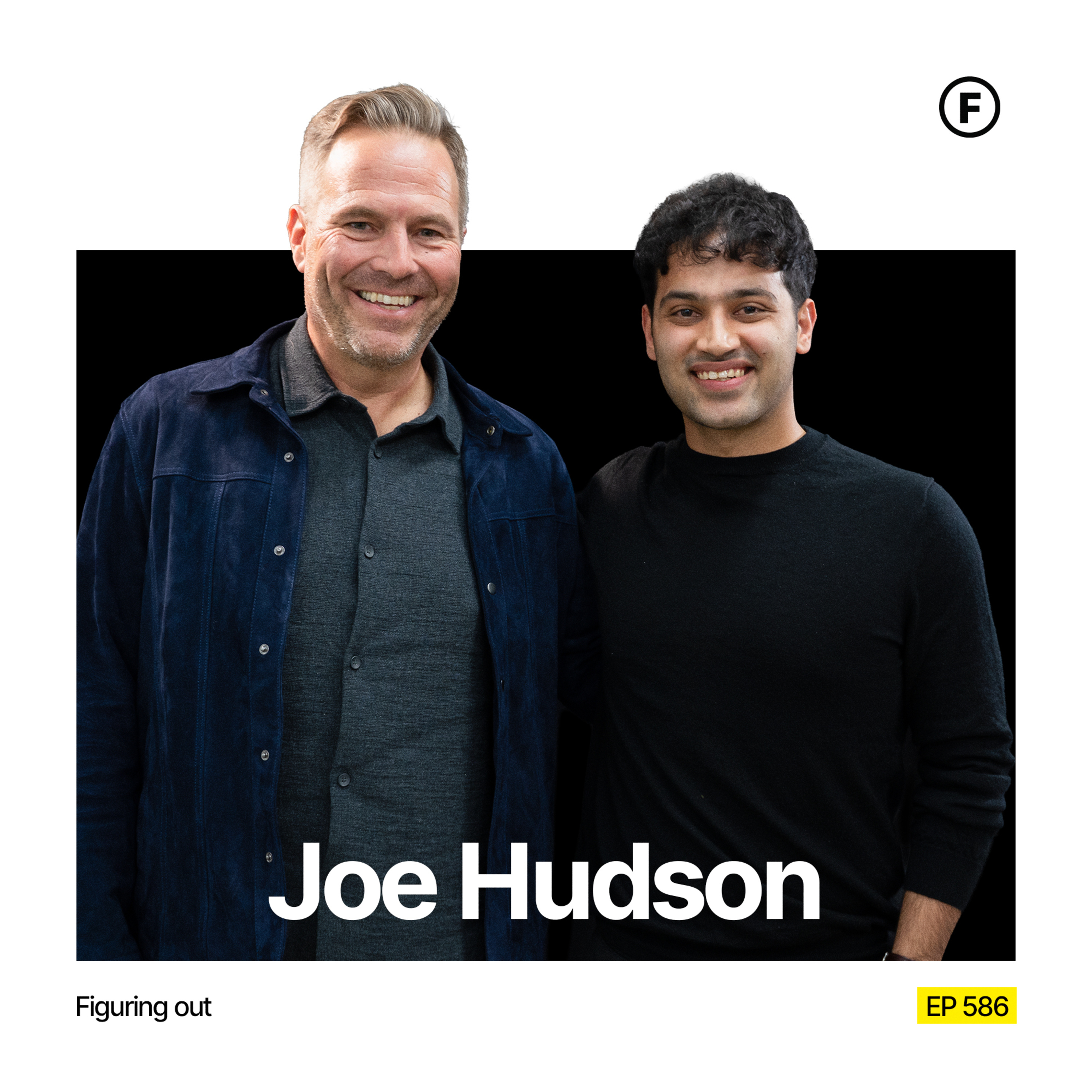
Ask ChatGPT


 Figuring Out with Raj Shamani
14 Nov 2026 · 2h 22m · 62 chapters

The episode argues that people ignore you when your communication is non-functional—because you’re not self-aware, your delivery distracts from your message, and your voice/body/story/listening skills aren’t trained. It offers practical “fixes” including a listening game, posture/gesture adjustments, and a 30-day-style skill framework.
Vinh Giang is a world-renowned communication coach who has trained leaders at major companies and teaches communication as “unlocking the human instrument” (voice, body, storytelling, listening). Raj Shamani is the host/guest partner in the conversation; he shares his own journey from being underconfident and an outsider to becoming a sought-after keynote speaker.
Written by AI. May contain mistakes.
Learn how practicing listening can enhance relationships.
“Our relationships got significantly better when I learned to listen more.”
Meet Vinh Giang, a communication expert with a unique background.
“Because this game is designed so that you can't think about what you're going to say until I've finished talking.”
Discover how body language impacts perception and authority.
“Vin Jiang is a world-renowned communication coach who has trained leaders at some of the world's biggest companies.”
Learn how to influence people's thoughts and feelings effectively.
“Now, if I want to push on something even harder, I move to blamer.”
Understand the importance of storytelling in communication.
“And in order for you to do this, you need to be able to learn four sets of skills.”
Learn techniques to captivate your audience during speaking.
“where you can follow us and listen to the new episodes as well.”
Vinh shares his personal journey overcoming communication challenges.
“One of the most beautiful things straight away is that when you hug, you don't let go in one second.”
Explore the necessity of self-awareness in effective communication.
“And the reason you should listen to me is I've learned how to unlock the human instrument, being your voice, your body.”
Learn how Vinh navigated language challenges in his youth.
“And I think a lot of people don't have self-awareness.”
Vinh discusses early lessons from struggles with communication.
“so that everybody listens to you, speak like a pro.”
Understand the process of mastering language and overcoming accents.
“Go from zero to pro, give me like 10 lessons, which each and every one should know, and walk me through your journey.”
Explore the skills required to improve communication effectiveness.
“And I can also hear it in some way you say my name.”
Learn how self-awareness can improve your communication skills through video analysis.
“You know, if you were to tell someone how did you do it, there are skills you have to learn that anybody can learn.”
Explore the speaker's personal experience with learning English and overcoming challenges.
“So nobody in my family used to speak in English, right?”
Understand how distractions can impede effective communication and how to identify them.
“Boom, it'll give you the structure of what you're saying.”
Discover practical methods for practicing English speaking and improving fluency.
“oh, it's nothing because gosh, if it's distracting you while you're listening to yourself, it's definitely distracting others.”
Learn how to develop your own communication style by drawing inspiration from others.
“Find a sound that when you listen to it, you're like, I'm really moved by that person and how they speak.”
Discover a recommended practice routine for improving your vocal skills.
“When you're doing it out loud, don't do it like this.”
Vinh shares his transformation from a shy individual to a confident performer.
“You know, I didn't value communication skills until I was well into my journey as a magician.”
Understand the importance of self-worth and communication skills in personal growth.
“So as I was able to free that, I was able to explore me.”
Explore the four essential skills for effective communication and influence.
“Man, I'm more connected to you now because I know about you.”
Learn how to practice speaking with volume to boost confidence in communication.
“And wants to really fit in and influence.”
Learn how to increase your speaking volume to enhance communication effectiveness.
“sure what you're really saying and then you can't even hear me right it's not your fault it's because you don't feel confident.”
Discover the importance of showmanship and communication in standing out professionally.
“You're like, oh, I don't stand up for myself.”
Understand how body language and posture impact perceptions of confidence.
“or with just fluency or grammar, when it comes to communication, what's beautiful is that it's not complicated.”
Learn how posture influences confidence and communication effectiveness.
“So, it's posture's very simple thing to do.”
Discover common non-functional hand gestures and their impact on perception.
“Because every single room you walk into, you're introducing yourself before you even open your mouth.”
Explore five core gestures that enhance authority and presence while speaking.
“Don't look at your video back later and go, why am I doing this?”
Hear personal anecdotes that illustrate the connection between posture and authority.
“And then the final one is, look, this is more for stage presentations.”
Understand how storytelling fosters deeper connections and engagement.
“And form is so important in martial arts.”
Learn how sharing stories fosters connection and emotional engagement.
“If I didn't tell my story about how my Taekwondo teacher just said, oh, you're easy to pick on.”
Discover the importance of documenting emotional moments in storytelling.
“something that happened to you during that day or that week, grab your phone out, document it.”
Understand how everyday moments can be transformed into meaningful stories.
“So I think now just know that from this point in life, start documenting things.”
Learn how to change your story's meaning to inspire and motivate others.
“But to me, that's an example of a simple moment.”
Explore how to control the meaning of your life experiences and stories.
“So, I think the issue is, right, and again, we come back to this so many times, Raj, is that we are so good at creating excuses.”
Discover why storytelling is essential for deeper connections.
“It sounds so basic but this is what it is.”
Learn how sharing vulnerable stories can strengthen bonds between people.
“And then that's when I went down the journey of, okay, well, how do you share that?”
Understand how improving listening skills enhances communication and relationships.
“Especially when I paired vulnerability with the next one, with listening.”
Learn how to identify and respond to emotional cues in conversations.
“A lot of the body language experts who purely teach this and focus on this, they say, and they've done research to find that it's easy to lie with your words.”
Explore how effective listening can enhance your emotional intelligence.
“people in their most happy moments and share in that and let them expand upon their joy.”
Explore the nuances of verbal and non-verbal communication in understanding emotions.
“So, when you listen to all these things, when you can hear something in the words, someone says to you, they go, the words are, I won't do the sound, I won't do the body language.”
Learn about the importance of being present and asking loved ones what they need.
“Tell me that moment where you had to pause for 15 seconds and you didn't say because you realized that the pause isn't required for 15 seconds.”
Discover how to shift from solving problems to simply being there for others.
“It was not me telling her that maybe one day AI is going to cure cancer.”
Understand the reasons behind our inability to listen and connect with others.
“And I, I think I learned a very valuable lesson is that sometimes just being there is enough.”
Participate in an interactive game to enhance listening skills.
“Kind of cheating because you did play this once in my class.”
Reflect on the necessity of being taught how to listen and communicate effectively.
“But what that allowed me to do is I could pick up now so many things while they were talking because why?”
Explore the emotional challenges of leaving family to pursue personal dreams.
“never been taught how to play it it comes out as anger it's not anger it comes from a place of pain but they've never been taught how to play that song of pain that then brings about empathy, understanding.”
Discusses the internal battle of feeling selfish for pursuing personal goals.
“Leaving my own country, leaving my family.”
Examines the consequences of always being the helper and the cycle of resentment.
“And then my mom, I remember her saying to me simply, she just said, which really inspired me.”
Details the necessity of recalibrating one's definition of success over time.
“And then seeing them flourish and seeing them get strong.”
Describes a structured approach to reflect on values and align actions with goals.
“So, if I had to boil it down, the second one was recalibrating.”
Learn how to audit your actions to align with your declared values.
“And then right after we write it down, we audit it.”
Discover the importance of being present during conversations for better communication.
“And I think it's because I came into this with my mind completely still.”
Explore a simple 30-day challenge to improve communication skills through daily practices.
“What would be the 10-minute exercise look like?”
Understand how small changes in communication can lead to significant impacts.
“If you want to go through behavioral change, then pick somebody else.”
Learn about the importance of being a positive influence through effective communication.
“I claim, Raj, because what are you doing with your instrument now?”
Hear about prioritizing family and personal fulfillment over professional achievements.
“and you are and I'm so proud of what you've achieved thank you so much so are you yeah and Thank you.”
Explore the personal sacrifices made in the journey to becoming a top communication coach.
“That when others might hear this going, oh, that's a bit weird.”
Explore the significance of living fully and embracing life’s chapters.
“86 years on average as a man, a woman's longer because they deal with stress better.”
A heartfelt exchange expressing gratitude for the conversation.
“I hope that this book gets, become the bestseller and becomes like, reaches everywhere where you want to be.”
Hosts engage in a lighthearted discussion about trying a new dish.
“He reckons it's really spicy and that we can't handle it.”
Encouragement for audience feedback and a sign-off.
“Your feedback help us improve and make every episode a little better.”

Get the gist, explore an idea or ask about something said.
 Claude
On Figuring Out with Raj Shamani, what are the key points of this episode?
Searching your listeningAutomatic transcript. May contain errors.
0:00Vinh Giang: Our relationships got significantly better when I learned to listen more. And there's a simple game you can play to see where your listening is at. It's called last word, last letter. I'm going to say something and we're going to plan a lunch you and I are going to go to. Okay. I'm going to say a sentence and then you have to listen for what my last word is. Once you've got my last word, you have to identify the last letter of my word. And you have to start your sentence now with that, the letter of that word. Listen Raj, we're in LA. I want to go and get the best burger. Remember last time when we met in Australia, we were talking about burger and other things which you and I are going to share all around the world?
0:35Vinh Giang: And this is a great way to practice listening. Why? Because this game is designed so that you can't think about what you're going to say until I've finished talking. Vin Jiang is a world-renowned communication coach who has trained leaders at some of the world's biggest companies. In this episode, learn how to speak with confidence, command attention, and get the recognition you deserve with a simple 30-day plan to transform how people see you. Your posture introduces you before you introduce yourself. The distance between your ears and your shoulders communicates confidence. So the greater that distance, the more confident people perceive you to be.
1:14Vinh Giang: When we're scared, what do we do? We hunch our shoulders when we're nervous. So we close that distance. Hand gestures. So what do you replace your hand gestures with? First foundational gesture. Hands open like this. Make sure your elbows are away from you. This is very open. This is very inviting. It's a beautiful way to greet somebody, beautiful way to start a presentation. And then if you want more authority, you move to leveller. And leveller is palms face down. So if I'm really wanting to push a point, have authority with you, I'll say, here's the thing I think that has more authority than this.
1:40Vinh Giang: Now, if I want to push on something even harder, I move to blamer. What is the best tactic to learn English? Schedule time like you train at the gym and go, you know what? For four times a day, each time five minutes, I'm going to grab a book and read it out loud. And when I'm reading it out loud, I'm going to overdo the lip movements. There are so many people, they'll go like, dude, I walk in a room and I feel invisible. So how do I become seen? If you want to be seen as someone who's influential, you have to be able to influence the way people think, the way people feel, the way people behave.
2:11Vinh Giang: And you have to better influence their beliefs. And in order for you to do this, you need to be able to learn four sets of skills. The first one is, that's how you learn to be seen. Then, when you story tell with me, I feel more deeply connected to you. And then, now you can make other people feel heard and seen and connected. I have a small favor to ask you. I need you to subscribe to our channel. The more subscribers we have, the better and bigger guests we can bring and provide you more value through these conversations. And the full audio experience of this show is also available on Spotify, where you can follow us and listen to the new episodes as well.
2:55I want to tell everyone like today, I don't have another guest. I have a teacher in front of me who's taught me how to speak clearly.
3:06Vinh Giang: I know what you're pointing at there. Thank you so much. Welcome on Figuring Out, Wyn. Raj, thank you so much. It's so good to see you again. You know, it felt so good. One of the most beautiful things straight away is that when you hug, you don't let go in one second. You held on to it. I was like, ah, I like it. I enjoyed it. It was like five seconds of. If someone's watching you for the first time and they have no clue who you are. Okay. How would you explain who you are in next 60 seconds? And why should they watch this podcast for the next couple of hours? I'm someone who broke the mold and left the default script.
3:44Vinh Giang: because growing up in the Asian culture, it was meant to become an accountant, lawyer, doctor, pharmacist. I broke the script. I broke the mold of that. I became a magician. And then on the journey of becoming a magician, learned the importance of showmanship, which is a fancy word for communication skills. And then realized that, wow, I could use this skill to really not just astonish people, but inspire people. So, I became a professional speaker, then learned the art of communication, mastered it so that I could now teach it to the world. So, I've gone through that journey. So, now I teach communication skills.
4:13Vinh Giang: And the reason you should listen to me is I've learned how to unlock the human instrument, being your voice, your body. Then I've learned how to write great music, which is storytelling. And then I've also learned how to appreciate other people's music, which is listening. And I think as you learn how to play your instrument, play beautiful music, and learn how to appreciate other people's music, you'll learn how to connect with others more. And I think that's what we need more of in the world. It's why I love listening to you. If someone's watching this for the first time, why they should watch it?
4:45What are they going to learn from you? What specifically you are going to teach?
4:50Vinh Giang: The first thing they're going to learn with me is they're going to learn how to become aware of their non-functional behaviors. What are the things you're currently doing that's going to rob you of clarity, make people think you're less credible than you are, make people underestimate you? So we need to first learn, what are we currently doing that we're unaware of that's non-functional? So, once you know where you are, then we'll learn how to play the instrument, use the voice, use the body language, learn how to share stories and listen. Then we learn how to do that. But you've got to know where you are first.
5:24Vinh Giang: And I think a lot of people don't have self-awareness. And without self-awareness, how can you start the journey if you don't even know where you are? It's like on Google Maps. You kind of have to know where you currently are and then we'll work out the destination you want to go to and then the rest becomes a process you know it's not impossible yeah but it is impossible if you don't know where you are and you don't know where you want to go so can we do that with with the lens of your story yeah because you were this kid yeah who was probably not self-aware yes like a lot of people yes you had what you call non-functional behavior yes and you were this kid what I know of is underconfident, shy, outsider feeling, didn't know how to speak, how to actually speak so that everybody listens to you, speak like a pro.
6:09Now today you are one of the most sought after speakers in the world, one of the biggest keynote speakers in the world. You have millions and thousands of people in real life and online and you do all these things, but you've built this craft. I know that you've learned magic, art, stage presence, voice modulation, thousands of things. You know, teacher, you drop teachers names like this. So you have learned all of this. If you have to combine everything together from someone who is not self-aware today, but wants to speak, has a desire to go out and speak the way you do. Start from that kid and make that kid pro.
6:56Go from zero to pro, give me like 10 lessons, which each and every one should know, and walk me through your journey. Like how did you implement those lessons and why are they important?
7:06Vinh Giang: Well, let's start when I was in primary school. When I was in primary school, English was my third language. So I first learned Chinese, So, if my digital listeners out there, you know, you know, you obviously don't know what that means. It means if I'm digital, I've got a red bum. It's a digital thing. And then the next one is, then I learned Vietnamese fluently. So, I learned these two languages fluently, man. And I spoke at home. That's all I spoke. So, I got to school. I was five years old. And I not only was not aware of how I currently communicate, I had no idea what other people were saying.
7:47Vinh Giang: So I don't know if you've ever experienced this, but I was in a situation where I was at school, I had no idea what they were saying to me. I had no idea what the teachers wanted me to do. And I had no way of interacting with them. And I remember the moment where it all kind of collapsed on me was, my mom would always make me these beautiful egg, cucumber and soy sauce sandwiches, and I love them. and I was so embarrassed to be seen alone that I would eat in the toilet and I sat by myself in the toilet close the door and it's it just stunk in the toilets and I remember the smell and trying to eat my food and and I'd like to hide I didn't want to be seen alone and when they saw me I I couldn't understand what they were saying but based on the melody in which they used I could tell it was mean.
8:37Vinh Giang: You know, you can sense that it was mean, even though you can't understand. And then I put two and two together. I could hear them say my name and then I could hear them laugh because I was eating in the toilets. So, I think I then felt discouraged because I felt like I'm never going to be able to do this. So, I think there's a step before self-awareness. And it's that I believed it wasn't possible. I believed that I'm doomed. I believed this is the way it was going to be forever. And then I was lucky because that kid then found another kid and his name was Lucas. He's a Polish kid. And I wrote about it in my book because Lucas was a Polish kid that for some reason found me hiding.
9:19Vinh Giang: Sometimes I would hide behind bushes and he found me hiding and he pulled me out and he started. And again, I recognize it was friendly because of the way he spoke. I could hear it in his voice. I could hear it in the melody. And he started teaching me English. A Polish kid that barely knew English himself was teaching a Vietnamese kid who bloody knew no English. And it was his kindness, his compassion that brought me out of the shadows. And that's where I started to learn English. But then I started to sound funny. And this is where the awareness thing comes in. Because when I spoke English, and this is a piece of insight too, is that a lot of my students go, oh, why do I have an accent?
9:58Vinh Giang: What is it? And the reason we have an accent is because when I learned Chinese and Vietnamese, there are specific mouth movements we make to learn those languages, to shape the words in Chinese and Vietnamese. And then we carry those same mouth movements in Chinese and Vietnamese, or maybe Hindi, right? And then we transfer it to English. So, we're using the same mouth movements to play a different language. So then we have a different sound. That's what an accent is. And I genuinely don't believe accents are a problem. I believe it's, you've got to learn the new mouth movements to speak the new language.
10:34Vinh Giang: That makes you more clear. So I had that issue. And I was made aware of that issue very quickly because the moment I spoke, they would say, he sounds fobby. Right? Fobby, FOB is fresh off the boat. Right? So, because Vietnamese people just got to Australia at that point. so I was an FOB I was a fobby I was a fobby kid so then that was the first part of it was like like an insult it was an insult yeah yeah it was an insult like fresh like you're an immigrant sort yeah yeah it was and and that's that's where I became aware that I sound different because I didn't even I didn't even register that I just I'm trying to learn the instrument you know it's like when you first learn a guitar you sound terrible right but you don't know you sound terrible until other people tell you so while it was painful it was an awareness point but I didn't learn it then right I just I just became aware but it didn't mean I did anything about it and how did you learn to speak in English dad like what mouth moment did you change like what well because I became so sick and tired of being teased I started to again ask my mom and dad like what what's wrong with me I'm like we don't know we asked the teachers and then the school had a speech pathologist so then I had to go see the speech pathologist and that was meant to be usually for kids who are late to speaking right whereas i wasn't late to speaking i was already speaking but the school speech pathologist helped me with shaping the words in my mouth now for example in the vietnamese culture we never say we never we never say this we never create the soundthth okay so the way i would say the number three is i would say free can i have free of those and that's how I talk and and and this is the the thing about society is that when I when I started speaking like that in a predominantly western world people then made judgments about my intellect they made judgments about my capacity my competence just because I I it sounded like I was mumbling so then I had to learn all the mouth movements so I remember watching people on TV and going, oh, you should speak like this.
12:44Vinh Giang: Oh, the tongue slightly comes out. Like it's this, right? And I can also hear it in some way you say my name. So, if you say my name, how do you say my name? Wyn. Right? Yeah. Do you see that? Do you see that? And then I'm going to put you on the spot here. W-H-A-L-E. How would you say that? Wyn. Yeah. Okay. So, What's interesting about my students who are from India is I say to them, the sound and the shape of the mouth is, so even whale, it's whale, and then you pull your lips outwards, and then al. So try that, whale. Whale. Al. Yeah, so whale. Whale. That's it, right? So I had to learn that, and it took me on that journey, and vin is bottom lip inside, vin.
13:32Vinh Giang: Vin. That's it, right? So I had to learn that from the basics. And I learned that through watching other people and through spending time with a speech pathologist. Just learning that, oh my goodness, I didn't even know it was about mouth movements. But here's the scary thing. When I didn't understand that, my baseline was, it's impossible. It's through, first of all, understanding that everything is a series of skills that anybody can learn. Everything is. It's like you getting to where you are. You know, if you were to tell someone how did you do it, there are skills you have to learn that anybody can learn.
14:11Vinh Giang: True. And everything I'm doing now is just a series of skills that I've learned along the way. But that's where it all started. So tell me first skill. Yeah. Tell me the first skill. What is one tactic or one skill that someone who's trying to learn English should know so that they can learn faster and should not take as much time as you took? Thank you for saying that. here for a long time. I love that. There's a little bit of a jab in there, Raj. Thank you. I would say the first thing is let's become self-aware. All right. You've never seen yourself communicate to somebody else. You have a view of how you think you communicate.
14:53Vinh Giang: It's not accurate, right? Unless you're a content creator, unless you're watching your videos back, unless you do podcasts all the time, which most people don't do, you have no idea how you currently come across to another human being when you speak. You need to see yourself speak. So, the first thing you got to do is you have to record a video of yourself speaking for five minutes. You're not allowed to plan this speech. You're not allowed to plan it. Okay. Just like turn on the camera and just start speaking. Turn on the camera and start speaking. But then your brain's going to immediately find excuses.
15:21Vin, what do I talk about? What do I...
15:22Vinh Giang: Keep it simple. Talk about your favorite person, your favorite food, favorite place you like to visit. Talk about why you want to improve your communication skills. Okay. I don't want 10 takes. I want the first one. Okay. And you've got to be really raw and honest with yourself here. Otherwise, I don't like, I'm going to do it again. No, no, no, no. I want you as you are. So, a five-minute video of yourself. Once you've got the five-minute video of yourself, leave it for 24 hours. Because if you watch it straight away, you're going to get really self-conscious. You're going to feel like, oh, I don't like the way I look.
15:53Vinh Giang: I don't like my hair. I don't like the way I sound. Stop it. Leave it for 24 hours. You're way more sexy in 24 hours. Then once you review it, create a bit of time and space. The first time you review it, since we're learning a new skill, we isolate things. So you turn up the sound and then you press play, turn the phone over and just listen. And all you're doing is you're listening to your voice. What do you like? What do you not like? And be really transparent and just write it down. You might say, oh, I like the melody in my voice. Oh, I feel like I'm mumbling. I can hear because when you've got five minutes, you start to hear a lot more than if you had 10 seconds And then you'll start to hear so many different qualities of your voice Based on the knowledge you currently have and you better write things down.
16:39Vinh Giang: You'll notice. Oh, i'm speaking too quickly Oh, I sound like I don't care. My voice sounds flat. Just write it down Once you've got that take your phone back up Now put the phone on mute And press play and just watch yourself Don't listen don't listen isolate the visuals And now as you look at yourself, what are you doing with your hands? What are you doing with your face? Are you moving your face? Are you moving your hands? Are you swinging on your chair? Are you fidgeting with your hand? Are you rubbing your hands? What are you doing? You will see things in yourself visually you've never seen before because we've never seen ourselves.
17:15Vinh Giang: And every time people show you a video of you or a picture of you, you're like, no, I don't want to see it. I don't want to see it. People are avoiding. So what are we avoiding? You're not just avoiding the photo or the video. You're avoiding self-awareness. you'll get a page of notes for that you'll get a bunch of notes right even even five or ten things then in the era we live in now get that video transcribed put the transcription into some form of ai pick your favorite one that you use once you put the transcript in there now ask it and this is for those who are english as a second language third language fourth fifth even if it's your only language.
17:51What you do now is you ask AI, hey, listen, what are the top 10 or
17:57Vinh Giang: five grammatical mistakes that I'm making? Because the thing is, if you're interacting a lot with the Western culture, or if you want to be perceived as more credible, more clear, when we make grammatical errors, it's the same thing as me saying free. Can I have free of those? people start making judgments about our level of intellect. So just by doing that, you will now become super aware of, oh, my voice. Oh, I don't do that with my voice. Oh, I should do more of this. Oh, I should do that with my body. Definitely should stop doing that. And then you'd now get a list of things to work on grammatically.
18:33Vinh Giang: And you can take it another layer, especially with a transcript. How's the structure of what I'm saying? And you might get the feedback. You're saying the same thing over and over again in different ways, right? Here's another thing. And this is the last one I'll give to you as the start. The last one would be, what are words that I'm using that add no value to what I'm saying? I'm trying to identify your filler words. Words that we use that add no real value to the conversation and we use them out of habit. Really, like, so, Do you know what I mean? Every culture has their own version. Yeah. And then also non-words, which are the sounds we make that add no meaning.
19:19Vinh Giang: Like? Um, ah, er. Mm-hmm. This. No, er is great. Okay. Because you're verbally confirming what you've heard. That's fantastic. This is more the little auditory tics that we have. I was riddled with those. So, I did so many things wrong when I did this process. So if they just did that, you know where you are. You've got your before video. That's where you are. That's where you started. Now we can move forward from there. And from that alone, you'll start to have things for you to work on. Yeah. So I figured when I was growing my podcast globally now, and then our international audience started growing up, till now, till the time I was only in India, like up until let's say 18, 20 months ago, I was like, yeah, I figured out how to speak in English somehow here and there.
20:17So nobody in my family used to speak in English, right? I was my generation, me and my cousins and my sisters, we were the first ones to speak in English and we learned it probably the hard way. and i i used to go english speaking classes in college like obviously i could understand but i was not able to speak because there was okay you can understand you can write it but you can't frame sentences that you can't speak and that's it's very different to just watch an english movie on subtitles and then be able to speak it right these are two different things so i started learning so i learned a little bit and then i use it in my advantage and every time i would make a grammatical error i was like oh this is it this this makes me just just like everyone else who's trying hard and it's okay this is my you know i i always thought that oh it's not important enough i can be emotionally very good i can connect with people and as long as i'm honest and authentic people will like it but as i started going global i realized that the moment you make you're you you can be the most flawless speaker on stage yeah but then if you say didn't knew then you're gone right everybody people will stop paying attention on what you're saying and they'll start paying attention so it's just like on a white boat you're that black dot so that grammar error becomes that and i started focusing on my grammar since since the last six months and i'm taking grammar classes now so i think by next
21:54Vinh Giang: one or two years i'll be like really good yeah yeah and and that's the beautiful thing about you is i think you you never look at it as a barrier is always what do i need to learn to be better yeah and and you're also incredibly correct in saying that because you know if you make one grammatical error that's okay but if you're making it 16 times in 20 minutes now it's becoming a exactly right so then let me give you the second part now so this is the second lesson is well the golden rule in communication is if it distracts people from your message it's a problem true okay so as you're watching yourself you go well what's distracting people from the message what is it and then some parts of it you might find through the ai transcript you can even ask what's distracting people from the message.
22:38Vinh Giang: Boom, it'll give you the structure of what you're saying. It'll give you the grammatical areas. It'll give you that. But then also when you're listening to yourself, same lens. What's distracting people from the message, right? I didn't know this, but when I was young, when I talk, I used to click. I used to love clicking. Do you know what I mean? You get it? Yeah. Awesome. And I used to do that all the time. I'm like, what am I doing? So when I listened to myself back, I realized that's not even a sound with my mouth. I was like, imagine this whole podcast. So we're just dancing, man. It's annoying.
23:06Vinh Giang: It's annoying, right? It's annoying right now. Dude, it's pissing me off. Yeah. But it's something that I completely wasn't aware of because at school, we were just doing it for fun. Right? I just learned how to click, man. And it was so fun. And we used to do the triple one. And we, oh gosh, it was wild. So, once again, use that lens of the golden rule. If it distracts people from the message, it's a problem. Yes. Right? you should address it as opposed to avoiding, oh, it's nothing because gosh, if it's distracting you while you're listening to yourself, it's definitely distracting others. True.
23:43What is the best tactic to learn English
23:45Vinh Giang: for someone who's not native English speaker? There's so many immigrants all around the world. There's so many people who are coming from smaller cities, smaller countries wanting to learn English and they feel the last part of, they're not able to feel confident at all is because they can't speak in English fluently. and no matter what we say, this is a big thing. Well, the first thing I want to say is it's evident in your story. You said nobody in your family spoke English. So when you were young, where did you speak English? You didn't. You just watched it, right? So when I think of it as a metaphor, you became extremely fluent in reading music, but you never played the damn instrument.
24:24Vinh Giang: And then you're blaming yourself and upset with yourself for saying, why can't I play the instrument fluently? Why can't I play the guitar smoothly, transitioning from one chord to another? Why does it sound so clunky? But you have to then ask yourself the question, how many times have you played the guitar? I don't play the guitar. I read the music. Yeah, yeah. Well, I'll ask you again. The solution is within the problem that you just mentioned. You have to play the instrument. And then I get the next question. I get the next objection from my students from all over the world is English as a second, third language.
24:57Vinh Giang: They say, I have no one to speak English to. Excuses again. Can you talk to yourself? Yes, you can. Right? You can talk to yourself. And what's the easiest way to talk to yourself? Read. Read out loud. Right? A lot of people who are learning English, read in their head. Read out loud. Play the guitar. Play the instrument. And what I would suggest as well, one thing is to schedule time like you train at the gym. And go, you know what? I'm not going to exhaust myself. But if I want to take this seriously for four times a day, each time five minutes, I'm going to grab a book and read it out loud.
25:34Vinh Giang: And when I'm reading it out loud, I'm going to overdo the lip movements. So, for example, if I was to read, this will sound ridiculous, right? So, this will sound and also look ridiculous if I do this. But if I'm reading a page here, I'll do this. I'll go. Here's the part you've been waiting for. when you're uncomfortable with silence and I'm pronouncing every single sound in every single word. Why? To ensure that I'm now practicing the new mouth movements in the English language that allows me to speak with more flow. What creates the crashes when we talk, right? How do I know that the moments that I'm doing is right?
26:18because I've always learned to speak the voice, all of these things the way my language speaks. How do I know it's correct?
26:25Vinh Giang: Then you have the audio book paired with the book, right? You don't have to get mine. You can get any other one you want, but you should get mine if you can. Then you get the audio book and the book, right? And then you listen to, but make sure you get someone who's a great communicator, right? So pick someone who is a native English speaker, get their book. And then what you want to do is listen to them read out the line. Listen to it carefully. And then you replicate it. And this takes work. And then you almost have to be in a position where you play yours back and theirs back and go, how similar was the sound?
26:55Vinh Giang: And then you're going to run into this problem. So, let's talk through it in depth. Because then you'll go, but that's not me. Because then you'll read it and maybe you get a British one. You'll be like, right, so we're going to have Tay. And after we get Tay, we'll go get some cake. And you're like, what the hell is happening to me? Exactly. That's fake. Okay. That's you exploring. That's you exploring. don't judge yourself so quickly. You don't have to talk like that. What you're doing is you're learning how to use the mouth movements. I'm throwing another metaphor in here just so that we can simplify it.
27:27When you first learn how to cook, you follow the recipe of a chef.
27:32Vinh Giang: Are you fake in doing that? You're not. No. You're just learning how to cook, right? You're learning how to cook. Then once you get confident with that dish, what do you do? I'm going to add some spices. Yeah. Do you add your own flavor? Hell yeah. I love, I love a lot of garlic. You said you got some spicy stuff there later. I'm going to try it. I'm going to eat it, man. And I'm going to add more spice because I love spice. So I'm going to do all of that. So what am I doing in that process? I'm making it me. But before I make it me, I have to learn. I'm going to follow the recipe. So find a voice that you like.
28:03Vinh Giang: Find an author that you like. Find a sound that when you listen to it, you're like, I'm really moved by that person and how they speak. Grab their book, grab their audiobook. Don't judge yourself in the process. And then as you're doing it, you're like, oh, right, I'm sounding like this. Oh, right, right, right, right. And then gradually you add your own flavours. But as you follow that process, you now have a reference. Here's how it sounds. Here's my voice. Get it closer and closer and closer. Oh, got it now. I understand the mouth movements. I get it. Now you go on your own journey and create your own unique flavour.
28:34Vinh Giang: Right? And I think that's the thing about life. When you first learn when you're first born because you copied the walk from your parents are you fake no that's how we learn so i think you take that same way of thinking and apply it to communication that's what i did so you start speaking like this how much one should practice every day or every week what's the obviously for like the more you do the better it is but if we have to make this one protocol for people yeah i love using word protocol I would say three to four times a day because your vocal cords, your vocal folds are the size of your pinky nail.
29:14Vinh Giang: They're tiny. Don't overdo it. Don't overdo it. So, I'd say three to four times a day, each time five minutes. If you're really serious about this, schedule it in your phone and do it out loud. And one more tip here as well. When you're doing it out loud, don't do it like this. I'm just practicing. No, no. Do it as if you're talking to another human being. Give me strong levels of volume. before we forget like that. Yeah, that's fantastic. And overdo the mouth movements. Overdo it. Because again, you're learning a new set of mouth movements. And then as you do this more and more and more, when you become more comfortable with those mouth movements, you become more fluent.
29:53Vinh Giang: The flow is there. Whereas otherwise now, it's like playing a guitar, right? When you hold the chords, your fingers get really sore. So when you transition from chord to chord, it sounds clunky. But as you practice it more and more, it's smooth. So I would say learn the mouth movements. The better you get at it, the more easy it is to speak. Okay. Yeah. So that's first. Yeah. What was the second challenge you faced then? So you were this kid, third English language. What happened next? You know, I didn't value communication skills until I was well into my journey as a magician. because I was so shy, because I was so reserved and lacked self-confidence, lacked self-esteem, had heaps of pimples on my face, acne.
30:44Vinh Giang: I starved attention. I starved so much attention, especially from the girls when I was young and boys. I just starved attention everywhere, right? The guys didn't really like me, definitely couldn't get a girlfriend in my life. So I struggled with that. So my whole life I thought, oh, what can I do to find love? What can I do to find friends? How can I be amazing? Well, what's the most amazing thing you can think of? Magic. Because when I saw a magician perform for the first time, I was completely in awe. You know, I saw a magician perform in Adelaide. His name was Ray and was performing and he was amazing.
31:20Vinh Giang: You know, he wasn't that good looking, right? He wasn't dressed really cool, but oh my goodness, he was able to make a card float and a rose float and I thought, oh, I have to learn this. And then I learned a really simple trick, a really simple card trick. And when I did the simple card trick to a girl I had a crush on when I was really young, the most beautiful words have never been said to a kid who was in his mid-teens. She said, oh my God, you're amazing. No one's ever said that to me, dude. Right? And And the fact that she said that, my heart melted, right? And I - It was a beautiful moment which turned into something terrible.
32:00Because then I became so obsessed with magic that I couldn't talk to you unless I've done
32:08Vinh Giang: about 15 pieces of magic for you. All of my confidence was now attached to the cards. And I remember the day I realized it was a problem. It was mom bought me a new backpack. She gave it to me in the morning. I didn't think anything. I just took my backpack, went to university. And then I realized I left my packet of cards at home. And I knew it was a problem because I then had a panic attack that I left my cards at home. How do I show my value? How do I show my worth if I don't have my cards? That is my value. That is my worth. So I left university, took a bus, went home. and that's when i realized the very thing that made me feel special has crippled me because people don't remember me they they just really remember the magic the card guy the guy with cards the guy they used to call me trick monkey that was the name they called me they're like hey trick monkey what you got us got for us today and to me at the beginning of my journey raj that was i was proud of that i was like man that's so cool i'm the trick monkey but you know you look back now and you're like gosh i'm such an idiot that's all that i was because that's all that i showed you know i can sit here and blame them but at the same time that's how i perceived myself so sure they called me a trick monkey but far out raj i saw myself as a trick monkey that is so relatable because we all do a lot of us who grew up with low self-esteem low confidence yeah all we wanted was attention in different forms yeah and we were doing different things and it's so fascinating that you say that you wanted to become magician just to become cool there was no other objective it was just that yeah can i be the light of the party can everybody look at me and we all have done that.
34:04Somebody has tried to learn something, somebody's still struggling.
34:07Vinh Giang: Yeah. Some people do it with a guitar. Some people do it with an instrument. Some people do it with, we all have different ways of doing that. I did that. I wanted to learn, I went and went to a class to learn guitar. Okay. You literally did that. I literally did that because I was like, this is the cool thing. And I can't play sports. I was not good in English. I was not the guy with good academics. So I was not getting attention. So I was like, hey, there has to be a way for me to just get this attention. And this was the most embarrassing thing that I did. I went to learn guitar and then I learned like three chords.
34:42And I was horrible. But in my head, I thought I'm the cool guy because I can play three chords. Right. And I played it in front of other people who have no jack shit idea about how guitar sounds like. Okay. So they all thought it was cool. So like five people thought that, oh, he can play something because I was pretending to play along with the song. So I would play a song. I remember this is Green Day, 21 Guns. While the song is on, I'm playing, it sounds like that I'm playing.
35:10Vinh Giang: It sounds good. It sounds good. And the moment you turn it off and then. It sounded terrible. It sounded like just bad. Okay. And that was it. But, and everything after that was hard. And I was not ready to learn guitar more because the little amount of cool and attention I was getting by just doing this. So I never thought that I should learn and guitar was not something that I wanted to learn. So I did that exact same. So the lesson that came out of that was that I realized that, okay, you can't take your guitar everywhere you go. Okay. I can't take my cards everywhere I go. But what do you take with you everywhere you go?
35:51Your voice, your body language.
35:54Vinh Giang: Can anybody take that away from you? Can anybody take your voice away? Can they take your body language away? Can they take your ability to storytell like we just did together? Can anybody take your ability to listen away? No. They can't. So, while if you attach your confidence to a packet of cards, to a guitar, to a fake tennis racket that you've never held, those things can't go with you everywhere you go in your life. But if you attach your confidence to your ability to use your voice, your ability to share stories and listen and express yourself with your body with clarity, now your confidence is rooted in something that goes everywhere you go.
36:31Vinh Giang: So the realization there, that second part of my journey was, oh man, I'm attaching so much of my self-worth to something that I can't take with me. I don't have a pack here right now with me, right? So as I was able to free that, I was able to explore me. I started to begin my journey of going, oh, I'm actually magical. I know it sounds a bit cheesy, but it's true. You've got your magic. I've got mine. My team's got mine. Your team has theirs. Everyone's got their own magic. So learn how to unlock some of it. But how? Okay. The question is how. There are so many people who at this point, they'll be like, hey this sounds amazing this is great we want to be seen we want to be heard we are the people they'll go like dude i walk in a room and i feel invisible yeah nobody's paying attention to me i just go in and come out nobody cares yeah so how do i become seen okay well what do i do what do what should people do well i think if you look at the journey we're going on so far you start with self-awareness.
37:43Vinh Giang: You're looking at the things that are non-functional, things that are distracting people from the message. Now you also realize, again, empowering you to work on your instrument because you carry that everywhere you go. The next thing is, there's just a knowledge gap. That's all that there is. And this is something I tried to do with my book, is that how can I show you what to do from the basics, from the get-go? So, I really believe that anybody who learns communication, why do we do it? We do it because we want more influence in our lives. Because the more influence we have, the more we're going to be able to negotiate the reality we desire.
38:21Vinh Giang: I want some of that attention. Well, how can you influence that situation? I think one of the first things we have to do is understand there's a knowledge gap. And it's not as simple as, oh, what's the simple thing I can do? Let's learn this right. And let's do it on this podcast, okay? So, I think the first thing we've got to do is we've got to understand, well, why do we need to learn communication? It's because you can have more influence in your life. And I think of influence like this in this framework. I think of it as if you want to be seen as someone who's influential, you have to be able to influence the way people think, the way people feel, the way people behave, and you have to be able to influence their beliefs.
39:10Vinh Giang: And in order for you to do this, you need to be able to learn four sets of skills. And I've kind of mapped them out. The first one is V.M, which is vocal mastery. So, learn how to use your voice because that's how you learn to be heard. Okay. Then B.L, body language. That's how you learn to be seen. Okay. So, you learn how to use your body language. Then you got over here S.T, which is storytelling. Now, you're learning how to connect with people because through storytelling, now that I know about you growing up, you had those vulnerabilities of going, oh, I made up things because I just wanted to be important.
39:47Vinh Giang: I wanted to be accepted. Man, I'm more connected to you now because I know about you. You were willing to be vulnerable about that. People don't just share that. So thank you for that. But when you storytell with me, I feel more deeply connected to you, right? So you're heard, you're seen, you're now more connected to people. And then active listening. Now you can make other people feel heard and seen and connected. So when I think of communication skills, these are the four quadrants I think of. And as you master voice, body language, storytelling, and active listening, you are now able to be heard, be seen, influence the way people think, the way they feel, the way they behave, and you can start to shift beliefs.
40:26Vinh Giang: That's when I think you achieve real influence. You become extremely impactful. But it starts with all of this. Young, ambitious person who is trying to dabble in the career has probably left his home, left her city. left the country and is somewhere else. Okay. Trying to make it. This feeling of outsider that we are here to make it big. Okay. And wants to really fit in and influence. Okay. But feels like. I'm a little bit. Yeah. Like I'm an outsider. I don't know what to do with it. Yeah. Okay. And English is not the first language. Okay. So same as both of us. Let's start with voice. Okay. Okay.
41:08Vinh Giang: So if it comes to voice, we've already talked about fluency. We've already talked about articulation. so I won't go back there. I would say the biggest thing when it comes to voice,
41:22volume.
41:23Vinh Giang: The natural thing that happens when you're not confident with a certain language, if you think of the volume, volume as having a scale from say zero to 10 and five being the median, the middle there. When you're not confident, where does your volume live? yeah and that's what i find immediately with lots of people who speak english as a you know second language you go low yeah the volume's there so not only are you harder to understand from the standpoint that you're not fluent with the language but then you're talking like this and then when you're talking you're doing that and then i'm not sure what you're really saying and then you can't even hear me right it's not your fault it's because you don't feel confident.
42:11Vinh Giang: Whereas if someone's really confident, where do they live? They live over here. And sometimes they're annoying, right? Because they're too loud or sometimes that's me, Raj. But they're always there and you're like, oh gosh, dude, just calm down, take a chill pill. But I would say the most important thing is you've got to practice speaking with a louder volume. You've got to move yourself from where you currently are, move a little higher and do this in practice first. Don't do this immediately when you're with a stranger because you have to practice playing your instrument in private before you play it in public.
42:44Vinh Giang: So, in the same exercise I showed before, you do three to four times a day, do it with a really strong volume and go louder than normal, right? This probably makes you feel uncomfortable, but I'm saying for them as they're doing it, practice like this. And as you do that, you become more comfortable with a louder volume. and something tactical here too. Often people can't access that volume because if you've been speaking quietly your entire life, sometimes you've developed the habit of speaking with a closed soft palate. Okay, so are your hands clean? Yeah. Okay, good. Take your thumb, touch the part behind your teeth.
43:22Vinh Giang: It's hard, right? That's your hard palate. Okay, then slide it back a little bit more. do you feel like a softer slimy part yeah that's your soft palate okay so often what happens is when people are speaking with a quiet volume their soft palate is closed so the soft palate is closed but then that slimy part as you lift your soft palate you're able to create more resonance your voice sounds stronger but if you've spent your whole life speaking like this what you've inadvertently done is you've you've you've closed the soft palate so the simple thing you can do to practice awareness of the soft palate is you can just go move between these two sounds, the sound ah and ng.
44:04Vinh Giang: So, if you do ah, ng, ah, ng, ah, ng, try. Ah, ng, ah, ng, ah, ng. Right? So, ah is a much stronger resonant sound. Ah, like that. Right? And that's your soft palate opening, lifting. And ng, ng, ng, that's your soft palate closed. So, as you practice that, You build awareness for the soft palate. If you don't do that, you have no awareness. So, if you start doing that, bring more awareness to that. And another thing you can do here as well, and I practice, I had to practice this so much, especially if you're really quiet and softly spoken, you have a belief internally too that it's not possible.
44:42Vinh Giang: You go, I can't, I can't do that. No, you can. Try this. Every Asian dad has done this. How does your dad yawn? I don't know about your dad, but my dad, when he yawns, it sounds ridiculously loud. So, for example, you practice that. So, when you yawn, and I'll get you to do it too. So, if you yawn, you go,
45:01Vinh Giang: I want you to try it, man. Go loud. I want everyone to hear it. Go really loud. Just yawn, try it. You're holding back. You're holding back. You're holding back. I want the,
45:16Vinh Giang: That's good. But you see, you felt uncomfortable doing it. I can tell. I can tell, right? But that's the thing is that if we're softly spoken our entire lives, you do this for a living and it felt uncomfortable. For someone who's lived here their entire life, that's going to feel excruciating. This is very uncomfortable. I know that it is. Nobody here is watching or judging me and yet I feel in my head, I feel super uncomfortable. I feel like what the heck I'm doing. And then that's the problem is that we often think it's other people who keep us the same. it's actually you yourself keeping you the same.
45:53Vinh Giang: And that's why there's something I have wrote so many times in the book that I think the publishers are like, why are you repeating this? But it's, don't be so attached to who you are in the present. You don't give the future version of you a chance. There's a future version of you that can access the whole damn scale. And I'm not saying to be loud all the time because you'll be obnoxious, right? But you want to be able to hit the whole scale. There's going to be a time in your life where you have to stand up for something that you believe in. You're going to have to stand up for yourself. And when you're standing up for yourself, what are you going to do?
46:30Vinh Giang: Speak here? When you have to stand up for yourself, maybe there's going to be a time, Raj, where the person who's listening to this has to stand up for someone they love, stand up for a cause they believe in. And you have to be able to play your instrument with strength. And if you wait until that moment comes and you try to reach for it, it will fail you. And you'll fail the person that you're trying to stand up for. You might fail yourself. You might fail for the very mission that you stand for. So to me, do the hard work. Build self-awareness with the soft palate. Lift it. Do the yawn 10 times, right?
47:08Vinh Giang: Do it 10 times in the morning, 10 times in the afternoon, 10 times at night. And why am I getting them to do that yawn? Why? Because then you'll realize how powerful your voice actually is. You could have gone way louder than that. Yeah. Your voice is so much more powerful as an instrument. And what you unlock when you go with a greater volume is you're unlocking stronger vibrations. So, when you want someone not just to hear what you say, but feel what you say, then it's physics, man. What is sound? Sound is a series of vibrations that flow through the air. So, when you went, oh, I felt it, right?
47:50Vinh Giang: I felt your what? your presence. Your presence isn't just heard. It isn't just seen. It's felt. How is it felt, Raj? Stronger levels of volume. And once you've got access to the whole scale, adjust to the moment and have the emotional intelligence to recognize, when do I need to be this? When do I need to be this? Because you've mastered this. There's other things to master. That's like, you know, three chords. There are so many more chords. And then the more chords, you know, the more songs you can play. True. Yeah. So, that's the first thing I would say and I'm relating it to this because otherwise, I don't want to overwhelm the listener too.
48:28Vinh Giang: That's where you should start because I find that generally it's here. Before we go to the second thing, when did you realize that you need to strengthen your voice? What happened in your life? You're like, oh, I don't stand up for myself.
48:45Vinh Giang: When I kept getting passed up for opportunities. Tell me more. When I was a magician, I would miss out on gigs all the time. And I didn't know why. And there was another magician in my city. I won't say his name. Let's just call him Stefan. Okay. Yeah. So, Stefan was a magician in my city of Adelaide and he wasn't as good as me. Okay. I was better technically. Okay. I was better technically. Because if I said I wasn't, I'd be lying. Yeah. So, I was really good technically and he would get every damn gig. Every damn gig he'd get it and I'd get knocked back and I was cheaper than him because I was playing the price war game.
49:28Vinh Giang: I was like, if I'm cheaper, they'll choose me. Didn't happen. And I just used to get so pissed off at Stefan. I even went to one of his shows with a group of my buddies. And this is how terrible person I was back then. I would go to his shows and we'd sit in the back row and we'd be like, oh man, that sucks. That sleight of hand is terrible. We were the worst kind of hecklers. We're paying once, dude. We didn't realize we're actually paying him to tease him. He didn't care that we were teasing him. But he had something that I didn't have. He had showmanship. And showmanship is a word that magicians use.
50:01Vinh Giang: It's a fancy word for communication skills. He had better communication skills. So, while I was technically brilliant, I was invisible. I wasn't heard. I wasn't seen. And I didn't speak up for myself. You know, even simply as when a client asked me the question, Kevin, why should we pick you? Oh, look, it's because I'm technically proficient and I'll be You had to create lots of, you know, and I didn't know how to show my value. And there's a simple way of thinking about this here. And this is the listener might not be a magician, most likely not. But think about what you do. If you're technically a 10 out of 10, but your communication skills are a 3 out of 10, do you think the world perceives you to be a 10 out of 10 or 3 out of 10?
50:46Vinh Giang: Three. Definitely three. You're as good as you can communicate. So, why improve your communication skills? so now as you level up your communication skills you can truly show the world who you are the gifts and talents that you actually have so that was me and again i learned that through magic i learned that through oh man being the best technically doesn't mean i win and you know we often have that mindset oh do i just focus on tech should it is it just technical skill or is it just showmanship no because if you're just showmanship then then then then you're all sizzle no stake yeah then then you're you're the people call you a con man they go oh yeah that's right so what's the right way both it's not which one it's both and and the thing that pains me the most with my students is when i when i see them they're amazing so many gifts and talents but because they're here the world doesn't see it and that was where i was true yeah and that is that is so sad that's the reason why we all end up falling for people who are excellent showman yeah yeah and then the cons yeah you just you just fall for them and there's so many people this happens every day in a team as well you're not getting that promotion you're not getting that opportunity you're not getting a chance to lead teams yeah even though you're brilliant yeah but nobody knows your worth because you don't stand up for yourself you don't know how to communicate what impact or what kind of qualities you bring in the team you can never talk about that and if you don't talk about that you with your ceo or manager or vp you get like five minutes in that five minutes that ceo leaders are judging hey you speak okay your ability to just influence people that person who's giving you an opportunity in five minutes is judging and you're not able to show that and then you're gone even though you're like dikai or dikhal.
52:43Vinh Giang: Yes and what do we often say in those moments? I'm going to let my work speak for itself. And the work never speaks. Do great work speak for it too. Do both. Otherwise Stefan is going to get the promotion. And in that five minutes if you could have the best idea, but if you played it at a level two volume, no one heard it.
53:17Vinh Giang: Can you see how the most simplest things, like you said at the beginning with the but, or you said with volume, or with just fluency or grammar, when it comes to communication, what's beautiful is that it's not complicated. You'll be shocked, and you've seen this in my workshop, you'll be shocked that just by a quiet person speaking at level five volume, wow, transformation. And that's all they did. They just moved their volume up. But in their heads, they're like, oh no, again, back to the, it's fake. That's not me. Listen, you're just unfamiliar with stronger volume. You're not fake. And the more you repeat a behavior, the more natural it's going to feel.
54:00Vinh Giang: So, don't judge this, As you start to shift this, don't judge it so quickly. Because again, don't be so attached to who you are in the present. You don't give the future version of your chance. I love this. I love this. I love the thing that you said before this as well. Which is something like, it's often not the other people who's keeping you same. It's just you. What did you say? Can you say that again? We tend to say things like, oh, I can't do it because other people aren't giving me the opportunity. Other people are keeping me the same. No, it's actually you that's keeping you the same. It's you.
54:34Vinh Giang: You experienced it. You said, there's nobody in this room except us and a few team members. And you still were like, I don't want to do it. The first time you did it, you were like, ah. There's so much more, dude. There's so much more to your voice. Yeah, that is true. Okay. What's the next thing? So, as we move on to the next one, I'd say with body language, it's very similar to volume. okay in that with your body language often you're playing small with your body language because when you play small with your volume you naturally play smaller with your body language of course so i'll say a couple of things here i think it's the first one is probably posture and i'll also add in some hand gestures okay i said these two things are really important because i say posture and hand gestures because when it comes to posture your posture introduces you before you introduce yourself.
55:26Vinh Giang: And when you're walking in that room and you've got your leaders who are there and you're standing up and you're about to talk about your idea, usually I see a lot of this. And this is in everyone, especially those who now speak English as a second or third language, is that you're not only small with your volume, you're small with your body. So, what you just did before, we slouch, right? We don't move our hands at all. We slouch and we stand and we share our idea. So, when you pair, when you now pair smaller posture, when you pair that with no hand gestures and then with a slight volume, man, you could be telling me the meaning of life right now.
55:58Vinh Giang: I'm not listening. Yeah. Do you know, can you see that? So, it's posture's very simple thing to do. Your shoulders down and back. Vanessa Van Edwards, one of my favorite humans in the communication space. She says that, she's done research that the distance between your ears and your shoulders communicates confidence. So, the greater that distance, the more confident people perceive you to be. Right? Whereas when we are scared, what do we do? We hunch our shoulders when we're nervous. So, we close that distance. So, shoulders down and back, whether you're sitting or standing, especially when you're showing an idea that counts, make sure your shoulders are down and back.
56:34Vinh Giang: But because of the phones, what does that cause? Rounded shoulders. So, down and back fixes the shoulders. And then the head position, how do we normally position it? We're looking at our phones all the time. So we jut our nets forward, right? So again, you want to align your head. Imagine there's a string at the top of your crown, pulling it up towards the ceiling. And when you've got shoulders down and back, head held nice and high, you look more confident, right? I think as you become more aware of this, I use a simple hack in my head. Every time I walk through a door, that to me is a psychological reset.
57:11Vinh Giang: So as I walked in this morning, as I walk in my house to go see my kids, I reset my posture. Why? Because I want to greet my kids with energy, man. I don't want to come home and be like, oh, dad's had a big day. No matter how big of a day I've had, I'm going to greet my kids with energy and vibrance. I want to do that. So every door that you walk through, start doing that. It's two simple little resets. Because every single room you walk into, you're introducing yourself before you even open your mouth. so posture i think is really important okay keep it simple silly stupid hand gestures let's talk about non-functional hand gestures first okay what do you think is the most common one for men non-functional what do we do with our hands that's non-functional where did you just put your hands in your pockets yeah yeah that's what men do yeah we put in our pockets right that's non-functional okay if you're listening to someone sure that's that's not such a bad thing But if you're talking, don't have it in your pockets.
58:08Vinh Giang: All right. What do you think? Can you think of what women do? Twirl their hair or have their hands on their hips? Because often they don't have pockets. Right. So, these are non-functional. Another non-functional one, if you're talking and you're nervous, prayer position. Yeah. And then worse, you rub it. Right. Just as you did there. Right. So, what does that look like? Do I still look confident or nervous? You look weird. Yeah. Thank you. Yeah. But you look nervous when you're wringing your hands. Or some people play with their rings, right? This a lot. Yeah. Me too. I still do that. That's a nervous dick of mine.
58:47Vinh Giang: These are all non-functional. They don't communicate confidence. But why do we do them? It's because that's what you've been practicing your entire life. And there's another sentence here. You become what you practice. Don't be surprised by it. Don't look at your video back later and go, why am I doing this? It's because it's what you've been practicing your entire life. So don't be so hard on yourself. We're now going to unlearn some of those things. How do you unlearn these things? Well, you replace it with a behavior that you want, like you before. If you don't want to say but, don't just say to yourself, don't say but, don't say but, don't say but.
59:23Vinh Giang: Don't do that. Think, well, what am I going to replace but with? And when you said that, I thought of something. And replace it with something different. So what do you replace your hand gestures with? let's learn the five core foundational gestures. Okay. Okay. First foundational gesture, placator. Hands open like this. Yeah, placator. Make sure your elbows are away from you. Okay, so placator, all right? Especially if you're standing up, presenting in front of a meeting. Placator. This is very open. This is very inviting. It's a beautiful way to greet somebody, beautiful way to start a presentation.
59:56Vinh Giang: But it lacks authority. It really lacks authority because it's really, it's kind of similar to I don't know, right? Yeah. So this is placator. and then if you want more authority you move to leveler and level is palms face down so if i'm really wanting to push a point have authority with you i'll say but here's the thing i think not but here's the thing i think right here's the thing i think here's the thing i believe that has more authority than this here's the thing i believe it's more open here's the thing i believe it looks more yeah like you're giving me a point of view like listen to me yeah i've got something really important here.
1:00:33Vinh Giang: And people who, again, who are not as confident tend to default to these gestures. So, they're always low presence gestures, right? So, that's another. It's leveler. Then there's a stronger one. Now, if I want to push on something even harder, I move to blamer. And blamer is this. So, I go, Raj, if there's one thing you've got to take from this, it's like even more authority now. And then if you want even more authority, and I would use this really sparingly is you can point. Right? This is maximum levels of authority. But most people don't like it when you do it at this proximity. Generally, it's a one-to-many thing.
1:01:08Vinh Giang: You wouldn't do it one-to-one. One-to-one, soften it. Yeah. But if you're speaking one to a thousand people, totally fine. You can point. Because even if you're pointing, you're pointing to a group of people. Yeah. It doesn't feel like an attack. That's number three. Number four is you can move into what's called the computer. And computer is a thinking post. Is this good? Yeah. Hey, this is great if you want to visually indicate that you're processing. Otherwise, if you're not showing them you're processing, how do they know you're processing? There's other ways, like what you just did. That's processing.
1:01:40Vinh Giang: This is another form of processing. Yeah. But don't stay there. Don't stay there. Someone asks you a different question, you go, now you're visually showing your thinking. And then once you finish the thought, if it's a question you're about to ask, you can go, before I answer it, I want to ask you something for more clarity. So when you're asking a question, it becomes open. But if you've got a strong statement, you can go from, here's the thing. What I believe is this. And now you move into authority. But you're able to show processing into authority. Processing into a question back. Nice. And then the final one is, look, this is more for stage presentations.
1:02:16Vinh Giang: When you're on stage, it's called distractor. And it's just the pattern break. So, if you're talking, talking, talking, talking, and now you're lost where you are, you lost them. distractor is when you you is there's a slight clap this is only in group presentation you go oh listen listen let's go back to the beginning let's start again let me use the different metaphor it's an auditory and visual pattern break that allows you now to reset the room only do that once do it again it's it's oh listen right it's i call it it's a clap and then shooing bees right so it's oh listen listen listen let me use a different metaphor i'm not going to go with the guitar metaphor i'm going to go with the piano metaphor and then you just continue that just lets you snap the audience out of it otherwise sometimes when you lose the audience and you just continue you've lost them that's a pattern break auditory and visual pattern break how many times are you allowed to do this not more than once because if you did that more than once you should learn your one hour and more than no in one presentation like never like that's that's that you got one escape parachute you got one backup parachute rise you don't have five Okay.
1:03:24Vinh Giang: It means you need to know your content better. So, I think if you're aware of your posture, right, and you can do that when you're watching your video back, right, the thing we learned in step one. As you learn that, you go, oh, man, my posture is terrible. Right? Just shoulders down and back, held nice and high. And then the second thing is, what are you doing with your hand gestures? Do you have a limited gesture vocabulary? Do you now need to expand it? So now you stronger volume, you are now heard. Larger presence with your body language, you are now seen. So I think these two things, that's where we can start.
1:04:01When did you learn that your posture was bad? Or you were limiting yourself or your authority just because you were not using hand gestures, right?
1:04:16And posture came for me - It was when I was dating.
1:04:25Vinh Giang: When I went out for dates, I never felt like what they would call, you know, like an alpha male. You know, the alphas. I never felt that. And I would always be seen as the nice guy. It's, you know, they always say, oh, he's really nice. He's just, he's a doormat. They say he's a doormat. It means they can walk all over you. And I never realized why that always happened. And I recognized it through when I started. I did taekwondo for a period in my life. And it was my taekwondo instructor who called me out on my posture. Because he said, he was quite mean in that. He said, people pick on you because it's easy to pick on you.
1:05:16Vinh Giang: It's so easy for me to pick on you because you don't radiate strength. You don't radiate groundedness. And I said, oh, what do you mean? He goes, look at the way you're sitting. And every time I'd sit in class, I'd always be slouching. So he was the one that called me out. Just to say that sit firmer, stand firmer, right? And they won't pick on you if you seem rooted in who you are. And it was strange enough, he didn't teach me anything more beyond that, but he made me aware that I looked like an easy target. And then that in my dates and when I went out on dates, I just, I didn't seem like someone who could protect the person that I was with.
1:05:58Vinh Giang: Gosh, I think it was a simple lesson from my Taekwondo instructor, but it helped me become aware of it. Yeah. And form is so important in martial arts. Yeah. Everything. I did martial arts for a while. Oh, how long did you do it for? Pretty much went to high school, Taekwondo. Oh, you did it as well? Yeah, that's right. I did it for about eight months. Oh, I did it for like about, I think, eight, nine years or maybe more than that. Wow. I did it for a while. What was the most valuable lesson you learned from Taekwondo? Don't give up. I did not learn that lesson. I gave up after eight months. No, I learned because I gave up.
1:06:37And that's still one. I gave up for eight months. I'm still not healed. You're still not healed? From that. There was one fight. It was gold medal. Like, there's the final fight. I already won silver because only two guys reached the finals. If I would have won that fight, I would have been gold.
1:06:53Vinh Giang: Were you one of the two? Yeah. So it was me at the final stage. This was this fight. And this was round one, round two. I think there were three rounds in that particular fight time. round two, this guy, like the other guy, I remember, so it's like, I don't exactly remember the weight class, but let's say I was like 41 and he was like 49 and then 41 to 49, like they all, from 50, there's another class, something like that. So this guy was like really much longer and much more stronger than me. So he kicked me and it's above this, it was not, I think there were no points or something. but he kicked me here where it was a foul for him it was a foul for him but and then i lost my voice for like 10 seconds oh and my voice right oh my gosh and i got this feeling that i lose my voice if i continue oh so before going to the round three i was like no i can't afford to lose my voice no no no and this this is me like i was in ninth standard or 10th probably gosh um so everyone else like there were people around me a few of them but they were saying that hey go ahead it's just one round and just beat it you're gonna win because you're already winning and then there were a few people who were like no you lose your voice like don't just back out give up okay and so there's a lot of things went on i just choked i froze and i was not gonna fight i quit oh you forfeit yeah i forfeit and i found out that if i would have just lasted one round without even getting beat like whatever that guy would have done i would have won that because points wise i was ahead of him so my points were better oh no and he had a foul so i was all i had to do was just stand there just stand and block i didn't even have to kick and I didn't do it.
1:08:53And till this day, like I just, I think that was one of the most valuable lessons in my life that I don't, I will never leave the ring. So many people in my life, so many wise people today, they say, thank God you quit because voice is the most important thing for you today.
1:09:10Vinh Giang: But it wasn't going to go away. It wasn't going to go away. But we never know. Maybe he would have kicked again and then that would have been a problem. We don't know. So many people make me look at this side, but I'm not able to. I just think about that. I lost the gold. So Taekwondo just brings me trauma. My pleasure. My pleasure. I'm sure you're going to do that for me later and make me feel trauma. And you know, Raj, that's the best segue for us to move to the next one. Because the next one is storytelling. What you just did with me. What you just did with me was you shared with me. Because what did you say at the start?
1:09:45Vinh Giang: I said, what did you learn from Taekwondo, right? And all you said was, don't give up. If we didn't mine for that story and I just didn't ask one more question and what you're really good at, tell me more. Hey, why did you feel that? We would have missed out on that beautiful story. But that story now, because you've shared it and your listeners are now hearing it, what happens as a result when we tell more stories? We feel more connected to each other. Right? If I didn't tell my story about how my Taekwondo teacher just said, oh, you're easy to pick on. We wouldn't have found the connection that we had between us.
1:10:18Vinh Giang: Even though I did it for eight months, you did it for probably eight years. But there was a connection moment. So, what happened? We both lit up. You lit up and you told your story. I lit up and told mine. What is that? That's connection. And I think we live in a world now where people don't share stories anymore. They just share the headline. Oh, man, what's the best lesson you can share for that? Don't give up. Oh, cool. What about you? Don't give in. Great. Hey, thanks for coming to the episode, everybody. It's a great podcast. But you know what I mean? So why are people so drawn to this medium?
1:10:49Vinh Giang: It's because the stories bounce back and forth. That's why it's so beautiful that you're taking me through this journey. I'm teaching, Raj, but you're giving me the opportunity to also share these stories and these moments in my life. And you're doing so generously too. And I hope that's why people will enjoy this episode, because they're learning about us. They're hearing us connect with each other as we're teaching at the same time. And that's the next part is storytelling. But then the problem is people always say, I don't have any stories. Yeah. Right? If you've cried, if you've been embarrassed, if you've been jealous, if you've been envious, if you've lied, you've got stories.
1:11:27Vinh Giang: You have so many stories, but you don't document the stories. Right? So, the biggest rule in storytelling is you have to document. But when do you document? Document when something emotionally moves you.
1:11:52Vinh Giang: Anytime something emotionally moves you, document it from this point in life. Right now where you are in life, the moment you feel a strong emotion with something, something that happened to you during that day or that week, grab your phone out, document it. And when you're documenting it, document it in, I've got a story bank formula that I use, right? So story bank. And the story bank formula, really simple. Capture the ingredients. Who? Who was there? What was happening? Where did it happen?
1:12:28When?
1:12:29Vinh Giang: You had all those ingredients, right? Yeah. You told me who was involved. It was you, this other fighter, right? You told me what was happening. You were in the middle of, there were three fights, right? You got to the second one, you gave up on the third. You told me where it was and you also told me when. Well, you form eight or form nine, right? You had a competition, that was the way, right? So you had all the necessary ingredients. So when you're going through life, if you want to be a great storyteller, if you want to be a great conversationalist, you need to document stories. Otherwise, when the time comes, you go, I don't have any.
1:13:00Vinh Giang: You've got so many. And then you did something even more beautiful. Well, once you capture the story, you experience the experience. Well, then, well, what does that story mean to you? What does it mean? What did you learn from that story? What did you learn from that feeling, that moment, that incident? What happened? Well, you said, for you, I'm going to die in the ring. So now you took something that happened to you and made that story something valuable when you share it. Otherwise, we're not used to doing that. Most people who are new to storytelling don't turn the storytelling into something that other people can take away and benefit from.
1:13:40Vinh Giang: They normally, when they tell stories, they just go, oh, and that's what happened to me. So, they wouldn't do what you did at the end there. And that's what great storytellers do is they tell the story. Otherwise, it's the, oh, and then I gave up and then I didn't get the gold medal. Anyway, that's me. Yeah, that's what we will do. They do do that, right? And you've probably noticed it on the podcast. Whereas the great ones, they say, and that's why the next time you're in the ring, and your ring might be different to mine, it might be a marriage. You feel like you're going to give up on that person.
1:14:11Vinh Giang: I'm no longer going to fight. Keep fighting for it. Keep fighting for you and keep fighting for your kids. Now you're like, oh, man, I'm feeling that story. See, they get it almost there, but then they don't land the plane. Right? They just don't land. Oh, it's such a shame. But it's not your fault. because once again, you've never been taught how. So I think now just know that from this point in life, start documenting things. Something happens at home. It could be any emotion. Give me an example. Give me a very normal example, something which happens to all of us on an everyday basis. How can you turn that into a story which is worth sharing?
1:14:54Vinh Giang: The worth sharing part is the meaning you derive from it. So give me an example. make something up. Okay, okay. No, I won't make it up. I'll go with, I'll go with, I don't know the Power Rangers. I won't do that one. Okay. Okay. Last night, I was really tired, but I still wanted to make sure I got exercise. So, my friend Ali, who's sitting over there, Ali and I went for a walk. And as we went for this beautiful walk, we were just checking out Pasadena and then we came back and we went to the gym. And I had this moment between Ali and I, where I just said to I said, hey man, thanks so much for being my friend.
1:15:30Vinh Giang: Just thank you so much for being on this journey with me for the last 10 years because success wouldn't have felt good if you weren't along with me by my side. And then we said we loved each other. Men don't do that. So, I was like, hey, I love you. And he's like, I love you too. And we hugged it out. And then this lady just walks past and I'm like, oh no, she's going to think we're together. But that was beautiful to me because I'm expressing how I feel to someone who means a lot to me. and I share this with you because we often say the words I love you to our romantic partners but we never say the words I love you to the people that we love that are our friends sometimes even our teammates right and I think it's so important to express that and I used to be someone who thinks they know yeah so why do I need to say it but that's because I grew up in the Asian culture we assume so I don't want to make that same mistake that I see a lot of people make so if there's someone you love a friend that you've never said it to sure between two guys oh it's weird no no tell them i think it's one of the most beautiful things we can do don't leave it to us too late so it's it's a lesson it's something that just happened last night i had a moment of appreciation it emotionally moved me i just wrote it down i read i mean simple gym moment two two bros saying they love each other right and then a weird a lady walked past I could see her.
1:16:50Vinh Giang: She was like, oh, God. But to me, that's an example of a simple moment. It moved me. So, you can turn anything into a story. You can turn anything into a story. Interesting. I'm thinking of more... Yeah. No, you were saying something. Sorry, I interrupted. No, go ahead, please. Well, it's like, I can't wait to complete this story of me eating that spicy thing that you have in a jar over there. Right? That's going to be a story for me. Because I... You took it as a challenge. I took it as a challenge. I thought it was funny, right? Because you're like, oh, no, you don't want to eat that, Vin. That's really spicy.
1:17:24Vinh Giang: I'm like, no, I will eat that, right? I'm going to eat it. And then something's probably going to happen to me after this, right? I'm probably going to go to the toilet and have an experience. So, like, I love that. And that's all that it has to be. It doesn't have to be, oh, today I met with Asia's biggest podcast, the right probably will be a story. But you don't have to, it doesn't have to be that. ordinary moments can deliver beautiful wisdom. Right? So don't think, if it's not dramatic, not worth telling. Someone's still going to think like this, oh, I have the most boring day in the whole world.
1:17:59My life is the worst life, boring. Every day I get up, I go to work, I take a taxi or I take the subway or train. Yeah, okay. And then I work and then I listen to my toxic boss the whole day and then I'm home and then all I can do is just sit down and probably watch something on TV and then just sleep. It's one of those rare days where I opened a podcast and I'm listening to you guys or else I wouldn't even do that because I don't have energy to just, I'm exhausted, dude. This is my every day. I don't have anything exciting. I hate it. I hate everything that I do. It's boring.
1:18:35Vinh Giang: What would I say to that person? How would you pick out a story from this? This is what's happening in this person's life. Well, first of all, can I talk to that person first? Can I just talk to that person first? So I want to talk to that person. So we'll call this one Barry. I said, Barry, mate, take your pen back. What I mean by this, Barry? Barry, you are the author of your own story. Stop writing that story, Barry. Right? Have you forgotten that you're the one that's holding the damn pen? Why are you giving that pen to that toxic boss and allowing that toxic boss to write that story for you over and over and over and over again?
1:19:17Vinh Giang: Barry, take the pen back. Write the story you want to write. Change careers, Barry. Do something that lights you up. And the simple thing I'll say there to Barry too is live the story you want to tell, Barry. Go live that story. Take a risk. Try something different. Even if you have to stay at that job because you've got financial responsibilities to your family. I get it, Barry. But tonight when you go home, go to a restaurant you've never been to. And when you get to that restaurant, Barry, say to the waitress or the waiter, you surprised me tonight. I only got one intolerance. Okay? That's the food that doesn't taste good.
1:19:57Vinh Giang: So, order something for me. Go for it. You've got a story to tell now, Barry. You've now got a story to tell. Go to the cinemas. Right? And then just go book me into a sit. Don't tell me what the movie is. Just tell me what number of room to go into. I'm just going to go watch a movie you suggest. Watch something you would have never watched before in your life. Sit through it. You've got a story to tell. Even if you didn't like it, you've got a story to tell. And even Barry's life that you described, which was miserable, that is also a story to tell. Because the moment you change your story, you can now tell that story to warn others.
1:20:31Vinh Giang: Because Barry, you can say that, You know, and I wasted 64 years of my life living in that misery. And the entire time I had the power to change it in one moment. And I changed it at 64. Don't wait until you're 64 until you change it. Even that is a story that can inspire millions of people if you told it. So, I think the issue is, right, and again, we come back to this so many times, Raj, is that we are so good at creating excuses. we're so good at it. Kind of comes back to it, right? We stop ourselves. This can be a story as well. Even that person, Barry, doesn't change anything. Can just go and be like, this is what I do every day.
1:21:18This is the Uber driver I meet. This is my boss. This is what happened. This is what happened. And every day I come home and then I sit there and I think, I want to change my story, but I'm not able to. And this is the frustration that I'm living through. And I want to tell you this because I hope two things happen. Either you tell me something which changes my life today, or I want you to just realize that my life has gotten miserable, so don't make yours.
1:21:49Vinh Giang: Now you're using that in service of others. And can we go another layer deeper? Okay. Barry's not real, by the way. You can change the meaning and make your misery less. because Barry has three kids. Instead of looking at the suffering, Barry can make this mean something different. I'm doing this to give my children an opportunity that I never had. I'm doing this because I love my kids. I'm doing this because I can see my son's gift. He loves animals. My daughter is an incredible dancer. And my other daughter, she is a genius. and though I may not have those qualities, I play a part in this story and my part is to bring to life these gifts that my children have.
1:22:40Vinh Giang: This is not suffering. This is serving a dream. This is serving children that I love. Raj, that's what my dad did. Raj, my dad worked in a factory. He had two jobs. He worked on a factory at night and a farm in the morning. Do you think he loved his job? He didn't love his job. He loved me. And that's why he did it. So in our lives, our stories, we may not be able to control parts of our stories, but we can control what they mean. And my dad controlled what it meant. Because if my dad focused purely on, my dad used to work, he used to leave at five in the morning, finish your shift at one then go to the factory and come home 10 go to bed same thing every day every day every day every day every day every damn day and my mom was sewing every single day in the room i barely saw it but i i could hear the rhythms of the sewing machine i can hear it still in my head right my parents always i was always by myself but i was with my mom but i was always by myself but they never made it they always brought so much joy and peace to me because they made the story mean we love you it's for you so i think it's we can't again we can't control the things that happen to us but we can damn sure control what it means so you're going to be okay barry nice we change the whole meaning that's how you tell stories yeah who what when where and what does it mean what does it mean what does it mean is the most important thing yes and you have to sit with that because we're not used to doing that.
1:24:16Vinh Giang: It sounds so basic but this is what it is. Here's a question on story. Okay let's go. Yeah again your question so when did you realize that you need to tell stories? All you were doing is you were great with volume you became confident bunch of things but you didn't realize that you were not able to connect with people. Yeah. when did you realize that why did you start the rabbit hole of becoming a better storyteller because i didn't have depth in my relationships i i overvalued being the fun and funny guy i was that guy so if you early on in my life was trying to have a deep conversation with me my natural defense was joking so they might ask me hey Vin you know we just heard about you know one of your family members just got sick how are you feeling a joke I'll say joke straight away lighten the moment because I couldn't go there I didn't I didn't know how I didn't know how to tell the story of how I was feeling I didn't know how to tell the story of the situation I didn't know how to do that so I joke so then they go oh what the heck it seemed out of place like no no I'm trying to ask you.
1:25:31Vinh Giang: Joke again. It was my defense mechanism. And I also overvalued positivity, optimism. I only valued that. Never valued vulnerability. Until I came across the works from Brene Brown and learned about vulnerability. And that's when I started again. I started to document the things that, like I would only document fun things that happened to me. So, back then when you talked to me, only fun things. Only fun. Oh, no, it's great, man. It's always great. It's always great. Then I started to document the more negative emotions. and I never even wanted to write them down, right? Because I didn't want it to be real.
1:26:05Vinh Giang: I avoided it. I didn't want it to be real. I didn't want to write it down. When I lost family members, when there was someone passed away, I just don't want to write it. I don't want to face it. I don't want to ever even write it down. And then as a result of never writing those things down, I'd never ever share those stories, which meant I was never vulnerable with people, which also meant people were never vulnerable with me, which meant there were never moments where we had depth. It'd always be light, but there was no depth. And I was starving depth. But I didn't know. I just, again, I overcomplicated it.
1:26:39Vinh Giang: Well, why don't people open up to me? Because I never opened up to them. So I learned that if I want people to share, I have to go first. And then that's when I went down the journey of, okay, well, how do you share that? oh my story is not sad enough then I started comparing my story is not sad enough right my story is not tragic if there's other way more people in life that's suffering way more than me who am I then I had more internal struggles and then I learned not to compare that and and and then something really beautiful happened for the first time I shared about this was back in 2018, I shared about the passing of my grandmother.
1:27:22Vinh Giang: And that was a really hard story for me to share. And when I shared that to my class of students, I cried. I broke down, I cried. And what was beautiful that came from that was the flood of stories from other people about their loved ones who have passed. And then the depth that we got to in that small class of 30 people was something I've never experienced before. You know, before that, we were a group of 30 people having fun together. But then by the end of me sharing one vulnerable story, by the end of that hour after lunch, we all felt like family. There was a bond between us. Why? Because then they shared about how their younger brother passed away.
1:28:06Vinh Giang: And then another person shared about how their partner passed away. And then I went, wow. Wow, that's what storytelling does. I would have never known you had a twin that was, I would have never known that. But to know that I had to go first. So I would almost say to the person who's seeking depth, you have to reach into your heart and the depths of you and learn to be able to share that before others will do that with you. So the very thing that you want, you have to give first. And then as you give that, other people will give that. And it happened between us. Taekwondo, Taekwondo, right? And you shared about where you used to do something that's not desirable.
1:29:00Vinh Giang: You lied when you were young. Hey, man, I did too. But if you didn't do that, I might have never said that. Because I want to be perfect, right? So I think, yeah, take that mask off. Document not only the things that make you happy. What makes you sad? And when you're ready, and Brene Brown says this, you've got stories that are wounds and ones that are scars. If it's a wound and it still really hurts, maybe you're not ready to share it. But if it's a scar, try sharing that. Watch and listen to what happens.
1:29:32Do you see that your relationships have gotten better after that?
1:29:37Vinh Giang: Especially when I paired vulnerability with the next one, with listening. I think my relationships got significantly better when I learned to listen more. Okay. Because I wasn't a good listener. Why? Because I was paid to speak. So in my early adolescent years, when I was in my late 20s, up until my late 20s, I didn't know how to listen well. And then it was made worse because I started my speaking career in my late 20s, early 30s. So I didn't listen from 30 to 35 because I was paid to go on stage to speak. And when you're speaking on stage, no one talks back. So it's a one-way communication. So I got really good at this.
1:30:15Vinh Giang: But then when it came for people to share their vulnerable stories, what do I do? I go, yeah, yeah, that's cool. But, you know, when I was going through that experience and then I immediately talked about mine. And because I was so good at storytelling, people just listened. And people felt really connected to me. But until I learned to listen, I didn't feel connected to them still. And I didn't know, like you not knowing that you had certain non-functional behaviors, I didn't know that it was listening. I thought people didn't want to open up to me. I didn't give him a chance. I interrupted people all the time.
1:30:55Vinh Giang: I would always want to be the light. I would always want to be the brightest person in the room. Because I thought that was how or what great communicators do. I thought the greatest communicators are the ones that speak. Yeah. They speak and they're the brightest and most sparkly. Then I learned how to listen. And how? Sure. I think when it comes to listening, there are actually four ways that we can listen. And I only thought there was one way to listen. I thought the only thing to listen to was the content and the words. I thought that's all we listen to, content and the words. Yeah. So I remember early in my relationships with partners before my wife, there are times when I want to go play games with the guys.
1:31:44Vinh Giang: The times when I want to go play LAN parties. You're probably too young for this. Do you know what a LAN party is? Oh, that's really sad, Raj. A LAN party is when a group of middle-aged men, not middle-aged, but in the early 20s, late teens, they bring their full CPUs to one house. So you've got five friends, five CPUs, massive boxes, massive screens, and then you connect all the computers together with LAN cables, and then you play games together. That's how we used to multiplayer, man. Okay? Oh, so you play like Counter-Strike or something? Yes, yes, yes, yes. We play Counter-Strike. And then we're able to play together.
1:32:18Vinh Giang: So that's a LAN party. Okay, nice. I didn't know this. Yeah, well, now you do. And I asked one of my ex-girlfriends, I said, hey, do you mind if I go? And she goes, yeah, it's fine. Just go. I was like, no way. I thought you were going to say no. Oh, that's amazing. Oh, you're the best. I can't wait. Hey, thank you. Best girlfriend. A few days later, breaks up with me. I'm like, why? Well, I don't understand what I did. And, you know, I complicate it in my head. I'm like, oh, women are so confusing. It's because I was only listening to the content and the words. I was only listening to what was said.
1:32:56Vinh Giang: I wasn't listening to how it was said. So, when it comes to the how, well, now it comes back to the two quadrants here. Voice and body language. So, then you can also listen to the body language. and that's you learning how to listen with your eyes and and and you do this so well because even when i'm sharing a certain story you emote with your face the moment i'm sharing a story that's a little bit awkward you like you then you look awkward then i'm like oh you're receiving it oh that's so cool right so you have to learn how to do that too so how did they look when they were saying it well my ex-girlfriend looked pissed didn't learn how to listen with my eyes and people give things away all the time.
1:33:37Vinh Giang: And they say this in body language too. A lot of the body language experts who purely teach this and focus on this, they say, and they've done research to find that it's easy to lie with your words. It's really hard to lie with your body language unless you're a trained actor. Okay. That's why the human being naturally, you and me, we naturally believe body language more than we believe what sometimes people say. That's why sometimes you meet someone Raj, they can say all the right things where you're like, something's off. I don't trust them. There's a misalignment. There's a misalignment between what they're saying and how they look right now.
1:34:12Vinh Giang: Okay. So, as you start to move beyond content and words and you start to really listen with your eyes, you'll notice lots of things when people are, hmm, something doesn't seem correct. They seem sad. Oh my goodness. If you notice that, what can you do when you start listening with your eyes? Oh, you ask someone, hey, how are you going? And they go, yeah, I'm fine. right i never used to pick that up i was blind to this so now what what can you do you see that i call these threads so that's a thread so i see that i go hey you don't look fine do you want to talk about it that simple visual pickup that simple reflecting what you see now opens a door or hey do you want to talk about it they might open that door they might not it's okay but you've created the opportunity for depth.
1:35:03Vinh Giang: If you want depth, you have to learn how to recognize the opportunities for depth. People go, oh, no one's ever... It's because you're blind to the opportunities for depth. And don't just think it's opportunities for sadness. No, no, no, no, no. The next one, right? Listen for the vocal changes.
1:35:25Vinh Giang: Listen to the vocal changes. Because now you go on your you only learn voice, you learn body language, you're now more attuned. You're now more aware of these things. So, you listen to volume. Someone's maybe more quiet. So, maybe their volume. Maybe their - Let's do the opposite. Let's say their volume is really loud. There's lots of metal in their voice. You're like, hey, how's you going? Oh, it's been really good. Oh my goodness. There's excitement there. So, now you can hear in the vocal changes. Something's going on. So, what do you do? Don't just pull on threads of sadness. Pull on threads of excitement.
1:35:56Vinh Giang: Share in an exciting moment with someone. You go, sounds like something good's happening. Do you want to share? And they'll go, yes. And then they'll share that thing that's happy with them. And then while they're sharing that, ask more questions. Don't immediately then go, you know, they might say to you, oh, we just got alpacas. You go, oh, I've got three alpacas. Let me throw you mine. I've got this, this, and this. No, no, no. You just got alpacas. Where did you get them from? Are they still young or are they adults now? Are they big alpacas? What do you love about them? And then you ask more.
1:36:24Vinh Giang: So what are you doing? you recognize sadness pull on that thread share in the tough moment you recognize joy share in the joyous moment that's when you start to feel closer to others and others start to feel closer to you whereas i think sometimes when i first learned listening my mistake was i'll only be there for people when they're sad then i also learned a really valuable lesson be there for people in their most happy moments and share in that and let them expand upon their joy. Let that joy not be a one minute and 30 second experience. Let that joy be a 30 minute moment where you ask them everything to do with it and expand that joy.
1:37:07Vinh Giang: Oh man, I missed out on so many of those things because the moment someone's sad, yeah, but my life's sadder. Oh, the moment someone's joy, let me tell you about the time I did this. It was really exciting. So, I think that's vocal changes. and then when you listen to the content and words closely and the body language with your eyes and vocal changes with your ears and sorry content with your mind then you finally unlock the final one where you can now if you get really good at listening to this you now can start to hear the mood and emotions and that's when you level up your emotional intelligence which you are very good at because you're listening on all these modalities you notice when my mood shifts.
1:37:49Vinh Giang: You pull on threads the moment you notice one. And you do it naturally, something you don't need to even be aware of. But as you become more aware of it, you'll do it even more. You'll do it even better, right? So, when you listen to all these things, when you can hear something in the words, someone says to you, they go, the words are, I won't do the sound, I won't do the body language. I just say, I'm drowning at work. Okay? So, those are the words, I'm drowning at work. So, when you hear that, you go, whoa, The word drowning is a strong word. Normally people just go, I'm busy. But they say drowning.
1:38:20Vinh Giang: And now you pair in body language. And they go, I'm drowning at work. And you go, oh, now that's two things. So they seem flat and they're using a strong word. Then vocal changes. There's, yeah, I've been drowning at work. And now you've got a very strong cluster. So you see all three of that. Now you've got a very clear indicator of what maybe the emotion could be. Exhausted, tired, like just done. Defeated, right? All of those things. but don't assume so a great listener never assumes they know what's going on so you're like hey it sounds like things are a lot harder than hard are you all right do you want to talk about it and you reflect back just that emotion that you're sensing and you hey do you want to open this door if you do i'm down and what do i do right after i reflect which is the most important thing pause for as long as necessary until they respond don't accidentally feel that silence out of awkwardness and fear of silence because that person needs time to decide whether or not they want to open that door i've had moments in my life where i've had to hold that door there for 10-15 seconds until the person even responded and they opened the door.
1:39:40Vinh Giang: But I've had to learn how to be silent. Tell me that point. Tell me that moment where you had to pause for 15 seconds and you didn't say because you realized that the pause isn't required for 15 seconds. It was a moment with one of my cousins. I've currently in my life have two family members who are going through cancer.
1:40:10Vinh Giang: and if you're going through this with someone you love it's one of the hardest things to go through because as the person on the outside there's nothing you can do you know they have to fight the battle she has to go to every single chemo session right and like I love her like my sister and and there was nothing I could do for her just nothing rush and being her like our older brother I always felt like I I I should know how to help her and I didn't and for the first time I recognized that hey man it's not about you always knowing what to do ask her what she needs so I asked her a simple question I say I just said to her how can I help you?
1:41:05Vinh Giang: And it was one of the longest stretches of silence I've ever had with her. Because my whole life I've always been the one that feels like he knows what's best for her. Because I'm your older brother. And this was the first time in my life I felt like I didn't know what was best for her. And I didn't know how to help. and she came back with the simplest request.
1:41:32Vinh Giang: Don't talk about my cancer. Take me to Melbourne and let's get our favorite foods. And we went. It's not words. It was not a story. It was not me telling her that maybe one day AI is going to cure cancer. It was going to her favorite restaurant in Melbourne and a night where we didn't talk about cancer.
1:42:01Vinh Giang: So what does listening do? Listening helps us remember. Don't go to the lesson first. Tell me what brings you to it. Why you like this?
1:42:15Vinh Giang: What it taught me, Raj, was
1:42:23Vinh Giang: People know how to help themselves.
1:42:29Vinh Giang: People know what they need. Sometimes we don't have to solve everybody's problems. Sometimes it's just presence. And sometimes it's actually asking the other person what it is that they need. as opposed to always believing that you know what they need. I've been a problem solver my entire life. And if I can't solve your problem, and what made me emotional during that whole experience was that if I can't solve your problem, I'm of no value to you. That's how I felt. You know, I'm the eldest. I'm the eldest in the family. I'm the eldest grandchild in the family. So I always had that on my shoulders that if I can't solve it, I failed you.
1:43:21Vinh Giang: I failed you. And that moment made me realize that I'm more than a problem solver, right? I'm your brother. I'm your cousin. I love you. I, we can solve this together. It's not all on me. So in a moment of love, in a moment of being able to be there for her, it lifted the weight off my shoulders. And I, I think I learned a very valuable lesson is that sometimes just being there is enough. It's not about solving it.
1:44:07yeah.
1:44:10Vinh Giang: And if I didn't create space for her, I probably would have created a solution that she didn't want. Yeah. Why do you do that? Do you feel like a failure if you can't solve it?
1:44:26Vinh Giang: Yeah, I do. You know, it's another reason why I liked magic because magic is solving puzzles. Yeah, I think that's one of the traits in me that helps me and hurts me. It helps me because anytime I find something I want to do in my life, a career, social media, it's a puzzle. How's that magic trick done? Like you, this podcast thing, how's it done? What do I do? What do I need? And we're problem solvers. We solve puzzles. It's something I still struggle with today, Rush. I think I still struggle with that, yeah, so much of my value is placed upon me being able to solve things. Maybe some things aren't meant to be solved.
1:45:17Vinh Giang: Or maybe they are, I don't know. Yeah. Thanks for letting me share that, man. Why people don't listen?
1:45:28Vinh Giang: We were never taught the importance of it. We are scared of silence.
1:45:38And often because the most interesting thing to us is ourselves.
1:45:45Vinh Giang: It's why we become nervous. You know, one of the key reasons why people become nervous is because they're thinking so much about who? Themselves. How am I going to look on this podcast? Is the clothes I'm wearing okay? Is my hair okay? Do I sound okay? Is what I'm saying valuable? What is all of that? me, me, me, me, me, me, me, me, me. And I think innately, we think about ourselves a lot. So when it comes time to talk, we tend to talk about ourselves a lot. You know, it's a human condition. We do that. So I think this is a skill that if you don't learn, well, then almost naturally, we tend to talk more about ourselves and create space for others.
1:46:32and there's a simple game you can play to see where your listening is at.
1:46:36Vinh Giang: You want to try it? Okay. Kind of cheating because you did play this once in my class. Okay. It's called Last Word, Last Letter. And if you want to play this with your friends at home, play it. And what you do is while you're playing this game, just pay attention to how cognitively difficult it was for you. Okay. So, Last Word, Last Letter works like this. I'm going to say something. And we're going to plan a lunch you and I are going to go to. So, as we're planning this lunch that we're going to, I'm going to say a sentence. And then you have to listen for what my last word is. Once you've got my last word, you have to identify the last letter of my word.
1:47:14Vinh Giang: And you have to start your sentence now with that word. With that letter. The letter, sorry. With the letter of that word. And the only rule is the conversation has to make sense. Yeah. Okay. You kind of remember? I did that. Yeah, I did that. I remember. And I just want to see. Let's just do it. Okay. So as we do this, I'm going to say, listen, Raj, we're in LA. I want to go and get the best burger.
1:47:42Remember last time when we met in Australia, we were talking about burger and other things which you and I are going to share all around the world.
1:47:53Vinh Giang: Do I ever? Of course I remember that. And that's why I'm here this time. And that's why I'm so glad we get to do this after because I definitely want to go and get a really delicious and it could be a vegan burger it could be a beef burger whatever you like
1:48:08ah e is so difficult no you can't give up you can't give up you can't give up
1:48:19Vinh Giang: everything I eat is vegetarian so you're gonna you're gonna be in trouble because I know that you love meat so much So I'm glad that you mentioned vegan burger. Right. I'm glad you did too. Because, hey, I want to taste all the flavors in life. So I'm happy to go vegan with you today. You didn't start with R. I did. I said right. Trying to catch me out of my own game, Raj. I'm good at this, man. Okay, anyway. So you keep doing this. You keep doing this. You keep doing this. And this is a great way to practice listening. Why? Yeah, that's why I was asked, like, what's going to happen? Why? Why are we doing this?
1:48:58Vinh Giang: I'm glad you asked. Because this game is designed so that you can't think about what you're going to say until I finish talking. Nice. So that whole time, you had to do what? You had to listen to me. Yeah, right? Just wait for you to finish. But if you listen to us back, if you go back 45 seconds, I kept pausing until I let you finish. Because there seems like a part where you almost finished. but I held it. And then you kept going, right? But you took a two second pause and then you kept going. So, it teaches you the behavior of a great listener. A great listener is not thinking about a response while you're talking.
1:49:40Vinh Giang: A great listener is letting you complete your thought. They process it with a pause and then they respond. And I know it's a simple game and I learned it because I had to learn emotional intelligence. I had to go on that journey because I used to not be able to read the room, man. I used to say the inappropriate thing at the inappropriate time. But the beautiful thing is, and I literally played this game over and over and over again, and it rewired my brain. And I would even play it with my friends, even not telling them I'm playing it. So, they'd just be talking, but I'm like, you know what? When they finish talking, I'm not allowed to start my sentence until they're done because I'm going to start.
1:50:12Vinh Giang: And I didn't even tell them, and I did it. And I got so good at it. But what that allowed me to do is I could pick up now so many things while they were talking because why? I was present. You know, we see social media posts all the time someone's sitting under a waterfall and a caption be present What does that even mean? What is like what like sure it sounds great. What does it mean? What it means is listen Listen with your mind listen with your ears. Listen with your eyes. Listen with your heart And as you learn how to do all of these things you become so much more present and and raj this is why why I try to document all of my lessons and teach it.
1:50:50Vinh Giang: Because we don't get taught this. We're just expected to know it. We're expected to come out and just know all of these things. And unless we were blessed with incredible role models, we are left to our own to learn all of this. And the saddest part that I feel is many of my students, when they come to me, they feel broken they feel like they're a broken instrument and and and my journey as a teacher with them is just to let them know no no you're not broken you've just never been taught how to play that's all your instrument is all intact all the strings are still there every all the keys are there you've just never been taught how to play you've never been taught how to play beautiful music and listen to beautiful music and appreciate other people's beautiful music and and i think the world is in more disarray than ever often because we're not in harmony people are playing the broken instruments and they're saying things that they don't mean they're they're they they they have beautiful intentions but the way they play the instrument it sounds like a song of anger and a song of hate whether it's really a strong it's a song of brokenness but because they've never been taught how to play it it comes out as anger it's not anger it comes from a place of pain but they've never been taught how to play that song of pain that then brings about empathy, understanding.
1:52:15True.
1:52:16Vinh Giang: Yeah. Tell me, I want to shift gears a little bit. Okay. This is what you taught. This is incredible. And you teach this a lot. And while this is valuable, the other thing which is really valuable from your journey and your story is... you were this kid who now has turned around every struggle of his life into a sturdy, worth sharing, worth inspiring, doing a lot of things. One thing which I feel is missing is your struggle from going from a small city to becoming this international figure. I know you came to LA, you were in US for a while, you became the highest pick speaker in the world, bunch of things you did.
1:53:06People don't know about the struggle. So I want you to forget communication for a while. Go really deep and think about what are the three struggles that you went through in order to try and make it big?
1:53:27Something that nobody taught you and you just experienced it.
1:53:31Vinh Giang: Yeah. Leaving my own country, leaving my family. why is it so hard because i love them because like i shared with you i've always been that pillar for everybody in my family i've always been the one my cousins would go to my brother would go to and this was the first time in my life i really wanted to do something for myself where i i lived most of my life in service and i love them and this is not to say oh look at me. I'm such a selfless person. But my dad was like that and I learned from that. And I've always wanted to be that person that can come to. So it was hard because this was the first time in my life I'm saying, hey, I want to go do something for me.
1:54:18Vinh Giang: And I felt really, really selfish for leaving. So that was the first struggle internally that I had to fight through.
1:54:30Vinh Giang: because you know and this is this is really hard to to talk about because you know if i'm being really open with it when you're the person that people always rely on and you give without limits and you give without boundaries an inevitability that comes as a result is resentment. Why do I always have to be the person that helps? Why doesn't anybody think about me? What about me? Who do I turn to? If I'm at the top of that tree, then where do I go? Who do I look up to when I'm already with the one other? And I didn't know how to navigate that because no one taught me. But then I started looking to people who are selfless and their entire lives.
1:55:24Vinh Giang: And you also learn from them that, oh gosh, they became bitter at the end of their lives because they gave so much and they did nothing for themselves. I didn't want to become that. So, I knew what I didn't want to become, but I also felt really bad, but I also started to feel some resentment. And then my mom, I remember her saying to me simply, she just said, which really inspired me. She said, it sounds negative, but it's not. If you keep being there for all of them, you're clipping all of their wings. Go spread yours and fly and let them learn how to. And it was wild, dude, because simple things in life, right?
1:56:09Vinh Giang: Anytime my uncle, my aunties, or my mom and dad especially had problems with any paperwork. Guess who it comes to straight away? Me. The moment I left, my brother stepped up. He did so much and more than what I've ever done for my parents. And I learned that lesson that, gosh, the whole time I was there thinking, oh, I have to do everything. I have to be everything for everyone. I clipped a lot of people's wings. And when I went to fly, they also flew. So that was the first real big challenge for me. Just saying, you know what? I have to do it for me. I have to focus on me first. And that was the first time I've ever experienced that in my life.
1:56:44Do you still feel guilty? Sometimes when you do things for yourself? A lot less.
1:56:50Vinh Giang: A lot less. And what helped? Because this is the nation syndrome. This is an Indian syndrome. This is an Indian syndrome. This is a Vietnamese syndrome too. Especially when you're the eldest son or eldest daughter in the house. Yeah. Seeing others flourish when you're not there. way to make sure that everyone else's problems are your problems and you want to make sure that they have been taken care of, they have someone when they need, they just, you're just there, you're serving yourself to them all the time. And then slowly it turns into resentment. It does. And people don't talk about that because you want to seem like you can forever lean on me, right?
1:57:32Vinh Giang: But this is a natural state of the human being. I remember speaking to an accountant who does a lot of work for really, really wealthy families. And I said, hey, what's been the biggest lesson you've learned from serving these wealthy families? What have they taught you, man? Like how to deal with children. And he said something so beautiful. He said, one of the wealthiest men that he served, he goes, he told me, leave mountain for your children to climb. And I went, wow, man. Without realizing, by me taking on everything, I've left no mountain left for anybody to climb. Yeah. So nobody had, they didn't have strong quads, right?
1:58:16Vinh Giang: Everybody had weak knees. And then it was a, it was this terrible cycle of doom because the less they climb, the weaker they are, the more I have to carry them. And now they can't climb at all. So I'm going to have to carry them for my entire life. Resentment, resentment, resentment, resentment, resentment. Family falls apart. Friendships fall apart. that is what helped me starting to let go of it. And then seeing them flourish and seeing them get strong. Oh, man, there's no greater joy. I thought the greatest joy was, hey, let me help you with that. Let me solve that for you. No, no, the greater joy is, hey, I solved it myself.
1:58:55Vinh Giang: Man, how cool is that? Because when you help people all the time, there's a problem with that. Rajan, I've learned it the hard way, is that even when they win, they didn't win. I only won because of my brother. I only won because of my cousin. So the win doesn't feel like theirs. It feels completely empty. But when they win because of them, oh, man, it feels good to them and it feels better for you. True. Yeah. So I think those lessons there helped me slowly let go, let go, let go, let go, let go. Yeah. Nice. Okay. What's the second? Oh, okay. So present there. that the more successful you become, the more sacrifices you have to make.
1:59:38And in my experience - That you learned?
1:59:40Vinh Giang: Well, that I experienced that I wanted more success. I made more sacrifices. I wanted more success. I made more sacrifices. I somehow in my dumb ass mind thought that you'll get to a point of success where you no longer have to make sacrifices. So I thought it's like this. then like more sacrifice more success more sacrifice more success more sacrifice and then they'll get to a point where it's like this oh now it's good good now oh it's oh man this is awesome i love oh whoa this is so good yeah nah it wasn't like that the more success that i wanted in my life the more i had to sacrifice man and i started sacrificing so much when i came over here to the u.s for the first time back in 217 my son was two months old i sacrificed the first few years of his life for me traveling.
2:00:31Vinh Giang: I sacrificed. I got married in 2015. The first five years of my marriage, I was away half of it. I traveled. And I didn't see those sacrifices because I saw it as a necessary thing at the time. I saw it as, oh, this is what I'm doing for my family. This is what I'm doing for my son. But I did it at an extreme level. and because I wasn't aware of this, I wasn't aware of if you want more of this, you've got to give up more. I started giving up a lot because my only focus was success. Success at all costs, doesn't matter. I don't care. And in America, there is that mindset here. We will win no matter one, right?
2:01:20Vinh Giang: Whereas in Australia, the mindset was like, ah, let's have a barbecue. Don't worry about it. Who cares? Don't work too hard, mate. You know? So, that didn't fit me. America also didn't fit me because I was miserable. I was successful, but I was miserable. Like, I even wrote about it. I even wrote about the - and it was in the listening part. Sorry to go back to that, but it was in the listening part because who wasn't I listening to? Myself. I learned to listen to other people Raj but then I didn't listen to myself and inside my heart was you're a shit father you're an awful husband your wife is isolated in the country not knowing anybody no friends no network nothing right your son who who when when my son was two he was diagnosed with autism and my wife was battling that alone in LA while dad was making up stories in his own mind about, oh, we need more money because money is going to be able to develop a brighter future.
2:02:18Vinh Giang: Money is going to be able to get us a beautiful home. Money is going to get us cars. Money is going to get us all. What they needed was a father. What they needed was my wife was her husband. But I'd been so drunk on this definition of success that has lost all meaning because I haven't redefined what success means in this chapter. So, I held on to what success meant when I was in my early 20s. And what did it mean in my early 20s? A shitload of money. And I never redefined what success meant in this new chapter of life as I've become a father. And that's the trap, man, that we take the definition of success in a previous life, in a previous chapter, and we keep using the same definition throughout all chapters of life.
2:03:01Vinh Giang: Definitions change. Who you are changes. So, if I had to boil it down, the second one was recalibrating.
2:03:15And understanding what was most important to me, listening to myself again and redefining what success meant in this chapter so that when I achieve it, I'm actually achieving the thing that I want in this
2:03:30Vinh Giang: chapter of life. Because I know you know this because you've spoken to so many successful people, far more successful than me. Depends how you measure it. they achieve the thing and then they don't feel good
2:03:49Vinh Giang: because that's the goals of a past version of you and that's what happened to me so you learned how you learned that it's okay to change definition of success every now and then based on the chapter that you're in there's there can't be one definition forever. Nope. And I do that through this process I call recalibrate. And I do this with my best friend who's in the studio here, Ali, where twice a year we get an Airbnb, we lock ourselves in that room for nearly half a week, sometimes a week if our wives let us. Okay. And we recalibrate, right? Simply. Because we journal and we document things that we feel what lit us up this year?
2:04:37Vinh Giang: What were the most happy moments of our lives? Let's document it because they're so easy to forget. They're so easy to forget, right? So what are they? Go through all of them, write them all down. And then once we write them all down, we go, okay, cool. What were the themes here? Man, you know what the themes were this year that brought me joy that never really brought me joy before? When we both go on holidays together with our families. That's what brought me and him joy. Seeing our kids play together. The thing that brought me some of the most joy I felt this year was seeing Xander play together with Ali's son, Xander's my son, playing together with his son, Romeo.
2:05:08Vinh Giang: Seeing them both play brought me to tears. So much joy, right? And I went, wow, the things that used to bring me joy before this in the previous year was when I traveled with my own family, right? But this year it's changed. That's a change in you. But we don't see these changes if you don't take the time to think about it. So we think all the things that bring us joy, what are the common threads? now we go to the hard part okay man what have what have been the most difficult moments this year what have been the hardest moments here let's face them let's write them down let's spend time with it let's share together what are the common themes here so what makes you happy get really clear on that in this chapter of life what makes you sad get really clear on that and then we talk about uh values what are our values this year like and it's not just asking you it's not just a simple value exercise.
2:05:58Vinh Giang: What are your values? Oh, integrity, trust. And then we go, let's write it down. And then right after we write it down, we audit it. Okay. Tell me then, what have the last five actions you've taken, if you're telling me family is value, what are the last five actions you've taken that prove that is a value where you lived it out? You might say curiosity. What have you been, what are new things you've done this year that actually show that that is a true value of yours. So, then we discover in that process, oh, what brings me joy? What makes me sad? So, you can avoid the things that make you sad.
2:06:29Vinh Giang: You can have more of things that make you happy. Alignment. Values. Okay, cool. You say that family is a value? You can't even think of five. So, that's an aspirational value. Hey, man, work harder at that, bro. Work harder at that. What are the three things you're going to do for family right after this? Realign. Recalibrate yourself. Get back on the right path. So, these are little check-ins, that we do every six months and again that part alone gosh we learn so much from just that true it's very powerful oh it's something that i do as well yeah no it's not like i don't do it once a year yeah i do it probably once a quarter once yeah and i just ask myself two questions what made me really excited and happy and like where I was not thinking about anything but I forgot time and what made me feel shit that's like exactly what we do exactly what you do yeah well you know you know the craziest thing is that and this is really this is really obnoxious of me to say about myself this I'm on a I'm on a massive book tour right now and a podcast tour, this has been my favourite conversation.
2:07:44Oh, thank you so much.
2:07:46Vinh Giang: Yeah. And I think it's because I came into this with my mind completely still. Whereas what am I normally drinking before I jump on a podcast? Coffee? Coke Zero? Red Bull? Right? Because I just came from Australia. So what do I normally do? I do that and then I'm freaking out, man. I'm all over the place. I'm fast. I'm quick. Whereas, man, I'm so present with you. You know, and I think it's, you know, I'm not giving credit to your drink here. I'm giving credit to you as well, right? Because you, yeah, you have this nature about you that makes me feel so at home. And I want to use that word because I feel it when I'm with you.
2:08:21Vinh Giang: I feel at home. I feel safe, man. So, yeah, thank you. If someone just comes this far and realizes that, man, this is a great conversation, everything is great but i don't want to follow anything at all i want simple lazy 10 minute rule which i can follow for next 30 days and i can become a great communicator if you're lazy you're probably not going to follow up for 30 days okay okay i'm just saying okay mid lazy okay okay yeah yeah i only have 10 minutes a day i can practice something for 10 minutes a day for next 30 days maybe it can be a voice exercise maybe it can be some something if you have to make up a 30-day protocol, which is 10 minute, for someone to go from this level of communication to this.
2:09:06What would be the 10-minute exercise look like? I'd give them the challenge of recording a video every single day for that month.
2:09:19Vinh Giang: And that video has got to be a three-minute video. That's it. And why am I only using three of the 10 minutes? is because the rest of it you're using reviewing the video from the day before. Okay. So example, the first time you do it, just record a three minute video of you speaking and speak about a topic in an area that you need to speak about often. Okay. And this time you're doing it, don't do it random. Okay. So if you're an engineer and you have to talk about how to integrate AI into your business now, and you have to explain that to your team, spend that three minutes explaining a component of what you'd normally have to talk about.
2:09:54Vinh Giang: Do that. Okay. And then leave it. The next day, as you review it, pick one thing to improve. And then when you record the next video the next day, just improve that one thing. It can be voice. It can be story. It can be word. It can be anything at all. And it's only allowed to be one thing. Because your brain's going to go, oh, I want to do seven. Vin talked about like 10. I'm going to do 10. Then guess what? You're not going to do it. Pick one thing. Okay. So you go, oh, you know what? Simple. The one we've talked about already. Keep it simple, right? I speak too quietly. Okay, cool. All right.
2:10:23Vinh Giang: It's got to be stronger volume now. All right. Next day, you record yourself again. more volume then when you watch yourself back if the volume's not quite there guess what you're doing the next day volume you can't undo a habit that you've been repeating for the last 10 years in one day true that's not real which leads to a false expectation which guarantees disappointment which means you give up i'm trying to be real here with you so i know you're lazy not you we're talking to the mid-lazy person. I know you're mid-lazy, but just stick to this. And even if that whole month, I've trained a CEO of a billion dollar company, okay?
2:11:01Vinh Giang: And I had him do volume for nearly six weeks and he questioned me. He even said, I'm not paying you for this. This is stupid. Right? And I said, that's okay. I'll refund you. I don't care. If you want to go through behavioral change, then pick somebody else. But this is how I do it. Because you speak way too softly and you want more influence until you master this, we're not going to the next. So, just know that even though you're mid-lazy and you may not be the CEO of a billion dollar company, that's how I share and treat and teach all my students. One thing at a time, right? And then when you are satisfied with volume, then pick one more thing.
2:11:36Vinh Giang: Now, the next thing you look at, you go, oh man, I don't move my face. I don't move it at all. Great. Now, the next one, you have to match your face with the emotion that you're communicating. So, if you're exciting, show excitement. If you're sad, show sadness. If you're frustrated, show frustrated. Why? Because when you're more emotionally clear with your communication, there's more clarity in the communication. Otherwise, you go, oh, people don't know how I feel because you're not showing it. And that's all you do. And you'll find that by the end of the month, you may have been able to work on five things.
2:12:09Vinh Giang: And if you just change five things, it's going to change your life. and I'll use this. Can I bring the board back? Yeah. The craziest thing is that I love the analogy of like a golf ball, right? And I don't play golf. Okay. I know nothing about golf. I know you've learned about it recently. But when you think about a golf ball, when you, and I know enough about it, when you hit it, when you hit it, say here, right? The difference between hitting it, I'll do an X so you can see. The difference between hitting it there and hitting it here, so just a few millimeters away, completely changes the trajectory of that ball.
2:12:50Vinh Giang: Yeah. Because if you hit it just at that green point, oh man, sometimes the ball goes like that. But you shift where you hit it just by a few millimeters and then the shot goes like that. That's communication skills. The smallest changes create the biggest differences. So don't go, oh, I'm only going to change five things by the end of the month, I'm still going to. No, people won't recognise you if you changed five small habits in the way that you communicate. Imagine you got rid of the ums and the ahs. Imagine you spoke with a stronger volume. And now imagine you emote more with your face when you speak.
2:13:22Vinh Giang: You've got larger gesture vocabulary and you've got a great posture when you're meeting people. I have better storytelling skills. That's six, for sure. You'll change your life. Because now you know how to use your instrument. You now know how to, and I like this, I call my students luminaries. I call you a luminary, right? And I like to say you're a luminary of mine. I claim, Raj, because what are you doing with your instrument now? Raj, you're changing the world, man. You are. And you having this conversation with me, what are you doing with me? You've given me a platform to shine my light as you shine your light.
2:14:00Vinh Giang: So why do I call my students luminaries? Well, because you are a source of light. So that as you learn how to play your instrument, as you learn how to use these gifts and talents that you have access to, man, you're shining a light out into the world. And we always complain the world is getting darker, is not as good as it can be. Well, then brighten it up. You can do it in a single conversation with another human being that you meet out on the street. By using melody in your voice and a little bit of volume, you can energize someone's day. Don't discount the ripple of that. and if you feel like you're that person that oh I've got so much to give in the world don't go through this life not shining as brightly as you can don't wait for other people to come and find and discover your gifts and talents shine so brightly they can't ignore you and I believe that is as we all come together and shine our lights beautifully we'll change the world man and you are and I'm so proud of what you've achieved thank you so much so are you yeah and Thank you.
2:14:58Thank you. Here are the last three questions that I ask all my guests.
2:15:02Vinh Giang: Okay. One is, what is one advice nobody should follow?
2:15:11Vinh Giang: Win at all costs.
2:15:23Vinh Giang: Because I used to have that mindset it and it's just made me miserable and I caused misery as a result of having that. You can be kind and compassionate and loving and still win.
2:15:43True, true. Okay, here's another. What's the most extraordinary thing you want to do next?
2:15:55Vinh Giang: this is going to sound really weird but it's just personal
2:16:06Vinh Giang: work three days a week
2:16:14Vinh Giang: and build animal enclosures with my son and my daughter yeah I've worked really hard my entire life to get to where I am, to have the things that I have.
2:16:30Vinh Giang: But I want to do things with my children. I want to do things with my wife. I want to prioritize that because that to me is far more extraordinary than anything I could do in my career at this point as I recalibrate and know what success means to me now, it's, uh, my son wants to get quails. Uh, he wants to get alpacas. Uh, he wants to get certain types of sheep and, and, and I want to do it with them. And my daughter's getting into it. You know, she wants guinea pigs. I'm like, Hey, let's do it. Let's build it. You know, because to them, that is to them. That's a dream. That's like impossible in their minds.
2:17:09Vinh Giang: And I want to show them it's not. And I want to show them that dad in this chapter of life will help you make those dreams come true. That when others might hear this going, oh, that's a bit weird. No, it's not weird. This is their dream right now. And this is everything to them right now. So let's do some of that. That is so sweet. That's one of the sweetest answers I've ever gotten. Okay. Well, thank you. There was no artificial sugar in that one. Just saying. But like, that's what I really want to do, man. And it's going to bring me joy. I can see that. Yeah. The way you're talking. Yeah, yeah, yeah, yeah.
2:17:42Here's the last question. What personal cost have you paid in order to become one of the highest paid speakers in the world, one of the best communication coaches in the world? What cost did you pay to become number one?
2:18:04for a period of about four years i i lost who i was in the process i
2:18:22Vinh Giang: I was really unhappy while I was doing it. I don't regret it. I don't regret it. I've got that clarity in my mind. I don't regret it. But the cost was really high. And I often find myself in this weird place of, oh, should I have done it? Shouldn't I have done it? And I always fall back to, no, it was a necessary thing for me at that period.
2:18:46Vinh Giang: Would I do it again? Yeah.
2:18:50Vinh Giang: But I may have stopped it earlier. That's all. Because I think it's inevitable in chapters of life. We have to do things that will cost us a lot. It cost me time away from my son, time away from my wife, strained my marriage, strained my relationships at home. But don't live too long in those chapters once you no longer belong in them. because I see it in those around me where they realize it when they're 70 and go, I've lived in that one chapter. I've rewritten that chapter over and over and over again. And now I've wasted my life. So my simple thing is instead of those five years, I might have done three.
2:19:37Vinh Giang: And I'll move on to our next chapter because here's the thing, and this is a part of writing this book, what you learn is what makes a great book? many different chapters you did not see coming. Maybe in this next chapter of my life, Raj, I'm going to be a farmer. Do you know what I mean? Like, imagine that. How wild is that? Communication coach becomes farmer, buys local small zoo, right? Like, that's so cool. Man, we're here on this earth for what? 86 years on average as a man, a woman's longer because they deal with stress better. But it's like, man, it's so limited. I'm 40, man. I'm nearly halfway.
2:20:11way, right?
2:20:12Vinh Giang: I still have a lot of chapters in me, a lot of songs I want to play, different types of lights that I want to shine. So I'd say while I focused on what it cost me, I'm gladly will continue to pay it. But again, I'll stop earlier. That's all. So don't pay beyond the chapter that you're in. Don't continue a chapter that you're already over. Yeah. Thank you so much. Thank you, Raj. Thank you so much for doing this, for coming here, for making it work. It was an honor having you. It's always fun to meet you. Yeah, same. And it's amazing. I hope that this book gets, become the bestseller and becomes like, reaches everywhere where you want to be.
2:20:53Thank you. If I can do anything, please let me know. Thank you. You know this already, but thank you so much. I really appreciate this conversation. Thank you. Me too.
2:21:02Vinh Giang: Thank you, Raj. Hey, it's so good to see you. Look at this. Is that for us? We gotta try this! He reckons it's really spicy and that we can't handle it. What is this called? How do I explain? Isn't there a name for it? It is! It's long. It's like, Papad ka chura. Papad ka chura. It's a difficult one. Thank you so much.
2:21:32It looks like muesli.
2:21:34Vinh Giang: Yeah, yeah. This is just... Do you just eat it by itself? Yeah, just eat. Yeah, you have to fill it a spoon. Thank you. Alright, can you hold it yourself? Yeah, man. It's not that spicy. It's not... I'm not having it. I'm not having it. It's not that spicy at all. Dude, that's great. That's fantastic.
2:22:04the comments. Your feedback help us improve and make every episode a little better. I'll see you next time. Until then, keep figuring out.
This episode is brought to you by Urban Platter. To know more, checkout: https://bit.ly/urban-platter-figuring-out
Get your hand-picked playbook here: https://www.figuringout.co/pdf/fo-588
Guest Suggestion Form:
Disclaimer: This video is intended solely for educational purposes and opinions shared by the guest are his personal views. We do not intent to defame or harm any person/ brand/ product/ country/ profession mentioned in the video.
Our goal is to provide information to help audience make informed choices. The media used in this video are solely for informational purposes and belongs to their respective owners.
(00:00) — Intro
(02:56) — Vinh on Communication, Confidence & Breaking the Mold
(05:43) — How a Shy Immigrant Child Learned to Speak Confidently
(14:18) — The 5-Minute Exercise to Identify Your Communication Weaknesses
(23:44) — How to Learn English Faster: Speaking, Reading Aloud & Daily Practice
(30:17) — How Magic Helped Vinh Build Confidence
(37:05) — The 4 Communication Skills That Make You More Influential
(40:36) — How to Improve Your Voice & Speak with Confidence
(54:52) — Body Language Secrets: Posture, Gestures & Presence
(1:17:53) — How Everyday Moments Can Become Powerful Stories
(1:29:37) — How to Become a Better Listener & Build Emotional Intelligence
(1:46:33) — A Listening Game to Become More Present in Conversations
(1:52:18) — The Personal Struggles Behind Vinh's Success: Family, Sacrifice & Boundaries
(1:59:29) — Redefining Success: Why You Need to Listen to Yourself
(2:08:27) — The 10-Minute Daily Practice to Become a Better Communicator
(2:15:01) — One Piece of Advice Nobody Should Follow
(2:15:48) — The Most Extraordinary Thing He Wants to Do Next
(2:17:42) — The Personal Cost of Becoming the World's No. 1 Communication Coach
(2:21:03) — BTS
(2:21:54) — Outro
In today’s episode, we sit down with Vinh Giang, communication Skills Coach & Keynote Speaker, a former magician who went from hiding in a school toilet, unable to speak English, to teaching the world how to communicate.
Follow Vinh Giang here:Instagram: https://www.instagram.com/askvinh/instagramX: https://x.com/AskVinh
Youtube: https://www.youtube.com/@askvinhLinkedIn: https://www.linkedin.com/in/vinhgiang/
About Raj Shamani
Raj Shamani is an Entrepreneur at heart that explains his expertise in Business Content Creation & Public Speaking. He has delivered 200+ speeches in 26+ countries. Besides that, Raj is also an Angel Investor interested in crazy minds who are creating a sensation in the Fintech, FMCG, & passion economy space.
To Know More, Follow Raj Shamani On ⤵︎
Instagram @RajShamani https://www.instagram.com/rajshamani/
Twitter @RajShamani https://twitter.com/rajshamani
Facebook @ShamaniRaj https://www.facebook.com/shamaniraj
LinkedIn - Raj Shamani https://www.linkedin.com/in/rajshamani/
About Figuring Out
Figuring Out Podcast is a Candid Conversations University where Raj Shamani brings raw conversations with the Top 1% in India.