
 Filmspotting
25 Nov 2026 · 47m

 Add vo to ChatGPT or Claude to ask about everything you hear
vo listened to this episode to put together the overview and transcript, so there may be the odd mistake.
Film Spotting’s “Noirvember” archive episode where hosts and guest Christopher Harris debate and rank their top five neo-noirs, focusing on neo-noir as genre-aware, post-modern crime stories that subvert noir expectations (not just “sleek” modern crime).
Christopher Harris is a long-time listener, fantasy football podcaster/writer (ESPN.com), and author. In 2013 he released the noir novel The Big Clear; he later published Slotback Rhapsody and more recently Pound Foolish, set on a football team with a serial killer.
Neo-noir involves self-referential acknowledgement of noir tradition and often rejects “cumulative striving.” The best entries use noir tropes to do something new (emotion, identity, race, or meta-commentary).
Point Blank (revenge noir as a dying man’s internal vision); The Man Who Wasn’t There (Coens’ melancholy with an alien-abduction twist); Devil in the Blue Dress (1948-set noir with a Black detective confronting racial alienation); Blade Runner (dehumanization/what makes someone human); Chinatown (genre trappings masking corrupt perception).
0:00Adam Kempenaar: This is an iHeart Podcast. Guaranteed human. Want to know the secret to making every holiday party better? Bring delicious ice cold Coca-Cola to the table. Because while everyone celebrates the season a little differently, there's one thing everyone can agree on. Coca-Cola is the ultimate crowd pleaser,
0:19Josh Larsen: bringing delicious refreshing taste to every meal and extra joy to every holiday gathering. Bring the joy this season. Enjoy Coca-Cola. Tap the banner to shop now.
0:33Josh Larsen: what kind of a show are you guys putting on here today you're not interested in art no well look we're going to do this thing we're going to have a conversation
0:43Adam Kempenaar: hey film spotters we are getting set to wrap up noirvember we have been every week here dropping something from the archive that is a noir conversation. Last week, it was our 2020 review of the Twin Peaks pilot. Now we're going all the way back to 2013, Josh, and our top five neo-noirs. Whoa, 2013.
1:11Josh Larsen: I mean, I usually have a vague idea of what I might have chosen on a list from five, seven years ago, but when we're talking 2013, it's all gone, man. It is gone. So I hope this holds up.
1:25Adam Kempenaar: It's so long ago that it's part of a previous iteration of our website. So the current website doesn't have our picks. So I don't know. You don't know. Producer Sam doesn't know. We're going to discover what our choices were. I hope they were good along with our listening audience. We had a special guest for this top five, Christopher Harris, long-time listener fantasy football podcaster but along with that a very good writer he's an author likes this genre he loves this milieu back in 2013 he had just released a noir novel called the big clear but he's been that's right publishing new books since 2013 he's got a new one that just came out recently called pound foolish you should check it out wherever you buy books
2:15Josh Larsen: And yeah, get the conceit for Pound Foolish. It's combining his passions, right? It's set within a football team that has a serial killer in its midst. So crime and sports together, Pound Foolish is Chris's latest book.
2:32Adam Kempenaar: So you can hear me, Josh, and Christopher Harris now sharing our favorite neo-noirs.
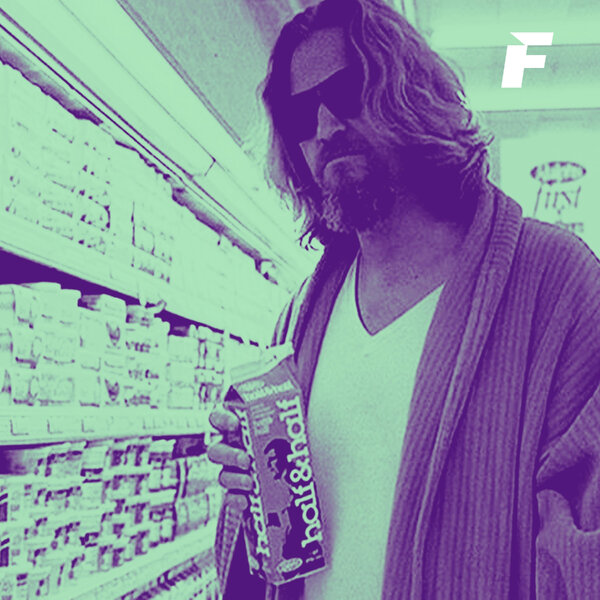
2:38Josh Larsen: Man, I've got certain information, all right? Certain things have come to light, and, you know, has it ever occurred to you that instead of, uh, you know, running around, uh, blaming me, you know, given the nature of all this new shit, you know, this could be a lot more, uh, uh, uh, complex. I mean, it's not just, it might not be just such a simple, uh, you know? What in God's holy name are you blathering about? I'll tell you what I'm blathering about. I've got information, man. New shit has come to light. And shit, man. She kidnapped herself.
3:21Adam Kempenaar: Who better to roll out the rug for this top five neo-noirs and our guest than the dude, El Duderino, Jeff Bridges in The Big Lebowski. And we are going to get to our top five neo-noirs with the help of our special guest, Christopher Harris. He's the author of two novels, including Slotback Rhapsody and his latest, The Neo-Noir Inspired The Big Clear, described appropriately as The Big Lebowski meets The Bourne Identity. He's also a popular fantasy football writer for ESPN.com. Chris, it's so great to have you on the show. The pleasure is all on this side of the table, I'll tell you. Good to have you aboard, Chris.
3:55Adam Kempenaar: Yeah, it should be a really fun segment. I do want to talk about your book a little bit before we get to our list. As I said, Neo-Noir inspired, but what really did inspire it? What prompted you to want to write the story? You know, it was a lot of watching these films and feeling like I love them so much and don't understand kind of why literature seems maybe a little bit behind neo-noir and kind of the embracing of the tradition of noir. And I had written a football novel previously. It was a little closer to what my work life is like and just thought it would be fun to break off into another direction and had an idea for a character who was sort of a tough guy who was maybe indulging in some substances, controlled substances.
4:41And, you know, it would be kind of fun to have that very flawed hero that I think we're going to find in a lot of our top five movies here.
4:49Adam Kempenaar: Well, as we transfer a little bit to our list and you talk about that character, I would love it if you'd actually read part of the story here for us and talk a little bit more about this main character whose name is Dub. Not his real name, but that's what he goes by. And there's a part in particular that I think really sets up nicely, our lists and noir in general. So I know I've given you this passage in particular that I like. Why don't you go ahead and take it away? dub has dismissed attachments has made a big internal production of living simply in the years since his discharge he'd take pride in the drama free life if taking pride wasn't its own form of drama he won't allow himself skirt chasing or money-making schemes or deep entanglements of any kind and all right maybe he's a little proud he knows for instance that david umber who was in dub's sfas class in glorious southern pines way back when left the platoon and jumped with great fanfare to Wall Street, lost when the tech bubble popped, then disappeared into the Lord, our righteousness church in New Mexico.
5:54Dubb understands. It's not just the lack of a mission once you're out or of an overt brotherhood. It's also that the goals in that other life, take that hill, burn that IED, kill that target, are transient and fast to arrive. By comparison, a life of cumulative striving requires one kind of patience Dubb doesn't have anymore.
6:12Adam Kempenaar: so that line in particular that life of cumulative striving I love that I'm going to steal it and use it for my own hair down the road on the show but I think that line in particular speaks to so much of noir most noir characters aren't they rejecting exactly that type of life of cumulative striving the big score or the big case whatever they're focused on those tend to have defined goals and defined endings and life doesn't and that's what makes it so hard right I think you're Right. Yeah, I think some of these films are about characters who are rejecting this life of cumulative striving, rejecting the tough way, looking for an easy way.
6:52And yet I think what's great about the neo-noirs, as opposed to maybe the noirs, is that they kind of are aware of they're making this rejection or they're making it in a way that we've seen a lot and they're kind of doing it in a different way. And that's definitely what I was going for with this character, kind of a twist on the kind of, you know, typical noir hero that we typically see. And yet, I think they all kind of wind up falling under the same umbrella of people you root for but realize they're dramatically flawed.
7:21Adam Kempenaar: Well, I have to apologize. It's been a busy week. I've only gotten through half of the book, but I'm going to get there, I promise. And there are great moments like that that stand out for me. Why don't we go ahead and get to our list? And you touched on there a little bit in terms of characters commenting on what they're doing or being aware of their situation and what they're rejecting or accepting from life. And I think that really will largely define our lists moving forward. And on your Tumblr for The Big Clear, you've written specifically about how you define neo-noir. Because a lot of people, and we'll get to some of these picks, a lot of people tend to think of any sort of modern, sleek crime movie as, well, that's neo-noir.
7:57Adam Kempenaar: It has elements that seem like somewhat like a hard-boiled detective story or an old-fashioned crime story, but maybe they don't necessarily fit into the definition as we're going to approach it. Yeah, I've sort of laid it out as, like you're saying, it's not just about a film that's made after a certain date that's paying tribute, right? Gum shoes and malls and those crazy plots that are hard to figure out, low-key lighting. I think it's some degree of post-modernity, some degree of that self-referential meta. I know how much you like meta. I do. I guess some recognition of the tradition that's sort of embedded with maybe within the art itself.
8:37I think that's kind of what we're looking at, kind of some sort of acknowledgement of what's come before.
8:41Adam Kempenaar: So, Josh, with that in mind, when you were forming your list, did you then reject movies? For example, I'll throw one out there, like The Usual Suspects. I can see why people might lump it into this neo-noir category, but I don't think the filmmakers, in this case, Bryan Singer and the screenwriter, Christopher McQuarrie, I don't think they're trying to draw attention to the tradition or make the audience aware of what they're aware of. So for me, it doesn't really apply.
9:03Josh Larsen: Yeah, I wouldn't consider that a neo-noir either. For me, I tried to think of it not as just having the same ingredients. It wasn't a matter of the elements it had, but the type of story it was trying to tell, the emotions it evoked. And when it tried to do those things in a way that did comment upon the tradition, as you mentioned, Chris. But I also liked what you said when we were talking about this via email about these sorts of neo-noirs is that it also uses that to do something new, maybe something that couldn't have been done by the original noirs. And so I tried to find some films for my list that worked in that way.
9:40Adam Kempenaar: Yeah, there's at least one on my list that fits in to that criteria really nicely. Chris, you're our guest. Why don't you go ahead and start us off? And I will note that the Pantheon, the film-spotting Pantheon of films we can't talk about for the top five, they're going to come up here because they don't apply to our guests. You can go ahead and do it. You have free reign at the place. We gave Chris the key. Yeah, basically. So why don't you take it away? What's your number five? Number five is Point Blank, 1967, directed by John Borman. It's Lee Marvin, and I think it's probably his best role.
10:07It's a revenge noir. It seems really aware of the fact that it is a revenge noir. and it may that may be because it's only taking place in Lee Varvin's head as he lies dying in a jail cell which happens very very early in the movie his character is Walker he's basically a ghost he's running into all these noir tropes but he's rarely taking the bait doesn't want the girl he actually may want the guy who betrayed him we're not quite sure about that yeah he definitely wants money but there's really no one to get it from Carol O 'Connor's in this film and he tells him. It's all corporations now. He basically has$11 in his wallet.
10:43I think there's a legitimately surprising twist ending. I think it's very satisfying, very stylishly shot. And like I said, I think it's the best thing Lee Marvin ever did. And in honor of Roger Ebert, I thought I would just mention a few. As I say my picks, I'll just kind of pick out thoughts that he had about the films. And here's a quote from Roger Ebert about Point Blank. Marvin is just a plain, simple, tough guy who wants to have the same justice done for him as it was done for Humphrey Bogart. And I think that what else says neo-noir more than that?
11:12Adam Kempenaar: Well, he has to come out sometime. Yeah.
11:15Josh Larsen: How bad does he want you, Chris?
11:17Adam Kempenaar: Oh, I don't know. Who knows?
11:19Josh Larsen: Yeah, you know. How bad?
11:21Adam Kempenaar: Pretty bad, I guess.
11:22Josh Larsen: Bad enough to let you through into the Humbley?
11:25Adam Kempenaar: Why should I?
11:26Josh Larsen: Well, it's up to you. I love that movie and I love that performance. You're right. That's interesting. You say it's a 1967 film. We haven't talked about the sort of dates that neo-noir might encompass. And that's really probably at the very beginning. It's cutting it closer.
11:41Adam Kempenaar: It's right on the verge of what we could define as moving into this neo-noir territory.
11:44Josh Larsen: There almost had to be that breathing space between the noirs of the 50s and maybe the early 60s was that breathing space. And then by the time of Point Blank, we were ready to look back at this genre.
11:56Adam Kempenaar: Yeah. And I don't know, Chris, if you would really put a lot of time into trying to define what noir encompass. But a lot of people do put that that epitaph at Touch of Evil, Orson Welles film 58 being sort of the end of noir. Does that work for you as well? Yeah, I mean, of course, you know, if we're not going to allow something like The Usual Suspects or Layer Cake or a bunch of other films, if we're not going to allow them to be neo-noirs, they have to be something. Maybe they're also noirs and therefore maybe there isn't an ending date. But, yeah, I've always heard Touch of Evil as sort of the pinnacle and the end point, sort of the noir to end all noirs.
12:28Josh, you're number five.
12:29Josh Larsen: My number five is The Man Who Wasn't There. As much as I like them, there's something giggly about the Coen brothers' earlier neo-noirs. I'm thinking namely of Blood Simple and Fargo, The Big Lebowski, of course. Those movies have sort of a snickering pleasure at the way the morons are conducting their business. And that makes for great comedy. I'll admit it. I love it, especially in Lebowski. But it does stand apart from the melancholy that underlines some of the classic noirs. It somehow misses the sadness, which is one of those things I always appreciated about the originals. Well, the Coens and Billy Bob Thornton nail that melancholy with the main character of the man who wasn't there, this morose pushover of a barber named Ed.
13:11Josh Larsen: Yeah, I guess Doris liked all that He-Man stuff. Sometimes I had the feeling that she and Big Dave were a lot closer than I let on. The signs were all there, plain enough. Not that I was going to prance about it, mind you. It's a free country. We get the sense that Ed never really initiated anything in his life until he comes up with this blackmailing scheme that, of course, goes wrong and eventually leads to murder. Thornton is he's just a dour wonder in this film. I love this performance. He glumly watches as this tragedy unfolds at his own hands. He's like a ghost. Chris, you mentioned ghosts earlier.
13:51Josh Larsen: I see Thornton here as a ghost who's haunting his own life, really. And that's certainly emphasized by the great Roger Deakins, who's doing black and white cinematography in this film. This is probably the Coen's most perfect aping of the film noir genre. So it is in some ways an imitation. Maybe some people downplay it because they see it as a strict imitation. So remember, there's something really new in this film as well. The fact that they weave an alien abduction story into the plot. You don't get a lot of that in the work of James M. Cain.
14:22Adam Kempenaar: No, and I'll be honest, I had completely forgotten about that plot. It's a pretty minor touch. It's been a long time since I've seen that film. I remember liking it. I remember being taken aback by just how still Billy Bob Thornton's performance is. It is a wonder. It's a marvel to watch him on screen react as little as he does. He does. It really is pretty crazy. Well, my number five, Neo Noir. I've talked about this film on the show before. It's made top five lists. I've got such a soft spot for it. And it might be just because the star Denzel Washington is just so damn good in it. And he and Don Cheadle together before they made Flight are so much fun together in this movie.
14:57Adam Kempenaar: It is the only film on my list that takes place in the era of film noir. It was made in 1995, but it takes place in 1948. And it's Devil in the Blue Dress, adapted from the Walter Mosley story made by Carl Franklin. And Washington plays EZ Rollins. He's a World War II vet living in L.A. He's laid off from his job. He needs money. A job comes his way to help track down a white woman who had been seeing a rich man who is a politician, very rich. One time he was running for mayor of L.A. And the biggest twist here, because as we've touched on, for me, these picks all had to really have some kind of key element that subverted the genre.
15:33Adam Kempenaar: And the biggest twist here is obviously you've got a private detective who's black. Noir detectives, they're always outsiders. One time, maybe they were part of the police force. Maybe they were forced out at one point or they were too much men of integrity and they had to get out of it. But they are outsiders and they just don't belong in the civilian world either. And so there's that sense of alienation and it's heightened even more, obviously, when you're a black man in the white man's world. And suspicion about your actions and motivations and prejudice against you is inherent in virtually every encounter you have.
16:04Adam Kempenaar: And you see that in every encounter Eazy has in this movie. You also have a private detective who isn't a private detective at all. He's just a guy who needs a job, and he gets mixed up in something bigger than him, but realizes along the way he's kind of got a talent for it, and he has to see it through to the very end. And there are a lot of great touches here, but one of them that I really love is how Easy takes care of his house. He's really into maintaining his house and his property, and that's another difference in the noir hero who doesn't seem to have any roots or care about setting down anywhere or settling down.
16:33Adam Kempenaar: All Easy wants is his slice of the American dream, a place to call his own, and Carl Franklin really captures that neighborhood and that house with these really warm hues. And there's such a sense of hope on those streets in that neighborhood. And as we've seen in future films that are shot in those same L.A. neighborhoods, that sense of hope didn't really pan out. They didn't get their slice of the American dream quite the way EZ wanted it. But I'm a huge fan of that film. I think it's a little bit underrated, actually, Devil in a Blue Dress. I don't know, Chris, if that's one you watched at all in your prep for the book.
17:02Not in my prep for the book. I've seen it. I believe I've seen it on cable. It's on cable every so often. I've probably seen it cut up to a hash. I would say that is not my favorite Denzel Washington film ever. But I do think it's interesting because it does seem that the noir aspects of the movie are very much at the service of, you know, communicating some of the racial injustice and kind of dynamics that you're talking about, which is definitely more neo than traditional. Go ahead then with your number four. Number four is Blade Runner. I'm going populist here. Ridley Scott 1982. Obviously, it's very easy to find the classic noir elements that are in Blade Runner.
17:42They're very intentional. It's Los Angeles. It's always night. I don't know if there's any daytime scenes of that entire film. It's raining a lot. That's a big noir trope to have rain. Everyone's wearing trench coats. There's neon. You got shadows everywhere. But I feel like that entire film and all of these noir tropes are at the service of something that's very sort of more modern, which is this interesting mission of creating a meditation on the dehumanization and identity, maybe in the modern world. We're establishing this hard-boiled world that despite all these science fiction trappings, it's really familiar to noir audiences, but we're making the main conflict about what makes a human.
18:21What is empathy? What does it mean to be empathetic to humans? And that's a really interesting juxtaposition. It's certainly referential to all noir stories, but I feel like it digs much, much deeper. And Roger Ebert, I'm going to go to him again. The screenplay toys with the nature of humanity. And that's exactly right. It's exactly what it does. You never would see a noir of the 40s or 50s dig this deep, I don't think.
18:46Adam Kempenaar: There's actually a part in Trance, in Danny Boyle's new film we talked about, where it really made me think of Blade Runner, because it does pose that question. Maybe the only deep thing on its mind for about 30 seconds is that question of what defines us as humans. And I think that its answer is very similar, actually, to Blade Runner, a movie that's unfortunately in my penalty box. I've talked about it too much over the past year, or it probably would have made my list. Yeah, there's no shame in going populist, Chris. That's quite all right. Blade Runner. That's what I hear, Josh. You're the man of the people.
19:12There you go.
19:12Josh Larsen: Josh lives in the populist realm. Honorable mention for me. My number four is Sin City. Frank Miller and Robert Rodriguez brought Miller's neo-noir graphic novels to the big screen, and they ended up giving us one of the best films of 2005. It's this series of interconnected vignettes involving all sorts of noir characters. You've got the crooked cops, you've got the murderers, the vengeful femme fatales. Everyone is pretty much here. Now, these stories are exceedingly graphic. I earlier described them as what might have been going on in those 40s and 50s crime pictures when the censors weren't looking.
19:46Josh Larsen: I mean, this thing goes all the way. And I think in doing that, Miller's vision is really unique in the way he locks in on this one particular element of the noir genre, and that's the fatalism. The movie really pursues this sense of fatalism to its most awful end, so that no matter what you try to do, even if it's the right thing, and there are maybe one or two decent characters in Sin City, no matter what you do, it's going to end in violence. It's going to end in pain. It's going to end in death. So Sin City really plunges full steam ahead where most noirs do stop. The girls all know the score.
20:22No escape.
20:24Josh Larsen: No surrender. No mercy. We gotta kill every last rat bastard one of them. Every last one. Not for revenge. Not because they deserve it. Not because it'll make the world a better place. we need a heap of bloody bodies so when mob boss valenquist looks over his charts of profits and losses he'll see what it cost him to mess with the girls of old town it's another black and white film i think this was shot in color and then in post-production they might have turned it to black and white i think that's how they did that black and white wasn't a requirement for my list though i do have something that's much more colorful coming up and sin city too right coming out is it this year it is this year yeah i think towards the end of the year yeah i was a huge
21:11Adam Kempenaar: fan of that film. I am actually not sure that's a populist choice. I think there are a lot of film spotting listeners who dug it as well, but I know there's a streak of people who are not into it. Yeah, that's for sure. It's not for everybody, but if they're doing a sequel, it must have done all right. Yeah, but maybe it is because of the fatalism and that doom and gloom nature of it and the violence that pushes people away. That actually was an honorable mention for me. I think it's all about the violence. I think you're right. It's taking sort of a lot of what's implied and you can't show in the 40s and 50s and showing it.
21:40And that really sort of subverts the genre in and of itself.
21:45Josh Larsen: When the holidays start to feel a bit repetitive, reach for Sprite Winter Spice Cranberry and put your twist on tradition. A bold cranberry and winter spice flavors fusion, Sprite Winter Spice Cranberry is a refreshing way to shake things up this sipping season and only for a limited time. Sprite. Obey your thirst.
22:37Josh Larsen: money to do for us. Listen to the full episode of What's Your Problem on the iHeartRadio app, Apple Podcasts, or wherever you get your podcasts. Visit fidelity.com slash wealth. Please consult your tax or financial advisor for additional information concerning your specific situation. Diversification does not ensure a profit or guarantee against loss. Investing involves risk, including risk of loss. Investment minimums apply. Advisory services offered by Strategic Advisors, LLC, a registered investment advisor. Brokerage services provided by Fidelity Brokerage Services, LLC. Member NYSE SIPC. Wait, I came in for two things.
23:21How is this$47? All right, we're going to need a plan here. Just start simple with Bank of America Advantage Safe Balance Banking. No overdraft item fees, no monthly maintenance fee if you're under 25.
23:34Josh Larsen: Oh, that's actually really simple. Safe balance banking. One less thing to figure out. Learn more at bofa.com slash simple banking. Terms and conditions apply. Bank of America and a member FDIC.
23:48Adam Kempenaar: Well, that's a perfect transition into my number four neo-noir when you talk about what you couldn't show in the 40s and 50s. And since I can't talk about my all-time favorite noir during this list, Double Indemnity, because, of course, it is an actual noir, I'm going to talk about the film that it was the inspiration for, and that is Body Heat from director Lawrence Kasdan. His directorial debut, this is the guy who, of course, he'd come off at this point Raiders of the Lost Ark and Empire Strikes Back. And then he gets to direct and he makes Body Heat. Though instead of a nobody insurance agent, William Hurt here in the lead role is a nobody lawyer.
24:20Adam Kempenaar: He's pretty sleazy. He's not all that good at what he does, actually, which factors into the story. And he gets caught up in a plot where he helps Kathleen Turner kill her husband to collect the insurance money. But the big subversion here is the fact that we see this real graphic depiction of sex. It's there in the title, Body Heat. This isn't the manicured lawns and the swimming pools of California where everything is about maintaining appearances and being comfortable. This is swampy Florida, and it's hot. It's even hotter than usual, the characters tell us, because in the time the movie covers, they're having a heat wave.
24:54Adam Kempenaar: and there's a scene in this movie it's a scene where hurt plays a character named ned which is just such a perfect name for such a an ordinary nobody i'm sorry i apologize to all the neds out there but who are the last group of people you offended yeah i think so now ned's and brian's no longer listen well when he and maddie first have sex they are like wild animals and i remember watching this film for the first time completely understanding when ned basically forces his way into her house and they go at it there, I think on the floor, right by the stairs, because it's been building to that. The whole film has been building to this moment, their physical connection.
25:29Adam Kempenaar: It's so scalding that it's like a pressure valve being released when they finally do it. So the movie's overtly sexual in a way that noir films could only hint at and did. I think back to the scene with Walter Neff and Phyllis Diedrichson from Double Indemnity, the first time it's suggested that they have sex. It happens completely off screen. An ellipsis allows us, the audience, to fill in what probably happened in the time that passed in his apartment, and we just don't otherwise get to see it. Her leg coming down the staircase is the most graphic depiction of anything we get in that film. I've always argued with that movie that Walter is not driven by sex so much as his ambition to rise above his meager status in life.
26:08Adam Kempenaar: He's done with the cumulative striving. He's going to try to pull off something perfect, and in this case, the perfect crime. There's an element of that to Hertz Ned, but he really is much more clearly driven by lust. And so I kind of love that little subversion on the genre there in Body Heat. My guilty admission is that I don't really love Body Heat all that much. Really? I can see that. How recently have you seen it? I saw it actually about a year ago. And it worked. It totally worked for me. But maybe it's because I'm just such a fan of Double Indemnity. And I did love the fact that they had that spark that just really took me by surprise.
26:43Yeah, I mean, certainly you're right about the subversion of the genre by showing much more graphic relations. I just find some of the plot twists rather unbelievable when whatever it is, the shed blows up. Sorry, I don't think she's in there. Don't ruin it. Don't ruin it for everyone out there.
26:59Adam Kempenaar: Let's go ahead and get then to your number three, Neo-Noir, Chris. My number three is Memento 2000, directed by Christopher Nolan, the pre-Dark Knight Christopher Nolan. And, you know, memory loss actually is a major device in old time noir. We remember Spellbound for sure. The Dark Past. There's a film called High Wall that's about memory loss. They all use that trope, but it's usually something that the hero overcomes. He sort of has his ability to create memories back again and is learning the facts of the case as the audience learns them along with them. And they act the hero when everything's finally clear.
27:35not only is Leonard Shelby pretty much a patsy throughout Memento, he actively makes anti-heroic decisions, and especially at the end of the film, it's extremely anti-heroic, using black and white stark lighting, stock noir characters, but then sort of turning it all inside out with the color sections of the film. I actually think it winds up being a relatively sensitive meditation on notions of time and memory, and certainly taking that traditional memory loss hero of the typical noir of this kind and really turning it on its ear, something that most noirs don't do. And Roger Ebert, again, I just wanted to credit him.
28:14He said, essentially, Leonard is adrift in time and experience, and therefore, so are we. And again, I think that's something that you wouldn't typically be able to say about a traditional noir.
28:25Josh Larsen: Memory loss also crucial to trance, which I didn't make those connections while watching it to the earlier noirs.
28:29Adam Kempenaar: Yeah, there is a reason why Memento is in the film spotting pantheon. It's a beloved film here. So great pick. You're listening to Film Spotting with Adam Josh and our special guest author Christopher Harris. We're sharing our top five neo-noirs. Josh, you are up. You're number three.
28:45Josh Larsen: Who framed Roger Rabbit? Of course. Yeah, why not?
28:48Adam Kempenaar: This is where the populace comes back in.
28:51Josh Larsen: Well, listen, I talked about Sin City as maybe the ultimate noir tragedy in the direction that it goes. And this is probably one of the few noir comedies. Of course, we have Lebowski and there's maybe a handful of others. But being a comedy in and of itself makes it a commentary on the earlier genre. Roger Rabbit also is the perfect patsy because he's such a dimwit. And so sure enough, he's framed for the murder of the businessman who is having an affair with Roger's wife, Jessica Rabbit. and what are we to make of the obscene Jessica Rabbit? You've got the wrong idea about me, Mr. Valiant. I'm a pawn in this, just like Roger.
29:26Josh Larsen: Can you help me find him? Just name your price and I'll pay it. Yeah, I bet you would. You've got to have the rabbit to make the scam work. No, no, no. I love my husband. You've got me all wrong. You don't know how hard it is being a woman looking the way I do. Yeah, well, you don't know how hard it is being a man, looking at a woman looking the way you do.
29:56Adam Kempenaar: I'm not bad. I'm just drawn that way.
30:00Josh Larsen: Kathleen Turner did the vocals, and the animators, they did the sort of work that it's so outrageous, it would probably make those silhouettes of women on the back of truck flaps blush. I mean, this is just ridiculous. She's this ludicrous exaggeration of the femme fatale figure. You could probably argue an offensive one, but she's also such a key part of the comedy. And for me, that's what makes Who Framed Roger Rabbit so unique.
30:25Adam Kempenaar: I wish I could comment further, but I'm still where I was the last time you brought this movie up. I have yet to see it.
30:31Josh Larsen: Oh, and I may have suggested that you watch it with the kids last time you said that. But looking at a few clips this time in preparation for the show, no. You're not ready for it? No, not yet. just the clip of uh of bugs bunny and uh who is it bugs bunny and daffy duck doing their musical number that sounds that sounds right yeah yeah i've seen that i've seen that movie a bunch of times uh and i i think it's a really good pick for this because that's exactly right it's exact it's so aware of all of the noir tropes and it so has fun taking your expectations and completely twisting it around i think it's an awesome pick chris you don't you don't have to encourage it
31:07Adam Kempenaar: That's okay. Keep it coming. You really don't. Let's go to my number three then. We're going to go back to familiar ground here. We've mentioned them repeatedly already. The Coen brothers. I am going with Blood Simple. And I cannot quote Roger Ebert here. I didn't pull a quote. Instead, I'm going to quote you. How does that feel, Christopher Harris? On your big, clear Tumblr, you wrote this about Blood Simple. If neo-noir, by my definition, uses old formulas but puts them together in a way that both generates something new and comments on the older stuff, Blood Simple is a neo-noir masterwork.
31:39Adam Kempenaar: How many films have done a variation on the cuckolded husband who hires someone to murder his cheating wife and her lover? Yet this film introduces chaos theory into an ancient formula. Anything that can go wrong does. And I love that. This is the Coen Brothers' debut film, but it's a great line from you because it made me realize something about Blood Simple I had never thought of before, and it goes back actually to the man who wasn't there. I had always kind of pinpointed the man who wasn't there as that moment where that notion of chaos and these kind of existential crises where it almost doesn't matter what choices you make, the world is going to come down on you somehow.
32:12Adam Kempenaar: That's in The Man Who Wasn't There that I really started noticing that in the Coen brothers. And then it has followed throughout the rest of their work. But it might actually go back to Blood Simple. And this is one where, yes, a lot of noir films have double crosses and complex plots. I think Blood Simple may take it to another level. And it really is driven by the incompetence of the main characters. But there's that sense of futility to their actions that I think does elevate it above pulp into something a little bit more substantial. There's this sense, like I said, that the more you try to determine your own fate, the more you try to exert your free will, the more fate or whatever it is you want to call it is there to put you in your place and to render everything you've done pointless.
32:49Adam Kempenaar: So it does fit into that whole Coen Brothers world for me that we also saw in No Country for Old Men. I actually started to wonder if Visser, the detective in the story, played by M.M. Walsh, who Chris, you called an agent of chaos. He's wreaking havoc wherever he goes. He actually made me think of Anton Chigurh in No Country for Old Men. He might be a precursor to that character. And you also correctly noted that Abby, played by Frances McDormand in the film, she's supposed to be or she's ostensibly our femme fatale. And yes, you could argue that she is the reason this whole plot spins out of control because she's having an affair with Ray and his actions to help her later cause a lot of problems.
33:27Adam Kempenaar: And her husband's jealousy and anger spurs a lot of this on. But she never seems to have an agenda like femme fatales do in every other film noir. She really might be an actually relatively wholesome character. Yeah, she's the innocent in this story. So there's a lot of twists there in Blood Simple. And it's really a wonderful film. Obviously, since I quoted you extensively, I know you agree. Why don't you share your number two, Chris? Number two for me is The Long Goodbye, a 1973 Robert Altman, absolute classic. Robert Altman, of course, in the early 70s is busy subverting genre after genre. He's doing it to every genre around.
34:04I think this is the best one of those. He described his idea when he was making the film and on the extras on the DVD as Philip Marlowe waking up after a 20-year nap. He called it Rip Van Marlowe. You know, Marlowe's driven by the same things we expect that our knight-errant detectives are going to be driven by. But he's in a modern world that doesn't value loyalty, doesn't value belief in anything. You know, without giving anything away by the end of the film, he's corrupted. He doesn't really believe anymore. His final act is actually very cowardly. For me, the best neo-noirs explain how the world has changed from our ideal.
34:39and Longabai does that even down to the cat, that cat that he spends the early part of the film buying cat food for, you know, the cat that he's taking care of, the cat that certainly couldn't wind up being a loose end, just disappears, just isn't in the film anymore by the end. Roger Ebert wrote, instead of making his private eye into a cool, competent professional, Altman makes him into a 1950s anachronism. Philip Marlowe has been in a lot of movies, but never one in which he was more confused than he is in this one. And the confusion of the hero, certainly something that I was trying to create with my novel.
35:13I was, this was a big inspiration. I watched this film like four or five times as I was writing the book. I just find that sort of the anachronism and the, the way in which the world sort of gets ahead of the detective and winds up manipulating him. I think that's really fascinating.
35:27Josh Larsen: Marlo, just answer the question. You want to know what I did last night? Well, my cat woke me up in the middle of the night. He was really hungry. So I went in to fix him his favorite kind of cat food, curry brand. You know, it was the only kind he eats. And I was out of it. So I picked something else up, and the cat clawed the hell out of me. He just wouldn't touch it. So I went out to the thrifty mart. You know, it's open 24 hours to get some curry brand cat food. And they were out of curry brand cat food. Son of a bitch. So I got a couple other cans, you know. And I came back, and I switched the labels and the cans around, and the son of a bitch cat just left.
35:59Josh Larsen: Marlo, will you forget the goddamn cat? Yeah, I know. Curry brand cat food, Marlo.
36:05Adam Kempenaar: Well, this is how much of a fan I am of Long Goodbye. I don't actually own a cat, but I only buy Curry brand cat food. I just have to, to pay tribute to Elliot Gould there in that film.
36:17Josh Larsen: Great pick. Josh, you're number two. I'm going to stay in the 1970s and go with Shaft. Talk about updating the noir tradition. This is 1971, and Shaft took the noir archetype of the private detective and made him a strong, independent black man, played by Richard Roundtree. because Shaft is all about empowering. Really, it's about worshiping this character. It somewhat strays from the noir path in that it doesn't have the fatalism that something like Sin City or Blood Simple, as you talked about, Adam, embraced. It's much more interested in seeing Shaft as this strong hero than as a flawed character.
36:52Josh Larsen: So as Shaft gets drawn deeper into this kidnapping plot that the movie turns on, he's always in control. He's the coolest, the toughest guy in the room. you're never really worried for him the way you are for other noir heroes. Shaft is still a landmark, though, and a great neo-noir because it appropriates the genre's framework, not just to imitate it, but really for a larger social purpose.
37:17Adam Kempenaar: Yeah, that was a real surprise to me. We talked about it a lot during our Blaxploitation Marathon. I believe we opened with Shaft. It seems like a logical place to start. And I was really taken by surprise just how much the filmmakers paid tribute to or had homages to characters like Sam Spade and Philip Marlowe in that film. He very clearly is derivative of that character, and they're trying to take him in a new direction. My number two is the movie Brick. Of course, it had to come up. Rian Johnson, friend of the show, but a great, great filmmaker. I think we've seen so far with his first three films.
37:48Adam Kempenaar: And here, obviously, you're putting noir in a brand new setting. You're putting it in a California suburban high school. And the degree of difficulty on moving Philip Marlowe, essentially, into a high school is so incredibly high. It could come off so badly that I would tell anybody it's foolish to try it. But I think when you're as talented as Rian Johnson clearly is when it comes to writing and directing, you might just be able to pull it off. He did pull it off. And I'm going to quote here from our friend Scott Tobias in his new cult canon, which he includes Brick as part of that. He really says it perfectly.
38:18Adam Kempenaar: Johnson threads the needle a hundred different ways. But before getting into all the little things he gets right, here's how the concept pays off. The common denominator between crime fiction and high school is a mood of heightened emotion obscured by a thin veneer of cool. There's never a time in a person's life where they feel things more intensely than in high school, nor is there a time when they labor as hard to keep those feelings under wraps. By evoking the stylized, rat-a-tat dialogue of vintage Dashiell Hammett detective novels with words like Yeggs, Heal, Jake, Seamus, et al., Johnson finds a new way to suggest teenagers' capacity for couching their real problems in language.
38:49Adam Kempenaar: He also raises the stakes, there's my favorite word. Crime fiction deals with matters of life and death, and if that isn't literally true of adolescence, it certainly feels that way. Brennan, it's been a while. Where have you been eating? Back at school. Yeah, I know I've seen you. Has there been a couple of months? It's been a while. Give Emily my locker number? A few days ago. Is I wrong? No. You know, it's been so long, I don't know your two stats. It's been a while. Who's she been eating with? I don't know. That's hard to keep track. Is it? It can be. It can be hard to keep track of those things because lunch is a lot of things.
39:23Lunch is difficult. Uh-huh.
39:27Adam Kempenaar: She hasn't been doing too good, Brennan. I'm not looking for a patch up. Em's life is her own. But she asked for my help. Help with what? I don't know. I don't even care. It's not my business. I just want to know she's okay. So we're going to find her. That's all this is. I think that's actually our producer Sam and former co-host. When we reviewed Brick, that's something he brought up in his review. The way that Rian Johnson captures something you wouldn't really have thought of. That there is that connection to film noir. And that high school is that time in your life where things don't seem like a matter of life and death.
39:53Adam Kempenaar: But that is how you approach them. That really sums up the stakes of film noir quite a bit. So obviously the film's been talked about a lot here on the show. And I know, Chris, from reading your Tumblr, that this is one I think had been recommended to you. Did you get a chance to catch up with Brick in your research? I actually had seen it already. It was sort of recommended that I revisit it. But I think it's such a good pick as sort of a classic neo-noir, if that doesn't make sense, sort of an oxymoron. But it is because what I love about this subgenre is exactly what you're saying, which is the reason you use the tropes of the genre are to do something else with those tropes.
40:32In this case, communicate what it's like to be in high school. And you're finding this new way in, this new, fresh, exciting way in that I really love it.
40:40Adam Kempenaar: Well, that brings us to the crowning moment here. Your number one all-time favorite, neo-noir. I'm going to give a little bit of a spoiler here. Isn't this also your all-time number one favorite film? It is, and it's in the Pantheon. So twice I feel like I cheated, even though I was given license, I was given the key. And the key is an interesting shape. I don't think I should tell the listening public the shape of the key. Can't let that out. Yeah. But it's Chinatown, 1974, Roman Polanski. It is my favorite movie of all time. It has all the trappings of film noir down to the beautiful period details.
41:13But this is a world, again, where Jack Nicholson's Jake Giddies gets everything wrong. The very act of seeing things is corrupt. The photos of Hollis and the girl turn out not to be adultery. Photos of Hollis and Noah Cross are misleading. Hollis's eyeglasses go missing. Evelyn Mulray has a flaw in her eye. And of course, this winds up something happens to her eye at the end. And John Houston actually tells Jack Nicholson, you may think you know what you're dealing with, but believe me, you don't. Truer words were never spoken. Gideys has the trappings of a successful, almost bourgeois private eye, and yet he fails miserably at being one.
41:52I read Chinatown as a story about a man who knows that the stuff of life is often terrible, but he seeks to repress that information with pretensions, with pretensions to class, with, you know, this upper middle class office that he has, and also with his wits. But you can't think your way out of the muck of humanity, I guess. And so, you know, Chinatown really always looms.
42:16Josh Larsen: I think you better come with me.
42:18Adam Kempenaar: But why? There's nothing more to say. Will you get my car, please?
42:23Josh Larsen: Okay, go home. But in case you're interested, your husband was murdered. Somebody's been dumping thousands of tons of water from the city's reservoirs and we're supposed to be in the middle of a drought He found out about it and he was killed There's a waterlogged drunk in the morgue involuntary manslaughter if anybody wants to take the trouble which they don't It seems like half the city is trying to cover it all up, which is fine by me But mrs. Mulray I goddamn near lost my nose and I like it I like breathing through it and I still think that you're hiding something Roger Ebert wrote Polanski is so sensitive to the ways in which 1930s movies in this genre were made that were almost watching a critical essay and you couldn't possibly say it better than that that's absolutely true that's not only a great pick for this list but a very respectable number one movie of all time yeah well thank you
43:17Adam Kempenaar: you can't really argue and I think too there's something about the fact that you find in a lot of noir heroes from the actual period they're kind of these dark nights, right? And you see a character like Jake Giddes and we see some elements come through by the end of the film but he's a real low-life private eye. He makes his money from these two-bit divorce, you know, sleazy kind of adultery cases. He does things that kind of the more traditional heroic noir characters wouldn't do. I think that's important to come through in his character and it's really an amazing film. Josh, you're number one.
43:49Josh Larsen: Well, Chris went with Chinatown for his number one. My number one is probably the most ingenious reworking of the noir genre since Chinatown. I think Brick is that good. We definitely agree on that, Adam. The conceit here that Rian Johnson has envisioned feels so natural. You're right. He pulls it off. That's the first miracle of this movie, that he pulls it off. The endless halls of lockers, they stand in so well for those dark film noir alleys. The rapid-fire lingo matches the way teen slang can be its own language. You know, only those in the know can speak it. I think what Johnson does is reinvigorate two genres here.
44:27Josh Larsen: He reinvigorates noir and the teen picture. So he uses noir to give teen concerns like, you know, love, drugs, friendship, even more minor stuff than that. He gives them this fresh and vital forum. It allows them to resonate in a way that they wouldn't in yet another familiar teen flick.
44:44Adam Kempenaar: And how about the fact that there's a connection between your number two and number one? Richard Roundtree, Schaft himself, appears as the principal or vice principal in Brick. That is right, yeah. So, there you go. Well, we're going to have some overlap here with our final picks, because my number one, I had to go where you went with your number two, Chris, and it is The Long Goodbye. That is, for me, along with Chinatown, those two are really the prototypical neo-noirs in terms of very clearly trying to subvert the genre and play off our expectations. And in particular, I think what we see with The Long Goodbye is Altman really shattering the myth of the hard-boiled private detective.
45:20Adam Kempenaar: And this is a movie I've seen maybe four or five times now. And when Matt Singer, our friend from FilmSpottingSVU, when he was doing his critic wire survey about which movie you'd most like to do a commentary for, The Long Goodbye is the first one that came to mind for me. That's a movie I would love to just sit down and go over frame by frame because I feel like I know it that well. but also every time I watch it, I get something new out of it. And I do just love watching how Altman takes that hard-boiled hero, transplants him to the modern world, and does not only say something about the myth of that hero, how maybe the myth of Philip Marlowe and Sam Spade, that it was just that, it was a myth, and we were putting on them traits that we wanted to see and how we wanted to define masculinity in a certain time and place.
46:04Adam Kempenaar: But now it comes back to say something about the world we live in, and what we see is that this man of integrity In his case, he's this ineffectual man of integrity in a world that has none. He's woken up now 20 years later, and he's in the 70s, and it just has no place. And you're right, Chris, that by the end of the film, without spoiling anything, he's a bit of an idealist up to that point. He helps out his friend. He does something he should never do, and he should be smart enough to know that something's up here, but he doesn't ask questions. He just helps his buddy out, and in the end, he pays the price for it.
46:34Adam Kempenaar: And he is corrupted by that, ultimately. So he's a total misfit throughout this film. He's just a complete anachronism. And it's one of my all-time favorites, The Long Goodbye. And you'll never look at Coke bottles the same after that movie. That's true. That is absolutely true. So those are our top five neo-noirs. What about honorable mentions, Chris? What were some of the other films that were really tough for you to leave off? certainly blood simple i sort of went back and forth uh i i had a feeling maybe someone else was going to talk about it so it would get mentioned and i certainly wrote a long thing about it online i love that movie a lot same thing with the big lebowski it's in the pantheon what else can you say it's wonderful i think it's so aware of its noir forebears and yet it sort of stubbornly stays away from any heroic behavior at all on the part of its hero the dude blue velvet another Pantheon film that's very clearly, I think, aware of its origins.
47:27And I mentioned earlier, I think Sin City is a great pick too.
47:30Josh Larsen: Josh, what about you? I did have Devil in a Blue Dress. One of your picks, Adam, as an honorable mention. Another Devil movie, Before the Devil Knows You're Dead from Sidney Lumet. A Simple Plan, Sam Raimi's film. We talked about Raimi last week and he did a great little exploration of noir with A Simple Plan. And then another Carl Franklin movie, One False Move.
47:48Adam Kempenaar: Yeah, that's a great film. For me, I had to consider LA confidential. I love the Godard film Alphaville. I'm also a big fan of Soderbergh's The Limey, a film I equate very closely with Point Blank, which was also an honorable mention, and I had Shaft as well. So a lot of great titles there to consider. We threw out at least four there, I think, that are in the pantheon. So obviously, it's a genre that we respond to. Chris, this was a blast to have you on the show and get your insights. We wish you all the best with the book. Thanks for coming on. Yeah, thanks a lot, Chris. It was fun. Yeah. Thanks for having me, you guys.
48:19It was a blast. Where can people learn more about The Big Clear? If they go to thebigclear.com, that would be the best place. They can follow me at charrisespn, if they don't mind some sports talk in their Twitter feed. I can't help it. That's sort of what I do for my day job. But I would love it for folks to check out the book or not. It's cool. I know a lot of screenwriters and directors listen to the podcast. You should definitely email me because hopefully someday we'll make this into something.
48:51Josh Larsen: access to the film spotting archive is just one of the benefits of joining the film spotting family you'll also get bonus shows a weekly newsletter early access to events and more to join go to filmspottingfamily.com this conversation can serve no purpose anymore goodbye
49:21Wait, I came in for two things. How is this$47? All right, we're going to need a plan here. Just start simple with Bank of America Advantage Safe Balance Banking. No overdraft item fees, no monthly maintenance fee if you're under 25.
49:37Josh Larsen: Oh, that's actually really simple. Safe Balance Banking. One less thing to figure out. Learn more at bofa.com slash simple banking. Terms and conditions apply Bank of America and a member FDIC.
50:16Josh Larsen: trained it and knows my thumb keeps my secrets and America's best network. Naturally. I'm an adult with standards, no hoops, no run around, just what I want and a price I like. I mean, the only thing I should be paying an extra for is guacamole switch to T-Mobile's 55 and up plan and get one or two lines for$30 a line per month and keep your phone all on America's best network. Minimum age 55 with auto pay plus taxes and fees. Best mobile network in the U.S. Based on analysis by Uklav Speed Test Intelligence. Date of first half, 2026. What does Clinique Moisture Surge feel like? Like a tall glass of water.
50:55Josh Larsen: Because Clinique Moisture Surge absorbs instantly and keeps hydrating for 100 hours. That's thanks to the help of hyaluronic acid and aloe bioferment, Clinique's own form of the aloe plan. It's concentrated over 500 times and then fermented through a 10-step process. All that for instant absorption. 100 hours of hydration, and plump, glowing skin. It feels like everything a moisturizer should be. It just feels like moisture surge. When the holidays start to feel a bit repetitive, reach for Sprite Winter Spice Cranberry and put your twist on tradition. A bold cranberry and winter spice flavors fusion, Sprite Winter Spice Cranberry is a refreshing way to shake things up this sipping season.
51:41Josh Larsen: and only for a limited time. Sprite. Obey your thirst.
For the final archive episode of Noir-vember, we go back to 2013 and the Top 5 Neo-Noirs, with Adam and Josh joined by crime writer and fellow podcaster Chris Harris (Pound Foolish, The Big Clear).
Unlock the full archive, Filmspotting Discord, ad‑free + bonus episodes, and more when you join the Filmspotting Family.
See omnystudio.com/listener for privacy information.



Scan the code with your iPhone camera
Listen in the app.