 Ask ChatGPT


After the 2022 midterms, Democrats’ “blue wave” is expected to reshape financial services via stronger congressional oversight, committee control, and a more active CFPB—especially targeting crypto and alleged ethics/corruption issues tied to Trump-era approvals.
Rob Blackwell is Chief Content Officer and Head of External Affairs at Intrify, a longtime bank regulation/politics reporter, and host of the Banking with Interest podcast. He’s based in the DC area.
Democrats’ wins are framed as a rebuke of Republicans over affordability/cost of living, inflation drivers (including tariffs and the Iran-related gas price impact), and corruption perceptions—not a blanket endorsement of progressive candidates. Committee leverage will increase because Democrats are projected to hold a larger margin (e.g., Senate Banking potentially +3), reducing the ability of individual members to block bills.
World Liberty Financial Trust charter approval (OCC speed/ethics concerns); crypto’s political spending backlash (Sherrod Brown); potential CFPB “lights back on” under nominee Brian Johnson; possible hearings on trust charters and firms like Synapse; state-level populist targeting of banking/fees (e.g., credit cards/interchange).
Written by AI. May contain mistakes.
A deep dive into the implications of the midterm election results.
“Yeah, we realized when you popped on and we were getting everything set for the recording that we'd started doing the podcast before the podcast.”
Discussion on how election results will affect the financial services industry.
“There was gerrymandering attempts that ended up being dummymandering results.”
Explore how the recent election results may influence the financial services landscape.
“It ties back to the historical nature of this election.”
Discussion on potential leadership changes in Senate and House financial committees.
“He likes the Intelligence Committee a lot.”
Discussion on potential leadership changes in Senate and House financial committees.
“Increase offers API-first banking for ambitious technology companies.”
Analysis of the crypto industry's political challenges and public perception.
“I mean, go ask Elon Musk how much money it costs for a Senate seat.”
Discussion on the precarious position of the crypto industry in politics.
“And so I think that's the other, in addition to money not spending in politics, maybe as well as the crypto industry like to pretend or have people believe, there's also no deep well of public support for this stuff.”
Exploration of potential oversight actions against major financial players.
“but then all bets are off because I don't know who the Republican candidate is and they may think to themselves, look, I don't need to be as close to this issue as this president is because it can backfire on me.”
Analysis of how midterm results may reshape regulatory agency dynamics.
“I think that is an incredibly lucrative area that Warren can pursue as much as she wants.”
Insight into how agency leaders might respond to the new political climate.
“We'll circle back to that, but if you skip down a couple of layers and get to Scott Besson at Treasury, you get to Jonathan Gould at the OCC, you get to Chairman Hill at the FDIC, Bowman at the Fed.”
Discussion on the CFPB's status and the implications of its future leadership.
“because again, these aren't people who think what they're doing is, is in any way the wrong thing to be doing.”
Discusses potential CFPB hearings and the political strategies of Democrats regarding financial firms.
“And I think there are also going to be hearings partly from the point of view of Warren and her staff of what wasn't happening that the CFPB should have been targeting and where are those players?”
Explores the Ag committee's influence on crypto regulation and the dynamics of upcoming legislation.
“And, you know, she was only really able to like write sternly worded letters or get very limited time in hearings over the last two years.”
Analyzes the increasing role of states in financial services regulation and the populist trends influencing legislation.
“Two last things, and I'll let you go, but they're relatively big topics, so I want to take a couple minutes on them.”
Discusses the difficulties Democrats face in passing financial services legislation during a politically charged environment.
“Last area I wanted to ask you about real quick.”
Pays tribute to Sir Patrick Stewart, emphasizing his impact as an actor and contributions beyond Star Trek.
“I think from the Democrats' perspective, you pass things, see if he'll react to it or sign it.”
Discussion about the life and contributions of a notable actor and their impact.
“Go buy it on Audible because he narrates it.”
Hosts reflect on the conversation and discuss future collaborations.
“We should probably make this a recurring segment in the future.”

Get the gist, explore an idea or ask about something said.
 Claude
On Fintech Takes, what are the key points of this episode?
Searching your listeningAutomatic transcript. May contain errors.
0:01Alex Johnson: This episode is brought to you by Increase. Increase offers API-first banking for ambitious technology companies. Coast, Gusto, and Ramp rely on Increase to process more than$500 billion annualized. If you're building the next great financial product and need a bank that gets it, visit increase.com. Hello, and welcome back to the FinTech Takes podcast. Today's episode is kind of an emergency episode. I sort of flashed the regulatory bat signal to get the great Rob Blackwell, Chief Content Officer and Head of External Affairs at Intrify and host of the very wonderful Banking with Interest podcast to come on and talk about the blue wave.
0:50Alex Johnson: Obviously, we just had a midterm election. It was a once in, I don't know, every 50 years, every 75 years, every 100 years kind of election in terms of the results. And I wanted to get an expert's opinion on what it will mean for the financial services industry. There is literally no one better in the world to ask that question to than Mr. Blackwell. Well, as you will hear, I dabble in trying to be a political analyst, mostly every couple of years when elections are happening. Rob lives and breathes this stuff every week. He knows every corner of D.C. extremely well. And we cover a lot of ground about what it means for Democrats to retake Congress, for Democrats to flip a lot of state houses and governorships around the country, and what it's going to mean for the dynamics that banks, fintech companies, crypto companies have to navigate over the next couple of years.
1:48Alex Johnson: So really wonderful episode, jam-packed. Rob is also a bit of a Trekkie, so we got into some Patrick Stewart and Star Trek stuff at the very end. Without further ado, here's my episode with the great Rob Blackwell.
2:04Alex Johnson: This is Fintech Takes, the podcast keeping you in the loop on all the latest fintech trends, news, and ideas. I'm Alex Johnson, creator of the Fintech Takes newsletter, your host, and self-confessed fintech nerd. Let's go.
2:22Alex Johnson: Okay. Rob Blackwell, longtime bank regulation politics reporter, host of the wonderful Banking with Interest podcast, which I highly recommend people listen to, resident of the DC area, and most importantly, returning correspondent for the What the Hell is Going On, Rob segment, which we've pioneered here at the FinTech Takes podcast, Rob Blackwell. Thanks for coming on. I am so excited to be here. It is truly a wild time. It really is. Yeah, we realized when you popped on and we were getting everything set for the recording that we'd started doing the podcast before the podcast. And you always want to avoid that.
3:09Alex Johnson: And so we are just going to talk about a crazy week. We are recording this on November 6th, which is just a couple of days, as listeners know, after the midterm elections, where some stuff happens. So, Rob, I'm just going to run through a couple of pieces of information, and then I would love to get your sort of read on what this means, then we'll dig into all the details. As I'm sure listeners know, Democrats at the moment of this recording are projected to have at least 54 seats in the U.S. Senate and 250 plus seats in the House. That will be the largest house majority since 2008, though well short of the 60 needed to avoid the filibuster or two-thirds necessary to override a veto.
4:06Alex Johnson: There were all kinds of interesting results. I will say that here in my home state of Montana, we managed to flip one of the house seats. Sam Borstag won in one of our now two. Rob, we're a big enough state. We have two house seats here in Montana. A little bit more towards the middle of the country, but very relevant to our conversation. Sherrod Brown is back after winning in Ohio. This will be a topic of conversation. This will be a topic of, I would imagine, immense concern to folks in the crypto industry, which we will discuss. governors across the state changed over and changed parties. We had Democrats flip six governorships, including Alaska, Georgia, Iowa, Nevada, Ohio, where Amy Acton, thank God, won, and Texas, which was quite a surprise.
5:10Alex Johnson: We still have a couple of those races that are still too close to call. Ohio, we saw Democrats break the GOP's supermajority in the Ohio State House. And in Ohio, there is an attorney general's race that is still razor thin, though the Democrat running in that race is narrowly ahead. So, Rob, a whole bunch of stuff happened. Senate, House governorships, state legislators. There was gerrymandering attempts that ended up being dummymandering results. There was just all kinds of stuff that happened on Tuesday. Let's just start with just an overall reaction from you and then we'll get into the details.
5:58Stunning, generational. Haven't seen anything like it in 25 years in covering banking and politics. Haven't really seen anything like it in being, I am a self-professed creature of Washington. I grew up around here. I can remember the first election. I really tracked was 1980, which shows that I was old. I'm very young at the time, but still my dad was very into politics. And so I've been covering it a long time. The closest we come is really 1994, the Republican revolution. And even this is a little bit bigger wave than that. And more importantly, just to watch the depths at which Democrats won in red states.
6:37I think one important takeaway is sort of now there's a warring of narratives as there always is after an election. And there's some who are saying progressives won big and carried them to victory. And the other is saying a moderates. If you look at the data, the data is the moderates. They won with moderate candidates in red state places. So James Tallarico, yes, sort of cloaked himself in some of the language of progressives, but also I think is considered a moderate. Folks like in Mississippi, you're seeing that in South Carolina, you're seeing that. And in fact, you can even see test cases where in Florida, they ran a socialist and the Democrats narrowly lost, but had they had someone more moderate, you wonder how different that could have turned out.
7:15So a few takeaways is just, I think we all understood that the Democrats were going to have a good night. I don't think anyone, including the Democrats and definitely the Republicans didn't understand what a night they were going to have. You're not going to see the like of this anytime soon.
7:30Alex Johnson: Yeah, I think that's exactly right. And you know, it's, I mean, you're, you're right in the center of the action. So I'm sure you felt the shockwaves much more so than I have out here in Montana, but, you know, it's clear in the immediate aftermath that the scale of the change is already reverberating through every part of the political ecosystem. We have seen Vice President J.D. Vance sort of publicly come out and distance himself from a number of things that his own administration has been doing. A midterm analyst, which is a really neat thing, like as if he was a former vice president. Here, I'm going to analyze the election.
8:10Alex Johnson: It's like, what's the guy in the hot dog costume? But like, we're all trying to find out who did this. It's like, yes, yes, we are. You've seen, right, right. You've seen a lot of, as you said, discussions about what exactly it is that voters were saying here. I think, to be totally honest with you, it's funny. People in politics sometimes are too close to it and get a little too cute with their analysis. It seems pretty clear to me from a sort of an outside perspective. And I would say, you know, roundly speaking, and this is based on all the sort of exit polling results and all the interviews with voters, it seems clear, as you said, that sort of moderate Democrats had the best time.
8:45Alex Johnson: And there was a larger wave that carried Democrats into or close to being into power across lots of states, regardless of their positions. In Michigan, obviously, we saw a much more progressive candidate win. And so you do see some variation, but in general, the electorate seemed to be sane enough, both with the sort of extremes of politics and sort of political culture, which I personally am quite a fan of as someone who tends to be pretty moderate generally. And then specifically, there were a few issues that voters continually said were top of the list for them, which just to run through those real quick, I would sort of summarize the top three, Rob, as being cost of living, which I think was number one with a bullet.
9:32Alex Johnson: I don't see any data or any evidence to suggest that that wasn't true across the board. In particular, if you look at the demographic results, you saw young white men shift to Democratic in this election, which is a crazy thing to say given what happened in 2024. But sort of across all demographic lines, voters were screaming for lower cost of living, dealing with inflation, obviously a reaction to tariffs, obviously a reaction to cost of housing. I imagine it relates quite a bit to another topic that is interrelated, which was the Iran war. Also had seemingly a big effect. Obviously, what's going on in Iran has really impacted the price of gasoline, which as I've come to sort of tune into politics over the last six months, seems like the specific lever of inflation that most drives voters crazy or that they most sort of notice and care about.
10:24Alex Johnson: And so that seemed to be a big driver. And then the third one, which depending on the exit polling you look at, might even be like number two or number one, was sort of a reaction to corruption. And that seemed to be a big motivating factor for the electorate voting for Democrats. Obviously, a lot of that is aimed, I think, pretty squarely at the president and the administration, but also the perceived failure of Republicans to rein some of that back in. So I would love, Rob, to get your take on, you know, in a more specific kind of policy frame, what it is you think that voters seem to be asking for here.
11:04Alex Johnson: And then I'd love to transition from that into a discussion about what this will mean for financial services specifically. Sure. I think the question you're really getting at the heart of is, did Democrats win or did Republicans lose? Yeah. And the answer is the Republicans lost. Because we're not seeing an across-the-board embrace of the Democratic Party. I think if you go poll the Democratic Party in the polls right before the election, they're not super popular. And frankly, that makes sense when you watch what happened in the last election. Why did the Democrats lose the White House two years ago?
11:41And it was because of concerns about affordability in the economy. I mean, we can make it about everything else from your culture war stuff and, you know, crypto running ads in Ohio and whatever the heck else you want to talk about. But when it just came down to it, people felt like Washington wasn't listening to them and wasn't making their lives better and their prices were going up. And the Biden administration tried and attempted that to say, listen, the overall economy is pretty good, right? And what you think you're feeling, you shouldn't be feeling. And it didn't work. It was a terrible loss for them.
12:09And then what's really funny is the Trump administration then did the exact same playbook this year. I mean, it didn't vary in any substantive way. It was, look, the overall economy is doing well. And sometimes they'd say the stock market's doing great. Your 401k is doing great. And not everyone has a 401k. And the problem with that is that's not how Americans felt. Prices still seemed high. And I don't even know that they're asking for prices to come down so much as stop, keep going up. So you felt what the electorate resoundingly said was, we do not feel like people are getting our message. And so it's not just that Republicans stayed home and didn't vote, which would be one thing and normally happens in a midterm.
12:54You actually saw Republicans come and then switch their vote to Democrats. And for something like that to happen, they are signaling in a bright red flare kind of way. You are not listening to us. and that's why you're seeing these wild swings in the electorate and their summer is saying it's just you know it's the electorate acting irrationally no it's the electorate feeling like nobody's actually helping them they just get to they just get into white house and then they pursue whatever they pursue you mentioned all the things that were happening the iran war tariffs all good points but there's also this perception that the president kept feeding which was that he didn't really care so he was that he was focused on his ballroom or focused on his, I mean, whatever thing of the day that was happening, that the reflecting pool.
13:40Alex Johnson: The reflecting pool is going to say. Literally the day of the election. He's giving a speech that's like his closing argument is we cleaned the reflecting pool and we should name the reflecting pool after me. Right. Right. You know, people on the left think that's funny, but it signals. Your average voter thinks like, what the hell? Like you're not, and this seemed to be, and I guess this is like, this is the core point you're making. It ties back to the historical nature of this election. It just bubbled over in a really extreme way, right? Which I think, I'm glad you put it in the context of voters more choosing to rebuke Republicans than to necessarily endorse Democrats.
14:22Alex Johnson: That's like, we have a two-party system. You have to pick one or the other. And so if you're trying to express your opinion, and I think that's the right way to read it. So, all right, let's talk in a very specific financial services context. You know, there are some things I think that voters were expressing opinions about in this election that, you know, we won't necessarily, A, see Democrats able to necessarily influence all that much. I think, again, Iran being a good example, like foreign policy is tough. There's certain things you can do, but there's other things you can't do. I mentioned before that, you know, the filibuster, safe for the moment, seemingly.
15:00Alex Johnson: Maybe, maybe not. There's some people in Democratic circles who are talking about getting rid of it now, even though Trump is still president. I don't know that that will play out. It's sort of an interesting theory of the case, and the theory of the case is we can do some populist stuff that the president may sign that Republicans wouldn't. And that's the theory. And then you can also make the sort of moral argument that, listen, we got rid of the filibuster while the president was of the other party. Again, I'm not saying that's what they're going to do. And there are a lot, a lot of risks in doing that.
15:27I am also not convinced at all that there are deals to be had with the president and Democrats. But, you know, I'm just saying that it's an idea. It's out there.
15:34Alex Johnson: Well, that's kind of what I want to talk about because I think if I look at some of the other issues, especially the ones that relate more specifically to financial services, there are some where it seems like the primary lever is going to be Democrats now in control of the two houses of Congress. Now, the majority on all these committees that have subpoena power, that have investigatory power, that they will exercise that to look into and to sort of hopefully on voters behalf, express concern and scrutiny over things that have been happening. you know, like just to give one very hyper specific example, I would love it if I found out some more information about what happened with the World Liberty Financial Trust Charter approval.
16:22Alex Johnson: Like I personally, as a voter and as someone who does this for a living, would love to have an investigation into that and know what's going on there. And so I think there will be some, okay, well, I'm so excited to hear it. So I think there'll be some of that, but then I also do want to address, and maybe we can circle back to this after the sort of committee investigatory oversight conversation, there has been some discussion about whether there are opportunities for bipartisanship. So let's set that one aside and talk about Senate banking, House financial services, and sort of the role that Democrats from an oversight perspective are going to play.
16:58Sure. A couple of things to make the point about, we have to talk about leadership of these committees. And we also have to talk about makeup because when we talk about it being a historic election, we are used to elections when they swing, you know, that basically it's still relatively in the grand scheme of things kind of narrow and that affects the committee makeup. But when you win by an overwhelming margin and as you said, the Democrats are on track to win more than 250 seats, then the committee makeup reflects that size of victory, which means you, And particularly in the Senate, it gets interesting.
17:33If the Democrats have 56 seats and it very much looks like that's going to be the case, then I think they end up with plus three on the Senate Banking Committee, which means we have lived in a world so long where one Democrat or Republican on the committee has so much leverage to demand changes to a bill just to get out of committee. You watched it play out in Clarity. You watched it play out in Genius Act just in the past two years. And now we're talking about a world in which that's a comfortable margin, which means the Democrats, especially if they're led by Elizabeth Warren, can watch one or possibly even two Democrats sort of defect, especially if they can get any Republican interested in what they're doing, and it doesn't affect it.
18:11So it really reduces the leverage of the overall, like an individual member of that committee in a very important way. And it's true, in the House it was always less of a side, but let's just say whoever ends up leading those committees has a lot more leeway to act. And we should talk about who's going to lead those committees. I'd like to. The current thinking is that it will be Senator Elizabeth Warren on the Senate Banking Committee side. There are possible challengers. We could talk about Sherrod Brown. He was the chairman. Now he's back. We haven't seen him seeming to make a run at that. And he would have to get the rules changed on the Democratic side to reflect his seniority previously.
18:51That currently isn't a rule. I'm not saying he couldn't do it, but we're not seeing the signs that he's going to. And that sense to me is not. Mark Warner could say, hey, I'm more senior. I'm going to take over Senate banking. However, he is also the senior Democrat on intelligence. He likes the Intelligence Committee a lot. I think if I were a betting man, I'd say that he's very happy where he is, and he's not going to take a run for it. So that leaves us with most likely Senator Warren at the leadership. On the House Financial Services side, you're also looking at Maxine Waters. I'd say she is the favorite to take over.
19:22There is a challenge from Sean Caston of Illinois. that's very very interesting to watch and really what he is making is a generational argument um maxine waters is 88 he is 54 and and so he is saying listen you're sort of calling back to the biden era we need we need new faces she's had this job for over a decade where she's been leading democrats on that committee and waters arguments very specifically which we've seen letters out today is listen i have the experience to do this i've been through all these issues i'm tested i'm ready and I'm willing to move forward. And we're going to see which one plays out.
19:59Right now, it looks like Waters has a fairly significant edge on that. But I think they are taking that challenge seriously. So that says to me that it's not a done deal yet.
20:12Alex Johnson: Got it. So let's just say that it's Waters and Warren as the two. And I'm glad you made the point about the composition of the committees, because that idea that individuals can hold out and keep things in committee until they get exactly what they want, like that dynamic being lessened, therefore, whoever chairs the committee having more sort of unilateral kind of power or control, especially if they can appeal to bipartisanship where they need to, to move things around. I think that's really, really useful framing. So what are the sort of top issues or top areas of concern for, you would imagine, a Waters-led House Financial Services Committee and a Warren-led Senate Banking Committee.
20:59Alex Johnson: I guess a couple of things that occurred to me as possible areas, obviously, crypto was a huge focus the last two years. I think it speaks well, I suppose, of banks that they were able to do as well as they did once they kind of woke up and fully engaged in the process. Genius, I always sort of felt like slipped by them a bit before they'd fully mobilized themselves. It wasn't until very late in the process, whereas Clarity, they kind of fought it every step along the way and they managed to stop it. We have a lame duck period of time, so I don't know if there's any thoughts on Clarity or other things getting slipped in there.
21:40Alex Johnson: We mentioned Shared Brown. We should just put into context, the crypto industry despises Sherrod Brown, or at least large, well-funded portions of the crypto industry. They, I would say more than anyone, were responsible for him losing his seat temporarily. And they made a hell of an effort to keep him out this time. I have heard some discussion that they're now sort of trying, as one does when one's tail is between their legs, trying to figure out ways to mend fences or find some bipartisanship. And I guess the broader context for all of this is genius is the law of the land. It feels unlikely that that will change.
22:25Alex Johnson: The OCC is in the process of kind of finalizing the rules around genius. We've seen a number of other agencies kind of get involved in crypto to varying degrees. So I think in some ways, crypto feels a little settled from a legislative perspective unless something wild with clarity happens. On the other hand, I would say that tying back to voters' concerns about corruption, crypto is bullseye in the middle of the target on everything relating to the corruption conversation. Elizabeth Warren in particular has expressed a great deal of concern over that, specifically relating to the Trump administration, World Liberty Financial, what have you.
23:07Alex Johnson: And so I could see it being a major target from a sort of oversight perspective. What's your read on that particular issue? I think it's hard for the crypto industry to have screwed this election up more than they did. I think if they set out and said to themselves, what's the worst possible bet we could make at the worst possible time? Sure. This probably wouldn't even get to it. That's how bad it is. They have set themselves back. It crippled themselves. I don't know what your analogy would be. In poker, they went all in and lost. Yeah. But it's worse than that because the lesson of 2024 for Democrats was, oh my God, you go against the crypto industry and look at how much money.
23:51They can put more money than God in against you. And that's what they did with Sherrod Brown and they knocked him off. So the lesson they took away was, all right, we need to deal. We need to, we need to find some kind of arrangement. And then, and they passed genius relatively quickly. But then you saw this interaction between the Trump family and this overriding feeling that Democrats had that started to be like, I cannot do business here because these ethics violations appear. So it seems to me that I would be approving of what looks like corruption.
24:22Alex Johnson: And by the way, like the ethics thing, like it's so crazy that clarity basically got derailed because the Democrats were insisting on – and I know there was a number of different issues, but like just to center on ethics for a second. like, hey, it would be great if the president and his family couldn't enrich themselves via this new thing that we are now enshrining into law. And we would like some truly independent oversight of that thing, which, by the way, applies to everyone, no matter who's president in the future, blah, blah, blah. Like, it's a crazy thing that the crypto, I always thought, like, there was actually room for the crypto industry to sort of reposition themselves against the president and before ethics and before, like, strong, independent market structure regulation.
25:10Alex Johnson: And they just never abandoned that perspective. It's wild. This episode is brought to you by Increase. Increase offers API-first banking for ambitious technology companies. Companies like Coast, Gusto, and Ramp rely on Increase technology to process more than$500 billion annualized in payments, card transactions, and loans. The founder of Increase was Stripe's first employee, and he's built a team of industry veterans who understand technology and banking better than anyone. If you're building the next great financial product and need a bank that's designed for your needs, see for yourself at Increase.com.
25:51They came to believe their own hype. I mean, as is often the case, really, with crypto. They believed their own hype in 2024 that they were invincible. And they could not conceive of a world in which putting as much money as they did didn't knock off their... I mean, go ask Elon Musk how much money it costs for a Senate seat. He spent a half a billion dollars with a B and didn't get anything for it.
26:14Alex Johnson: He doesn't know the answer. He still doesn't know what it costs to get a Senate seat. Right. Right. So, I mean, fair shake puts 50 million this term against Brown and they lost. And it's important for two reasons. One, they made all the Democrats that had been negotiating with them mad again, because it was very clearly a punitive act. That's how it was meant. They were explicit that that's what they meant. So that's how it was taken. So all these Democrats that were negotiating now are mad. So no, there's not going to be a clarity act during the lame duck. And then And the second thing they did, which is almost as important, if not more so, they've shown themselves to not be invincible.
26:50They're a paper tiger. So now it's like, do you want$30 million against you in your next race? No. Does that mean you're necessarily going to lose it? It does not. So I'm not saying money doesn't matter in politics anymore. It clearly does. But if ever there was an election that showed the limits of money as a way to move voters, this was it.
27:10Alex Johnson: Well, and maybe to build on that point, I think the other weakness that the crypto industry sort of exposed for themselves, and it's kind of funny because I remember listening to this strain of argument when they were debating genius and they were debating clarity. I'll put this as sort of politely as I can. The average voter doesn't give a fuck about crypto. Oh, gosh.
28:00Alex Johnson: of wealth and wipe out a lot of financial security, which we saw with FTX and all those other kinds of things, or be and or a vehicle for enrichment by elites, which they have just told us through their voting that they despise. And so I think that's the other, in addition to money not spending in politics, maybe as well as the crypto industry like to pretend or have people believe, there's also no deep well of public support for this stuff. I think someone was making a joke on Twitter that they were like, well, so much for the single issue voter who cares about crypto. Because of course it never existed.
28:35The reason all the lawmakers cared about crypto was not because Americans were demanding anything. No, no, no. It was because there was a lot of money involved. And you're not even bringing up the fact that Binance just had a massive hack of billions of dollars.
28:48Alex Johnson: 6.5 billion. Yeah, that's right. And that also reflects very, very poorly on crypto in terms of like, we're going to be the next replacement of money. Well, if a major bank had that kind of outlet, you would see possibly a huge crisis happening. So this idea that, I mean, crypto goes down and comes back up again. So I never want to declare it over and done. But they have, politically speaking, put themselves in the worst possible position. And yes, they have a president that's going to defend them for the next two years. but then all bets are off because I don't know who the Republican candidate is and they may think to themselves, look, I don't need to be as close to this issue as this president is because it can backfire on me.
29:30Or you could get the Democrat in office and they have no reason not to go wild on crypto now because the average American doesn't care. They don't care. I completely agree.
29:40Alex Johnson: So they're in trouble. They're just really in trouble. I am sure that they are looking to hire new federal relations people and that is a hard row to hull. I mean, they went to Gallego this week who's been working with them and they said, you know, I think a reporter asked, hey, are you willing to sit down with them? And he's like, no, they need to go talk to Sherrod Brown first. Right. You know, and because like, again, I don't, the depth of the bet, this was not some small thing. This was perceived as they went out to really punish Senate Democrats and they bet and they lost and they lost big and Democrats are not going to forget that anytime soon.
30:20So we've talked about that's one area of oversight. I think that is an incredibly lucrative area that Warren can pursue as much as she wants. Waters can pursue as much as she wants with very little blowback from the people that matter to either of their constituencies.
30:34Alex Johnson: I think that's right. Give me your good news on World Liberty Financial. Oh, I mean, I think World Liberty is already listed. There was a list that was circulating yesterday from a Democrat. It was an outside Democratic group. but like, you know, they've got big players on there. They've got Elon Musk, they've got Apple, all these people who've been perceived to have bent the knee over the past two years or to have done things like Google, like, you know, changed maps just based on executive orders that they don't actually have to follow. This perception that people were accommodating the president in ways that weren't necessarily legal.
31:08And when you look on that list, it doesn't take long before they have world liberty right up there. And that's why. It is associated with the Trump family. And the perception is the OCC approved it really quickly. So there will be questions for Comptroller Jonathan Gould. There will be hearings on this. I mean, and again, there are always risks. And I think you'll see this. The risk right now that Democrats have is how, at what point do you overplay your hand? At what point do you do things that start alienating people? And there's so little risk of that here because it looks like corruption and you're going after an industry that overwhelmingly backed the other political party.
31:48There's very little risk for them. So yeah, they're going to hold world liberty, feet to the fire. I don't think that's the end of it. They are definitely going to be looking at all those who got trust charters in the past year or so. And they're going to be kicking the tires pretty hard on that. So yeah, if you're looking forward to the hearings on that, I'd say you're going to get them. And you're going to get them on both sides. You're going to get both Waters and Warren would have interest in that.
32:12Alex Johnson: Yeah, I think that sounds absolutely right. And I am looking forward to watching those hearings. Speaking of the comptroller of the currency, I did want to ask, what do you think the reaction from the sort of lower layers of the Trump administration will be? Obviously, we'll circle back to the president and his expressing an openness, however true that actually is, about potentially working with Democrats on areas of bipartisanship. We'll circle back to that, but if you skip down a couple of layers and get to Scott Besson at Treasury, you get to Jonathan Gould at the OCC, you get to Chairman Hill at the FDIC, Bowman at the Fed.
32:57Alex Johnson: I'm curious how you think those regulatory sort of agency heads are going to react to the midterms. And I put this in a particular context because on the one hand, again, historic message sent by voters. I think everyone is going to sort of recalibrate based on that. Having said that, I've never really gotten the sense, and I'll just use Comptroller Gould as an example. I've never really gotten the sense when I've watched him testify that he seems overly concerned about sort of projecting a sort of unbiased, objective, noncombative persona when dealing with Congress, in particular when dealing with Democrats in Congress.
33:45Alex Johnson: Do you think that that will change going into this next two years? Do you think that we'll be in for some just very combative kind of fireworks displays, you know, sessions where they're, you know, deposing them and asking questions? Like, what's the temperature rate there? So, it's a really good question. We don't quite know the answer. and I think it will depend on the personality of the agency head involved. I think your read of Comptroller Gould has a lot behind it, which is I think he believes what he's doing is right. So I don't think there's no sense from him that he is embarrassed or worried or apologetic or any of these things.
34:35So when Senator Warren calls him up, I don't know. it would be going too far to say he's going to welcome it, but I don't think he's going to shrink from it. He's a very, very smart lawyer. And when you watch him in these hearings, he's very willing to stand up for his own point of view. So it is true, by and large, regulators tend to be risk-averse, particularly those who've worked in the Senate before. They tend to not want to have big fights. I mean, if you watched former FDIC chairman Grunberg, for example, He was always very deferential to senators on the other side, and there was always this sense that he really didn't want to have a fight.
35:14And if it started to get personal, he didn't enjoy that, sort of wanted to shrink away from it. I think with Gould, you have a different kind of personality. You have somebody who thinks what he's doing is right. He thinks that he's followed the proper procedures. I get no sense that he doesn't believe that. And I think for him, this is like, fine, go ahead, come after me. What you're doing is a partisan exercise, not what I've done. Right. So I feel like he's going to do that. Then we're going to talk about with FDIC chairman Travis Hill. I don't know. He's more of a moderating influence. I'm not sure that the Democrats are going to come after him in the same way that I would expect.
35:55It seems like there's world liberty.
35:57Alex Johnson: Yeah. I mean, it just seems like there's less surface area for them to sort of target the FDIC. And I think to a degree that was, I don't know how, I mean, obviously you don't plan for midterm results in terms of what you're doing as an agency head, but the stuff he's done and not done at the FDIC would seem to not put a big target on the FDIC by Senate Democrats. Yeah, and to the extent that it does, it will be with going along with the OCC. For example, the CRA proposal. It's already been very clear. Maxine Waters has said if she's made chair, she's going to come right after. That's one of her top things to come after that she views it as weakening.
36:32I'm sure Warren would agree with that. And that's just an OCC and FDIC thing. So I would expect both of them to be up there. And I have no idea who led what on whom, but the perception generally is that the OCC has taken the lead in these past several years, not just this iteration of it, but previous iterations of it. So my guess is Comptroller Gould will get a lot of the tough questions. I don't think FDIC Chair Hill will escape them exactly, but it is a different dynamic. As for Vice Chair Mickey Bowman, I think that's a very different relationship because she has a seven-member board, so we don't know what she would do absent that if it were just up to her.
37:15I do think Warren in particular has a lot of questions with regard to the material financial risk, and that's true of all the regulators, but I don't get a sense. I have trouble imagining a world in which Comptroller Gould, Chair Hill, or Vice Chair Bowman really change the direction of what they're doing in response to this. Like, you know, if anything, it'll be understanding that they're going to get called to the Hill and read the Riot Act and that now there will be hearings and potentially subpoenas. So, I mean, like there's definitely the crossing your T's and dotting your I's kind of dynamic, but I'd be surprised if that weren't there already.
37:51So I basically feel like I don't think you're going to see a big change in how the agencies are acting. because again, these aren't people who think what they're doing is, is in any way the wrong thing to be doing. And, and they're not necessarily things that the Trump administration, world liberty is a bit of an exception, right? Because that's seen as so closely tied to Trump. But in a lot of cases they're saying is, look, these are standard Republican things that we would be doing. And so, you know, you're coming after us for that, but that's on you, not on us. That's my read at the moment.
38:29We'll see how it plays out.
38:31Alex Johnson: Yeah, that matches up with my intuition as well, just having watched a lot of the hearings. I mean, the personalities involved are different, so how combative or not combative the individual hearings are will differ on the person. But I do think in general, Waters and Warren will express, I think, quite a bit of concern across the board with lots of the regulatory agenda, not just the most sort of dramatic elements like World Liberty Financial and the trust charters, but, I mean, tailoring of supervision, material risk. I'll be really entertained if Senate Democrats or House Democrats weigh in in a meaningful way on the whole debanking thing.
39:12Alex Johnson: I think that's been kind of fascinating to watch. The one I wanted to ask you about, though, which I think is guaranteed to be a centerpiece of what Democrats in Congress do relating to financial services, and in particular the Senate, because of Senator Warren's background will be the Consumer Financial Protection Bureau. Yeah, absolutely. Just give us a status update on where we're at with the CFPB right now and what you think the kind of hot button areas will be moving forward. So two years ago, the Trump administration made a decision that was different than what they made during the first term, which is particularly tied with Doge.
39:48They came in and said, we are going to gut CFPB as much as we can, as far as we can. We're going to try and fire as many workers as they can, even though that's going to start a lawsuit. And even then, we're going to keep the lights off. And it was Russ Vaught at OMB who became acting director of CFPB really made that decision. And then what you saw, I mean, the bankers would be the first to tell you this isn't exactly what they wanted. They would have preferred a Kathy Kraninger-style CFPB from the first Trump term that took actions against perceived bad guys but didn't turn off all the lights.
40:23Because in some cases, you need them to be writing rules around open banking and other things, and they're just not doing that right now. Totally.
40:28Alex Johnson: Well, and to fill space too, right? We would prefer to deal with one than to deal with all the states that perceive a gap in consumer finance enforcement and supervision where now suddenly we have to deal with New York. We have to deal with California. We have to deal with Illinois. We have to deal with Colorado. So it does feel like it wasn't enough of a thing for them to publicly speak up about it over the last two years. I don't think I saw any bank CEOs go on record as defending the CFPB. But to your point, they didn't love what was happening necessarily. Well, and they particularly didn't love it because, of course, if you get a Democratic administration in two years, they can look back the past five years.
41:05There's nothing stopping them from doing that. You don't really get any relief from anything because if a future Democratic administration decides that you were charging high overdraft fees, well, it doesn't matter a whit that Russell shut down the CFPB for four years. It's just going to take the Democrats to restaff the CFPB. One thing that's worth noting, they have nominated Brian Johnson to lead the CFPB. That's a change in the sense that we are expecting that if he gets confirmed, he will turn some of the lights back on. By the way, the thinking now is he's going to get confirmed during this lame duck session, so that's something that's going to happen.
41:42And then he's in charge of the CFPB, and we're expecting it to be a little bit more like it was under Kathy Kraniger. Is that enough? No. I mean, this is Elizabeth Warren's brainchild. This is something she obviously cares deeply, deeply, deeply about. So there are going to be hearings. And I think there are also going to be hearings partly from the point of view of Warren and her staff of what wasn't happening that the CFPB should have been targeting and where are those players? So this idea is not just that they're going to go after the administration, they're definitely going to be going after, I mean, again, crypto firms, but I mean, fintechs that are perceived as ripping people off.
42:22I mean, you could see hearings into Synapse if you wanted to. I mean, there's a lot of areas where the CFPB just wasn't there. and then there's a black hole and the Democrats are saying, well, what would we have looked at if we were sitting over there so that we can set up something for when they take over? And, you know, Senator Warren, if she gets the gavel for Senate banking, is liable to be in that job for quite a while because the Democrats have won by a pretty big margin here. I'm not saying it's, it is not mathematically impossible that Republicans take it back in two years and we don't know who the presidential nominees are going to be, but a lot of things I don't know, but it's going to be really, it's really hard to pick up six or seven seats especially when the president's party is still in power now.
43:04So there's not necessarily going to be a backlash to anybody in the same way that you saw the other night. So she's got time. She's thinking the long game. I'm sure she's going to be setting up things for what will happen if the Democrats win in the 2028 election and reset up the CFPB and how fast we can do that and how can we make that job easier by sort of laying the groundwork for that now.
43:25Alex Johnson: Yeah, I think that sounds right. I mean, the other thing I'll note about the CFPB in particular, although I think this applies to other agencies as well, is there's sometimes more sort of connective tissue at like a staffer level with some of these things that tends to influence, I think, the direction of these things. And as it relates to Elizabeth Warren and the CFPB, there's just a lot of connective tissue, right? Her whole thing is, you know, people are policy, right? And so she's played a big role over the years in putting people in roles and in just like having really good insight into what the Bureau is doing, what it's not doing, what it should have been doing over the last two years.
44:02Alex Johnson: And, you know, she was only really able to like write sternly worded letters or get very limited time in hearings over the last two years. And now she gets to set the agenda. And so it does feel like that's going to bounce back in a pretty significant way. Briefly, Rob, we haven't talked about ag, which normally, why would you talk about ag and the relationship with all this? except that ag oversees the CFTC, which now oversees a large chunk of the crypto industry and also oversees the prediction markets. What's your quick read on ag committee and any sort of financial services impact? Well, it's really interesting.
44:44We raised the idea that Senator Brown could come back to banking and share banking. There has been an alternative theory that he could come back and share the ag committee. Now, there's likely to be a, there's already seems to be like a fight over there, but there's at least an opening and a chance that he could make that argument. So, and that would be really interesting because then you'd see someone who is really targeted by crypto come back and have that opportunity to go back out at crypto in a very deep way. So it gets, it gets interesting really fast. I do think you're going to see the ag committee very involved with whoever is leading it.
45:23And, again, it's not just Senator Warren that is angry at crypto. It's all down the line, and that includes the Senate Agriculture Committee. I think there's not a world in which there is a crypto market structure bill that Democrats want and the president will agree to. We'll see. But I just – I mean we've sort of seen some noises from both Waters and Warren that they're interested in doing that. but I'd be shocked if that were, they may well pursue a bill, but I'd be shocked if that bill was the one that the crypto industry or the Republicans wanted to sign.
45:58Alex Johnson: Yeah, it's tough, right? Because I mean, even if you were able to align congressional Republicans with it, I think both on crypto and quite frankly, on prediction markets, there's just too much of a personal tie between the administration and those two industries for Democrats to craft something that wouldn't have ethics or other things built into it that the administration would just find unpalatable. And, you know, I don't know that the administration would find a lot of help among Republicans in Congress making that argument or fighting that fight on their behalf, but certainly to get the bill actually signed would be a challenge.
46:34Alex Johnson: Two last things, and I'll let you go, but they're relatively big topics, so I want to take a couple minutes on them. One is at a state level, we've talked federal, federal, federal, At a state level, we had governorships change hands. We had state houses change hands. We have seen a really significant increase over the last two years before those changes had happened in the states stepping up and playing a bigger role in financial services regulation. I've probably noticed it the most as it relates to consumer protection, because obviously that was sort of a reaction to the void created by the CFPB getting gutted.
47:14Alex Johnson: But I think it applies all over the place. I've actually noticed with interest that a lot of states are not just like doing more enforcement or more rulemaking, like they're getting bills passed and signed by governors that create new legal obligations for financial institutions in different states. states that sets up a whole set of like state federal preemption fights, which we've started to see more of recently as well. Any kind of quick takes on what the state's role over the next couple of years is going to be? Well, overall, if you're looking at elections, you've seen a more, even though I said moderates won and that's true, there's much more interest in economic populism and that's true at the state level too.
47:54And so yes, there are opportunities at the state level to pursue bills that there just weren't before. And you've seen places like Illinois, then they run into a legal challenge with regard to interchange fees. But you are going to see this pop up all over the board, partially because this gets back to the affordability argument. If you feel like your election, if, you know, I mean, the Texas House went to Democrats, which is crazy to think about. And if you're looking at them and you're looking at targets, I think you want to look at targets that are, you can argue to your electorate, hey, we're trying to bring prices down or at least stop the increase in prices.
48:30And that areas like credit cards, areas that get into banking, anything that has anything to do with fees, definitely are ripe for the picking. And it depends on what kind of relationship banks have with the Democrats in those states. Some states are very, very good at it. I was talking to some Texas bankers today, specifically the independent bankers in Texas, and they have good relationships with the Democrats. So I think they see opportunities to pass there, but not necessarily things that are going to harm banks, but help them. But there are other states where that's not the case and where a new blue wave is suddenly in power and they're looking for things that will lower costs and banks are going to be on the agenda or fintechs in some way.
49:12And it's hard. I do think that's an easy way for states to start moving more populist is to start targeting those banking fees.
49:21Alex Johnson: Absolutely. All right. Last area I wanted to ask you about real quick. We touched on this earlier, but I want to get your sort of take, which I sense is sort of a skeptical take, which I really appreciate. Will Democrats pass laws that the president signs relating to financial services? Because he has expressed an openness to this. I've learned not to take him at his word, as I think we probably all should have at this point. And I think that it's harder in practice to do that than it might seem in theory. However, there have been areas where they've sort of found common ground rhetorically, at least from a populist perspective, capping credit card interest rates as just one sort of popular example.
50:11Alex Johnson: Scale one to 10, how likely do you think that is? three because it be because i think there's a lot of happy talk right now because we're in a honeymoon period sure and there there are a few things that we got to look at one yes there are areas that we can look and say the two sides agree on this issue or that issue the more populous they are the more easy that they are to say they're going to come together but how well does the relationship go right now the president says as you note that he was willing to work with the Democrats. But the investigations into his administration have not yet started.
50:44The subpoenas have not yet started. So when those come in, and they will come in, then how long is his good feeling about working with the Democrats going to last? And I would say, not very long. The other thing, let's look at what's just happened. So as we're recording this, Chief of Staff Susie Wiles has left, and he's appointed Stephen Miller to take his place. Stephen Miller is the architect of the ICE deportations, which we didn't talk about, but it was another issue in the electorate. Huge issue. Hispanic voters overwhelmingly flipped sides and went much more to the Democrats as a result of that action.
51:21And the Democrats have a terrible, no good relationship with Stephen Miller. So if you're looking for someone to build bridges with the Democrats, would you make that person your chief of staff? The answer is no, of course not. There are other people that the president could have chosen if that was where he was going. This signals to me like he is getting ready to fight and fight for the next two years and fight over all sorts of things. Final point on this. The best thing we can look at is history. So earlier this year, the president does a state of the union and he says, and you guys are working on a housing bill.
51:56It's a bipartisan housing bill and it is a bipartisan housing bill. And both chambers are working on their own version. I want you to add a ban on institutional investors owning houses. into it. This is a populist idea. This is not an idea that traditional conservatives like at all, but Senator Warren loves it. And she says, great. They actually get on the phone together and like work it out. So there is a deal. And the White House actually says at a certain point between the Senate and the House, we have both sides fighting with each other on a bipartisan basis, by the way. So it's a bicameral fight, not a party party fight.
52:28And they're fighting over this issue and some other issues. And the White House says, listen, all we care about is the institutional investor. You get it in there and we're good. And they signal they'll take the House bill. They signal they'll take the Senate bill. They're all good. It finally works out. And what happens? Somewhere down the line, and it's only a couple, few months later, the president says, I don't like this housing bill. He even says he doesn't like this provision that he asked for in the State of the Union. And why is it that he doesn't like it? Because he has been told that this is something Senator Warren specifically wants.
53:00He starts to view it as her bill and her product. And he comes very, very, very close to vetoing that bill. And in fact, we haven't talked about FHFA director, Bill Pulte. But he's going to get his own special oversight commission. Because he's been doing a lot of stuff behind the scenes that have made Democrats very, very unhappy. But he's one who goes to the president and says, you need to veto this bill. Again, ultimately, we know that he doesn't. But that is an illustrative example of ever you want one of how the good feelings on working together did not last. There was a deal between Warren and the president and ultimately that deal was only sort of kind of honored.
53:42and I guess I have my doubts that when push comes to shove and we start crafting legislation that the president is going to want to hand Warren or Waters a perceived victory. And I also think Warren and Waters are going to be interested in touching the outer bounds. They're going to be interested in passing as much legislation as they can and then seeing if Trump vetoes it because I think some point on their point of view is going to be we got elected to do big things we're going to try to do big things. And if the Republicans and the president want to get in the way of that, let them own that as opposed to letting us own it.
54:20So I am very, that's why I give it a three. I think the good times are, I mean, it hasn't even been a week and we got a new chief of staff that the Democrats hate. You could argue that only Nixon can go to China. I just don't see that dynamic at play here. So maybe there'll be something, but I think it's going to be very, very difficult.
54:40Alex Johnson: No, I think that's fair. I think from the Democrats' perspective, you pass things, see if he'll react to it or sign it. If he doesn't, then A, Republicans are blocking us from doing the things that American voters asked us to do. If he signs it, great, because he sort of cleaves himself away from the Republican Party, and that creates their own set of problems. So it's kind of win-win from the Democrats' perspective. and from the Republicans' perspective and the perspective of the administration in particular, sort of strategic clarity and consistency would not be words you would use to describe what's been happening over the last two years.
55:14Alex Johnson: And so even if it's in their best interests at those levels, it seems unlikely to actually manifest. Rob, before I let you go, non-finance regulatory topic, but Sir Patrick Stewart died recently, and I know that you are a huge fan of Star Trek generally. When I wrote about this in my newsletter, you expressed an interesting opinion that Deep Space Nine may be superior to Next Generation. I just want to give you an opportunity, a forum, to defend that opinion, but also to express your admiration for Captain McCartney. Sir Patrick Stewart was a legend, and for those of you who haven't read Making It So, which is his autobiography, I would advise you not actually to read it.
56:00Go buy it on Audible because he narrates it. Yes. And he does an amazing job, as you would imagine that he would. And his life, look, it's not about Star Trek. You don't have to care about Star Trek at all. He barely gets into it. He's much more interested in his childhood, which is definitely Dickensian. And he's much more interested in the theater dynamic in Britain at that time in which he knows and has worked with everyone. So what an outstanding actor. I am also a fan of the works of William Shakespeare and the amount of work he has done to bring that to life and to sell it to new generations.
56:36It's just unparalleled. And really, it is a loss that he is no longer with us. But what a fantastic life he lived. And relatively very, very active almost all the way up until his death.
56:51Alex Johnson: There's still a movie coming out that he's in. Yeah, it's awesome. That's true. and it's a shame he died of Alzheimer's. My father died of the same thing and it's definitely the thing that it can be a long, slow, painful decline and to some degree I'm grateful he did not have to experience that. 100%. What a tremendous actor and it just makes you want to revisit. I did enjoy the recent Picard series. It varied a little bit, but particularly that last season I thought was a lot of fun. Oh yeah. on Deep Space Nine, I'll just say, and it's true, I need to go back and watch it. What I loved about that was the serialized nature of it.
57:32It was the first, nowadays, a lot of things are serialized. It's all to keep you coming back. That was very rare. If you watched Next Generation, most of the time, everything reset episode to episode. And every so often, they'd do callbacks to the Borg and other enemies. But there wasn't a lot of that going on. Deep Space Nine had this long running, starting, I think, in the third or fourth season, had this long running campaign where they were at war, And in some cases, the Federation lost. So you had much more of a Game of Thrones dynamic where your characters didn't feel as safe and there was no guarantee things were going to end happily.
58:06And you had these villains who persisted over episodes and sometimes would cut a deal. They were nuanced villains. They were fascinating to watch. They were well acted. So I think for me that, you know, occasionally you got into the goofy stuff. I think there was a night lounge singer. We don't want to talk about Vic Fontaine. let's not talk about Vic Fontaine but overall I just think they were crafting some really fantastic work over there that was some of the best that Star Trek ever did but I don't mean to overshadow the tremendous work that was Next Generation because that also had some terrific episodes and entries into the pantheon and I'm only sorry that they didn't get a chance to do more movies because notwithstanding Star Trek Nemesis I did not enjoy that movie.
58:52It's the only Star Trek movie I've only seen once. But otherwise, I would have liked to have seen much more opportunity for them to shine on the big screen. And I'm sorry, we're not going to get to see Captain Picard on the big screen anymore.
59:06Alex Johnson: I completely agree. Star Trek First Contact is one of the greatest movies ever, in my humble opinion, for many, many, many reasons. Not the least of which, Rob, is that my hometown of Bozeman, Montana is the site of first contact that will be coming up. Oh, I had no idea. Yeah, it's Bozeman, Montana. I didn't realize you were from Bozeman. Bozeman, I'm definitely connecting in the movie. Oh, yeah, yeah, yeah. I'm a fourth generation Bozemanite. So we'll be ready when first contact happens. We'll be here to meet the Vulcans. You're going to your hometown and ask for Zechariah Cochran and where he lives and find that bar?
59:44Alex Johnson: Exactly. I mean, don't think I haven't gamed some of that stuff out. So always a joy, Rob, to have you on for both the bank regulatory talk and the Star Trek talk. We should probably make this a recurring segment in the future. But thank you very much. Really appreciate it. And hopping on on short notice, you're the man. Alex, thank you so much for inviting me. It's always a pleasure to come on.
1:00:10Alex Johnson: Thank you for listening to this episode of FinTech Takes. Stay up to date with emerging companies and the latest FinTech trends by subscribing wherever you get your podcasts. And if you love FinTech Takes, please tell a friend.
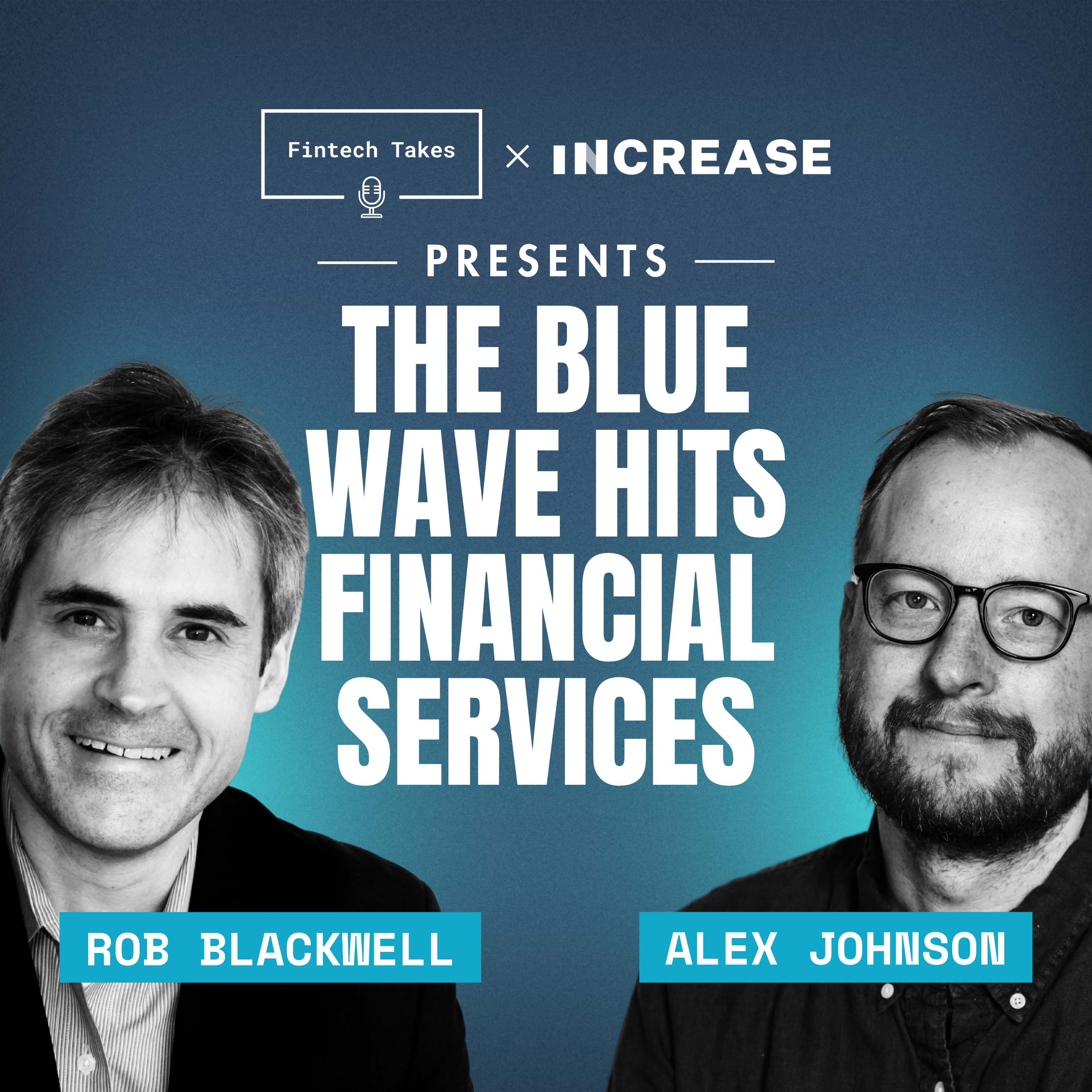
Welcome back to Fintech Takes. I’m your host, Alex Johnson, and I’ve flashed the regulatory bat signal to bring Rob Blackwell (Chief Content Officer & Head of External Affairs at IntraFi and host of the Banking With Interest podcast) back for an emergency edition of What the Hell Is Going On.
The midterms delivered a blue wave Rob calls “generational.” But did Democrats win, or did Republicans lose?
And what does it mean for financial services?
We get into:
How Fairshake spent $50 million against Sherrod Brown and lost (and what that means for crypto’s political leverage and the CLARITY Act), and why World Liberty Financial’s trust charter is headed for congressional scrutiny.
Why Elizabeth Warren and Maxine Waters could soon wield committee gavels, and what comes next for the gutted CFPB, with newly empowered state Democrats eyeing bank fees in the meantime.
Whether bipartisanship has a future. Trump says he’s open to deals, but Rob puts the odds at 3/10, citing a housing bill Trump nearly vetoed after coming to see a provision he’d requested as Warren’s.
Plus, a tribute to Sir Patrick Stewart and Rob’s case for Star Trek: Deep Space Nine.
---
This episode is brought to you by Increase.
Increase offers API-first banking for ambitious technology companies. Companies like Coast, Gusto, and Ramp rely on Increase technology to process more than $500B annualized in payments, card transactions, and loans. Learn more at https://increase.com/
---
Sign up for Alex’s Fintech Takes newsletter for the latest insightful analysis on fintech trends, along with a heaping pile of pop culture references and copious footnotes. Every Monday, Wednesday, and Friday: https://workweek.com/brand/fintech-takes/
And for more exclusive insider content, don’t forget to check out my YouTube page.
---
Follow Alex:
YouTube: https://www.youtube.com/channel/UCJgfH47QEwbQmkQlz1V9rQA/videos
LinkedIn: https://www.linkedin.com/in/alexhjohnson
X: https://www.twitter.com/AlexH_Johnson
---
Follow Rob:
LinkedIn: https://www.linkedin.com/in/rob-blackwell-63884826/
X: https://x.com/robblackwellAB