
 Ask ChatGPT


In short
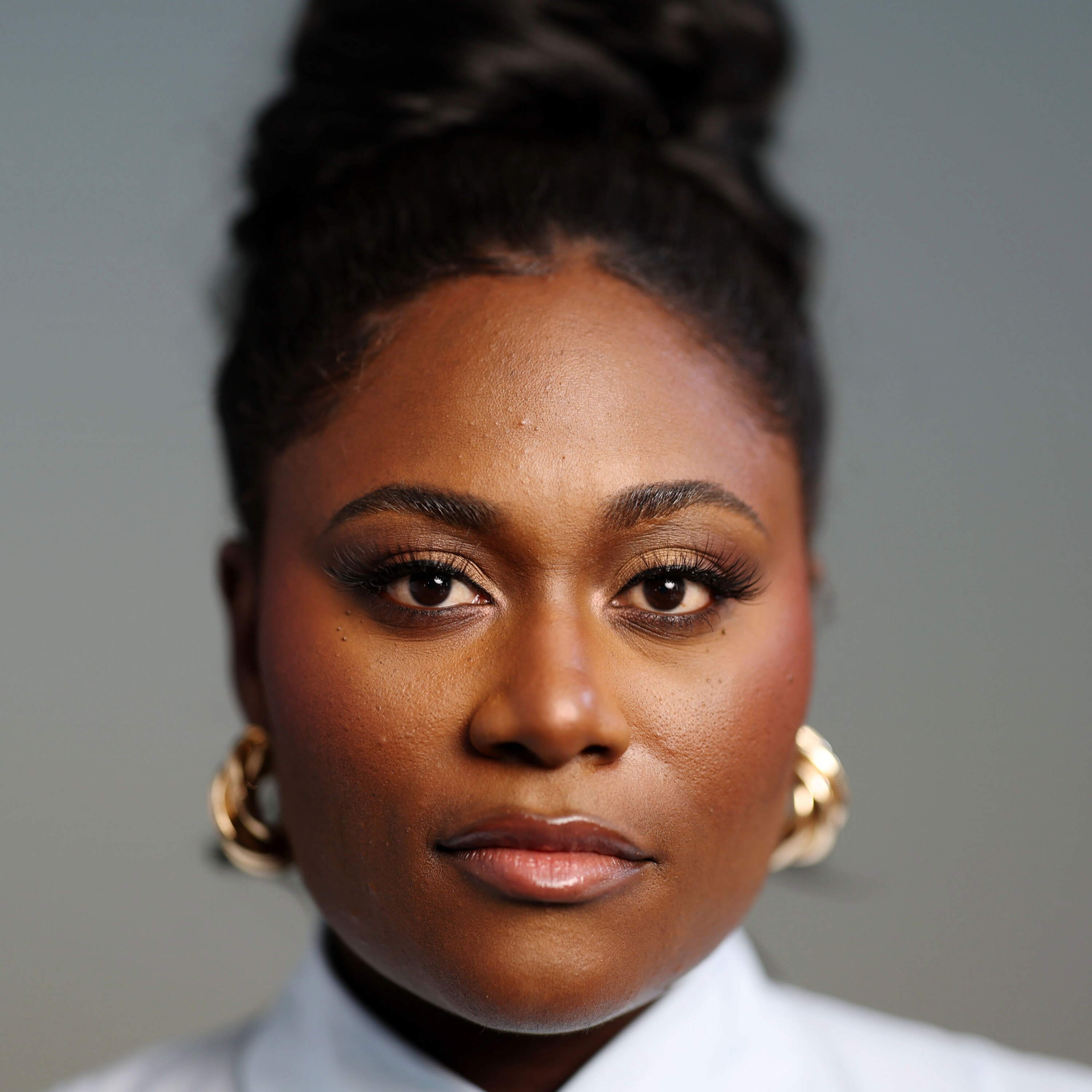
Danielle Brooks discusses how her acting and singing roles connect to faith, identity, and social issues (especially mass incarceration and representation), plus her personal stories about church upbringing, body image, and gratitude.
Guest backgrounds
Danielle Brooks is an actor and singer raised in Baptist church; her mother was a minister and her father a retired deacon. She studied at Juilliard (graduated the same year as John Batiste). She played Tasty on Netflix’s Orange Is the New Black, Sophia in The Color Purple (Broadway revival and 2023 film), Mahalia Jackson in Robin Roberts Presents Mahalia (Lifetime biopic), and won a Critics’ Choice Award for Peacemaker. She also co-stars in the indie film If I Go, Will They Miss Me?
Key claims
She initially resisted playing Tasty due to concerns about stereotypes of Black women, but found the character’s lighthearted heart and complexity. She describes church as the foundation for her love of performance. She argues art should reflect reality and says she’s “busted open the box” on beauty standards. She says GLP-1s helped her confidence and that body love can coexist with change.
Notable examples
Her church solo “I Have Some Good Days”; her Mahalia Jackson preparation (two weeks of music work; singing “My God is Real”); her audition for Sophia using “Hell No”; the shower-nudity scene in Orange solved without toplessness; and her song “Blessings” (co-written with John Batiste, who performs on it).
Written by AI. May contain mistakes.
Chapters
0:45
Danielle Brooks' Rise in Acting
Explore Danielle Brooks' journey from Juilliard to major roles.
“the character that Oprah Winfrey played in the 1985 film.”
2:26
Complexity of Characters
Danielle discusses the complexity of her roles in prison-related films.
“Oh, Terry, it is so lovely to speak with you two.”
3:45
Connection with John Batiste
Danielle reflects on her relationship and collaborations with John Batiste.
“when you mentioned like playing a woman that's incarcerated.”
5:54
Auditioning for The Color Purple
Danielle recounts her audition experience for the Broadway revival.
“And I was like, who the heck is this man?”
8:12
Transitioning from Dialogue to Song
Danielle shares insights on the challenges of musical theater.
“Because I had seen The Color Purple on Broadway at 15.”
11:03
Growing Up in Church Choir
Danielle discusses her early experiences singing in church.
“And I'm wondering what that was like for you.”
14:03
Reflections on Life's Ups and Downs
Danielle Brooks shares her life experiences and the lessons learned from her godmother's generosity.
“I've had some weary days and some sleepless nights.”
21:37
The Impact of Growing Up in a Faith-Filled Home
Danielle discusses her upbringing in a religious household and its influence on her career.
“Let's get back to my interview with Danielle Brooks.”
27:23
Connection to God Through Prayer
Danielle shares her mother's fervent prayer life and its impact on her family.
“And was it, did you grow up with the feeling that your parents had a special connection to God?”
27:35
The Impact of Growing Up in a Faith-Filled Home
Danielle discusses her upbringing in a religious household and its influence on her career.
“You would hear her downstairs in the living room speaking in tongues, praying, talking to God.”
Show all 16 chapters
28:05
Growing Up in a Religious Household
Exploration of the impact of a religious upbringing on personal identity and perfectionism.
“And I feel like gospel music has always been that for me, my helpmate in life.”
32:53
Choosing the Path to Juilliard
Danielle Brooks discusses the fears her parents had about her pursuing acting.
“But, you know, it's based on the character whose memoir the series is based on.”
35:44
The Impact of 'Orange is the New Black'
Brooks reflects on her first scene and the complexities of her role in a groundbreaking series.
“A bed you can't wait to unmake starts with buttery soft signature sheets made with organic cotton.”
36:53
Favorite Gospel Songs and Their Significance
Discussion on the emotional depth of gospel songs and their ties to personal experiences.
“Her mother is a minister and her father is a retired deacon.”
42:01
Danielle Brooks on Weight Loss Journey
Danielle Brooks discusses her personal weight loss journey and newfound confidence.
“I don't understand why because I'm very proud of it.”
44:52
Interview with Danielle Brooks
Terry Gross interviews Danielle Brooks about her career and music, including her song 'Blessings'.
“Let's get back to my interview with Danielle Brooks.”

Ask about this episode
Get the gist, explore an idea or ask about something said.
 Claude
On Fresh Air, what are the key points of this episode?
Searching your listeningTranscript
Automatic transcript. May contain errors.
0:00This message comes from the Natural Resources Defense Council and the Arctic Refuge in Alaska and the polar bears that call it home. Once they're gone, they're gone forever. Donate at nrdc.org slash fresh and your gift will be matched five times. This is Fresh Air. I'm Terry Gross. When Danielle Brooks started appearing in the Netflix series Orange is the New Black as the character Tasty, she was astonished to find she was recognized wherever she went. Orange was about women in prison, and Brooks played one of those women. When the series premiered in 2013, Brooks was a recent graduate of Juilliard, and Netflix was relatively new to producing original content.
0:40Two years later, while still filming Orange, she learned she'd gotten a role in the Broadway revival of The Color Purple as Sophia, the character that Oprah Winfrey played in the 1985 film. Rather than giving up one of those roles, she continued to shoot Orange while also performing on Broadway. The Color Purple had special significance for Daniel Brooks. The original production of the musical was the first Broadway show she'd ever seen. It convinced her she wanted to act and that there might be a place for a Black woman like her. She was nominated for a Tony for her performance in The Revival and was nominated for an Oscar when she played Sophia again in the 2023 movie adaptation of the Broadway musical.
1:22While preparing for this interview, I learned she played the beloved gospel singer Mahalia Jackson in a 2021 biopic for the Lifetime channel that's now streaming on several platforms. She gets to do a lot of singing in that, and as you'll hear later, it really shows off how emotionally and physically powerful her voice is. Brooks started singing and acting in church. Her mother is a minister. Her father is a recently retired deacon. Brooks was also recently in a Minecraft movie and in the series Peacemaker. Now she's in a new indie film called If I Go, Will They Miss Me? It's about how one family's life is changed when the husband and father is released from prison and returns home emotionally distant from his wife and two children.
2:08Brooks plays the wife and mother who has a steady job and is holding the family together with no help from her husband. Brooks and John Batiste are two of the executive producers. The credit music is John Batiste singing This Bitter Earth. Danielle Brooks, welcome to Fresh Air. It's such a pleasure to be able to talk with you. Oh, Terry, it is so lovely to speak with you two. Thank you for having me. My pleasure. So, you know, in Orange is the New Black, you play a prisoner. And now in this new movie, you're playing the wife of somebody who's been in and out of prison. And in Clemency, the father of your child is on death row.
2:50So this is like the third that I'm aware of, the third movie related to prison that you've been in. And I wonder if you see that as related to mass incarceration, like a reflection of mass incarceration. When you put it like that, I'm like, man, I need to play a, I don't know, a royal queen or something. Will you come close and Mahalia? Hey, I love that. Yeah, for sure. I mean, yeah, this is the world we live in, you know, and for me, I'm always searching, reaching for honesty and truthfulness in what is in this world. You know, I feel like I've been able to do a lot in my career, but yet we do find ourselves back in places like this.
3:44You know, when you mentioned like playing a woman that's incarcerated. When it comes to Orange is the New Black and playing Tasty, this inmate, there was just so much complexity to who she was, you know, and to be honest, Terry, I didn't want to play Tasty in the beginning. Why not? You know, because she was an inmate and because I was nervous coming out of Juilliard, 21 years old, like, oh my gosh, I'm about to play an inmate. And what is that, you know, saying about black women? You know, what viewpoint am I putting out about black women? But then I remember my audition and the casting director saying, you know, I know what's on the page, but she's very lighthearted.
4:36She has a lot of heart to who she is, joy to who she is. And I was so excited because I was like, that's the direction I was already planning on going with her. And you see me singing, you know, in the shower, you know, in the beginning, that's the first scene is me singing. Tell me something good. And it's just that's what drew me to her. It was more to her. She was a young woman who actually did not commit the crime. She was in foster care. You know, she started a riot. You know, there was just a lot to the person, you know, and I find that to be true with clemency. And if I go, will they miss me especially?
5:29So, John Batiste is one of the executive producers of the film, and he sings the credit music, The Spitter Earth, which Dinah Washington had a popular recording of. And wondering, I know he went to Juilliard. Did you know each other in Juilliard? We did. And you've recorded together also. Yes, we did. John Bautista and I were at Juilliard at the same time. And we also graduated the same year. I remember watching him in the halls. And he was a hoot. I mean, this man would be running around with that small miniature piano that he plays in his hand, blowing it, you know, as like if he was on a line in New Orleans, you know, with his friends behind him jamming in the cafeteria.
6:18And I was like, who the heck is this man? You know, he was just so such an like artiste, you know what I mean? Like artsy fartsy kid from New Orleans. Did you introduce yourself to him? I think we just knew each other because we were black kids at Juilliard. It's not but so many of us, you know what I mean? And so I actually remember we would do these like crossovers. So it's where like the drama division would hang out with the musician. So he was in the jazz department and we would jam. And I remember like John would play something and they asked one of the actors to sing with him. And I remember that was the thing.
7:01So it was like a call and repeat type thing where he would play like a doodle, do-do-do-do-do, and I would repeat it with my voice, you know. So I just feel like we bonded from that. And then, you know, we had like the Martin Luther King days where all the black people would get together and others, too, and put on a show in reverence of MLK. Like, so we just found each other, you know what I mean? We built that community. And then from there on, like I did an EP of my own music called Four. And I asked John once we graduated if he would be on that. And he did. And then he asked me to do a Christmas song with him for Spotify.
7:47And I did. And then we did Color Purple together. You know, like it was just so it's just so many like full circle, beautiful moments that we've been able to share. So I want to talk about your singing. I want to play Hell No from the movie version of The Color Purple. But first, what was your audition for the Broadway revival when you first got to play Sophia? Oh, my gosh, Terry. So, I mean, it's layered, okay? Because I had seen The Color Purple on Broadway at 15. My dad had taken me. And, you know, I go to Juilliard. That was a big deal because you were from Greensville, South Carolina. Oh, yes.
8:31It was huge. And so you were doing an internship in New York and you got to see The Color Purple. Yes. Your first Broadway show. Yes. Took me to the Broadway show Color Purple because, to be honest, at the time, and that's a whole other conversation, but that was the only Black show outside, or considered the only Black show outside of The Lion King, which is actually about animals played by Black like actors that was on Broadway at the time. And so, yeah, my dad took me. I was in awe. My jaw was on the floor, tears falling down my face. I was like, this is what I want to do. So what was your audition song?
9:09Hell no. Oh, wow. I auditioned with Hell No. And I remember like they had this. Was that your choice or their choice? No, that's their choice. They want to make sure that that's what we were singing. Yeah, for sure. But I remember like they had a table with the director and producers and I went straight up to that table and I tapped that table and I was like, all my life I've had to fight. And I just remember them being like, whoa. And I could feel them being like, yeah, this is our Sophia because of course Sophia would have enough kahunas to come up to the table and get right in our face. That's great.
9:48So let's hear the real thing. So this is Sophia basically saying to Celie, if a man raises his hand to you, hell no, fight back. Don't take it.
10:20I'd have to fight in my own house.
10:37I feel sorry for you to tell you the truth. You remind me I'm a mama under your husband's thumb. No, you under your husband's foot What he say go away Oh, man, I love that. You sound so good in that. One of the hardest things in a musical, I think, is to get from the dialogue into the song. And I'm wondering what that was like for you. Like how you try to make that transition. From dialogue to song. Well, I think, you know, we're taught when it's time to sing, it's the most heightened moment of the section, you know, whatever part. Right. It's too big to express just through spoken word. Exactly.
11:31And so I think that just helps, you know, you as an actor to know the movement of the piece, you know, and that was exciting to get to do that. Because I'm not a musical theater girl like people think, Terry. I had done only one other musical before that, and that was Rent. And I didn't grow up. Where were you in Rent? I was the soloist, the 525 ,600, the main soloist in Seasons of Love who hits the high note. Oh, was this on Broadway? No, this was in Ithaca, New York, at a theater, a regional theater. Yeah. And I didn't grow up, you know, listening to all the musical theater songs. I was a church girl.
12:23But you sang in church, right? Yes. I sang in church from four, three, four years old. I was singing in church and wasn't much of a soloist. I have to say I was definitely a part of the choir. And there's video of me singing in church when I did have solos. And you can see I'm so shy. Like I literally had the words, you know, written on a piece of paper. And I'm looking at them because I'm so scared that I'm going to forget them. Super shy back then. How did you get from super shy to singing a song like Hell No? God. Truly. Like, I feel like, you know what? This is what I'll say. For me, when I am playing a character, I get to escape.
13:16And that is my favorite place to be because I get to not be Danielle. When someone would ask me to sing as Danielle, it would terrify me. But ask me to sing as Sophia. Ask me to sing as Mahalia. I got you. Because it was my way of, like, hiding behind the character. So let's talk more about singing and church. So you grew up singing in church, mostly in the choir, but starting when you were like three or four. What were some of your favorite gospel songs? Oh, that is such a good question. Oh man, there was this song. It goes, I have some good days. I've had some hills to climb. I've had some weary days and some sleepless nights.
14:14But when I look around and I think things over, all of my good days outweigh my bad days. And I won't, I won't complain. That was one of my favorite songs. What made it one of your favorites? Well, when I was six, or six or seven, I don't remember. It was my first church solo. Now, what does a six, seven-year-old know about complaining in good days and bad days? I don't know. But that was my song. And then when I became an adult, I understood what that song meant. That's why I love that song so much. Because we do have good days and we have bad days. It's unescapable being a person, right? But it's also perspective at times.
15:18It's like, how are you choosing to see those days? and I choose to do as least amount of complaining as I can, you know. And that's what that song is really saying is like, how can you just see the good when you look around and think things over and gratitude should always lead the way. We were talking earlier about being in Juilliard and you got there with the help of$20 ,000 that your godmother left for you in her will. And I think she died not long before you got accepted to Juilliard. Who was your godmother who was so generous? Her name was Annie Edge. She was so spectacular to me. She was an older woman, probably in her 60s.
16:10And we just bonded. I asked her to be my godmother at five, and I met her at church. And so my mom said, yeah, and we were stuck at the hip. I mean, I would spend the night over at her house. You know, she taught me what an English muffin was. You know, I taught her to forget people that were behind her when she's driving and they're asking her to drive faster by honking. I was like, don't worry about them, Miss Edge. Like, we were tight. And she unfortunately passed away from cancer when I was 15. And that hit hard for me. That was one of my first losses. I had experienced death in a personal way outside of losing my mother's mother.
16:57So this was a heavy one for me. I was tight with her. And I had no idea that she had left$20 ,000 in her will for my college education. And we needed that money, Terry. We, you know, I was the first born and my parents were lower middle class at the time. And, you know, they worked really hard, but wasn't able at the time to save money for my college, you know, and had expectations at the time for me to, you know, not study it. They didn't know that their kid was going to want to go to Juilliard. You know, they were thinking maybe a state in-state school, you know, where you can get funds from the state, you know, make it cheaper.
17:48But, yeah, their baby girl had big dreams. And, you know, luckily, Miss Edge saw something in me and made that generous donation to my education. and I have something called the Annie Edge Scholarship, which the Annie Edge Scholarship I started over five years ago. And it's, you know, you have to apply. And it was only for my, you know, the kids at the church who were getting ready for college, you know. And so, yeah, I just am so thankful for Miss Edge. And that's my way of honoring her. Did Miss Edge have children? She did not. I was her child. No, she did not have any kids, wasn't married. Yeah, it was just her.
18:39How did your mother feel about that? Do you think she was at all jealous? No, I think my mother knew that it takes a village. And I think she was so grateful that I had somebody like Miss Edge. And I'm grateful that my mom, you know, functioned like that. Because there are parents who do get jealous that their kid doesn't run to them first for whatever. But my mom took it as like, oh, thank God she has somebody that I can trust, that I know that is instilling good things in her that she can lean on. And I treat my daughter the same way. You know, I can't always be there because of the line of work that I do.
19:21I always make sure that my presence is known that mommy is here, but I can't always physically be there. And so I, because of how my mother treated me with Miss Edge, I do the same thing, and I am very encouraging of, you know, Freya connecting with other positive women. Yeah, Freya, yeah. If you're just joining us, my guest is Daniel Brooks. In the Netflix series Orange is the New Black, she played Tasty. In the Broadway revival of the musical The Color Purple and in the 2023 film adaptation of the musical, she played Sophia. She also appeared in a Minecraft movie and won a Critics' Choice Award for her role in the series Peacemaker.
20:05She co-stars in the new film If I Go, Will They Miss Me? We'll be back after a short break. I'm Terry Gross, and this is Fresh Air. Stay tuned for the following announcements and messages from our sponsors. This message comes from Prolon. Want to look and feel your best this fall? Prolon's five-day fasting mimicking diet is a clinically developed nutrition program with the goal of promoting fat loss while protecting lean body mass. Developed at USC's Longevity Institute, it aims to assist the body in entering a fasting-like state that helps reset metabolism, target visceral fat, and support healthy metabolic markers.
20:41Get 15 % off plus a bonus gift when you subscribe at prolonlife.com slash NPR. This message comes from BetterHelp. Your brain has limited storage. So why is it still holding on to that embarrassing moment from years ago? BetterHelp is an online therapy platform that gives you space to talk about what's taking up too much of yours. BetterHelp is now in network with more than 125 health plans, with many co-pays as low as$15 for eligible members. And if you don't have eligible insurance, you can still get 20 % off your first month. Visit BetterHelp.com slash NPR. Cost and coverage may vary. Discount cannot be combined with insurance.
21:21This message comes from Capital One. Capital One offers checking accounts with no fees or minimums. What's in your wallet? Terms apply. See CapitalOne.com slash Bank Guy for details. Capital One N.A. Member FDIC. This is Fresh Air. I'm Terry Gross. Let's get back to my interview with Danielle Brooks. She co-stars in the new film If I Go, Will They Miss Me? In the Netflix series Orange is the New Black, she played Tasty. In the Broadway revival of the musical The Color Purple, and in the 2023 film adaptation of the musical, she played Sophia. She's also known for her roles in a Minecraft movie and for the series Peacemaker, for which she won a Critics' Choice Award.
22:04She played gospel singer Mahalia Jackson in a biopic for the Lifetime channel that's now streaming on several platforms. Brooks's father is a retired deacon. Her mother is a minister. Did you hear a lot of Mahalia Jackson when you were growing up? I did. I did. Yeah, she definitely was in our home for sure. My mother's a singer as well. Oh, okay. So when you got the part as Mahalia Jackson in a movie that's officially called Robin Roberts Presents Mahalia, Yeah. And so what your parents must have been so excited because your mother is a minister and your father was a deacon. Yes. The church was so excited.
22:52And, you know, the movie actually dropped during the pandemic. And so. Yeah. So what we did was we did a private screening for the church that I grew up in, in Simpsonville, South Carolina, Bethlehem Baptist Church. And everybody stayed in their cars. And we got a huge projector out in the parking lot. And everyone listened from a radio station and watched it like old school, you know, movies. They watched it in their cars. And that was so cool, you know, like this place that I really do think helped me to love the theater, believe it or not. Like the church is where I think my love for theater came.
23:38To be able to share something with them that I knew was going to be meaningful. So I want to play you as Mahalia Jackson from the soundtrack of the movie. And what I want to play is My God is Real. Oh, wow. You sound great on this, so let's hear it. This is my guest, Danielle Brooks.
24:10There are some things
24:17I may not know There are some places, dear Lord, I cannot go
24:37But I am sure of this one thing That God is real For I can feel Him in my soul So it's a beautiful song and you sing it so well. What did you have to do with your singing to sound like you were Mahalia Jackson for the movie? It's hairy. We worked on music for probably two weeks, I think, because I did sing all of that. And the hardest part was getting rid of the things that I was taught at Juilliard, to be honest, which is one of the things that they taught us, you know, and gave us in our toolbox. It's like knowing when to throw, you know, the baby out with the bathwater, as one might say, you know, letting go of the technique when it's time.
25:47And that's what I had to do. Like, so, for example, you know, when she says cheering, you know, I was I would be singing children and I had to stop myself. And like, why am I saying children? She would say cheering, you know, or just like not over articulate. things. I'm going to meet Abram and Isaac. You know, normally I would be like, I'm going to meet Abram and like articulating all of the, you know, consonants and stuff. Like I had to really break it down in kind of like a Shakespearean way. Like I would with, with Shakespeare and, you know, you have iambic pentameter and things like that.
26:30And, um, you just have to, it's like a code. You got to create a code for yourself to understand how this woman speaks and where she speaks from and how she uses language, you know. And that's the thing, like Mahalia sings all the way down in her feet, you know. So when I would do this, I would be barefoot when I was in the studio, you know, because you really do need to be that. it's that low. To be honest, she sings from another place too, but I'm trying to be respectful. You know, but that core space is where she sang from. So you grew up very churched with your mother a minister and your father a deacon.
27:23And was it, did you grow up with the feeling that your parents had a special connection to God? Oh, for sure. I mean, my mother was a praying and still is a very prayed up woman. She would be the one at 6 a.m. You would hear her downstairs in the living room speaking in tongues, praying, talking to God. You know, it was, yeah, she woke you up in prayer. And at the time, you know, we had two floors and she would turn up the music like you had speakers in each room, even though we was not rich, even though that sounds very rich. We had these speakers in our house and she would play gospel music on Saturdays at probably eight in the morning to wake me and my brother up to clean the house.
28:17which sounds so old school now that I'm saying it back to you because nobody's really asked me questions like that but um and my dad was too you know he wasn't as um forth showing if that's the right word to say or like he wasn't as showy with his relationship with God like he went to church all the time and obviously was a deacon but like my mother was the one you saw like in worship all the time and still is. Did you speak in tongues? No, no, not at all. Like, no, definitely did not. I would say I do feel that I have a wonderful connection to God, you know, in the spirit and still practice Christianity and go to church on Sundays with my family, you know, and I am in, I listen to gospel music like no other genre, because it just soothes my soul.
29:21And I feel like gospel music has always been that for me, my helpmate in life. So feeling that your parents were kind of had a special relationship with God and were like God's representative or close to God, did it make you like in awe of your parents? Did you feel like you couldn't misbehave because that would be misbehaving in front of God in a way that people's regular parents who weren't leaders of the church wouldn't feel? Yeah, for sure. There was a lot of pressure as a kid to be perfect. I think that's like probably one of those things in my adulthood I'm still going to therapy for. You know, it's like this sense of perfection, not getting anything wrong.
30:12And, you know, the Bible says, honor thy father and mothers that your days may be long on this earth. And so that rang very true in my house. You know, we needed to do what our parents wanted us to do. There was no way around it, you know. And if you had slip ups, you just it just the guilt that weighed on you. you know was heavy for me and I don't know if it stemmed from me doing pageants at church you know and they taught you how to hold your feet and how to stand and I don't know it's just this perfection that was built in me pretty early and maybe it's being the first child you know and the responsibilities of being a good example to my brother you know and in my I say I respectfully say this, you know, but I think my mom really cared a lot about what others thought.
31:11And I say respectfully, mom, if you hear this, but, um, you know, uh, I think that had a lot to do with it is what do people see, um, and how are they perceiving you? Um, and then maybe that's a Southern thing, you know, maybe it's not just a, my mom thing, but, um, I don't think it's just a, your mom thing. Yeah. A lot of people, right? Yeah, I think so. Yeah. What did they want you to do that you didn't want to do? Oh, that's a deep question. Well, one thing, you know, was there was a fear of me going to Juilliard. My mother was really scared for me. And my dad said to me, he's like, I want you to follow your heart.
31:54And so I did. You know, I went to Juilliard And she was just scared of like, you know, being in New York and her child leaving at 17. And then she was nervous about me doing Orange is the New Black. And then my father again was like, follow your heart. And I did. And that changed my life, you know. But then there was that fear of like, what is she being exposed to? You know, there's a lot. The subject matter of lesbians and gays was all up and in between Orange is the New Black. So that was a fear, you know, of what I was being taught. Foul language. Foul language. I mean, we had... Drugs. Come on, the list goes on and on.
32:41I can keep going, yeah. So, yeah, Mama was shooketh, but she got over it. She really started to see the beauty of the show as time went on. Your first scene in Orange is the New Black, where, you know, the person whose story we start with is in prison. And then everybody gets their stories. But, you know, it's based on the character whose memoir the series is based on. But anyway, so she gets in the shower. Your character comes by and makes comments about her body and gets into the shower naked. And I know when you read that, you thought, oh, I can't do naked. And I think you already know. I was like, I can't do naked.
33:28Right. And you're probably thinking about what your parents would think. But you're not really naked. I mean, we don't see your body. We know that you're in the shower naked. So did you tell the director, I want the role. I can't be naked. You can't see my naked body. I waited until I got there and I was terrified because I knew it was in the on this page. You know, it was like she takes her clothes off and gets in the shower. And I think they think low key, if I would have done it, they would have kept it. Like if I would have said, all right, here's you know, I'm doing it. They would have kept it.
34:03But I remember our director's name was Michael. And I talked to him about it and we found a solution. and do you know how I felt like this weight lifted off of my shoulder when we came up with that solution where we did not have to be topless I was like wow like because when you're coming into this industry you hear all of these stories you know and and all of these sacrifices people make to get the job you know and so I was scared I was like I don't want to enter this and this is the start for me. It's like my first scene. I'm just going to be known as the girl who takes the clothes off. Like I was saying I'm an inmate.
34:48Like, what am I doing? But it was the best decision ever that I could have ever made for my career. If you're just joining us, my guest is Daniel Brooks. She co-stars in the new film, If I Go, Will They Miss Me? You may also know her from Orange is the New Black, The Color Purple, a Minecraft movie, and the series Peacemaker. We'll be right back. This is Fresh Air. Stay tuned for the following announcements and messages from our sponsors. This message comes from Prolon. Want to look and feel your best this fall? Prolon's five-day fasting mimicking diet is a clinically developed nutrition program with the goal of promoting fat loss while protecting lean body mass.
35:27Developed at USC's Longevity Institute, it aims to assist the body in entering a fasting-like state that helps reset metabolism, target visceral fat, and support healthy metabolic markers. Get 15 % off plus a bonus gift when you subscribe at prolonlife.com slash NPR. This message comes from Bull & Branch. A bed you can't wait to unmake starts with buttery soft signature sheets made with organic cotton. Only 1 % of the world's cotton meets their standards of softness. Pillows to sink into and a duvet to pull close. Learn more about 25 % off sitewide at bullandbranch.com with code NPR. Magic in every moment.
36:06Exclusions apply. See site for details. Support comes from our 2026 lead sponsor of Fresh Air, Viking, committed to exploring the world in comfort. Journey through the heart of Europe on an elegant Viking longship with thoughtful service, destination-focused dining, and cultural enrichment on board and on shore. And every Viking voyage is all-inclusive with no children and no casinos. Discover more at viking.com. This is Fresh Air. Let's get back to my interview with Daniel Brooks. She co-stars in the new film If I Go, Will They Miss Me? She's known for playing Tasty in the Netflix series Orange is the New Black and Sophia in the Broadway revival of the musical The Color Purple and the 2023 film adaptation of the musical.
36:53Brooks grew up in the Baptist church. Her mother is a minister and her father is a retired deacon. She sang in the church choir. In 2021, she portrayed gospel singer Mahalia Jackson in a biopic that is now streaming on several platforms. One of the things I love about gospel songs and hymns is that so many of them are about death, about the fear of death, about the release of death, being reunited with loved ones. You know, so some of the songs are from the perspective of being frightened and others are reassuring. I wonder if you have a favorite gospel song about that. I do. It's called Precious Lord.
37:40And it goes, Precious Lord, take my hand, lead me on. And let me stand I am tired I am weak I am worn Through the storm Through the night Lead me on to the light So won't you take, take my hand Precious Lord And lead me home Yeah, that's one about death. And it is so beautiful. You sing that in the Mahalia Jackson movie. I do. And Mahalia Jackson sang it at Martin Luther King's funeral. Yes, yes, yes, yes. Such tie-ins. And do you know that from church, from when you were growing up? I do. And it's definitely a song that I heard all the time in church. and we sang it, you know, when it was time to leave church and we sang it at people's funerals.
39:21I even think I sang it at my grandmother's funeral. If I'm not mistaken, I believe I did. But yeah, that song I heard all the time. Back in when you were 25 and you're about to be 37, so that was about a little more than 10 years ago, there was an article in Glamour magazine that had your byline, and it was headlined, How I Learned to Love My Body. And it's all about body image, being plus-sized, your hair. And you said, or you wrote, by the standard definition of beauty that I had absorbed from the world around me, I had three strikes against me. I was too dark, too curly, and too fat. And you ask a question in that essay that I think is a really important one.
40:09You write, if art is supposed to reflect life, why don't the people on red carpets and in magazines reflect reality? It doesn't. It doesn't. I think about it all the time. I just remember being in rooms like Golden Globes, and I would say to myself, Terry, I would say, is there anybody in here I could change a dress with? And if you think about it, there are 67 % of women that wear a size 14 or more. and that does not reflect what we see on television now it's starting to change and shift you know we're having amazing actresses out now um that are reflective you know but in hollywood we're talking about a-listers big dogs the ones that are on vogue and cosmopolitan and Vanity Fair, they do not look like me.
41:06And I think that has been one of my main goals, is to be able to bust open the box, break that thing down, and really allow this next generation to say, wow, man, if Danielle was able to do that, I can do that. What do you think the GLP-1s has done to the body positivity movement? Oh, now you're getting deep.
41:38I think, now this might be controversial, but I think it's helping because I don't think body positivity is just about like loving your body, you know, as it is. Even if it's big, just love it. I think you should love your body at whatever size, you know, and for me, like I've lost 80 pounds. People don't really notice. I don't understand why because I'm very proud of it. I've lost 80 pounds from when I had my daughter in 2019. And there was moments when I had gained that weight and I wanted I was hiding. I was hiding from the world when it came to social media. you know, if you go back and watch that first episode of Peacemaker, you're going to see those 80 pounds on me.
42:28But I worked really hard. I worked super hard on my own, you know, and to got down to maybe like 60 pounds, you know, less on my body. And then I started taking GLP once. And, and I'm not ashamed. At first I was, at first I was like, definitely, what am I doing? Like, is this healthy? Is this safe? And after being on them for months, I am very happy that I made that choice. You know, I feel more confident. And I think the thing that I have always preached is love yourself wherever you are. I have never said that you got to stay there. So I'm here for it. Daniel Brooks co-stars in the new movie, If I Go Will They Miss Me.
43:19It's currently in a limited release and will open in more theaters this Friday. This is Fresh Air. Stay tuned for the following announcements and messages from our sponsors. This message comes from Prolon. Want to look and feel your best this fall? Prolon's five-day fasting mimicking diet is a clinically developed nutrition program with the goal of promoting fat loss while protecting lean body mass. Developed at USC's Longevity Institute, it aims to assist the body in entering a fasting-like state that helps reset metabolism, target visceral fat, and support healthy metabolic markers. Get 15 % off plus a bonus gift when you subscribe at prolonlife.com slash NPR.
44:00This message comes from Bowl and Branch. You've tucked everyone in. Now it's your turn. Their buttery soft signature sheets are made with organic cotton. Only 1 % of the world's cotton meets their standards of softness. A cozy blanket on top and a little comfort of your own. Learn more about 25 % off sitewide at bowlandbranch.com with code NPR. Magic in every moment. Exclusions apply. See site for details. Support comes from our 2026 lead sponsor of fresh air, Viking. Committed to exploring the world in comfort. Journey through the heart of Europe on an elegant Viking longship with thoughtful service, destination-focused dining, and cultural enrichment, on board and on shore.
44:43And every Viking voyage is all-inclusive, with no children and no casinos. Discover more at viking.com. This is Fresh Air. Let's get back to my interview with Danielle Brooks. She co-stars in the film If I Go, Will They Miss Me? She's known for her role in the Netflix series Orange is the New Black as Tasty, and for her role in the Broadway revival of the musical The Color Purple and in the 2023 film adaptation of the musical as Sophia. Brooks was also in a Minecraft movie and recently won a Critics' Choice Award for her performance in the series Peacemaker adapted from a DC Comics superhero series.
45:25I want to play one more song. And this is a song from an EP of four songs that you recorded. and this is a song that you co-wrote and John Batiste is featured on it. We hear his voice very, very briefly on it but what role did he play on this? Did he produce it, arrange it? Is he at the piano? He's at the piano. He came at the end on the organ and spiced up the song for me and lended his voice, like you say, very lightly in the end and we kind of go back to that Juilliard feel that I had mentioned, that call and response at the very end of the song. And I think it's interesting, given all the discussion that we had about church and gospel music, that this is a secular song, but it's called Blessings.
46:12And it's about kind of, you know, being grateful for your blessings. Can you talk a little bit about what inspired the song? Hey, I guess I'm really just fond of, you know, staying positive, man. Like, I just know that life gets tough and I guess this was my version of the gospel song I won't complain you know it's that reminder to count your blessings I'm on my feet you know four five six no I can't forget at the end of the day I got blessings to count like I got so much to be grateful for, you know, and I think for me, I just, I need that reminder, you know, and I want people to be reminded.
46:59And the reason I want people to be reminded is because we affect each other so powerfully, you know, and how beautiful that is. If we could just find ways to uplift each other. Danielle Brooks, it's been such a pleasure to talk with you. Thank you so much. Thank you, Terry. Thank you for having me. Thank you for your poignant questions and, And, you know, allowing me to reflect on what life has been in my 37 years almost. You know, I really appreciate you. Thank you. And here you are singing blessings. When the tide comes rolling in And I can't keep up with it When the road seems so long And I question my will to go on Gotta remember Gotta remember Count one, two, three I'm still on my feet Count four, five, six No, I can't forget At the end of the day While there's blood flowing through my veins I've got blessings, blessings, blessings to count When I feel unqualified And it seems like I can't make it through No matter how hard I try When my dreams...
48:39Daniel Brooks co-stars in the new movie, If I Go, Will They Miss Me. It's currently in a limited release and will open in more theaters this Friday. Tomorrow on Fresh Air, President Trump's son-in-law, Jared Kushner, has said peace deals are like real estate deals. He's involved with both, as a U.S. special envoy negotiating peace plans while working on private business deals with some of the same countries. We'll talk with the New Yorker's Dexter Filkins about his story, Jared Kushner's Dollar Diplomacy. I hope you'll join us. To keep up with what's on the show and get highlights of our interviews, follow us on Instagram at NPR Fresh Air.
49:19Fresh Air's executive producer is Sam Brigger. Our technical director and engineer is Audrey Bentham. Our engineer today is Adam Staniszewski. Our interviews and reviews are produced and edited by Phyllis Myers, Ann Rebo Donato, Lauren Krenzel, Teresa Madden, Monique Nazareth, Thea Challoner, Susan Yakundi, Anna Bauman, and Nico Gonzalez-Whistler. Our digital media producer is Molly C.V. Nesper. Roberta Shorrock directs the show. Our co-host is Tanya Mosley. I'm Terry Gross. Stay tuned for the following announcements and messages from our sponsors. This message comes from Capella University. That spark you feel?
49:58That's your drive for more. Capella University's FlexPath learning format lets you earn your degree at your pace, without putting life on pause. Learn more at capella.edu. This message comes from Bombas. For every item purchased, they donate an item to someone who needs it. Bombas customers have powered over 200 million donations. Go to bombas.com slash NPR for 20 % off your first purchase.
From the publisher
Brooks grew up in a church where her mom was a minister and her dad a deacon. She went on to play Taystee in the Netflix series Orange Is the New Black. Now she co-stars in the indie film If I Go Will They Miss Me? Brooks spoke with Terry Gross about singing in the church, playing gospel icon Mahalia Jackson, and why she hesitated to take her breakout role in Orange.
Subscribe to our free weekly newsletter
Follow us on Instagram
Subscribe to our YouTube channel
Check out the Fresh Air Archives
See pcm.adswizz.com for information about our collection and use of personal data for sponsorship and to manage your podcast sponsorship preferences.
NPR Privacy Policy
Subscribe to our free weekly newsletter
Follow us on Instagram
Subscribe to our YouTube channel
Check out the Fresh Air Archives
See pcm.adswizz.com for information about our collection and use of personal data for sponsorship and to manage your podcast sponsorship preferences.
NPR Privacy Policy
More from Fresh Air
All episodes

We use cookies.They keep VO running smoothly and help us improve it. Privacy policy