
 Ask ChatGPT


In short
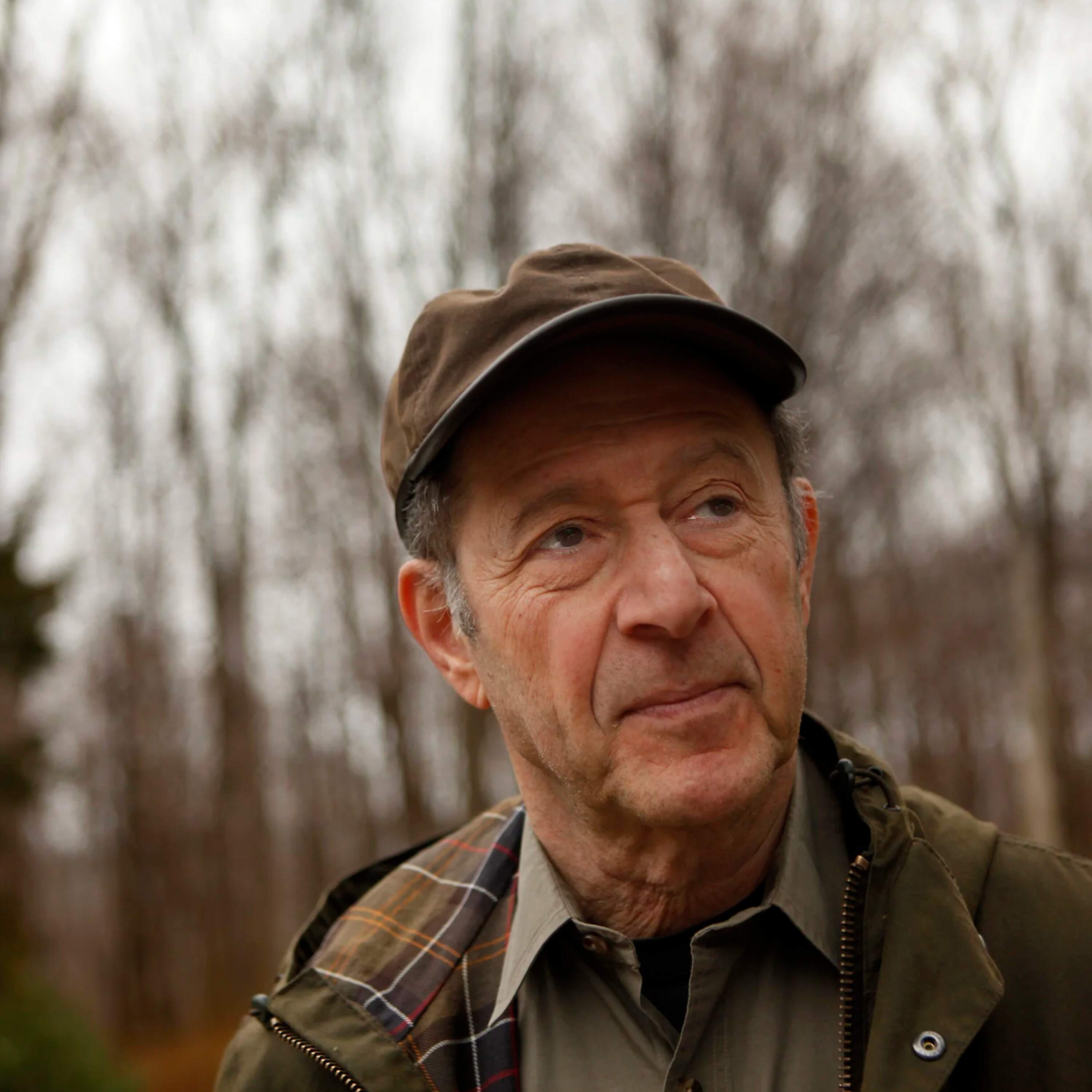
Fresh Air retrospective on minimalist composer Steve Reich’s 90th birthday, featuring excerpts and Terry Gross’s 1999 interview plus earlier clips (1999, 1989). Reich discusses tape phasing, repetition, and how he builds a “new vocabulary” from simple essentials; he also explains his shift into Jewish cantorial music (Tehillim) and his documentary approach using real recorded speech (Different Trains).
Key claims
Reich says his early work was driven by intuition and emotional excitement, not “scientific” thinking; he avoids imitating specific African/ Balinese sounds, instead borrowing rhythmic organization; he believes repetition length is flexible within score limits (often 55–80 minutes for Drumming).
Notable examples
It’s Gonna Rain (1965) with phasing tape loops of Brother Walter’s sermon; Drumming (1971) with marimbas and women’s voices; Four Organs in 1973 causing audience disruption; Tehillim (1981) set to Hebrew psalms; Different Trains (1989) using interviews and train sounds; In All Your Ways (world premiere, Edinburgh).
Guests
Steve Reich (interviewee; composer). Terry Gross (host/interviewer). Michael Tilson Thomas (conductor, discussed). Also referenced: Colin Curry Group (performers of In All Your Ways).
Written by AI. May contain mistakes.
Chapters
0:45
Celebrating Steve Reich
Discussion on Steve Reich's influence and ongoing contributions to music.
“His composition is performed by the Colin Curry Group.”
1:52
Exploring 'It's Gonna Rain'
Steve Reich discusses the creation and significance of 'It's Gonna Rain'.
“Today on Fresh Air, to celebrate the 90th birthday of Steve Reich, we'd like to offer our own retrospective of his career.”
4:30
The Impact of 'Drumming'
Reich discusses the creation and concepts behind his piece 'Drumming'.
“He said, after all, it's gonna rain after all.”
10:39
Repetition and Length in Music
Reich reflects on how repetition influences the structure and length of his pieces.
“¶¶ That's an excerpt of Steve Reich's Drumming from 1971.”
12:22
Listening to Minimalism
Discussion on how audiences adapt to listening to minimalist music.
“and with slight variations over a long period of repetition.”
14:00
Exploring the Evolution of Minimalist Music
Steve Reich discusses the structure and reception of his minimalist compositions.
“If you play drumming over and it takes you 25 minutes, that's a mistake.”
21:10
Steve Reich's Musical Journey and Influences
Reich reflects on his musical influences, including his roots in Jewish music.
“Capella University's FlexPath learning format lets you earn your degree at your pace, without putting life on pause.”
28:03
Steve Reich's Musical Journey
Learn about musician Steve Reich's struggles and inspirations in his early career.
“It was a difficult period of time, actually.”
30:43
Exploring Different Trains
Steve Reich discusses his composition 'Different Trains' and the documentary music concept.
“Let's get back to our retrospective of composer Steve Reich, who turns 90 tomorrow.”
37:48
New Work Premiere: In All Your Ways
Hear about Steve Reich's latest work performed at his 90th birthday celebration.
“That's an excerpt from Different Trains by Steve Reich.”
Show all 12 chapters
41:45
Review of NASA Documentary
A review of the documentary NASA, addressing the Israeli-Palestinian conflict.
“about their participation in the remote killings of Palestinians in Gaza since the October 7th attacks.”
42:00
Review of the Documentary 'NASA'
Learn about the impactful documentary 'NASA' and its exploration of military actions in Gaza.
“who previously worked together on the Oscar-winning documentary No Other Land.”

Ask about this episode
Get the gist, explore an idea or ask about something said.
 Claude
On Fresh Air, what are the key points of this episode?
Searching your listeningTranscript
Automatic transcript. May contain errors.
0:00This message comes from NPR sponsor, the official Gilded Age podcast from HBO. Unpack each episode of the Gilded Age and hear from the people who bring 19th century New York to life. Watch the official Gilded Age podcast on HBO Max or listen wherever you get podcasts. This is Fresh Air. I'm David Bianculli. Composer Steve Reich celebrates his 90th birthday tomorrow, October 3rd. Often called one of the fathers of minimalist music, Reich created a vocabulary that has influenced nearly every form of music, classical, electronic, jazz, and pop. Musical venues and performers around the world are marking the occasion.
0:39And at 89, Reich still is making new music. Here's audio from the world premiere of his latest piece called In All Your Ways, unveiled and recorded at the Edinburgh International Festival. His composition is performed by the Colin Curry Group.
1:19¶¶
1:34¶¶ That's an excerpt from the world premiere of the brand-new composition by Steve Reich called In All Your Ways. It was performed by the Colin Curry Group at the Edinburgh International Festival. We'll hear more of this piece at the end of the show. Today on Fresh Air, to celebrate the 90th birthday of Steve Reich, we'd like to offer our own retrospective of his career. Let's start with a 1999 interview with Terry Gross. Terry asked him about one of his early compositions, recorded in 1965, called It's Going to Rain. This is a tape manipulation piece. What principle were you working with in this piece?
2:17Well, I guess really the bottom line principle was that sometimes when people speak, they almost sing. And there's no better example of that than a black Pentecostal preacher who's really, it's impossible to say if they're singing or speaking. It's hovering between the two of them. And this was a young man who called himself Brother Walter, who was in the Union Square Park of San Francisco in 64, late 64, when I recorded him. and he's talking or laying it down about the flood in the Bible and Noah and the ark and you've got to remember that the Cuban Missile Crisis was in 62 and a lot of us were thinking that this was something hanging over everyone's head especially in San Francisco at that particular period in the early 60s that kind of thinking was rampant that we could be so much radioactive dust in the next day or two.
3:06So this seemed very appropriate for the time in history when I was living, and also I was going through some difficulties in my own life, which this speech spoke to. And I was playing with tape loops on a technical level. Tape loops are little bits of tape that are spliced together back then so that they just go around and around and around and repeat themselves. And when you take a bit of speech like, It's Gonna Rain, the way he says it, you really begin to hear the music of what he's saying and what he says increasingly blended together, so it's hard to separate them. It isn't that the text disappears, it's that it gets intensified so far as the way I hear it.
3:45And then there are actually two loops of his voice starting in unison, and then one slowly creeps ahead of the other. I just did it with my thumb on the recording reel of one of the machines. And so they go, what I said was out of phase. If you like, it's like a cannon or a round, like row, row, row your boat, only instead of the, you know, row, row, row your boat gently down the stream. and on the word merrily, the second voice comes in. But imagine they both started together and one just started to get faster than the other. It's hard to do. And you'd get first a kind of shaking or reverberation and then you'd get sort of imitation and then gradually you'd begin to hear it as a rounder can.
4:21And that's exactly what happens in this piece. Let's hear it. This is Steve Reich's It's Gonna Rain, originally recorded in 1965. He began to warm the people. He said, after all, it's gonna rain after all. for 40 days and for 40 nights. And the people didn't believe in him. And they began to laugh at him. And they began to mock him. And they began to say, it ain't gonna rain. It's gonna rain. It's gonna rain. It's gonna rain.
5:28It's an excerpt of Steve Reich's It's Gonna Rain, recorded in 1965. Now, I'm wondering, when you created It's Gonna Rain, were you thinking of it more on an intellectual level? I wonder what would happen if I did this type of phasing and tape manipulation. Or was the kind of rhythms and the odd sounds that you were getting as a result of that tape manipulation really, like, aesthetically exciting to you? Definitely the latter. I don't work as a scientist. That's not an intellectually—it's not an emotionally rewarding way to work. I was just following my intuition, just following my nose, so to speak, and this guy's voice was fantastic.
6:06And it was full of melodic content, and it was full of meaning. And so I began working with it because I sensed that, you know, there was going to be a lot happening there. Actually, the going out of phase that first happens was a kind of an accident, but when I heard it, I thought, this is fantastic. It's a kind of seamless process that, you know, goes on and on. After doing that piece and another piece like it, I then began to apply that principle to live musicians. from about 1967 to 1971, and then sort of moved on from there. Let's skip ahead to 1971 and another little groundbreaking piece that you did called Drumming.
6:40Now, you wrote this after studying African drumming and Balinese gamelan music. Are there things that you took from those musics that you applied to drumming? Well, not really, but let's put it this way. Particularly, Ghanaian drumming acted as a kind of huge pat on the back or green light. And I started studying drums when I was a kid. I was actually 14. First I was studying piano, and then I finally heard bebop, Miles Davis, and the drummer Kenny Clark when I was 14, and I immediately fell in love with that, and I had a friend who was a better piano player than I was, so I became a drummer. And when I had gone through music school and sort of swept that under the rug, so to speak, when I got out after Juilliard Mills College in 1963, I said to myself, well, where in the world is drumming the main voice in the orchestra, so to speak?
7:33And the answer to that is two places, in West Africa, or I guess in East Africa as well, and in Indonesia. What happened in a nutshell was that I felt very strongly that I didn't want to come back and imitate the sound of African drums or African bells or either Balinese instruments. They're very beautiful, they're very perfect, but they have their own history, They have their own tradition. They have their own context. And for me, it just felt totally out of place. The bottom line was this. I found the thinking, the way the African drumming is organized, which is basically short patterns in what we would call subdivisions of 12-8, little patterns in three, patterns in four, patterns in six, superimpose so that their downbeats don't coincide.
8:20So if you say, well, where's the downbeat? Where's the one? Well, the answer is the rattle has it here, the bell has it there, or this drum has it somewhere else. That's a totally different way of organizing music than you find here in the West. And that idea travels very easily. It doesn't say anything about sound. You could have, let's say, take a preacher's voice or musical instruments, musical instruments tuned to our scale. So there's no imitation of any African instruments or any specific African drumming patterns, but the idea of being able to make a music which is richer than all the electronics that were being made at that time.
9:01Remember, we're talking 1971. Stockhausen is working with a bank of equipment. John Cage is working with banks of equipment. And I felt, well, you know, drums, skin, metal glockenspiels, wooden marimbas. And the richness of the sound that comes out of those instruments, especially when they're piled on top of each other, multiple marimbas, multiple drums, multiple glockenspiels, is far richer an experience than the sine waves being sent out at you. We're going to hear the beginning of the second movement of drumming. You want to say a little bit about what's happening in this part? Well, it's interesting.
9:34The second movement is for three marimbas played by up to nine players and two women's voices. Well, what are the women's voices doing? When I started writing the piece, I was working with a multi-track tape recorder, so I'd play some of the patterns and I'd play against myself, and I'd hear like two or three voices at a time. And when I heard them, I thought, hey, I hear somebody singing. But, you know, there was nobody singing. What it was was that the marimbas are pitched and have a very long decay. It's a long sound. Even though you're hitting a piece of wood, it rings for a long time because there's a resonator underneath it.
10:06And it begins to sound as if they're women singing kind of like Ella Fitzgerald. That kind of singing we used to call scat singing. And so I thought to myself, well, this is coming from the marimbas. What if you really did have women in the room? And what if they really were listening carefully to this? It was all notated in front of them, and they began singing some of these patterns that are really there, but they would reinforce them, giving, if you like, what, a kind of audible chalk talk. And that's exactly what's happening here. You're going to hear these marimba patterns brought to the surface of the music by the women's voices.
10:38Let's hear it. This is an excerpt of Steve Reich's Drumming from 1971.
10:59Thank you.
11:22Thank you.
12:09¶¶
12:17That's an excerpt of Steve Reich's Drumming from 1971. Now, I've always wondered that so many of your pieces deal with repetition and with slight variations over a long period of repetition. How do you know what is long enough? What is the appropriate length for a piece? Because it doesn't have the kind of narrative arc of a melodic piece or something. where there's a climax in a more traditional way. So how do you gauge the length of one of your pieces? Well, again, Terry, I think what you said applies very well to what we just heard and maybe up to Music for 18 Musicians in 1976. But after that, the pieces are...
12:56Oh, I agree. Yeah, absolutely. So for these early pieces, basically the scores when written and the oral transmission of the information when it was oral were the same, which is you can repeat this bar, I would say, to James Price or Russ Hartenberger or Bob Becker, who were the sort of core members of my group way back when and are still around, you know, let's say anywhere from 5 to 15 times. But I don't want you to count those number of times. I want you to feel, well, that's clear, now I'm going to move ahead. And so therefore the score reflects that. It gives you certain limits. For instance, we made a recording of this piece of drumming for Deutsche Grammophon back, I think, in 74.
13:35and it came out to be an hour and 20 minutes long. Now, that's on the long side, but it's certainly in the ballpark. We re-recorded it for Nonesuch in 86, I think it was, and it was 56 minutes, and everybody said, oh, well, you know, they must have been shortening it for the CD. Wrong. We simply were playing it that way. It was now about 15 years after the piece was written, and the, what, the zeitgeist, or we've gotten older, or whatever had changed, and we just played it a little bit more tersely. It works either way. If you play drumming over and it takes you 25 minutes, that's a mistake. If you play drumming and it takes you two hours, that's a mistake.
14:09But anywhere between, let's say, 55 minutes and 70 minutes, 80 minutes, that's okay. And that allows the musician, the individual player who's making a decision at any given moment, to simply judge it as a good musician. I'm giving that responsibility to them. They want to do something so that you really get the idea, and they don't want to bore you. so that's one of the fringe benefits of playing this kind of piece When you were first playing your repetitive pieces I was wondering if your audiences had to learn to listen in a different way and to not expect that dramatic arc of tension and release of western melody and harmony Well, you know, a lot of this music has to do with a lot of western music which is prior to 1750 As a music student And I went to Cornell when I was an undergraduate, and I studied music history there with William Austin, who was a very great musician and a wonderful teacher.
15:07And the way he taught Western music history was like this. He started with a Gregorian chant. I think nowadays people taking over him might start with a Hebraic chant. And he went up through the death of Johann Sebastian Bach in 1750, and the next thing he did was Debussy, Duke Ellington, Gershwin, Jazz, Stravinsky, Bartok. Then when all of that was done, he started again with Haydn and went up through Wagner. Now, me, I like the first devil, of course. And that's really where I stand, where I've stood all of my life. And that's, you know, it's an intuitive choice. It's how I feel about things.
15:47And there are a lot of community of interest, if you like, between earlier music, let's say, starting from about 1 ,100 composers like Periton and Leonidas, what was called the School of Organa in Paris in the 11th and 12th century, I feel very close to. Obviously, chronologically, I couldn't be further away, but this is music which changes very slowly, which is the earliest music to work in either two, three, or four voices, which is systematized to some extent, which is, I think, emotionally very powerful. And what are called isorhythmic techniques, or certain techniques for repetition that were found a lot in France and in Belgium in 12th, 13th, 14th century, I found really exciting.
16:29I mean, I felt like I'd learned something from that. Sonata allegroform, the form that drives the symphony and sonata forms from Haydn up through Wagner, is something, the narrative form with the climax and the exposition and the development and the recapitulation that you're talking about. And that is a quasi-literary form. And there are many people who are very in love with that. And I respect that. Some of the music is obviously some towering geniuses who produce music like that. Personally, I'm not interested. I'd rather hear something of Bach or before than any of that period. And that's reflected in the music that you hear of mine.
17:07In the liner notes to the new CD retrospective, there's some notes by Michael Tilson Thomas, the conductor. And he describes playing your composition Four Organs in New York City. and this was pretty early in your career. And Thomas writes, In all my years as a performer, I have never seen such a reaction from an audience. There were at least three attempts to stop the performance by shouting it down. One woman walked down the aisle and repeatedly banged her head on the front of the stage, wailing, Stop! Stop! I confess! The audience made so much noise that in spite of the fact that the music was amplified, we were unable to hear one another's playing.
17:44Now, how did you feel when that happened? I think you were performing on that one. Oh, I was, yeah. I was getting lost along with Michael, and he was mouthing the syllables, you know, one, two, three, four, four, four, four, five, five, five, five, six, six, six, six, six, seven, six, seven, six, seven, six, seven, eight, eight, eight, eight, eight. And, well, you know, it really was a time bomb that I was unaware of. Michael was, at the time, one of the conductors of the Boston Symphony, and he had planned this concert of multiples. We were four organs, and he had a multiple orchestra piece of Mozart, and he had a piece called the Liszt Hexameron, which was a piece that Liszt wrote for six piano virtuosi of the day, and he had six grand pianos out there.
18:17Well, this was a subscription concert for the BSO in New York at Carnegie Hall in 1973, and it drew the kind of audience that you might expect, which in those days was a very conservative, elderly type of audience. The last thing in the world an audience like that would want to hear would be a very hard-edged piece for four screaming Farfisa electric organs amplified with maracas. So he kind of set the stage. I just wasn't paying attention to that. I was worrying about rehearsals and electrical plugs and tunings and things like that. But when it happened, I turned white as a sheet, but Michael sort of clapped me in the back and said, Hey, this is history.
18:56Well, did you feel like, yes, this is as exciting as the Rite of Spring, the audience is rebelling against this new and exciting, adventurous music, or did you feel like, boy, is this really a mismatch? Yeah, I think more of the latter. I'm not on the epitaph bourgeois, you know, let's shock people bandwagon. I want people to love what I do, and I want them to really enjoy it, to love it. And so I didn't have that feeling. Perhaps Michael was a little bit more of the provocateur at that time. He certainly had engineered a situation guaranteed to explode, and when it did, as I say, I just felt taken aback on what's going on here.
19:34Maybe in the long run, that was a worthwhile thing for him to have done. I've never personally tried to present myself in situations whereby that kind of reaction will happen. Composer Steve Reich speaking with Terry Gross in 1999. Michael Tilson Thomas, the conductor Reich was talking about, died this past April. He was 81. We'll hear more of Terry's interview with Steve Reich after a break. I'm David Bianculli, and this is Fresh Air. Stay tuned for the following announcements and messages from our sponsors. This message comes from the UPS Store. The UPS Store is open this holiday to help make sure your small business can stay at its best.
20:16During the holiday, customers have access to professional printing, packing and shipping, shredding, mailbox services, notarizing services, and everything else your small business could need. Find nearby locations and keep tackling important tasks at the upsstore.com. Most locations are independently owned. Products, services, pricing, and hours of operation may vary. See Center for details. This message comes from Schwab. Investing with Schwab is like spending a Saturday at the farmer's market. You can fill your reusable tote bag with a bit of everything. Maybe you go for some free-range, self-directed investing, or pick up a few farm-fresh trades while you peruse.
20:55You can even get help from a dedicated advisor. That's full-service wealth management. No matter your goals or appetite for investing, Schwab has everything you need all in one place to invest your way. Visit schwab.com to learn more. This message comes from Capella University. That spark you feel? That's your drive for more. Capella University's FlexPath learning format lets you earn your degree at your pace, without putting life on pause. Learn more at capella.edu. This is Fresh Air. I'm TV critic David Bianculli. We're continuing our career retrospective of minimalist composer Steve Reich, who turns 90 tomorrow.
21:34Several concert halls and musicians are having performances of his work. On October 22nd, Carnegie Hall will host a special birthday concert. Let's get back to Terry's interview with Reich from 1999. Let's jump ahead to 1981 and hear an excerpt of your composition, Tehalim. Now, you talked a little bit about how you'd studied African drumming and Balinese gamelan music. At some point, you kind of explored your own roots in Jewish music. and you studied with a Jewish cantor. What sent you back to studying cantorial music? Well, actually, it was a trip to Africa, strange enough. When I was in Africa, besides studying music, I enjoyed being over there.
22:20It was a very, very nice period of time. And one of the things I admired was the fact that, in fact, there was no notation, as you observed earlier. Each musician was playing something that they learned from their father or their uncle or someone in their family, and it had been so passed on that way for, you know, obviously a couple thousand years or so. And I thought, you know, when I came back, gee, isn't there anything like that that I'm a part of? And I thought, wait a minute, I'm a member of one of the oldest groups on the planet, and I know nothing about it. I was raised as a Reformed Jew, and I had zero information.
22:50I couldn't read Hebrew, I'd never studied Torah, I didn't know anything about it, didn't know it was written in a cycle, didn't know any of the practices. So I thought to myself, well, maybe I ought to look in my own backyard since I have the foggiest notion of what's going on there. And I ended up studying at an Orthodox synagogue in the Upper West Side of Manhattan and studying biblical Hebrew and the text of the Torah in its weekly portions. When I was studying Hebrew, Hebrew, as you may know, is a consonantal language. There are no letters for vowels. There's no A-E-I-O-U. Instead, there are little dots or dashes which are affixed below or above the consonants, and they are the vowel points.
23:27When I was studying Hebrew with my teacher, there was yet another little marking there. And I asked him, I said, well, what's that? He said, oh, that's the musical notation. I said, really? So I said, well, how do I learn about that? He said, well, you'd have to study with a canter to do that. So I looked up someone who was at the Jewish Theological Seminary through a mutual friend. And he taught me a little bit about how to do it and how the notation worked. And the notation was basically, have you ever looked at a Greek vase and you see a funny picture of a guy who looks like a conductor? And he's sort of motioning with his hands and the musicians are looking at him.
23:58He's not a conductor. He's doing what the Greeks called kironomy. He's using his hand as a notational reminder. Hey, it goes like that. And this was a common way of notating music within cultures prior to our system of notation, which, by the way, evolved from the human hand. There are five lines on the staff because there are five fingers on your hand. I didn't know that. Yeah, well, you know, live and learn. So I decided to set, Tehalim is basically the word for psalms, the original word for psalms. I took about a small piece of four different psalms and set them in the original Hebrew. And after years of doing pieces of a more unusual sort, you've heard a little bit of today, out came a piece which was very, very melodic in the simplest sense of the word.
24:45Well, let's hear the opening of Tehillim.
25:27CHOIR SINGS Thank you.
26:21It's an excerpt of Steve Reich's 1981 composition, Tehillim. One of the things I really so admire about your work as a composer is that you kind of rewrote the musical vocabulary in a way and stripped it down to some basic essentials and then started building on that, never kind of abandoning that initial vocabulary you came up with, but always kind of adding to it. Yeah, that's very good. That's right, Terry. Thank you. That's well put. Couldn't do better myself. Um, because like in Tehalim, you know, you have the drumming. I think there's like clapping hands in it too. Yes, there is. Kind of like your clapping hand music.
27:02Plus, plus you've got the addition of the singing and the melody on top of that. You know, I'm wondering, like when you were, say, 15 or even when you were in college and you knew you were getting really serious about music, what did you expect you were going to be doing before you knew that you would be kind of writing your own musical vocabulary and coming up with your own style of composing, where did you think you were going to fit in? Well, I mean, I was pretty worried about it because, you know, Bartok was five and Mozart was four and I was 17 and I was just getting a start late. So I was very apprehensive and I wasn't getting a great deal of support from my father who felt I should do something a little bit more of a clear, supportive nature financially.
27:45What did he do for a living? He was a lawyer. But my mother was a singer and they were separated. I were divorced, actually, when I was one year old. Of course, my mother was quite supportive, but I had been brought up primarily with my father, so I looked to him, but I started looking away, obviously. It was a difficult period of time, actually. I went through music school, and when I got done, I felt that I didn't want to teach, and there were no other prospects. So I worked for the Yellow Cab Company in San Francisco, and then I worked for the U.S. Post Office for a while. So it wasn't a rosy path.
28:17I felt a little lonely. I felt that when I was a music student, the style of music at that time in the colleges was either like the Europeans, Pierre Boulez, Karl Heinz Stockhausen, and Luciano Berio, who I was studying with, Berio, or John Cage, basically meant non-rhythmic music, music you couldn't possibly whistle or tap your foot to. And I felt very far from that and therefore kind of out of it. And it was a difficult period of time, up to about 60, 65, 66, when I finally began to hit on this and meet a few other people, people like Terry Riley in particular, who were working in this vein.
28:57Composer Steve Reich speaking with Terry Gross in 1999. The minimalist composer turns 90 tomorrow. There are musical celebrations around the world honoring his career. Coming up, we'll hear an excerpt of an earlier conversation Terry had with Steve Reich from 1989. This is Fresh Air. Stay tuned for the following announcements and messages from our sponsors. This message comes from the Natural Resources Defense Council. Do you remember fireflies at night? Snow days that kept you home from school? A child born tomorrow may not. They'll grow up thinking polar bears and monarch butterflies went the way of the dinosaurs.
29:37Just something that wasn't cut out to survive. NRDC is fighting in court to protect the species America is losing. What that child gets to see is still being decided. Go to NRDC.org slash fresh and your gift will be matched five times. This message comes from Google Workspace with Gemini. Ever notice how every new AI tool asks you to explain your business to it all over again? Google Workspace with Gemini skips that. You get Google's AI built right into the premium versions of Gmail, Google Docs, Sheets, and more. No new tools, no extra logins, just one subscription that gives you personalized AI right inside your actual workflow.
30:19Try Google Workspace with Gemini at goo.gle slash workspace with Gemini. This message comes from Ethos. Protect your family when the unexpected happens. Get life insurance through Ethos, 100 % online, covered in minutes. Get your free quote today at ethos.com slash NPR. Application times may vary. This is Fresh Air. Let's get back to our retrospective of composer Steve Reich, who turns 90 tomorrow. In 1989, Terry Gross spoke with Steve Reich about Different Trains, a composition for String Quartet and Tape commissioned by the Kronos Quartet. The piece was inspired by Reich's childhood memories.
31:01His parents divorced when he was one. His mother moved to Los Angeles, his father stayed in New York, and because his parents had joint custody, Reich traveled back and forth by train with his governess between the years 1939 and 1942. Looking back on the excitement of those train rides, he realized that if he'd been in Europe as a Jew, he would have been riding a train to his death. The first movement is set in America before the war.
31:41The End
32:13you
32:55You've called what you're doing in different trains a form of documentary music. That's because you're using actual sounds in it, recordings of real people's voices, real train whistles, sirens? Yeah, absolutely. It goes back to very early pieces that you probably know, It's Gonna Rain and Come Out, which we're working exclusively just with a short snippet of a recorded voice. So as opposed to, let's say, setting a text the way Schubert has done, the way every composer has done, and the way I've done in, let's say, Tahalim or the desert music, in different trains I'm not setting a text, I'm setting human beings.
33:29That's a quite different situation. What you did is interview the governess who took you on the train rides between New York and Los Angeles. You interviewed a Pullman porter who worked the trains on the years that you rode on them. And you interviewed a few Holocaust survivors who are the same age as you are. And you took fragments of their speech and used that as the musical text. I find myself saying their lines over and over. It becomes kind of like music, even though it's speech. that you're using. I think what you're driving at is how can the speech become music, or at least I hope you are.
34:06Yes, exactly. Because what happened is that I selected each of these sentences, phrases, single words, place names, dates, for what they said to be sure, but also for how they were said. Sometimes when we speak, you or I and everybody, we almost sing. We don't know it. It just goes by in our conversation. But if you isolate it on tape, then you find, for instance, in my governess when she was talking about one of the trips she said, She said he went from Chicago to New York, and it was really, I don't have perfect pitch, but it was F.A. flat, F.A. flat, the Pullman-Portis at 1941. And the rule I set for myself was every time a woman speaks, she'll be doubled note for note by the viola, and every time a man speaks, he'll be doubled note for note by the cello.
34:47And my job is to arrange, harmonize, and write counterpoint to something that is a given that I can't change, and that was quite an enjoyable restriction. The first movement of different trains is set in the United States based on your rides back and forth between 1939 and 1942 between New York and Los Angeles The second movement is the Holocaust and there's an incredible musical shift that happens right between the first and second movements Would you describe for us what you're doing there? Well, what happens right on the button is that the air raid sirens begin right as Rachella, who's a woman from Rotterdam now living in Oregon since 1940.
35:28Musically, I wanted to get something that would come in like an absolute knife stroke and just divide those movements, even though there's no time between them. 1941. 1941, I guess it must have been. 1941, I guess it must have been. 1941. 1941. 1941, I guess it must have been. 1941. 1941, I guess it must have been. 1940.
35:581940, 1940, 1940, 1940, 1940, 1940, 1940, 1940, 1940. On my first. In the third and final movement of different trains, the movement opens with something closer to more traditional violin playing, than we heard earlier on. Why? Well, what happens at the beginning of the third movement is da-da-di-da-da-da, da-da-di-da-da-da, da-da-di-da-da-da-da. Well, you've been so used to hearing voices, you wonder what that is. Well, actually, what it is, it's Paul, the Hungarian now living in Boston, saying, and the war was over, da-da-di-da-da-da. But you don't hear him first, because there has been so much speech, so much train whistle, so much siren, so much noise, that the third movement begins to move away from all of this towards music, towards some kind of resolution of the situation, which of course can't be resolved, but there is, I think, a good attempt at that in the third movement, I think a successful attempt at it in the third movement.
37:06What's happening in the third movement is that that paradiddle rhythm of the train has stopped, and now all the rhythms, all the music are going to come out of these speech patterns. is multiplied into the cello, into the viola, and to the two violins of the quartet, so that when he finally says, and the war was over, his voice is surrounded, if you like, as a mosaic of tiles, each tile being, in fact, a musical rendition of what he says. There is no other train rhythm overriding that, and that's what separates the third movement from the other two movements.
37:48Bye Bye
38:15The wall is open.
38:23That's an excerpt from Different Trains by Steve Reich. Now, let's hear some more from his latest work. This is performance audio from the world premiere performance of In All Your Ways, performed by the Colin Curry Group at the Edinburgh International Festival.
38:46Thank you.
39:19Thank you.
40:01That's from In All Your Ways, the latest composition by Steve Reich. It premiered in August as part of his 90th birthday celebrations. Reich turns 90 years old tomorrow. Coming up, Justin Chang reviews NASA, a new documentary about the war in Gaza. This is Fresh Air.
40:41to survive. NRDC is fighting in court to protect the species America is losing. What that child gets to see is still being decided. Go to nrdc.org slash fresh and your gift will be matched five times. This message comes from Google Workspace with Gemini. One subscription that does it all. Personalized AI and premium business versions of Gmail, Google Docs, Drive, and more. Try it free for 14 days at goo.gle slash workspace with Gemini. This message comes from Ethos. It's easy to put off getting life insurance until something unexpected happens. That makes you realize your family needs you covered.
41:24Ethos makes it easy. It's 100 % online. No medical exam, just a few health questions. Apply in minutes and get same day coverage up to 3 million. Get your free quote today at ethos.com slash money. That's ethos.com slash money. Application times and rates may vary. This is Fresh Air. In the new documentary NASA, two dozen Israeli soldiers and intelligence personnel speak anonymously about their participation in the remote killings of Palestinians in Gaza since the October 7th attacks. The film was produced by The Guardian and directed by the Israeli filmmakers Yuval Abraham and Rachel Schor, who previously worked together on the Oscar-winning documentary No Other Land.
42:11NASA opens in theaters in New York this week and begins streaming for free worldwide in November. Our film critic, Justin Chang, has this review. For most of the shattering and damning new documentary, NASA, we are on a series of rooftops in Tel Aviv, watching the Israeli journalist Yuval Abraham conduct one-on-one interviews with Israeli soldiers and intelligence personnel. The rooftop footage was filmed at night, mostly by Abraham's co-director, Rachel Shore, and their interview subjects, 24 of them in total, are all cloaked in darkness. We're told that their appearances and voices have been digitally altered to protect their anonymity.
42:54In precise detail, they speak about their role in launching the airstrikes that have killed thousands of Palestinian civilians in Gaza since the Hamas attacks of October 7, 2023. Unsurprisingly, Naza has already stirred considerable outrage. Much of it, it should be noted, from people who haven't seen, and maybe never will, see it. Abraham and Shor, both Israeli filmmakers, have been denounced as traitors in Israel, and Prime Minister Benjamin Netanyahu himself has threatened to revoke their citizenship. The anonymization of sources has been one of the more contested issues. Israel supporters have said it discredits the soldiers' testimony, while Palestine supporters have criticized the film for shielding self-confessed war criminals.
43:44Without the promise of anonymity, of course, NASA as a film wouldn't exist. But the reporting that it presents would exist. Much of it has already been published in outlets including Plus 972 magazine, in Israeli-Palestinian publication, Local Call, a Hebrew language outlet, and The Guardian, which co-produced the film. Abraham wrote many of those investigative pieces himself. He's also credited the many Palestinian journalists who brought these revelations to light. The testimony is riveting. Some of the interview subjects speak about how they were motivated to helped the Israeli military annihilate Hamas after October 7th.
44:27Some express guilt and regret for their involvement. Others see themselves as cogs in a necessary war machine. But for the most part, the filmmakers are less interested in the questions of why than in the mechanics of how. They want us to understand how these systems of remote surveillance and mass killing work, and to grasp the horrific scale of the civilian deaths. NAZA is an acronym for Nezek Agavi, Hebrew for collateral damage. It refers to the estimated number of civilian casualties considered acceptable by the Israeli military. 20 NAZA would mean that up to 20 civilian deaths were approved in the elimination of a single target.
45:13For one high-value target, a figure of 500 NAZA was approved, the population of a small Israeli town, Abraham notes. The logistics of trackings and killings are calmly and methodically laid out. Because the military can hack into any Palestinian's phone in Gaza, their power of surveillance is near total. We learn about the military's practice of bombing the homes of suspected Hamas operatives at night, while their wives and children were with them. We also hear about the widespread use of AI systems to gather intelligence, much of it faulty about potential targets. One of the most chilling passages describes a tracking technology referred to as Where's Daddy, which uses children's words to confirm whether their targeted fathers are at home.
46:05One soldier talks about having used this method on a 12-year-old girl, saying, you hack her phone and then you kill her. At one point, Abraham asks a subject if Israel is committing a genocide. Without hesitating, he responds, yes, completely. As the film notes, more than 73 ,000 Palestinians have been killed in Gaza since October 7th, and the death toll continues to rise. I've watched Naza twice now, both times in a state of quiet horror and fury, and with enormous admiration for Abraham and Shore's courage in holding their government to account. My admiration extends to the unerring precision of their filmmaking.
46:49NASA runs just 77 minutes. It doesn't linger on the atrocities it describes, mainly because there are so many of them to address. There's some archival material, including footage from the early days of Israeli intelligence and the building of Tel Aviv in the 1920s. But most of the imagery we see is of modern-day Tel Aviv at night. Shore's camera captures the glittering lights of the city and often peers into apartment windows, showing us Israeli citizens working out, eating meals, and watching the news. There's tremendous power, and I think a stealthy indictment, in these everyday images. It's as if the filmmakers are holding up a mirror image to Gaza, turning our thoughts toward the thousands of slain Palestinians who were, once upon a time, also just going about their evenings.
47:42The most radical thing about NASA isn't that it exposes the machinery of death. It's the film's insistence on the value of Palestinian life. Justin Chang is film critic for The New Yorker. He reviewed the new documentary NASA. It opened in theaters in New York this week and will stream for free worldwide in November.
48:16To keep up with what's on the show and get highlights of our interviews, follow us on Instagram at NPR Fresh Air. You can subscribe to our YouTube channel at youtube.com slash thisisfreshair. We're rolling out new videos with in-studio guests, behind-the-scenes shorts, and iconic interviews from the archive.
48:59Fresh Air's executive producer is Sam Brigger. Our senior producer today is Teresa Madden. Our technical director and engineer is Audrey Bentham, with additional engineering support from Julian Hertzfeld and Adam Staniszewski, who we would like to thank for filling in so adroitly these past months. Our interviews and reviews are produced and edited by Phyllis Myers, Roberta Chorok, Anne-Marie Baldonado, Lauren Krenzel, Monique Nazareth, Thea Challoner, Susan Yacundi, Anna Bauman, and Nico Gonzalez-Whistler. Our digital media producer is Molly C.B. Nesper. Our social media video producer is Hilary Kissinger.
49:40For Terry Gross and Tanya Mosley, I'm David Bianculli.
49:59Stay tuned for the following announcements and messages from our sponsors.
50:26right inside your actual workflow. Try Google Workspace with Gemini at goo.gle slash workspace with Gemini. This message comes from Open Door. Get cash up front for your home with cash now, more later. Start your offer at opendoor.com slash NPR. Profits calculated after fees and costs, eligibility and offer price may vary.
From the publisher
Often called one of the fathers of minimalist music, Reich created a vocabulary that has influenced nearly every form of music: Classical, electronic, jazz, and pop. To commemorate his 90th birthday, there are worldwide performances and festivals in his honor, including an upcoming concert at Carnegie Hall. Reich spoke with Terry Gross in 1989 and 1999. We’ll listen back to his compositions, and hear about the sounds that have influenced him – from the rhythms of speech, to African drumming, Jewish cantorial singing and the sound of trains.
Also, Justin Chang reviews the documentary NAZA.
See pcm.adswizz.com for information about our collection and use of personal data for sponsorship and to manage your podcast sponsorship preferences.
NPR Privacy Policy
Also, Justin Chang reviews the documentary NAZA.
See pcm.adswizz.com for information about our collection and use of personal data for sponsorship and to manage your podcast sponsorship preferences.
NPR Privacy Policy
More from Fresh Air
All episodes


We use cookies.They keep VO running smoothly and help us improve it. Privacy policy