
 Ask ChatGPT

 Fresh Air
20 Oct 2026 · 45m · 12 chapters
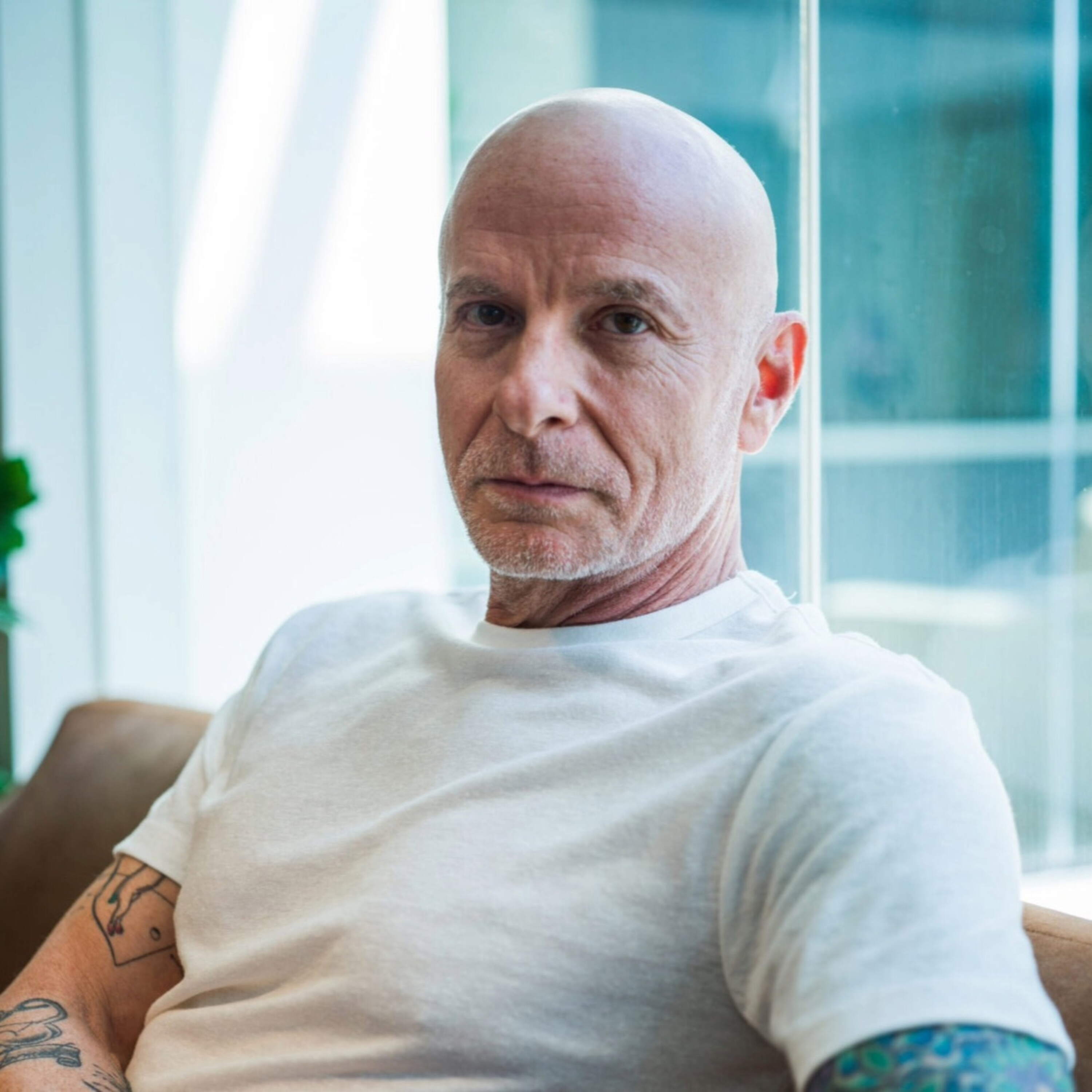
David Treuer traces America's relationship with violence back to the frontier
In short
Writer David Treuer’s (actually David Troyer) new book argues that America’s “frontier violence” isn’t past; it’s an ongoing “original sin” embedded in institutions, stories, and behavior. He defines frontier violence as the theft of Native lands, subjugation of Native people, and later theft of Black and brown bodies and immigrant labor.
Guests
David Troyer (Ojibwe; grew up on the Leech Lake Reservation in northern Minnesota; challenged “defeat/disappearance” narratives in The Heartbeat of Wounded Knee; writes this book as a letter to his three children). Host: Tanya Mosley.
Key claims
Terror and fear can trap people in violent emotional loops; even those who know history may still be shaped by it. Stereotypes and “narrative scarcity” limit what Native people can imagine about their futures.
Notable examples
a childhood night on the reservation when a threat call led him and relatives to load a gun and wait; San Bernardino shootings (2015) prompting fear for his children as Native Americans and Americans; Leech Lake vs Princeton “good/safe” myths challenged after the Lyle and Erik Menendez case; a childhood hatred of “The End of the Trail” imagery.
Written by AI. May contain mistakes.
Chapters
1:56
Exploring Treuer's Early Life
David Treuer recounts a frightening childhood experience on the reservation.
“Yes, it was a pleasure to read this book.”
4:38
The Weight of Trauma
Treuer reflects on how a traumatic event shaped his perspective and writing.
“And there were so many things we could have done.”
5:56
Parental Fear and Heritage
David discusses his fears as a parent and his father's Holocaust survival.
“through it is the way to restore imagination and to sort of eradicate the emotional loop that would send me back there all the time.”
8:14
Life on the Leech Lake Reservation
Treuer describes the complexities and beauty of life on the reservation.
“And I want to fast forward to one night in 2015 during the San Bernardino shootings after those had happened in San Bernardino, California.”
14:03
Reflections on Native Identity and Childhood
Explore how a childhood painting shaped perceptions of Native identity.
“And we have lakes, rivers, swamps, pine trees, you know.”
21:48
Navigating Narrative Scarcity and Identity
Discuss narrative scarcity and how it shapes perceptions of Native experiences.
“determined, you weren't going to go back.”
28:01
Navigating Identity at Princeton
David Treuer shares his experiences with identity and perception at Princeton University.
“But it's difficult for a lot of Americans to be like, to get it.”
30:16
Lessons from Toni Morrison
Treuer recounts his first class with Toni Morrison and the lessons he learned about writing.
“On my way to class, I kept, there was this mantra I kept repeating, sometimes out loud as I walked to class, which went something like, oh my God, oh my God, oh my God, oh my God.”
35:51
A Vision for Future Generations
Treuer discusses his hopes for his children and the legacy he wants to create.
“What I would say about this is like, this is a letter to my children that invites people to read over our shoulders.”
37:52
Closing Remarks and Book Mention
Final thoughts from Treuer and mention of his book, The Savage Mind.
“David Troyer's book is called The Savage Mind, An American Legacy.”
Show all 12 chapters
39:17
Ken Tucker Reviews Stevie Wonder's EP
Rock critic Ken Tucker reviews a new EP of previously unheard recordings by Stevie Wonder.
“One of Stevie Wonder's most popular and enduring releases is the 1976 double album Songs in the Key of Life.”
42:02
Exploring Stevie Wonder's Love Songs
Delve into the themes of love in Stevie Wonder's music and his emotional storytelling.
“It's a theme that's picked up by the next song, My Life Story of Love.”

Ask about this episode
Get the gist, explore an idea or ask about something said.
 Claude
On Fresh Air, what are the key points of this episode?
Searching your listeningTranscript
Automatic transcript. May contain errors.
0:00This message comes from Capella University. That spark you feel? That's your drive for more. Capella University's FlexPath Learning Format lets you earn your degree at your pace, without putting life on pause. Learn more at capella.edu. This is Fresh Air. I'm Tanya Mosley. There's a familiar line in writer David Treuer's new book that sounds almost like a warning. The call is coming from inside the house. He's talking about America and this belief that the violence we associate with our country's past isn't simply behind us. It's something we've learned to carry within ourselves. Choyer is Ojibwe and grew up on the Leech Lake Reservation in northern Minnesota.
0:43He spent much of his career challenging the idea that Native American history is a story of defeat and disappearance. His acclaimed book, The Heartbeat of Wounded Knee, challenged that narrative. Now in his new book, The Savage Mind and American Legacy, Troyer turns his attention to the country itself. He traces America's relationship with violence back to the frontier, where the taking of native land and the subjugation of people were justified in the name of civilization. His argument is that the frontier didn't disappear when Westport expansion ended. Its violence has become part of American life through our institution, our stories, and the ways we think and act.
1:24And he argues that even the people who recognize that history aren't necessarily free from it. Troyer has written this book as a letter to his three children. It's also a deeply personal reckoning with his own fears, the contradictions within his family, and the stories he inherited. Troyer's mother was Ojibwe and saw America as a country that it tried to destroy her people. His father was a Jewish refugee who escaped the Nazis and saw America as the country that saved his life. And David Troyer, welcome back to Fresh Air. Thanks for having me back. It's a pleasure. Yes, it was a pleasure to read this book.
2:03And I actually want to start our conversation with the way that you started the book. You take us to the reservation. You are a young man. You're with your cousins and your other relatives, your brother, and you guys are at home by yourselves and you get this very weird phone call. And then you see down the street that there's a fire at a house and you guys are scared. You're so scared that you grab a gun and you sit on the couch, prepared to defend yourself. And I'd love for you to read what happened next.
2:44Deprived of everything, including our imaginations, which are the only thing that will save anyone, we instead did something very American. We found a gun. A single-shot break-action 20-gauge. We loaded it and gave it to my brother and sat on the couch facing the door, the hammer drawn back, the barrel resting on my brother's bony knees, and we waited. The only thing that occurred to us was to kill whoever came through the door by blowing their brains out. I don't know how long I sat on that couch with your uncle and our cousin. I don't know if I've stopped. I think some essential part of me is still there.
3:26And here's the thing about terror, although it may well be true of grief, too. It robs you of so much. It steals your sense of yourself and your place in the world, and it murders time. I am here now writing this to you, and I am there on that couch still. I am there then, hoping I will be around now to write about it. I'm 55. I'm nine years old. I'm too old to have old fears, and I am too young to be able to quiet them myself. Thank you for reading that. Eventually your uncle arrives and he snatches the gun before you guys could hurt anyone. But as we heard you say, you write that some part of you is still sitting on that couch.
4:20What is it about that night that has never left you? You know, I mean, we were just, it's just another night in the village. And then, as you mentioned, you know, we got this call. A stranger called to the house and said, we're going to come burn down your house with you in it. And we're terrified, right? And there were so many things we could have done. We could have run across the road to our other uncle. You could have called someone. Could have called someone, could have gone to my grandparents' house, could have gone to my other, I mean, the village, they're all relatives. None of that occurred to us.
5:00And I think that's a part of me that stays stuck. you know I wanted to write about that and about how my imagination failed me how I almost hurt my uncle and how we almost did something unforgivable right because if your uncle had walked through that door if he'd walked through the door you might have shot him we would have my brother paused and that little pause you know my brother saved both my uncle's life because my brother had the gun and he saved our emotional lives by not doing that thing you know so I have a lot of love for my brother but you know I wanted to write about all that stuff because for me writing is the way through it is the way to restore imagination and to sort of eradicate the emotional loop that would send me back there all the time.
6:09One of the things that strikes me, though, is, yes, you were in a state of fight or flight. And so when you say that you're, in many ways, that young boy sitting on that couch still, what do you mean by that? It means that sort of, I mean, I can talk about my father a little bit as a Holocaust survivor. And, you know, he fled Austria and started in 1938 and he didn't make it to the States until 1940. Much of his flight was on his own.
6:44And my dad was a really great dad when you were a little kid and when you were an adult. But he was a horrible father when you were an adolescent. like around the time I was sitting on that couch, although that was a little bit before. And I've thought about this a lot because my dad, and I would get very angry at him, of course, when I was a kid. Like, oh, dad doesn't understand me, blah, blah, blah, you know. But it was only much later I realized, well, he was probably a terrible parent when I was an adolescent because he didn't have an adolescence. Because he was fleeing the Holocaust. He was fleeing the Holocaust.
7:30He left at age 12. He stopped being a kid at around the time, you know, most of us start being a young adult. And he became, he went from childhood to adulthood with no buffer. And so, of course, he was going to be a bad father, you know, to adolescent children, you know. And so I thought about that a lot in relation to sort of my little journeys of the mind on the couch there, or my lack of them, you know. I mean, I think a lot about terror, fear, grief. And those are some of the big elements of this letter, this book. and one thing that those intense emotions do is they I mean like I like I read they rob your sense of yourself and they rob your sense of time I'm super fascinated by this story as a way to get into the book to set the stage for where you are mentally this idea that when you're up against the wall, fear has taken over and this propensity for violence.
8:50And I want to fast forward to one night in 2015 during the San Bernardino shootings after those had happened in San Bernardino, California. Your children are young. They are asleep and you're standing over them and you're watching them. And you described feeling overwhelmed by fear. Here's where fear comes back. But it wasn't only fear of what might happen to them, that inclination as a parent that we all have. What were you afraid of? You know, I'm watching them sleep. And, and I was afraid for them, you know, as sort of Indians in the country that really has been hard on us. And I was afraid for them as Americans, like this is the world that they're going to inherit, where these things happen.
9:41And I was afraid for myself as the person who was supposed to protect them, but how can I? And all of those were just wrapped up together. It was just a potent moment. You grew up surrounded by family on the reservation. Take us to Leech Lake. Describe what it was like. You know, it's, I mean, a lot of people have, you know, a lot of Native people live in and then in their work promote a kind of historical nostalgia, you know, that Native life was so great long ago, but the man's got us down and now it's terrible, right? That's kind of the most common story of Native people, told by Native people, too.
10:39In past tense, too. In past tense. Basically, that once we were great and we are great no longer, that we may come from beautiful cultures, but those cultures have been destroyed. And that's the dominant narrative. And it's not really my narrative. You know, the reservation of my youth is a lot like the reservation now, right? I mean, of course, there are always changes. But Leech Lake was a place I wanted to leave when I was a kid.
11:19And immediately upon leaving, it became a place that I've always tried to return to and have. And I'm there about half the year, every year, now. And I love it there. I absolutely love it there. I get a sense you resist the question. A little bit. What is Leech Lake like? And I can in many ways understand this as a Native person going out into the world. Because the reservation is such a mystery to so many people. Right. And we have these notions of Natives as the past. Right. You've spent a lifetime trying to assert who you are, but not wanting to have to explain it every time. Right, right, right.
12:05That's very true. And it's like there's a very narrow path. But, like, I did write a book about reservations called Res Life that came out some years ago. And one of the discoveries in really writing that book was noticing in myself how easy it is to fall into telling a tragic story about sad Native lives as really the only option. And so I discovered that impulse when I was trying to write that book. And then I had to write against that impulse. And then what I end up finding is when we don't reduce people to the sum of their suffering, when we just really listen to them, what emerges are really complicated people living in a really vibrant, modern, complicated place.
13:08And it's in those complications and it's in those contradictions that at least I found beauty, art, meaning, and even a way forward. And that said, my reservation is, you know, 40 by 40 miles roughly. We have maybe, I don't know, 10 or 12 ,000 enrollees, but about half that live there. You have wildly successful people and also wildly unsuccessful people, you know. It's, to me, as a landscape even, indescribably beautiful. It's a very modest landscape, in my opinion. We don't have mountains or buttes or, you know. And we have lakes, rivers, swamps, pine trees, you know. I think it's beautiful.
14:15I think it's perfect. You tell this story in the book of this painting on your great grandmother's wall. And I think it was called The End of the Trail. Yep. Yep. Yep. It shows a Native man kind of slumped over a horse and he's defeated. And you hated this picture growing up. What did it tell you about what it meant to be a Native person? Oh, yeah, yeah. So everyone in every Native household, you know, it felt. I mean, of course, there's some diversity. But everyone you were in. Everyone I was in seemed to have that thing. The end of the trail. It was usually not a painting. It was usually like a polyester blanket or like a velvet Elvis type thing.
15:07I know this. I know it. Yeah, right. And it was everywhere. And it's, you know, it's just like this defeated Native dude. on a horse with a spear and facing west into the setting sun. And it's emblematic, you know, it's meant to be poignant. But the poignancy of that painting is in defeat. When you were a young boy looking at it, what did it mean for you? What did you see? Just that. I'm like, that's not me. That's not me. And that's not going to be my story. As I think about you as a writer and how you've evolved the time that you've spent over the course of your writing career and bringing language to your experience, and this one being the latest, I also think about some of the fears you had as you were even writing this book.
16:00It took you several years to write it as a letter to your children.
16:07And why do you think that it was so difficult? I think you tried to begin it four times before you could finally write it. What was so difficult to say to them? Well, this book is, and not all books are like this, but this book is the shape of an idea.
16:27And the idea is that the frontier and frontier violence are not of the past, but they are still with us. and that America's original sin is in fact violence and it undergirds all of America's ongoing cruelties, racial cruelties, economic cruelties. And until we grapple with that, we don't have a shot. And so that's the underlying idea that frontier violence was America's original sin. So the American frontier started as a colonial enterprise to push West. Dutch, Portuguese, Spanish, English, French. They mentioned French. But then it became an American project once America came to be. And then it kept going.
17:37And so frontier violence, as I see it, has a really easy definition. It is the theft of Native lands and the theft of black and brown bodies. And subsequent to that, the theft of immigrant labor. the violent theft of all of those things. That's the frontier. And that sort of enabled all of these subsequent cruelties that I talked about earlier. And I think about it, so you described it as writing, you're writing to your three children and you described before we started, it's like we're all over your shoulder as you are writing these passages to your children and there's so much history and historical context in that as well.
18:26What was the urgency of writing this at this moment for you? Well, I feel stuck. And I think we all might be stuck in a certain way. I mean, it feels like the world's falling apart. And I think part of the reason why the world's falling apart, whether it's climate or Palestine or George Floyd, what happened there in 2020, among many such things, is that we've abdicated our responsibility to imagine both the connection between things and some alternate future. You know, you work so hard to give your children a very different childhood from your own. And there's this moment that you write about in the book where one of your children tells you that they had a very great childhood.
19:28And that's exactly what you'd hope to give them. But you describe feeling something almost like resentment. Yeah. We were driving, me and my eldest, and I don't know, an errand or something. We're just talking, you know. And he said, yeah, you know, my childhood was really good. And then I said, oh, no.
19:56I said, I should have been harder on you. I should have made it. That's what every parent wants to hear, though. I should have made it suck. Yeah. And he's looking at me, and he's just like, what? And I said, well, yeah, but like, how will we ever understand each other? That's the fear. Yeah. How will he understand you? Yeah, maybe so. Maybe so. And I don't know. All that said, I think he's got my number. Our guest today is writer David Troyer. We'll be right back after a short break. I'm Tanya Mosley, and this is Fresh Air. Stay tuned for the following announcements and messages from our sponsors.
20:43This message comes from Glass Half Full with Craig Melvin. In this podcast, the Today Show anchor talks with cultural icons like Jalen Brunson and Shonda Rimes about the moments that shaped them. Listen, and you might get a fresh perspective. Search Glass Half Full wherever you get your podcasts. On the latest episode of Sources and Methods, a blue tsunami, earthquake, avalanche, Democrats swept the midterms. What does this mean for President Trump's ambitions overseas? And why is Iran paying such close attention to the changeup on Capitol Hill? Listen this week to Sources and Methods, the national security podcast from NPR.
21:23Making Up First takes overnight shifts from dedicated journalists across the country, and it's only possible with listener support. When you give a few bucks a month through NPR +, you power our newsroom. And as a thank you for your support, you can save over seven hours a year with sponsor-free episodes. Give a little and get more NPR, all in less time. Sign up right now at plus.npr.org. At 17, you left. You left Leech Lake. determined, you weren't going to go back. Yeah, that lasted about three weeks. You left for Princeton. And what did you believe leaving for Princeton would free you of? Oh, just, you know, that narrative of diminishing returns, what in a different context, Leo Tolstoy called the eternal mistake.
22:17What does that mean? Well, for Tolstoy, the eternal mistake was always trying to find happiness in success and in external things. But this, you know, error that I'm talking about is sort of like the native equivalent, which is always thinking that we have a glorious past and no future. And so I was like, I'm getting out of here. And I'm going to go do something. One of the things that I've heard you talk about is this term narrative scarcity. And I'm bringing this up because, I mean, you bring it up to describe the limited stories about Native people that aren't out there. And then I'm also just thinking about you as a young person that you grew up hearing and knowing.
23:06And scarcity is a word that's very interesting to me because when I think about it, I think about scarcity in terms of resources like food and water, things that we need to survive. And I wonder how you're thinking about it. What happens to a person's sense of what's possible when there is scarcity around story? Right. I think stories are a resource. And a valuable, important, sort of life-saving resource, not on the level of food and clothing and shelter, of course, but up there. And so to experience, you know, to be in a story desert, as well as a food desert, I think can be really limiting.
23:57And I should state for the record, too, that this idea of narrative scarcity is not my idea. my colleague and friend Viet Nguyen, he came up with that one. And he was talking about it in relation to Asian American narrative. But you see it in your own life. Absolutely. I see it in my life. I see it in sort of the Native context, too. And it's another one of these bridges, you know.
24:27And I'm really fond of Viet, and I'm really grateful for that. you know, bad idea. I'm thinking about how you came into understanding that you would experience narrative scarcity once you're at Princeton. And because you start, because you're exposed to a world that you had not experienced prior, and you're with people and you're seeing things and having conversations. And there's a surprising connection in this book, this story you tell. While you were there, you learned that the parents of a fellow student you knew, Lyle Menendez, had been brutally murdered. And initially, you're horrified, just like the rest of the country.
25:13And then you learn, like the rest of us, that Lyle and his brother had killed his parents. And that was not only a shock, it was a revelation for you beyond the tragedy. because you began to question something that you'd believed about Princeton and America. Absolutely. There's this idea that is prevalent, and it's been around for a really long time, that there are places in this country that are good and safe and excellent, and there are places that are not. And then there are corresponding values placed on or given to the people who exist in the good and interesting and safe places, that they're good and interesting and safe people.
26:01And that those of us from the other spaces, whether it's Leech Lake Reservation or Detroit, are not good, not interesting, and not safe. But I felt that at Princeton, but it all came crashing down after Lyle murdered his parents. Yes. And, you know, Princeton is not a place where those kinds of things don't happen. It's exactly where those kinds of things happen. But I thought about it a lot when I was writing this book. And that's when some of this understanding sort of fell into place that for so long, I had accepted these versions, Princeton good, reservation bad. And so in writing this book, what did you come to in that understanding as you started to think about that story?
26:48That Princeton is as much a mixture of the good and bad as any place else. And conversely, that the place I'm from and the places like it are much the same. They're, you know, they're not the opposite. These places aren't opposites. They are very alike in their complexity. In the imagination, reservations remain for most people as places of suffering, not as places of life in all its complications. They're just basins of suffering in the imagination. I'm curious when you fully came to understand that, because on a lot of levels, I mean, I understand when you're from a place and you're in it, you don't see that.
27:42You're inside the fishbowl, so you're not necessarily seeing what others are seeing, unless you engage with media and you start to see the depictions of yourself and media. but when you became truly aware that people thought of the reservation in this way well i mean it was clear to me when i stepped foot at princeton um people's reactions oh yeah reactions like who are you where are you from you know and i'm like oh i'm a boy from leech lake reservation and most people of course would say to me like you can't be because i don't look like wind in his hair from dance with the wolves right they think you're white passing yeah yeah yeah and um you know and then they're like oh that's so sad i'm like is it though that i'm from a res like that's sad to you and so and so that idea you know the dominant narrative the sort of imagistic way that sort of native people appear and it's difficult for a lot of americans it's getting better.
28:50It's getting a lot better. But it's difficult for a lot of Americans to be like, to get it. You know, like, oh, okay, you're a complicated modern person living in a complicated modern place. Cool. My guest today is writer David Troyer. His new book is The Savage Mind, An American Legacy. We'll continue our conversation after a short break. This is Fresh Air. Stay tuned for the following announcements and messages from our sponsors. Midlife brings a lot of changes. Your Turn with Alison Aubrey is a new podcast to help you navigate the twists and turns. From health and relationships to creativity and purpose, we can help steer your next chapter.
29:29With Your Turn with Alison Aubrey. Find it on the NPR app or wherever you get your podcasts.
29:38Want to survive the holiday conversation? Come prepared. Pop Culture Happy Hour gets you up to speed on the movies, music, and TV shows everyone is talking about. This way you'll have a hot take at the table instead of quietly eating a dinner roll. Listen to Pop Culture Happy Hour on the NPR app or wherever you get your podcasts. This message comes from Rinse. With Rinse, your laundry will come back fresh, folded, and ready to wear right on schedule. One tap or text is all it takes. No calling, no reminders. Same as always. Rinse. It's time to be great. More at rinse.com. Can you take us into your first class with Toni Morrison?
30:19Yeah, I was really nervous. That first class. On my way to class, I kept, there was this mantra I kept repeating, sometimes out loud as I walked to class, which went something like, oh my God, oh my God, oh my God, oh my God. And then the counterpoint to that melody was, she's just a person. She's just a person with opinions, just a human being, you know. Then I got to class and it didn't help and I was really nervous. And Morrison said, I want everyone to go around and tell us a little bit about yourself and what you're working on. So very diligent students. Everyone was doing that. Boom, boom, boom, boom, boom.
31:07and this really sweet boy, he was really kind, as it turns out, next to me says, in a very sort of Princeton way, he's in really floppy hair, I'm writing a story that takes place on Motha's Vineyard and my protagonist is a half-breed Indian whose mother is the town drunk. and I am suddenly filled with rage. Then it's my turn. And so Morrison looks at me. This is the first time we met, you know. And she says, and you? I said, well, I'm going to talk about why I write as opposed to what I'm working on. I write because assholes like this don't know what the heck they're talking about. They've seen Dances with Wolves.
32:01They've read Last of the Mohicans. but they don't know anything about anything. And there were lots of expletives, by the way.
32:12And everyone's looking down at the ground like they're standing next to a grave and the grave is mine. And Morrison's got these papers in a manila folder on her lap. She says here that you're an anthropology major. And I said, and? And she said, well, you write better than most anthropologists. And then I said, what, is that supposed to be a compliment? And then she starts laughing. And she said, yeah, that is intended as a compliment. And then I finally woke up to the danger I was in. I was like, oh, okay. Oh, professor, thank you very much. She told you don't be ethnographic. Don't explain in your writing.
33:02Yeah. And what was she trying to teach you about the writer that you were becoming, you think? Oh, the temptation is there, right? Always. I think it's especially there for Native creatives, we might say. The temptation is this, to feel like you're an emissary from a distant and strange land, and then to lift up the corner of the buckskin curtain, or what I call the buckskin curtain, So that outsiders can peer in and learn something about Native people. And the temptation is strong. But the inclination from you has always been not to be that. I mean, that's why this guy and that story he gave triggered you so bad.
33:51Well, it triggered me because it's just stereotype. Yep. You know, there's no life in a stereotype. And that's what triggered me. And it also triggered me because, you know, the popular idea that Native people were just troubled drunks was more real than the real lives of Native people as lived by us, you know. And so the stereotype actually had more life in the imagination than my life had in the imagination. And that was enraging. I couldn't articulate it then. I was 19, right? What do I know? But that kind of became clear to me later. But, you know, Morrison struggled in a different way, too, because, you know, people interpret, often interpret Beloved as basically a window onto the ravages of race-based slavery.
34:52And so they treat Beloved and Sula and Song of Solomon to a lesser extent as ethnographic with leaning toward history. And that was problematic for her. She's picking up the grand themes of American literature, place and freedom and belonging and love. she's picking up American themes you know even universal themes and she was often prevented from doing so I mean no one could prevent her from anything but the interpretations fell short of the grandness of what she was up to and so I don't want the grandness of my themes to suffer the same fate And so how do you think about that as you try to articulate your ideas while still writing from that place that Tony told you personally to write from?
35:59What I would say about this is like, this is a letter to my children that invites people to read over our shoulders. So I would say the same thing that Professor Morrison said. And, you know, she's not writing for non-Black folk, but non-Black readers can gain an enormous amount from reading her, even though it's not directed to them. I would say the same thing. You know, and she famously is like, say, you know, I love Tolstoy. I get a lot out of reading Tolstoy. But was he writing for a black girl from Lorraine, Ohio? No. Do I still profit enormously from reading Tolstoy? Yes. Same thing. You know, we've only scratched the surface of your book.
36:55And maybe my last question is, since this is a book to your children, what do you hope that your children will be able to imagine that you couldn't? You know, it was hard for me to feel when I was younger that I had anything more than a great future behind me, like a lot of Native people. And I want them to feel very differently. I want them to not just know, but to feel that they collectively, not just as individuals, but as members of a tribe and as citizens of this country, too. That's what I want them to take away, that they come from a great people and they remain great. David Troyer, thank you so much.
37:53Thank you so much. I'm so happy to be here. David Troyer's book is called The Savage Mind, An American Legacy. After a break, rock critic Ken Tucker reviews a four-song EP of previously unheard Stevie Wonder recordings. We'll be right back. This is Fresh Air. Stay tuned for the following announcements and messages from our sponsors. I'm Kevin Roos. And I'm Casey Newton. And together, we've been tech journalists for decades. Now we're your hosts of Machine Gods, a new podcast from NPR that makes sense of what AI means for your work, your life, and all of our futures. Twice a week, we'll be exploring the biggest moves in tech and give you unmatched access to the real titans of industry.
38:36Listen to Machine Gods from NPR on the NPR app or wherever you get your podcasts. Want to survive the holiday conversation? Come prepared. Pop Culture Happy Hour gets you up to speed on the movies, music, and TV shows everyone is talking about. This way you'll have a hot take at the table instead of quietly eating a dinner roll. Listen to Pop Culture Happy Hour on the NPR app or wherever you get your podcasts. This message comes from Rinse. With Rinse, your laundry will come back fresh, folded, and ready to wear right on schedule. One tap or text is all it takes. No calling, no reminders. Same as always.
39:14Rinse. It's time to be great. More at Rinse.com. One of Stevie Wonder's most popular and enduring releases is the 1976 double album Songs in the Key of Life. The collection debuted at number one on the Billboard pop charts, and its singles, I Wish and Sir Duke, each went to number one as well. It later won a Grammy for Album of the Year, and for its 50th anniversary, Wonder has released a four-song EP of previously unheard performances. Rock critic Ken Tucker has this review.
40:07Music is a world within itself Where the language we all understand With an equal opportunity For artists sing, dance, and clap their hands Released in 1976, Songs in the Key of Life was a big swing for Stevie Wonder, his most complex work up to that point. A double album aimed at satisfying his own increasingly ambitious music-making goals while also generating hit singles to keep him front and center in the culture. It succeeded in every way. This EP of four unreleased songs were recorded at the same sessions, and to my ears, its lead-off number, called It's Easier, could be a hit single right now.
40:59I went to see a love physician Recommended to me by a good friend Who said that his ceremony will I told him of my broken heart And how love torn my world apart And how I felt I'd be much better off in hell He shook his head and just said, well I tell you it's easier to say love Bye-bye Than to go around With a heart that wants to cry It's easier has that remarkable quality wonder has always possessed of lifting ordinary turns of phrase out of the commonplace to become catchy pearls of wisdom. In this case, the way Stevie sings the line, it's easier to say love bye-bye, snapping out the bye-bye with a defensive yap tells you everything the lyric is trying to say, which is that it's easier to give up than it is to work hard on a relationship, even as the rich, jaunty music is reminding you how great true earned love can be.
42:25It's a theme that's picked up by the next song, My Life Story of Love. It's my life story of love that never comes true It's that fantasy of love that leaves me so blue And fills my empty soul With love that's left unthold But keeps my lover's heart feeling gold I'm gonna take her back I'm gonna put her in my garden, oh love I'm gonna make her mine And let her bloom into my flower, oh love And with rain and sunshine every day My Life Story of Love is a perfect example of the way wonder can take a melody that verges on Sufi sentimentality and gives it the firm spine of passion. Again, the music illustrates what he's saying, in this case, the line about that fantasy of love that leaves me so blue.
43:38As the song builds in intensity to reveal that the reality of love is so much more rewarding than its fantasy. The third song, I Can See the Sun in Late December, is another ballad, this one with a warmth meant to kindle a love in danger of growing cold. I bet you you can't even see The sun Oh but the sun Is shining right before Your eyes I bet you you can't Even see yourself Cause when you're lost Sometimes yourself is hard To find I can see the sun In late December I see forgotten treasures near the sea Tides that defeat identity Washing away the beauty that was in your mind I can hear the sounds you don't remember The sounds of birds and trees in harmony Coins being blown by a timber breeze Making the perfect melody left behind Here, Wunder's vocals, his lead voice as well as his own background harmonies, press hard against a melody that might otherwise be too maudlin.
45:14And his song has been heard before, recorded by Roberta Flack in 1975, in what was indeed a florid, sappy manner. Finally, there's I'm Into Livin', which can now be heard as a companion piece to the more familiar Loves in Need of Love today, the tune that kicked off songs in the key of life. I'm Into Livin' possesses a kind of debonair chipperness.
45:45I used to be the best at parties Giving calls Parting used to be my name I used to have the finest of those women Cause playing used to be my game Oh, but now I've given up all the things I used to do just to spend each moment of my life with you. Cause I'm into living for your love. I'm into living for your sweet, sweet love. L-O-V love.
46:30Your love.
46:34I'm into living for your love. It's a song about living for love. And listening to it, you think, has there ever been a pop musician who's been more enthralled with the idea of committed, long-term romantic love? To listen to Stevie Wonder on these previously unheard, half-century-old, vitally fresh songs is to hear a kind of zealous emotion all too rarely heard these days. Like the man said, love is in need of love today. That's rock critic Ken Tucker. Stevie Wonder has recently begun a European and U.S. tour in which he'll play the entire Songs in the Key of Life album. Tomorrow on Fresh Air, how President Trump's repeated attacks on the integrity of voting systems might affect the midterm elections.
47:22We'll speak with Richard Hassan, director of the Safeguarding Democracy Project at the UCLA Law School, and Al Schmidt, chief elections official for the swing state of Pennsylvania. I hope you can join us. To keep up with what's on the show and get highlights of our interviews, follow us on Instagram at NPR Fresh Air. Fresh Air's executive producer is Sam Brigger. Our technical director and engineer is Audrey Bentham. Our interviews and reviews are produced and edited by Phyllis Myers, Anne-Marie Boldonato, Lauren Krenzel, Teresa Madden, Monique Nazareth, Thea Chaloner, Susan Yacundi, Anna Bauman, and Nico Gonzalez-Whistler.
48:00Our digital media producer is Molly C.B. Nesper. Roberta Chorak directs the show. With Terry Gross, I'm Tanya Mosley. Stay tuned for the following announcements and messages from our sponsors. This message comes from Midi Health. Most women never get real answers about their hormonal health. Midi is changing that with virtual care covered by most major insurances. Understand your hormones. Visit joinmidi.com to book your first visit today. Maya Higa built an animal sanctuary that's closed to the public, but welcomes thousands of online visitors every day. All the silly things that animals do when we aren't looking, or when they think we're not looking, we can watch on the live cams.
48:43Ideas about understanding wild animals without getting in their way. That's on the TED Radio Hour podcast. Listen on the NPR app or wherever you get your podcasts.
From the publisher
Ojibwe writer David Treuer’s new book, The Savage Mind: An American Legacy, is written as a letter to his three children. It examines how the violence that shaped America's founding still influences who we are today. Treuer has spent much of his career challenging the idea that Native American history is a story of tragedy and disappearance, and that Native culture is a thing of the past. He spoke with Tonya Mosley about why he felt compelled to write the book now.
Plus, rock critic Ken Tucker reviews an extended version of Stevie Wonder’s iconic 50 year-old album Songs in the Key of Life.
Subscribe to our free weekly newsletter
Follow us on Instagram
Subscribe to our YouTube channel
Check out the Fresh Air Archives
See pcm.adswizz.com for information about our collection and use of personal data for sponsorship and to manage your podcast sponsorship preferences.
NPR Privacy Policy
More from Fresh Air
All episodes


We use cookies.They keep VO running smoothly and help us improve it. Privacy policy