
 Ask ChatGPT

 Fresh Air
28 Oct 2026 · 44m · 16 chapters
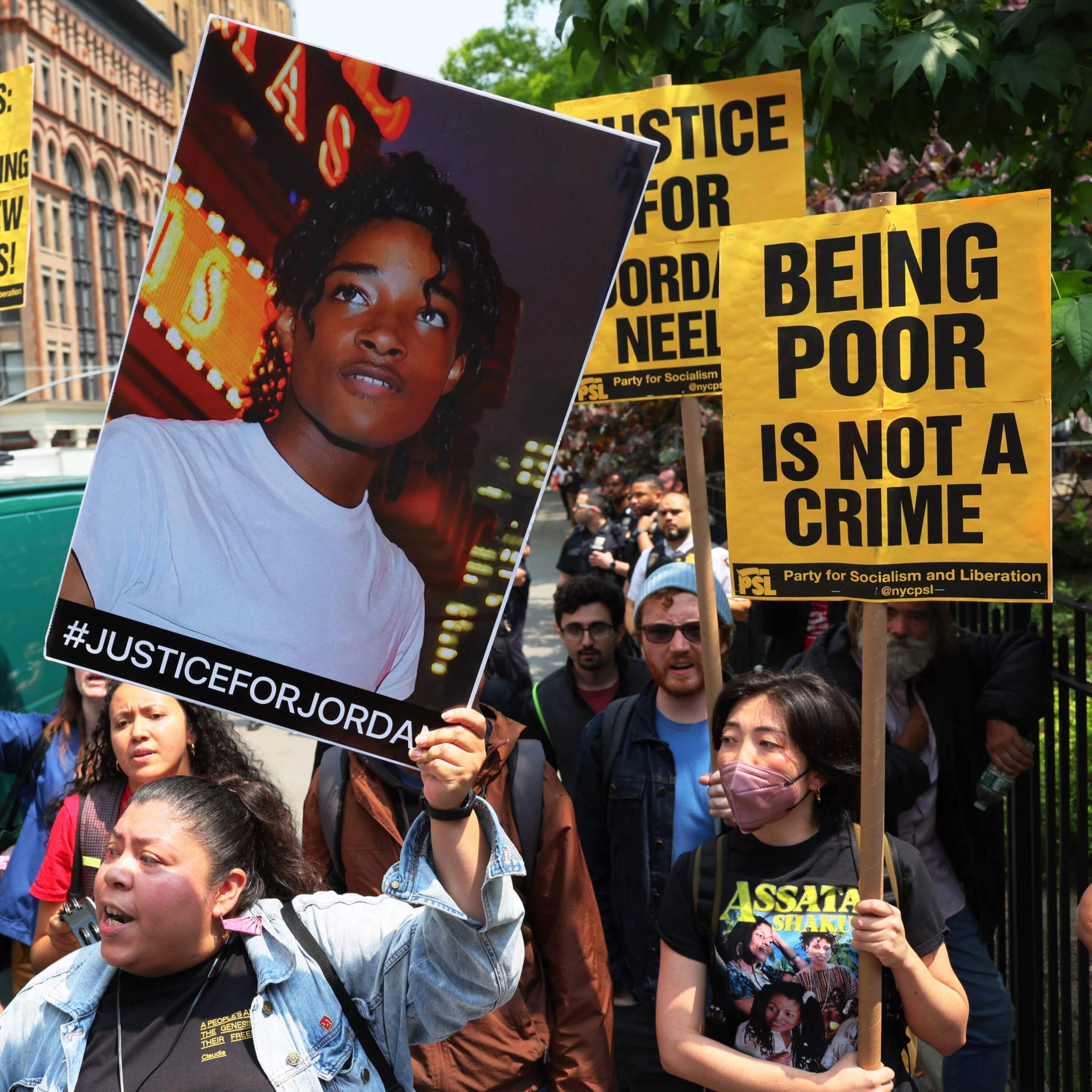
How the killing of Jordan Neely on the NYC subway divided America
In short
Journalist Anand Girdadas discusses his investigation and book “Man in the Mirror” about the May 2023 NYC subway killing of Jordan Neely by Daniel Penny, and how the video and trial split America over “justice,” race, mental illness, and whether people should take matters into their own hands when systems fail.
Guest backgrounds
Anand Girdadas is a journalist and author who spent over two years reporting in NYC, including with homeless people, outreach workers, lawyers, and activists.
Key claims
The “narrative machinery” after the video turned Neely and Penny into caricatures (criminal vs. victim; hero vs. vigilante). Girdadas argues the common emotional thread was “abandonment” when authorities and care systems feel absent. He also says Neely was not an unknown “slip through the cracks” case: officials discussed him weekly, and he’d been on a “50 most challenging cases” list.
Notable examples
Neely’s mother was murdered when he was 14; an internal memo shows the city nearly intervened days before his death. Penny’s trial included video/interrogation where he repeatedly called Neely a “crackhead,” and the jury acquitted Penny of criminally negligent homicide in Dec 2024.
Written by AI. May contain mistakes.
Chapters
0:19
The Incident: Jordan Neely's Death
An overview of Jordan Neely's life leading to his death in a subway incident.
“For years, he danced as Michael Jackson in New York's subways, people stopping in their tracks to record him doing the moonwalk.”
1:12
Aftermath and Reactions
Public reactions and the trial of Daniel Penny following Neely's death.
“Vance invited him to the Army-Navy game alongside President-elect Trump.”
1:38
Anand Girdadas' Investigation
Anand Girdadas discusses his investigation into the case and its broader implications.
“Hope, Struggle, and Belonging in an American City, asks a question that goes far beyond that subway car.”
2:14
Narratives of Justice: Perspectives on the Case
The contrasting narratives around Daniel Penny and Jordan Neely's identities.
“And your book actually reveals the machinery that emerges.”
4:04
Emotions of Abandonment
Exploring feelings of abandonment that led to the subway incident.
“What did you come to understand about that belief in particular, that when authorities aren't there, someone like Penny has to step in?”
4:53
Comparing Historical Contexts
Discussion on historical parallels with the Bernard Goetz case and changes in societal safety.
“instead of all the other conditions that he might have been in had there been a better system of care.”
7:16
Jordan Neely's Troubled Childhood
An examination of Jordan Neely's early life and the impact of his mother's murder.
“but also the fact that our cities are often places of last resort in a country where other places can be more cruel and more intolerant.”
8:31
The Absence of Protection
Insights into who protected Jordan Neely during his turbulent upbringing.
“And one of the things that you found that is pretty devastating is that when he was 14 years old, his mother was murdered.”
10:00
The Life and Choices of Daniel Penny
Understanding Daniel Penny's background and motivations leading to the incident.
“Do you know what his life was like at the time?”
14:00
Understanding Daniel Penny's Background
Explore the complex upbringing of Daniel Penny and the influences shaping his actions.
“Daniel Penny has a much different story.”
Show all 16 chapters
20:50
The Incident on the Subway
A detailed recounting of the events on the subway involving Penny and Neely.
“And if you don't have eligible insurance, you can still get 20 % off your first month.”
21:42
The Incident on the Subway
A detailed recounting of the events on the subway involving Penny and Neely.
“You write about how a few hours after Neely died, Penny sat with two detectives.”
22:22
The Aftermath and Legal Proceedings
Discussion on the legal consequences and trial outcomes related to Penny.
“Because by all accounts, this was a complicated situation in the moment.”
28:00
The Impact of Jordan Neely's Death
Exploring the societal reactions following the death of Jordan Neely and the implications of vigilante justice.
“diversity of New York, the crowds, all the different people living together.”
34:13
Systemic Failures and Community Responsibilities
Discussing the systemic issues surrounding mental health care and community obligations towards individuals in crisis.
“So one of Jordan Neely's lawyers, I believe, he urges people to take care of one another, like help somebody who's hungry, give someone a coat, stuff like that.”
42:00
Review of 'Fatherland' by Pawel Pawlikowski
A deep dive into the themes, characters, and stylistic elements of the film 'Fatherland'.
“an exquisite gem about Mann's 1949 return to Germany after 11 years in America shunning the Nazis.”

Ask about this episode
Get the gist, explore an idea or ask about something said.
 Claude
On Fresh Air, what are the key points of this episode?
Searching your listeningTranscript
Automatic transcript. May contain errors.
0:00This message comes from the Natural Resources Defense Council. Will a child born tomorrow ever see a monarch butterfly? Help NRDC protect the wildlife we're losing. Donate at NRDC.org slash fresh and your gift will be mashed five times. This is Fresh Air. I'm Tanya Mosley. Jordan Neely knew how to draw a crowd. For years, he danced as Michael Jackson in New York's subways, people stopping in their tracks to record him doing the moonwalk. But in May of 2023, Neely boarded a crowded subway in crisis. He was homeless, living with serious mental illness and shouting threats. Passengers were afraid.
0:41A former Marine named Daniel Penny stepped in and put Neely in a chokehold for six minutes. Neely died, and a video of the encounter divided the country. To some, Penny was a man doing what the police weren't able to do. To others, Neely was a victim, another Black man whose life had been treated as disposable. The case went to trial, and a jury acquitted Penny of criminally negligent homicide in December of 2024. Within days, Vice President-elect J.D. Vance invited him to the Army-Navy game alongside President-elect Trump. Soon afterward, a Silicon Valley venture capital firm gave him a job. Journalist and author Anand Girdadas spent more than two years investigating what the video couldn't show.
1:28He spent time on the streets of New York City with the homeless, workers who tried to help Neely, and the lawyers and activists who fought over the meaning of his death. Now as Americans prepare to vote in the midterm elections, his new book, Man in the Mirror, Hope, Struggle, and Belonging in an American City, asks a question that goes far beyond that subway car. What happens to a country when people lose faith in systems and start taking matters into their own hands? Anand Girda Das, welcome to Fresh Air. It's an honor to be here. Okay, Anand, almost immediately after that video showing Penny putting Neely in a chokehold, people began to fight over what they saw, and instantly several narratives began to build.
2:16And your book actually reveals the machinery that emerges. There are the powerful lawyers. There are the political figures. There's Al Sharpton. And they're all working to kind of shape how these two men would be seen. And you even write about how Sharpton tells the lawyers representing Neely's family that if they lose control of the narrative, they actually risk their chance at justice. Was he right? You know, I wanted to write a story that I felt would be a story that would take us to the heart of America and what it means to live in this country in this moment. And part of that story, as you point out, is the process by which we make and argue over stories, right?
3:04The narrative machinery in this country right now, the way on social media a story like this one is turned into fodder, clickbait. And what happens when that happens is human beings become caricatures. So Jordan Neely was either, in the telling of people right after this case, you know, a career criminal who was finally put down or he was a victim of every systemic injustice in American life. Daniel Penny was either a hero, a Batman who kind of stood up to, you know, anarchic Gotham or he was a vigilante in Donald Trump's America. There's a remarkable moment in one of the 911 calls from the subway on the day that it happened.
3:49a passenger tells this dispatcher when they call 911 that Daniel Penny is actually doing justice, the justice that the police is supposed to do. And this caller sees Penny as doing the government's job, essentially. What did you come to understand about that belief in particular, that when authorities aren't there, someone like Penny has to step in? You know, I spent a lot of time thinking about that idea and the emotion of abandonment that you're describing in that 911 call. The person was saying to the police, can you get someone over here? He's doing y 'all's justice. That emotion was not only in that caller.
4:31I think that emotion was the thing that was in common in that subway car. I think Jordan Neely had felt abandoned for a very long time and had reason to feel that way. By his own account, Daniel Penny would claim that he felt abandoned in terms of law enforcement not being there. and in terms of all the systems that had allowed Jordan Neely to be in that subway car in that condition instead of all the other conditions that he might have been in had there been a better system of care. The passengers, besides that 911 caller, shared this sense of abandonment. But I would venture that a lot of people listening to this today who may never have ridden the New York City subway, may never have been to New York, understand that sense of abandonment.
5:13But one other thing I was thinking about as you talk about this sense of helplessness that people feel that they have to take things into their own hands. We've actually seen this before. I had a historian, Heather Ann Thompson, on to talk about Bernard Goetz. And for those who may remember that case, it was back in 1984. He shot four black young men on a New York subway. And some people saw him as a hero. Others thought of him as a vigilante. Now here we are 40 years later and we're having almost the same argument about Daniel Penny. And so this impulse isn't new. What do you think has changed?
5:54You know, I think one of the major differences between then and now is the level of safety in New York, in our cities generally, and in New York and in the subway system. You know, the 80s, by comparison, were a genuinely scarier time. And that, you know, horrific crime happened in a time, in a moment when there was a lot of fear and evidence-based fear in that system. You know, New York City in the 2020s is very, very different. You know, and the climate is drastically lower. But I think all of our cities, while drastically safer, I think we're in a slightly, you know, precarious place coming out of COVID.
6:42It was hard for all of us, right? A lot of people lost people they love. But for people who are already on the edge, on various edges, the edge of housing, the edge of mental health, the edge of connection to others, even before COVID touched our shores, there was a collective trauma that I think we're still not reckoning with. And our cities in 2023, arguably still today, bear evidence of having been through that. New York City, like San Francisco, like Seattle, like a lot of the places folks may be listening to this, has public space that often seems to be functioning, doing double duty as a kind of psychiatric facility.
7:32And there's a lot of reasons for that. Reasons, you know, to do with failures of systems of care to hold people, reasons that have to do with budget cuts, reasons that have to do with the failure to build a new mental health apparatus after deinstitutionalization in recent decades. but also the fact that our cities are often places of last resort in a country where other places can be more cruel and more intolerant. And so this case occurred not in a moment of real acute crime panic but I think in a moment in which the subways felt just a little bit wild. It felt like there was a lot of people suffering.
8:15But I think this case occurred, this moment occurred in the context of those roiling emotions. Let's take some time to talk about these two men, Jordan Neely and Daniel Penny, who they were before they boarded that train. You wanted to understand how Neely ended up homeless and struggling with mental illness. And one of the things that you found that is pretty devastating is that when he was 14 years old, his mother was murdered. Can you briefly tell us what happened? Yeah, you know, he came into this world in an already precarious situation. His mom was in and out of shelters, in and out of relationships with abusive men.
9:02and when he was 14, as you say, she sort of failed to wake him up one morning and that was very unusual in their relationship. She was a very attentive mother. He would describe her as his best friend in the world. And it turned out that her boyfriend had murdered her. She was later found on the side of the road in New York City stuffed into a duffel bag. and in an eerie moment that I found in the reporting, when the New York City medical examiner at that time ruled on the cause of her death, it wrote compression of the neck, chokehold. No one knew that a decade and a half later that same office would be writing literally that same phrase on the death certificate of her son.
10:00Who was protecting Jordan at that time? Do you know what his life was like at the time? I think there was some combination of, he didn't have a particularly close relationship with his father. I think there was some, this has been a little bit hard to uncover, but some combination of living with other relatives, foster care, you know, but again, more, more precarity. And he also at that time got into the Michael Jackson impersonator world and community. And I think it became a little bit of a new home, right? A place where there was, you know, kind of norms and rules and costumes and a culture and people.
10:42And one of them is Moses Harper, who was Jordan's close friend and mentor in this Michael Jackson community. and she said, you know, nothing could have ever replaced his mother. But the Michael Jackson community represented this way in which Jordan Neely could become active in his healing, created a world in which he could, you know, take this step today, take that step tomorrow, obtain that costume, learn that kick, and make something of himself. And, you know, he came to be well enough known in that world and beyond it, you know, there are YouTube videos out there that you can go find where, you know, European tourists and others are like looking for tracking down the Michael Jackson guy in Times Square, finding him in the subway, finding him on the street.
11:31You know, that was probably in the short arc of his life, a moment of thriving. There's something extraordinary that you uncovered in an internal memo that was prepared for the mayor's office. And it describes an encounter with Jordan Neely at a subway station in Brooklyn. The date on this is April 2023. It's April 8th, just over three weeks before he died. How close did the city actually come to getting Neely off the streets that night? Very close, heartbreakingly close, you know, and he had been, just to give a little bit of a context for that moment, you know, in, in, he was 30 by that point.
12:14You know, he had a record of interactions with the police that went back, you know, more than a decade. But it was very trivial stuff at the beginning. It was essentially the stuff of, you know, what it takes to be homeless in New York, jumping turnstiles, sleeping rough. And then in more recent years, it had gotten more serious. And he'd committed a couple of violent crimes, assaults, punching a woman in the face, things like that. And he had gone to Rikers. He'd been charged. And then as part of this alternative to incarceration program, and there are programs like this, you know, popping up around the country where folks get an alternative to going to prison that is considered more restorative, more in line with actually helping people who have substance issues or other issues.
13:04He gets to avail of one of these programs, prosecution, defense, they all agree. And he gets sent to this kind of rehab facility in the Bronx instead of prison. And one day he just walks out of that facility. And then in April 2023, just a few weeks before he died, he is Coney Island, one of the terminal points on the subway system. And he's acting erratically on the platform. Outreach workers try to deal with him to no avail. The cops have some interaction with him, but they don't actually realize that it is the guy who is out, you know, with a warrant for his arrest because he walked out of this program.
13:44And they don't talk to each other. They're different agencies. So, right. Right. And the outreach workers who are there that night don't quite realize that he's a guy that their agency knows very well, just maybe not those individual workers. And he sort of runs off into the night. And, you know, a few weeks later, he's dead on the floor of a different subway car. Daniel Penny has a much different story. His life starts on Long Island. And you wanted to understand his heart and mind, what drove him, so that you could kind of understand why he made the choices he did on the train that day. and you find people from his hometown who spoke about him, but they also spoke about New York almost as something to fear.
14:31And I wondered, what did growing up in that world, from your view, teach Penny about danger in particular and about protecting other people? You know, you're exactly right. And Daniel Penny comes from a town in central Long Island called West Islip. And I wanted to understand him the same way I wanted to understand Jordan Neely's story. I spent time in his town. I spent time on the beaches that he surfed. He was a big surfing aficionado, and I spent time on his favorite beach on Long Island, just watching the surfers taking in that atmosphere. I wrote to the Marine Corps, spent time with his former unit.
15:12I deeply wanted to understand all the worlds that shaped him. Long Island and these central towns in central Long Island have this very complicated relationship. On the one hand, it's very out of the city, but it's right there. A lot of people commute in every day for work. Some don't. These are towns, you know, that were largely populated by white flight in the last several decades. And I came to understand it. One of my other characters is Daniel Penny's lawyer, Tom Kenneth, who also comes from those towns. And he really helped me understand that world that they both come from, which is, in many ways, these are towns that are almost like middle class refugee camps from the squalor and terror of New York City.
15:59Oh, what a way to look at it. Right. And maybe even understanding immigrant stories is a more helpful framework for understanding these places. You know, if I think about my own parents who left India in the 1970s, there's this very complex set of emotions around, you know, in some ways I can catch my parents slipping into India is the best about this and that. On the other hand, they think India is the worst, which is why they left. Right. Immigrants have very complicated relationships to the places they leave. And we don't think about that with places that are 45 minutes away from a metropolis.
16:36But I actually think that is the way to understand the town in which Daniel Penny grew up. And the reason I say it's important is I think this is the same complex relationship to the Oz of the city that Donald Trump has from kind of outer boroughs of Queens. And what I mean by that is these are communities where there's often a contempt, often barely concealed, for all the people that one wanted to get away from when one left. Can you give us a quick play-by-play of what happened on that train from Penny's perspective? So Daniel Penny is sitting on the F train he's gotten on earlier in Brooklyn.
17:16It's now in Manhattan heading uptown. Second Avenue Station, a 30-year-old black mentally ill homeless man named Jordan Neely walks in. Within seconds, throws his jacket to the ground. Says, I'm hungry, tired, thirsty, ready to go back to jail, ready to die. He's kind of moving this way and that way towards different passengers. Daniel Penny, you know, I think by some accounts had his earbuds in. And so I don't know how much of this he heard versus saw, but noticed something was happening. takes his earbuds off, and makes a decision by his account that, you know, he presumably had training that other people might not have in the subway car.
17:59He's going to do something. And so he comes up behind Jordan Neely and wraps his arm around Jordan Neely's neck and drops Jordan Neely to the ground over Daniel Penny's body. Was there anyone who, at a certain point, as the minutes ticked by, yelled or told Penny that maybe you should let him go or you should stop? There were, and this became very important to the trial because part of the charges against him were about, you know, as in layman's terms, he knew better or he should have known better. And, you know, there was both a, there was a man off camera in this passenger's video footage that became the main piece of evidence in the trial saying, hey man, you got a hell of a chokehold.
18:49My wife's in the military. This guy was actually FaceTiming his own wife, this onlooker, FaceTiming his own wife to kind of show her what's going on and saying, my wife's in the military. You got a hell of a chokehold, but careful. You're going to catch a murder charge. He's soiled himself, speaking of Jordan Neely. That's sometimes a sign of loss of life. Like, careful, man. You're going to catch a murder charge. There was a second person who we don't have the sound of this testimony, this intervention on camera, but he testified in the trial. His name is Joseph Kabbaler. he claims that he was helping Penny kind of by holding Jordan Ely's arms at different points and he claims that he went up to Penny and offered verbally to hold Jordan Ely's arms so that Daniel Penny could relax the chokehold or not do the chokehold.
19:46In other words, what he testified in the trial was he was concerned about the chokehold because the chokehold is a lethal maneuver And there are lots of ways to restrain people. There's lots of ways to incapacitate people. You know, a punch or a kick or lots of things if you're a U.S. Marine that you might have in your arsenal to, you know, knock someone out of being a danger to others, particularly when everybody else is out of the subway car. But Joseph Kaballer claimed that, you know, his offer to Penny that he would hold his arms so Penny could relax. The chokehold was sort of rebuffed. Our guest today is journalist and author Anand Girda Das.
20:25We'll be right back after a break. I'm Tanya Mosley, and this is Fresh Air.
20:49now in network with more than 125 health plans with many co-pays as low as$15 for eligible members. And if you don't have eligible insurance, you can still get 20 % off your first month. Visit betterhelp.com slash NPR. Cost and coverage may vary. Discount cannot be combined with insurance. This message comes from WFMT. Discover connections in classical music with WFMT's Exploring Music and new host Peter Vandergraaf. Listen Monday through Friday at 7 p.m. on 98.7 FM, WFMT.com, and the app. This message comes from Bombas. For every item purchased, they donate an item to someone who needs it. Bombas customers have powered over 200 million donations.
21:35Go to bombas.com slash NPR for 20 % off your first purchase. You write about how a few hours after Neely died, Penny sat with two detectives. And there's a video of this that the jury watched. He calls Neely a crackhead three times in this video as he's talking with these detectives. He says, I was on the phone listening to music. I wasn't paying attention. He was a crackhead. You know what I mean? And then you notice something in that tape. Every time he says it, every time he says he was a crackhead, he's looking at the detectives to agree with him. And I'm just wondering from you, what did you see in that room in that video when you see that interaction happening?
22:21That video you're describing is perhaps one of the most pivotal moments in this entire legal case that resulted. Because by all accounts, this was a complicated situation in the moment. And even the prosecution that ultimately brought a case against Penny acknowledged that it was complicated. They even acknowledged in their opening arguments that he was a nice kid who actually originally intended to do the right thing, tried to subdue Jordan Neely to protect other people. And slow it down, protect other people because people on the train felt afraid. Yes. This was not an average Tuesday on the subway.
22:59This was a scary moment by pretty widespread consensus. Mother threw herself over a stroller to protect her child. People thought this was going to be the day they were going to die. There was real fear in the subway car. And Daniel Penny gets up and puts Jordan Neely in a chokehold. And the government says up to that point he was doing the right thing. But what the government argued was that it went on way too long. Because within seconds of Daniel Penny putting Neely in the chokehold, the train got to the next station. The doors opened. Everybody who wanted to got out. And from that point, the chokehold continued for another five minutes or so.
23:39And, you know, in the Marine Corps, you're not allowed to hold a chokehold more than five seconds. So five minutes is 60 times longer. And so the question the government raised was, why did he hold it so long when he knew he had this training to know better? And the answer they came up with is he dehumanized Jordan Neely. And this video was the heart of the evidence for that claim. What the government saw in that video and showed the jury was that, you know, Daniel Penny and these detectives are sort of broiling out. They're comparing military tattoos. They're talking about what units in the Marines one of them was in and the other was in.
24:20They're vibing. And then Daniel Penny starts to use this language to describe what happened, this dehumanizing language. which he repeatedly calls Jordan Neely a crackhead. He also uses the word squirming many, many times. A lot of kind of animalizing language. These NYPD detectives, he loses them. They don't respond, yeah. They go cold. And he sort of then starts to solicit bids for connection. Like, you know what I mean, am I right? You know what I'm talking about, just a crackhead. You know what I'm talking about. And what's really striking is they don't seem to know what he's talking about.
25:01And that piece of evidence, along with a video of the immediate aftermath, I think became central in the trial because the government wanted to show that what Daniel Penny did is something actually we are all at risk of doing when it comes to folks in crisis on our streets, which is not seeing them as full people. Do you know what the jurors were hung up on that ultimately led to the acquittal of the criminally negligent homicide charge? I mean, Tanya, this was a very strange resolution of the case from a legal point of view that I think no one has quite made sense of. So there were two charges.
25:40There was a higher charge that would have carried, you know, ultimately somewhere in the order of magnitude of 15 years, 20 years, that kind of thing. And, you know, that was for second degree manslaughter. And then there was a lesser charge, criminally negligent homicide. the jury hung on the more severe charge which means, to be clear they couldn't get to unanimity to convict him and they couldn't get to unanimity to acquit him and now the jury moves on to the second charge which is the lesser charge much less jail time at stake and very quickly whereas the first charge had taken a long time several days to grapple with almost immediately they acquit Daniel Penny.
26:25And it's a little bit strange to think that you had a jury that was bitterly divided over days about whether he deserved, let's say, 15 or 20 years in prison, but in total consensus that he did not deserve one or two or three years in prison. I'm just wondering, as you sat down with him, Did he have remorse for taking a life? I can't know what's in his heart. I didn't sense that kind of sadness or remorse. And not only did I not necessarily pick that up in that brief conversation we had at his victory party a year and a half after the incident, but one of the things that's striking in both the body cam video on the scene when they first get there, as well as the interrogation that I was describing is that even in those moments, forget remorse, he doesn't even seem to have curiosity about what may have happened to that guy.
27:24He doesn't know at that point that Jordan Neely has died. And I would imagine for a lot of people, even if you thought you were totally right and you'd put someone in a chokehold, you'd restrain them, that in the minutes afterwards and people talking to you about it or the two hours later when cops are talking to you about it, you might say, hey, how's that guy doing? Is that guy okay? Did he make it? And the absence of that was quite striking. When it comes particularly to Daniel Pinney, though, there is a contradiction because he talked to you about how much he loved New York. He specifically pointed out that he loved the diversity of New York, the crowds, all the different people living together.
28:05But almost immediately after that acquittal, then-President-elect Donald Trump and J.D. Vance are celebrating him. He's photographed with Rudy Giuliani. How does a young man who loves New York become a hero to people who see the city as a symbol of everything that has really gone wrong, not only with the city of New York, but with America? You know, as you say, this is a place that he chose to leave. Right. And I think part of why he chose to leave it. And I asked him about this, and we talked about this when I attended. I was the only reporter who somehow got into his victory party when he won his case.
28:44And I said, look, when I went to your town, everybody just kept talking about how dangerous New York City is, how lucky they were to have gotten out of it, how resentful they are both towards kind of the people of color and others who they perceive as dangerous and the elites in Manhattan that they resent as kind of being above them and looking down on them. And he said, yeah, you know, I don't want to throw shade at anybody in my town, but I always was different than people in my town. I wanted a bigger world. And, you know, I think he got that in the Marines, a lot of people who go into the services.
29:16That's one of the motivations. But then, as you say, when he prevailed in his case, and actually even before that, when the incident first happened, the people who glommed onto him were people who wanted to use this story as a partisan scoring point, as a kind of vindication of the notion that cities are dangerous. And I think to be clear, at the beginning, there was no evidence. Daniel Penny, as a young man, shared the views of the people who glommed on to him. And Ron DeSantis promoted the fundraiser that allowed him to have a very well-funded legal defense, probably one of the reasons that he prevailed in his case.
30:07When the case was going on, his lawyer, Tom Kenneth, was telling me while I was reporting, we are staying away from all these people. Ron DeSantis is reaching out. We're sending polite declines. That's not energy we want because we're trying to fight a case in Manhattan, one of the most liberal places in this country. But as soon as they won the case, those kinds of friends were all over the place. When I was still at the victory party, I was sitting with Daniel Penny's lawyers, Tom and Stephen Razor. And at that moment, Stephen Razor said, I'm so sorry, my phone's ringing. I got to take this call.
30:41I looked down at his phone right as he was, you know, hurrying off into a corner. And I saw the name Kyle Rittenhouse on his phone, who, of course, you know, was involved in shooting people in Kenosha, Wisconsin during protests in that city a few years ago. And what did Kyle Rittenhouse call to say? I was not included on that phone call, but he was offering his congratulations to the team. Do you know, did you get a sense how Penny sees his popularity among these people, among the right, specifically MAGA? You know, I didn't get a chance to talk to them about that. I only had a limited chance to talk to them.
31:24But my sense is, and this was actually my sense meeting a lot of the people in the Marine Corps that, you know, in his unit. he sort of gave the impression of a kind of blankness ideologically. And that was one of the things that then became very strange that all these people really wanted him to be their symbol and projected onto him all these ideas. And then he, of course, willingly embraced it. He embraced the money that came from it. And then, most dramatically still, at the end of the case, Not only was he content to appear with J.D. Vance and Donald Trump at the Army-Navy game, but shortly thereafter, he got a job offer that gobsmacked many people.
32:12This is someone who, you know, I think has not graduated from college. He was offered a job as a partner at the venture capital firm in Silicon Valley called Andreessen Horowitz, one of the most powerful financial institutions on this planet. and he was made a partner. And specifically, he was made a partner on their American Dynamism team, which is a team that, you know, invests in startups that do weapons systems and drones and other things, supposedly in the national interest. Is he still there? As far as we know, he is still there. If you're just joining us, my guest is journalist and author Anand Girdadas.
32:50His new book, Man in the Mirror, examines the death of Jordan Neely on a New York subway and the deep divisions his death exposed. We'll continue our conversation after a short break. This is Fresh Air. Stay tuned for the following announcements and messages from our sponsors. This message comes from WFMT. Discover connections in classical music with WFMT's Exploring Music and new host Peter Vandergraaf. Listen Monday through Friday at 7 p.m. on 98.7 FM, WFMT.com, and the app. This message comes from Angie. Angie has been helping homeowners find skilled pros to get their home projects done well for over 30 years.
33:32For everything from minor repairs to major remodels, find reviews, pricing, and booking at Angie.com or on the Angie app. This message comes from Whole Foods Market. Fall tastes better with better ingredients from Whole Foods Market. No added growth hormones or antibiotics in their meat department means slow-braised short ribs are even more satisfying. All seafood is wild-caught, like their vibrant sockeye salmon or verified responsibly farmed. And all sweets, including fall-themed cookies, are made without high fructose corn syrup. Spice up fall at Whole Foods Market. After Daniel Penny was acquitted, something happens outside of the courthouse.
34:13So one of Jordan Neely's lawyers, I believe, he urges people to take care of one another, like help somebody who's hungry, give someone a coat, stuff like that. But then there's an activist out there who goes further, and he's calling for black people to have their own vigilantes. And this was an interesting juxtaposition, because I wondered, how do you view these radically different ideas about what we really owe each other? You know, at that moment, what I was realizing was I had spent the last year and a half hearing Daniel Penny's people make an argument that was basically like the system wasn't there, the system wasn't responsive.
34:57Daniel Penny stepped into a void and did what he had to do, took matters into his own hands because of this void. And then in the jury deliberations during that moment was the Mangione assassination of Brian Thompson of UnitedHealthcare. And as that case started to become better known, a similar argument started to develop around Luigi Mangione, this time on the parts of the left instead of parts of the right, that Luigi Mangione was stepping into this void of a cruel health care system. and stepping in because so many people were abandoned, he felt abandoned. And then when Penny was acquitted, you had, first of all, various people say, various versions of the system's rigged, the system's not listening to us.
35:47We need to take care of each other outside of the traditional roots of the system. And then Hawk Newsome, Black Lives Matter activist in New York, says, yes, if they're going to have vigilantes, we need black vigilantes, but we also need to make our own schools, we need to have our own media, we need to have our own everything. And I just thought to myself, gosh, is this the last kind of common thread? The idea that you could hear on the far right, the far left, and elsewhere, that we're abandoned, the system's rigged, no one's listening, take matter into your own hands. I guess I tried to step back and say, what is it about the condition in which so many Americans have been left that this idea of taking matters into your own hands has become so appealing?
36:43Jordan Neely was not some anonymous, unhoused person that the city had never encountered. He had actually been arrested. He had been hospitalized many times. He had been treated for mental illness. And he also had been approached repeatedly by outreach workers. In fact, you point out in the book, his name was on a special list of its 50 most challenging cases. Officials were actually discussing him in meetings. It's remarkable. You know, when this happened, I think I, like a lot of people, had this presumption that probably most of us have when we just walk down the street and we see someone in trouble, which is, come on, why is no one doing anything?
37:25Why aren't people being taken care of? and one of the government officials said to me, I hate this notion of slip through the cracks. He said every article about Jordan Neely is going to say slip through the cracks. And he said it's a tempting story, but it's just not true. Jordan Neely, as you said, was discussed once a week or thereabouts in like a PowerPoint presentation in the mayor's office of the city of New York. so when Jordan Neely is being discussed weekly in the mayor's office in New York and he still can't be saved it's a different kind of problem it's not a simple problem of well we should be spending money well we should have some eyes well we should have a program we have all of that so if we have all of that and we still can't save a life like that it suggests deeper problems and I think I would highlight two One, these are actually vast systems with an incredible number of agencies.
38:28And they struggle to talk to each other. Yeah, hallmarks of bureaucracy. Right, particularly when you're dealing with individual human lives in real time. But I think if that may be kind of obvious to anybody who's interacted with a bureaucracy, there's a second issue, which is there's a philosophical and moral challenge here that we have to wrestle with as a public. which is when people are in crisis in public space and can't take care of themselves, but they're not an imminent danger, they're not threatening anybody, they're just slowly decaying in public space. And I think we can all think about people we see in our lives in that space.
39:07Do we as a community have the right to grab them off the street, to force them into a hospital, to force them to stay in that hospital. Where does human autonomy and freedom over your body end and the community's ability to know better what you need begin? This is a moral conundrum that we need to wrestle with as a people. Anand Girdaras, thank you so much for this book and this conversation. Thank you so much for having me, for reading it so deeply and closely. Anand Girdaras' new book is Man in the Mirror, Hope, Struggle, and Belonging in an American City. Coming up, John Powers reviews the new film, Fatherland.
39:50This is Fresh Air. Stay tuned for the following announcements and messages from our sponsors. This message comes from WFMT. Discover connections in classical music with WFMT's Exploring Music and new host Peter Vandergraaf. Listen Monday through Friday at 7 p.m. on 98.7 FM, WFMT.com, and the app. This message comes from Angie. Angie has been helping homeowners find skilled pros to get their home projects done well for over 30 years. For everything from minor repairs to major remodels, find reviews, pricing, and booking at Angie.com or on the Angie app. This message comes from Whole Foods Market.
40:33Fall tastes better with better ingredients from Whole Foods Market. No added growth hormones or antibiotics in their meat department means slow-braised short ribs are even more satisfying. All seafood is wild-caught, like their vibrant sockeye salmon or verified responsibly farmed. And all sweets, including fall-themed cookies, are made without high-fructose corn syrup. Spice up fall at Whole Foods Market. In the new dramatic film Fatherland, the Nobel Prize-winning author Tomas Mann travels across war-battered post-World War II Germany after years in exile from his homeland. He's accompanied by his brilliant daughter, Erica, with whom he has a problematic relationship.
41:13Our critic-at-large, John Powers, says fatherland packs in a world of ideas and feelings and history into a gorgeous, almost flawless film that doesn't waste a single second. Artists are notoriously self-important, but a handful carry themselves as if they were the Matterhorn, stony, daunting, towering over the concerns of ordinary mortals. One of these was the majestic German writer Thomas Mann. After the teenage Susan Sontag paid him a reverential visit in the late 40s, she wrote in her diary, I interrogated God this evening. Although in truth she'd found the man to be as disappointing as his work was inspiring.
41:58This Olympian figure lies at the center of fatherland, an exquisite gem about Mann's 1949 return to Germany after 11 years in America shunning the Nazis. Made by Pavel Pavlikovsky, it's the third in his trilogy of films set in mid-century Middle Europa that includes the Oscar-winning Ida. Clarking in at a taut 82 minutes, this highly literate film wields a feathery touch as it weaves together a family drama, a portrait of post-war Germany, a taste of Cold War wrangling, and the intersection of personal and historical guilt. It begins with an intimate phone conversation between Mann's daughter Erika, played by the great Sandra Hewlett, and her adored brother Klaus, that's August Diehl, a writer who's gifted and gay and despondent.
42:51Calling from her parents' modernist villa in Pacific Palisades, California, he's in a messy bedroom in Cannes, Erika urges him to join her on their father's upcoming visit to Germany to accept the Goethe Prize. But Klaus has bitter feelings toward their remote and censorious father, whose colossal shadow dwarfs them both. Played by the shrewd veteran Hans Zischler, Mann begins his tour of the homeland with Erika serving as a glorified assistant. She runs interference, edits his speeches, even shaves him. He's as pampered as a panda. In historical fact, Mann made this trip with his worshipful wife.
43:32But Pavlikaski rightly thinks that Erika's dynamic with him would be more interesting. She's an inmate of fatherland. The other meaning of the film's title becomes clear during their travels to Frankfurt in the American sector and Weimar in the Soviet one. The bombed-out reality of both is evoked in a thrillingly seamless weave of archival footage and newly shot material. Pawlikowski captures how, as the divided Germany rebuilds, both West and East are eager to claim this Nobel laureate for their respective ideologies. In Frankfurt, war ravaged but Americanizing fast, Mann's visit is overseen by a CIA agent.
44:15He lectures in marbled theaters to a well-heeled audience, many of whom had been down with the Nazis, including Erika's ex-husband, a slippery eel who was the model for the cynical actor in Klaus's novel, Mephisto. In the already poorer and plainer East, he's supervised by a general, gives his speech to Communist Party faithful, and is offered a big job by a writer friend who's a true believer in the Soviet cause. Steering clear of either side, modern lectures about the good German culture found in Goethe's idea of love. Mann's own idea of love is trickier, at least in practice. Halfway through there's a family tragedy, but Mann barely seems touched.
45:00He insists on pushing on with the tour, much to Erika's hurt and anger, which Hula captures in all its nuances. Her filial respect flags, and she begins reminding us of the impressive woman she actually was. A one-time actress, she'd written anti-Nazi books and reported on Allied forces after D-Day. Erika challenges her father into confronting the family's catastrophe. But Mann may be even better at repression than at fiction. He simply bottles up whatever pain he feels, seeking refuge and solace in high culture. I suspect that this is something that Pavlikovsky understands. His own work is shot through with the tension between powerful, often dark passions and aesthetic perfection.
45:50You see this clearly in the trilogy, where the harsh realities of love, family, and history are embedded in beautiful, almost fanatically precise filmmaking. Meticulously staged and shot in elegant black and white by his superb DP, Wukha Shaw, these films are stripped of narrative fat and obvious emotional cues. It's as if Pavlikovsky is using a rigorous artistic form to manage his own painful obsessions. Because Tomas Mann was famous for turning out long novels, his greatest, The Magic Mountain, runs over 700 pages, it almost feels like a joke that this movie about him should have the shapely brevity of a short story by Chekhov or Joyce.
46:35Yet it does, daringly so. Fatherland ends with an abrupt epiphany to the strains of Johann Sebastian Bach, a finale that brings with it a moment of release. And for a short time, anyway, we glimpsed the vulnerable man inside the redoubtable mountain. John Powers reviewed the new film, Fatherland. Tomorrow on Fresh Air, across the country, communities are fighting plans to build massive AI data centers and taking the battle to the ballot box. Brookings scholar Daryl West talks about the growing political backlash against the AI boom and who benefits when technology comes to town. I hope you can join us.
47:19To keep up with what's on the show and get highlights of our interviews, follow us on Instagram at NPR Fresh Air. Fresh Air's executive producer is Sam Brigger. Our technical director and engineer is Audrey Our interviews and reviews are produced and edited by Phyllis Myers, Anne-Marie Baldonado, Lauren Krenzel, Teresa Madden, Monique Nazareth, Thea Chaloner, Susan Yacundi, Anna Bauman, and Nico Gonzalez-Whistler. Our digital media producer is Molly C.V. Nesper. Roberta Chorak directs the show. With Terry Gross, I'm Tanya Mosley. Stay tuned for the following announcements and messages from our sponsors.
47:58This message comes from WFMT. WFMT. Discover connections in classical music with WFMT's Exploring Music and new host Peter Vandergraaf. Listen Monday through Friday at 7 p.m. on 98.7 FM, WFMT.com, and the app. This message comes from Angie. When it comes to home projects, it matters who you hire. Angie has been helping homeowners find skilled pros to get their home projects done well for over 30 years. Angie's nationwide network has experts in everything from landscaping to roofing and more. Read verified reviews, see photos of past work, and request and compare quotes to find your best price all in one place.
48:41Download the free Angie app today or visit Angie.com. That's A-N-G-I dot com.
From the publisher
Jordan Neely, a Black unhoused man in crisis, was frightening fellow passengers on the New York City Subway. A white former Marine named Daniel Penny put Neely into a chokehold, killing him. Journalist Anand Giridharadas investigates the incident, and what it reveals about American society in Man in the Mirror. He spoke with Tonya Mosley.
John Powers reviews the Thomas Mann film Fatherland.
Subscribe to our free weekly newsletter
Follow us on Instagram
Subscribe to our YouTube channel
Check out the Fresh Air Archives
See pcm.adswizz.com for information about our collection and use of personal data for sponsorship and to manage your podcast sponsorship preferences.
NPR Privacy Policy
More from Fresh Air
All episodes
We use cookies.They keep VO running smoothly and help us improve it. Privacy policy