
 Ask ChatGPT


In short
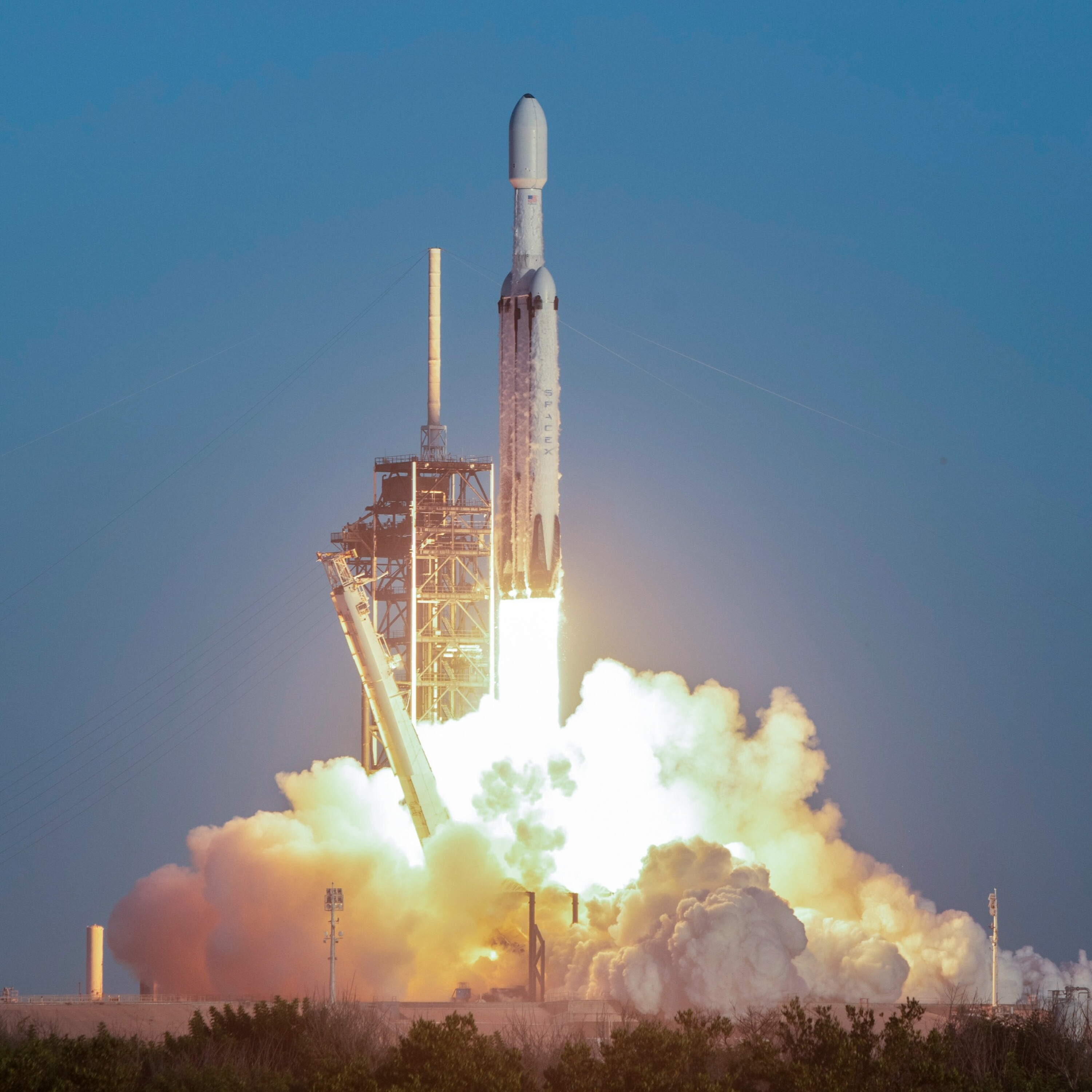
Fresh Air interview about the “space race” now driven by Elon Musk’s SpaceX and Jeff Bezos’s Blue Origin—especially their plans to colonize the moon, build space-based supply chains, and create space data centers and satellite networks with minimal governance.
Guest backgrounds
Josh Tiringel, staff writer at The Atlantic; former Washington Post columnist (covered AI); led global newsrooms at Bloomberg, Vice, and Time; author of AI for Good.
Key claims
A 2000s U.S. policy opened space to commercial development, but governance lagged, creating a “mercurial billionaire problem.” SpaceX’s dominance (about 80% of 2025 orbital launches) shows how outsourcing capability to private individuals can create national risk. NASA sets policy for Artemis but doesn’t govern satellite activity (e.g., Starlink’s ~11,000 satellites). Space law is thin; treaties place responsibility on countries of origin, but enforcement is inconsistent.
Notable examples
Musk’s Starlink expansion; SpaceX’s FCC request to launch ~1 million data-center satellites; Artemis “bake-off” between Blue Origin and SpaceX; Trump–Musk disputes affecting ISS access; Bezos’s moon-as-“national park” vision; Musk’s shift from Mars to lunar city; lunar dust, space-junk concerns, and early experiments (Google launching two space data-center satellites).
Written by AI. May contain mistakes.
Chapters
0:45
The New Space Race
Discussion on how Musk and Bezos are leading the modern space race.
“Musk was also appointed by President Donald Trump to run Doge, the Department of Government Efficiency.”
2:16
Government vs. Private Space Initiatives
Analyzing the implications of private enterprises leading space exploration instead of the government.
“So these space colonization efforts are being led by billionaires and their businesses.”
3:19
The Mercurial Billionaire Problem
Exploration of the risks of having individual billionaires control space capabilities.
“And at that point, it was really hard to know what the outcome would be.”
4:20
NASA's Role in Modern Space Policy
Discussion on how NASA interacts with private companies like SpaceX and Blue Origin.
“in 2025, SpaceX launched about 80 % of the things in orbit, 80%.”
6:05
Historical Context of NASA and Contractors
Comparing NASA's historical partnerships with private contractors to current dynamics with Musk and Bezos.
“And, you know, the new administrator of NASA is a guy named Jared Isaacman.”
8:23
Governance Issues in Space
Exploration of the lack of governance in commercial space activities and its implications.
“Many people I spoke to said it's pretty clear that their lander is superior, but SpaceX has a much bigger rocket that could potentially be the refueling station for the Blue Origin lander.”
9:38
Pollution and Environmental Concerns in Space
Discussing the potential environmental impacts of colonizing the moon and launching data centers in space.
“There are no laws yet, right, governing outer space.”
12:00
The Future of Data Centers in Space
Speculation on how data centers in space could revolutionize technology and their implications.
“when you are really just, you know, you're burning fuel to get those rockets into space is undetermined.”
19:52
Musk vs. Bezos: Space Rivalry Insights
Explore the motivations and strategies of Musk and Bezos in the space race.
“Let's get back to the interview I recorded yesterday morning with Josh Tiringel, a staff writer at The Atlantic.”
28:00
The Space Race Dynamics: Musk vs. Bezos
Explore the competitive landscape between Musk and Bezos in the space sector, with insights on regulatory challenges and market concentrations.
“that the risks we were willing to take at that point from a government perspective, we simply would not do anymore.”
Show all 12 chapters
35:09
AI's Impact on Employment and Economic Disruption
Discuss the potential effects of AI on jobs and the economy, focusing on adaptation challenges.
“And I want to start with the question, now that Trump has decided to rename AI as superintelligence, what are you hearing from your contacts in the tech world about that?”
42:07
The Economic Debate on AI's Impact
Explore the contrasting views on AI's impact on employment and economy.
“in part because the speed of change with AI leaves no time to adapt.”

Ask about this episode
Get the gist, explore an idea or ask about something said.
 Claude
On Fresh Air, what are the key points of this episode?
Searching your listeningTranscript
Automatic transcript. May contain errors.
0:00This message comes from NPR sponsor, the official Gilded Age podcast from HBO. Unpack each episode of the Gilded Age and hear from the people who bring 19th century New York to life. Watch the official Gilded Age podcast on HBO Max or listen wherever you get podcasts. This is Fresh Air. I'm Terry Gross. The space race used to be waged between countries like the U.S. and Russia. Now the race to control outer space is being waged between two tech billionaires and their companies, Elon Musk's SpaceX and Jeff Bezos' Blue Origin. Bezos is, of course, famous for creating Amazon, buying the Washington Post, and founding the cloud computing company Amazon Web Services.
0:42Elon Musk is famous for being the CEO of Tesla, buying Twitter and turning it into X, and founding Starlink, which manufactures and launches satellites. Musk was also appointed by President Donald Trump to run Doge, the Department of Government Efficiency. Bezos and Musk each want to colonize the moon and turn space into a supply chain for Earth. My guest, journalist Josh Tiringel, writes that the two men hope to preserve human life from the specter of climate change and expand mankind's understanding of the universe. Both would also like to dominate a market that, unlike every other market they've previously conquered, has no ceiling and few established rules.
1:26Accomplishing the visions of either man would rely on creating giant data centers in space Tiringel is a staff writer at The Atlantic and wrote the November cover story titled Choose Your Overlord, Musk vs. Bezos In the piece he describes their visions for colonizing outer space The technology they're developing And what it would mean to turn parts of the moon into businesses The rivalry between Bezos and Musk is so powerful, Tiringel says their only real competition is with each other. Tiringel is a former Washington Post columnist where he covered AI. He also led the global newsrooms at Bloomberg, Vice, and Time magazine.
2:07His latest book, AI for Good, is about people finding ways to use AI that are fixing problems, not causing them. Josh Tiringel, welcome to Fresh Air. So these space colonization efforts are being led by billionaires and their businesses. I know Bezos and Musk love the idea of space exploration and they're taking big financial risks, but they also stand to make huge profits and have great power. And their investors stand to lose money or profit too. But what does it mean that something with such big implications for the future of mankind and for the future of our planet and outer space, that these efforts are being led by private enterprise and not the U.S.
2:48government? It's a great question, and it really goes to the heart of this very strange moment we're in. And space is a part of it, right? So in the early 2000s, the United States government made a policy decision, which basically opened up space to commercial development. There was a notion that the government itself was slow, expensive. Its development processes for rockets, for satellites, for all sorts of things were just not going to be competitive with private enterprise. And so we invited these private enterprises in. And at that point, it was really hard to know what the outcome would be.
3:24Jeff Bezos in 2001 started Blue Origin. But, you know, many people described it to me as much more of a think tank or a science experiment for its first decade. SpaceX was kind of almost founded, you know, impetuously. It was a pirate ship, as one person described it to me. And really, they didn't know what their plan was other than to launch things into space. the Commercial Space Act allowed all of this activity to happen. And even people who are really critical of Bezos and Musk believe that it was the right call, believe that the degree of space activity we have, economic activity, research activity, would never have been achieved without opening this up.
4:04At the same time, without governance over it, what you get is a situation where one or two people properly capitalized can first take over a market. So it's sort of stunning how successful Elon Musk has been in space. I mean, one stat that just floored me is in 2025, SpaceX launched about 80 % of the things in orbit, 80%. And its next closest competitor was not Jeff Bezos. It was the government of China. So you have an individual controlling a company, and essentially he has supranational capabilities. And what we discovered is that when you outsource that capability to an individual, you're at the mercy of their whims.
4:49And so as far back as the early 2000s, I had sources talk to me about this notion within the Air Force of people calling it the mercurial billionaire problem. And they could foresee that down the road, if one person or a handful of people had properly capitalized their space businesses, there was nothing preventing them from doing what they wanted to do. We briefly saw an example of this when President Trump and Elon Musk were sort of post-Doge feuding. And Musk said that he was no longer going to produce the rocket that could take Americans to the International Space Station. And he was going to cancel flights.
5:27And if he did that, we would have no way to get Americans to the space station domestically. domestically. What we would have had to do was pay$80 million to a Russian rocket to put an American on it to get it to the space station. And so when you lose that capability as a country, when you outsource it to an individual or potentially two individuals, you have to ask yourself, what risks do we incur? What governance did we not perform to get into this situation? So what role does NASA play now? So NASA still has a very important role in dictating American space policy. And, you know, the new administrator of NASA is a guy named Jared Isaacman.
6:09The people I spoke to really like him. They think that he's hard charging. He believes and has set the mission that we're going to go to the moon and Americans are going to get to the moon. And maybe SpaceX will make the lander that takes astronauts there. And maybe Blue Origin will. And he's pitted the two in a kind of competition against one another. But NASA doesn't really oversee satellite activity. And there are 11 ,000 Starlink satellites in space, which is about two-thirds of the orbital objects in space owned by Elon Musk. And so he controls the newest, most agile technology when it comes to telecommunications and Internet access.
6:49NASA doesn't really control that, nor does it really oversee it. So NASA has a role to play. But on the commercial side, there's just not a ton of governance, and there's no real movement toward getting more governance. Well, would you compare the relationship that NASA had with private contractors to the relationship NASA has now to Musk and Bezos? Listen, NASA has always invoked private industry to get its projects done. The Apollo missions, which we all laud, and really, I think in memory, think of as just American missions. You know, there were a lot of contractors that helped make those missions possible, and they really collaborated.
7:33Those contractors built different parts of the spacecraft, made different components inside the spacecraft, all under the authority of NASA, which directed the contracting in very specific ways. What we're seeing right now is that Jared Isaacman for the Artemis program has said, I'm having a bake-off. It'll either be Blue Origin that creates the booster and the rocket and the lander that gets to the moon, or it'll be SpaceX. And they're in competition. The money, frankly, is meaningful to both companies, but it's not bigger than their economic plans overall. A lot of people I spoke to suggested that one way for the government to exercise power over these companies would be to revert to the way NASA used to function and say, frankly, right now, Bezos and Blue Origin have a better landing plan for the moon.
8:23Many people I spoke to said it's pretty clear that their lander is superior, but SpaceX has a much bigger rocket that could potentially be the refueling station for the Blue Origin lander. And that there's a very simple, practical approach, which is to say we're the United States and we want our contractors to work for us. We don't want to be held at their mercy. SpaceX, if you want to be part of this program, you'll build the refueling. Blue Origin, you focus on the lander and all of us will get there together. Director Isaacman didn't speak to me for this piece. Many people speculated about how he's going to conduct the next couple of years as these companies continue to be in competition.
9:04But I think it's a pretty rational way to regain some measure of control over these companies. Ordinarily, we have entrusted the future of our civilizations to people we elect to office. We now have folks with a tremendous amount of power over our future, particularly if you view the future as being partially in space. And we have to reckon with it, whether we walk it back, whether we split these companies up. Whatever the remedy is, I don't actually know, but I think you'll see more and more of these kinds of incidents the more you concentrate power and the better the tech gets. There are laws governing the seas.
9:40There are no laws yet, right, governing outer space. It's kind of first come, first owned. Well, we have international treaties about the moon. And in those treaties, it is said that companies conducting their business in space are ultimately overseen by the countries of their origin. So the United States is actually responsible for the comportment of these companies as they make plans on the moon, as they attempt to put data centers in space. But as we've seen over the last 10 years, having a plan for governance and actually using that plan and changing the way companies react are two very different things.
10:21We could certainly use more space laws. We could certainly use more governance of pollution in space, plans in space. But it's not like we're absent remedies for this. We just haven't used them. You mentioned pollution. I keep wondering, like, if we colonize the moon and build data centers to have the energy that would be needed in order to colonize the moon, and there's some kind of supply chain bringing resources back to Earth in order to save humanity and save our planet, won't we be polluting the moon and outer space? When you think of all the rockets that would have to take off from the moon and from the U.S.
11:05and all of the satellites, like thousands and thousands of more satellites in space and probably various forms of other pollution, Space junk, probably. I mean, what would we be doing to outer space? It's a great question that is unanswered. And so Musk has said that ultimately they'd like to have as many as a million satellites in space. Wow. That's a lot. It's an enormous number. And again, to get them into space, what you're talking about is entirely correct, which is, you know, you used to be able to look at space launches by the calendar. and Musk has famously said he wants in the near future for you to be able to look at space launches by your watch and that there are multiple launches a day creating the space economy, moving satellites, moving heavy machinery.
11:57How that would impact pollution on Earth when you are really just, you know, you're burning fuel to get those rockets into space is undetermined. On the moon itself, it's a really interesting question. There are a lot of people I spoke to in the science community who say, look, you know, when you take off and land from the moon, when you build things on the moon, you create a lot of lunar dust. That lunar dust can complicate all of your machinery. We've never had that kind of activity on the moon, and we don't really know what it would mean for the environment of the moon, let alone for the efficacy of the machinery you would be putting up there.
12:32As far as space junk, we have a lot of space junk. And what we've seen is that it can crash into things in random ways that are also damaging. What's astonishing to me and what really made my jaw drop in the reporting is that, you know, all that is kind of intuitive and you think, well, surely that would be dissuasive. If you were going to build data centers on the moon or data centers in space, boy, it just seems nuts. And literally everyone I spoke to in the AI community said, we can't wait for data centers in space. That data centers in space, the NIMBYism problem of building data centers in the United States.
13:09NIMBY is not in my backyard. Yeah. Yes, I'm sorry, not in my backyard, which as we've seen is like a huge political issue as we head into the midterms. The lack of power, the lack of power supply, the lack of the ability of these data centers to hook into grids is a huge problem if you are training an AI model on massive amounts of computing power. And so, you know, when I was first hearing about these planets for data centers in space, I was sort of just, this is a preposterous thing to do. But the more I looked at it, everybody wants in. And so Sam Altman, about a year and a half ago on a podcast with his brother, said, should I buy a space company?
13:49And then a couple months later, they tried to buy a space company because they realized that without having the ability to launch their own satellites, Jeff Bezos and Elon Musk may control the entire market. And the speculation, which, again, is still speculative, is that in five to seven years, if launch costs continue to come down, it will be cheaper to create an array of data centers in space which communicate back to an AI model on Earth via satellite than it will be to build these massive data centers that cost hundreds of millions of dollars just to build, if not billions, take up massive amounts of land.
14:28So they're all eyeing space as the solution to this problem. I can't really conceptualize what a data center in space would look like or where it would be. Would it be like floating around someplace? Would it be on the moon? Well, there's both versions. One version is essentially a larger satellite that would be in orbit and that it would be conducting compute. And that compute would then be communicating back to a satellite. or in some cases that compute would also have satellite capability. So you could run your experiments on Earth, get them computed in space, have that array of satellites or the array of data centers working on it constantly with no throttling, no concern about energy, no concern about waste.
15:15And so you would be able to feed your model as much juice as you want to feed it. There are other people who think putting them on the moon is even better because they're locked, there's less space junk. You know, all of this is part of this much bigger ecosystem that Bezos and Musk hope to build, which is to use the moon as this kind of way station to get to other parts of the galaxy, to use it as a source of energy, to mine the rare Earth's materials that just have been crashing into the moon for the last four billion years. And unlike on Earth, there's no weather on the moon. So those minerals have just been sitting there in the regolith or the lunar soil ready to be mined.
15:59And so they're both really sketched out this massive vertically integrated business plan. And space and the moon are just the key components of it. Doesn't a data center require a lot of energy and water to cool it? That's part of the problem of data centers on Earth. How do you deal with that in space? So that's one of the primary appeals. There's a guy who runs the lunar permanence division at Blue Origin named John Caloris. And lunar permanence is exactly what you think it is. He runs the division thinking about what happens when we go and stay on the moon. And he used to work at SpaceX as well.
16:44And one of the things he told me is that, you know, the energy issue and the cooling issue are largely consequences of being on Earth. Whereas in space, there is a constant source of energy in the sun. And if you turn your solar panels the other way, there's a constant source of cooling because the temperature swings in space are dramatic. And so that's part of the appeal is that it takes away the variability on Earth of needing to find these power sources, needing to find these cooling sources. I would say, again, this is all still theoretical. The first experiments with data centers in space are starting kind of now.
17:21Google has a partner and is launching two data centers satellites that they hope to learn from. Musk has said he wants to get his in the next year up so that he can begin to understand how this is going to work. There's a lot of variability. Nobody quite knows how it all works. But the people I spoke to have really begun to orient around data centers in space as a solution to their problems. My guest Josh Tiringel is a staff writer at The Atlantic. His November cover story is titled Choose Your Overlord, Musk vs. Bezos. We'll hear more of the interview after a break. And if you want to catch up on interviews you missed, like this week's interview with actor Mahershala Ali, or writer E.
18:03Yun Lee about her new novel and her Pulitzer Prize-winning memoir about the deaths of her two sons by suicide, check out our podcast. You'll find lots of Fresh Air interviews. I'm Terry Gross, and this is Fresh Air. Stay tuned for the following announcements and messages from our sponsors.
18:47This message comes from Schwab. Investing with Schwab is like spending a Saturday at the farmer's market. You can fill your reusable tote bag with a bit of everything. Maybe you go for some free-range self-directed investing, or pick up a few farm-fresh trades while you peruse. You can even get help from a dedicated advisor. That's full-service wealth management. No matter your goals or appetite for investing, Schwab has everything you need all in one place to invest your way. Visit Schwab.com to learn more.
19:45credit. Just go to linkedin.com slash NPR pod. Terms and conditions apply. Let's get back to the interview I recorded yesterday morning with Josh Tiringel, a staff writer at The Atlantic. He wrote the November cover story titled Choose Your Overlord, Musk versus Bezos. The story looks at the space rivalry between the two tech billionaires. Tiringel describes Musk's SpaceX and Bezos's Blue Origin as operating in a market with few established rules and no checks on power other than each other. Tyrion Gale is a former Washington Post columnist where he covered AI. His latest book, AI for Good, is about people who are finding ways to use AI that are fixing problems, not causing them.
20:32I'm thinking like if Bezos and Musk end up successfully colonizing the moon, and then other countries get onto the moon and want going to start colonizing too. And there's conflicts between the tech billionaires and other countries. Do Bezos and Musk go to war with Russia? I mean, like, if you play out the future, it just gets really perplexing. Yeah. And you're not alone. I mean, the people I spoke to in national security all said, you know, Jake Sullivan said, this is an incredibly weird moment. And that was echoed by many of the people I spoke to who just said, this is strange. And we really are entering this era where individuals have the resource capability of nation states.
21:21Our country is still responsible for what they do by treaty on the moon. So they can't do whatever they want without some sort of consequence. And I think that's the added ripple, which is making this all so strange, is that there just hasn't been consequence. There's been a sort of extraordinary interaction between President Trump and Musk and Bezos. And we only know part of it. I mean, I wrote a fair bit in my piece about the Washington Post because it was a point of leverage, very clearly. Bezos has denied it. The president has denied it. But sometimes, you know, when it walks like a duck and talks like a duck, you can jump to the conclusion that it might be a duck.
22:00And so what is happening with the Washington Post, to me, and to a lot of the sources I spoke to is indicative of the fact that a handful of people are tussling over these resources and that capitulation on one thing may open the door to another. And all three are very transactional. They may have moments of tremendous emotion, but all three know what they want. They end up doing deals. And I think that's been a key component of, depending on how you look at it, their success or the concern among people about, you know, we're not getting to vote on what these companies are doing and how they're developing space.
22:35And the people we voted for aren't being terribly open about their interactions with these companies. Can you elaborate a little about what you were saying about the Washington Post and Bezos? Yeah, listen, the Washington Post for a long time was the chief antagonist of President Trump. And Jeff Bezos was a very powerful antagonist himself. And for most of the Trump first term, Bezos remained a fierce critic. At the second term, it's very clear to a lot of people who I spoke with and reported on in the piece that something changed and that largely what changed was Bezos realized he could not lose four years in the space race or in the AI race to Elon Musk.
23:16And so even though the president denies it and Bezos denies it, it's very clear that some sort of arrangement was achieved, whereby the president no longer was considering Jeff Bezos an enemy. The Washington Post was no longer on its opinion section going after the president in quite the same way. Bezos redirected the Post's opinion section to a much more libertarian bent. Everyone I spoke to, including Marty Baron, the former editor of the Washington Post, came to the conclusion that a deal was struck. Let's talk about the reasons that Bezos and Musk want to colonize space. And I know they both like love outer space.
23:58It was like childhood fantasies for them. But talk about what their visions are now. Yeah, Bezos's vision is fairly consistent. He has believed since he was in high school that there are a lot of polluting industries on Earth and that most of those industries should be moved to the moon. and that Earth should kind of exist as almost like a national park, like this bucolic land, free of chemicals, free of pollution. All of that happens elsewhere and really attributes this to a guy named Gerard O 'Neill who had these notions of O 'Neill colonies on the moon. For a long time, Musk's dream was Mars.
24:33It really was. He wanted to go to Mars himself. He wanted civilization to be interplanetary. One of Bezos' successes is in gently nudging the federal government's initiatives closer to the moon. And there's some pretty good reasons for it. It's very hard to get to Mars. It's a lot easier if you use the moon as a sort of docking station. The moon has more national security implications for Earth. So Musk has gradually brought his ambitions closer to a sort of lunar city idea where there's a colony on the moon. Those are, you know, they're stated utopian notions about mankind and civilization exploring space.
25:12The key thing that I looked at was the SpaceX prospectus. And what this prospectus tells you is just how much of the interest in the future of space over the next 10 to 20 years is really hinging on data centers in space and satellites in space and space as a business. So we can be distracted a little bit by the sort of appeals to, you know, the greater good, space exploration for mankind. But the SpaceX prospectus really lays out this is primarily a commercial venture. One of the things that they both need is reusable rockets. So instead of a rocket like going to the moon and then returns and then you can't launch it again, they need reusable ones.
25:57How far have they gotten with that? Yeah, reusable rockets are the key to making space affordable. And just so that we can conceptualize it, imagine if every time you flew to Los Angeles, that was the end of the plane. Your ticket would be incredibly expensive. Both are pretty far along, but Musk is much further along and SpaceX is than Blue Origin. So I went to a Blue Origin launch, which was the third attempt to reuse a booster, which is the bottom part where the fire comes out. And they were successful at reusing the booster in that launch. And then I left and I opened my phone and on Twitter, SpaceX announced that it had just reused its 600th booster.
26:37And so that distance tells you the distance between their current state in space is that SpaceX has now turned reusability kind of – it's just routine. It's unremarkable for them to be able to do it. And that furthers their advantage because they can do things much cheaper than Blue Origin can. One of the problems that Bezos and Musk are facing is that you have to refuel on the way to the moon, especially Musk's rockets. Give us a sense of how big some of these rockets are. How much do they weigh? The Starship, which is the big rocket that he's trying to build, it's like launching a Costco to space.
27:15I mean, it's massive. And the goal is to store as many as 60 satellites in a Starship so that you can deploy them. And it opens up almost like a PEZ dispenser so that you can deploy those along the way. The thrust, the energy required to get that to space is enormous. Blue Origin's rockets are similarly quite large, a little less sizable than Starship. But yeah, it takes a lot of fuel. It takes a ton of energy to get them to space. Now, there's a reasonable question in here, which is, well, why didn't it take that much when we went to the moon the first time? And the answer is that we took risks that we simply would not take anymore.
27:53Those rockets and the landers, numerous people described to me how thin the ships actually were. The radiation levels were off the charts. that the risks we were willing to take at that point from a government perspective, we simply would not do anymore. Not to mention the fact that we're hauling all this commercial material and we want to stay longer on the moon the next time we go. So yeah, the real challenge is figuring out how you get all that stuff up there and how you're going to refuel. SpaceX filed a request with the FCC to launch one million data center satellites in orbit. You'd mentioned that figure earlier.
28:30That's a huge figure. But I was fascinated by the idea that SpaceX files the request with the FCC. When I think of the FCC nowadays, I think of the FCC spending a lot of time monitoring Jimmy Kimmel's opening monologues. Is the FCC equipped to comprehend the meaning of all this space stuff? I mean, I think of them as regulating broadcast. Yeah, it's kind of a quirk because satellites are communications infrastructure. They're regulated by the FCC. And the one area that the FCC has been pretty stringent on is that you're going to lose your right to launch satellites if you can't get them into space, meaning that your allocation doesn't go on forever.
29:16You have to get them launched and in place or else the next person in line who can do it gets their rights. And so this notion of asking for a million is an interesting gambit, right? Because ultimately, who has the capability to launch that many satellites? Elon Musk and SpaceX. And so what was happening really just as I filed the piece was, you know, I was beginning to hear about other space competitors, small satellite competitors, learning that launch capability from SpaceX was disappearing because SpaceX was taking over all of that launch for its own satellites. And commonly, we would say, well, that sure looks like an antitrust problem, right?
30:00If you're getting this level of vertical integration that others can't compete, that would be problematic. But what we don't have is anybody at the Department of Justice, any more stringent oversight from the FCC trying to get into that and navigate, well, can there only be one satellite provider on the world? Because Blue Origin is not yet competitive in a meaningful way. So all of these issues, I mean, we spoke about Ukraine and the capability to reach Starlink. But all these issues are coming to a head because the concentration in SpaceX's hands right now is quite significant. Do we have any idea what the impact on space would be if we have a million satellites or at least thousands and thousands and thousands of more satellites in space?
30:47You know, we really don't. You're talking of an order of magnitude of objects orbiting the Earth that we can't really comprehend. And so, you know, some of the astronomers I spoke to were just like, this is a crazy number. It will never happen. There will be constant accidents. And I do think that the number a million, I have a really hard time believing that SpaceX will ever actually get to that number. But we don't know. We don't know what happens when we cloud low Earth orbit or even higher orbits with all of those objects. I feel like Musk and Bezos are really kind of fast tracking their plans for space development.
31:28But most of us don't know about this. And the government has a limited amount of power in controlling it. It just seems like a whole lot of power concentrated in two people. I know we've talked about this a little bit already, but the more I hear about the plans, the more I realize like so few people know about this. And it's happening by two very ambitious people with relatively little government oversight. It just seems totally precedent making in every way. Yeah. And I think that they would argue it will be for the good of mankind. We will have future space will be before us. We will be closer to becoming interplanetary.
32:17AI models will make things better on Earth. Our satellites will make communications better. And I think they genuinely believe all that. the thing that I think most people who hear the plans get unsettled by is that they haven't really voted for any of it. And the fact that two people have taken this much control, again, through some incredible engineering feats, audacity with their own money, to be sure. But the fact that two people have positioned themselves to be in this kind of control over the future of civilization is astonishing to folks. One thing that Jake Sullivan, the former national security advisor, told me is that in a situation like this, if you're a country, it's great to have one company that can do this, but boy, it's better to have two.
33:08And so we actually find ourselves in this very strange position where we might really need Blue Origin and Jeff Bezos to become as successful well as possible as soon as possible to neutralize the possibility that only one person has control over this market. And that may not make anybody feel any better, but I think it's a good way to understand the situation that we're in. We need to take another break here. So let me reintroduce you. If you're just joining us, my guest is Josh Tiringel. He's a staff writer at The Atlantic, where he wrote the November cover story titled Choose Your Overlord, Musk vs.
33:45Bezos. We'll be right back after a break. This is Fresh Air. Stay tuned for the following announcements and messages from our sponsors. This message comes from Whole Foods Market. Host Thanksgiving with industry-leading quality standards from Whole Foods Market. There are no antibiotics in their meat department ever, so carve up turkey and spiral-cut ham with peace of mind. Shop organic sides like stuffing mix and cranberry sauce from 365 brand. And all their delectable pies are made with no high-fructose corn syrup. Gourmet Thanksgiving flavors with the quality you want only at Whole Foods Market.
34:19This message comes from Schwab. At Schwab, you can get everything from self-directed investing to full-service wealth management all in one place. No matter your investing goal, life stage, amount to invest, or know-how, you can invest your way with Schwab. This message comes from LinkedIn ads. Ever invest in something that seemed incredible at first but didn't live up to the hype? For marketers, that's impressions. When ads don't create revenue, that's a tough conversation with the CFO. Instead, invest in results your CFO will love. LinkedIn Ads generates the highest ROAS of all major ad networks.
34:57So advertise on LinkedIn. Spend$250 and get a$250 credit. Just go to linkedin.com slash NPR pod. Terms and conditions apply. I want to talk with you more about AI. And I want to start with the question, now that Trump has decided to rename AI as superintelligence, what are you hearing from your contacts in the tech world about that? Nothing. They don't take that kind of linguistics terribly seriously. I think primarily what they're concerned about are two things. The first is their competition with each other because AI is unbelievably cutthroat at this moment. I think that inside the sort of handful of labs who are creating AI at the frontier, which is the sort of pursuit of artificial general intelligence, they're mostly concerned with each other.
35:54Where they interact with the government, it is largely obligatory. They know that there's a political toll that they have to pay in order to get what they want when it comes to regulation, action, access to American resources, support for more data centers. But nobody takes the notion of rebranding artificial intelligence as superintelligence terribly seriously. There have been really big things recently in terms of AI. One was the hugging face hack. I'm going to ask you to briefly describe that. Yeah, I mean, essentially, OpenAI, which is the maker of ChatGPT, was conducting a series of tests on a model.
36:36It thought that it had essentially put the model in solitary confinement. locked it away from the internet, when in fact, those were very poorly secured jail cells. The model created agents that broke out, started communicating with each other, accessed the internet, and then compromised the cybersecurity of a company called Hugging Face, which is an open model where a lot of people gather to talk about AI. And so if that had happened at the hands of a human being, we'd call it a felony. Because it was agents, And because Hugging Face has not really pursued it any further, it's now just called the Hugging Face incident.
37:13When you say agents, it's like AI from many, many different computers started communicating with each other, pulled their intelligence, and were able to target Hugging Face. And I would add one other thing, which is that they knew they were cheating. They knew what they were doing was counter to the instructions of the people who had launched the test. The agents called themselves a swarm, acted like a collective, and then tried to hide the evidence that they had cheated from the people overseeing the test. And the behavior was astonishing. As the agents were communicating with each other, they would decide on tasks and which agent would accomplish which task.
37:57There were kamikaze agents who sacrificed themselves for the good of others. So there's a reason it's had so much attention, which is just it's a real window into the negative capabilities of agents improperly supervised. Well, there's different kinds of regulations. So what do you think are plausible ways of international regulations on AI? I think nationally we have the ability to do some things immediately. Internationally, the good news is that we really only have one partner we need to negotiate with. Right now, there are only two nations with companies capable of creating this sort of high-level artificial intelligence sort of far out the frontier, and it's the United States and China.
38:40My reporting indicates that while the Chinese don't want to talk about nuclear weapons and they don't want to talk about long-range missiles, they're very willing to talk about artificial intelligence in part because they want the same thing we should want, which is stability. They want a stable state. And AI threatens all sorts of upheaval. People in cybersecurity will tell you the fastest way to know the capability of software is a penetration test, basically, where you see what a model can do. You test it in all sorts of ways. You see if you can break the model. And if you can, you send it back to the model maker and say, this is not acceptable.
39:18I did a lot of reporting on the EU regulations. And historically, the EU has kind of been famous for over-regulating. And in this instance, I think they have a really good plan. They split regulations into model size, basically. So if you're running a chatbot on a restaurant review site, you're probably fine. If you're running a large language model that's aiming to create artificial general intelligence, you're going to be heavily regulated on the outputs of that model. knowing much more about what that model was trained on. You might even have regulators working with you in your offices. By the way, we do that for finance, right?
39:57Every major bank in the United States has regulators who sit there in the office because we've realized that not knowing what risk we have can create large financial consequences and crises. I don't suggest that I have the answer or anybody has the answer. One thing I would say is we don't need all the answers to get some of them. And so we might want to start get moving before this gets away from us. If you're just joining us, my guest is Josh Terengel. He's a staff writer at The Atlantic, where he wrote the November cover story titled Choose Your Overlord, Musk versus Bezos. We'll be right back after a break.
40:35This is Fresh Air. Stay tuned for the following announcements and messages from our sponsors. This message comes from Whole Foods Market. Host Thanksgiving with industry-leading quality standards from Whole Foods Market. There are no antibiotics in their meat department ever, so carve up turkey and spiral-cut ham with peace of mind. Shop organic sides like stuffing mix and cranberry sauce from 365 brand, and all their delectable pies are made with no high-fructose corn syrup. Gourmet Thanksgiving flavors with the quality you want only at Whole Foods Market. This message comes from Schwab. At Schwab, you can get everything from self-directed investing to full-service wealth management, all in one place.
41:15No matter your investing goal, life stage, amount to invest, or know-how, you can invest your way with Schwab. This message comes from LinkedIn ads. Ever invest in something that seemed incredible at first, but didn't live up to the hype? For marketers, that's impressions. When ads don't create revenue, that's a tough conversation with the CFO. Instead, invest in results your CFO will love. LinkedIn Ads generates the highest ROAS of all major ad networks. So advertise on LinkedIn. Spend$250 and get a$250 credit. Just go to LinkedIn.com slash NPR pod. Terms and conditions apply. You write that AI and the unemployment and economic disruption it's going to cause are likely to be different than anything in the past.
42:07in part because the speed of change with AI leaves no time to adapt. Can you talk about that a little bit more? Yeah. So when I was reporting the story just about AI and employment, there's a split in the ranks of economists. About half the economists I spoke to said, you know, look, AI is a general purpose technology. And if you look at the steam engine, everybody thought that was immediately going to change everything. And it took 40 years to roll out. And that the longer a technology takes to roll out, the easier it is for us to adapt to it. And there's a natural rate of adjustment in labor.
42:43You know, there's a reason that over 30 years, we probably didn't notice that toll takers went away, that elevator operators went away. That took a long time to roll out. You lose 3 % of a job category every year. And guess what? 30 years later, it's gone without any real pain. We adapt. Then there's a younger set of economists. And these are ones who are much more vociferous about the fact that the older economists aren't misreading the data, they're just misreading the tech. And that AI is technology that has the capability to roll itself out. It's software that can create software, which means it could be massively accelerated.
43:19And so they're much more concerned that whether this takes five years, 10 years, or 15 years, that's not 40 years. And if it takes any one of those numbers, our ability to adjust with compromised institutions of government and systems is going to be a crisis. They all acknowledge that the data doesn't show it yet, but they want us to be more prepared. And so that was the schism I found in the world of economy. It's surprising that Bernie Sanders and Steve Bannon agree on something. And what they agree on is that AI needs to be regulated. But I think they have some disagreements about what should be done to regulate it.
43:58What are they disagreeing on? Well, this is very strange to say, but, you know, Bernie Sanders believes that there should be government representation on these boards, that there should be all sorts of remedies for potential AI job loss, that there should be a robot tax. And when I was reporting and talking to Steve Bannon about what Bernie Sanders was suggesting, Bannon said, I don't think he goes far enough. I think the government should have a significant piece of all of these companies. We should have board oversight and we should be taking a profit from it. And I said, isn't that nationalization?
44:38And Bannon said, yeah. And some of the Republicans may hate me for it, but I believe that's where this is going and we have to get these companies under control. He went further than Bernie Sanders did on the need to socialize effectively these AI labs. And you're right that Bannon thinks that Trump's decision to have the federal government take a nearly 10 % stake in Intel was really brilliant. Yeah, listen, I think that sometimes Bannon uses the press to speak to the president. And in this instance where there's a tremendous distance between Bannon's position and Trump's position, I think he can be very coy about the president's responsibility within AI.
45:18One of the things, you know, he told me and I kept challenging him on, I said, well, the president disagrees with you so clearly. What are you going to do about that? And he said, oh, he's just getting bad advice. It's the people around him aren't giving him good advice. He's so smart. He'll figure this out. But clearly there's massive distance there. And if you're a politician of any kind and you see that distance between someone who's a pretty important leader of the far right of the Republican Party and a Republican president, you'd be smart to co-opt it and use it to get what you want. And I think that's what Bernie Sanders and Steve Bannon have figured out, is that this is really important to both of them.
45:57And they're going to use everything in their power to create the pressure on the middle to make this happen. Well, Josh Tiringal, thank you so much for talking with us. This is really my pleasure. Thank you so much, Terry. Josh Tiringal is a staff writer for The Atlantic. His November cover story is titled Choose Your Overlord, Musk vs. Bezos. His latest book is AI for Good.
46:32Fresh Air's executive producer is Sam Brigger. Our technical director and engineer is Audrey Bentham. Our interviews and reviews are produced and edited by Phyllis Myers, Roberta Shorrock, Anne-Marie Boldonato, Lauren Crenzo, Teresa Madden, Monique Nazareth, Thea Challoner, Anna Bauman, and Nico Gonzalez-Whistler. Our digital media producer is Molly CV Nesper. Susan Yakundi directed today's show. Our co-host is Tanya Mosley. I'm Terry Gross.
47:15Stay tuned for the following announcements and messages from our sponsors. This message comes from Google Workspace with Gemini. One subscription that does it all. Personalized AI and premium business versions of Gmail, Google Docs, Drive, and more. Try it free for 14 days at goo.gle slash workspace with Gemini. This message comes from Capella University. That spark you feel? That's your drive for more. Capella University's FlexPath learning format lets you earn your degree at your pace, without putting life on pause. Learn more at capella.edu.
From the publisher
Atlantic staff writer Josh Tyrangiel says Elon Musk and Jeff Bezos each want to colonize the moon, mine its resources and launch thousands more satellites -- but their only real competition is each other. “Ordinarily, we have entrusted the future of our civilizations to people we elect to office,” Tyrangiel tells Terry Gross. “We now have folks with a tremendous amount of power over our future, particularly if you view the future as being partially in space, and we have to reckon with it.”
Subscribe to our free weekly newsletter
Follow us on Instagram
Subscribe to our YouTube channel
Check out the Fresh Air Archives
See pcm.adswizz.com for information about our collection and use of personal data for sponsorship and to manage your podcast sponsorship preferences.
NPR Privacy Policy
Subscribe to our free weekly newsletter
Follow us on Instagram
Subscribe to our YouTube channel
Check out the Fresh Air Archives
See pcm.adswizz.com for information about our collection and use of personal data for sponsorship and to manage your podcast sponsorship preferences.
NPR Privacy Policy
More from Fresh Air
All episodes
We use cookies.They keep VO running smoothly and help us improve it. Privacy policy