
 Ask ChatGPT


In short
Dexter Filkins examines whether Jared Kushner is a “walking conflict of interest” as he simultaneously serves as a Trump foreign-policy “peace envoy” and runs Affinity Partners, a private equity fund funded by foreign governments. The episode argues that Kushner’s diplomacy overlaps with private fundraising and investor interests, undermining ethics and, at times, policy outcomes.
Guest backgrounds
Dexter Filkins is a Pulitzer Prize-winning staff writer for The New Yorker, covering wars and foreign policy for 25+ years.
Key claims
Kushner acts like a government employee even without a salary, so ethics rules still apply. Filkins suggests Kushner’s negotiations (Iran, Ukraine, Gaza) and his business dealings are intertwined, including claims that he lacked technical support in nuclear talks. He also argues Kushner’s approach treats wars like dealmaking.
Notable examples
alleged “green light” to Mohammed bin Salman’s 2017 power move; Kushner-linked Qatar blockade timing; Abraham Accords (UAE and Bahrain recognizing Israel to avert West Bank annexation); Kushner’s Davos “rebuilding Gaza” presentation; Geneva Iran talks where enrichment suspension was reportedly offered; Ukraine diplomacy described as Russia-centric and “real estate” thinking; ProPublica report of a Russian-linked payment for Donald Trump Jr.’s wedding where Kushner attended.
Written by AI. May contain mistakes.
Chapters
1:12
Kushner's Dual Roles and Conflicts of Interest
Discussion about Jared Kushner's roles as a diplomat and private equity manager, and the potential conflicts that arise.
“His new piece is called Jared Kushner's Dollar Diplomacy.”
3:06
Government Ethics and Lobbying Rules
Exploration of government ethics and the separation of interests for former officials.
“I talked to any number of government ethics professors, lawyers who said that and said it pretty clearly.”
4:24
Kushner's Approach to Diplomacy
Analysis of Kushner's unconventional methods in foreign diplomacy and his belief in the failures of traditional bureaucracy.
“I want to get into, though, what this undefined role actually looks like.”
6:52
Kushner's Relationship with MBS
Details about Kushner's close relationship with Mohammed bin Salman and the implications of that alliance.
“He's like, look, I wouldn't be here, you know, in Gaza, in Ukraine.”
11:45
Implications of the Qatar Blockade
Investigation of the connection between Kushner's financial struggles and the blockade of Qatar.
“So that spring, Jared Kushner's father asked Qatar's sovereign wealth fund to invest in a building in Manhattan.”
14:00
Kushner's Influence on Middle East Policy
Explore Jared Kushner's role in shaping Middle East diplomacy and the Abraham Accords.
“And as I was told by senior American official, Jared heard about that beforehand.”
21:25
Kushner's Private Equity and Diplomatic Conflicts
Delve into the complications of Kushner's private equity ventures and their implications for U.S. foreign policy.
“And my guest today is Dexter Filkins, a Pulitzer Prize-winning staff writer for The New Yorker who has covered the Middle East for 25 years.”
28:00
Iran Negotiations and Misunderstandings
Learn about the complexities and misunderstandings in US-Iran negotiations regarding nuclear agreements.
“The Iranians kind of hold firm and say, no, we're not going to give you everything.”
33:24
Kushner's Role in Ukraine Diplomacy
Explore Kushner's involvement in the Ukraine conflict and its implications.
“Also, meet the scientists studying kids who claim to have memories of past lives.”
42:05
Review of 'Our Noble Selves' by Kate Atkinson
Learn about the themes and historical context of Kate Atkinson's novel.
“Her new novel, Our Noble Selves, turns to a post-war festival that was a major event in Britain, but one many Americans have probably never heard of.”
Show all 11 chapters
49:06
Review of 'Our Noble Selves' by Kate Atkinson
Learn about the themes and historical context of Kate Atkinson's novel.

Ask about this episode
Get the gist, explore an idea or ask about something said.
 Claude
On Fresh Air, what are the key points of this episode?
Searching your listeningTranscript
Automatic transcript. May contain errors.
0:00This message comes from Capella University. That spark you feel? That's your drive for more. Capella University's FlexPath Learning Format lets you earn your degree at your pace, without putting life on pause. Learn more at capella.edu. This is Fresh Air. I'm Tanya Mosley. Jared Kushner is once again playing an extraordinary role in American foreign policy. He's President Trump's son-in-law, and during Trump's first term, he was a senior White House advisor who became one of the most important things that he was in the world. the administration's central players in the Middle East. Today, he's helping negotiate peace deals in some of the world's biggest conflicts, from Israel and Gaza, the Russian-Ukraine war, to the U.S.
0:42war with Iran. At the same time, Kushner runs a private equity firm backed by billions of dollars from places like Saudi Arabia, Qatar, and the United Arab Emirates. My guest, Dexter Filkins, spent months tracing how these two worlds overlap, and what happens when diplomacy and private business become difficult to separate. Filkins is a staff writer for The New Yorker and a Pulitzer Prize-winning journalist who's covered wars and foreign policy for more than 25 years. His new piece is called Jared Kushner's Dollar Diplomacy. And Dexter Filkins, welcome back to Fresh Air. Hi there. Okay, I want to start with this title because it uses the phrase dollar diplomacy.
1:27And a century ago, that essentially meant using American money and investment as an instrument of American power abroad. And so what does dollar diplomacy mean in Jared Kushner's hands? That was back when we had money to throw around. Yeah. Well, you touched on it at the top there. Jared, he's wearing two hats right now. He's a diplomat. He's unpaid, but he's an agent for American foreign policy and for the White House and for President Trump on one hand and on the other hand. He is managing a large private equity fund with several billion dollars in it, nearly all of which was gathered from foreign countries and foreign governments and their sovereign wealth funds.
2:13And so he's potentially a walking conflict of interest. Right. You mentioned that he doesn't take a salary. He's not a cabinet secretary. He's not a confirmed ambassador. And the White House's position is that because he isn't paid, there is no conflict of interest. Yeah, I mean, that's what they say. I think that strains, it strains credulity. I sound like a lawyer in a courtroom, but I mean, it strains kind of believability. And I think most of the lawyers that I talked to kind of work in the realm of government ethics were pretty clear about this. And basically what they said was it doesn't really matter if he's taking a salary or he's taking a salary of a dollar a year or whatever.
2:58It doesn't matter. What matters is that he's acting as a government employee. He's acting as an agent of the United States government. And that in every conceivable way, Jared Kushner is a government employee, whether he's making money at it or not. I talked to any number of government ethics professors, lawyers who said that and said it pretty clearly. This is the sort of thing that, like, wouldn't have come up for debate a decade ago. It just wouldn't have come up. I mean, the practice of former government employees cashing in on their former jobs in the private sector, I mean, that's a, you know, tried and true tradition.
3:42You know, you work at the Pentagon or whatever, and then you leave and then you lobby the Pentagon. Now, they've put a bunch of rules in place that have sought to separate those interests and slow the conflicts down so that when you leave the U.S. government, if you leave, let's say, the Treasury Department, like you can't lobby the Treasury Department or you can't lobby the executive branch for X number of years. It's not a long time. It's like, you know, two or three years or something. But you can't, you can't like walk out of the building and then pick up the phone and say, hey, I'm available to, you know, lobby the Treasury Department and all my former colleagues that I was just sitting with like two days ago.
4:23You can't do that, right? There's a cooling off period. I want to get into, though, what this undefined role actually looks like. And you write quite extensively about it in this piece. But first, I just want to lay the groundwork of what it looks like for Kushner out there. There's someone else by his side in a lot of his work, specifically in Iran and Ukraine, Steve Witkoff. He's a real estate developer that President Trump has known for decades. Presidents have always kept wealthy friends close, often in ambassador roles. What does the president believe that these two, Kushner and Witkoff, can do that diplomats cannot?
5:03I think their titles are the peace envoys. Peace envoys, yeah. Go out and make peace in all the terrible places in the world. And God knows there's a lot of terrible places. But they're effectively secretaries of state. I mean, that's really what they're doing. And, you know, Marco Rubio, who's wearing two hats of a different sort, he's the national security advisor and the secretary of state. Typically, you know, like, say, when it was Anthony Blinken, who was secretary of state under Biden, he traveled all the time. He was just like on a plane, like 360 days out of here that he was in. And the national security advisor typically kind of sits right next to the president, kind of briefs him every morning.
5:45And so in Rubio's case, he's really kind of acting like the national security advisor. He basically works in the lighthouse. He travels a little bit, but not that much. So these guys, Wyckoff and Kushner, they're effectively the secretaries of state. They're running around and they're trying to make peace in some of the really intractable areas around the globe. So they've done negotiations with Iran. They've done negotiations in Gaza. They've done them in Ukraine. They've flown to places like that, places like where the United States is trying to kind of insert itself and separate the warring parties, except I should add in the case of Iran where there wasn't a war going on until they got involved.
6:29But we can talk about that. Which we'll talk about. Yes, we will talk about. You know, Kushner's argument about their roles is basically the experts had decades and they didn't solve many of the problems that we see. And so you've covered these wars and these diplomatic efforts for a very long time. Does he have a point? I think the mostly unstated but sometimes stated premise of what they're doing is that the ordinary bureaucracy of the United States government and the diplomatic core of the United States government, the whole foreign policy apparatus of the U.S. government is basically a big failure.
7:11And so these two very smart real estate guys, not knowing the history, not knowing the complexities, they can parachute in and they can make peace because they're smart and they're quick and they're not burdened by all the baggage of the past. Kushner has said this out loud. He's like, look, I wouldn't be here, you know, in Gaza, in Ukraine. I wouldn't be here if you guys had succeeded. So the fact that I'm doing things a little bit differently, do you want me to just do the same thing and keep failing? So that's his argument. That's his argument. It's like that's why I'm here. I'm here to do things differently.
7:50Well, let's talk about what Kushner's work actually looks like. So in his first term, President Trump handed his son-in-law the Middle East portfolio. And you write that Kushner built American policy in the region around Mohammed bin Salman, known as MBS. He's now the crown prince and ruler of Saudi Arabia. At the time, he was not next in line to the throne when this relationship started. Why him? Well, this is a very interesting story. This is back in 2017, so it's a long time ago. But President Trump came in and he kind of looked at the map of the Middle East and said, you know, Iran is doing whatever the heck they want.
8:36We need another ally out there. Who is it? It's going to be Saudi Arabia. And so what President Trump said was we're going to empower Saudi Arabia as a kind of as a counterweight to Iran. And, Jared, you're going to you're going to take the file here. It's all yours. And there was a crown prince, Mohammed bin Nayef. He was very, very close to the American national security establishment and the intelligence agencies because he was very, very cooperative, particularly on terrorism. And so the buzz in the Middle East at the time was, yeah, but the really dynamic guy is not Mohammed bin Nayef. It's Mohammed bin Salman, NBS.
9:17He's the young comer. He's the deputy crown prince. And so on top of all this is the king, King Salman, who was kind of very old and kind of, you know, gradually disengaging. So who's going to run the country became kind of the operating question. And what happened over the course of Trump's first term is that Jared became very close. I mean, they're friends. They play video games together. But Jared became close to Mohammed bin Salman. They're the same age. They kind of see the world in the same way. I think it's fair to say they were two young guys and were, you know, cutting through all the dead weight.
9:55And so he became very close to him. He forms this alliance. And I think, but there's a pivotal moment in, I believe it's 2017, pretty early on. And that is, they're talking on the phone, MBS and Jared. And MBS basically says, I'm going to make my move against Mohammed bin Naif. Do I have the backing of the White House? And Jared said, yes, basically everybody's behind you. I think he said, with the exception of the intelligence agencies who were very, very close to MBS's rival. But he said, basically, you've got the green light. And this call was secretly recorded. Yeah. So this was unknown until, you know, I talked to a lot of different people and I've been kind of working in the Middle East for a long time.
10:40And Jared denies all this, by the way. But the telephone call was taped and it was recorded. And so officials that I spoke to had seen the intercept. Basically, it's seen a transcript of the intercept. So basically, Jared gives the green light to MBS to basically take over because the father's kind of irrelevant at this point. And so he does. And so MBS makes his move. And ultimately, Mohammed bin Nayef more or less disappears. There was this kind of staged, kind of ridiculous moment where Mohamed Bin-Nayev kind of happily hands the reins of power to MBS. But then he kind of disappears, and he's been under house arrest for years.
11:25And it's a mess, and it's ugly, and I'm not sure if MBN has been seen. I think he's still thought to be alive. But a pretty ugly moment there, but also potentially really dangerous. But basically what you had was Jared essentially backing what amounted to a coup d 'etat. And Kushner's spokesperson denies this. But then something else happens. So that spring, Jared Kushner's father asked Qatar's sovereign wealth fund to invest in a building in Manhattan. The family was at the time struggling to hold on to this building. Qatar said no. Then two months later, Saudi Arabia blockaded Qatar, and a former official tells you that Jarrett Kushner knew about the blockade and acquiesced.
12:14And his spokesman denies this. What connection, if any, were you able to establish between these two things? One of the big, big, big, if not the largest, or at least the largest to date investments that the Kushners had made was in an office building on Fifth Avenue, 666 Fifth Avenue. They paid an enormous amount of money for it. And I don't remember what it was, more than a billion dollars. And they got in trouble. It was a bad investment. And I think the property market just collapsed at the time. And so Qatar is one of the world's wealthiest countries, and it's very, very small. It's a tiny place sitting on an ocean of natural gas.
12:53And so they have an enormous sovereign wealth fund. They have an enormous amount of money to invest. And every year in New York, they come to New York and they take all comers and, you know, people line up at the St. Regis Hotel to say, please, I want your money to invest, you know, in my company. And one of those people was Charles Kushner, Jared's father. He was in line. He met with those officials and he said, I really need you to invest in my office building. I need a billion dollars. And so the Qataris said no. And I spoke to one of the Qataris who was involved in that whole negotiation. And he said, oh, my God.
13:33He said, you know, they just they overpaid for the thing that that building will never be worth what they paid for it. So we just, you know, we said we could have bought it, but he said it was a bad investment. So we just walked away from it. And so the next thing that happens is Saudi Arabia and UAE, both very close allies of the United States, called the White House one night and said, we're going to blockade Qatar. because we don't like what they're doing in the Middle East. They're a rival of ours. They fund Al Jazeera. They're Muslim Brotherhood bad guys. We're going to blockade them. And as I was told by senior American official, Jared heard about that beforehand.
14:12And he basically said, OK, go ahead. Go ahead and do it. And so what was posed to me was the following question. And it was more of a question. But it was if Kushner had gotten that money first, if he'd gotten a billion dollars, would there have been a blockade? And this person kind of answered the question and said, I don't think so. And so the person that I spoke to, Qatari official, kind of posed the link between those two events. It's very difficult to know. Jared flat out denies all of it. Very clear about that. Yeah. Let's talk about some of Kushner's wins. You call the Abraham Accords Kushner's most substantial diplomatic achievement.
14:58What did Kushner understand or do there that actually worked? So in the first Trump term, the focus of the Middle East, apart from Saudi Arabia, was Israel. And it was Israel is going to get what it wants. And so what that meant and what it has meant over the past, you know, two Trump administrations is Israel has been very aggressive in the West Bank about settlements and about, you know, moving people in and kind of disregarding Palestinian rights. And so in 2020, Benjamin Netanyahu, the Israeli prime minister, said he made indications we're going to annex part of the West Bank, the occupied West Bank.
15:38We're going to annex part of them where the settlements are, essentially, where a lot of the settlements are. And so Yusuf al-Otaiba, a lot of your listeners probably never heard of him, but he's a very influential figure in Washington, D.C. He is the ambassador of the United Arab Emirates, longtime ambassador in Washington. He's alarmed by this, and he tries to head it off. And he writes an op-ed in which he says, look, if Bibi will not do this, then we will recognize the state of Israel, United Arab Emirates. And he just put it in an op-ed in an Israeli newspaper. And I think basically what happens after that is Jared kind of seizes the moment.
16:22He sees that as a diplomatic opening. This potential disaster, you know, the annexation of parts of the West Bank, he sees an opportunity and grabs it. And it happens pretty quickly over the course of several weeks and months. The UAE recognizes Israel. Bahrain recognizes Israel. several states in the Middle East that had never had diplomatic relations with Israel decided to take the big step and do it. And in exchange for Bibi basically holding off on annexing parts of the West Bank. And so it's pretty, pretty big achievement. I mean, if, you know, I've spent a lot of time in the Middle East and kind of the one thing that everybody in the Arab world always agreed on was like, we hate Israel, you know?
17:13And so this kind of broke that and it formed a kind of a new paradigm and a new template. And I think Jared's dream, and I think, well, and honestly, I think of any diplomat since has been, we'll take this new paradigm of the countries that have recognized Israel in the Abraham Accords, and we'll kind of add countries to it. The big one would be Saudi Arabia, MBS, but he didn't want to go along. So he was, you know, very tight with Jared at the time, but basically in order to do the Abraham Accords, they had to kind of blow off the Palestinians. They had to say like, we're not going to sit around and talk about Palestinian rights.
17:54We're just going to do this. And so MBS basically said, we can't go along with that. And so the Abraham Accords is like this really big diplomatic achievement and I think quite impressive. So is there essentially a straight line from the Abraham Accords to the way that Kushner operates now? Essentially find the people who can make a deal, figure out what each one wants and leave, I mean, essentially leave the ideology aside? I think in his favor, he would say like, yeah, we did this because we didn't do what But all the other diplomats, the American diplomats in the region had done for a million years, which is to say, hold on, you know, let's talk about it for six months.
18:36And what about the Palestinians? Jared just went and did it. Last January at the World Economic Forum in Davos, that's the annual gathering of business and government leaders in Switzerland. Kushner gave a presentation on rebuilding Gaza. and we know that this is a place where millions of people are living in tents and rubble. What was he actually proposing? Well, as you mentioned, there's been a terrible war in Gaza. Gaza is mostly, almost entirely in ruins. It's a place of two million people who are now living in the rubble. They're bathing in the ocean. It's a horrible, horrible humanitarian catastrophe, which is continuing to this day.
19:18And so in January at Davos, you know, where all the world leaders and bigwigs, like, get together, Jared gave a presentation. And he was just echoing the president here. But he gave a kind of PowerPoint presentation in which he showed these pictures that look like Miami Beach, you know, these gleaming hotels and office towers and high rises. And he said, this could be Gaza, you know, and we should plan for catastrophic success. But basically, we can rebuild Gaza to look like this. And I talked to people who watched the presentation who said it was a kind of departure from reality. And people were rolling their eyes going, what on earth are we watching here?
20:02You know, we have this horrible, horrible situation. And Jared Kushner is treating it like basically another real estate deal. Like, this is a great economic opportunity for, you know, time for everybody to come in and bring your money and get rich. And, you know, it's so I think it struck people as not serious. Our guest today is journalist Dexter Filkins. We'll be right back after a break. I'm Tanya Mosley, and this is Fresh Air. Stay tuned for the following announcements and messages from our sponsors. This week on NPR's Newsmakers, Democrat Abzal El-Sayed says his party should treat the president as the, quote, unserious fool that he is.
20:46Can the incoming senator and his colleagues also work with the president? I dare Donald Trump to veto. I dare him.
21:04without doing any of the work, join NPR+. With NPR +, you get extended interviews, inside looks at your favorite shows, and more. All while supporting NPR and never having to pull an all-nighter. Or if you work on one of the news shows, an all-morninger. Sign up at plus.npr.org. This is Fresh Air. I'm Tanya Mosley. And my guest today is Dexter Filkins, a Pulitzer Prize-winning staff writer for The New Yorker who has covered the Middle East for 25 years. His new piece, Jared Kushner's Dollar Diplomacy, looks at Kushner, who is President Trump's son-in-law's growing role in American foreign policy from Iran and Ukraine to Gaza, while his private business is backed by billions of dollars from governments.
21:50Wilkins examines what happens when diplomacy, personal relationships, and private money become increasingly hard to separate. Let's talk a little bit about affinity. Affinity. It is Jared Kushner's private equity firm. And six months after leaving the White House, he started Affinity Partners. This is after the first time. And he went to Saudi Arabia asking for$2 billion. He had never run an investment fund before that. Can you tell us just a little bit about that fund and why were the Saudis willing to give him that kind of money? So basically, you have Trump's first term, 2017 to 2021. Jared is the point man for the Middle East.
22:36He does the Abraham Accords and becomes very close to MBS and the other monarchies in the Gulf. January 2021 comes, he leaves office, turns right back around and goes to the same leaders and raises several billion dollars for his new private equity fund. And as you say, he didn't have any experience in running a private equity fund. So it's called Affinity Partners. And I think at the moment it has several billion, more than six billion dollars in it. So what happens and it's again, it's a fascinating story. Jared goes back out, goes to the same people, goes to MBS, goes to the leaders of Qatar and the United Arab Emirates, all the people he'd been dealing with when he was in the White House, basically with his hat out and saying, like, I'm starting a private equity fund.
23:26Can I have some money in the case of Saudi billions of dollars? And they chip in. They say, yeah, sure. Sure. And there's a moment when Jared goes to Saudi Arabia and, again, with his hat out saying, like, I want some money. And the group of advisors that run the public investment fund, as it's called in Saudi Arabia, the PIF, it's enormous. It's just hundreds and hundreds of billions of dollars. It's all the oil money. And they basically said, no, like, this is a bad idea. Don't do it. This guy doesn't have any experience. The fees are really high. We're taking on all this risk. And MBS, you know, who at that point had become quite close to Jared, and I think, oh, Jared, quite a debt, says, I'm overruling you.
24:13I'm the crown prince. We're going to do this. And so pledges$2 billion to affinity partners. And then Qatar and the United Arab Emirates each pitch in, I think,$200 million. And then on from there, they all kind of pitched in more money as time went on. But it does raise the question, why on earth did they do this? And Robert Garcia is a congressman from California, and he was on the floor of the House of Representatives. And that's all he said. He said, why did Saudi Arabia decide to pitch in$2 billion to Jared Kushner for his private equity fund, even though he had no experience running one?
24:52And you make a point to say in your article, there's no direct evidence that the investment was a reward for what Kushner has done in office. But what was Saudi Arabia buying? I mean, what are some theories on why? Well, I think the best I could come up with, and it makes sense to me, is they were making an investment. It's just an investment of a different sort. So they look at somebody like Jared. He's young. He's going to be around for a long time. He's influential. And he's the son-in-law of the president. And so I think they looked at that and they thought, well, this is a good place to put our money.
25:29And if we can make him happy, we can make Trump happy. And we're going to bet on this horse for the future. And they didn't know, and it certainly didn't look at the time, 2021, that Trump was going to be president again. But here he is, like the bet paid off. And so I think it raises or it brings us to a crucial moment for Jared, which is, so he had four years out of office. So, you know, they had Trump's first term. Then he starts the private equity fund. And then Trump wins again. And, you know, Jared could have stayed out. I mean, he could have just said, you know, Mr. President, you know, my father-in-law, I helped you the first time around.
26:09I'm not going to do it this time. He could have done that. You didn't do it. Or he could have said, I'm going to take all this money. It's what people have done in the past. And I'm going to set up a blind trust. And I'm not going to touch it for the next four years. He didn't do that either. So he basically decided, I'm going to do both. I'm going to be effectively a secretary of state running around the globe. trying to put out wars. And in the very same countries, I'm going to be like doing financial deals. So he's like flying in and out of Israel and he's got investments in Israel. Like the private equity fund has, you know, bought big stakes in Israeli companies.
26:43And so it's a tangle. It's like, as somebody put it to me, Jared Kushner has a responsibility to advance the interests of his investors. What happens when those interests conflict with American foreign policy? Yeah. I mean, he manages billions of dollars. And much of it is coming from governments in a region where he is helping make American policy. Can those two roles actually be separated? Yeah. Well, that's the question. I want to go to Geneva this past February. In the last hours before the U.S. actually went into conflict with Iran, put us in that room. Who was there and who wasn't there?
27:28Well, if you can cast your minds back to February, so the United States and Iran are not, you know, they're not in a shooting war. They hate each other, but they're not in a shooting war. And Kushner and Wyckoff, Steve Wyckoff, are dispatched to Geneva to talk to the Iranians about what's left of their nuclear program. And Trump was very, very clear about this. Give us what we want or we're going to attack. And they made that very, very clear. But the negotiation basically falls apart. The Iranians kind of hold firm and say, no, we're not going to give you everything. And essentially what happens, as far as I can, as best as I can tell, is the Iranians start putting stuff on the table.
28:11They're clearly alarmed. You know, Trump has this giant armada sailing their way. They start putting stuff down on the table. So they say, we'll stop enriching. At least for a period of time. And they've never done that before. Like they've never like Obama's agreement didn't do that. And so they said like we'll stop enriching. We'll dilute the store of radioactive material that we have. And what happened and this is the really remarkable thing to me was it was made clear to me by people who were in the room or were briefed by people who were in the room that Kushner and Wyckoff were kind of over their heads that they basically didn't understand what was being put down in front of them.
28:49And part of the reason for that, I was told this by several people, neither Kushner nor Witkoff brought a technical advisor into the room. And, you know, this stuff is like really complicated because you're dealing with like centrifuges and radioactivity and the, you know, enrichment cycles. And essentially, they didn't know what was in front of them and they didn't have anyone they could ask. And I say this, I try to say this without naivete about the Iranians. They've lied, cheated, bamboozled their way to like keeping their holding on to everything they have for, you know, 40 years. But it's possible that there was a real potential for a deal of some sort that was put down in front of them and they didn't understand it.
29:34And so the negotiation breaks up. This is basically the end of February. And Wyckoff and Kushner fly back to Washington and tell the president, nope, you know, couldn't do it. And the war starts, you know, hours later. And what somebody made clear to me, and this is somebody who worked with Kushner and Wyckoff, knows the nuclear file really, really well, is that when the negotiation was over, Kushner and Wyckoff gave a kind of press conference. And Wyckoff said, we had to bomb them, basically. We had no choice because if we hadn't, the Iranians were only days away from making a nuclear weapon.
30:15And everyone that I talked to, including former officials who worked with Kushner-Wikov, said that that was not the case. That as it was said to me, and this is really important because this is like why we went to war, is it wasn't that urgent. That they couldn't make a bomb in a matter of days. That that was a kind of, you know, a misconception at best of what was on the table and kind of what the Iranians have left. but that that wasn't true and that because of that, basically we went to war. I mean, it's astounding. It's astounding. And I do want to know because I know it took you quite a long time to produce this piece.
30:57And what did your reporting uncover that makes you believe that that offer was real from Iran to suspend uranium enrichment entirely? Well, if I could set the scene for the negotiations, they're taking place in Geneva inside the residence of the ambassador from Oman. And so there are people coming and going in the room, and there are people who are kind of being briefed, you know, practically minute to minute on what's happening inside the room. So once I kind of figured out who these people were, then I kind of, you know, I reached out to some of them, and some of them were pretty forthright about what had happened in the room there.
31:36At the same time, this is something that you write about. As Kushner and Whitcoff were negotiating with Iran, you report that Kushner was raising$5 billion for his private investment firm, Affinity, in the Middle East. And one of your sources believed that Jared Kushner saw the diplomacy and the fundraising as connected. What evidence did you find that those two tracks actually intersected? Well, that's a tricky question. I mean, but it's really important. So as you said, he's in Geneva, Kushner. He's trying to make a deal with the Iranians. More or less simultaneously, he's going around the Middle East, I think not physically, but he's basically inquiring of leaders in the Middle East.
32:27will you put some more money in my private equity fund? And I think as it was put to me, and I think more of a kind of a thought experiment because this is a hard question to answer, was Jared basically looking to get rewarded for what he was doing? In other words, okay, look, I've taken out the Iranian threat. Now I want to be paid for it. And that's the way it was put to me. And it was put to me by somebody who is very close to works in the region, knows the leaders at the highest level in the Middle East said that to me. Was essentially like, wow, was this all a little bit more closely connected than it initially appeared.
33:10Let's take a short break. If you're just joining us, my guest is Dexter Filkins of The New Yorker. We'll be right back after a short break. This is Fresh Air. Stay tuned for the following announcements and messages from our sponsors. This week on Here and Now Anytime, the spy scandal rocking NVIDIA exposed how lax the government has been enforcing its ban on AI chip exports to China. Also, meet the scientists studying kids who claim to have memories of past lives. You know, a toddler talking about a traumatic death is surprising to a lot of parents. Here and Now Anytime. Listen on the NPR app or anywhere you listen to podcasts.
33:48Happy fall! Yes, the days are getting shorter and colder, and the rain can be a drag. But this is also the perfect time of year to get cozy. LifeKit has lots of ideas so you can embrace the change of seasons, with episodes on everything from making soup to exercising outdoors. Listen to the LifeKit podcast in the NPR app or wherever you get your podcasts. On NPR's Wildcard podcast, Busy Phillips, on the moment her doctor told her she had a brain tumor, And I was like, okay, can this wait till November? Like, I have to shoot this TV show, so I don't know if this is going to work for me. Watch or listen to that wildcard conversation on the NPR app, YouTube, or wherever you get your podcasts.
34:35This is Fresh Air, and today my guest is Dexter Filkins, a staff writer for The New Yorker, whose new piece, Jared Kushner's Dollar Diplomacy, looks at Kushner's role in the Trump administration's wars and negotiations and the billions of dollars he's raised from Ford governments along the way. Let's talk a little bit about Steve Witkoff and Jared Kushner as it relates to the war that Russia started when it invaded Ukraine in 2022. two, neither men have any background in Russia or in Ukraine. What do you know about how they're taking on these talks, their understanding of the conflict there, and what their task is as they're working through this?
35:19Well, the diplomatic effort, the American diplomatic effort to end the war between Russia and Ukraine has been, I think it's fair to say, has been very unbalanced since the Trump administration, the second term began. And that is so, and it was basically Witkoff, Steve Witkoff, Jared stayed home, but it was Witkoff making repeated trip one after the other to Russia to meet Putin time and time again. And at one point, Witkoff and Kushner came back with this diplomatic proposal that was essentially, it was essentially like Russia's wish list. And that's actually what Marco Rubio called it. He said, well, It was Putin's wish list.
35:57And the thing, you know, the thing collapsed. But it's been a very kind of Russia-centric approach to the war. What do you want? You know, what can we do for you? What can we do to get you to stop fighting? When, in fact, it's Russia that started the war. And, you know, Russia could stop fighting any time it wanted to. And then the war would end. But so it's been a kind of, it's been kind of a strange effort. Jared stayed mostly out of it, at least out of the trips. until just recently, just a couple of weeks ago, Jared and Wyckoff went to Kiev and met Zelensky and met the Ukrainian leadership.
36:35And what I'm told is that people, Americans, American officials are very encouraged by that. And what I'm also told is that the Ukrainians were very encouraged by that. They were like, wow, we got somebody else in the room here who's like actually listens to what we're saying and like has some understanding of Ukraine. And so that Jared has actually had like a positive effect on the American diplomatic effort in Ukraine. But I think the problem with the Trump approach to the war in Ukraine, and I mean by problem, I mean why they haven't been able to solve it, is that, you know, again, the war was started by Putin.
37:12He started it and, you know, he could end it any day he wanted to end it. And there's like a disconnect there with the White House. You know, there's this kind of incredible, they've made this incredible effort to, I hate to use the word appease, but I don't know what else to say, to appease Putin. Like some, you know, one morning he's going to wake up and say, I really love what the Americans are doing and I'm going to stop the war. But what it's looked like from a distance is that the United States have been sort of dictating to Zelensky in Ukraine, give Russia what it wants. You know, if you want this war to end and you want our help, then give him what he wants.
37:49And that's, it hasn't worked. These two, Witkoff and Kushner, I mean, they are real estate people. Do you think they see Russia and Ukraine and the war there as a potential real estate deal? Well, maybe. I mean, somebody who knows them and worked with them both said that. They said, like, look, the problem here is that, like, this is a war, for God's sakes. It's a war. And people are fighting and dying. And these guys are looking at it like it's just basically a real estate deal. You're going to kind of split the differences and everybody will shake hands and be happy and go home. And that's kind of when you listen to Kushner and Wyckoff talk about the Ukraine negotiations, it's kind of the way they sound.
38:31You know, they say, well, it'll be win-win for everyone. And, you know, we'll kind of join hands and go happily together. And, you know, it's a bloody, nasty, awful, hideous war. And so it's not going to be a win-win. It's going to end inevitably in some kind of, you know, terrible, ugly compromise. And then hopefully the killing will stop. But it's like it's not a happy situation. You know, it's not a real estate deal. There was this reporting just this week from ProPublica that reported a Russian businessman with close ties to Putin paid for a large part of Donald Trump Jr.'s wedding celebration in the Bahamas this past spring.
39:10It was on a private island. There was a lot going on there. Fireworks show, hundreds of thousands of dollars. Jared Kushner was a guest, Don Jr. and his wife. They say that it was a gift from a friend. and nothing more. When you read that story or you hear this, what do you see? Look, the Russian government and, say, the big businessmen, the oligarchs who are around Putin have been awfully friendly to the Trump administration and to the members of his family and kind of people around him ever since 2016. I mean, we know that. You know why they've been friendly? We don't know. And we don't know all the details of that.
39:49But this is another example of that. It's like, why did a Russian oligarch decide to get close and chummy with one of Donald Trump's sons? How come? And it's the perpetual mystery that has surrounded the Trump administration since 2016. So a decade. Right. I mean, because if Kushner is the one negotiating with Russia over Ukraine, how is a gift like this read in Moscow? Well, I don't think we know the answer to that. But I think that, you know, you could say, well, this is meant to kind of curry favor with the Trump administration so they'll get a better deal from the Russians. Maybe, you know, maybe.
40:32I mean, it hasn't happened yet. There is no deal. Doesn't appear that they're anywhere close to a deal. So again, it's kind of hard. It's hard to kind of square that. It's just hard to close the circle on some of these things because they're so strange. Dexter Filkins, thank you as always. Thank you. Dexter Filkins is a staff writer for The New Yorker. His new piece is titled, Jared Kushner's Dollar Diplomacy. This is Fresh Air. Stay tuned for the following announcements and messages from our sponsors. The number one issue in America right now is the economy, whether it's the high price of gas, a potential AI bubble, or the unsteady job market.
41:13At NPR's The Indicator, we've got you covered. Understand the economy in 10 minutes or less each day. Listen to The Indicator from Planet Money on the NPR app or wherever you listen to podcasts.
41:30For over 25 years, NPR's Alison Aubrey has investigated questions surrounding science and health. Now she's investigating a new mystery, midlife. In our conversation, we're unraveling what it takes to excel in midlife and how middle age doesn't need to be a crisis. Listen to It's Been a Minute on the NPR app or wherever you get your podcasts.
41:54This is Fresh Air. In novels like Life After Life and A God in Ruins, Kate Atkinson has made World War II-era Britain feel vivid and immediate, right down to the smallest details of everyday life. Her new novel, Our Noble Selves, turns to a post-war festival that was a major event in Britain, but one many Americans have probably never heard of. Our book critic Maureen Corrigan has a review. The fall publishing season is, as always, filled with such heavyweights that it seems like a backhanded compliment to say that the big takeaway about Kate Atkinson's new novel, Our Noble Selves, is that it's so much fun to read.
42:39Atkinson is known for her jittery historical novels that jump around in time, as well as for her Jackson Brody detective series. Our Noble Selves cleverly melds both forms for a purpose. It's an escapist novel that chronicles the need for escape in post-World War II Britain. The centerpiece of our noble selves, around which all the action and characters spin, is a real-life event, the Festival of Britain, that took place in 1951. Intended to elevate the British people's spirits after the devastation of World War II, the chief festival site was located on the south bank of the Thames in London.
43:28Exhibits highlighted British arts, architecture, industry, history. It also included, as these boosterish exhibitions tend to do, a lot of random stuff. Beauty pageants and cookery demonstrations in which exotic foods like spaghetti and hot dogs were introduced to the British public. In an author's note, Atkinson says that she came across so much material that was strange and quirky that sometimes the things I was making up seemed quite dull in comparison. Among the actual oddities displayed at the festival were a collapsible rubber bus and a festival emblem composed of 604 gallstones, and all from one patient.
44:21Our main character is a former reporter named Harry Flynn, who had the bad luck to be sent to Singapore in 1941, shortly before it fell to the Japanese. Harry became a POW, working on the so-called Burma Railway of Bridge Over the River Kwai fame. Over 100 ,000 Asian civilian workers and allied POWs would die building this railway before the war's end. Returning in 1945 to London, Harry makes a rash marriage to a Zoftig war widow he meets in a pub one night. It was not just the siren call of sex that drew him to her, Harry recalls. She came complete with a ready life—house, child, dog, lawn—and he had reckoned it would be easy to slip into that life without too much effort on his part.
45:23Harry slips just as easily out of that misbegotten marriage and falls into a job assembling a poetry anthology for the Festival of Britain, drawn from dreadful doggerel submitted by the British public. Another real-life detail that Atkinson has wicked fun describing here. But Harry's life, already haunted by what we would call PTSD, takes an ominous turn when a female co-worker he's had drinks with disappears, and he's set up to be the chief suspect. The suspense plot involving MI5, the British Security Service, and a cluster of British fascists is engrossing enough, But the deeper pleasures of our noble selves are located in the workplace, specifically the offices where Harry and his co-workers bring the Festival of Britain to fruition.
46:26Here, Atkinson's signature gift as a historical writer is on display as she seamlessly shifts time frames so that the past surfaces into the present. This is a scene where Harry Flynn is viewing the actual lion and unicorn pavilion. We're told, The pavilion took its name from the creatures who were to be stationed at the entrance, life-size sculptures made of straw by a craftsman in Essex. One of Harry's co-workers had been out to Essex to view the sculpture's progress and found that they had already become home to a nest of field mice. Once, during the worst of his war, working in the Hellfire Pass, Flynn had lucked upon a mouse and had unthinkingly popped it into his mouth and eaten it alive.
47:25He had been too hungry to care. He could still recall the sensation as he bit down on wiggling fur and delicate bones. The festival, in reality, was a popular success, intended to turn the war-weary British people's eyes to the future. Atkinson's novel is also a success, an affectionate testament to the futility of any such efforts to leave the past behind. Maureen Corrigan is a professor of literature at Georgetown University. She reviewed Our Noble Selves by Kate Atkinson. Tomorrow on Fresh Air, what Donald Trump learned from his mentor, the infamous lawyer Roy Cohn, and how Cohn served as legal counsel for Senator Joe McCarthy's subcommittee that went after alleged communists and gay people, although Cohn was a closeted gay man.
48:22We talk with Kai Bird, author of American Scoundrel. I hope you can join us. To keep up with what's on the show and get highlights of our interviews, follow us on Instagram at NPR Fresh Air. You can also watch some of our interviews on our YouTube page at This Is Fresh Air. Fresh Air's executive producer is Sam Brigger. Our technical director and engineer is Audrey Bentham. Our engineer today is Adam Staniszewski. Our interviews and reviews are produced and edited by Phyllis Myers, Anne-Marie Boldonato, Lauren Krenzel, Teresa Madden, Monique Nazareth, Thea Challoner, Susan Yacunde, Anna Bauman, and Nico Gonzalez-Whistler.
49:03Our digital media producer is Molly C.V. Nesper. Roberta Shorrock directs the show.
49:14With Terry Gross, I'm Tanya Mosley.
49:31Stay tuned for the following announcements and messages from our sponsors. Comedian Julio Torres has made a career out of seeing the whimsical in the mundane. He's won awards and acclaim, but that doesn't stop the wheels of bureaucracy. Well, if I hadn't wasted so much time trying to get a visa, I would have started earlier. Listen to NPR's Code Switch podcast in the NPR app or wherever you get your podcasts. This message comes from Capital One with the Venture X-Card. Earn unlimited double miles and a$300 annual Capital One travel credit. Capital One. What's in your wallet? Terms apply. Details at CapitalOne.com.
From the publisher
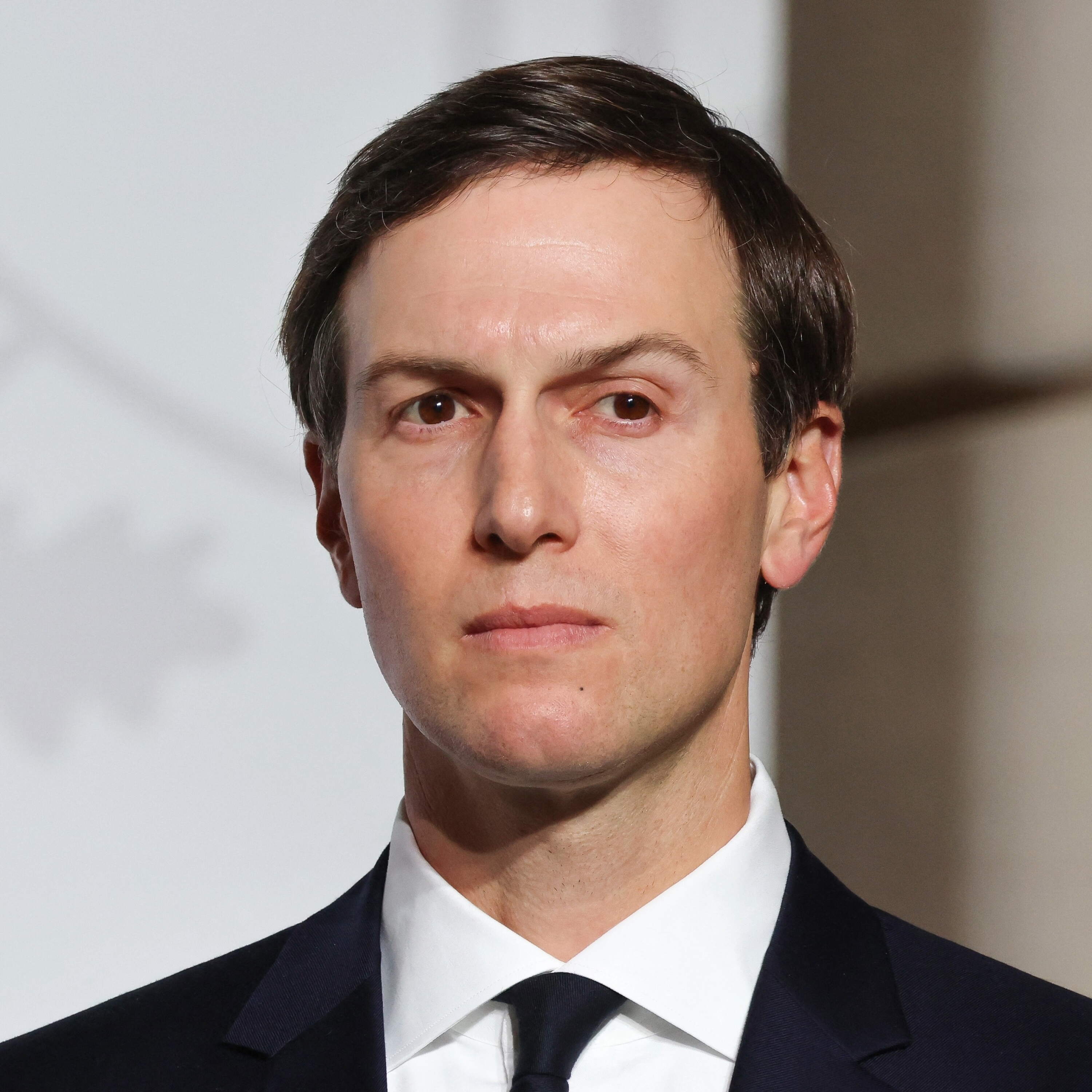
Pulitzer Prize-winning New Yorker staff writer Dexter Filkins says while Trump's son-in-law Jared Kushner is a U.S. special envoy negotiating peace, he's also working on private business deals, raising billions in some of the same countries. “He's potentially a walking conflict of interest,” Filkins tells Tonya Mosley.
Also, book critic Maureen Corrigan reviews Our Noble Selves, by Kate Atkinson.
Subscribe to our free weekly newsletter
Follow us on Instagram
Subscribe to our YouTube channel
Check out the Fresh Air Archives
See pcm.adswizz.com for information about our collection and use of personal data for sponsorship and to manage your podcast sponsorship preferences.
NPR Privacy Policy
More from Fresh Air
All episodes
We use cookies.They keep VO running smoothly and help us improve it. Privacy policy