
 Ask ChatGPT


In short
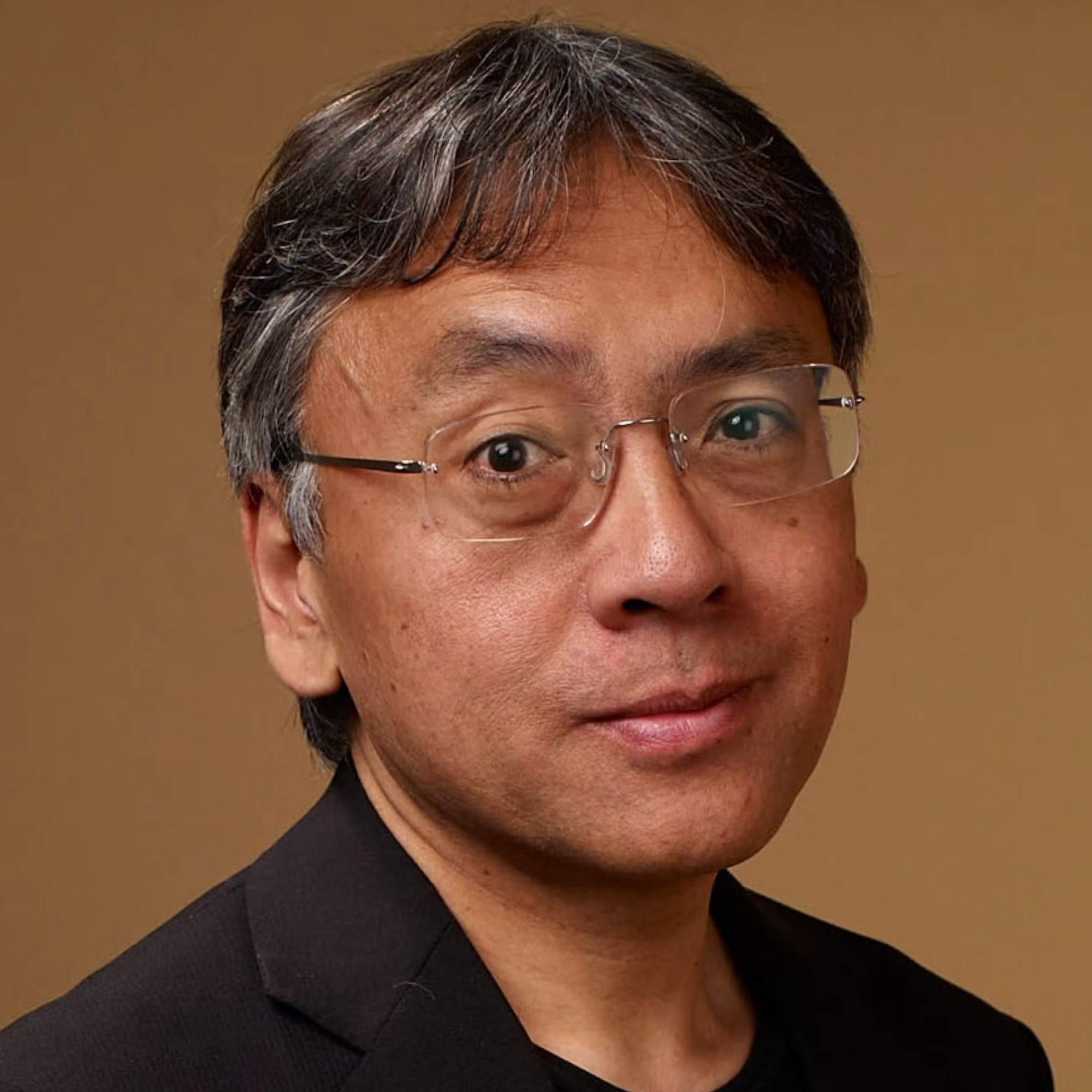
Fresh Air interview with Nobel Prize–winning novelist Kazuo Ishiguro about his novel Clara and the Sun and its film adaptation by Taika Waititi. The discussion covers the near-future dystopia in the book: social stratification between “high-ranking” people and “substituted” people displaced by smart machines; children learning at home via devices; and a caste divide between “lifted” kids (gene-edited, CRISPR-enabled) and those without enhancements. Ishiguro also explains Clara’s outsider perspective as a solar-powered artificial friend who treats the sun as a protective “God,” and how that belief parallels human religious instincts.
Key claims
Ishiguro says he didn’t revise the book for COVID-era isolation; Clara’s childlike openness is central to the narration; and the “lifted” concept reflects emerging gene-editing possibilities.
Notable examples
Clara’s prayer-like sun rituals; two teenagers separated by the lifted divide; Ishiguro’s father’s storm-predicting machine (in London’s Science Museum); and Ishiguro’s upbringing in postwar Nagasaki and England.
Guests
Kazuo Ishiguro (author); Terry Gross (interviewer).
Written by AI. May contain mistakes.
Chapters
0:29
Overview of 'Klara and the Sun'
Discussion about Kazuo Ishiguro's novel and its film adaptation.
“His futuristic novel, Clara and the Sun, also has been adapted into a new film, directed by Taika Waititi.”
0:47
Themes of Isolation and Society
Exploration of societal changes depicted in 'Klara and the Sun'.
“In reviewing the novel in 2021, our book critic Maureen Corrigan described Ishiguro as, quote, the master of slowly deepening our awareness of human failing, fragility, and the inevitability of death.”
1:18
Kazuo Ishiguro's Background
Kazuo Ishiguro's early life and journey from Nagasaki to England.
“Something has created a great disruption in society.”
2:19
Impact of the Pandemic on Ishiguro's Work
Discussion on the unexpected resonance of 'Klara and the Sun' during the pandemic.
“Kazuo Ishiguro, welcome back to Fresh Air.”
2:58
Understanding Clara's Character
In-depth discussion on Clara, the artificial friend and narrator of the novel.
“If there are any reverberations, they're purely coincidental.”
4:20
Writing from an Outsider's Perspective
Ishiguro discusses the advantages of writing from Clara's outsider viewpoint.
“I mean, because after all, you know, characters in books are artificial.”
5:45
Gene Editing and Its Implications
Discussion on the concept of 'lifted' children and gene editing in the novel.
“I think I've always been drawn throughout my career to narrators who are, in one way or the other, quite a bit on the outside.”
7:08
Clara's Relationship with the Sun
Exploration of Clara's belief in the sun as a deity and its implications.
“Now, this is something that is already possible today.”
9:11
Clara's Innocence and Faith
Discussion on Clara's childlike faith and how it reflects human nature.
“And I assume that's in part because of the disappearing ozone layer that also she doesn't understand.”
11:23
Kazuo Ishiguro's Scientific Background
Ishiguro shares insights on growing up in a scientific environment.
“Am I right in saying that he was an engineer?”
Show all 19 chapters
13:14
Rebuilding Nagasaki and Its History
Ishiguro reflects on the rebuilding of Nagasaki post-atomic bomb.
“I think there's this kind of severe barrier between the world of the humanities and the arts on the one side and science on the other.”
14:00
Kazuo Ishiguro's Early Life and Nagasaki
Exploration of Ishiguro's childhood in Nagasaki and his perception of the atomic bomb.
“the world that authors live in are just interconnected.”
22:20
Kazuo Ishiguro's Move to England
Ishiguro reflects on his transition from Japan to England and its cultural impact.
“as a researcher, you moved to, I think it was Guildford.”
29:30
Kazuo Ishiguro's Journey and Influences
Discover Ishiguro's experiences hitchhiking and the impact of Eastern religions.
“And as you were describing, your parents were from Japan, and although they didn't really practice, they were officially Zen Buddhists.”
34:30
Exploring Ishiguro's Musical Aspirations
Ishiguro reflects on his ambitions as a songwriter and their influence on his writing.
“I think that was actually very important to me when I took up writing.”
37:19
The Importance of Voice in Writing
Ishiguro discusses the significance of a narrator's voice in his literary work.
“But like, was there a sweetness in your voice that you didn't want, you know, that you had when you were a boy in church that you didn't want as a singer songwriter?”
42:12
Film Review: La Bola Negra
Justin Chang reviews the film La Bola Negra, exploring its themes and stories.
“It won a directing prize at Cannes for the filmmakers Javier Ambrosi and Javier Calvo and is Spain's Oscar submission for Best International Feature.”
46:10
Exploration of Themes and Structure
Discussion of the film's structure and thematic aspirations.
“Lorca was murdered by nationalist forces in 1936, and some believe that he was targeted for his homosexuality.”
48:39
Upcoming Guest: John Turturro
Teaser about John Turturro's upcoming appearance and his personal reflections.
“He reviewed the new Spanish film La Bola Negra, now in theaters and streaming on Netflix in December.”

Ask about this episode
Get the gist, explore an idea or ask about something said.
 Claude
On Fresh Air, what are the key points of this episode?
Searching your listeningTranscript
Automatic transcript. May contain errors.
0:00This message comes from NPR sponsor, the official Gilded Age podcast from HBO. Unpack each episode of the Gilded Age and hear from the people who bring 19th century New York to life. Watch the official Gilded Age podcast on HBO Max or listen wherever you get podcasts. This is Fresh Air. I'm David Bianculli. Nobel Prize winning novelist Kazuo Ishiguro is known for his books Remains of the Day and Never Let Me Go, both of which were adapted into popular movies. His futuristic novel, Clara and the Sun, also has been adapted into a new film, directed by Taika Waititi. Apparently, Ishiguro sought out Waititi's wacky and surreal approach, and consequently, the film diverts from the novel's dark tone.
0:46After a bad reception at the London Film Festival earlier this month, the studio cut back the wide release of the film. In reviewing the novel in 2021, our book critic Maureen Corrigan described Ishiguro as, quote, the master of slowly deepening our awareness of human failing, fragility, and the inevitability of death. All that, even as he deepens our awareness of what temporary magic it is to be alive in the first place, unquote. Clara and the Sun takes place sometime in the near future. Something has created a great disruption in society. Society is stratified. Privileged people are known as high-ranking, while people who have lost their jobs to very smart machines are known as substituted.
1:35The narrator of the book is a human-looking robot, part of a class of robots designed with artificial intelligence to serve as friends to children and teenagers. It's a society where people are isolated from each other and children no longer go to school. They learn at home on their devices. We see the world through the eyes of this artificial friend, Clara, who narrates the novel, as she learns about humans and the world around her. Kazuo Ishiguro was born in 1954 in Nagasaki, after it was decimated by the atomic bomb and then rebuilt. When he was five, he moved with his family to England, where he continues to live.
2:18Terry Gross spoke to him in 2021 when Clara and the Sun first was published. Kazuo Ishiguro, welcome back to Fresh Air. It's been too long, so it's a pleasure to have you back. Does this book have a resonance that you didn't even expect it to have because of its release during the pandemic? Schools are closed, and in your novel, children don't go to school anymore. People are isolated from one another and are interacting through their computers. They're learning. Children are learning on their devices. Is that something that, did you make any tweaks after the pandemic? I mean, the book is new.
2:53You wouldn't have had a lot of time to make changes. No, no. If there are any reverberations, they're purely coincidental. You know, I finished the book before the pandemic. And I have to say, you know, it took me completely by surprise. You know, I didn't know something on this scale was coming up. I couldn't have dreamt that something like this would happen. Maybe in some other sense, you could say there's an underlying atmosphere of global crisis and things hitting society. We're talking about, in the novel, I'm talking about a society that is undergoing profound changes, and it doesn't quite know how to reorganize itself.
3:42I have to say the narrator of your novel is the artificial friend, Clara. And who wouldn't want a friend as self-sacrificing and devoted as Clara is, someone who's programmed to learn everything they can about you and to please you. And honestly, I found Clara the most sympathetic character in the novel. I mean, she's pure in a lot of ways, even though she's artificial. It shouldn't be that surprising, really, though, that an artificial creature could actually solicit our sympathies as much as a human one. I mean, because after all, you know, characters in books are artificial. I mean, we're making that kind of leap anyway.
4:29When we read books and get weepy over the fate of some character. we're not weeping over a real person. You know, we've put ourselves into some kind of space where we're relating to kind of created beings. And at some level, we're responding metaphorically because we think it impinges in some metaphorical relationship to our real lives, I suppose. So I never thought it was going to actually be an intrinsic problem in terms of how my readers will feel because my main character was artificial. Clara is seeing the world and people in the world as an outsider. She's programmed to know the things that she knows, but she's learning about human emotion and she's learning about people and about the outside world from experience.
5:26And the more experience she has, the more she understands about emotion and feelings. So what is the advantage to you as a writer, writing from the point of view of such an outsider who's apart from the world and is just kind of learning about it? I think I've always been drawn throughout my career to narrators who are, in one way or the other, quite a bit on the outside. But Clara was especially interesting for me because she doesn't bring any baggage with her. It's not like, you know, she has her value system, which kind of clashes with what she finds. She's like a tabula rasa at the beginning.
6:08And she's quite childlike and very open. And so that was, you know, it's not just the way, the very restricted way in which she actually reads the world. That appealed to me. I wanted some of that childlike freshness and openness and naivety to survive all the way through the text in her. I wanted her to remain like a very optimistic character who has a childlike faith in the presence of something good and protective in the world. Even as she learns all these other things, darker things about the human world that she occupies. Do you want to explain what lifted means in your book, or would that be giving too much away?
6:55Oh, I don't mind, no. The lifted is just the expression that's used colloquially in the book for kids who've benefited from gene editing. They've been enhanced by gene editing. Now, this is something that is already possible today. It's just that we don't quite have the final technical tools to do things, but we're almost there. I mean, the gene technology of genetic technology, CRISPR, has actually completely revolutionized the field. And the two women who pioneered that just won the Nobel Prize, December just passed. So I think this is something everyone will hear about much more. um but basically yes i mean some kids um receive treatment at some point early in their lives which enables them to be um uh more intelligent quotes unquote perhaps uh more athletic certainly less prone to various kinds of illnesses and so that makes them in one by by one set of values that they're higher up the hierarchy.
8:10They deserve better jobs, better education, more responsible positions in society. So we're seeing a kind of caste system developing between kids who've been lifted and kids who haven't. And in Clara and the Sun, I mean, we look at two teenagers who've grown up very fond of each other. And they're on either side of this divide. Clara is solar powered, but the solar powered battery or power source has a limited lifespan. Because she and other artificial friends need the sun to stay powered, to stay alive, she thinks of the sun as God and basically prays to it, asking for help, asking for interventions when she needs it, promising to do good things in return.
9:01She doesn't understand that the sun isn't a god, that the sun doesn't live in the place where she sees it set every night, that the sun can be too harsh for human beings. And I assume that's in part because of the disappearing ozone layer that also she doesn't understand. Is this a way of expressing what you think of religion, that it's a kind of false premise in a way, that we create gods because we misunderstand our own creation, our own selves? I don't think I was trying to be critical of religion. I just thought Clara would reflect that aspect of humanity like she reflects other aspects of humanity.
9:44And this isn't something that she really learns, as you point out, from humans. I mean, many other things she learns when she gets out into the human world, and she becomes more and more human-like. But this is something that's there from the start because she's solar powered, I suppose. And it's perfectly logical for her to think the sun is a source of all nourishment as far as she and her fellow AFs in the store are concerned. But then when she looks out the shop window into the street, it kind of makes sense to her that the sun is actually nourishing everybody. And that's the way it looks. You know, there are these big tall buildings and the sun is coming down in shafts and people are being nourished by the sun.
10:25You know, they're happy when the sun comes out. So she holds on to this belief, I suppose, that the sun is the source of good things and that the sun is always watching over everybody. And when she needs to save the family that she lives with from impending heartbreak, the sun is naturally the person that she turns to. I mean, the son is a person for her. And she goes to ask the son's help. You could say this is like a religious instinct or whatever, but I mean, I found it very interesting to remove the usual kind of, the social context away, you know, take it away and just have it in this rather pure, naive, artificial being that she too could actually repeat these patterns of belief and faith and that there should be something rather touching about it.
11:25I thought that was quite interesting. Your father was an oceanographer. Am I right in saying that he was an engineer? Yeah, I guess so. He was like an inventor. When I was growing up, I didn't have any sense that the machines in my life were invented by somebody. They existed. and they were, you know, I didn't understand how they worked. But with your father having, like, created things, because I think one of the things or machines, I'm not sure what it was exactly that he created, is in a museum in England. Did you have a sense growing up that, like, technology is created by people, that people actually do that, that they're not things that just exist?
12:12People like your father create them. Yeah, I think I probably did. My father spent his whole life, his working life, just creating this one machine. He had a little department under him. That's why we were in Britain, because the British were funding his research. And he just made the one machine. It wasn't like Steve Jobs, you know, I'm going to make this and then launch this. He just worked on this one machine that could predict storms at sea. and yeah as you say i mean his that machine is now not in just any museum it's in the science museum in in london you know that that's the main big um museum for science in in london in in the united kingdom um and so i'm very proud of that but yes i i grew up um i although i grew up with this kind of with a lot of science in the family one of the things that i now kind of regret and perhaps hold myself accountable for is the fact that I didn't take any advantage of it.
13:15I think there's this kind of severe barrier between the world of the humanities and the arts on the one side and science on the other. And I was probably, you know, I kind of imbibed something of that climate. Maybe there's less of it in the United states i don't know and so you know i i didn't i wasn't nearly as interested in science as i should have been and and from a very early age i i kind of siloed myself off in the world of books and music and and i kind of thought science didn't have very much to do with me and it's only you know in old age as i as i am now i realized how much the world of science and the rest of the world the world that authors live in are just interconnected.
14:05Let's talk about your life. So you were born in Nagasaki in 54? Do I have that right? Yeah, November 1954. Okay, so it's after the war. How much of Nagasaki was rebuilt? It was completely rebuilt. Yeah. So I didn't have any real direct sense of this place being, you know, where the atomic bomb fell. It was just this thing that adults sometimes mentioned. Did they sometimes mention it because they wanted to protect children like you from hearing about it? Well, I don't know what they did with each other when they were in their private moments. I mean, they must have lost so many people dear to them and so on.
14:50So I imagine there were more serious, you know, earnest and bereaved conversations. even then a decade later but i it wasn't even like a taboo thing i remember you know um when i was a child and and all the time i was growing up in england you know my parents would just refer to it almost like a marker in time or something that happened in the way that people would refer to the war you know they were referred to to the genshi bakudan you know the atomic bomb so so you know They might say that bridge was there, but it disappeared during the atomic bomb. Or they might be telling a story, a funny story about a friend and an anecdote or something, and then it might just kind of end with, ah, but she died during the atomic bomb.
15:41And it wasn't for me any different to the way I heard many of my young English friends talk about the war. They would say, oh, my granddad died in the war or something like this. And so I didn't really think it was anything that special until when I was much older, until I was about eight or nine. And I was living in England. And I kind of learned almost in a schoolboy way by looking. I actually saw this in an encyclopedia, that Nagasaki was one of only two places that had been atom bombed. I remember feeling a kind of pride. I think, oh, I come from one of only two places to have suffered an atomic attack.
16:30So it was a strange kind of relationship with the atom bomb. But of course, I had parents who thought about it in a certain way, my mother particularly, because she was there at the time. Well, your mother survived the bomb, right? I think your father was working in China at the time. Yeah, he wasn't there, but my mother was there. All my mother's side of the family were there. How did your mother survive? Well, I mean, a lot of people survived. I mean, this is what people don't kind of quite understand. I mean, we were talking about what by, even by the standards of the 1960s were primitive, you know, atomic bombs.
17:08and so unlike Hiroshima you know Nagasaki wasn't a direct hit and so you know a lot of people I mean my my mother's house I mean she was a she was then a teenager living with her you know parental family a lot of kind of it was just the kind of the blast the kind of the air had actually kind of blown out things but you know they weren't that aware of it and my mother But ironically, because she'd been hit by a flying roof tile, she was resting at home to recover from her injury. And the rest of the family went to the stricken parts of the city. And they saw, I think, horrible things. And indeed, her father died of leukemia not long afterwards.
18:02But people didn't know about things like that then. So a lot of my images of that time really come from my mother's perspective as somebody who was almost like a spectator, but with this kind of big unspoken thing when the family members would come back to the house after, well, helping, which actually in practice meant burning heaps and heaps of bodies. Did your family describe things that they'd seen? Not to me. I was a small boy in Nagasaki, three years old, four years old, and five years old. It's only much later when I spoke to my, when I was as an adult, I would have conversations with my mother about her experience of it.
18:52My aunts, my uncles, I never heard them speak about it. I would say by and large, the Japanese attitude to the atomic bomb was to say, look, I mean, it happened, let's move on. And there's a surprising lack of bitterness towards the people who dropped the bombs on Japan. In fact, you know, people say it was this kind of, they call it like a honeymoon occupation. The Japanese and the Americans seem to embrace each other in the years after the Second World War. And the Americans poured huge amounts of money into Japan to build a powerful ally against the huge kind of communist bloc of the world in China and the Soviet Union.
19:42And so very rapidly, I think, memories of the war and the atomic bomb were left behind. so you know i haven't actually you know i hope so the the bomb hasn't actually in nagasaki or the fact that i came from nagasaki doesn't kind of loom over me in anything like the way that i you know people with a jewish background people who are jewish have the Holocaust haunting them through the generations. You know, I know many Jewish people who, it's very hard for them to get away from the shadow of the Holocaust. I've never had that with the atomic bomb. It's something I gradually became aware of. And even now it feels peculiarly distant from me.
20:34Kazuo Ishiguro, speaking to Terry Gross in 2021. After a break, we'll continue their conversation. And Justin Chang reviews the new Spanish film, La Bola Negra. I'm David Bianculli, and this is Fresh Air. Stay tuned for the following announcements and messages from our sponsors. This message comes from Google Workspace with Gemini. One subscription that does it all. Personalized AI and premium business versions of Gmail, Google Docs, Drive, and more. Try it free for 14 days at goo.gle slash workspacewithgemini. This message comes from LinkedIn ads. Ever invest in something that seemed incredible at first, but didn't live up to the hype?
21:18For marketers, that's impressions. When ads don't create revenue, that's a tough conversation with the CFO. Instead, invest in results your CFO will love. LinkedIn ads generates the highest ROAS of all major ad networks. So advertise on LinkedIn. Spend$250 and get a$250 credit. Just go to linkedin.com slash NPR pod. Terms and conditions apply. This message comes from BetterHelp. Your brain has limited storage. So why is it still holding on to that embarrassing moment from years ago? BetterHelp is an online therapy platform that gives you space to talk about what's taking up too much of yours. BetterHelp is now in network with more than 125 health plans, with many co-pays as low as$15 for eligible members.
22:07And if you don't have eligible insurance, you can still get 20 % off your first month. Visit BetterHelp.com slash NPR. Cost and coverage may vary. Discount cannot be combined with insurance. So when you came to England from Japan with your parents, because your father had a job that was supposed to be temporary, as a researcher, you moved to, I think it was Guildford. And it sounds very rural. You were like five minutes away from a farm. There were hedgehogs around. The milk was delivered by a horse and wagon. Yeah, that's all true, yeah. The farm was less than five minutes. The farm was less than five minutes.
22:54I mean, yeah, I mean, it was more or less right there. So you were used to like a rebuilt city, Nagasaki, and the new technology of the time. Did you feel like you were entering like a different world and a different era? It certainly felt like a different world. And it felt like a much quieter, less colorful world, I have to say. I mean, the children's toys were very muted and rather austere. And this was 1960. And what people in America perhaps wouldn't understand is that Britain had gone through a period of huge austerity after the Second World War. Britain had become a very, very poor place.
23:42There was rationing until the 1950s. People had to present tickets to just get their portion of food. And I think that's something very hard for people in America to understand because the 1950s were huge boom years. in America. And even compared to Japan, you know, it's like in 1960, I would say, you know, England felt impoverished. You know, there wasn't a variety of color and toys and excitement, particularly from a child's point of view. But I really appreciated the rural countryside as it was. I mean, it wasn't real countryside, but I mean, You know, the town more than just ended where our house was.
24:25And I grew up kind of in these English fields and English trees. And my parents' friends were kind of very, very old-fashioned English types. So you were a choir boy in church in England. Were your parents, did your parents practice any religion in Japan? No, they were without religion. I remember at one point when I was about 15 or something I asked what was our religion because I know that in Japan you had to have an official religion on your birth certificate I think mainly to prove that you weren't Christian it dates back to some era when Christians were seen as a threat so everyone has to have an official religion my mother had to actually go upstairs to look it up and she said we're Buddhists But I'll just go and tell you what kind of Buddhist.
25:20And she came back down and said, yes, we're all Zen Buddhists. So I thought, all right, we're all Zen Buddhists. But I mean, the attitude to religion was kind of like that, you know. And I would say that's fairly typical of a Japanese family, that the role of religion, obviously with some exceptions, but by and large, you know, religion is not the same kind of thing it tends to be in the West. And most Japanese people would have a Shinto shrine and a Buddhist shrine in their homes, as was the case in the house I spent the first five years of my life in. You had them both there, and you decorate them for different festivals and things like that.
26:06They don't seem to have a deeper religious identity attached to them. So you grew up in England, which still has a monarchy.
26:20Your new novel, Clara and the Sun, has so much to do with class structure, like a very rigid form of class structure. One of the jobs that you had when you were a young man was as a grouse beater. So I'm assuming, and this was for, was this for the Queen Mother? It was, yeah. But that was just like a, just for one summer. But it just seems such a strange job, the idea of beating birds out of the heather so that the most privileged people in England can shoot them for sport. Yeah, but I don't think it's something unique to England by any means. Anywhere where there's any kind of, you know, game shooting, I think that's the system.
27:07What did it feel like to participate in that? It doesn't seem like your values. I just did it as a very interesting experience for four weeks in the summer. And it introduced me to, I suppose, a kind of a world I wouldn't normally see. Later that same year, I spent three months hitchhiking around North America. And I was sleeping in missions and things like this, or on the side of the road. So it was a year, it was a very formative year when I went from meeting members of the British royal family and being employed by one of them to being a hitchhiker and sleeping in beds with homeless people.
27:57It was very interesting. Kazuo Ishiguro, speaking to Terry Gross in 2021. More after a break. This is Fresh Air.
28:33Credible at first, but didn't live up to the hype? For marketers, that's impressions. When ads don't create revenue, that's a tough conversation with the CFO. Instead, invest in results your CFO will love. LinkedIn Ads generates the highest ROAS of all major ad networks. So advertise on LinkedIn. Spend$250 and get a$250 credit. Just go to linkedin.com slash nprpod. Terms and conditions apply. This message comes from the Natural Resources Defense Council. It's easy to look at what's happening to the environment and think, what can one person really do? Three million people found their answer, backing the Natural Resources Defense Council.
29:15Their support is what gives NRDC the standing to take legal action and protect America's air, water, and wildlife. Make it three million and one supporters at nrdc.org slash fresh and your gift will be matched five times. When you were hitchhiking across America, did that coincide with the period when so many Americans were turning to Eastern religions, like Zen Buddhism? And as you were describing, your parents were from Japan, and although they didn't really practice, they were officially Zen Buddhists. So I'm wondering what that period was like for you. there was quite a lot of that actually there was a lot of that in america to an extent i had ever i'd never experienced in living in england and particularly because i was actually um i was on the west coast a lot of the time you know i was hitchhiking on highway one and so particularly in california and i remember places like berkeley where where i spent a few days, you know, I mean, there seemed to be every kind of variation of some kind of guru worship or some kind of method or some kind of alternative quasi-religion being offered.
30:35Every few steps as you went down Telegraph Avenue or something, somebody will be waiting to accost you with some leaflets and trying to recruit you to something. So for me, it was quite exciting. yeah um i learned a lot from that that trip but but i'll say the other thing i actually realized then perhaps for the first time was that although there were a lot of people doing what i was doing back then hitchhiking you know with kind of long hair uh and rucksacks actually there were two very distinct groups there were people like me middle class kids who were doing this to kind of widen in their experience and have a, and broaden their romantic vision of life.
31:16And there were people who are already by then at the age of 19, 20, they were, you know, they were running away from things. Their, their world was just collapsing. And, you know, there were, you know, there were just people running away from horrible situations. And it took me a while to actually come to terms with this. I wanted to think that everyone was having a great time like me. When you were on the road during the period when so many people were looking at Eastern religions, were you seen as somebody who could be closer to that because you were Japanese, your family was from Japan, even though they didn't practice and Buddhism was their official religion, were you seen as somebody who could be more enlightened as a result?
32:07Not especially, but I think if I wanted to play on that, I could. I mean, if I just, you know, because what would happen is that you'd hitchhike into some town, into a city, you know, San Diego, Berkeley or wherever. And very rapidly, you'd learn that there was a place somewhere in that city where a lot of young people were just gathered. And so in the way that I suppose many people are very highly aware of now, you would actually kind of create a sort of persona for yourself. And you just kind of join in and sit down and, you know, this will be your circle for the next two days or three days.
32:48And you can experiment with your identity in the way that I guess a lot of people do with social media now. And in that sense, I suppose, kind of being a kind of a long haired Japanese guy with an English accent with a rucksack and a guitar. If I wanted to play up that kind of mystical side, I mean, I could. But I wasn't a big person for things like Zen and things like that. When you were on the road creating different, like trying on different personas and trying to figure out who you were, who you wanted to be, what were some of the things that you tried that you largely abandoned but maybe kept part of?
33:31I was then wanting to be a singer-songwriter. And that's why, cumbersome as it was, I mean, you try hitchhiking with a guitar, an acoustic guitar, it's a really clumsy thing to carry around with. And actually somebody stole it one month into this trip in San Francisco. And I was really relieved. you know um but yeah but i was trying to be this singer songwriter and i you know i thought i would get discovered you know sooner or later while hitchhiking around america i don't know why i thought that but i but in those days like a lot of english people we thought san francisco was where all these wonderful things happened um and so yeah i wasn't trying to i never tried to pass myself off as some sort of wise zen kind of figure from from the east i i was trying to pretend that i you know i i was this genius undiscovered singer songwriter um so and that was something that i had to let go fairly soon because because of the limitations of my abilities um but i think I think that was actually very important to me when I took up writing.
34:42And many of the things I do still to this day as a writer, as a novelist, I think it has its foundations in what I discovered and the kind of place that I arrived at as a writer of songs. Can you give us a sense of the kind of songs that you were writing back when your aspiration was to be a singer-songwriter? If you were willing, and this might be asking too much, if you were willing to sing for a song. I'm not going to do that. Okay. I was always a pretty competent musician. I still am. I can play the guitar pretty well. and so you know like a lot of people when I was 15 or so I was writing these kind of intensely autobiographical songs you know real kind of you know intense bedroom kind of angst songs you know which would which would be sound a little bit like Lennar Cone or something but then I went through this kind of probably the equivalent of what I see a lot of writers when they're starting out doing this.
35:50I went through a kind of a period when I was just flexing my technical muscles. And so I went through a kind of purple prose kind of James Joyce period, um, or more like kind of Kerouac Ginsburg period, you know, and by the time I, I, I was finishing my songwriting career, um, which had no material success. Um, I was writing very, very pared down songs. I could play all these chords. I could do quite fancy things. I decided I'll just bring it right down to something very simple and minimal. And I was trying to tell little stories in just a few minutes, which meant that you had to put a lot of the meaning between the lines.
36:36As I say, I mean, that kind of became my style. And this is why, I mean, to this day, a novel for me is always a certain kind of a first-person narrative. It's kind of like I'm still this guy with an acoustic guitar in a kind of a shabby room, darkened room, with about 30 people listening to me. That's the kind of atmosphere I always try and create. In church, when you were a child, you were the lead choir boy. Do I have their language right? Right. And so you must have had like a really good voice then. Did you want to change the kind of voice that you had? I mean, obviously your voice changes when you become when you start to become a man.
37:23But like, was there a sweetness in your voice that you didn't want, you know, that you had when you were a boy in church that you didn't want as a singer songwriter? Did you want to have a more like I've lived I've lived life kind of voice? Absolutely, absolutely. Before my voice broke, by all accounts, I had this beautiful angelic voice. And so I had a kind of local fame. I would sing solos at the church choir and also at the school choir. And people knew me as this little Japanese boy who could sing these kind of Christian anthems and these things very beautifully, the solo passages. When my voice broke, I couldn't sing at all.
38:11I can still hold the tune very well, but I mean, I think it's also because of what you said. I was trying to sound like Robert Johnson or something. I don't know what I was trying to do. Or sound like Bob Dylan or something. I don't know, which is absurd, you know. And so, but to this day, this business about voice is very important. I mean, you know, when I'm writing, the actual voice of the narrator is very important. And I find, I take, you know, enormous inspiration as a, oddly, as a writer of fiction, from listening to singing voices. So I love to listen to Stacey Kent, who I write lyrics for, and many other singers.
38:58I mean, there's something almost impossible to capturing words about the quality of a singing performance. Kazuo Ishiguro, thank you so much for talking with us. Thank you, Terry. It's a great honor to speak to you. Kazuo Ishiguro, speaking with Terry Gross last year. His novel, Clara and the Sun, has been adapted into a new film. Here's a song for which he wrote the lyrics. It's called I Wish I Could Go Traveling Again, sung by Stacy Kent. I wish I could go traveling again It feels like the summer will never end And I've had such good offers from several of my friends I wish I could go traveling again I want to sit in my shade, sipping my latte Beneath the awning of a famous cafe Jet-lagged and with our luggage gone astray I wish I could go traveling again I want a waiter to give us a reprimand In a language neither of us understand While we argue about the customs of the land I wish I could go traveling again Coming up, film critic Justin Chang reviews the new movie from Spain, La Bola Negra.
40:47This is Fresh Air. Stay tuned for the following announcements and messages from our sponsors. This message comes from Google Workspace with Gemini. One subscription that does it all. Personalized AI and premium business versions of Gmail, Google Docs, Drive, and more. Try it free for 14 days at goo.gle slash workspacewithgemini. This message comes from LinkedIn ads. Ever invest in something that seemed incredible at first, but didn't live up to the hype? For marketers, that's impressions. When ads don't create revenue, that's a tough conversation with the CFO. Instead, invest in results your CFO will love.
41:28LinkedIn ads generates the highest ROAS of all major ad networks. So advertise on LinkedIn. Spend$250 and get a$250 credit. Just go to linkedin.com slash NPR pod. Terms and conditions apply. This message comes from the Natural Resources Defense Council. It's easy to look at what's happening to the environment and think, what can one person really do? Three million people found their answer, backing the Natural Resources Defense Council. Their support is what gives NRDC the standing to take legal action and protect America's air, water, and wildlife. Make it 3 ,001 ,000 supporters at nrdc.org slash fresh, and your gift will be matched five times.
42:11The new Spanish drama La Bola Negra tells three interwoven stories spanning almost a century about gay men living through times of fascism and freedom. It won a directing prize at Cannes for the filmmakers Javier Ambrosi and Javier Calvo and is Spain's Oscar submission for Best International Feature. It's now playing in theaters and begins streaming on Netflix December 2nd. Our film critic Justin Chang has this review. There's an awful lot of movie in La Bola Negra, the new film from the directors Javier Ambrosi and Javier Calvo, who are known as Los Javis. They've made a sprawling literary historical epic of gay male desire, one that toggles between the repressive, war-ravaged 1930s and the more liberated present day.
43:02It's easy to see why the film has been passionately embraced, even if it falls far short of its maximalist ambitions. This is a movie of big, sweeping, often clumsy gestures, full of bloody conflict, outsized melodrama, and sexual encounters that run the gamut, from a forbidden caress to a grinder hookup. In denouncing the fascism of the closet, it seeks to be a queer cinema monument for the ages. The directors, who co-wrote the script with the playwright Alberto Conejero, cut relentlessly among three stories about three gay men living in three different time frames. The film begins in 1937, during the Spanish Civil War.
43:46After Italian planes bomb a small village, a young trumpet player named Sebastián, played by the musician Guitareca della Fuente, makes a harrowing escape. He survives by joining the right-wing nationalist army, which is how he meets Rafael, a young freedom fighter who's been wounded and taken prisoner. Sebastian is ordered to watch over him, which is hardly the worst of assignments. Rafael, played by Miguel Bernardo, is exceedingly handsome. And despite their mutual wariness, Sebastian feels unmistakable stirrings of desire. Another of the three stories takes place in Granada in 1932. Milo Kifes plays Carlos, a young man from a rich family, who's trying to become a member of an exclusive casino.
44:37But due to suspicions of his homosexuality, he's rejected or blackballed. La Bola Negra is Spanish for the black ball. It's also the title of an unfinished play by the great Federico Garcia Lorca, a detail that will come into focus later. Carlos, who's pressured by his father to return to the casino and deny the rumors, goes out and vents his frustrations at a bar. There he joins a crowd of dancers in a flamenco-style number.
45:43The third story is set in 2017. Carlos Gonzalez plays Alberto, a Madrid-based historian who enjoys the kind of casual sexual freedom that the 1930s protagonists could never dream of. One day, Alberto receives word that his maternal grandfather, whom he never knew, has died and left him a mysterious inheritance. The nature of that inheritance leads Alberto to conduct his own research into Lorca's life and death. Lorca was murdered by nationalist forces in 1936, and some believe that he was targeted for his homosexuality. His artistic and political legacy becomes the tissue that connects all three stories.
46:30Many have noted that with its intricate three-part structure and its celebration of a queer literary icon, the film owes a debt to the hours, which won Nicole Kidman an Oscar for her performance as Virginia Woolf. You could see La Bola Negra as an homage to that film and other arthouse classics, something that directors Ambrosio and Calvo signal by casting a few veteran actors in diva-like cameos. Penelope Cruz steals her every scene as a cabaret singer who dazzles the troops and provides some crucial guidance for Sebastian. And it's always a delight to see Glenn Close, even if she's been saddled with a drearily written role as an Ernest Lorca scholar.
47:14Lola Dueña strikes one of the film's few genuine chords of emotion as Alberto's mother, who resents his questions about the grandfather he never knew. With the exception of Gonzales, who makes Alberto a poignantly understated presence, the other actors are somewhat anemic by comparison. The film's most substantial story is the 1937 one, but Guitarica de la Fuente, despite his strikingly offbeat screen presence, isn't a skilled enough actor yet to hold the narrative center. It doesn't help that, because of their incessantly time-hopping structure, Ambrosi and Calvo are almost always looking away from their characters and their stories, just as they're starting to get interesting.
48:00This kind of showy cross-cutting is a tough thing to structure an entire movie around, and here it merely hammers home an already obvious point, that the past and the present are deeply connected. In its final half-hour, La Bola Negra makes what I think is meant to be a bold leap into poetic abstraction, But what it really amounts to is just another narrative thread to cut away to. Call it story number 3B. In doing so, a film that aspires to be a monument instead becomes monumentally tedious. Justin Chang is a film critic for The New Yorker. He reviewed the new Spanish film La Bola Negra, now in theaters and streaming on Netflix in December.
48:49On Monday's show, John Turturro talks about what he learned researching his new film, how his grandmother's botched abortion before abortion was legal, orphaned his mother and her siblings, and how he became the legal guardian of his brother who had paranoid schizophrenia. Hope you can join us.
49:13To keep up with what's on the show and get highlights of our interviews, follow us on Instagram at NPR Fresh Air. You can subscribe to our YouTube channel at youtube.com slash thisisfreshair. We're rolling out new videos with in-studio guests, behind-the-scenes shorts, and iconic interviews from the archive. Fresh Air's executive producer is Sam Brigger. Our technical director and engineer is Audrey Bentham, with additional engineering support from Julian Hertzfeld and Charlie Kyer. Our interviews and reviews are produced and edited by Phyllis Myers, Anne-Marie Baldonado, Lauren Krenzel, Teresa Madden, Monique Nazareth, Thea Chaloner, Susan Yacundi, Anna Bauman, and Nico Gonzalez-Whistler.
49:58Our digital media producer is Molly C.B. Nesper. Our social media video producer is Hilary Kissinger. For Terry Gross and Tanya Mosley, I'm David Bianculli. Stay tuned for the following announcements and messages from our sponsors. This message comes from Google Workspace with Gemini. One subscription that does it all. Personalized AI and premium business versions of Gmail, Google Docs, Drive, and more. Try it free for 14 days at goo.gle slash workspace with Gemini. This message comes from Bombas. It's officially your sock drawer's favorite time of year. Chunky knits, playful prints, festive patterns, all in the coziest pairs.
50:41Visit bombas.com slash NPR and use code NPR for 20 % off.
From the publisher
Nobel Prize-winning writer Kazuo Ishiguro’s novel Klara and the Sun is now a feature film, directed by Taika Waititi. The story is set in a future time, where children no longer go to school; instead they learn on devices, isolated from each other. The story is narrated by a human-like robot, who serves as one child's "artificial friend." Ishiguro spoke with Terry Gross in 2021, at the time of publishing.
Also, Justin Chang reviews La Bola Negra.
See pcm.adswizz.com for information about our collection and use of personal data for sponsorship and to manage your podcast sponsorship preferences.
NPR Privacy Policy
Also, Justin Chang reviews La Bola Negra.
See pcm.adswizz.com for information about our collection and use of personal data for sponsorship and to manage your podcast sponsorship preferences.
NPR Privacy Policy
More from Fresh Air
All episodes

We use cookies.They keep VO running smoothly and help us improve it. Privacy policy