
 Ask ChatGPT

 Fresh Air
27 Oct 2026 · 44m · 15 chapters
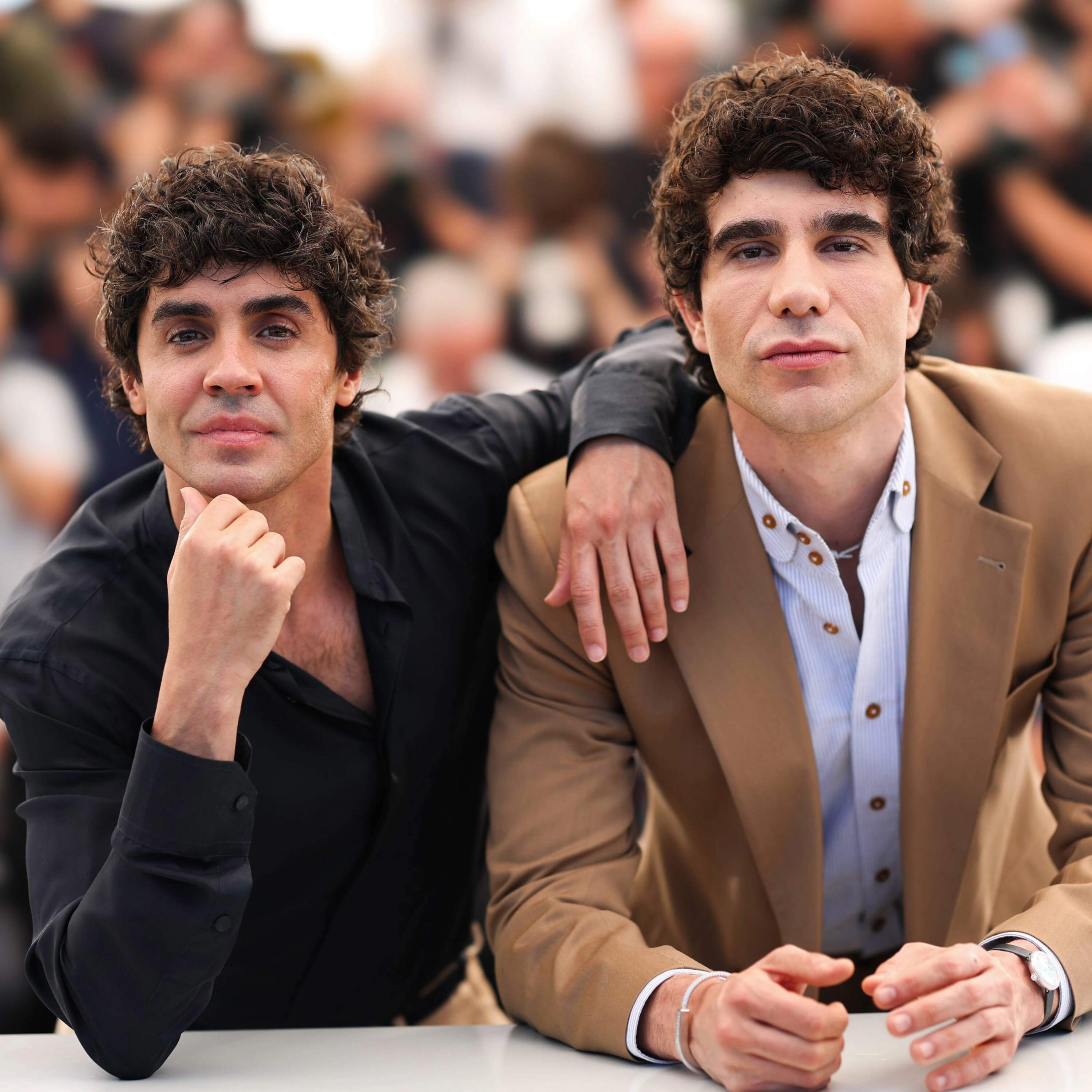
Los Javis filmmakers fight fascism and homophobia with ‘La Bola Negra’
In short
Los Javis (Spanish directors Javier Calvo and Javier Ambrose) discuss their record-breaking film La Bola Negra, built from the surviving four pages of Federico García Lorca’s unfinished play about a “black ball” system used to exclude gay men from 1930s Spanish private clubs. The film spans three timelines showing gay persecution under the Spanish Civil War and Francisco Franco’s dictatorship, and how that legacy persists as silence, shame, and hidden family history. They also argue that “poetry is the opposite of fascism” and that making films/writing is a weapon against intolerance.
Guests
Javier Calvo and Javier Ambrose, known as Los Javis. Calvo describes growing up in Catholic school, struggling with being gay, and using a TV role as a rehearsal for coming out; he later studied theater in New York. Ambrose says he learned most about Lorca’s personal/queer relationships through research and letters.
Key claims/examples
Lorca was arrested and murdered; his body was never found; only four pages survived. Cannes premiere drew a 20-minute standing ovation and won best Director Prize. Penelope Cruz plays a cabaret performer (cupletista) tied to pre-war Madrid freedom. They cite the 26th of December foundation supporting LGBTQ+ elders and discuss their earlier series Veneno about trans icon Cristina Ortiz.
Written by AI. May contain mistakes.
Chapters
0:45
Lorca's Legacy and Film Adaptation
Discussion of Lorca's unfinished play and its adaptation into a film.
“The film, which has become a record-breaking hit in Spain, arrives as the country is still fighting about how to remember those years.”
2:16
Emotional Connection to History
Exploration of personal and communal connections to LGBTQ+ history.
“And I'm going to be referring, since you're both Javier, to you by your last name.”
4:22
Researching Lorca's Life
Insights into the process of fictionalizing Lorca's experiences.
“What were some surprises that you discovered that surprised you, Ambrosie?”
7:05
The Importance of LGBTQ+ Stories
Discussion on the significance of sharing queer narratives in film.
“And it was beautiful to understand the mind of someone and what he wanted to write to discover that.”
10:52
Fascism and Historical Echoes
Connection between past and present societal issues regarding freedom.
“When I was writing, I always asked myself, do I pay tribute enough to the people that came before us?”
14:00
Exploring Secrets and Poetry in Film
The filmmakers discuss the poetic nature of their film and the importance of representation in the LGBTQ+ community.
“I'm just holding on to a lot of the lines from the film because they're so lyrical.”
21:49
Coming of Age Through Art
Javier Calvo shares his journey of self-discovery through acting and the challenges of being a gay teen.
“Javier Calvo, your story is that you were into the arts very young, and you were actually on a very popular teen show playing a gay teenager.”
28:00
The Musical Phenomenon
Learn about the creation and success of a musical that became a cultural phenomenon in Spain.
“And this musical, I just have to say, so it's about a teenage girl at a Catholic summer camp.”
30:40
Collaboration and Connection
Explore how Los Javis' partnership brings out their best creative selves.
“When did you guys know or understand that moment when you're understanding that you're more powerful together than apart?”
34:02
Breaking Up and Individuality
Discuss the transition from a romantic relationship to a professional collaboration after their breakup.
“And now we are connected because we develop a part of ourself.”
Show all 15 chapters
36:31
Creative Process and Personal Reflection
Learn how their personal experiences influence their storytelling and creative work.
“You broke up during the shooting of this movie.”
40:15
The Legacy of La Veneno
Understand the impact of Cristina Ortiz, La Veneno, and how her story inspired Los Javis.
“I want to talk about one of your other projects because I just got through binging it and it's just top of mind for me.”
42:00
Exploring the Impact of Veneno
Learn about the significance of the trans experience in Spain and its representation in media.
“I want to write something meaningful and something with a purpose.”
44:04
Personal Responsibilities and Growth
Hear about the hosts' childhood and the dynamics of growing up with young parents.
“It's like, what crazy country can do that?”
46:23
Future Collaborations and Projects
Discover the Javis' plans for future projects and their collaborative spirit.
“And would you ever consider, or have you, or are you, working on projects that are individual to the two of you, that are not as a unit?”

Ask about this episode
Get the gist, explore an idea or ask about something said.
 Claude
On Fresh Air, what are the key points of this episode?
Searching your listeningTranscript
Automatic transcript. May contain errors.
0:00This message comes from Avalara Aviator. Aviator is the agent hub for tax and compliance. Herpes Build AI agents work around the clock and across business systems to help execute the work. Visit avalara.com slash aviator. This is Fresh Air. I'm Tonya Mosley. In the private clubs of 1930 Spain, members used a tidy little system to decide who belonged. They dropped balls into a box. A white ball meant you were in. A single black ball meant you were out. The gay poet Federico Garcia Lorca began a play about that cruelty. He called it La Bola Negra, the black ball. But before he could finish it, Lorca was arrested and murdered.
0:43His body was never found. only four pages of the play survived. 90 years later, my guests today, Spanish directors Javier Calvo and Javier Ambrose, have turned Lorca's pages into an epic about the men's Spain shutout, gay men persecuted through the Civil War and the decades of Francisco Franco's dictatorship. The film takes viewers through three timelines, a young man blackballed in 1932, a soldier from 1937, who falls in love with a wounded enemy prisoner and a contemporary writer who inherits something from a grandfather he never knew, and with it, a past his family kept hidden. The film, which has become a record-breaking hit in Spain, arrives as the country is still fighting about how to remember those years.
1:32Last fall, on the 50th anniversary of Franco's death, a government survey found that more than one in five Spaniards now say Franco's dictatorship was good for the country. Calvo and Ambrose are household names in Spain, known simply as Los Javis. When their film premiered at the Cannes Film Festival in May, the audience stood and applauded for 20 minutes. Days later, they shared the festival's best Director Prize. La Bola Negra stars Spanish singer Guitarrica de la Fuente in his first acting role, as well as Penelope Cruz and Glenn Close. Javier Calvo and Javier Ambrose, welcome to Fresh Air.
2:14Hello, how are you? Thank you. Hi, how are you? I am great. Excited to talk with you. Thank you so much. And I'm going to be referring, since you're both Javier, to you by your last name. That's okay, yes. Yeah. So, Calvo, I just said this film began with Lorca's four pages. But for you, I read that it actually began with another play that you read. And when you read it, you burst into tears. Yeah. So La Piedra Oscura, it's a play that Alberto Conjera made in 2013. And we watched it together, actually. And I bought the book that day. And many years later, we had a project that didn't come out.
3:01And we were kind of depressed, sad. And we had a trip to France. And I was like, I'll pick a book, like a quick book, a theater play, so I can read in the play and just forget about this sadness. And I read the first page. It's a monologue with Sebastian, the character that Guita Ricadera Fuente plays. And it was about the bombing of his town. He was telling the audience how the Italians bombed the town and he had to abandon his mother. And he played in a little orchestra. And it was beautiful. And I started to cry. And I didn't know why. Like, it touched something, like a wound I had with my country, with my community, with my ancestors, my elders.
3:47And, yeah, and my family. And I understood I had to talk about the LGBTQ plus people during the civil war in Spain and how that inheritance have come to us as a form of silence, pain and unresolved tension. You know, history tells us a great deal about how gay men were persecuted. it. It tells us much less about how they actually live, though. What were some surprises that you discovered that surprised you, Ambrosie? We were researching for a lot with historians. And I think what I learned the most was the feelings that Federico Garcia Lorca had. And that was never told. Like, Federico is seen as an artist and as a writer and as a playwright, but no one really talked about his relationships.
4:48It's more like the literature, only what he wrote, because no one wanted to talk about the politics or the loves or the queerness. And what I learned the most during this movie was about the personal life of Federico García Lorca, because since he's a master and everyone loves him and the literature he wrote is so important in the Spanish culture, At some point, someone thought it was not necessary to talk about him in the personal way. But he was a free person, and the loves he had and the way he approached life, it was so beautiful. What did you have to let go to fictionalize that world, though?
5:35Because you only have four pages to go by, and then you have a play and a book. But you, in your own imaginations, have to recreate something that feels real, but also knowing you don't have much information about the way they actually lived. Yeah. I guess we were like detectives, you know? Like, we were trying to understand what Federico Garcia Lorca wanted to write. And we read letters. We read a lot of interviews. and here and there you could find different moments like, oh, he told a friend that after the sister's scene, he was going to write a scene with Carlos and his father. Oh, he wrote that in a letter to a friend.
6:15Yes. And you can read in the conversations with the friends, he was like, oh, I will talk about this and this and this and this. So we were following the clues. It was fun to discover that he would like to talk about his projects in parties. He would say, I'm going to do this play about the sisters and the mother is going to drop them in their house. So I do the same. Oh, you do the same. Yes. In every party I would talk about my projects and the things I want to write. And I like to discover that from him. But that's so good that Federico did that. because we could reimagine La Bola Negra from those four pages because of the clues he left in his friends, in his family.
7:05And it was beautiful to understand the mind of someone and what he wanted to write to discover that. How was that for you? I think about how there's not much in the way of legacy in history when we think about, I've been thinking in particular about your decision to make this an epic. And, you know, historical epics typically are based on something like lineage and family, history, institutions. But when it comes to the history of gay people, there's less of that lineage that you can go by. There's less where you can grow up, and we'll talk about this, but you grow up and you hear stories about gay people like this, historical ones.
7:52So to be able to see yourselves in the history through Lorca, through his writing, what was that process like for you in coming into understanding your place, really? We work with a foundation that's called 26th of December. They take care of elders of our community, of LGBTQ plus community. and uh this was also like how uh this story was born because we get to talk to all gay men uh that would talk about how they fall in love with uh with someone and and the families would turn against them and they would live together and alone like building this relationship and when the other died they would like be alone and not knowing what to do with their lives and go to the cemetery every day and um like understanding that all these people somehow are kind of my grandparents are kind of like the people that lived a life in a way so incomplete in order for me to have a life that is better than his like they risk their lives with trying to love and trying to have to fulfill their passion.
9:11And all those stories are silenced. And talking up with them, understanding Lorca, understanding Cernuda, who is another gay poet in Spain, understanding how we are all connected by, you know, this black ball that we all share, that we pass through each other, to each other every generation, a black ball that is silence, pain, shame, but also it's a spark of life and desire and love and joy that it made me feel proud of my community and of the brave people that fought before me. Yes. And it's true that we don't have that many movies or books about the history that connects us as a community, the queer community.
10:07That's why we wanted to make it big. We wanted to make it epic and we wanted to make it bold because we don't have that many stories with that point of view in the queer community. And yeah, we wanted to make it fun at the same time and mixing genres in order for the young people to be like, oh, I can connect with that. we told them the story with our point of view, but hopefully after the movie, they will try to learn. They will try to study more. They will try to learn about Lorca, about the Spanish Civil War, or their own stories, because there are queer stories under the ground everywhere.
10:52When I was writing, I always asked myself, do I pay tribute enough to the people that came before us? Oh, that was something you were thinking about as you were writing. All the time. And the answer was no. With my life, I don't pay tribute to the people that came before us. I take my freedom for granted. I do that. And I don't want to do that. I want to be aware. And activate it by your freedom. Yeah. I want to try to enjoy my life because of the people that couldn't do that before me. We should try, at least. We are so privileged. And a lot of countries, they cannot. And the LGBTQ plus community is still prosecuted.
11:33A lot of countries. Penelope Cruz's character, she plays a cabaret performer who tells one of the main characters, a young soldier, this line that cross-dressing in particular is a world of possibility and war is the opposite. And what she's articulating is that before the war, there was a world of acceptance in a way, that they were living in this very moment of war and this constriction, but there was a kind of freedom that was taken away. I'm obsessed with this Madrid scene that happened around 1915, 1920, 1925. So there's this figure called Cupletistas. That's what Penelope is. It's kind of a cabaret girl.
12:27They would go to France, Paris, and look at the Folies Berger, the Moulin Rouge, take those songs, bring them to Spain, and adapt them in kind of a nastier way. Raunchy a little bit? Yes, campy. They talked about sex, drugs. They weren't as elegant as they were in France. They were more, we call it picaras. It was, you know, sexy and a little bit trashy, but they were amazing. So this is 1915? 1915. And they would like, Madrid was neutral during the war, the first war. And everybody would come to Madrid to party and to, you know, feel free. And this generation, they thought they were going to be free forever.
13:15But then two dictatorships came and they were persecuted. They were murdered. They disappeared. And it's shocking to understand that today almost no one remembers them. They were kind of lost in history. And that's by design. Yes, and it was shocking to feel the parallelism with the society we live now, in which we think we're going to be free forever. We conquered the rights. We're here. But history repeats itself. Fascism is raising, and it's a worrying thing. And, you know, our weapon against intolerance and hate is our writing and making movies. And this is what we're here to do. But yeah, yeah, yeah.
14:11It's worrying. I'm just holding on to a lot of the lines from the film because they're so lyrical. They're very poetic. And there's this line in your film, a gay man's heart is an ocean of secrets. But that's not very poetic because it's a tribute to Titanic. So it was more like a funny thing that we, it's a wink to the audience. The people that knows, knows. Those who know, know. Those who know. They understand. Besides the Titanic tribute, we wanted to do a poetic movie because I think poetry is the opposite of fascism. because poetry is full of meanings for everyone, and it's polysemic. And poetry, everyone will understand differently, and it's meant to be understood by everyone in a different way, every single day.
15:13When you guys were young, did either of you have an older gay person in your life or a figure in society that showed you what your future might look like? I didn't, but you did, Javi. No, my uncle, Carlos, he's the brother of my mother. And he was so, so, so, so mysterious. Because when I was a kid, no one was talking about him. It was like, hmm, he lives in L.A. And you will meet him at some point. And I was like, what's going on with this guy? And when we really met, when I was a teenager, I was going through understanding myself. And meeting him was like, hmm, I think. You knew. I knew and he knew.
16:03He knew from, how did you know that he knew? Because I was, it was in the Christmas Eve, in the dinner, and I was about to cry because I was like having a bad moment. And he was like, hmm, come here. You have to come to L.A. at some point. And you have to just travel and understand the world and everything will be okay. Whatever you're going through will be okay. And I think he was one of the first persons that saw me. So having reference is very, very important. And to see yourself in different people around. because if not, isolation is so dangerous for the queer community. And it's so, so sad.
16:49It's like, it really breaks your heart. Did you take him up on that offer to come to LA? Yeah. How old were you? 18. Okay. And I had, because it was like, oh, I used to live in LA and I want to come back to Madrid. So I left my dog and it was like, do you want to go there and bring back my dog? It was like, okay, I will do it. And he buy me a ticket, like a plane ticket. And I came here and I brought back his dog. And in the meantime, I had fun. And I knew myself better. And I met his friends. And it was like, hmm. It was like such a beautiful moment of discovery. You know, I met different kind of people because I grew up in a very Catholic school, all boys, and in a traditional environment.
17:40So to me, it was like, hmm, am I the only one experiencing this? Yes. I felt like I was weird. And I felt it was a sin. And I felt it was like, hmm, something is wrong with me. I'm going to hell, that kind of things. Because that's what you were taught in Catholic school. Every day. So suddenly to have an uncle like my uncle Carlos to say, you're okay. I'm like you. You go. You have fun. you experience this journey, you will understand there's more people like you all over the world. And I think now with social media, that's a little bit better because you can see yourself in others easier. But when I was young, I'm 42.
18:24And when I was young, it was like, oh, my God. I think now he's very proud. Oh, yeah. He's still alive and he's proud. Yes. And he's very proud. Has he seen this movie? Yeah. What did he think? He was like, you're doing this. Like, you made this. You made it. And you interpreted that as like... Like, you wanted to do this, and you did this movie for all of us. Yes. And he's so proud. But he's very shy at the same time. So, you know, a gay man's heart... It's an ocean full of secrets. It's an ocean full of secrets. It is. You understand that there's an unsaid and unspoken understanding in the things that are said.
19:10And also I experimented something like that when I saw my best friend's wedding when I was a kid. Oh, the movie. Yeah, the movie. And I saw Rupert Everett on screen. That also had a moment of revelation. I was like... He is gay. He is like me? I see him. I just knew he wasn't thinking it. There's an identity. They tried to say, is who you sleep or you don't sleep? When I was eight years old, they would call me names. I wasn't sleeping with anyone, obviously. It was about identity. It's not even sexual orientation. It's about who we are and you can read it. And it's mysterious how a little kid in, I don't know, like Iowa, has the same things.
20:02They like the same things. We share taste. We share many things. And we haven't met each other. My guests today are Spanish filmmakers Javier Calvo and Javier Ambrose, known together as Los Javis. Their new film is La Bola Negra. We'll continue our conversation after a short break. I'm Tanya Mosley, and this is Fresh Air. Stay tuned for the following announcements and messages from our sponsors. This message comes from Prolon. Want to look and feel your best this fall? Prolon's five-day fasting mimicking diet is a clinically developed nutrition program with the goal of promoting fat loss while protecting lean body mass.
20:43Developed at USC's Longevity Institute, it aims to assist the body in entering a fasting-like state that helps reset metabolism, target visceral fat, and support healthy metabolic markers. Get 15 % off plus a bonus gift when you subscribe at prolonlife.com slash NPR. This message comes from Schwab. At Schwab, you can get everything from self-directed investing to full-service wealth management, all in one place. No matter your investing goal, life stage, amount to invest, or know-how, you can invest your way with Schwab. This message comes from BetterHelp. Your brain has limited storage, so why is it still holding on to that embarrassing moment from years ago?
21:25BetterHelp is an online therapy platform that gives you space to talk about what's taking up too much of yours. BetterHelp is now in-network with more than 125 health plans, with many co-pays as low as$15 for eligible members. And if you don't have eligible insurance, you can still get 20 % off your first month. Visit betterhelp.com slash NPR. Cost and coverage may vary. Discount cannot be combined with insurance. Javier Calvo, your story is that you were into the arts very young, and you were actually on a very popular teen show playing a gay teenager. This was before, though, you had actually come out not only to the world but to yourself.
22:07And so when you're talking about being a young man and even being so young as eight and people are identifying this thing in you, So what is that like to have people telling you this thing about yourself before you even told it to yourself? So I had a hard time in school being a gay kid. So when I was a teenager, I tried to like build myself in a different way. And when I got casted in this show, I was 16 years old. And I, the other day I just, because with this, with this movie, people are like getting old interviews and, you know, like researching media, like our first interview with Javier Calvo.
22:46So they posted an interview I made when I was 16. And I was like, how is it like to do a gay character? And I was like, I had to research a lot and ask people who had gone through the same thing. And it was interesting because he's a character that's so far from me. And I was like, oh. Just looking at your old self like, poor guy. What did you have to lie? That is so beautiful that you learned through a gay character on screen who you were. Yes. Like you were discovering yourself at the same time he was playing a gay character. Right. That's amazing. That's the power of fiction like in another level.
23:30Was there anything about that character though that helped you with that coming out? Just in the dialogue and the ways that you had to embody it. I had to portray the things I've never done, but I was going to do. It was like a rehearsal, you know, of my life. Like what? Come out to my parents. Yeah, to have the first kiss. Come out to my parents in a scene. So I did it for national TV before I did it in my house, having my first kiss. I did it on the screen before doing it in my life. Even like, you know, a loose virginity. my character did it first than me. And, you know, it was like I was doing all these things from 16 to 17, 18, and then I got to do them myself.
24:17So it was less scary. I had done it before on the fiction. It is beautiful that to me it was my Uncle Carlos, but to you it was fair. The character you created, that your own self, you created a character that inspired you. I guess my gay godfather would be the writer of that show Who taught me the way. Yes. I mean, the show made you famous. Then nobody would hire you. Nobody would. I wouldn't even audition. It was weird. I didn't get any audition. I don't know. It was a time in Spain where, and I don't know why. Well, I guess you were a gay character, a gay actor, and there were more gay roles and they would say, okay, if there's a gay role, we will call you.
25:09But there were no gay roles at all, so I wouldn't work. Did you feel you were typecast? Yes, but I wouldn't care to be typecast if there were... If the roles were there. If the roles were there. And that's the whole point. That's why we say, well, if there's a gay role, let it be played by a gay man, because he would understand there would be like a connection with the character, But he at least can get to work because I couldn't. There's not so many. There are not so many. And it's all over the LGBTQ plus community. Historically, we haven't got to act that much and work that much. Although it was good for me because I remember that my passion was to write.
25:53So in those two years of just not doing anything, just trying to survive, I decided to get a ticket to New York and go there and just try to take acting classes. And I discovered the theater, of Broadway theater. And I was like, maybe I want to do that. I'm bright. What were you writing? Well, we wrote our first play. We met there. In New York. No, we shared the New York moment. we met like three years before that. But I said to him, I'm going to New York. And he said, I'm going to. So I went there. I got in a plane on the first of June, like after the New Year's Eve. And you came two days after I left.
26:45He came. So we stood there. We were there two days. And I said to him, I watched all these theater plays. It was amazing. We'll talk when you come back. Because we were friends. And what year was this? It was 2011. Okay, okay, yeah. And I think that summer we got to know each other. And then after that summer we started to write. I think that summer we wrote our first little play. There was a 15-minute play. So we presented it to a theater. It was rejected that autumn. and in winter of 2012, we got to premiere our first little, little, little, little show. Which show was this? Okay, so it was a crisis.
27:30There was no money. Nobody was working. And in Madrid, there was like these little theater houses that were like, it was a place in a house, you know. It was called micro theater. And it was for 15 people. And it was like 15 minutes place. And so we made that. It was actually a love story between two women, yes. One of your biggest hits, though, is this musical about a teenage girl at a Catholic summer camp. After the microtheater, we were like, oh, maybe we can do it better. Yes. So we wrote a musical. And this musical, I just have to say, so it's about a teenage girl at a Catholic summer camp.
28:10God appears to her and sings Whitney Houston. Yes, we were young. Oh, my God. But it was a big kid and it was fun. It was actually very comfy and very fun. And it was a phenomenon. That was the starting point of everything. We wrote that musical and without any production, we put it together with friends, actors. We just made it everything. And suddenly it became a phenomenon. And it was crazy. In Spain, we were sold out for more than 10 years. Oh, wow. Like year after year. Yeah. It was crazy. And then afterwards, we could direct the adaptation for the screen of that musical. That was our first chance to direct a movie.
28:55And that's where we learned, oh, I think maybe we are meant to do this, to direct and write for the screen. My guests are Spanish filmmakers Javier Calvo and Javier Ambrose. Their new film, La Bola Negra, tells interwoven stories of gay love and persecution across generations of Spanish history. We'll be right back after a break. This is Fresh Air. Stay tuned for the following announcements and messages from our sponsors. This message comes from Prolon. Want to look and feel your best this fall? Prolon's five-day fasting mimicking diet is a clinically developed nutrition program with the goal of promoting fat loss while protecting lean body mass.
29:35Developed at USC's Longevity Institute, it aims to assist the body in entering a fasting-like state that helps reset metabolism, target visceral fat, and support healthy metabolic markers. Get 15 % off plus a bonus gift when you subscribe at prolonlife.com slash NPR. This message comes from Schwab. At Schwab, you can get everything from self-directed investing to full-service wealth management, all in one place. No matter your investing goal, life stage, amount to invest, or know-how, you can invest your way with Schwab. This message comes from Angie. When it comes to home projects, it matters who you hire.
30:14Angie has been helping homeowners find skilled pros to get their home projects done well for over 30 years. Angie's nationwide network has experts in everything from landscaping to roofing and more. Read verified reviews, see photos of past work, and request and compare quotes to find your best price all in one place. Download the free Angie app today or visit Angie.com. That's A-N-G-I dot com. When did you guys know or understand that moment when you're understanding that you're more powerful together than apart? from the first play from the first play it was like I think when we were writing we got really along like along really good I remember sending him the first lines that I proposed to write for our first play and he was like oh I loved it and since then it's been like a really natural collaboration today we were like now in the car talking about the next project and we're like getting excited about like the things we want to talk about yeah Have you been able to identify what that thing is?
31:24Because, you know, there's a lot of talented people who are both really good at what they do and like the same things. But there's another level to understanding that you bring out the best in each other. It's kind of a mystery how we really are connected, like connected brains. Even in an interview, I know when he has to talk, I know when I have to talk, when he wants to intervene. Like it's a true connection. From the first day, it's weird and mysterious. And I think it's because we are so different. And how so? We are so different. Like Javi's very specific and detailed and I'm like very emotional and I love to work with atmospheres.
32:07And also we are so different like in our souls. I think it was like when they say that they have – Ginn and Ginn coming together? Yeah. When they have just seen Hedwig and the Angry Inch. Of course, yes. That happened in Henry and Grinch. Wait, explain it for those who don't know what that is, though. That they suddenly, they're... Like, cut, cut, the same person cutting in half. Yeah. I felt like I was not enough by myself. So when I met him, he completed and he made me a whole. Yeah, and the cut left me with a lot of skills in one side, but non-skills on the other. Like, in the things he shines, I'm like the worst.
32:51Maybe I got relaxed, but he's like the most organized person. He would like leader an army and I would be like, I'm a mess. And I don't have like memory. Like I won't remember a thing. You won't even remember my name when you leave. No, no, no, no. I understand. I remember every movie I've watched. No, but Javi was, when we were working in this movie about Federico Garcia Lorca, Javi learned every play and poem by heart. So I felt very secure that we were doing a great job and I could focus on doing another thing. Like the budget of the movie or having meetings with networks because we needed more money or, I don't know, or handpicking every extra.
33:39Like, there's no directors that can do that. Like, I will handpick thousands of extras of my movie and select everything I want. I did that because he was focusing on other things. If not, you don't have the time when you're preparing a movie. To be that detailed. Absolutely. So being two really allowed me to be better in my true self. Yeah. And I think that's what happened. And now we are connected because we develop a part of ourself. He developed a part of himself. It's like we cannot do it by ourselves. No, we're incomplete. Well, I mean, two halves make a whole, but you're known in Spain and now the United States as Los Javis.
34:20I mean, do people forget that you are two people? They do. They usually do. And now we were like for a while we were craving individuality. And now it's good that we have more individuality. It is good. We've gone through that. It was unhealthy at some point. Did it take you all breaking up? Because you announced that you broke up. We were friends. She didn't announce it like it was out, but the people knew. But it's true that we were friends. Then we became a romantic couple for 13 years. Then we broke up because it was unhealthy. It was like we needed to find ourselves. Yeah, because it was too much.
35:02I would go to the street and people would say to me, I'm happy to see you too. And I'm like, well, I'm alone. How are you guys? And I'm like, well, I am good. Are you seeing another person? Don't know about Ray Amrosi. Yeah, yeah, yeah. Yeah, but that happens. You guys were together for 13 years as a romantic couple. And you decided, though, this is what I read, so you tell me this, that you all decided going to Cannes, like, after this is over, we're no longer. Was it as a romance or as a collaborative unit? We broke up during the shooting, but it was like a nice, like it was all good and we didn't even have a fight.
35:49But after Cannes, we were like, okay, let's try to explore. Maybe you can produce me a movie I direct or maybe, you know, I can write something with you, but you direct it. Like craving that individuality. but you know after Cannes it was like you remember that line from Godfather 3 just when I was getting out they dragged me back in well we won together and we understood that we had to stick together and it was good that 20 minute ovation yes it was like oh my god I'm not going anywhere you're not you have to keep working together and it's fine I'm happy it was like there was a need of like individuality but I think we already have in our personal lives and I think it's healthy You broke up during the shooting of this movie.
36:34Yeah, but it was very civilized. But it's not like you're breaking up in a bad way. It's like, I think it was like fading out. I know you've talked about this with other interviewers before, but did it bleed into the movie itself? But in a good way. In what way? Well, you are talking about passion, about love, and you need to be honest as an artist. And we had like a mature conversation. We said, let's move on and let's write, let's keep on directing this movie in a honest and cathartic way. When you're writing a movie about paying tribute to the people that came before you in the LGBTQ plus community and about how our rights are based on their suffering, it's like, hmm, I just need at least to try to be happy.
37:26And we weren't happy in that relationship, so we changed. Because of the three storylines, there is the third one, which is more contemporary. It's set in 2017. And the characters are together. There are two men who are together, but you're not quite sure if they're romantically involved or not. Like, they're living in the same apartment together. That's it. We were kind of writing about, yeah, writing is trying to figure out things about your life. And we were trying to figure out where were we, I think. And we were wondering all the time when we were writing, are they going to finish together?
38:05Are they going to break up? And we were wondering about ourselves. And we are that kind of artists. We try to put something personal every time. Yeah, if I don't learn with a project, I will be like, hmm. but it's a bad sign. So we need to do that. We push our team and the actors towards the catharsis all the time. Let's take a short break. If you're just joining us, my guests are Spanish filmmakers Javier Calvo and Javier Ambrose, known together as Los Javis. Their new film, La Bola Negra, tells interwoven stories of gay love and persecution across generations of Spanish history. We'll be right back after a break.
38:50This is Fresh Air. Stay tuned for the following announcements and messages from our sponsors. This message comes from Prolon. Want to look and feel your best this fall? Prolon's five-day fasting mimicking diet is a clinically developed nutrition program with the goal of promoting fat loss while protecting lean body mass. Developed at USC's Longevity Institute, it aims to assist the body in entering a fasting-like state that helps reset metabolism, target visceral fat, and support healthy metabolic markers. Get 15 % off plus a bonus gift when you subscribe at prolonlife.com slash NPR. This message comes from Schwab.
39:28Investing with Schwab is like spending a Saturday at the farmer's market. You can fill your reusable tote bag with a bit of everything. Maybe you go for some free-range self-directed investing, or pick up a few farm-fresh trades while you peruse. You can even get help from a dedicated advisor. That's full-service wealth management. No matter your goals or appetite for investing, Schwab has everything you need all in one place to invest your way. Visit schwab.com to learn more. This message comes from Angie. Angie has been helping homeowners find skilled pros to get their home projects done well for over 30 years.
40:06For everything from minor repairs to major remodels, find reviews, pricing, and booking at Angie.com or on the Angie app. I want to talk about one of your other projects because I just got through binging it and it's just top of mind for me. In 2020, you made Veneno, a series about Cristina Ortiz. In Spain, they called her La Veneno, the poison. That's what that translates to. And her story goes like this. In 1996, a TV crew found her in a Madrid park where she worked as a sex worker. And within weeks, she was a star on late night television. And Spain couldn't stop watching her. Who was she? Well, she was a trans icon in the 90s.
40:58She was famous for a short period of time. Do you remember her? I remember her in her renaissance. when she came out of jail because she went to jail. And she was like big and nasty and saying all these fun things. And she would go to all the, you know, TV shows and just talk and shout. And she was like a meme and a really fun woman that would be sharing her clips on the internet. But Javi, he was a little kid. And she was like all this beautiful goddess on the television. Yeah, I think it was the first trans person that I saw on TV when I was a kid. And I was like, wow. And she really represented that, the freedom, the fight.
41:56So when we were thinking about what we wanted to write, at some point it was like, I want to write something meaningful and something with a purpose. and Veneno came up to our minds. And it was like, oh, yes, we need to try to do a show about the trans experience because we didn't have that in Spain. Spain loved her. Yeah. That's different than accepting her. Yeah. Absolutely. That's good. That's exactly what happened. It was like in the 90s, people was obsessed with her. Like, hmm, who is she? Like in a very instinctive way. People were like, oh, I'm obsessed with her. She's so beautiful. And who is she from curiosity?
42:41But more like a circus attraction, you know. She would be, she was so beautiful. She was so authentic and very Spanish coded. And she had a difficult life. When she got to jail, she got to a men jail. Right, she was trans. but they put her in a men's prison. Yeah, and that broke her completely. What was it like for you guys in the series? You don't hold back on that part. You actually show the brutality of prison life. Oh, that episode is so hard. Yeah. It was like a moment of her life that really changed her forever. Yeah, she came back, like, really transformed. But we cannot repeat that. I think that that's why fiction is so important.
43:39And fiction based on facts and history is very important because a lot of people is going to see it. And seeing and understanding what happened is a very fast way to create empathy. And we just wanted to be sure that we were creating that, that empathy about the trans people. It's like, that cannot happen again. It's like, what crazy country can do that? Ambrose, your parents were pretty young when they had you. They were teenagers themselves. Your mom was 18 years old, right? Your dad, not much older. You essentially grew up together. Yeah, I have that feeling that in a way I was my parents' parent.
44:27And I think that's why I have this weight in my shoulders, like a lot of responsibility. What does that look like? It was fun in a way because my mother was so young and she was studying at the same time. She was in school. Yeah, it was like in a law school to be a lawyer. And it was difficult and I was there. and it looks like a big, big, big weight in your shoulders. To be the parent of a parent. It is hard. But, yeah, I have to remember myself that I can be free. Did it allow you to be a kid? I don't think so. I think that's why I always try to find moments of joy and fun. And every time I can, I try to be like funny or like in a set.
45:26It will be in the darkest moment of a set, in the darkest. And I will be like doing a joke. And Javi will be like, can you stop? I don't know. I try to find moments of joy all the time because I haven't had that many. And I think I grew up trying to be a director, a writer, a producer because of that responsibility. responsibility. I don't mind being in charge of everything. I really don't mind. I know I can. He is the best production designer. No, the production designer, no, he's the best producer of life and of art. I will be like, I will do it. He is organized. He's like fierce in that. Or anyone that has a problem, I will be like, give it to me.
46:14I'll solve it. Give it to me. I can do it. I can do it. You're the adult who can make it happen. Yeah, that does make you feel so lonely. I'm just curious about how you all are evolving as storytellers. And would you ever consider, or have you, or are you, working on projects that are individual to the two of you, that are not as a unit? My individual project now is my life. Oh, what do you mean? Your personal life. Having a house that I don't have because we share the house. having my own friends. That's tough. Yeah, when you've 13 years of like one unit. Having my solitude. You will need a production design of that too.
46:58Yeah, I need to be alive, yes. But I will, I will. But I think we're going to stick together and write and direct and produce the next projects. Javier Ambrosi and Javier Calvo, This has been such a pleasure. Thank you. Thank you so much. Javier Calvo and Javier Ambrosi's new film is La Bola Negra. Tomorrow on Fresh Air, I'll talk with journalist Anand Girdardas. His new book, Man in the Mirror, looks at the 2023 death of Michael Jackson impersonator Jordan Neely on a New York subway. Anand spent years trying to understand not just what happened on that train, but why Americans came away with such different ideas about who was right, who was wrong, and what justice should look like.
47:49I hope you can join us. To keep up with what's on the show and get highlights of our interviews, follow us on Instagram at NPR Fresh Air. Fresh Air's executive producer is Sam Brigger. Our technical director and engineer is Audrey Bentham. Our interviews and reviews are produced and edited by Phyllis Myers, Anne-Marie Boldonato, Lauren Krenzel, Teresa Madden, Monique Nazareth, Thea Chaloner, Susan Yacundi, Anna Bauman, and Nico Gonzalez-Whistler. Our digital media producer is Molly C.V. Nesper. Roberta Shorrock directs the show. With Terry Gross, I'm Tanya Mosley. Stay tuned for the following announcements and messages from our sponsors.
48:30This message comes from Rosetta Stone, offering an alternative approach to language learning. Without relying on traditional memorization, the platform guides users to intuitively think in a second language. More information at rosettastone.com. This message comes from LinkedIn ads. Ever invest in something that seemed incredible at first but didn't live up to the hype? For marketers, that's impressions. When ads don't create revenue, that's a tough conversation with the CFO. Instead, invest in results your CFO will love. LinkedIn Ads generates the highest ROAS of all major ad networks. So advertise on LinkedIn.
49:09Spend$250 and get a$250 credit. Just go to linkedin.com slash NPR pod. Terms and conditions apply.
From the publisher
Javier Calvo and Javier Ambrossi — known as "Los Javis" — have turned four pages of an unfinished play by Federico García Lorca into a sweeping epic about three generations of gay men in Spain. They spoke with Tonya Mosley about making La Bola Negra, their creative partnership, and art as a weapon against fascism.
Subscribe to our free weekly newsletter
Follow us on Instagram
Subscribe to our YouTube channel
Check out the Fresh Air Archives
See pcm.adswizz.com for information about our collection and use of personal data for sponsorship and to manage your podcast sponsorship preferences.
NPR Privacy Policy
Subscribe to our free weekly newsletter
Follow us on Instagram
Subscribe to our YouTube channel
Check out the Fresh Air Archives
See pcm.adswizz.com for information about our collection and use of personal data for sponsorship and to manage your podcast sponsorship preferences.
NPR Privacy Policy
More from Fresh Air
All episodes

We use cookies.They keep VO running smoothly and help us improve it. Privacy policy