
 Ask ChatGPT


In short
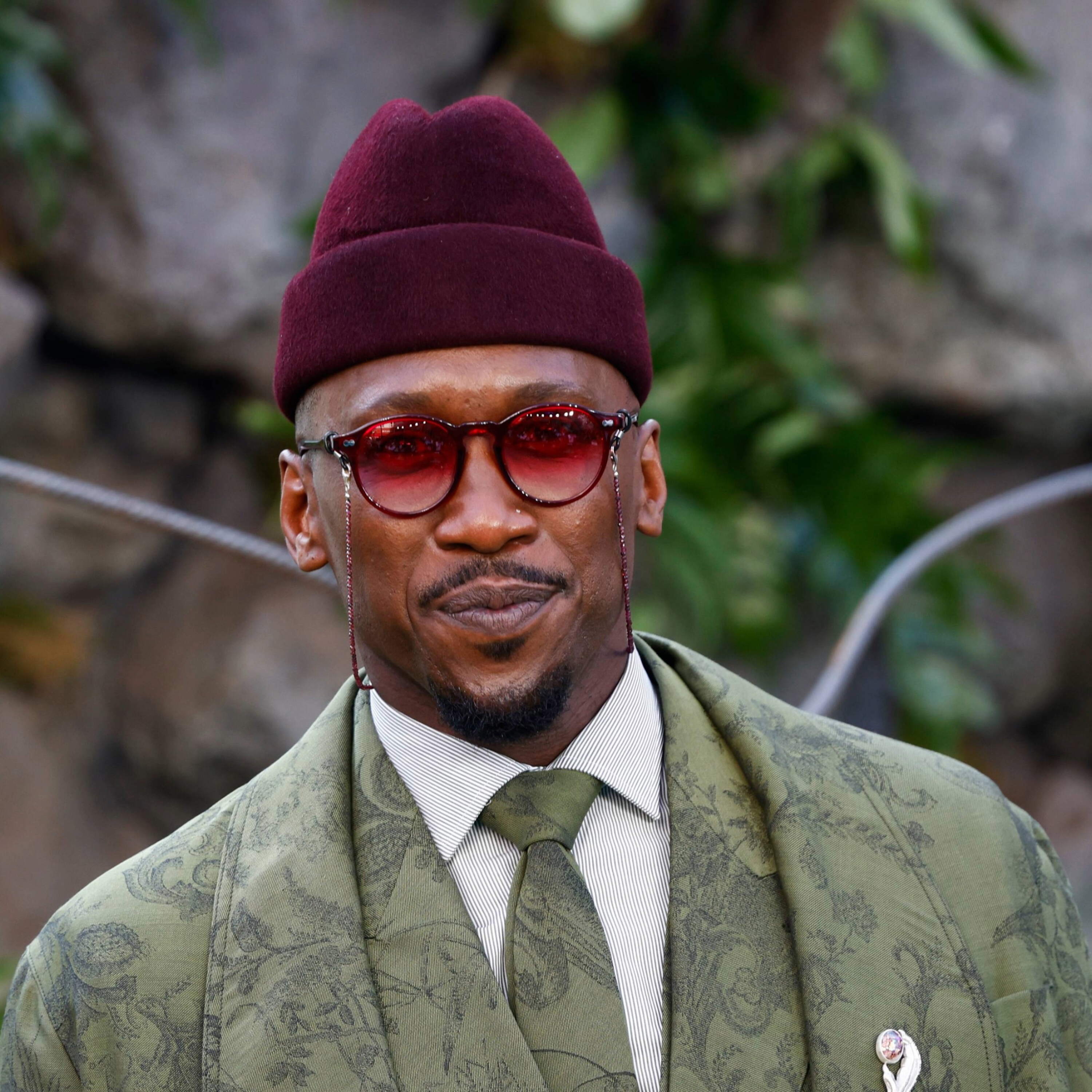
Fresh Air interview with Academy Award-winning actor Mahershala Ali about his film Your Mother, Your Mother, Your Mother—an action-thriller/family drama about Black Muslim life. Ali discusses playing Latif, a devout Muslim father of three who is also a professional killer, and how faith, grief, and parenting shape the character.
Guest backgrounds
Mahershala Ali is an award-winning actor known for House of Cards, Luke Cage, True Detective, Swan Song, and the Spider-Verse films. He won Oscars for Moonlight and Green Book (first Muslim to win an acting Oscar). He grew up between Oakland and the East Coast; his father was a dancer/performer.
Key claims
Latif’s faith doesn’t make him righteous; it becomes a standard he fails to meet. The character is overwhelmed by new responsibilities after his wife’s death and questions God. Ali says he looks for where characters “stand with God” to inform performance.
Notable examples
A scene where Latif promises to stop being a hitman; his daughter’s emotional impact; Ali’s own experience with his child protecting him from difficult events; the film’s title teaching that “your mother” deserves the best.
Written by AI. May contain mistakes.
Chapters
1:31
Exploring Mahershala Ali's Character
Discussing the complexities of Ali's role as a hitman and father.
“Well, you know, I have never seen a character quite like this one, the one that you play in this movie, because Lateef, I mean, he knows how to kill people.”
3:22
Faith and Responsibility in Lateef's Life
Delving into Lateef's struggles with faith and parental responsibilities.
“And I want to play a scene where we learned that Lateef had promised to stop working as a hitman.”
6:06
Action and Justice in Lateef's Journey
Examining the themes of justice and physicality in Lateef's character.
“Why do you need to know where a character stands with God before you can understand?”
8:06
Parent-Child Dynamics Explored
Understanding the protective nature of children and parenting challenges.
“almost believes like he has a calling towards justice.”
11:43
Islamic Teachings and Personal Reflections
Reflecting on the significance of motherhood in Islamic teachings and personal experiences.
“Because what's so interesting about this script, too, in particular, or this story, is a lot of this kind of happened.”
14:00
Reflections on Family and Faith
Mahershala Ali discusses his relationship with his parents and how faith influenced his upbringing.
“What did that teaching mean to you before this film?”
21:44
The Journey to Acting and Poetry
Ali shares his experiences in poetry and acting, including his persona as Prince Ali.
“The app guides users to intuitively think in a second language using images and contextual audio, mimicking how people acquire speech as children.”
28:00
Mahershala Ali's Journey to NYU
Learn about Mahershala Ali's early career and the support from his grandmother.
“and then I was also part of the apprentice program as well but I had a pretty wonderful summer and this is like I'm literally had I just graduated from from undergrad from St.”
31:56
Reflecting on Key Roles
Mahershala Ali discusses the significance of his roles in 'Benjamin Button' and 'Moonlight'.
“Ever notice how every new AI tool asks you to explain your business to it all over again?”
40:57
Conclusion of the Interview
Mahershala Ali shares his current projects and expresses joy for acting.
“But I'm just waiting for the next time I go to set because I'm just ready to work.”
Show all 11 chapters
42:27
Review of Chris Rock's 'Misty Green'
A detailed critique of Chris Rock's new film, exploring themes of race, identity, and the Hollywood system.
“Now he has a new one, Misty Green, which stars Rosalind Elazar as a once successful Hollywood actress whose career has taken a downward turn.”

Ask about this episode
Get the gist, explore an idea or ask about something said.
 Claude
On Fresh Air, what are the key points of this episode?
Searching your listeningTranscript
Automatic transcript. May contain errors.
0:00This message comes from NPR sponsor, the official Gilded Age podcast from HBO. Unpack each episode of the Gilded Age and hear from the people who bring 19th century New York to life. Watch the official Gilded Age podcast on HBO Max or listen wherever you get podcasts.
0:43This is Fresh Air. I'm Tanya Mosley. And this film is hard to categorize. It's an action thriller, a family drama, and a meditation on faith set in a world movies rarely show, Black Muslim Life in America. And the title comes from an Islamic teaching about the singular place of mothers. It's the kind of role Ali is especially good at, men who look composed while something much more complicated is happening underneath. In True Detective, he played a man whose life and memory unfold across decades. In the 2021 film Swan Song, he played a dying man who arranges to be secretly replaced by a clone of himself.
1:22And in Moonlight in Green Book, that same restraint helped him win two Oscars. And Mahershala Ali, welcome back to Fresh Air. Thank you for having me. It's good to be here. Well, you know, I have never seen a character quite like this one, the one that you play in this movie, because Lateef, I mean, he knows how to kill people. He's an assassin. What he does not know is how to take care of his own kids. And we have not seen that play out in the same movie. What interested you about that contradiction? I think exactly that, the contradiction or the breadth of that character's responsibilities. You know, as an actor, you are searching for your new mountain to climb and someone to climb it with you.
2:11Bassem Tark in this case. And... The director, yes. Yeah, the director. And writer. And writer, yes. And so just upon reading it, I was just blown away by just all that came along with trying to fill the shoes of this character and bring him to life, which was, yes, being a contract killer, which was inherently already interesting. him being a Muslim which is rare for me to see and to to meet on the page and especially with such dimensionality and then also a father of three and specifically the infant that we're really dealing with in this case and so all these elements sort of stitched together just jumped out to me on the page.
3:06And so it was kind of like I couldn't say no to it. And you know, the thing about Lateef, his faith doesn't make him righteous. If anything, it kind of gives him this standard that he keeps failing to meet throughout the film. And I want to play a scene where we learned that Lateef had promised to stop working as a hitman. And it's a promise that he has not kept. And he's talking to his imam, played by Giancarlo Esposito, who has just found all of this out. Let's listen. I didn't say you were prayers today. I got lost track of time. I taught you better than this. You sat right here with Khadija, promising that you were done being a pit man.
3:56That man murdered him on the sheer and cold blood. The feds did nothing. the rasul met his enemies with mercy violence was the last result he killed a holy man jail would have been a mercy these men they got no code they lawless sometimes you got to take things into your own hands and money had nothing to do with it that is my guest today um in his latest film your mother your mother your mother you know what struck me uh listening to that is that um And he's trying to make sense of something his faith tells him not to do. And you've said one of the first things you ask about a character is where he stands with God.
4:38Where do you land particularly with Lateef? I believe that Lateef is a man that I think discovers that he is struggling with his belief, his faith, and his relationship with God. I think he's in shock by his new responsibilities. He's in shock from the loss of his wife and partner and mother of his children. And I don't think he has the larger understanding of how to mourn and being sort of gracious with himself. and I don't think he has the capacity to be patient, especially with this ticking clock of a child needing to be fed immediately and not having the source of that food, essentially not having his partner to love this child and to feed and take care of this child.
5:38And so suddenly that responsibility, all that falls onto him and he actually feels truly overwhelmed. And so in the moment, he's just angry. I think he's angry about it all. And it opens up, I don't want to say opportunity per se, but it leaves him really questioning and challenging God and wanting God to make sense of all this or to even take it back, correct this mistake. Why do you need to know where a character stands with God before you can understand? Well, I think it's more of being aware that it's my responsibility to sort of breathe life into these characters. And I feel strongly that we are spirits having a physical experience.
6:29And I think it's just helpful for me to sort of locate how much I think a character is in conversation with his creator. So it's just a place in which I can begin to ask questions that I think have real resonance for me as an actor as you begin to stitch together choices over the course of a journey or a story. One thing you talked about wanting to do for a long time is action films, and you had a chance to step into that water, including in this latest project. I mean, you came to this film with an unusual amount of physical preparation. I think when people see you, they will see that in you.
7:20And you have the sword work, the martial arts. And it's violent. how did you approach Latif understanding you've got this new physicality that you were working towards blade that never happened and so now you are in this step of trying to transfer that physicality to this guy who's doing it though the violence is for protection for his family so there's kind of like a softness and there's a real hardness and brashness like that combination is just so interesting to me. Well, and also it brings up the fact that I think for Lateef, it's attached to like his passion for justice. Like I don't think the Giancarlo Esposito character necessarily agrees with him on that.
8:05But I almost feel like Lateef almost believes like he has a calling towards justice. And that is in the same way that if you look at like a character like Batman who goes off and he's a vigilante and he's doing certain things that are clearly violent, but it's in part because, you know, he's doing something that the police force can't do or won't do, so to speak. Lateef is doing this act essentially because he feels like justice was essentially overlooked in this instance, and he feels tasked to handle that. And then there's also him, yes, having to protect his family. And so therefore, fortunately for him and them, he's equipped to do that.
9:02But it definitely comes at a cost. His daughter in particular is impacted, I think, emotionally by having to witness some of the things that her father has to do to protect them at this point. This relationship between the children that your character Latif is trying to protect, there's kind of this interesting reversal in the film. So Latif is trying to figure out how to take care of his kids. But over time, we begin to see the ways that they're taking care of him too. And it's an interesting dynamic to be in as a parent, because I don't think we think about that, you know, that even in the soft ways that we probably can't articulate the ways that our children are doing that for us.
9:56Did making this film change anything about the way you understood that relationship between parent and child? You know, I think perhaps it's made me aware that that kids are also protectors, that they do it in their own ways. Like, for instance, like my child, who's nine years old, sometimes experiences things, and you have to find out the hard way that she's experienced something. And I think in large part is because she's trying to protect you from knowing that she's experienced something difficult. So you would almost imagine that in the way in which when your kids are younger and they fall down at the park and then they just look at you and see how you react.
10:52And depending on how you react, they just run to you like, oh, I hurt myself, right? Well, that begins to shift at a certain point where when they're not in front of you, If they experience something like that could be terrible, they may not tell you because they're processing it. And I've recently experienced that with my daughter this summer. And I got so upset, like sort of at her, because she didn't let me know that she was going through something, that something had happened to her. Like I had to hear it from like the camp counselor, you know, kind of thing. Oh, yeah. It's the worst feeling in the world, kind of, when your children are older and they start to tell you all the things they didn't tell you about that you didn't know about.
11:40Did you and Bassam, the director, talk about these things? Because what's so interesting about this script, too, in particular, or this story, is a lot of this kind of happened. For Assam, he was searching for breast milk in the same way as this character when his wife needed it. She had an infection, yeah. Yeah, and she could not provide. She could not provide for their child. I'm always so fascinated by the conversations fathers might have about these types of things. Did you guys? Yeah, we talked so much. But then there became a point where we were just kind of thrust into it and we were like living it together.
12:24And from moment to moment, scene to scene, you start discovering things that are like written and also just not written that end up revealing things about character. You start dialing in little moments. There's a moment in which towards the end of the film, in the third act, there's a moment where Lateef fixes Fatih's hair. And I think Bassam just came up with this idea and wanted me to, in this moment where I'm going to take off and you're not sure if we're ever going to see each other again. but just sort of as like a gentle fathering act to see him like, yeah, to stop and take a moment and just fix his daughter's hair as they're saying goodbye.
13:24You're just sort of open to part of what filmmakers need to do is create a sacred space. and there's so many things that can come up in that space where the film can finish being written in the moments that you're shooting it that they're never finished, you know, in that way. This title, it comes from an Islamic teaching in which a man asks the Prophet Muhammad, who deserves the best of him? And three times the answer is your mother. only after that comes your father. What did that teaching mean to you before this film? I'm someone who grew up really adoring my father. He died when I was 20. And I think in some ways, and my father lived in New York, and I was growing up in California.
14:24And I think my mother was so present in a way that I think I got to take her for granted on a certain level. and we also had our own moment in time where we weren't as close as I think either of us would have liked to have been. And I think once I had converted to Islam and I started delving more into the teachings and learning more about the faith and how it impacts all aspects of your life, two of the teachings that really stood out to me was that heaven was at the feet of your mother and the Islamic teaching that our film opens with in terms of like your mother being that you should hold your mother dearest to you.
15:16And so it was just really just emphasized how much, at least for a believer or a Muslim or whatnot, it emphasizes how much God values the mother and values women in our faith. and it challenges you to really reflect on why and what it is that women must sacrifice and how much of themselves must they give in order to raise you or in order just to even just bring you into the world. And so you're supposed to hold your mother dear in your heart and have a lot of respect for women in general. And, of course, that doesn't always play out culturally or whatnot, But the teaching is that you are to, like, who you value most in this world are the beings, the people, the women that brought you into this world.
16:10That's really interesting, now being a man, being able to reflect and see that maybe I took my mother for granted because she was there. This relationship with your dad, kind of this absence makes the heart grow fonder. Because he was a dancer. He lived in New York. I can imagine just your childhood brain imagining his life across the country. Yeah. Well, you know, and also like one of my earliest memories is my father won a dance contest on Soul Train, of all things, when I was a little kid. So, and he won a car on TV. So to be on TV back then, it's like one of my earliest memories and him coming home with a brand new car and twenty five hundred dollars that he wins in the 70s and he ends up moving to New York.
17:03And, you know, I'm growing up and visiting him in the summer and I'm backstage or on tour with him for Dreamgirls and meeting all these wonderful people, some of which are still working in the business to this day. And, you know, I was just exposed to certain things that I didn't know how to go back to Hayward, California, where I was growing up and tell anybody about those things. And a lot of times there's kids who didn't even like believe me when I would share certain things. Or like I'm watching a music video or watching a commercial and my dad or a really close friend of his is on the commercial or on TV or doing an episode of something or on a show.
17:44So there's this compartmentalized thing that I was experiencing that no one else around me like totally got. So I think all that sort of added to and when he was with me, he was like really present. He was awesome. We had a great time. But then I would go back and experience the day-to-day mundane of just growing up and having to do homework and getting in trouble if I acted up in class or all the things that you deal with, like, growing up as a kid. Like, those are the things that, you know, my mom is, like, dealing more so with on a day-to-day basis. And so all that contributed to, I think, my childhood and my experiences with my mom being colored a certain way.
18:31And my parents were also really young when I was born. They were teenagers. Yeah, you watched them grow up, essentially. Yeah, exactly. They raised you. And I'm curious the kind of dancing your dad did. So Soul Train dancing, Dream Girl dancing. What was his specialty? Well, he went to Dance Theater Harlem. But he also studied ballet and tap and jazz. And then by the early 80s, he was understudying in Dreamgirls and then eventually playing the James Thunder early role on the road for the national tour. And by the time he passed away, really trying to transition into legitimate acting, out of trying to get out of the musical theater dance kind of world.
19:18and always really considering himself an actor, which when he started to say that, like, oh, I'm an actor, I was like, huh. I didn't, and I don't know anything about acting at this time because it's not, as much as I was coming in and out, it wasn't my world. I was, if anything, I was more on the athletic sort of pathway. Because at that time you were in college playing basketball still? He passed away going into my junior year, so it was kind of like halfway through that college basketball journey that he passed away. But I did just start getting into like theater sort of like accidentally, like right before he passed away, I did a play.
19:55And I remember him saying, you know, that I had the bug or whatever. Oh, he saw you. Did he see you in that play? No, he didn't see me in it, but it was just more me like just talking about what I was doing. What he did see me do was I was writing a lot of poetry back then. And those poems started to essentially act as like monologues because it was like early in that slam poetry sort of era. So I would share those with him and friends of his and whatnot, which they all kind of loved. And so that was a bit of a transition into acting because I was basically performing my own writing. And I got a lot of encouragement around that.
20:34Our guest today is award-winning actor Mahershala Ali. We'll be right back after a short break. I'm Tanya Mosley, and this is Fresh Air. Stay tuned for the following announcements and messages from our sponsors. This message comes from Whole Foods Market. Host Thanksgiving with industry-leading quality standards from Whole Foods Market. There are no antibiotics in their meat department ever, so carve up turkey and spiral-cut ham with peace of mind. Shop organic sides like stuffing mix and cranberry sauce from 365 brand. And all their delectable pies are made with no high-fructose corn syrup. Gourmet Thanksgiving flavors with the quality you want, only at Whole Foods Market.
21:13This message comes from Prolon. Want to look and feel your best this fall? Prolon's 5-Day Fasting Mimicking Diet is a clinically developed nutrition program with the goal of promoting fat loss while protecting lean body mass. Developed at USC's Longevity Institute, it aims to assist the body in entering a fasting-like state that helps reset metabolism, target visceral fat, and support healthy metabolic markers. Get 15 % off plus a bonus gift when you subscribe at prolonlife.com slash NPR. This message comes from Rosetta Stone, offering an alternative approach to language learning. The app guides users to intuitively think in a second language using images and contextual audio, mimicking how people acquire speech as children.
21:56The platform also includes advanced speech recognition technology that compares a learner's pronunciation directly with native speakers to refine accent precision. Learn more about their immersion method and the new Rosetta Stone Sapphire app at rosettastone.com.
22:34week, an exclusive. So subscribe at whyy.org slash fresh air and look for an email from Molly every Saturday morning. This is Fresh Air. I'm Tanya Mosley and my guest today is Mahershala Ali. His new film is Your Mother, Your Mother, Your Mother, in which he plays Latif, a devout Muslim father of three who is also a professional killer, suddenly left to care for his children after his wife dies. His other work includes House of Cards, Luke Cage, True Detective, Rami, Swan Song, and the Spider-Verse films. He won Academy Awards for the films Moonlight and Green Book, becoming the first Muslim to win an acting Oscar.
23:15Ali grew up between Oakland with his mother and the East Coast with his father, who worked as a dancer. Ali went to St. Mary's College on a basketball scholarship and later earned a graduate degree in acting from NYU. Before acting fully took hold, he also recorded music as the rapper Prince Ali. I just have a few things I'm curious about about this time period in your life. You're getting up on stage, you're performing poetry, and eventually you become Prince Ali. Who was Prince Ali and what did that persona give you? I think there was like several iterations. I think I eventually landed on Prince Ali.
23:59But, you know, honestly, the first time I was ever rapping and on stage, I was 12 years old. I was in Toronto, Canada. And my father was doing Dreamgirls there in 86. And myself and a friend named Sean and our fathers were in the show. and I remember we both got like five dollars a day because they were like in tech week and so they were like putting the show together about to open and so we would go while our dads were rehearsing we were kind of like latchkey kids on the road and so we would go off to the arcade and you know play games for half the day like that could go for a while back then And he and I were both like had an open love for hip hop at that time.
24:50We both loved Run DMC and LL Cool J. And one day Sean was like, well, you know, I beatbox. And he started like, you know, beatboxing and making a beat with his mouth. And I was like, well, I rap. And I had written my little rhyme and I had it memorized. And so we're in the elevator with our fathers one day. And we're going up to our rooms and Sean just breaks out beatboxing. And then I start rapping. and then their jaws like drop. Next thing you know, a week later for opening night of the show, we're on stage. There's like 2 ,000 people in this club that they were able to get us in, but we had to sit in some section where they weren't serving alcohol or whatever.
25:29But we ended up performing. We got shirts made. They said DT on them, double threat. And like he's beatboxing on stage and I'm rapping and we like we tore it down. Like it was an experience I will never forget. But that around that time, like that's when I started writing like pretty young. I wrote my first poem when I was nine years old. I was writing my rhymes at like 12. Do you remember what it was about, that first poem? My first poem, I remember it vividly. I kid you not. Yeah, it was about God. It was about God. And it was, it was when I was young, I was blind, sad and lonely all the time.
26:05I felt like I was trapped in a shell, visiting Satan in his hell, until a person shared with me that God's the glory of being free. So then I turn to Jesus, my friend, and he'll stay with me till the end. So it was like at this Bible study retreat type thing. And so that was nine. And then I kind of like always sort of wrote a little bit on the side, just again, like just processing things, you know? Oh, Mahershala, that's kind of remarkable. I'm thinking about you as a nine-year-old. You know, you come from a home where your mother, she's a minister, right? So faith is deeply ingrained in the place where you are.
26:44But it sounds like you've always been, in a way, a seeker, a seeker of understanding a higher power. Yeah, I think so. I feel like on some level I've always been at a place where I've seen just prayers be answered. And I think that that ends up sort of feeding one's relationship to God or faith. And, you know, I'm really grateful for that relationship. you've talked a lot about your um your parents your mom and your dad um but recently i have also been hearing you talk a lot about your your grandmother in particular you you said that there is no way that you'd be really basically sitting here without her not at all who was she to you oh she just had her 92nd birthday uh yesterday oh my gosh happy birthday yeah yeah Yeah, yeah.
27:37She's, oh man, let me just tell you, this is my grandmother. I remember I was 22 years old and I just completed California Shakespeare Festival. So I did that summer program and I got to work on the main stage with the professional actors in the company. and then I was also part of the apprentice program as well but I had a pretty wonderful summer and this is like I'm literally had I just graduated from from undergrad from St. Mary's College and I was able to step right into this California Shakespeare festival program with real audience and real actors and just such a pretty remarkable experience and going through that program by that time I had a couple of people say to me um uh one gentleman who was in who was one of the professional actors I think his name was Martin Kildare and then I had a professor as well from St.
28:42Mary's College named Victoria Trussell who had both of them were like you need to go to grad school. And I was like, okay. And so I had decided that I was going to audition for NYU. I knew that it was like, they only accepted like 16 to 18 people and that they were going to audition potential students nationwide. So my grandmother one day that was living with them, And, you know, in the summers, they're aware of like what the chances are of me even getting in, so to speak. But I'm walking into my room and she kind of like cuts in front of me to go and put some stuff in my room. And this is like December.
29:30I don't even audition until like February. It's like December of 96. And my grandmother walks in my room and she's got like these sweats that she got from Kmart. they're just generic like gray thick warm sweats and she just I was like what are those for and she was like well you're gonna need these when you move to New York and she just kind of like set them on the dresser for me and it was such a reflection of how she believed in me and supported me and, and I got in, you know, and I ended up going to NYU for three years and yeah, I had those to keep me warm. And she was also like, my grandfather didn't know, but I didn't get this loan in my third year of school.
30:21I didn't like apply for something right. So I was like short on some money. Like it was like a lot of money I was short on. and like she's like sneaking me like thousands of dollars like you know I feel like it was like fifteen thousand dollars or something like that she's like sneaking me money and she's like yeah but you you gotta you gotta pay me back when you get out I was like grandma I got you I got you so when I got my first gig when I got crossing Jordan like part of my check is like going to like pay her back like immediately you know because I was like I can't I can't have you like stressing about this money, so I paid her back.
31:00Let's take a short break. If you're just joining us, my guest is Academy Award-winning actor Mahershala Ali. We'll be right back after a break. This is Fresh Air. Stay tuned for the following announcements and messages from our sponsors. This message comes from Whole Foods Market. Host Thanksgiving with industry-leading quality standards from Whole Foods Market. There are no antibiotics in their meat department ever, so carve up turkey and spiral-cut ham with peace of mind. Shop organic sides like stuffing mix and cranberry sauce from 365 brand. And all their delectable pies are made with no high-fructose corn syrup.
31:35Gourmet Thanksgiving flavors with the quality you want, only at Whole Foods Market. This message comes from Rosetta Stone. Rosetta Stone is designed to make language learning intuitive. It mimics how people naturally acquire speech as children, helping users read, write, and think in a second language. More at rosettastone.com. This message comes from Google Workspace with Gemini. Ever notice how every new AI tool asks you to explain your business to it all over again? Google Workspace with Gemini skips that. You get Google's AI built right into the premium versions of Gmail, Google Docs, Sheets, and more.
32:13No new tools, no extra logins, just one subscription that gives you personalized AI right inside your actual workflow. Try Google Workspace with Gemini at goo.gle slash workspace with Gemini. What was the role where you first thought, now we are talking, this is the kind of work that I have been trying to get to? Wow. Curious case of Benjamin Button. I booked that. It was technically my first feature film. And I booked it in 2006. And we were doing reshoots up until like October 2008. 2008 and it came out at the end of 2008. So I think that, so my, that kind of, I don't want to say chip on my shoulder, but that sort of attitude about, wow, I've, I'm in a David Fincher film.
33:01So thinking and feeling like things were just going to like open up for me. I, I, that part was, was for where I was at at that time. And that's like 20 years ago and it's six years into a professional career and I was able to suddenly be transitioning out of television into film and a David Fincher film, that meant a lot. And so to get to be in a movie and to be with, you know, Brad Pitt and company, you know, Tilda Swinton and Cate Blanchett and you go on and on and on like the Taraji P. Henson and the folks that are in that movie, it's unbelievable. So I felt like I got to dip my foot in that water, you know, for sure.
33:47And that I just want to stay in that space. And if I couldn't stay in that space, I want to get back to that type of work and in a more full way as soon as I possibly could. you know I've heard you talk about how you want to be this actor who just moves through time and isn't set on one particular character you know in one way um you know if a character where a Marvel character for instance a blade or something like that you would be forever synonymous with that particular character and you've said how that kind of scares you and Moonlight in particular is such a special singular magical film that feels like it only comes once every blue moon to have a script in front of you that allows you to articulate what you're able to do in that film.
34:41When you think back in particular about that experience, what do you hold on to? What is the thing that you also take with you in the same way that you did with Benjamin Button?
34:56There is a feeling from the moment I read that script. And that feeling only grew. It was like you could, it was just this beautiful flower. And it just, the whole process, watering it, growing it, talking to it. it just continued to grow and just got more and more beautiful like the whole way through being on that set and we we just did not have any money like there weren't chairs there weren't like we're sitting on like the ice box or what have you we didn't really have like a proper trailer to change we had this bus that like every department was in this bus like i kid you not like hair makeup like everything we were all in this this bus like but i got to be way real with you and i'd been on enough sets that were fully funded by this point nobody cared it was so profoundly special barry jenkins shooting moonlight it was extraordinary at creating a sacred space and it was one where other people's ideas or the moment the moment itself had an opportunity to speak and to be additive and to to deepen like good directors are expecting you to deepen what is there on the page and and to help really be bring it alive in the same way They expect the director of photography to make their contribution and the production designer to make his or her contribution.
36:48There's something strange about reaching a level of success after spending years of doing the work and then discovering that it doesn't necessarily make the work or getting the work easier. It's true. It doesn't. Yeah, to have a film like Your Mother, such a meaty role. But what do you think winning your second Oscar, what did you think it would change that it didn't? You know, I thought that the sort of leading man opportunities would just open up, you know. Because I just felt like even the Don Shirley role was so close to a leading man part. And remind people about that role. In Green Book.
37:29And because if you think about it, like Viggo's character, Viggo Mortensen's character, he had a certain runway. Like you got to see him by himself. You got to see him with his family. You know, the Don Shirley character enters into the piece in a different way, 20 minutes into the film kind of thing. Right. And so at some point you're hoping for those opportunities and that lens and being a little bit more centered and the dimensionality to be consistent. and even the the type of filmmakers that I would be put in front of you know you I think I was hoping that it would that would change and it would there would be these like what I would call no-brainer opportunities and so I guess I was just surprised that like it would be you're like wondering why, man, that phone is really not really ringing or like you're not getting those calls from like these seasoned, extraordinary, award-winning like filmmakers and getting asked to come and do their films or even consider parts, you know, kind of thing.
38:49And so I think that that, it just, for a while it just sort of surprised me and then at a certain point it just goes back to accepting that, okay, well, I guess this is just what it is. And so then you move forward into just like looking for the best thing that comes your way. And every now and then something great comes along or in the meantime, sort of going like considering things and going, well, can I elevate this? You're still pretty hungry as an actor. I mean, you actually said that you're the hungriest you've been as an actor in a long time. Is the hunger different now from the hunger you had when nobody knew who you were?
39:34Yeah, I think my hunger has matured. I think I have less fear in a certain way. And so therefore, I have an energy that is like ready to attack the part. So in that way, I just feel hungry to get to it. I feel hungry to interpret, metabolize the material and like get to work on set. I just feel like, yo, let's go play. Let's get to it. Like, let's let's fail doing rehearsal. Let's fail on camera until we find it. Like, I just feel I just feel like let's just get to it. I don't feel like talking about it. Let's go, you know. And so unfortunately, I have like a wonderful part that's like feeding me right now, you know.
40:22I'm getting to do season two of Task for Brad Inglesby, the showrunner, and getting to work opposite of Mark Ruffalo. So that's been absolutely wonderful. And we're a little over halfway through the season, but I'm just hungry to eat through it. I just want to keep going so we can, like, not even, like, get it done. But it has been a grind. It has been a while, and it is very tough work. But I'm just waiting for the next time I go to set because I'm just ready to work. Mahershala Ali, it's been such a pleasure to talk with you. Thank you. Thank you. Award-winning actor Mahershala Ali. His new film is called Your Mother, Your Mother, Your Mother.
41:17Coming up, John Powers reviews Chris Rock's new film, Misty Green. This is Fresh Air. Stay tuned for the following announcements and messages from our sponsors. This message comes from Whole Foods Market. Host Thanksgiving with industry-leading quality standards from Whole Foods Market. There are no antibiotics in their meat department, ever. So carve up turkey and spiral-cut ham with peace of mind. Shop organic sides like stuffing mix and cranberry sauce from 365 brand. and all their delectable pies are made with no high-fructose corn syrup. Gourmet Thanksgiving flavors with the quality you want, only at Whole Foods Market.
41:53This message comes from Rosetta Stone, offering an alternative approach to language learning. Without relying on traditional memorization, the platform guides users to intuitively think in a second language. More information at rosettastone.com. This message comes from Google Workspace with Gemini. One subscription that does it all. Personalized AI in premium business versions of Gmail, Google Docs, Drive, and more. Try it free for 14 days at goo.gle slash workspace with Gemini. It's been 12 years since Chris Rock directed his last movie, the romantic comedy Top 5. Now he has a new one, Misty Green, which stars Rosalind Elazar as a once successful Hollywood actress whose career has taken a downward turn.
42:42Our critic-at-large, John Powers, says that the film, which also stars Adam Driver and Rock himself, is bursting with energy but takes you to bleaker places than you might anticipate. There's one thing we know about folks who do stand-up. They nearly always dream of sitting down, in a director's chair. One who's had some success doing just that is Chris Rock, whose biting jokes and charmingly demonic grin hide a taste for serious movies. He pushes in that direction with his new film, Misty Green, a story more filled with pain and nastiness than laughter. Set in Hollywood, modern shorthand for sunlit soullessness, this portrait of a brilliant, self-sabotaging actress is at once high-powered and problematic.
43:32Rosalind Eleazar, who you'll know from Slow Horses, gives a fireball turn as Misty, a gifted actress who won an Emmy a few years back on a show called The Red Eye. Now she faces disaster. About to be evicted from her luxe seaside apartment, Misty is so desperate for a job that she's preparing to audition for the kind of demeaning role Percival Everett set up in Erasure. Because she's biracial and no longer young, She's a hard sell in a Hollywood that likes its actresses young and white. That said, Misty has also blown several good chances by being spiky, troublesome, druggie. The world around her doesn't help.
44:18She's got a bipolar brother, that's Daniel Kaluuya, who keeps fleeing his clinic. She's got an agent so slippery he's played by Topher Grace. Her best friend, that's Anna Kendrick, is a chirpy cynic who's marrying a clueless guy for his money. And then there's Adam Driver's character, a Hollywood scuzzball with whom Misty has joyless sex in exchange for joyless drugs, even on the night before the audition that might save her. The one angel on her shoulder is a film director, Jordan, played by Rock himself. Witty and world-wise, he has profound respect for Misty's massive talent, even though he once fired her from a big movie after she had a coked-up fight on set.
45:04As it happens, Jordan's about to direct a remake of Dreamgirls. And though it's already been cast, Misty dreams of landing the role of Dina, the one played by Beyoncé. Could this be her way back into the big time? Here, during her audition for a lesser role in Dreamgirls, The actress cast as Dina bursts into the room, then realizes who she's interrupting. Misty Green! Oh, wow! Rhonda, why are you reading Misty Green? Just give her the part, my God! My dad loves the red-eye. He wore the uniform last week on the show. Oh, tell him thanks for being here. Oh, were you guys still going? Yeah, we were.
45:49No, no, no, we're about to finish. No, we're all wrapped up. Actually, I would like to do it again. No, we're good. We're pretty much done, so it's fine. Okay. You're good, Misty. Thank you so much. No, actually, I would like to do it again. It's so hard to, like... Thanks for coming, Mrs. Good to see you. No, I would like to do it again. I didn't get to finish it. Thank you so much, Misty, for coming. It was really great to see you. Hello! I would like to finish my audition if it isn't too much trouble. All right? Now, in purely cinematic terms, Misty Green marks a step forward for Rock. His filmmaking bristles with vigor from the opening scene when Misty gets yelled at by the widow of her recently deceased sugar daddy to its final ironic payoff.
46:28Rock crams his movie full of lively scenes, auditions, car crashes, musical numbers, police arrests, private jets, fistfights, and occasional funny bits, like a laugh-out-loud riff on why civil rights movies stink. Along the way, Rock nods to larger social themes, homelessness in L.A., the racial profiling of black men, Hollywood's racism and sexism. But they remain mere nods. What he shows about these ills is so familiar and undeniably true that it's less cutting-edge analysis than old hat. Even more disappointing is the film's vision of women, except for a casting director fed up with Misty's misbehavior.
47:11She's shrewdly played by Tracy Thomas. The women characters are all dopey or bitter, venal or naive. They're a motherlode of terrible choices. Even Misty's doctor seems like a fool. Misty herself is not easy to like, but at least this feels groundbreaking. For a while we've had movies about difficult actors, be it Bette Davis in All About Eve or Jenna Rowland's in Opening Night, We've not seen a woman of color claim center stage playing such a thorny artistic role. And it's kind of thrilling. Whether she's being funny or resentful, wounded or imperious, nailing an audition or singing in a nightclub, very well, by the way, Misty is a blazing ball of contradictions that only a galvanizing performance can make us believe in or sympathize with.
48:03Eleazar provides just that. filling in the underdeveloped aspects of Rock's conception of Misty with living, breathing, passionate life. She holds the movie aloft, even as we gradually realize that this is just another Hollywood morality tale, and that, while Misty may be the protagonist, there's someone the movie loves more. Indeed, the film's key line, true love starts at forgiveness, is delivered, you guessed it, by Rock's character. There's a reason why comedians dream of sitting in the director's chair. John Powers reviewed Misty Green. Next time on Fresh Air, Eon Lee won a Pulitzer Prize for her memoir about the suicides of her two teenage sons.
48:53In her new novel, she escapes the present and writes about two piano prodigies in the late 18th and early 19th centuries. She says she put everything she knows about life into it. She'll talk about the novel and surviving her son's deaths. I hope you can join us. To keep up with what's on the show and get highlights of our interviews, follow us on Instagram at NPR Fresh Air. Fresh Air's executive producer is Sam Brigger. Our technical director and engineer is Audrey Bentham. Our interviews and reviews are produced and edited by Phyllis Myers, Anne-Marie Baldonado, Lauren Krenzel, Teresa Madden, Monique Nazareth, Thea Chaloner, Susan Yacundi, Anna Bauman, and Nico Gonzalez-Whistler.
49:36Our digital media producer is Molly C.V. Nesper. Roberta Shorrock directs the show. With Terry Gross, I'm Tanya Mosley. Stay tuned for the following announcements and messages from our sponsors. This message comes from Rosetta Stone, offering an alternative approach to language learning. Moving past rote memorization, the app guides users to intuitively think in a second language using images and contextual audio, mimicking how people acquire speech as children. The platform also includes advanced speech recognition technology that compares a learner's pronunciation directly with native speakers to refine accent precision.
50:13Learn more about their new Rosetta Stone Sapphire app at rosettastone.com. This message comes from Google Workspace with Gemini. Ever notice how every new AI tool asks you to explain your business to it all over again? Google Workspace with Gemini skips that. You get Google's AI built right into the premium versions of Gmail, Google Docs, Sheets, and more. No new tools, no extra logins, just one subscription that gives you personalized AI right inside your actual workflow. Try Google Workspace with Gemini at goo.gle slash workspace with Gemini.
From the publisher
In his new action thriller, Your Mother Your Mother Your Mother, Mahershala Ali plays a devout Muslim father and hit man whose life is upended when he suddenly has to care for his children on his own. The role brings together a lot of what has shaped Ali as an actor, including an attraction to characters who live in morally complicated places. He spoke with Tonya Mosley about why the script blew him away, filming Moonlight, and his childhood.
See pcm.adswizz.com for information about our collection and use of personal data for sponsorship and to manage your podcast sponsorship preferences.
NPR Privacy Policy
See pcm.adswizz.com for information about our collection and use of personal data for sponsorship and to manage your podcast sponsorship preferences.
NPR Privacy Policy
More from Fresh Air
All episodes
We use cookies.They keep VO running smoothly and help us improve it. Privacy policy