
 Ask ChatGPT


In short
Fresh Air episode “Mahmoud Khalil’s 104 days in ICE Detention” is about Mahmoud Khalil, a Palestinian graduate student and Columbia/Barnard protest negotiator, who was arrested by plainclothes officers on March 8, 2025, despite having a green card and no criminal record. He was sent to ICE detention in rural Louisiana for 104 days; his son was born while he was inside. Khalil says Secretary of State Marco Rubio’s deportation determination used a “foreign policy threat” rationale and later evidence alleged a “hostile environment for Jewish students,” which he calls cynical and unsupported. He describes ICE detention conditions as constant lights, freezing air, no privacy, and despair. He argues Columbia’s response to harassment failed and retaliated against Palestinian students; he sued Colombia and plans to seek Supreme Court review.
Guests
Mahmoud Khalil (author of memoir No Land to Stand On). No other guests are interviewed in the provided transcript.
Written by AI. May contain mistakes.
Chapters
0:45
The Arrest and Initial Detention
Mahmoud recounts the events leading to his arrest and his detention experience.
“But he had become one of the most visible faces of the pro-Palestinian protests at Columbia University, where he was a graduate student and the negotiator between the protesters and the administration.”
1:50
Meaning of the Green Card
Khalil discusses the significance of his green card and sense of stability.
“I want to start with the night that you were arrested.”
4:25
Life Before Arrest
Khalil reflects on his life leading up to the arrest, including family preparation.
“Take me back to a few weeks before that arrest.”
6:50
Negotiating in Protests
Khalil explains his role as a negotiator in protests and the administration's response.
“Even I was discussing it with my friends a day or two before my arrest.”
9:09
The Detention Experience
Khalil describes the fear and uncertainty he faced during the initial days of detention.
“I think it was less than about being seen, more about I wasn't doing anything wrong.”
11:28
Impact of Political Statements
Khalil reacts to President Trump's statements about his deportation.
“Remind us again what that determination was from Secretary of State Marco Rubio.”
14:00
The Threat of Deportation and Misrepresentation
Mahmoud Khalil discusses the fears and misrepresentations he faced as a Palestinian in the U.S.
“But I think like at that moment, I literally thought that this this is the end of my life in terms of my career.”
21:04
Life in ICE Detention: Personal Stories
Mahmoud Khalil shares his harrowing experiences during 104 days in ICE detention, including the emotional toll and the stories of fellow detainees.
“I'm Tanya Mosley, and my guest today is Mahmoud Khalil.”
28:00
Reflecting on Detention and Family
Mahmoud discusses the emotional toll of his detention and the impact on his family.
“You know, I did not even, you know, edit, edited that part.”
32:49
Life Stories and Advocacy
Mahmoud shares personal stories, his mother's resilience, and the importance of advocacy.
“it could be perceived as a detached way in a way.”
Show all 13 chapters
38:40
Activism at Columbia University
Discussion on the Palestinian movement at Columbia and addressing anti-Semitism.
“If you're just joining us, my guest is Mahmoud Khalil.”
42:00
Mahmoud Khalil's Fight and Support System
Learn about Mahmoud Khalil's challenges post-arrest and the community support he receives.
“Of course, there were like some sporadic anti-Semitic incidents that happened from mostly from individuals outside of Colombia, because they felt that Colombia was, you know, the hotspot for activism.”
48:31
Mahmoud Khalil's Fight and Support System
Learn about Mahmoud Khalil's challenges post-arrest and the community support he receives.
“Our technical director and engineer is Audrey Bentham.”

Ask about this episode
Get the gist, explore an idea or ask about something said.
 Claude
On Fresh Air, what are the key points of this episode?
Searching your listeningTranscript
Automatic transcript. May contain errors.
0:00This message comes from NPR sponsor, the official Gilded Age podcast from HBO. Unpack each episode of the Gilded Age and hear from the people who bring 19th century New York to life. Watch the official Gilded Age podcast on HBO Max or listen wherever you get podcasts. This is Fresh Air. I'm Tonya Mosley. On the night of March 8th, 2025, my guest, Mahmoud Khalil, was walking into the lobby of his apartment building in New York with his wife, who was eight months pregnant. A man in plain clothes slipped in behind them and within minutes put Khalil in handcuffs. Within two days, he was in an immigration jail in rural Louisiana, more than a thousand miles from home.
0:41Khalil had a green card, he had no criminal record, and had never been charged with a crime. But he had become one of the most visible faces of the pro-Palestinian protests at Columbia University, where he was a graduate student and the negotiator between the protesters and the administration. Secretary of State Marco Rubio declared that he should be deported, invoking a provision that had never been used against a permanent resident in this way. Khalil spent 104 days in detention. His son was born while he was inside. A federal judge ordered him released in June of last year, but the government is still trying to remove him.
1:19And Khalil is preparing to ask the Supreme Court to hear his case. This month, he sued Colombia, accusing the university of failing to protect him and other Palestinian students from harassment and of retaliating against them when they reported it. Khalil was born in a Palestinian refugee camp in Syria and fled the country at 18. His new memoir, drawn in part from the diary he kept in detention, is called No Land to Stand On. And Mahmoud Khalil, welcome to Fresh Air. Thank you so much, Tanya. Thank you for having me. I want to start with the night that you were arrested. Officers took you to 26 Federal Plaza in Manhattan in the middle of the night.
2:03They photographed you, they took your fingerprints, and then they took a DNA swab. And would you read what happened from there in the book? I thought of all the other times I had sat at the same setup. Consulates, visa interviews, immigration offices, proving again and again that I had the right to exist in spaces that barely tolerated me. Each time, the same performance. Convince us that you are not a threat, that you have enough money and a compelling reason to travel or reside. Prove you won't get stuck in our country and will return home. But where was home? Syria, where I was born but couldn't return to?
2:48Germany, where my family lived, but I had no right to stay. Algeria, where I had a passport, but whose soil I barely knew. America, which had given me a green card and then snatched me off the street. Or Palestine, the only answer that ever felt true, the only place that ever made sense, even though I had never set foot there. Mahmoud, thank you so much for reading that. Before that night, what did your green card mean to you? You know, I was born and raised in a Palestinian refugee camp in Syria, holding temporary cards or ID cards. It was written on a temporary ID card for Palestinian refugees.
3:36Then when I fled to Lebanon, the same happened when I had to renew my residency every year because it was a temporary residency. So to be in the United States and for the first time in my life having, you know, something written on it permanent, it meant to me stability. It meant to me that I finally would have a chance to actually plan for more than next year or next month. And I really felt safety with that, especially in a place where my wife Noor and I have always envisioned sort of living and building a life and building a family. So it's really like meant more than anything, safety and stability.
4:25Take me back to a few weeks before that arrest. You and your wife, Noor, were living in New York. She was eight months pregnant. You had just finished your degree. What did an ordinary night look like for the two of you? I mean, at that time, I was waiting to start my new job, like on the 1st of April, basically. So I was basically doing, you know, all the house stuff because Noor would be working and would come home tired. She was pregnant. And we were just like looking for strollers and building our baby registry. And Noor is from Michigan, and we were debating whether she would give birth in Michigan or in New York.
5:10We ended up deciding that it should be New York because I would be closer. So it was literally just like any other couple expecting a baby. You were also, though, reading those Know Your Rights guides before you were arrested, because people had been calling at that moment for your deportation because of the demonstrations at Columbia. How seriously before that moment did you actually believe they might come for you? For not one moment, I felt like this is serious because the most basic thing, I did not commit any crime. I did not do anything wrong, even within the civil disobedience that some students participated in at Colombia.
5:58I did not even participate in that. So to me, it was, you know, let me read Know Your Rights just in case. But I was in Mexico. We were doing, Noor and I, having one last trip, like a baby moon, they call it, I learned. So I was in Mexico. We came back. I did not really think a lot about these attacks online. And even when some students called me to come and negotiate when they were having a sit-in at Barnard University, I showed up because I was like, the students trust me, the administration know me, they would talk to me. And I would be able to at least find a solution so that everyone is safe, everyone is happy.
6:45But I think that's where I miscalculated. At no point I felt that there is actually like a big risk. Even I was discussing it with my friends a day or two before my arrest. We were having like a big dinner or iftar at our house the night before. Like over 20 of our friends came over and every one of them was really concerned like about seeing this smear campaign and doxing happening online. And I was downplaying it that, you know, no, it's not going to nothing going to happen. Like, at the end of the day, I'm a permanent resident and they committed no crime. You mentioned being a negotiator at Barnard and at Columbia.
7:28So your role in the protests was a little different from, say, someone leading chance with the bullhorn. You were actually the one sitting across the table from administrators at the university. Take me into one of those meetings. What were you negotiating and who were you speaking for? During the encampment, the students, mostly they nominated me to be in this position for different reasons. One of them, my experience as, you know, working in diplomacy. I spent five years working for the British embassy in Beirut, for the foreign office, doing diplomacy before that. Like I came with very long experience working in such spaces, working in bureaucracy.
8:13I was like, of course, older than most. So they trusted my judgment given that experience. And for the administration as well, it was that I'm someone who, you know, talks their language in terms of what should happen, how things should happen. But a lot of these conversations, to be honest, were, I would say, superficial from the point that Colombia dealt with us as a PR threat or a brand issue rather than... A public relations threat. Exactly. Public relations threat or an issue to deal with rather than actually like students were grieving for what's happening in Palestine. Students were actually asking for change.
9:00I remember a lot of the international students hid their faces during the protests because they were worried about their visas. But you did not. Why was it important to you to be seen? I think it was less than about being seen, more about I wasn't doing anything wrong. I was, you know, protesting. I was mediating between parties. Why would I hide my face? Mahmoud, I want to take us through you arriving at this detention center. So the next morning, after immigration agents booked and processed you in Manhattan, they put you on a plane. and no one would tell you where that plane was going. And at one point, you write about this in the book, that you thought maybe they're taking me to Algeria.
9:54And you write that your first feeling was, at least I'd be free. What was the second feeling? The second feeling was really, and I would put it like as the first feeling is just the fear about Noor's safety because the last thing I heard before being shoved into the unmarked car of ICE was them threatening Noor of arrest if she does not leave me. And all these two days when I was basically left and without any sort of communication with the outside world, I was like, what happened to Noor? Is she okay? Did they actually arrest her? Is the baby okay? And these were the most, I would say, difficult two days of my life, where you were expecting only to follow orders.
10:52No one would tell you anything. I would ask to call Noor, to call my lawyer. They wouldn't. They would say like later, later, later. and being taken from one place to another. Being, you know, after I was served with the Rubio determination that I am somehow a foreign policy threat, that was shocking to me because I was like, does the government have anything against me that I don't know of? Are they making up something? You know, like every scenario in a place you are alone, you're only with officers, literally every scenario ran in my head. And that was terrifying, these two days. Remind us again what that determination was from Secretary of State Marco Rubio.
11:38So the charge is that the foreign policy of the United States found my presence in the country to have adverse consequences to the foreign policy of the United States and threats to national security. and in it we discovered later because that was only one sentence on my charge but later a month later when the government had to show the evidence they only had the actual determination which was like a like a short document saying that my activities in the United States otherwise lawful have created a hostile environment for Jewish students. And it goes against the United States efforts to combat anti-Semitism.
12:27And that was very cynical to me. And sort of, I laughed when I saw this. I'm like, if I'm a threat to the foreign policy of the United States, like, what kind of foreign policy does the United States have? I want to actually play a clip of President Trump in the days after Marco Rubio's determination. And he is at a press conference. A reporter asked him about you. And here's what he said. Let's listen. And President Trump, there's this protest leader from Columbia University that the administration is moving to deport. And he said that his arrest is going to be the first of many. How many? I think we ought to get them all out of the country.
13:10They're troublemakers. They're agitators. They don't love our country. We ought to get them the hell out. I think that guy, we ought to get them. I heard his statements, too. They were plenty bad. And I think we ought to get them the hell out of the country. I watched him. I watched tapes. Specifically, I watched tapes. And you can have them. OK, you can have them. That is President Donald Trump talking about my guest today, Mahmoud Khalil. Mahmoud, you heard him. He said, you don't love our country. You can have him, presumably talking about deporting you. And you said this just a little bit earlier, but for a moment, you actually thought you tried to rack your brain.
13:47Like, what did I do? Did I do something fatal that I wasn't aware of? Tell me a little bit more about that moment when you realized that your name was being spoken by the president of the United States. That was another one of the other shocking moments. But I think like at that moment, I literally thought that this this is the end of my life in terms of my career. Like what's going to happen next? What do they do with someone who is a foreign policy threat? Do they just deport them or like actually they would send them somewhere else? You know, my lawyers at that point were literally checking flights to Guantanamo, fearing that I would be taken there or to see God in El Salvador.
14:30So, you know, I mean, during his campaign, I mean, President Trump vowed to set the Palestine movement for freedom in the U.S. back 20 years. And he was hoping by targeting me that he would be able to achieve that. And so I wasn't like really surprised by, you know, the language, but more of like the overreach and in the law. Like I'm a firm believer of the rule of law. I came to this country because I also, you know, like, of course, love the principles of this country. I, you know, when I came here like only three years ago, it's a place where I found that I may have a great life here, like that I would have potential in my career.
15:25But also it's a place where I want to raise my children here. And that what kept me fighting, just that this administration is trying to portray me as someone who is violent, someone who hates this country, someone who's working to undermine the principles of this country. It is the total opposite, actually, because I fled, you know, I fled Assad, Syria because of the authoritarian regime there, because of the forced disappearance, because of the arbitrary detention there, because of the lack of respect to the rule of law. That's why I left that country. And the United States was actually, you know, supporting these, you know, like the Syrian people and their aspiration for freedom and justice and dignity.
16:16You've also been called pro-Hamas, which Hamas is considered a terrorist organization by the U.S. and Israel. But I was just wondering, did anyone from the government ever sit across from you and ask you what you believe? Never. And, you know, during the immigration process, when they had to show some evidence, they did not bring anything except for some articles from tabloids like the New York Post. and these very, you know, like right wing groups, but there was nothing about my thoughts. I mean, in reality, I mentioned in the book, I'm someone who worked in the past for the British government.
16:55I interned at the UN, but also I interned at the Palestinian mission to the United Nations. That's like rival of Hamas. You know, that doesn't like, just like the story does not add up at all. But to them, just the fact that they can portray me as pro-Hamas, that would be enough for people to buy into the story that this is someone who's violent, this is someone who's really against the American interests. What do you think of Hamas? I think Hamas is one of the political factions in the Palestinian society that gained popularity due to the failures of the peace process that was led by the PLO.
17:39And when people felt sort of, you know, desperate for any change, they turned into Hamas and Hamas was providing or at least, you know, like showing that there is a path in resisting Israel. And that's how the people turned to be, you know, with or like to support Hamas. I'm someone who's against all Palestinian political parties right now because I don't think any of these political parties really rise to the aspirations of the Palestinian people. And that's why, you know, it was to me sort of offensive to be called like a pro-Hamas or even like, you know, pro-PA, the Palestinian Authority or any of the Palestinian factions, because in fact, I'm not like and that's part of also my fight to unite the Palestinian people.
18:34People want you to condemn Hamas. You've said what you said to me many times, many places, but there seems to be something like a pushing, a pulling, a drawing out that they want of you to say something stronger. Um, that's, that's the problem, because I'm not sure they are interested in my views about Hamas, or whether I condemn them or not. To them, this question has become a litmus test, or they're trying to make it as a litmus test. Like if you condemn Hamas, then you are worth listening to you are, you know, now, like you are a Palestinian who we can't talk to, but if you don't, then you're not.
19:13because that's part of the dehumanization of Palestinians. They want Palestinians to be a certain image. And if it's not that, then they are not worthy of listening to. That's why when I refuse, it's not about refusing to condemn Hamas. It's about refusing to answer the question from the start because I refuse the premise of that question. Our guest today is Mahmoud Khalil. We'll hear more of our conversation after a short break. And if you want to watch some of our interviews, head on over to our YouTube channel. We'll be right back. I'm Tanya Mosley, and this is Fresh Air. Stay tuned for the following announcements and messages from our sponsors.
19:52This message comes from Prolon. Want to look and feel your best this fall? Prolon's five-day fasting mimicking diet is a clinically developed nutrition program with the goal of promoting fat loss while protecting lean body mass. Developed at USC's Longevity Institute, it aims to assist the body in entering a fasting-like state that helps reset metabolism, target visceral fat, and support healthy metabolic markers. Get 15 % off plus a bonus gift when you subscribe at prolonlife.com slash NPR. This message comes from Whole Foods Market. Host Thanksgiving with industry-leading quality standards from Whole Foods Market.
20:28There are no antibiotics in their meat department ever, so carve up turkey and spiral-cut ham with peace of mind. Shop organic sides like stuffing mix and cranberry sauce from 365 brand, And all their delectable pies are made with no high-fructose corn syrup. Gourmet Thanksgiving flavors with the quality you want, only at Whole Foods Market. This message comes from Rosetta Stone. Rosetta Stone is designed to make language learning intuitive. It mimics how people naturally acquire speech as children, helping users read, write, and think in a second language. More at rosettastone.com. This is Fresh Air.
21:05I'm Tanya Mosley, and my guest today is Mahmoud Khalil. His new memoir, No Land to Stand On, Notes from Detention, tells the story of his life as a Palestinian refugee, born in a camp in Syria who fled the Assad regime at 18 and came to the United States to study at Columbia University. It's also the story of the 104 days he spent in immigration detention after federal agents arrested him in New York in March of 2025. And the first of the Trump administration's attempts to deport pro-Palestinian protesters. He was released last June. Mahmoud, I want to go back to your time in detention. You're in Louisiana.
21:48You know, you write about this in the book that you didn't even know Louisiana on a map. And I want you to talk a little bit about the actual detention center itself. I mean, you describe it as the room there would never get dark. The lights always stayed on. The air was freezing cold. Meals came at strange hours. There was a TV that was running constantly. That all sounds really awful, but you call it torture. Absolutely. What is happening behind ICE detention gates is horrendous. And I believe that it is a stain on the US consciousness. And I fear that in a couple of decades, we will look back at what's happening now and regret that.
22:38That's why I'm fighting right now, because I don't want to look back in a couple of decades. I want to act now. You know, it was often very hard to find patients in these detention centers. And it was crowded with hundreds of people who were told that their existence is illegal. And, you know, no one of them could go free or could be set free. As I mentioned, I shared an area with over 70 other men. The lights were always on, no privacy whatsoever. But there was something else, which is the despair in these men's eyes, that they were called names, they were called criminals, while in fact, they were trying to do everything right.
23:28Most of them, at least the ones that were around me, were picked up from their ICE check-ins, from their court hearings, or from their work sites. Once you enter these detention centers, you see a very different reality about this country that supposedly champions human rights and liberty and justice. But once you cross into these prisons, literally that door, you see the opposite side of what's actually happening in this country. the people that you were with i mean everyone at this moment when you were in detention they all knew your name because you were big news there was a lot of reporting about you and these men were just everyday people i think one one detail that stuck out to me that you wrote about was about one man who was saying over and over that he paid his taxes as if that was something that once they knew that, they would understand his place in this country.
24:30You mentioned the man who was sent to Mexico, but is there another person that you still can't forget? No, there's like a father of, I mean, just like every story was horrendous and heartbreaking. And, you know, when I entered detention, I thought my case was, you know, the most horrific. But when I entered, like in a day, I knew I was like, you know, I'm lucky, actually, at least like, you know, I have lawyers supporting me. But the vast majority of them, they would be lucky to have even one lawyer defending them. You mentioned they had a fading list of pro bono phone numbers on the wall. Exactly.
25:14So many stories, but one story is about a father who was picked up from his court hearing. he's a father of four all of them were less than 10 years old and his wife was going through chemotherapy because she was battling cancer and that man we spent like at least a month together but in that month every day he would cry every single day I would see him on the phone crying with his family because when they picked him up, he was supposed after that to go take his wife to her chemotherapy to the hospital. And he felt so helpless to support her, but also to support his young daughters and the son.
26:03And that broke my heart, like how this could be even possible. Mahmoud, I want to talk with you about something that was really heartbreaking for you. six weeks into your detention, your wife Noor goes into labor and she was a week early. You asked for a furlough to be there. The government denied it. So that night, as she's in labor, you were on a pay phone in the dorm, your face in the crook of your arm so the men behind you can't actually see. And what could you hear? um it's really that you know um i just like every time i i i try to remember that moment it's just um i'm speechless um because you know i should have been free at home with my newborn son But instead, I was forced to listen to my wife, Noor, delivering over the phone.
27:11It was like after midnight, like around two or three in the morning. And it's just like for nothing. So I can never forgive those who stripped that moment from me, a moment that I believe every couple looks forward to. they want to be together. Noor and I like went above and beyond to be together for that moment. I refused, you know, job offers abroad. We refused that she would give birth in Michigan, just that we can be together during that moment. Yeah. I noticed you wrote the chapter, but you couldn't read it out loud for your audio book. You actually had a friend take over this section of the book.
27:59What happens when you get to that page? You know, I did not even, you know, edit, edited that part. I only wrote it and sent it immediately to the editor and never read it again. Because it's so difficult to relive such moment.
28:24And, you know, when I got there, the plan was for me to narrate the whole book. But when I got there, I just couldn't like, just like whenever I get there, I'm like, I don't want to relive that moment.
28:40And, yeah, I mean, that's, yeah, even, you know, even now, like, it's just so difficult to speak about it. It's hard to talk about. One of the things that I can imagine was hard for you to write about is that it sounds like you kind of felt a little bit of guilt for trusting the process. Because your wife, Noor, when you were in detention, kept telling you to ask the lawyers about a furlough for the birth. And you kept pushing it forward. What were you waiting for? at that time I think I was hoping that I would be out before thinking about it I did not I did not want to think that I would miss the birth of my child I tried to push that thought as much as possible and with that even like to have that conversation with the lawyers because my whole focus was on getting out rather than getting a furlough and also like I had very sort of like very low hopes that such requests would be granted after seeing like the level of cruelty that this government is taken in my case in particular, but also seeing the stories of the people around me.
29:57Like there was someone who's also like wife gave birth to his daughter while he was in detention and he wasn't able to see them at all. Worse than me that like his family couldn't visit him because they were undocumented. At least I was lucky that Noor was an American citizen that she can't visit me without that fear. The fear of also being detained. Yeah, that was like a fear. You know, in the detention center in Gina, Louisiana, there were about 1 ,200 detainees. When I go to the visitation room, I would be alone there. there wouldn't be any visits. And that shocked me at first, but then I learned that a lot of their families are either not in the United States or even undocumented, but even if documented and they are on visas, they don't dare to come to visit them, fearing that they may be arrested as well.
30:53The other reason is these detention centers are in the middle of literally nowhere. where I was in Louisiana and rural Louisiana. It was like an hour away from the closest airport that, you know, Alexandria, that there isn't any direct flight or many direct flights to from big cities. And that's also another part of the bad conditions there. They want detainees to give up very quickly because if they decide to fight, that would take time. If it's comfortable, people would actually fight. But if it's so bad, people would say, like, why would we fight our case? Let's leave. If you're just joining us, my guest is Mahmoud Khalil.
31:36His memoir is called No Land to Stand On. We'll be back after a break. This is Fresh Air. Stay tuned for the following announcements and messages from our sponsors. This message comes from Prolon. Want to look and feel your best this fall? Prolon's five-day fasting mimicking diet is a clinically developed nutrition program with the goal of promoting fat loss while protecting lean body mass. Developed at USC's Longevity Institute, it aims to assist the body in entering a fasting-like state that helps reset metabolism, target visceral fat, and support healthy metabolic markers. Get 15 % off plus a bonus gift when you subscribe at prolonlife.com slash NPR.
32:17This message comes from Whole Foods Market. Host Thanksgiving with industry-leading quality standards from Whole Foods Market. There are no antibiotics in their meat department ever. So carve up turkey and spiral-cut ham with peace of mind. Shop organic sides like stuffing mix and cranberry sauce from 365 brand. And all their delectable pies are made with no high-fructose corn syrup. Gourmet Thanksgiving flavors with the quality you want, only at Whole Foods Market. This message comes from Rosetta Stone, offering an alternative approach to language learning. Without relying on traditional memorization, the platform guides users to intuitively think in a second language.
32:54More information at rosettastone.com.
33:25it could be perceived as a detached way in a way. And I just want to know where that comes from. Where does the feeling go? How are you able to sit in that place to be able to articulate? You know, what I unfortunately went through throughout my life, it was just like a series of difficult moments. You know, I was shot at the age of 16. I had to leave my home at the age of 18. I had to see my friends killed and disappeared in Syria at such a young age. And I feel like, unfortunately, I don't have the privilege to live my emotions or to reach to my emotions because I'm living through one crisis after the other that was imposed on me, whether because of our generational, like or my family's generational exile and displacement.
34:30But also, I try to act rather than feel, which might be wrong, but to channel all these strong feelings toward changing things rather than just, you know, because I feel like if I sit and just feel these moments, I don't know, I may get crazy. So that's why I just like keep going and not think much about it and see how can I change things so that no other child would go through what, you know, like what Palestinian children go through, but also no other family can go through what my family went through. Your mother, she has the same calm. You write about this and how you found out when you were 16 on the phone from a hospital telling her that you had been shot.
35:31Can you tell us what happened? I was shot by the Israeli army in 2011 when Palestinians were peacefully marching to Palestine. 2011 was a year widely known as the Arab Spring. And I was 16 back then and I was galvanized by the Syrian people around me who were in the streets protesting the Assad regime by the Tunisian people as well. So we marched toward the borders. And while trying to cross the border, I was shot in my leg. And then, you know, I was transported to hospital and it's still there, like the shrapnel is still in my leg. You know, my mom also lived like a difficult life. She lost like two of her brothers, but also, you know, I mentioned in the book, one of my uncle's her brothers also was disappeared in Israeli prisons in southern Lebanon for months before they could know anything about him.
36:47So she's really a very fierce, still a very fierce woman. But part of the book title No Land to Stand On actually comes from my mom. in Syria you know my mom was very active vibrant and that's when I left them in 2013 then I couldn't see my family for five years until we met again in Germany in 2018 and when I met her in Germany she I felt that she lost her spark and she wasn't interested in many things and And I asked her, like, you know, what's happening? Why aren't you doing things the way that you were doing in Syria? And she told me, you know, do things for what? To lose the things as we did in Syria.
37:36And before that, our families lost in Palestine. And that, you know, hit me to the heart. And there's literally like, she said in Arabic, like, there's no land to stand on. Like, why we should keep doing that? I just want to, you know, live it day by day. That feeling like really applies to so many Palestinian families. How did she handle you being arrested? You know, she was calm. And unsurprisingly, she was very calm about it. And she's so proud of me right now. Like, you know, the day I was, I got released, she threw a party back in Germany. But I think she understands that we have to advocate for ourselves.
38:30Although it may seem that she surrendered or she gave up on change, she still believes that the new generation can change things. If you're just joining us, my guest is Mahmoud Khalil. His memoir is called No Land to Stand On. We'll be back after a break. This is Fresh Air. Stay tuned for the following announcements and messages from our sponsors. This message comes from Prolon. Want to look and feel your best this fall? Prolon's five-day fasting mimicking diet is a clinically developed nutrition program with the goal of promoting fat loss while protecting lean body mass. Developed at USC's Longevity Institute, it aims to assist the body in entering a fasting-like state that helps reset metabolism, target visceral fat, and support healthy metabolic markers.
39:19Get 15 % off plus a bonus gift when you subscribe at prolonlife.com slash NPR. This message comes from Whole Foods Market. Host Thanksgiving with industry-leading quality standards from Whole Foods Market. There are no antibiotics in their meat department ever, so carve up turkey and spiral-cut ham with peace of mind. Shop organic sides like stuffing mix and cranberry sauce from 365 brand, And all their delectable pies are made with no high-fructose corn syrup. Gourmet Thanksgiving flavors with the quality you want, only at Whole Foods Market. This message comes from Rosetta Stone. Rosetta Stone is designed to make language learning intuitive.
39:58It mimics how people naturally acquire speech as children, helping users read, write, and think in a second language. More at rosettastone.com. This is Fresh Air, and today I am talking with Mahmoud Khalil about his new memoir, No Land to Stand On. It's an account of the 104 days he spent in immigration detention after his arrest for his role in the pro-Palestinian protests at Columbia University. Mahmoud, let's talk about Columbia for a moment. You've said that there were some anti-Semitic things that happened at Columbia, some unacceptable things. What did you see? I believe the Palestinian movement or the movement for Palestinian liberation at Colombia was really rooted in dignity, safety and equality for everyone.
40:49And we are so proud to have built this movement with our Jewish peers, whether they are students, but also faculty. and to me the movement itself absolutely there was no antisemitism there was no place for antisemitism there and that's what I keep repeating again and again against like the the narrative that Colombia itself helped push because you know we must take antisemitism seriously like all forms of bigotry we have also to acknowledge when antisemitism is being used or weaponized to chill or like to protect Israel from criticism. And I went to Shabbat dinners at the encampment. There were cedar meals.
41:43And that's where I learned a lot about the Jewish faith, about why these Jewish students were also protesting Israel, because they refused all these crimes that Israel is committing was basically committed in their names. And they refused that to happen. Of course, there were like some sporadic anti-Semitic incidents that happened from mostly from individuals outside of Colombia, because they felt that Colombia was, you know, the hotspot for activism. But the students were very conscious of that. And I remember like we had a teaching at Colombia about, I think it was, I remember it was like anti-Semitism 101, just also to help us like understand the same way we had a lot about like anti-blackness and like teachings and about like Palestinian and black solidarity, Palestinian and Jewish solidarity.
42:41So these students were really, you know, like trying to learn. You know, you mentioned this earlier that before your arrest, you had a job waiting for you. and the things that come with the job, just very simple things like health insurance for you and your new young family. What do your days look like now and how are you supporting your family? I mean, I don't have a health insurance, neither me or my wife. We got Dean Health Insurance just like this month. We were able to do that through the New York health marketplace. We raised over half a million dollars to cover my legal fees and just the emergency fees.
43:24I'm also lucky to be represented by mostly pro bono lawyers. I have over, I mean, at this point, over 30 lawyers working on my cases, a lot of them pro bono. So it's really like I'm very grateful for this community around me because without that support, I don't think I would be able to sustain myself and sustain this fight because it is so expensive, insanely expensive to have even one lawsuit. Now, I'm part of over seven lawsuits, whether against the government, against Colombia, or private actors who made my targeting possible. So that's, I think, on the personal level. My wife is a dentist.
44:12Dentists thankfully get good pay in this country, but she can't work. I mean, she was working up until recently but with the uncertainty that we're living right now about possible deportation at any moment, it's so difficult for her to find another job and also it only takes one Google search to learn about who she is and at a time where we're really concerned about our safety. Right, there are these two realities you're living. I mean, you move through the world hyper aware. You're checking restaurant politics before you book a table. You're choosing where to sit on a subway car. And yet this same city that you live in, New York, keeps telling you that it's glad you're here.
45:03You mentioned the people who have been helping you. People see you on the street and praise you. Baristas won't take your money. The government, though, is still trying to deport you while these strangers keep telling you that you belong here. Which of those has more power over your sense of whether you belong? You know, I'm still fighting. So that tells you the answer about, of course, like the kindness and the support, of course, wins. there is a space, there is a possibility to live up to the American principles, to the American dream. Otherwise, I wouldn't be fighting this fight. You could be deported at any time.
45:47I mean, that is the reality of things, right? And your lawyers did tell you that there was a door. You could sign a paper. You could leave on your own, never come back to the U.S. what keeps you fighting for this particular stake? Because if I leave and don't fight whatever this administration said about me would be the record that I wouldn't be able to look Dean in the eye my son Dean in the eye and tell him that I gave up on the fight at a time where I consider myself one of the privileged Palestinians who knows that, you know, Dean will be fed tonight, that my family wouldn't be bombed tonight by an Israeli missile, that I wouldn't be stopped at a checkpoint going to my school.
46:37So I take that responsibility with so much care that I need to fight. I shouldn't just shy away because, like, my silence wouldn't end anything. If I leave this country, I don't think that would end much of the misery of the immigrant family in this country, but also for the Palestinian people. And I'm also encouraged, very encouraged by how people have changed over these two or three years. I was so happy to read so many letters in detention of people who did not follow Palestine or follow any of these political questions, but my story sort of made them think more about it. So that gives me so much hope and so much, I would say, encouragement to continue to do what I'm doing right now.
47:24Mahmoud Khalil, thank you so much for this conversation. Thank you so much, Tanya. Mahmoud Khalil's new memoir is No Land to Stand On. We reached out to Columbia University, and their spokesperson gave us the following statement. Creating a campus environment where every member of our community feels welcome, supported, and safe is fundamental to who we are as a university and our academic mission. It is a responsibility Columbia takes very seriously. The university is committed to protecting our community from discrimination and harassment and responding promptly and appropriate when concerns are raised.
48:01Tomorrow on Fresh Air, what's it like to live and fight in Ukraine right now, as Russia sends drones and missiles that are faster and deadlier than before? Zany Mitten-Bedos, editor-in-chief of The Economist, traveled to the region and tells us what soldiers and civilians told her about getting through it four years into the war. We'll talk about tariffs, the strain between the U.S. and Europe, and what the war in Iran is doing to the global economy. I hope you can join us. Fresh Air's executive producer is Sam Brigger. Our technical director and engineer is Audrey Bentham. Our engineer today is Adam Staniszewski.
48:39Our interviews and reviews are produced and edited by Phyllis Myers, Anne-Marie Boldonato, Lauren Krenzel, Teresa Madden, Monique Nazareth, Thea Chaloner, Susan Yacundi, Anna Bauman, and Nico Gonzalez-Whistler. Our digital media producer is Molly C.V. Nesper. Roberta Chorak directs the show. With Terry Gross, I'm Tanya Mosley. Stay tuned for the following announcements and messages from our sponsors. This message comes from Rosetta Stone, offering an alternative approach to language learning. The app guides users to intuitively think in a second language using images and contextual audio, mimicking how people acquire speech as children.
49:18The platform also includes advanced speech recognition technology that compares a learner's pronunciation directly with native speakers to refine accent precision. Learn more about their immersion method and the new Rosetta Stone Sapphire app at rosettastone.com. This message comes from Found. Found provides modern business banking with built-in bookkeeping, invoices, contractor payments, and tax tools. Categorize expenses, track receipts, invoice clients, and send payments right where you bank. Join the hundreds of thousands who have already streamlined their finances with Found. Open a Found account for free at found.com.
49:55That's F-O-U-N-D dot com. Found is a financial technology company, not a bank. Banking services provided by lead bank member FDIC. Thank you.
From the publisher
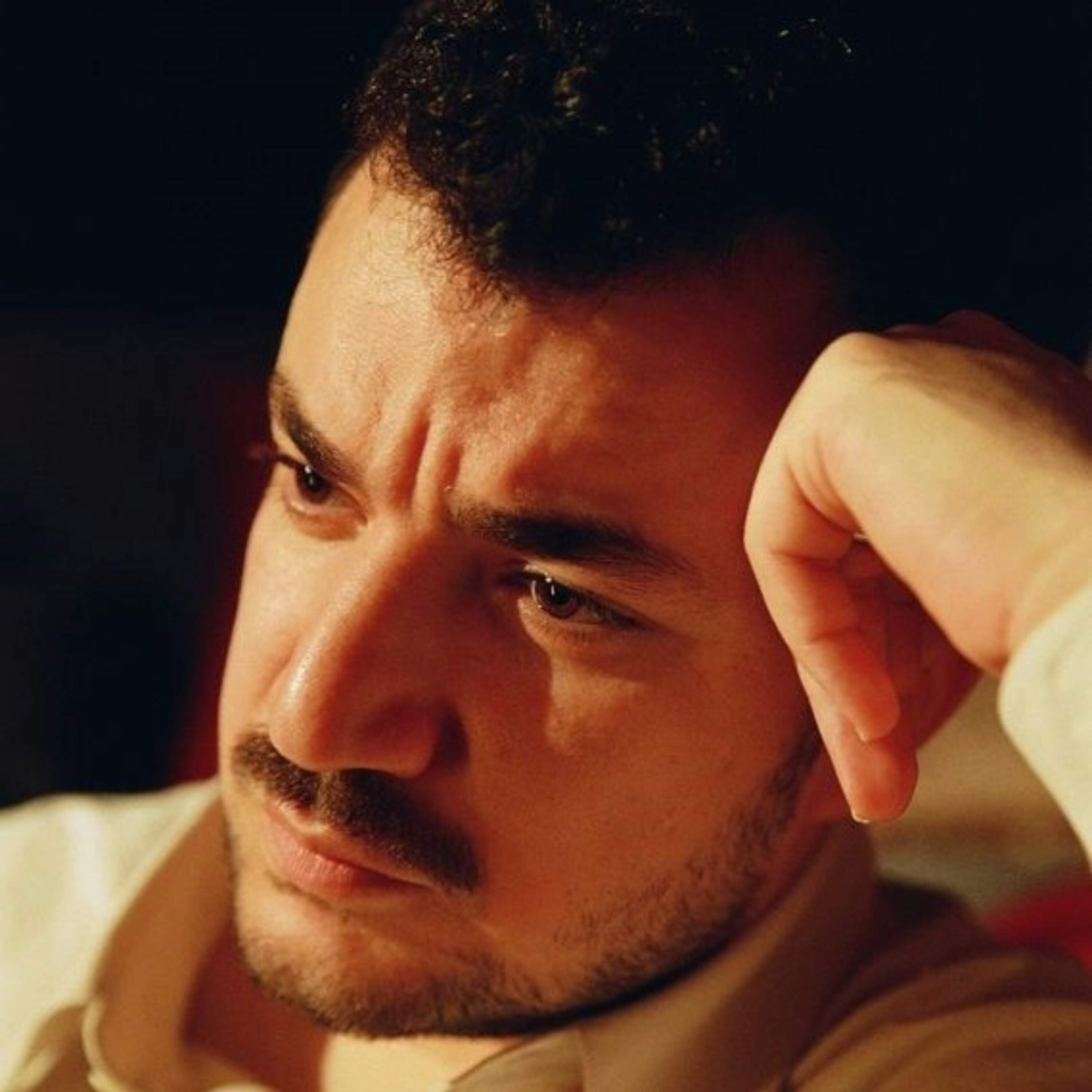
Khalil was born in a Palestinian refugee camp in Syria and fled the country at 18. He had a green card to be in the United States, and had become one of the most visible faces of the pro-Palestinian protests at Columbia University, where he had been a graduate student and a negotiator between the protesters and the administration. In 2025, he was arrested by ICE and sent to a detention center in Louisiana. He spoke with Tonya Mosley about the events, the pro-Palestine movement, and his hopes for the future. His memoir is No Land to Stand On.
See pcm.adswizz.com for information about our collection and use of personal data for sponsorship and to manage your podcast sponsorship preferences.
NPR Privacy Policy
See pcm.adswizz.com for information about our collection and use of personal data for sponsorship and to manage your podcast sponsorship preferences.
NPR Privacy Policy
More from Fresh Air
All episodes
We use cookies.They keep VO running smoothly and help us improve it. Privacy policy