
 Ask ChatGPT


In short
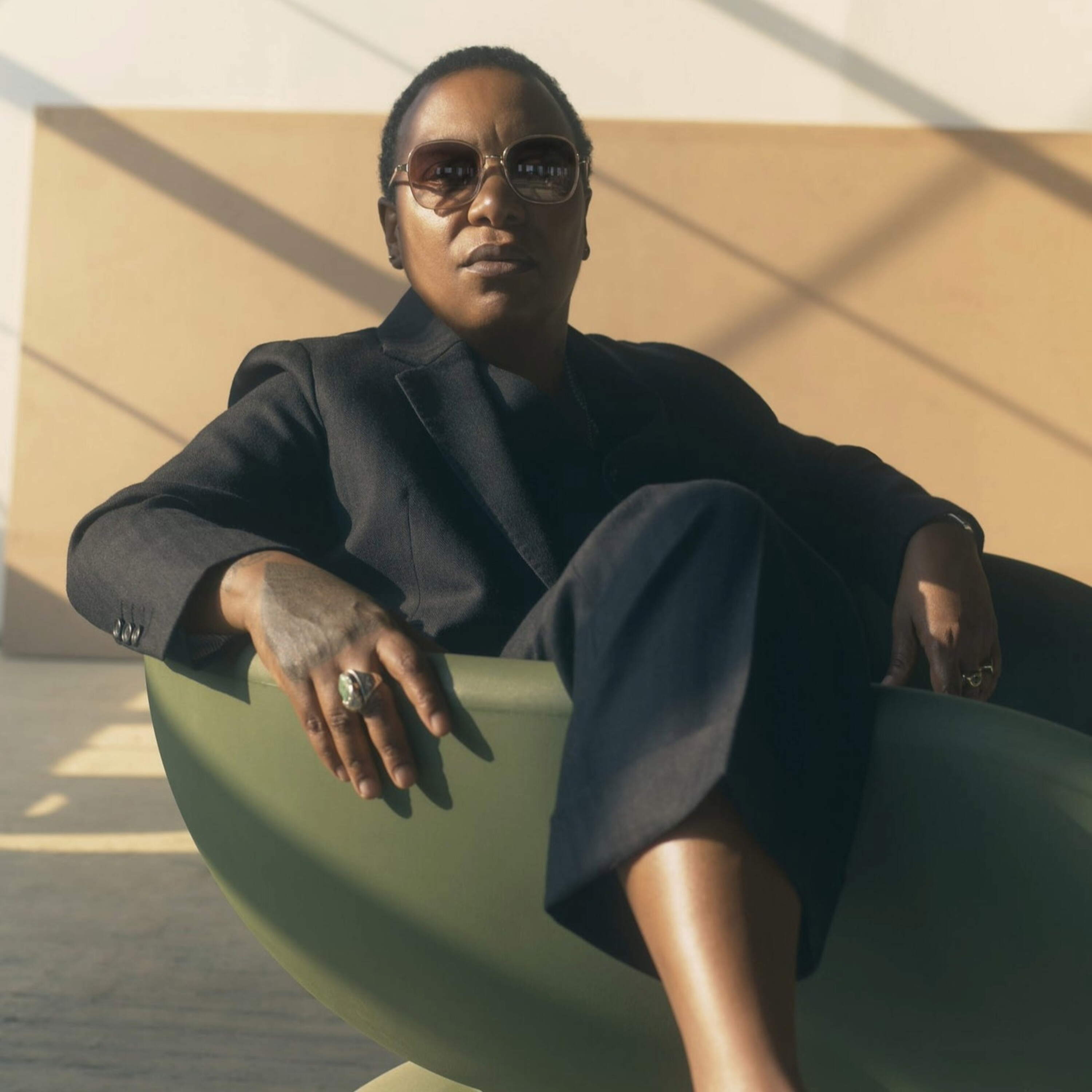
Fresh Air interview with Grammy-winning musician Michelle Ndegeocello about her new album Synonym, which reimagines well-known duets and songs “inside out” through queer liberation, Black and brown visibility, and genre-bending arrangements. She discusses working with collaborators to reshape vocals, drums, and horn parts, and how music can feel raceless and genderless.
Guest backgrounds
Michelle Ndegeocello is a 1990s-era breakthrough artist blending funk, soul, and hip-hop; she’s also composed for TV (including Ava DuVernay’s Queen Sugar) and created an acclaimed James Baldwin musical tribute (No More Water, the Gospel of James Baldwin). She’s known as a bassist and arranger as well as a vocalist.
Key claims
She treats arrangements as essential (highlighting arrangers like Levon Henry), says Cat Power deconstructed her vocal approach on “Don’t You Want Me,” and argues gender should be the last thing listeners notice. She describes her husky voice as a “different color” and frames the album as liberation for multiple marginalized groups.
Notable examples
Human League “Don’t You Want Me” with Cat Power; Sonny & Cher “I Got You, Babe” with Anoni; “If That’s Your Boyfriend” (from a humiliation/shame origin story); Bob Dylan “With God on Our Side” featuring Bill Callahan and Chris Steely.
Written by AI. May contain mistakes.
Chapters
0:53
Exploring Musical Evolution
Discussion on Indeggiocello's diverse musical background and influences.
“That says you're dying and crying Ooh, ooh, ooh, ooh The wild night is going That's Michelle Indeggiocello with John Mellencamp covering Van Morrison's Wild Night in 1994.”
2:06
The Human League's Influence
Indeggiocello discusses her interpretation of 'Don't You Want Me' with Cat Power.
“like this version of the Human League's 1981 hit, Don't You Want Me, which she records with Cat Power.”
2:44
Redefining Vocal Styles
Indeggiocello shares how Cat Power influenced her vocal approach.
“Michelle Indeggiocello, welcome to Fresh Air.”
4:28
Reimaginings of Classic Duets
Discussion of Indeggiocello's reimagined arrangement of 'I Got You, Babe'.
“It's like, yeah, Cat and the Ghost of Other Feelings came in.”
7:21
The Role of Arrangers in Music
Indeggiocello emphasizes the importance of arrangers in music production.
“And I just knew like our souls were aligned in a deep friendship through music.”
9:44
Music and Identity
Indeggiocello reflects on the intersection of music, race, and gender.
“And I realize we're all on this journey together, and we're all doing the best we can.”
12:53
The Comfort of Music
Indeggiocello describes her early experiences with music and its impact.
“You've said in particular that music is one of the rare times when you feel raceless and genderless, and I want to understand that experience.”
14:00
Exploring DC Go-Go Music
Learn about the unique characteristics of Go-Go music and its cultural significance.
“And for those who don't know, DC, Go-Go is kind of like DC's homegrown answer to funk music.”
20:12
Sponsor Messages
Listen to various announcements and messages from sponsors of the show.
“Stay tuned for the following announcements and messages from our sponsors.”
22:05
Michelle Ndegeocello on James Baldwin
Discover Michelle's reflections on her album inspired by James Baldwin and her upbringing.
“the album No More Water, the Gospel of James Baldwin, which came out in 2024.”
Show all 16 chapters
28:00
Exploring Michelle's Family History and Challenges
Michelle reflects on her mother's struggles, race, and family dynamics.
“So my mother basically went into menopause in her 20s.”
31:22
Michelle's Journey to Music and Identity
Michelle discusses her early work experiences and the evolution of her musical identity.
“When it comes to the concept of IQ, who gets to be smart?”
38:26
The Story Behind 'If That's Your Boyfriend'
Michelle shares the story and emotions behind her song, 'If That's Your Boyfriend'.
“a demo tape or you were asked to sing from someone by someone else.”
42:55
Introduction to 'With God on Our Side'
Explore Meshell Ndegeocello's new interpretation of Dylan's song about war.
“On NPR's Wildcard podcast, Busy Phillips, on the moment her doctor told her she had a brain tumor, and I was like, okay, can this wait till November?”
43:26
Meshell Ndegeocello's Musical Insights
Discover Meshell's perspectives on Bob Dylan's lyrics and musical arrangement.
“And it's a song about how nations justify war and violence by believing God is on their side.”
47:45
Closing Thoughts and Future Content
Reflect on the conversation with Meshell and preview upcoming episodes.
“Michelle Ndeghi-Acello, this has been such a pleasure to talk with you.”

Ask about this episode
Get the gist, explore an idea or ask about something said.
 Claude
On Fresh Air, what are the key points of this episode?
Searching your listeningTranscript
Automatic transcript. May contain errors.
0:00This message comes from Capella University. That spark you feel? That's your drive for more. Capella University's FlexPath Learning Format lets you earn your degree at your pace, without putting life on pause. Learn more at capella.edu. This message comes from the Wallace Annenberg GenSpace, proud supporter of Your Turn with Alison Aubrey. Available now wherever you get your podcasts. This is Fresh Air. I'm Tanya Mosley. My guest today is Michelle Indeggiocello, and you might recognize her vocals and bass from this song.
0:52And the wind that catches your feet That says you're dying and crying Ooh, ooh, ooh, ooh The wild night is going That's Michelle Indeggiocello with John Mellencamp covering Van Morrison's Wild Night in 1994. By then, Indeggio Cello was already making a name for herself, with music that defied easy categorization. Her songs could ache with romantic longing while celebrating Black beauty and sensuality and the freedom to define yourself. She once described them as broken-hearted revolutionary love songs. Over three decades, she's moved between funk, soul, jazz, and rock, composed music for television, including Ava DuVernay's Queen Sugar, and created an acclaimed musical tribute to James Baldwin.
1:52Now on her new album, Synonym, Indeggiocello reimagines familiar duets with an eclectic group of artists, from Chaka Khan to Brandi Carlile, creating arrangements that challenge how we hear songs we thought we knew, like this version of the Human League's 1981 hit, Don't You Want Me, which she records with Cat Power.
2:36Don't you hold me, baby. Don't you hold me. Michelle Indeggiocello, welcome to Fresh Air. Oh, wow. Thanks for having me. It's such a pleasure. What a groove that song is. And you know, I was thinking as I've been listening to it that the original version by The Human League, it always sounded to me like a plea to be wanted. And in this version with Cat Power, nobody is begging. It is such a groovy kind of island-like feel. What did you hear in the original that you wanted to bring out? Oh, I thought it was this anthem at the time when I first heard it of just such vulnerability. Yet the so-called man in the song is also saying, you know, I made you.
3:35How can you leave me? So it's kind of cheeky and weird in a way. And I think that bass line just speaks for itself. And production-wise, we just, I don't know. I think Lee Scratch Perry's Ghost came in and was like, do it like this. You've said Cat Power during the recording of this kind of taught you something about using your own voice rather than imitating the original. What were you doing differently as a vocalist because of her? Oh, like I had made a scratch vocal and I kind of really stuck to the melody. And she totally deconstructed it and heard it how she felt it in her body and mind. And it just made me, once I got her track back, approach it in a totally different way.
4:27And I think that's when we also re-envisioned the drums. It's like, yeah, Cat and the Ghost of Other Feelings came in. And I had to remember that's what I enjoy about music. It's unifying. You can get five people in a room and they're unified through one song. or you have this great composition, an outline, now it's time for me to create a different palette and paint it differently. And so she's a great song stylist. And I know we have these differentiations and genres, but to me, she's like a jazz singer. She took a standard and made it her own, you know, and that really opened me up. What is so interesting, I mean, about this album is you're really taking us in a different space to think about things outside of the particular voices and relationships with songs that we typically have, especially these classic ones.
5:33And the next song I want to play is one that I think almost everybody knows. It's Sonny and Cher's I Got You, Babe, which was originally written by Sonny. He composed the song for himself and Cher in 1965. That original version, there's something so sweet and almost defiant about the original. It's like two people who are insisting that they have each other, and that's enough. I want to play your arrangement with British singer-songwriter Anoni. Let's listen.
6:14We tell our money's all been spent I guess that's so We don't have a pot But at least I'm sure Of all the things we've got Baby Baby I got you baby I got you baby I got flowers in the spring I got you to wear my ring When I'm sad, you're such a clown And I get scared when you're not around Oh my gosh. Can I just say, I mean, I just, I love this version. It makes me just want to run and twirl. And like, I just, it's such a beautiful arrangement. I just want to tell you that first off, give you your flowers with that. Well, I want to share those flowers with Levon Henry, someone who's very, very important to me.
7:25And I just knew like our souls were aligned in a deep friendship through music. And I've watched him grow. But when I had an idea for the song, I gave him my emotional wants and desires and hopes for the track. And he came back with that arrangement for horns. And I just want to talk about the importance of an arranger. And that's what I really hope people notice on the record, is that I just want to show and highlight that that's what I love to do. And I come from, my dad played in the Army Blues, Pershing's Own. He played Ford's Inauguration, Reagan's, and he played in their big band. And they would have guest arrangers to keep the music fresh.
8:20And so I learned that as a young child. Like that person, you don't know their name, but they're very important to a project. You have also said Anoni challenged you as a singer too. Yeah, definitely. What did she bring out in your voice that surprised you? You two together. It's so powerful. Yeah, again, I sung the song. I just sung the melody that was there. and then Anoni sent back her track and it just was like humbling because she also wrote an email like you need to do yours again and you need to just kind of rethink some things or phrasing is, you know, she just had ideas and directions and I have to say like when you get a certain place in your career people make grand assumptions that you don't want to be told what to do or given ideas.
9:15And I love when people go like, why don't you try this and do this? And it just really keeps my mind fresh and open. I get that. And I totally get too, as you get further and further in your career, people are less likely to correct you. And it's such a disservice because it doesn't help you grow as an artist. And from my understanding, it seems like that's what you're constantly on this journey of trying to grow. Oh, yeah. I realize sometimes I'm the elder, and sometimes I'm the youngest person in the room, and sometimes I'm right in the middle. And I realize we're all on this journey together, and we're all doing the best we can.
9:58And I'm really okay with what I don't know, and I think I've only gotten this far because I've been able to admit what I don't know. Your voice is so husky in this arrangement. And I've heard you say your voice has changed as you've gotten older. Has it changed what you can express as a singer? No, it's just a different color to paint with. Toshi Reagan says, you know, as you age, you lose those falsetto points. So, yeah, you lose. I've lost a lot of range. But I just, this is my natural voice, and I'm a huge fan of Scott Walker. And so it's just a color I have. And plus I thought it was a nice contrast to Anoni.
10:44I try to use my voice in a way that communicates like, you know, in church you got call and response or sometimes vocals can be a grounding. and I'm just trying to really approach it that way as I'm trying to emit something to you, communicate a story, and use my voice and storytelling to aid in that song's, you know, service. You know, many of these songs, they began as male-female duets, and you've reimagined them with artists like Anoni and you called the album an expression of queer liberation, but you have also said you hope gender is one of the last things that listeners notice. Oh, wow, you're really getting me on something that's been...
11:39You know, last week, Michelle Martin asked me about these tunes being sung by people of the same gender and I told her it was the last thing a person should think about. And that's true in that I want people to hear the music and just feel the feelings it brings. But I realized afterwards what she was asking, and I think I was just nervous. I guess the climate we're in, I can't say I'm not affected. But yes, the songs here were intentionally reimagined with people who are same-gendered or similarly gendered or non-gendered in similar ways. And this album is not just about rearranging chords and rhythms, but also about queerness and self-expression, visibility, liberation.
12:26And like these songs are synonyms for their originals, that liberation is a synonym for the liberation of black and brown people, of immigrants, of women and Jewish people and Palestinian people and indigenous people. because we might be very different, but we all live in these margins, and sharing the struggle for our rights and safety and dreams is extremely meaningful and powerful to me. You've said in particular that music is one of the rare times when you feel raceless and genderless, and I want to understand that experience. when you're completely inside the music, what changes in how you experience yourself?
13:17Oh, man. You know, I had a certain kind of upbringing, and the music was the only place I could find comfort, you know, or ease or camaraderie. Do you remember the first time you felt that? Oh, yeah, definitely. I mean, I played go-go music, and I would play like three nights a week for hundreds of people. You know, and you could see how they were affected by the music, the way they danced and interacted. And I knew I was a part of something that moved people or a catharsis or, you know, two hours of fun on the weekend. And for those who don't know, DC, Go-Go is kind of like DC's homegrown answer to funk music.
14:10Yeah. And it's like, to me, it's punk. It's everything. I mean, it's like, it has so much of the diaspora in it, but at the same time, it's very uniquely black American music. It's solely unique. The drummer plays for like an hour and a half, rarely stopping for maybe a few bars or so. But it's kind of a steady tempo. You have to be able to grind to it or dance certain movements. It's also what helps me, I think, the arranger that I am, because you would take popular songs from the radio and you would make them fit into the go-go genre. Go-go music, you mentioned how the crowd is with you. It's a back and forth.
14:58It's a call and response. And you're playing with other musicians. So it's a group of you creating the sound together. What do you remember feeling in that moment, though? Did you realize it kind of like as a freedom at the time? Or did you come to understand it that way later? Freedom, yeah. I mean, I grew up in a very, like, a lot of religious dogma. What was your family? Oh, born-again Christians. Okay, yeah. Like Baptist or Protestant? Yeah, Baptist. My mother's from Kitty Hawk, North Carolina, and my father is from Richmond, Virginia, and my grandparents, you know, from the South as well.
15:47I had all those biblical stories. And so I think music to me was all like, you know, not only something that brings you solace, it's a way to connect to the creator. I just, I think I've always embodied that. And so, I mean, listening to music was the beginning. I could close my eyes and not be me. I could live in the music, if that makes sense. my father practiced all the time so I could watch somebody and listen to someone just play the same thing over and over again like a raga or a mantra and there's something powerful in that in the breath this is only hindsight but like I describe my life as a childhood upbringing one of chaos and jubilation you know So music, yeah, music was a transcendent force, especially with the chaos.
16:54Your dad, you tell the stories about, your dad was a saxophonist with an army band. And you've told these vivid stories in the past of how the two of you would study arrangements by musicians like Duke Ellington and Count Basie. and the different ways they could interpret a song. What did your father teach you? What do you remember about those times when you guys were kind of dissecting that music? Oh, yeah, just, we would talk about tone. We would talk about comping, like when a soloist is taking, having his moment of self-expression. You know, some people love when the accompanying person is coloring out every harmony and chord in the arrangement, or some soloist like where you hint at it, and it allows them to be a little freer in their self-expression.
17:53We would talk about that. He was also very harsh. He was like, you're the bass players. And I think it's the reason I play the way I do. He was like, you are the foundation of the music. You are not there to, like, have self-expression. You are the structure of the song. Oh, what does that mean? How does that change your relationship to the entire arrangement when you are seen as that? Oh, that means I have to know the song. Like, the drummer, as long as he's got some idea of the time and the feel, he can kind of play what he wants and kind of guide us rhythmically. I think the bass sets the foundation of the chord, but they can still have great freedom.
18:35But if I mess up, you feel, when the bass depart, you can feel the groove and the song shift and change or sometimes fall apart in a good way or a bad way. The falling apart could be good. The redirection could be what you want. But the bass player, to me, is the foundation of the song, of the arrangement. I'm keeping it flowing and moving. That's how my father, because my father would play the NCO club, and his bass player, something happened, he couldn't show up. I think I was only 16, and I just started playing recently. And he was like, you're going to do this gig tonight. He was like, you just got to know the time, and you got to know, you know, just see the chord at the top and stay with the changes and, you know, just stay solid.
19:24And that's how he taught me to work with him. Like, this is your part in the tribe. Was that your first time working together? Oh, yeah, definitely. And then he didn't call the other bass player for the next couple of shows. Yeah, definitely. He was hard, and some of that stuff I look back on, I didn't like it. But then I'm so grateful, because I'm seeing now, he was just trying to make me better. Our guest today is Grammy Award-winning musician Michelle Indigiocello. You can keep up with Fresh Air by subscribing to our podcast on Apple or Spotify and leave us a review. It helps us a lot. More of my conversation with Michelle after a short break.
20:11I'm Tanya Mosley, and this is Fresh Air. Stay tuned for the following announcements and messages from our sponsors. At NPR, there's a little something for everyone. If you need advice for that big life change, try listening to Life Kit. If you want to know more about that new TV show, check out Pop Culture Happy Hour. And if you want to dive deeper into your favorite podcasts and enjoy perks like bonus episodes, archive access, and more, check out NPR+. Find out more and support the shows you love at plus.npr.org. On the latest episode of Sources and Methods, a blue tsunami, earthquake, avalanche, Democrats swept the midterms.
20:52What does this mean for President Trump's ambitions overseas? And why is Iran paying such close attention to the changeup on Capitol Hill? Listen this week to Sources and Methods, the national security podcast from NPR. On the latest Planet Money podcast, protesters in France are asking their government for more money for schools and for pensions. No, why not? There is a bunch of money in the world. Don't say there's no money. There is so much money. She's right. There is money, but maybe not for France. Why does the market seem to be turning on France? And what can the rest of us learn from this?
21:27Listen to Planet Money on the NPR app or wherever you get your podcasts.
21:42read it every Saturday after breakfast. The newsletter includes all the week's shows, staff recommendations, and Molly picks timely highlights from the archive. It's a fun read. It's also the only place where we tell you what's coming up next week, an exclusive. So subscribe at whyy.org slash fresh air and look for an email from Molly every Saturday morning. I want to actually play a little bit from the album No More Water, the Gospel of James Baldwin, which came out in 2024. And this song is called Love. Let's listen to a little bit.
22:40Love's a simple thing to make you should fall on love When it's dark, it's hard To live in love is to be uncertain To live in love is to bear the burden There's so many who yearn to know My life matters, you know To live in love is to be uncertain That's love from Michelle Indeghiaccello's album No More Water, the gospel of James Baldwin. I want to talk a little bit about this James Baldwin tribute album. I don't even know if calling it a tribute album, is that a correct way to say it? No. Well, Jason Moran introduced me to the Harlem stage. And once a year, they dedicate the theater to projects based on the works of James Baldwin.
23:51And I chose The Fire Next Time. And that was in 2014. And I lived with that book for a year in my pocket, reading it over and over again. My mother had a fourth grade education. and was a domestic most of my life. And it's a different dynamic when you teach your mother how to read. You taught your mom how to read. Yeah, I aided her in just trying to get better at it. As a child? Yeah, as a child, reading the Bible. And my father would, like, you know, in the Army you get the Reader's Digest and, you know, books from Disney. So, I mean, growing up, I definitely could recite, you know, sonnets from Shakespeare.
24:39I knew all the Disney stories. You know, I had Reader's Digest, and my father gave me National Geographic and Life magazine. So, you know, and he too was like, if you read, life would be okay. He definitely made sure that I could. My brother, not so much, but I could. So once I got Baldwin, I realized there are huge gaps in my education. And also my father was like a Republican. My father was quite conservative. There was no black power or anything, you know. Even though I watched him in the Army constantly be passed by his white counterparts in rank, knowing that he not only was the better musician, but had been there for over 26 years.
25:32What did it mean to be a Republican during that time period, a black Republican? I mean, yeah, he just, he espoused some views, and I only feel comfortable now, you know. I try not to disparage those who are not here to defend themselves. I just think he grew up in a certain way where it was like He believed, you know, pull yourself up by your own bootstraps. So I just, I can't say, I won't speak for him, but he just was conservative fiscally. He believed in the American dream. And you couldn't have conversations about systematic racism, even though he experienced it. My parents are both born in the 40s.
26:18How did you interpret that with him? That you could see very clearly that he faced all of this in his own work in life, but he had these views at the same time, these contrasting views to what his real experience was. Oh, I think as Baldwin illuminated for me, he has a part in the book, and I'm paraphrasing, forgive me, was stuck with me. He says most of our men went off into the military to be ruined. I think is very close to the quote. And my father had a circumstance where he was given a choice. I don't think he wanted to be drafted. And so he joined voluntarily. But I think it changed my father's life.
27:05He went to Germany, had a really good experience there. I was born there. My brother's born there. Some tragedies happened. But my father, he was just like, I think what he experienced there made him come back and say, I got to make the best of this. Like my dad was a man's man in terms of his excesses of philandering and libations consuming. and him and my mother had a very intense relationship with one another. They both had secrets and traumas. Like I said, these are people of color born in the 40s. Civil rights is only as old as I am, as the child they had. When I was born, 1968, is when things changed in their life.
28:04on a global scale. That's why I have such empathy and grace and humility to how I was brought up, because I can't imagine my mother being the only black person in a German hospital giving birth to me and then having a complication, and they give her a full hysterectomy before they knew you could leave the ovaries. So my mother basically went into menopause in her 20s. And so my mother was severely depressed. She also lost a child when that child was very young in Germany. That's one of their secrets. They would never talk about how. And my mother is mixed race. And it was clear that that child wasn't my father's.
28:57But I look at it now as like, who am I to even begin to judge them? Because again, I cannot imagine what my mother went through having a fourth grade education, hormonally imbalanced, dealing with grief.
29:17It's just complicated beyond my grasp, also with religious dogma. And my mother didn't have her own checking account until 84. And I'm just looking back on those things. And at the same time, you're supposed to big up yourself, have pride for your race, excel economically, try to make it better for the next generation. That's what I'll say. I think my father was like, he would always say, whatever you do, be the best at it. You know, I think he just wanted to, he knew like this life was singular. and he tried to make the best of it and find the joys he could. And I thank my mother as well. But like I said, she just was...
30:06Having children myself, it hurts to know. But then again, I'm like, I just can't imagine what she felt or went through. Our guest today is Grammy Award-winning musician Michelle Indeghiaccello. We'll be right back. I'm Tanya Mosley, and this is Fresh Air. Stay tuned for the following announcements and messages from our sponsors. I'm Kevin Roos. And I'm Casey Newton. And together, we've been tech journalists for decades. Now, we're your hosts of Machine Gods, a new podcast from NPR that makes sense of what AI means for your work, your life, and all of our futures. Twice a week, we'll be exploring the biggest moves in tech and give you unmatched access to the real titans of industry.
30:47Listen to Machine Gods from NPR on the NPR app or wherever you get your podcasts. This message comes from Prolon. Want to look and feel your best this fall? Prolon's five-day fasting mimicking diet is a clinically developed nutrition program with the goal of promoting fat loss while protecting lean body mass. Developed at USC's Longevity Institute, it aims to assist the body in entering a fasting-like state that helps reset metabolism, target visceral fat, and support healthy metabolic markers. Get 15 % off plus a bonus gift when you subscribe at prolonlife.com slash NPR. When it comes to the concept of IQ, who gets to be smart?
31:25President Trump and Silicon Valley are obsessed with measuring intelligence. But if AI is the ultimate super intelligence, where does that leave the rest of us? I'm Brittany Luce. And I'm B.A. Parker. And together, we're exploring the history of intelligence testing. And the parameters around smarts, knowledge, and race. Listen to It's Been a Minute and Code Switch on the NPR app or wherever you get your podcasts. I really love learning about early jobs that people had that I interview. And I read that through your dad's connections in the military, you actually worked in food services at the Pentagon for a minute when you were around 14.
32:06Yeah. You also said that wasn't a fit for you because you were uncomfortable working in a place where wars were made. But then years later, you considered joining the Army. Yeah. I mean, I was about 16. How were you thinking about it back then? Yeah, because I got a work permit because school wasn't working for me. Because I know I'd be a really good soldier. Sadly, I think I'm constantly, as I look, and this is only in hindsight, for someone to tell me what to do. The rebellion that I had falls apart sometimes, and I could see that I'm like, yeah, I'm only as good as what I'm around, and I was a little bit too easily led.
32:57And to give an angry young person a weapon, I'd probably be very efficient, and I had a lot of anger at that time, and I look at that. But at the same time, I look at the military, because I have a complicated relationship with it. And that changed my father's life. It allowed us to have health care. It allowed him to get a mortgage. It gave him discipline in ways that he did show up for us. I mean, I think at that time, too, when I took the test. Oh, you took a test? Okay, you were serious about it. Oh, yeah, and I got into the Army. Wow. Because I had a kid. I had to figure out what I was going to do.
33:37and my mother was totally against music. Even when I made my first record and was making probably more money than her, she would always ask me, when are you going to get a real job? When you came on the scene back in the early 90s as yourself with your shaved head and like your boldness, it felt like we were watching someone who was telling us like, Like, this is, it's okay for you to be who you are. Yeah, I think I was faking it till I made it. I mean, when I look back, I was incredibly naive, which I think is, can be a safety and a blessing, but sometimes it has repercussions, you know. I'm glad I wasn't so savvy, you know, about creating some sort of character to sell, some sort of persona.
34:41I look back down, I'm like, wow, I'm just really winging it and trying to be myself. But I'm also, as I move through space and time, authenticity can be unsustainable as well. You have to keep something for yourself. When you released Plantation Lullabies, nobody was calling it Neo Soul yet. And then came a lot of other artists, D 'Angelo and Maxwell, Erykah Badu. And suddenly there was this whole movement and people then began calling you its mother. And I've always wondered, what is your thought about that title? Does it fit? No, not at all. I don't think at all. I mean, generalizations are made so that you can sell a product.
35:28It's a cool moniker, but like Ecclesiastes, there's nothing new under the sun. And that's far from true. Yeah, I just think, you know what the common thread between me, D 'Angelo, and Erykah Badu is? Is an engineer named Bob Power, who's my mentor and someone I love very dearly. Just a life-changing person for me. And I think that sound that people are talking about is that warmth that he brought to mixing and engineering at that time. But I think these are three artists who are grounded in the black American music diaspora with all these ghosts of Africa. And I think that the common thread there, again, is just people who weren't afraid to have a self, be a self.
36:27So why doesn't it fit? Why doesn't that? New soul? No, I think we just, I'm just soulful. I mean, I'm just Phoebe Snow, Roberta Flack. There's nothing new to what I'm doing. Curtis Mayfield. I'm just a child out of Curtis Mayfield. I'm just a child from George Clinton. There's a lot he's given us lyrically about upliftment. I'm a child of James Brown, Dorothy Ashby. I'm a child of Jerry Allen. You know, I'm like, I'm not the mother of anything. You know, if anything, you know, the record that most influenced me is a Clifford Brown record my father gave me. Brown Eyes, you know, I know that's in there.
37:16And Bobby Humphreys and Gil Scott Heron and Nikki Giovanni. Or, you know, I didn't know it then, but I think I'm more connected to Nina Simone, someone who didn't sing at first, wanted to just be a musician. And they told her, you know, you got to come back to this gig and sing some songs or you don't keep this gig. And so she sang or, you know, George Benson started out just as a singer and then they told him he needed to play an instrument. It wasn't enough. So he picked up the guitar. You know, like I'm a child of that. I'm someone I'm a person of color who would have been a good soldier, who could not be in I.T., who could not go to college or be a banker.
38:03so I had to use what I had to make the best of what I could for the children that I have chosen to take care of. So I'm the mother of nothing. I'm the child of many. I'm just wondering if it hit not because you tell the story many times about how you became a vocalist to start. Some of the stories you tell are that vocalists kept like not showing up when you were trying to make a demo tape or you were asked to sing from someone by someone else. But like if none of those things had ever happened, do you think you would have stepped into musicianship as a vocalist or would you have taken another path maybe with bass or with other instruments?
38:44Yeah, I just, I sung out of necessity. I am a child of hip hop. Definitely that's a big influence. But yeah, it's just, I knew I would never be a virtuoso like Jaco Pastorius or Wayne Shorter, but I knew I wanted to create and write pieces of sound that would inspire virtuosos to want to play it. I know once I discovered Catana Veloso that there was something else deeper to what music could be. You could change the landscape, change the feeling in the room and society. I also met a young man named Deontany Parks, and he showed me that it was also this way of tapping into the universe in a different way.
39:35And I just feel like I have more faith than I have knowing, and I try to get out of my own way. I want to play one of the breakout songs from that album just a little bit. If that's your boyfriend, he wasn't last night. Let's listen. You say I'm out of line, funny, he said I could call him up anytime, you could call me wrong, say that I ain't right, but if that's your boyfriend, he wasn't last night. I'm the kind of woman I'll do almost anything to get what I want, I might play any little game. Call me what you like, but you know it's true, you're just jealous, cause he wasn't with you, don't mean no harm.
40:12I just like what I see and it ain't my fault if he wants me. Got what I wanted and the feeling was right, if that's your boyfriend, he wasn't last night.
40:31All right, that's going to be in my ear for the rest of the day, that earworm. That was Michelle Indeggie Ocello singing If That's Your Boyfriend. You know, you've told this story many times about how this song came about. You were involved with a man whose girlfriend confronted you and mocked your appearance because she couldn't imagine that her boyfriend would be attracted to you. And out of that humiliation came this incredibly defiant song. When you listen to it now, what do you hear underneath all of that bravado? Oh, wow. Shame sometimes and humiliation. Yeah. I mean, it was hard. What was hard?
41:12Just to, like, fight for your place, you know. and I didn't know much about romantic interactions or trying to have a relationship. So it's really the bravado is just like, you know, a catharsis. I'm just trying to like, you know, big up myself. That's all. Just like any other emcee. Just trying to big up myself. If you're just joining us, I'm talking with musician and composer Michelle Indigiocello. She rose to prominence in the 1990s with her groundbreaking blend of funk, soul, and hip-hop. Her new album is called Synonym. More of our conversation after a break. This is Fresh Air. Stay tuned for the following announcements and messages from our sponsors.
42:01The number one issue in America right now is the economy. Whether it's the high price of gas, a potential AI bubble, or the unsteady job market. At NPR's The Indicator, we've got you covered. Understand the economy in 10 minutes or less each day. Listen to The Indicator from Planet Money on the NPR app or wherever you listen to podcasts.
42:25This message comes from Prolon. Want to look and feel your best this fall? Prolon's five-day fasting mimicking diet is a clinically developed nutrition program with the goal of promoting fat loss while protecting lean body mass. Developed at USC's Longevity Institute, it aims to assist the body in entering a fasting-like state that helps reset metabolism, target visceral fat, and support healthy metabolic markers. Get 15 % off plus a bonus gift when you subscribe at prolonlife.com slash NPR. On NPR's Wildcard podcast, Busy Phillips, on the moment her doctor told her she had a brain tumor, and I was like, okay, can this wait till November?
43:05Like, I have to shoot this TV show, so I don't know if this is going to work for me. Watch or listen to that wildcard conversation on the NPR app, YouTube, or wherever you get your podcasts. I want to close with the last song on your new album, Synonym. It's originally sung by Bob Dylan. It's Bob Dylan's With God on Our Side. It was written in 1963. And it's a song about how nations justify war and violence by believing God is on their side. And your version features Bill Callahan and Chris Steely. And do you sing on this particular song? Yeah, I'm at the end. I'm in there. Trust me. I try to tell people, especially as a bass player, it's more important that you feel me than hear me.
43:57You have to feel the bass as well as, you know, audibly hear it. That's the power of it, the low end. And my voice is definitely in there, and you would miss me if I was gone. But I'm in there, existing among others. Let's listen. Oh, my name, it is nothing. My age, it means less. The country I come from Is called the Midwest I was taught and brought up there The laws to abide And that the land that I live in Has got on its side Oh, the history books tell it They tell it so well The cavalry's charged The Indians fell The cavalry's charged The Indians died Oh, the country was young With God on its side Oh, the Spanish-American War had its day And the Civil War, too Was soon laid away And the names of the heroes I was made to memorize With guns in their hands And God on their side Oh, Michelle, you have said that you listened to Dylan's original.
45:58And when you listened to it, you heard more aggression in the lyrics than what the folk arrangement kind of allowed. And this arrangement, I mean, every single word is like on full display. What were you hearing in these words that you felt the music wasn't fully expressing or that you could express in this particular arrangement? Well, I got to say, I'm new to Dylan, too. He's another human being who's just changed my consciousness. My friend Chris Bruce gave me Chronicles, which I read when he gave it to me in like 2011, I think. I'm not sure. But yeah, and then it hit me and it hurt my feelings because I used to think he was kind of trolling us.
46:47Like, why does he sing like that? Is he making fun of black people? Or I don't know what he's doing. I couldn't get it. Oh, that's interesting. Yeah. And then we would be on, we'd go on tour and we'd play music for each other and they would play these incredible songs by Bob Dylan. And then I read the book again and it was like another tome to shift my consciousness to see life as this performance and you have to choose how you want, what clown you want to be in this circus. And then to know his spiritual insights. And then I just started looking at the words. And I can't imagine his effect on people in the 60s.
47:25They must have thought he was like straight from heaven, you know, just what he was able to vocalize. Yeah, what he was expressing. So it just rang so true for me, and I wanted that to be the forefront of the song. Michelle Ndeghi-Acello, this has been such a pleasure to talk with you. Thank you so much. You too. I'm so grateful for your time and kindness. Thank you so much. Michelle Ndeghi-Acello's new album is called Synonym. Tomorrow on Fresh Air Writer David Troyer's Ojibwe mother Saw America as a country that tried to destroy her people His father, a Jewish refugee Saw it as the country that saved his life In his new book, The Savage Mind Troyer explores how that violent history Still lives inside of us I hope you can join us To keep up with what's on the show And get highlights of our interviews follow us on Instagram at NPR Fresh Air.
48:28Fresh Air's executive producer is Sam Brigger. Our technical director and engineer is Audrey Bentham. Our interviews and reviews are produced and edited by Phyllis Myers, Anne-Marie Boldonato, Lauren Krenzel, Teresa Madden, Monique Nazareth, Thea Chaloner, Susan Yacundi, Anna Bauman, and Nico Gonzalez-Whistler. Our digital media producer is Molly C.B. Nesper. Roberta Chorrock directs the show. With Terry Gross, I'm Tanya Mosley. When the river was deep, I didn't falter. When the mountain was high, I still believed. When the valley was low, it didn't stop me. I knew you were waiting, knew you were waiting for me.
49:16You were waiting for me.
49:23With an endless desire I kept on searching Sure ain't how my eyes would meet And like a bridge that's so far The heart is over One touch and you set me free I don't regret a single moment No, I don't. I know you don't. I know you don't. Stay tuned for the following announcements and messages from our sponsors. Happy fall! Yes, the days are getting shorter and colder, and the rain can be a drag. But this is also the perfect time of year to get cozy. LifeKid has lots of ideas so you can embrace the change of seasons. with episodes on everything from making soup to exercising outdoors. Listen to the Life Kit podcast in the NPR app or wherever you get your podcasts.
50:22This message comes from Grainger. For the ones who get it done, Grainger offers the professional-grade products you need to get the job done. With fast delivery and access to technical product experts ready to help you meet any challenge. Call, click Grainger.com, or just stop by.
From the publisher
Grammy-winning singer, bassist, and composer Meshell Ndegeocello helped shape the sound that became known as "neo-soul," but she's spent more than three decades resisting the labels placed on her and her music. Now, on her new album, Synonym, she's reimagining familiar songs, including duets made famous by Sonny and Cher and the Human League. But these aren't simply new arrangements. “This album is not just about rearranging chords and rhythms, but also about queerness and self-expression, visibility, liberation," she tells Tonya Mosley. Meshell talks about her "soulful" musical influences, growing up in the Baptist church, and why she loves 'Wicked.'
Subscribe to our free weekly newsletter
Follow us on Instagram
Subscribe to our YouTube channel
Check out the Fresh Air Archives
See pcm.adswizz.com for information about our collection and use of personal data for sponsorship and to manage your podcast sponsorship preferences.
NPR Privacy Policy
Subscribe to our free weekly newsletter
Follow us on Instagram
Subscribe to our YouTube channel
Check out the Fresh Air Archives
See pcm.adswizz.com for information about our collection and use of personal data for sponsorship and to manage your podcast sponsorship preferences.
NPR Privacy Policy
More from Fresh Air
All episodes
We use cookies.They keep VO running smoothly and help us improve it. Privacy policy