
 Ask ChatGPT


In short
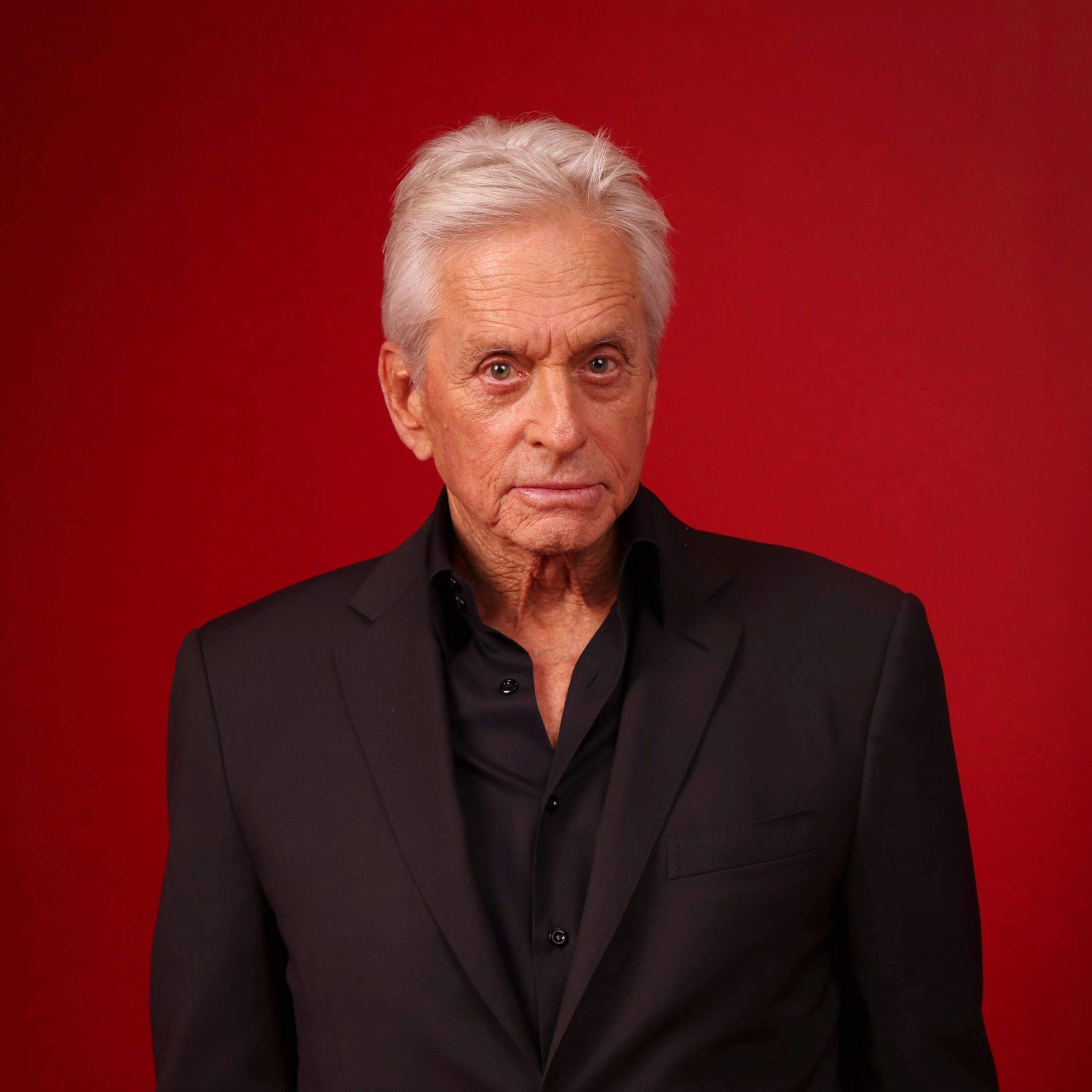
Michael Douglas discusses his memoir One Hell of a Ride, connecting his on-screen roles to his off-screen life—family legacy, addiction, affairs, cancer, and his son Cameron’s drug troubles—while also reflecting on how specific films intersected with real-world events.
Guest backgrounds
Oscar-winning actor/producer Michael Douglas, son of Hollywood star Kirk Douglas; known for Wall Street, Fatal Attraction, Basic Instinct, The War of the Roses, Traffic, and producing One Flew Over the Cuckoo’s Nest (which won an Oscar).
Key claims
He says playing flawed, money/sex/control-driven men wasn’t a stretch; his acting approach changed during Fatal Attraction (“acting is lying”); he describes tabloid-driven rehab rumors; he links film themes to political/news flashpoints (e.g., Three Mile Island after The China Syndrome).
Notable examples
UC Santa Barbara hippie years and alleged marijuana dealing; Danny DeVito friendship; taking over Cuckoo’s Nest production and replacing Kirk Douglas with Jack Nicholson; research with GE scientists for The China Syndrome; Cameron’s 7.5-year federal prison sentence; Kirk Douglas’s transformation after a helicopter crash and stroke.
Written by AI. May contain mistakes.
Chapters
1:34
Growing Up with Kirk Douglas
Michael discusses his complex relationship with his father, Kirk Douglas.
“And Michael Douglas, welcome to Fresh Air.”
2:10
Childhood Memories of Discipline
Michael reflects on corporal punishment and his father's strictness.
“He just simply as a person, he had an energy, a physical strength, a tenacity that was very unique.”
4:10
The Influence of Step-Father Bill
Michael shares emotional moments with his step-father Bill Derritt.
“Your mother, Diana Dill, had her own acting career, and when you were about five, she and your father separated, and she married Bill Derritt, who was an actor, writer, and producer.”
5:58
Discovering Independence at 21
Michael recounts his coming-of-age experience and becoming a drug dealer.
“I know a lot of other people out there didn't have that opportunity.”
8:06
Friendship with Danny DeVito
Michael talks about his friendship with Danny DeVito and its significance.
“And so I would go back on the holidays back east to see my mother after paying maybe, I think it was like$70,$75, a kilo for the marijuana in California.”
10:30
Cuckoo's Nest Production Journey
Michael discusses his father's passion for 'One Flew Over the Cuckoo's Nest' and his own role in making it happen.
“But in the second year that I was there, the American Academy of Dramatic Arts came up with a production and Danny DeVito was part of the acting ensemble.”
14:00
Michael Douglas Discusses His Career and Family
Learn about Michael Douglas's journey as a producer and his relationship with his father.
“Where did you get that confidence from at that moment when you're still trying to figure out things?”
21:57
The Impact of Fatal Attraction and Basic Instinct
Explore how Michael Douglas's roles in iconic films intersected with his personal life.
“The men you're playing and the life you're living begin to overlap.”
28:00
Michael Douglas on Writing About His Past
Michael Douglas discusses the decision to reveal intimate relationships in his memoir.
“You write pretty candidly about this whole time in your life, including the rehab, and you name names of the women you had affairs with in this book.”
30:49
Michael Douglas Reflects on Family and Addiction
Douglas shares insights on his son Cameron's struggles with addiction and their impact on his life.
“And I just wonder as a parent, how watching Cameron's addiction might have made you actually understand more about your own, maybe that you hadn't before.”
Show all 12 chapters
37:41
Transformation Through Tragedy
Douglas discusses the transformative events in his family, including his father and son.
“your son changed after prison you changed after your tongue cancer diagnosis and you write that cancer made you a free man.”
42:00
Exploring 'East of Eden' Remakes
A deep dive into the various adaptations of 'East of Eden', focusing on character development and thematic changes.
“The next version of East of Eden arrived in 1981.”

Ask about this episode
Get the gist, explore an idea or ask about something said.
 Claude
On Fresh Air, what are the key points of this episode?
Searching your listeningTranscript
Automatic transcript. May contain errors.
0:00This message comes from NPR sponsor, the official Gilded Age podcast from HBO. Unpack each episode of the Gilded Age and hear from the people who bring 19th century New York to life. Watch the official Gilded Age podcast on HBO Max or listen wherever you get podcasts. This is Fresh Air. I'm Tonya Mosley. My guest today, Oscar winning actor and producer Michael Douglas, has spent much of his career playing men consumed by money, ambition, sex and control. As Gorton Gekko in Wall Street, he made greed is good a catchphrase. In fatal attraction and basic instinct, desire turns dangerous. And in the War of the Roses, marriage becomes warfare.
0:39And in traffic, the drug war reaches a father's own family. In his new memoir, One Hell of a Ride, Michael Douglas writes that playing these flawed American men wasn't exactly a stretch. He grew up the son of Kirk Douglas, one of the biggest movie stars of his generation. Michael won his first Oscar for producing One Flew Over the Cuckoo's Nest, a film his father had spent years trying to make so he could star in it. And when Michael later won an Oscar for acting in Wall Street, he thanked his father for helping a son step out of a shadow. But the memoir also looks at what was happening offscreen, a troubled first marriage, affairs, rehab, stage four cancer, and the addiction and legal troubles of his oldest son, Cameron.
1:27Michael tells that story through 12 of his films, tracing the moments when his work and his private life collided. And Michael Douglas, welcome to Fresh Air. Thank you, Tanya, and thank you so much for a lovely introduction. This was a book that I really enjoyed. Thank you so much for writing it. And, you know, for millions of people, your father was larger than life. He was Spartacus. And you spend a big portion of this book talking about what that meant for you. And you write that when you were young, he was just out of reach. What did that distance actually look like for you when you were a kid?
2:09Well, Dad was overwhelming. He just simply as a person, he had an energy, a physical strength, a tenacity that was very unique. and then as he grew and his career grew and Spartacus led the army and the Vikings when he walked across the oars and the Westerns when he drew a gun faster than anybody else. He seemed like an impossible man to match and I think both of my brother and I there was a question and an issue of how can we ever be the man that our father is. He was making five to six movies a year, was really overwhelmed with the pressure and with his guilt of having divorced my mother when I was five and my brother Joel was three.
3:10And so when we saw him, because we were growing up on the East Coast with my mother, and when we come out to see my father, he was so guilt-ridden about not being the father that he had hoped to be because his father had totally ignored him and given him no attention growing up. So there was a degree of pressure when we came together that he meant well, but there was such an intensity about him that it made it awkward. He was also of that generation that physically corrected behavior. He would hit you guys. He would hit us, yeah. Corporal punishment. Corporal punishment. My mother had the hairbrush.
4:00And that was a generation that wasn't so unusual. So the early years were tentative. We admired him, but were slightly afraid of him. Your mother, Diana Dill, had her own acting career, and when you were about five, she and your father separated, and she married Bill Derritt, who was an actor, writer, and producer. And there's a moment that you write about when one day you guys are talking, and suddenly you realize he's actually listening to you, and you become emotional. Why did you become emotional? What happened and I realized, and because of my early experiences with my father, I was used to people not listening to me.
4:45And I looked up at him in his eyes, and I saw a man who was listening, listening to what I had to say. And Bill turned out to be a wonderful surrogate father who my father greatly admired and called him that. He said, Bill was your surrogate father, and I'm eternally grateful for the responsibilities he took in raising you. You tell some really great stories about your origin growing up. There's a particular story you tell when you're 21 years old and you're finding yourself. You are out there in the world. You're actually in college. Your father gives you$10 ,000 and told you from then on that you were on your own.
5:38He also had given you two Italian leather suitcases. What did you discover you could do with those suitcases? Right. So I turned 21, and Dad said, All right, son. and he gave me a bond, a$10 ,000 bond, which I was very grateful for. I know a lot of other people out there didn't have that opportunity. But he said, you're on your own, so good luck. And I said, well, Dad, I'm very grateful, but, you know, I'm in college and, you know, tuition and expenses. And so one of the major transitions that had happened to me in going to college at the University of California at Santa Barbara, after having kind of grown up in the East Coast, going to private schools, prep schools, all boys schools.
6:41You know, many, many schools have a college advisor when you're in high school. And they have these brochures. And I stopped at one of the brochures. It said on the top, Campus by the Sea. And then underneath of it was a picture of a guy walking down the beach carrying a surfboard with two girls in two peace bathing suits. You know, so I was like, whoa, I want to go there. And, of course, Dad was very happy because he thought, isn't that wonderful? My son wants to be closer to me. and within the first year that I was out there, I started sliding into the artist section and by my second year, I really became a full-fledged hippie and all the wonderful flower child qualities that still remind me what a special magical time that was and of course, one of them was marijuana.
7:42So that was the background that was going on and I'm still trying to financially get by. And then I realized that my father had one Christmas given me these beautiful soft leather Italian suitcases and each suitcase could fit 22 kilograms of marijuana in it. And so I would go back on the holidays back east to see my mother after paying maybe, I think it was like$70,$75, a kilo for the marijuana in California. You became a drug dealer. I became a drug dealer. I became a drug dealer. I did. And I would take these 44 kilos back and sell them like$500. And that was how I was able to get through all that.
8:35But it was a story which I didn't tell for years. But Dan kept telling my brothers, Joel and Peter and Eric, Look at your oldest brother. He's never asked for anything. And I was in my 30s finally. I said, Dad, I've got a story I've got to tell you. And I told him this. And I still remember, and his mouth dropped. I said, I just want you to know that you kind of beat up on the kids about their meeting. But this is the reason why I didn't need any money. You tell some great background stories of the people that became your lifelong friends around this time. You meet Danny DeVito, and you guys were part of this summer theater for theater people, the O 'Neill Theater in Connecticut.
9:29You eventually become roommates in New York, and you guys are just two actors trying to make it. You're still figuring out who you are apart from your father. But what did being around Danny in particular give you permission to be? Let me go back a little bit just to give a background on the Eugene O 'Neill Memorial Theater because it was such a crucial part of what's happened in my career in the future. and I went back the last two summers of the college and then the third summer when I was out of college and the O 'Neill Theater had a play writers conference and I was able to be there at an extraordinary fortunate time of great writers like John Guare, Israel Horowitz, Lanford Wilson, Sam Shepard.
10:27It was a great, great period. And so for three summers, you would kind of sit there on the sidelines listening to the director talking to playwrights as to how they can restructure this and that to make something better. better. So I make a point about this because this was the core foundation of my career for the future because I'm really proud of the screenplays, the movies that I made that I worked on because they were so well structured that it made a big impression on me. But in the second year that I was there, the American Academy of Dramatic Arts came up with a production and Danny DeVito was part of the acting ensemble.
11:22And Danny, I know this is hard to believe, had long hair all the way down his back. He was, you know, real hippie. You guys are very much like the odd couple. If for nothing else, just in the visual. It's funny, there's that movie that he was in with Arnold Schwarzenegger where they're opposites. It really could have been the two of you. Yeah. Danny is not tall, but I don't think I've ever met anybody who is less conscious of their height. He was happy in his own skin, had a great sense of humor. He seemed to have an assuredness about his place as a creative, as an artist. And so I did wonder what being around him, being such a good friend and living with him, kind of gave you insight on regarding yourself.
12:15What did he kind of give you permission to be? Danny just seemed to accept me for who I was. Never went on about my dad or this or that. Just sort of took me at face value. He allowed me a vulnerability that I hadn't felt before. I didn't feel like I had to protect myself. We just had good times together, but just kind of hit it off. I think we both share kind of a dark humor, the War of the Roses. Which you all worked on together. Which we worked on together. And we kind of rooted for each other. I knew how hard he tried, but he also gave his best shot. even dealing with rejection, showed me how to behave or how to handle yourself as I dealt with my own.
13:10You know, Michael, there's something almost perfect about the way you and your father came to the story of Cuckoo's Nest from two different directions. So he was already, at the time, one of the biggest stars in the world, and saw the character of McMurphy from that story as really the role of a lifetime. And you were in college at UC Santa Barbara, taking LSD, protesting the war, just basically being a hippie, when you encountered the book by Ken Casey about the counterculture that he was writing out of. And years later, after your father had spent nearly a decade trying and failing to get this movie made, you stepped in.
13:56And you write, it was pure instinct. The truth is, I had no idea what I was doing. Where did you get that confidence from at that moment when you're still trying to figure out things? Because you had had no track record as a producer when you decided to do this. no I didn't and dad was selling the property he had tried for years to get it and R.P. McMurphy the lead of the book was a great character for him a fabulous character and then he tried for many years with his production company to make it and he couldn't get it made so he was selling it and I happened to hear over here when I was at the office sometime And I said, no, Dad, don't, no, please don't.
14:46Don't sell it. Look, let me run with it. I'll try to get you the money you want for it, get you to play the part and produce it. And Dad, so I'll be very grateful. I don't think he had much hope, but he said, okay, I'll give you a year. Your confidence to do this right, though, never having produced it. I mean, in one sense, you went into this wanting to fulfill your father's dream and make the movie with him as McMurphy. But instead, you eventually had to tell him that he wasn't going to play this part, in part because by the time you were able to get it made, he was too old for this part. Jack Nicholson ended up taking on that role.
15:30And I was just wondering, do you think becoming your own man kind of required the courage to disappoint your father? That's a good question. I certainly didn't know that at the time. I knew this was the most difficult thing that I ever would have to do, or I had been able to do up to that point, was to tell Dad that he wasn't going to play the part. Again, as the producer, one of the producers, it wasn't simply only my decision. It was the decision of the director, Nilo Schformen. But it was very hard because over the years, I recognize how seldom you get a really good part. And this would have been one of Dad's greatest parts to play, and he would have killed it.
16:22But 20 years had gone by, almost, almost 20 years since he'd been trying to get it on. And his position had changed in the industry, so it was the hardest decision to tell him. And in the years when he would remind me afterwards, I would say, because I did split my producing deal with Dad, and he was able to make more money off of that deal than any picture he had ever made as an actor. But when I took him up to show him the first cut of the movie, when he came out and he couldn't have been more of a gentleman, he said, Michael, you did a fantastic job. It's just a wonderful, wonderful movie. And Jack Nicholson did a great job.
17:16So it was a tough moment. And he was a total, complete gentleman about the whole thing. I think oftentimes people tend to assume that movie stars live in a bubble. But in particular, I'm thinking about the China syndrome, Wall Street, falling down, traffic. They all tapped into something people were feeling before Hollywood caught on. Where were you picking that up? and picking it up to the degree that you were willing to fight to the end to make sure that these types of films got made. And ironically, they always came right at the moment where we were at the flashpoint of a particular issue, like the drug war or the riots in Los Angeles right before falling down.
18:06I'm a news junkie. I follow the news and politics too much. And some things you also learn, for instance, the China Syndrome. I thought, when I first read the script, I said, what a great horror movie. I've never thought about a nuclear power plant being the monster, but this is a great horror picture. Now, in doing the research to make this horror movie, I learned a lot more about nuclear reactors and what was going on at that time. I was able to reach out to two GE scientists who used to work on the nuclear and the atomic plants that General Electric made, who had had a loss of faith and come over to the other side.
19:03They shared with us, us being Jane Fonda, my other co-stars and our director, some of the issues that exist with plutonium and things I learned about the half-life of plutonium and how it stays with us and the dangers of it. And so we used them. The end of our movie was a possible meltdown, and they helped us with what was the most likely scenario and all of that. So when the picture came out, there was a lot of criticism of how cavalier we could possibly be. And then the amazing thing happened, which was the movie opened, and it opened with good reviews and a lot of discussion. And then 12 days later, Three Mile Island happened in Harrisburg, Pennsylvania, which was a situation very similar to our movie.
20:11And for me, it was an epiphany. I am not a religious person, but this was close to religion that I had come to. And that act, I felt that somebody was telling me something about the severity of this and something that I should continue working on for the rest of my life. Our guest today is Michael Douglas. And you can keep up with Fresh Air by subscribing to our podcast on Apple or Spotify. And leave us a review. It helps us a lot. We'll be right back after a short break. I'm Tanya Mosley, and this is Fresh Air. Stay tuned for the following announcements and messages from our sponsors. This message comes from the UPS Store.
20:59Open this holiday to help with all your small business needs. Find a store near you at the upsstore.com. Most locations are independently owned. Products, services, pricing, and hours of operation may vary. See Center for details. This message comes from Whole Foods Market. Host Thanksgiving with industry-leading quality standards from Whole Foods Market. There are no antibiotics in their meat department, ever. So carve up turkey and spiral-cut ham with peace of mind. Shop organic sides like stuffing mix and cranberry sauce from 365 brand. And all their delectable pies are made with no high-fructose corn syrup.
21:34Gourmet Thanksgiving flavors with the quality you want only at Whole Foods Market. This message comes from Midi Health. Most women never get real answers about their hormonal health. Midi is changing that with virtual care covered by most major insurances. Understand your hormones. Visit joinmidi.com to book your first visit today. All right, Michael, when Fatal Attraction comes out in 1987, there's something that starts to happen in your career. The men you're playing and the life you're living begin to overlap. This is what you say in the book. And you write that you wanted to make a movie about lust and how it can destroy a man's life.
22:18And then you add, as someone who walked right on that edge sometimes, it fascinated me. What did you recognize in Dan Gallagher? Fatal Attraction was the first time that I changed my whole approach to acting. Somebody had told me earlier in my career, you know, Michael, the camera can always tell when you're lying. Ooh, and I look at the camera. In those days with those thousand-foot mags of film, and they looked like x-ray machines. The camera could always tell you you're lying. And what does that mean? What does it mean when you're lying? Because you're pretending anyway, right? Well, you are, except it's meant to me sort of method acting.
23:06The only way that you can act is to tear the makeup off your face or wipe it off and get down to your skin. And it's a very painful, frustrating way of acting. And so I start fatal attraction. I'm reading the script. I'm ready to dig into my character and say, okay, okay, he's a lawyer in New York. And I say, yeah, I'm a lawyer. I could be a lawyer in New York. He has children with a lovely wife. And I said, yeah. And that's the case. He's an adulterer. Yeah, that might be. you know, that might be. And so all of a sudden I realized acting is lying. You're trying to create and persuade an audience with your lies that you're telling the truth.
24:01And what it did, Tanya, is it totally freed me up. It totally changed my approach to how to, about acting. and I realized that fatal attraction was more just about trusting how to be yourself. Being yourself on screen is not easy. Everybody thinks it might be, but being on screen, none of us think that we have enough to give just for ourselves to exist on screen. But again, this was such a wonderfully conceived script, a what-if conceived script, that it was the ultimate nightmare. And it just hit off all the right reasons. Glenn Close, you know, God bless her, was so wonderful. Nobody thought she was right for the part.
24:54She knew she wanted to do it. Then she finally said, I'll audition for it. She was a major actress. And she came in, and I just saw her audition tape recently, and she killed it. The film became a cultural phenomenon for sure. But there's something, though, that starts to happen to your career around this time because there's fatal attraction and then there's basic instinct. And then by this time, though, it's like the public had come to see you as kind of a sexual man. You know, like you started to take on this other persona. Did people start confusing the men you played with the man that you actually were?
25:39Well, two things happened, Tanya. One, the combination of the success of Fatal Attraction followed by Wall Street three months later, right, was a big breakthrough for me. And when I went up and received my Oscar for Wall Street, I thanked my father because I finally felt that I was out of his shadow. Those two pictures in that year was when I felt I was my own man. Now, after that, basic instinct happened. And in my personal life, I was a mess. My stepfather, Bill, had passed away. my marriage was in bad shape my oldest son Cameron was having serious drug issues incarcerated I was drinking too much and drugging too much after basic incident and I went to rehab and what's great about rehab is you have this anonymity with a group in my case even though you knew who I was but you kind of have committed yourself to protecting each other.
26:53What happened was there were a couple of guys in my group who made a deal with a nurse in the office who were able to grab my files out. My files were that. And they made a deal and sold them to a British tabloid paper. and you know whatever there was there but this brilliant editor wrote an article about me being in rehab for sex addiction which was not the case whatsoever but was made for really good print and went ooh very exciting and because of basic instinct and because of fatal attraction five years apart It led into that. So I've had to deal with this for 25 years, 30 years, however long it's been with that tabloid story, which created this image.
28:04You write pretty candidly about this whole time in your life, including the rehab, and you name names of the women you had affairs with in this book. And you write that before revealing these intimate relationships, you actually called each of the women involved to ask permission. Why did you want to write about it? Why tell the truth now? Well, because these were important people in my life in a friendship basis and otherwise. A couple of them I did not call because our relationships had been made public in the press before. But two of them, Kathleen being one. Kathleen Turner. Kathleen Turner.
28:42And the other one people will discover when they're reading the book. That, you know, this part of my life, and this is all pre-Katherine, my wife of 26 years. and when you have a 25-year age difference, it's hard. I mean, there's people in affairs we're talking about when Catherine was six years old. And I just felt that besides the aspect of having an affair, they were important people in my life. We were friends, and at that particular time, meant a lot. Our guest today is Michael Douglas. His new memoir, One Hell of a Ride, tells the story of his life through 12 of his films. We'll continue our conversation after a short break.
29:33This is Fresh Air. Stay tuned for the following announcements and messages from our sponsors. This message comes from Google Workspace with Gemini. One subscription that does it all. Personalized AI and premium business versions of Gmail, Google Docs, Drive, and more. Try it free for 14 days at goo.gle slash workspacewithgemini. This message comes from the Natural Resources Defense Council. Do you remember fireflies at night? Snow days that kept you home from school? A child born tomorrow may not. They'll grow up thinking polar bears and monarch butterflies went the way of the dinosaurs. Just something that wasn't cut out to survive.
30:14N-R-D-C is fighting in court to protect the species America is losing. What that child gets to see is still being decided. Go to nrdc.org slash fresh and your gift will be matched five times. This message comes from NPR sponsor Charles Schwab. Financial decisions can be tricky. Your biases can lead you astray. Financial Decoder, an original podcast from Charles Schwab, can help. Download the latest episode and subscribe at schwab.com slash financial decoder. You write so beautifully about your relationship with your son Cameron, the struggles he dealt with and the time he served for his choices.
30:59And I just wonder as a parent, how watching Cameron's addiction might have made you actually understand more about your own, maybe that you hadn't before. That's a good question. Well, the predominant one is had he witnessed me earlier in his life partaking in illicit drugs that made it easier for him to pick it up. That's a guilt that I have always felt, and I've talked to Cameron about that. We have a history of a lot of celebrities whose parents were drug addicts, and it was detrimental to their development and had to, so I think I certainly assumed some responsibility for that. But on the other hand, which is hard, is I know as a parent now how painful and how exhausting, exhausting it is to have a child under the influence of drugs.
32:22And I lost a brother, Eric, in a drug overdose. and before he died I watched my father go to these group therapy sessions into his early 80s and listening to Eric complain about his performance as a father and said you know what I'm not going to do that I'm sorry whatever mistake I've made at a certain point in life you've got to say we've got to move on. And it's up to that addict. And there was that moment where I told Cameron, I said, Cameron, if you see me pulling away from you, it's because I am. Because I'm afraid you're either going to kill someone or you're going to kill yourself. And I must say that gave him a little food for thought It wasn't enough to stop him.
33:28But he got a rough time as a nonviolent drug offender. He did seven and a half years in federal prison. He was used a lot as sort of an example that we don't make exceptions. This is a movie star's son. And I'm very proud of the way he's turned out. How is he today? Good. Yeah, he's really good. and I've got two lovely grandchildren, Lua, one, and she's eight now, and a writer, and Cameron's doing great. Your relationship with your father, it changed dramatically in the last third of his life, and there is a particular moment, 1991, he had survived a helicopter crash, and you write that in that time afterwards during his recovery, this strong, intimidating man that you knew was suddenly vulnerable and he promised you as your father that he was going to be different.
34:40And several years after that, he suffered a severe stroke and he could barely speak and he received this honorary Oscar around that time. And it's a very moving moment because he goes to this ceremony. You and your brothers are in the audience and he was only supposed to just say one thing, thank you. But he decides to acknowledge all of you. Let's listen. Thank you. Thank you. Thank you. I see my four sons. They are proud of the old man.
35:29And I am proud too. Proud to be a part of Hollywood for 50 years. but this is for my wife Anne. I love you.
35:53And tonight I love all of you and I thank all of you for 51 years. Thank you. Thank you.
36:08Oh, Michael, when you hear that now, what do you think your father had finally come to kind of understand? Yeah, he, well, going back to the helicopter crash, which he was in a helicopter, and they hit an aerobatics plane, and the 18-year-old student and the instructor crashed and died instantly in flames. And his helicopter fell 40 feet. And I went to see him in the hospital, and he was literally black on one whole side of his body, from the top of his head all the way down. Not one bone broken, but he was black and blue. And he was consumed with the idea of why am I alive? and this 18-year-old kid is dead.
37:05And he began to study the Old Testament. He became a different person. He was fortunate enough in the beginning of his third act to completely change to a compassionate, loving, giving man, not consuming his own career. so we ended up having really a lovely extraordinary relationship for the last 25 30 years you make this connection in the book that your father changed after that crash and the stroke your son changed after prison you changed after your tongue cancer diagnosis and you write that cancer made you a free man. Free from what? Free from the plus and minuses of being a second generation is you feel a responsibility to your previous generation, i.e.
38:12your father, and not wanting to betray him or embarrass them. And sometime after you get a stage four diagnosis and you get through it, this is gravy. This time is just gravy. We talk about complaining about getting older and yet the other choice isn't so hot. So make sure you're still around and it's happy and just makes you cherish that much more the time you have and how fortunate I have been. This was such a pleasure to talk with you, Michael Douglas. Thank you so much. Tanya, thank you. That was really well done and I really appreciate it. Michael Douglas's new memoir is called One Hell of a Ride.
39:08Coming up, TV critic David Bianculli reviews a new miniseries on Netflix, adapted from John Steinbeck's East of Eden, starring Florence Pugh. This is Fresh Air. Stay tuned for the following announcements and messages from our sponsors. This message comes from Google Workspace with Gemini, one subscription that does it all. Personalized AI and premium business versions of Gmail, Google Docs, Drive, and more. Try it free for 14 days at goo.gle slash workspace with Gemini. This message comes from the Natural Resources Defense Council. When the chainsaws come for ancient forests, when bulldozers take the only home a species has, when drilling rigs are plunked onto public lands, something is lost that can't be brought back.
39:57NRDC is in court to stop this destruction. From the wonders of the Arctic to baby sea turtles hatching on beaches, it's all still here. Help defend it. Donate at nrdc.org slash fresh, and your gift will be matched five times. This message comes from NPR sponsor Charles Schwab. Financial decisions can be tricky. Your biases can lead you astray. Financial Decoder, an original podcast from Charles Schwab, can help. Download the latest episode and subscribe at schwab.com slash financial decoder. John Steinbeck's East of Eden, his multi-generational exploration of family, fate, and free will, was published in 1952.
40:41It was adapted into a movie three years later and into a TV miniseries in 1981. Now there's a new, even longer miniseries, presented on Netflix. Our TV critic David Bianculli has this review. As John Steinbeck wrote it, East of Eden is a sprawling, ambitious, provocative novel. It spans from the Civil War to the end of World War I. Its primary characters include an Irish immigrant family and a Chinese loner, several generations of feuding brothers, and an evil and manipulative young girl who matures into an even more evil and manipulative woman. And through it all runs the author's central question, are we predestined to a particular fate and disposition, or can free will overcome?
41:29The movie version, produced in the 1950s and adapted with Steinbeck's input, chopped off the first three quarters of the book. It opens with Cal Trask, one of two very dissimilar brothers, hunting down his mother, who abandoned the family right after her twins were born. Cal and his brother Aaron are like the biblical Cain and Abel. One is good by nature, the other evil. But in the movie, Cal has the palpable charisma of James Dean. Here's his first conversation with his mother, played by Jovan Fleet, who won an Oscar for her role. What does Cal stand for? Caleb? What's in the Bible?
42:11What's your brother's name? Aaron. That's in the Bible, too.
42:21What's he like? He looks like you. Well, is he like me? No, he's good.
42:36I'm more like you. The next version of East of Eden arrived in 1981. The three-part ABC miniseries used the extra time to include more characters and stories neglected in the film. The Hamiltons, the Irish family, are given lots of room to develop, as is Lee, the Chinese caretaker, who is much wiser than he originally appears. Most of all, that miniseries brought the character of Kathy to dead center. As played by Jane Seymour, she was a force of nature and of pure evil, who, after giving birth to twins she didn't want, would shoot her husband and abandon her babies. When Cal, played in this version by Sam Bottoms, meets her, he demands an explanation.
43:24which she gives him chillingly. I want you to tell me why you shot my father. Because he tried to stop me.
43:34I could have killed him, but I didn't.
43:40I just wanted him to let me go. Did you ever wish you stayed? God, no.
43:52he thought he could tie me down just because he took me in when I was all hurt and broken up and he cooked for me and he waited on me and he counted on my gratitude oh how he counted on that to make me his drudge and his own free whore But he couldn't hold me. Not him. I've revisited these earlier versions to put into a fuller context just what Zoe Kazan has done in revising and remaking the story first brought to screen by her grandfather. This new Netflix miniseries, at about seven hours, is slightly longer than the older one. But it basically eliminates the Irish-American family so it can't claim to be more complete.
44:45It also can't claim to be the first to focus on the feminist perspective, because the ABC version certainly did that. The new version, though, explores even more fully the transition of Kathy the young girl to Kate the prostitute. Florence Pugh, as Kate, is given more justification for her actions. She's also given more voice. Instead of Steinbeck providing narration about Kate and her childhood, this new East of Eden has Kate supplying it herself, which she does while listening to a lecture by the man she's about to target next. A girl learns quickly there is no avoiding the attention of the opposite sex.
45:33boys and men will be drawn even to the average female as surely as a river flows downstream
45:45but a girl need not be helpless to their advances with some practice she can learn to turn their attention to her own purposes divert the river correctly, and one can generate power. Pugh's portrayal of Kate, even at the end, is more glamorous than in the previous versions, which showed her as older and arthritic. But the drama is unchanged, and many of the confrontation scenes, even ones without violence, are uncomfortably intense. Netflix allows for more sex scenes and nudity, so there's lots of both. But most of these are staged as almost the opposite of erotic, either matter-of-fact or with one or both parties taking part unwillingly or unenthusiastically.
46:36On the night Kathy marries her husband Adam, played by Christopher Abbott, she leaves his bed and slips into the next room and into the bed of Adam's brother, Charles, who's understandably startled. He's played by Mike Feist.
46:56What do you want?
47:02Move over a little. Where's your husband? He dragged my sleepy medicine by mistake.
47:13Well, I've already been with a whore tonight. So? Florence Pugh, like Jane Seymour before her, deserves the spotlight here and fills it. But watch also for Hun Li as the family Chinese manservant and Martha Plimpton as Kate's madam. They're excellent, too. And best of all, this new East of Eden hammers home Steinbeck's primary theme and suggests, after all the deaths and misery, a potentially happy ending. David Bianculli is Fresh Air's TV critic. On tomorrow's show, performer Murray Hill. He was the real-life inspiration for his character, Fred Rococo, who hosted a semi-secret queer cabaret on HBO's Somebody Somewhere.
48:01He has a new memoir. I hope you can join us. To keep up with what's on the show and get highlights of our interviews, follow us on Instagram at NPR Fresh Air. Fresh Air's executive producer is Sam Brigger. Our technical director and engineer is Audrey Bentham, with additional help from Adam Staniszewski. Our interviews and reviews are produced and edited by Phyllis Myers, Anne-Marie Boldonato, Lauren Krenzel, Teresa Madden, Monique Nazareth, Thea Chaloner, Susan Yacundi, Anna Bauman, and Nico Gonzalez-Whistler. Our digital media producer is Molly C.V. Nesper. Roberta Shorrock directs the show.
48:38With Terry Gross, I'm Tanya Mosley. Stay tuned for the following announcements and messages from our sponsors. This message comes from Google Workspace with Gemini. Ever notice how every new AI tool asks you to explain your business to it all over again? Google Workspace with Gemini skips that. You get Google's AI built right into the premium versions of Gmail, Google Docs, Sheets, and more. No new tools, no extra logins, just one subscription that gives you personalized AI right inside your actual workflow. Try Google Workspace with Gemini at goo.gle slash workspace with Gemini. This message comes from NPR sponsor Charles Schwab.
49:19Financial decisions can be tricky. Your biases can lead you astray. Financial Decoder, an original podcast from Charles Schwab, can help. Download the latest episode and subscribe at schwab.com slash financial decoder.
From the publisher
Michael Douglas is one of the most recognizable actors of our time, but in 1987, many still knew him as Kirk Douglas's son. That year, he starred in Fatal Attraction and Wall Street, and his role as Gordon Gekko won him the Oscar for Best Actor. "When I went up and received my Oscar for Wall Street, I thanked my father because I finally felt I was out of his shadow. And those two pictures in that year was when I finally felt I was my own man,” he tells Tonya Mosley. Behind the accolades, Douglas was struggling –- drinking heavily and using cocaine. In his new memoir, One Helluva Ride, Douglas looks back at what his success cost him, and what it finally took to change.
Also, TV critic David Bianculli reviews the new Netflix adaptation of East of Eden.
The audio version of this story incorrectly states that the 1981 East of Eden miniseries featured Sam Bottoms as Cal. In fact, the actor playing Cal was Timothy Bottoms.
Subscribe to our free weekly newsletter
Follow us on Instagram
Subscribe to our YouTube channel
Check out the Fresh Air Archives
See pcm.adswizz.com for information about our collection and use of personal data for sponsorship and to manage your podcast sponsorship preferences.
NPR Privacy Policy
More from Fresh Air
All episodes
We use cookies.They keep VO running smoothly and help us improve it. Privacy policy