
 Ask ChatGPT

 Fresh Air
5 Nov 2026 · 44m · 16 chapters
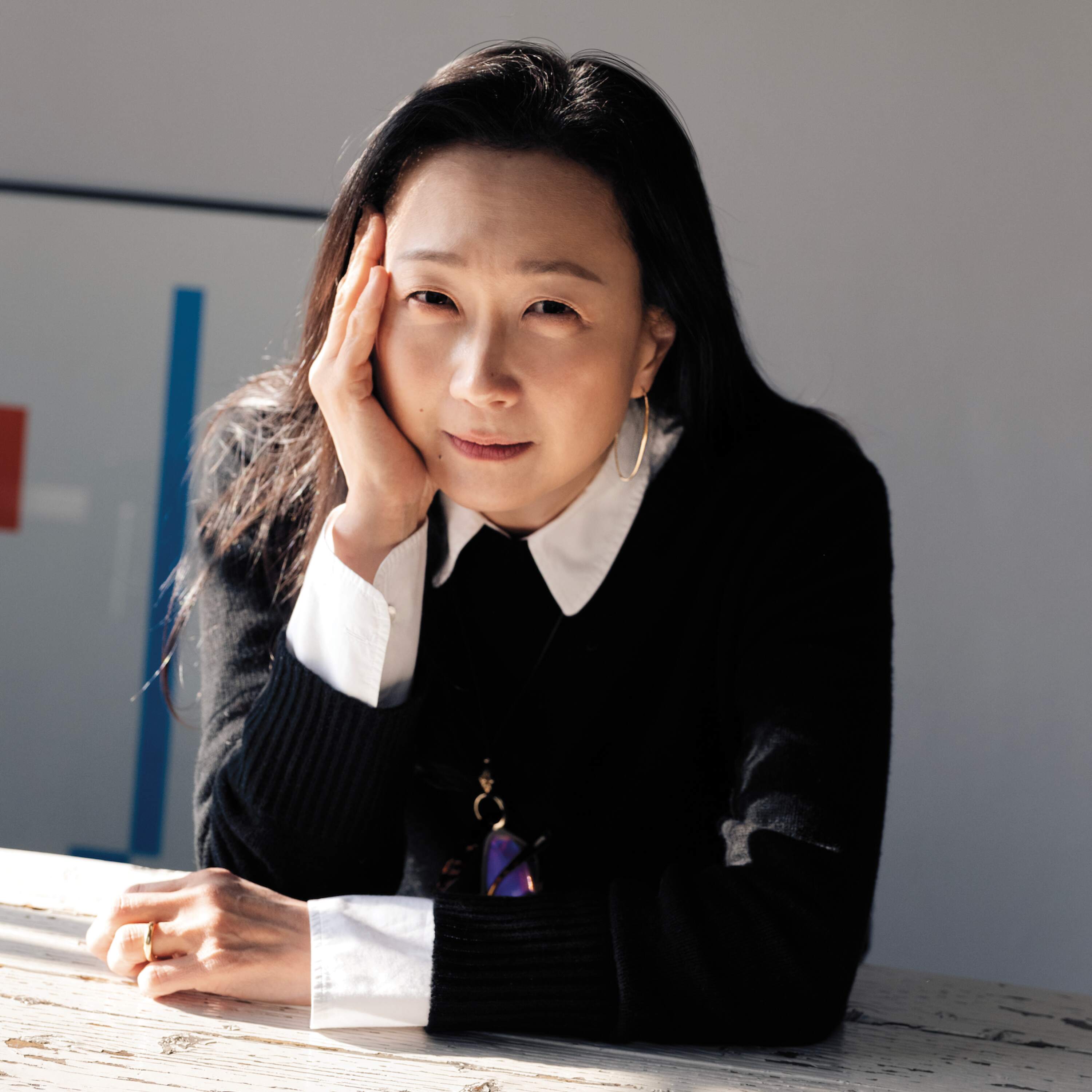
Novelist Min Jin Lee on the promise and perils of Western education
In short
Min Jin Lee discusses her novel American Hagwon and the “promise and perils” of Western-style education, especially for South Korean diaspora families chasing mobility through hagwons (paid learning centers). She argues education can bring benefits and soft power, but it’s not a guarantee, since advanced economies don’t create enough jobs for the many college graduates.
Guests
Min Jin Lee, internationally acclaimed novelist; best known for Pachinko. She spent about a decade researching and writing each book and is New York State Author Laureate. Interviewer: Arthi Shahani, host of the podcast Art of Power.
Key claims
South Korea’s very high college-graduate rate (about 71% of young adults) reflects post-IMF pressure for class mobility and hierarchy-driven belief in education. She links Korea’s self-improvement culture to Hallyu/K-pop’s government-supported infrastructure. She criticizes “lying” about Asian Americans being “overrepresented” in elite admissions.
Notable examples
Hagwon town-hall scene; a false Me Too antagonist; the Co(h) family moving South Korea→Australia→U.S.; a ruler corporal-punishment scene based on her childhood; Australia’s HECS, nationalized health care, and voting as models.
Written by AI. May contain mistakes.
Chapters
2:06
Understanding Hagwons
Min Jin Lee explains the concept and significance of hagwons in South Korea.
“Hagwan is the Korean word for their learning center in which you pay money to learn a skill.”
2:31
South Korea's College Graduation Rates
Discussion on the high graduation rates in South Korea and its implications.
“And they have low-end hagwons that are very inexpensive and they almost function as daycare.”
2:59
The Pressure of Education in South Korea
Exploring the societal pressures and aspirations tied to education in South Korea.
“Well, after the IMF crisis especially, there was almost an enormous, enormous push for people to say, I don't want to be working class.”
4:49
K-Pop and Cultural Soft Power
Min Jin Lee connects South Korea's education culture to the rise of K-pop.
“It's not just South Korea where you have too many people who go to college and there aren't enough jobs for those college graduates.”
6:40
The Complexity of Success
Lee discusses the challenges of achieving success despite educational efforts.
“If you're hearing about K-drama, again, there's a negotiation about licensing that's happening in South Korea with other countries and platforms, as well as music.”
8:39
Family Dynamics in 'American Hagwon'
Exploration of family relationships and resilience in Min Jin Lee's novel.
“The main family you follow, the Coes, they're good people.”
10:38
Resentment and Expectations in Education
Addressing the feelings of resentment among Asian Americans regarding educational pressures.
“It was not just one, but I'm going to talk about one.”
11:51
The Dishonesty in Diversity
Discussion on the complexities of diversity in education and racial quotas.
“And once I explain it that way, usually the people kind of understand.”
14:00
Exploring Complex Characters in 'American Hagwon'
Min Jin Lee discusses the complex character choices in her novel and the themes of suffering, identity, and femininity.
“Because right now in America, it's illegal to set quotas based on race.”
23:59
Cultural Insights from Growing Up in Queens
Min Jin Lee shares her experiences growing up in Queens, reflecting on identity and community.
“You have a day off, you go to vote, everybody has a day off, and they have this thing called a sausage sizzle.”
Show all 16 chapters
28:00
Diversity and Identity in Queens
Explore the complex identities of diverse communities in Queens.
“And also, Queens has, I think, the most number of languages spoken of any other place in America.”
31:10
Introduction to the Interview
Arthi Shahani introduces the guest Min Jin Lee and upcoming topics.
“guest interviewer Arthi Shahani recorded with best-selling novelist Min Jin Lee about her new novel, American Hagwon.”
32:42
Crafting Fiction: Min Jin Lee's Process
Min Jin Lee discusses her writing process and the importance of emotional impact.
“Like, do you just sit at a desk hating yourself?”
39:20
Future Works and Philosophies
Min Jin Lee shares her upcoming projects and personal philosophies.
“If you think about all the people that you really love in your life, intimately, daily, and regularly, the people that you miss, most likely they're not famous people.”
41:24
Review of Small Prophets
John Powers reviews the new series 'Small Prophets' and its themes.
“is a British comedy fantasy about a man who hopes to find his long-missing girlfriend.”
42:09
Exploring Small Profits
A deep dive into the themes and characters of the show 'Small Profits'.
“I want no more Big Little Lives knockoffs, or series that take ten episodes to do what movies used to do in two hours.”

Ask about this episode
Get the gist, explore an idea or ask about something said.
 Claude
On Fresh Air, what are the key points of this episode?
Searching your listeningTranscript
Automatic transcript. May contain errors.
0:00This message comes from Capella University. That spark you feel? That's your drive for more. Capella University's FlexPath Learning Format lets you earn your degree at your pace, without putting life on pause. Learn more at capella.edu. This is Fresh Air. I'm Terry Gross. Our guest today is internationally acclaimed novelist Min Jin Lee, who's best known for the novel Pachinko. She spends a decade researching and writing each of her books. For her latest novel, American Hogwan, she interviewed people in South Korea, Australia, and the U.S. to get their understanding of everything from national bankruptcy to female sexuality to the restaurant profit margins on frying shrimp.
0:44Lee spoke with guest interviewer Arthi Shahani, host of the podcast Art of Power. Min Jin Lee is a celebrated social novelist whose books follow South Koreans as they try to survive at home and abroad as part of a sprawling diaspora. As a social novelist, Lee imbues her fiction with deep research into the causes of human suffering and the hacks we create to get around it. Her latest novel, American Hagwon, spans from the early 90s through the Asian financial crisis in 1997 to 2007 and the beginnings of the global financial crisis. Her main characters, the Koh family, moved from their homeland of South Korea to Australia and to the United States, all in search of success, if not happiness, and the naive hope that education can ultimately provide salvation.
1:38Min Jin Lee's previous epic, Pachinko, was a global sensation. It's about four generations of one Korean family living in Japan, the land of their colonizers. With more than 5 million copies sold, it was also a finalist for the National Book Award and adapted into the critically acclaimed Apple TV series. She is the New York State Author Laureate. Min Jin Lee, welcome to Fresh Air. Hi, Arati. Thank you so much for having me. Thanks for coming on. Min, what's a hagwon? Hagwan is the Korean word for their learning center in which you pay money to learn a skill. So you can have hagwons for ballroom dancing to become a better cook for French food.
2:24And you can also go to a hagwan at age four or five to learn how to speak English. Wherever you have Koreans, you're going to find hagwons. And they have low-end hagwons that are very inexpensive and they almost function as daycare. And you can have very high-end hagwons, which are quite expensive and just as expensive as anything else. You know, as you were writing about the Korean diaspora, I was shocked to learn that South Korea has such a high rate of college graduates. I was reading 71 % of young adults, highest rate in the developed world. In the U.S., it's a little more than a third. Why is it so high?
3:02Well, after the IMF crisis especially, there was almost an enormous, enormous push for people to say, I don't want to be working class. I don't want to be a factory worker. And part of it is because South Korea is a very young country, but it's also a very ancient civilization. And there's a very strong sense of hierarchy and class. Yes. And I think education has always been seen as a very critical part of social mobility. So when middle class and working class parents were able to afford sending their kids to school and letting them stay in school because sometimes you didn't need them to earn money for the family, parents chose to do this or grandparents chose to do this.
3:47schooling in Korea is considered so much more difficult than in the U.S. yet so many of your characters idealize American education why? If you want to really understand South Korea's tremendous ascendancy to becoming a leading economic power and also as a powerful source of soft power and culture A lot of it is this really deeply held wish for self-improvement as well as this focus on education. So that's the upside. If you have a country that really cares and cares enough to send 71 % of its country to college and to graduate, a tremendous cost because it isn't as if everybody could afford this.
4:32Then you will see economic benefits. That said, it is really tough to live in that environment and to succeed. And therefore, the reason why they may admire other countries is because they have more avenues. You're having this problem around the world. It's not just South Korea where you have too many people who go to college and there aren't enough jobs for those college graduates. You're having a rising middle class, and everybody who has the ability to become middle class, they have every right to have the same dreams as a ruling class person does. So if they want to go to college, they want to go to grad school, they want to have a white-collar job, and they want to drive a big car, I mean, how could you say you don't have the right to do that?
5:18That said, our economies today, especially advanced economies, don't generate as many jobs as we have college graduates. And of course, that's going to cause a lot of social problems. Help me understand one thing in the breadth of what you just said. Are you saying there's a direct line or an important correlation between this culture of self-improvement and education and the explosion of K-pop? Yeah, I am. Explain that. You know why? Because soft power, Korean soft power, which is called Hallyu, H-A-L-L-Y-U, Hallyu, which is the word for the Korean soft power, which is being globalized, is a government construction from the 60s and 70s when South Korea decided that they would focus on sharing its culture with the world.
6:15And even now, there are very important government departments and important government organizations which are supporting the exporting of Korean culture and its manufactured goods as well as its ideas. So when you hear about K-beauty, there is a government support for this idea. There are tax breaks. There are incentives. If you're hearing about K-drama, again, there's a negotiation about licensing that's happening in South Korea with other countries and platforms, as well as music. So all that support and all that study and all that self-improvement, I mean, in order to become a K-pop idol, it takes extreme, extreme sacrifice and dedication and work and learning.
7:05And I think very often we think, oh, that person's born with a gift of voice. Well, you got to take that voice and train and, you know, it takes a long time to become a triple threat. Something that struck me in reading this latest novel of yours, American Hagwon, is how many of the characters really are just trying to do right by the rules. They're like, If I do this, if I follow these rules, then this should happen. And it keeps not happening. And that struck me. It's like you're really playing with this notion of playing by the game you thought was the game. It doesn't work. Yeah. I mean, the thing that I really see with working class, middle class people is for the greater majority of them, they're just kind of thinking, well, how do I get better?
7:53How do I aspire? How do I have any mobility about where I am in life? And then you have this sort of received wisdom like, well, do this, go to school, educate yourself, and then get a degree, and then you'll get a job, and then you'll get a big house, and you'll get a car, and you'll get a dog. I mean, there's a kind of recipe for how to do well. And you know what? I think getting an education is terrific. It is really, really helpful. But in terms of a guarantee, well, I know that's not true. And certainly getting a very highly selective education does not necessarily protect you from the storms of life and the world.
8:32And I'm not saying in any way that you shouldn't get educated. I think education is a really beautiful thing. But I think we now really have to ask, why do we get it and what do we want from it? The main family you follow, the Coes, they're good people. They get along. The kids aren't pissed at the parents for leaning on them so hard. They're not axing each other out. There's not, you know, active resentment for being parentified, which they absolutely were to use a very popular term these days. How come? Why not give them more warts and battles with each other? I wanted to ask this very important question that I always have, which is, why do terrible things happen to good people when they're trying their best?
9:19It's kind of a naive question. It's a question almost of a child. But in my heart, and I think in the hearts of every single human being, we're always wondering, why is that? Why do terrible things happen to innocent people or to people who are really trying their best? And of course, conversely, why do great things happen to people who behave terribly? So I created a family intentionally that's not dysfunctional. And I did it because in my observation over the past 10 years of the people who did not have generational wealth, who survived, were the ones who had the strongest family bonds and the strongest friendship bonds.
9:58And the ones who were able to ride out these economic storms of which they had no part in making, they were able to handle it when they had community. And within the community, there were two strategies that I saw which worked. One was sacrifice, and the other one was sequencing. So if you and I are in a family, Arthi, and you want to go to school, and I could tell that you're the kind of person who's really directed, and I could pay for your school, you go to school. And then, so I'm sacrificing, but we're also sequencing. So when you're doing better, you support me. And that's an understood relationship, and those things really tended to work.
10:37Min, there's one scene in American hagwon where I found myself on the edge of my seat. Okay. It was not just one, but I'm going to talk about one. A very tense town hall with a hagwon owner who's a bit of an idealist. And he's speaking to many Asian parents in the audience who are very frustrated. And they're saying things like, quote, why can't this guy, why can't he just admit that Asians have to be much better than everyone else, end quote. And in that scene, you're giving so much voice to a resentment that many Asian Americans have, the sense that our effort doesn't count. Talk about that.
11:25Well, I've heard this argument from a good half of my sample. And I needed to pay attention to it because it's true. They feel this way and I wanted to record it and also wanted to try to explain that it's not that their effort doesn't matter. Not that our effort should be in any ways less valuable than anyone else's effort. However, the numbers are just the numbers. So if there are only, let's say, 400 seats for a highly selective liberal arts college in California or Massachusetts, say, and only about 50 are open for newcomers, and by newcomers I mean people who aren't connected to the institution or they're not the candidates that this school is looking for specifically, then those 50 spots also have to get divided geographically with the world.
12:22And once I explain it that way, usually the people kind of understand. But the reality is that if you just added India plus China, you're talking about almost 3 billion people, right? And they are in contention with everybody else. And if you took, let's say, Asia out of it, if you look at the Asian Americans, the diasporic Asian Americans, and the diasporic Asians in America, you are talking about a very usually strong academic profile. And I don't want to say Asian Americans completely because they're different kinds of Asians. It's almost like ridiculous term, Asian America. Yeah, yeah, yeah.
13:01So recognizing those distinctions, very often people kind of lump us together. And as you know, Asian America is a political collective identity. I'm totally pro this idea. And yet, if you try to use it to explain what's going on in each person's home and how they feel about the written word or higher education, you kind of have a misleading outcome in terms of it's a very muddy way to think about it. Do you feel like Asian American families get dealt an unfair hand? Like this feeling of it's unfair, that resentment. Does it feel correct to you? I think it's not that they're dealt an unfair hand.
13:42What I really don't like is the lying. So the term is overrepresented. I hear this term all the time. Well, we are overrepresented here. We can fill the entire class with Asian Americans. And I kind of think, okay, well, then just say that. Say that you don't want the entire class to be Asian American, but don't tell a child they have a bad personality. Because right now in America, it's illegal to set quotas based on race. And it should be illegal. And yet the schools want to have great diversity in their class composition. That's a great thing. I think we actually learn better from each other if we have greater diversity in terms of everything, not just class.
14:23And yet I think the dishonesty is what makes everybody kind of feel gaslit. Min, you made a very interesting plot choice in your latest novel, American Hagwon. The antagonist is a woman with a false Me Too claim. How come? Well, because I've heard several people do these things. I even met recently a woman who told me she did a false Me Too claim, and it kind of broke my heart because I thought, oh, I've heard about people like you, but then you just did this. And it really hurts women with legitimate claims. And yet, I also felt like in this situation, she had no choice but to do this because she was totally manipulated and treated unfairly.
15:11So even though this is a character who is very complicated and in some ways she makes really messy choices, I felt great compassion for her. And even as she does this false Me Too claim, I thought it made sense that she did this. And I don't want to give it away, but another question about the choice of this. You started working on American Hagwon. You'd been working on it for nearly a decade. So before me to enter the zeitgeist, was that character and that choice then born in response to the movement? Or did you have her in mind before then? Well, this is something that people have always done, right?
15:51People have always been sexually harassing women, always. There are also women who have accused people of things that didn't happen. I think that to be a fair novelist, a social novelist, I can't do the propaganda that one part is always correct. And also as a former lawyer, I really am very uncomfortable with this idea that this young woman who was put in a very unfair situation does something that she should not have done. But I think both sides were absolutely wrong here. In the novel as I read it, I'm going to say it seems men are somewhat bumbling and women are the astute observers and players who are really making the world go round.
16:37Renee, the wealthy workaholic divorcee who bankrolls another kid's education. Sonia, who supports her family by dutifully marrying the guy she doesn't love and incredibly threatening anyone who might destroy her family. What are you exploring or saying about feminine power? Well, I think there are very smart and canny men in this book. But in terms of the astuteness of women is that sometimes I meet women and they're so, so, like they're like seers. Like they're like prophets. And I thought Sonia, for example, was that kind of person. Her brilliance is unbelievable. Like the fact that she basically raises her siblings and then climbs up in the world in Korea, marries into a very powerful family, and yet she's not without suffering.
17:24And that's the other thing that I wanted to portray. Just because you're a smart, brilliant woman who's strong and has resources, it doesn't mean that you don't suffer. See, Min, this is something I feel comes out so strongly in each of your novels, the fact of suffering as part of human existence. And it's antithetical to this American notion of you can hack your way into full-time happiness. Yeah, good luck with that. I don't know anybody who can do it. As a matter of fact, I meet people who seem really joyful and happy, and yet in their private moments, I can sense their profound loneliness.
18:02And also sometimes they'll just tell me how bad things are, but then you would never know it from their public persona. So I know that there is no way you can skip suffering. Everybody gets it. It depends on what you do with it. What will you be like in your moment of suffering? It says a lot about your character. Do you have a personal experience that illustrates that point that you'd be willing to share? Oh, sure. I mean, I remember just getting sick. When I was in high school, I learned that I had a liver disease. And then in college, I learned that it could give me cancer in my 20s or 30s.
18:38And I was really sick for a long time. and my entire life depended upon knowing that I maybe would not live past 30. I thought, well, what will I do if I don't live past 30? And it's not like I did anything to deserve this. So I decided that I would try to be thoughtful about my time. I mean, even now, I'm 58 years old and I'm physically very well. I got cured when I was 31 years old. I had an experimental treatment with alpha interferon by a wonderful doctor. And there's a part of me that just really feels like, well, you know, every breath, it's just a gift. And I don't care what anybody says.
19:21It's not a Pollyanna attitude. Even just this past year, I've lost some very close friends to cancer. So I keep thinking, like, did I, what was I like when I saw them? You know, did I love them as fully as I possibly could? And I think that kind of awareness of how special it is to love people, to be loved, it's a real gift. You know, as you're talking, I have to say I'm feeling very emotional because I'm thinking about just your chronology, having a child at 29 and being near death at 30. Like, oh, I'm just feeling for how you suffered. Yeah, that was really weird. And I remember when I got my second year test results, because you have to keep getting monitored, and the doctor says, you're fully cured.
20:09There's no way you're not cured. And I remember coming home, and I laid on the bed, and I thought, you know, I just could not stop crying. And I realized, oh, I hadn't cried in that time, because I hadn't admitted to myself how much I wanted to live. We're listening to the conversation guest interviewer Arthi Shahani recorded with best-selling novelist Min Jin Lee about her new novel, American Hagwon. We'll hear more of their interview after a break. I'm Terry Gross, and this is Fresh Air. Stay tuned for the following announcements and messages from our sponsors. This message comes from BetterHelp.
20:44Your brain has limited storage, so why is it still holding on to that embarrassing moment from years ago? BetterHelp is an online therapy platform that gives you space to talk about what's taking up too much of yours. BetterHelp is now in network with more than 125 health plans, with many co-pays as low as$15 for eligible members. And if you don't have eligible insurance, you can still get 20 % off your first month. Visit BetterHelp.com slash NPR. Cost and coverage may vary. Discount cannot be combined with insurance. This message comes from WISE, the smart way to manage your money around the world.
21:21With WISE, you can send, spend, and receive money in over 40 currencies at the mid-market rate. Learn more at WISE.com. T's and C's apply. This message comes from the Natural Resources Defense Council. Do you remember fireflies at night? Snow days that kept you home from school? A child born tomorrow may not. They'll grow up thinking polar bears and monarch butterflies went the way of the dinosaurs, just something that wasn't cut out to survive. NRDC is fighting in court to protect the species America is losing. What that child gets to see is still being decided. Go to NRDC.org slash fresh and your gift will be matched five times.
22:05Let's talk about immigrants. In American hagwon, your main family, the co-family, they don't just come to America. They go to Australia, too. Why Australia, not just the U.S.? I chose Australia on purpose because there are many countries that South Koreans go to to work as well as for their children to learn English. I chose Australia for South Koreans to go visit because I was trying to tell the world that Australia has certain programs that are just really terrific. One of them is called HECS, H-E-C-S. And HECS is the government scheme of providing loans and repayment that's really sustainable for both the student as well as for the university.
22:47So if you meet the average person from Australia who went to a wonderful school, especially a state university, and their state universities are excellent, then they're not stressed the way Americans are. One, the loan is nominal. to you don't even have to pay it until you get a job, and then it's automatically deducted from your salary. So nobody complains about HECS. I think we should have something like that in America. That's so clever. So you inserted Australia as a model for what the U.S. could do if we got our acts together. Oh, absolutely. And the two other things is nationalized health care.
23:25Wouldn't it be nice if your job wasn't tied to health care? imagine the kind of and just if you think about the benefits you would give to parents and how little anxiety they would have how much less anxiety they would have if they can have health care and go to the doctors for themselves as well as for their children without having formal employment then I think that would be just an amazing thing to support families so that's the other factor and the last one is most important to me is that in Australia it's nationalized voting you must vote. You have a day off, you go to vote, everybody has a day off, and they have this thing called a sausage sizzle.
24:06So you can have a sausage, you can vote, you can see your friends, and everybody has a day off. Why don't we have that? It's interesting because, you know, we're hearing now, right, these sort of, these tropes about the places that have the American dream more than the U.S. does. And Canada and Australia are two of the examples that often come up in that. Min, you grew up in South Korea and came to the U.S. when you were seven years old. You and I were both raised in Queens, New York City. The best borough ever. Heck yeah. I was trying to temper my enthusiasm. Thank you for putting it out there.
24:44No, you have to be objective. I don't have to be objective. I think of Queens as this invisible epicenter of America's hustle culture. Okay. Donald Trump is from there, even though often he pretends he's from Manhattan. And interestingly, Zoran Mamdani, who grew up in Manhattan, transplanted himself to Queens to cut his teeth there. What was growing up in Queens like for you? Well, I came in 1976 and I was seven with my two sisters and my parents. And we lived in Elmhurst. And we lived in a rental building for a long time before they got enough money to buy a small rental house in which they rented the top floor and the bottom floor.
25:29And we lived in the second floor. And the rental income from the first floor and the third floor paid for the mortgage. And I went to the high school of – I went to the Bronx High School of Science. and I commuted from Queens all the way to the Bronx by subway. So that was a four-hour round trip. And I mention all this because for me, I loved living in Queens. I loved it. And I loved my neighbors. We had very kind neighbors. I had some trouble at school in my elementary school and middle school, but then I got better because I kind of figured out how to handle things better and I was learning how to talk.
26:07But then in high school, I absolutely loved. I just loved high school so much. And finally, I found nerds and kids who are more like strange like me. And I think that was important because if I hadn't gone to wrong science and if I hadn't grown up in Queens in which I was really living in a lower middle class, blue collar neighborhood, I don't know if I would have had this kind of backbone that I have now, which is that I feel like a very strong person. And I think of my background as something that's a good thing, not something to be ashamed of. And I think it's because my neighbors and my friends, we were so okay with who we were.
26:53Drill into that a little bit more for me. Well, I have met a lot of kids who grew up in predominantly white neighborhoods. And they weren't necessarily the wealthiest people in that neighborhood. And you're saying kids of color. Yes, exactly. Kids of color and immigrants. And even if you're not, even if you're the poorest white person in a very wealthy neighborhood, you do have the sense of, oh, I don't have enough because you're just surrounded by kind of prosperity and wealth and options. Whereas when I was growing up, everybody was the same. And, you know, the wealthiest person in my neighborhood, I remember the kids, they might have had a birthday party at McDonald's and the dad was a cop and the mom was a nurse.
27:35And you're kind of thinking like, oh, there's a birthday party at McDonald's. I mean, and now I realize, like, I didn't realize that we didn't have money really until I went to college because I always had a winter coat and I had my parents and there was always food at home. So I didn't think that we were poor. In addition to not feeling poor, I never felt like a minority because it was already, Queens is like where the entire world converges and it's full of quote unquote minorities. And also, Queens has, I think, the most number of languages spoken of any other place in America. And when you have that kind of plurality and diversity and a kind of dignity to your background, when everybody you know is a recent arrival or you have respect for recent arrivals.
28:21I grew up with white people in Queens who never saw themselves as white. They were Italian. They were Jewish. They were Hungarian. And if you are Latino, you didn't say you're Latino. You know, you said, I'm from the PR. I'm not from the DR. And if you're from DR, you would say, I'm from the DR. I'm not from the PR. I mean, you know, like people were Haitian. They weren't black. And I think growing up in that way, you thought, oh, a person is attached to America and also another place somewhere on Earth. And they were okay with both existing together. I also wonder, I think specifically because you study diaspora.
29:02In Pachinko, Koreans in Japan, now in the U.S. and Australia, you're bouncing around the world and you're seeing how working class people, not wealthy people, working class people bounce around to survive. is there an insight from that that you feel like here's something you got to understand about it's a population that i think of as low-end globalization you know it's really funny the thing that i really care about is this idea of diaspora and diaspora obviously is the greek word that comes from the bible to describe jews who were expelled from a region and then we have to study well why were they expelled and what was it what would happened when they were expelled, of the group who were expelled, who were selected, and who were not.
29:47Because sometimes when Jews were expelled in the Bible, they often picked the most sophisticated professional class of people. They didn't want the ones who didn't know how to have important skills. So let's take that look. And then I want to say, well, what's diaspora today? And I'm arguing that every single person in every advanced economy and all economies that are not advanced are experiencing diaspora because borders are disappearing. And by that I mean we have environmental diaspora. Because of fires, there are areas in this world we can't live anymore. Certain places are so hot you can't live anymore.
30:26If you don't have water in your neighborhood and your home is worthless and you have to move, if there are no more jobs in your area, then you have economic diaspora. When we think about diaspora as being about these unwashed, unwanted people. Very easy, we can just kind of ignore its importance. But I think as soon as you start thinking, hey, that could be me or my kid who doesn't have a job, that cannot get to school, or can't live in this home anymore that we have lived in for four or five generations, then you start to think, oh, it could be me, it could be my family. And then we will change the way we think about policy and laws and the way we live.
31:08We're listening to the conversation guest interviewer Arthi Shahani recorded with best-selling novelist Min Jin Lee about her new novel, American Hagwon. We'll hear more of their interview after a break. This is Fresh Air. Stay tuned for the following announcements and messages from our sponsors. This message comes from BILT. Are you getting rewarded for paying your rent or mortgage? With Bilt, members earn points on every housing payment, wherever you live. You can redeem Bilt points for flights, hotels, lift rides, and more. Getting started is easy. Download the Bilt app, link any card, and ask the neighborhood concierge about perks near your home.
31:46Join the membership for where you live at joinbilt.com slash fresh. That's J-O-I-N-B-I-L-T dot com slash fresh. This message comes from Google Workspace with Gemini. One subscription that does it all. Personalized AI in premium business versions of Gmail, Google Docs, Drive, and more. Try it free for 14 days at goo.gle slash workspace with Gemini. This message comes from the Natural Resources Defense Council. It's easy to look at what's happening to the environment and think, what can one person really do? Three million people found their answer, backing the Natural Resources Defense Council. Their support is what gives NRDC the standing to take legal action and protect America's air, water, and wildlife.
32:34Make it 3 ,000 ,001 supporters at nrdc.org slash fresh, and your gift will be matched five times. You spend 10 years writing each of your books. What does that look like? Like, do you just sit at a desk hating yourself? Well, sometimes yes, but mostly no. Well, I spent several years researching. I usually start with big metaphysical questions. I will type them out. I will revise them. And then I will get to work and read and write. And I'll go to the field. I'll go and visit people. I will find more and more interviews. I will take classes if I have to. Yeah, a lot like that. Also, kind of like anthropology and sociology, I will talk to thought leaders, economists.
33:22I'll talk to strategists and say, like, what do you think about this? And then after I figure out I think I know the answer, I usually have my thesis statement. And then the imagination of fiction and the world of building characters. And I try really hard to almost forget everything I learned because you don't need all those details. You really don't. But you did need to understand the operating system of the different fields that you're entering. And once I really understand those rules, then I think, oh, you know what? my character would most likely do this, and this is plausible. So that's the reason why I do so much of this, is because I want my reader to feel like they're in a dream, and they're entirely immersed, and I had nothing to do with it.
34:08Like, you should never be thinking about me when you're reading. Like, you shouldn't see my fingerprints. It should just be you and the book and the story, and, you know, I'm just a name on a cover. But obviously, you're not doing 700 pages of a blank canvas so what does that mean oh that means that i you know i create a very very very loose crayon outline like literally like you could i could write it in crayon i could write it in one page it's like i think this this is what happens and then i break it down into very small segments and then i will write that scene and then i go chapter by chapter and then after i finish it i look at it and then I will rewrite the whole thing.
34:52Like from page one. I remember this one moment in American Hagwon where your heroine Mito, she's in middle school and there is a teacher who calls her up to the front of the classroom and he slaps her hands with a ruler. And I have to say, It's sad, but also by no means the worst violence. I stopped breathing as I was reading it and feeling the whip of that ruler. And I wondered, like, do you have to work at building these huge emotions into relatively small moments? I think for me, mechanically speaking, I have worked really hard in terms of craft to make sure that the reader can enter and bring her mind and heart to the experience.
35:46And that requires me to really restrain myself as much as possible from intruding upon your experience. And that is really down to the sentences and the scenes and the brevity of them very often. Like I try really hard to keep it brief in terms of the big conflict. So that ruler scene, which actually happened to me when I was a child, when I was six years old, I finished my worksheet in Korea and then I was walking back and forth. And then I was called up to the classroom and the teacher said to hold out your hand. I thought I was going to receive a present because that's how neurodivergent I am.
36:24And instead, the teacher hit my hand several times. And what I recall is not it being painful, but just the humiliation, just the embarrassment and the shame of having done something wrong and not even understanding what I had done. And I forgot about it. I totally forgot about it. And then I spoke about it maybe in my 50s. And after I spoke about it, my mother said to me, do you know why that happened to you? And I said, well, it's because I finished my worksheet and I was walking back and forth and I shouldn't have been doing that. She goes, no, that teacher came to our house asking for money.
37:04Oh, my God. Right. I learned this in my 50s. It was a shakedown. So my entire life I thought it's because I tend to be dreamy and I space out and I couldn't sit still. So I thought it was me. And, you know, like all those things are still true, but nobody should hit a kid for this. And now corporal punishment is illegal in South Korea, but you can hear many stories of corporal punishment in South Korea. Just ask, you know, anybody over 50. How many books do you have left in you, Min Jin Lee? I think two. I think two. I think I have one more called Marshall Plan, not The Marshall Plan. So it's not a reference to The Marshall Plan.
37:46The Marshall Plan is the organizing metaphor for Marshall Plan the novel because the Marshall Plan was, I think, one of the greatest things America ever did in the 20th century to respond to devastation and evil with generosity, which helped Europe, the reconstruction of Europe as well as also economically a globally smart thing to do for all the partners. So I'm writing about three different groups of people. One group are the Korean minors and nurses who came from South Korea and went to work in West Germany. I'm writing about South Koreans who went to Europe to learn how to become artists. And I'm also writing about Korean women who married GIs and ended up living in places like Texas and Maryland and Virginia.
38:38And the other book that you have in you? is a memoir called Name Recognition. You know the name of your memoir already? I do. I do. I know. I know. It's very funny. Like, people are always, like, teasing me and say, how could you know this? And I'm like, I do. And this is pretty much what I do is I finish them. And I'm very, in some ways, very stubborn. Like, there's a kind of a narrowness in terms of, like, I can really enter the tunnel and just keep going. So it's called Name Recognition. And what will you be exploring there? Well, my philosophy on life. I'm trying to figure out why some people have name recognition when they're not in most ways important to us.
39:19Who do you know, but really do they know who you are? If you think about all the people that you really love in your life, intimately, daily, and regularly, the people that you miss, most likely they're not famous people. Minjin Lee, thanks so much for joining us. Thank you so much, Arthi. That was our guest interviewer, Arthi Shahani, interviewing Min Jin Lee, author of the new novel, American Hagwon. Arthi hosts the podcast, Art of Power. After we take a short break, John Powers will review the new series, Small Prophets, a British comedy fantasy about a man who hopes to find his long-missing girlfriend.
39:58This is Fresh Air. Stay tuned for the following announcements and messages from our sponsors. This message comes from Bilt. Are you getting rewarded for paying your rent or mortgage? With Bilt, members earn points on every housing payment, wherever you live. You can redeem Bilt points for flights, hotels, lift rides, and more. Getting started is easy. Download the Bilt app, link any card, and ask the neighborhood concierge about perks near your home. Join the membership for where you live at joinbilt.com slash fresh. That's j-o-i-n-b-i-l-t dot com slash fresh. This message comes from Google Workspace with Gemini.
40:37One subscription that does it all. Personalized AI and premium business versions of Gmail, Google Docs, Drive, and more. Try it free for 14 days at goo.gle slash workspace with Gemini. This message comes from the Natural Resources Defense Council. When the chainsaws come for ancient forests, when bulldozers take the only home a species has, When drilling rigs are plunked onto public lands, something is lost that can't be brought back. NRDC is in court to stop this destruction. From the wonders of the Arctic to baby sea turtles hatching on beaches, it's all still here. Help defend it. Donate at nrdc.org slash fresh and your gift will be matched five times.
41:23The new television series Small Profits, which is streaming on Apple TV, is a British comedy fantasy about a man who hopes to find his long-missing girlfriend. To do so, he tries to call forth supernatural spirits whose visionary power can help him. Our critic at large, John Power, says he was beguiled by this fresh, funny, and humane series, which he whooshed right through, feeling sad when there were no more episodes to watch. We all have things we're tired of seeing on TV. For my part, I'd like to issue a 10-year moratorium on serial killers, self-destructive detectives, cute small towns that are rife with murder, and shows that open with an attention-grabbing chase or murder, then follow with the words 36 hours earlier or five weeks ago to alert us that the actual story is finally about to begin.
42:16I want no more Big Little Lives knockoffs, or series that take ten episodes to do what movies used to do in two hours. I could go on, but I'd rather tell you why I love Small Profits, the smash BBC hit now streaming on Apple TV. Composed of six elegant half-hour episodes, this gentle show is so original and consistently surprising that it's kind of a marvel. It blends deadpan humor, fantasy, social comedy, and an alluring sense of melancholy to create a mood you'll love being inside. Pierce Quigley plays Michael Sleep, a good-hearted 50-ish man whose flowing locks and white beard make him look like a cross between an old hippie and father time.
43:07He lives in a suburban house, complete with overgrown lawn, that he's kept the same since his partner Clea mysteriously disappeared seven years ago. Still hoping she'll return, he divides his time between half-hearted work at the Toolbox, a Home Depot-like store, and visits to the retirement home that looks after his inventive but scattered father Brian, warmly played by Michael Palin. His dad tells him about a friend in Egypt who was able to call up homunculi, miniature humanoid beings who can answer any question and always tell the truth. Brian gives his son the recipe for bringing these small prophets to life.
43:50They grow in glass jars. And suggests he asks them what happened with Clea. Although dubious, Michael decides to try, beginning a procedure that involves everything from old coins to a truckload of manure. Meanwhile, other people start entering his life. He's shadowed by Clea's aggrieved brother, Roy, that's Paul Kay, who turns up broke and wants to claim the house. He becomes the obsession of his next-door neighbors, the comically hectoring Clive, who's tormented by Michael's messy yard, and his curious wife, Bev, who finds Michael interestingly different. Above all, he develops an unlikely friendship with a disaffected young co-worker, Casey, played by Lauren Patel.
44:38She bonds with Michael because he too has no time for their boss, Gordon, an officious incompetent with a greasy ponytail who's played by the show's brilliant writer-director Mackenzie Crook. And all the while in Michael's shed, the homunculi are coming to life. Here Palin's Brian asks his son what's happening. How's it going? Are they growing? Are you sure you're all right, Dad? Yes, the prophets. You said you've seen them. Are they moving? Are they eating? I can see three. The other jars are empty, as far as I can tell. Which three? Well, I think one of them is the king. He's got a crown. Yeah, good, that's right.
45:23And the others? Maybe a queen, maybe an angel. That'd be the seraph, yeah. You've got to keep on top of the water changes and the feeding and continue to chant, it makes them strong. Dad, what are they? They look like people trapped in jars. What am I doing? Should I even be doing this? No, no, you mustn't anthropomorphise them. They're not people. They're not even physical half the time. They're supernatural. Small Prophets is the latest good show from Mackenzie Crook, who specialises in series that tend to be tenderly offbeat, like his cult comedy Detectorists, about members of a metal-detecting club seeking buried gold.
46:06Believing that people are better than we might sometimes think, Crook casts a sympathetic eye on loners, oddballs, misfits, and dreamers, many of them caught in unsatisfying jobs and thwarted hopes. You feel his delicate touch in virtually all of Small Prophet's characters, be it Michael, who yearns to recapture his vanished life with Clea, Or Casey, who does dead-end work but has huge, perhaps impossible dreams. Even characters who come off as foolish are drawn with loving care. They're vivid and have moments where we glimpse something unexpectedly vulnerable hidden within them. That said, small profits is anything but doleful.
46:51Crook serves up some very good jokes. Michael's goofing on customers at the store is especially funny. and the show imbues daily life with poetic touches that feel magical, be it a falling star, an oil spill in the shape of a rabbit, or a literally enchanting Christmas memory. When we finally meet the small prophets, they are haunting, fragile, truth-telling creatures whose faces bespeak pain and isolation. Trapped inside their bottles, they mirror the solitude of the human characters. No one wears their inner wounds more appealingly than Michael, who carries us along with his strange charisma.
47:35Graced by Quigley's droll, confidently quiet performance, he embodies the positive approach that small profit seems to believe in. Resolutely uncynical, Michael isn't merely caring and loyal and accepting of other people's differences. Without making a big deal of it, he leaves himself open to the wonder of life.
48:22as Whistler. Our digital media producer is Molly C.V. Nesper. Thea Chaloner directed today's show. Our co-host is Tanya Mosley. I'm Terry Gross. Stay tuned for the following announcements and messages from our sponsors. This message comes from Whole Foods Market. Fall tastes better with better ingredients from Whole Foods Market. No added growth hormones or antibiotics in their meat department means slow-braised short ribs are even more satisfying. All seafood is wild-caught, like their vibrant sockeye salmon or verified responsibly farmed. And all sweets, including fall-themed cookies, are made without high fructose corn syrup.
49:00Spice up fall at Whole Foods Market. This message comes from LinkedIn ads. Ever invest in something that seemed incredible at first but didn't live up to the hype? For marketers, that's impressions. When ads don't create revenue, that's a tough conversation with the CFO. Instead, invest in results your CFO will love. LinkedIn Ads generates the highest ROAS of all major ad networks. So advertise on LinkedIn. Spend$250 and get a$250 credit. Just go to linkedin.com slash NPR pod. Terms and conditions apply.
From the publisher
Min Jin Lee’s new novel American Hagwon is her first in nearly a decade. ‘Hagwon’ is the Korean term for private tutoring centers. It’s the third installment of a four-part series on the Korean diaspora. Her previous, Pachinko, was a finalist for a National Book Award. In American Hagwon, Lee is taking on the promise and perils for Koreans who pursue a Western education. “I think education is a really beautiful thing,” she tells guest interviewer Aarti Shahani. “But I think we now really have to ask: Why do we get it and what do we want from it?” She’ll also reflect on surviving what she was told was a terminal diagnosis.
Critic-at-large John Powers reviews the new British comedy series Small Prophets.
Subscribe to our free weekly newsletter
Follow us on Instagram
Subscribe to our YouTube channel
Check out the Fresh Air Archives
See pcm.adswizz.com for information about our collection and use of personal data for sponsorship and to manage your podcast sponsorship preferences.
NPR Privacy Policy
More from Fresh Air
All episodes

We use cookies.They keep VO running smoothly and help us improve it. Privacy policy