
 Ask ChatGPT

 Fresh Air
16 Oct 2026 · 46m · 15 chapters
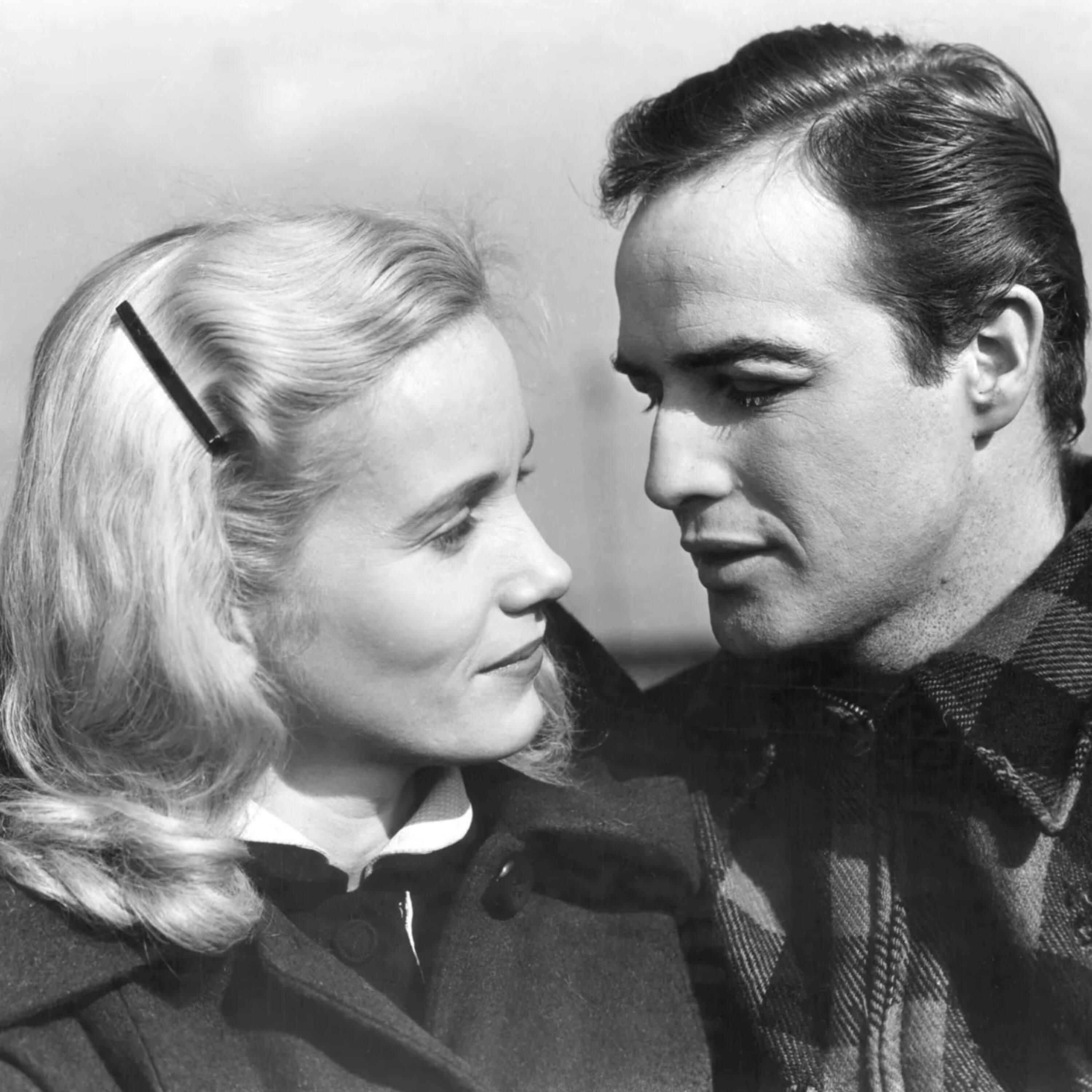
Remembering Eva Marie Saint / 'Interview with the Vampire' turns 50
In short
This Fresh Air episode is primarily a tribute to actress Eva Marie Saint, who died last week at 102, plus a brief segment marking the 50th anniversary of Anne Rice’s Interview with the Vampire and a review of a new Elizabeth Holmes documentary.
Guests/backgrounds
Eva Marie Saint (Oscar-winning actress; studied at the Actors Studio; known for On the Waterfront and North by Northwest). Terry Gross interviews Saint (2000). Later, the show includes Anne Rice (interview recorded 1990) and film critic Justin Chang (review of You Can See Everything).
Key claims/examples
Saint improvised with Marlon Brando in On the Waterfront after Kazan saw her; she won Best Actress in 1955 and gave birth two days later. She describes the staged “Stay away from me” kiss scene and a truck-chase alley sequence. In North by Northwest, she discusses Hitchcock’s external direction, costume shopping in New York, and the Mount Rushmore set climb (including a scar from a slip). She also recalls The Russians Are Coming, Moonlighting, and People Like Us.
Written by AI. May contain mistakes.
Chapters
0:29
Eva Marie Saint's Early Career Highlights
Discussion of Eva Marie Saint's key film roles and her background.
“playing the shy, parochial school-educated young woman opposite Longshoreman Marlon Brando.”
1:14
Notable Performances and Achievements
Overview of notable performances in films and television.
“Eva Marie Saint studied at the Actors Studio.”
1:40
Insights from Eva's Role in 'On the Waterfront'
Exploration of Eva's character and scenes in 'On the Waterfront'.
“Saint's character wants him to buy a house, but he tells her he considers it a 30-year trap.”
2:58
Eva's Improvisation Experience
Eva discusses her improvisational acting and experience with Brando.
“Anybody wants to go with him, I ain't going to stop him.”
4:26
Staging Iconic Scenes in 'On the Waterfront'
Details on the staging of significant scenes and performances.
“he came in the living room, we were dancing, we were laughing, I was crying, he was taking my skirt and whipping it around, and the sparks flew, and Kazan saw that, and suddenly I was on the waterfront.”
7:19
Recollections of Filming Emotional Moments
Eva shares memories of filming emotionally charged moments.
“I know what you want me to do, but I ain't gonna do it, so forget it.”
8:15
Winning the Oscar and Its Impact
Discussion of winning the Oscar and simultaneous life changes.
“And that silence and then the little squeaking is them kissing passionately after she's attempted in vain to fight him off and then gives in.”
12:30
Exploring 'North by Northwest'
A look at Eva's role in 'North by Northwest' and its themes.
“I think for most people, when they get the Academy Award, they want to be at their most glamorous, and you were at your absolute most pregnant.”
14:00
Eva Marie Saint's Role and Experiences in Film
Eva Marie Saint shares her experiences working on classic films and specific memorable scenes.
“Why don't we start with a scene from the movie?”
20:38
Terry Gross Introduces Upcoming Segments
Terry Gross introduces the next segments, including interviews and reviews.
“And we'll hear some of Terry's interview with the writer Anne Rice.”
Show all 15 chapters
22:01
Interview with Eva Marie Saint
Terry Gross continues the interview with Eva Marie Saint, discussing her early life and career.
“Let's get back to Terry's 2000 interview with Eva Marie Saint, who died last week at the age of 102.”
27:46
Interview with Eva Marie Saint
Terry Gross continues the interview with Eva Marie Saint, discussing her early life and career.
“restless partner keeping you up Mattress firm sleep experts can match you with a Tempur-Pedic that absorbs motion.”
28:54
The Legacy of Interview with the Vampire
Exploration of Anne Rice's influences and themes in her work.
“It's been 50 years since the publication of Anne Rice's debut novel, Interview with the Vampire.”
36:51
Anne Rice on Writing and Pornography
Anne Rice discusses her foray into writing pornography and its artistic value.
“I loved them and I loved them as much as many people did, but they weren't a full-time obsession.”
42:00
Documentary Review: You Can See Everything
An in-depth analysis of the documentary about Elizabeth Holmes, exploring its themes and cinematic techniques.
“Reviews of nonfiction films don't often come with spoiler warnings.”

Ask about this episode
Get the gist, explore an idea or ask about something said.
 Claude
On Fresh Air, what are the key points of this episode?
Searching your listeningTranscript
Automatic transcript. May contain errors.
0:00This message comes from the UPS Store. Open this holiday to help with all your small business needs. Find a store near you at the upsstore.com. Most locations are independently owned. Products, services, pricing, and hours of operation may vary. See Center for details. This is Fresh Air. I'm Dave Davies. The actress Eva Marie Saint, best known for two very different roles in On the Waterfront and North by Northwest, died last week. She was 102 years old. She won an Academy Award in 1955 for her movie debut in On the Waterfront, playing the shy, parochial school-educated young woman opposite Longshoreman Marlon Brando.
0:39Here they are on a first date. What do you really care, am I right?
0:46shouldn't everybody care about everybody else oh what a fruitcake you are i mean isn't everybody a part of everybody else and you really believe that drool yes i do she co-starred with carrie grant in the hitchcock thriller north by northwest playing a femme fatale i'm a big girl yeah Yeah, and in all the right places, too. Eva Marie Saint studied at the Actors Studio. Early in her career, she chose to focus on raising her two children with her husband, TV director Jeffrey Hayden. They were married 65 years until his death in 2016. She appeared in the film dramas A Hat Full of Rain, Raintree opposite Montgomery Clift, Exodus alongside Paul Newman, and All Fall Down with Warren Beatty.
1:39In the film Loving, she played the wife of George Siegel, who's about to run away with another woman. Saint's character wants him to buy a house, but he tells her he considers it a 30-year trap. Here they are in a car in the rain, talking. And I'm a trap, and the kids are trapped. Is that what you meant? All right, let's cut it off right now. I don't want to be thought of as a trap. Can you understand that? I mean, if you're so damn unhappy, why don't you just pack up and leave? I'm not stopping you. Then who in the hell do you think you are anyway? Film critic Pauline Kael wrote that in that film, Saint gave, quote, a stunning performance in what might have been a cliché role.
2:15Eva Marie Saint took a comic turn in the 1966 Cold War farce, The Russians Are Coming, The Russians Are Coming. Set in a small New England shore town, the all-star comedy cast included Carl Reiner as her husband and Alan Arkin as the Soviet lieutenant whose submarine has run aground. The town thinks it's been invaded and the U.S. military is on the way. But then one of the Soviet crew saves the life of a local boy, and the town decides to help the Soviets get away. Eva Marie Saint comes up with an idea. We could give them an escort. I mean, we could use all the little boats out in the harbor. A convoy.
3:00An escort. Could we do that, Link? Go out with him. Take him out of the harbor. Can we help him get away there? Can we? Anybody wants to go with him, I ain't going to stop him. What? In the late 1980s, St. played Sybil Shepard's mother in the comedy-drama series Moonlighting, and she won an Emmy for her performance on the 1990 TV miniseries People Like Us. Terry Gross spoke to Eva Marie Saint in 2000. Terry asked her how she got the part in her first film, On the Waterfront. At one point, I did Trip to Bountiful, the Horton Foote play. First it was a television, then he rewrote it as a play with Lillian Gish.
3:46And Kazan saw me in that part. Martin Juro, my agent, sent Kazan to see me in that, and he saw it and thought of me as the young virginal blonde in On the Waterfront. And I didn't read for it. I improvised with Marlon Brando, and it was an interesting improvisation because to this day I don't know what he told Marlon, but he did tell me that I was at home and a young man was coming to visit my sister who was not at home, so my job was to keep him out of that house. Don't let him in the door. well, I don't know what happened, but he went in the door, he came in the living room, we were dancing, we were laughing, I was crying, he was taking my skirt and whipping it around, and the sparks flew, and Kazan saw that, and suddenly I was on the waterfront.
4:43Were you used to improvising? Oh, yes, I was from the actor's studio, I'd been studying there, I was there about seven years, all total, and I had seen Marlon there, but I'd never worked with him. I actually worked with Lee Strasberg, and of course Kazan was there too. Had you seen Brando in anything before starring with him? Yes, I'd seen his movies, and I'm never in awe of another actor because it's all the same business. Some actors are fine actors, some not quite fine actors, good actors. I'm never in awe of anyone in our profession. I'm in awe of musicians or painters, but I was impressed and he was and he was adorable and he was a prince and he knew it was my first film it was very cold in Hoboken that's where you shot it?
5:34yeah, excuse me, on the waterfront in Hoboken on the waterfront right there and it was very cold and he was always giving me a jacket to put over my shoulders and I was skiing at the time so underneath my virginal navy blue dress. I had red long johns on, so when morale was low, I threw up my dress and started doing the can-can for all the longshoremen. You'll be very out of character for your character in the movie. True, I'm glad. I don't think Kazan saw me because he liked everyone to stay in character. Well, that's funny. But that got a few laughs. But he was very kind, Marlon. We rehearse constantly, which is what you do on a Kazan film.
6:17Right. Now, in the movie, you have this radiant, pure beauty, but in most of the scenes, you're wearing real schmattas. You're wearing this big drab woolen coat and a kerchief around your head. I still have that kerchief. Do you really? I always say one. I should put it on eBay, right? No, sirree. I usually have one thing from each film, and I have it in a little cellophane bag with a photo of me and Marlon, and there I have the kerchief. I'm holding the kerchief. And actually, it was my kerchief, and you know what it was? It's little squares of Amish carriage, little dark print of an Amish carriage, and it's repeated through the whole little scarf.
6:59Now, in this scene, in this scene from On the Waterfront, you've decided not to see the Brando character anymore. But he's knocking on your door, and you're telling him to stay away. Then you lock the door and chain the door. He breaks into your apartment and finds you in bed wearing this white slip. Let's hear that scene.
7:37Stay away from me!
7:47Come on, please. Open the door, please. Stop it!
7:54I want you to stay away from me. I know what you want me to do, but I ain't gonna do it, so forget it. I don't want you to do anything. You let your conscience tell you what to do. Shut up about that conscience. That's all I've been hearing. I never mentioned a word before. You just stay away from me. Edie, you love me. I didn't say I didn't love you. I said stay away from me. I want you to say it to me. Stay away from me.
8:36And that silence and then the little squeaking is them kissing passionately after she's attempted in vain to fight him off and then gives in. It's really quite a moment in the film. I mean, you look like you're almost about to faint with being totally overcome by this physical feeling that's very new to you, being in his arms. Let's talk about that scene. How was that kiss staged? How was the kiss staged? Well, we were struggling. We were struggling, and I was hitting his back, and I'm sure it was Kazan who said, just drop that arm at that point. To show that you were giving in, that you were kind of succumbing to your feelings.
9:22You know, when you just hear it, it's almost like two animals, isn't it? He was very, Marlon, very, very strong in that. And she dropped her conscience, didn't she? He overcame her, and yet she had these strong feelings, and he broke through for both of them. And she really did love him. I had trouble, actually, with that scene because I was in a slip, And in those days, I was very modest, and I felt exposed. I'd never been in a slip on screen and on television. And the kiss and all of that, it was pretty physical. And I remember just having trouble when Kazan came up to me, and he just whispered the name of my husband.
10:14He just said, Jeffrey. Well, I'm still married to Jeffrey. It's almost 50 years. and you know it worked I mean that was it I mean another director might have struggled with whatever but he just one word and no one heard it Marlon didn't hear it no one heard it and that's how he worked and somehow I just knew that he knew I would relax because he had met my husband if I thought of Jeffrey and somehow when he whispered that I just relaxed and enjoyed it There's a scene in this where he's been called downstairs by some of the guys who are out to kill him. And you've chased after him calling his name.
10:57And you find him in this narrow alley. And just as you find him and you're running down this alley to meet up with him, a big truck that's as wide as the alley is coming after him and therefore coming after you too. And there's no way you can be in the street without getting hit by this truck. So he breaks into a building and you both rush in narrowly averting this truck. It's such a beautifully lit scene. You're kind of like in the headlights of the truck, illuminated by it, running for your lives. Were you aware of the lighting when that shot was being made? You're never aware of the lighting, but it's interesting because when I did see it, it's almost like the hair has a halo, as I remember.
11:39It was a very scary scene because Because it was wet, I had no idea that truck was going to be as close as it was in the scene. There was a place where we had to get out of the way, and Marlon was supposed to open the door. The door wouldn't open. He actually broke that glass, and he actually cut his hand a little bit. The designated door was not unlocked or was jammed or something. So Marlon Brando is that kind of actor. He just broke the glass, and we got inside. Just in time. I guess you didn't have to do that scene again. No. No. You won an Oscar for your role in On the Waterfront, and I think four days after winning the Oscar, you gave birth to a son.
12:24Two days. Two days. Better story, right? Two days, yeah. So those are two big changes in your life happening just about simultaneously. I think for most people, when they get the Academy Award, they want to be at their most glamorous, and you were at your absolute most pregnant. I'm not sure if you were even able to go to the awards ceremony. Oh, yes. I was sitting there with Jeffrey and it was in New York. Now it's all in California, but at that time, the New York contingency and the Hollywood contingency, and there was a little jealousy between Hollywood and New York, so we really didn't think there was much of a chance for Waterfront, black and white, made in New York.
13:05But we went and we were all there. and some of the people started winning Oscars. And my dear husband said, Now, honey, if they call your name, I want you to sit here and count to ten and then go up. Well, I heard my name, and I felt this hand on my thigh, pressing my thigh, and I'm smiling and smiling, and I'm really counting to ten. And then I walked up. I didn't rush up. I walked up and accepted the Oscar and said something like, I'm so excited I may have the baby right here. And, of course, I had it two days later. Let's talk about a movie that you made five years after On the Waterfront, North by Northwest, which starred you and Cary Grant.
13:50And you play the opposite kind of woman in this from what you played in On the Waterfront. In this, you're a very glamorous, beautiful spy working undercover, and it's your job both to seduce Cary Grant and to seduce his nemesis. Why don't we start with a scene from the movie? Cary Grant is on the run. He's been mistakenly accused of being a murderer. He's hiding out on a train. He's seated next to you in the dining car. And he doesn't know that you're a spy and he doesn't know that you know that he isn't who he pretends to be. It's complicated, isn't it? Here's the scene.
14:31I think how lucky I am to have been seated here. Well, luck had nothing to do with it. Faked? I tipped the steward five dollars to seat you here if you should come in.
14:48Is that a proposition? I never discuss I'm on an empty stomach. You've already eaten? But you haven't.
15:05Don't you think it's time we were introduced? I'm Heath Kendall. I'm 26 and unmarried. Now you know everything. Tell me, what do you do besides your men to their doom on the 20th Century Limited? I'm an industrial designer. Jack Phillips, Western Sales Manager for King Bee Electronics. No, you're not. You're Roger Thornhill of Madison Avenue, and you're wanted for murder on every front page in America. And don't be so modest. Whoops. Oh, don't worry. I won't say a word. How come? I told you. It's a nice face. Is that the only reason? It's going to be a long night. True. And I don't particularly like the book I've started.
15:56Ah. You know what I mean? Oh, let me think.
16:05Yes, I know exactly what you mean. Eva Marie Saint, how did Hitchcock think of you for this very seductive role when you were best known for playing a woman who was very chaste and plain, well, chaste and beautiful, but shy, you know, and on the waterfront? I don't know. I'm glad that he did. I felt very comfortable playing the role. His set was such that everyone who was on the set, You just had the feeling of such confidence because he saw you and he didn't see anyone else. And right, right, you can do this. Sure, you're right. You're the sexiest spy lady. He didn't give much direction. Very different from Kazan.
16:48He gave external direction. Things like lower your voice, don't use your hands, because I sort of use my hands a lot when I talk, and look directly into Cary Grant's eyes at all times, which was not difficult. Well, but those were the things. And the clothes. He didn't like the clothes that were designed for me, so he took me to New York, and we went to Berghoff Goodman, and he said, anything you want. I used to tease him. I said, you were the only sugar daddy I ever had in my life. I had none before or none after. That afternoon, I felt like I had a sugar daddy. Whatever you want, Eva Marie. And so I took the black dress with the red roses.
17:28Remember that? I love that and some other things. Let's talk about the Mount Rushmore scene where you and Cary Grant are escaping from the people who are out to get you. And you're scaling Mount Rushmore or what I imagine was a sculpture version, a miniature version of Mount Rushmore. What were you actually climbing on? We were climbing, by the way, two weeks after I gave birth. Oh, you're kidding. No, no, no. So, well, at that time, people didn't gain, the doctors didn't want women to gain more than 21 pounds. So once you have your nine-pound baby, there's not much left. But that was at MGM in the studio, and it was very, very high, and it was made of artificial material to make it look like Mount Rushmore.
18:17And it was high. I know, listen, an actor who had trouble with heights would have had a difficult time, but I was pretty athletic in high school and college and I ski and all that so I was in good shape even though I had a baby to climb that darn mountain and I didn't have any fears but once we started climbing and I happened to look down and I saw that the prop man was putting all these mattresses around the perimeter of Mount Rushmore and I thought, oh my god, that's right we could actually fall, couldn't we? And I remember at one point taking off my heels, as prepared as Hitchcock was. He didn't say, now, even once you get started, you take off those heels.
19:02Well, sure enough, I finally took off those heels after I broke a heel on one of the shoes. But you're climbing in your heels for part of my origin. I know, for a lot of it, yeah. And Cary Grant was older, and I thought, well, if he can do it, I can do it. But someone pointed out at one point I was really ahead of him. I was pulling him, or at least I was ahead. There's this scene where you've kind of fallen off a ledge of the monument, and you're dangling off the edge of the monument. The only thing you have to hold on to is Cary Grant's hand, but he's losing his grip, and you're in danger of just falling and falling.
19:40What was beneath you at that time, the mattresses? Yes, and something to, I was just, you know, we won't tell everybody, but just a few feet off a box or something. But at one point, I actually did slip further than I was supposed to because the man who was supposed to catch me was looking the other way. So I slipped about three feet more than I should. I still have a tiny scar on my left elbow. And if you notice in the movie, I actually rubbed my elbow. And I decided, the actor's studio, it hurts. It really hurts. I don't want to stop filming. I don't want to yell cut. The actor never does that.
20:18And I just used it. And there I am in the scene really rubbing my elbow, which hurt a good deal.
20:31Eva Marie Saint speaking with Terry Gross in 2000. Saint died last week at the age of 102. We'll hear more after a break. And we'll hear some of Terry's interview with the writer Anne Rice. It's the 50th anniversary of her novel, Interview with the Vampire. And Justin Chang reviews the new documentary, You Can See Everything, about disgraced entrepreneur Elizabeth Holmes. I'm Dave Davies, and this is Fresh Air. Stay tuned for the following announcements and messages from our sponsors. This message comes from Mattress Firm. Restless partner keeping you up? Mattress Firm sleep experts can match you with a Tempur-Pedic that absorbs motion.
21:11Save up to$1 ,000 on select Tempur-Pedic Split King sleep systems during the Black Friday sale. They make sleep easy. This message comes from the Carter Center. Since 1982, the Carter Center has gone where the need is greatest, waging peace, fighting disease, and building hope. Far Away, Up Close, Global Stories from the Carter Center is a new documentary-style podcast about the people who do this difficult, often dangerous work and what drew them to it, told in their own words. Follow Far Away, Up Close, Global Stories from the Carter Center wherever you listen. This message comes from Capital One.
21:47Capital One offers checking accounts with no fees or minimums. What's in your wallet? Terms apply. See CapitalOne.com slash Bank Guy for details. Capital One N.A. Member FDIC. This is Fresh Air. I'm Dave Davies. Let's get back to Terry's 2000 interview with Eva Marie Saint, who died last week at the age of 102. She's best known for her two early films On the Waterfront and North by Northwest. You were born in Newark and I think grew up in upstate New York. I grew up in Albany, New York. And what did your parents do for a living when you were young? My mother had been a schoolteacher in Vineland, New Jersey.
22:30She'd been a one-room schoolteacher. And my dad was with B.F. Goodrich Tire and Rubber Company. So no one in our business, in our family, had ever been in the business. My sister was a research chemist for DuPont. and I was studying to be a teacher and then changed my major in college and went into the theater. What was your early exposure to acting? My early... It was in Bowling Green State University where someone dared me to try out for a play and I did and there was just something enlightening about that whole experience working with other actors. I'd done some practice teaching and I was really going to be a teacher like my mom But there was something exciting about it.
23:14And then I went into another, did another play, did another play. And then one summer, my sophomore year, I wrote to my drama professor and said, I'm thinking of changing from education to liberal arts. And what do you think would be the possibilities for me? And he wrote me a beautiful letter about the possibilities in New York at the time. Live television, radio, the theater was flourishing. and he knew my background and he said the main thing is to be able to take rejection. I have a feeling you can. And it was a beautiful letter that I felt was encouraging because that's what I wanted to do.
23:53I might have read it differently if I really wanted to teach. And then I went to my parents and told them, and they said, whatever you want to do, honey, just do your best, which was what they always said to my sister and myself. And they were wonderful about it. I probably wouldn't be talking to you, Terry, if they had said, what are you talking about? Get a job. Get a job with a salary check every week, for God's sake. But they didn't. And so I'll be forever grateful. Well, you know, you were told that what you needed to do was, you know, be able to take rejection. Were you able to take that?
24:30Yes. And it happened. It's kind of a long story. I'll try to make it short. But when I was in Mr. Roberts, that was the first play I ever tried out for, got the role. The only woman in the whole show. And I actually replaced somebody else who was too tough. I got the role. We were out of town. Josh Logan, the director, came to me after a few performances out of town and said, we think we have a hit. We're a little nervous with you because this is your first show. So we would like to keep you as understudy to Jocelyn Brando, who was Marlon's sister. It all gets very incestuous, doesn't it? But I did say, Mr.
25:06Logan, I'll take the understudy. And I went down in my dressing room and cried my eyes out. And everybody came in one by one. Eva Marie, may we come in? And they came in one by one, including Hank Fonda, saying, you know, it's a godsend that you're taking this at such a young age because we've all had rejection. But the fact that you're very young, it'll mean something and nothing will be this worse. So thank, well, It wasn't very comforting to me. But that night on the subway between, I was living with my parents at the time in Jackson Heights, and I was thinking, I never want to feel this way again.
25:47I never want to be so destroyed. I came from a loving family. No one had ever rejected me in this way. So by the time I get home, I'm going to decide whether I want to stay in this business or be a teacher. and if I stay in the business, if I make the decision, I'll never, ever allow myself to feel this way again. By the time I got home, I decided I was going to try to continue acting, studying, and whatever happened, wherever I was rejected, when and where, I would never feel this way again. And the feeling this way again meant from my neck down, my heart, my soul, from my neck up, okay, you're disappointed, You're upset from your neck up, but never, never, your soul would never be crushed again or your heart.
26:39And it never has been, I have to say, in all honesty. So those guys were right in Mr. Roberts. So that was a big lesson, big, big, important lesson in my life. Eva Marie Saint speaking with Terry Gross in 2000. The actress died last week at the age of 102. too. Here's a moment from the Oscar ceremony in 1955 when she received the Best Actress Oscar for her role in On the Waterfront. She was very pregnant with her first child and would give birth two days later. I may have a baby right here, but I would love to thank Goliath Kazan, Sam Spiegel, Marlon Brando Carl Malden Boris Kaufman all the longshoremen thank you coming up we listen to some of Terry's 1990 interview with writer Anne Rice this year marks the 50th anniversary of her debut novel interview with the vampire this is Fresh Air stay tuned for the following announcements and messages from our sponsors this message comes from Mattress Firm restless partner keeping you up Mattress firm sleep experts can match you with a Tempur-Pedic that absorbs motion.
27:55Save up to$1 ,000 on select Tempur-Pedic Split King sleep systems during the Black Friday sale. They make sleep easy. This message comes from the Carter Center. Since 1982, the Carter Center has gone where the need is greatest. Waging peace, fighting disease, and building hope. Far Away, Up Close, Global Stories from the Carter Center is a new documentary-style podcast about the people who do this difficult, often dangerous work and what drew them to it, told in their own words. Follow far away, up close, global stories from the Carter Center wherever you listen. This message comes from Google Workspace with Gemini.
28:31Ever notice how every new AI tool asks you to explain your business to it all over again? Google Workspace with Gemini skips that. You get Google's AI built right into the premium versions of Gmail, Google Docs, Sheets, and more. No new tools, no extra logins, just one subscription that gives you personalized AI right inside your actual workflow. Try Google Workspace with Gemini at goo.gle slash workspace with Gemini. It's been 50 years since the publication of Anne Rice's debut novel, Interview with the Vampire. She was a little-known writer when the book became a hit in 1976. She'd begun writing it four years earlier as a way to process the grief she felt at the death of her five-year-old daughter from leukemia.
29:18She followed with more than a dozen novels that became known as The Vampire Chronicles. Growing up in New Orleans, Rice was fascinated by the 19th century mansions and the rituals of the Catholic Church she was raised in. Here's a scene from the movie Interview with the Vampire, released in 1994. Brad Pitt plays a man in despair because he's lost his wife and daughter. He's visited in the night by the vampire Lestat, played by Tom Cruise.
29:48Who are you? What are you doing in my house? I've come to answer your prayers.
29:57Life has no meaning anymore, does it?
30:03The wine has no taste. the food sickens you. There seems no reason for any of it, does there?
30:16What if I could give it back to you, pluck out the pain, and give you another life, one you could never imagine? And it would be for all time. And sickness and death could never touch you again. Don't be afraid. I'm going to give you the choice. I never had.
30:50Terry spoke to Anne Rice in 1990. Did you ever have an experience that you could only attribute to the supernatural that was either mystical or psychic? No, I've actually had none. But I'll tell you, I'm very afraid of the dark. I'm very afraid of being alone. I've felt all my life that there's something there, and I think I shut it out. I think I consciously shut it out because the evidence, the written scholarly evidence for apparitions, for ghosts, for something out there that we can't explain is really rather overwhelming, and I think it scares me. So you believe that that's a possibility?
31:27Oh, definitely. I really do. I'm not close-minded on any of that. The more I read in the occult, the more I'm fascinated by what ordinary people have experienced with mediums, communicating with the dead in their near-death experiences. We have a lot of books on that today, in past life, regression, things like this. I'm fascinated. I'm open-minded. Now, early in your life, I think you were part of the Catholic Church, and I think your mother used to be fairly religious. Is there any connection to the imagery of the church and the imagery of vampire and witches as you use them in your books? Oh, I think so.
32:05I really do. The spiritual realm is an absolute reality to anyone who's a Catholic. You grow up believing that what's invisible and spiritual is infinitely more important than what's material and real around you. And though I lost my faith in God very early and my faith in the church very early, there remained a sort of spiritual urgency, a kind of religious approach, as it were, to writing and to seeking answers about life. And it was only when I started to write Interview with a Vampire, a book about a vampire from his point of view, that I was able to talk about all that, about good and evil, about grief over the loss of faith, that kind of thing.
32:49I used that supernatural character to speak in those spiritual terms. And it's not surprising to me that an ex-Catholic would do that. I mean, when you grow up believing in saints and you grow up talking to those saints as though they're your friends and saying your prayers to the Blessed Virgin Mary and to God, you are used to faith. You are used to caring about these sort of cosmic questions. And it all fits together in some way. Would you want to live the eternal life of the vampire? Everybody wants a long life, but the story of the vampire is one of eternal life, but there's a terrible tradeoff for it.
33:32It's a kind of miserable life, and you need to live off the blood of others to keep up that life. Of course, the life is less miserable for your vampires than for a lot of the classic vampires. Well, you know, I've thought a lot about that, and I think if a vampire were to come to me and say, I can make you immortal, we do exist, I think I might find the offer irresistible. What about you? I mean, do you think you would turn it down? I say, I don't think many people really would have the strength to turn it down. I'd want to know what the life was going to be like. No, seriously. What were the rules going to be?
34:10What would I be allowed to do? Would I have to sleep in a coffin during the day? Would the things that I enjoy now still be enjoyable? Would there be anything to make life worth living? Well, I still think, even if all the answers to that were pretty bad, I don't know. The fear of death is pretty profound. Do you worry about that a lot? No, no, not really. You know, I think people worry more, well, some people worry more about the death of the people they love than they do about their own death. Well, I think that's definitely true. We don't experience our own death, probably. I don't know. Who knows?
34:44You've broken some of the vampire rules in your vampire books by allowing them to enjoy life more, to be out in non-vampire hours. Well, I took the conventions that were of interest to me. I mean, the sun can destroy my vampires or hurt them very badly. They don't shy away from garlic or crucifixes. They don't have any clear indication of the existence of God or absolute good and evil. They exist in a sort of existential world the way we do. They have our doubts. But that's what interested me about the myth. And I think everybody who's written about vampires has done pretty much the same thing.
35:22Bram Stoker took what he thought was of interest, Sheridan LaFenue before him. We've all done that. We've all, I think, seen the power of that metaphorical character, that mythic character, and how wonderful it is to work with that fictionally. and then we adjust the rest according to some sort of inner logic for the book. You know, when I read Bram Stoker's Dracula, I really started thinking that the story had a lot to do with fear of syphilis. Could have. Yeah, and I'm wondering how AIDS is affecting your vampires, and I ask that because I know you're continuing the vampire series. Well, there's no logical or direct connection.
36:00I think there is a darkening of my work that's inevitable because I have lost some of my friends to AIDS. And so as you grow older and you suffer those losses and you see that kind of tragedy, your work changes. It has to change. The music becomes a little sadder. There's perhaps a greater sense of tragedy. I think The Witching Hour is the darkest book I've ever written, really, and the least optimistic, and I'm sure that that is directly related to AIDS. What were the vampire books and movies or related occult books and movies, horror movies, etc. that got you very interested in that sensibility?
36:45Well, to tell you the truth, I wasn't all that interested really. Before I wrote an interview with the vampire, I can't say that I went out of my way to watch a lot of horror movies. I loved them and I loved them as much as many people did, but they weren't a full-time obsession. But the movie I saw as a child that I never forgot was Dracula's Daughter. It was a wonderful 1930s black-and-white film, very subtle, very elegant, very, very seductive film about Dracula's daughter and how she deplored being a vampire and tried to escape the curse. The Bride of Frankenstein is a movie that I think is an absolute classic, one of the greatest horror movies ever made, a wonderful movie.
37:27You could watch it 15 times, and it would always give you something new. And yet it's a B movie, probably. Angel Heart is an absolutely fabulous modern horror movie that I respect deeply. But I'll tell you, I recently remembered that the first movie I ever saw as a child was Olivier's Hamlet. And the only scene I remember from it is the ghost scene. So maybe that imprinted itself on my little girl mind. I don't know. But then, of course, millions of other people saw that movie, and they didn't grow up to write Interview with the Vampire. I don't know. Your books have a lot of sexual encounters in them.
38:04And, in fact, you write pornography as well as writing your novels. How did you start writing pornography? And I think we could call it pornography. I mean, you'd call it pornography, right? Oh, sure. Yeah, I mean, we don't have to pretend that it's not that. No, you don't have to call it erotica for me. You know, that's a prettier word maybe, but it's pornography. Actually, I don't write it anymore. I wrote three books of it. Under the pen name A.N. Rokolar, and those books are being very, very well received now, but it's been some time since I wrote them, and I really accomplished there what I wanted to accomplish.
38:38I don't think I'll be doing anymore. But what I did basically was write the erotica or pornography that I could never find in the bookstore, what I consider a much more playful, enjoyable, fantastical version of a sexual fantasy, a kind of theme park of S &M, so to speak. Because I think most pornography that's published is just hack work, and it's filled with a lot of gratuitous violence that people really don't want. I mean, as long as people who make pornography, whether it's films or books, as long as they have no respect for the audience and they don't really care what the audience wants, they won't really know, and there won't be anything sensitive or fine in it.
39:17And I think it's a very worthwhile genre. There's no reason for there not to be very, very fine pornography. Writer Anne Rice, speaking with Terry Gross, recorded in 1990. Rice died in 2021. A Penguin Classics 50th anniversary edition of her novel, Interview with the Vampire, has just been published.
39:58ORCHESTRA PLAYS
40:29Coming up, Justin Chang reviews the new documentary about Elizabeth Holmes, convicted of fraud in connection with her health technology startup Theranos. This is Fresh Air. Stay tuned for the following announcements and messages from our sponsors. This message comes from Mattress Firm. Restless partner keeping you up, Mattress Firm sleep experts can match you with a Tempur-Pedic that absorbs motion. Save up to$1 ,000 on select Tempur-Pedic Split King sleep systems during the Black Friday sale. They make sleep easy. This message comes from the Carter Center, waging peace, fighting disease, and building hope since 1982.
41:06In far away, up close, global stories from the Carter Center, you'll hear from people on the front lines in their own words. Follow the podcast wherever you listen. This message comes from Google Workspace with Gemini. One subscription that does it all. Personalized AI and premium business versions of Gmail, Google Docs, Drive, and more. Try it free for 14 days at goo.gle slash workspace with Gemini. In their hotly anticipated documentary, You Can See Everything, directors Nathan Fielder and Lance Oppenheim give us a close-up portrait of the disgraced entrepreneur Elizabeth Holmes shortly before she began an 11-year prison sentence in 2023.
41:49Fielder, who's known for his mind-bending HBO series The Rehearsal, also appears in the film, which opens in theaters this week. Our film critic Justin Chang has this review. Reviews of nonfiction films don't often come with spoiler warnings. But since it premiered last month as a secret screening at the Telluride Film Festival, the nearly three-hour Elizabeth Holmes documentary, You Can See Everything, has been raved to the skies as one of the year's wildest movie-going experiences, and one that you should go into knowing as little as possible. I'm in full agreement with both those sentiments, and I won't reveal any of the film's big surprises here.
42:30Still, you might wonder what exactly there is left to reveal about Holmes at this point. She became America's youngest self-made billionaire in 2014, after promising a healthcare revolution with her blood-testing startup, Theranos. But journalists exposed the technology as a sham, and in 2022, Holmes was convicted of four counts of fraud and sentenced to more than 11 years in prison. The whole sad story has been told and retold on screen already, in Alex Gibney's documentary, The Inventor, and in the miniseries, The Dropout, which earned Amanda Seyfried an Emmy for her performance as Holmes. But You Can See Everything isn't a rehash.
43:14It exists on a deeper, weirder level of cinematic inquiry. As the film opens in 2023, we learn that Nathan Fielder, the actor and director known for his form-busting docu-comedy series Nathan for You and The Rehearsal, has been invited to film Holmes several weeks before she's due to begin her prison sentence. Not knowing what to expect, Fielder and his co-director, Lance Oppenheim, arrive with a small camera crew at Holmes' beach house in San Diego, where she's spending her last days of freedom with her partner, Billy Evans, and their two young children. The title, You Can See Everything, refers to Holmes' promise of total access and total transparency.
43:59Yet the film is premised on a simple, skeptical question. Why is Holmes really doing this? Perhaps she wants to rebrand herself in the public eye as a loving mother and significant other. But it's a mystery why she agreed to partner with Fielder, an awkwardly deadpan presence with a talent for cringe comedy mind games. During their interviews, Fielder tries to pin down Holmes' every evasion and expose her every contradictory statement. The film shoots her in lengthy, mesmerizing close-ups, as if the secrets of the universe might be hidden somewhere inside her unnervingly blue eyes. Both Fielder and his subject are masters of manipulation.
44:44But where Fielder devises elaborate comic situations to get at deeper truths, Holmes comes off as a victim of her own delusions at best, and a pathological liar at worst. At one point, she tells Fielder that she's never told a lie in her life. And strangely, she really seems to believe it, as we hear in the one-minute teaser for the film that's been widely circulated. I'm not that person. I can promise you that. I don't have anything to deceive you on. Of course I'm not deceiving you. I'm engaging with you as a human being. Why would I deceive you? There's no... There's no reason for me to do that.
45:33Okay.
45:37Alright. Okay, good shot.
45:48Hmm.
45:52You're being real right now? I'm always being real. Fielder's determination to figure out what's going on inside Holmes' head leads them down some very entertaining rabbit holes. Holmes insists that her blood testing machines really did function as advertised, or could have anyway. Fielder, sensing that she likes to hide behind semantics, has the brilliant inspiration to show her Abbott and Costello's famous who's-on-first routine, and her response reveals something about her shaky grasp of humor, language, and perhaps reality itself. In another scene, Fielder has Holmes and Evans watch the series The Dropout, and Holmes' visible discomfort is about as close as she gets to grappling with the truth of what she's done.
46:43Eventually the time comes for Holmes to go to prison, and it's here that you can see everything become something altogether richer and stranger. The focus shifts toward Billy Evans, who until now has seemed like a weaselly, opportunistic presence, and who becomes even more so once Holmes is behind bars. Is it possible that the scammer herself is being scammed? A major figure enters the film, setting off a chain of events that take us in deeply surprising directions. Then again, if you've seen the rehearsal, you might have an inkling of what to expect here. Yet although he traffics in artifice, Fielder continually questions his own presence in the film in ways that feel more honest than many more straightforward documentaries ever attempt.
47:31There's no pretense to fly-on-the-wall objectivity here. As co-director, too, Lance Oppenheim makes a significant artistic contribution. In his recent Robert Pattinson-starring drama, Primetime, and his past nonfiction films, like Some Kind of Heaven, Oppenheim shows a remarkable formal control, which accounts, I suspect, for why you can see everything is so strikingly shot and hauntingly scored. This is a documentary to see in a packed house, on an enormous screen. The images have a crystalline clarity, but mysteries abound in every frame. Justin Chang reviewed the new documentary, You Can See Everything.
48:14On Monday's show, Michelle Undegue's cello is often called the mother of neo-soul, but she doesn't see herself that way. Now, on her new album, Synonym, she's turning familiar songs inside out, from The Human League to Bob Dylan. We'll talk about her new music, the industry's expectations, and the freedom to defy them. I hope you can join us.
48:42When I met you To keep up with what's on the show and get highlights of our interviews, follow us on Instagram at NPR Fresh Air. You can subscribe to our YouTube channel at youtube.com slash thisisfreshair. We're rolling out new videos with in-studio guests, behind-the-scenes shorts, and iconic interviews from the archive. Fresh Air's executive producer is Sam Brigger. Our senior producer today is Roberta Shorrock. Our technical director and engineer is Audrey Bentham, with additional engineering support from Julian Hertzfeld. Our interviews and reviews are produced and edited by Phyllis Myers, Anne-Marie Baldonado, Lauren Krenzel, Teresa Madden, Monique Nazareth, Thea Chaloner, Susan Yacundi, Anna Bauman, and Nico Gonzalez-Whistler.
49:28Our digital media producer is Molly C. V. Nesper. Our social media video producer is Hilary Kissinger. For Terry Gross and Tanya Mosley, I'm Dave Davies. Stay tuned for the following announcements and messages from our sponsors. This message comes from Midi Health. Most women never get real answers about their hormonal health. Midi is changing that with virtual care covered by most major insurances. Understand your hormones. Visit joinmidi.com to book your first visit today. This message comes from Google Workspace with Gemini. One subscription that does it all. personalized AI in premium business versions of Gmail, Google Docs, Drive, and more.
50:10Try it free for 14 days at goo.gle slash workspace with Gemini.
From the publisher
The actor Eva Marie Saint died last week at age 102. She won an academy award for her first film role in On the Waterfront opposite Marlon Brando, and in Alfred Hitchcock's North by Northwest she co-starred with Cary Grant. She said Hitchcock didn't give her much direction. “Things like lower your voice, don't use your hands… and look directly into Cary Grant's eyes at all times – which was not difficult.” She told Terry Gross in 2000.
Also Anne Rice's debut novel Interview with the Vampire turns 50 this year. Terry spoke with Rice in 1990. “I think if a vampire were to come to me and say, 'I can make you immortal, we do exist,' I think I might find the offer irresistible,” she said.
Film critic Justin Chang reviews Nathan Fielder’s highly-anticipated documentary about Elizabeth Holmes, You Can See Everything.
See pcm.adswizz.com for information about our collection and use of personal data for sponsorship and to manage your podcast sponsorship preferences.
NPR Privacy Policy
More from Fresh Air
All episodes


We use cookies.They keep VO running smoothly and help us improve it. Privacy policy