
 Ask ChatGPT


In short
Murray Hill (Mr. Showbiz) discusses his memoir Showbiz! My Life as a Middle-Aged Man, his evolution from drag-king persona to full identity, and how his life and trauma shaped his work and his role as emcee Fred Rococo on HBO’s Somebody Somewhere. He also addresses anti-trans rhetoric and the need to “take up space.”
Guest backgrounds
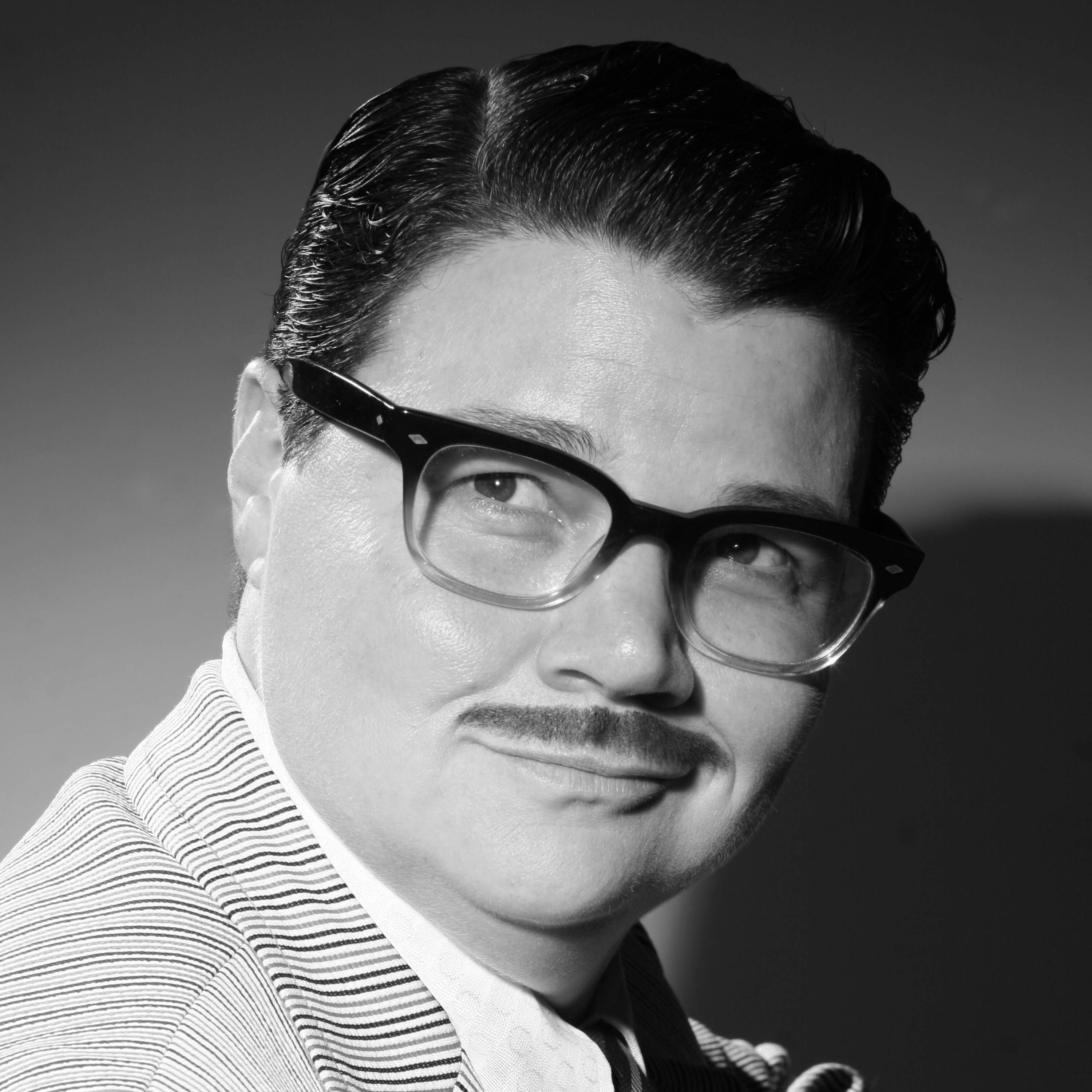
Murray Hill is a trans entertainer and emcee who created the drag-king persona “Mr. Showbiz.” He has emceed queer cabaret and music events, including King of Drag (the first TV drag king competition series). He cites Don Rickles, Buddy Hackett, Dean Martin, Phyllis Dillard, Toadie Fields, Joan Rivers, Elvis, Tina Turner, and Sammy Davis Jr.
Key claims
Fred Rococo is “Murray dialed down.” He “became what he didn’t see” after noticing drag kings/queer butches were missing in New York. He stopped suppressing childhood memories and forgave his mother after visiting her in hospice.
Notable examples
photography of drag kings after Wigstock; the Somebody Somewhere “crop yield” field scene; his choir-practice cabaret emceeing; his 70s George Jefferson-inspired tuxedo.
Written by AI. May contain mistakes.
Chapters
0:45
Murray Hill's Persona and Background
Murray discusses his on-screen character and his real-life persona.
“In real life, Murray Hill is the persona he created to emcee innumerable drag king burlesque and music events, including the first TV Drag King competition series called King of Drag.”
1:40
Murray's Childhood and Family
Murray reflects on his challenging childhood and family dynamics.
“After years of separating himself from his traumatic childhood, Murray realized he needed to acknowledge and stop suppressing those painful memories.”
3:00
Authenticity and Self-Expression
Murray shares how he found his true self after years of suppression.
“Ladies and gentlemen, and I can say that now because this administration thinks there's only two genders, and I'm both of them.”
5:00
Photography and Early Influences
Murray discusses his transition into photography and artistic influences.
“So let me just say he's wearing a kind of brownish tuxedo with a very wide lapel.”
8:00
Discovering Drag Culture
Murray recounts his journey into the world of drag and performance.
“Well, you know, when I was at Boston University in undergrad, the photography department was down in the basement.”
10:00
Creating Space for Drag Kings
Murray explains the lack of representation for drag kings in the scene.
“I was it was like going to Wizard of Oz.”
12:00
Inspiration from Comedy Legends
Murray reflects on the influence of classic comedians on his style.
“there, it's a printed piece of paper that had listings on it.”
14:00
Inspiration from the Past: Murray Hill's Roots
Learn how Murray Hill's childhood experiences shaped his comedic persona.
“So, you know, that, you know, I jumped on the other side of the camera and I became what I did not see.”
16:12
The Essence of Somebody Somewhere
Explore the themes and personal connections in the series 'Somebody Somewhere'.
“And so let's hear a little bit of you being the emcee.”
20:24
Murray Hill's Memoir
Murray discusses his memoir 'Showbiz' and its themes.
“We'll continue the interview after a break.”
Show all 16 chapters
22:22
Diving Deeper into Somebody Somewhere's Impact
Murray Hill shares profound insights on themes of connection and acceptance.
“And this is Terry Gross, host of the show.”
28:00
Reflections on Societal Changes
Discussion on the societal regression in rights and the protective instinct for youth.
“You know, I think there was a little bit of hope that came in with the Obama years and with Biden.”
31:52
Exploring Early Life and Struggles
Murray Hill discusses his early life, family dynamics, and the struggles faced.
“You were raised by your parents as a girl, though you always felt that was wrong and that you were a boy.”
39:26
Generational Perspectives in the Community
Murray Hill reflects on generational differences and evolving identities in the queer community.
“It wasn't the angry mother or the abusive person or, you know, all the stuff that was her issues.”
42:00
Generational Perspectives on Identity and Language
Explore the generational differences in identity politics and language concerning gender and sexuality.
“And I'm wondering what you think some of the generational differences are between you in your 50s and people in the community who are in their 20s or early 30s or even late teens.”
47:10
The Importance of Representation
Murray Hill reflects on the significance of representation and personal connection in media.
“I'm going to get a little emotional, but I told you I listened to you in the 80s.”

Ask about this episode
Get the gist, explore an idea or ask about something said.
 Claude
On Fresh Air, what are the key points of this episode?
Searching your listeningTranscript
Automatic transcript. May contain errors.
0:00This message comes from NPR sponsor, the official Gilded Age podcast from HBO. Unpack each episode of the Gilded Age and hear from the people who bring 19th century New York to life. Watch the official Gilded Age podcast on HBO Max or listen wherever you get podcasts. This is Fresh Air. I'm Terry Gross. My guest Murray Hill calls himself Mr. Showbiz. He played one of the big-hearted characters in the HBO series Somebody Somewhere about a community of friends in Manhattan, Kansas. his character, Fred Rococo, was a soil scientist and professor and a trans man with a great sense of humor. He was also the host of the queer cabaret that was held at the Presbyterian Church in Manhattan, Kansas, under the guise of using the space for choir practice.
0:45In real life, Murray Hill is the persona he created to emcee innumerable drag king burlesque and music events, including the first TV Drag King competition series called King of Drag. His influences include old-school comics like Don Rickles, Buddy Hackett, Dean Martin, Phyllis Dillard, Toadie Fields, and Joan Rivers, and musicians like Elvis and Tina Turner and Sammy Davis Jr. In the New York Times, he was described as having a look that brings to mind a 1970s Las Vegas lounge singer crossed with a 1950s Borscht Belt comedian. But eventually, Murray Hills stopped being just a persona and became his full-time identity.
1:26In his new memoir, Showbiz! My Life as a Middle-Aged Man, he writes about being brought up by a punitive, always angry, conservative Catholic mother who wanted Murray to be an obedient feminine daughter. Murray's father basically ignored him. After years of separating himself from his traumatic childhood, Murray realized he needed to acknowledge and stop suppressing those painful memories. As he describes different chapters of his life, the tone of his memoir keeps shifting between very funny and very pained, but punctuated with wisecracks. And I should say, too, I think you're great. I love somebody somewhere.
2:06I love the memoir. And I love what you're wearing. Thank you. And, you know, I'm trying to be the best dressed guy on an audio show. OK, so, Marie, you heard me introduce you. You have introduced so many events and so many people. I would like to know if you're willing how you would introduce yourself or this episode. So I would say I would kind of, you know, do a little bit of the tone of the memoir for my introduction for you. Because in my world, you know, I used to listen to you in the 80s, Terry. Oh, wow. When I had a really stupid job when I was an undergraduate in Boston in Harvard Square.
2:49I worked in like a photo lab. And the days were long and boring. And all of us came together to listen to it to make the days pass. So I feel like I've known you forever. So to me, you're a legend. You know, Terry, the voice, gross. So this is what I would say. Ladies and gentlemen, and I can say that now because this administration thinks there's only two genders, and I'm both of them. Please welcome to the show. He started off in New England as a little kid, and now he made it to the big time on NPR, his career highlight happening in real time at 54 years old. Please welcome Mr. Showbiz 5-4 and nothing more, Mr.
3:37Murray Hill. Yay. That's great. Mine was more informative. Yours was a lot more fun. That's basically the story of my life. Okay. So let's get a couple of things straight here. Not too straight, Terry. Not too straight. So Frederick Coco, your character on Somebody Somewhere, was inspired by you, Murray Hill. What's the difference between the character you portray inspired by you and you? Fred Rococo is me dialed down to like a two, with 10 being the highest. So, you know, I have a very big personality, as you can probably already tell. And big lapels. And big lapels, too. Can you add a rim shot sound effects to this?
4:24This is good. Show this. You know, Fred was more calm than I am. But what we did share was enormous heart and wanting to connect with people through our heart and not how we identify and not through our circumstances. So, you know, Fred is like me with, you know, bad purple clothing, no mustache and, you know, kind of subtle. Subtle. OK, that's a difference. Yeah, that's a big difference. To our listeners on the radio or our podcast listeners on audio, we've referred to what Murray is wearing. So let me just say he's wearing a kind of brownish tuxedo with a very wide lapel. It's very, very shiny with a big bow tie and a ruffled shirt.
5:20And it just looks fantastic and theatrical. And you know what this is a reference to? No. You ready for this? It's very 70s looking. Exactly. It's very 70s. And I was a huge, still am, fan of Norman Lear's shows. And this particular tuxedo is a version of a tuxedo from George Jefferson. Oh, no. That's great. I know. I bet nobody came on your show and said that. No, not to my recollection. So I'd like you to compare who you are now to who your mother thought she was raising. Great question. Today, here, I am my full, authentic self. And I feel like this is who I was when I was born. Like, this is my natural self.
6:14And I think when I was growing up, you know, I feel like starting at one years old, that natural personality, who I am, was suppressed and, you know, just discouraged. So I think for whatever reasons, my mother, in her mind, that I was her daughter and I was a girl and I was going to be raised as a girl and do things that girls do. So then you also throw in Catholicism on there in the way that Catholicism treats boys and girls growing up and all that stuff. I didn't always have a mustache on and a suit, but I've always looked like a tomboy. You know, I don't look that different. So it was just incongruous from day one.
7:07And so I left a place where I was not welcome or cared for or seen and went to college. But it wasn't until I got to New York and found my people that I actually was like, oh, I can actually be this person. It's okay. Well, you started off drawing, right? And went to art school, discovered photography, fell in love with that, loved all of the kind of outsider photographers like Nan Golden, Diane Arbus, people who, Ouija, people who took pictures of people on the margins of society. and also people who use photography as a form of like performance art, like Cindy Sherman. And then you decided to start photographing drag shows and gay pride parades.
7:58What was the transition where you decided that that's what you wanted to photograph? Well, you know, when I was at Boston University in undergrad, the photography department was down in the basement. And I think it was like three floors down in the basement. And I had a professor, Stephen Frank. He was a real maverick. You know, Boston was very conservative. And then you go into this basement and you've got this maverick professor. And I can't say what he saw in me other than maybe just curiosity and, you know, a student that wanted to learn and pay attention. he gave me Diane Arvis' catalog of her book and the book of Nangold and Other Side.
8:44Now, up until that point, Terry, you know, there's no Internet, no queer people on TV. So I had never seen this world or these people. So I think, you know, I innately was relating to what I was seeing, but I didn't have the consciousness of what, you know, I was looking at, except that I was mesmerized. So I wanted to go find those people. And, you know, coincidentally, the nightclubs on Commonwealth Avenue, you know, it was only like a five-minute walk down the street where these clubs existed, like Venus de Milo. So, you know, I went in with my camera into these clubs to see a different world.
9:31And you knew you should be part of that world? I didn't. That's the interesting thing or tricky thing. I didn't. It was like such a universe force that brought me in there because I wasn't even out. Like, I didn't know anything about gay or queer or drag. So, you know, when I got into these clubs, you know, after hours at, you know, midnight, 1 a.m., and I saw these this beautiful, loud, joyful community. I was it was like going to Wizard of Oz. I was like, what is this? And then I felt more, you know, I felt more akin to them without even knowing anything. So that was in Boston. Then you moved to New York.
10:16And at the time, the East Village is like the center, the hub of queer culture, lots of queer clubs. And you decide you want to try this yourself. Yes. But also, you notice that there's a lot of drag queens. But where are the drag kings, the people dressing as men? and talk about that a little bit like how you came to that realization and what you thought your role should be in helping to correct that so the the second weekend I moved to New York I went to Wigstock on the West Side Highway and Wigstock was a huge drag festival put on by Lady bunny. So it was like probably like 40 drag queens on the bill.
11:16So I thought, you know, as a newly New Yorker, I'm going to go down to, you know, this festival and take photos of drag queens and be the only person that's doing it. And, you know, within 15 minutes of arriving, I had an epiphany. And it was it was almost a little bit of a detachment because I looked around and I was like, holy crap, there's no lesbians here. There's no drag kings here. There's no butches. It was all drag queens and gay men. So, you know, I really didn't see anybody like me. So, you know, like a day later, I went and looked at a magazine, which is for the young people out there, it's a printed piece of paper that had listings on it.
12:08You remember, Terry, You could get these little gay magazines and you could find out what club to go to every night. So the paper was called HX for Her. And there was a listing for a drag king pageant at the Hershey bar. So, you know, I had my big Pentax camera with a huge flash. And I, you know, told the door person I was from the Village Voice and that I was reporting on the pageant. And they let me in. And that wasn't true, by the way. You were not from the Village Voice. You were faking that. Yes. And I hadn't even unpacked my bag from moving to New York yet. So I went into that pageant and it was like going to Wizard of Oz again, but a different kind.
12:57It wasn't campy like the drag queens in Boston or wig stock that I had photographed. It didn't have the humor. It didn't have the camp. It didn't have the loud dance club music. It was almost very serious. It was very masculine. You know, it was almost more about passing. So, you know, I was mesmerized by it. And I took these photos from these early pageants of these drag kings. And, you know, my mind was working in overtime. I was like, okay, well, there's not a campy, schlubby, you know, drag king on the scene doing jokes, right? It was all serious. So, you know, I really saw a window there.
13:44And, you know, through being at School of Visual Arts and, you know, at the same time a professor, Shelley Rice, got me really interested in feminist performance art, I became the subject matter. And, you know, the 70s performance art, the major motto was, you know, the personal is political. So, you know, that, you know, I jumped on the other side of the camera and I became what I did not see. So you were inspired in part by Borscht Belt comics. And you saw some of them on the Tonight Show back in the Johnny Carson era. But it's not like you're in your 50s and they're dead, basically. They're from like another world, another generation that's basically gone.
14:35So what is it that you loved about them that you incorporated into Murray Hill on stage? So when I was watching Johnny Carson every single night when I was a kid, you know, he was on at 1130. And, you know, after living a tough life at home, everybody would be in bed by then. So it'd be quiet. So it was like a very safe, comforting environment. And a lot of people, a lot of America felt like that about Johnny Carson. He was like, you know, their living room, their uncle. Yeah. So when I watched him and these larger than life personalities, it was a world that I had never seen before. And some of that is what we call today show people, you know, gregarious, confident, laughing.
15:25You know, it just it was like try to imagine in a visual way, like my life, my life pretty dark. All of a sudden, my life is in color. And the color comes through as Don Rickles, Dee Martin, Buddy Hackett, Johnny Carson. And I'm like, oh, what is this? And, you know, I was, you know, I they made me laugh and they made me feel happy. So, you know, I think that stuck with me as I got older, because then somehow, you know, 20 years later, I don't look that dissimilar to Buddy Hackett. If people want to look him up, you'll get a good kick out of it. So I think we should talk about Somebody Somewhere, a fabulous series about a community of mostly queer people in Manhattan, Kansas.
16:22and the premise is that Bridget Everett's character, and she's the star of the show, and it's based in part on her life and based in part on your life, she moves back to Manhattan, Kansas, and she becomes part of this community of queer people who have a kind of underground cabaret at the Presbyterian Church pretending to the church like it's for choir practice. But of course it's not. And you're the emcee. And so let's hear a little bit of you being the emcee. This is the first time we see you. It's in the first episode of the show. All right. Choose the right way. Who would have ever imagined that these two nobodies would someday make it all the way to this here stage at a Presbyterian church in a dining mall in the eighth biggest town in Kansas?
17:20Believe in your dreams, kids. Come on, we did it. So tonight, we're going to do some drinking, some dancing, and some fellowshipping. And our first performer, even though we're not quite ready and the lights aren't set, insisted on coming and joining us right now. So please, let's give her a big choir practice welcome, the incomparable Irma.
17:58It's been a minute since I heard that. What do you think? Well, I had a lot of lines.
18:07You know, I think, Bridget, you know, we are, you know, bosom buddies, friends for a long time. And, you know, we're both, if this makes any sense, but we both were kind of othered in very different ways. So she got to New York and wanted to be in the theater community and, you know, a singer, like a traditional theater singer. And, you know, I was in the queer community. But when we found each other, you know, we related on that misfits, other sensibility. and we instantly bonded. And, you know, the gay community, you know, took her in, Terry, with wide open arms. We dragged her in. Now, she's not gay and she's listening to us.
18:53So, you know, I'm not outing you, Bridget. I know what's up. But, you know, she, you know, gay, the gay community has a huge history of loving and supporting strong, powerful women with a voice. So Bridget became part of this misfit choir practice community. So that's the very basis of Somebody Somewhere. So, you know, a lot of people said that me and Jeff and Bridget were so real on the show, that the show was so authentic. I'll tell you something else everybody said. I wish they were my friends. Exactly. I felt that way. I have heard so many people say that. I know. Okay, you make an interesting point here.
19:41Because do you remember back in the days of Carson, people thought he was their friend. That he would sit next to them in the living room and watch the program together every night. So to me, that's what show business is. And that's what art has a meaning about. is like you can watch a TV or your phone or your tablet and think that you have a friend by watching. And you do. And you have a friend than me right now, Terry. And I think that show was a gift for all of us. All of us misfits made it to the big leagues and we got to be who we were. My guest is Murray Hill. His new memoir is called Showbiz.
20:27My life is a middle-aged man. We'll continue the interview after a break. We'll soon be posting video from my interview with Murray on our YouTube channel called This is Fresh Air and also on our Instagram. I'm Terry Gross and This is Fresh Air. Stay tuned for the following announcements and messages from our sponsors. This message comes from Prolon. Want to look and feel your best this fall? Prolon's five-day fasting mimicking diet is a clinically developed nutrition program with the goal of promoting fat loss while protecting lean body mass. Developed at USC's Longevity Institute, it aims to assist the body in entering a fasting-like state that helps reset metabolism, target visceral fat, and support healthy metabolic markers.
21:09Get 15 % off plus a bonus gift when you subscribe at prolonlife.com slash NPR. This message comes from IXL. With IXL, you get personalized online learning and teaching solutions that help improve achievement, empower teachers, and track progress. This one platform for K-12 helps teachers accomplish what normally would require dozens of other tools. Educators can see how their school is performing in real time to make better instructional decisions. IXL is used in 96 of the top 100 school districts. Learn more at IXL.com slash NPR. This message comes from NPR sponsor Charles Schwab. When is the right time to sell a stock?
21:51How do you protect against inflation? Financial decisions can be tricky. And often, your own cognitive and emotional biases can lead you astray. Financial Decoder, an original podcast from Charles Schwab, can help. Join host Mark Reepy as he offers practical solutions to help overcome the cognitive and emotional biases that may affect your investing decisions. Download the latest episode and subscribe at schwab.com slash financial decoder. Hi, this is Molly C.V. Nespert, digital producer at Fresh Air. And this is Terry Gross, host of the show. One of the things I do is write the weekly newsletter.
22:30And I'm a newsletter fan. I read it every Saturday after breakfast. The newsletter includes all the week's shows, staff recommendations, and Molly picks timely highlights from the archive. It's a fun read. It's also the only place where we tell you what's coming up next week. An exclusive. So subscribe at whyy.org slash fresh air and look for an email from Molly every Saturday morning. So there's another clip I want to play from Somebody Somewhere. So this is a scene between you and Bridget Everett's character's father. And the father is a farmer. You're a soil scientist and a professor. So you've gone over to talk with him about how to get a better yield on his crops.
23:14Meanwhile, he is not a very emotional guy. He's the opposite. He's very emotionally, he withholds emotion, very distanced. So, and also his wife has been drinking way too much. The daughters are very worried about it. And here you are explaining to him how to get better yields on his crop. You've suggested that he try like crop rotation. And here's his response. I can't do it. With all the planting now and the tilling in the spring, you know, for something I can't even sell. I hear that, but you'll be buying less herbicide and we can talk about no-till options. Your yields will increase over time and, you know, it is a good investment in your future.
24:05It's hard to get excited about the future when you're just sort of, you know, hanging on to the present. It's just something to think about. Yeah. I know we don't know each other well, but you're a real good steward of your land. Uh-huh. I guess.
24:26You know, I'm sorry that I left early yesterday, but it was a personal, you know, family matter. That's all right. Family first, you know? I'm not sure I always put them first. I thought I was, but I think I might have messed up. See, I'm not the type of fellow that can just talk about stuff, and so I hold things in. I just keep things to myself. I realize that that's all got to change. Well, you know, think of it this way. You can only start from where you are. And that was Mike Haggerty as the father, and he's since passed away. and I know the cast was very, very sad about that. And it's a beautiful scene.
25:21What do you love about it? Because I know from the book that you love that scene. Well, you know, there was a couple of things happening at the same time for that scene. One was just the breathtaking landscape that we were in. So, you know, Mike and I were in the middle of this field. It was a gorgeous day out. And the crew for this one was way back, like 50 feet behind us. So we were actually out there by ourselves. And the director was giving us notes through a walkie-talkie that was in the grass. So I actually felt, I don't know if this is transference or if this is what acting is. You know, I came up from the clubs, but, you know, I felt like I was in the field with him, talking to him as a very dear friend and consoling him.
26:14And then I felt from him that he was doing the best that he could for his family and that he was accepting me as a human being. so what was special about it to me too as in show business was I got to be a person a human being a three-dimensional person that related to another person who's very different from him as far as how they think about some things in life and we got to connect and to me This is the most beautiful, purest moment that I've ever had in my career. And it also says so much, especially the times that we're in right now, that sometimes people fear and are scared of trans people.
27:06And they listen to the rhetoric and they think we're evil and bad and, you know, trying to take over this and push our agendas and all this stuff. But they don't sit and talk to a trans person. So that scene to me was like radical in that sense, because we just got to exist as two guys in this beautiful, you know, field, consoling each other's human beings. My impression is that's what you want in real life. Absolutely. But, you know, you mentioned in these times that we're in, are you feeling a difference with all of Trump's anti-trans rhetoric? Absolutely. You know, I've been around for a while and, you know, it wasn't it's never been great for us and it's never been great for the queer community.
28:04You know, I think there was a little bit of hope that came in with the Obama years and with Biden. But since then, it has gone completely reverse to a point that's so absurd and so hateful and so divisive and cruel that I can't help but feel it in my own life. But I also feel very protective of the young kids who grew up with Obama that didn't think that they were degenerates and weren't stripped of basic human rights constantly. Like every day there's something else. So, you know, I feel for these kids that we finally got to a place where we were going to live and let live and then also have policies and laws that would, you know, ensure equal rights.
28:57And now that's gone. So it's mind-blowing to me from a societal perspective and from a personal. I definitely feel on a daily basis that there is a target on my back. If you feel like there's a target on your back, is that affecting how you present in public so that people don't see you as a target? Good question. It doesn't impact how I present. I am not at this point in my life and have been through the stuff that I've been through in my life and being elder in the queer community. I am not going to make myself small. I'm not going to hide and I'm not going to bow down. I am going to take up space, represent myself and the community, and show people, just like I did on that field in somebody somewhere, that I am just like you.
30:03Because I do feel, Terry, that it's my social responsibility to be out there even more. And that's the message, is we're here, we're not going anywhere, and there's nothing to be afraid of, people. My guest is Murray Hill. His new memoir is called Showbiz, My Life as a Middle-Aged Man. We'll be back after a short break. This is Fresh Air. Stay tuned for the following announcements and messages from our sponsors. This message comes from Google Workspace with Gemini. One subscription that does it all. Personalized AI and premium business versions of Gmail, Google Docs, Drive, and more. Try it free for 14 days at goo.gle slash workspacewithgemini.
30:48This message comes from the Natural Resources Defense Council. When the chainsaws come for ancient forests, when bulldozers take the only home a species has, when drilling rigs are plunked onto public lands, something is lost that can't be brought back. NRDC is in court to stop this destruction. From the wonders of the Arctic to baby sea turtles hatching on beaches, It's all still here. Help defend it. Donate at nrdc.org slash fresh and your gift will be matched five times. This message comes from NPR sponsor Charles Schwab. Financial decisions can be tricky. Your biases can lead you astray. Financial Decoder, an original podcast from Charles Schwab, can help.
31:32Download the latest episode and subscribe at schwab.com slash financial decoder. I want to talk about your early life because it seems to me that your memoir is an exercise in integrating your past and your present. Because there's a real dividing line. You were raised by your parents as a girl, though you always felt that was wrong and that you were a boy. It sounds like you had such a really horrible family life. You know, your father was like drunk a lot of the time, paid very little attention to you. Whereas your mother was very volatile. She was angry a good deal of the time. You never knew what was going to make her angry.
32:21So you walked around as if everything that you could do or say was a possible landmine. And for a long time, you didn't want anybody to know who your parents were, what your childhood was like. And of course, a lot of trans people, queer people feel that way. But you've really tried to integrate those two very different parts of your life in the memoir by writing about both parts. Why did you feel that you wanted to do that both for yourself and to tell the public after years of not having told your good friends about that part of your life? Yeah, I mean, you know, Bridget Everett, for example, is reading the book right now.
33:11And we've been friends for like 28 years. And she feels like she's hearing about me for the first time in some ways. so you know it is it's not even like i just recently started opening up it's like this book is is you know my my wife has read it and was like i had no idea about a lot of these things so um the book started off as me wanting to do service for the community and for the trans kids because a lot of the feedback that I received from being Fred Ricoco was from parents that have trans kids, community members, like, you know, you were such a good role model. You showed my child that you can have a full career, that you can have all this stuff.
34:01And I felt a little disingenuous in that the world and the fans and my friends and my people have only seen the end result of the struggle. So, you know, even to go back to my family, my upbringing, like Irish, my dad, my father never once talked about anything emotional. I never had a conversation with him. So there was no communication, no sharing, no intimacy. So, you know, I have that in me just like a natural, you know, of like, I'm going to keep everything close to the vest. But when it comes to the more traumatic parts of my childhood, you know, I said early on that and this was a coping mechanism and it didn't serve me.
34:53But I am going to push all of this down and suppress it that it never, ever happened because I had so much shame about it. And I didn't want the bad things in my life to be associated with me. Yeah. And your book, I mean, you don't go into detail and I won't certainly won't ask you to. But you write that it was physical and sexual abuse. So that's a lot to suffer through in addition to having parents who didn't seem to care for you. And your mother sounds like she was full of contradictions. You know, she was Catholic and, you know, anything that was perceived as incorrect by the church, she believed.
35:41Yet she loved Andy Warhol and took you to all of his big museum shows in New York. And I mean, he was queer and his art was really like outside of the mainstream. And so is the whole scene around him, which was filled with outsiders. And filled with people who were trans or queer in some way. And like, who can explain that? I've tried to, Terry. It's very hard to figure out. Well, it must have been very confusing to you. Yes. It was confusing, and she's still a confusing person to think about. You know, in one hand, I can't say there's a lot of positive things that I got from her, But she did introduce me to artists and Andy Warhol and painters and, you know, from very early.
36:44And I was, you know, incredibly influenced that. And I became a visual artist to start. Now, we didn't do anything together. We didn't speak about anything. We didn't have with the mother daughter bond was non-existent. But she took me to the theater in New York and she took me to the Met and the Guggenheim from very young, you know, up until I left for college. So, you know, I learned this later in life after she passed that she was a repressed artist. so sometimes I think that makes me understand her a little bit more because she grew up in a time where you know the gender roles were very different and she didn't feel like she could be an artist so she didn't go down the track that I did and I do think that that was a bubbling of a lot of resentment it.
37:50Because she didn't have the life that she really wanted to live and maybe saw you, a responsibility as part of the problem that had her tied down to this life she didn't want. Exactly. Bingo. When somebody somewhere was premiering, she was dying and she wanted to see it. You got a link for her. She liked the show, right? Yes. And so the last time you saw her, which was, you know, about the time of the premiere, you forgave her. And can you explain why you forgave her? Because it seems like she should have been the one, you know, apologizing to you. You never got the apology, did you? No. No. Why did you decide to forgive her?
38:44Because at the end of her life, and this was before somebody somewhere came out, this was like the week before, I went to see her in hospice. And the woman that has taken up so much space in my mind and in my life as being essentially a monster was helpless, vulnerable, and, you know, almost a humility that she knew that she was at the end of her life. So she was, she felt like a completely different person, Terry. And the way that I felt about her in that room was how I feel about every single other person in my life. Empathy. It wasn't the angry mother or the abusive person or, you know, all the stuff that was her issues.
39:42I saw a woman that has been so tough as nails her entire life, finally, in the last few days, let her guard down. and it was incredibly profound. And that's, you know, in that moment, I was sitting next to her, you know, holding her hand and I said to myself, I forgive you. And, you know, it's not even that she did the best that she could, she could have done better for sure. That's not an excuse. I don't always love when people say that, but, you know, hurt people hurt people. My guest is Murray Hill. His new memoir is called Showbiz. My life is a middle-aged man. We'll be right back. This is Fresh Air.
40:31Stay tuned for the following announcements and messages from our sponsors. This message comes from Google Workspace with Gemini. Ever notice how every new AI tool asks you to explain your business to it all over again? Google Workspace with Gemini skips that. You get Google's AI built right into the premium versions of Gmail, Google Docs, Sheets, and more. No new tools, no extra logins, just one subscription that gives you personalized AI right inside your actual workflow. Try Google Workspace with Gemini at goo.gle slash workspace with Gemini. This message comes from the Natural Resources Defense Council.
41:10Do you remember fireflies at night, snow days that kept you home from school? A child born tomorrow may not. They'll grow up thinking polar bears and monarch butterflies went the way of the dinosaurs. Just something that wasn't cut out to survive. NRDC is fighting in court to protect the species America is losing. What that child gets to see is still being decided. Go to nrdc.org slash fresh and your gift will be matched five times. This message comes from Angie. Angie has been helping homeowners find skilled pros to get their home projects done well for over 30 years. For everything from minor repairs to major remodels, find reviews, pricing, and booking at Angie.com or on the Angie app.
41:57You consider yourself an elder in the community. And I'm wondering what you think some of the generational differences are between you in your 50s and people in the community who are in their 20s or early 30s or even late teens. Yeah. And I make sure that I'm around young people as well. I think the biggest difference is language and identity politics. Because when I was growing up, you were either a tomboy or I don't know if I can say this, Terry, but or a f***er. Those were the only – that's the only language that existed. Fast forward today and there are conversations, not even conversations.
42:50People put their pronouns in email signatures, Terry. Yes. And to me, that is the most foreign development that has happened. I still can't even wrap my head around it. You see it as a positive or a negative development? Well, I see it as positive because, you know, people, pronouns to me now in this day and age, right, are you're recognizing another human being on how they want to be addressed. It's as simple as that. Now, as being an elder, I have been misgendered my entire life, you know, up until yesterday. Okay? Nothing's happened yet today, Terry, because it's kind of early. All right? And, you know, it depends on what kind of mood I'm in, but it happens so much to me and has happened so much to me that it's not something that I'm going to, you know, stop the tape and confront someone on.
43:51You know, there is a difference there. And I think that's a generational thing because I never even thought I could say what I wanted to be called. But when it comes down to the language and trans and trans men and transgender people and mask, like all this language that did not exist. When I identify myself, I don't I've never done this. I've never identified myself by my gender. And I've always wanted to be identified like everybody else. Right. I want equal rights. I want to be on the same playing field as everybody else. And sometimes this is just my personal thing. And I think it's a little generational.
44:41When you put something in front and it's always minority groups, Terry, imagine that when you put a qualifier in front of a name. to me that says you're different. Now, everyone's different. That's not what I mean. But I don't want to have a disclaimer in front of my name. Because I'm not just trans. I'm not just a lesbian. I'm not just queer. I'm not a drag king. You know, I sometimes make a joke in my act that, you know, if I was a multiple choice question, Terry, I would be not A, B, C, or I would be D, all of the above. You use the word kids a lot. Like you call everybody kids, especially people who are younger than you.
45:29And you're not that old. You're in your 50s, your mid-50s. You want to use it in context for us? Well, you know, kids is also kind of goes back to the Catskills, Borchbilt comedians. That's what I was wondering. Yeah, that's what I was wondering. Right. So, you know, like Don Rickles is like, hey, kid, you know, it's a very vaudevillian kind of word. But also, it's a very showbiz kind of word, because, you know, Liza Minnelli, there's no one really more showbiz than her. And she even in her book, her audio book, it's hey, kids. And you know, part of that, you know, I don't I don't want to get too deep, but it is Terry Gross.
46:12You know, a part of that is I do feel like an uncle or a paternal figure to younger people that I didn't have. Yes. And in drag culture, you know, families are recreated. You know, in drag queens, it's mothers, my children, you know, house of this, house of that. So it's in the queer community when you've grown up disenfranchised and abandoned and isolated, you recreate these family dynamics that you wish you had to survive. So, you know, I am certainly part of that transition when I say kids to a younger queer person. And I will always help a younger queer person in need always, no matter what, because that's to me, that's what you're supposed to do.
47:05It's been great to talk with you. I really enjoyed it a lot. And I think it's great that you've written this book. Terry, I got to thank you. I'm going to get a little emotional, but I told you I listened to you in the 80s. And never in a million years did I think that I would get to sit in this studio and talk to you. It means so much to me. So you can't see me now, but I'm emotional. And I just want to thank you because representation matters so much. And a lot of people are going to hear this and a lot of people hopefully will read my story and know that you can survive and you could live. So I'm really grateful for the opportunity to be here.
47:55And I'm grateful and feel lucky to have spoken with you. Showbiz. Showbiz. Marie Hill's new memoir is called Showbiz. My Life as a Middle-Aged Man. Tomorrow on Fresh Air, Defense Secretary Pete Hexeth has a clear vision for the U.S. military. New York Times Pentagon correspondent Greg Jaffe will tell us about Hexeth's impact on the military and why even Republicans in Congress have doubts about his approach. I hope you'll join us. Fresh Air's executive producer is Sam Brigger. Our technical director and engineer is Audrey Bentham. Welcome back, Audrey. Our interviews and reviews are produced and edited by Phyllis Myers, Anne-Marie Baldonado, Lauren Krenzel, Teresa Madden, Monique Nazareth, Thea Chaloner, Susan Yacundi, Anna Bauman, and Nico Gonzalez-Whistler.
48:45Our digital media producer is Molly C. Vinesper. Roberta Shorrock directs the show. Our co-host is Tanya Mosley. I'm Terry Gross. Stay tuned for the following announcements and messages from our sponsors. This message comes from Google Workspace with Gemini. One subscription that does it all. Personalized AI and premium business versions of Gmail, Google Docs, Drive, and more. Try it free for 14 days at goo.gle slash workspace with Gemini. This message comes from NPR sponsor Charles Schwab. When is the right time to sell a stock? How do you protect against inflation? Financial decisions can be tricky, and often your own cognitive and emotional biases can lead you astray.
49:30Financial Decoder, an original podcast from Charles Schwab, can help. Join host Mark Reepy as he offers practical solutions to help overcome the cognitive and emotional biases that may affect your investing decisions. Download the latest episode and subscribe at schwab.com slash financial decoder.
From the publisher
Murray Hill's character on HBO’s Somebody Somewhere, Fred Rococo, is a soil scientist trans man who hosts a queer cabaret. “[He] is me dialed down to like a 2,” he tells Terry Gross. In real life, Murray has hosted drag king shows, queer cabarets, burlesque shows and performed his own act. He spoke with Terry Gross about finding and building his community, forgiveness, and how anti-trans rhetoric and policy has affected him. His new memoir is Showbiz! My Life as a Middle-Aged Man.
Subscribe to our free weekly newsletter
Follow us on Instagram
Subscribe to our YouTube channel
Check out the Fresh Air Archives
See pcm.adswizz.com for information about our collection and use of personal data for sponsorship and to manage your podcast sponsorship preferences.
NPR Privacy Policy
Subscribe to our free weekly newsletter
Follow us on Instagram
Subscribe to our YouTube channel
Check out the Fresh Air Archives
See pcm.adswizz.com for information about our collection and use of personal data for sponsorship and to manage your podcast sponsorship preferences.
NPR Privacy Policy
More from Fresh Air
All episodes

We use cookies.They keep VO running smoothly and help us improve it. Privacy policy