Ask ChatGPT
 FULL COMP: Restaurant Tactics, Tools, & Strategies
1 Sep 2026 · 39m · 16 chapters
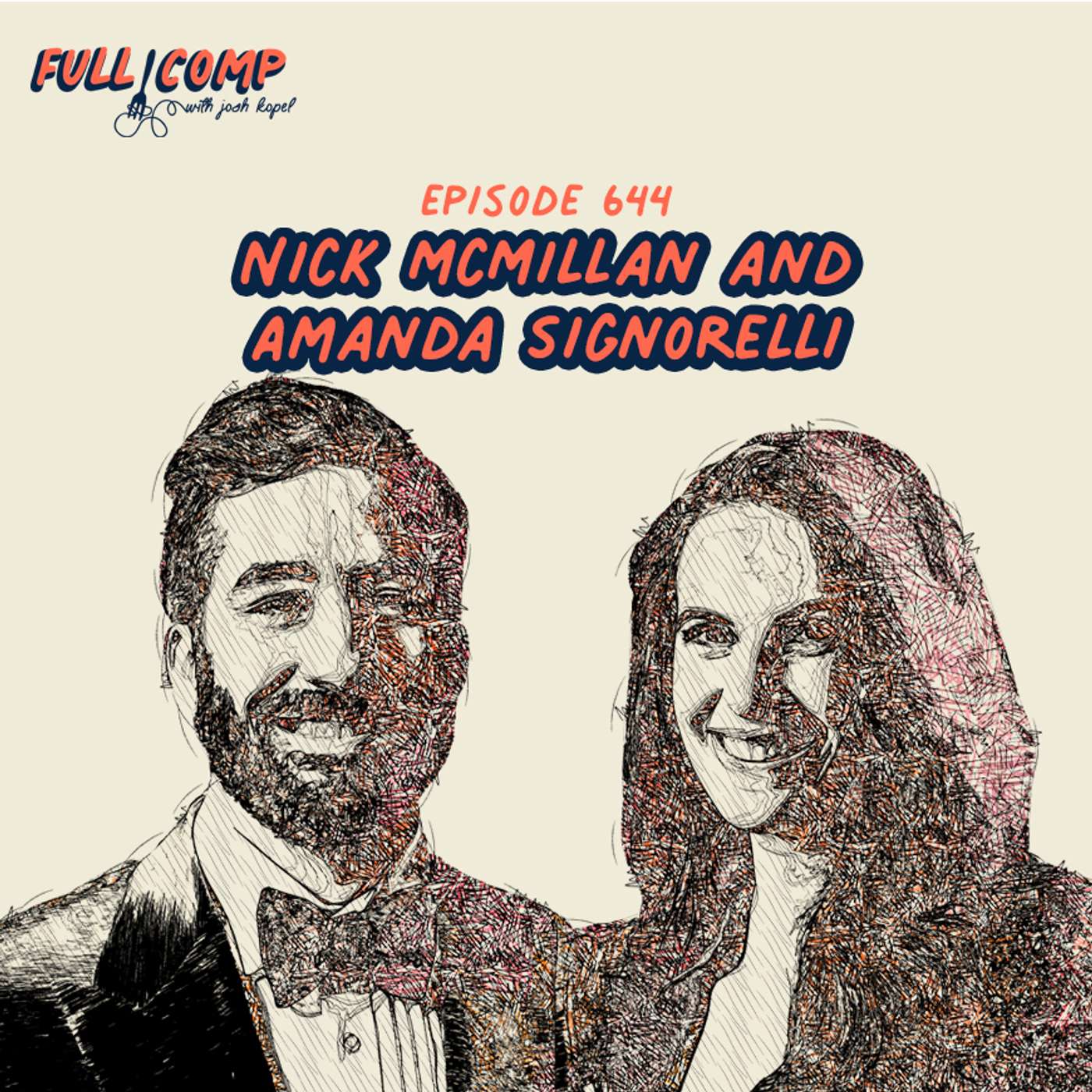
Amanda Signorelli and Nick McMillan, tech outsiders who took over the Golden Steer (Las Vegas’ oldest steakhouse, opened 1958) in 2019, discuss rebuilding the financial model after COVID, scaling beyond referrals, using brand storytelling to drive predictable revenue, and expanding to New York while preserving “old Vegas” hospitality. They also share tactics for social media and private dining growth.
Amanda and Nick came from tech; Nick had culinary training (culinary school plus moonlighting in a Chicago restaurant). They inherited the Golden Steer and had one year to learn before COVID.
Longevity doesn’t equal profitability; the pre-COVID restaurant P&L was a “template” that failed under low margin; social media should be run by dedicated creators (not operators or agencies); brand-first storytelling can unlock demand without discounting.
TikTok “lobster” content leading to a 450% increase in lobster sales; COVID experiments (delivery, takeout grocery-style pop-ups) that didn’t work; spinning out Zoom masterclasses (high margin) and shipping product; expanding Vegas by taking over a neighboring space while matching Golden Steer aesthetics; using private dining demand data for CES/SHOT Show and how it can both fill conventions and increase demand for remaining seats.
Written by AI. May contain mistakes.
Introduction to Amanda and Nick, their background, and the Golden Steer restaurant.
“I have yet to meet more than like maybe one operator or restaurateur who has any business running social.”
Amanda and Nick discuss their unexpected journey into the restaurant industry.
“Amanda and Nick took over the Golden Steer in 2019, literally the oldest Steakhouse in Las Vegas.”
Exploring the complexities of managing a long-standing restaurant brand.
“The hours are better and never in a million years thought I was coming back.”
How COVID forced Amanda and Nick to rethink their business model.
“And so that being the case, I would assume when you did dig in, you began looking at the fundamentals of the business.”
Discussion on identifying effective revenue streams post-COVID.
“to me, the industry shifted so much during COVID.”
The reasoning behind expanding the restaurant's footprint and private dining.
“And then when you chose to expand the footprint of the Vegas location, was that because demand exceeded supply or was that really built around a thesis that if you build it, they will come?”
Learn how to maximize restaurant revenue through strategic event marketing.
“Like we were cold calling the whole nine yards.”
Discover the impact of social media marketing on restaurant success.
“We were a bit more focused on what's it going to take for the brand to stand for something rather than I'm going to call it an explicit use case, to be honest.”
Understand how to find the right content creators to enhance your restaurant's visibility.
“At the very least, it's a great top of funnel to get them to a place of higher intent, maybe down the road, but most people don't know what to do.”
Explore the considerations in expanding a restaurant brand to new cities.
“You will spend too much money and you'll get a three-month contract or a six-month contract and you will be sad.”
Learn about the importance of intentional branding in a new market.
“And I think it was everything that Amanda just talked through around the storytelling convinced us that we could tell this story in a way that made sense in New York.”
Gain insights into adapting restaurant operations and values in a new market.
“If I can't, every single person we spoke to in the industry is like, well, what's the perspective?”
Learn how to navigate the complexities of decision-making in business while maintaining personal relationships.
“Like there are guardrails and how do we show up?”
Explore the challenges of managing family life while running a restaurant and the importance of shared experiences.
“But to say the least for us in December of 24, the first weekend we found out that I was unplanned and not expecting pregnant, which was like, oh, shit.”
Discuss how perceptions of success evolve in the restaurant industry and the significance of defining personal goals.
“I think we never go out and don't talk about work like we always talk like we're like, we're not going to talk about work.”
Understand the deep emotional connections created in the hospitality industry and how they impact personal fulfillment.
“tech world before this and I was on the engineering side.”

Get the gist, explore an idea or ask about something said.
 Claude
On FULL COMP: Restaurant Tactics, Tools, & Strategies, what are the key points of this episode?
Searching your listeningAutomatic transcript. May contain errors.
0:00Amanda Signorelli: I'm going to ask you a question that might sting a bit. How many holiday parties do you have booked for the month of December? Not like how many do you expect? It's how many are on the books right now with the deposits collected and the contracts signed. And for many of you, I worry that the answer is not enough. And here's why that matters. I think that the companies that are going to throw those parties are picking their venues right now. This is a sweet spot between August and September. And by the time you start thinking about December, the decision's already been made. You're not losing those parties in November.
0:34Amanda Signorelli: You're going to lose them this month. And that's why I built the Private Events Engine. It's a simple three-part system that leverages AI to do most of the work for you. And this month in the Marketing Masterclass, I'm going to walk you through it. It's going to show you how to package events, how to get in front of the people that are booking them, and how to close them without discounting. And you get the whole thing for free. So show up to this month's Marketing Masterclass. Go to restaurantbusinessschool.com today to sign up. Now here we go.
1:08Nick McMillan: I have yet to meet more than like maybe one operator or restaurateur who has any business running social. Truly. You don't know how to do it. The reality is like none of us spend nearly enough time on social media to be able to create the content that's going to perform.
1:24Amanda Signorelli: Welcome to Full Comp, a show offering insight into the hospitality industry, featuring restaurateurs, thought leaders, and innovators, served up on the house.
1:38Amanda Signorelli: What if the thing you're most proud of in your business is also the thing that is quietly draining it? Amanda and Nick took over the Golden Steer in 2019, literally the oldest Steakhouse in Las Vegas. It's been open since 1958. Neither of them came from the restaurant industry. They came from tech. They inherited this brand with more history than it had margin, and they had exactly one year to learn the business before COVID shut it down. In today's conversation, we get into why they rebuilt the financial model from scratch instead of fixing the old one, why none of us have any business running our own social media, and the lessons they learned growing the brand into new markets.
2:17Amanda Signorelli: If you're sitting on a brand with love, but the numbers don't work, this one's for you.
2:29Amanda Signorelli: We got married in 2018. I sold the tech off for my last business in 2018 and had no idea what was going to be next. And her father called and said, take over the restaurant or I'm going to sell it. So we looked at each other and said, we'll do it for a year. Famous last words. the best plans of mice and men and that year started in march of 2019 and then fast forward one year later is march of 2020 covid hits what could possibly go wrong
3:03Nick McMillan: it's funny because like i remember when my dad first called me and said hey i want you guys to take over the restaurant at the time i was like okay i'm living in chicago i'm doing technology you I was raising somebody for another company Nick was also a techie and like I don't know how to cook I don't know anything about restaurants this seems like a really bad idea I don't live in Vegas anymore and fortunately I really lucked out on like the greatest sales job ever because I quite literally pitched Nick I was like why don't we get married move to Vegas and take over the restaurant and like you went to culinary school so maybe you can tell me about this is going to work and I still find it hilarious to this day of like Nick had been working in a restaurant and I don't think it was your plan to go back.
3:41Amanda Signorelli: No, I had right when I graduated college, like right after the financial crash in 08 and 09, I moonlighted in a kitchen, my cousin in a restaurant in Chicago and between culinary school and that, it was probably 18 months and after a while, it was just like, this was great. The people in the industry are awesome. I'm going back to software. The margins are better. The hours are better and never in a million years thought I was coming back. Well, you know, which I think begs a really interesting question, which is like, what's wrong with your father, Amanda? I mean, like, I have a daughter. I have a daughter.
4:18Amanda Signorelli: And I would never be like, you should get into the restaurant industry. It'll be great. What could possibly go wrong?
4:25Nick McMillan: Yeah, you know, actually, my favorite is I had a guest the other day who came into Golden Steer in New York and I laughed because he was like, oh, you're born and raised in Vegas. I was like, yeah, he was like in the suburbs, like Summerlin. I'm like, no, no, I am like born and raised on the strip. That is my life. That is how I grew up. My family does vice industries. We are Vegas. That's what we do. And he was like, man, you must be like a little messed up in the head or at least pretending it. And I was like, oh, no, I definitely am. We 100 % disagree that that is 100 % the truth. and he laughed and I'm like, you kind of have to be to just say, let's do it and let's choose to do it again because it's such a wild thing to go through that process.
5:02Nick McMillan: And at the time, my dad had been very fortunate that he had been investing in a lot of different companies and he was part of a lot of companies and he wasn't truly like 100 % day-to-day in the restaurant and he needed somebody to be that. And I'm somebody who likes to operate more than I like to invest. So I was excited about giving it a shot, but I did come from a place of ignorance of, of, okay, I grew up in this restaurant seeing and, you know, having a joke with a lot of the servers who knew me from when I was a kid, but I didn't really see that underbelly beyond some moments where frankly cash was tight.
5:32Nick McMillan: Like I remember in college, my dad called me. He's like, we have problems. Someone needs to pay a power bill and it can't be me today. I was like, okay, I have some savings. Like here's a thousand dollars. So that's how I always knew it was a little bit of the money pit of we're just keeping it on because it's such an incredible legacy and it was really tough. And so it was really wild to me of, OK, well, let's figure out what we're going to do to make this thing work.
5:55Amanda Signorelli: And let's talk about that, because it's I mean, I think this is one of those beautiful examples that like longevity doesn't necessarily equate to sustained profitability. You know, can I get an amen? And so that being the case, I would assume when you did dig in, you began looking at the fundamentals of the business. You know, you had a little bit of time in 2018, 2019, 2020, the pandemic hits. But by then you kind of understand the fundamentals of the business. And I think that you chose to grow it in really interesting ways. Not to say that there were any gifts that came out of the pandemic, but as burgeoning restaurateurs, how did it influence how you saw the business and the industry?
6:37Amanda Signorelli: So I think I want to I agree there weren't any gifts and it was a terrible and tragic time for a lot of people. I think one of the ways that we tried to look at it was we were not from the industry, one. And two, we were a brand that some could see as like needed to stay what it was, this old school restaurant that shouldn't change. And if it does change, it runs the risk of losing its luster. And one of the things that COVID provided was kind of all bets are off. everyone including customers acknowledged that you could try anything that you really wanted to survive i mean restaurants were opening fish and meat markets in their restaurants just to survive and so i think for us it was a little bit of like all right well let's just figure it out in the way that makes sense for us and not really worry about any of the guardrails whether or not they existed truly at least existed for us in our head around what the brand could or couldn't be or what we could or couldn't do or any kind of opportunity.
7:43Amanda Signorelli: And it was a very freeing exercise, which allowed us to do some great things, also to do some just awful, terrible money burning things and just learn from it and just learn like what's going to work, what's not going to work. And the only other piece, and then we'll love to hear what you're going to say, is that to me, the industry shifted so much during COVID. The way that the guest expectations, and especially after COVID, what guests expected, the craziness of the world, the chaos of the world, and seemingly has only continued to accelerate. So it allowed us to really not have pre-COVID convictions for how things should work, but really develop things post-COVID in a way that acknowledged what guests were expecting, what employees were expecting, what vendors were expecting.
8:32Amanda Signorelli: And out of that, I would assume you came up with a financial model, right? This is how we make money. I think one of my struggles as a young restaurateur myself was we made money like 20 different ways. And none of those were particularly profitable, right? And we were stretched really thin and the brand was really weak. But when we figured out, oh, this is how we make money. This is how we fit into people's lives. This is how they use us. And this is the way that we can drive revenue in a predictable way. What did those drivers end up being for you guys coming out of COVID?
9:06Nick McMillan: I think a little bit to Nick's point on things changes, we also had to just change the model because the financial model that was built before was kind of this like template standard restaurant model where you're fighting tooth and nail on line items that are truly looking at like, what are we doing on COGS? What are we doing on bringing this down? What are we spending? Like, why did we go crazy on Amazon purchases this month, right? Like little things that are the death by a thousand cuts when you don't have that much margin. And that was old model. And then the reality was that new model all of a sudden was, OK, nothing is going to work the same.
9:35Nick McMillan: You're going to need to figure out how to spend your money in different buckets. So what are you going to think about for that as a return standpoint? And I think for us, the biggest push was really more on the front end side of that consumer marketing, where before we were really referral oriented. We were very word of mouth. We were very much just kind of like the restaurant you swung by and went to. And then all of a sudden when it came to marketing and saying, okay, we could try delivery, but we're on the strip and everybody who lives in Vegas when we are in the middle of COVID lives in Summerlin, lives in Henderson.
10:06Nick McMillan: So the product's going to be absolutely terrible by the time it makes it to them. So that's one option. We tried that. That financial P &L, not very good. than it was. Do we start this round where we're like a mini takeout grocery market, like pop up events? That P &L was really bad. We spent a lot of money and a lot of time on it. That didn't go very well. So then we turned around and we're like, OK, well, if we know this P &L, is there another version of this that does work, which then got us to two types of businesses that we spun out afterwards. One was this kind of like Zoom masterclass, which actually was a very good business, a very good business.
10:39Nick McMillan: And that P &L looked really healthy and great and was really high margin. And we're like, this is kind of interesting. Like there's a way that you could build this and scale this. We also then turned around with like shipping product. Now that worked really well because it was COVID. Then we were also predominantly focused on stakes. And that has changed since where business is still doing really well, but now all of a sudden seasoning. So I think it was a lot of like, let's take each P &L and then see how expensive it truly is to grow it to your point on like sustainability and scaling. Cause it's really easy to like spin up a new business and try something.
11:09Nick McMillan: It's really hard to keep doing it without losing your money.
11:12Amanda Signorelli: For sure. And then when you chose to expand the footprint of the Vegas location, was that because demand exceeded supply or was that really built around a thesis that if you build it, they will come? It was demand coming through COVID and coming out of COVID demand just kind of exploded for us. Partly a lot of time, effort and energy around telling the story of the restaurant and the history of it digitally, looking at the product, improving it in a thousand different ways, not just on the food side, but on the service side as well. And just yet we had tremendous demand for folks to come in and kind of experience old Vegas.
11:49Amanda Signorelli: And especially in Vegas has done a tremendous job for attracting convention business. And so we had the opportunity to take over the store next to us, which is kind of in line with the history of the restaurant. It was back in the 70s that the owner at the time took over the space, which is currently our main entrance and our bar and lounge. And so it was fun to kind of continue on in that history telling and history building of the Golden Steer. But then make it feel I mean, it was a falafel shop when we took it over. And so for us, it was this how do we make sure that it feels like still feels like the Golden Steer?
12:25Amanda Signorelli: And so we put in cove ceilings and we put in popcorn ceilings and we did a number. We put in stained glass. The same guy that did the stained glass back in the 80s came and did our stained glass for the new space. And just a couple of different strategies for figuring out how do we make this still feel like the golden steer so that no one kind of bats an eye when they walk in.
12:46Nick McMillan: And to your point on like model and numbers and demand, the other place that we saw was we were looking at the inbound requests on private dining because we knew that there was opportunity to grow. And there was a category of private dining queries that we just could not fill. Sure. Space big enough. So then we turned around and we use that data to then also determine like how big does that space need to be and how do we use it?
13:06Amanda Signorelli: And is that a big driver for you guys today? Private dining, private events?
13:11Nick McMillan: Huge, especially in Vegas. Right. You've got CES, you've got SHOT Show, you have all these big conferences that are coming in. They're only it's only increasing, to be honest, especially in Vegas. And so for us, it was that question of how are we capturing it? And then also timing that with the fact that Vegas is having its own version of a renaissance that like also required us to meet it where it was at. And we couldn't without the space.
13:30Amanda Signorelli: And it's a little bit of a dual win for us. We get this convention business in that want to entertain their clients, but it also decreases supply for just a la carte reservations because we will seat these private dining rooms a la carte if there's no convention in town. But otherwise, it shrinks kind of the footprint of the restaurant down to maybe 80 or 100 seats. So it just amps up kind of demand for the rest of the restaurant, which wasn't an immediate benefit, but something that we've kind of just discovered along the way as we've kind of built out the private dining program and it started to become popular.
14:07Amanda Signorelli: this was the unlock for my fine dining restaurant was eventually i figured out that especially in downtown los angeles with the convention center right there that like the restaurant was open like six days a week to promote my private events business and we got really really aggressive about it because between the corporate events the holiday parties all the conventions that were coming to town it was an amazing opportunity what we did on our side was like we went after that business? Like we were cold calling the whole nine yards. What does marketing look like in sales on that side of your business?
14:43Nick McMillan: We were a bit more focused on what's it going to take for the brand to stand for something rather than I'm going to call it an explicit use case, to be honest. So for us, the way that that looked was the launch of the e-commerce side, the launch, the masterclass business focused us on how do we tell the story of the brand to communicate that outwardly? And then also, how do we do it in terms of tracking? Because the other thing that we saw very early on is everyone's like, oh, spend money on influencers. Oh, spend money here. And you're like, okay, but that actually worked. Do we see a spike? That was going to be.
15:13Nick McMillan: And so we became really laser focused with access and paying attention to those things on the e-com side, then drove the restaurant side to say like, how do we create content that moves the needle? So the very like tactical example was we were one of the first restaurants in Nevada to get on TikTok. And at first we were like, should we be on TikTok? It seems really young. It feels like it's all these Gen Z Tina Boppers were an old school brand. I don't know if that might be off. And I'll never forget, Nick called me and he's like, what are you doing on TikTok? I'm like, what do you mean? He's like, I'm selling out of lobster tails.
15:42Nick McMillan: And I've got people calling me like this 50 year old fisherman who's asking that he wants to make a reservation to experience these TikTok lobsters. And fast forward over that six month period, we have 450 % increase in the number of lobsters that we were selling. And that just started trending even higher. And so we started taking off with this like really obsessive focus on like what's the content in the brand in the image and that was really all about storytelling and looking at traffic that was coming from social to the site that was then converting that was then looking at the source and medium and seeing all those pieces come together to then be like if we really focus on the true north of making the brand really exciting then everything kind of follows suit and that's exactly what happened on private dining was it became enough demand that you were like oh i want to be able to have golden steer booked out for CES.
16:28Nick McMillan: That is my value add. And that really came from like leading very neurotically with brand first and then expecting those pieces to kind of.
16:37Amanda Signorelli: Let's talk about what that looks like on social. Like when I close my eyes and I picture it, it's like Nick dancing with lobsters. I think that everybody listening appreciates it. Yes, social media is great. It can work. It can work in a variety of different ways. At the very least, it's a great top of funnel to get them to a place of higher intent, maybe down the road, but most people don't know what to do. And so how did you figure out what direction to send the content in? Who was orchestrating it? Because for a lot of people, especially for a lot of businesses and at the time, you guys weren't crushing it financially.
17:12Amanda Signorelli: It's like the bar back is in charge of TikTok. So what did that look like for you guys? Amanda's going to have a great answer. I just want to frame it and just say that like I think one it's going to take longer and cost more money trying to figure it out and it's going to be unique to everyone like their story their brand and two it takes a very concentrated dedicated effort Amanda's going to expand on what all that means but I think it's just important to frame like it's a long journey it takes time generally speaking you're not going to see results immediately but the results can be tremendous so I'll get pretty tactical in this
17:52Nick McMillan: just given that we're really thinking about operators who are kind of trying to understand that. So the first and foremost piece is like, I have yet to meet more than like maybe one operator or restaurateur who has any business running social, truly, like don't do it. You don't know how to do it. The reality is like none of us spend nearly enough time on social media to be able to create the content that's going to perform. The first thing that you should ask is like the same way that if you want a great dish, you're going to be like, I'm going to go to my chef to do that. You're not going to go to your bar back.
18:19Nick McMillan: Why are you going to social media and trying to make an incredible video rather than going to a creator. Go to the creator who lives and breathes this all day long and let them run this. So then the first question is like, okay, well, who's that person and how do I find them? So the way that we thought about this is we then went a list. We put together a list in Las Vegas. We're like, all right, let's identify 10, 20. Eventually that list was almost 40 different creators who are restaurant foodies that go and dine. And we invited all of them and assuming a hit rate of only like 1 % who was going going to come in and do it.
18:48Nick McMillan: We then looked at other people who came in and then tracked like if we saw a spike in performance on our profile and if it was meaningful or not. And then at the end of that period of that tester, we then said, OK, these two people were actually really valuable and it seems like people care about them. Let's go reach out with them and have a conversation. And then one of those gentlemen, as we were talking to them, it felt really good to collaborate because that's the other thing is like a lot of these creators haven't had the experience of like working with someone before. And so they may not necessarily be comfortable respecting the fact that you're like, no, you can't be in my kitchen all the time.
19:21Nick McMillan: That's not going to be how this goes. And so you really got to test that collaboration out. And then once you find somebody that understands and you can have that respectful discourse and like that very friendly push and pull, then that becomes your person. You're like, great, here is the key to our account. Have fun. Go create. You need to come in every week to get content. And your job is to create these videos. And we're looking at these numbers together every month and like tweaking and adjusting and what have you. But those people become they're living social media. So they become so obsessed and so into it.
19:48Nick McMillan: They're looking at it way more and way better candidly than any restaurateur. So I always tell people like do that. And then other pieces do not hire an agency. That is my hot take. I have almost never seen an agency or a social media manager or a social media intern pull it off. I am sorry. It does not work. You will spend too much money and you'll get a three-month contract or a six-month contract and you will be sad. So do not do that. That is where I always end up as like very aggressively telling people over and over again.
20:19Amanda Signorelli: I agree. You know, it sucks to say nobody's going to tell your story like you do. That's why it all seems very vanilla, very generalized because they don't know anything because they're producing for a hundred restaurants. I want to talk about New York. So I'll give you my opinion before you say anything i don't think la cares about new york i don't think new york cares about la and i don't think either give a fuck about las vegas
20:54Amanda Signorelli: and so i want to know first like what because like you sell legacy right like the brand is the legacy it is like this las vegas staple and so and like you guys are familiar with the New York market, right? Which is why I'm assuming you wanted to go there. What was the logic leading up to it? Like I know, like I pulled a bunch of research. You guys looked at like 30 locations, which been there before you pick the, your, the one that you thought was going to be like the winner. Walk me through that thought process that ultimately ended with the phrase, how hard could this possibly be? What could possibly go wrong?
21:36Amanda Signorelli: It's going to be great. How hard could this possibly be? Open a second one, they said. It'll be sure, right? It'll be just like the first, I'm sure. That's right. I mean, I think I'll just frame it and say that if we were having this conversation in 2019, the consensus that we had was that the Golden Steer wouldn't travel. There's no world that was going to operate outside of Las Vegas. And I think it was everything that Amanda just talked through around the storytelling convinced us that we could tell this story in a way that made sense in New York. And I think that was the thesis and the kind of North Star for how do we bring this and kind of evolve the concept for New York City.
22:22Amanda Signorelli: We spent a lot of time looking like prior to even seeing locations in New York, looking at our own internal operations, what's working, what's not. We grew over a period of five years. We were growing 30 percent year over year for five years. And so we had systems that we created would break. We'd fix them. They break again. We'd refix them as we kind of were on this growth path. And so we said, what are the things that are going to have to change to get us to multiple locations? And I think there's a lot of truth into what you say that the coasts love the coasts, their own coasts, and are less concerned about kind of flyover country, which is generally the Midwest.
23:03Amanda Signorelli: But I think it's been interesting. Vegas does pop into people's minds, especially everything that it kind of brings. And because Vegas has reinvented itself a dozen times, it was game, of course, entertainment, sports now, the sphere. Like there's always been a new reason for people to come to Vegas. And so so New York, we saw a lot of places we saw from Fideye all the way up to Midtown and kind of every almost every neighborhood in between. But it was important. Storytelling was important, which was one of the big draws for one fifth. The history of the building, the space, the chefs and restaurateurs that had started or built a career in the space.
23:47Amanda Signorelli: and it just felt right after kind of all the places that we saw as a way to take the Golden Steer story and merge it and bring kind of a downtown New York steakhouse to, or I'm sorry, yeah, downtown New York steakhouse with a Vegas flair. So that was, I think, some of the genesis and thesis and I don't know if you want to pick up from there.
24:09Nick McMillan: I think the New York restaurant relationship with Vegas has also changed so dramatically in the past two years because now the, I'm going to call it almost like story of success is that you open a restaurant in New York, maybe you get another one, maybe you get three. And then, and you really made it by opening in Vegas. And so we've seen this huge round. And before I would say it was a little bit more even where we were importing as Vegas in the city, we were importing from everywhere. Right. And that started with Wolfgang Puck and then just kind of kept exploding where we were just importing, importing, importing.
24:40Nick McMillan: And now there is a heavy bias of importing a lot from New York first, then some of the other markets. And so we see this huge proliferation of New York brands there that now have changed the relationship that New York has with Vegas in a very interesting way that I think everyone's still waiting to see settle.
24:56Amanda Signorelli: In opening that restaurant, how did it inform branding, how you see the industry, how your perspective on growth? How did you evolve as entrepreneurs and restaurateurs through opening the restaurant? Everything has changed. hasn't it yeah everything has changed yeah i mean the number of mistakes are kind of innumerable in terms of how many i think coming to new york was the first time in golden steer recent history that there were conscious decisions that we were very specific about every component of the dining experience linens flatware service where where tables were going to go how tables were going to be combined booths colors the pattern of the fab of the carpet um the flow service stations all of these pieces we were very intentional in a way that we didn't have to be right because it's been in this the golden steering vegas has been in space for 70 years things have always kind of just been to where they have been.
26:07Amanda Signorelli: And so this was an opportunity to be intentional with things about the brand that really matter to us. And so the tape, like as one very specific example, the table side Caesar salad kit being something that is just very specific and that we want to keep in the story being created in Tijuana and the 20, like all of these pieces being told was just something new for us. And it was a fun, but also I think exhausting kind of experience. At some point, you've seen like 95 wine glasses and you're just like, how is the guest really going to know the difference between number 72 and number 84? Probably not.
26:49Amanda Signorelli: It also, I think, crystallized some of the way that we, because we got so many questions. So, you know, opening a steakhouse in New York is like bringing sand to the beach and all of these pieces. And I think for us, it crystallized what is important, like the guest, the hospitality, the idea that people make people happy. We always would come back to that. Maybe the guest isn't going to know the difference between number 72 and number 84, but they're going to know that they felt great, that for two, two and a half hours, they forgot about what's going on outside the four walls of the restaurant.
27:19Amanda Signorelli: All of the craziness, certainly of New York City. And they just were able to come in and be treated like kind of like a Vegas old school and that hospitality. And so I think that that exercise that wasn't academic, that like there was actually dollars and skin in the game on our side, was a huge learning experience around what the brand is and what it can mean.
27:40Nick McMillan: Yeah, I mean, over and over, we kept hearing from folks that what mattered is New Yorkers care if you have a perspective. And that was so funny to me. If I can't, every single person we spoke to in the industry is like, well, what's the perspective? What's the point of view? What's the perspective? What's the point of view? And it just kept going over and over and over again. And there was a little bit of like this kind of scary thing on our back of like, well, we don't get to just choose it willy willy. Like there are guardrails and how do we show up? And we were also very nervous of this same kind of issue that we knew whatever we did for New York would be what the brand became.
28:11Nick McMillan: So also that was a push for us of like, do we want to move up? Do we want to move down? Do we want to move inside? Like, how do we show up? Because this decision and what we show up with is permanently what establishes who we are. And that was pretty terrifying to then also be like, we have to reflect that well back to Vegas and understand how those come together. The same piece, though, of the opportunities and things we've been exposed to in this market, we've never had a chance to and we never would have had a right to have a seat at that table unless we came here. And it's also fundamentally changed our relationship with our team because things get structured, run, communicated and done very differently in this market than they do in Vegas.
28:47Nick McMillan: And that's also forced us to then take a look at like we had core values and tenants that we believe before those are the same ones that we have to retain today. And what does it look like looking in the mirror?
28:56Amanda Signorelli: And how has it impacted your relationship? Because you're still married. How have you managed to create a successful partnership and a successful relationship? And like, what are the rules around that that you think would translate to most partnerships? Ladies first.
29:13Nick McMillan: Hearing rules really made me laugh. So I think the other thing that like is really funny and wild and all of this is, you know, nothing ever goes to a plan. But to say the least for us in December of 24, the first weekend we found out that I was unplanned and not expecting pregnant, which was like, oh, shit. And then the next weekend it was, oh, we're going to need to sign on this lease. And then that kicked off a one year clock of let's have a baby and let's open a restaurant at the same time and then do that across country and then get that going. So we have just like so much compounding stress and navigating that together.
29:49Nick McMillan: But it was also one of those things where we've talked often about if you are going to be someone that is such a workaholic, which I think you kind of have to be to be in this industry. It's also really tough to then have the majority of your time be building and not build with the person when you're married. But because then they don't get it, they don't see it, they don't participate in it. It's really hard to be a part of those things. And if you are a workaholic and it's your own, it's also because you're passionate about it. It's like not sharing that passion and building together. How much do you wish that you could have a chance to do that?
30:18Nick McMillan: So we think about that a lot. I don't think in any way, shape or form, we've totally figured out the like, how do we work together? I think we had these visions of like, let's have swimming lanes and never jump in or dive across those. And like that has gone to hell. That doesn't necessarily work for us. And I think that was broken specifically by launching New York because we had this idea of like, OK, we're going to have very clear swimming lanes, which we kept for a bit while we were in Vegas. and it was easier to do. But then all of a sudden it was like, hey, we have a rule now that we each are going to be spinning about a week, if not longer, in Vegas every five weeks.
30:51Nick McMillan: And then we can't overlap because we have a baby. So like if you're in Vegas and I'm in New York, that means whoever is there is the lead for that restaurant. And so no longer can you have those swimming lanes because you have to know what's going on. And that has made things way more complicated. But I think what we've definitely come to appreciate is that the only way that almost works is that you turn around and you have the grace to say like, We're all in it. And we also have that same level of patience to understand there's so much going on. So when that does flare up, there is that compassion, because I think if we weren't working together, I don't know if that compassion would be as easy to appreciate and share.
31:25Amanda Signorelli: Yeah, I think the growth of the business has also necessitated the growth for both of us as individuals, as people, as leaders, as spouses. I'm not saying it can't be done, but I think it can be very challenging if that was only one sided. But the fact that we're both seeing the same things and involved in the same day to day kind of makes that growth just kind of seem normal because we're both in it. It definitely brings its challenges and tradeoffs like everything else. I think we never go out and don't talk about work like we always talk like we're like, we're not going to talk about work. And literally that lasts for 30 seconds.
32:06Amanda Signorelli: And then it's like, well, what else are we going to talk? And so, and part of the, and like to some people, there may be a recoil and I totally get that. I think what makes it work for us is that we both love that. And it's been a great journey and we've tried to do some lanes and we tried to do rules, but all of that has, yeah, New York is, like we said earlier, we create systems, they get broken, we have to rebuild them. And I think New York has kind of done that for the organization and, you know, our, and of course we've thrown a daughter into all of this as well. So it's been a chaotic and fun year.
32:38Amanda Signorelli: That is for sure. You know, I think that there are so many. I'm a parent of a daughter as well and a restaurateur. And there are so many parallels between especially having a little girl and owning a restaurant in the way that like you have all these expectations for this thing before it comes into the world. and then the minute it is birthed, it spends its entire life telling you how it's going to be. The biggest mistakes I made as a restaurateur was not setting like clear parameters around how I was going to define success. I just wanted what I thought everyone else had, you know, and then when I got that, it made me really unhappy because that wasn't what I wanted, but I never really thought about what I wanted.
33:20Amanda Signorelli: And so I think especially as young restaurateurs, You want to grow for the sake of growth, right? That was it. All I ever wanted in the world was one location until I had one. And then all I wanted was two, then three, then four. And so how has your perspective on personal success changed as you've grown? Do you guys feel like you have a clear line in the sand?
33:44Nick McMillan: I think something that is great about kids and restaurants in that regard is like they are unyieldingly honest in a way that just they're just hard right like you can't you can't hide it
33:53Amanda Signorelli: you know and it is that like direct feedback galore amazing like oh wow thank you so much
34:01Nick McMillan: for humbling me again and i think what's funny to me also though is like especially i think that's you know to your point on like a relationship it's been fascinating to see what that looks like and how that shows up for nick and i very differently because i think when we started talking about this at the beginning of the year of like, where are we going? And what does it look like next? Nick told me, and I still have it like replaying in my head over and over and over. He said that there's a commonality between entrepreneurs and junkies with their brain on how they think about things. And there's this adrenaline of must build.
34:31Nick McMillan: And at one point, we were sitting in the conference room and he looks at me, he's like, we can't be talking about building. We're in the middle of like trying to survive. And I think, and I just sat there and I waited and sure enough, I don't even think of it in 30 minutes. And he looks at me, he's like, so where are we building next? What are we doing? We need to be going. And we're sitting here and lacing. And I was like, are you kidding me? We just started over here. And so there is this who you are, how you think about it. For me, at least on personal success, I think number one was I will fullheartedly admit that I do not believe that I am the visionary between the two of our relationships.
35:05Nick McMillan: I'm definitely the operator who is inspired and excited and being in things and likes to build with someone. And I do get a thrill out of building. And I think it's really fun to do that in the way that we do. But also when I think about success for me, it's being able to build with Nick because I love the person that I have become and developed as a consequence of building with him. And that is my new question and thing I talk about is like, okay, if this all goes away tomorrow and I see who's left behind, am I happy with the remnants of who I've become and what I'm bringing to the world from there and am i happy with what i've created and the value i've generated for other people i thought there was a really good quote going around on the internet of like success is not the influence or attention you bring to someone but actually the impact financially you made in them because that's kind of what feeds families and like i'm very proud of the families we are able to feed so that's kind of how i think about it yeah i think that yeah success
35:58Amanda Signorelli: is just very so i personally just love to build i've always loved to build and i was in the the tech world before this and I was on the engineering side. And so there is a natural kind of cry. And I say this all the time to our kitchen team, like there's a natural crossover between kind of engineers and kind of habits and chefs and kind of habits. That's been really exciting. And I have found a passion for kind of building spaces and kind of making them come alive. And it's also been really great. I think Amanda is very kind. I think we complement each other very well from a skill set perspective and the way as you've seen on this interview and all of her previous interviews, she's incredibly articulate, incredibly well spoken to a degree that is just very uncommon.
36:44Amanda Signorelli: And it's a skill that that is so unique and like is tremendous for being out there and telling the story of the golden steer in a way that truly resonates with people. And I think specifically for this industry. One of the things that to my mind is the best part about it and no other industry holds a candle to it is that we get to sell, that people trust us to celebrate their most intimate moments, their graduations, their proposals, their wedding celebrations. In Vegas, we have people that celebrated their high school graduation in the 80s, their kids' eighth grade graduation in the 90s, their kids wedding in the 2020s, like just this generational piece.
37:28Amanda Signorelli: And in a way that you don't really certainly you don't see in software to see like your customers, just visceral reactions to to happiness and to sharing and kind of breaking bread. And so continuing to see that I love challenges. And, you know, there was many folks that, you know, talked about the challenges of New York. And so that was fun to dive into. But yeah, I think success in continuing to define that, what that means. We've certainly kind of had that same thought of like, well, now we have two, now we need to have three or four or five or 10. But really defining that is a good push and something I think that will continue to be a conversation that we have as kind of the days, months and years.
38:07Amanda Signorelli: And as our daughter gets older, I'm sure we'll continue to impact kind of that conversation. That's Amanda and Nick. To learn more about the Golden Steer, visit goldensteer.com. Hey, it's Josh. I wanted to take a hot minute to thank you for listening to today's episode and to ask that if you are getting value from FullConf, please like and subscribe and be sure to leave a review. Those reviews matter and they help other independent owners and operators find the show. Also, if you want to take the stuff that we're talking about in these episodes from idea to execution, head to joshcopal.com. There you will find a ton of free templates and tools and all the details on upcoming learning events so you can keep building momentum.
38:53Amanda Signorelli: I know you're busy, and so don't take your time for granted. Thank you again for listening, and I'll see you on the next episode.
What if the thing you are most proud of in your business is also the thing quietly draining it?
Amanda Signorelli and Nick McMillan took over the Golden Steer in 2019, the oldest steakhouse in Las Vegas, open since 1958. Neither of them came from restaurants. They came from tech, inherited a brand with more history than margin, and had exactly one year to learn the business before COVID shut it down.
In this conversation, we get into why they rebuilt the financial model from scratch instead of fixing the old one, why none of us have any business running their own social media, and the lessons learned growing the brand to new markets.
If you are sitting on a brand people love and numbers that do not work, this one is for you.
To learn more about Golden Steer, visit goldensteer.com.
_________________________________________________________
Free 5-Day Restaurant Marketing Masterclass – This is a live training where you'll learn the exact campaigns Josh has built and tested in real restaurants to attract new guests, increase visit frequency, and generate sales on demand. Save your spot at restaurantbusinessschool.com