
 Ask ChatGPT

 Fund Shack Private Equity Podcast
9 Sep 2026 · 52m · 24 chapters
Business ethics/integrity in private equity and growth investing—arguing that “ethics” should mean right-sized integrity risk management (context, controls, culture), not ESG box-ticking or competing investor questionnaires.
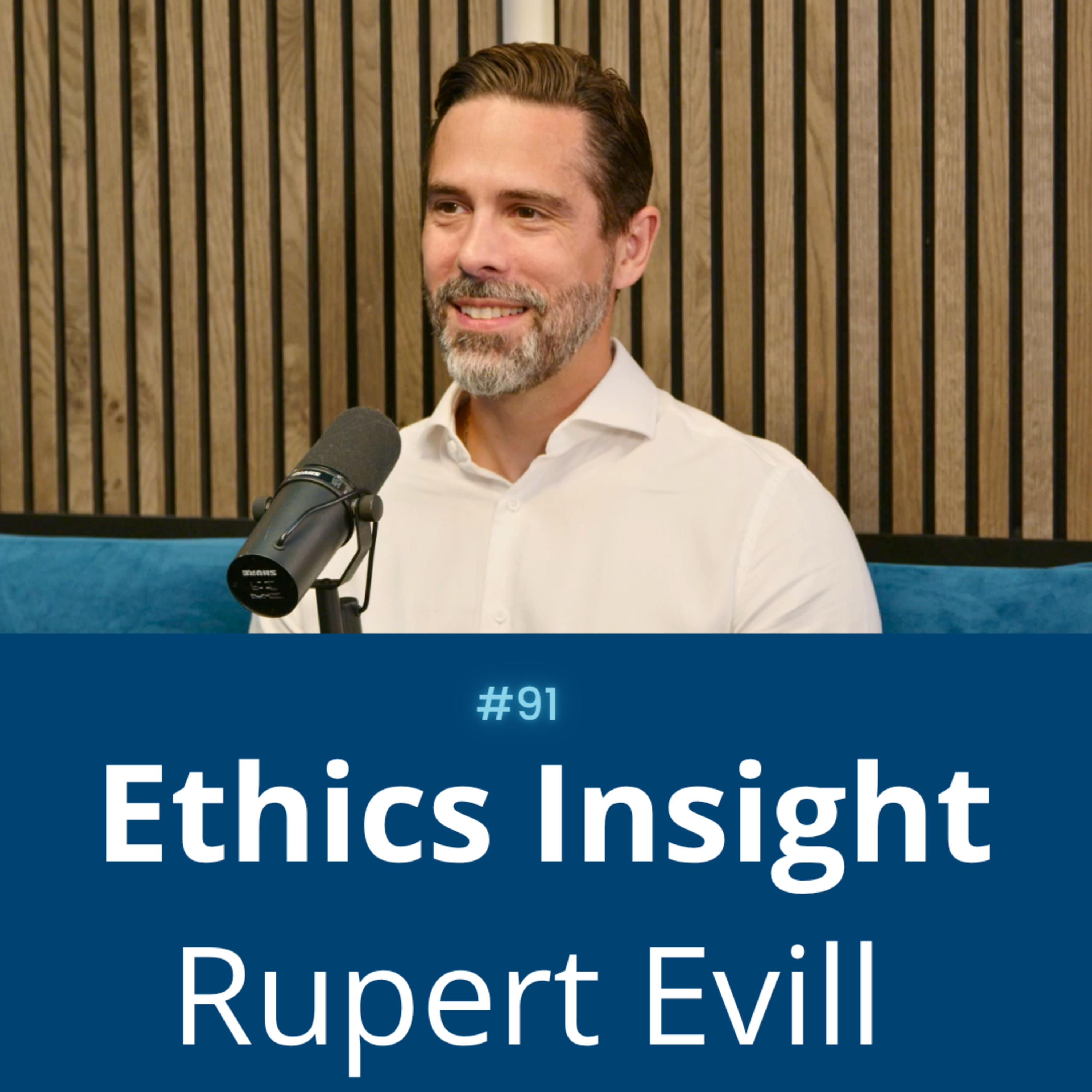
Rupert Evill runs Ethics Insight, after 24 years helping investors identify ethical/integrity risks before they become scandals and destroy value. He has investigated fraud and corruption across mature and emerging markets (including Asia/Mekong region) and advises investors on due diligence and post-investment integrity.
Profit can coexist with value destruction via information advantages, externalized costs, and delayed risks; ESG reporting often becomes abstraction and a “racket.” AI-driven questionnaires create data-room “pebble dashing” and moral hazard. The best early warning for fraud is speak-up/tips, often from outside the organization. Integrity risk should be prioritized to what can derail the business, not what is easiest to report.
Offshore wind vs PV providers with different risk profiles; investors generating 500 ESG questions; fraud ecosystems in Cambodia linked to multiple organized-crime groups; speak-up culture reducing losses/duration; telemedicine regulation “workarounds” via officials; rare-earth supply-chain chain-of-custody limits (DRC to refineries).
Written by AI. May contain mistakes.
Discussion with Rupert Evill on his views about ethics and integrity in business.
“Business ethics can be a somewhat nebulous topic.”
Delving into the framework of context, controls, and culture in making ethical decisions.
“But also your risk appetite, what you're here to do.”
Critique of ESG frameworks and their practical implications in the business world.
“I think there's a big discomfort amongst some, not all, about talking about those trade-offs.”
Discussion on the complexities and inefficiencies in ESG reporting from companies.
“and let's stop worrying about reporting with 44 or however many different ESG frameworks there are now.”
Emphasis on the importance of contextual understanding in risk management.
“And then that asymmetry has been matched on the other side.”
Discussion on creating a culture that encourages whistleblowing and openness in organizations.
“And it's also the I'll be gone, you'll be gone.”
Explore how cultural contexts affect communication and accountability in organizations.
“So before we went on, we were talking about past work.”
Learn strategies for changing organizational culture to improve communication and trust.
“I mean, again, I'm working mainly with growth stage companies, and that's intentional.”
Understand the mindset necessary for addressing integrity risks during investments.
“And now that's going to be no longer the case.”
Discuss the complexities of fraud and organized crime in emerging markets.
“And if I was to speak to just a UK ethics person, they'd basically be a sustainability person talking about carbon emissions.”
Discover how fraud is becoming the world's third-largest economy.
“And the fraud, we know it's happening and we see it's happening.”
Examine the obstacles organizations face in tackling fraud and maintaining compliance.
“Yeah, and you're playing vanilla misrepresentation, misappropriation, misstatement frauds are still going to be taking anywhere from 1 % to 5 % of your revenue.”
Explore the difference between legal compliance and true business integrity.
“They were notified by the police of a fraud involving organized criminals.”
Discuss the challenges of maintaining good faith in venture capital deals.
“My argument is more around what activities could significantly, deleteriously impact your organization and start there.”
Learn about the sensitive dynamics between investors and founder-led businesses.
“but it sounds like mainly in M &A and in trading markets it's just that's not it at all.”
Examine common obstacles in assessing the integrity of organizations.
“So when it comes to due diligence, are there any common obstacles that you come across, let's say, when a venture firm is possessing a founder-led business?”
Discover how cultural health can indicate integrity issues in organizations.
“And there was all this stuff around money laundering and gifts and hospitality.”
Analyze the subtleties of corruption in both developed and developing markets.
“And then they said, do you want any help with it?”
Explore the regulatory challenges faced by telemedicine companies.
“business that having very, very good connections with the regulator is a bad thing.”
Explore the complexities of sourcing rare earth metals and the ethical dilemmas involved.
“they're the ones that are, if you can succeed despite a corrupt setup, then you're a really good business.”
Discuss the role of private equity in sustainable brands and the misconceptions surrounding impact investing.
“People that speak well often say yes to coming on.”
Challenge the beliefs around impact investing and highlight the importance of profit motives.
“And so they, bringing in some investors that have had some battles and some scraps into so-called impact sectors would be really good.”
Delve into the need for change in agricultural practices towards regenerative systems.
“There's a big posturing element to impact investment, which is, you even speak to the big associations and say, so I don't see anything in your conferences and your newsletters around management of risk.”
Emphasize the importance of personal responsibility and focused efforts in sustainability efforts.
“You've got to – these people are not – farmers are not operating on exactly massive margins, if any at all.”

Get the gist, explore an idea or ask about something said.
 Claude
On Fund Shack Private Equity Podcast, what are the key points of this episode?
Searching your listeningAutomatic transcript. May contain errors.
0:00Ross Butler: You remember that ethics seminar you took at business school? No, neither do most people. It's not really why people go to business school or into business. But perhaps that's a mistake because ethics properly understood isn't about being nice. It's about making sure that the way you pursue your own interests doesn't ultimately undermine the system you depend upon. And over a long enough time horizon, that's in your self-interests too. Profit is an extraordinarily powerful signal. It tells us that someone somewhere values what you're producing. But it isn't a flawless one. You can make money while destroying value elsewhere.
0:36Ross Butler: You can exploit an information advantage, externalise a cost, or take a risk whose consequences won't appear for years. That's where ethics comes in. Not as an ESG policy sitting on a website, but in the thousands of decisions investors, executives and board members make every day. Because ultimately, the question isn't whether businesses should make a profit. Of course they should. The more interesting question is what kind of profit are you making and what are you leaving behind in order to make it? To discuss this topic, I'm joined by Rupert Evel, who has spent 24 years helping investors spot ethical risks before they become scandals and before they destroy value.
1:17Ross Butler: Rupert, welcome to Fundshack. Business ethics can be a somewhat nebulous topic. What does it mean to you? Nebulous and boring, which I think you've summed up. I started this business seven years ago and potentially the name, I might have changed it if I was doing it now because you've seen a lot of how ethics has become some sort of grandstanding topic or as you already highlighted, something to bury in an ESG policy. So I had a friend who described sustainability and ethics as basically the paramilitary arms of marketing, which I think is a fair description of where we're at. Yeah. So the way I look at it is, I mean, integrity is maybe a broader, better word.
1:58So the integrity of your decisions and the issues you take, sorry, the choices you make and the consequences of them, which you've already highlighted. but all of that has to sit in a context. And that context will be what you do, where you do, how you do it, etc. But also your risk appetite, what you're here to do. And I entirely agree with you that ethics in some void is doomed to failure. When it's allied to your business objectives and when it's in your enlightened self-interest, that's where generally we can have most traction. So if you're in a business that heavily relies on customer loyalty, then it's probably going to make sense to treat them well.
2:40Whereas if you're Ryanair, it doesn't seem to be so important. So I think ethics is a very relative thing, depending on what you're doing.
2:49Ross Butler: Yeah, presumably the easy end of the spectrum is where it is in your enlightened self-interest. And in that case, presumably what you're doing is just highlighting the fact that there's a difference between short-term and long-term gains, because otherwise people would just do it. Yes, exactly. I mean, the first thing is, the way I look at it, it's kind of three Cs. There's context, controls, and culture. And the context is the simple, the questions that people love to complicate, but really can be distilled down to what do you do? How do you do it? Who do you do it with? Where? And that will help frame everything that follows and right-size it.
3:24And in that environment, well, what are the sensible controls? So rather than talking abstraction, if we, let's pick a hypothetical. So at the moment, there's quite a lot of energy transition work going. So let's say you're somewhere in Western Europe, you're considering an investment. The options might include a company that's going for some big offshore wind concessions versus one that does residential and industrial solo. And so same industry, same country, very, very different risk profile. In one, you have sort of high government exposure. You have offtakers and tariffs and government policy, and those sort of variables present risk.
4:00You've got significant capex and big turbines that you've then got to do big installations offshore. So it's a big project with big issues. But once you're set up, there's a sort of an element of predictability. On the other side, we've seen a hell of a lot of these sort of smaller providers, particularly in the PV space, who've just come and gone flash in the pan because they're not really doing anything. They're just buying stuff from China and getting other people to install it. So your risk profile there and your differentiators are very, very different. And so I don't think of risk or ethics or integrity is entirely context dependent.
4:32So the controls for one versus two have to be very different. And the culture in the business needs to be reflective of that.
4:38Ross Butler: That is, I think, one of the problems with some of the systematic top-down approaches to ethics, like ESG probably being the most famous one at the moment, which is that it is essentially an abstraction of an abstraction and it is context free. And so it all comes down to the application of your what? Your values? Honestly, don't get me started on ESG. I think there's a big discomfort amongst some, not all, about talking about those trade-offs. Those three things, we never really talk about the G, if we're honest, which is where I live a lot. And they're never talked to us in real terms. They're not like a zero-sum game.
5:23So you can have environmental so-called benefits that also have drawbacks that then will have negative impacts. And so in this country, for example, we take the big debate at the moment about the North Sea oil. So some will say, well, net zero environmental needs should predominate. And you go, OK, fine. But to pretend that this country, I mean, look at around us, half of the stuff in this room has come from petroleum products and the energy we're still buying from other people. So we're offshoring the e-risk in many senses and the social aspects that come with that, the human rights issues and even the renewables like the end of life on the fiberglass for the wind turbines or the silicosis in the PV panels.
6:06These things are complex. And the people I enjoy working with are the ones who look at that entire world and go, well, what actually matters to our constituents? And that's all of our stakeholders. What's in our enlightened self-interest? Let's start there and let's just do a proper job. and let's stop worrying about reporting with 44 or however many different ESG frameworks there are now. I appreciate it's difficult because there's certain investors mandated. And one of the big pain points I see, particularly on co-investments, is where you have multiple competing standards. So I spoke to a circular economy company recently and they said we have four investors at the moment.
6:42They each send us different ESG disclosures. One's a spreadsheet, one requires some online form, one's in some other format. And so I spend half my time filling out ESG forms. I don't have time to manage risk. Do you think that type of box ticking has any value? No, none whatsoever. I think it's, honestly, I think it's a racket. Like a lot of, you know, it's that cliche that something starts as a cause, becomes a business, turns into a racket. But the intentions behind ESG, I'm sure, in many people who were ideating it were probably pretty noble. It's just become, and I think it's accelerated by AI.
7:16So I caught up with one of our closest customers earlier, and they were telling me how adversarial some of the other streams of due diligence are becoming because you've got the AI-fication where we sort of lost the art of brevity, succinctness, and relevance. We're not doing the context, controls, and culture to sort of create a principle to find the 20 % of areas that create 80 % of exposure. So there's these sort of poor companies have these monstrous questionnaires and disclosure requirements. And then that asymmetry has been matched on the other side. So what I'm seeing sometimes now is you'll have the poor company is given like 500 questions around ESG.
7:55They then go and take that into Claude or whatever it is. And they go, right, what policy suite do I need to meet these to get the investors off my back? So then they generate an absolute wall that sort of pebble dashes the data room. And then you've got consultants being paid a fortune to sort of read through that when we all know they're also sticky into AI. So you're just entering this complete vortex. And what's been totally lost is the gap between having and doing. You're going to have every framework under the world. It doesn't matter if you don't know what it is or how to implement it. And it's not right-sized to your context, your controls, and your culture.
8:28So what's the antidote to that?
8:31Ross Butler: And what are the systematic obstacles to that antidote? To spend a bit more time at the start to delineate between that offshore versus retail, the company and what actually might be a credible risk in each of those scenarios. And also to consider not just most due diligence is retrospective, you know, any skeletons in their closet, does it look good now? You're about to change that company irrevocably. You're going to stick a bunch of money in it. It's going to introduce moral hazard. It's going to introduce pressure and decisions they've never had to make, scale, decentralization, the founder group, which is maybe being quite tight, suddenly decentralized.
9:07so there needs to be a fair amount of effort which is ultimately still a fraction of what's going on in most due diligence cycles to get that contextual piece right and what's the barrier to that? It's the Mark Twain quote I didn't have time to write you a short letter so I wrote you a long one instead it's just easier to continue in this cycle and to outsource it to a bunch of consultants and it's that old adage nobody gets fired for hiring IBM So if whatever stream, like reputable law firm for legal due diligence, reputable big four firm, whatever, if they've signed it off, we're good. And it's also the I'll be gone, you'll be gone.
9:48If you have a pouring culture within your investment organization and people are incentivized on closing, not on sort of proper maturation and sensible exits and companies that are actually viable, then it's going to perpetuate. Because you have sort of a lot of vested interests.
10:03Ross Butler: Yeah, I think the Mark Twain quote hits it on the head because when you were talking about, you know, Claude speaking to Claude, I was thinking, well, as someone that's responsible for governing a business, what I want is just very succinct, high quality narrative reporting. Just tell me what I need to know, because it's normally a relatively small amount of factors that contain the majority of the risk in any situation, isn't it? 100 % yeah the if you can't fit the action plans onto one powerpoint slide in sort of 10 to 12 font if that gives people a framework into a table then you haven't really done your job very well but particularly well i should caveat that sorry if you're making most of that my time is with people investing kind of growth stage companies so if you're investing in like a massive listing company okay a bit different but the um as a general rule uh because that forces you into a prioritization, but also to think about the force multipliers.
10:58What can we introduce that has a cascading effect on positive? So for example, a very simple and easy one, which is actually accelerated by AI, is to develop a stronger speak-out culture. Because the data we have for what's called occupational fraud, which is basically everything from corruption, money laundering through to embezzlement, greenwashing, the whole lot. There's an organization that kind of accredits all the investigators in that space called the Association of Certified Fraud Examiners. Every two years, they do this big report where they send us all the other members get sent questionnaires about investigations we've done.
11:36And in real detail, it takes a while to complete and they give you CPE, which is why you do it. And that every year, you've got thousands of bits of investigative data for the past 20 years. I think I'm correct in saying that the number one detection mechanism for these issues is tips, as they call it. So So that's speak up, whistleblowers, people coming forward. And 50 % of those tips are coming from outside the organization. So if you create a culture where people feel like they can say, this doesn't look right, that's your, the even more interesting data is that of that 43%, that tends to bring down the losses by around half and the duration from about 18 months on average to less than 12.
12:17So it's setting up a speak up frame what you can do in an afternoon with AI now. So as a leader, you want whistleblowers because you want them. Yeah. Your best early warning indicator of, well, actually, let me caveat, if you're a good leader, you want them.
12:33Ross Butler: Right. Yeah. But you want them to come to you. Oh, yes. Yeah. That's why it's important to have a framework that is accessible to people inside and outside the organization. Right. Yeah. Because whistleblower, in my mind, is more like someone that goes to the regulator. But you're talking about an environment of kind of openness, whereby you can raise something with someone who might not necessarily be your direct manager or something like that. Yeah, I mean, ideally you'd have a culture where that were possible, but often we know it's not. And so I'm not suggesting it's like you're creating some snitch culture or something, you know, because we grew up and when we were at school, you learn the hard way that that's not.
13:14What I'm suggesting is more where one where people can come forward if they see something that's wrong or that is going to cause potential harm. Because I generally believe from what I've seen. So I spent the majority of the early part of my career as an investigator. And what I saw in that situation was the number of times that people wake up and choose violence, that they really want to be a baddie, is in the minority. The majority of these issues is people under pressure, making very poor decisions and then compounding on it. So if you want to arrest that more quickly, then one of the better ways is to take away that pressure by giving people an avenue to come forward.
13:56Ross Butler: So you framed that as being part of culture. Can you create a culture in a top-down way? How does culture come about? Again, very contextually dependent. So before we went on, we were talking about past work. And so I've worked in cultures like Japan, where you would deploy something very different to, say, Denmark. So you have to consider where you're operating first in terms of flatness of hierarchy, comfort of speaking truth to power, et cetera, et cetera. I would argue it's the Japanese model. Everyone thinks it's very top-down. It's actually the idea gets trickled down for feedback that goes back up.
14:33And so I saw that model work quite well where the top doesn't just issue an edict. It goes, this is our general direction of travel. Let's gather some sort of softer feedback as it cascades through the chain. and then you come back up and you start to get better solutions. And sometimes they're very tactical. So I remember working with a renewable energy company that had locations that were pretty inaccessible from a sort of a mobile phone. So having some speak-up line that's internet-based is not much use until you get Starlink or something. So sometimes it's a very tactical solution that makes it easier for people to come forward.
15:06Other times it's about a slower communication of what sits on the other side because I don't know about most of your listeners, but most people from what I would guess will go through the whole of their career without having to be involved in an investigation, either as a witness or someone coming forward. It's a very intimidating thing to do that. So the way a lot of organizations just lawyer themselves out of communication, they are so terrified about feeding back and also the challenges of doing investigations that people just, they have no trust in the system. They just think it's this sort of nebulous speak up box that maybe HR is going to come and do a botched job on.
15:44And also there's a lot of data that whistleblowers generally suffer, retaliation. So it's not a simple thing, but if you know what you're doing, you can, in sort of three to six months with relatively little cost, you can really start to change the integrity within your organization, particularly decentralized ones.
16:04Ross Butler: Can you give me one example of how I could go about that? If I've just been placed as a CEO in a business and I'm a bit worried that there is a very hierarchical structure and I'm not going to find out about problems until it's too late, how do I go about changing that culture so people don't feel like Jerry Maguire? Yeah. So you would need to communicate the independence of the people overseeing. So if you're in a larger organization, maybe that's audit and risk committee and making sure you've got someone on there that's a real independent heavy hitter that people would trust from the top down point of view.
16:36Then you would need to get the delivery system right. So is that like QR codes as people go onto a site, which might work for construction or retail or places where people aren't on their laptops. It's going to be different for a, say, a services organization. so you get the communication um media uh correct and then it's a instead of doing your one-hour ethics seminar uh you have interactive sessions with people where you're actually in that time or at that allotted time where you start to demystify the process but also open up the topic because most employees it's not their first uh job they would have heard or seen or something in past roles.
17:13So you can sometimes kind of start to break down the barriers by asking people to, you know, these are some of the risk areas we've got on our risk assessment. Do you think that could happen here? Have you seen it happen in the past? Blah, blah, blah. What would prevent it? And so you just turn it into a constructive sort of two-way process where people can start to voice what they see as issues within the business, because the frontline folks are going to have a way better idea than that CEO. So you can change the culture top down over the course of months?
17:40Ross Butler: You can. Yeah. I mean, again, I'm working mainly with growth stage companies, and that's intentional. Earlier in my career, I was working with some of the sort of mega multinationals. And in that setting, yes, hard. Very hard. One of the things that you said earlier was that when you invest in a company, you change it. And I think that's a very interesting idea because when people think about due diligence, they're thinking about retrospectively, what's happened? What information can I get? But as soon as you invest, you're actually dealing with a different beast. What's the mindset that you need to be thinking about this before you've invested?
18:21Again, it will depend a little bit on is it an equity, what level of state, what level of influence do you have, board representation. Those things are going to have relevance. So, you know, if you're one part of a large syndicated loan, then kind of good luck affecting change. But let's assume for argument's sake that you have some level of kind of influence over the company or some level of oversight, at least. That investment is for a purpose. Sometimes that purpose is expansion, which means what they've done so far has been with a level of familiarity. They've learned lessons. They're now going to be doing things where they're less familiar.
18:56They're less on home territory, if you like, which opens up greater exposure, more of a target on your back. Maybe they're going to be making a big splash, which is going to attract regulatory or other attention. Maybe they're going to have management changes, which is going to bring in the human factor. and nobody calls baby ugly because the founder, and I speak as somebody running your own business, you get quite protective of it. And now that's going to be no longer the case. Maybe you've got certain KPIs and targets. So for the investor, I know I'm not giving like a one-size-fits-all answer, but that's kind of the point.
19:27I think you just feature cast a little bit. If this investment starts to do what it's intended to do, what does that context look like? So if I give you a very stark practical example, I know most of your audience focus on Western Europe, but sometimes it's easier to give something or the States something a bit outlandish because it makes a point. So we were working with a company that does pharmaceutical, runs pharmacies and distribution across large swathes of East Africa. They buy most of that from China and India. Some of it's not great. So they wanted the investment to do the manufacturing themselves.
20:06that opens up a whole different world that they've not done before. They start suddenly you're everything from the very tactical things like you're bringing in opioids and fentanyl, which are the constituents that go into, say, pain meds and in areas where al-Shabaab and other terrorist organizations, organized criminal groups, corrupt officials, etc. So on a very tactical level, these guys have never had to deal with those type of bad guys right through to, well, how do you actually run an EPC contract in a massive manufacturing facility? How do you handle all of the safety standards and the rigor that comes with that?
20:37It's one thing to basically be selling someone else's product. So that's maybe a stark example, but it gives an idea that you need to kind of break it down into the, what I would call maybe the human level, so management changes, et cetera, expansion, decentralization, levels of control, the operational sort of tactical stuff. And then depending on the investment, the sectoral and political and other context.
21:05Ross Butler: So this is one of the reasons I wanted to speak to you, because I knew you had emerging market experience. And if I was to speak to just a UK ethics person, they'd basically be a sustainability person talking about carbon emissions. But if you're working in the emerging markets, I think you probably are exposed to much more murkiness. Yes and no. So I agreed broadly, but after the time away, I was in Asia for 12, 13 years. I moved back. A friend of mine had moved back a year before. It was a few years back. And he said, I never thought that the experience I had of sort of dysfunction and corruption in Southeast Asia would be so helpful to navigate the UK in the 2020s.
21:43So, you know, there's some cynical people, for example. I mean, yes, sort of things like corruption are much more naked and violence is more systemic in many emerging markets. But there's this great phrase in Southeast Asia, which is same, same, but different. And in mature markets, it's the laundering or the upstream versions of that naughtiness, if you like, that are more of an issue. So I was working in London from 2001 to 2010 through the 2008 crash. And we saw some really dodgy shenanigans with sort of former Soviet Union, Middle East, et cetera, money and how that had been earned coming through.
22:20You also have a political system where in the States is now even pretty ridiculous where you can pay$100 ,000 a month to get the premium true social accounts. So you get sort of market moving news early. So what was considered, I guess, the blurring between business and politics is it's got worse in emerging markets, I would argue. And it's just the difference between fast food restaurant and a fine dining restaurant. So in an emerging market, it's a fast food restaurant. You pay your bribe. You get your service. You pay for the burger. in the West, you get served by the politicians. And then when they come out of office, suddenly they're multimillionaires.
22:56How did that happen? So it's just a different model. The way that influence is exerted. Obviously, we're talking at a high level, but I guess the, yes, it really helped to be in emerging markets in places like Myanmar and Vietnam and all these places when you start seeing really bad things happen and you're investigating, but it's a supply chain. So to give you one example. I was asked to go in by a Japanese finance house into the Mekong region, so Cambodia, Laos, Myanmar, in about the early 2010s, because they were very concerned about North Korean sanction busting and smuggling of weapons and money that was obviously against their national interest.
23:38And when we started to pull up that thread, particularly in Cambodia, we saw the precursors to the fraud villages and towns that now exist all over that region, where people are human trafficked into the scam centers. But the people feeding that was a really weird mix of pretty much every organized criminal group. So we were in Cambodia and we were there to find the Lazarus group based in North Korean organized criminals and others. And we started to find the Bratva, the Russian ones, the Sakurkori Nita, the Italians, even Nigerian 419 scammers. And so that was an ecosystem. For some, it was about money laundering.
24:13For others, it was getting out of the parts of organized criminal activity that are very difficult and manual to do, if we're talking about them operationally, into something that's more sustainable, which is continual fraud. And nobody cared. We were trying to sort of raise the flag there. Nobody really cared about this thing called fraud. Fast forward now, 15 whatever years later, fraud is the world's third biggest economy. And it's industrialized. And so these organized criminal groups, we just don't see them in emerging markets. And the fraud, we know it's happening and we see it's happening.
24:51And grannies get defrauded here, there and there. So my point is that everything else is globalized. So have the bad guys.
25:01Ross Butler: I'm going to come back to my question, but just on fraud, because that's amazing. It's the third largest industry you're saying. Third largest economy by some record. So particularly if you're wrapping in cybercriminality, the estimates, and it's all estimates, are that it's basically after the US and China in terms of the amounts it's generating per annum. If you're a company of any size in the West, you're dealing with ransomware stuff all the time. Yeah, and you're playing vanilla misrepresentation, misappropriation, misstatement frauds are still going to be taking anywhere from 1 % to 5 % of your revenue.
25:37And that's the data. I mean, it's very hard, but the data sources I'm relying on here are BDO, PwC, EY, people who do these surveys. So the ACFE, the Association of Certified Fraud Examiners, in their last report that I want to mention earlier, the average loss is$1.5 million. Some can go much larger, like Wirecard level. But for a growth stage company, the thing that I find a bit crazy, if we're taking it up a level is pretty much every company I come across will have some big, you know, the big scary policies around like, I don't know, corruption, human rights, money laundering, none of the anti-bribery, exactly.
26:17None of them have a clue about fraud. So to put it very cynically, in this country, we have the UK Bribery Act. It's very poorly prosecuted. So on average, there's about 0.7 cases per annum prosecuted. So it targets companies of a certain size. So if you say that companies with over 5 million turnover. There's about 40 ,000 of them in the UK. 40 ,000 of you and there's a 0.7 chance that one of you will get dinged for bribery. And if we've been really cynical, bribery is often to get a benefit. So I pay a bribe, I win a contract. So you're telling me that our risk framework for integrity risk is purposed towards that level of likelihood event while we ignore the world's third biggest economy.
26:58It's nuts.
26:59Ross Butler: Yeah. That's just bad risk management. really bad. Yeah, but it does mean that I can accept tickets to Twickenham with slightly clearer conscience. Yeah, and so there's also an ethical question around paying. So when we're talking about fraud, we're not really talking about internal fraud. We're talking about scams, aren't we? No, we're talking about both. I mean, I think part of the reason we don't talk about it is the industry, the fraud industry is very bad at right-sizing it to the organisation. And also we have a real squeamishness about recognizing the pressures and the rationalization within an organization that might lead someone to commit.
27:34There's often a demand on the supply side for that fraud. Someone inside has been complicit. And that creates a squeamishness around sort of tackling it. So I think there's a problem with those of us involved in working anti-fraud that have been pretty bad at explaining what it is in a way that's relevant to your particular organization on the one side. And then there's a general kind of, well, I saw it, a live example. There was a, it's a UK company, fairly sizable. They were notified by the police of a fraud involving organized criminals. And their main reflex, because I was sat in with the, you know, you had C-suite people in there, had a risk out of this operation CFO.
28:14And all they really wanted was a report from the big four that says we did what we recently could, because they just want to show compliance with the Economic Crime and Corporate Transparency Act. There wasn't actually a real desire to root it out. It was strange.
28:29Ross Butler: Compliance with the law is a very different thing to integrity, which is how you describe business ethics. And so that makes me think, well, it gets difficult then because if you define ethics as risk management, doesn't it really become anything that you can get away with within the letter of the law? Yeah, because we could, we should argument. Again, I don't have hard and fast rules because some laws are really nuts. Take some of the tax laws in this country. So in some instances, just adhering to the strict letter of the law will be commercially sensible. My argument is more around what activities could significantly, deleteriously impact your organization and start there.
29:19so that when the i'm lucky that i get to work with pragmatic smart clients of a lot of them from the nordic and western european region who what they want from me is to right size it to the business what could really actually derail this business what sits on their critical path what is really important to them that's what we're going to safeguard uh yes it'd be lovely for us to reach some sort of panacea where every everyone's all sort of you know care bears and hug each other but it's not going to happen so let's affect change in the area that is most material
29:48Ross Butler: Yeah, yeah. So I was speaking with someone this morning about the reality of deal making and how at a certain point, good faith often goes out the window and people just, what's the word when you gazump people, you gazump people at the last minute. And venture capital firms do this to founders and buyout firms do this to sellers and LPs do it to other. It's rife. And there's a part of me that is quite sad about that, but maybe it's a naive part of me because that's the game. But I'd like to think that I'm playing a game that is, I don't know, has a sense of good faith, is iterative enough that reputation matters.
30:31Ross Butler: but it sounds like mainly in M &A and in trading markets it's just that's not it at all. You get every edge you possibly can within the letter of the law rather than the spirit of the game. That's an interesting one. I mean, you see a broader cross-section than I do. I would have thought that's quite a short-term game to play but particularly in an area where the barriers to knowledge sharing and coming down. So I know organizations, for example, that are starting to get traction where founders are able to see ratings for VCs. So, you know, if you have a reputation for being a particularly sort of sharkish, that's the, and I appreciate the moment, the markets shift soft and hard.
31:21And so at the moment, there's not a whole world of investments. So you maybe have power if you're an investor to kind of kick your potential investee. But it's also the extent to which you can do that with someone, presumably you're meant to have a close working relationship for the next however many years until exit. So I think it's, the phrase I've heard is kind of a fair exchange. Like, you know, and just having, we know that both sides are going to try and to withhold a little bit and keep their cards close to their chest. That is, yeah, part of the game. and you know the i went back midway through my career to do but studies and behavioral analysis which the intention was to make me a better investigator but its main application now is often in those uh discussions with the founder team where you can see who's withholding what and who's and so there's um there there is a real strategy and it's quite it's a bit like poker there's an element of sort of everyone knows what they're doing if it's at that level yeah fine if you're actively trying to gazump or exploit, I would imagine that that's not a particularly sustainable strategy in the long term, but maybe I'm wrong.
32:31Ross Butler: So when it comes to due diligence, are there any common obstacles that you come across, let's say, when a venture firm is possessing a founder-led business? A couple of things. So most of us, when we start a business, it becomes part of us. So there's an identity attached to it. So you have to deal and tread very sensitively and actors are going to bridge between the investor and investee to win the trust of that founder. And the future looking due diligence helps there, by the way, because you can start to talk to them about, look, we know you've done a great job to get this far. You've been considered for investment, make them feel good.
33:04And then you sort of help them. It's not cynical. It's a truth, but you go in the future, here's some of the things we're going to come up against. And then you can ask questions and observe behaviors of others. So one of the common ones is so how do people come to you with problems or and then you often get on my door is always open we're you know we're like a family here you go that's amazing so when was the last time someone came through that door and my favorite one of those was oh that was seven years ago I was like right okay well tell me more he goes yeah yeah it's just you know some woman complaining about harassment and you could see everyone else on the call just there you know whites of their eyes looking horrified.
33:44And I was like, and what happened with that someone concerned about harassment? And he said, oh, it was nothing. And I was like, and you've not heard from anyone since. And you've grown now to like sort of multiple countries and 500 people. And so then we know, at least we know what we're dealing with. We know that the management team have a broken line to the front line. So that's something we, it doesn't mean the deal doesn't go ahead or it's a big red flag. It's just something that's going to need to be corrected. And similarly, you also often come across that I'm an exited founder, I did this really well somewhere else.
34:17So I met a founder team as part of a diligence that they were in circular economy, and they had done all their disclosures. And there was all this stuff around money laundering and gifts and hospitality. As I spoke to them, I was like, oh, okay, so your big business before was healthcare, right? And they're like yeah yeah healthcare and did you just kind of port your whole risk frame from healthcare and they're like yeah yeah we you know pretty much it's like okay makes sense you you realize you've now got one off taker essentially um or you know a couple so the money laundering flow isn't quite the same and that gist and hospitality while very relevant to surgeons is perhaps less relevant to bin men and so they're you know they're not going to be asking for monaco grand prix tickets so it's you i mean you're obviously doing a bit less facetiously than this but it's the helping them understand that even though it worked really well in the past.
35:05And then the most tricky bit is the family founder type company where we know each other, we trust each other. And like, well, if you think of every family I've ever met, they're full of kind of secrets and sort of factions. So you can get into some tricky areas around conflicts of interest, related party transactions, succession, et cetera. So it's better to kind of just start to sow the seeds with that earlier.
35:31Ross Butler: If you're a CIO with a portfolio of control positions in businesses, what is it that you'd want to see with regards to integrity issues? What's the advice that you'd give and what don't you want? To get an idea of general cultural health, you have all kinds of data. You'd have everything from staff turnover, speak up data, absenteeism, sleepages, losses, whatever it is, lost days. And I'll go on a rant about employee surveys if I go there. But, you know, any data, feedback you have from employees is your general sort of like canary in a coal mine data. Is this sort of, are the people, because if the asset in the organization is fundamentally the people, whether they're writing code or, you know, as a hospital, you need to make sure that the people are broadly on track and aligned with the mission so that you'd look for those indicators.
36:22If it's a supply chain heavy organization, then you're going to look at much more sort of tangible lead times, loss, delays, blah, blah, blah. So I think an easier example is an anecdote of one from a Japanese organization and that they have, this is one of the big trading houses I worked with a few years back. They have a lot less regulatory scrutiny than we do in the West, which helps. But they found out an issue in one of their subsidiaries and they came to us and said, is this particular issue common? It was to do with corruption. We said, yeah, unfortunately it is. And then they said, do you want any help with it?
36:59No, no, no, no, no, no. We'll call you in three months. And so three months later, going for the next meeting. So we asked of our 11 subsidiaries in that region, nine of them are experiencing very similar issues. I said, wow, okay that sounds bad i go do you want any help now no no no no and so it came back another three months and eventually they just did this long diagnostic where they started to pull in all kinds of data right down to um you know people turning up drunk on forklifts and basically anything that indicates a kind of a cultural ill health and they developed a quite smart what i would call like the the graffiti and broken windows approach to risk and ethics which is when you start to see certain early warning indicators you know that the bigger problems are coming so that's when to do the intervention.
37:39Because these things are connected. If you work in an organization where bad conduct is permissible, it's corrosive.
37:45Ross Butler: You mentioned when I said, well, you know, in emerging markets, you see a lot of murkiness. And you said, actually, a lot of it is applicable to the developed world. And to be honest, that's kind of the direction I was going, because my feeling in the developed markets is there is plenty of corruption here. It's just, It's much less visible. It's more sophisticated, possibly just because of the intangible nature of most of our economies. But I also think there is this dynamic between it's the politicization of corporations and the corporatization of politics. And that makes things, I think, very tricky, because particularly if you view integrity as risk, because one of the best ways you can manage your risk for certain businesses is to influence.
38:33Ross Butler: the regulator is to do what farmers done which is to create this revolving door between the regulator and your industry and that way you've you've it's it's deeply corrupt but it's just it's a great business and also it's sustainable you can't say it's not sustainable they've just big farmers sustained their profits for a hundred years and so i try and put myself in the shoes of a big farmer ceo or even an employee it's difficult for me to make the case as an officer of that business that having very, very good connections with the regulator is a bad thing. Yeah, I agree. And I remember working for a big healthcare company in a previous job, and it was American.
39:18And we were going around Southeast Asia where they were trying to bang the drum about ethics. And we were in Vietnam and somebody had the courage to put their hand and say, look, you're telling us we've got to hit these super aggressive targets because it's growing 6 % GDP per annum. It's a big growth market. That's going to mean interfacing with state identities, they're notoriously corrupt. And then the line from on top is, oh, we don't tolerate corruption. He goes, well, that's kind of my point. You pay two and a half times, the American consumer pays two and a half times what they do in Europe for your products.
39:52You have X thousand lobbyists in Washington. So why are you here lecturing us on corruption? So there is, I think there's more pushback starting to come. You have, again, knowledge being shared. You've got the issues, including like the case that's going on in the States at the moment, where people will turn violent around these things, where it gets too aggressive, the sort of the backlash to Fauci, etc. So I'm not saying all of the stories are accurate, but they are indicative, again, that do I think it will continue for the foreseeable future? Yes, I do. I think there will be some who fall by the wayside when they're exposed and there'll be some sacrificial, some bloodletting, if you like, within that industry.
40:35Yeah. But I think the bit that I would always point to is I spent part of my role, well, a significant part of the role when you're operating emerging markets is an understanding of political risk. So what works now might not work under future administrations. administrations. And so to give one example, the telemedicine, which is an area that's particularly poorly regulated, I work with an organization and the government didn't want telemedicine to take off because it was poaching the small number of, you know, they were fighting for doctors like many places are. And those doctors could go and earn more just being in a call center essentially.
41:11So the way the government dealt with that regulation was they said, every telemedicine facility has to have a medical designation, be designated as a hospital. And so So I spoke to this company and said, well, how are you going to get around that? And they go, it's okay. We paid some health officials to come and designate our sort of call center as a hospital. And so that will serve for now until somebody comes in and goes, no. And we're seeing it in other areas. So in agriculture, there's all kinds of sort of different rules that people use clever ways to get around that regulation. And I think it's a bit of, if you've got huge scale and huge lobbying power, then you're playing by different rules.
41:49But if you're backing a growth stage company that's banking a significant amount on being able to play, you know, regulatory chicken as a way to be successful, I'd say back businesses that succeed despite not because of, because they're the ones that are, if you can succeed despite a corrupt setup, then you're a really good business.
42:11Ross Butler: Have you ever looked into the kind of rare earth metals? Because I understand a lot of that stuff comes out of the DRC, which has, you know, and that's an example of a country where you can abide by the letter and the spirit of the law and still behave appallingly. Yeah. Because, you know, child slave labor and so on. And yet we pretty much rely on that country for an enormous amount of our electronics and EVs and so on. It's difficult to know what to do about that. It is so that there's been all kinds of suggestions, including quantum dot tracing. But the main problem is you lose. So I think about it from the point of view of an investigator.
42:48So chain of custody. And you lose chain of custody of the evidence when it goes into a refinery or some form of smelting and upscaling. And most of that's happening in Kazakhstan and China. And good luck having oversight there. So good luck with them going, oh, no, this is the Aussie rare earths. We're not going to mix that with your conflict rarest. Don't worry, Apple. So yes, again, if you're Intel or Dell or Apple, maybe you can go down your supply chain and send someone with a clipboard to try and look at the soil sampling and make sure that that came from Canada or Australia and not from the DRC.
43:24But I think we all know it's rubbish.
43:27Ross Butler: Yeah. So I'm assuming your clients, a little bit like my podcast guests, they're self-selecting. People that speak well often say yes to coming on. And I think with your business, I would imagine it's people that are predisposed to have a kind of a conscience as an organization that are more likely to take your services. Or do you get some really kind of mainstream private equity firms as well? Generally, that's true. The mainstream folks often ask really fun questions. So I remember working with some of the private equity firms, particularly going back way back. And I've worked with them since.
44:01But in the 2008 period where everything was going to hell. some of the smart ones worked out that we were going to go out as a population in this country, for example, we were going to go out less, go on less holidays. And so where are we going to do our sort of treating ourselves? And so, well, we'll go to Waitrose and treat ourselves on a Friday night and get some sort of posh this or that. And so they just started buying up a lot of the sort of the fair trade and this type of the luxury sort of consumables that you could take home and feel less awful about the fact you've now got negative equity.
44:33And so the questions they would ask would often be really interesting. Like, you know, husband and wife started it. We think that the marketing is not so important. We've got great connections with the supermarkets. What's really tricky in this business, if it's fair trade, let's say, is the supply chain, the relationships with suppliers. But where they're located logistically is a nightmare. You know, would we cause uproar if we moved the factory forward? And so you get these very tactical questions around these sort of sustainable brands. And so I kind of got blackboard recently by a journalist because I really don't like the whole sanctimoniousness of impact.
45:09And there's a lot of BS in it. And it's an environmental publication. And its thesis was, is environmental ESG being polluted by these dirty private equity companies that also have defense and oil and gas investments? And my response was, grow up. If you've been able to make money in very regulated, very tricky sectors like those, you're probably going to have way more discipline than a lot of the impact investors I see who are just, they're like almost, if you're being generous, you might say a naivety that, oh, because it's good, nobody's going to want to screw it up, which is absolute rubbish.
45:43And so they, bringing in some investors that have had some battles and some scraps into so-called impact sectors would be really good. And if, to emphasize my point, fraud in just the UK's renewable energy sector is estimated to hit about 30 billion by the end of this decade. So the good people are doing a terrible job of stopping bad things from happening. So I'm not averse to someone that's got a very ruthless attitude to it. I'm not, you know, I'm not talking about like asset strippers and that type, but, you know, but people who have operated in other areas. And also I think there's this very sort of, there's a sanctimoniousness about what should, what is an impact market?
46:23What can we, so defense is causing a lot of headaches for people at the moment. oh, we shouldn't be in bed. Well, you know, if you go to someone like Vietnam or Ukraine, both places have spent time in and know people there, they quite want the defense to protect themselves from a pretty unpleasant neighbor. So it's the impact space. I was at a conference earlier this year, and one of my, you know, a good contact of mine was on a panel. And he said, look, it's just such rubbish. There's so much emperor with no clothes, smoke and mirrors, and all this kind of stuff in this sector. So much sort of greenwashing, so many people pretending they're things they're not can we just all call bullshit on this and uh he got the biggest
46:57Ross Butler: round of applause of the whole day yeah so that that doesn't surprise me i sometimes think that virtue is least often found where it's advertised 100 yeah yeah if i think through the entirety of my career some some of the really the best people to work with have been in so-called ugly industries going through pretty tough times where they're trying to navigate it and trying to do the right thing in difficult circumstances and without a doubt the two worst organizations i've ever worked with one of them was a massive charity, which I used to give lots of pocket money to as a kid, and they were horrific.
47:28So I entirely agree. There's a big posturing element to impact investment, which is, you even speak to the big associations and say, so I don't see anything in your conferences and your newsletters around management of risk. And they go, well, we work in impact.
47:45Ross Butler: We're doing God's work. They're like, well, not everyone is aligned with that, particularly if you're doing it in complicated places. It doesn't surprise me what you say about the charity. And I think the reason that so many charities are so hopelessly mismanaged and also corrupt is that they don't have the profit motive. And profit has been demonized. And it is a flawed metric, but I think it's an extremely important signal, as I said in my introduction. And without it, you're entirely dependent upon values which can very quickly just become the political whim of whoever happens to be in charge.
48:19Ross Butler: And so I think people that manage charities have a very difficult job precisely because they don't have that profit motive to kind of backstop their strategy. Yeah, I would agree. And also there's an element and it's been a reckoning that I've had in running my own business where if you want to do certain things that are important to you in terms of sort of from a personal point of view. So our family background has a lot to do with agriculture and forestry. And so that's a sort of a passion area. If I want to have any change or impact in that space, you need to make money. So you need to be good at making money to make those changes.
48:59Ross Butler: yeah what changes would you like to see in agriculture what interests you regenerative uh in the sense that the um the i mean it gets accentuated when you have kids but the and we were living in asia for a long while where getting hold of good quality ingredients is pretty tough and so you have that sort of the bioavailability nutritional aspect but also then the uh like what we're seeing at the moment in regenerative systems you're going to have greater storage of water in the soil which is going to increase drought tolerance but also fire resistance etc and um it just the we live in the countryside and overlook a bunch of monoculture fields and just seeing what the farmers and it's not their fault they're incentivized to do this but to see what they have to spray on it and do to it to just make it work is not a it's not a a particularly viable system and there's this sort of misnomer that we have to have massive uh sort of monoculture crops to feed a growing population which i think means is is a little bit misguided there's a lot more to it than that yeah that's a fascinating topic because i think there's a growing awareness that it doesn't have to be like that but we're kind of all trapped in this supermarket system aren't we and it's not just us it's america it's the western world really and it's the transition and then then yeah and then there's big ag and there's um my brother works in sort of regenerative agriculture on the the fundraising side and and he has you know some of the spbs that they've done have been to do with transitional finance because that's the first step.
50:27You've got to – these people are not – farmers are not operating on exactly massive margins, if any at all. And so there's got to be incentives, but then you have the Monsantos and the other big ags who are not aligned with that. So it goes back to your farmer point, which I think if I was going to make sort of an overall ethical observation about sort of Asia versus coming back to the West is, in the West, we've got to get over ourselves a bit and stop always thinking about our own individualism and think a bit more sort of longer term and take personal responsibility and start to do the things that, you know, just pick that one thing that you actually care about.
51:04And so back to go sort of in a circularity from your 500 ESG question is I'd far prefer that organizations go, you know what, we're going to, this is in our interest, whatever it is, clean water. So we're going to focus on seeing how we can impact that in our environment for the next three years and that that's going to be the thing and if we each took one thing and and saw it to conclusion we might have better outcomes rather than this kind of endless box ticking and posturing well i think
51:33Ross Butler: that might be a good place to leave it thank you very much well thank you for having me it's been a pleasure it's been very interesting thanks
Does traditional ESG due diligence actually help private equity investors manage risk, or can it become part of the problem?
Ross Butler speaks with Rupert Evill, Founder of Ethics Insight, about business ethics, integrity risk, fraud and due diligence in private markets. They explore why investors should look beyond policies and compliance checklists to understand the context, controls, culture and incentives inside a business.
Rupert also explains why due diligence should be forward-looking. An investment can fundamentally change a company by accelerating growth, introducing new markets, decentralising decision-making and putting management teams under new pressures.
IN THIS EPISODE
ABOUT RUPERT EVILL
Rupert Evill is Founder of Ethics Insight and has 25 years of frontline experience across more than 80 countries.
His work spans investigations, intelligence, political risk, due diligence, crisis response, integrity risk and human rights. Rupert is a Certified Fraud Examiner and author of Bootstrapping Ethics, with postgraduate study in communication, behaviour and credibility analysis and Cambridge training in business sustainability.
TIMESTAMPS
00:00 Business ethics, integrity risk and private equity
03:03 Context, controls and culture
06:37 ESG box-ticking, AI and due diligence
11:05 Whistleblowing, speak-up culture and fraud prevention
17:55 How investment changes portfolio company risk
21:05 Corruption, emerging markets and political risk
25:01 Fraud risk, compliance and corporate integrity
32:31 Founder due diligence and portfolio company culture
35:32 What should private equity investors monitor across a portfolio?
42:12 Supply chains, ESG, impact investing and responsible investment
🔹 🔹 🔹 🔹 🔹 🔹 🔹 🔹 🔹
GUEST
Rupert Evill
Founder, Ethics Insight
🔗 Connect on LinkedIn:
https://www.linkedin.com/in/rupert-evill/
🌐 Ethics Insight:
https://www.ethicsinsight.co/
📧 Contact:
https://www.ethicsinsight.co/contact/
🔹 🔹 🔹 🔹 🔹 🔹 🔹 🔹 🔹
ABOUT FUND SHACK
Fund Shack explores private equity, private credit and the wider private markets industry through long-form conversations with leading investors, advisers and practitioners.
🔹 🔹 🔹 🔹 🔹 🔹 🔹 🔹 🔹
HOST
Ross Butler is the founder and host of Fund Shack. He has worked around private capital for 25 years as a journalist, policy adviser and consultant, and is the author of Invest Like a Barbarian: Share in the Spoils of a Private Markets Revolution.
🔗 Connect on LinkedIn:
https://www.linkedin.com/in/rossbutler1/
🌐 Fund Shack:
https://www.fund-shack.com/
🔹 🔹 🔹 🔹 🔹 🔹 🔹 🔹 🔹
📘 ORDER ROSS BUTLER’S BOOK
Invest Like a Barbarian: Share in the Spoils of a Private Markets Revolution
http://q-r.to/Invest-Like-A-Barbarian
🔹 🔹 🔹 🔹 🔹 🔹 🔹 🔹 🔹
Interested in joining Fund Shack as a guest or exploring sponsorship opportunities?
Contact Katie at [email protected] to discuss upcoming episodes, editorial themes and partnership opportunities.