Ask ChatGPT

 Fund Shack Private Equity Podcast
27 Oct 2026 · 1h 1m · 21 chapters
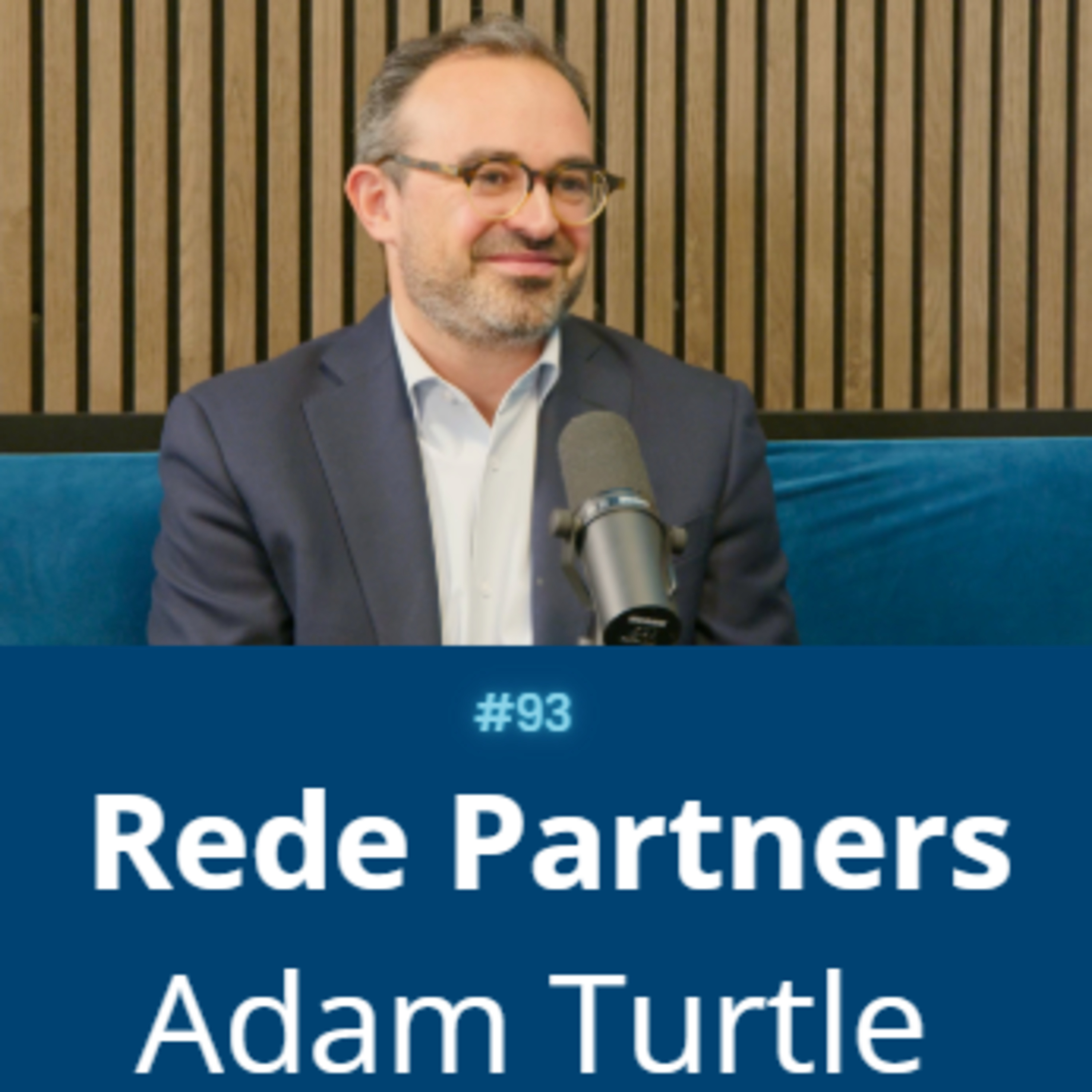
The episode discusses the “great private equity pivot” amid a difficult fundraising environment: PitchBook data cited that global private capital fundraising is down 14% by value and 37% by number of funds closed (to end of June 2026). Adam Turtle (co-founder at Reed Partners, an independent private fund placement/fundraising advisory) argues the issue isn’t a total capital shortage or “denominator effect,” but a restructuring driven by LP and GP behavior. LPs are shifting away from “whitelisted” sectors (tech-enabled services/software/healthcare) toward areas seen as more AI-resilient, plus longer diligence due to weaker performance from 2020–2022 “COVID years.” DPI is still sought as proof of valuation discipline, not just cash. Examples of opportunity include defense/resilience investing and AI-enabled value creation. Turtle predicts “three speeds” fundraising: very fast for top managers, slow for most, and failure for “zombie” funds. He also explains Reed’s role in advising which LPs to accept (and avoid) to build enduring, aligned, diversified capital, and comments on hurdle-rate changes and GP stakes.
Adam Turtle, co-founder at Reed Partners.
Written by AI. May contain mistakes.
Discussion on the difficulties in fundraising for private equity and the importance of fund advisors.
“Is it that brutal out there on the ground?”
Analysis of current market dynamics affecting fundraising and the performance of different managers.
“The truth is we're not in a period where there's a massive capital squeeze.”
Exploration of the role of DPI and its implications for investor confidence in private equity.
“I think actually, if you're on the right side of that equation, you can still do extremely well in this market.”
Discussion on how private equity firms are restructuring, including shifts in investment strategies.
“you're delivering the goods behind the story that you're telling.”
Insights into how investor preferences are changing across different sectors and the implications for fund managers.
“What we're really seeing is a restructuring of the market.”
Explore how private equity firms are restructuring their strategies in response to market changes.
“But maybe we're starting to see differences in the quality of knowledge and capability within these sectors between our managers.”
Understand the complexities of fundraising in a challenging market and the varying speeds of success.
“would you expect to see things just taking longer but happening?”
Discuss how AI presents both opportunities and challenges in private equity and the need for innovation.
“So that's why I think this concept of creative destruction is quite relevant.”
Learn about the importance of aligning with the right investors for long-term success in fundraising.
“So just to try and round out this part about restructuring the industry, I saw a stat in your survey that made no sense to me.”
Explore how investor choices and market conditions influence private equity dynamics.
“whereas there's obviously a very large number of GPs that like to leverage their capabilities in one area into other areas.”
Understand the importance of strategic thinking in fundraising for private equity.
“So if I'm a GP selecting a placement agent, when I walked in the room, I guess I would have thought, well, who's raised the most money fastest successfully?”
Discussion on the implications of hurdle rates and their impact on fund management.
“And I think if you keep asking yourself that question, you'll perform that screening role most effectively for the investors.”
Exploring how the tough market is influencing conservative investment strategies.
“And so that's where I think you have the distinction between the two.”
Discussion on the differences between European and US private equity markets and ambitions.
“No, but you do need to please them because they are your most important asset, as I said.”
Insight into the growing GP stakes market and its trends in Europe.
“I guess when you step back and you ask yourself, though, what are you missing?”
Evaluating the growth and monetization of GP businesses in the private equity sector.
“The room was packed full of people who only do GP Stakes.”
Adam Turtle discusses the strategic focus of Reed Partners in the private equity landscape.
“maybe for the longest time, has had this a bit of a distinction between, we call it garage bands and sort of institutional asset managers, if you like.”
Understanding the importance of culture in achieving growth at Reed Partners.
“It wasn't about growth at all costs or scale for scale sake.”
Learn how collaboration and culture drive successful fundraising efforts.
“I mean, it's and doing secondary transactions as well.”
Discover the shift from traditional fundraising roles to strategic partnerships.
“I think it would be unfair to my colleagues who work in investment banks to say that that's what they're doing anyway.”
Understand the importance of trust and storytelling in attracting investors.
“that creates great outcomes in this business.”

Get the gist, explore an idea or ask about something said.
 Claude
On Fund Shack Private Equity Podcast, what are the key points of this episode?
Searching your listeningAutomatic transcript. May contain errors.
0:00Ross Butler: 2026 is set to be the fifth consecutive down year for private capital fundraising globally. So PitchBook reckons that in the 12 months to the end of June 2026, fundraising by value was down by something like 14%. But by the number of funds closed, it's down by 37%. So it's been a very difficult market. Now, we've seen some innovations come out of that, and I'm sure we get onto that. But things are difficult for people out there trying to raise funds. And I suspect that means that the job of those individuals charged with helping them raise the funds, so the fund advisors, has become more important than ever, but probably more complex and nuanced than ever.
0:42Ross Butler: And that's why I'm delighted to have Adam Turtle, who's a co-founder at Reed Partners, an independent private fund placement agency, here in the studio with me to talk about this. So, Adam, welcome to Fund Shack. Is my characterization of the market something that resonates with you? Is it that brutal out there on the ground? Well, firstly, thank you very much, Ross, for having me on the podcast. It's a privilege to be here. There were some depressing stats you began with, weren't they? The truth is that is, I think, a fair reflection of the overall market. But within the market, you see very different outcomes depending on the manager.
1:24So as long as I've been in this industry, which is quite a long time, the market has always been bifurcated between haves and have-nots. And there's sort of a bar at which you leap over that and the fundraising has become more easy. I'd say that bar has risen, but it is definitely still there. And we are still seeing some very robust fundraising results, possibly faster than ever. So on the one hand, you have that dynamic. And then on the other hand, you have a large number of managers who are having a tougher time of it. And I think when you look underneath that, you say, well, why is that the case?
1:57I think there are a few reasons, but the answer isn't maybe the one that you would immediately jump to, which is to say, well, is there just no capital available for managers?
2:07Ross Butler: If you work in private M &A, there's a name you need to know, SRS Aquium. It's a name that 96 % of top global private equity firms and 88 % of top global venture capital firms already trust when it comes to optimizing how their deals get done. Since 2007, SRS Aquium has brought essential expertise, insight and innovation to private M &A with a proven system of escrow agents, paying agents and professional shareholder representation solutions that streamline the deal process. A new era of M &A has arrived in Europe and SRS Aquium is leading it. Discover deals done better. Visit srsaquium.com. That's S-R-S-A-C-Q-U-I-O-M dot com.
2:51The truth is we're not in a period where there's a massive capital squeeze. There's no denominator effect. Public markets are riding high, as you no doubt know. And we actually do analysis, which we've been doing now for 10 years, which we call the Reed Liquidity Index, which is a PMI-like assessment of people's buyer behavior in private markets. And it gives you a sense of whether people are increasing or decreasing their allocations to private markets. And the numbers at the moment, and actually for the last 12 months or so, have been pretty robust. Certainly not incredible, but also implying continued growth.
3:30And that's also our experience on the ground. So if that's the case, why is it that you're having this dynamic where it's challenging for many managers? I think there are two primary reasons, some of which is LP-led and some of which is GP-led. On the LP side, we're in a really interesting period in the market. because certainly for the last 10 years, there have been certain prevailing orthodoxies about which segments are almost whitelisted for investment from a sectoral perspective that have been somewhat undermined over the last 12 months or so. And to sort of generalize, and I am talking in huge generalities here, so there will be exceptions.
4:12The areas where people were very inclined to invest was anything involved tech-enabled services, software and healthcare. And consistently, when we asked investors what were their most interesting sectors, those were right at the top. If you look at it today, because of AI, and because of the capital market cycle that we've gone through in the last few years, some of those orthodoxies are being questioned. And people are actually starting to look around to other segments of the market that they might see as more AI resilience, and frankly, just areas that they have spent less time on in the last 10 years.
4:50And so there's this sort of strategic realignment of appetite, which clearly has an impact on the speed of their investment behavior. So that's on the one hand. And that clearly links to the second part, which is the GP side, which, you know, to be simple about it, is that we are going through a period where performance, particularly in what we call the COVID years of 2020 to 2022, Those funds are now becoming mature and the overall performance in those vintages is reasonably disappointing and certainly disappointing versus what the investors were hoping to receive from those vintages. We're also in a period which I think best links to that great Warren Buffett quote about the tide going out and you see who's wearing shorts.
5:37I think we're really in a period where that's the case, where people are assessing their managers, seeing who's done well, who didn't do well. And then if they didn't do well, was it their fault or was it a misfortune that they can justify? And doing all of that work ultimately leads to longer diligence processes, longer fundraising periods and change in terms of the ultimate composition of LP's GP portfolio. And so I think it's a collection of those reasons that lead to that sort of fundraising, those fundraising statistics you were mentioning. But it certainly isn't the case that it's woe for everyone.
6:19I think actually, if you're on the right side of that equation, you can still do extremely well in this market.
6:25Ross Butler: So that makes a lot of sense. And I was going to ask you about DPIs because the prevailing wisdom is that this is a bit of a cash crunch and DPI is everything. but that never really made much sense to me. But what you're saying is what we're really dealing with is something like a restructuring of the industry that's going to take some time because people have appetite for the industry. But the things that are being offered and the expertise that's been built up within a lot of managers isn't what LPs are necessarily looking for. I think that's right. I think DPI is important and it is true that DPI has also...
7:04somewhat disappointed versus what people would have expected. But when you ask the investors, where are you versus your allocation limits? And are you over allocated? Some are, clearly, as you'd always expect. But the overall answer is no, people are somewhat in the middle of their allocation limits. That doesn't mean they're not asking for DPI. So why are they asking for DPI? Other than obviously, it's just great to get money back. They're also asking for DPI because it's proof. Ultimately, DPI is proof that people can hold valuations and talk about the value of their assets. But until you actually give the money back, that's the run on the board that shows the investor, the investment strategy was sound, the valuations that you're holding these businesses at are real.
7:54And so I think that the push for DPI, which is very well, is as much about investors saying, we want to be sure the proof is there as it is, or we need it because otherwise we don't have the capital to invest in your fund. It's more about that and showing that you're delivering the goods behind the story that you're telling.
8:16Ross Butler: Yeah. The reason DPI didn't make much sense to me as a reason is because, yes, there will be bureaucratic organizations that just can't do anything until they've seen the proof of cash returns, but there will always be more flexible, less constrained investors who know that difficult fundraising vintages will be the best to invest into. That's absolutely right. And it's certainly not the case that the more capital in the industry, the better the performance. And I think that also speaks to another point, actually, which is relevant to why our fundraising is going slower. One of the other changes that we're seeing in the market is a question, I guess, what does private markets for?
8:57Or what is its sort of at least base level expectation? At the base level, it has to outperform the public markets. Otherwise, you can keep things in public markets and you have more liquidity. So investors need to be confident that their private market investments can actually outperform the public markets on an ongoing basis. And one of the things that's leading to in terms of a strategic realignment is a movement from larger funds towards middle and smaller funds because of the ability to maybe pick up more inefficiencies in those parts of the market than the very large end. And so that piece also is another strategic realignment that makes it more challenging if you're at the very large end in order to raise capital.
9:45And you will then almost certainly have to seek out new areas of capital in order to plug gaps from investors that are looking to trade into different areas. Which they're doing. Which they are doing. And we're at that moment in the market where people are reassessing what made sense for the last 15 years may not make sense for the next 15 years. And that feels like this is the type of market that we're in right now.
10:08Ross Butler: Yes, that's another important point. Just because this is a winner-take-all market, it doesn't mean the biggest win. It means that the ones with the most compelling strategy win. And what does winning mean? I guess it means hitting your target quickly. Yeah, I think it is a winner takes all business. Investors invest in one thing or another. So you have to beat others in order to get allocations, which I think is one of the fun things about the business if you're competitive. But bigger does not necessarily mean better at all. It can. So there are clear benefits to being scale. But there can also be disbenefits in terms of when it comes to delivering what is the ultimate winning, which is performance.
10:53And, you know, I think there was a period after the GFC where the capital market conditions of the time, which were very benign and led to ever raising valuations, meant that you could continue to grow your funds and continue to deploy pretty aggressively, knowing that you would always have somebody else who's willing to pay more in a few years time to take you out. And that meant investors could quite comfortably allow that continual growth. And it wouldn't cost them anything in terms of performance. And I think we're now in a phase, which is probably a more normalized market environment, where there are some trade offs you have to make between scale and performance and the number of managers that can operate at different size ranges, while still delivering that premium to the public markets that is ultimately critical for the long-term health, the private market industry.
11:51Ross Butler: I'm going to disagree with you just very slightly on the rationale for private markets, insofar as, of course, everyone wants to outperform. But I think there's a very strong argument to be in private markets on a diversification basis, because the public markets have become so concentrated. So for me, even if I thought private markets were going to kind of roughly do the same, it might still make sense just doing my little pitch for the industry there to invest in, have a private markets allocation. I think that's right. And I think it's, again, particularly true in the middle market. Because if you look at what's happened in the public markets, and look, I'm not an expert on the public markets, I'm an expert on the private markets, but the public markets is concentrated in terms of both sector exposure and company size.
12:39And what you have seen less of is smaller businesses being listed. And that's been a prevailing trend for quite a long time. Whereas what private markets can provide institutional investors access to is a much wider range of companies in terms of size. So I'd agree with you that that does talk more towards a diversification benefit, but I think also a performance benefit, particularly if you're in those parts of the market which are a little bit less efficient and a little bit less akin to the public markets in terms of scale.
13:13Ross Butler: So we've clarified this popular narrative of the market having indigestion and a lack of capital. What we're really seeing is a restructuring of the market. What does that actually look like? So presumably, there's a load of private equity firms out there that have built expertise in software as a service, and they've kind of wound down their media and consumer business. What is it that LPs are actually looking for? And is there a kind of a gap between what's being called and what's being offered? I think, again, the first thing is it's important to be balanced with these big general statements about sectors.
13:46It is certainly not the case that investors will cease investing in some of these very interesting segments. What they're going to do is they're going to say, no, this is absolutely a core part of our portfolio. But maybe we're starting to see differences in the quality of knowledge and capability within these sectors between our managers. So there will be some groups where they say, these guys are just fantastic. And guess what? If the investment environment in that particular sector has got a little bit more challenging, I really want to make sure I'm with the absolute best, the most knowledgeable, the most specialized.
14:26So there will be a doubling down with those guys, and then a managing out of people that perhaps got into that segment, because they could see that it was a popular one that didn't have that depth of capability and knowledge. So part of it is about restructuring within those segments of expertise. But then, if you've been investing in certain areas for a long time, and you've decided, you know what, there are maybe some other areas that are quite interesting, you'll probably not see large incremental dollars going into those areas. And instead, you will see either those incumbent groups developing new capabilities in certain areas.
15:04And we've started to see that, for example, in defence, where you have a mixture of new groups coming to market with that sort of strategy and incumbent groups developing a capability in a way they just hadn't done for, well, as long as I've been in this industry, in Europe. How are they labelling it? Are they calling it defence? I think there's a lot of talk about the word resilience. But I think we all know when defence is defence. And I think the geopolitical events of the last five years in particular have taught us in Europe that maybe we need to look after ourselves when it comes to defence.
15:45And so I think people are being open about the fact that, no, this is about defence. And this is an important area of the corporate landscape that is both interesting from a growth perspective, but also one that's been very, very underinvested in by the private markets over years because it was not investable for a long time or not seen as investable for a long time. That's changed. And that actually creates a hugely interesting opportunity. And what I love about private markets, and I think that's one of the features of the market we're in today, is that it regenerates itself. It's a very entrepreneurial asset class where the nature of the alignment structure and the nature of the quality of the individuals in it, quite frankly, means that where people see opportunity that isn't being taken, they move towards it.
16:38And the way that that manifests itself in a fundraising capacity is either groups developing their own capability within larger houses or creating new enterprises within, again, focused on that particular area. And there's this sort of creative destruction that happens, given the nature of the funding cycles, that is quite tough, because it can be quite tough for incumbent managers. But I think it allows the industry to continually regenerate itself and continually progress and not rest on its laurels in terms of delivering really strong results for investors in the end of the day. And we're seeing that in these different areas of opportunity now that maybe were seen as less interesting before.
17:26Ross Butler: So to follow this kind of somewhat stereotyped kind of narrative of the industry desperately pivoting in terms of what they're doing, would you expect to see things just taking longer but happening? Like, let's say people who would have raised in 2018 will eventually raise in 2027, 2028, and everything will end up being OK, just elongated. or are we going to see a big shakeout? Like, how do I know that I'm just someone that's going to raise funds versus I'm a zombie fund and I just don't know it? Unfortunately, one of my observations is that people are often the last to know that they are a zombie fund.
18:06And often the market has made that conclusion before you realise it. We are in a market where there will be a shakeout. It's a pretty unforgiving market as your fundraising statistics outlined at the beginning. And it is, and it has always been a bit of a winner takes all market. So I don't think it's a case of things just taking longer. It's going to be a case of it's, it's three speeds. It's very fast for people that are on the scene as the winners in this environment.
18:38Ross Butler: What's very fast? Yeah, we're going to execute a fundraising in the next few months, which is going to maybe three months from first to final closing. We've actually undertaken over the course of the last 12 months some of our fastest ever fundraisings. And that is a consequence of there being liquidity, but there being sort of indecision in investors' minds about where they should put their money. So when they find something that they think is really good, everyone runs towards it. Whereas if we're in a market where there isn't liquidity, even the best managers are going to have a bit of a tougher time.
19:08But that's not the market we're in. So you have very fast, remarkable fundraising outcomes, And, you know, almost that sort of classic, if you imagine the Sequoia style in venture capital, everyone trying to get into the best group. You see that dynamic happening on the one hand, small cohort of fundraisings, but, you know, a meaningful cohort. You then have the slow, which is what most people have to deal with, which is you get there, but it's tough. You probably have to be quite creative in your fundraising strategy in order to deliver it, which is a mixture of relationship building with investors.
19:52It may be transactional with investors around things like co-investment or secondaries and just doing many, many things to get an investor who has much, much choice in front of them to choose you rather than to choose someone else. And what's slow? I mean, that can be anything, 18 months, two years. I mean, fundraising, I think average fundraisings are 18 months. That's very, you know, that would be a sort of standard length, I guess, for your sort of average manager. And then you have other groups where they just will not be able to raise money. And that will ultimately come back to, you know, what is always the most important thing in fundraising, which is what are your existing investors do?
20:33You know, the most important cohort of investors out there for any manager is the people that have already supported them.
20:43and we've already seen it in certain cases and I'm sure we'll see it in others where the existings are ultimately not wanting to support the manager and if you're unable to raise the fund, what will then happen is your team will start to leave and then you will get into a spiral where it becomes impossible to raise money and that is going to happen in the market. Now, that can be tough But if you look at it from a market-wide perspective, what you also have in this sort of environment is the other side of that equation, which is the best deal doers, both from those shops and from good shops, deciding to set out on their own and launch new initiatives.
21:22And so you also have that dynamic. And things like AI actually play into that sort of dynamic because you have transformational technologies which innovative entrepreneurial people think, well, is this a new way we can do this that might be easier as an independent than trying to retrofit it onto an existing business and going out with new models to do that. So that's why I think this concept of creative destruction is quite relevant.
21:51Ross Butler: The AI thing is probably a barbell as well, because you've got Blackstone going all in on it at the top. And then you've got, you know, guys, emerging managers, as you say, thinking, how can we do things completely differently? But anyone in between? I think every manager now needs to have an AI strategy. I think AI is a huge opportunity for private markets. I mean, private equity in particular is anything where, ultimately, I'm an entrepreneur, run a business. You ask yourself around the board table all the time, like, how do we actually use AI? And frankly, we have great people internally, but it's not the easiest question to answer.
22:31So the ability to bring that capability to a company in a period where you have what is no doubt massive business model change that people are going to have to go through, that opportunity is absolutely huge. And I think that opportunity is equally available for large, middle and small. I mean, AI, maybe differently from some other, from historic software development, is actually not super expensive. It's something that is accessible to middle market managers. It's more about the intent and, frankly, the willingness to maybe blow up your own business model and say, all right, the way we did it in the past, that's not good enough.
23:09We've got to do it this way. And the groups that continually try to reinvent themselves and do things better are the ones that will succeed. And the groups that don't get a clawed log in and put their head in the sand will be the groups that don't succeed. And I think those are tools that are available to the whole market. But it's more about the software within, as in the human software within the managers as to who wins and who doesn't win in that race.
23:37Ross Butler: So just to try and round out this part about restructuring the industry, I saw a stat in your survey that made no sense to me. And now I think I completely understand it. And it was that LPs are more interested in making new manager commitments than re-ups. And historically, that would make no sense. That's selling the history and buying the mystery, as they say. But as you say, if we're facing a complete restructuring of the industry, that makes complete sense. I think that that's right. I think we're in a period of time where people are reassessing their strategic priorities and thinking about who is going to be the best partner for me for the next 15 years.
24:20And maybe that's not necessarily the same strategy or people that have got me here. And so I think there's a general reassessment going on. That does absolutely not mean that people aren't doing their re-ups. And that, as I said, remains by far the most important cohort for any manager is to make sure that you're all over your existing investors. It's a very, this industry is a very reference-based industry, and they're your most obvious references, like any customer business, they're your customers. But you will also see that, you know, there is, that same cohort will be maybe in a more dispassionate way than they have in the past, assessing whether they want to follow you or whether they want to go in a different direction.
25:06And that is something that all managers need to, that's an opportunity, but it's also a risk and all managers need to consider that at the moment.
25:14Ross Butler: Let's completely flip this. So normally, we look at fundraising as GPs trying to raise money from institutions. But how often do you come across a situation where you've got a good GP, perhaps they're raising good money, and you advise them with regards to which institutions to accept money from, and perhaps more interestingly, which institutions or investors not to take money from. Can you tell us a little bit about that type of situation? Yeah, absolutely. I think one element of that is our MO mission as a business is to source enduring capital for our managers. Private markets, one of the beauty of private markets, is the long-term nature of capital.
25:56That doesn't mean permanent capital, but enduring in the sense that they should be your partner now. And if you do a decent job, they should be your partner in five years, in 10 years, etc. And they should support whatever growth journey it is that you want to go on. The truth is that investors, LPs, have different strategic preferences themselves. So there may be LPs that have a preference for a particular size of fund or a particular sort of nature of a manager. Maybe they prefer managers who only have one product. They don't have multiple products. So if you know that the manager wants to go on a particular journey where it might be scaling, it might be branching out into different areas.
26:40And our job is to identify LPs that are most likely to support them on that journey, both now and in the future. And that can mean that there are very good LPs who may even want to invest with them now, but we know won't necessarily support the longer term.
26:59Ross Butler: How would you know that? Because we know the market and we know the investor appetite. But why would they? Can you give me an instance for why someone would want to back a fund now, but you have an inkling that they wouldn't? Because if the manager has a view about what they want to be in the future, which doesn't align with the investment preferences of that particular GP. So, for example, there are many LPs out there who say, look, we just don't invest in funds that raise more than a billion euros. We prefer low middle market, middle market managers that cap out at that level. If you know your GP wants to go there, you are creating a problem for them longer term if they bring in an investor who is going to resist that.
27:41Because in the end, you want both sides to be very happy with this equation. Similarly, there are LPs who are quite purist in the sense they say that we want single fund alignment. We know we want our manager to have one fund, that everything that they invest is in that fund. And we don't want to have any other what they would perceive as distractions. whereas there's obviously a very large number of GPs that like to leverage their capabilities in one area into other areas. And so again, if you know that that's the journey that the manager wants to go on, it's not great for either side to introduce them together.
28:20And look, I guess the third thing is that point about enduring. There are investors out there that maybe have less enduring capital themselves than others. And if you're in the position of being able to choose, which some of our GPs are, because they're in that high demand segment of the market, you would obviously rather work with people where you're convinced they're going to be both with you and probably bigger with you in the future than not. And so those are the sorts of discussions we have. And then I guess the final point I'd make is, having been in this industry for a long time, what you see is groups of investors often come in and out of the market at the same time.
29:04So there may be periods where US investors just don't want to invest in Europe anymore, because Europe does something stupid, like the UK decides to Brexit. Suddenly that creates stress for European investors looking to invest in the UK. They stop because of those sorts of things. The truth is you have no idea what those sorts of things are going to happen. So the only way that you can protect yourself against that is to diversify. And so we very often are working with managers where we say, look, you've got a great LP base, but it's really US dominated. Or it's all with this type of LP. And if that group catches a cold, you're going to get flu because you're going to have challenges in your LP base.
29:47So add different cohorts of investors to the mix. even if this is another greater US LP, they don't really add anything to you from a diversification perspective. Whereas this Japanese LP or this Malaysian LP may really do that and give you a flag in a different market that you can then rest on depending on what happens in the world, which as we have seen over the last 10 years is nothing if not volatile. So that's also an important part of our advice that would lead us to suggest to a GP, you should look to build that LP base versus that one.
30:26Ross Butler: A new era of M &A has arrived in Europe and one company is leading the way, SRS Aquium. Combining deep M &A expertise with innovative paying agent, escrow agent, and professional shareholder representation solutions, SRS Aquium's proven system has raised the bar for efficiency in private deals since 2007. Today, the company is trusted by the vast majority of the world's top private equity and venture capital firms. It's time to discover deals done better. Start by visiting srsaquium.com. That's srsaquium.com. So if I'm a GP selecting a placement agent, when I walked in the room, I guess I would have thought, well, who's raised the most money fastest successfully?
31:09Ross Butler: But actually, I should be looking a bit deeper and thinking, well, who's thinking strategically about my future as a fund management business? Yes, exactly. And I would say this, but I fundamentally believe it. I think all situations, you can add value as a fundraising advisor. Obviously, in the situations where it's life or death, roll up your sleeves, conquer the hill to raise the fund. But also in these situations which are very high demand. And so you're not really worried about whether we're going to raise the fund. But what you are worried about is what is the composition of my future partner base going to be?
31:45When I turn up to raise my next fund, am I going to be able to get 25%, 30 % more from the existing group of shareholders I have, investors I have? Or am I going to have to start from scratch because they've maxed out how much they can deploy to me and I'm going to have to run around and find it from new investors? And it's always easier to convert your existings than it is to find new investors. That's sort of where you should start. And so two outwardly successful fundraisings can actually in practice be very different when you look into the detail of it. And a really good fundraising advisor should be both delivering success, but also optimizing these things that sound like they're nice to haves in a way.
32:29They're not existential, but they can be very significant for the long-term health of your franchise and the long-term stability of your franchise in the sort of world we live where, you know, you never know what's going to happen the next day. So, you know, we always, you know, and that's why we have a large cohort of our clients are in that high demand situation. But it's all about optimization in that case rather than just can we raise the money or not.
32:54Ross Butler: Which is a good segue to your relationship with your clients because investors obviously choose the funds they want to invest in. And as we've just discussed, fund managers also choose the investors they want to have in. But you are, and people like you, placement agents, you're kind of like a gatekeeper that never really gets spoken about. Because before any of that happens, you decide who you're going to represent. Can you walk us through that process a little bit? Yeah, I think I wouldn't call it a gatekeeper. But I think, you know, and we take this very seriously, we, you know, the highest quality praise that we can get from an investor, from my vantage point, is we really like read, because you consistently bring us either very high quality established product, as in managers who are very good, or really interesting.
33:51newer things that I haven't thought of yet. And so that quality bar is key. So rather than a gatekeeper, our job is to be a screen, another level of screen. And we are another level of screen. We meet hundreds of managers every year. And our objective, much like the LP's objective, is to identify the best quality portfolio of clients, portfolio of fundraisings we can bring to them. And then our strategy is to then try and work with those managers again and again over the longer term, grow with them, help them with whatever it is they particularly want to do from a growth perspective, and act as their constant advocate in the market.
34:39And so we very much see ourselves in that role. It's extremely important we maintain that sort of high quality bar. Within my firm, and this is one of the benefits of actually being an independent firm, one of the things I've always felt strongly about, I've never liked being, obviously, actually we don't like the term placement agent, we call ourselves a fundraising advisor.
35:00Ross Butler: That's better, that's better, it's more descriptive. It's more descriptive and it's more reflective. The days that we placed doesn't give the investors nearly enough credit, let's be honest. um the um i've never liked the concept of sales in the sense i like the concept of helping people and helping people when you um when you select managers that you yourself are willing to invest in and we invest in the funds that we raise i'm not selling to you i'm trying to encourage you to do something i'm willing to do which is put my wealth and in the hands of these individuals that i that I really believe in.
35:40And that's that we talk about conviction all the time at Reid in terms of the managers we're taking on and not just conviction of can we raise the money, because that is a different question. The question is, are these, is this investment organization, a high quality group that we can invest our own money with, and who we believe will generate great returns for investors, not just now, not just have a good fundraising now, but have great fundraisings for all the years ahead, where we'll hopefully play a role in that. And that's the key question we ask ourselves. And I think if you keep asking yourself that question, you'll perform that screening role most effectively for the investors.
36:20And that's what we're looking to do.
36:22Ross Butler: The terms of drawdown funds, I know when you dig into the weeds, there's a lot of negotiation and side letters and all of that kind of thing. But the headline terms are remarkably consistent over time and over size. I mean, mega managers might reduce the management fee or whatever, but there's not that much movement. But I saw in the news just today that there is a little bit of movement on the hurdle rate. Some are, what's the term, elevated hurdles. What's going on here? Are people using these to attract more investors? So I think it is a response, clearly. I mean, it's interesting because there's been some, there's been both historically when the markets were very strong, there was some downward movement on hurdles, quite well known that certain larger groups reduced their hurdles.
37:07And now you're seeing, I'm aware of one group that is looking to increase the hurdle up to 12%. Personally, I don't know the dynamics of that situation and why they're doing that. My concern with that is that ultimately the hurdle, the only real control or the most powerful control that LPs have is the incentivizing power of carried interest. so you do not want to be in a situation where your manager hasn't got the incentive of carried interest because at that point it becomes a bit less clear exactly what they're incentivized to do is it just to hold on for the management fees you know they don't have that that dynamic and my concern with a 12 % hurdle if you look at the average performance right now to say for example a 2021 fund.
38:07So average, which means that's, I guess, what you should expect. We all believe there's always that joke that 70 % of people believe they're better than average. But the truth is 50 % is the right number. It's 10%. So if you do raise the hurdle to that sort of level, you will then have a lot of funds that are not in that carry situation. And obviously, we all want the asset class to deliver well above 8 % clearly. But when markets work against you, you also want to make sure that your managers have something to work for. And that would be my concern with something because pretty quickly in down markets, that will become, carry will become out of the money and then LPs have a different problem on their hands.
38:50Right. That makes sense.
38:51Ross Butler: Yeah. Yeah. I didn't know actually that some had lowered it during the low interest rate environment. Yes, they had. Which kind of queers the pitch for not raising it when the interest rates go up. Yes, that's true. I'm not sure it's gone the other way. I'd like to talk to you a little bit about Europe and ambition and the scalability of strategies. My question is something around fundraising targets. There's this trend in the industry to have a target but then have something called a hard cap. So it's not good to miss your target because that makes you look weak and it's good to hit your target but it's even better to hit your hard cap because that makes you look strong.
39:32Ross Butler: But I'm going to take a very purist position, which is that if you've got a target, going above it is missing it. It's like, how much do you actually want to raise? And I think saying that you're going to hit your hard cap or you're going to extend your hard cap, it kind of makes the entire industry look a little bit grasping and ill-disciplined. Surely, wouldn't it be better to say, and I know that LPs want certainty, and maybe this is a little bit naive, but wouldn't it be better to say, look, this is the type of deal we're going to do. If we raise two and a half billion, this is what our firm is going to look like.
40:10But if we raise three and a quarter billion or
40:12Ross Butler: three and a half billion, then this is what our firm is going to look like. And obviously, we kind of want as much money as possible because we're ambitious. We want to grow the companies we invest in, but we also want to grow our own business. So if that's the kind of investor you are come on board why does nobody ever do that well actually that is pretty much what people do so they um the target the difference is generally um will have an organizational link to some form of the target will be based around our current level of organizational current or planned for organizational resources. And at that level, we are very comfortable that between the strategy we employ, the team we have, or the team we're going to add to, if that is part of it, we're very happy at that level.
41:05Frankly, if we raise less, maybe we have to relook at organizational resources. And you'll see that happen, I think. When people miss targets, They have to resize or maybe amend their strategy to probably do more things like co-invest rather than put into the fund. But if we're fortunate enough to raise more, we believe that we can raise whatever the balance is. We can invest whatever is the balance between the target and the hard cap if we do X, Y and Z. and the debate with investors tends to be, do they believe you? And do they think that X, Y, and Z is credible? But if so, it creates that corridor between a good outcome that is somewhat business as usual and a great outcome, which the manager has been able to convince the investor they can deploy in a sensible way.
42:03And so that's where I think you have the distinction between the two. And it's been interesting that, you know, I guess one of the features of this tough market environment we've seen is people being a lot more conservative around setting those numbers. And frankly, investors being less focused on hard cap numbers because the for certain managers, because they're like, well, we're less concerned about this blowing out and being very large. We're more concerned about, are you going to get to the sort of money that you need in order to run the organization in the way that we would feel comfortable investing behind?
42:39Ross Butler: Yeah. Okay. So that makes sense. With regards to Europe, though, I'm slightly troubled that in so many industrial ways, we're way behind the US. And I think that's true with private markets as well. I think I saw a table a couple of days ago, which wherein only EQT is the European manager in the top 10. Yes, I saw the same table. Yeah, and it's like there's no real reason for that. Well, maybe there are, but I think a lack of ambition could be one. I remember when I was starting out in private markets, there was this really folksy phrase in the UK private equity world, which is that we're going to stick to our knitting.
43:14Ross Butler: We're just going to do what we've always done because that's what LPs want. And I don't think anyone in America has ever said that phrase or had that ethos at all. They're all about grow, grow, grow. And I think it's an interesting thing here Because obviously you want to please your investors and your LPs, but you shouldn't let them dictate the future of your firm, should you? No, but you do need to please them because they are your most important asset, as I said. I think the one thing I just can't accuse my GP clients of is not being ambitious. I just, I mean, there's, I guess I would push back on the idea that there's a lack of ambition.
44:01I think there is plenty of very ambitious European GPs. And we've been fortunate. EQT were the only group that made it into that top 10 list. But there is a really good cohort of large European managers, some of whom we've had the fortune to work with, who maybe aren't quite in that mega, mega size, but are in the next tier down, if you like, of very large, you know, 100 billion AUM type managers, but they're not quite in the 500 billion AUM managers. Some of that is a product of history because private markets just developed in the US first
44:40Ross Butler: and it's not easy to create a new Blackstone or a new KKR. Yeah, but Blackstone isn't that old. It isn't, but it's older than if you go back to Europe, probably the equivalent organization started later. I think it's also there are market differences. The US market is one big market and Europe isn't. And that also creates, I think it's easier to scale. Beyond that, though, I mean, I'm a passionate European too, Brit European. And so I agree that I certainly don't want to see us falling behind. I guess when you step back and you ask yourself, though, what are you missing? For me, the most important thing in this asset class, as I've sort of said before, is delivering superior performance.
45:33And I am not sure that the next cycle of this asset class, certainly in private equity, I think there are differences in other parts of private markets like credit and infrastructure and these segments. But within private equity, I think the scale doesn't always align itself with performance, certainly in the sort of capital markets environment we're in now. And for me, what's most important with the managers we work with and the industry in Europe is it's not so much do you raise more and more and more money? It's, you know, do you evolve with what is a very changing landscape in terms of the companies, tools available, sectors, etc., and remain on the cutting edge that way?
46:17And look, we have a big US business and we have a big European business. And honestly, when you look at manager sophistication, I don't think it's fair to say that the US is well ahead of Europe. I think that European managers are actually very well evolved in terms of the way they build their organizations and deploy whatever strategy it is that they employ. So I'm probably more positive, or I don't look over to the US with too much envy in that respect, other than I think those groups, the big mega groups, have established a sort of almost infrastructure -like position in the market. And they are the groups where things like the access to private markets of high net worth individuals, that's where that is likely to go.
47:09And so Europe, with a few selected, with a few exceptions, a lot of that capital goes to those very large groups. So that's where you will miss out a little bit relative to the US.
47:22Ross Butler: Yeah. OK. Fair enough. Fair enough. You should join an Invest Europe committee. You put the case forward very well. So thinking about your business, yes, it's fund advisory, but it's more than that. It's strategic. You're thinking about the fund management business at large. There's this trend of cheapy stakes now, whereby you can buy a stake in another manager's vehicle or as part of a fundraising process, I think you can get that seeded. That's a surprisingly big business, this. I went to a cocktail event last week hosted by, shout out to, GP Stakes News, I think it was. The room was packed full of people who only do GP Stakes.
48:00Ross Butler: There are GP Stakes funds. Tell me a little bit about this market. It's not as big in Europe as in America. Is it coming here in a big way? I think it's not as big here partly because of what we just discussed, which is that it's an asset class that starts with the big managers and works its way down. So there are more large managers, as we just said, in the US, and generally more managers. And most of the pools of capital have a US origin in that strategy. But it is very much in Europe. If you look to, you know, I actually don't know the stats off the top of my head, But if you look at the 20 largest GPs in Europe, a very large proportion would have had some form of GP stake activity.
48:51And the rationale and drivers are the same as in the US. All of the staking groups have got meaningful operations in Europe as well. I think it's part of the maturation of the market. In the end, GPs themselves are valuable businesses. It's a great business model. Being a GP, you get long-term capital that supports you. And as with any business, if you're a founder or owner of that business, you're going to want to grow that business, monetize that business at some point. And so in a sense, it's almost surprising it took this long for it to become a meaningful part of the market. And I just see it as part of the natural growth of the industry.
49:40It does have limits. There are not an infinite number of GPs that are appropriate for that capital. There is a level of scale that you have to clear before a staker is likely to see you as profitable or enduring enough in order to support them. And so you do get to a certain market saturation point. So I don't think you're going to see infinite growth in that segment either. But it's here to stay. It will have an impact on the industry, which is I think that this industry, maybe for the longest time, has had this a bit of a distinction between, we call it garage bands and sort of institutional asset managers, if you like.
50:34um so a garage band would be your classic you know smaller um group of partners investing together probably with the view that yes they're ambitious but they're ambitious to generate carry and you know increase their investments in their funds that they that they reinvest or carry but not not not committed to growing their fund sizes or developing huge value creation teams and and all of those sorts of things and then on the other side you get the more institutional groups that decide to go on a journey of somewhat industrializing the process of generating value in private equity, whatever the strategy.
51:12That could be mid-market, large cap. Historically, the way that that latter group was sort of monetized, if you like, was just through raising more money. Now, you've also got this other thing. And if you're an ambitious GP, maybe thinking about setting up your own firm, you're now aware of that. You're now aware that if you decide to go on the scaling journey and you do it well, there's another off-ramp for you in terms of value creation. But yes, you do see that. This is a nice segue to your business, which is Reed Partners, R-E-D, because you are still independent, which is relatively unusual for a firm of your size.
51:50There are lots of fundraising advisors, which are basically micro-businesses, but you're large now.
51:54Ross Butler: Yes. And yet you're still independent. Do you want to tell us a little bit about your journey? Was it always the intention to get big and be independent at this point? I'd love to pretend we had this grand plan that we sort of carefully mapped out. Truth is that, you know, what's happened is the driving ethos of the firm has been to continually look to service its clients in the best possible way. and what that has driven us towards over time is size because if you're working with some of the biggest and the best managers in the world who themselves develop their own internal investor relations capability and those sorts of things, it may turn out that over time, your ability to help them access European LPs or US LPs is less valuable to them because they feel that they've already got that themselves but maybe they care about investors in Asia or in the Middle East or in Latin America.
52:52And so we've always had this view of, well, how do we keep on being relevant and valuable to our clients? And I'd say the global network has very much been about making sure that we have our finger on the pulse of all the capital, meaningful capital for private markets in the world so that we can then provide the best possible service when it comes to helping managers manage their fundraising and build their franchises over time. So it came more as a product. It wasn't about growth at all costs or scale for scale sake. It was more about how do we best service the clients that we have in a world where diversification is so important as an asset for GPs when it comes to constructing their investor basis.
53:41And also what we've seen is really interesting pools of capital coming online from different parts of the world for private markets. So things that maybe were true 10 years ago, 15 years ago are no longer true. That itself links to something else that's very core to us, which is we really want to be the core strategic franchise building business development partner for GPs at all stages of their investment evolution. So we work with First-time funds, small funds, funds where you're managing a high-demand situation, and it's about adding two or three LPs all the way to much larger groups, double-digit billion fundraisings, Roman numerals, well over X.
54:27And the needs of those GPs are very different in terms of what they're looking for from an advisor. But what's consistent is they want a strategic partner, the kind of brain side of it, And then they want different capabilities in terms of your ability to actually raise money from investors. And we need to be able to turn on different bits of the machine depending on what they want. And that has driven us to where we are today. And that continues to be, as we look to our own growth ambitions, where we'll look to add is in areas where we think, you know, there's continued synergies with what we're already doing, but expanding the capability base to other things.
55:07Ross Butler: So that's the logic of why you grew. But how did you grow? Because presumably that logic applies to all of the other also rands that didn't get big. What's the culture at Reed? What were you trying to build there? What's it like to work there? To work there. So, I mean, in the end, in a professional services business like mine, you can talk a lot about strategy and strategy is key. but the the the lifeblood of the organization is culture um and getting that right is so important and it's a constant um moving ocean um but the core of it is um i think if you spend time with people at reed you'd feel that you're spending time with people who have a fundamental commitment to excellence who really want to do a great job for their clients um but undertake that in a way that is community-oriented and team-oriented.
56:04And those two things don't always go together in banking, salespeople, but we are quite robust in insisting upon that mixture of excellence but also team-working, collaborativeness, in order to deliver what are ultimately huge team efforts when it comes to raising funds. I mean, it's and doing secondary transactions as well. So we really try to pull the whole village together for our clients. And in order to do that, you've got to have a culture where people work together for the overall aims of delivering for that group. And I think, yeah, we're really proud of what we achieve. I think the team and the culture is probably the thing you end up being proudest of.
56:54I think being independent is part of that. I've worked in an investment bank. Lots of good things about working in an investment bank, but it does have an essentially sort of transitory nature to it. You know, you're a small part of a very large organization that has different overall objectives. We're an independent business. All we do is this. We're all about achieving client objectives, and we live and die by that. And we also build our organization purely for the purpose of delivering that, whether it be people strategy, whether it be tech strategy.
57:33Ross Butler: It's easier not to have conflicts of interest when you've basically just aligned with your clients and you've got one business line. Exactly. You make your own decisions. You don't have to worry about upsetting anybody in different parts of the organization. But presumably you bought something from the investment banking world over. But if I was to ask ChatGPT to draw me an image of a placement agent or fund advisor, I'd say, guy with his feet on the desk, flicking through his Rolodex, clocking off at lunch. That doesn't sound like what you've done. It sounds like you've built something very professional.
58:02Ross Butler: And doesn't that not come from the investment banking world? I think it would be unfair to my colleagues who work in investment banks to say that that's what they're doing anyway. Maybe in the 80s, that's what they did. But actually, I think that the success of Reed was really strategically based on a realization that that model was very outmoded. It was outmoded well over a decade ago, and it's particularly outmoded today. The Rolodex element of what we do, yes, access to investors is important, but relationships and in the world of AI we're in now, information is what that's all about. And then on the other side, recognizing that as the industry matured and as the number of firms out there looking to raise capital exploded, the ability to be a real strategic partner and marketing partner to your client, to be able to tell stories on their behalf, to be able to retell their own story, because often GPs aren't particularly good at telling their story.
59:09And to do it in a way that impacts investors. I was with an investor the other day and they made a comment. They said to me, you know, we need to be able to dream when it comes to investing in a fund. So this isn't the same as buying a bond or buying a stock, which you can just trade out of. Because you're stuck with this for a long time, whether you like it or not. The investors, yes, they want performance and yes, they want strategy. but they also want a bit of inspiration. And bringing that to our GPs, that's a skill that we've looked to hone over the last 15 years that I think was part of why we've been able to be successful because we combine that big infrastructure on the sales side with that culture on the advisory and marketing side.
1:00:01And it's really a combination of those two things that creates great outcomes in this business.
1:00:06Ross Butler: Yeah, when you're investing in a blind pool, there's only so much quantitative analysis you can do. So you're maxing the storytelling side. You are. It's much more about people, relatively small groups of people trying to do quite ambitious things. And there's a lot of trust that you have to create in so doing. And our job is to help our GPs engender that trust with the investors. Well, Adam, it's been an education. Thank you very much for coming in. I suspect we'll be seeing more of you in the future. But until we do, best of luck with everything. Thank you. Great to be here. Thank you.
Why can some private equity managers raise a fund in months while others struggle to raise at all?
Adam Turtle, co-founder of Rede Partners, joins Ross Butler on Fund Shack to examine a shift in what institutional investors want from private equity. Adam argues that the difficult fundraising environment is not simply a shortage of capital. LPs are reassessing their managers, questioning familiar sector preferences and looking for evidence that investment strategies can deliver.
That distinction changes the conversation about DPI. Investors want distributions not just to replenish their investment budgets, but to demonstrate that reported valuations can translate into cash returns. Adam also explains why he sees renewed interest in smaller and middle-market funds, and why the biggest managers are not necessarily the winners.
The conversation then turns the usual fundraising question around: when should a GP turn down an investor? Ross and Adam explore how managers can build an investor base that supports their long-term ambitions, and how Rede decides which managers it is willing to represent and invest alongside.
They also debate higher hurdle rates, carried-interest incentives and the difference between a fundraising target and a hard cap.
Throughout, the question is whether the industry’s pursuit of growth supports the investment performance that ultimately sustains it.
🔹🔹🔹🔹🔹🔹🔹🔹🔹🔹
00:00 The private capital fundraising market
01:58 Why this is not simply a capital squeeze
05:44 DPI: cash returns as proof of performance
08:03 Fund size, performance and diversification
12:33 Sector expertise, AI resilience and defence
16:46 The three-speed fundraising market
20:42 AI, emerging managers and reinvention
24:33 When should a GP turn down an investor?
31:37 How Rede selects the managers it represents
35:06 Higher hurdle rates and carried-interest incentives
37:46 Fundraising targets, hard caps and investment capacity
41:24 European private equity: ambition versus scale
46:07 GP stakes and the value of fund management businesses
50:22 Building Rede Partners as an independent adviser
53:55 Culture, teamwork and client service
56:57 Beyond investor introductions: communication and trust
🔹🔹🔹🔹🔹🔹🔹🔹🔹🔹
Thank you to our guest: Adam Turtle, co-founder of Rede Partners.
https://www.rede-partners.com/about
🔹🔹🔹🔹🔹🔹🔹🔹🔹🔹
EPISODE PARTNER: SRS ACQUIOM
Thank you to our Episode Partner, SRS Acquiom.
SRS Acquiom provides a comprehensive platform to help manage merger and acquisition transactions and bilateral and syndicated loan facilities.
Visit: https://www.srsacquiom.com/eu/
🔹🔹🔹🔹🔹🔹🔹🔹🔹🔹
Host: Ross Butler, founder and host of Fund Shack, and author of Invest Like a Barbarian: Share in the Spoils of a Private Markets Revolution.
Follow Fund Shack on your preferred podcast platform for more original conversations across private markets. Found this discussion useful? Please share it with a colleague.