Ask ChatGPT

 Fund Shack Private Equity Podcast
4 Aug 2026 · 34m · 15 chapters
Why private capital may be better suited than public markets for Brazil/LATAM’s volatility and institutional gaps, yet why actual private-market capital is concentrated in New York/London. Focuses on Brazil-specific themes (agriculture, critical minerals like niobium, infrastructure, private credit, distressed/turnaround equity, and monetizing Brazilian government payment claims).
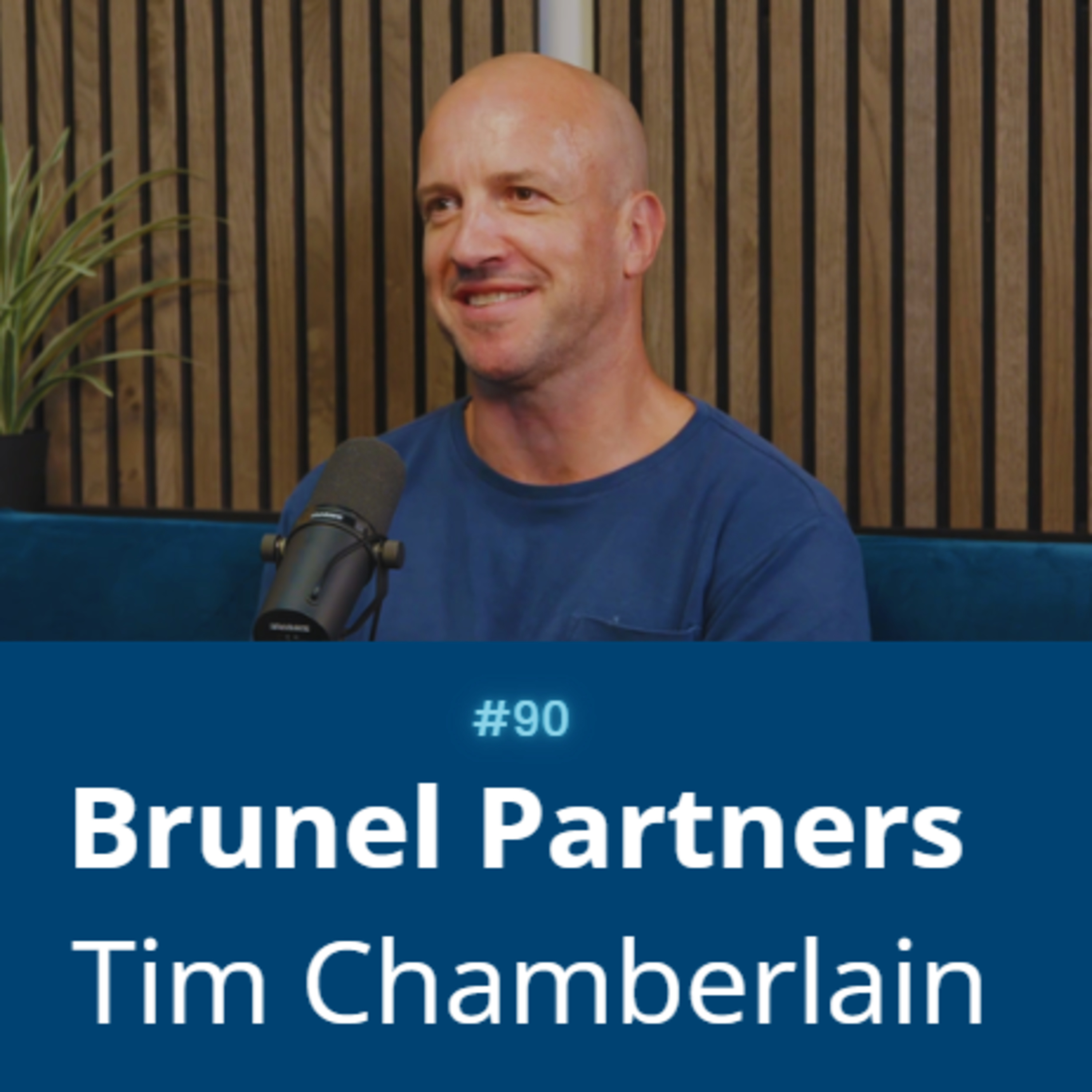
Tim Chamberlain, English; based in São Paulo for 16 years. Founder/leader at Brunel Partners, a Brazil-based placement/advisory firm connecting local managers/entrepreneurs with global institutional capital. Previously worked in Asia (Hong Kong/Singapore) at Eureka Hedge; opened a New York office; left after the financial crisis; founded Brunel Partners in 2014.
General Brazil/LATAM growth funds are hard to underwrite; investors prefer focused, thematic deals. FX/hedging costs and 2015–2020 currency depreciation caused “burns,” so diversification across vintages helps. Best PE approach is often distressed/surgical micro-level investing, not classic buy-and-build. Brazilian pension funds largely stay domestic (reais) due to high rates.
Soybean scale (Brazil ~120m hectares; two harvests). Niobium (Brazil ~90% of world reserves). Infrastructure: port expansions and toll-road concessions. Fiagro structure for tax-efficient private credit. “Precatórios” (won government claims with uncertain timing). Football-team consortium as a personal aside.
Written by AI. May contain mistakes.
Discussion with Tim Chamberlain about his background and Brunel Partners' role in Brazil.
“It's not often we get to talk about Brazil, so let's do it.”
Insights on why Latin America is often overlooked by European investors and the factors affecting investment.
“getting my feet under the table, failing in startups.”
Analysis of the current investment interest in Latin America, primarily from North America.
“And maybe also, you know, the growth has been in other parts of the world.”
Discussion on specific investment opportunities in private equity, agriculture, and critical minerals in Brazil.
“I think one of the most attractive things about private capital at the moment is that it is not a large AI exposure necessarily, although everything is.”
Exploration of challenges faced by local investors and strategies for success in private capital investment.
“homegrown managers, but I would say, you know, increasingly, like one of the ones I'm thinking of, the guy worked, he's Brazilian, but worked at KKR previously.”
Learn about the emerging private credit sector in Brazil and its potential benefits.
“If we're going to do this, we need to play the vintages.”
Understand how diversification across time can mitigate investment risks.
“If 14.25 is your base rate, you work off that.”
Discover the distinct strategies for private equity investment in Brazil.
“Distressed, turnaround, certainly equity funds.”
Explore the differences between Brazilian and Andean institutional capital structures.
“Why do North American investors invest in Latin America?”
Gain insights into the complexities of currency management and hedging in Brazil.
“It's like 98 % of their capital is allocated in reais in Brazil.”
Explore Brazil's economic landscape and the common misconceptions about currency risks.
“Obviously, it's had its moments when it has been volatile, but it's been largely stable.”
Discussion on Brazil's potential growth areas, particularly in clean energy and data centers.
“It shouldn't be impossible to have some exposure to the BRL.”
Insights on Brazil's political climate and its implications for investment.
“Then I'd already mentioned critical minerals.”
Assessing how a London fund manager might allocate portfolios in Latin America.
“In other countries I've lived, you know, you sort of get a sense of where it's going from a few months out and then leading into it.”
Discussion on Tim's future plans and the growing intersection of football and private equity.
“And then as you build up your network and your understanding, perhaps go a bit more.”

Get the gist, explore an idea or ask about something said.
 Claude
On Fund Shack Private Equity Podcast, what are the key points of this episode?
Searching your listeningAutomatic transcript. May contain errors.
0:00Ross Butler: Private markets are often presented as the product of mature capital markets, but there's another way of looking at it. Because private markets are built around partnerships, negotiated governance, ownership control and profit sharing, they may actually have less need for some of the infrastructure on which public markets depend. Public investors expect liquidity, price discovery, confidence in the system. In theory, at least private investors can negotiate protections directly. That makes private capital particularly well suited, you might say, to environments characterized by uncertainty, institutional gaps, and economic volatility.
0:34Ross Butler: And yet, that's not at all what we see in the data. There are extremely high levels of concentration of private capital markets within a few Western financial centers, primarily New York and London. I've long felt that there's something of a mismatch there between the potential of the structure and how it's actually deployed, which brings us to Latin America. It's a region described in terms often of enormous potential, but persistent volatility, political risk, currency risk, and frankly recurring disappointments. But perhaps those very conditions help explain why private markets could matter there.
1:08Ross Butler: So today I want to look beyond the usual question of whether LATAM is becoming investable and look at whether private capital may be especially designed for markets just like these. Can partnership structures succeed where broader institutions remain imperfect? And what can Brazil and the wider region teach us about the role private markets play in economic development, capital formation, and the building of businesses? To explore all that, I'm joined by Tim Chamberlain of Brunel Partners, a Brazil-based placement and advisory firm operating at the intersection of local managers, entrepreneurs, and global institutional capital.
1:43Ross Butler: Tim, welcome to Fundshack. Thank you very much, Ross. It's great to be here. I appreciate the invite. It's not often we get to talk about Brazil, so let's do it. Exactly. It's the first time we've covered Latin America on the show, so it's great for you to be here. You're English. I'm English. I wasn't expecting that. Sorry about that, but I'm almost qualified. I've been in Sao Paulo. I've called it home for the last 16 years. So raising a family there, we almost had the spectre of an England-Brazil game, and the rest of the family would have been wearing yellow shirts. Well, let's not talk about football, because last night was the semifinals of the World Cup.
2:19Ross Butler: You mentioned to me just before recording that you're over here for football-related reasons, actually. Yeah, it's interesting. I can't say too much about it. Suffice to say, basically, I'm helping a group of Brazilian investors, a consortium of investors, to buy a football team over here, which is really interesting and exciting from my perspective. But unfortunately, we have to go through the EFL, the Football League, and the independent regulator, and they prefer that we keep things under wraps until the thumbs up is given. Exciting stuff. So we're here to talk about Latin America. Could you just give a little bit of an overview as to Brunel Partners, what it is you do over there?
3:00Yeah, sure. I guess to give you a bit of context, I started my career in Asia and I spent essentially the first 10 years of my career in and around Asia, starting in Hong Kong. And then in 2002, I got invited to join a business called Eureka Hedge. I think I was the first employee or one of the first. And that focuses on bringing capital to Asia. I did that for eight years. But along the way, they asked me to open an office in New York for them. Our timing was great. We caught that wave from sort of 2002 onwards where, you know, China was opening up. It was in the WTO. It happened, et cetera. And along the way, we started to become global emerging markets.
3:46And, you know, from a Singaporean perspective, which was our HQ, I was the closest to Latin America, but it's still a good 11 or 12 hour flight from New York down to the region. And I was covering it without speaking Portuguese or Spanish. But, you know, I managed to perceive pretty quickly that my skills were potentially more valuable there. There were excellent salespeople, great networks, but tending to focus on the local investor base. There weren't really people who were connecting international investors with local opportunities. And that's sort of what we built the company around. So I sort of took the purpose of the prior business in Asia and sort of tropicalized it for Latin America.
4:33Ross Butler: And that was with Eureka? No, I left them after the financial crisis. And I moved down in 2010, spent a bit of time learning the language, getting my feet under the table, failing in startups. And then in 2014, we set up Brunel Partners. Now, we were talking just before the show. So Funshack's audience is about 50-50 North America and Europe. But people just don't talk about Latin America in Europe. Yes. Why not? It's a great question, particularly when you, you know, I think from a London perspective, I kind of get it because sometimes these things follow colonial, I don't want to talk about colonial times, but, you know, they follow those trajectories and the close nature, you know, like there's always probably going to be HSBC in Hong Kong and here, et cetera.
5:28You know, there aren't really so many connections. Obviously, with the Iberian Peninsula, there are. But maybe just the fact that London, Paris, Frankfurt dominate the European capital markets, there isn't really a historic link to Latin America. I think it's that. And maybe also, you know, the growth has been in other parts of the world. Whilst I think Latin America is really interesting, It's still muddling along at not particularly impressive growth rates. You'll probably find some outliers in places like Venezuela from time to time, which is an interesting country for private markets right now.
6:10And we're seeing a pickup in activity. But it's out there on the scale of what institutional investors are going to be doing.
6:17Ross Butler: So how would you characterize international interest in Latin America? Is it largely coming from North America? I would say it's largely coming from North America. Also, you've got the geopolitics as a backdrop, and you do see Asian interest in certain critical minerals, in infrastructure, ports, toll roads, that type of thing. so that there are certain strategic elements that fit what China or other countries are looking to achieve. And they sort of coalesce around that. More broadly, I'd say interest is still really low. We have seen a pickup in the last year or so, which is great. But we're talking about it from a really, really low base.
7:03I sometimes joke with my wife and with my team that I had really good timing with Asia, but with Brazil, I almost sort of arrived at the peak. And we set up, 2014 was the year that Dilma Rousseff came to power to be impeached shortly after. And that, you know, at the height of it, we were talking about BRICS, and you don't really hear about BRICS anymore. It's disappeared. So I think people have moved on, and now there are other challenges. Everything that you're allocating to Latin America, potentially you're not allocating to AI, although I could find you data center opportunities in Latin America, but it's not so obvious.
7:46So there are reasons. It's a very competitive world for capital, but I still feel that it's exaggerated on the downside at the moment,
7:54Ross Butler: the interest levels. I think one of the most attractive things about private capital at the moment is that it is not a large AI exposure necessarily, although everything is. But you know what I mean? If you're a passive public markets investor, you are hugely concentrated now. So how would you characterize the actual investment opportunity in Latin America from an allocation perspective? Am I right in talking about private equity? Is that the right term? Yeah, you are. Private equity vehicles to capture specific opportunities. We find that it's very difficult to make a case for, hey, just do a general Brazil or LATAM focused growth equity fund.
8:40There are some out there and some have done well. But we find from an investor perspective and having a chance to get it all the way through to an IC, it really needs to be quite focused and thematic almost. So now there are themes in agriculture. Brazil is a massive, you know, the key strengths of Brazil and Argentina as well is a massive exporter of soya beans. But Brazil has 120 million hectares of soya planted. And the US has 80 million. So it's 50 % more than the US. They're squeezing out. They get two harvests per year. Typically, you get soya and then a corn harvest at the end, which really helps the economics of the use of resources.
9:30So there's a narrative around agriculture. Critical minerals is a hot theme right now, obviously, with geopolitics. and the amount of certain elements that we need for the AI build-out, for batteries, et cetera. There's a critical mineral called niobium, and Brazil has 90 % of the world's reserves of niobium, and it's used for alloys. It's used as part of batteries, lithium batteries. So it's a critical mineral, and we're seeing a lot of private markets activity there, And again, fitting into this geopolitical backdrop. It's sort of like you're either in the US camp or you're in the China camp.
10:15It's quite interesting.
10:15Ross Butler: So I've never even heard of niobium. Don't ask me to go deep on it. No, I'm not going to. But help me understand why private capital is the right way to pursue some of these opportunities. Because to me, this sounds like, you know, classic Rio Tinto type play. Right. Yeah. I think it's because, you know, There is capital for the more developed assets as an exit or to come in as a strategic. But the earlier phase where it's almost like a venture capital play and you're needing to do the test wells, you're needing to prove the concept, secure all the permitting, et cetera, there's a real opportunity for outsized returns there.
10:58If you're with people who know what they're doing, it's a team with geologists, et cetera. There's four or five managers who are pursuing that strategy, and some would be more focused on the exploration, which is potentially the more risky part. Some would say they're only doing the proven reserves, almost preparing it for that Rio Tinto phase. So there's a variety of options.
11:25Ross Butler: Are they homegrown managers, or are we seeing that? homegrown managers, but I would say, you know, increasingly, like one of the ones I'm thinking of, the guy worked, he's Brazilian, but worked at KKR previously. Yeah, it's a mix. It's a mix. And so are these funds, are they single asset funds effectively, or are they looking to develop a portfolio? No, these are portfolio, these are portfolio ones. But there are, we as a firm, we've done very well with single asset opportunities. Quite often it's co-invests or it's something that's within a fund, but the opportunity is bigger than the fund. Maybe the fund is largely raised with local Brazilian capital or local LATAM capital.
12:09And then the piece that the foreign investors would take would be more like a one-off deal that they can underwrite and potentially visit, etc., and really get in the weeds on.
12:22Ross Butler: So does that make sense, this dominance of domestic capital, do you think? Or is there an opportunity that's being missed? No, there's an opportunity that's being missed. And you think about it, for a local investor, the hurdle's quite high. The interest rate in Brazil, it's had three cuts, but it's still at 14.25 currently. And inflation is high. I haven't checked the latest, but it's 4%, 5%, something like that. So it's above the band that the central bank puts on, which is why it hasn't, You know, they haven't been aggressively cutting rates. But there's a huge incentive to just park your money in government bonds, basically.
13:00But there is a lot of money going into private capital because returns have been good. What you find, you know, speaking to investors, I speak to a lot of people who've been burnt in private capital in the region. And, you know, it's unfortunate. It's just a vintage-specific thing. You know, between 2015 and 2020, the currency, you know, probably depreciated 100%. It went from two reais the dollar to five reais to the dollar in Brazil. Sorry, my math is horrible. But it's, you know, and that is a huge hurdle for an unhedged private equity fund to overcome. And then, you know, the tendency is just to be, well, it didn't work.
13:52We tried it, it didn't work. Whereas I think either you need to go really niche and find a margin of safety way to invest, or you need to say, right, this is a volatile-ish market. We need to commit. If we're going to do this, we need to play the vintages. And some of them are going to be affected by FX depreciation and some of them are probably going to be in our favor. The last couple of years, DFX has been in our favor after a bad 2024. So it's a cyclical game. But the opportunities are there. When capital is scarce, when rates are high, banks, they're subject to the same regulatory constraints that everyone else is.
14:37So they're lending to the very best credits. They're not lending to further down the spectrum. There's a huge opportunity in private credit, I think, that we'll see in coming months. And the structures are coming out as well. There's a new, it's from the last five, six years, a structure called a Fiagro, which is essentially a credit receivables vehicle tax efficient for investors to allow funds essentially to fill that middle market lending role. And, you know, spreads are quite interesting. If 14.25 is your base rate, you work off that.
15:15Ross Butler: Oh, right. So we could see the emergence of a more active private credit sector in Brazil. Yeah, we are. We're seeing it with local investors. We're not seeing it. And I am seeing investors asking about it, international investors asking about it. But maybe we haven't quite got the right vehicle yet. But it's, you know, I think in the next, it's imminent that we're going to see more interest there. Let's just go back to risk because this is the biggest thing, isn't it? It's like, to some extent, it doesn't matter what the return promise is. If the risk's too big, people won't get over it. It sounds like what you're saying is that, I mean, there are all sorts of risks, fraud and all of that.
15:49Ross Butler: But it sounds like the main risk can be negated through diversification across time, across vintage. And if that's the case, why is that the case? What's the cycle that's being diversified? Yeah, that's more just thinking of the FX and how it's moved over time. But it's just diversifying your time window. I personally think the best way to do private equity in a place like Brazil is not through a classic buy and build Western approach. It's more, I would go distressed, managers who are really experienced in solving some complex corporate impediment, if you like, groups. Because there's a lack of capital to begin with, but very often there'll be a great business at the core of a horrible capital structure.
16:52So if you find someone who can identify that business, identify the problems, and go to the stakeholders and say, look, I have 50 million of fresh capital I'm willing to put into a completely blocked, maybe it's already, you know, there's already a corporate dispute going on between shareholders, which is often the case. And they can unlock that. They have huge leverage to negotiate with banks to get debt restructured, to get favorable terms for themselves. And what they're actually doing is crystallizing, you know, a lot of their returns day one. And it's not a question of, right, we love this company.
17:31We're going to do a roll-up. And over the next five years, you know, where you really are riding macro tailwinds or, you know, you're more exposed. I think that's a great way to play the private equity story.
17:45Ross Butler: So going in surgically at the micro level, making sure you're getting a good discount effectively on each opportunity. So people used to talk a lot in the mature markets about turnaround funds, but that's really gone away. In the last 20 years, there are very few big players that do turnarounds. I don't know if that's a function of benign credit markets, allowing things to prolong. I think it is, isn't it? It must be, yeah. But there's certainly a lack of, I think, focus on it. And therefore, you know, just the skill set isn't there. And it's not really a mainstream sub-asset class anymore of private capital.
18:21Ross Butler: I don't think so. Distressed, turnaround, certainly equity funds. So, you know, you could make the argument that, well, if you do want some of that, actually the right place to play is somewhere like Brazil. Yes, 100%. 100%. Yeah. And it's, you know, you're not talking about massive funds. You know, the group we work with, I think their most recent fund vintage was about$300 million. But they'll look to generate at least two times that in co-investment opportunities for first to LPs and then to others if the LPs don't fill it. But maybe there's one or two which are like 500 million in AUM, and they're not strictly distressed funds or turnaround funds, but funds that have a wide enough mandate that they can do that.
19:14Good teams that you understand what they're looking to do, and then they will go where the opportunities are most interesting at that time. One area that a subset of your audience will have followed is claims against the Brazilian government. Basically, not litigation finance because the case is already won, but essentially you sue the government. If it's above a certain size, they give you a writ of payment, which we call a precatorio in Brazil, in Portuguese. And that has a life of its own. it gets to the end, and then the government, once it's finally issued, you know when you're going to get repayment.
19:59But until that point, you've already won the merit of the case, but your timing is uncertain. And some of these people have been pursuing this claim for 10 years, and they just want to monetize. So that is something that sometimes is a really interesting investment. Sometimes too much capital goes after it, and it's no longer a prime a prime asset. But it's a great opportunity if you find a good partner who has that on their radar screen and can dip in and out when they see the opportunities.
20:32Ross Butler: Securitizing the inefficiencies of the judicial system, essentially. Okay, that's one I wouldn't have seen coming. So how does the sector mix break down? Obviously, energy and resources, let's say, is a massive part of it. What about, you know? Infrastructure. Yeah, okay. Infrastructure is big and growing. There's a number of ports being expanded. There's toll road concessions being granted. That's a whole area. I shouldn't overlook the regular private markets. There's a lot of corporate, not corporate, focused on buy and build or improving on sectors, education, more consumer-focused. But it's a much smaller component of the overall private capital markets.
21:22Yes.
21:23Ross Butler: And so you're talking about Brazil. To what extent does Brazil dominate Latin American capital markets? I think particularly for private markets, you're looking for buy and build opportunities. So the bigger the market, the easier it is. It has the most liquid stock market, the B3, which used to be called the Bovespa in Brazil, at least gives a possibility of IPO windows. You know, in my 15 years there, there's maybe been two or three of them and sometimes relatively short. But you have those angles. You have regulation. You know, I talked about Critical Minerals earlier. Earlier this year, they passed basically a package of laws to make that, you know, to cut through red tape, make it simpler, make private capital more comfortable to allocate there because you understand what the rules of the game are.
22:23So you've got a good, robust legal framework. And then, you know, yeah, it's just the scale of the country, 210 million people in Brazil, The other countries, you know, much smaller than that. I think Argentina is like 50 million people, something like that. So it's, you know, it's just the largest player for private capital.
22:47Ross Butler: Why do North American investors invest in Latin America? What's normally the rationale? We're in a window where I think there's less interest in the region. I think it's coming back, but if you look over the last five to ten years, it's been through a trough. And I think because returns have been so good in public markets in the US that people – I remember one endowment manager saying to me, my CIO regrets every dollar he's had outside the US for the last ten years. Yeah, but I go back to my kind of MAG7 concentration. I mean, that would be my main concern if I were a money manager, is over-concentration.
23:28Ross Butler: What is my expectation? Yeah. Yeah, yeah, yeah, yeah. But no, I think it's, I think they, the ones that invest have patient capital and they see the inefficiencies, they see, you know, it doesn't take, if there's a lack of capital opportunity, you know, it's easier to find mispriced opportunities and invest with a margin of safety, et cetera. But it's not a wave of capital yet. Tell me about the domestic institutional capital base. How does that break down? Are there large domestic pension funds, for example? This is where it's different. There's a real split between Brazil and then the Andean countries, Chile, Peru, Colombia, and Mexico.
24:19They have really international and sophisticated pension fund complex. So you'll see, you know, a lot of international investing. You'll see in some cases people thinking in US dollars rather than their local currency. Brazil is, I think, as a legacy of high rates, is very, very much domestic focused from a institutional pension fund perspective.
24:48Ross Butler: So it's not, you know, another part of our business. So we help bring Latin American funds to the rest of the world and connect investors. But we also, for our local investors, which in Brazil is family offices, we're looking to bring interesting things from outside down to Brazil. And the clients are always asking us about what about Brazilian pension funds, and they just don't invest internationally. It's like 98 % of their capital is allocated in reais in Brazil. So whereas in Chile, perhaps because of the dynamics of the market, it's majority invested internationally. And they're very sophisticated.
25:26And KKR, TPG, Blackstone, all of these guys are down there frequently speaking to these pension funds.
25:35Ross Butler: So just to push you a little bit more, what is the block for Brazilian pension funds to invest? I think it's just that they hit their actuarial rates without needing to do anything too clever. You know, right now with the rates at 1425, they buy the NTNB, which is the local TIPS equivalent, inflation-protected bonds, and they're very happy with that. It's an easy life. So, for example, you're here, as we said at the start, looking to invest in a football club. Are these investors Andean investors, or are they non-pension fund Brazilian investors? Yeah, they're non. It's basically a small group of high net worth slash family offices.
26:12Ross Butler: What proportion of your market, the private capital markets, do they make up in Brazil? Because my assumption was that it would be a largely family office market. Yeah, it is. It is. And some really, really sophisticated ones. What I've noticed over my career, over 20 years now, and 15 years in Brazil, is that the idea, the connectivity between investors around the world through cap intro conferences, et cetera, or whatever, the super returns of this world. People are going and they're swapping ideas, they're building networks. So it's a very sophisticated family office network in Brazil now. And yeah, they look at the best ideas locally and also are looking to invest, get money in dollars, get money in euros as well.
27:05Ross Butler: A couple of conceptual questions for you. What do you think is the most misunderstood feature of your market from an outsider's perspective? Maybe the currency and the cost of hedging. The cost of hedging is just really, really high. You just take the interest rate differential. And so you have to, you know, people want to invest in dollars and it just doesn't, sometimes it makes sense and sometimes it doesn't. So you might need to have a situation where, okay, the fund is in reais, but what's it actually, exposed to, ah, it's doing a lot in agriculture. OK, there's US dollar streams there, or it's commodities, et cetera.
27:47So I think some people just look at the currency, which you've got a full spectrum there. You've got the Argentine peso. Mexico has been very stable over the last 10 years. Obviously, it's had its moments when it has been volatile, but it's been largely stable. And I think people look at the region and just think, ah, whatever I do, I'm going to lose it on the currency anyway. And therefore, it's not worth my time.
28:18Ross Butler: I've got a very unfair view of hedging, like FX hedging, which is that if you're a global investor, the only people that benefit from FX hedges are investment banks. Yeah. Particularly if you are global with a long-term horizon. I know. And it's funny, you know, you grow up learning about portfolio construction and portfolio theory, etc. And you would think there would be room for, you know, Brazil, I don't know, is it the eighth, ninth largest economy in the world? Really? It shouldn't be impossible to have some exposure to the BRL. Okay, here's another conceptual question for you, which is that where do you think Brazil will be in 10 years that might surprise people?
28:59The bull case would be that a lot of the prevailing themes, macroeconomic themes that we're hearing about, whether it's AI, the green economy, etc., a lot of those play right into Brazil's hands. So if you're talking about data centers, we have probably the cleanest energy matrix of any major country. It's, I think, 85 % of the energy is produced from hydro. And then I might be slightly out of date there because solar and wind have been coming on in a very significant fashion as well. So it's a very clean, and that's important to a company like Amazon or whoever who wants their data center to be fueled with a relatively, you know, with a clean as possible source of energy.
30:01Then I'd already mentioned critical minerals. I just think people have to understand that Brazil is not Switzerland from a political point of view. So underwriting a great government, et cetera, I think is probably optimistic. But I say we've got an election coming up in October, and it's causing a lot of volatility. But the downside is essentially the status quo. And we've had two terms of it. It's OK, it could be better in some regards, fiscal situation, et cetera. but it's not an absolute disaster, I would argue.
30:44Ross Butler: What's your hot take on the forthcoming election? Let's make this newsworthy. No, I would, but it's weird. In other countries I've lived, you know, you sort of get a sense of where it's going from a few months out and then leading into it. In Brazil, you really don't know until a month before. We're not even 100 % sure who the two runners are. We're pretty sure that it's going to be Lula against Bolsonaro's San Flavio. But it's not a given. Here's an unfair question for you. You're obviously going to be incredibly biased, but if you were a London-based fund manager, how much of your portfolio would you invest in Latin America?
31:28It would all depend on my network of who you know down there, what kind of opportunities you get access to. I would start small, but I would be open-minded to there being opportunities there. And I think more and more people are at least open to looking and asking the question. And then as you build up your network and your understanding, perhaps go a bit more. But I don't know what our weighting is in the ACWI. it's low single digits. Let's follow that.
32:09Ross Butler: What's the friendliest country you think to start out with? I'd probably say Brazil. Not the Andean ones? No, I think the size and the structure and the institutions, it's easier. Great. And what's next for Tim? Chairman of a football club. No, I'm giving myself a plug there. Let's see. No, I've been away from England for, Basically, my whole career I had after the financial crisis, I was living in New York, and I came back here for maybe two years. And so this football club thing would be a wonderful way to sort of have a reason to come back and spend some more time here at least. That would be great.
32:58Ross Butler: Football is big in private equity or vice versa these days. Yeah, it is, it is. And you can make a whole – have you done an episode? No, we haven't actually. No, no. I'm not the man for that. But just conceptually, the scarcity involved, there's only a certain number of football clubs. There's more and more money being raised for this vertical. Obviously, there's a lot of different ways to play it, but there's the data and the tools that are coming. I'm a few months into this and it's really impressive, the technological aspect of even at all levels of football these days. It's interesting. To be honest, I'm a little bit scared of the topic because everyone in England is a football expert except me.
33:39Maybe that makes you uniquely qualified.
33:41Ross Butler: Yeah, to ask dumb questions with my primary skill. Tim, great chatting with you about Latin America. Thanks so much for dropping by. Do come again. Thanks, Ross. Really appreciate it. Thank you for your time.
Brazil offers one of Latin America’s deepest private capital markets, with opportunities across private equity, private credit, infrastructure, agriculture, critical minerals and distressed investing. Success requires local networks, thematic focus and a clear understanding of currency risk.
Ross Butler speaks with Tim Chamberlain of Brunel Partners about why global investors remain underallocated to Latin America, where capital scarcity creates opportunity, and why private market structures may suit volatile economies.
Tim argues that the strongest investment cases are usually thematic rather than broad regional allocations. Brazil’s scale, legal framework and domestic capital markets create depth, while high interest rates and conservative bank lending can leave middle-market companies short of flexible finance.
The discussion also examines currency risk at asset level. A Brazilian business may earn revenue from exports, commodities, dollar-linked contracts or inflation-linked concessions, so its economic exposure can differ from the currency in which a fund is denominated.
Brazil may benefit from demand for data centres, renewable energy, agricultural production and critical resources. Private capital can provide patient finance, negotiated governance and specialist expertise where conventional markets remain limited.
🔹 🔹 🔹 🔹 🔹 🔹 🔹 🔹 🔹
#PrivateEquity #PrivateCapital #Brazil #LatinAmerica #PrivateCredit
🔹 🔹 🔹 🔹 🔹 🔹 🔹 🔹 🔹
About Tim Chamberlain
Tim Chamberlain is based in São Paulo and works with Brunel Partners, a placement and advisory firm connecting Latin American managers, entrepreneurs and investment opportunities with global institutional capital.
Tim began his career in Asia before joining Eurekahedge and opening its New York office. He moved to Brazil in 2010 and helped establish Brunel Partners in 2014.
🔹 🔹 🔹 🔹 🔹 🔹 🔹 🔹 🔹
Host: Ross Butler is the founder and host of Fund Shack. He has worked around private capital for 25 years as a journalist, policy adviser and consultant, and is the author of Invest Like a Barbarian: Share in the Spoils of a Private Markets Revolution.
🔹🔹🔹🔹🔹🔹🔹🔹🔹
📘 Order Ross Butler’s book
👉 Invest Like a Barbarian: Share in the spoils of the Private Markets revolution
#investlikeabarbarian
🔹🔹🔹🔹🔹🔹🔹🔹🔹
Important informationThis conversation was recorded ahead of Brazil’s October 2026 presidential election. Political observations and market conditions reflect the position at the time of recording.
🔹🔹🔹🔹🔹🔹🔹🔹🔹
Interested in joining Fund Shack as a guest or exploring sponsorship opportunities?
Contact Katie at [email protected] to discuss upcoming episodes, editorial themes and partnership options.