
 Ask ChatGPT

 Fund Shack Private Equity Podcast
25 Sep 2026 · 39m · 15 chapters
Institutional limited partners (LPs) and how private equity governance, portfolio construction, and liquidity management drive outcomes—plus how to evaluate fund terms and manage conflicts (including continuation vehicles).
John Renkema, head of private markets at Aveda International (independent consultancy for pension funds and institutional investors in the Netherlands, UK, Germany). 24-year veteran at APG, managing a global private equity portfolio.
“Fund selection” alone rarely predicts outperformance among institutional-sized funds; diversification is the “free lunch.” Private equity may outperform listed markets due to governance advantages and “empty portfolio” dynamics (capital on call, ability to pick spots). Risk is conceptually similar to public markets but harder to measure; volatility smoothing is not the whole story.
continuation vehicles; venture capital (pre-EBITDA) and distressed/growth equity as diversification beyond buyouts; pacing commitments across vintage years to avoid liquidity crunch.
Written by AI. May contain mistakes.
John Renkema discusses the advantages of private equity and its impact on smaller businesses.
“May I ask you, after all of these years of experience of investing into private capital funds, what is your general disposition with regards to the asset class, the industry?”
The discussion focuses on the complexities of selecting funds and their performance in the private equity space.
“I would say it's something like half the commentary on private equity is about who's good and who's not.”
John explains the necessity of a long-term approach for institutional investors in private equity.
“But in the institutional portfolio construction, I think there's only one free lunch, And that's diversification.”
The segment discusses the differences between private equity and public markets in terms of governance and diversification effects.
“And I think if done well, definitely in the market conditions, in certain market conditions, it will outperform listed equity.”
Explore how different structures and strategies affect portfolio diversity.
“What are those diversifying effects, really?”
Learn about the importance of governance structures in shaping investment outcomes.
“It could be a diversification effect within your portfolio.”
Discover crucial investment terms that affect alignment between GPs and LPs.
“So when you're looking at the terms, you've made the decision to invest or you're on the pathway there.”
Examine the emergence of continuation vehicles and their implications for LPs.
“that are popping up left, right and centre.”
Analyze the risks and alignment issues related to continuation vehicles in the market.
“I think we're still in a phase where the jury is still out there.”
Understand best practices for building and managing a private equity portfolio.
“And although a GP will always say that they've run a competitive process to come up with a price for a continuation vehicle, it has never led to the LP having choice between two offers in the market.”
Explore how private equity strategies mirror public market investing and address diversification challenges.
“It doesn't sound a million miles from the classic public market strategies of passive index investing and dollar cost averaging.”
Delve into the nuances of assessing risk in private equity versus liquid markets.
“So we first met many years ago because you now currently convene a risk symposium at Oxford, and it's all about risk in private markets.”
Learn about the evolving nature of partnerships between limited partners and general partners in private equity.
“Maybe you've got a very high correlation between the buyout space, et cetera, and listed equity.”
Examine the relationship between industry scale growth and investment returns in private equity.
“When I was starting in private equity, I thought it's cash in, cash out.”
Discover the mission and services of Avida as an independent advisor for limited partners.
“Avida's got a client base that's currently mostly built up of pension funds and pension fund boards and asset managers who serve as pension companies.”

Get the gist, explore an idea or ask about something said.
 Claude
On Fund Shack Private Equity Podcast, what are the key points of this episode?
Searching your listeningAutomatic transcript. May contain errors.
0:00Ross Butler: Most commentary on private capital is about the general partners, the fund managers putting capital to work in buyouts, venture capital, private credit. But in private capital, it takes two to tango. The limited partners in funds are just as important in shaping the market, and their job is equally as complex. And that complexity is only increasing. To invest into a private capital limited partnership fund requires sophistication in terms of choosing the managers and monitoring a fund. portfolio construction, liquidity management, liability matching, and the difference in outcome between the novice and sophisticated LP can be large.
0:40Ross Butler: And yet, this skill is rarely discussed in the commentary around the asset class. In this episode, we're going to do just that. John Renkmer is head of private markets at Aveda International, which is an independent consultancy working with pension funds and other institutional investors in the Netherlands, the UK and Germany. He's also a 24-year veteran of Dutch pension giant APG, one of the largest investors in the world, where he managed a global private equity portfolio. John, welcome to Fundshack. May I ask you, after all of these years of experience of investing into private capital funds, what is your general disposition with regards to the asset class, the industry?
1:21John Renkema: Well, thanks, Ross, for having me on the podcast, first of all. Yeah, I've been in the industry quite a while. And, well, I wouldn't have stayed in the industry if I wouldn't have liked the industry itself. I think the industry adds value. There's a place for the industry. Also, the displacements of banks allowing credit to smaller firms, definitely after the credit crisis, has made even the place for private capital bigger and wider. And the availability of capital is a very important part for smaller and medium-sized businesses. and having said that i think private equity is a very very interesting space to invest in i think it adds value also from from the investment size side and a lot of people say that that's because fund selection adds really value and only the top managers add value to a total portfolio.
2:27I think selecting good funds over not so good funds
2:32John Renkema: is very, very hard. I think that the efficiency of the market and the institutionalization of the market has become large to such an extent that I think that if you commit to institutional private equity funds, that you generally are able to outperform listed markets. I think that does not stem from the fund selection itself. It stems from the fact that in governance terms, there is an advantage of the private equity governance structure over listed equity. That is partially due to that private equity funds have committed capital, which is freely available capital on call at any moment in time, which is unheard of for any other business.
3:22John Renkema: That is part of that private equity teams have expertise in setting up capital structures for companies that they can negotiate for multiple companies instead of one company by itself. And there's expertise in private equity firms to certain sectors and ways to invest or strategies to invest that are not available to all companies. So there's multiple advantages of private equity firms and private equity structure over different structures that I think provide means for those structures, the private equity structure, to outperform.
4:09Ross Butler: If you work in private M &A, there's a name you need to know, SRS Aquium. It's a name that 96 % of top global private equity firms and 88 % of top global venture capital firms already trust when it comes to optimising how their deals get done. Since 2007, SRS Aquium has brought essential expertise, insight and innovation to private M &A with a proven system of escrow agent, paying agent and professional shareholder representation solutions that streamline the deal process. A new era of M &A has arrived in Europe, and SRS Aquium is leading it. Discover deals done better. Visit srsaquium.com. That's srsaquium.com.
4:53Ross Butler: You didn't seem to put much importance on fund selection, but there's an enormous amount of emphasis on that in the industry. I would say it's something like half the commentary on private equity is about who's good and who's not. Yes. So surely this is a major feature of institutional investment allocation.
5:13John Renkema: Yes, there's lots of talks about it. And historically, people have written a lot about that you really need to be selecting the top funds, et cetera. Let me be clear. There's no literature on the fact that you can actually select one fund over another because you say, well, that's going to perform better in the next 10 to 20 years. It's also logical in an efficient market where you've got institutional private equity funds that raise from 20 to 30 limited partners, let's say, a fund that all those limited partners say this fund will outperform all the other funds in the next 20 years to come. It can't hold that that fund, by definition, will outperform because all the other funds had that same 20 LPs or probably different 20 LPs that also said this fund will outperform.
6:10John Renkema: So I've done several portfolio checks on several fund of funds. And what my conclusion was there is that generally, definitely in the institutional private equity space, that means funds, let's say from 500 million and above, and compare those to other funds that are similar size and have similar LP base, that generally there's no means to be able to select funds that outperform other funds. This might be different for the very small funds, the venture funds and or the small buyout space or the distress space. Or emerging managers. Or emerging managers. But there, of course, often it's first-time fundraisers.
6:56John Renkema: Teams have not established themselves. if you do a very good due diligence on those. But that due diligence will not be based on a track record. That will be a different kind of due diligence. You need to sort of go into the team, into the strategy, understand the background of the people, et cetera, and make an assessment of that. That's a different ballgame, I guess. But in the institutional portfolio construction, I think there's only one free lunch, And that's diversification. Okay.
7:30Ross Butler: But the logical conclusion of this sounds slightly crazy, which is that you don't select or it doesn't matter who you select as long as they're fulfilling certain basic criteria like size.
7:42John Renkema: Well, in the end, the selection of funds needs to be done. It's an active market. You need to get access to the funds. You need to have an established relationship with the manager. the LPs need to negotiate their requirements, their fund requirements into the terms. If you are an institutional investor, you want to have a diversified portfolio. You want to have a diversified over sectors, over regions, over different fund strategies. And that needs to fit your portfolio. That selection is important and the portfolio construction is very important.
8:24Ross Butler: So the success of your fundraiser as an established manager rather depends upon whether your offering is, I was going to say fashionable or in vogue, but what I really mean is compatible with the goals of the investor base at that time.
8:42John Renkema: I think that is an important part of the total success. Of course, those GPs that really make a mess out of their portfolio have got a hard time raising the next fund. And that also means that GPs need to be LP friendly and need to listen to their LPs. And that's generally what they do. This is also why I think there's also a lot of talk about getting access to the right funds. Now, in the end, GPs live off LPs, so they want to give access to LPs. Those funds that are access constrained are really, really a very small part of the market.
9:26Ross Butler: If you are an LP-friendly fund manager, can that be the difference between, say you've had a period of poor performance, can a track record of having a reputation for being LP-friendly be the difference between failing and succeeding in your next fundraiser? I think that makes a huge difference.
9:46John Renkema: And also, if you're able to explain very well what has caused a relative poor performance to the rest of your peer group, that helps. But only to a certain extent. Of course, those GPs that are unable to deliver on the promises they made and relative underperform their peers, they will have trouble raising their next funds.
10:18Ross Butler: You made another interesting assertion in your opening statement, which was that because of the governance structure, private equity outperforms public markets. That's actually a remarkably controversial statement, I'd say. In what sense? If you believe the media.
10:37John Renkema: Well, I think, you know, in that essence also, of course, the media also says it's all about leverage, I guess. I think, you know, that also holds to a certain extent. Leverage is part of the play of private equity. and then again you know it's sometimes good to hire a good manager that is able to leverage a company well instead of not well so paying for that is is is also something that that could definitely be considered but i i also truly believe that that the governance of private equity itself has an advantage over other governance structure, simply because you start with an empty portfolio, simply because you can pick your spot in the market, which you believe is going to be a growth area or not.
11:32John Renkema: So if you compare to a simple index, which is passive, which holds all sectors with all relative ages of different companies, I think you should be able to outperform that kind of market with an empty portfolio and a pocket of money available without any cost.
11:52Ross Butler: This empty portfolio dynamic comes at a big cost, doesn't it? Because it massively increases the complexity of investing in funds in terms of when that money is put to work. How does that affect kind of the operational environment for someone like ABG, your former employer?
12:12John Renkema: It all starts off if you want to invest in private equity as an institutional investor. It's going to be a long-term operation. You need to commit to it for the long term. Any fund you commit to will be running from somewhere in the region from probably 10 to 15 years. and to be able to build a diversified portfolio, you need to have a commitment of several funds at least each year for at least a decade, I guess. And it's probably after a decade that you've built a stable portfolio. The buildup of a portfolio will take you at least five to seven years. and so that means that after five to seven years you probably have committed let's say 10 to 15 funds each year that also means that the monitoring of a portfolio after a period of time is an effort by itself let alone the administration so it's a huge effort that an institutional investor will start and that needs to be planned and considered well up front
13:27Ross Butler: But even after all the fees and all of your internal costs, it's worth it, clearly.
13:34John Renkema: Yeah, I think it's worth it. It's got some diversifying effect. And I think if done well, definitely in the market conditions, in certain market conditions, it will outperform listed equity. There are market conditions maybe that favor also listed equity. But then that arguably is also a diversifying effect.
14:00Ross Butler: What are those diversifying effects, really? Because the media narrative is that there's not much diversity, but it's all equities. And what you're really doing is just smoothing out the volatility. The risk is still there.
14:14John Renkema: I think for large buyouts, that comes very close to listed equities. That might be partially the case. But then again, it's also not 100 % the same. It cannot be exactly the same because it's simply different companies. It's also a different governance structure. It's a different holding structure. It is entered into with a theory of change probably or a theory of the GP to have a growth trajectory for the company itself for a smaller period of time. And it's governed in a different way than on enlisted equity. So there is some diversifying effect already there in those areas that are closest to the listed equity part.
14:56John Renkema: And then there's completely different areas than listed equity. For example, the venture capital space, which is generally companies that do not have a positive EBITDA yet and are purely based on the promise of a product or a service in the future that is being thought of to be profitable. at a certain moment in time. Then you've got distressed debt, growth equity, which is arguably also somewhat different, buy and builds, that can be different. So therefore also, if you want to set up an institutional portfolio, it's very important to think about what the content of the portfolio is and what your aim is with that portfolio within your total portfolio context.
15:45John Renkema: If you really want to diversify your portfolio, you want to get more into venture maybe. And arguably, the size of a venture portfolio, if you want to build that bigger, it's going to be more labor intensive because the ticket size that you can write in venture is generally smaller. It's those kinds of considerations that need to be taken into account when building a strategy, when thinking of a strategy and building a portfolio. Which means there's no ideal asset allocation mix
16:15Ross Butler: because it depends on your goals.
16:18John Renkema: It starts, before you even start to think about indeed how you want to build your portfolio, you need to start to think about what is your goal with your portfolio. It could also be an impact goal. It could be a diversification effect within your portfolio. It could be simply trying to outperform listed market and trying to get what some people call an illiquidity premium. I think the illiquidity premium stems from the competitive advantages private equity might have in a governance structure over listed equity that I just mentioned. But it could also be that you want to reap that illiquidity premium.
16:57Ross Butler: The governance structure doesn't often get spoken about, even though for me it's like fundamental to the nature of the asset class. And I wonder if that's the root of a lot of the confusion around, well, the belief that this isn't fundamentally different. There is no diversification. It's just volatility smoothing. It's because people devalue the importance of governance and just look at the underlying investment. But it seems to me that a different governance structure entirely changes the nature of the beast. So you can have the same company listed on the stock market, delist it. It's a completely different, I think, set of parameters in terms of risk and return now, isn't it?
17:35John Renkema: Yeah, I think so as well. I think if the approach is different, if the company gets breathing room for several years to make a change or make a difference, change their strategy, maybe shake off some assets off the balance sheet and focus on a core activity, that could make a huge difference for a company. And private equities, in some cases, can achieve those kinds of goals, which is maybe easier within a private setup, within a private equity structure, than it might be in listed governance structure. It depends on the situation, I guess.
18:16Ross Butler: So when you're looking at the terms, you've made the decision to invest or you're on the pathway there. What are some of the terms that you look for? What are the terms that you often push back on? Fees, of course.
18:28John Renkema: I mean, you don't want to pay too much. But in the end, it's alignment of interest. You need to see that the team will work for you and is incentivized in the right way. If you see that a large part of the carried interest is going to higher management that's not busy working on your investments at that moment in time, or to a shareholder of the GP, that's not good. If you see there are terms where a GP can also invest in companies from different entities, if you can see the GP is able to reap other income from portfolio companies, you want to make sure that the GP is focused on the area that they're good at.
19:22John Renkema: You hire a GP to do a certain job for them. If they're good in a certain sector, you don't want them to invest in a completely different sector. You're starting in a blind pool. So you want to have the focus of the GP on the right areas that you think you want to subscribe this to GP on.
19:45Ross Butler: So you're looking at incentives. You're looking at potential conflicts of interest. Yes. Are there any particular conflicts of interest that are emerging at the moment in the market that you're wary of? Well, the most prominent, I guess,
19:59John Renkema: currently being discussed are continuation vehicles that are popping up left, right and centre. They come hand in hand with a lot of conflict of interest that need to be managed by GPs. And if they don't do that well, then they will upset the LP base. By itself, for an end LP, it should not be enviable that GPs go into continuation vehicles. Although GPs say that the conflicts of interest that are being generated by continuation vehicles are best managed by the simple fact that an LP has a choice to either continue their holding through rolling over into the continuation vehicle or take liquidity.
20:49John Renkema: First of all, that choice is very binary, while the decision to roll over or not, it's got multiple dimensions. It's probably going to be new terms of the fund. It's going to be a new fee structure within the continuation vehicle. It sometimes means additional capital that the GP can invest in the continuation vehicle. And it's sometimes simply terms that an LP cannot accept.
21:18Ross Butler: But then they can just choose to take the liquidity, isn't it? Just the same as making an initial fund decision.
21:24John Renkema: That also means that the secondary fund that's making an offer for the assets in the continuation vehicle that determines the terms with the GP themselves can set those terms in such a way that might be unenviable for the existing LPs.
21:42Ross Butler: So do LPs have less negotiating power than when they made the initial fund investment. Absolutely.
21:47John Renkema: They don't have any negotiation power. The conflicts, according to the GPs, generally are managed simply by having the choice, the binary choice of rolling over or not.
21:59Ross Butler: So do you think CVs are negative for the industry as a whole and for the ultimate beneficiaries?
22:05John Renkema: It's very hard to say. If you would have asked me that question, as I say, five years ago, I would have said definitely yes, and we will see it in the next five years to come. I'm very surprised that we haven't seen really big screw-ups yet. Seemingly, there is within this structure also partially some sort of alignment that works and that hasn't led yet to huge flaws. I think we're still in a phase where the jury is still out there.
22:36Ross Butler: One of the reasons might be, so I've heard several times, several people have said to me, including on this podcast, that there is an enormous failure rate with regards to bringing continuation vehicles to market. It's something like 30 % to 50 % where a GP comes and says, we want to do it. And it doesn't work. And to me, that sounded colossal. And I've run that past a few investor relations people and they've said, surely that can't be the case because there are a huge amount of work. But it does appear to be the case. A new era of M &A has arrived in Europe and one company is leading the way, SRS Aquium.
23:08Ross Butler: Combining deep M &A expertise with innovative paying agent, escrow agent, and professional shareholder representation solutions, SRS Aquium's proven system has raised the bar for efficiency in private deals since 2007. Today, the company is trusted by the vast majority of the world's top private equity and venture capital firms. It's time to discover deals done better. Start by visiting srsaquium.com. That's S-R-S-A-C-Q-U-I-O-M dot com.
23:38John Renkema: Well, in the end, of course, if you bring a continuation vehicle to market, then there's still a party that needs to buy it. And that's at least sanitizing somewhat. So there is a form of alignment or interest in that structure. But let's be simple about it. If you take one step back, if we're rewinding the market 10 years ago, generally those opportunities either would have led to an exit, a hard exit of the GP. And although a GP will always say that they've run a competitive process to come up with a price for a continuation vehicle, it has never led to the LP having choice between two offers in the market.
24:27John Renkema: So that competitive process somewhere stopped and led to exclusivity and to finalizing the negotiations. So a competitive process is always a competitive process only to a certain limit. The other thing is that when you had a normal exit previously or 10 years ago in the market, it is a competitive process that simply has led to an exit. And the incentive of the GP was simply the best price. And there was one dimension to that. So that's different. If the GP then decided in those days we want to stick to this asset, then generally, if that needed additional capital, it sometimes led to a co-investment opportunity for the sitting LPs.
25:14John Renkema: And those opportunities are not there yet in the market anymore for the existing LPs.
25:21Ross Butler: You're talking about how private equity, private capital, asset allocation is constructed. Do different pension funds presumably do this differently? What does best practice look like in terms of, does it depend on what your goal is or is there a right way of conceptualizing how you build a private equity portfolio and manage that program over time?
25:41John Renkema: Well, I think there's some sort of big rule of thumbs, and then there's a lot of finesses in there. I mean, it first of all depends on your size and it depends on your goals. And then, do you have got great impact goals or do you want to stimulate your local economy? I mean, there are the European Investment Fund has got a completely different goal than just generating return. There's also generally a lot of pension funds that try to also have a side pocket to help out on certain items or want to generate impact on certain items depending upon what they want to do.
26:30Ross Butler: But the division you've drawn, I'd say, is between financial and, let's say, political or quasi-political goals. But is there a way of – is there a best practice just around the financial piece?
26:41John Renkema: Well, I mean, if you're with me that pure fund selection is not generating alpha by itself by saying this fund is generating outperformance compared to that other fund, then the only true alpha that's being left is make sure that you generate a very well diversified portfolio. If you're in the belief that you also are not able to specifically say which sector or which region will do well in the next decade to come, It means that you need to build a diversified portfolio over all regions, all sectors, and over all times. Make sure that you pace your commitments through each of the vintage years in a way that also for yourself does not dry up at the moment that liquidity becomes scarce.
27:46John Renkema: But because if liquidity becomes scarce, generally those will be the vintage years that will do best. So as an LP, you need to make sure that in those years that liquidity is scarce, you're still capable and able to commit confidently to the market.
28:04Ross Butler: It doesn't sound a million miles from the classic public market strategies of passive index investing and dollar cost averaging.
28:12John Renkema: No, I guess not in some kind of ways. But then again, we're coming very close to also in some parts having an efficient market in private equity, I guess. And that's where also index investing stems from, I guess. We're talking about a mature marketplace now where there's a lot of GPs that have got staff that is very well trained to select portfolio companies, invest in portfolio companies. and generate return out of portfolios and make exits from portfolio companies. I mean, I guess in the mid-market space, there are hundreds and hundreds of funds worldwide that you can invest in that have got each maybe, I don't know, 50 to 100 people working, very knowledgeable people working for them that do the same thing.
29:09John Renkema: And arguably, that creates an efficient market.
29:13Ross Butler: Yeah, yeah, yeah. I completely buy that. But the big difference, one of the big differences between what you've described and passive index investing is that building a diversified portfolio in private equity, does it have many economies of scale? It must get expensive pretty quickly. Surely you hit a wall where you can over diversify pretty quickly.
29:33John Renkema: I guess so but you need to also make sure that you hit the maximum diversification that you can and that means that you have got all regions in there that you've got all sectors in there but also that you got in the end the right number of portfolio companies or at least the least number of portfolio companies underneath your portfolio that hits your diversification targets I think generally, and that's when you come into rules of thumb, I guess when you do about 10 to 15 funds each year steadily and then sort of in similar size, then you get to a diversification level where you, I think, would reap about 90 to 95 % of your diversification level that you can reach.
30:28John Renkema: year.
30:29Ross Butler: So we first met many years ago because you now currently convene a risk symposium at Oxford, and it's all about risk in private markets. And I think it's been going for well over a decade now. I think I've been to most editions of it. But we're still talking sometimes fundamentally about what is risk in private markets, how to conceptualize it. It's actually a real rabbit hole isn't it how do you think about risk yeah it's it it is a rabbit hole i guess yeah
31:01John Renkema: now in in in the end you know uh um arguably risk in illicit equity is just as big a rabbit hole only people conceptually have got an idea that they can grasp it and and that might actually be the difference because what you do in liquid equity is say, well, that's the volatility of our asset or a group of assets together. And therefore, we assume that's going to be the same thing going forward. Who says that will be the case? Just because the historic volatility of the asset class of private equity might not be as observable as it is in listed equity or any liquid other asset class. It conceptually is not much different from it, given also that we just spoke about it.
31:57John Renkema: Maybe you've got a very high correlation between the buyout space, et cetera, and listed equity. Arguably, a diversified portfolio in private equity is about the same risk and people tend to think that there's some leverage additional to that to a portfolio of buyouts compared to listed equity. So therefore, arguably, it might be somewhat higher in volatility than listed equity. But conceptually, that's the concept you're talking about. And in that essence, then you get back to your free lunch diversification is the only way to increase your risk-adjusted return in that aspect.
32:50Ross Butler: I wanted to ask you some cultural questions around your interactions with GPs and LPs, because it's a strange partnership, and it is a partnership. Although increasingly, I've noticed that LPs consider themselves clients rather than partners. How did you consider yourself at APG did you think you were partners or clients of general partners I think we're
33:12John Renkema: clients yeah partners is such a strange word because you know we we simply do not do the same thing on on the other end you know we you you want to try and reach the same goals as soon as you entered into a fund. So from that perspective, calling it a partnership when you're subscribed, that's one thing. But in the end, it's a GP that manages the fund and their conceptual conflicts of interest, even within the structure that you're constrained to gather in,
33:55John Renkema: that need to warrant you to keep a professional distance from you and the general partner. So it simply needs a professional approach and you're the client, you're paying for services through management fee and through carry to the GP and they provide the service.
34:19Ross Butler: And in terms of kind of the culture between the LP and the GP, I mean, is there a temperamental difference between the types of people involved? And do you as communities of people generally kind of get along or is it kind of all business?
34:31John Renkema: Well, when all things go well, then everybody gets along very well. That's how it works, I guess. But as soon as the shit hits the fan, then things get different. And then the professional attitude is very, very important, I guess. It also is very helpful then to have a good working relationship and to have an open relationship, to be able to be speaking to each other transparently and clear. and from that perspective if anything bad happens a GP should be forthcoming with that information with how they approach it how they want to approach it if there's any conflicts of interest make sure that you involve the opinion of your clients at that moment in time and show that you're handling that professionally as a GP and from an LP perspective that same needs to be done.
35:29John Renkema: You need to be clear what you want, what you expect from the GP, how you want it to be handled, why you want it to be handled, like it's going to be handled. And you can only do that when you live through several cycles of investing and understand how the dynamics work. It's very amazing. When I was starting in private equity, I thought it's cash in, cash out. It's easy. And I'm going to learn this quickly because I had mastered already investing in options and all kinds of complex liquid models and liquid instruments. But truly grasping and understanding the relationship between an LP and a GP and how actually alignment of interest works is something you only can learn when you live through it.
36:24Ross Butler: What about the impact of scale? As the industry grows, do you think that there's kind of like a clear inverse correlation with returns?
36:30John Renkema: At some stage. There's only so many opportunities around, I guess. But the opportunity set around is huge. And I think that that's maybe much underestimated. I think, first of all, the hurdle of becoming a listed company might have increased with the regulations over the past decades that we have seen. So that means maybe the market size below that has even grown from that perspective. That's one. second of all you know small to medium companies still make up the majority part of the of the total gdp of of any country so um so getting that better better organized um but i i still think
37:24Ross Butler: there there's room room to grow so tell me a little bit about uh video your current role and the services that you provide and the difference you try to make yeah we we try to be
37:35John Renkema: really an independent advisor to limited partners. Avida's got a client base that's currently mostly built up of pension funds and pension fund boards and asset managers who serve as pension companies. From a private markets perspective, where I come in, I don't feel restricted to that. We could serve as any LP, I guess. but we want to restrict ourselves to service just LPs and not fund-of-fund managers. We could help out with maybe a fund-of-fund search but generally more the strategy and the governance of holding private markets. We currently got offices in the UK, in the Netherlands and in Germany but in principle we're not restricted to those areas.
38:36Great.
38:37Ross Butler: Well, best of luck with you, John. Thank you very much for coming in and sharing all your exploits and insights.
38:42John Renkema: Well, thank you for having me, Ross. It was a great pleasure.
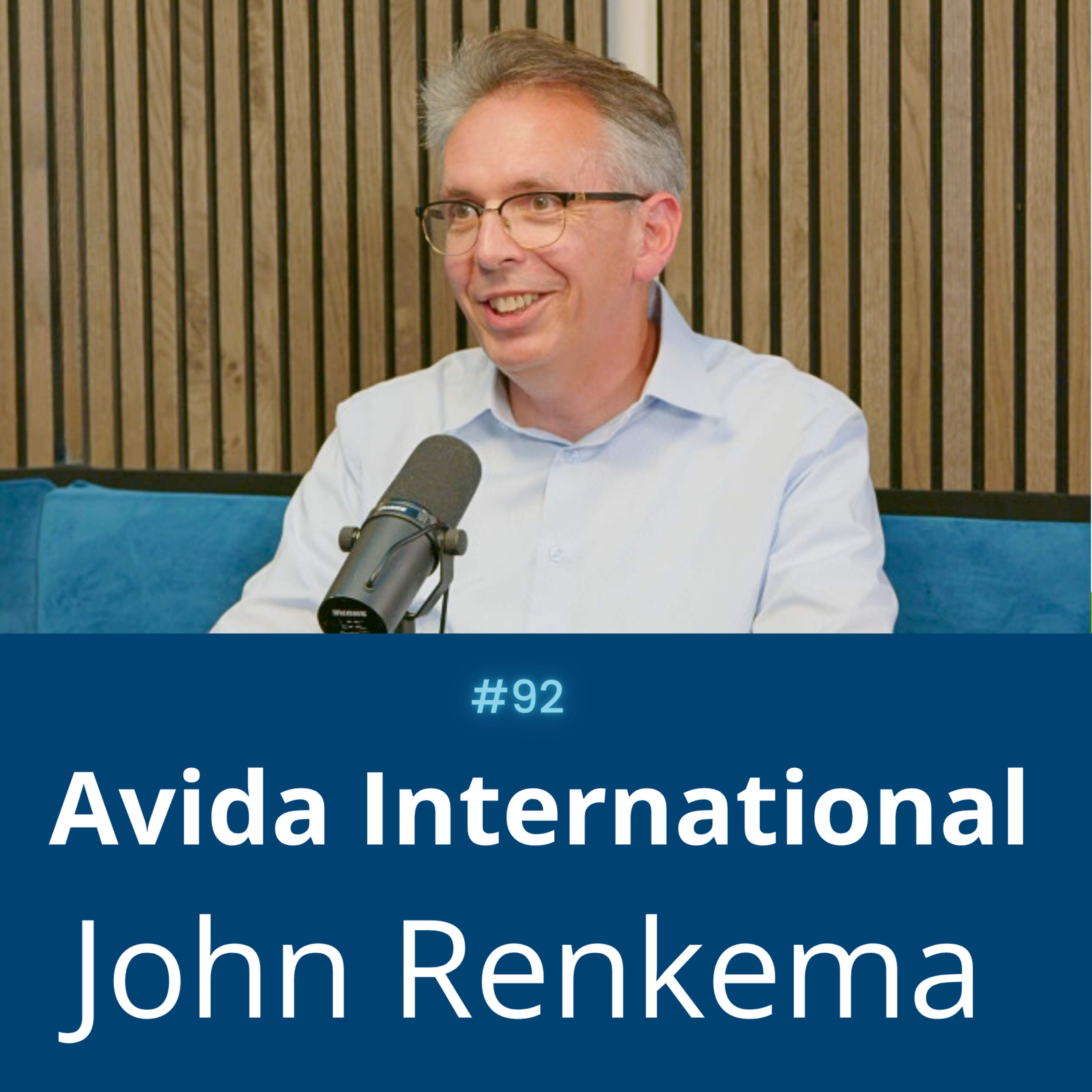
Selecting suitable private equity funds is not the same as reliably predicting future outperformers. In Fund Shack episode #92, John Renkema, Partner and Head of Private Markets at Avida International, joins Ross Butler to discuss the work behind an institutional LP's investment programme: portfolio construction, diversification, commitment pacing and alignment of interests.
Drawing on 24 years at APG, John challenges the emphasis on forecasting winners among established institutional funds. He is not arguing that selection is pointless: access, negotiated terms and portfolio fit still matter. He also distinguishes this market from venture capital, smaller buyouts and emerging managers, where the selection challenge can be different.
IN THIS EPISODE
🔹🔹🔹🔹🔹
EPISODE PARTNER: SRS ACQUIOM
Thank you to our Episode Partner, SRS Acquiom.
SRS Acquiom provides a comprehensive platform to help manage merger and acquisition transactions and bilateral and syndicated loan facilities.
https://www.srsacquiom.com/eu/
🔹🔹🔹🔹🔹
CHAPTERS
00:00:00 The LP's Role
00:04:54 Beyond Fund Selection
00:10:18 Governance and Diversification
00:18:17 Terms and Continuation Funds
00:25:22 Building an LP Programme
00:30:29 Understanding Investment Risk
00:32:52 Partners or Clients?
🔹🔹🔹🔹🔹
ABOUT JOHN RENKEMA
John Renkema is Partner and Head of Private Markets at Avida International. He previously managed a global private equity portfolio at APG. At Avida, his work focuses on independent advice to limited partners, particularly around private markets strategy and governance.
Avida International:
https://www.avida-int.com/
John Renkema on LinkedIn:
https://www.linkedin.com/in/john-renkema-02198a/
🔹🔹🔹🔹🔹
ABOUT FUND SHACK
Fund Shack explores the decisions, incentives and investment strategies shaping private markets, through in-depth interviews with investors and industry specialists and focused analysis with Ross Butler.
Ross Butler is the founder and host of Fund Shack and the author of Invest Like a Barbarian: Share in the Spoils of a Private Markets Revolution.
Explore our episodes, transcripts and articles:
https://fund-shack.com/
Fund Shack newsletter on Substack:
https://privateequitypodcastfundshack.substack.com/
Fund Shack newsletter on LinkedIn:
https://www.linkedin.com/newsletters/privateequity-with-fund-shack-7159157815326949376/
Ross Butler's book:
http://q-r.to/Invest-Like-A-Barbarian
🔹🔹🔹🔹🔹
Suggest a guest, sponsorship and content partnerships: [email protected]
Follow Fund Shack on your podcast app for more conversations on private equity, private credit, infrastructure, secondaries and private wealth access.