Ask ChatGPT

 Furball Confidential
7 Mar 2026 · 40m · 16 chapters
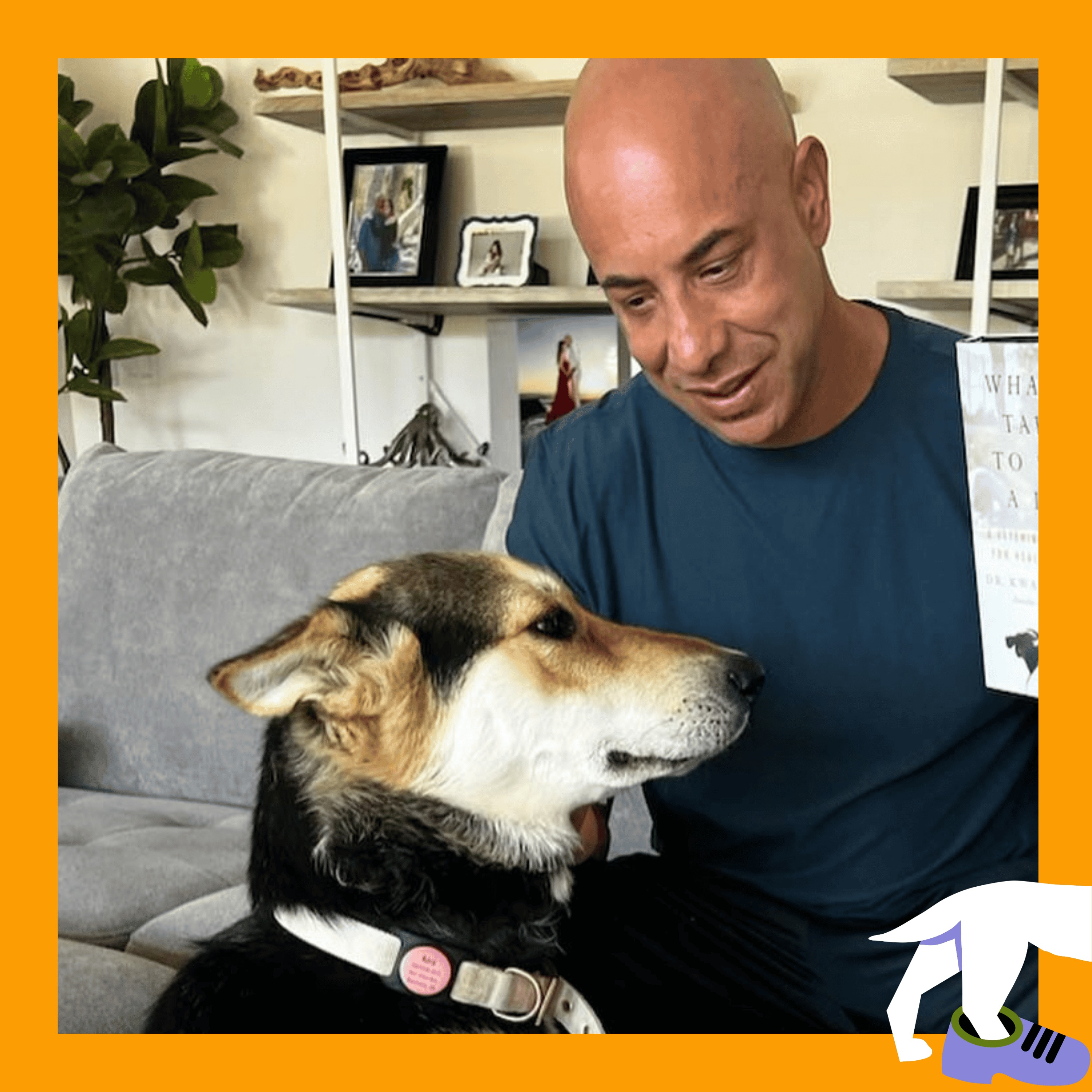
Dr. Kwane Stewart (“The Street Vet”) explains how pets sustain unhoused people, how his street-veterinary work began after a shelter crisis, and why he believes the strongest human-animal bonds often appear on the streets.
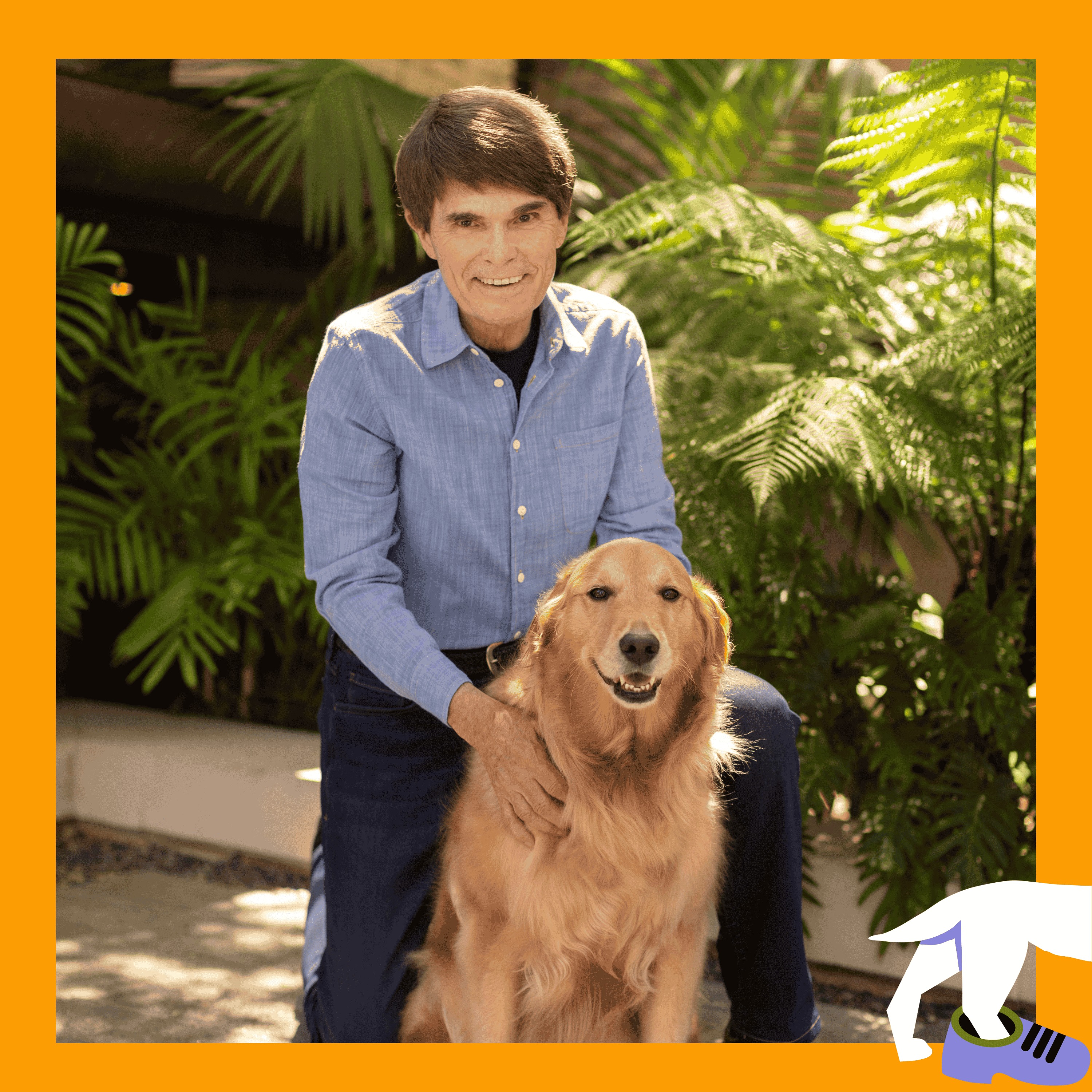
Dr. Kwane Stewart is a veterinarian with 28 years of experience, founder of Project Street Vet, and chief veterinary officer for Kismet (pet food company co-founded by John Legend and Chrissy Teigen). He was named CNN Hero of the Year. He grew up in Texas surrounded by animals; he says The Black Stallion inspired his lifelong goal to become an animal doctor.
Unhoused pet owners don’t “deserve less” care; pets mainly need time and love. Shelter euthanasia is sometimes mandated by municipal constraints. Hugging pets can improve mood via oxytocin, prolactin, and other chemicals.
A 7-Eleven encounter leading to a $3 flea treatment that transformed a dog; “Crazy Girl,” a blind dachshund with painful glaucoma where vision couldn’t be restored but comfort was improved; his “soul dog” Solomon (Doberman) and adopting Cora after years of German shepherd-related bites.
Written by AI. May contain mistakes.
Discover Dr. Kwan Stewart's mission treating pets of the unhoused.
“I'm Jen Morose and this is Furball Confidential So many of us rely on our pets They ground us, they comfort us, they make us laugh But for a lot of the pet owners that Dr.”
Kwan shares how a childhood film inspired his veterinary career.
“She pulled me out of school to go see this beautiful movie about this majestic black horse.”
Kwan reflects on his childhood surrounded by animals and comfort from them.
“But your house, it sounds like, was pretty filled with animals.”
Kwan discusses the emotional bond people have with pets compared to humans.
“Like that was my happy place and still is.”
Explore the chemical reactions that occur when we interact with pets.
“And they don't project some sort of like, you know, you do something accidentally wrong to someone else.”
Kwan shares his experience having a pet snake and the connections formed.
“I found out again, reading your book that you've actually had snakes.”
Kwan reflects on his bond with his favorite dog, Solomon, and loss.
“Yeah, they're intelligent creatures too.”
Hear a heartfelt story about saying goodbye to a beloved pet.
“I walk him through, uh, some images, visualizing maybe a special moment with their pets.”
Discover the unexpected story of adopting a German Shepherd mix.
“And, um, yeah, I just hugged him and, but, uh, how was that?”
Learn how having pets teaches children important life lessons.
“I know you've got, um, came in who's older and you've got some smaller kids too.”
Gain insight into the emotional challenges of shelter veterinary work.
“You start to learn that at five and six, there is an element, a different element of responsibility you learn as a child.”
Hear about a pivotal experience that changed a veterinarian's career.
“I could see his dog had some sort of dermatitis, some sort of skin issue on the rear.”
Discover how a single encounter changed a veterinarian's perspective on pet ownership among the unhoused.
“I said, I'm going to find more people like you.”
Explore the common misconceptions about pet ownership among unhoused individuals and the love they provide.
“And I think there is this feeling out there or people think, oh, someone's unhoused.”
Listen to a touching story about a man and his blind dog, showcasing the bond between them despite hardships.
“And you, and you've, you comment too, on how well behaved these dogs are because they are so connected to their humans.”
Understand the stark differences between the relationships formed in shelters versus those in the streets.
“Is there one that stands out or one of many?”

Get the gist, explore an idea or ask about something said.
 Claude
On Furball Confidential, what are the key points of this episode?
Searching your listeningAutomatic transcript. May contain errors.
0:00ID Tech is more than just the original and most trusted tech camp for kids ages 7 to 17. ID Tech is where kids find their people. The engineering and creating people. The fire-breathing, shell-spinning BattleBots people. The just-as-happy building games as they are playing them people. ID Tech offers over 50 epic courses, like Camp Crunch Labs IRL, BattleBots with TakeHomeBots, and more at 75 college campuses across the country. Visit IDTech.com and use code IDTech to save$150 on a week that's guaranteed to be the highlight of your kid's summer. I'm not here to get a dog. I'm not going to be a sucker.
0:42We used to call people that would adopt dogs from our shelter suckers, but in a good way. Like, sucker! Like, yeah, like, we can grab, like, sucker. We ring a bell and kind of privately behind the, you know, closed door, like, sucker! I'm Jen Morose and this is Furball Confidential So many of us rely on our pets They ground us, they comfort us, they make us laugh But for a lot of the pet owners that Dr. Kwan Stewart knows Their animals are truly a lifeline Kwan is known as the street vet And for more than a decade he's been treating the pets of unhoused people living in Southern California I've seen people give up their last meal for their pet, and people who have$3 for their name, and after I'm done with the treatment, they will try and give me that$3.
1:32This is your partner, obviously, huh? This is my best friend. Kwan is the founder of the non-profit Project Street Vet, and a couple of years ago, he was named CNN Hero of the Year. He's also chief veterinary officer for Kismet, a newish pet food company started by power duo and dog lovers, John Legend and Chrissy Teigen. But as high as those highs are, Kwan has also had some real lows as a vet. He's written about it all in his deeply vulnerable memoir, What It Takes to Save a Life. Kwan has had a lifelong relationship with animals. He grew up in Texas in the 70s in a household surrounded by them.
2:09And he discovered his life's mission earlier than most.
2:16But at seven, I was like, I'm going to be a vet. I told my mom, coming out of the Black Stallion. And I remember clearly, yeah, I looked up at her. I was holding her hand. And I got to play hooky that day. She pulled me out of school to go see this beautiful movie about this majestic black horse. And I was laughing and crying. When I walked out, I looked up and said, I'm going to be an animal doctor when I grow up. And she said, I'd never wavered since. Wow. And for those, I mean, there's going to be a few people who are listening, Quan, who are maybe a little bit younger than we are. Can you just let them know what the Black Stallion was and what it was about that film in particular that really was a moment for you?
2:56First off, I will confess to the younger audience who may be listening, I love Marvel movies. So I'm fascinated. So the CGI and the effects and all that, I'm good with that. But there is something about a classic movie like The Black Stallion that was made, what, mid-70s that has none of that and it's just the story.
3:21Kwane Stewart: Francis Ford Coppola presents Walter Farley's timeless classic whose time has come, The Black Stallion. And in this case, the beauty of the relationship between this horse that was rescued by this boy and the very scared stallion and Arabian stallions. So, you know, my mom owns stallions. They're hot, weird, at times crazy horses. But this somewhat crazy horse that no one else could get around, this young boy, probably not much older than me at the time, built this very special relationship. And there was just it just touched me. I don't know. I just I recall thinking there was this very dramatic scene towards the end of the movie where the boy is racing the horse because the horse finds its way into the race circuit.
4:12Funny enough, if you if you recall the movie and the boy was losing the race. And and for the love of the boy, the horse just while its legs started to bleed, it was suffering some injury. It just pulled through and won the race for the boy. And I just thought, wow, I want to take care of that horse, number one. And two, I want to be able to do that the rest of my life. Right. Right. That's beautiful. That's beautiful. And you also, you mentioned your mom. Your mom had horses growing up. But your house, it sounds like, was pretty filled with animals. Yeah, mom, she was an animal lover. Okay. As early as I can remember, there were animals around.
4:51And my dad, you know, my dad grew up in the deep south. My dad's black. My mom's white. And, you know, dogs in the deep south are somewhat of a checkered past. And he never had dogs growing up. So it was always my mom. He just was kind of neutral on it. If it's for the boys, it's fine. But my mom just loved animals. So animals were always a big part of Kwon's life, starting with his first cat, Mai Tai. Quan remembers she was a huge comfort when he was a kid. She was officially our first pet. And my earliest memories of ever being around an animal were her. But yeah, I always found solace in being around pets.
5:36I think that's why maybe again, I was so drawn to wanting to do this. Here's another funny confession. I was not an attractive kid. I was not a good looking kid. I had a funny look. Again, I was growing up in Texas, a biracial kid at a time when that wasn't really a thing. You didn't see much of that. Yeah. So I was awkward looking to a lot of other kids. I was an easy target to be bullied to. And it happened. And, you know, it happens to a lot of kids. It's nothing I've really hung on to. But I would always come home and want to be around the animals. Like that was my happy place and still is.
6:11That's so beautiful. I think you've even said that you're just more comfortable around animals than humans a lot of the time. What is it? What do you think it is about that animal connection? Ah, well, for anyone who's listening who has a pet, you know. Because it's sometimes hard to put into words. I know. I think it's a little hard to articulate a feeling, right? A very strong emotion like this. And the only thing that I can say is when you're feeling a certain way and something comes along and just can completely reverse your attitude or your state of mind in just a moment, there's something special about it.
7:00Maybe it's not an animal. Maybe it's a friend or another person or it could be a number of things. But for me, it's always been animals. And I think for a lot of people, that's the case. We are a pet loving nation. I think most of us will agree. And, you know, we just, we have these relationships we build with these pets and, you know, what I've noticed throughout my career is this, this is 28 years as a veterinarian. You, you're, you're going to have moments throughout your life where you feel abandoned by the people closest to you or distant or a lack of support. These could be your, It could be your parents.
7:36It could be your partner. It could be a very close friend. We're talking ending of a friendship, divorce, all manner of things because human relationships are complicated. Yeah. You don't experience that with your favorite pet really ever. No. They're always there waiting for you. They're loyal. They're loving. They're supportive. And here's something that I think people forget at times that definitely makes pets rise above people. They are forgiving because think about all the times. And, and, and again, in full honesty, that I've forgotten to feed my own dog on a given day. I've been too busy or, you know, I rush out of the house.
8:19I'm on the freeway. I'm like, I forgot to feed my dogs. And, you know, if you did that to your partner, you'd never hear the end of it. Game over. You're going to sleep from the airport and, you know, you're not going to have a good night, but you come home and your dogs. are just, it's gone. It's behind them. Let's move forward. Yeah. They're just, there's something special about that. Yeah. And they don't project some sort of like, you know, you do something accidentally wrong to someone else. Often it can be very easily misunderstood and, Oh, Quan did this to me because, you know, he doesn't value my time or whatever.
8:57And with a, with a dog, they're just, yeah, it's amazing. Yeah. Yeah. They're A little bit of science on why this is. Oh. Again, it's hard to always describe the emotion that people feel because it's very personal. But we do know that when you just hug your dog, or you stroke or pet your dog or your cat, there's three chemical things happening in your body. Three. The first is oxytocin. You get a big bump of oxytocin. That's the hug hormone, the love hormone. you get a release of prolactin, which is obviously associated with nursing mothers, but you can also get a release of that at times like this.
9:39Men too. That, by the way, helps stave off things like depression and PTSD. And then there's another very similar release of phenolphthalein. And you have these three things that enter your bloodstream and stimulate your nervous system. And all three of them work to improve mood, attitude, and just a sense of wellbeing. So that's just from hugging your dog. So we've known this forever. Intuitively, we've known this for generations, but now we have science that is actually explaining what's happening in our bodies and why. Okay. I knew something was going on when I smother clutch with cuddles, but I didn't know that.
10:26The connection we have with pets is truly amazing. Even apparently the scaly kind. I found out again, reading your book that you've actually had snakes. And I think it was a while ago, but one of the things I always get asked on this podcast is, would you talk to someone who has a relationship with their snake? And I'm like, I would, if somebody has a good relationship with their snake to talk about. And I'm curious, you're uniquely positioned. What sort of relationship does one have with a snake? And how is it different from a dog or a cat? Yes, it's different. Yeah, I had a snake in college.
11:07His name was Percy. He was a 10 foot python. My God. And he made me feel very cool. for starters, and just a very docile animal. So he was just a very easy, relaxed, non-aggressive pet. First, just to put that out there, because some people have images of snakes doing all kinds of things, but first, it wasn't like that. He would come out and slither around the room. There was a time where he was hanging from up above the door. My roommate opened my bedroom door and he slapped him in. It was pitch black in my room. Something slapped him against to chest and was freaked out was Percy. But he, you know, yes, very different than a dog or cat.
11:52But going back to just having a relationship with something else that's living. Yeah. I don't know that it always has to be a furry animal or a mammal. It's, you know, I let's give the most extreme opposite example of a dog. Maybe it's like just fish in a fish tank. I don't know. or a bird. And it just, half the time it's just sitting there swimming around. And, but when you find yourself talking to it and you feel the energy of something else living, there's still something to it. Yeah. We had, we had our own little special relationship. I felt like he kind of knew me and I knew him and he knew me.
12:27What's cool is that, yes, he's a snake, he's a reptile, but he knew me versus someone else. He couldn't recognize me and my touch and handle me. And if I was standing in the room with two people, he would come to me. So yeah, Yeah, they're intelligent creatures too. That's so neat. Okay, well, thank you for settling in that question. I feel like there's going to be a lot of people who are happy to hear this. You've had a lot of different animals, I know, but I also know you're a dog. You're a dog guy at heart. And I know you've had a few dogs, but you do say that Solomon in particular was a dog for you that was kind of like your, I'm going to say your soul dog.
13:06Is that fair? Yeah. I, you know, when I'm on my lecture circuit, I do something in the middle and I'm up there for about 50 minutes on stage and I'm talking about various things, how I got started. Some of the things we've, we're talking about now. I take this moment in the middle where I asked the audience to close their eyes and we were going to do a little moment of gratitude, a little breathing meditation. And I just had people picture their favorite pets. And now everyone in the room, it's perfectly quiet. Everyone in the room has their eyes closed. And I say, now picture your favorite pet.
13:45And I chuckle because I say, look, you're going to say you don't have a favorite pet, but we all have a favorite pet. So it could be one that you have now, or it could be one from your past, but I just want you to hold that image of this pet in your head. And while I'm describing this, I'm telling people to breathe. So they're becoming calm and relaxed. And then I just quickly, it's only a couple of minutes. I walk him through, uh, some images, visualizing maybe a special moment with their pets. And then at the end I tell them, I said, this is gonna be harder for those of you that are picturing a dog or cat you've lost, but I just want you to say, thank you.
14:20And I love you. And it's a very powerful moment. A lot of people cry as I heard afterwards, And, uh, yeah. So getting back to Solomon, Solomon was my favorite pet. He was a Doberman I had for about 10 years. He ended up developing bone cancer at the end of his life. And I had the option to amputate his leg to maybe give him six more months and, um, do some chemo. I opted not to, uh, he was, he was a Doberman's live about 10 years and he was really kind of maxed out that time, I didn't, I wasn't going to pull him through that. So I made him comfortable for about two, two and a half months and we enjoyed our time.
15:03And then when it was time to say goodbye, I was the one who, who put him to sleep. He was there with me together. And, um, yeah, I just hugged him and, but, uh, how was that? Like, was that, is that, was that a choice that you made that you wanted to be the one to be there with him and do it and take him to a better place? I, uh, I went back and forth a little bit just because I knew it was going to be hard, but I thought if I was Solomon, who would I want to be with in my final moment? Yeah, of course. Yeah. You wouldn't want a stranger, another veterinarian, or even a colleague or friend. He'd want dad to be there with him.
15:45And I sedated him. So he was in a, he was pain-free and in a good place. And, um, I just laid his head in my lap for about 10 minutes. I talked to him and thanked him. Yeah.
16:04And now you have Cora, right? Yes, I have Cora. What's she like? First confession. I'm not a fan of German shepherds. Right. And I apologize to anyone who's listening who has German shepherds, but hear me out. Let me finish the story. I've, in my vet career, I've been bit a total of, uh, it just went up one a few months ago, nine times. I've been bit a total of nine times, which isn't bad. 28 years, 20 years, thousands of, I'm probably somewhere over 20, 30 ,000 animals. I don't, maybe more than that. I was a shelter vet for five years. So that's right. You know, I'm seeing hundreds of animals on any given week.
16:44So tens of thousands of animals and only eight bites and none of them really serious. That's not too bad. But six of them have come by way of German Shepherd. Wow. I've been bit six times by German Shepherd. I don't know what it is. My very first experience was in vet school. So, yeah. So fast forward, did my years at the shelter. This is about 13 years ago. It was a very rough period of my career. I thought about quitting being a vet, in fact. I'm going to come back to that. Yeah, because it was the launch of my time in the shelter. But yeah, fast forward to just about three years ago during COVID, I decided to visit my old shelter because I was in the area and I step in.
17:23I haven't seen these people I worked with in probably seven, eight years. And we were very close. I mean, you feel like you're in a war zone when you're working in a municipal shelter during the recession. hundreds of dogs, sadly, dozens of euthanasias every morning. We're trying to just keep the morale up. We're trying to keep the city together. We're managing hoarding cases and bike cases. And it was, it was hard. Yeah, it was hard. And I decided to step in just to say hi to him. I want to say, look, and the first thing I said, I'm like, I want to see you guys and, and, and catch up. I'm not here to get a dog.
18:01I just want you to know as I'm walking the aisles, I'm not going to, I'm not going to be a sucker. And there's, we, we used to call people that would adopt dogs from our shelter suckers, but in a good way, like suckers. Like, yeah, like we can grab, like suck. And we ring a bell and kind of privately behind the closed door, like sucker. But it was like us just having fun with it and celebrating. I said, no sucker here. Okay. I'm walking up and down the aisles, just looking at the dogs and this, this jerk, this German shepherd Husky mix puppy was looking at me through the bars. And, and one of the girls used to work with Lincoln said, Oh, she, She wants you to take her home.
18:36I was like, there is no way in hell. I am. Nope. And I just kept marching forward. And about 15 minutes later, I walked by again. And she was off doing something else. She's like, why are you walking by that cage again? I was like, I don't know. I'm just passing by. No big reason. Yeah. And then I came up 15 minutes later. I came back in. And, you know, to adopt a dog at our shelter, you pull the cage card off. And you walk to the front. And you start the process. I pulled the cage card off. And I went to the front. And that's how I ended up with Cora. Sucker. Sucker. It's a big fun sucker right here.
19:05Proud sucker. And yeah, three years together. She's a great dog. I'd like to believe or think that German Shepherds and I are, we're good now. We're square. I took on one of your own. We're cool. She loves me. I love her. So I think I got through it. I know you've got, um, came in who's older and you've got some smaller kids too. And I'm curious what it's like as a dad to watch your kids now starting to develop relationships with animals. Well, it's cool when you, when you think you're the reason or the source, right? I think that, and I think my mom takes pride in that too. I think she takes a lot of pride.
19:42In fact, that I'm where I am today because she introduced pets to me at a very young age. And I see it now with my kids. We have three dogs and a cat, Cora, and we have two others. Oh, you do? Yeah, we have a golden retriever, purebred golden, and then a mix like poodle, Yorkie kind of mix. And what are their names? It's Brandy, Bentley, and then Cora. And then we have Rosie the cat. So Rosie is my adopted rescue cat that I got for my daughter three years ago. Okay, so you got a full house. Yeah, I got a full house. There's kids and dogs and everything around. But yeah, I see the relationship.
20:25My daughter, she comes home every day. She grabs her cat. Three years into this relationship, she just looks at her and goes, you're so cute. I love you. You're so cute. And there's just something neat about that.
20:41I'm not sad for kids that don't grow up with pets in their lives, but I do think they're better for it. And something is missing when they don't get to experience that. There's a responsibility piece, of course, but there is this relationship you build with another living creature that is important. And especially when you have some responsibility to keep them alive and learning that principle of just, okay, if I don't feed you, that's bad. I don't give you water. That's bad. You start to learn that at five and six, there is an element, a different element of responsibility you learn as a child.
21:19Yeah, definitely. Yeah. And like to be gentle with animals, right? Like to respect their space. Yes. Yeah. To just appreciate that piece of it. Yeah. I do. I think it's very important. In some cases, maybe vital. you talked a little bit about this um about your time at uh the shelter but i i just painting a picture it feels like here you are this kid who wants to heal animals you go out you do get through vet school the top vet school in the states i might add um but you go out into the world to heal the animal world and it's not totally rainbows and unicorns because as you said you you were at this high kill shelter in Northern California.
22:09Like, can you take us a little bit into what was happening for you there? Um, in terms of wanting to be a vet who heals, but then finding yourself in a situation where you're having to put down a lot of animals too, and what that did to you. That's the, uh, that's a little, as I used to say, the come to Jesus moment in this profession is when you find yourself euthanizing animals in some cases it's hard to justify you know i i think euthanasia plays a very important role in my profession yeah and i know in the human side there's a lot of controversy but i think for animals to be able to humanely and suffering is important and it has to be respected but you get in a shelter environment a municipal shelter and you're charged with uh keeping numbers down A lot of, you know, overpopulation leads to animals spilling out in the streets.
23:05It leads to more bites. It leads to issues, to public health, to disease. So there is that aspect. And as a municipality, I don't have the option of saying no. And people, I want really people to understand this part of it. If I could be a no-kill shelter, I would. But as a county shelter, I wasn't given that option. My mandate was to control disease, population, investigate hoarding, abuse, neglect. try and promote adoption. And yes, ultimately get our euthanasia numbers down. But during the recession, when people, 10, 15 people a day are coming up to the doorstep and dropping the leash and walking away, no questions asked, because that's how it works at a municipality.
23:46No kill is very different. They're going to run you through a whole process and maybe take the dog and maybe not. And they have the, of course, you're taking some of the best animals to adopt out. Your adoption numbers go up. I don't have that choice. I'm getting, in some cases, the worst of the worst. Some of these dogs are injured. They've been suffering from some chronic illness. They've been hit by a car. They're aggressive. You can't even get around them. And somehow I'm expected to have a 99 % adoption rate. It's just not possible. So I had to come to terms with that because I didn't understand the shelter system.
24:16I'd never done it before. I've been this pampered vet down in Southern California, close to the ocean. And I got in this environment and I just, this, what, what did I do? I had to make this decision. And many days I wanted to quit. And about two years into it, I decided I was just going to walk away. And this is the day that the street vet was born. Okay. Yes. I, if I could share that, I guess after two years in and I'll throw out this number, it's going to make some people sad or upset, but some mornings we're euthanizing 60 animals by 10 a.m. And you were doing, and you would like you just, I've just got to let people know, you open your book with having these panic attacks with these morning rounds of having to say who lives and who dies.
25:03Yes, I was one, as I said, I think in the book, death dealer in chief. And I had to sadly make this, I wasn't the one actually performing all the euthanasias. I had a young staff doing that, which is even harder, but I had to go through every cage every morning and say, yes, no, yes, no. And I would go home at the end of the day. And some days I just fall apart or, you know, just carry this immense guilt or even cry. And it just, it got to be too much. You know, obviously I didn't get into the profession for that. I dreamed, as you say, of puppies and rainbows and the profession is much more than that.
25:40It has some dark areas. And I was, I was in the middle of one. So I decided to quit and not just quit the shelter. I decided to quit being a vet. I was going to walk away from the profession altogether. We know that didn't happen, but this is the moment that changed everything for Quan and Project Street Vet was born. And I was sitting in front of 7-Eleven. I was rehearsing my resignation letter. I walked in to 7-Eleven. I walked out. And to my left, there was this unhoused man with his dog. His dog was, you know, from a distance, and you do this long enough, you can start diagnosing stuff from across the street.
26:20I could see his dog had some sort of dermatitis, some sort of skin issue on the rear. And as I stepped a little closer, I could tell, any veterinarian can diagnose FAD, which is flea allergic dermatitis. within two or three seconds. It has a very distinct look. And this dog had a very chronic case, chronic severe case of FAD due to fleas. The hair was gone. The skin was infected. It was red and bumpy. She was miserable. And as I got closer, I just introduced myself. I said, I'm a Quan, I'm a vet. I see your dog suffering from a skin issue. And I think I have something that would help if you're here tomorrow.
27:00And the man was just desperate for help. Very nice guy sitting there said, yeah, she's miserable. I'm miserable. Yes, please. Anything you can do. I returned the next day as promised. I point out anytime I'm presenting this story on my lecture tour, it was five minutes of my time, five minutes of my time changed this dog's life and$3 out of my pocket. It was a$3 flea treatment. I treated the dog. I saw the same dog about 10 days later and she was transformed. The hair was growing back. The infection was gone. She was curled up and, you know, completely despondent before, but she jumped up and acknowledged me and licked me.
27:38And the man sitting in the exact same place, he just looked up with tears in his eyes and he said, thank you for not ignoring me.
27:48And, yeah. That was the moment? That was the moment, yeah. We both had a moment because I took a knee and I just said, you're welcome. And I made him a quiet pledge. I said, I'm going to find more people like you. And that was day one of 14 years of going out and finding more people like him. Wow. And was it for you, like in that moment, because as you said, you had been rehearsing your resignation speech. age so in that moment did you know okay this is the way I can save myself this is the way I can save myself as a vet I didn't know that at the time I don't think I thought that far ahead okay I I just was so moved by that it was a transformative moment and I was so moved by the experience and how little of my efforts and I say talent because I'm a trained veterinarian I just happened to cross paths with this animal that needed help desperately and couldn't pay for it, it just took a few minutes of my day and it, it helped the animal, but what I noticed more was what was written on the man's face and the, and the faces of so many people I've seen since as the gratitude and just the joy, maybe as I hear often restoring my faith.
29:10Thank you. I, you know, no one, no one talks to me. No one acknowledges me. Just thank you for letting me be seen. Thank you for not criticizing me for having this pet. She's my whole life and I do everything I can for her. So just being validated as a pet parent, that's what has been most informative to me. I mean, that's the learning curve. The journey I took is getting to know these people and how special these pets are. And I say this every time I get the chance, some of the most remarkable pet parents I've ever met are in the streets. So can we talk about this for a second? Because I know you get asked this a lot.
29:52And I think there is this feeling out there or people think, oh, someone's unhoused. They somehow don't deserve to have a pet. And let's just get this out of the way. I want to throw that back at you. Yeah, let's go there because I have obviously been answering this question now for the better part of 14 years. And going back again, if I'm being honest, prior to doing the work, I was a little judgmental. We all have had that moment where we see someone on the streets with a pet and we feel sorry for the pet. We feel sorry for the pet before we do the person. Why is that? And I don't, looking back, I'm not sure why.
30:29Look, the pet is outdoors. It's with its favorite person. If it looks well-nourished, I mean, it's in its happy place. I leave Cora for eight, 10 hours a day. All she wants to do is be with me. She couldn't care if she had five acres of land. She doesn't care what I drive. She doesn't care if you live, you know, in a 5 ,000 foot house and drive a Range Rover. Your pets don't care about that. Don't fool yourself and think because I provide or I have all these things, my pet is better for it or they care. They don't. What they want is your time and your love. Which they get in spades, right? They get every hour of almost every day with their person.
31:10I leave, Cora's like peeling back the curtain. She's waiting for the garage door to open. I mean, she spends her whole day just waiting for me to come back. Yeah, yeah. So you think about these people being together all the time. I get it. They're short on resources. It's hard for them to provide medical care. It's hard for a lot of people. Let's also be honest. In our economic state these days, it's hard for a lot of people to provide medical care. How many people have gone in and been presented with a$500 ,000 estimate? I'm like, I can't do that. I'm sorry and have to walk out the door. So don't be so quick to judge them either.
31:42Again, what they do provide, which so few of us do, is time. And that's what your pet wants. So on that level, I want everyone to know, loud and clear, yes, there are exceptions, but I see the best and most special relationships between animal and person in the streets, not in the clinic. Yeah. And you, and you've, you comment too, on how well behaved these dogs are because they are so connected to their humans. Best behaved dogs. And you know what I love as a vet when it comes back to these folks in the streets? A professor once told me when you're trying to diagnose a disease or an ailment, it's in the history.
32:24It's always in the history. The history is the information we take from the patient. So if your doctor's seeing, he's like, Tell me how long have you had the pain? When do you feel it? Trying to look for patterns.
32:38Often someone comes in and it's like this, I didn't notice this ear infection. Your dog has had this ear infection for a good six weeks. I didn't notice it. Or how long has your dog been vomiting? I don't know. Maybe call my husband and ask. I'm not saying this is the case. I'm pointing out some of the funnier moments where I'm like, oh, please. Do you really not know or do you really not notice? That never happens in the streets. They know everything about their pet, what they eat, when they have a loose stool, when the limping began. Every detail I know to help make my job easier to make the diagnosis, they have.
33:13Again, that speaks to the relationship. They pay attention. They know each other's movements. And yes, the best behaved dogs you'll ever find anywhere. because when you're in the streets with crowd noise and ambulances buzzing by and everything that's happening and you know it it just you have to have a well-behaved dog they're socialized or i mean they talk about their neighbors so i go to skid row there are row there's like a street row this is skid row in la skid row in la yeah and and some of these streets there is a tent literally right next to the next one and the next one. There was a row of colored tents and tarps down the street.
33:53And let's say, you know, the census says about 20 % of our homeless have a pet. So down this row of 30 tents, 20 % of them have pets. They like, oh, he's going to go hang out with his neighbor. The dog will come out of the tent or the tarp and go like three tents down. And some guy will sit down and go, hey, Jiffy, how are you doing? Give him a treat. And then he'll walk back. And I'm like, you just don't, I don't, I don't observe that anywhere else.
34:23You told us the story of the 7-Eleven that started this all off. And this may be an impossible question because you've, you've been doing this work for so many years. But if I asked you to highlight just one, one, one story from, um, that really touched you from your time doing this work. Is there one that stands out or one of many? I've had over 1 ,500 experiences. I know. But there was a man by the name of Mike and Crazy Girl. He called her Cray Cray. She was a blind dachshund. And when I met Mike in the streets, he had traveled the country to try and get to California for better health care.
35:00He had lost his home and his boat and his job, his possessions, because the medical bills, the swearing medical bills just broke him. So he came to California just seeking some cheaper, potentially free medical care. He had colon cancer, double colon cancer. In fact, when we were sitting there and I met him by the beach here in San Diego, he lifted his shirt and showed me the colostomy bag. And he said, yeah, I don't know that I have much time to live, but I'm out here just hoping for a reset. So I'm really concerned about her. And she had been blind, he thought, for maybe six weeks. I couldn't do a full exam outside.
35:36I needed to get her in. but I was concerned that she may have had glaucoma glaucoma when when it gets to a certain point and a dog loses vision due to glaucoma it's irreversible okay I didn't tell him that at the time I said I want to get her in and do a full exam but I am concerned about her vision and and restoring it and he started crying he said look you know if I said this is the moment that stuck with me he said I would gladly keep my cancer if you could give her her sight back yeah and i you know he he meant it he loved this dog this dog was his everything he he had a push cart with his sleeping bag and his possessions in it and he had he had a crazy girl wow he said all i wanted i just wanted to be able to see again so sadly the end of the story i i was not able it was glaucoma we were not able to um restore her vision we were able to treat the discomfort her glaucoma is actually a painful condition.
36:34There's this pressure in the eyes. So it's like you're walking around with a migraine all the time. We were able to treat that and make her feel better. But, you know, by this point she was, she, she had adapted so well and so quickly that, you know, just by the sound of his voice in the cart, you almost wouldn't know she was blind. Yeah. Walking along right next to the cart, just right, you know, in step with him, you almost wouldn't know. I mean, again, that's how well some of these pets know their person. Listen, and you contrast that, if I may, to your shelter experience where you must have seen the worst of humanity, right?
37:09Like in terms of not, I mean, I know sometimes people drop dogs off at shelters for reasons beyond their control, but you also see dogs that are abused or mistreated or neglected. And then to hold that in contrast to what you're describing, it's just, it blows your mind, doesn't it? It does. Yeah. That's funny because I went, I was in the shelter seeing this, experiencing it. I was part of the investigative team for hoarding cases. I would go out with their animal control officers. Oh, wow. For abuse, neglect cases for talking dogs, chained up, living in their own feces for months, sometimes years.
37:50you see these things and you think my gosh people like what what yeah i just you're you're disgusted at human beings yeah and i go from that still working the shelter i start doing the street work and i experience this and then we talk about maybe restoring your faith a little bit i i got to experience this this side of it yeah people willing to sacrifice everything they have for their pet. People in the streets whose golden ticket comes up to get housing, finally, sometimes after six months, maybe it's temporary, but it's a chance to take a warm shower and sleep in a real bed. And they pass it up if their dog can't come with them.
38:31I see that. And that tells me, yes, okay, there are some very, very special pet parents in the world. Oh, what a great place to land this conversation.
38:47thanks so much to kwan stewart for that eye-opening conversation what a journey he has taken you can follow his work on instagram at dr kwan that's d-r-k-w-a-n-e or at the street fed and if you're up for supporting a pet related cause today of course kwan recommends project street vet we'll link to it in our show notes and as i mentioned kwan is also the chief veterinary officer at Kismet. And every time you buy their pet food, they make a donation to Project Street Vet too. You can find them at kismetpets.com. Okay, we're going to wrap up this episode of Furball. But before we do, if you're still listening or watching, leave us a doggone review, will ya?
39:30And follow us so you don't miss any crucial Furball content.
39:37Furball Confidential is created and hosted by me, Jen Morose. Our producer is Talia Schlanger, She and David Travers-Smith co-created our theme music with Brian Kobayakawa on bass. Video and sound design and editing are all done by Reza Daya. Danny Stover does our social media. Our show artwork is by Adrian Foro. And on audience development, we have Marina Hanna. And thanks, as always, to the original inspiration for this podcast, Clutch. I'm Jen Moroz. See you next time on Furball Confidential.
Kwane Stewart has loved and been surrounded by animals his whole life and knew he wanted to care for them from a young age. But working as a vet at a shelter during the recession - and having to decide which animals lived and which were euthanized - almost made him walk away from the profession altogether. Dr. Kwane shares the life-changing encounter with an unhoused man and his dog that inspired him to create the non-profit Project Street Vet - and ultimately saved his career as a vet. He explains why “some of the most remarkable pet parents [he’s] ever met are in the streets.” And he opens up about his own love of animals - from his childhood cat who helped him cope with being bullied, to the 10-foot python he had in college, to Kora, the German Shepherd he adopted from the shelter he used to work. As a bonus, Dr. Kwane also provides the very serious, very medically scientific reasons why giving your poochie woochie smooches and snuggle wuggles makes you feel better.
If you’re in the mood to support a pet-related cause, you can find Project Street Vet here.
And if you are hankering for more about Dr. Kwane, his website is here, where you can find his book, What It Takes to Save a Life
Dr. Kwane is also the Chief Veterinary Officer at Kismet. Every time you buy their pet food, they make a donation to Project Street Vet too.
Follow Dr. Kwane:
***
Furball Confidential is created and hosted by Jen Moroz
Talia Schlanger is our producer
She also co-created our theme music with David Travers-Smith, with Brian Kobayakawa on bass
Reza Dahya does the video and sound design and editing
Dani Stover does our social media
Our show artwork is by Adrian Forrow
Marina Hanna does our audience development
Hosted on Acast. See acast.com/privacy for more information.